 Secularism is the concept that
government or other entities
should exist separately
from religion and / or religious
beliefs.
 Secularism, also
called Secularity or
(adjectives: Secular or non
religious) is the idea of something
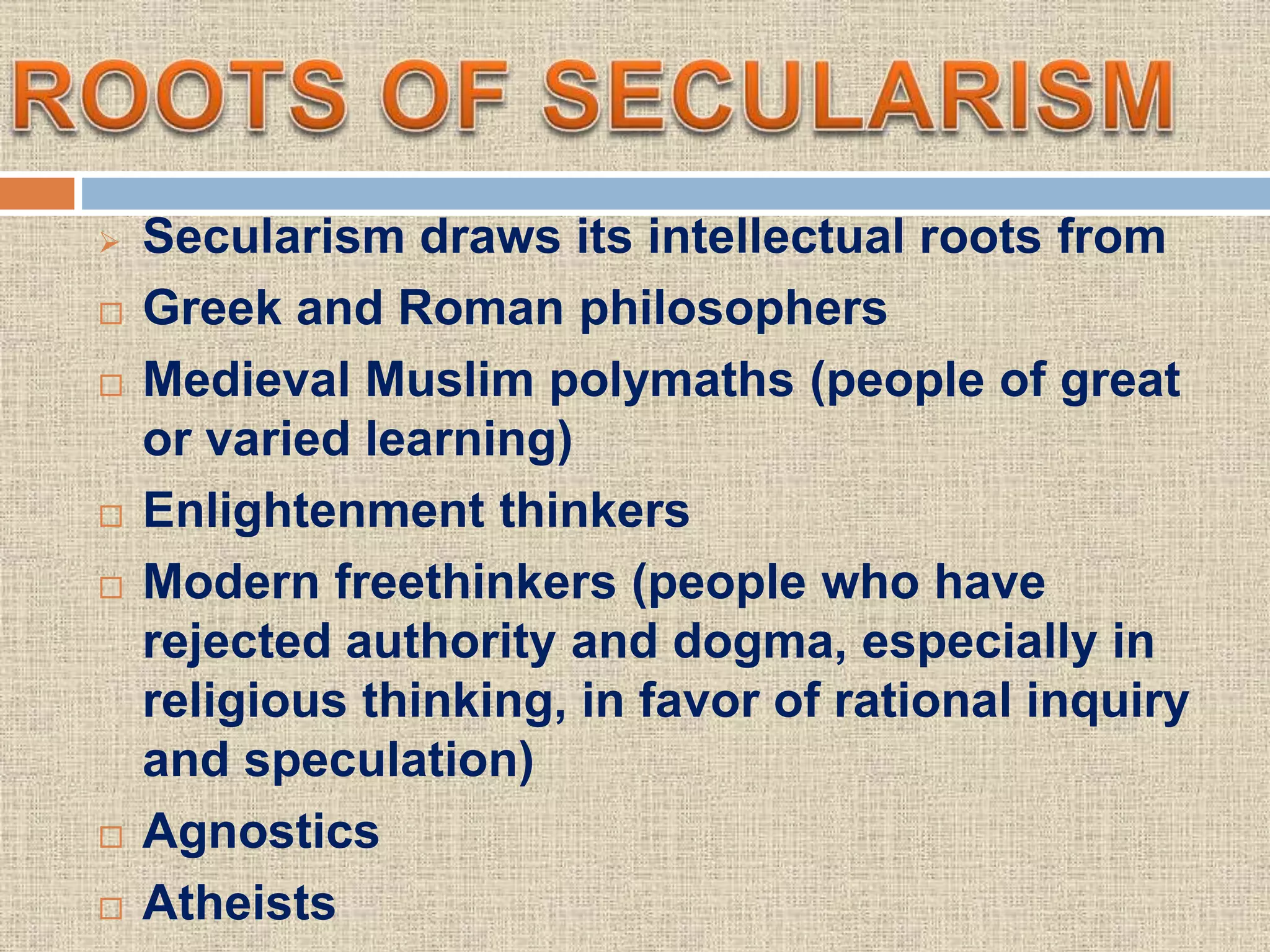
 Secularism draws its intellectual roots from
 Greek and Roman philosophers
 Medieval Muslim polymaths (people of great
or varied learning)
 Enlightenment thinkers
 Modern freethinkers (people who have
rejected authority and dogma, especially in
religious thinking, in favor of rational inquiry
and speculation)
 Agnostics
 Atheists
It has been argued that
secularism is a movement
toward modernization,
and away from traditional
religious values.
 In political terms, secularism is a movement
towards the separation of religion and
government (often termed the separation of
Church and State). This can refer to:
 Reducing ties between a government and
a state religion
 Replacing laws based on scripture (such as
Torah and Sharia law) with civil laws
 Eliminating discrimination on the basis of
religion
 This is said to
 add to democracy
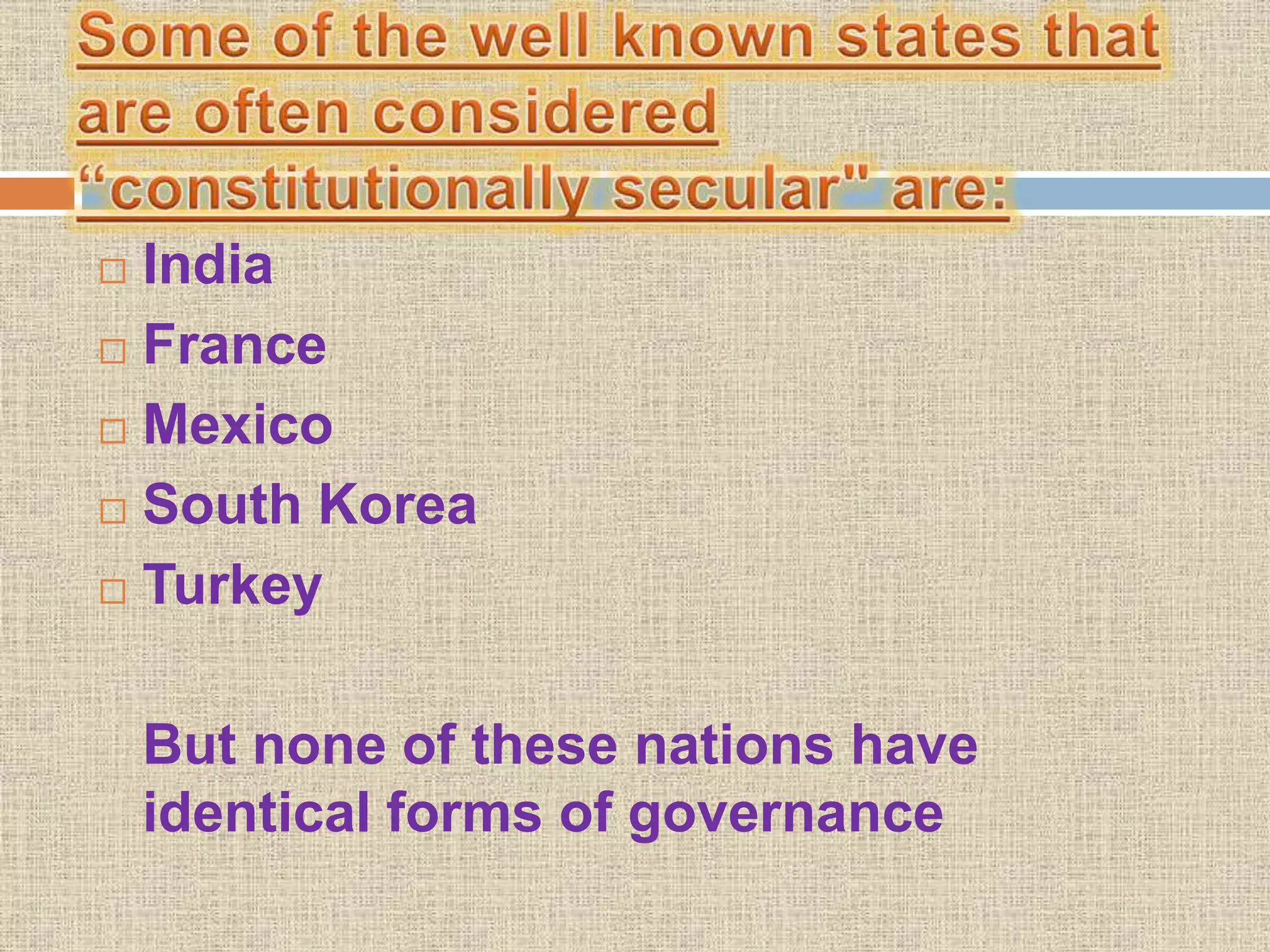
 India
 France
 Mexico
 South Korea
 Turkey
But none of these nations have
identical forms of governance
 Secularism in India means equal
treatment of all religions by the state.
Unlike the Western concept of
secularism which envisions a
separation of religion and state, the
concept of secularism in India
envisions acceptance of religious
laws as binding on the state, and equal
participation of state in different
religions.
A 19th-century Hindu
temple in
Khajuraho India,
incorporating a Hindu
spire, a Jain cupola, a
Buddhist stupa
and a Muslim style
dome, in place
of the usual shikhara
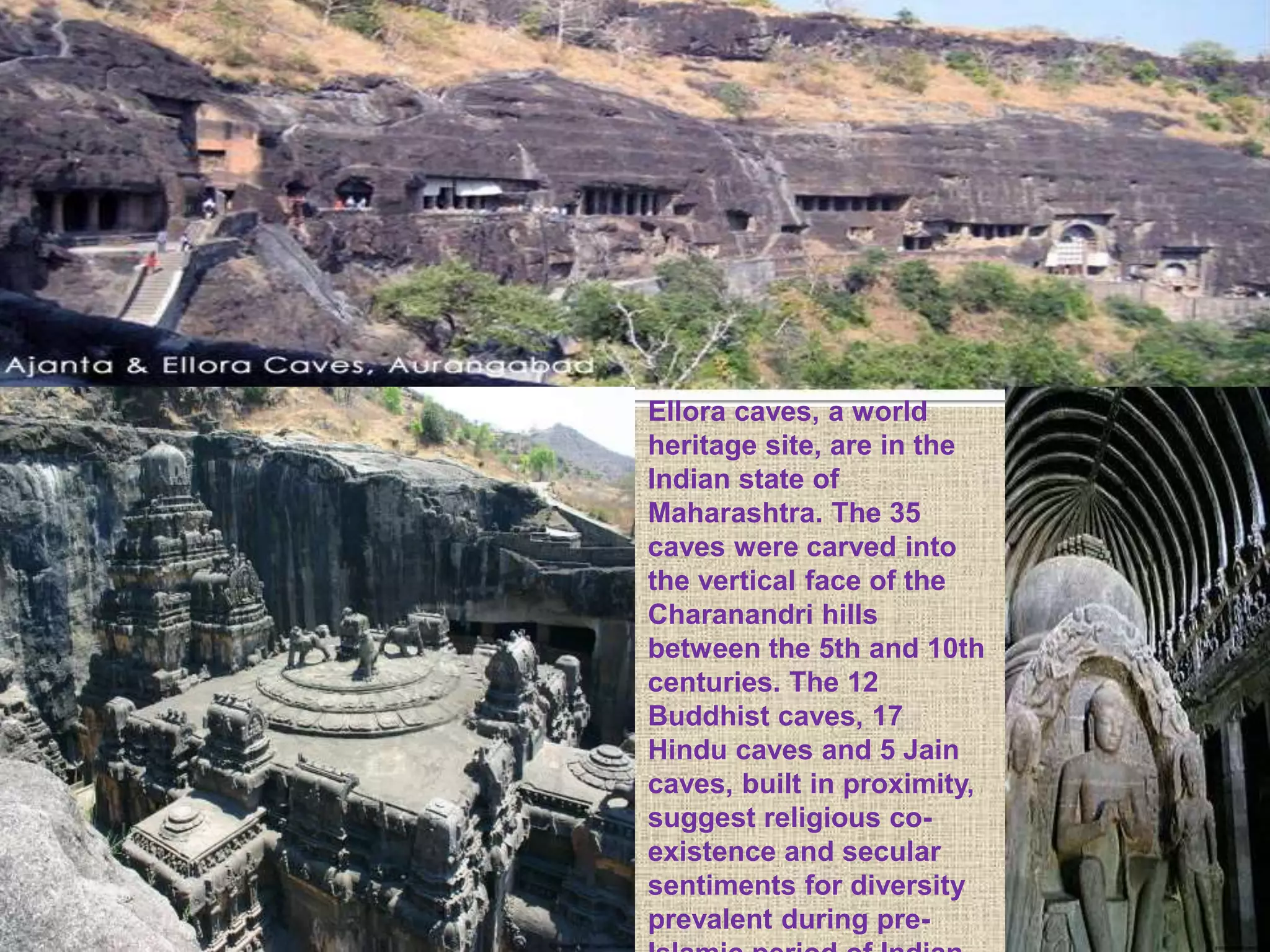
Ellora caves, a world
heritage site, are in the
Indian state of
Maharashtra. The 35
caves were carved into
the vertical face of the
Charanandri hills
between the 5th and 10th
centuries. The 12
Buddhist caves, 17
Hindu caves and 5 Jain
caves, built in proximity,
suggest religious co-
existence and secular
sentiments for diversity
prevalent during pre-
 With the 42nd Amendment of the Constitution of
India enacted in 1976, the Preamble to the
Constitution asserted that India is a secular nation.
However, neither India's constitution nor its laws
define the relationship between religion and state.
According to the Constitution, only a secular State can
realise its objectives to ensure the following:
1. That one religious community does not dominate
another;
2. That some members do not dominate other
members of the same religious community;
3. That the State does not enforce any particular
religion nor take away the religious freedom of
 First, it uses a strategy of distancing
itself from religion.The Indian State is
not ruled by a religious group and nor
does it support any one religion. In
India, government spaces like law
courts, police stations, government
schools and offices are not supposed
to display or promote any one religion.
 The second way is through a strategy
of noninterference. This means that in
order to respect the sentiments of all
religions and not interfere with
religious practices, the State makes
certain exceptions for particular
religious communities.
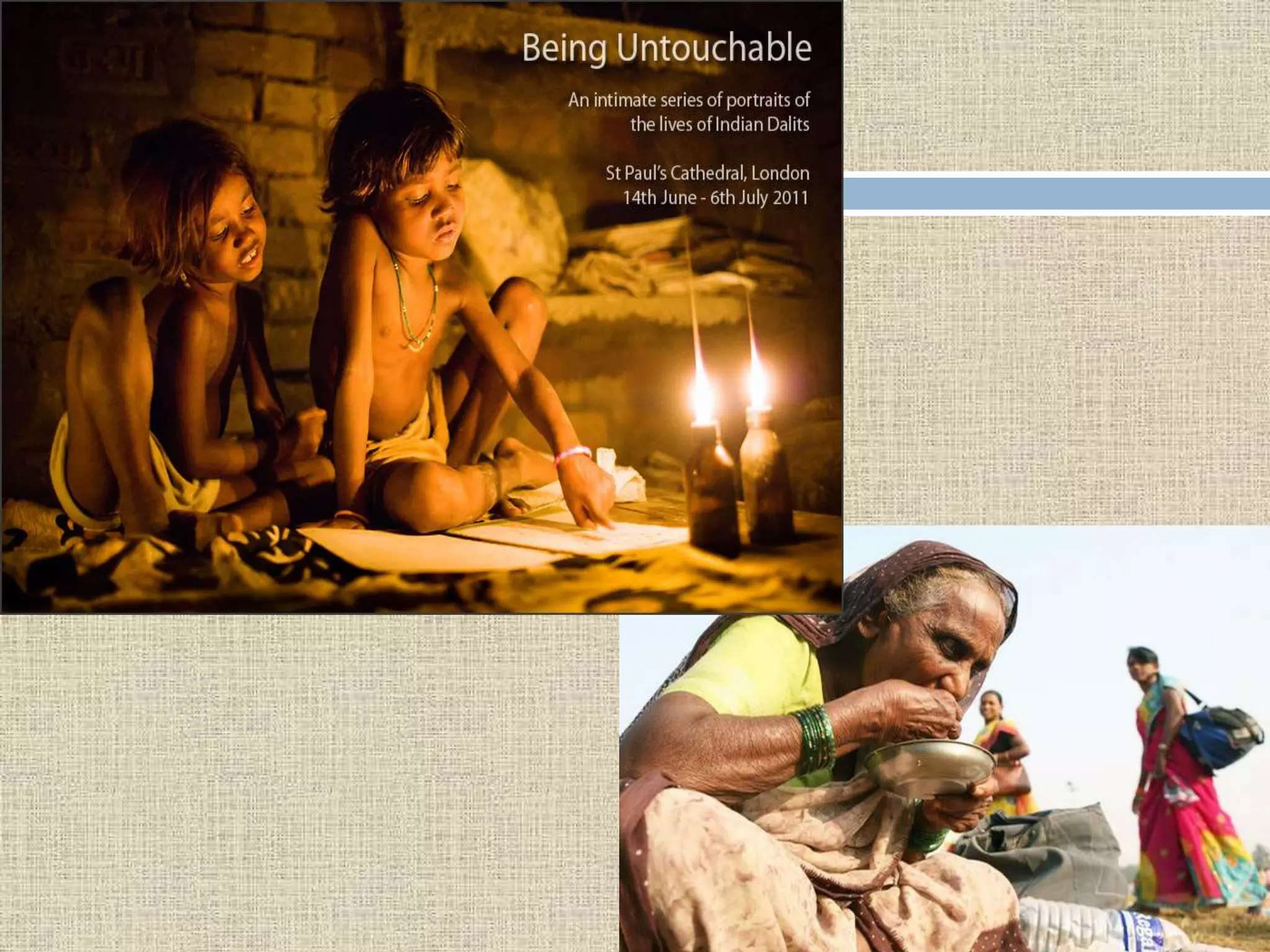
 The third way is through a strategy of
intervention. Untouchability. This is a good
example where members of the same
religion (‘upper-caste’ Hindus) dominate
other members (some ‘lower castes’) within
it. In order to prevent this religion-based
exclusion and discrimination of ‘lower
castes’, the Indian Constitution bans
untouchability.
 The intervention of the State can
also be in the form of support. The
Indian Constitution grants the right
to religious communities to set up
their own schools and colleges. It
also gives them financial aid on a
non preferential basis.
 Unlike the strict separation between religion
and the State in American secularism, in
Indian secularism the State can intervene in
religious affairs.
 Indian Constitution intervened in Hindu
religious practices in order to abolish
untouchability.
 In Indian secularism though the State is not
strictly separate from religion it does
maintain a principled distance vis-à-vis
religion. This means that any interference in
 The Indian State is secular and works in
various ways to prevent religious
domination. The Indian Constitution
guarantees Fundamental Rights that are
based on these secular principles. However,
this is not to say that there is no violation of
these rights in Indian society. Indeed it is
precisely because such violations happen
frequently that we need a constitutional
mechanism to prevent them from happening.
The knowledge that such rights exist makes
us sensitive to their violations and enables

UNDERSTANDING SECULARISM

  • 2.
     Secularism isthe concept that government or other entities should exist separately from religion and / or religious beliefs.  Secularism, also called Secularity or (adjectives: Secular or non religious) is the idea of something
  • 5.
     Secularism drawsits intellectual roots from  Greek and Roman philosophers  Medieval Muslim polymaths (people of great or varied learning)  Enlightenment thinkers  Modern freethinkers (people who have rejected authority and dogma, especially in religious thinking, in favor of rational inquiry and speculation)  Agnostics  Atheists
  • 6.
    It has beenargued that secularism is a movement toward modernization, and away from traditional religious values.
  • 7.
     In politicalterms, secularism is a movement towards the separation of religion and government (often termed the separation of Church and State). This can refer to:  Reducing ties between a government and a state religion  Replacing laws based on scripture (such as Torah and Sharia law) with civil laws  Eliminating discrimination on the basis of religion  This is said to  add to democracy
  • 8.
     India  France Mexico  South Korea  Turkey But none of these nations have identical forms of governance
  • 10.
     Secularism inIndia means equal treatment of all religions by the state. Unlike the Western concept of secularism which envisions a separation of religion and state, the concept of secularism in India envisions acceptance of religious laws as binding on the state, and equal participation of state in different religions.
  • 11.
    A 19th-century Hindu templein Khajuraho India, incorporating a Hindu spire, a Jain cupola, a Buddhist stupa and a Muslim style dome, in place of the usual shikhara
  • 12.
    Ellora caves, aworld heritage site, are in the Indian state of Maharashtra. The 35 caves were carved into the vertical face of the Charanandri hills between the 5th and 10th centuries. The 12 Buddhist caves, 17 Hindu caves and 5 Jain caves, built in proximity, suggest religious co- existence and secular sentiments for diversity prevalent during pre-
  • 13.
     With the42nd Amendment of the Constitution of India enacted in 1976, the Preamble to the Constitution asserted that India is a secular nation. However, neither India's constitution nor its laws define the relationship between religion and state. According to the Constitution, only a secular State can realise its objectives to ensure the following: 1. That one religious community does not dominate another; 2. That some members do not dominate other members of the same religious community; 3. That the State does not enforce any particular religion nor take away the religious freedom of
  • 14.
     First, ituses a strategy of distancing itself from religion.The Indian State is not ruled by a religious group and nor does it support any one religion. In India, government spaces like law courts, police stations, government schools and offices are not supposed to display or promote any one religion.
  • 16.
     The secondway is through a strategy of noninterference. This means that in order to respect the sentiments of all religions and not interfere with religious practices, the State makes certain exceptions for particular religious communities.
  • 17.
     The thirdway is through a strategy of intervention. Untouchability. This is a good example where members of the same religion (‘upper-caste’ Hindus) dominate other members (some ‘lower castes’) within it. In order to prevent this religion-based exclusion and discrimination of ‘lower castes’, the Indian Constitution bans untouchability.
  • 19.
     The interventionof the State can also be in the form of support. The Indian Constitution grants the right to religious communities to set up their own schools and colleges. It also gives them financial aid on a non preferential basis.
  • 20.
     Unlike thestrict separation between religion and the State in American secularism, in Indian secularism the State can intervene in religious affairs.  Indian Constitution intervened in Hindu religious practices in order to abolish untouchability.  In Indian secularism though the State is not strictly separate from religion it does maintain a principled distance vis-à-vis religion. This means that any interference in
  • 21.
     The IndianState is secular and works in various ways to prevent religious domination. The Indian Constitution guarantees Fundamental Rights that are based on these secular principles. However, this is not to say that there is no violation of these rights in Indian society. Indeed it is precisely because such violations happen frequently that we need a constitutional mechanism to prevent them from happening. The knowledge that such rights exist makes us sensitive to their violations and enables