A case of Hyponatraemia Phyo Aung & Li-ni Lin
Ms JH 56yo female referred from GP for bilateral lower leg cellulitis - unresponsive to Augmentin DF Prior to presentation at Angliss hospital 3 weeks of gross bilateral ankle oedema 2 weeks of bilateral lower limb cellulitis 4 days since commencing Moduretic  Hyperactive behaviour at night Recently noted to be unsteady on feet.
Other medical conditions Epilepsy Intellectual disability secondary to SSPE measles Depression
Medications Premarin 300mcg mane Premia 1tab mane Sodium valproate 1000mg TDS Carbamazepine 400mg BD Citalopram 20mg nocte Olanzapine 10mg nocte Augmentin Duo Forte  Amiloride 5mg/Hydrochlorothiazide 50mg mane Haloperidol 0.5mg nocte PRN Paracetamol 1g QID PRN
Social History lives in supported accommodation for mentally disabled
On examination HR 73, BP 120/70, RR 16, Temp 36.6 SaO2 99% on RA Patient alert but confused Chest clear JVPNE S1 and S2 heard, no murmurs Abdomen soft and non tender
Lower limbs Erythematous Warm to touch Pitting oedema up to knees  (left more than right) No ulcers or breaks in skin
Investigations Na  118 K 3.7 Cl  83 Bicarbonate 27 Urea 4.4 Creatinine   34 FBE  103 /5.7/384
Bilirubin 3 ALP 114 GGT  54 ALT 12 TP  64 Albumin  30 Lipase 24 Ca 2.27 Mg 0.88 Phos 1.26
CRP  31 BSL  6.3 TSH 1.93 Vitamin B12 737 Folate 19 Serum osmolality  260 (280-300)
Urine Na 49 Urine K 37 Urine osmolality 370 Urine MCS no WBC no RBC no significant growth
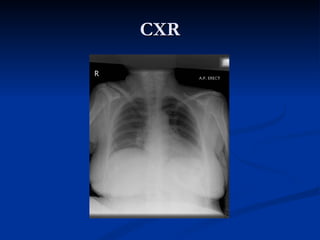
CXR
CXR The lungs are clear. No consolidation is seen. There is no pleural effusion.  Cardiomediastinal contour is within normal limits.   CT Brain Unremarkable
Assessment 1. Bilateral lower limb cellulitis and oedema 2. Hyponatraemia Differential diagnoses: Drug-induced hyponatraemia +/- SIADH
Initial Management Free Water restriction Daily body weights Slow iv N/Saline 12/24 Moduretic ceased, commenced on frusemide orally 20mg daily iv cephazolin 2g TDS
iv N/Saline infusion started
iv N/Saline infusion ceased
After discussion with Neurology registrar: carbamazepine ceased and replaced with levetiracetam 500mg BD for 5days then 1g BD
Carbamazepine ceased, commenced on levetiracetam
Sodium levels during admission iv N/Saline infusion started iv N/Saline infusion ceased carbamazepine ceased, levetiracetam started
Further investigations US Doppler of both legs: On both sides the deep venous system is patent and compressible with no evidence for a thrombus. The great saphenous vein is also patent on both sides.
Echocardiogram Possible left diastolic dysfunction and mildly elevated PA pressure Left atrium mildly dilated Right atrium mildly dilated Trivial MR and TR
On Discharge Discussion with GP, who agreed to frequent U&E monitoring
1997 Commenced on carbamazepine 100mg BD Major seizure requiring iv diazepam Several partial seizures requiring phenytoin infusion Patient already on sodium valproate 1200mg BD
Why Sodium disorder ? Important and most common electrolyte abnormality Has potential for significant morbidity and mortality Its homeostasis is vital to normal physiologic function of cells Most dominant extracellular cation Normal level is 135    145 mmol /L Hyponatremia is defined as < 135 mmol/L Severe hyponatremia < 125 mmol/L
 
 
Clinical Presentation Symptoms ranging from nausea and malaise (Mild Reduction) to confusion, seizures and coma (Severe Reduction) Neurological symptoms =due to intracerebral osmotic fluid shift and cerebral edema Neurological symptoms depends upon rapidity and severity of the serum sodium drops Can also find symptoms of associated medical conditions eg.CCF, Liver Failure, Renal Failure
Assessing Fluid Status Features of fluid overload Elevated JVP Crackles over lung bases Odema Features of reduced extracellular fluid dry mucous membrane tachycardia postural hypotension oliguria increased urine specific gravity
Investigations Urine Sodium and Osmolarity Urine:Plasma osmolarity normal ( >1.3:1) Serum Osmolarity and electrolytes Thyroid Function tests Liver function tests Urea and Creatinine Serum albumin,triglycerides,Serum cortisol levels Imaging tests s/a CT Scan,Ultrasound,CXR
Treatment of Hyponatremia Acute Onset < 3 days Symptoms ++ Tolerate rapid correction Needs hypertonic solution Chronic Onset Longer period Sometimes asymptomatic Slow correction needs rapid correction can damage brain by  demyelination  Usually treated with free water restriction and treat underlying cause
Treatment of severe acute hyponatremia Use of hypertonic solutions depends upon Duration and Magnitude of Hyponatremia Degree and Severity of Clinical Symptoms If Hypertonic saline is used, Na+ should be checked 2 to 4 hourly The desired increase in Na+ is 0.5 to 1.0 mol/L per hour Na+ deficit = 0.5 x Body Wt x (Desired – Current Na+ level) 0.5 x 60 kg x (125- 110) 0.5 x 60 x 15 = 450 mmol /L Normal Saline 0.9 % contains 150 mmol /L 3% Saline contains 500 mmol / L
Danger of rapid correction Osmotic myelinosis ( Central Pontine Myelinosis) rapid correction of Na in chronic hyponatremic patients   Increasing  extracellular tonicity   Brain Cells compensate by losing water    if hypertonic saline continue   drives water out of cells   myelinosis Clinical Symptoms  Spastic quadriparesis Difficulty in swallowing Speech problems Diplopia Delirium+Coma Deficits can  be permanent.
 
Medical Treatments Frusemide Increase free water excretion and sodium absorption.  Demelcocycline  (Hypotonic Hyponatremia caused by SIADH) cause insensitivity of distal renal tubules to the action of ADH  and produce a nephrogenic diabetes insipidus. Dose  600 – 900 mg/day  Needs renal physician consult Lithium Arginine Vasopressin antagonists  (for Hypervolemic Hyponatremia) Aquaresis effect( increase urine output of mostly free water, with little electrolyte loss
Anti diuretic hormone
Syndrome of Inappropriate ADH   Secretion Drugs Carcinoma Miscellaneous  Pulmonary Diseases Neurological SIADH
Diagnosis Criteria for SIADH Hyponatremia (< 130 mmol/l)  118 mmol/l Low plasma osmolarity(<270 mmol /kg)  260 mmol/kg High urinary sodium(>30 mmol/l)  49 mmol/l High urinary osmolarity(>150 mmol /kg)  370 mmol/kg Low/Normal plasma urea+creatiine Normal Cardiac, Liver , Thyroid functions
Drugs commonly associated with hyponatremia Class  Drug Mechanism Diuretic  Amiloride /Hydrochlorothiazide Indapamide Depletion total body sodium SSRI  Sertraline Citalopram and others SIADH MAOI Moclobemide SIADH Anticonvulsant Carbamazepine SIADH Antipsychotic olanzipine SIADH
Summary Hyponatremia is a common medical condition Management depends upon severity of clinical symptoms , duration and magnitude of sodium loss Need to remember the danger of osmotic myelinosis Drug induced hyponatremia is common Polypharmacy make prevalence of drug induced hyponatremia likely to increase.
References Therapeutic Guidelines Australia Prescriber Magazine Vol.26 No.5 2003 Harrison’s 17 edition  MIMS Online eMedicine N Eng Journal Med 2000 , Hyponatremia Dysnatremia management ,Acute Care Medicine Course Clinical Physiology of electrolyte disorder

SIADH

  • 1.
    A case ofHyponatraemia Phyo Aung & Li-ni Lin
  • 2.
    Ms JH 56yofemale referred from GP for bilateral lower leg cellulitis - unresponsive to Augmentin DF Prior to presentation at Angliss hospital 3 weeks of gross bilateral ankle oedema 2 weeks of bilateral lower limb cellulitis 4 days since commencing Moduretic Hyperactive behaviour at night Recently noted to be unsteady on feet.
  • 3.
    Other medical conditionsEpilepsy Intellectual disability secondary to SSPE measles Depression
  • 4.
    Medications Premarin 300mcgmane Premia 1tab mane Sodium valproate 1000mg TDS Carbamazepine 400mg BD Citalopram 20mg nocte Olanzapine 10mg nocte Augmentin Duo Forte Amiloride 5mg/Hydrochlorothiazide 50mg mane Haloperidol 0.5mg nocte PRN Paracetamol 1g QID PRN
  • 5.
    Social History livesin supported accommodation for mentally disabled
  • 6.
    On examination HR73, BP 120/70, RR 16, Temp 36.6 SaO2 99% on RA Patient alert but confused Chest clear JVPNE S1 and S2 heard, no murmurs Abdomen soft and non tender
  • 7.
    Lower limbs ErythematousWarm to touch Pitting oedema up to knees (left more than right) No ulcers or breaks in skin
  • 8.
    Investigations Na 118 K 3.7 Cl 83 Bicarbonate 27 Urea 4.4 Creatinine 34 FBE 103 /5.7/384
  • 9.
    Bilirubin 3 ALP114 GGT 54 ALT 12 TP 64 Albumin 30 Lipase 24 Ca 2.27 Mg 0.88 Phos 1.26
  • 10.
    CRP 31BSL 6.3 TSH 1.93 Vitamin B12 737 Folate 19 Serum osmolality 260 (280-300)
  • 11.
    Urine Na 49Urine K 37 Urine osmolality 370 Urine MCS no WBC no RBC no significant growth
  • 12.
  • 13.
    CXR The lungsare clear. No consolidation is seen. There is no pleural effusion. Cardiomediastinal contour is within normal limits. CT Brain Unremarkable
  • 14.
    Assessment 1. Bilaterallower limb cellulitis and oedema 2. Hyponatraemia Differential diagnoses: Drug-induced hyponatraemia +/- SIADH
  • 15.
    Initial Management FreeWater restriction Daily body weights Slow iv N/Saline 12/24 Moduretic ceased, commenced on frusemide orally 20mg daily iv cephazolin 2g TDS
  • 16.
  • 17.
  • 18.
    After discussion withNeurology registrar: carbamazepine ceased and replaced with levetiracetam 500mg BD for 5days then 1g BD
  • 19.
  • 20.
    Sodium levels duringadmission iv N/Saline infusion started iv N/Saline infusion ceased carbamazepine ceased, levetiracetam started
  • 21.
    Further investigations USDoppler of both legs: On both sides the deep venous system is patent and compressible with no evidence for a thrombus. The great saphenous vein is also patent on both sides.
  • 22.
    Echocardiogram Possible leftdiastolic dysfunction and mildly elevated PA pressure Left atrium mildly dilated Right atrium mildly dilated Trivial MR and TR
  • 23.
    On Discharge Discussionwith GP, who agreed to frequent U&E monitoring
  • 24.
    1997 Commenced oncarbamazepine 100mg BD Major seizure requiring iv diazepam Several partial seizures requiring phenytoin infusion Patient already on sodium valproate 1200mg BD
  • 25.
    Why Sodium disorder? Important and most common electrolyte abnormality Has potential for significant morbidity and mortality Its homeostasis is vital to normal physiologic function of cells Most dominant extracellular cation Normal level is 135  145 mmol /L Hyponatremia is defined as < 135 mmol/L Severe hyponatremia < 125 mmol/L
  • 26.
  • 27.
  • 28.
    Clinical Presentation Symptomsranging from nausea and malaise (Mild Reduction) to confusion, seizures and coma (Severe Reduction) Neurological symptoms =due to intracerebral osmotic fluid shift and cerebral edema Neurological symptoms depends upon rapidity and severity of the serum sodium drops Can also find symptoms of associated medical conditions eg.CCF, Liver Failure, Renal Failure
  • 29.
    Assessing Fluid StatusFeatures of fluid overload Elevated JVP Crackles over lung bases Odema Features of reduced extracellular fluid dry mucous membrane tachycardia postural hypotension oliguria increased urine specific gravity
  • 30.
    Investigations Urine Sodiumand Osmolarity Urine:Plasma osmolarity normal ( >1.3:1) Serum Osmolarity and electrolytes Thyroid Function tests Liver function tests Urea and Creatinine Serum albumin,triglycerides,Serum cortisol levels Imaging tests s/a CT Scan,Ultrasound,CXR
  • 31.
    Treatment of HyponatremiaAcute Onset < 3 days Symptoms ++ Tolerate rapid correction Needs hypertonic solution Chronic Onset Longer period Sometimes asymptomatic Slow correction needs rapid correction can damage brain by demyelination Usually treated with free water restriction and treat underlying cause
  • 32.
    Treatment of severeacute hyponatremia Use of hypertonic solutions depends upon Duration and Magnitude of Hyponatremia Degree and Severity of Clinical Symptoms If Hypertonic saline is used, Na+ should be checked 2 to 4 hourly The desired increase in Na+ is 0.5 to 1.0 mol/L per hour Na+ deficit = 0.5 x Body Wt x (Desired – Current Na+ level) 0.5 x 60 kg x (125- 110) 0.5 x 60 x 15 = 450 mmol /L Normal Saline 0.9 % contains 150 mmol /L 3% Saline contains 500 mmol / L
  • 33.
    Danger of rapidcorrection Osmotic myelinosis ( Central Pontine Myelinosis) rapid correction of Na in chronic hyponatremic patients  Increasing extracellular tonicity  Brain Cells compensate by losing water  if hypertonic saline continue  drives water out of cells  myelinosis Clinical Symptoms Spastic quadriparesis Difficulty in swallowing Speech problems Diplopia Delirium+Coma Deficits can be permanent.
  • 34.
  • 35.
    Medical Treatments FrusemideIncrease free water excretion and sodium absorption. Demelcocycline (Hypotonic Hyponatremia caused by SIADH) cause insensitivity of distal renal tubules to the action of ADH and produce a nephrogenic diabetes insipidus. Dose 600 – 900 mg/day Needs renal physician consult Lithium Arginine Vasopressin antagonists (for Hypervolemic Hyponatremia) Aquaresis effect( increase urine output of mostly free water, with little electrolyte loss
  • 36.
  • 37.
    Syndrome of InappropriateADH Secretion Drugs Carcinoma Miscellaneous Pulmonary Diseases Neurological SIADH
  • 38.
    Diagnosis Criteria forSIADH Hyponatremia (< 130 mmol/l) 118 mmol/l Low plasma osmolarity(<270 mmol /kg) 260 mmol/kg High urinary sodium(>30 mmol/l) 49 mmol/l High urinary osmolarity(>150 mmol /kg) 370 mmol/kg Low/Normal plasma urea+creatiine Normal Cardiac, Liver , Thyroid functions
  • 39.
    Drugs commonly associatedwith hyponatremia Class Drug Mechanism Diuretic Amiloride /Hydrochlorothiazide Indapamide Depletion total body sodium SSRI Sertraline Citalopram and others SIADH MAOI Moclobemide SIADH Anticonvulsant Carbamazepine SIADH Antipsychotic olanzipine SIADH
  • 40.
    Summary Hyponatremia isa common medical condition Management depends upon severity of clinical symptoms , duration and magnitude of sodium loss Need to remember the danger of osmotic myelinosis Drug induced hyponatremia is common Polypharmacy make prevalence of drug induced hyponatremia likely to increase.
  • 41.
    References Therapeutic GuidelinesAustralia Prescriber Magazine Vol.26 No.5 2003 Harrison’s 17 edition MIMS Online eMedicine N Eng Journal Med 2000 , Hyponatremia Dysnatremia management ,Acute Care Medicine Course Clinical Physiology of electrolyte disorder

Editor's Notes

  • #4 SSPE = subacute sclerosing panencephalitis
  • #5 Premia = Medroxyprogesterone acetate; Oestrogens, conjugated = HRT Premarin = Oestrogens, conjugated Moduretic
  • #27 Where Sodium Normally Stays
  • #29 Tolerated weell to gradual decline over several days to weeks
  • #33 Close monitoring of serum electrolytes every 2 to 4 hours necessary to avoid overcorrection.
  • #35 MRI of Pontine demyelination: Hyperdense area over pontine where demyelination occur
  • #39 Red color results are patient’s result
  • #40 Patient was taking red color drugs