Animal Nervous and
 Endocrine System
Co-ordination
• Animals must be able to sense and respond to
  the environment to survive.
   – temperature of their surroundings (avoid the hot sun)
   – be able to identify food
   – escape predators

Two systems are involved in co-ordination
• Nervous System
   – operates via electrical impulses along nerve fibres
• Endocrine Systems
   – operates by releasing special chemicals or hormones
     into the bloodstream from glands.
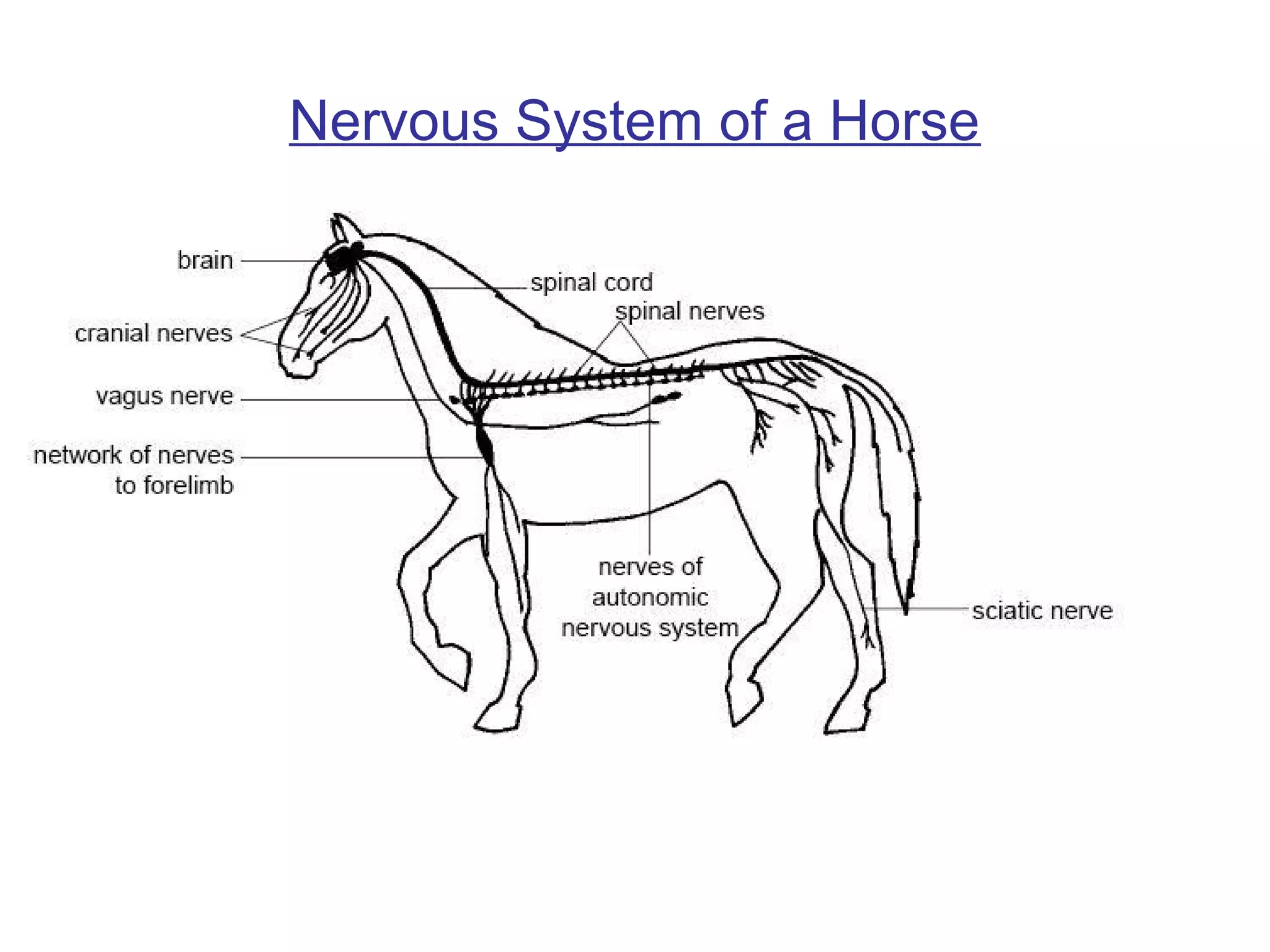
Nervous System of a Horse
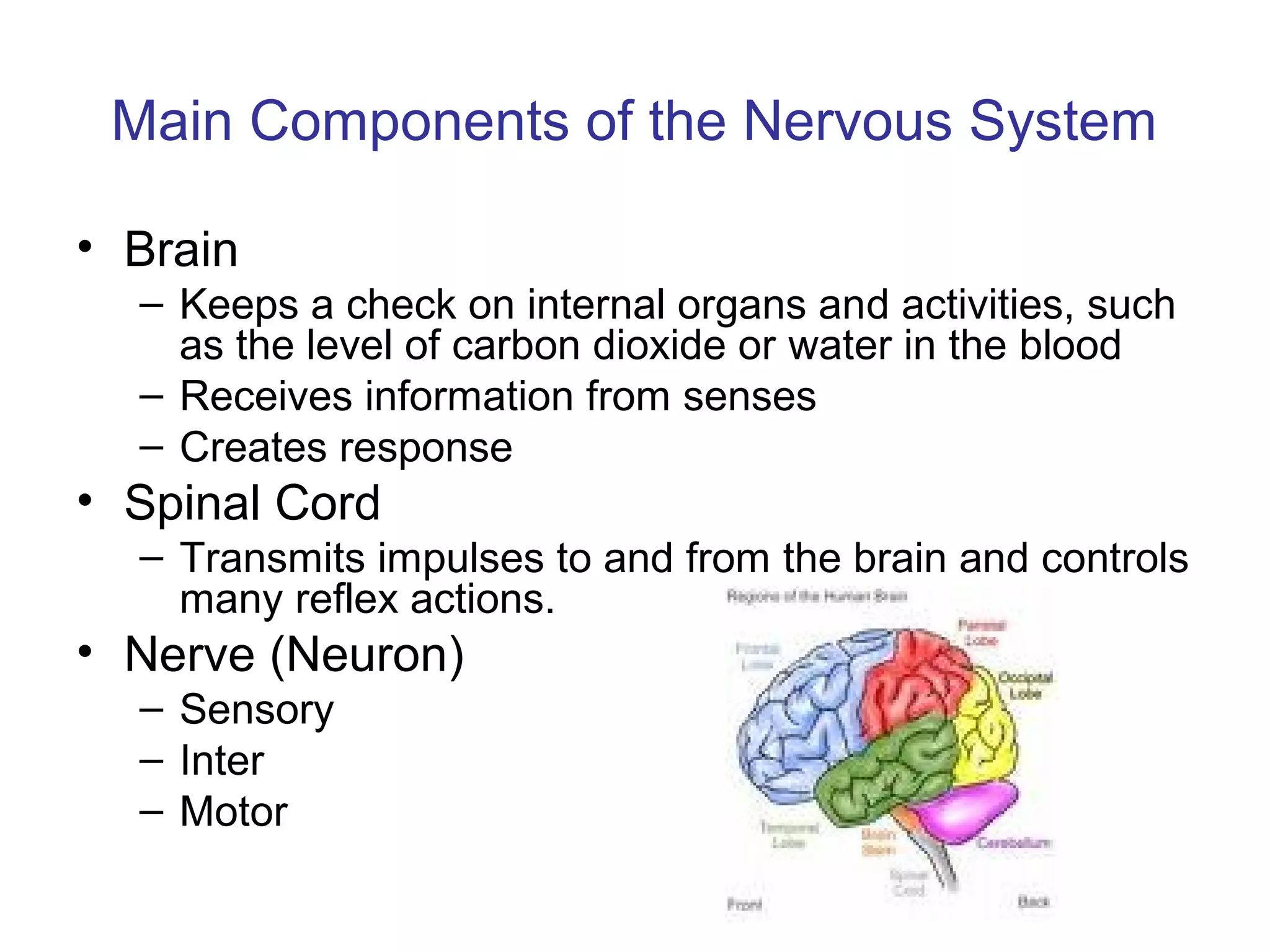
Main Components of the Nervous System

• Brain
  – Keeps a check on internal organs and activities, such
    as the level of carbon dioxide or water in the blood
  – Receives information from senses
  – Creates response
• Spinal Cord
  – Transmits impulses to and from the brain and controls
    many reflex actions.
• Nerve (Neuron)
  – Sensory
  – Inter
  – Motor
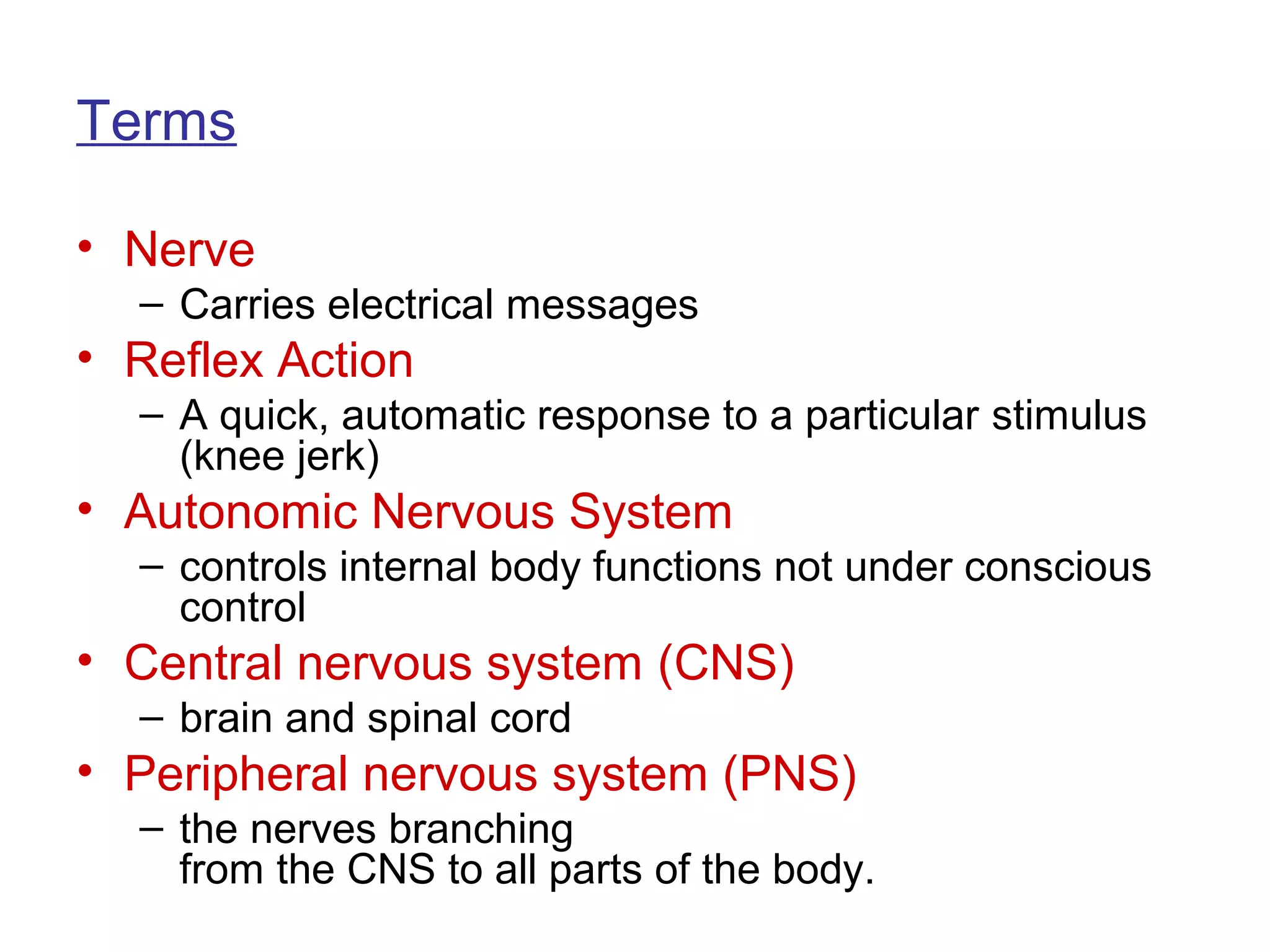
Terms

• Nerve
  – Carries electrical messages
• Reflex Action
  – A quick, automatic response to a particular stimulus
    (knee jerk)
• Autonomic Nervous System
  – controls internal body functions not under conscious
    control
• Central nervous system (CNS)
  – brain and spinal cord
• Peripheral nervous system (PNS)
  – the nerves branching
    from the CNS to all parts of the body.
Sense Organs
• Animals have specialised senses to
  provide them with information about their
  environment.
• The five senses are sight, hearing, touch,
  taste and smell
Sources of Stress     Reaction to Stress
• Predators           • Muscular Tension
• Lack of food and    • Adrenaline Rush
  water               • Increase Heartbeat
• Captivity           • Heightened
• No suitable mates     Awareness
• Extreme change in
  environment
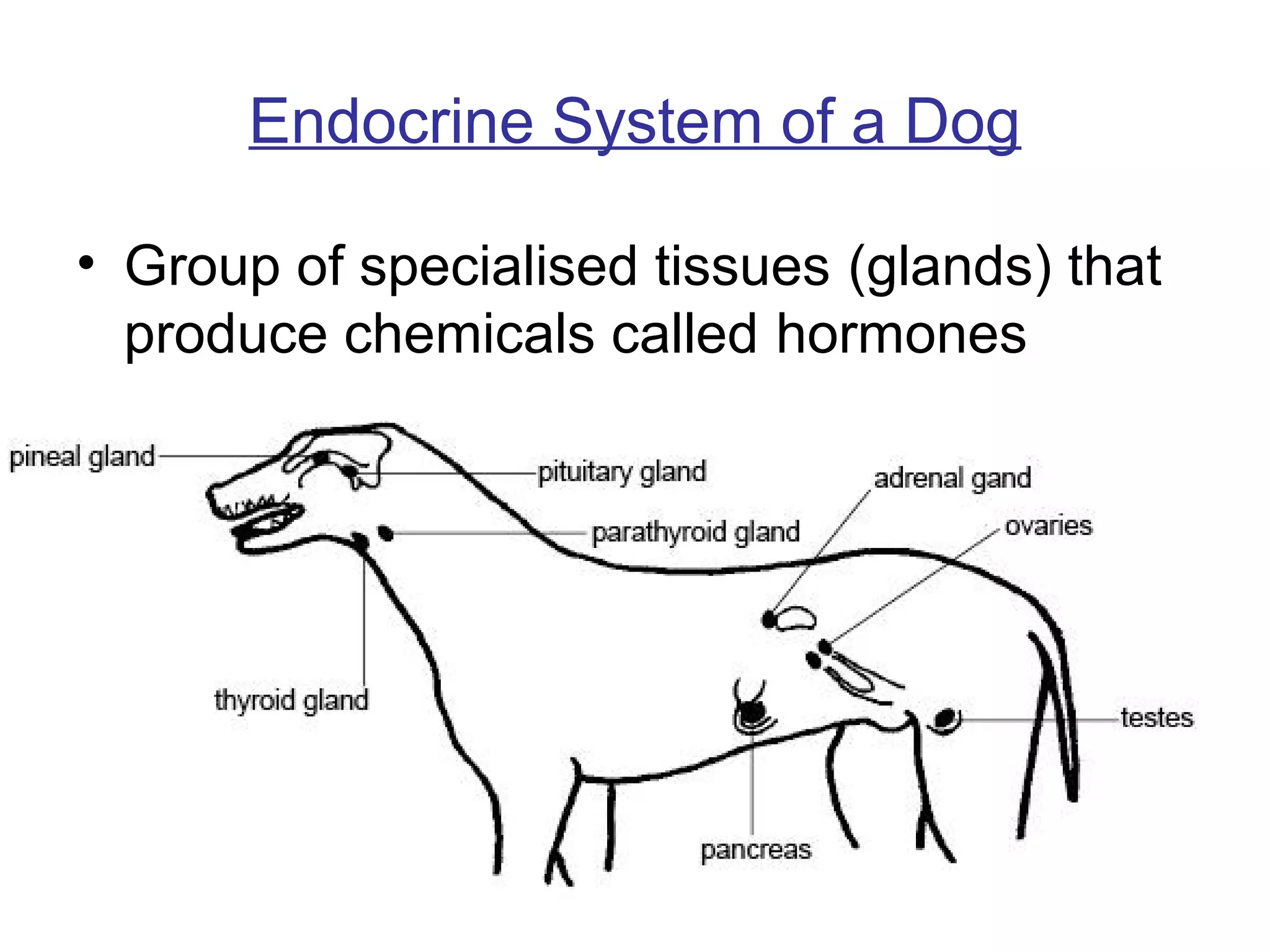
Endocrine System of a Dog

• Group of specialised tissues (glands) that
  produce chemicals called hormones
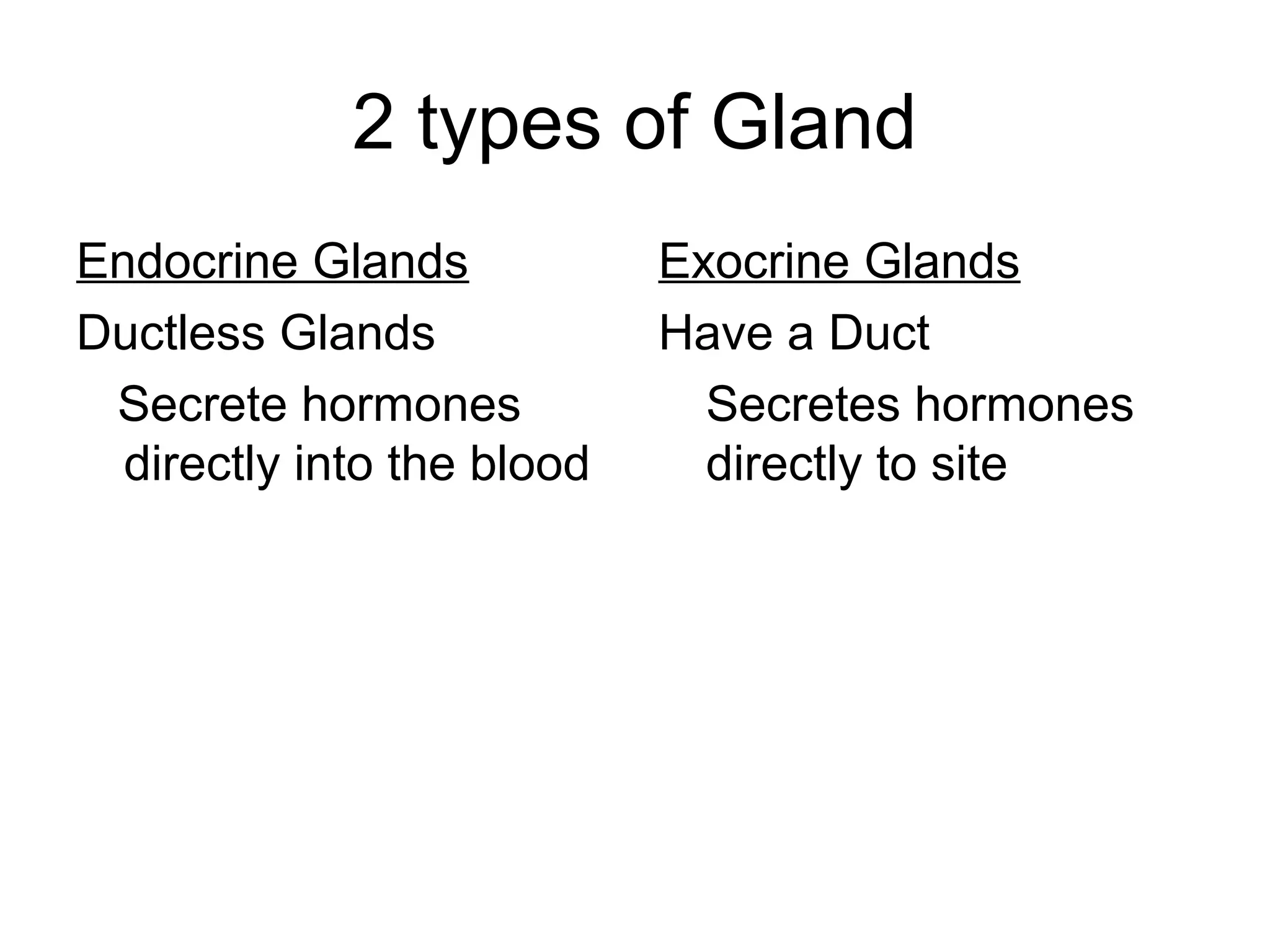
2 types of Gland
Endocrine Glands            Exocrine Glands
Ductless Glands             Have a Duct
 Secrete hormones             Secretes hormones
  directly into the blood     directly to site
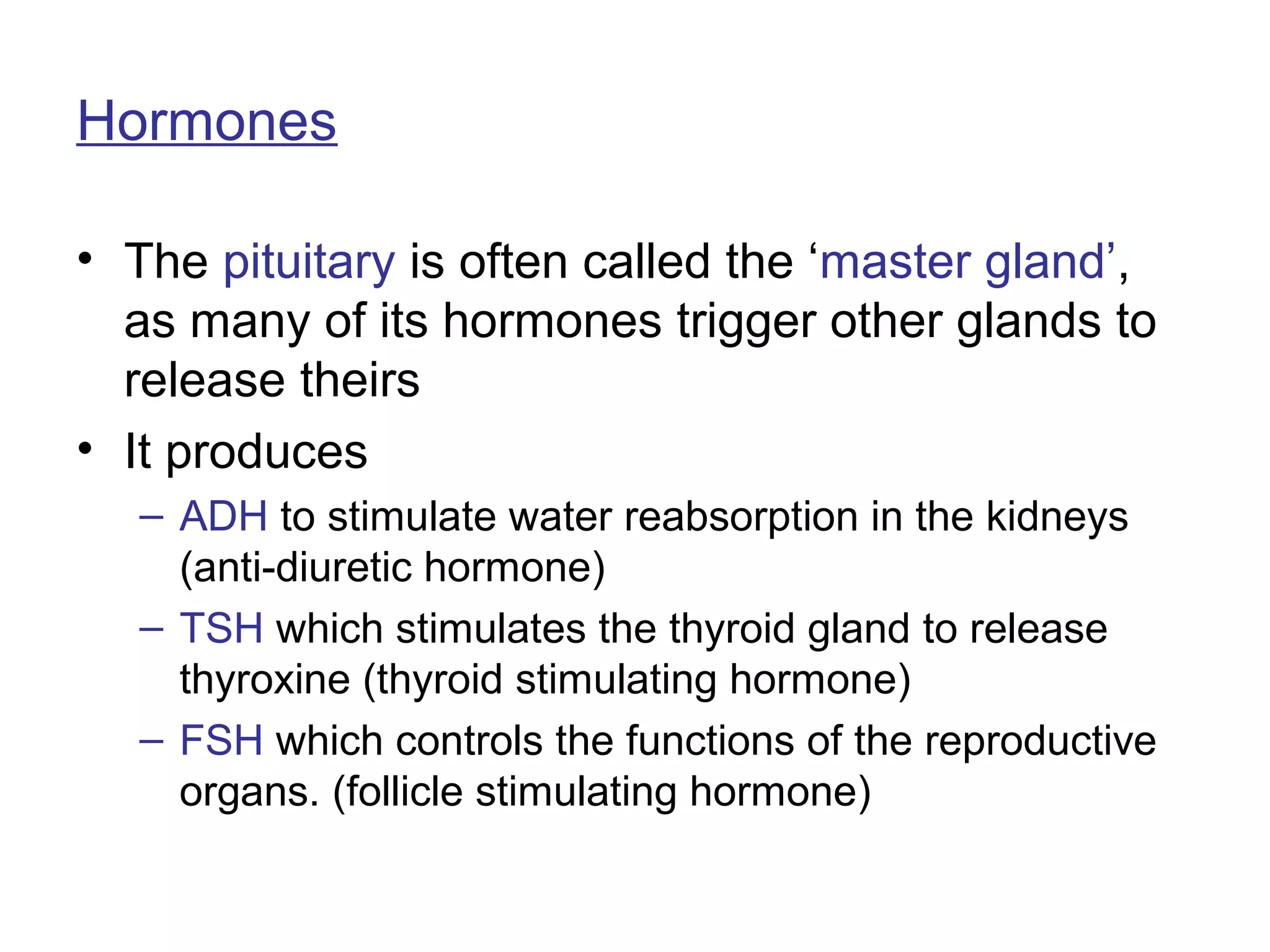
Hormones

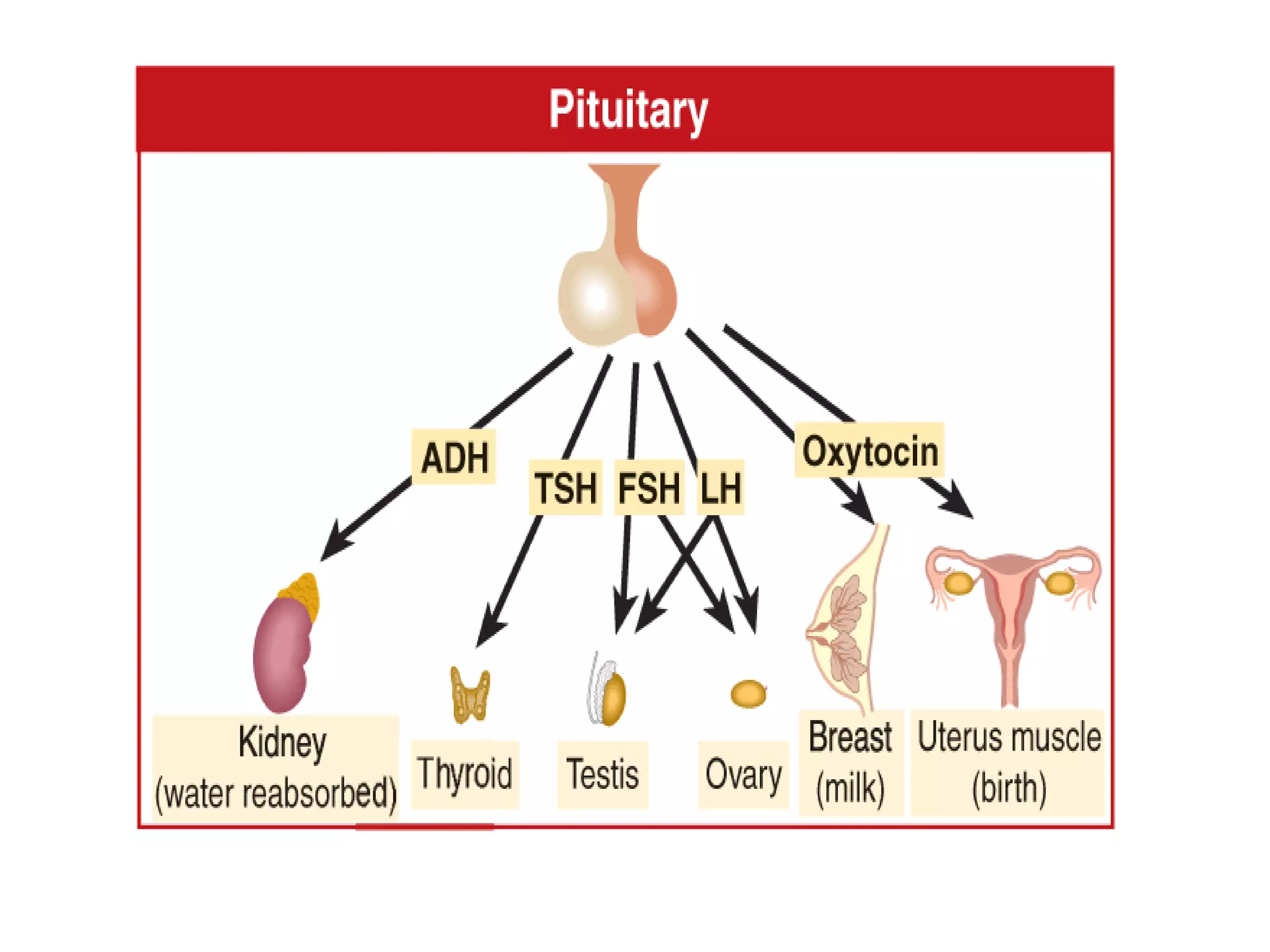
• The pituitary is often called the ‘master gland’,
  as many of its hormones trigger other glands to
  release theirs
• It produces
  – ADH to stimulate water reabsorption in the kidneys
    (anti-diuretic hormone)
  – TSH which stimulates the thyroid gland to release
    thyroxine (thyroid stimulating hormone)
  – FSH which controls the functions of the reproductive
    organs. (follicle stimulating hormone)
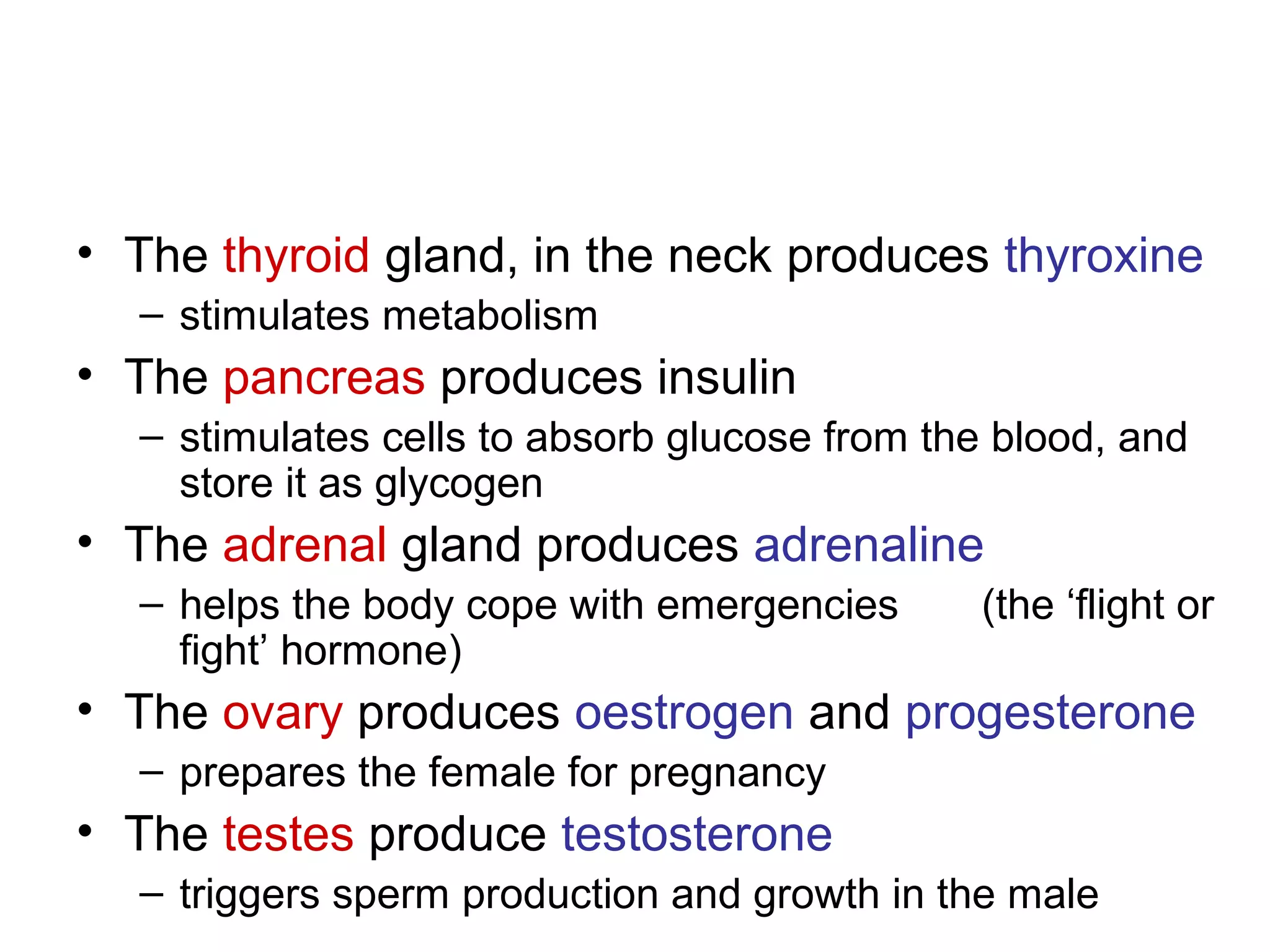
• The thyroid gland, in the neck produces thyroxine
  – stimulates metabolism
• The pancreas produces insulin
  – stimulates cells to absorb glucose from the blood, and
    store it as glycogen
• The adrenal gland produces adrenaline
  – helps the body cope with emergencies      (the ‘flight or
    fight’ hormone)
• The ovary produces oestrogen and progesterone
  – prepares the female for pregnancy
• The testes produce testosterone
  – triggers sperm production and growth in the male
Gland   Hormone   Function
Comparison of the endocrine and nervous
  systems - 1
                  Endocrine
Cells involved

Message

Carried by

Message sent to


Received by
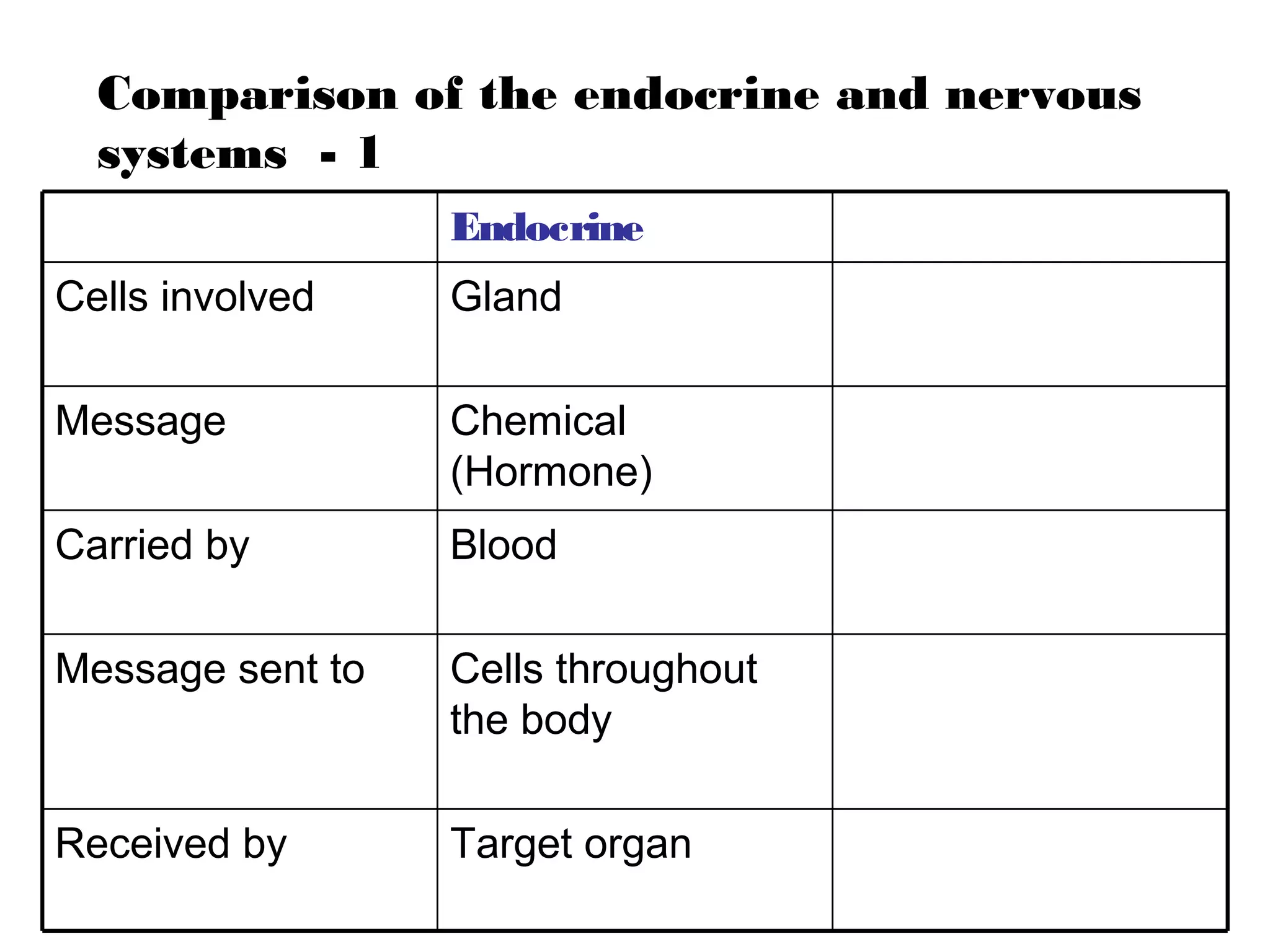
Comparison of the endocrine and nervous
  systems - 1
                  Endocrine
Cells involved    Gland

Message           Chemical
                  (Hormone)
Carried by        Blood

Message sent to   Cells throughout
                  the body

Received by       Target organ
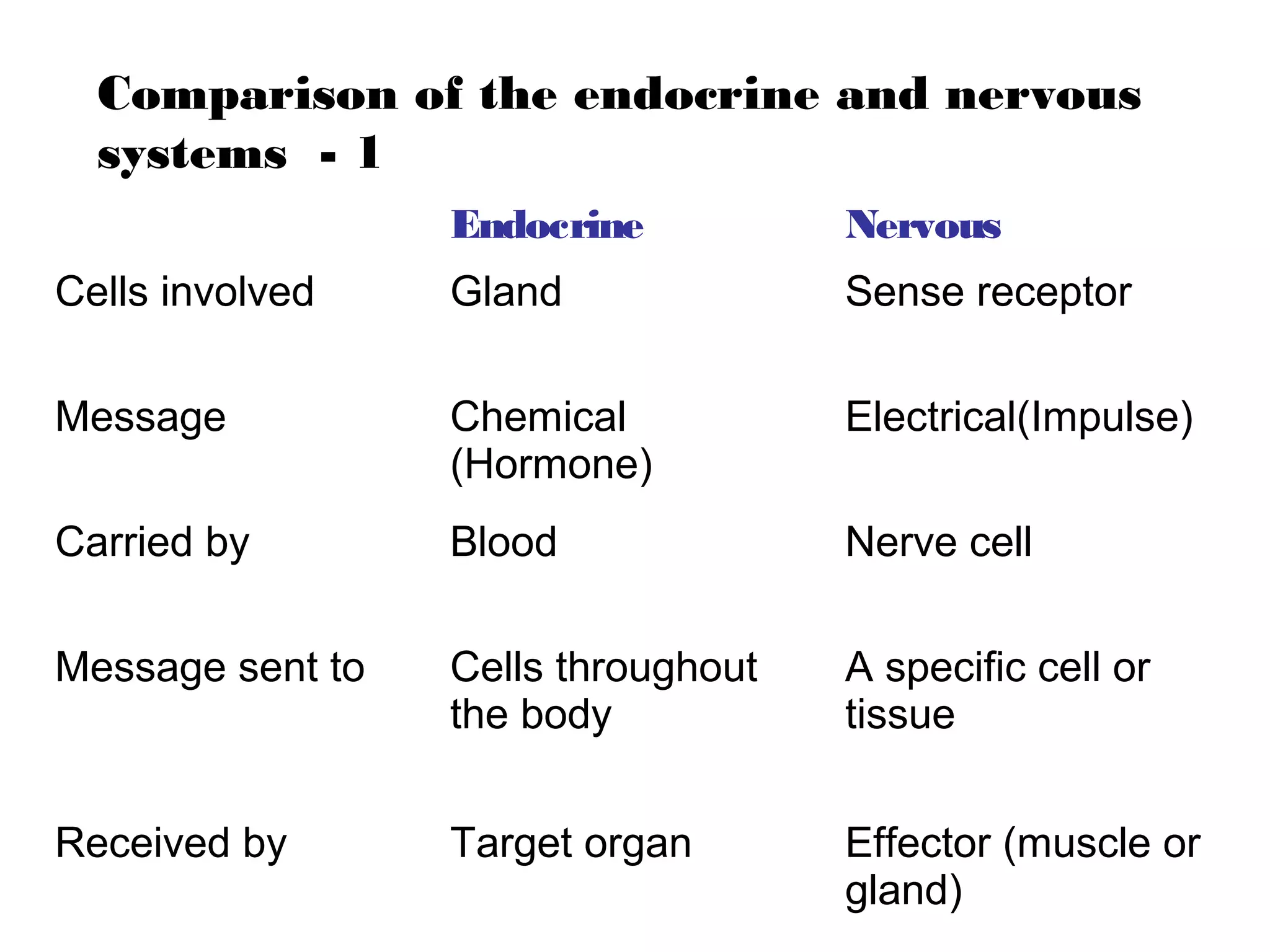
Comparison of the endocrine and nervous
  systems - 1
                  Endocrine          Nervous
Cells involved    Gland              Sense receptor

Message           Chemical           Electrical(Impulse)
                  (Hormone)
Carried by        Blood              Nerve cell

Message sent to   Cells throughout   A specific cell or
                  the body           tissue


Received by       Target organ       Effector (muscle or
                                     gland)
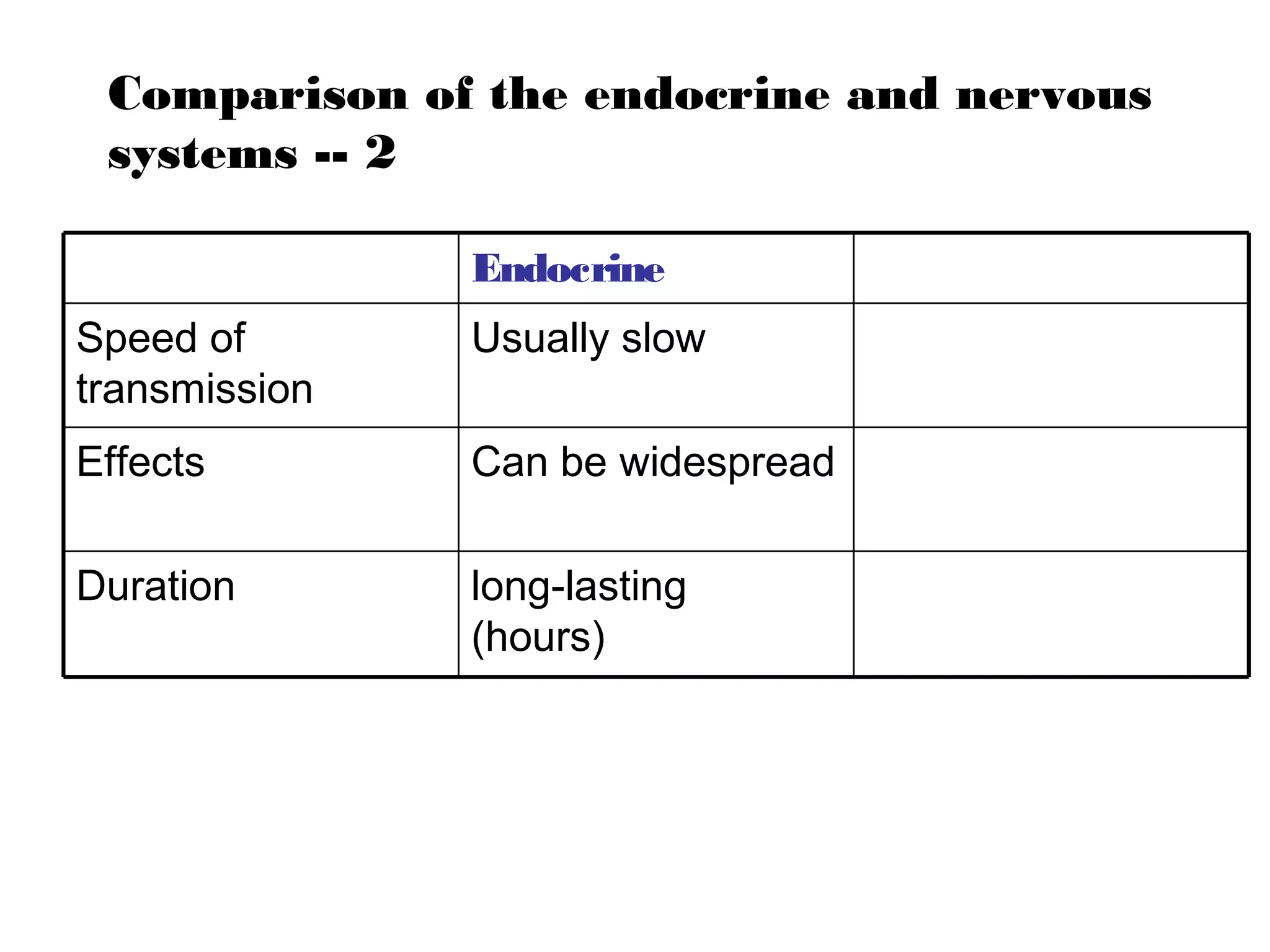
Comparison of the endocrine and nervous
 systems -- 2

               Endocrine
Speed of       Usually slow
transmission
Effects        Can be widespread

Duration       long-lasting
               (hours)
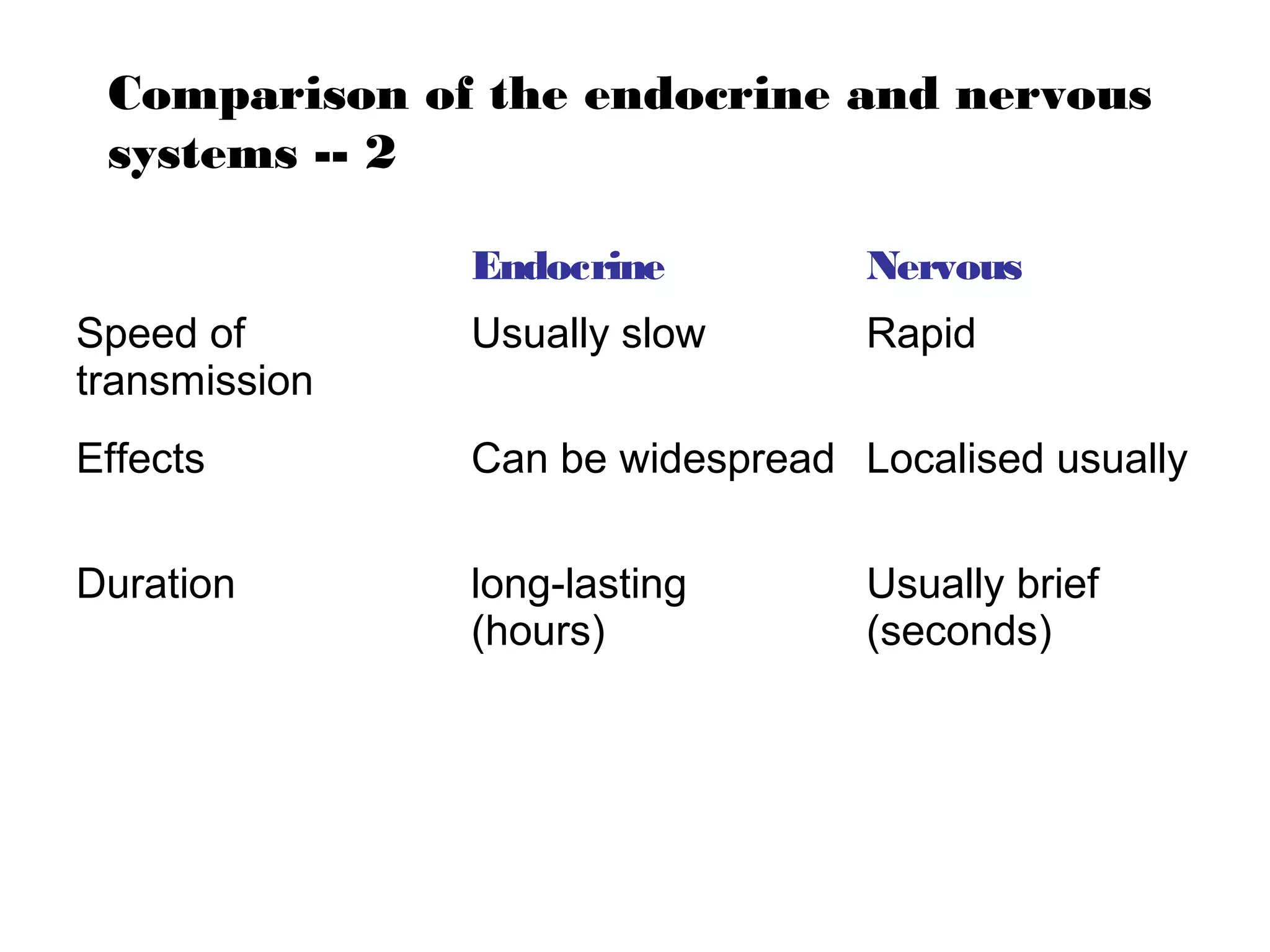
Comparison of the endocrine and nervous
 systems -- 2

               Endocrine          Nervous
Speed of       Usually slow       Rapid
transmission
Effects        Can be widespread Localised usually

Duration       long-lasting       Usually brief
               (hours)            (seconds)
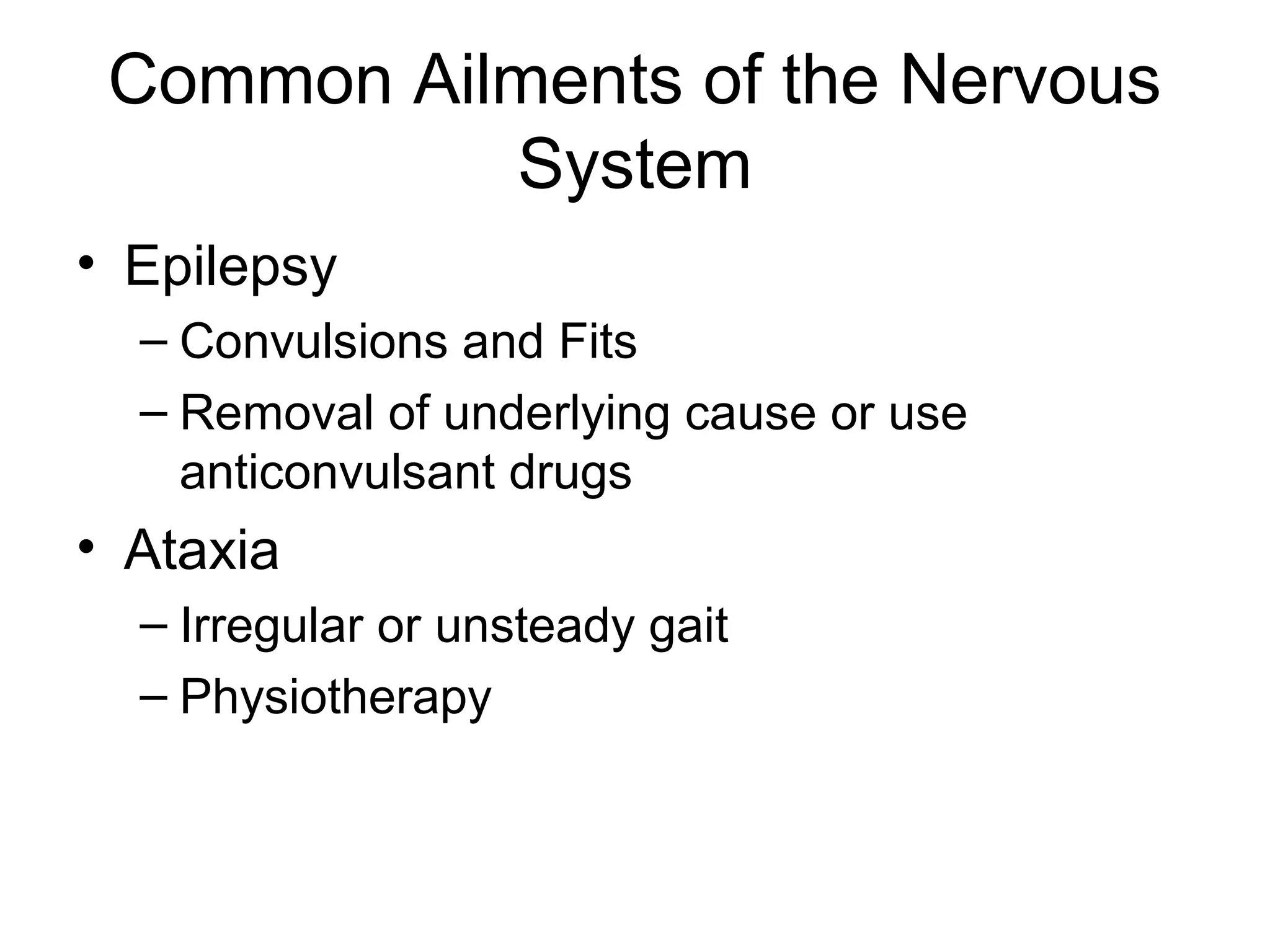
Common Ailments of the Nervous
           System
• Epilepsy
  – Convulsions and Fits
  – Removal of underlying cause or use
    anticonvulsant drugs
• Ataxia
  – Irregular or unsteady gait
  – Physiotherapy
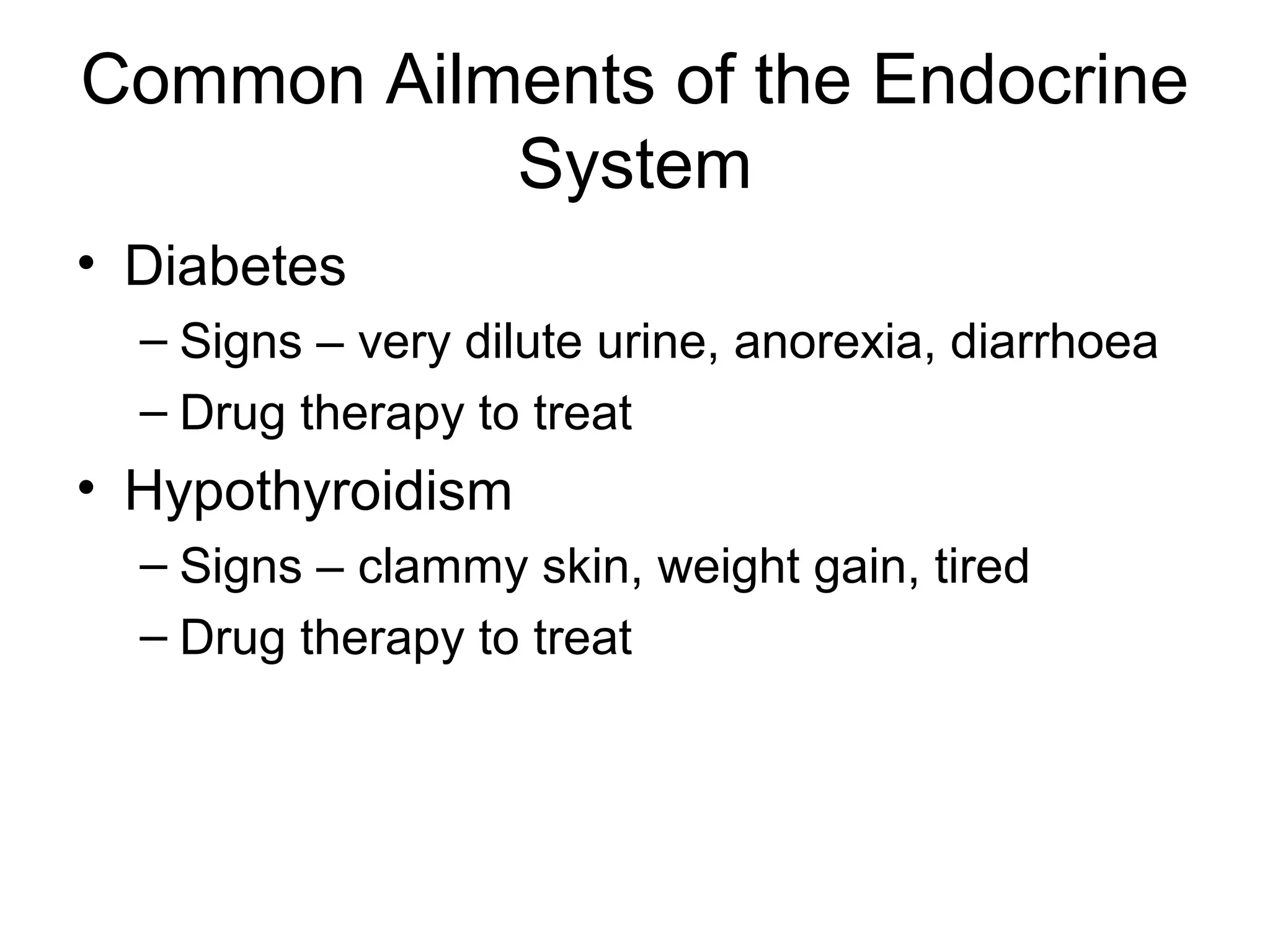
Common Ailments of the Endocrine
           System
• Diabetes
  – Signs – very dilute urine, anorexia, diarrhoea
  – Drug therapy to treat
• Hypothyroidism
  – Signs – clammy skin, weight gain, tired
  – Drug therapy to treat

Animal nervous and endocrine system

  • 1.
    Animal Nervous and Endocrine System
  • 2.
    Co-ordination • Animals mustbe able to sense and respond to the environment to survive. – temperature of their surroundings (avoid the hot sun) – be able to identify food – escape predators Two systems are involved in co-ordination • Nervous System – operates via electrical impulses along nerve fibres • Endocrine Systems – operates by releasing special chemicals or hormones into the bloodstream from glands.
  • 3.
  • 4.
    Main Components ofthe Nervous System • Brain – Keeps a check on internal organs and activities, such as the level of carbon dioxide or water in the blood – Receives information from senses – Creates response • Spinal Cord – Transmits impulses to and from the brain and controls many reflex actions. • Nerve (Neuron) – Sensory – Inter – Motor
  • 5.
    Terms • Nerve – Carries electrical messages • Reflex Action – A quick, automatic response to a particular stimulus (knee jerk) • Autonomic Nervous System – controls internal body functions not under conscious control • Central nervous system (CNS) – brain and spinal cord • Peripheral nervous system (PNS) – the nerves branching from the CNS to all parts of the body.
  • 6.
    Sense Organs • Animalshave specialised senses to provide them with information about their environment. • The five senses are sight, hearing, touch, taste and smell
  • 7.
    Sources of Stress Reaction to Stress • Predators • Muscular Tension • Lack of food and • Adrenaline Rush water • Increase Heartbeat • Captivity • Heightened • No suitable mates Awareness • Extreme change in environment
  • 8.
    Endocrine System ofa Dog • Group of specialised tissues (glands) that produce chemicals called hormones
  • 9.
    2 types ofGland Endocrine Glands Exocrine Glands Ductless Glands Have a Duct Secrete hormones Secretes hormones directly into the blood directly to site
  • 10.
    Hormones • The pituitaryis often called the ‘master gland’, as many of its hormones trigger other glands to release theirs • It produces – ADH to stimulate water reabsorption in the kidneys (anti-diuretic hormone) – TSH which stimulates the thyroid gland to release thyroxine (thyroid stimulating hormone) – FSH which controls the functions of the reproductive organs. (follicle stimulating hormone)
  • 12.
    • The thyroidgland, in the neck produces thyroxine – stimulates metabolism • The pancreas produces insulin – stimulates cells to absorb glucose from the blood, and store it as glycogen • The adrenal gland produces adrenaline – helps the body cope with emergencies (the ‘flight or fight’ hormone) • The ovary produces oestrogen and progesterone – prepares the female for pregnancy • The testes produce testosterone – triggers sperm production and growth in the male
  • 13.
    Gland Hormone Function
  • 14.
    Comparison of theendocrine and nervous systems - 1 Endocrine Cells involved Message Carried by Message sent to Received by
  • 15.
    Comparison of theendocrine and nervous systems - 1 Endocrine Cells involved Gland Message Chemical (Hormone) Carried by Blood Message sent to Cells throughout the body Received by Target organ
  • 16.
    Comparison of theendocrine and nervous systems - 1 Endocrine Nervous Cells involved Gland Sense receptor Message Chemical Electrical(Impulse) (Hormone) Carried by Blood Nerve cell Message sent to Cells throughout A specific cell or the body tissue Received by Target organ Effector (muscle or gland)
  • 17.
    Comparison of theendocrine and nervous systems -- 2 Endocrine Speed of Usually slow transmission Effects Can be widespread Duration long-lasting (hours)
  • 18.
    Comparison of theendocrine and nervous systems -- 2 Endocrine Nervous Speed of Usually slow Rapid transmission Effects Can be widespread Localised usually Duration long-lasting Usually brief (hours) (seconds)
  • 19.
    Common Ailments ofthe Nervous System • Epilepsy – Convulsions and Fits – Removal of underlying cause or use anticonvulsant drugs • Ataxia – Irregular or unsteady gait – Physiotherapy
  • 20.
    Common Ailments ofthe Endocrine System • Diabetes – Signs – very dilute urine, anorexia, diarrhoea – Drug therapy to treat • Hypothyroidism – Signs – clammy skin, weight gain, tired – Drug therapy to treat