The document summarizes three main types of digestive systems:
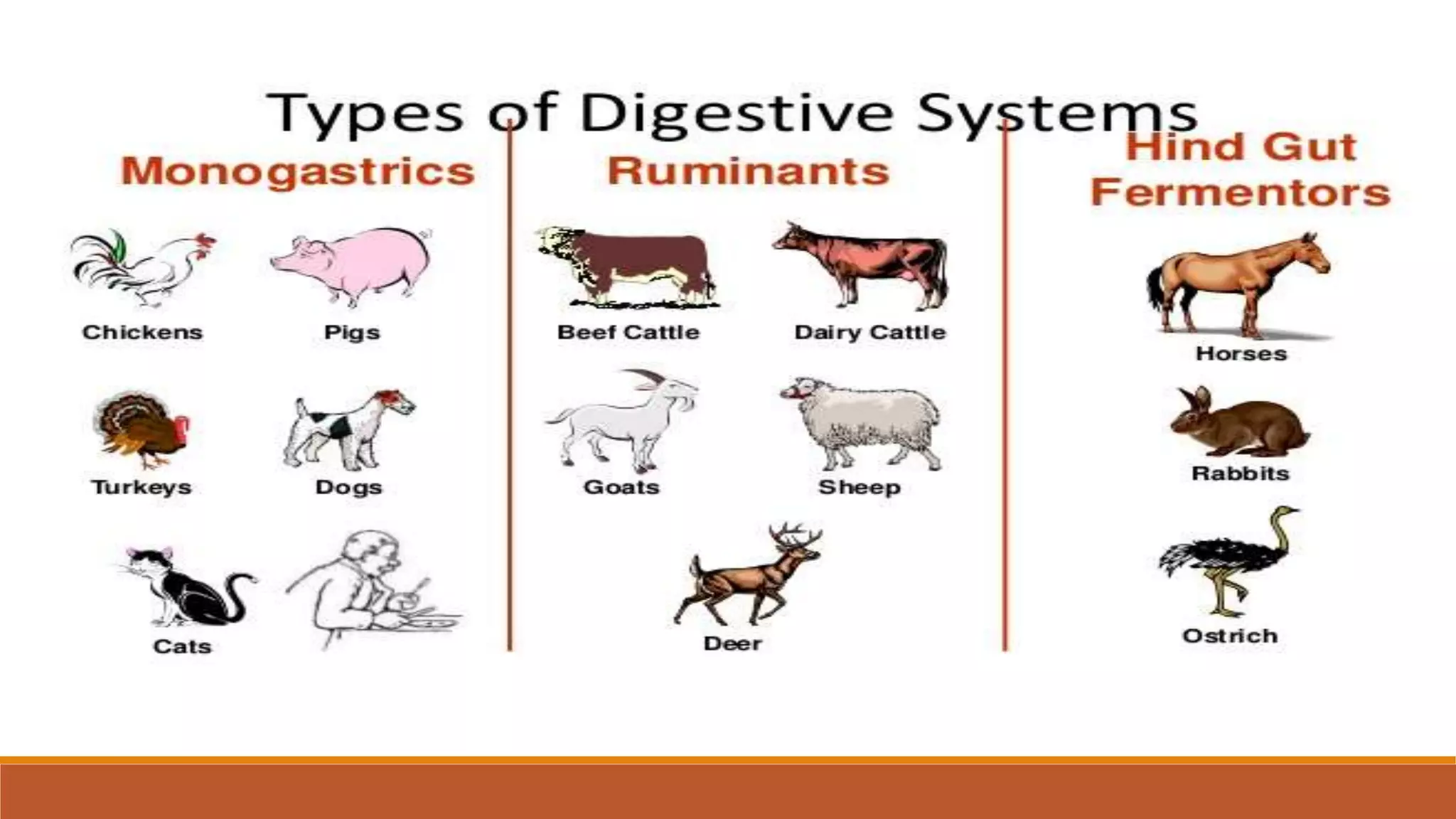
1) Ruminant systems like those in cattle and sheep have multi-chambered stomachs and use microbial fermentation in the rumen to digest plant matter.
2) Monogastric systems like in humans and pigs have a simple stomach and rely on enzymes and acid digestion.
3) Hindgut fermenters like horses have a simple stomach but very large and complex large intestine where cellulose is broken down by symbiotic bacteria.
Introduction
Three (3) basictypes of digestive systems according to their
stomachs :
►Monogastric – simple stomach.
►Ruminant (cranial fermentor) – multi-compartmented stomachs.
►Hind gut (caudal) fermentor – simple stomach, but very large and
complex large intestine
4.
Types of DigestiveSystems
• Are divided into three groups based on their food sources
1. Herbivores- are animals that eat plants exclusively
2. Carnivores- are animals that eat other animals
3. Omnivores- are animals that eat both plants and other animals
5.
Ruminant (foregut)
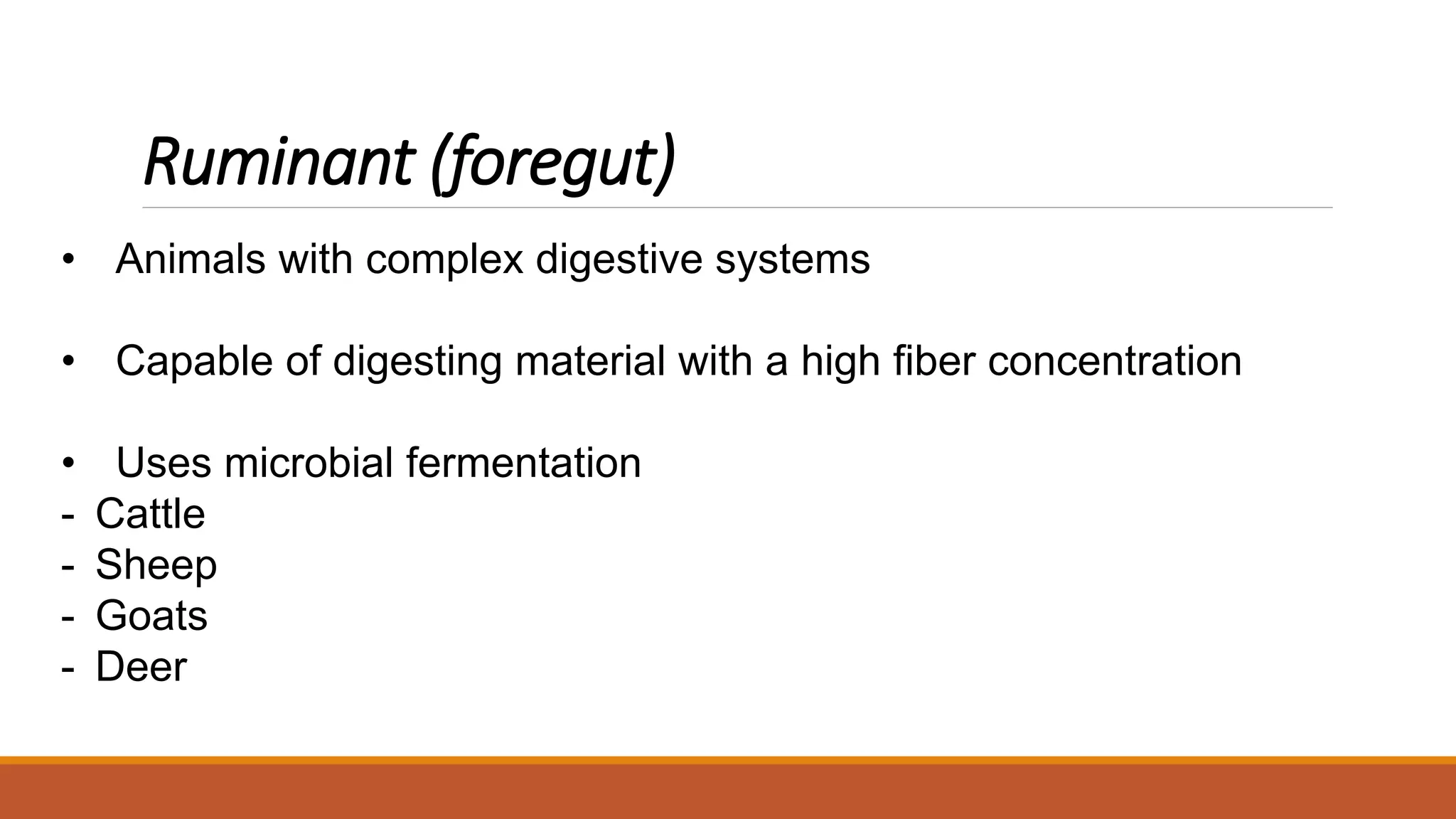
• Animalswith complex digestive systems
• Capable of digesting material with a high fiber concentration
• Uses microbial fermentation
- Cattle
- Sheep
- Goats
- Deer
6.
Ruminants are mammalsthat are able to acquire nutrients
from plant-based food by fermenting it in a
specialized stomach prior to digestion, principally through
microbial actions.
The rumen is one of four stomach compartments found in
ruminants. Ruminants are animals such as cattle, sheep,
goats and deer. (In comparison, animals such as pigs, dogs
and horses have only a single stomach compartment and
are called nonruminants, or monogastric animals.) The
rumen allows grazing animals to digest cellulose, a very
common carbohydrate in plants.
Ruman Microbe
• Thelarge microbe is a type of protist
• The creature that looks like a tadpole attached to the side of the
protist is a fungal spore
• The smaller, rod-shaped organism lining the underside of the
protist are bacteria.
11.
Parts and Functions
Reticulum
Compartment where liquid goes
Honeycomb in structure
Omasum
Grinds and squeezes
Removes some liquid
Abomasum
“True stomach”
Enzymes and acids
12.
Small Intestine
• Partiallydigested feed is mixed
- Bile
- Pancreatic Juice
- intestinal Juice
• Most of the food nutrient is absorbed
- Villi or Papillae
Large Intestine
• Main function is to absorbed water
• Add mucus to undigested feed
- Feces
13.
Monogastric
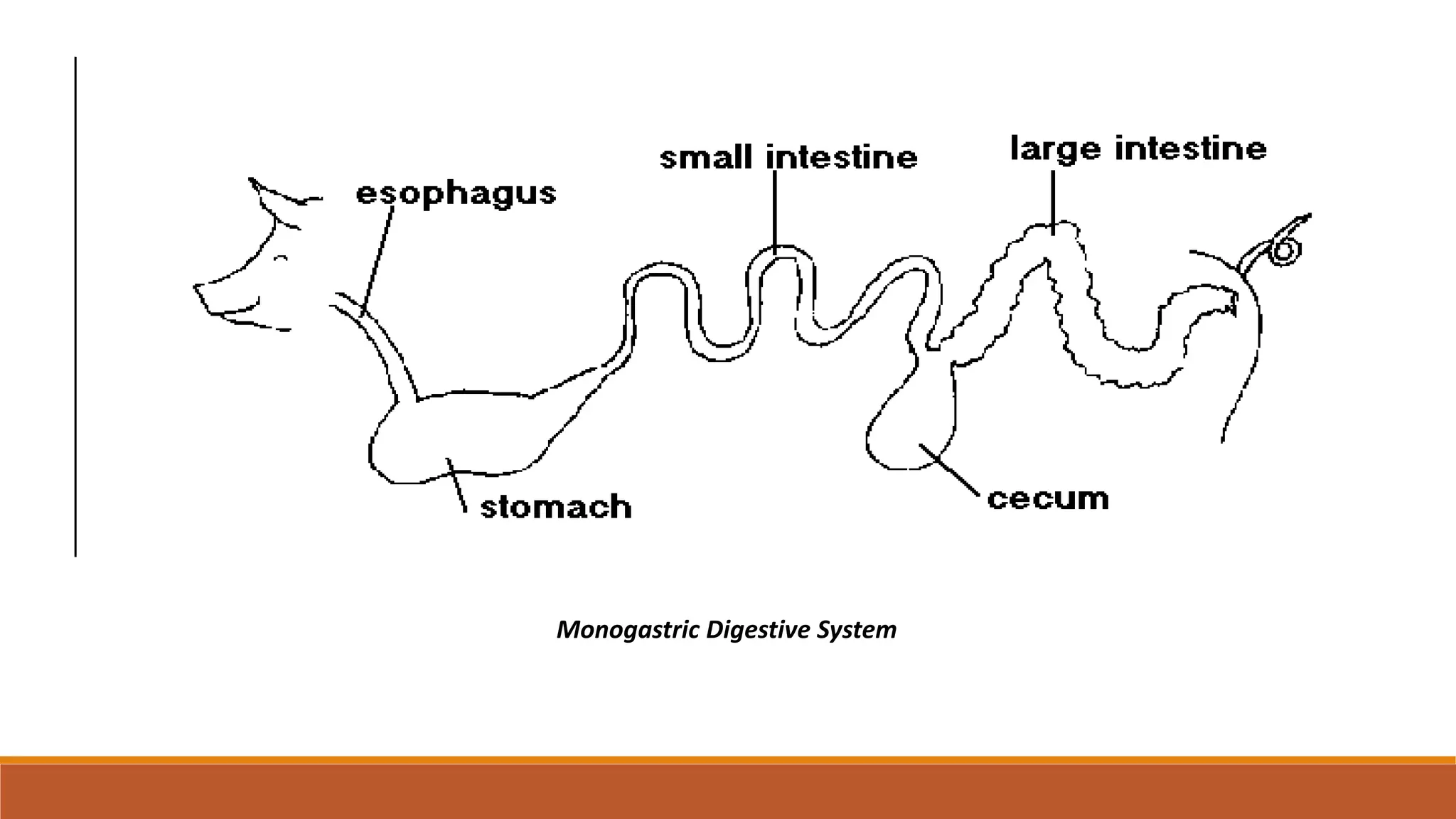
Simple digestive system
-A monogastric organism has a simple single-chambered stomach
- Feed must be highly quality concentrates
- Cannot digest large amount of fiber
• human
• Dogs
• Cats
• rabbits
• pigs
14.
Parts & Functions
•Mouth
• Esophagus
• Stomach
- Enzymes acts on feed
- Churns and mixes
• Small intestine
• Large intestine
Hindgut fermentation
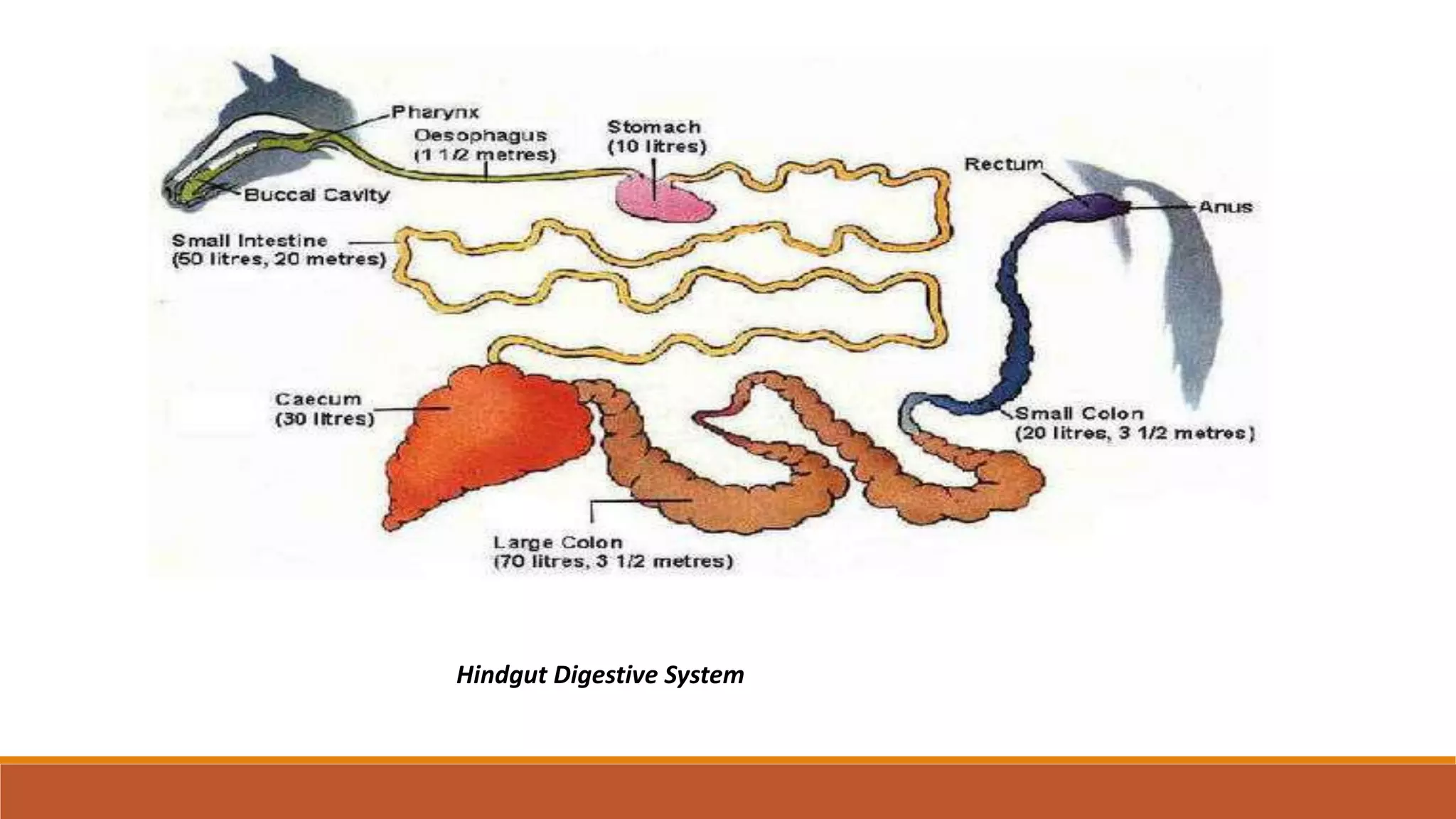
• Hindgutfermentation is a digestive process seen in monogastric herbivores,
animals with a simple, single-chambered stomach.
• The hindgut (or epigaster) is the posterior (caudal) part of the alimentary
canal. In mammals, it includes the distal third of the transverse colon and the
splenic flexure, the descending colon, sigmoid colon and rectum.
• Hindgut fermenters generally have a cecum and large intestine that are much
larger and more complex than those of a foregut or midgut fermenter.
18.
Hindgut fermentation isa digestive process seen in
monogastric herbivores, animals with a simple, single-
chambered stomach. Cellulose is digested with the aid of
symbiotic bacteria.
Hindgut fermenters generally have a cecum and large
intestine that are much larger and more complex than those of
a foregut or midgut fermenter.