ANIMAL ANATOMY 
Animal 
Systems 
SAMANTHA RUSSELL
CHAPTER 1 
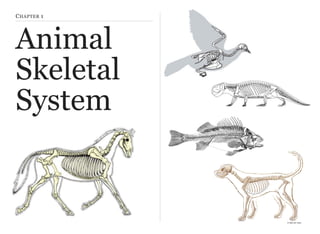
Animal 
Skeletal 
System
ANIMAL SKELETAL SYSTEM 
Functions 
THE 4 FUNCTIONS 
1. Shape 
2. Support 
3. Movement 
4. Protection 
1. The first function of the skeletal system is shape. The bones 
help with the shape of the body and will change as an 
animal continues to grow. 
2. Support is the next function of the skeletal system. Certain 
bones have hollow shapes to hold organs in place and other 
bones support the body by being strong enough to keep an 
animal from falling down. 
3. Movement is also an important part of the skeletal system. 
The bones attach to ligaments and tendons attach the 
muscles to the bones. All of these working together is called 
the musculoskeletal system and they allow the body to 
move. 
4. Protection is the final function. The bones help organs from 
being damaged in the case of a fall or being attacked. Bones 
are strong enough to withstand a fall and will protect all 
vital organs. 
2
ANIMAL SKELETAL SYSTEM 
Major Parts 
The bones protect the body and 
can withstand tremendous 
amounts of impact. For example a 
horses leg can withstand the 
weight of 1500 pounds while galloping at 30 mph. 
Cartilage is tissue meant to connect bones together. It works 
as a way to reduce friction between joints and allows for move-ment 
of the bones. 
The propose of ligaments is to connect bone to bone. They are 
found on every joint of the body. They protect the joints and 
also limit how much a joint can move in each way. 
Tendons are much like ligaments but instead of bone to bone 
they connect bones to muscles. The main purpose is to trans-fer 
force between muscles and bones. 
Joints are formed where two bones meet. There are three 
types of joints. Most of them move freely, some are semi-moveable, 
and few have no movement. 
3
ANIMAL SKELETAL SYSTEM 
Different Parts of Bones 
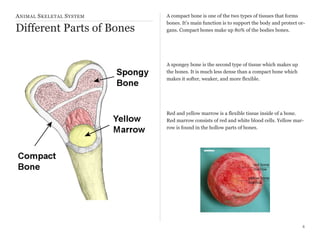
A compact bone is one of the two types of tissues that forms 
bones. It’s main function is to support the body and protect or-gans. 
Compact bones make up 80% of the bodies bones. 
A spongey bone is the second type of tissue which makes up 
the bones. It is much less dense than a compact bone which 
makes it softer, weaker, and more flexible. 
Red and yellow marrow is a flexible tissue inside of a bone. 
Red marrow consists of red and white blood cells. Yellow mar-row 
is found in the hollow parts of bones. 
4
ANIMAL SKELETAL SYSTEM 
Types of Joints 
There are three types of main joints. Fibrous, cartilaginous, 
and synovial. Within the synovial group there are five more 
types of joints. 
Fibrous joints are immovable. They are held together by 
strong connective tissue. An example of a fibrous joint is the 
skull. 
Cartilaginous joints have a limited amount of movement. An 
example would be the hip bone. 
Synovial joints have free movement. These joints reduce fric-tion 
and help with movement. There are five types of synovial 
joints; ball-and-socket, hinge, gliding, pivot, and compound 
joints. 
Ball-and-socket joints are when a round headed bone fits into 
a hollow socket. An example is a is shoulder joint. 
Hinge joints make movement possible on one plane. Knee and 
elbow joints are two examples. 
Gliding joints are be-tween 
two flat surfaces 
and slide over one an-other. 
There is a limited 
amount of movement 
like in the wrist. 
Pivot joints are a boney ring that rotates around another bone. 
An example is the head being able to turn side to side. 
Compound joints are made up of several joints between a num-ber 
of bones. There is a variety of movement and nodding the 
head is an example. 
5

Animal skeletal system

  • 1.
    ANIMAL ANATOMY Animal Systems SAMANTHA RUSSELL
  • 2.
    CHAPTER 1 Animal Skeletal System
  • 3.
    ANIMAL SKELETAL SYSTEM Functions THE 4 FUNCTIONS 1. Shape 2. Support 3. Movement 4. Protection 1. The first function of the skeletal system is shape. The bones help with the shape of the body and will change as an animal continues to grow. 2. Support is the next function of the skeletal system. Certain bones have hollow shapes to hold organs in place and other bones support the body by being strong enough to keep an animal from falling down. 3. Movement is also an important part of the skeletal system. The bones attach to ligaments and tendons attach the muscles to the bones. All of these working together is called the musculoskeletal system and they allow the body to move. 4. Protection is the final function. The bones help organs from being damaged in the case of a fall or being attacked. Bones are strong enough to withstand a fall and will protect all vital organs. 2
  • 4.
    ANIMAL SKELETAL SYSTEM Major Parts The bones protect the body and can withstand tremendous amounts of impact. For example a horses leg can withstand the weight of 1500 pounds while galloping at 30 mph. Cartilage is tissue meant to connect bones together. It works as a way to reduce friction between joints and allows for move-ment of the bones. The propose of ligaments is to connect bone to bone. They are found on every joint of the body. They protect the joints and also limit how much a joint can move in each way. Tendons are much like ligaments but instead of bone to bone they connect bones to muscles. The main purpose is to trans-fer force between muscles and bones. Joints are formed where two bones meet. There are three types of joints. Most of them move freely, some are semi-moveable, and few have no movement. 3
  • 5.
    ANIMAL SKELETAL SYSTEM Different Parts of Bones A compact bone is one of the two types of tissues that forms bones. It’s main function is to support the body and protect or-gans. Compact bones make up 80% of the bodies bones. A spongey bone is the second type of tissue which makes up the bones. It is much less dense than a compact bone which makes it softer, weaker, and more flexible. Red and yellow marrow is a flexible tissue inside of a bone. Red marrow consists of red and white blood cells. Yellow mar-row is found in the hollow parts of bones. 4
  • 6.
    ANIMAL SKELETAL SYSTEM Types of Joints There are three types of main joints. Fibrous, cartilaginous, and synovial. Within the synovial group there are five more types of joints. Fibrous joints are immovable. They are held together by strong connective tissue. An example of a fibrous joint is the skull. Cartilaginous joints have a limited amount of movement. An example would be the hip bone. Synovial joints have free movement. These joints reduce fric-tion and help with movement. There are five types of synovial joints; ball-and-socket, hinge, gliding, pivot, and compound joints. Ball-and-socket joints are when a round headed bone fits into a hollow socket. An example is a is shoulder joint. Hinge joints make movement possible on one plane. Knee and elbow joints are two examples. Gliding joints are be-tween two flat surfaces and slide over one an-other. There is a limited amount of movement like in the wrist. Pivot joints are a boney ring that rotates around another bone. An example is the head being able to turn side to side. Compound joints are made up of several joints between a num-ber of bones. There is a variety of movement and nodding the head is an example. 5