Downloaded 43 times
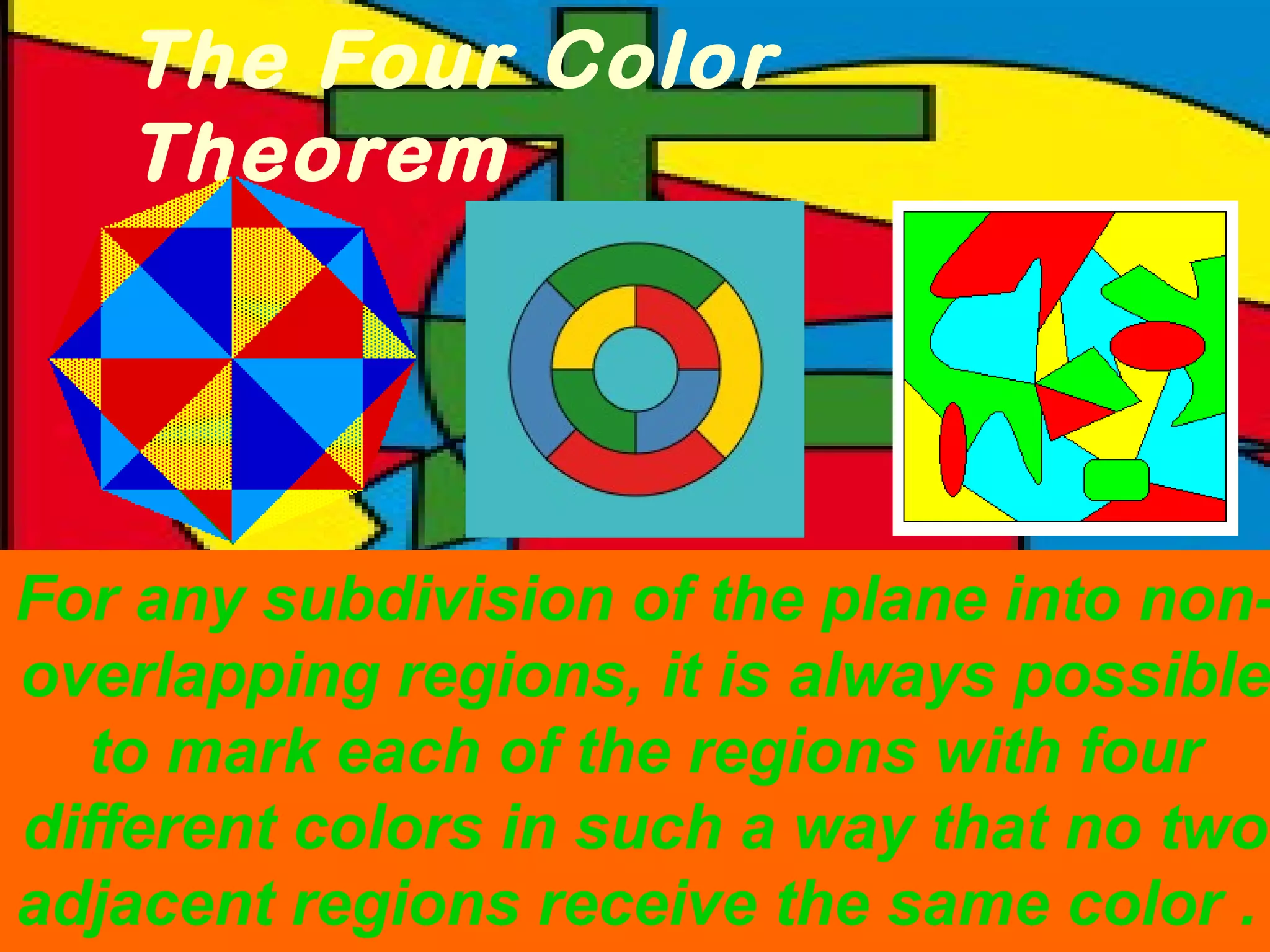
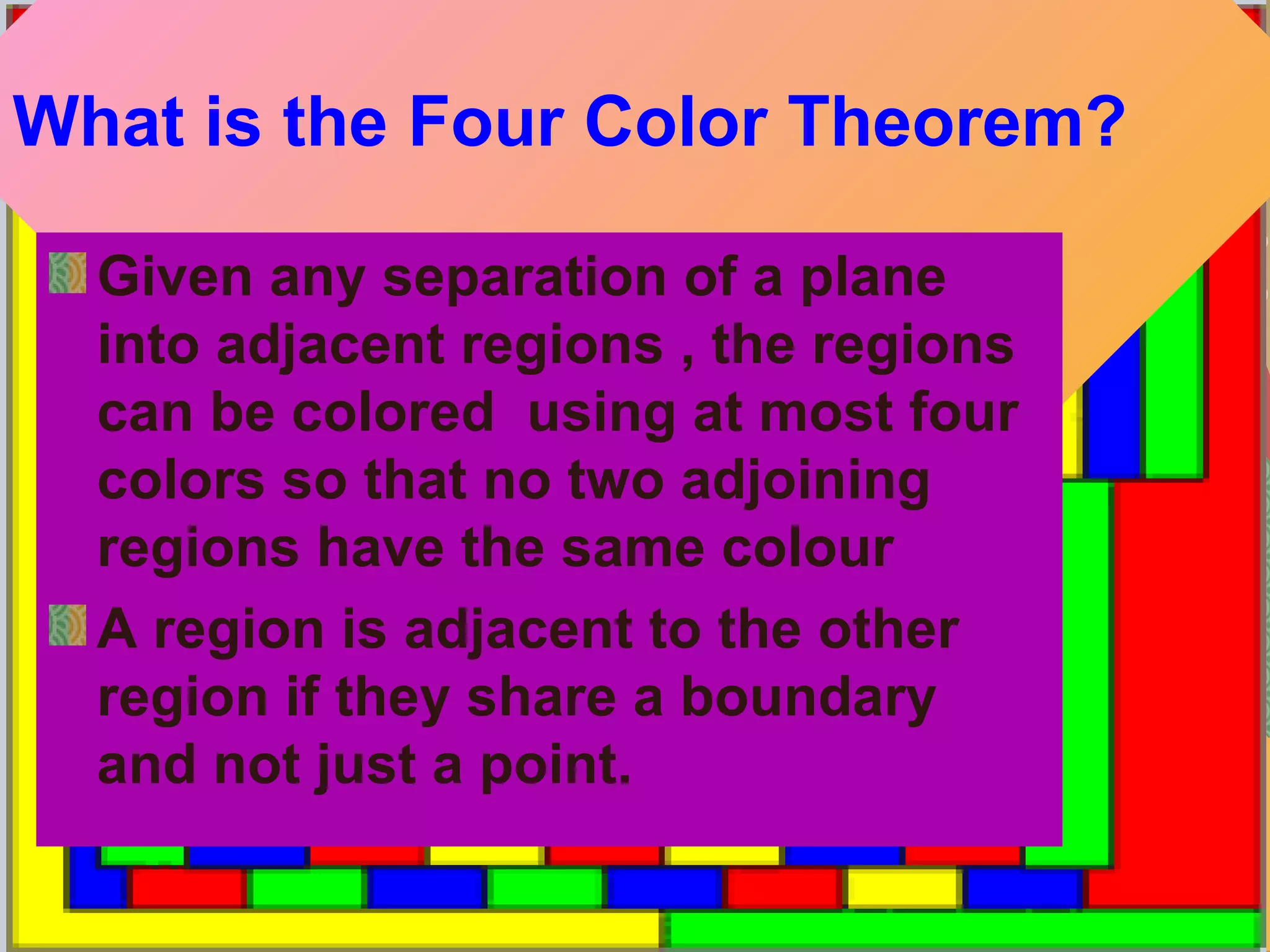
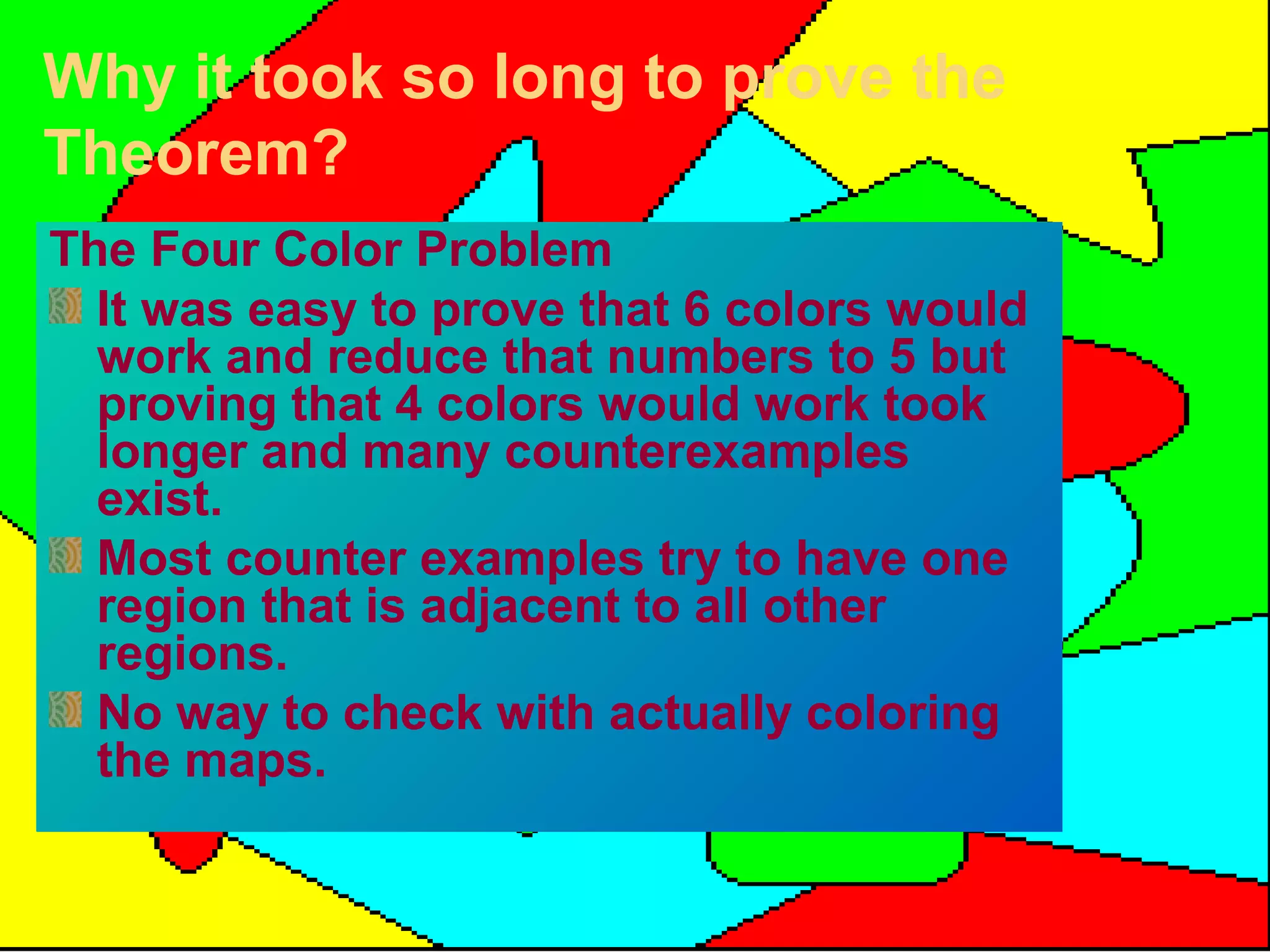



The Four Color Theorem states that for any subdivision of a plane into adjacent regions, the regions can be colored with no more than four colors such that no two adjacent regions share the same color. The theorem was first proven in 1976 by Kenneth Appel and Wolfgang Haken using a computer, which was the first major theorem to be proven this way. It took a long time to prove because finding counterexamples that disproved previous attempts was difficult, as it required checking all possible colorings. The proof works by reducing configurations to a small set that can be colored with four colors, reaching a contradiction if a map requires more colors.


