Downloaded 48 times
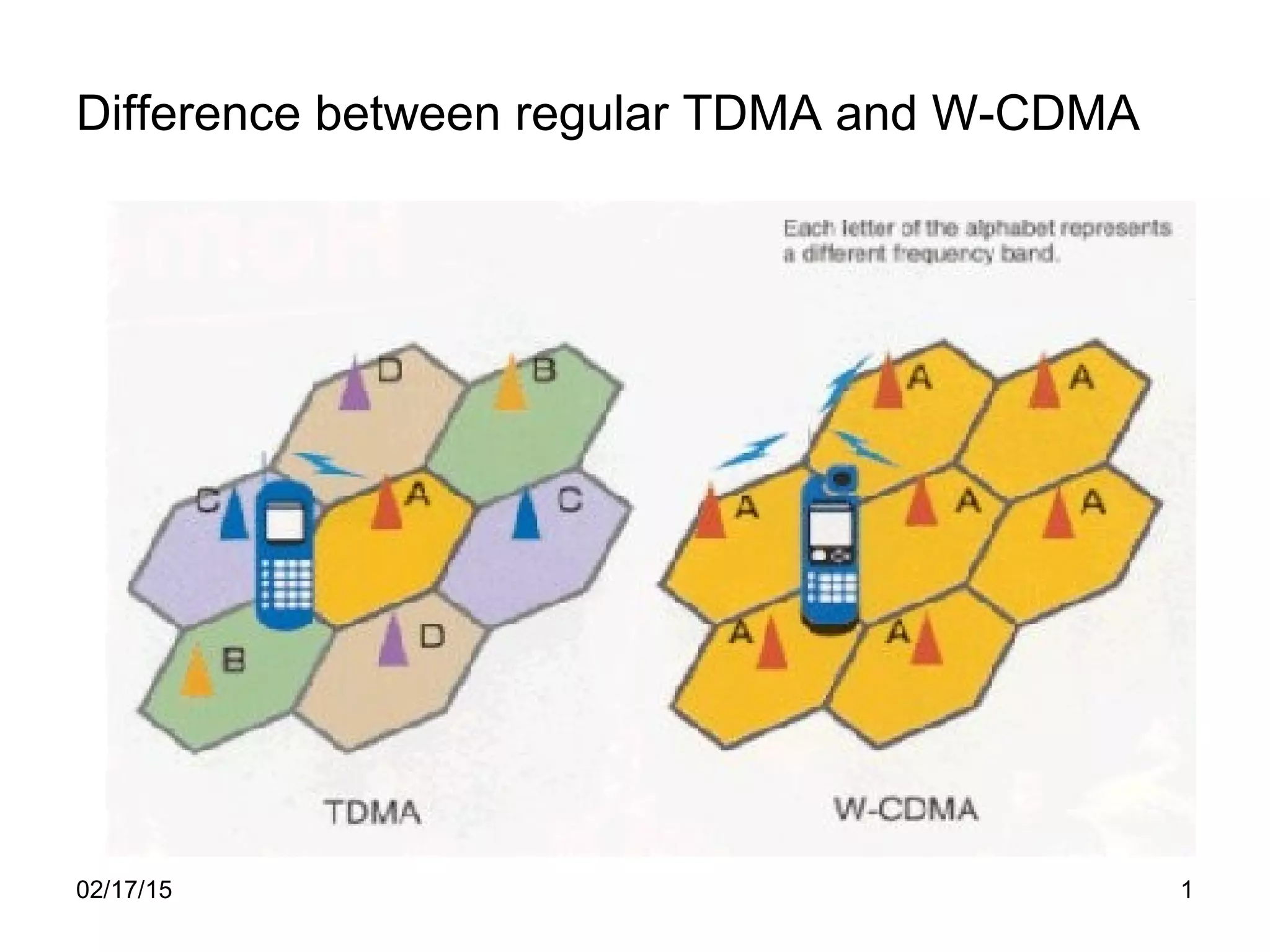

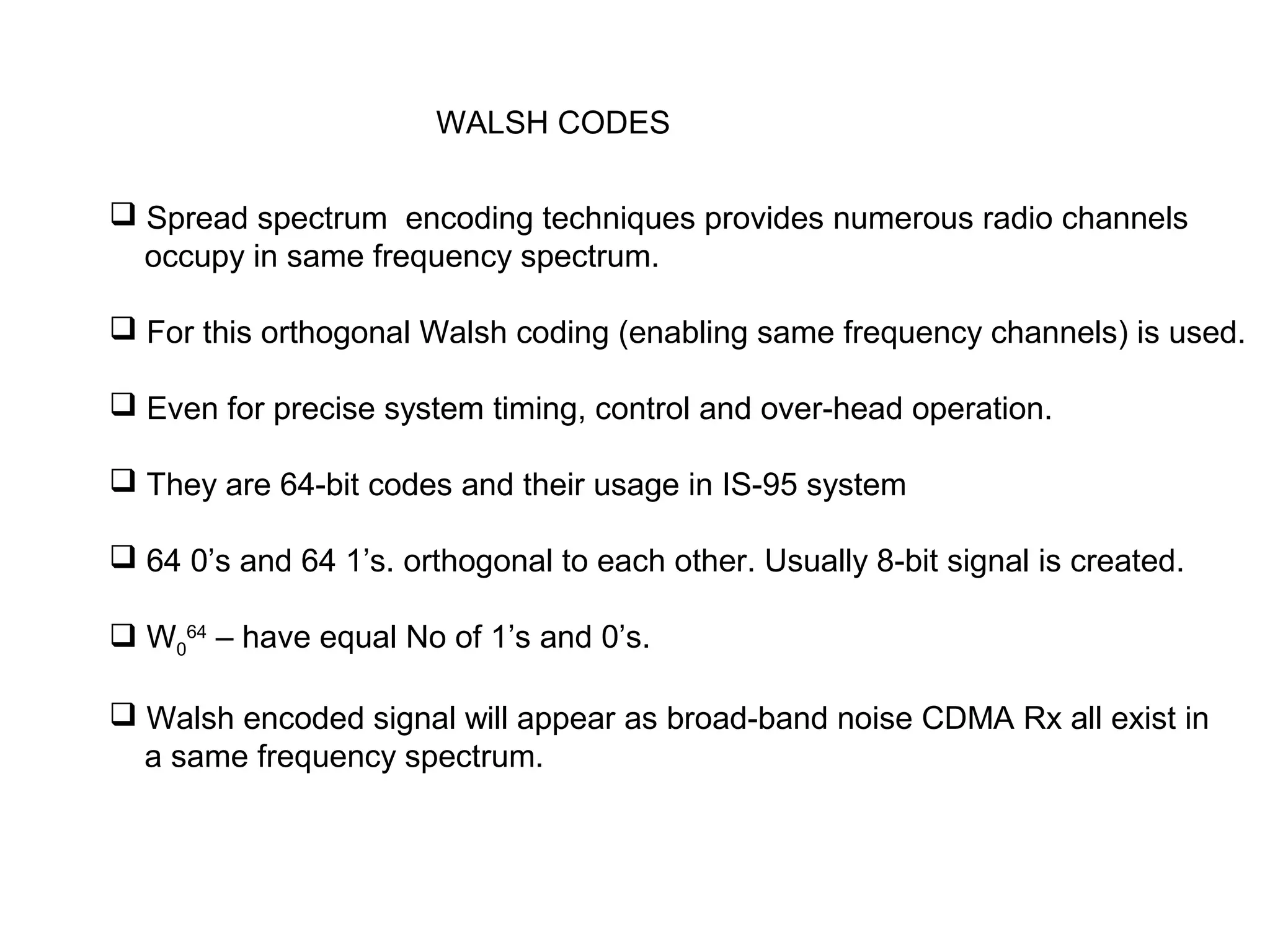


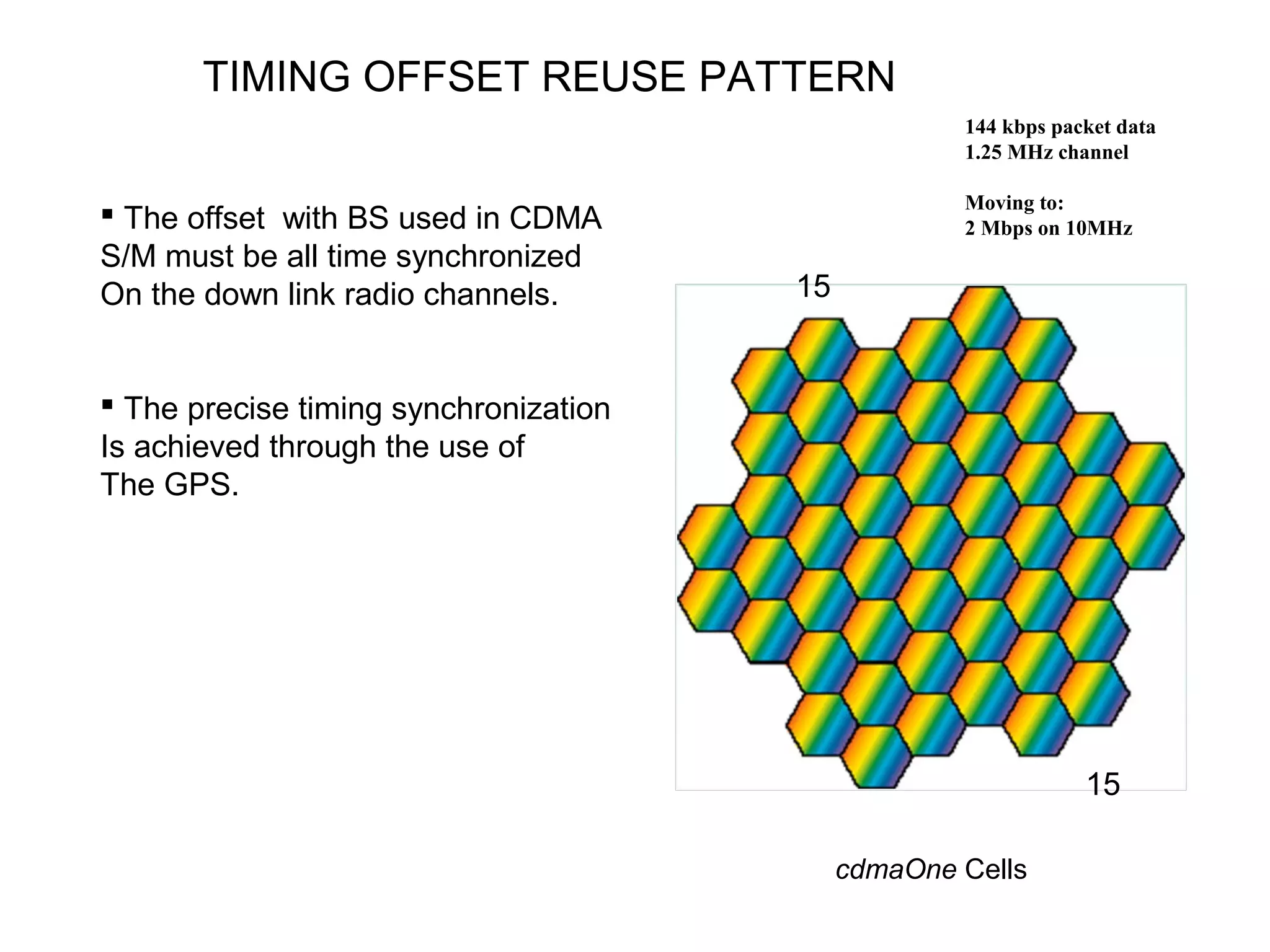
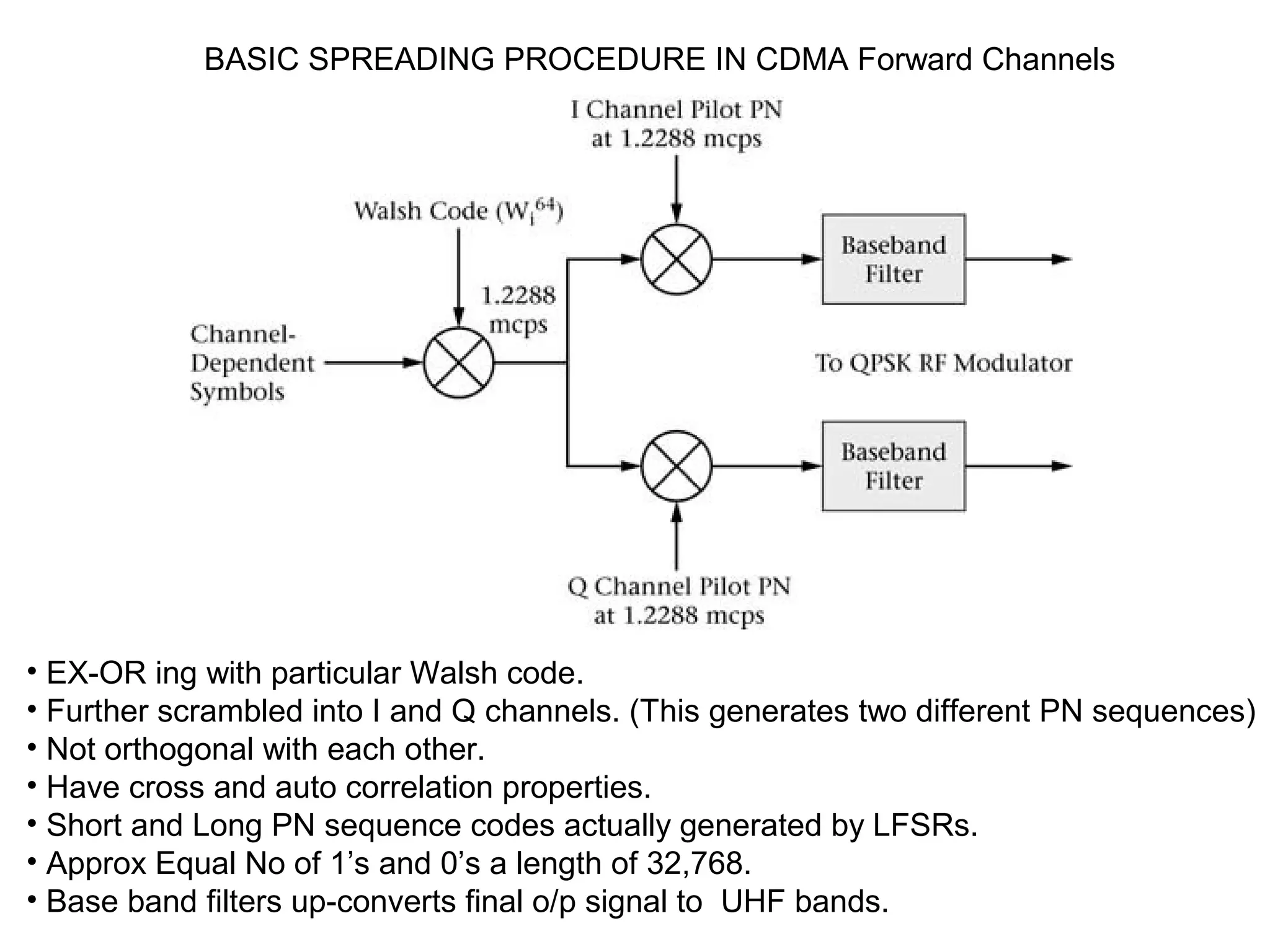


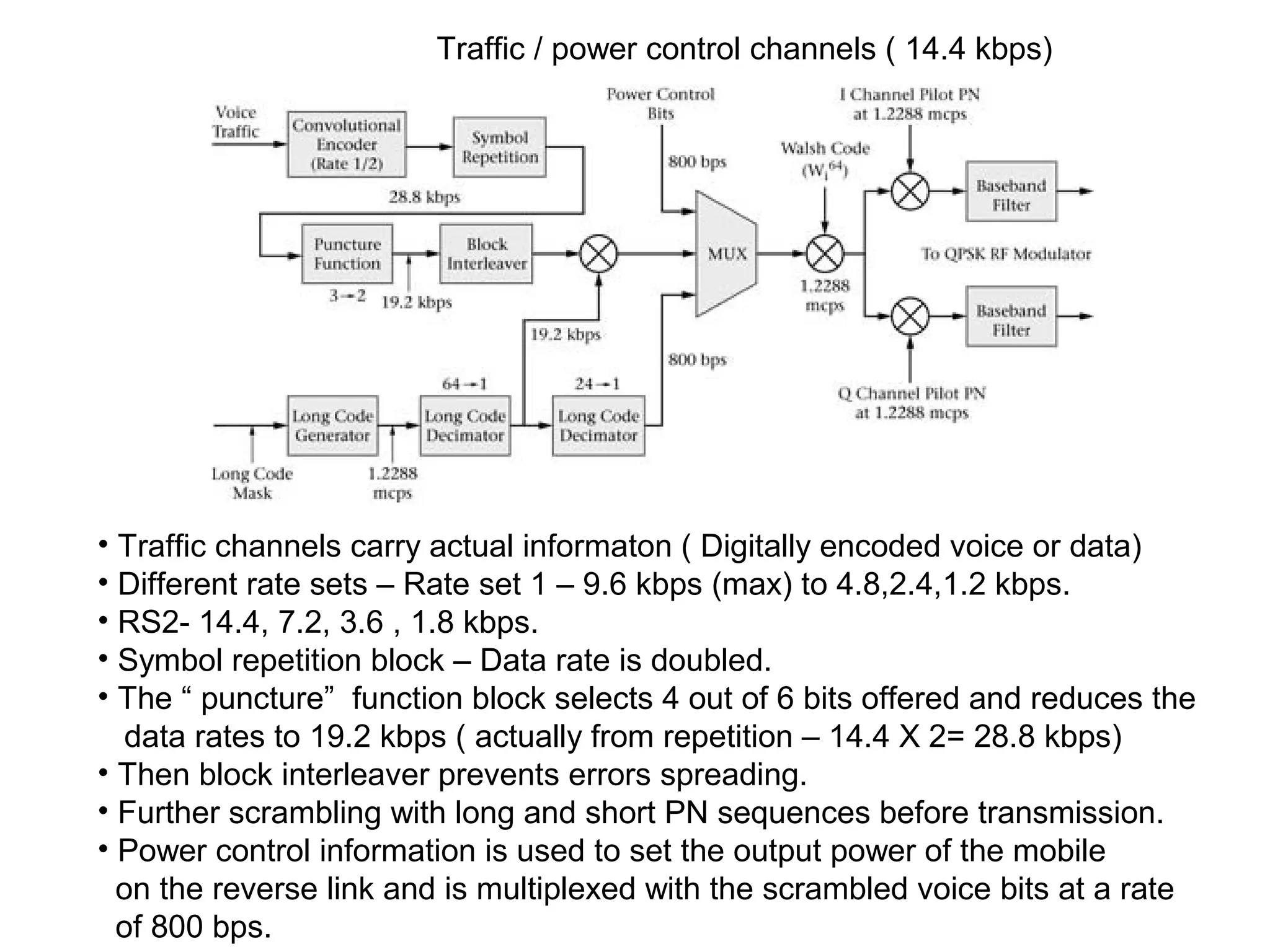







This document discusses the key differences between regular TDMA and W-CDMA technologies. It provides details on: 1. How W-CDMA uses orthogonal Walsh codes to provide multiple radio channels within the same frequency spectrum, enabling precise timing and control. 2. The use of 64-bit Walsh codes in IS-95 CDMA systems that are orthogonal to each other and have equal numbers of 1s and 0s. 3. The basic spreading procedure in CDMA which involves XORing data with Walsh codes, further scrambling into I and Q channels using short and long PN sequences before transmission.


