Chapter 1
INTRODUCTION
TO MANAGEMENT
AND
ORGANIZATIONS
POM 1-1-11
Learning Objectives
You should learn to:
– Explain what a manager is and how the role of a manager
has changed
– Define management
– Distinguish between efficiency and effectiveness
– Describe the basic management functions and the
management process
– Identify the roles performed by managers
POM 1-1-22
Learning Objectives (cont.)
You should learn to:
– Describe the skills managers need
– Explain what managers do using the systems
perspective
– Identify what managers do using the
contingency perspective
– Describe what an organization is and how the
concept of an organization has changed
– Explain the value of studying management
1-1-33
Who Are Managers?
Manager
– someone who works with and through other
people by coordinating their work activities in
order to accomplish organizational goals
– changing nature of organizations and work has
blurred the clear lines of distinction between
managers and non-managerial employees
1-1-44
Who Are Managers? (cont.)
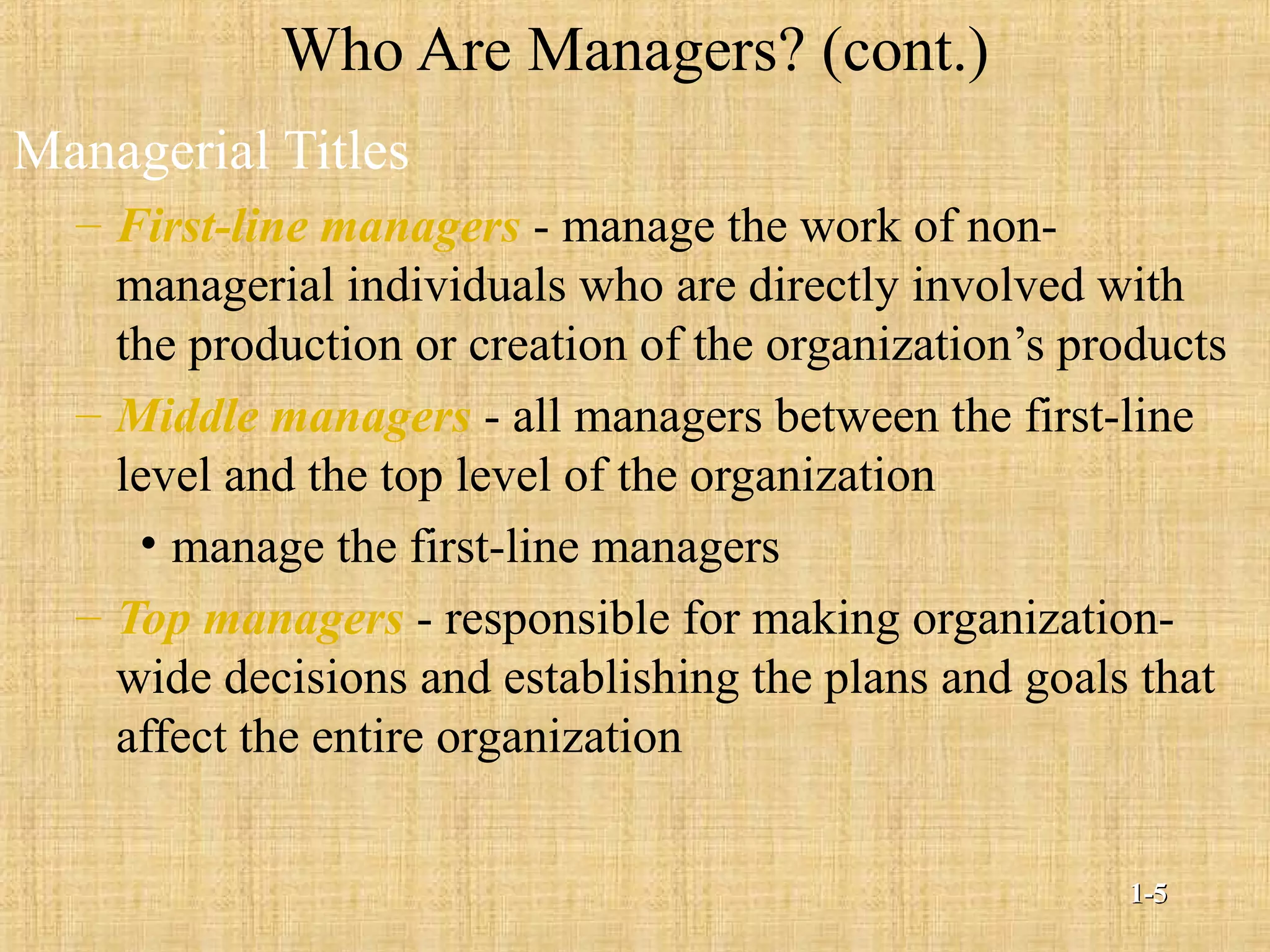
Managerial Titles
– First-line managers - manage the work of non-
managerial individuals who are directly involved with
the production or creation of the organization’s products
– Middle managers - all managers between the first-line
level and the top level of the organization
• manage the first-line managers
– Top managers - responsible for making organization-
wide decisions and establishing the plans and goals that
affect the entire organization
1-1-55
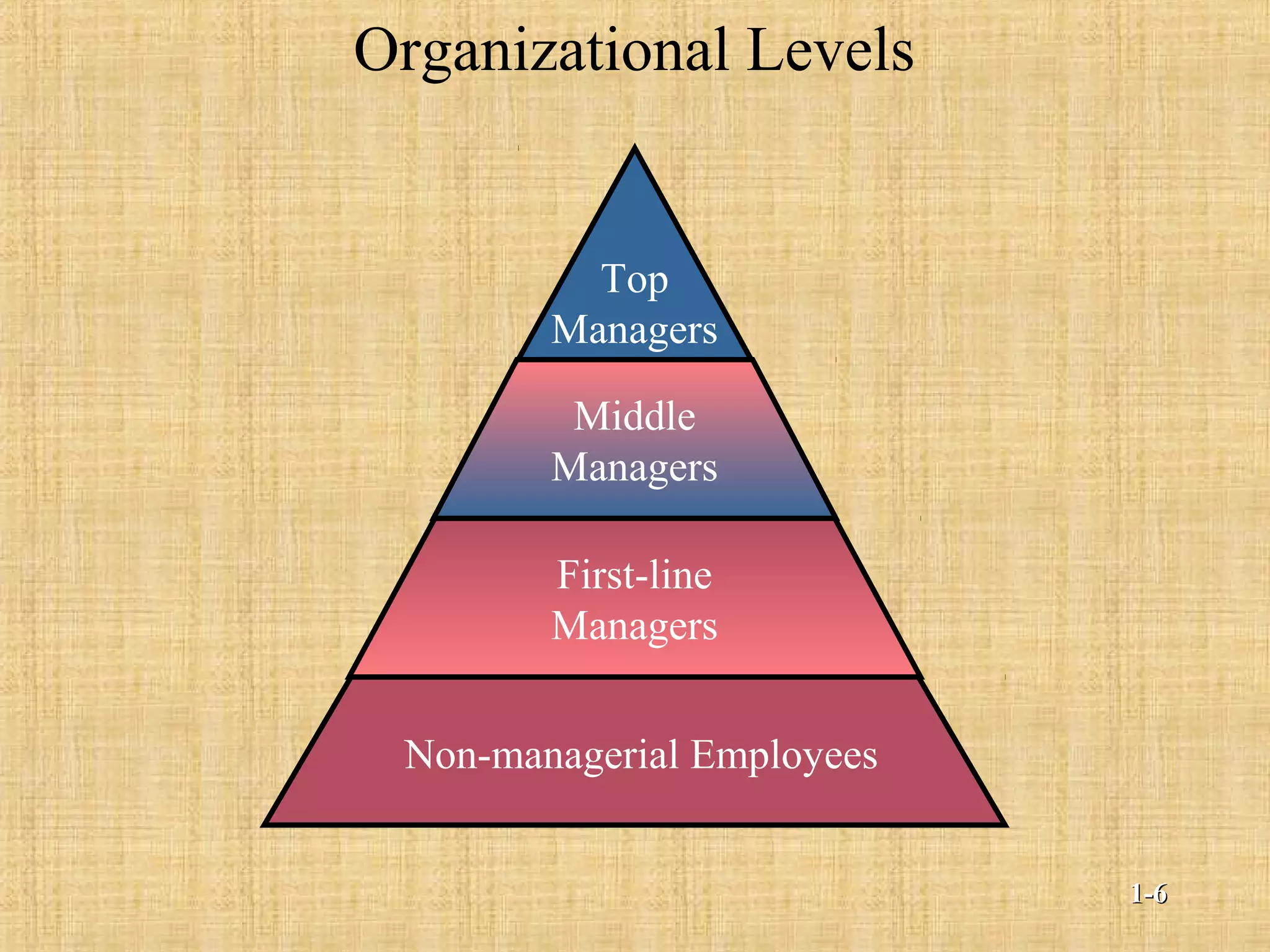
Organizational Levels
Non-managerial Employees
Top
Managers
Middle
Managers
First-line
Managers
1-1-66
What Is Management?
Management
– the process of coordinating work activities so that
they are completed efficiently and effectively
with and through other people
– elements of definition
• Process - represents ongoing functions or
primary activities engaged in by managers
• Coordinating - distinguishes a managerial
position from a non-managerial one
1-1-77
What is Management? (cont.)
Management (cont.)
– elements of definition
• Efficiency - getting the most output from the
least amount of inputs
–“doing things right”
–concerned with means
• Effectiveness - completing activities so that
organizational goals are attained
–“doing the right things”
–concerned with ends
1-1-88
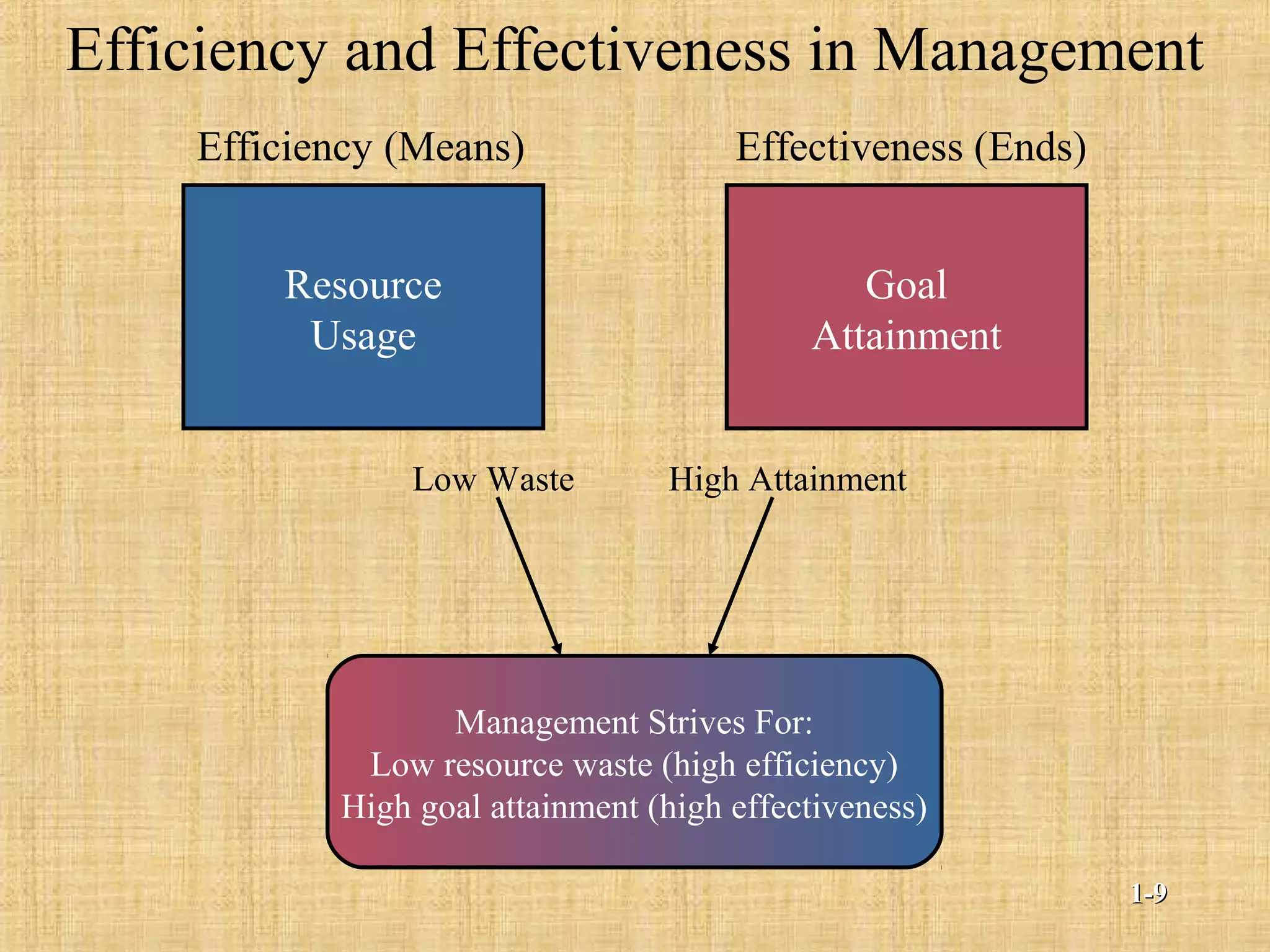
Efficiency and Effectiveness in Management
Management Strives For:
Low resource waste (high efficiency)
High goal attainment (high effectiveness)
Resource
Usage
Efficiency (Means)
Goal
Attainment
Effectiveness (Ends)
Low Waste High Attainment
1-1-99
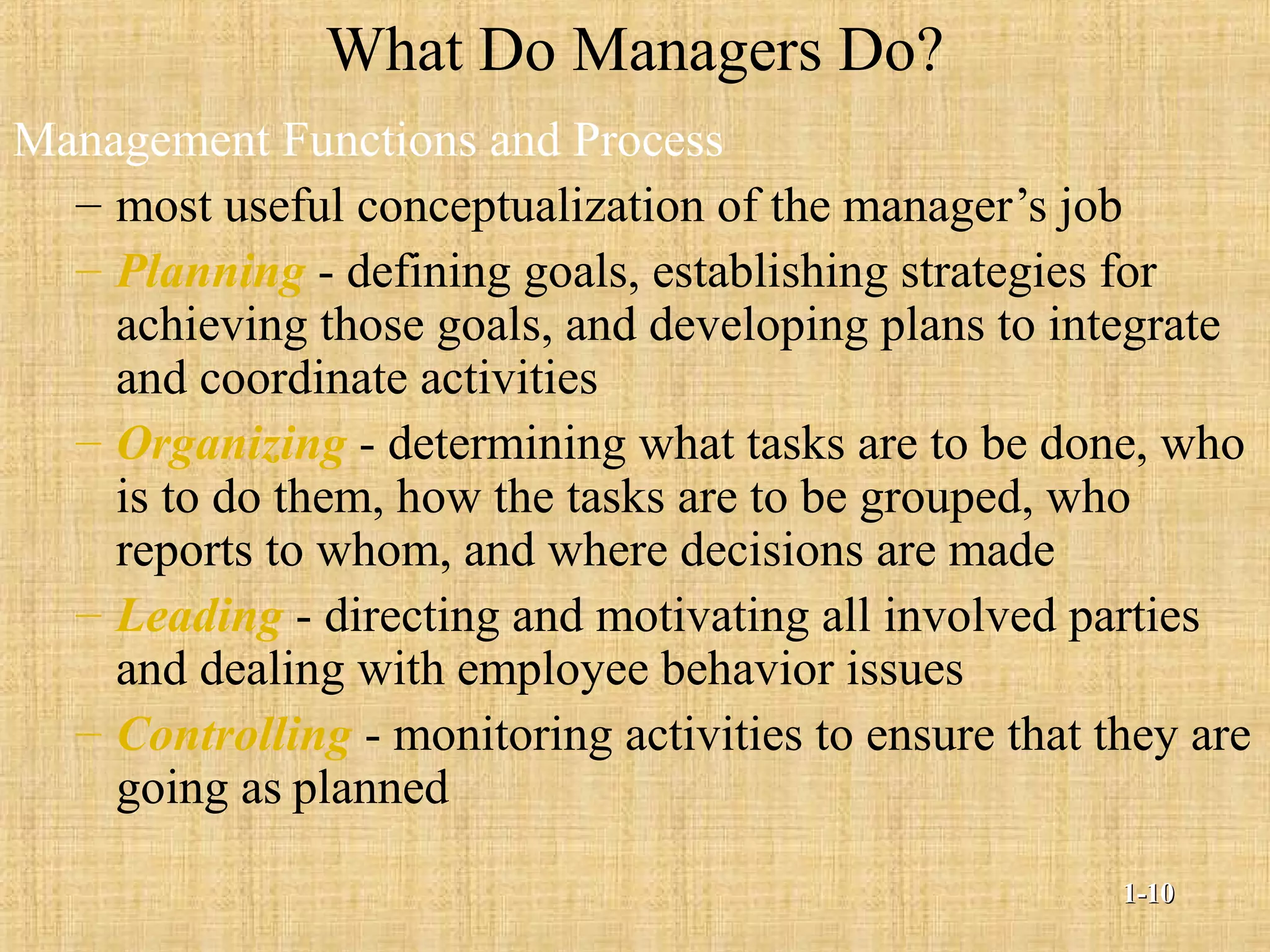
What Do Managers Do?
Management Functions and Process
– most useful conceptualization of the manager’s job
– Planning - defining goals, establishing strategies for
achieving those goals, and developing plans to integrate
and coordinate activities
– Organizing - determining what tasks are to be done, who
is to do them, how the tasks are to be grouped, who
reports to whom, and where decisions are made
– Leading - directing and motivating all involved parties
and dealing with employee behavior issues
– Controlling - monitoring activities to ensure that they are
going as planned
1-1-1010
What Do Managers Do? (cont.)
Management Functions and Process (cont.)
– Management process
• set of ongoing decisions and work activities in
which managers engage as they plan, organize,
lead, and control
• managerial activities are usually done in a
continuous manner
1-1-1111
1-#
Management functions
Planning: defining goals, establishing strategy, developing sub-
plans to coordinate activities
Organizing: determining what needs to be done, how will it be
done, who will do it.
Leading: directing and motivating all involved parties and
resolving conflicts
Controlling: monitoring activities to ensure that they are
accomplished as planned
What Do Managers Do? (cont.)
Management Roles
– specific categories of managerial behavior
• Interpersonal - involve people and duties that
are ceremonial and symbolic in nature
• Informational - receiving, collecting, and
disseminating information
• Decisional - revolve around making choices
– emphasis that managers give to the various roles
seems to change with their organizational level
1-1-1313
1-#
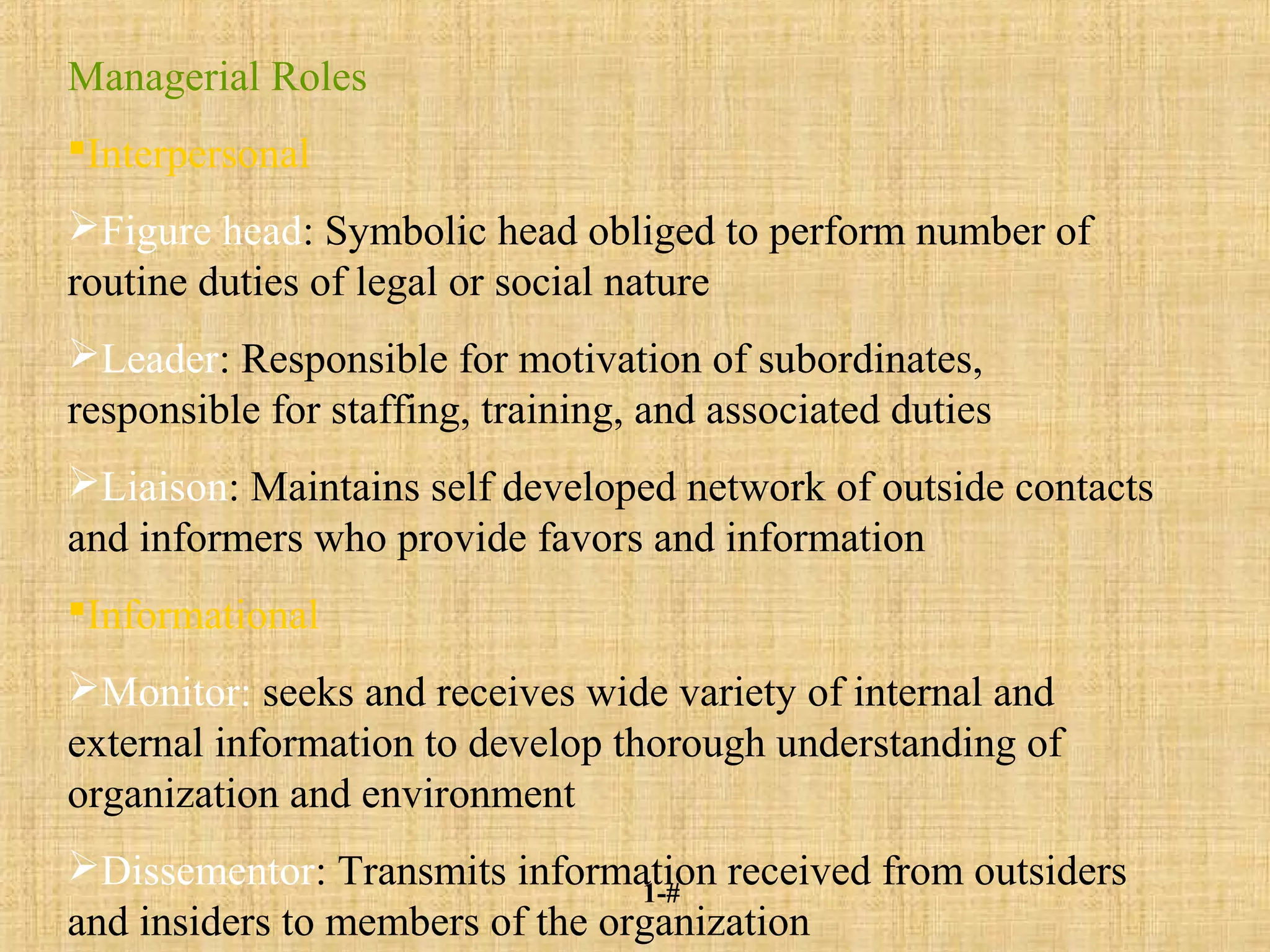
Managerial Roles
Interpersonal
Figure head: Symbolic head obliged to perform number of
routine duties of legal or social nature
Leader: Responsible for motivation of subordinates,
responsible for staffing, training, and associated duties
Liaison: Maintains self developed network of outside contacts
and informers who provide favors and information
Informational
Monitor: seeks and receives wide variety of internal and
external information to develop thorough understanding of
organization and environment
Dissementor: Transmits information received from outsiders
and insiders to members of the organization
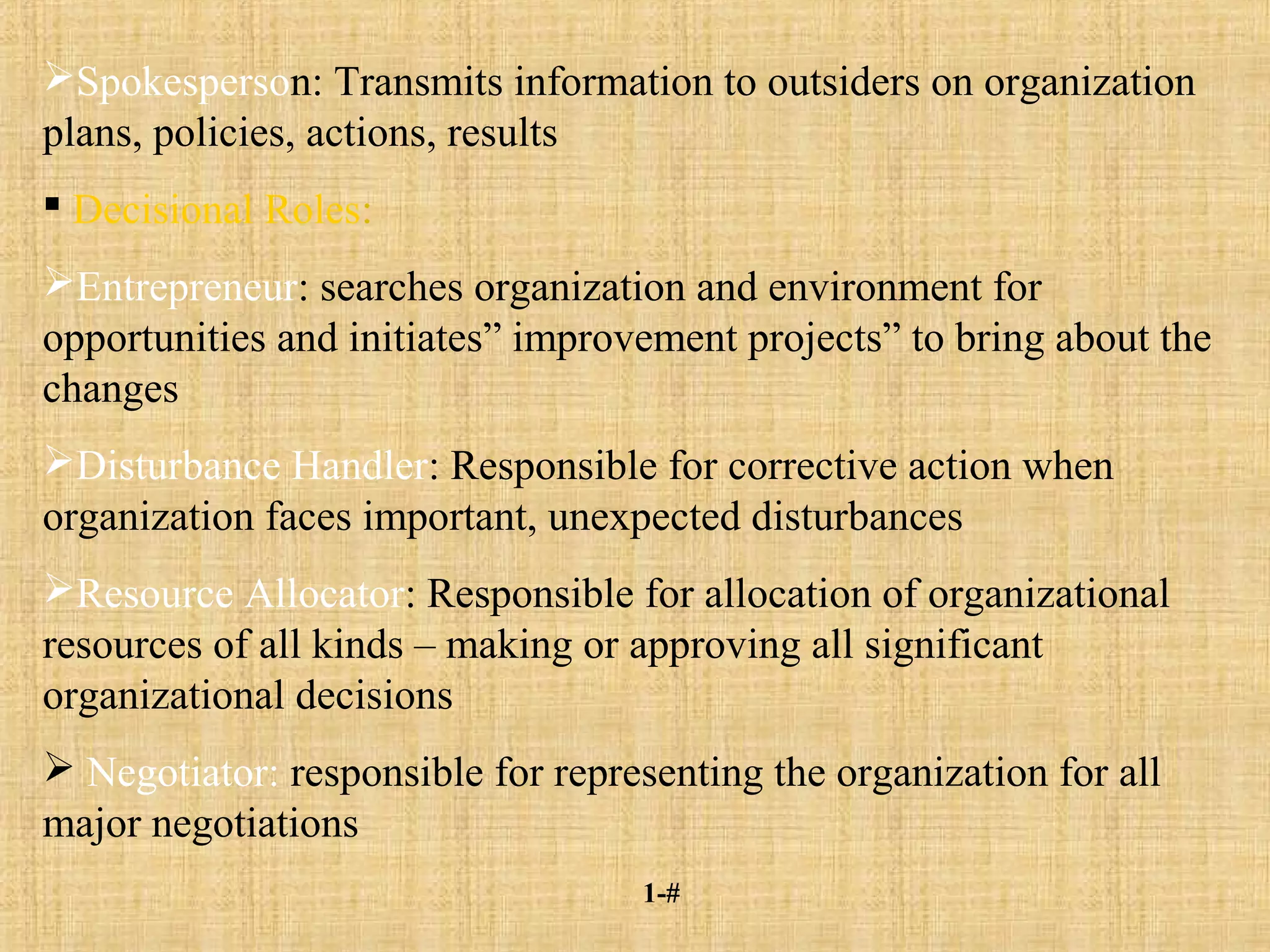
1-#
Spokesperson: Transmits information to outsiders on organization
plans, policies, actions, results
 Decisional Roles:
Entrepreneur: searches organization and environment for
opportunities and initiates” improvement projects” to bring about the
changes
Disturbance Handler: Responsible for corrective action when
organization faces important, unexpected disturbances
Resource Allocator: Responsible for allocation of organizational
resources of all kinds – making or approving all significant
organizational decisions
 Negotiator: responsible for representing the organization for all
major negotiations
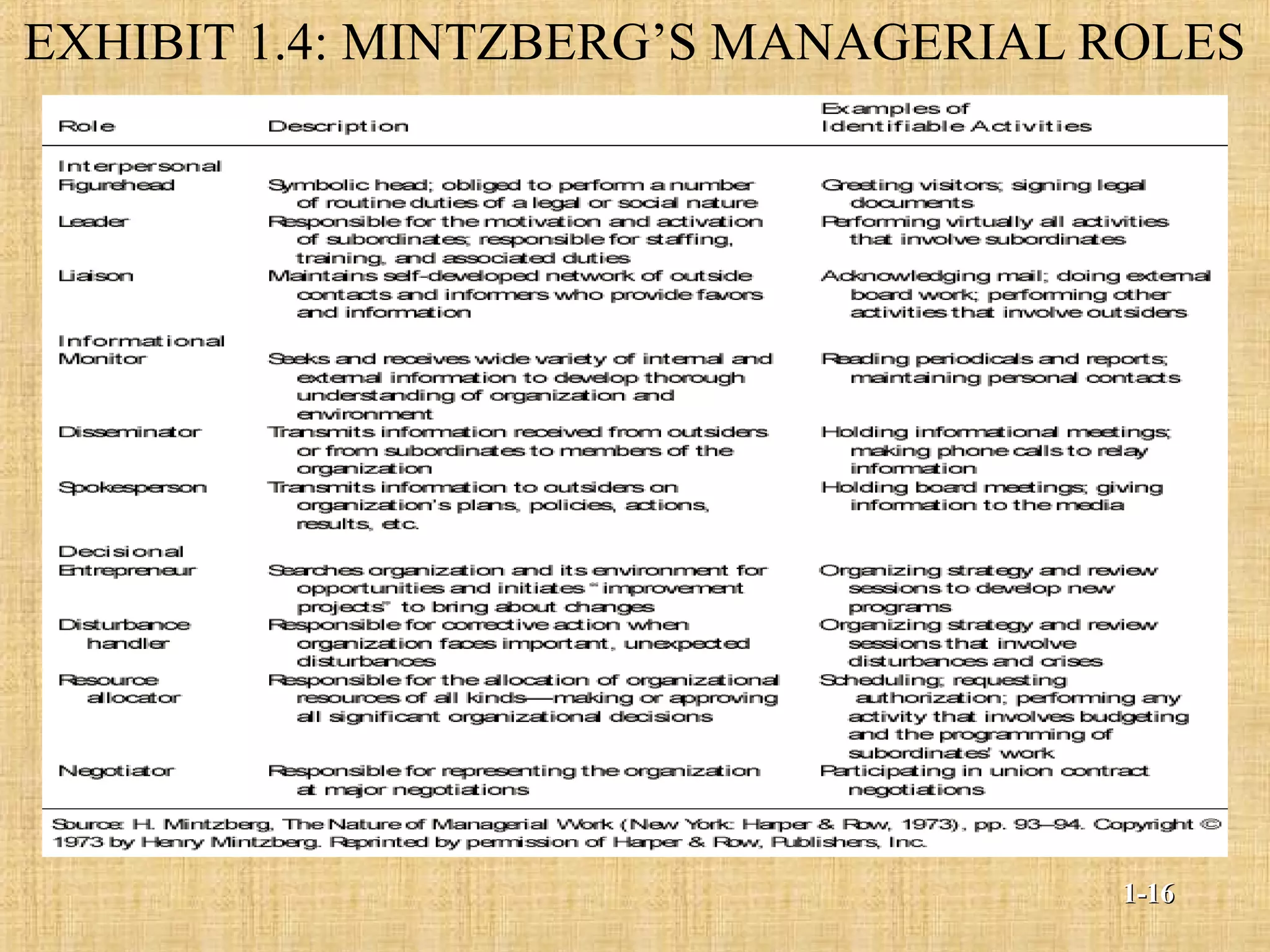
EXHIBIT 1.4: MINTZBERG’S MANAGERIAL ROLES
1-1-1616
What Do Managers Do? (cont.)
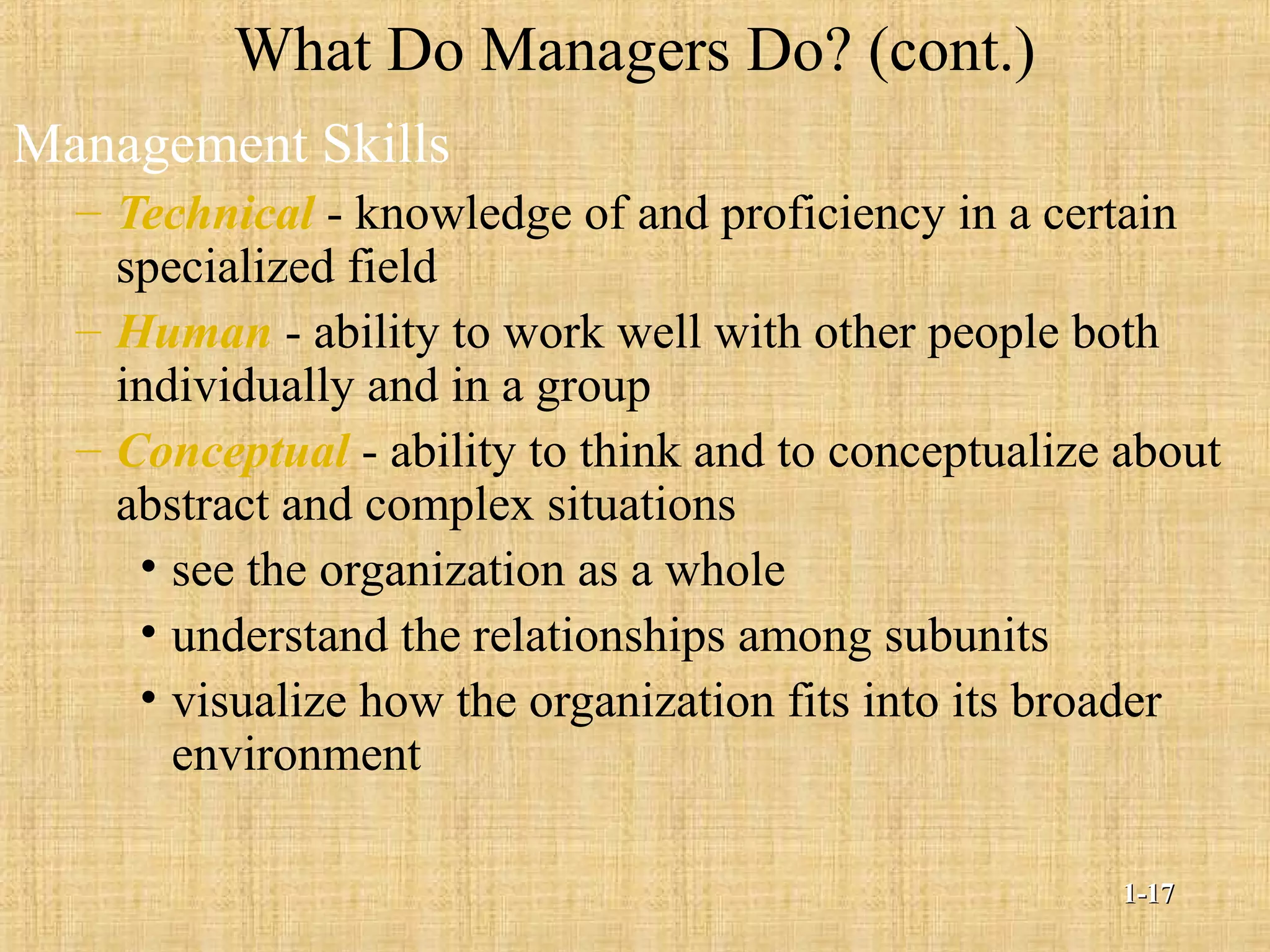
Management Skills
– Technical - knowledge of and proficiency in a certain
specialized field
– Human - ability to work well with other people both
individually and in a group
– Conceptual - ability to think and to conceptualize about
abstract and complex situations
• see the organization as a whole
• understand the relationships among subunits
• visualize how the organization fits into its broader
environment
1-1-1717
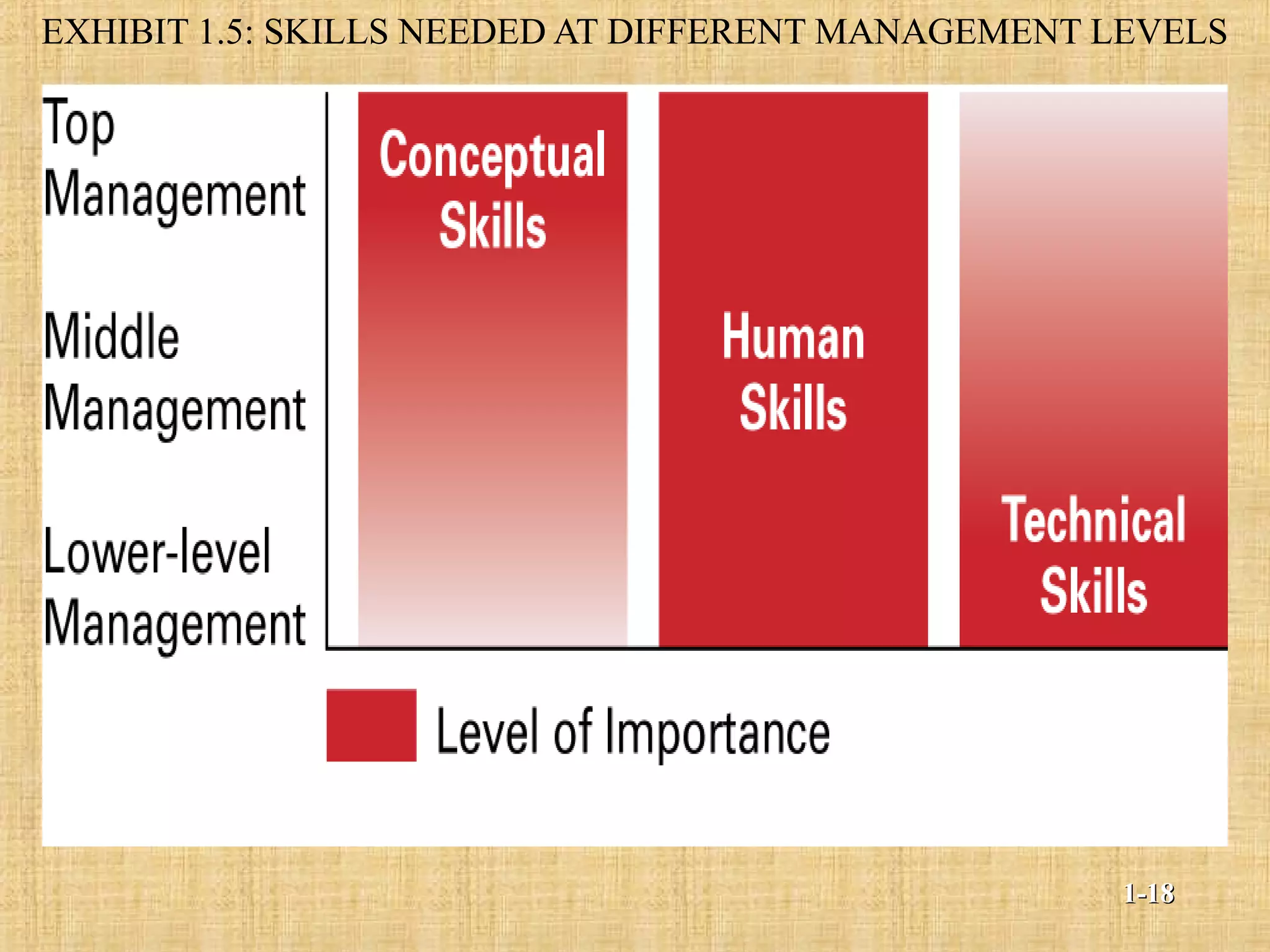
EXHIBIT 1.5: SKILLS NEEDED AT DIFFERENT MANAGEMENT LEVELS
1-1-1818
What Do Managers Do? (cont.)
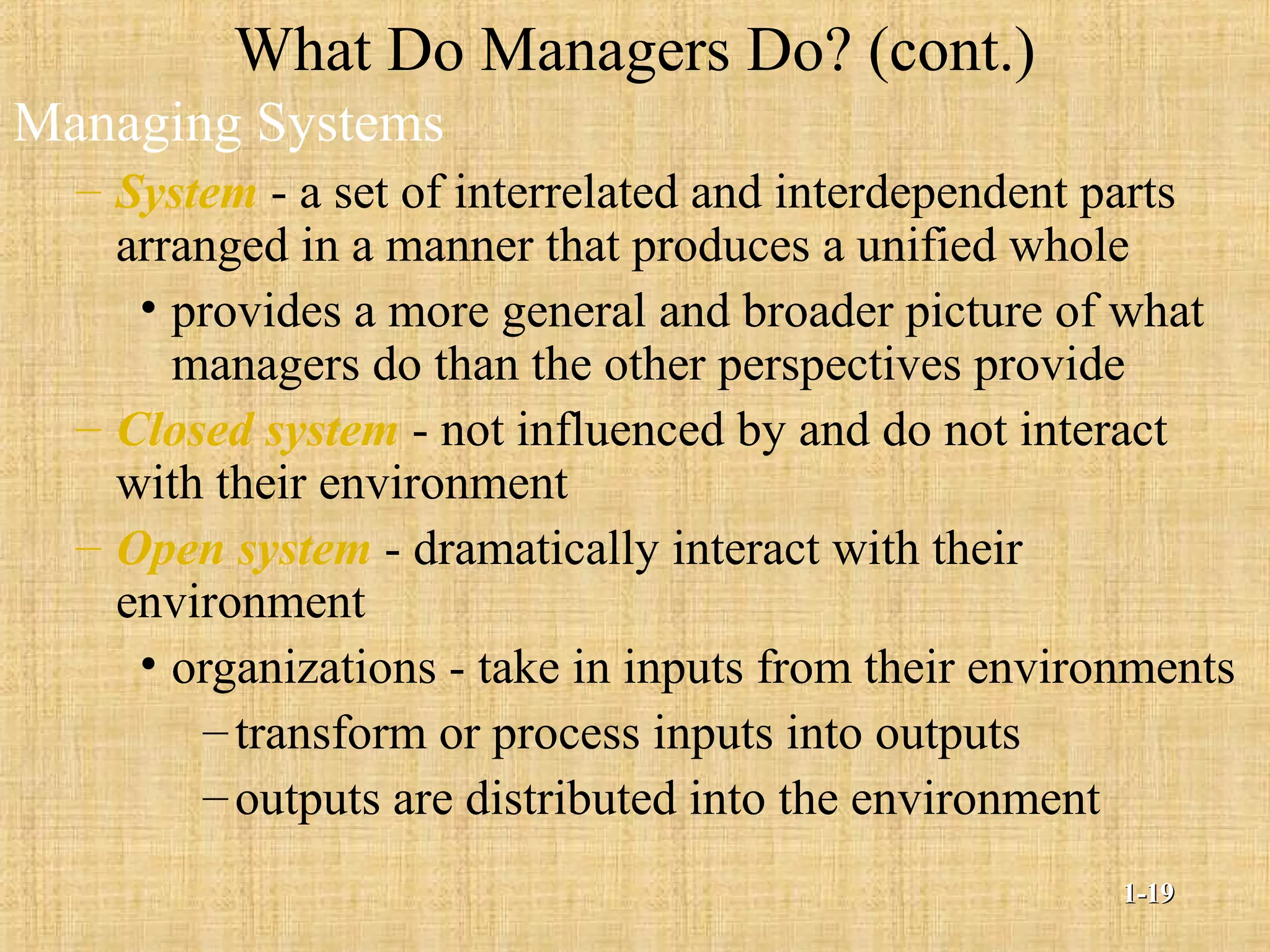
Managing Systems
– System - a set of interrelated and interdependent parts
arranged in a manner that produces a unified whole
• provides a more general and broader picture of what
managers do than the other perspectives provide
– Closed system - not influenced by and do not interact
with their environment
– Open system - dramatically interact with their
environment
• organizations - take in inputs from their environments
–transform or process inputs into outputs
–outputs are distributed into the environment
1-1-1919
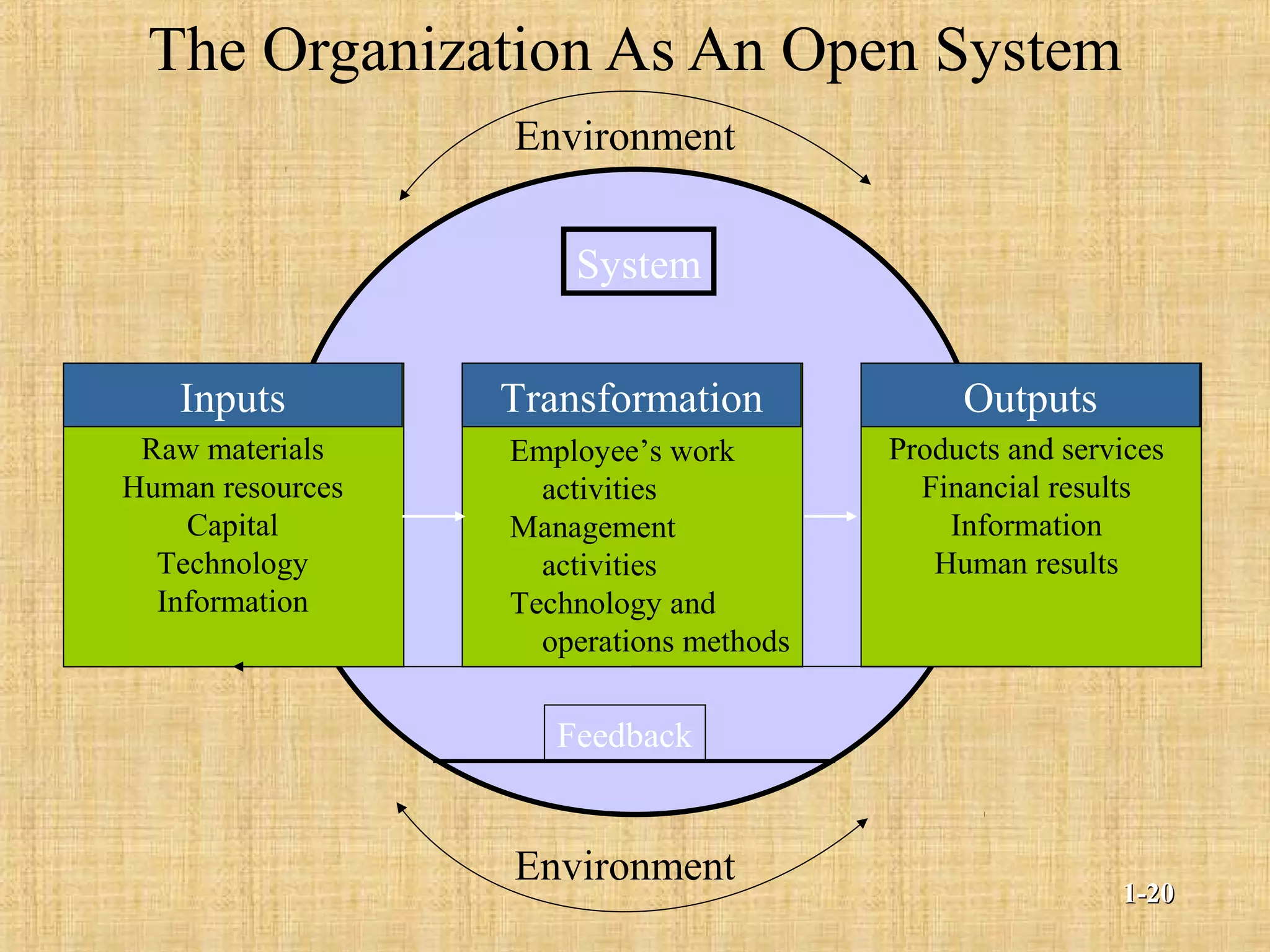
System
The Organization As An Open System
Transformation
Employee’s work
activities
Management
activities
Technology and
operations methods
OutputsInputs
Raw materials
Human resources
Capital
Technology
Information
Products and services
Financial results
Information
Human results
Environment
Environment
Feedback
1-1-2020
What Do Managers Do? (cont.)
Managing Systems (cont.)
– managers must
• coordinate various work activities
• ensure that interdependent parts work together
• recognize and understand the impact of various
external factors
– decisions and actions taken in one organizational
area will affect other areas and vice versa
1-1-2121
What Do Managers Do? (cont.)
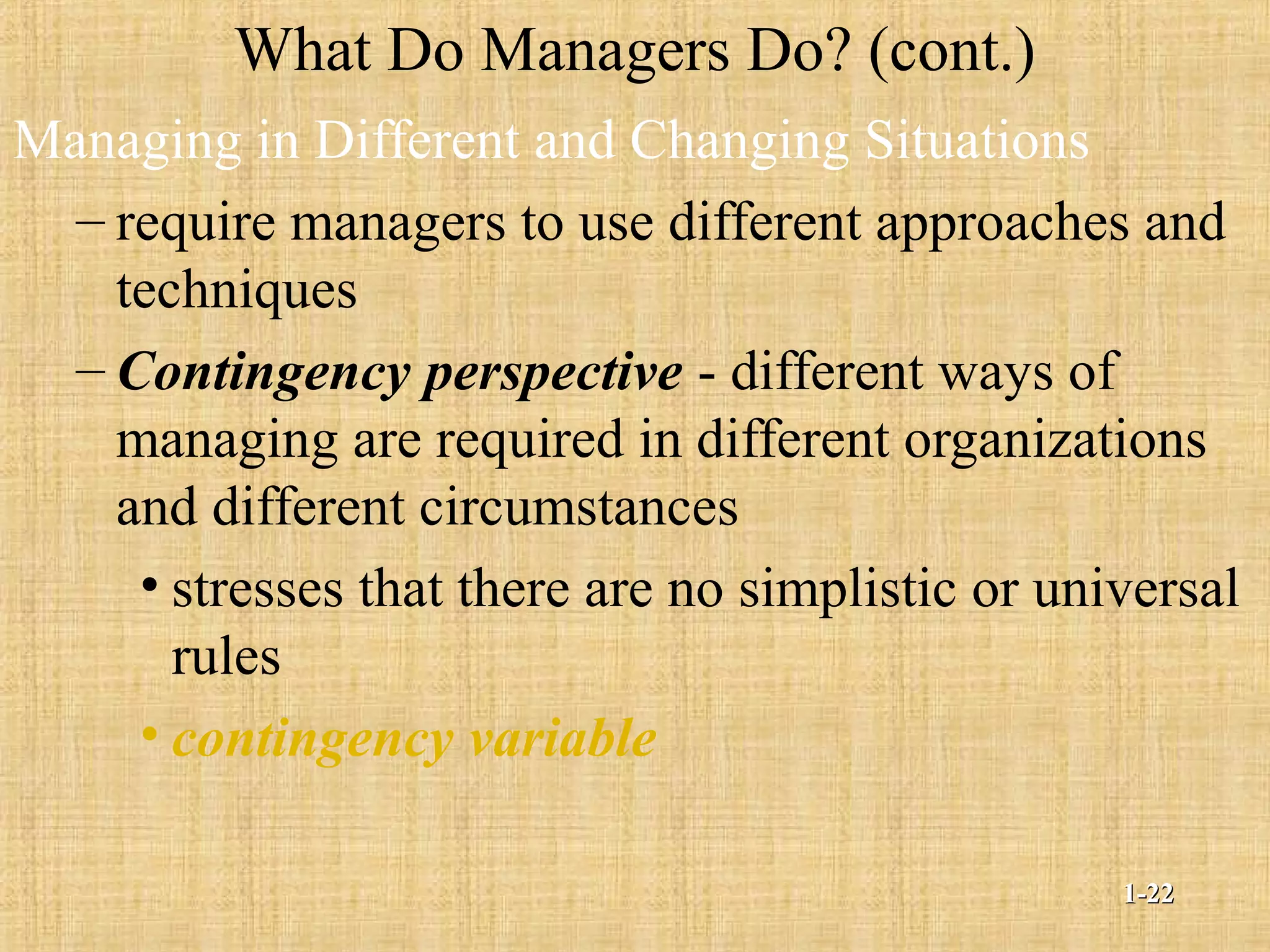
Managing in Different and Changing Situations
– require managers to use different approaches and
techniques
– Contingency perspective - different ways of
managing are required in different organizations
and different circumstances
• stresses that there are no simplistic or universal
rules
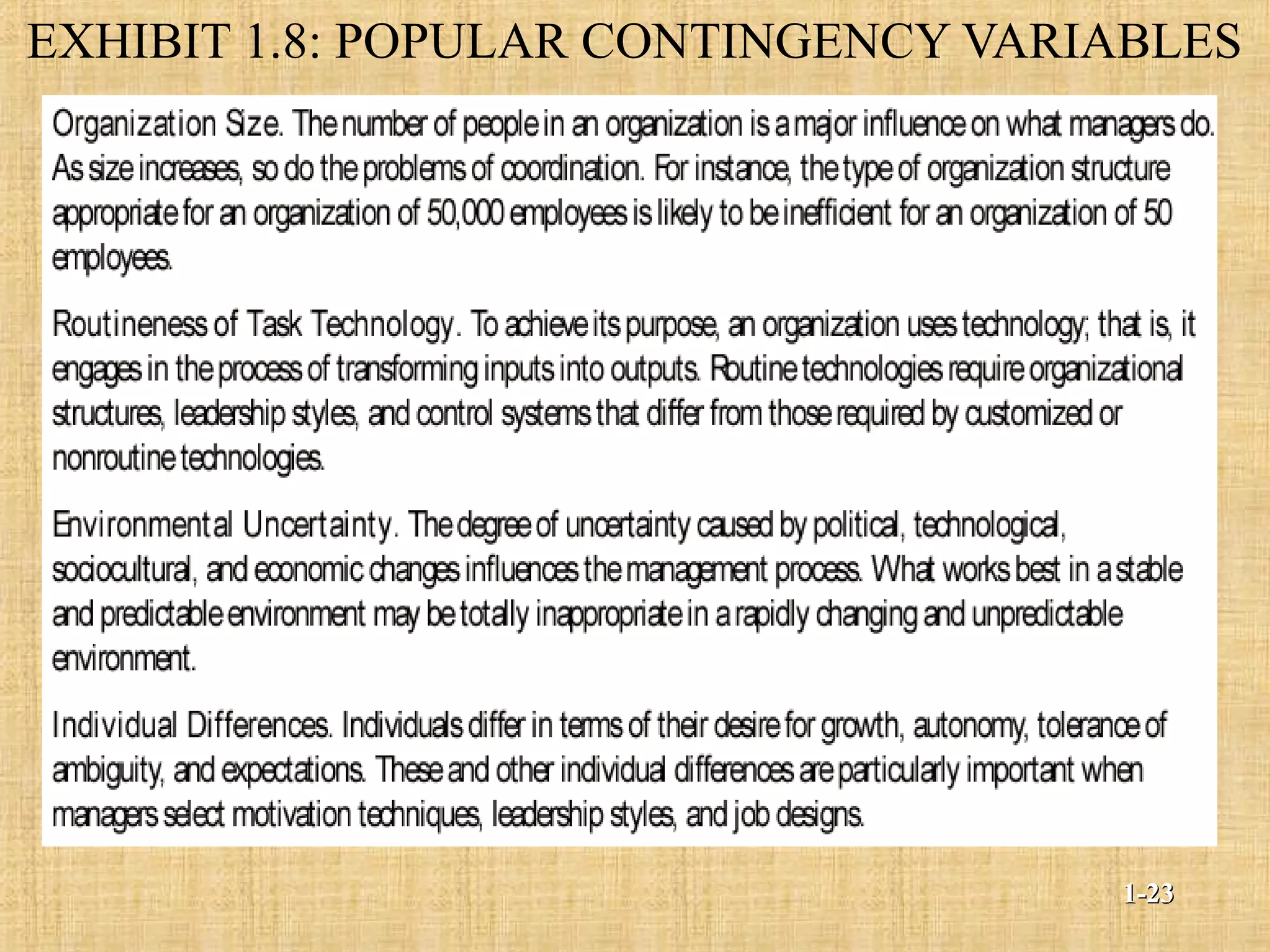
• contingency variable
1-1-2222
EXHIBIT 1.8: POPULAR CONTINGENCY VARIABLES
1-1-2323
What Is An Organization?
Organization
– a deliberate arrangement of people to accomplish some
specific purpose
• elements of definition
–each organization has a distinct purpose
–each organization is composed of people
–all organizations develop some deliberate structure
– today’s organizations have adopted:
• flexible work arrangements
• open communications
• greater responsiveness to changes
1-1-2424
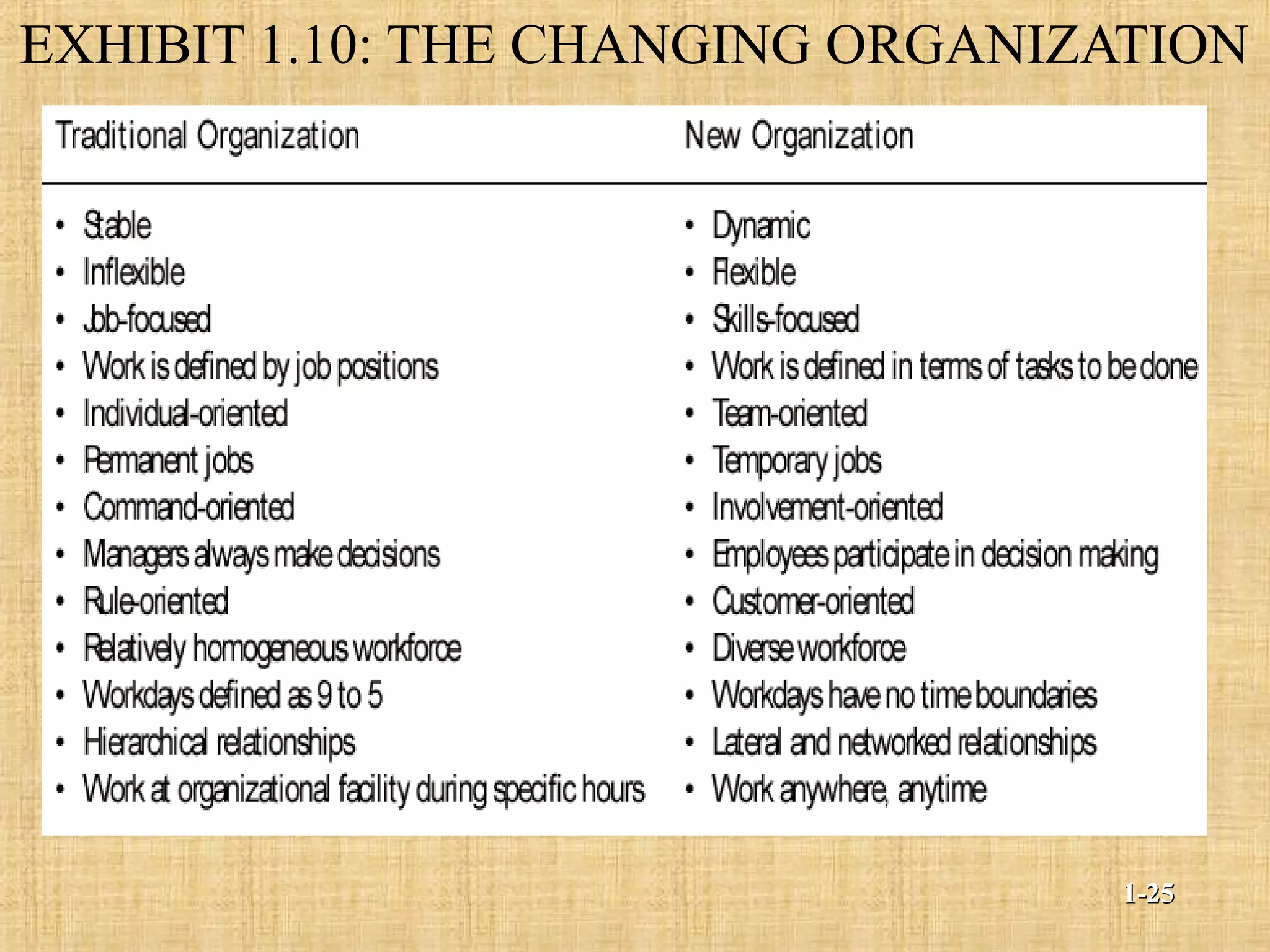
EXHIBIT 1.10: THE CHANGING ORGANIZATION
1-1-2525
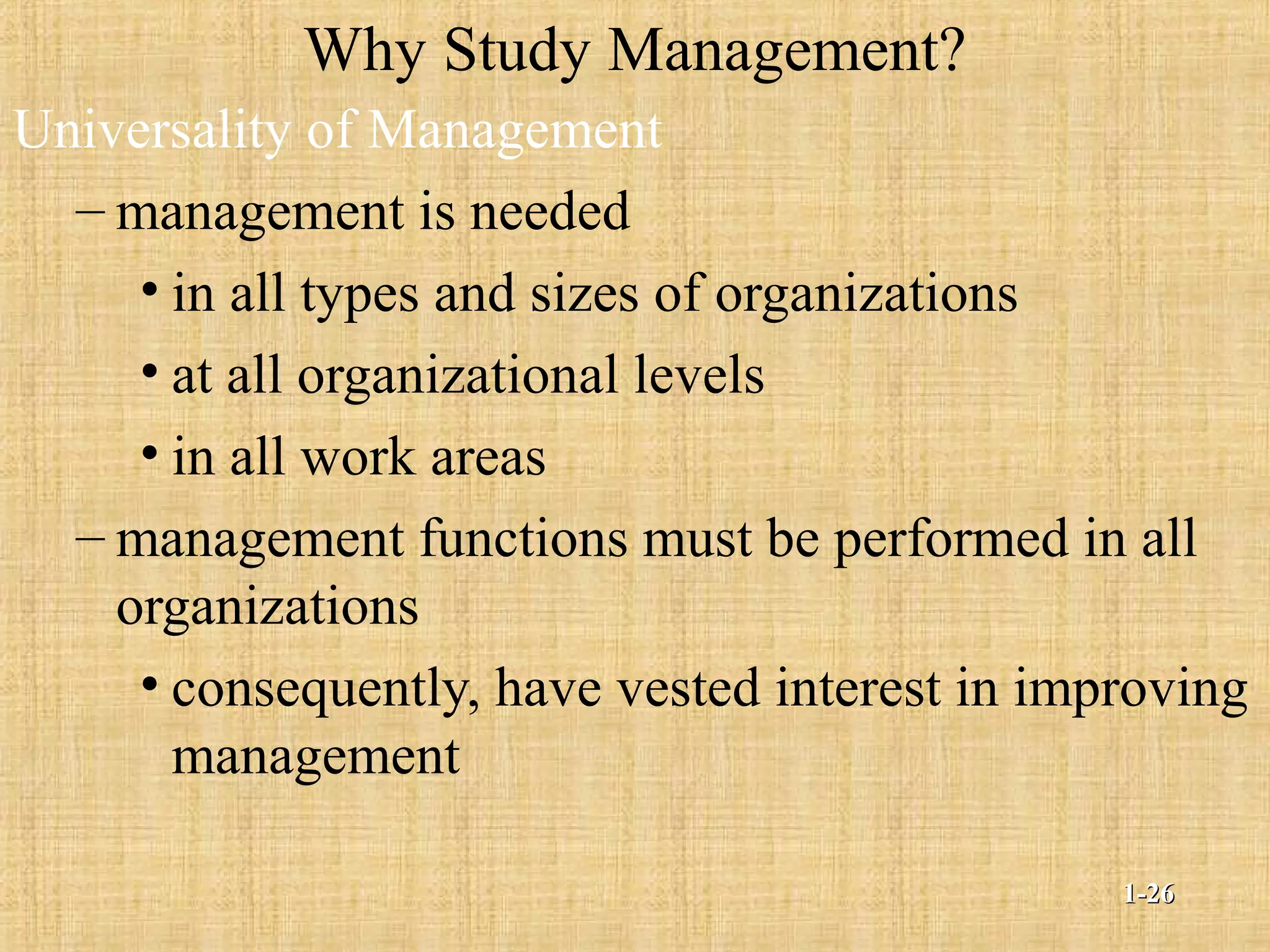
Why Study Management?
Universality of Management
– management is needed
• in all types and sizes of organizations
• at all organizational levels
• in all work areas
– management functions must be performed in all
organizations
• consequently, have vested interest in improving
management
1-1-2626
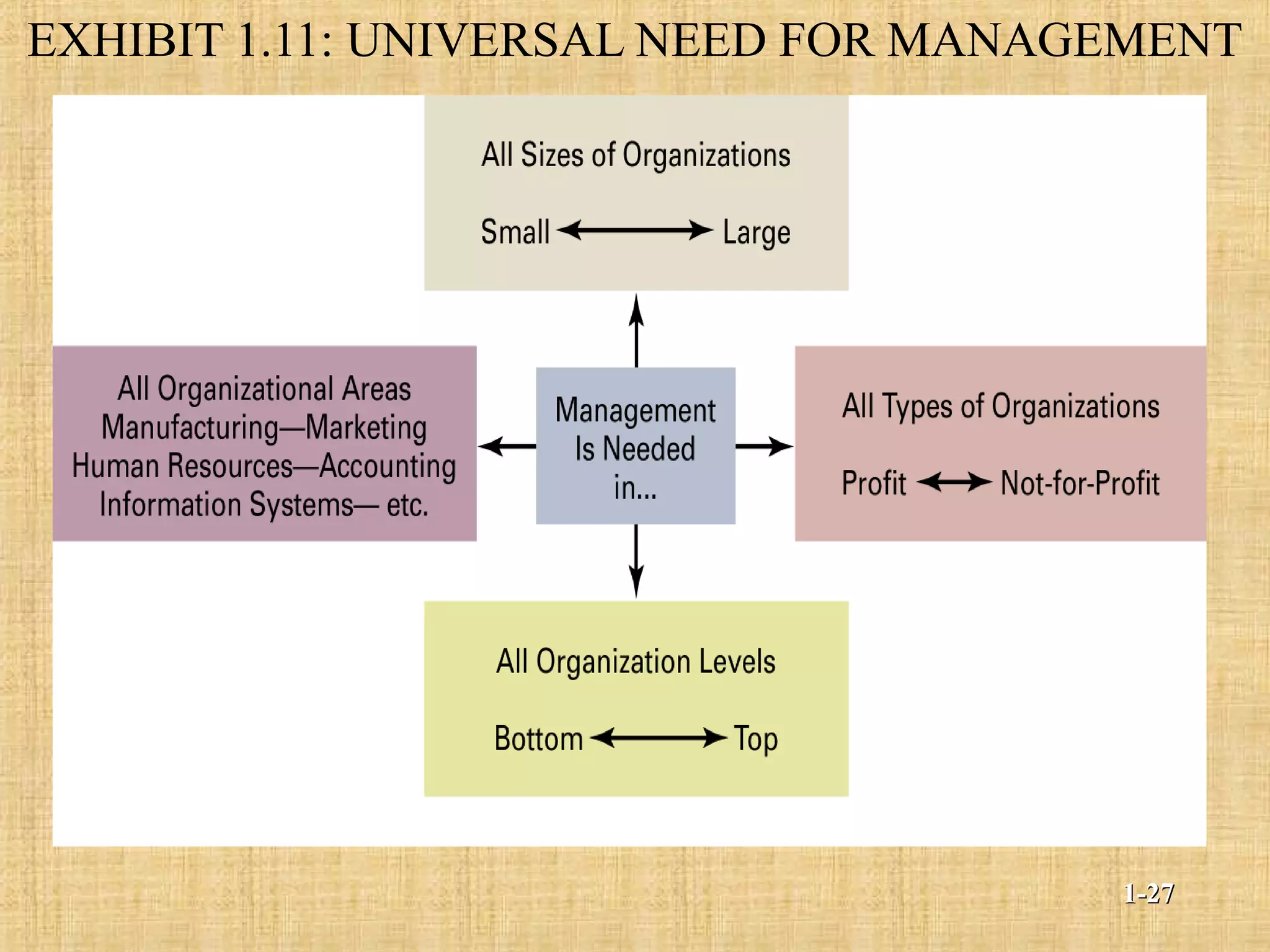
EXHIBIT 1.11: UNIVERSAL NEED FOR MANAGEMENT
1-1-2727
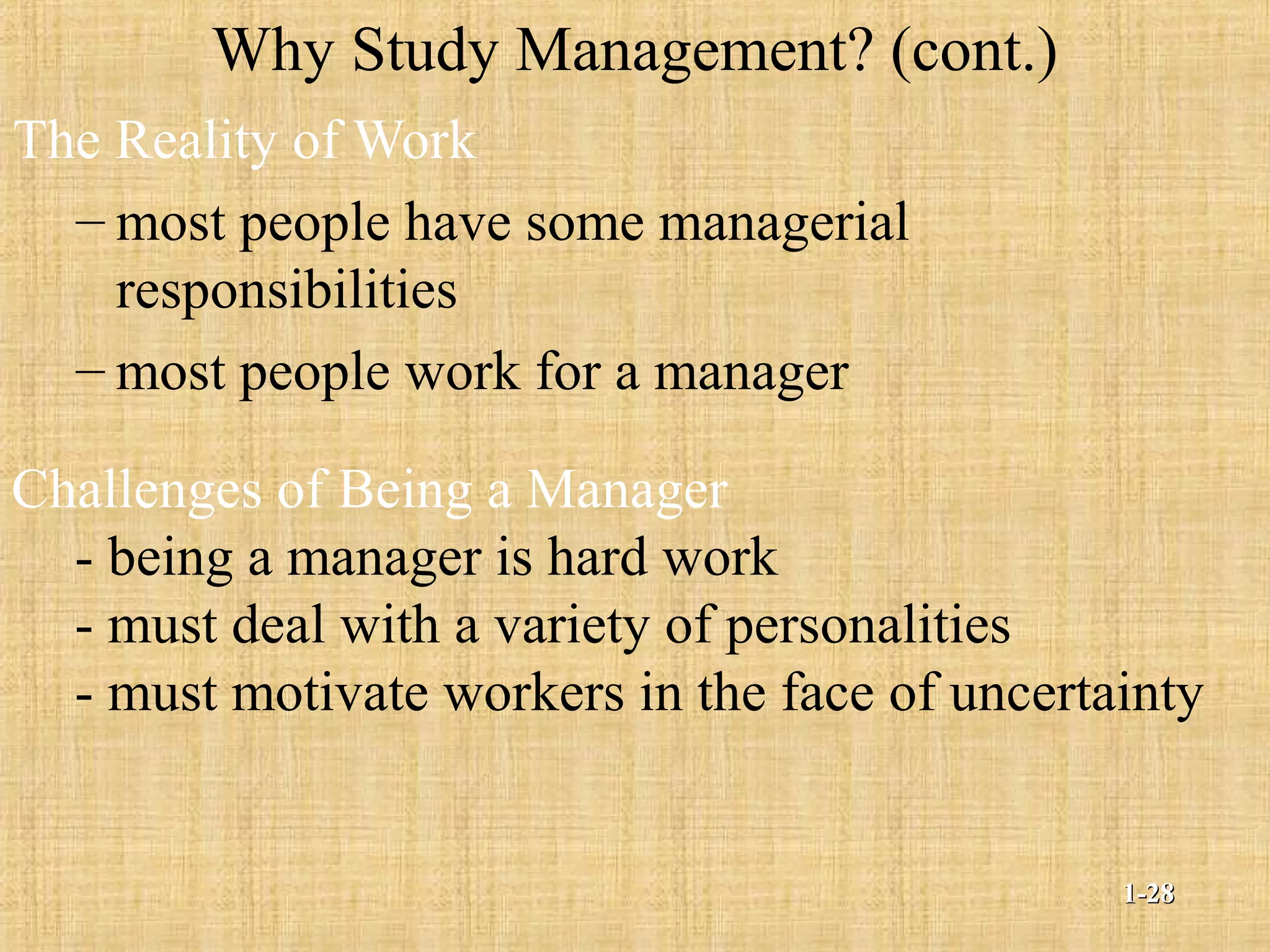
Why Study Management? (cont.)
The Reality of Work
– most people have some managerial
responsibilities
– most people work for a manager
Challenges of Being a Manager
- being a manager is hard work
- must deal with a variety of personalities
- must motivate workers in the face of uncertainty
1-1-2828
Why Study Management? (cont.)
Rewards of Being a Manager
– create an environment that allows others to do
their best work
– provide opportunities to think creatively
– help others find meaning and fulfillment
– meet and work with a variety of people
1-1-2929

Introduction To Management And Organization P O M

  • 1.
  • 2.
    Learning Objectives You shouldlearn to: – Explain what a manager is and how the role of a manager has changed – Define management – Distinguish between efficiency and effectiveness – Describe the basic management functions and the management process – Identify the roles performed by managers POM 1-1-22
  • 3.
    Learning Objectives (cont.) Youshould learn to: – Describe the skills managers need – Explain what managers do using the systems perspective – Identify what managers do using the contingency perspective – Describe what an organization is and how the concept of an organization has changed – Explain the value of studying management 1-1-33
  • 4.
    Who Are Managers? Manager –someone who works with and through other people by coordinating their work activities in order to accomplish organizational goals – changing nature of organizations and work has blurred the clear lines of distinction between managers and non-managerial employees 1-1-44
  • 5.
    Who Are Managers?(cont.) Managerial Titles – First-line managers - manage the work of non- managerial individuals who are directly involved with the production or creation of the organization’s products – Middle managers - all managers between the first-line level and the top level of the organization • manage the first-line managers – Top managers - responsible for making organization- wide decisions and establishing the plans and goals that affect the entire organization 1-1-55
  • 6.
  • 7.
    What Is Management? Management –the process of coordinating work activities so that they are completed efficiently and effectively with and through other people – elements of definition • Process - represents ongoing functions or primary activities engaged in by managers • Coordinating - distinguishes a managerial position from a non-managerial one 1-1-77
  • 8.
    What is Management?(cont.) Management (cont.) – elements of definition • Efficiency - getting the most output from the least amount of inputs –“doing things right” –concerned with means • Effectiveness - completing activities so that organizational goals are attained –“doing the right things” –concerned with ends 1-1-88
  • 9.
    Efficiency and Effectivenessin Management Management Strives For: Low resource waste (high efficiency) High goal attainment (high effectiveness) Resource Usage Efficiency (Means) Goal Attainment Effectiveness (Ends) Low Waste High Attainment 1-1-99
  • 10.
    What Do ManagersDo? Management Functions and Process – most useful conceptualization of the manager’s job – Planning - defining goals, establishing strategies for achieving those goals, and developing plans to integrate and coordinate activities – Organizing - determining what tasks are to be done, who is to do them, how the tasks are to be grouped, who reports to whom, and where decisions are made – Leading - directing and motivating all involved parties and dealing with employee behavior issues – Controlling - monitoring activities to ensure that they are going as planned 1-1-1010
  • 11.
    What Do ManagersDo? (cont.) Management Functions and Process (cont.) – Management process • set of ongoing decisions and work activities in which managers engage as they plan, organize, lead, and control • managerial activities are usually done in a continuous manner 1-1-1111
  • 12.
    1-# Management functions Planning: defininggoals, establishing strategy, developing sub- plans to coordinate activities Organizing: determining what needs to be done, how will it be done, who will do it. Leading: directing and motivating all involved parties and resolving conflicts Controlling: monitoring activities to ensure that they are accomplished as planned
  • 13.
    What Do ManagersDo? (cont.) Management Roles – specific categories of managerial behavior • Interpersonal - involve people and duties that are ceremonial and symbolic in nature • Informational - receiving, collecting, and disseminating information • Decisional - revolve around making choices – emphasis that managers give to the various roles seems to change with their organizational level 1-1-1313
  • 14.
    1-# Managerial Roles Interpersonal Figure head:Symbolic head obliged to perform number of routine duties of legal or social nature Leader: Responsible for motivation of subordinates, responsible for staffing, training, and associated duties Liaison: Maintains self developed network of outside contacts and informers who provide favors and information Informational Monitor: seeks and receives wide variety of internal and external information to develop thorough understanding of organization and environment Dissementor: Transmits information received from outsiders and insiders to members of the organization
  • 15.
    1-# Spokesperson: Transmits informationto outsiders on organization plans, policies, actions, results  Decisional Roles: Entrepreneur: searches organization and environment for opportunities and initiates” improvement projects” to bring about the changes Disturbance Handler: Responsible for corrective action when organization faces important, unexpected disturbances Resource Allocator: Responsible for allocation of organizational resources of all kinds – making or approving all significant organizational decisions  Negotiator: responsible for representing the organization for all major negotiations
  • 16.
    EXHIBIT 1.4: MINTZBERG’SMANAGERIAL ROLES 1-1-1616
  • 17.
    What Do ManagersDo? (cont.) Management Skills – Technical - knowledge of and proficiency in a certain specialized field – Human - ability to work well with other people both individually and in a group – Conceptual - ability to think and to conceptualize about abstract and complex situations • see the organization as a whole • understand the relationships among subunits • visualize how the organization fits into its broader environment 1-1-1717
  • 18.
    EXHIBIT 1.5: SKILLSNEEDED AT DIFFERENT MANAGEMENT LEVELS 1-1-1818
  • 19.
    What Do ManagersDo? (cont.) Managing Systems – System - a set of interrelated and interdependent parts arranged in a manner that produces a unified whole • provides a more general and broader picture of what managers do than the other perspectives provide – Closed system - not influenced by and do not interact with their environment – Open system - dramatically interact with their environment • organizations - take in inputs from their environments –transform or process inputs into outputs –outputs are distributed into the environment 1-1-1919
  • 20.
    System The Organization AsAn Open System Transformation Employee’s work activities Management activities Technology and operations methods OutputsInputs Raw materials Human resources Capital Technology Information Products and services Financial results Information Human results Environment Environment Feedback 1-1-2020
  • 21.
    What Do ManagersDo? (cont.) Managing Systems (cont.) – managers must • coordinate various work activities • ensure that interdependent parts work together • recognize and understand the impact of various external factors – decisions and actions taken in one organizational area will affect other areas and vice versa 1-1-2121
  • 22.
    What Do ManagersDo? (cont.) Managing in Different and Changing Situations – require managers to use different approaches and techniques – Contingency perspective - different ways of managing are required in different organizations and different circumstances • stresses that there are no simplistic or universal rules • contingency variable 1-1-2222
  • 23.
    EXHIBIT 1.8: POPULARCONTINGENCY VARIABLES 1-1-2323
  • 24.
    What Is AnOrganization? Organization – a deliberate arrangement of people to accomplish some specific purpose • elements of definition –each organization has a distinct purpose –each organization is composed of people –all organizations develop some deliberate structure – today’s organizations have adopted: • flexible work arrangements • open communications • greater responsiveness to changes 1-1-2424
  • 25.
    EXHIBIT 1.10: THECHANGING ORGANIZATION 1-1-2525
  • 26.
    Why Study Management? Universalityof Management – management is needed • in all types and sizes of organizations • at all organizational levels • in all work areas – management functions must be performed in all organizations • consequently, have vested interest in improving management 1-1-2626
  • 27.
    EXHIBIT 1.11: UNIVERSALNEED FOR MANAGEMENT 1-1-2727
  • 28.
    Why Study Management?(cont.) The Reality of Work – most people have some managerial responsibilities – most people work for a manager Challenges of Being a Manager - being a manager is hard work - must deal with a variety of personalities - must motivate workers in the face of uncertainty 1-1-2828
  • 29.
    Why Study Management?(cont.) Rewards of Being a Manager – create an environment that allows others to do their best work – provide opportunities to think creatively – help others find meaning and fulfillment – meet and work with a variety of people 1-1-2929