Rolling Process
Prof. Ubaid Shah
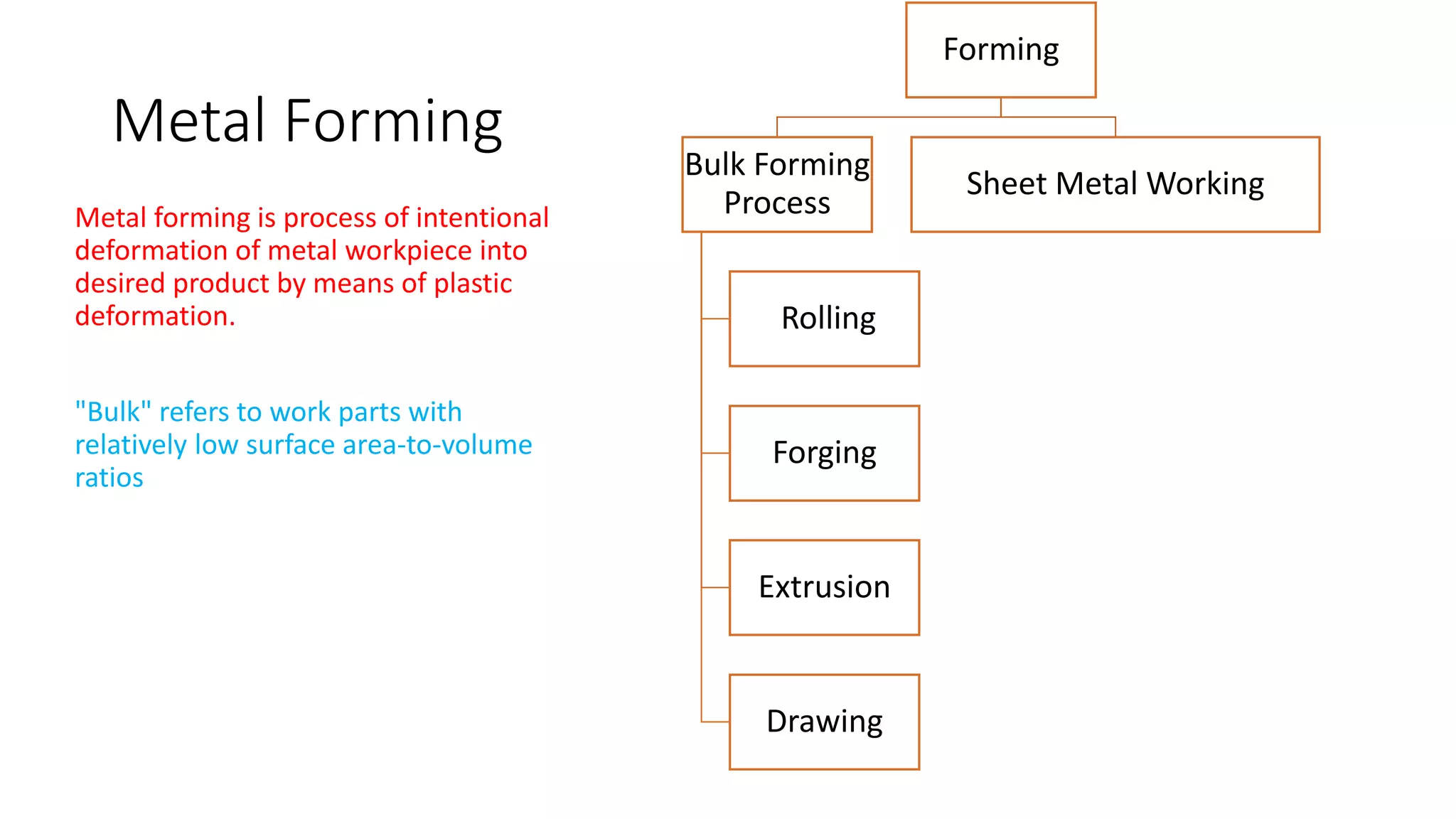
Metal Forming
Metal forming is process of intentional
deformation of metal workpiece into
desired product by means of plastic
deformation.
"Bulk" refers to work parts with
relatively low surface area-to-volume
ratios
Forming
Bulk Forming
Process
Rolling
Forging
Extrusion
Drawing
Sheet Metal Working
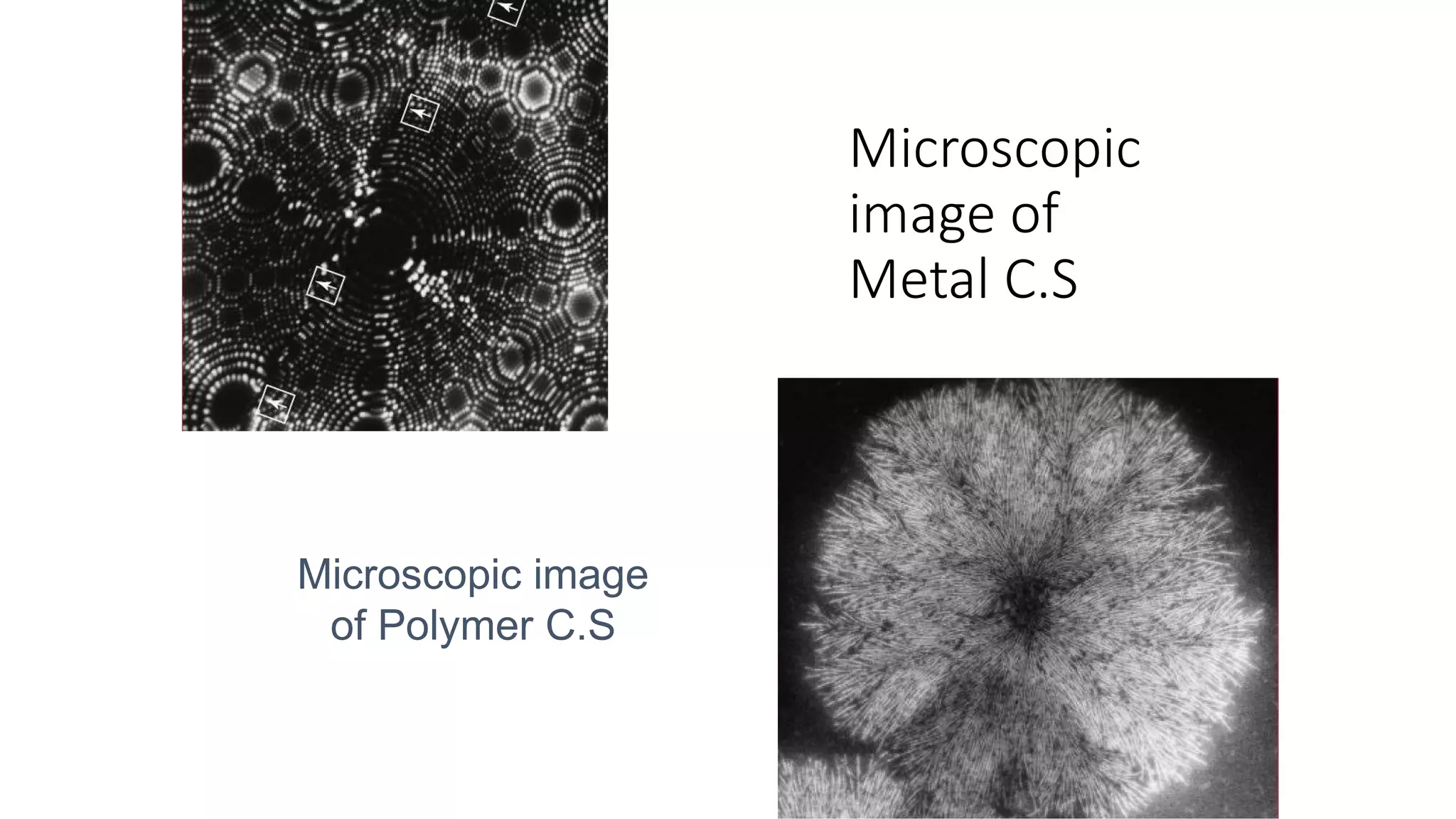
Microscopic
image of
Metal C.S
Microscopic image
of Polymer C.S
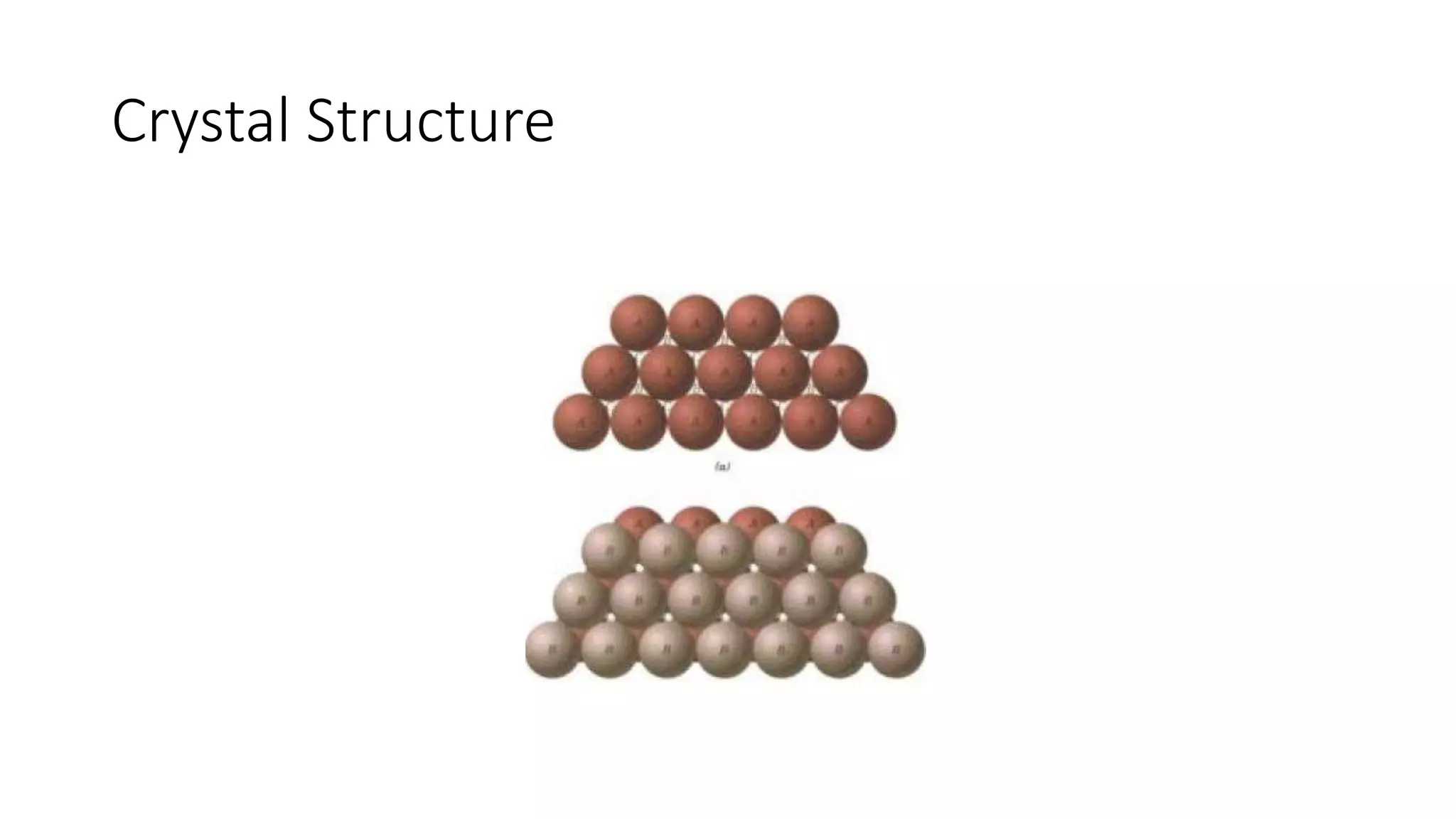
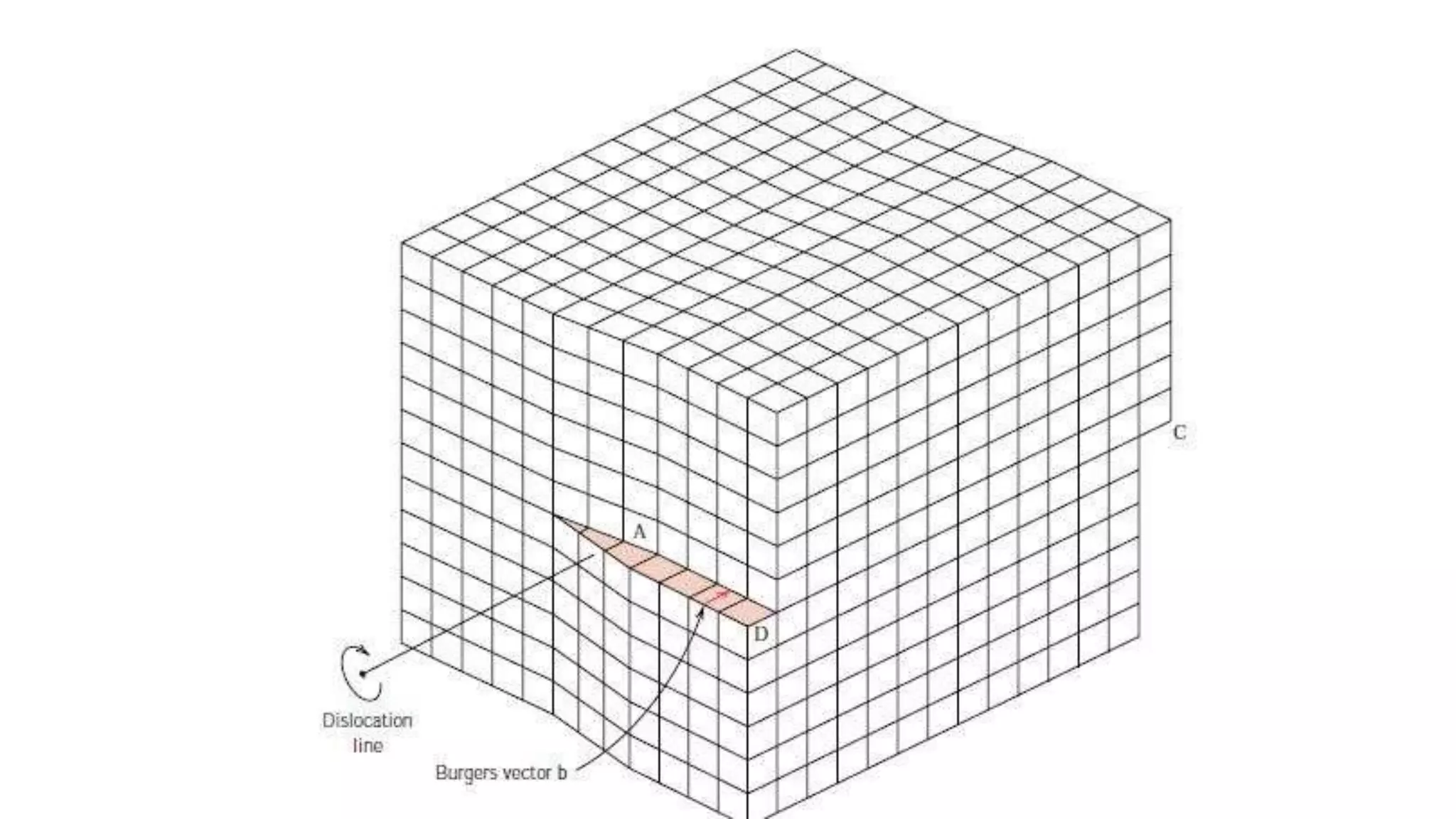
Crystal Structure
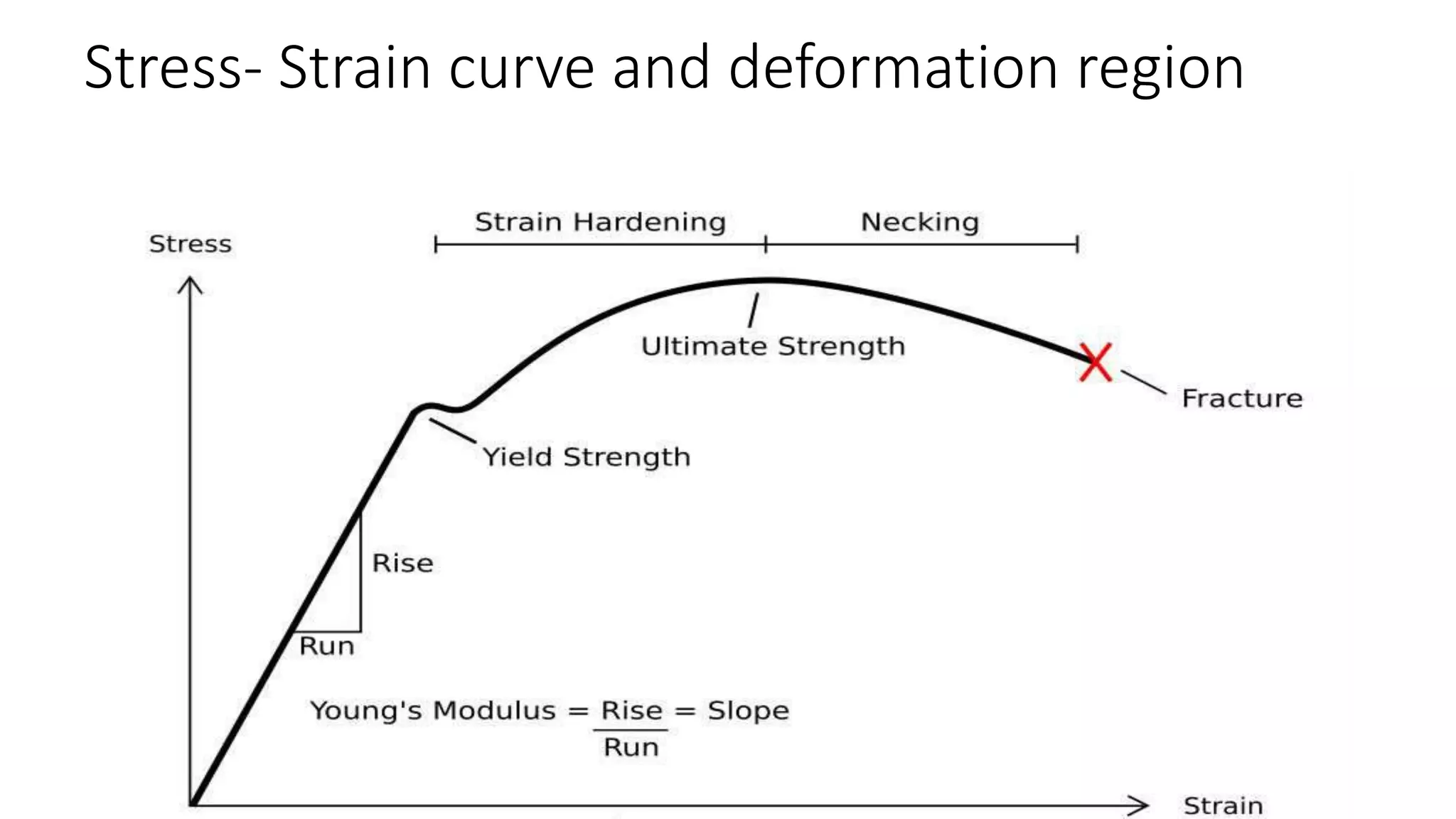
Stress- Strain curve and deformation region
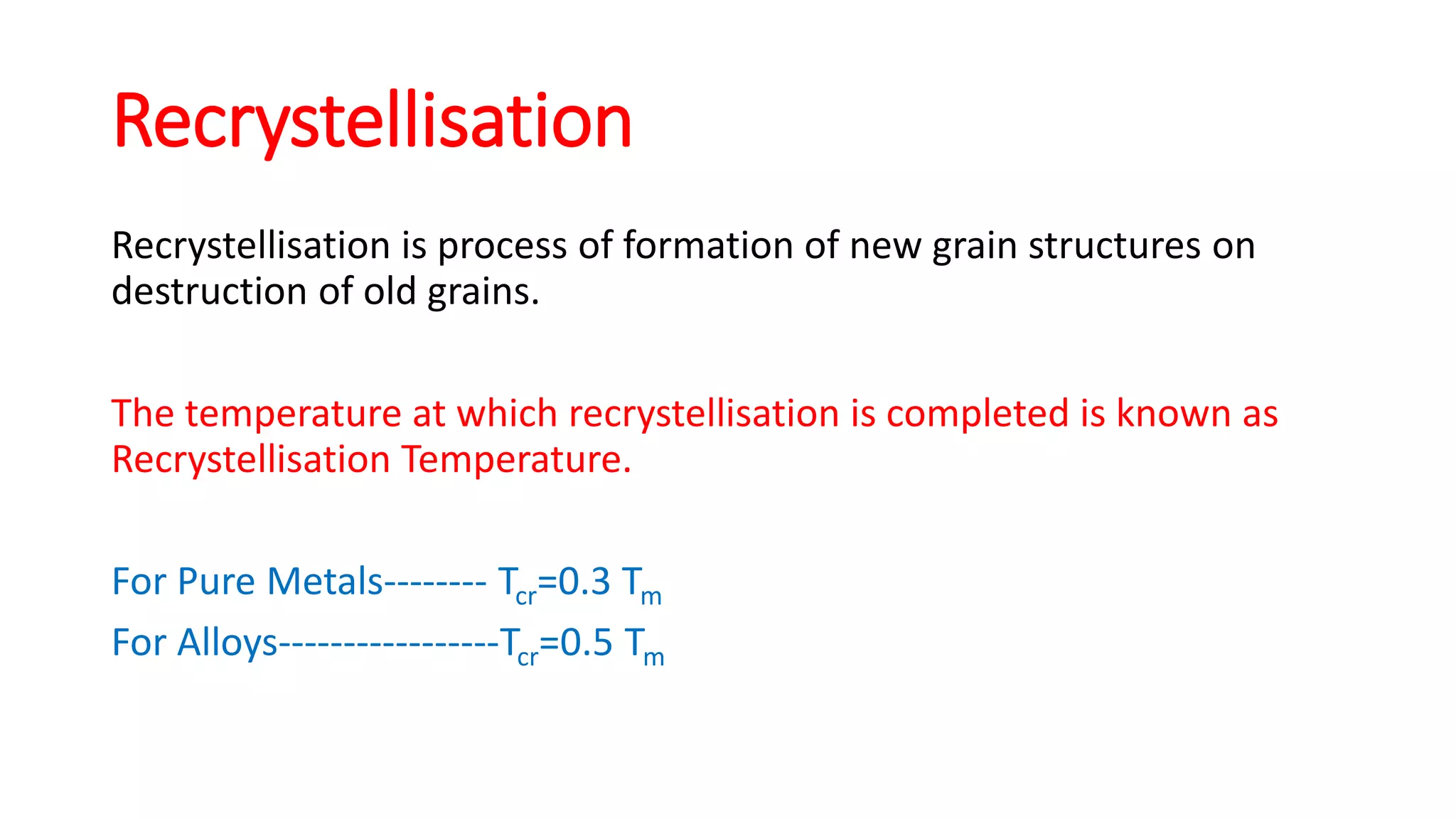
Recrystellisation
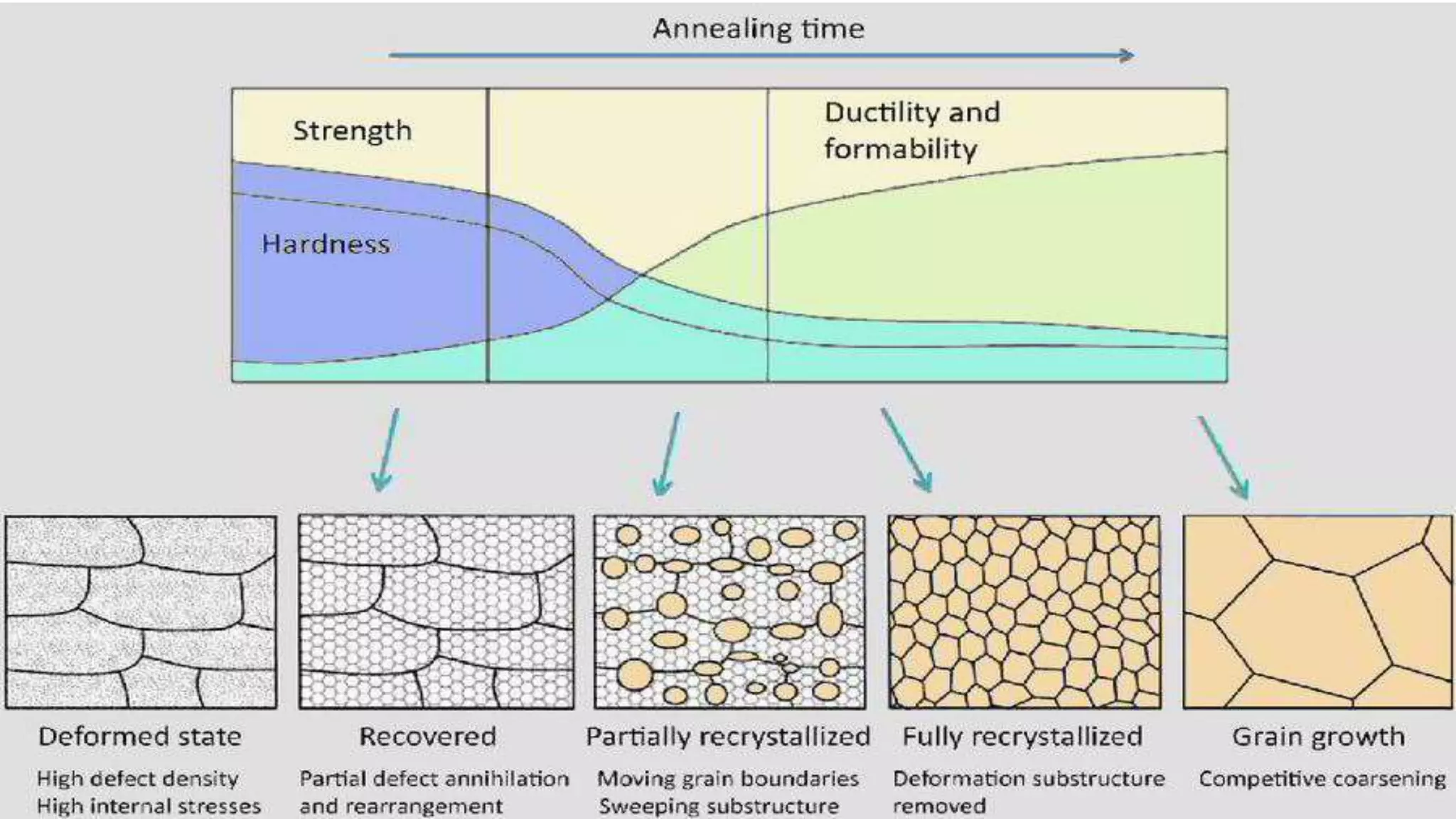
Recrystellisation is process of formation of new grain structures on
destruction of old grains.
The temperature at which recrystellisation is completed is known as
Recrystellisation Temperature.
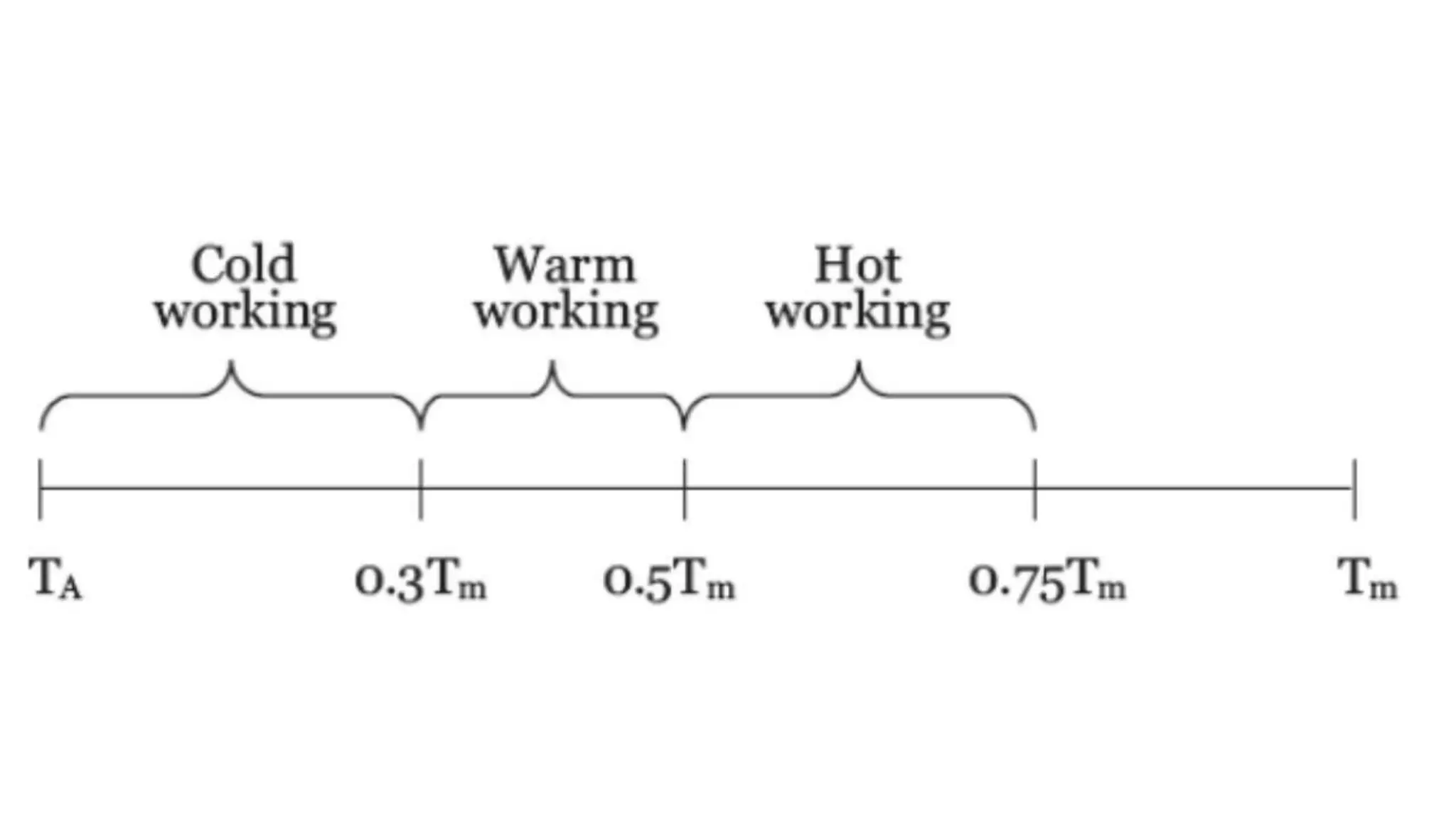
For Pure Metals-------- Tcr=0.3 Tm
For Alloys-----------------Tcr=0.5 Tm
10
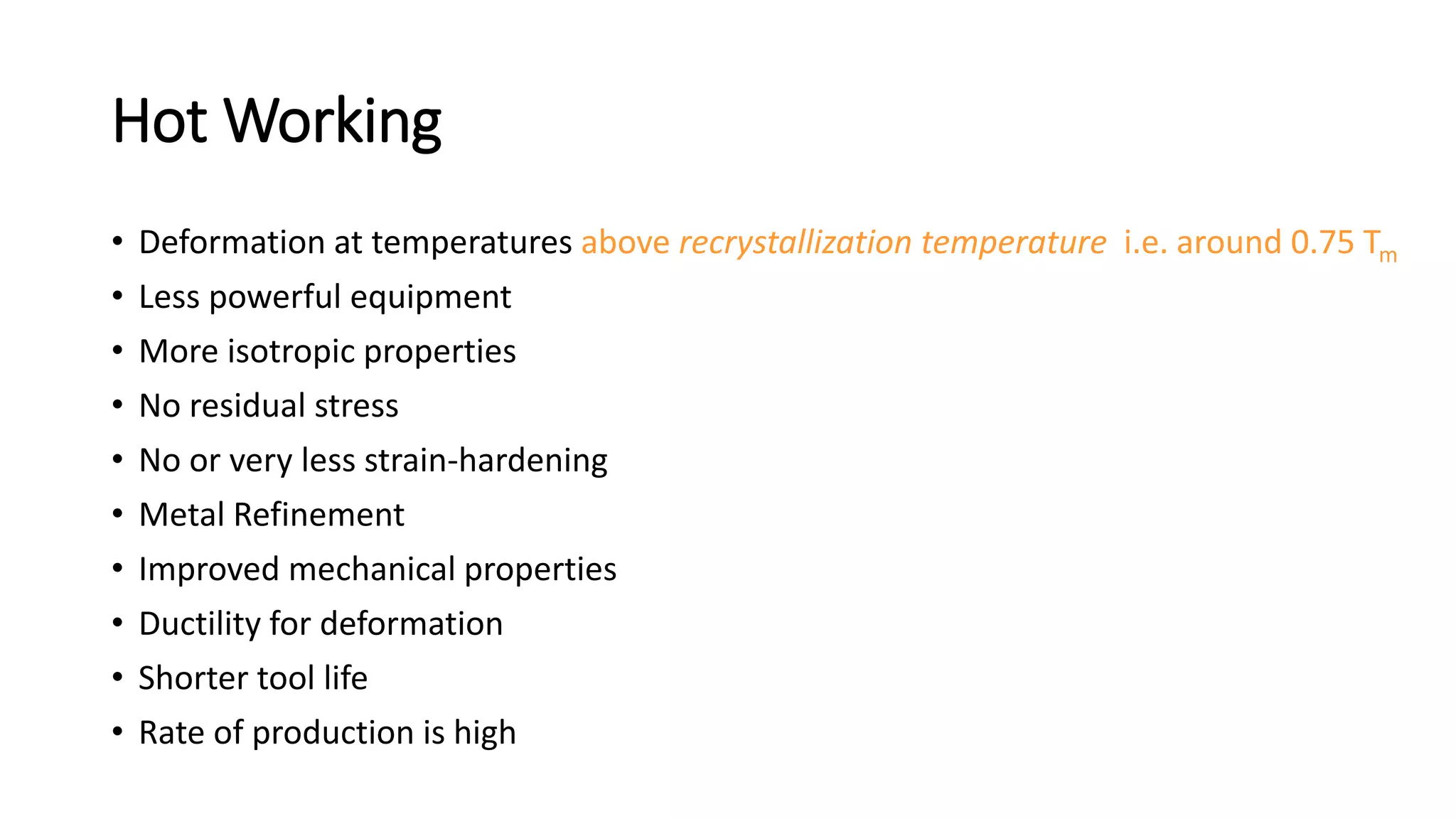
Hot Working
• Deformation at temperatures above recrystallization temperature i.e. around 0.75 Tm
• Less powerful equipment
• More isotropic properties
• No residual stress
• No or very less strain-hardening
• Metal Refinement
• Improved mechanical properties
• Ductility for deformation
• Shorter tool life
• Rate of production is high
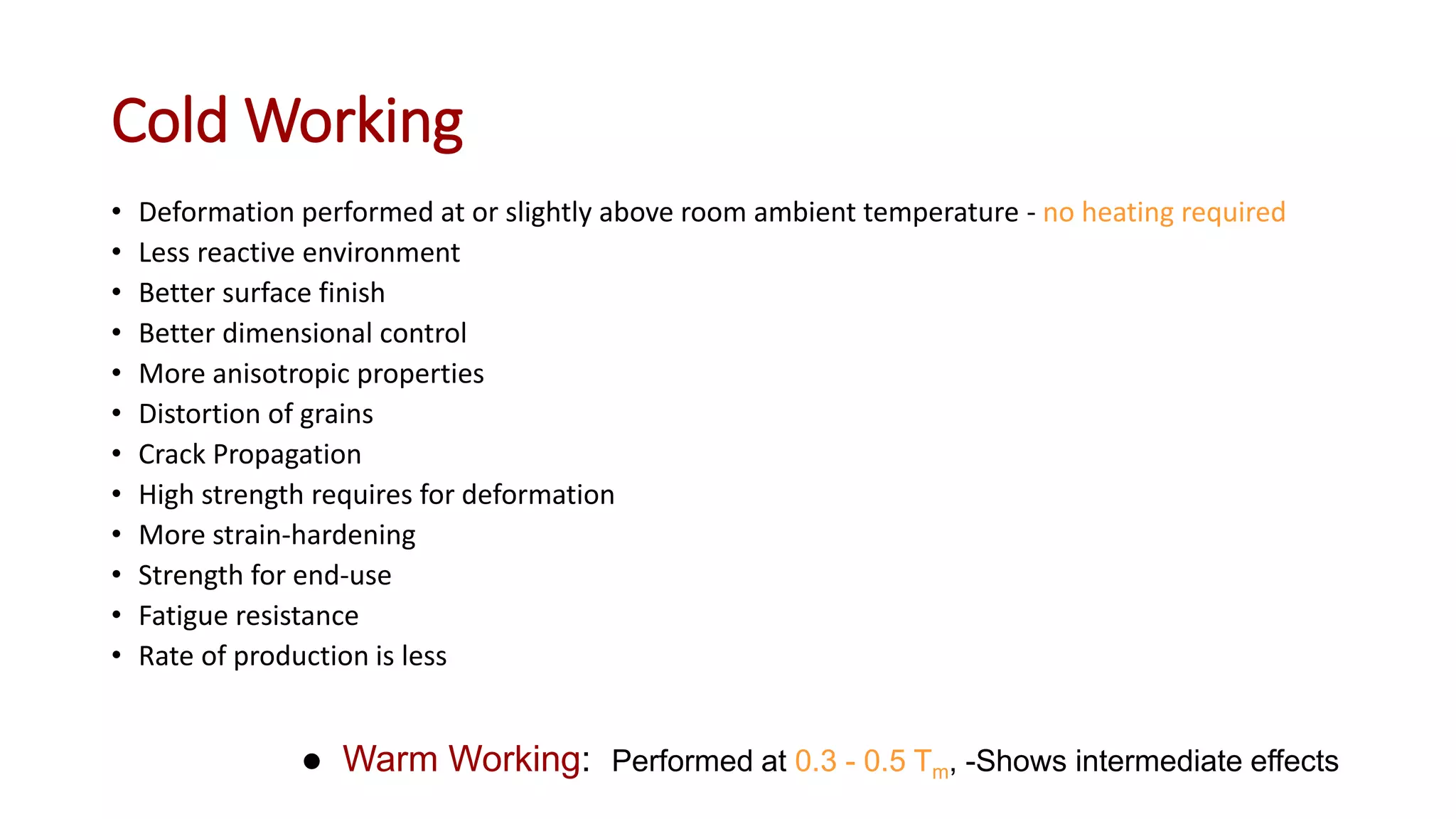
Cold Working
• Deformation performed at or slightly above room ambient temperature - no heating required
• Less reactive environment
• Better surface finish
• Better dimensional control
• More anisotropic properties
• Distortion of grains
• Crack Propagation
• High strength requires for deformation
• More strain-hardening
• Strength for end-use
• Fatigue resistance
• Rate of production is less
 Warm Working: Performed at 0.3 - 0.5 Tm, -Shows intermediate effects
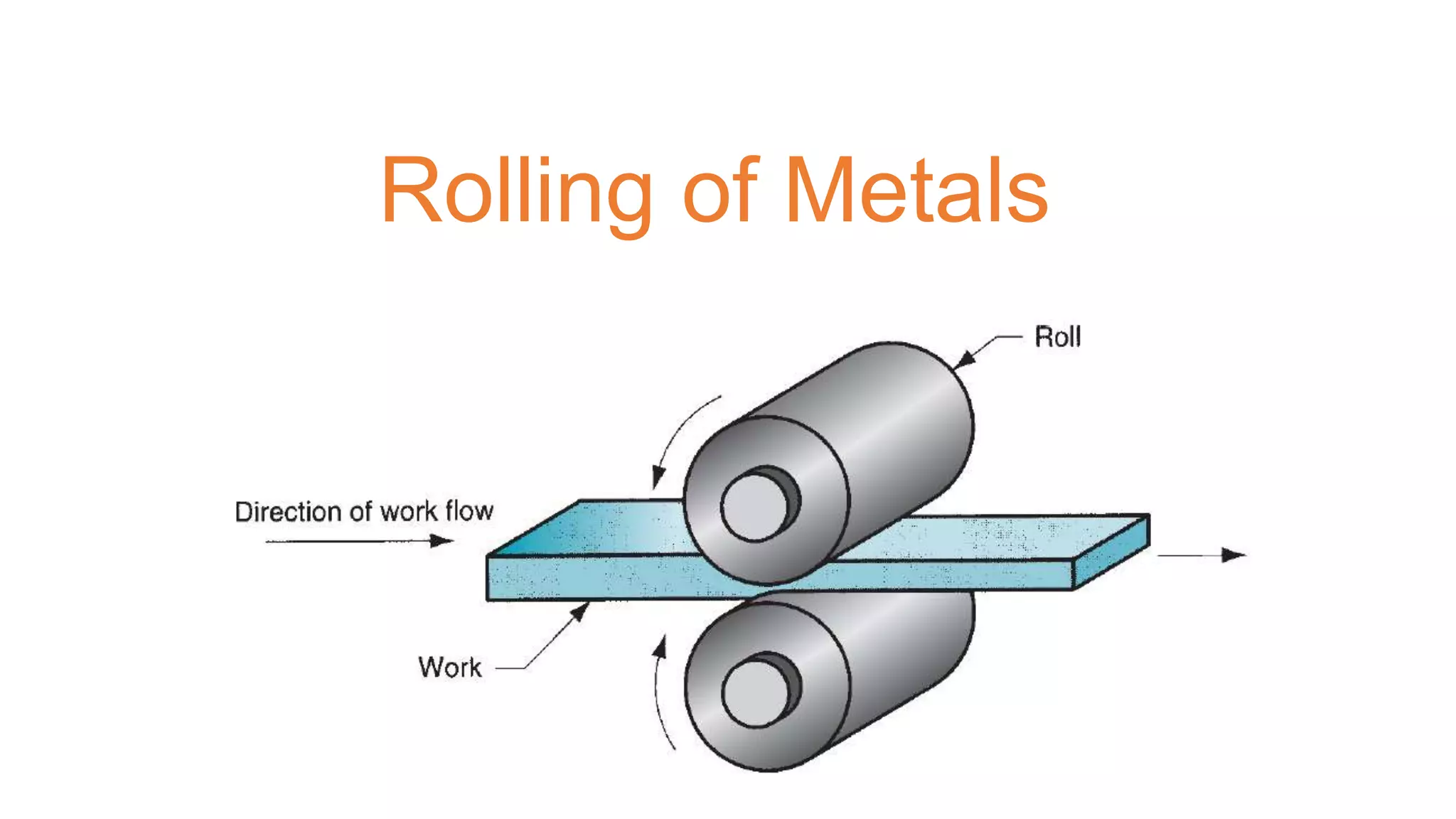
Rolling of Metals
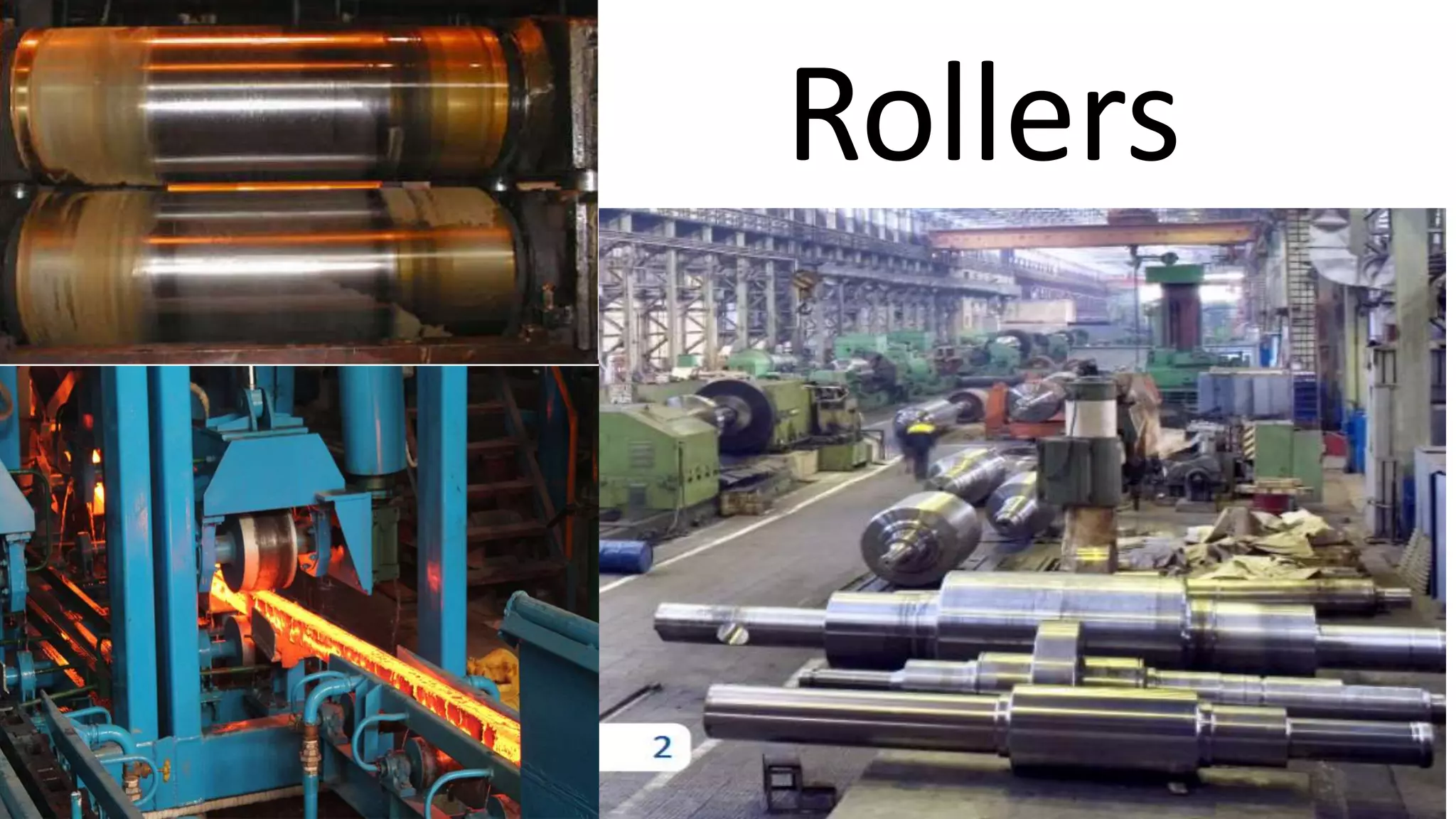
Rollers
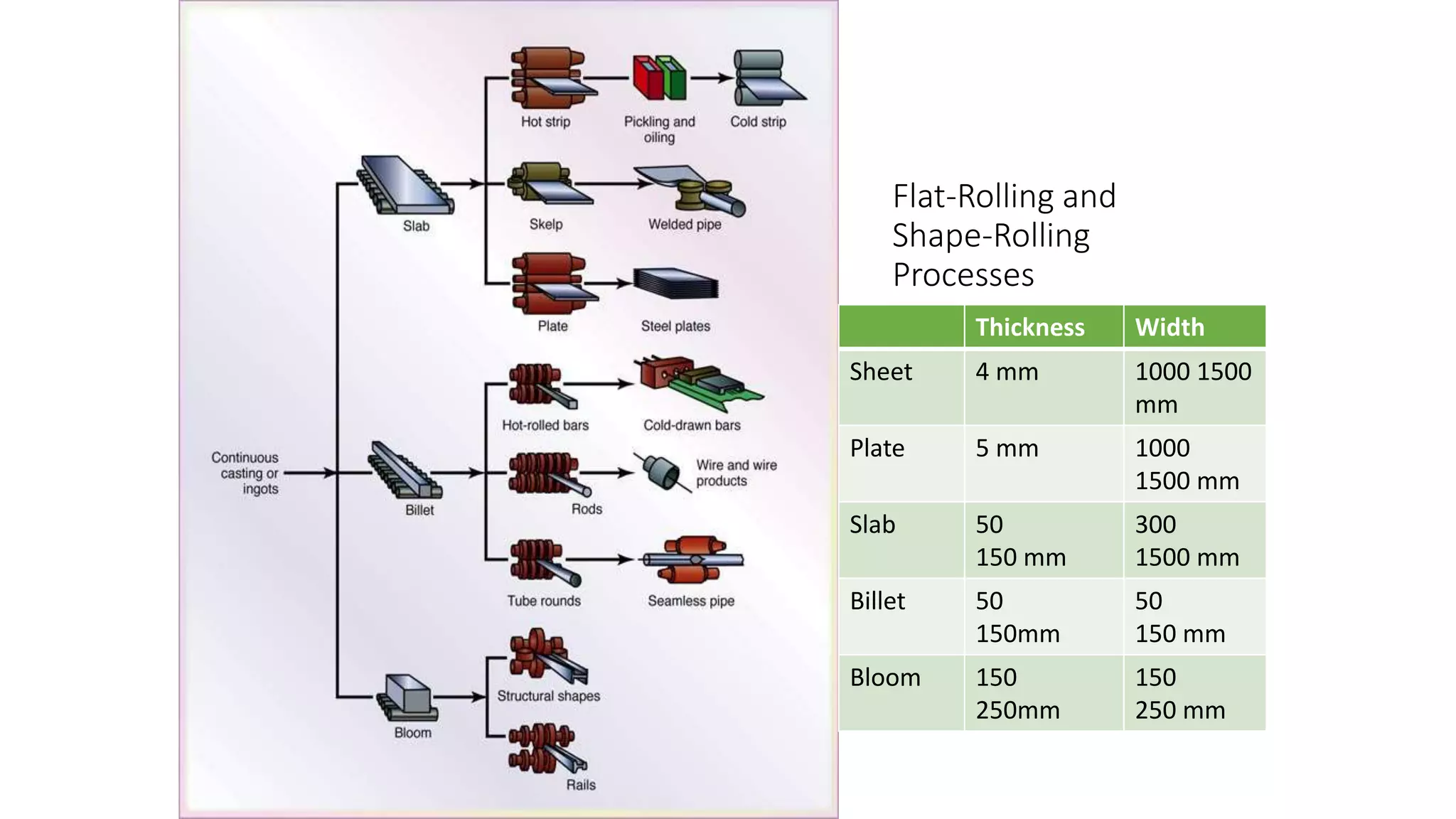
Flat-Rolling and
Shape-Rolling
Processes
Thickness Width
Sheet 4 mm 1000 1500
mm
Plate 5 mm 1000
1500 mm
Slab 50
150 mm
300
1500 mm
Billet 50
150mm
50
150 mm
Bloom 150
250mm
150
250 mm
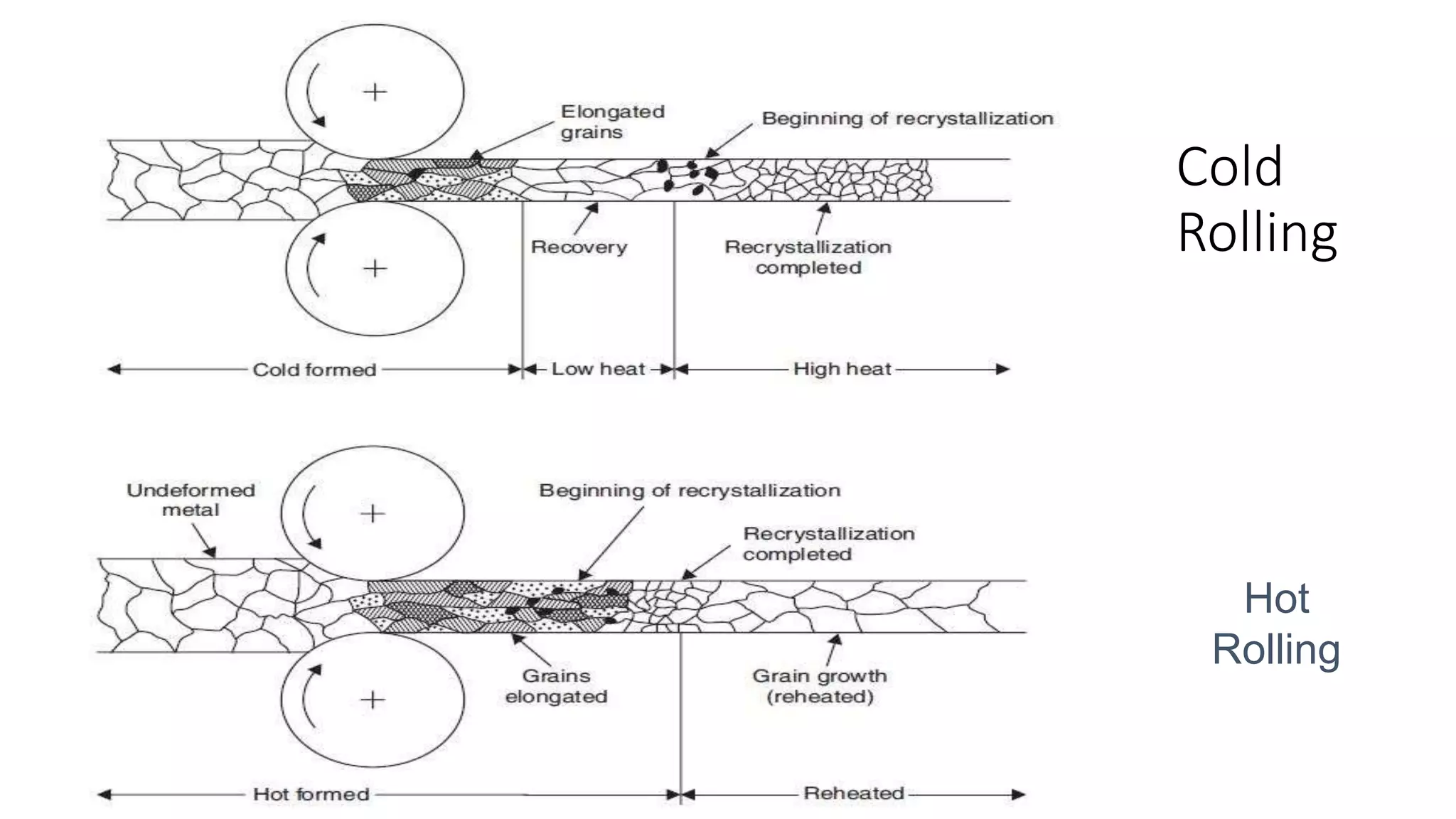
Cold
Rolling
Hot
Rolling
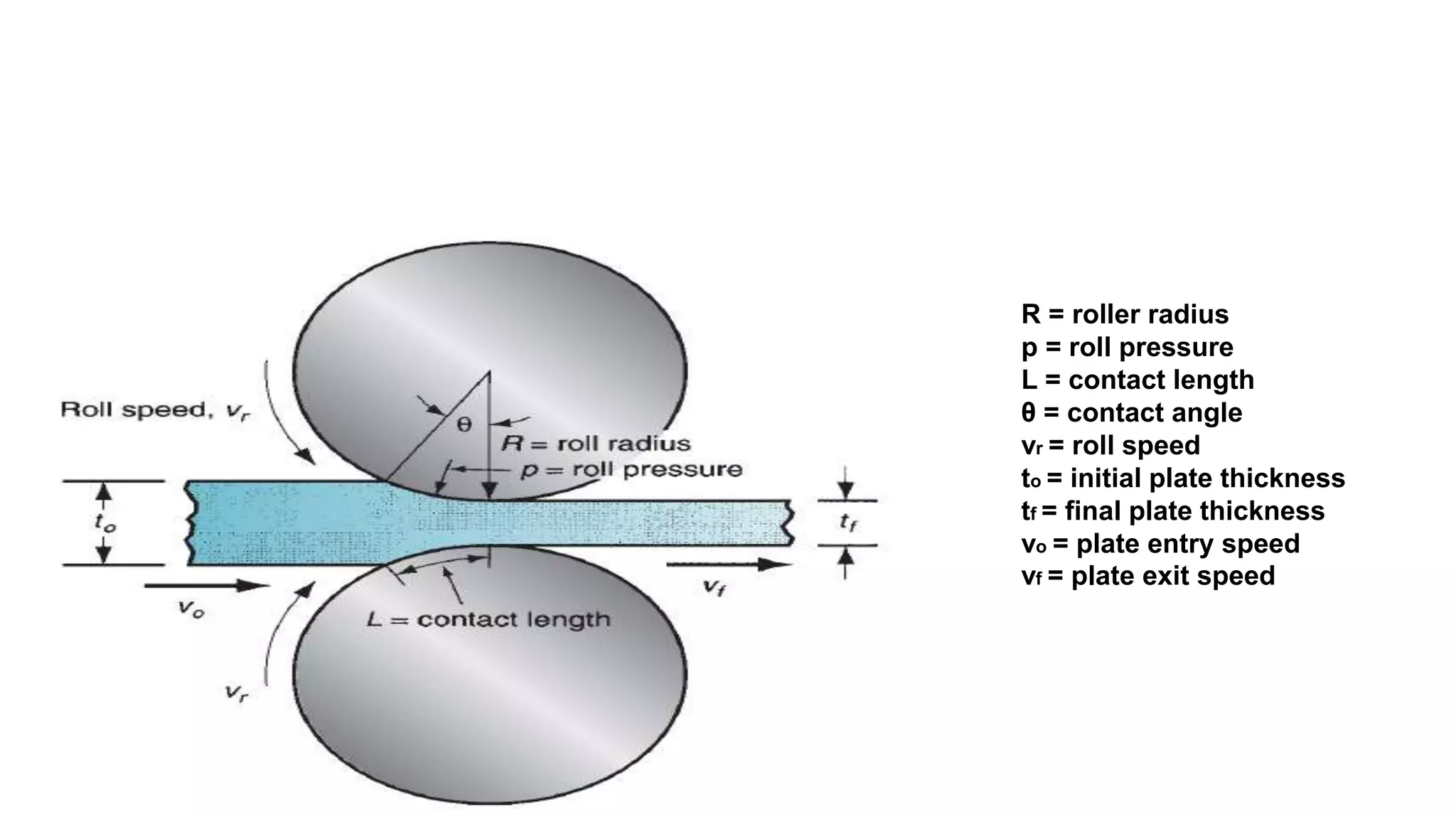
R = roller radius
p = roll pressure
L = contact length
θ = contact angle
vr = roll speed
to = initial plate thickness
tf = final plate thickness
vo = plate entry speed
vf = plate exit speed
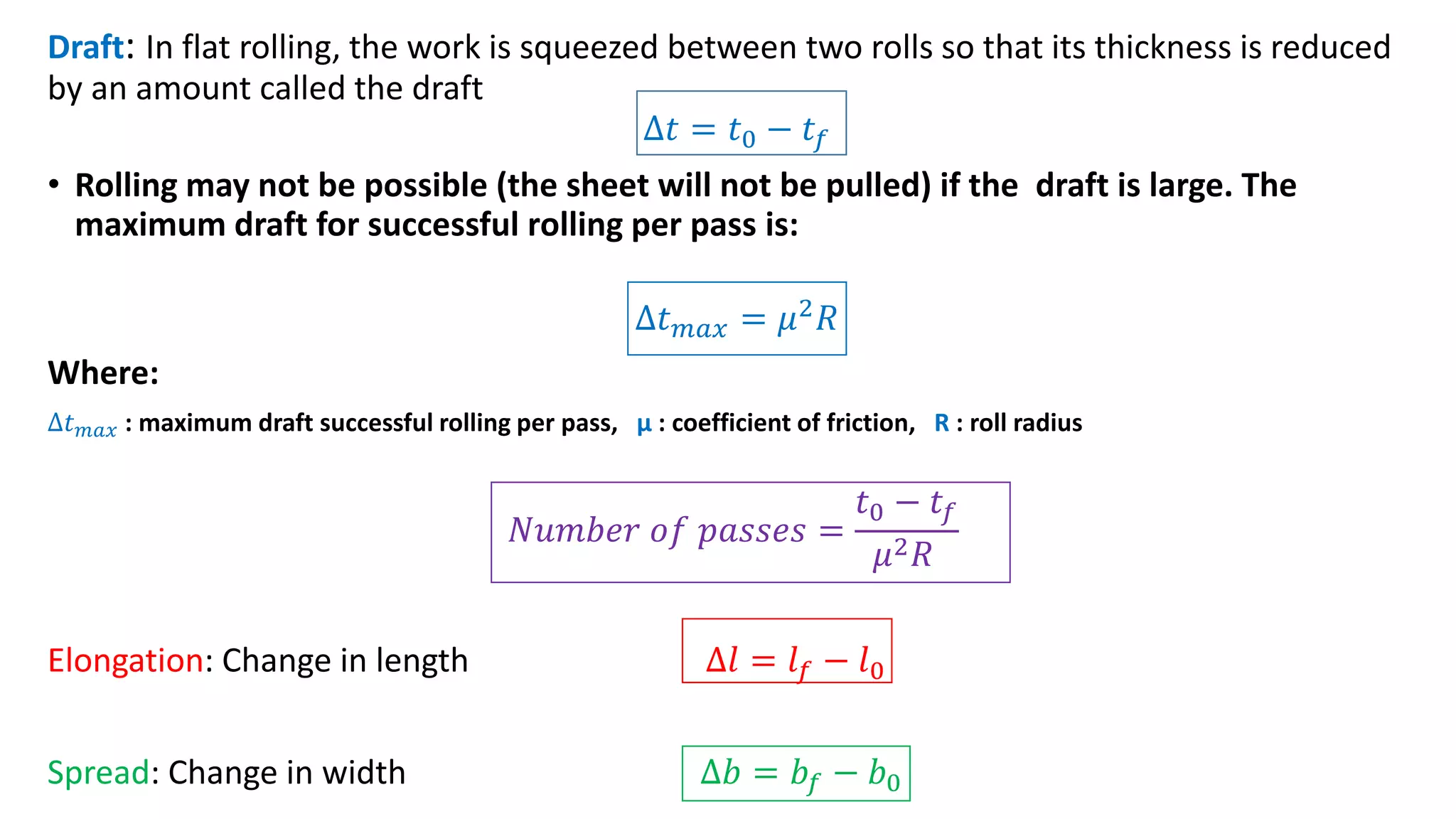
Draft: In flat rolling, the work is squeezed between two rolls so that its thickness is reduced
by an amount called the draft
∆𝑡 = 𝑡0 − 𝑡𝑓
• Rolling may not be possible (the sheet will not be pulled) if the draft is large. The
maximum draft for successful rolling per pass is:
∆𝑡 𝑚𝑎𝑥 = 𝜇2 𝑅
Where:
∆𝑡 𝑚𝑎𝑥 : maximum draft successful rolling per pass, μ : coefficient of friction, R : roll radius
𝑁𝑢𝑚𝑏𝑒𝑟 𝑜𝑓 𝑝𝑎𝑠𝑠𝑒𝑠 =
𝑡0 − 𝑡𝑓
𝜇2 𝑅
Elongation: Change in length ∆𝑙 = 𝑙 𝑓 − 𝑙0
Spread: Change in width ∆𝑏 = 𝑏𝑓 − 𝑏0
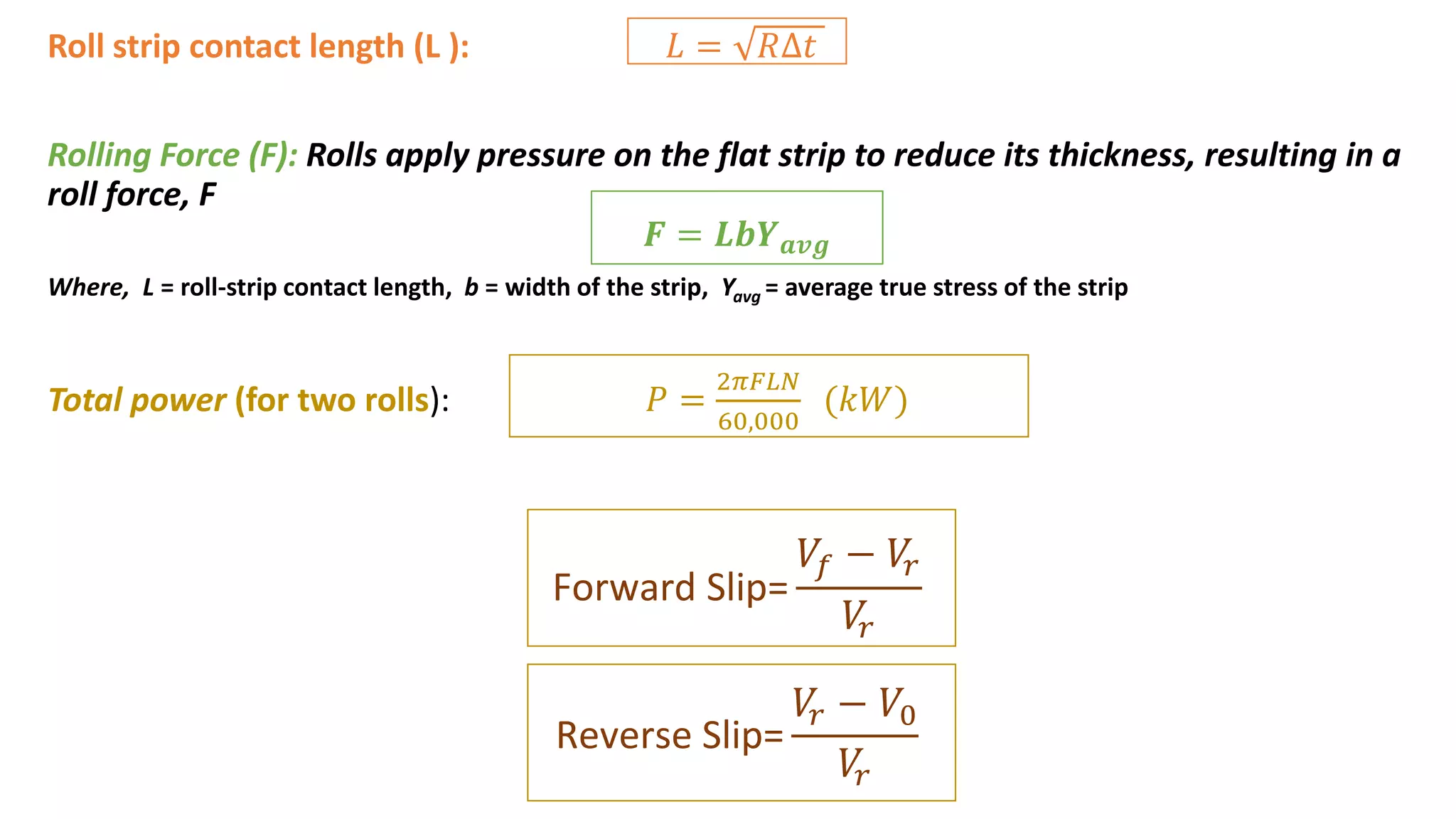
Roll strip contact length (L ): 𝐿 = 𝑅∆𝑡
Rolling Force (F): Rolls apply pressure on the flat strip to reduce its thickness, resulting in a
roll force, F
𝑭 = 𝑳𝒃𝒀 𝒂𝒗𝒈
Where, L = roll-strip contact length, b = width of the strip, Yavg = average true stress of the strip
Total power (for two rolls): 𝑃 =
2𝜋𝐹𝐿𝑁
60,000
(𝑘𝑊)
Forward Slip=
𝑉𝑓 − 𝑉𝑟
𝑉𝑟
Reverse Slip=
𝑉𝑟 − 𝑉0
𝑉𝑟
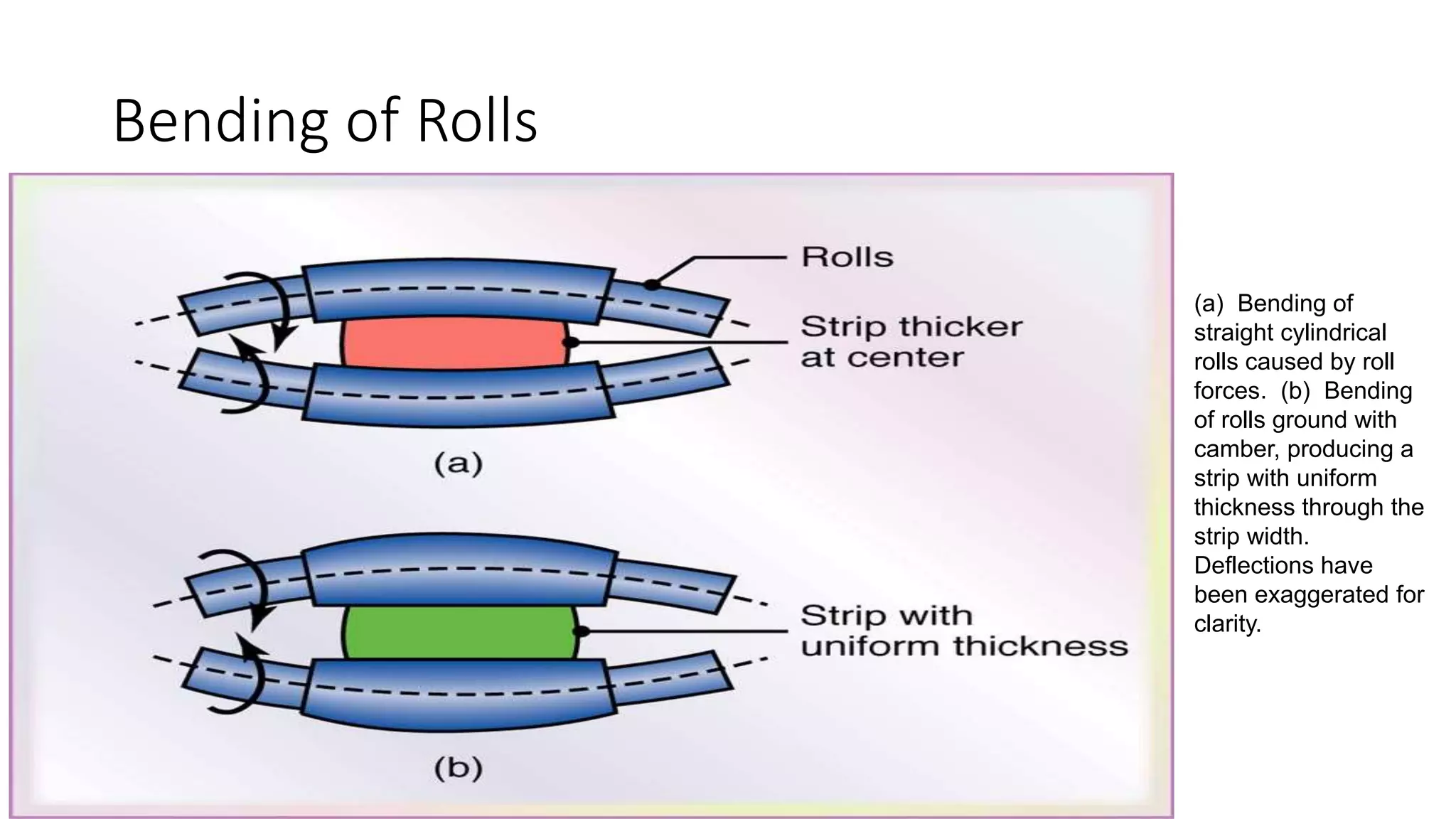
Bending of Rolls
(a) Bending of
straight cylindrical
rolls caused by roll
forces. (b) Bending
of rolls ground with
camber, producing a
strip with uniform
thickness through the
strip width.
Deflections have
been exaggerated for
clarity.
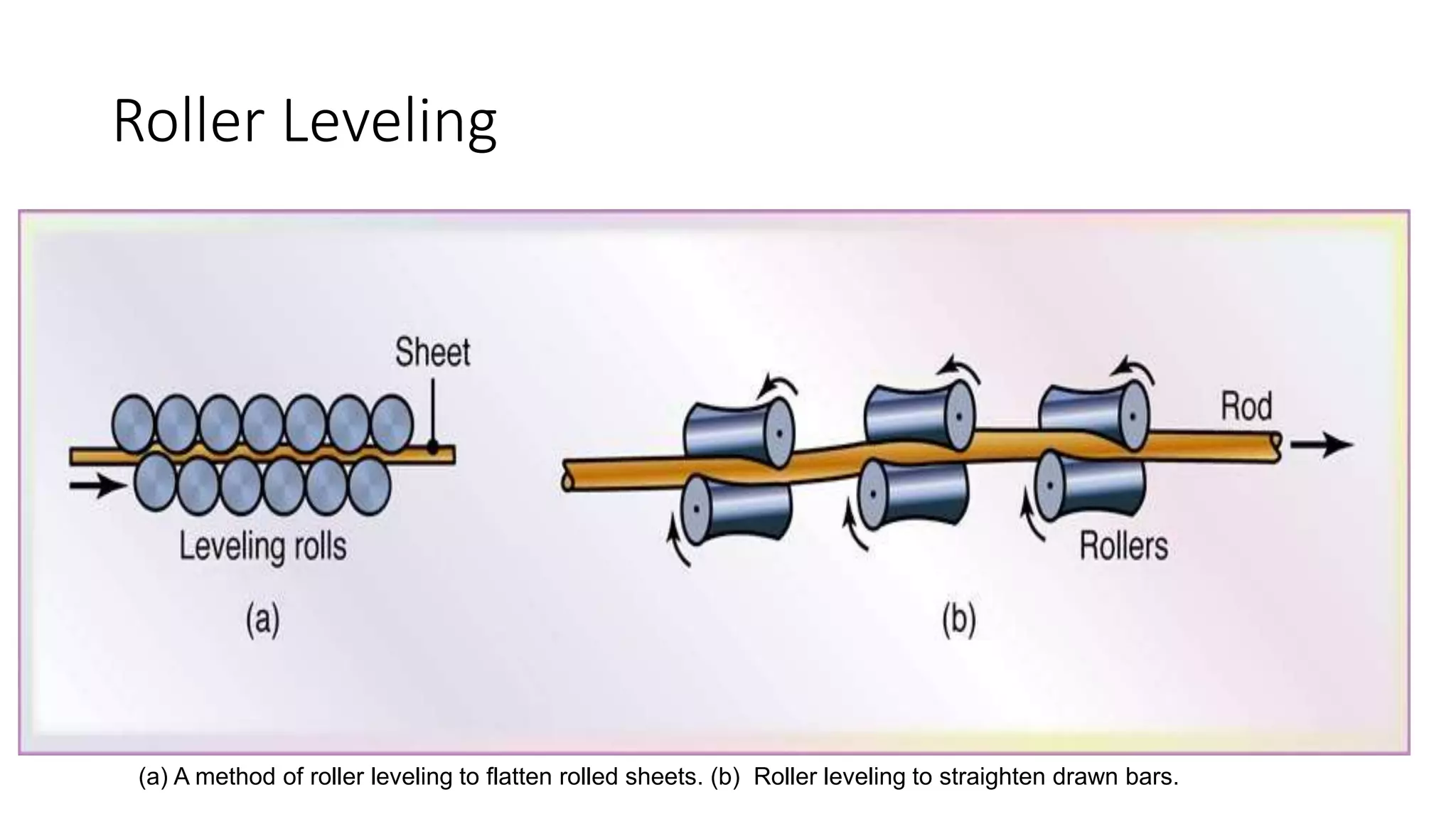
Roller Leveling
(a) A method of roller leveling to flatten rolled sheets. (b) Roller leveling to straighten drawn bars.
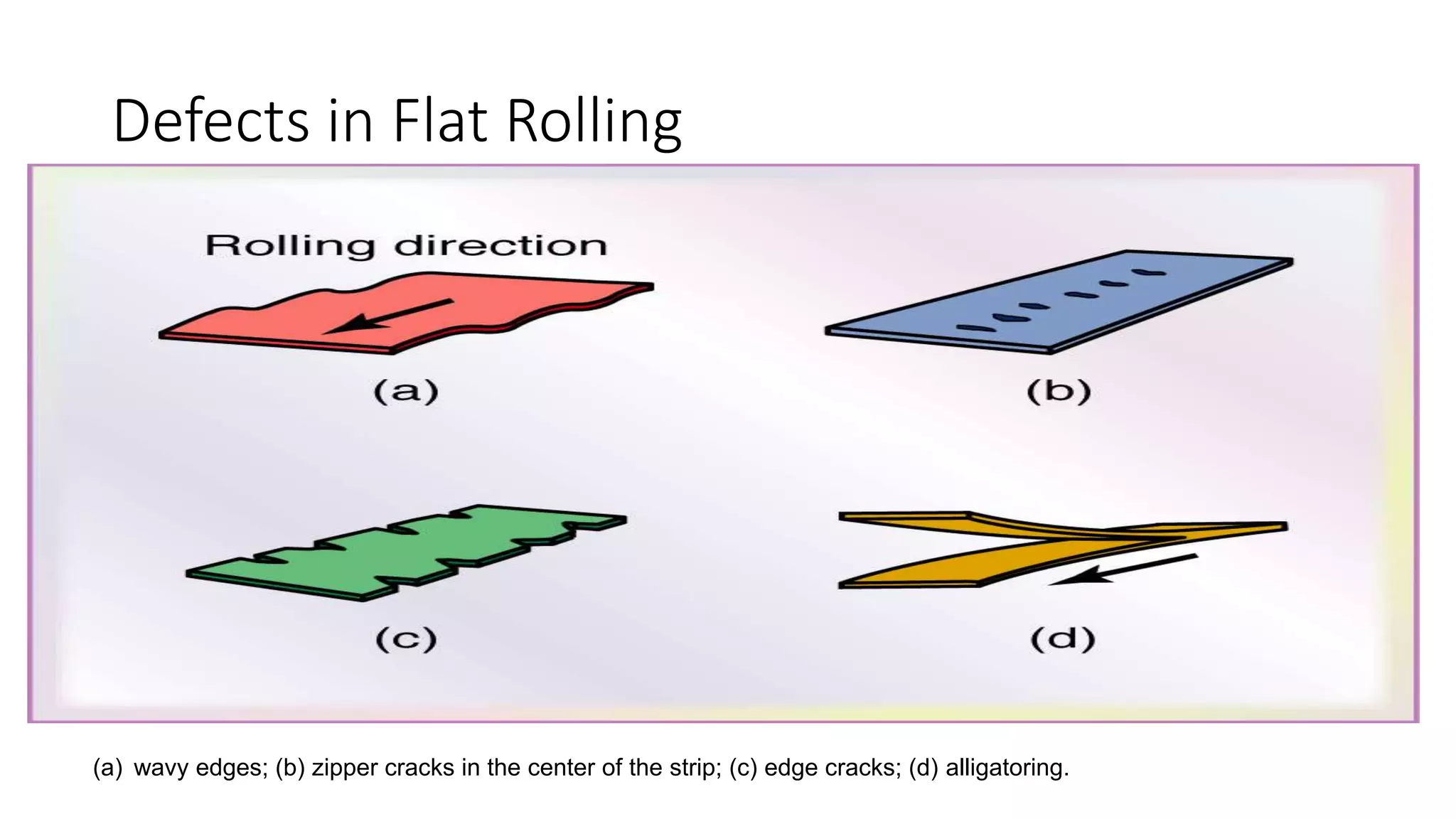
Defects in Flat Rolling
(a) wavy edges; (b) zipper cracks in the center of the strip; (c) edge cracks; (d) alligatoring.
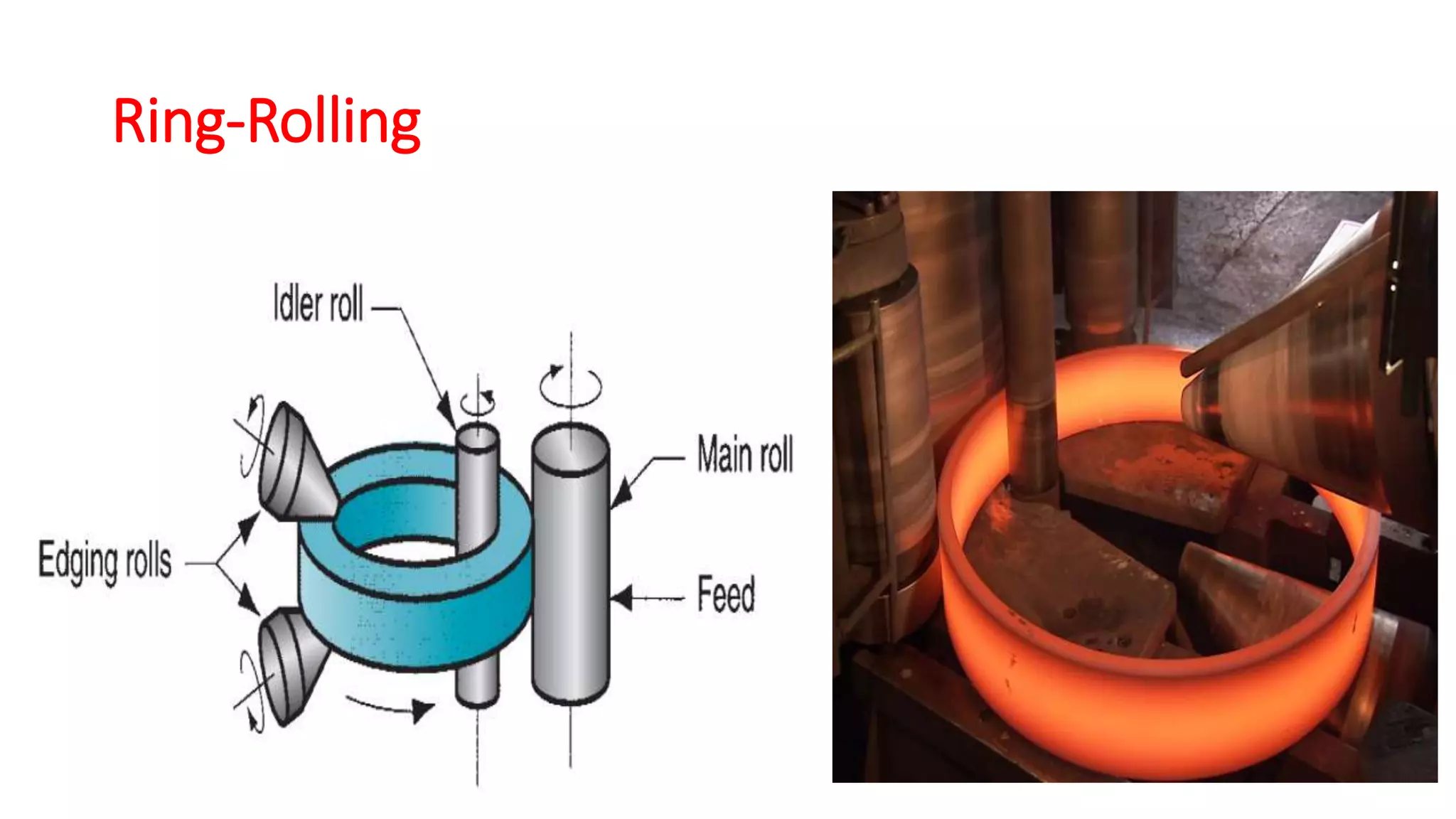
Ring-Rolling
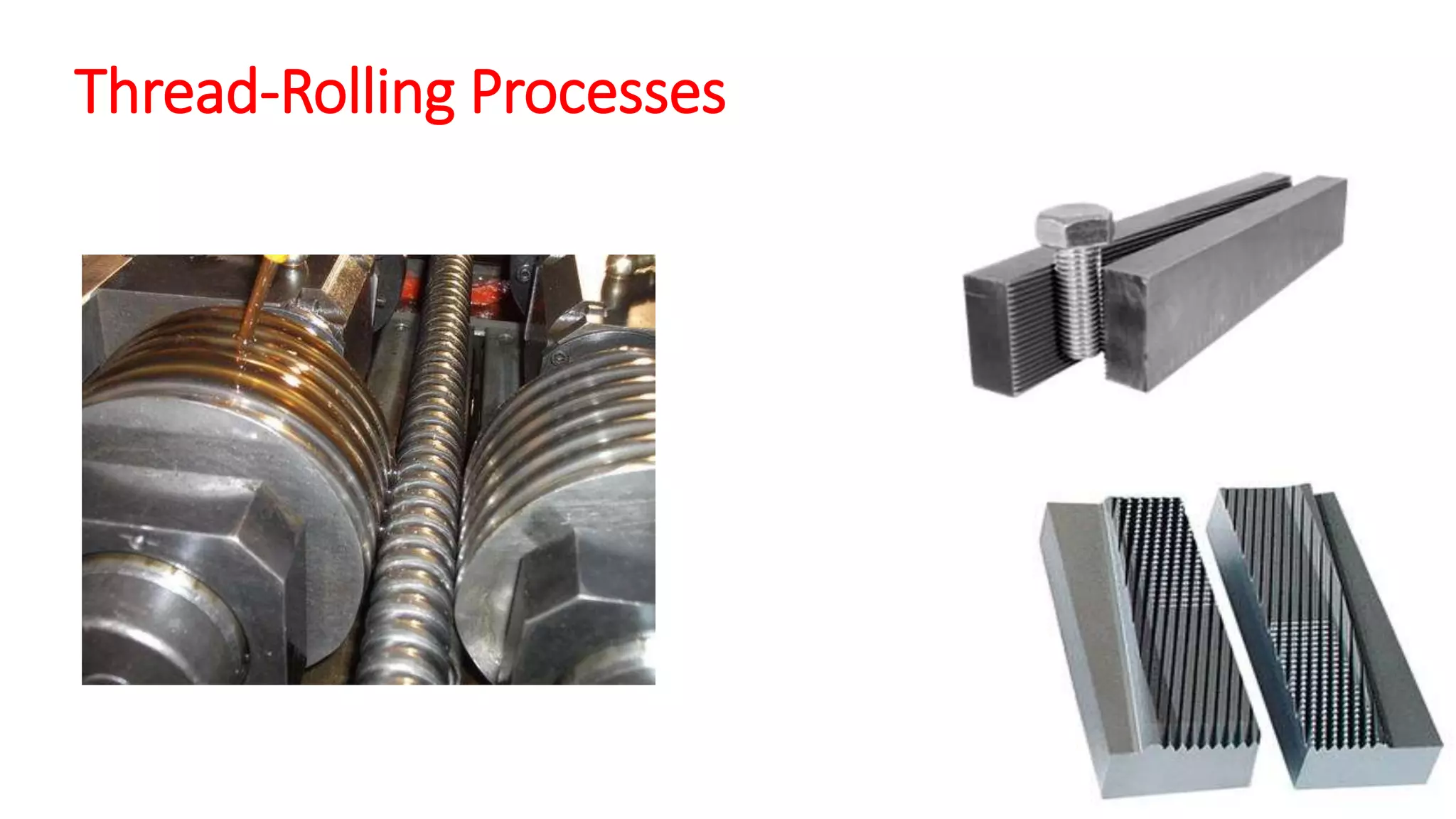
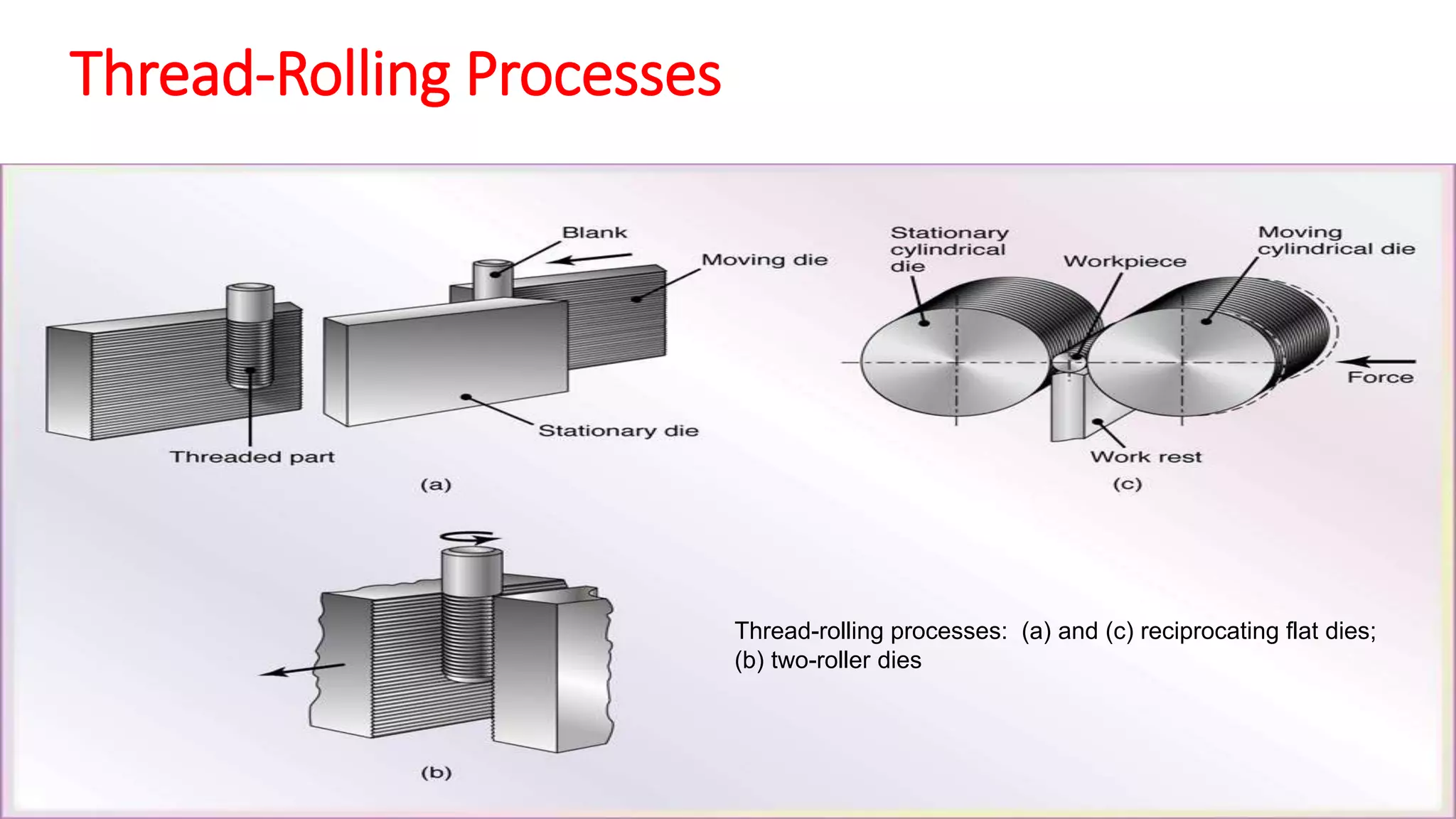
Thread-Rolling Processes
Thread-rolling processes: (a) and (c) reciprocating flat dies;
(b) two-roller dies
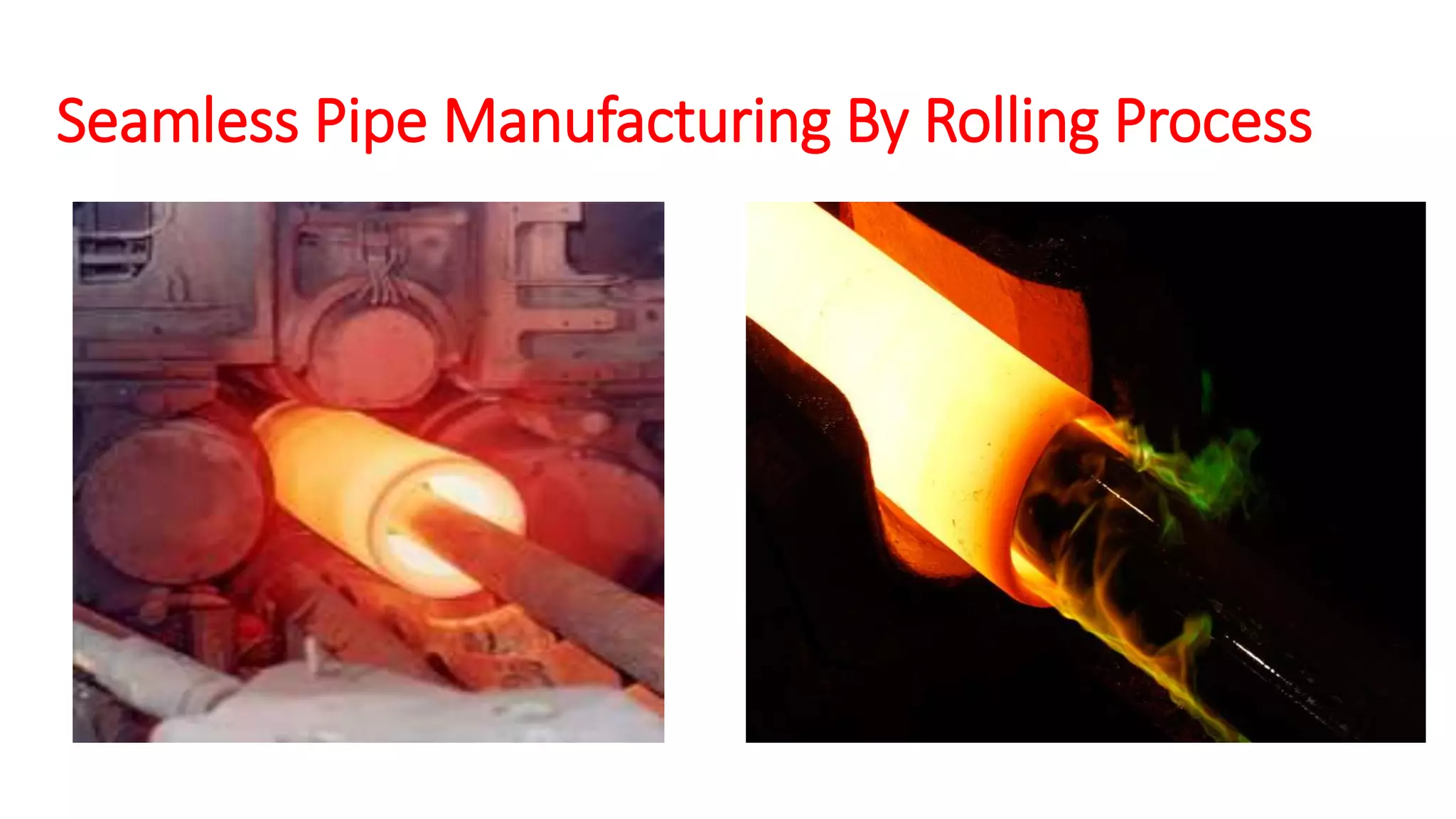
Seamless Pipe Manufacturing By Rolling Process
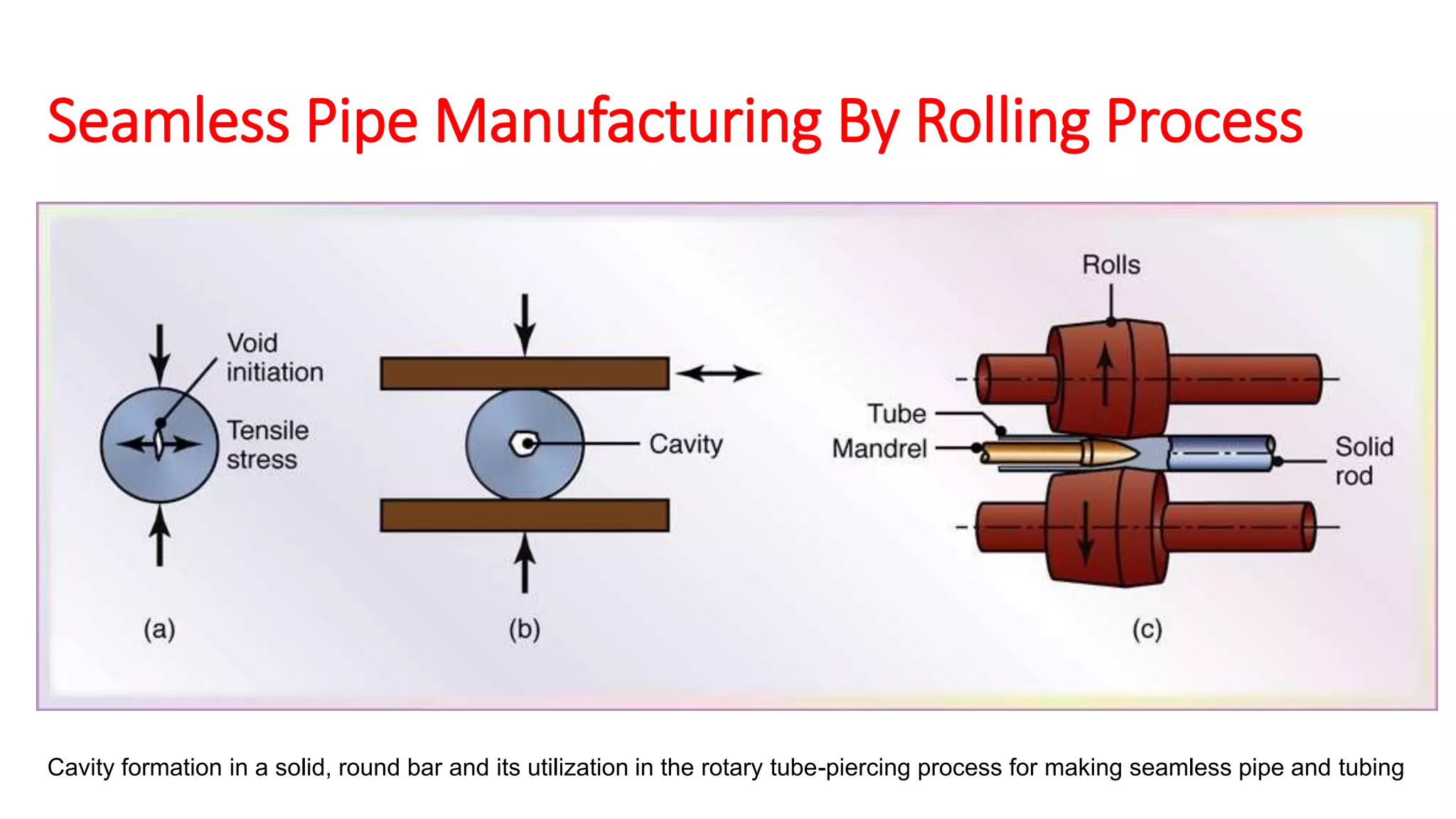
Cavity formation in a solid, round bar and its utilization in the rotary tube-piercing process for making seamless pipe and tubing
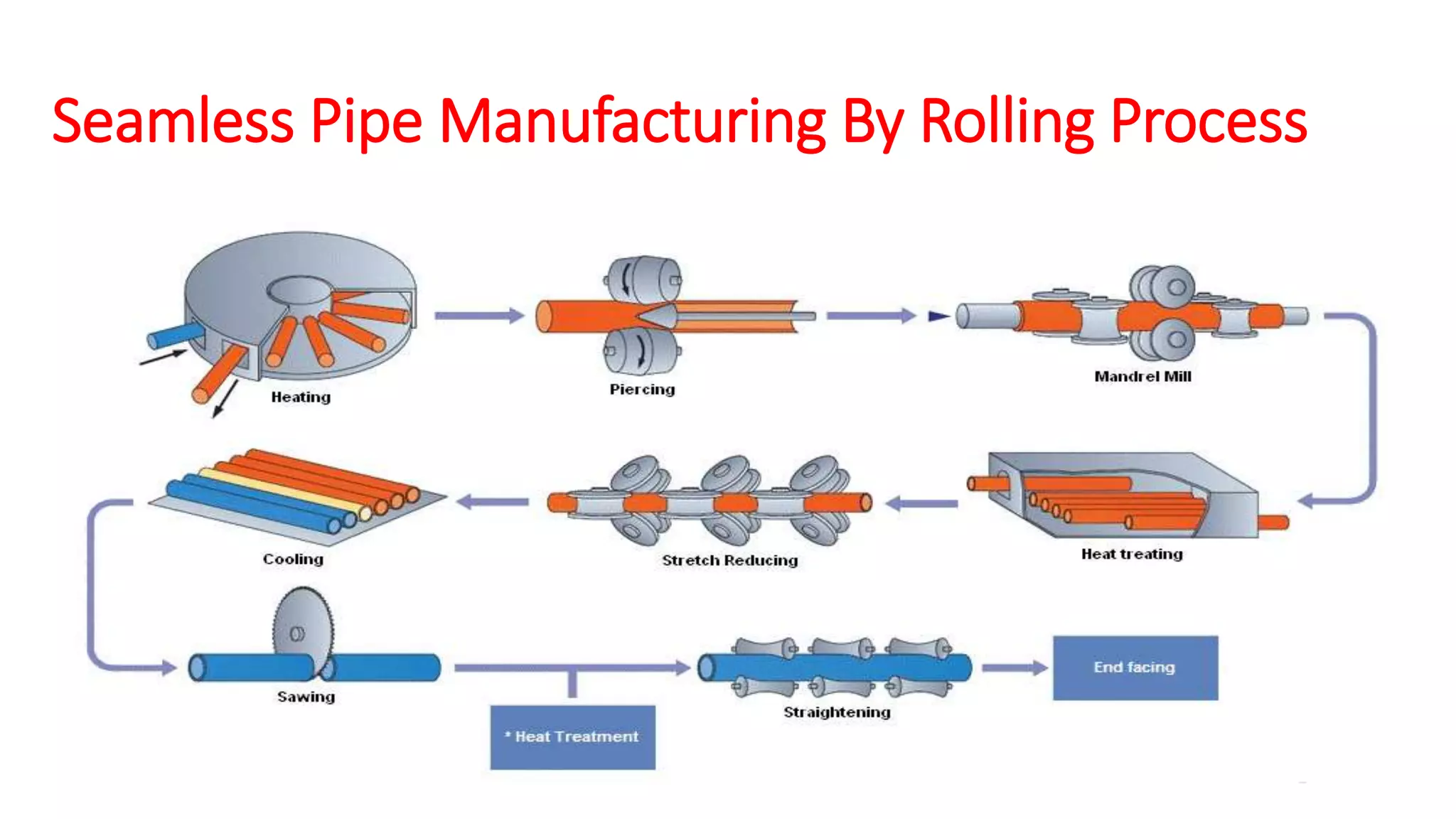
Seamless Pipe Manufacturing By Rolling Process
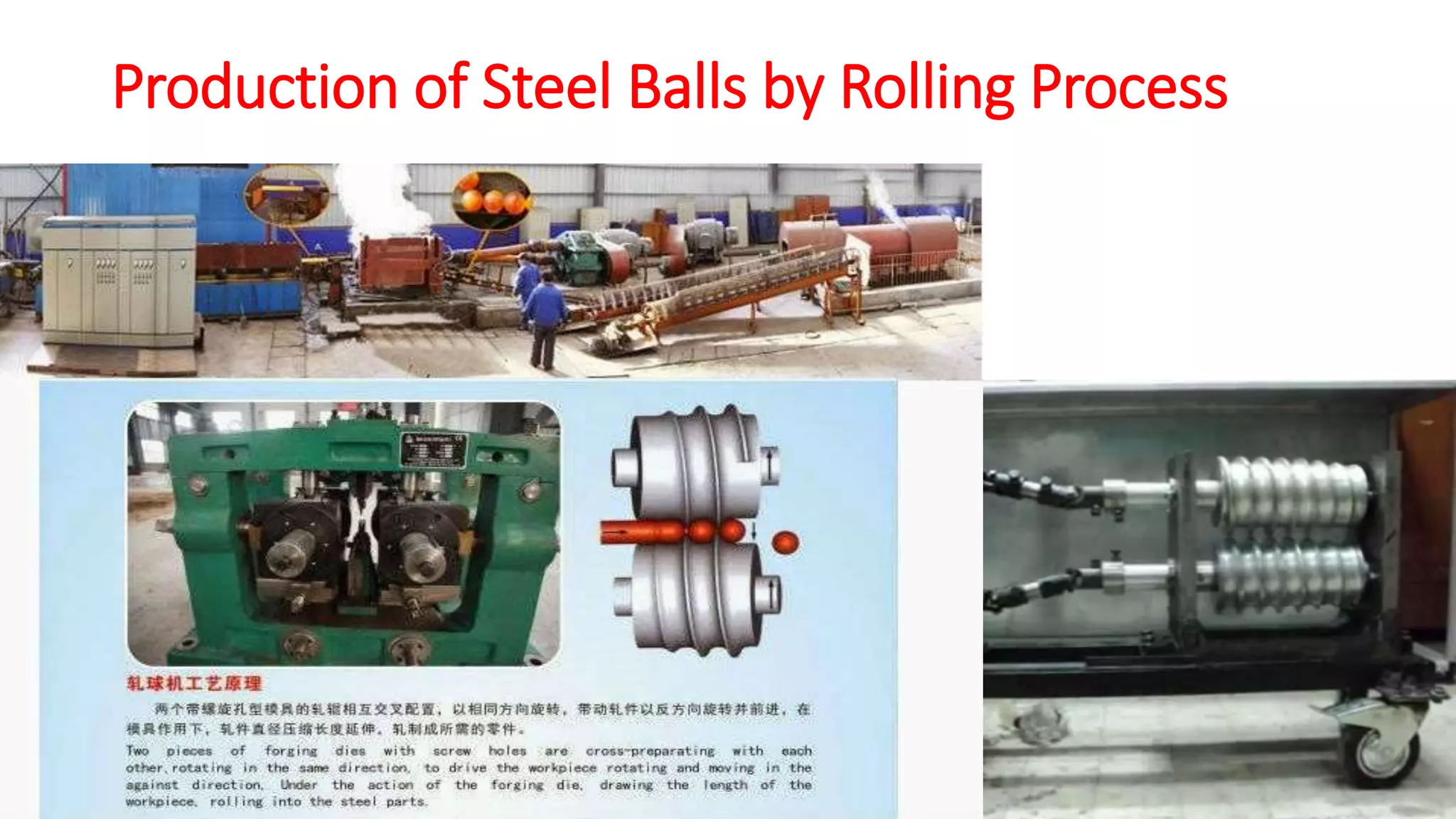
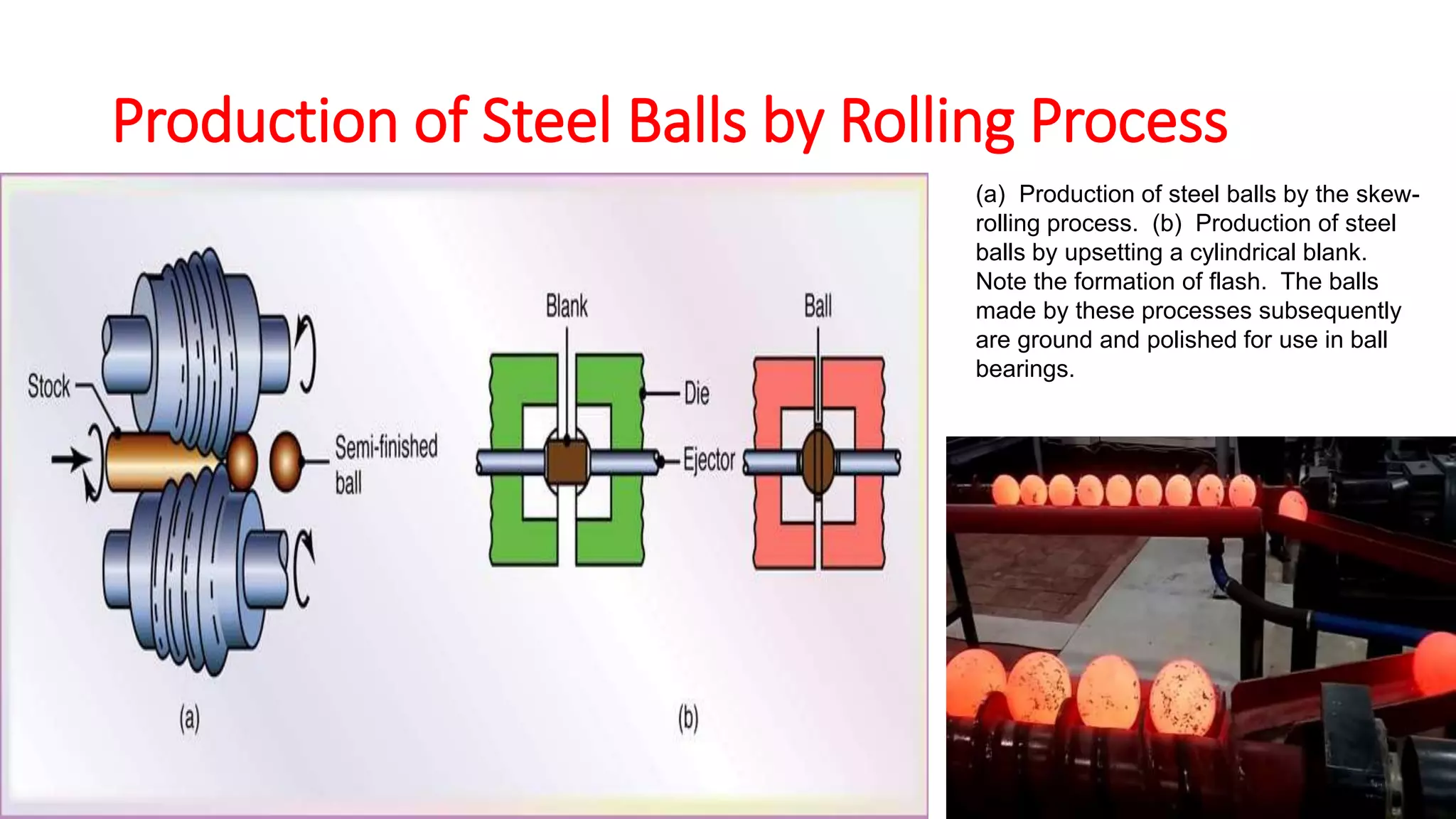
Production of Steel Balls by Rolling Process
(a) Production of steel balls by the skew-
rolling process. (b) Production of steel
balls by upsetting a cylindrical blank.
Note the formation of flash. The balls
made by these processes subsequently
are ground and polished for use in ball
bearings.
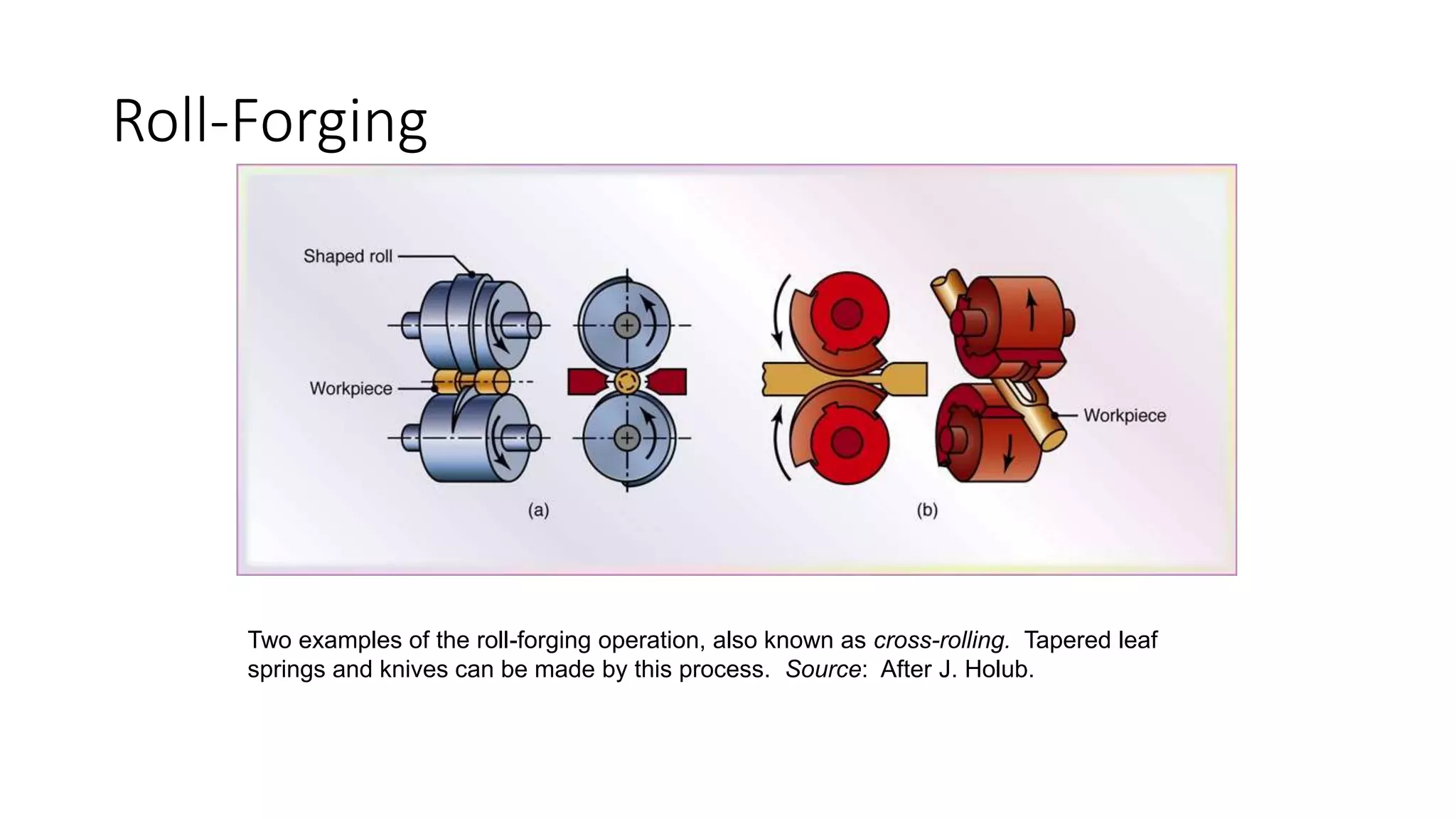
Roll-Forging
Two examples of the roll-forging operation, also known as cross-rolling. Tapered leaf
springs and knives can be made by this process. Source: After J. Holub.
Thank You !!!

Basics of rolling process

  • 1.
  • 2.
    Metal Forming Metal formingis process of intentional deformation of metal workpiece into desired product by means of plastic deformation. "Bulk" refers to work parts with relatively low surface area-to-volume ratios Forming Bulk Forming Process Rolling Forging Extrusion Drawing Sheet Metal Working
  • 3.
  • 4.
  • 5.
    Stress- Strain curveand deformation region
  • 7.
    Recrystellisation Recrystellisation is processof formation of new grain structures on destruction of old grains. The temperature at which recrystellisation is completed is known as Recrystellisation Temperature. For Pure Metals-------- Tcr=0.3 Tm For Alloys-----------------Tcr=0.5 Tm
  • 10.
    10 Hot Working • Deformationat temperatures above recrystallization temperature i.e. around 0.75 Tm • Less powerful equipment • More isotropic properties • No residual stress • No or very less strain-hardening • Metal Refinement • Improved mechanical properties • Ductility for deformation • Shorter tool life • Rate of production is high
  • 11.
    Cold Working • Deformationperformed at or slightly above room ambient temperature - no heating required • Less reactive environment • Better surface finish • Better dimensional control • More anisotropic properties • Distortion of grains • Crack Propagation • High strength requires for deformation • More strain-hardening • Strength for end-use • Fatigue resistance • Rate of production is less  Warm Working: Performed at 0.3 - 0.5 Tm, -Shows intermediate effects
  • 12.
  • 13.
  • 14.
    Flat-Rolling and Shape-Rolling Processes Thickness Width Sheet4 mm 1000 1500 mm Plate 5 mm 1000 1500 mm Slab 50 150 mm 300 1500 mm Billet 50 150mm 50 150 mm Bloom 150 250mm 150 250 mm
  • 15.
  • 17.
    R = rollerradius p = roll pressure L = contact length θ = contact angle vr = roll speed to = initial plate thickness tf = final plate thickness vo = plate entry speed vf = plate exit speed
  • 18.
    Draft: In flatrolling, the work is squeezed between two rolls so that its thickness is reduced by an amount called the draft ∆𝑡 = 𝑡0 − 𝑡𝑓 • Rolling may not be possible (the sheet will not be pulled) if the draft is large. The maximum draft for successful rolling per pass is: ∆𝑡 𝑚𝑎𝑥 = 𝜇2 𝑅 Where: ∆𝑡 𝑚𝑎𝑥 : maximum draft successful rolling per pass, μ : coefficient of friction, R : roll radius 𝑁𝑢𝑚𝑏𝑒𝑟 𝑜𝑓 𝑝𝑎𝑠𝑠𝑒𝑠 = 𝑡0 − 𝑡𝑓 𝜇2 𝑅 Elongation: Change in length ∆𝑙 = 𝑙 𝑓 − 𝑙0 Spread: Change in width ∆𝑏 = 𝑏𝑓 − 𝑏0
  • 19.
    Roll strip contactlength (L ): 𝐿 = 𝑅∆𝑡 Rolling Force (F): Rolls apply pressure on the flat strip to reduce its thickness, resulting in a roll force, F 𝑭 = 𝑳𝒃𝒀 𝒂𝒗𝒈 Where, L = roll-strip contact length, b = width of the strip, Yavg = average true stress of the strip Total power (for two rolls): 𝑃 = 2𝜋𝐹𝐿𝑁 60,000 (𝑘𝑊) Forward Slip= 𝑉𝑓 − 𝑉𝑟 𝑉𝑟 Reverse Slip= 𝑉𝑟 − 𝑉0 𝑉𝑟
  • 20.
    Bending of Rolls (a)Bending of straight cylindrical rolls caused by roll forces. (b) Bending of rolls ground with camber, producing a strip with uniform thickness through the strip width. Deflections have been exaggerated for clarity.
  • 21.
    Roller Leveling (a) Amethod of roller leveling to flatten rolled sheets. (b) Roller leveling to straighten drawn bars.
  • 22.
    Defects in FlatRolling (a) wavy edges; (b) zipper cracks in the center of the strip; (c) edge cracks; (d) alligatoring.
  • 23.
  • 24.
  • 25.
    Thread-Rolling Processes Thread-rolling processes:(a) and (c) reciprocating flat dies; (b) two-roller dies
  • 26.
    Seamless Pipe ManufacturingBy Rolling Process
  • 27.
    Seamless Pipe ManufacturingBy Rolling Process Cavity formation in a solid, round bar and its utilization in the rotary tube-piercing process for making seamless pipe and tubing
  • 28.
    Seamless Pipe ManufacturingBy Rolling Process
  • 29.
    Production of SteelBalls by Rolling Process
  • 30.
    Production of SteelBalls by Rolling Process (a) Production of steel balls by the skew- rolling process. (b) Production of steel balls by upsetting a cylindrical blank. Note the formation of flash. The balls made by these processes subsequently are ground and polished for use in ball bearings.
  • 31.
    Roll-Forging Two examples ofthe roll-forging operation, also known as cross-rolling. Tapered leaf springs and knives can be made by this process. Source: After J. Holub.
  • 32.