The Global Virome Project
The
Beginning of the End
of the
Pandemic Era
We are not prepared for the Dual Threats Posed
by Emerging Infectious Diseases
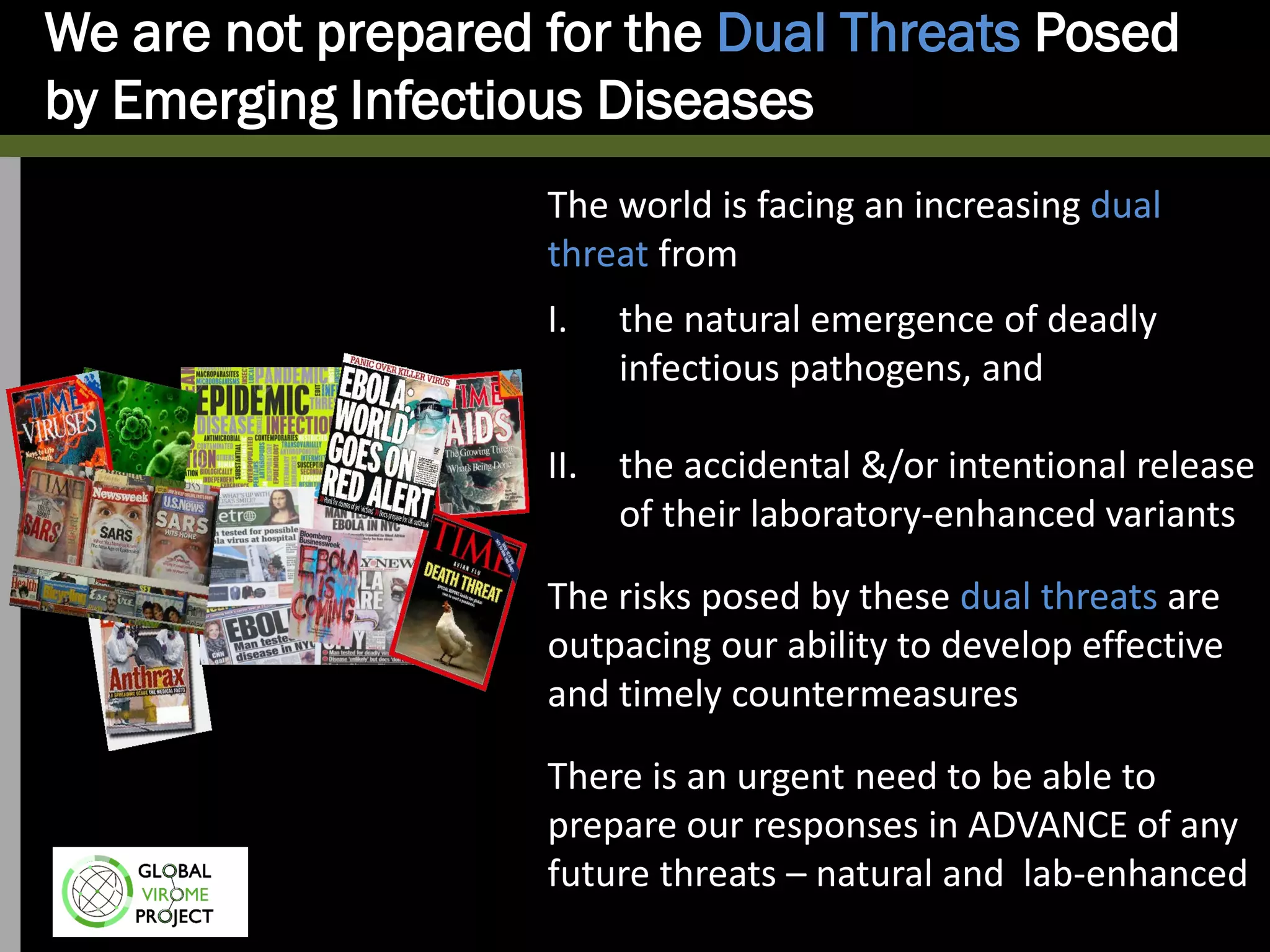
The world is facing an increasing dual
threat from
I. the natural emergence of deadly
infectious pathogens, and
II. the accidental &/or intentional release
of their laboratory-enhanced variants
The risks posed by these dual threats are
outpacing our ability to develop effective
and timely countermeasures
There is an urgent need to be able to
prepare our responses in ADVANCE of any
future threats – natural and lab-enhanced
0
50
100
150
200
250
300
1945
1955
1965
1975
1985
1995
2005
2015
2025
2035
2045
2055
Actual
Projected
Decades
NumberofEVDEvents
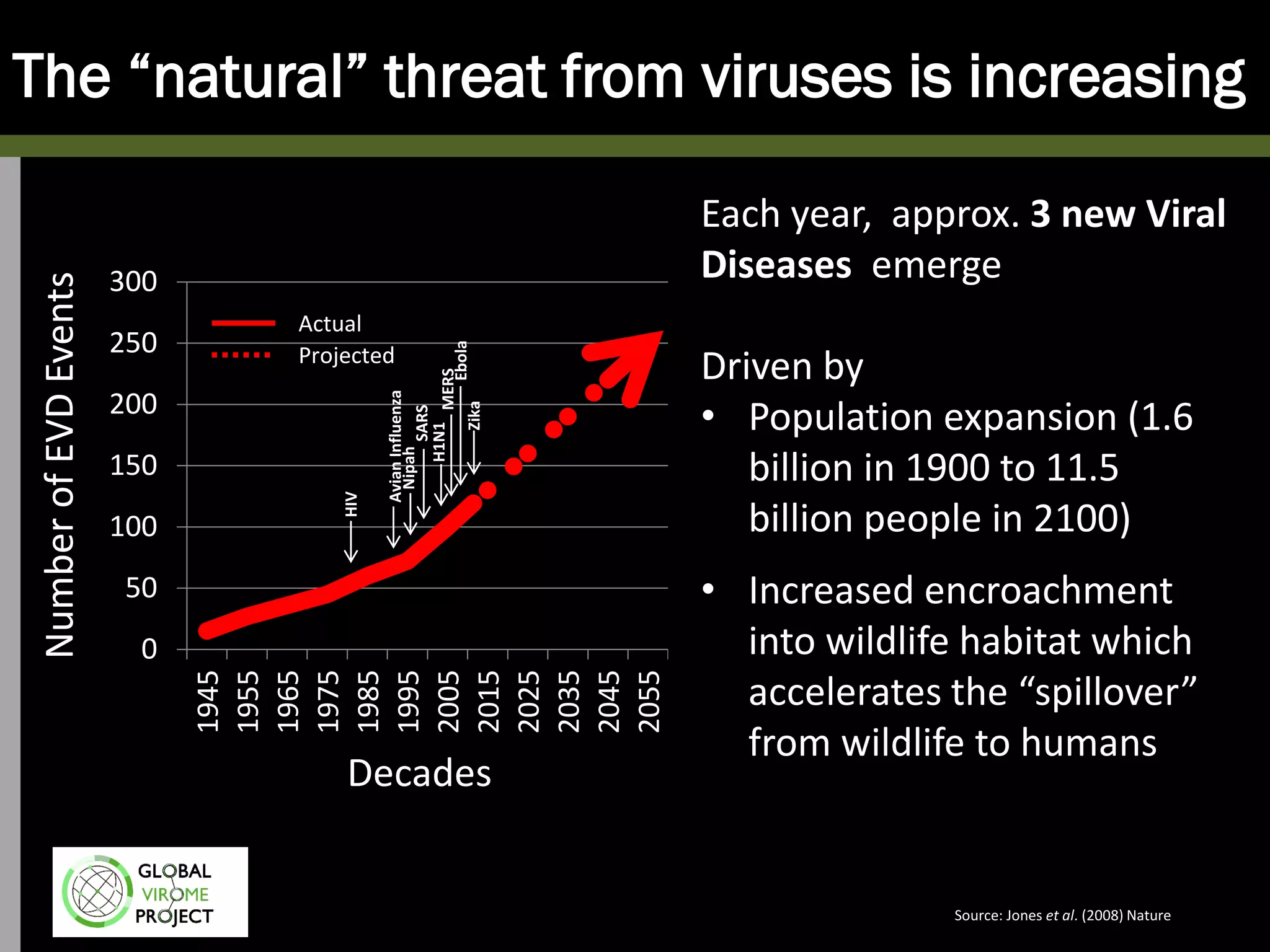
Each year, approx. 3 new Viral
Diseases emerge
Driven by
• Population expansion (1.6
billion in 1900 to 11.5
billion people in 2100)
• Increased encroachment
into wildlife habitat which
accelerates the “spillover”
from wildlife to humans
Source: Jones et al. (2008) Nature
The “natural” threat from viruses is increasing
HIV
Nipah
AvianInfluenza
SARS
Zika
H1N1
Ebola
MERS
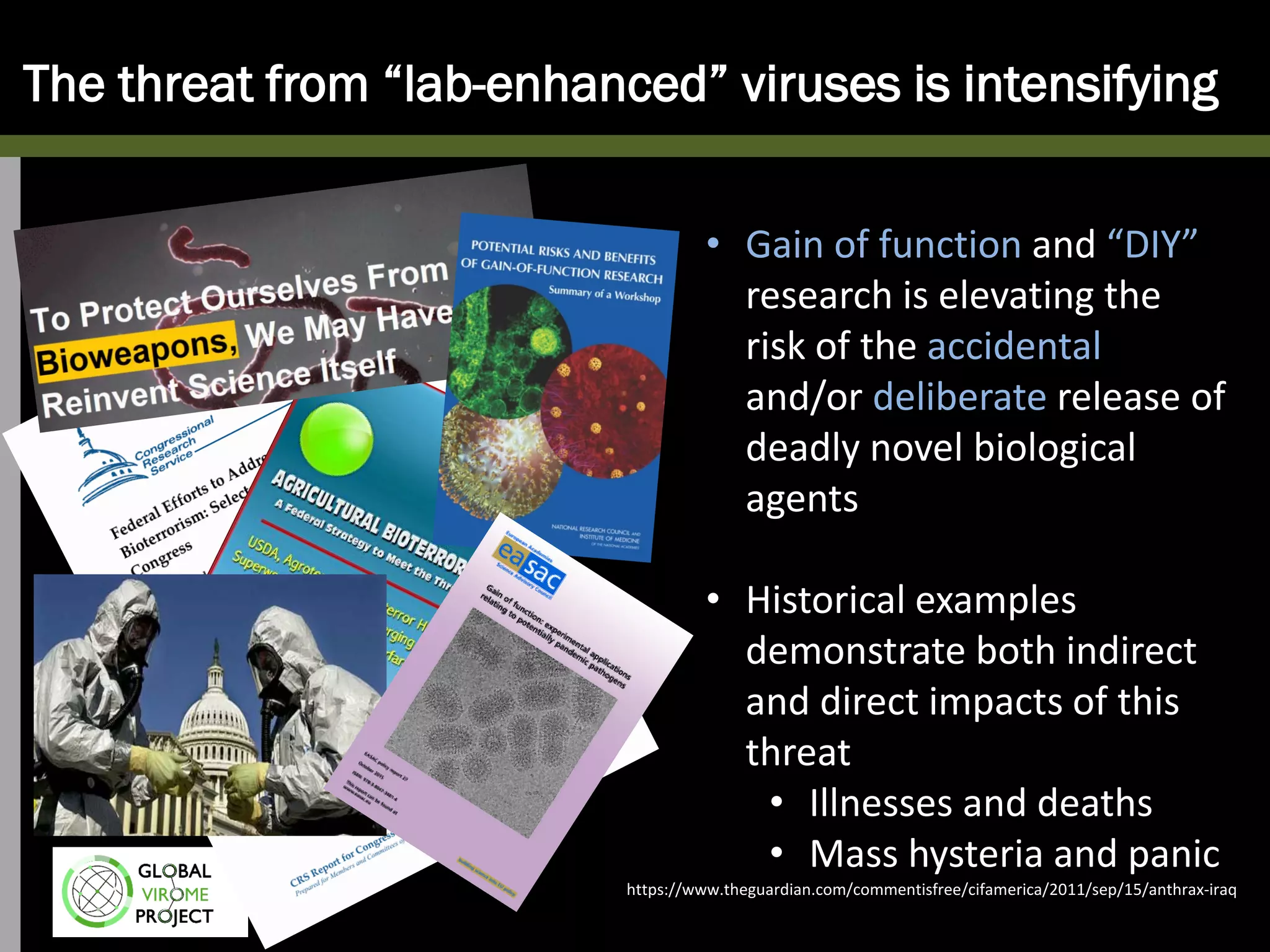
The threat from “lab-enhanced” viruses is intensifying
https://www.theguardian.com/commentisfree/cifamerica/2011/sep/15/anthrax-iraq
• Gain of function and “DIY”
research is elevating the
risk of the accidental
and/or deliberate release of
deadly novel biological
agents
• Historical examples
demonstrate both indirect
and direct impacts of this
threat
• Illnesses and deaths
• Mass hysteria and panic
The Global Virome Project
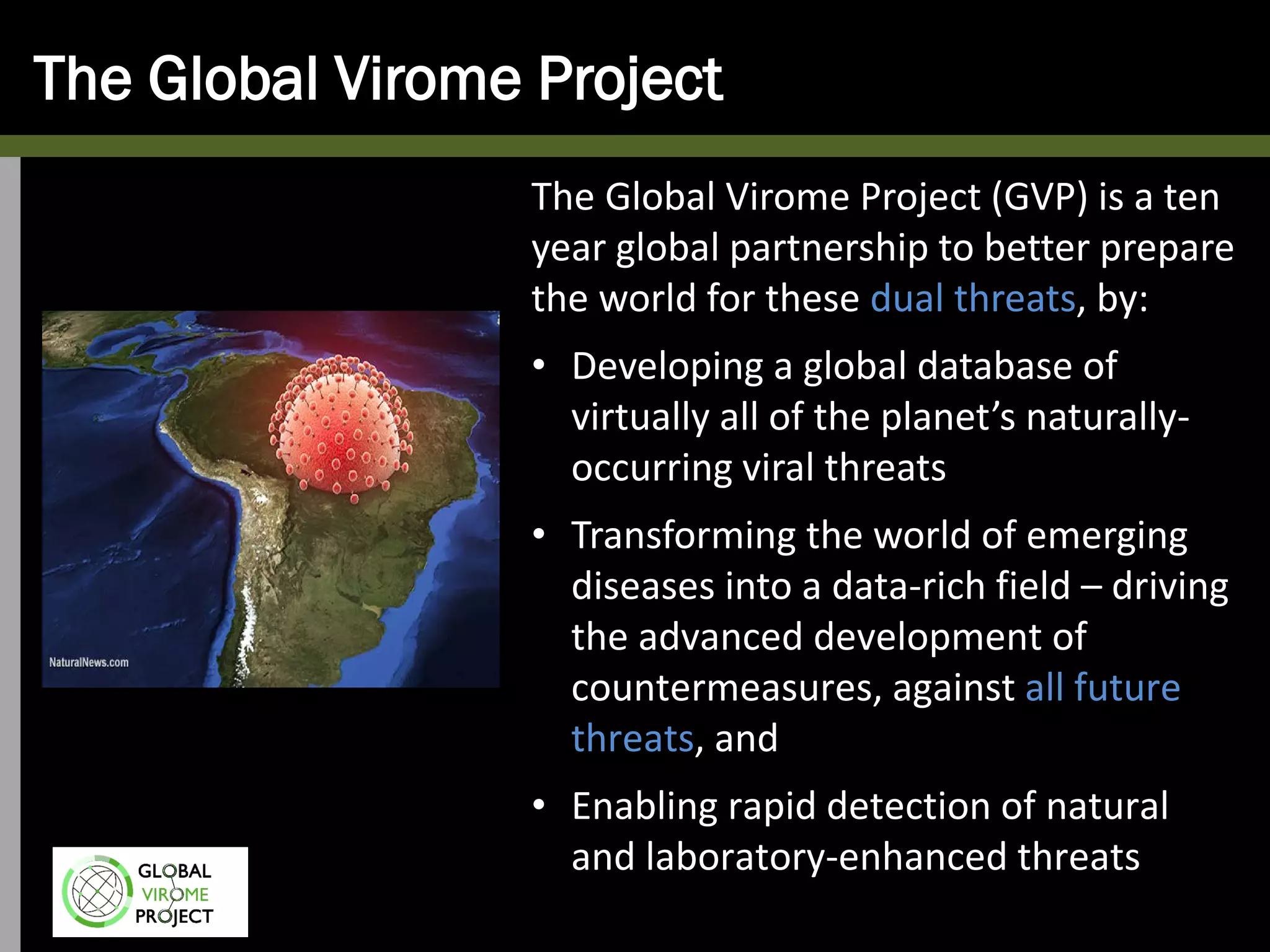
The Global Virome Project (GVP) is a ten
year global partnership to better prepare
the world for these dual threats, by:
• Developing a global database of
virtually all of the planet’s naturally-
occurring viral threats
• Transforming the world of emerging
diseases into a data-rich field – driving
the advanced development of
countermeasures, against all future
threats, and
• Enabling rapid detection of natural
and laboratory-enhanced threats
GVP: Making the Unknown Known
GVP: Making future threats known
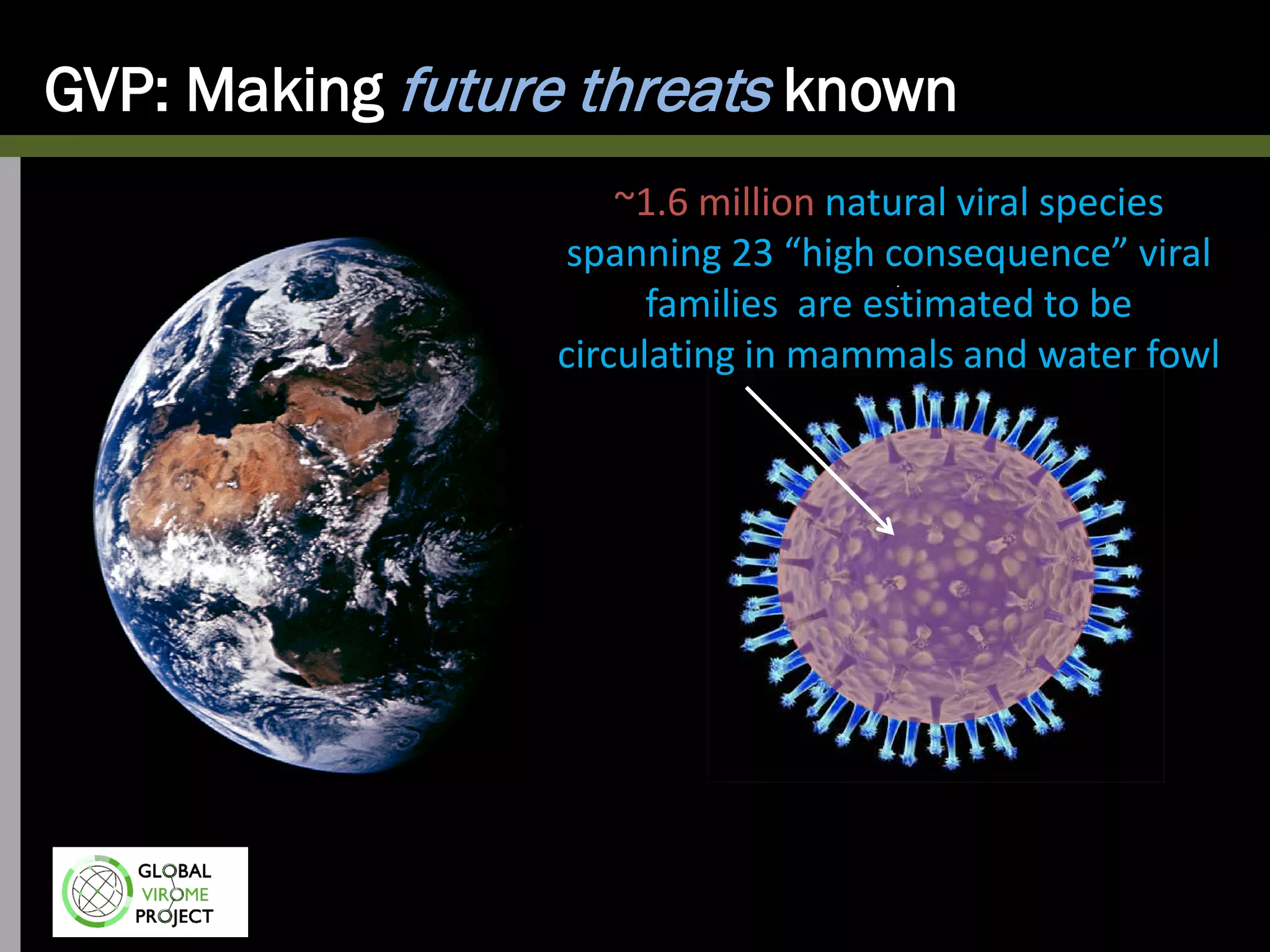
~1.6 million natural viral species
spanning 23 “high consequence” viral
families are estimated to be
circulating in mammals and water fowl
GVP: Making future threats known
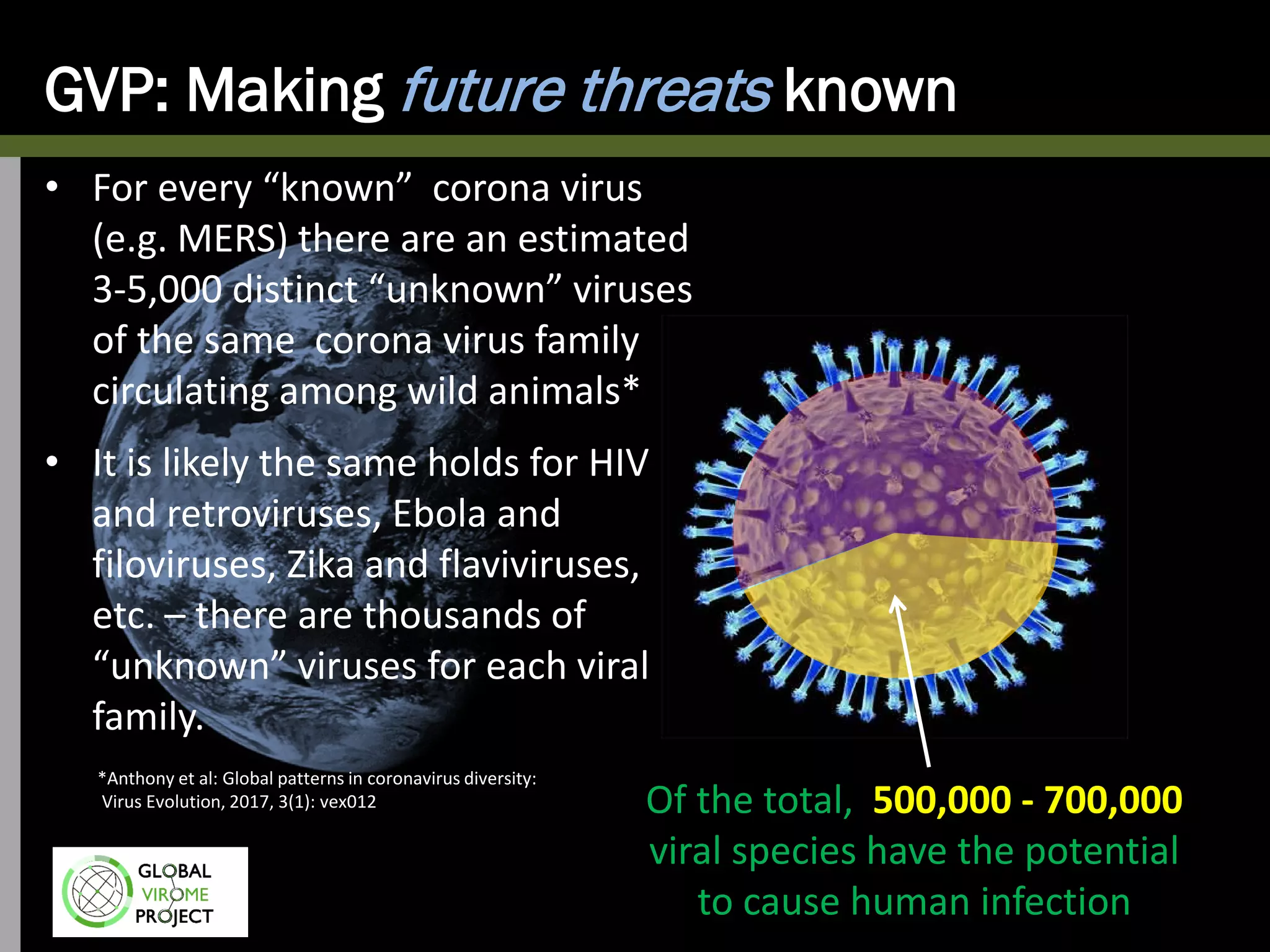
Of the total, 500,000 - 700,000
viral species have the potential
to cause human infection
• For every “known” corona virus
(e.g. MERS) there are an estimated
3-5,000 distinct “unknown” viruses
of the same corona virus family
circulating among wild animals*
• It is likely the same holds for HIV
and retroviruses, Ebola and
filoviruses, Zika and flaviviruses,
etc. – there are thousands of
“unknown” viruses for each viral
family.
*Anthony et al: Global patterns in coronavirus diversity:
Virus Evolution, 2017, 3(1): vex012
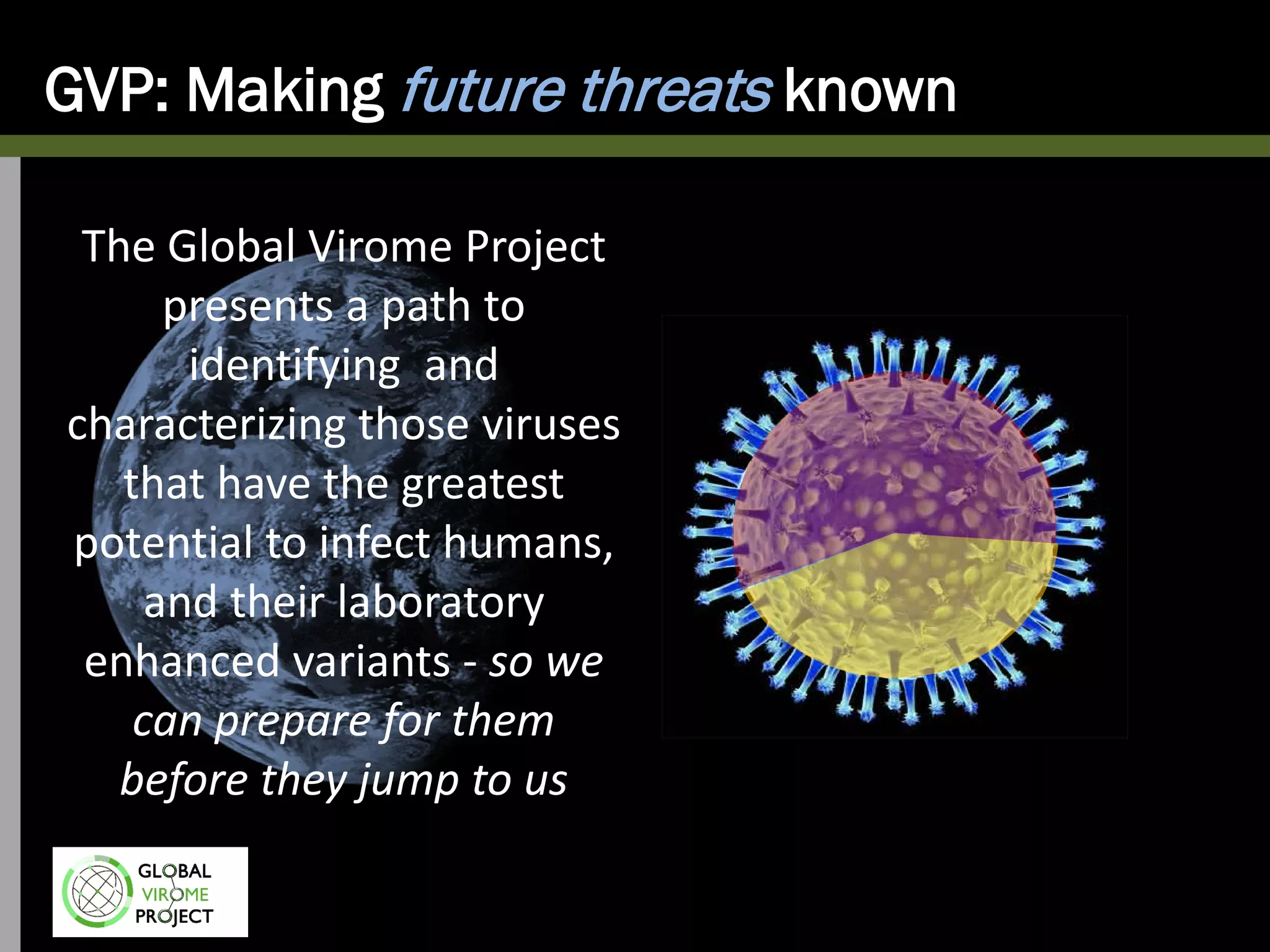
GVP: Making future threats known
The Global Virome Project
presents a path to
identifying and
characterizing those viruses
that have the greatest
potential to infect humans,
and their laboratory
enhanced variants - so we
can prepare for them
before they jump to us
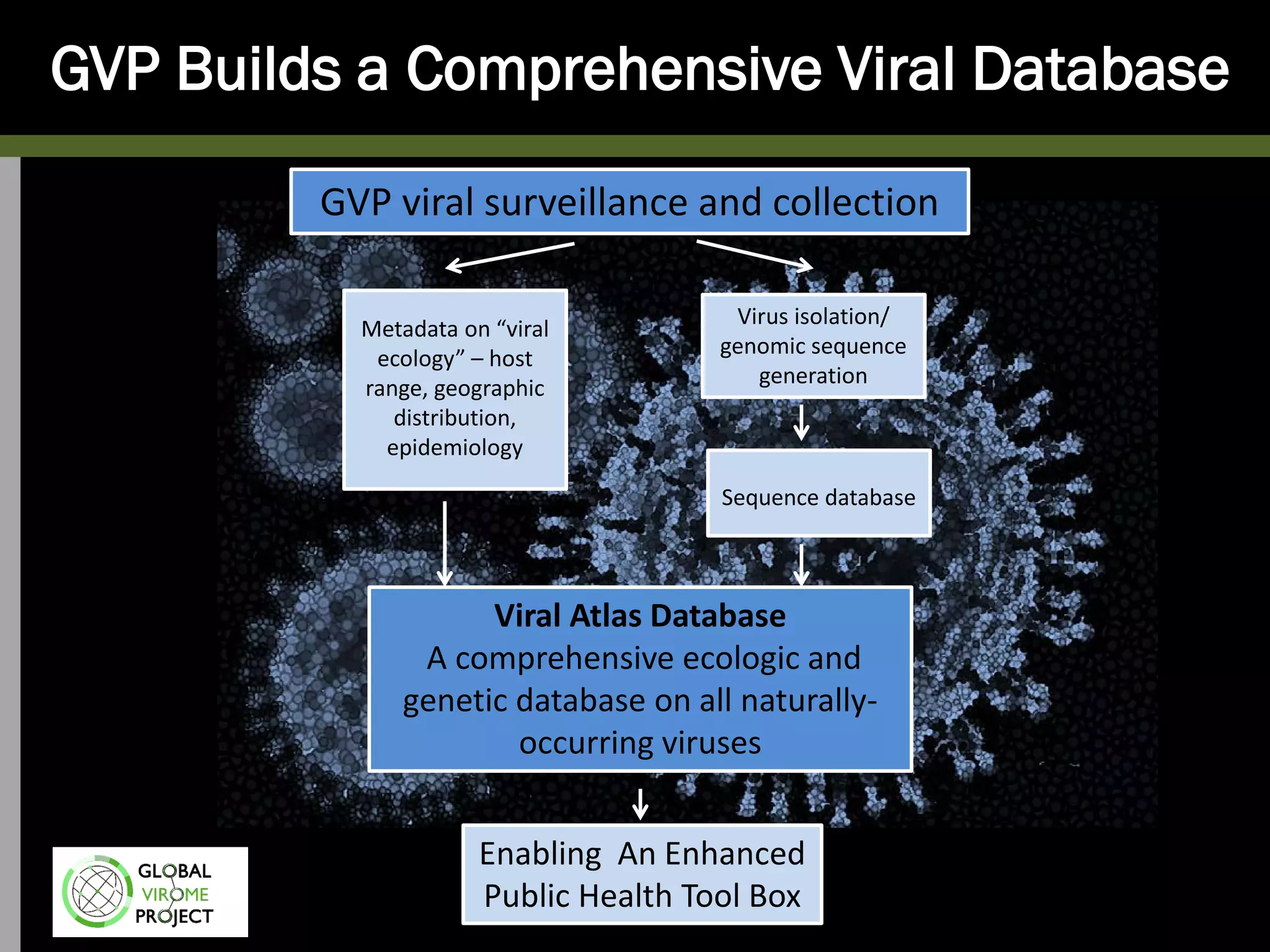
GVP Builds a Comprehensive Viral Database
GVP viral surveillance and collection
Virus isolation/
genomic sequence
generation
Sequence database
Viral Atlas Database
A comprehensive ecologic and
genetic database on all naturally-
occurring viruses
Metadata on “viral
ecology” – host
range, geographic
distribution,
epidemiology
Enabling An Enhanced
Public Health Tool Box
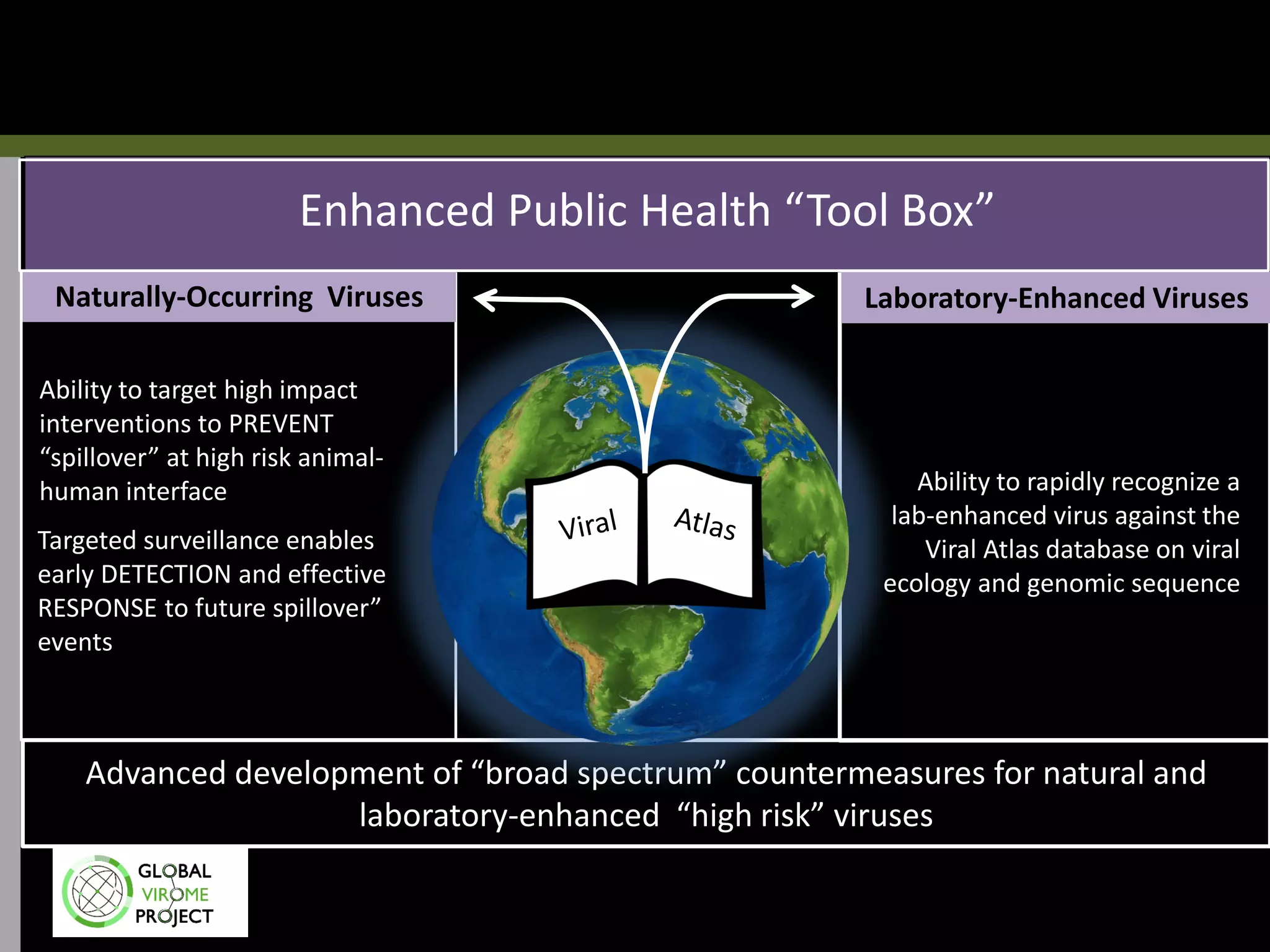
Advanced development of “broad spectrum” countermeasures for natural and
laboratory-enhanced “high risk” viruses
Ability to target high impact
interventions to PREVENT
“spillover” at high risk animal-
human interface
Enhanced Public Health “Tool Box”
Naturally-Occurring Viruses Laboratory-Enhanced Viruses
Targeted surveillance enables
early DETECTION and effective
RESPONSE to future spillover”
events
Ability to rapidly recognize a
lab-enhanced virus against the
Viral Atlas database on viral
ecology and genomic sequence
GVP: Impact
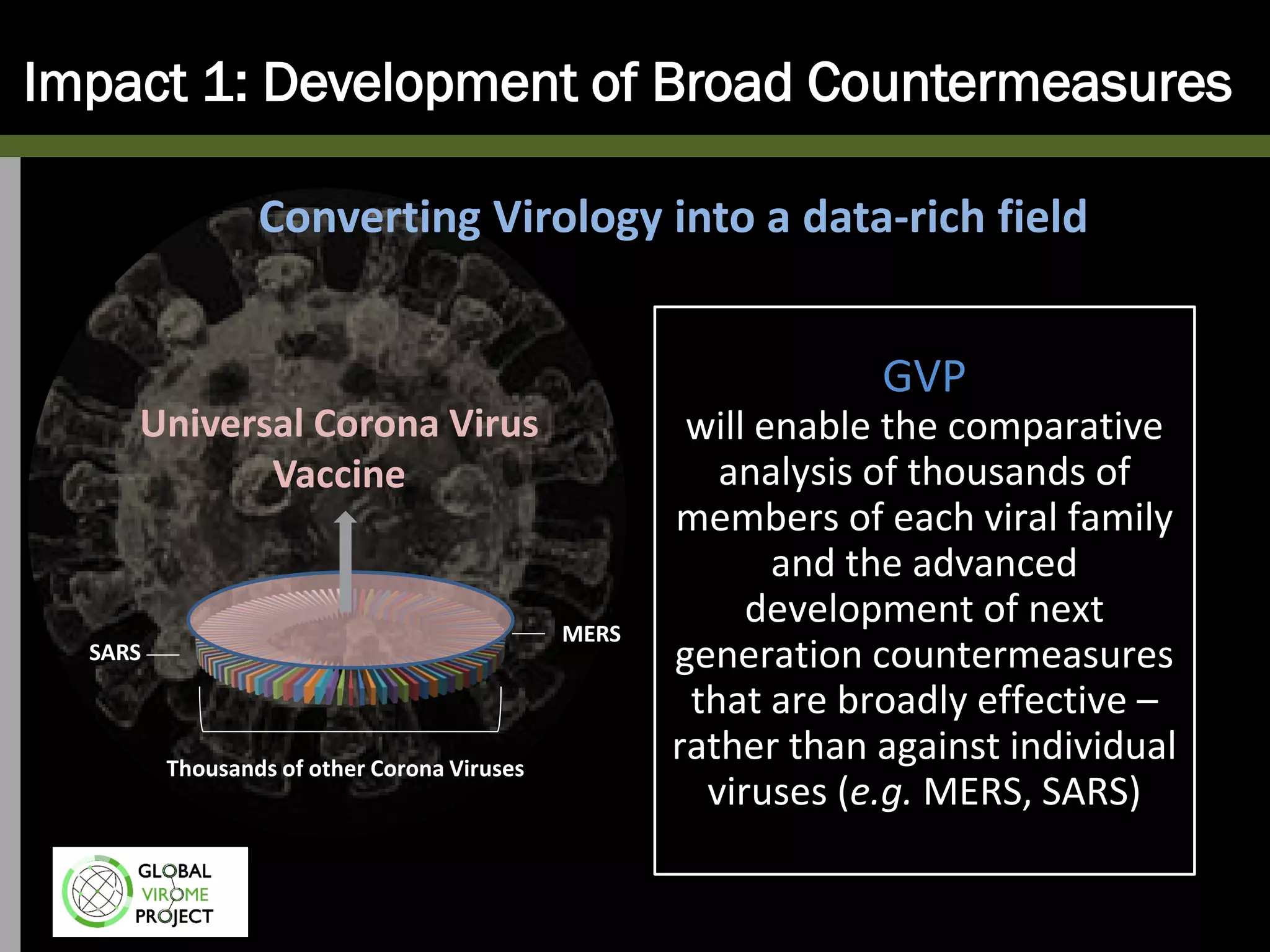
Impact 1: Development of Broad Countermeasures
GVP
will enable the comparative
analysis of thousands of
members of each viral family
and the advanced
development of next
generation countermeasures
that are broadly effective –
rather than against individual
viruses (e.g. MERS, SARS)
MERS
SARS
Converting Virology into a data-rich field
Thousands of other Corona Viruses
Universal Corona Virus
Vaccine
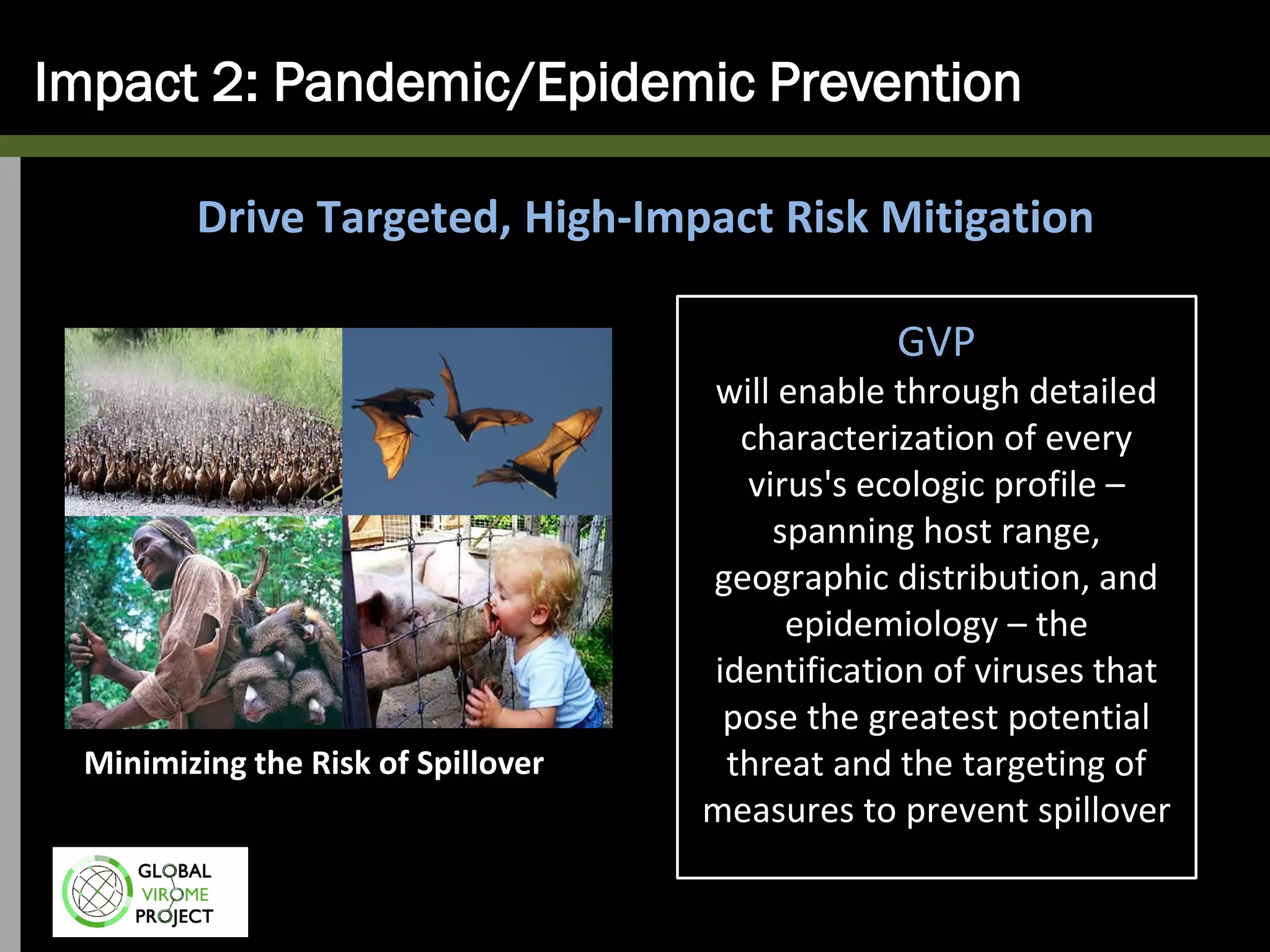
Impact 2: Pandemic/Epidemic Prevention
GVP
will enable through detailed
characterization of every
virus's ecologic profile –
spanning host range,
geographic distribution, and
epidemiology – the
identification of viruses that
pose the greatest potential
threat and the targeting of
measures to prevent spillover
Minimizing the Risk of Spillover
Drive Targeted, High-Impact Risk Mitigation
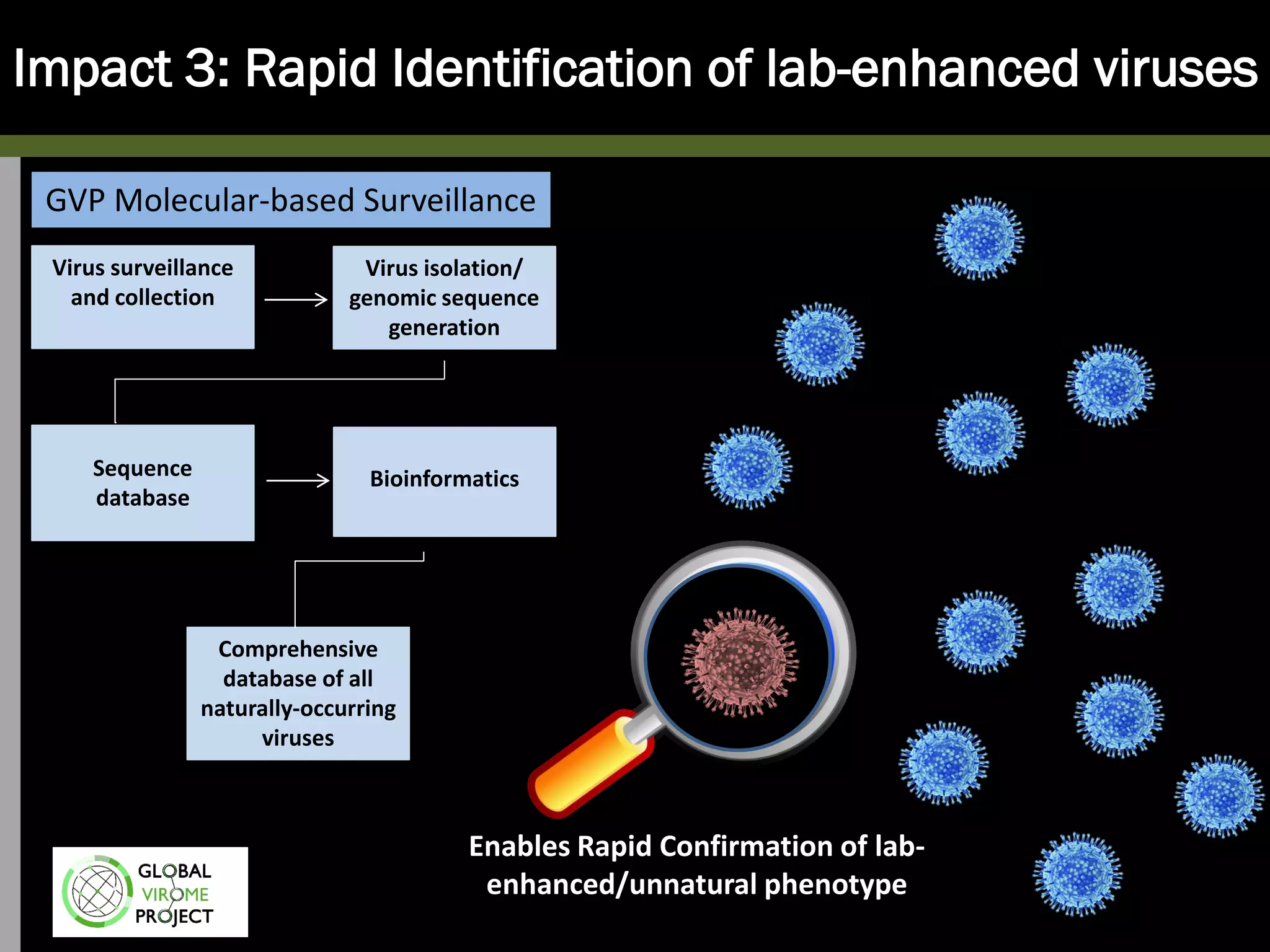
Virus surveillance
and collection
Virus isolation/
genomic sequence
generation
Sequence
database
Bioinformatics
Comprehensive
database of all
naturally-occurring
viruses
GVP Molecular-based Surveillance
Impact 3: Rapid Identification of lab-enhanced viruses
Enables Rapid Confirmation of lab-
enhanced/unnatural phenotype
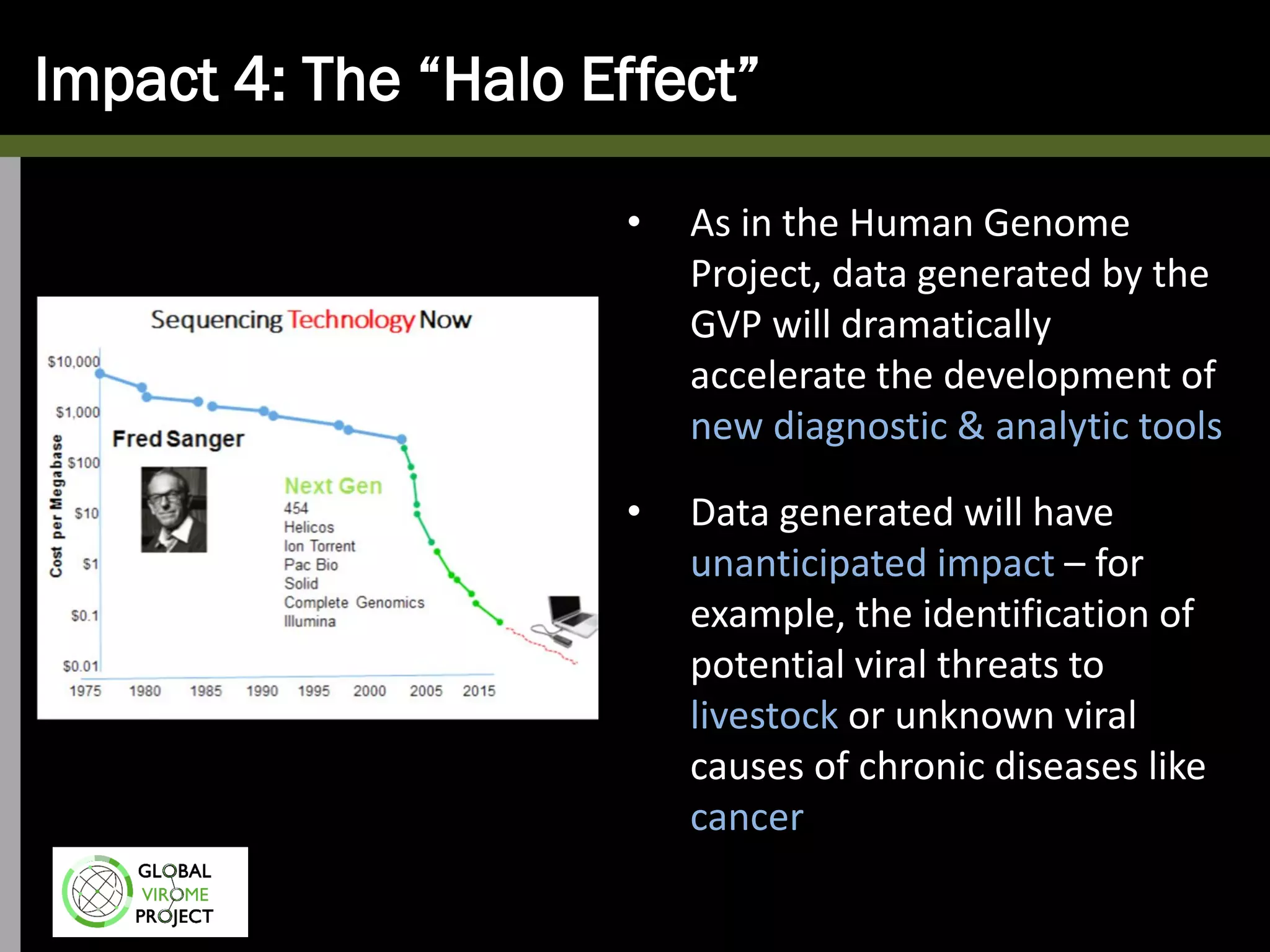
Impact 4: The “Halo Effect”
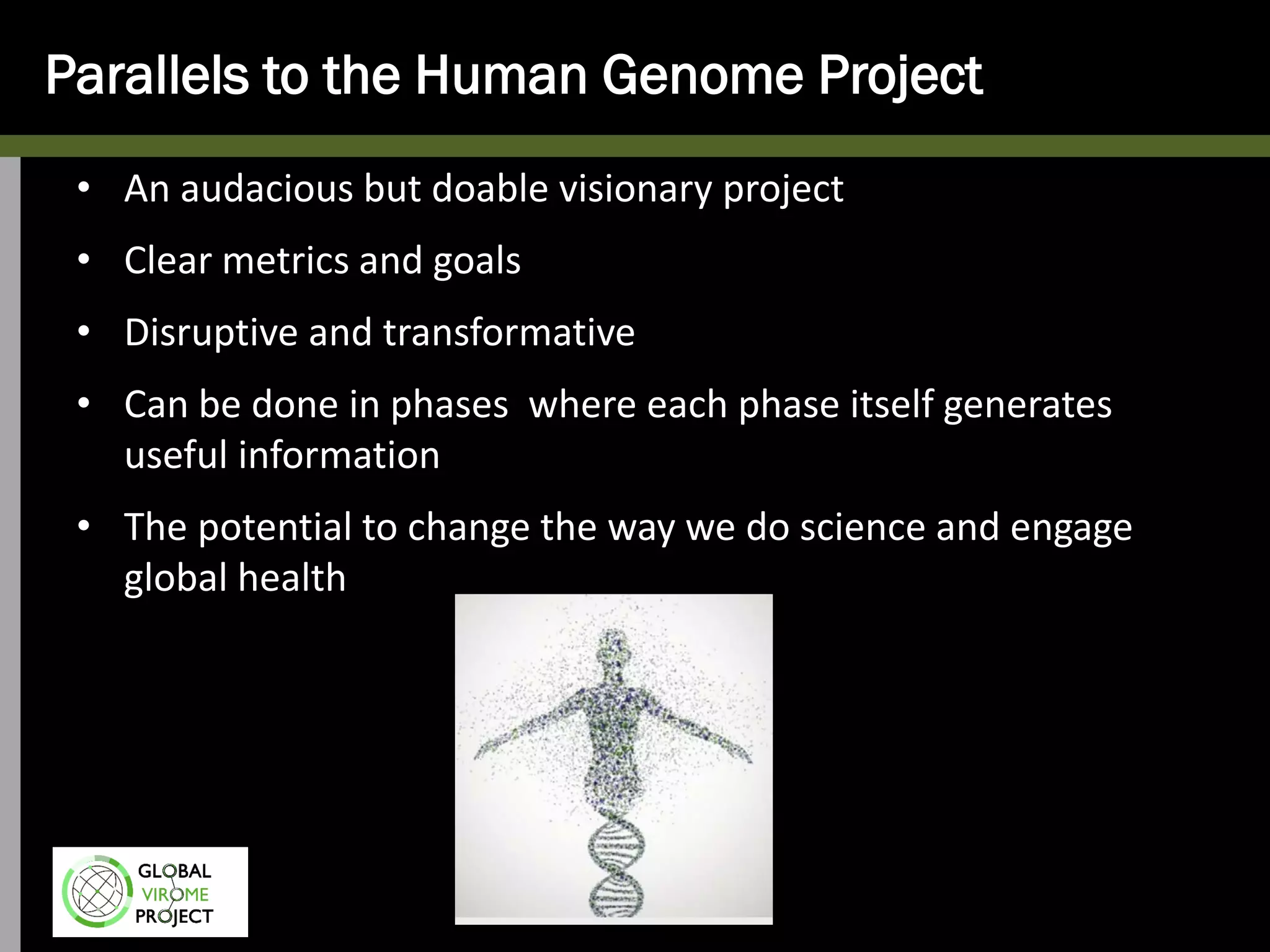
• As in the Human Genome
Project, data generated by the
GVP will dramatically
accelerate the development of
new diagnostic & analytic tools
• Data generated will have
unanticipated impact – for
example, the identification of
potential viral threats to
livestock or unknown viral
causes of chronic diseases like
cancer
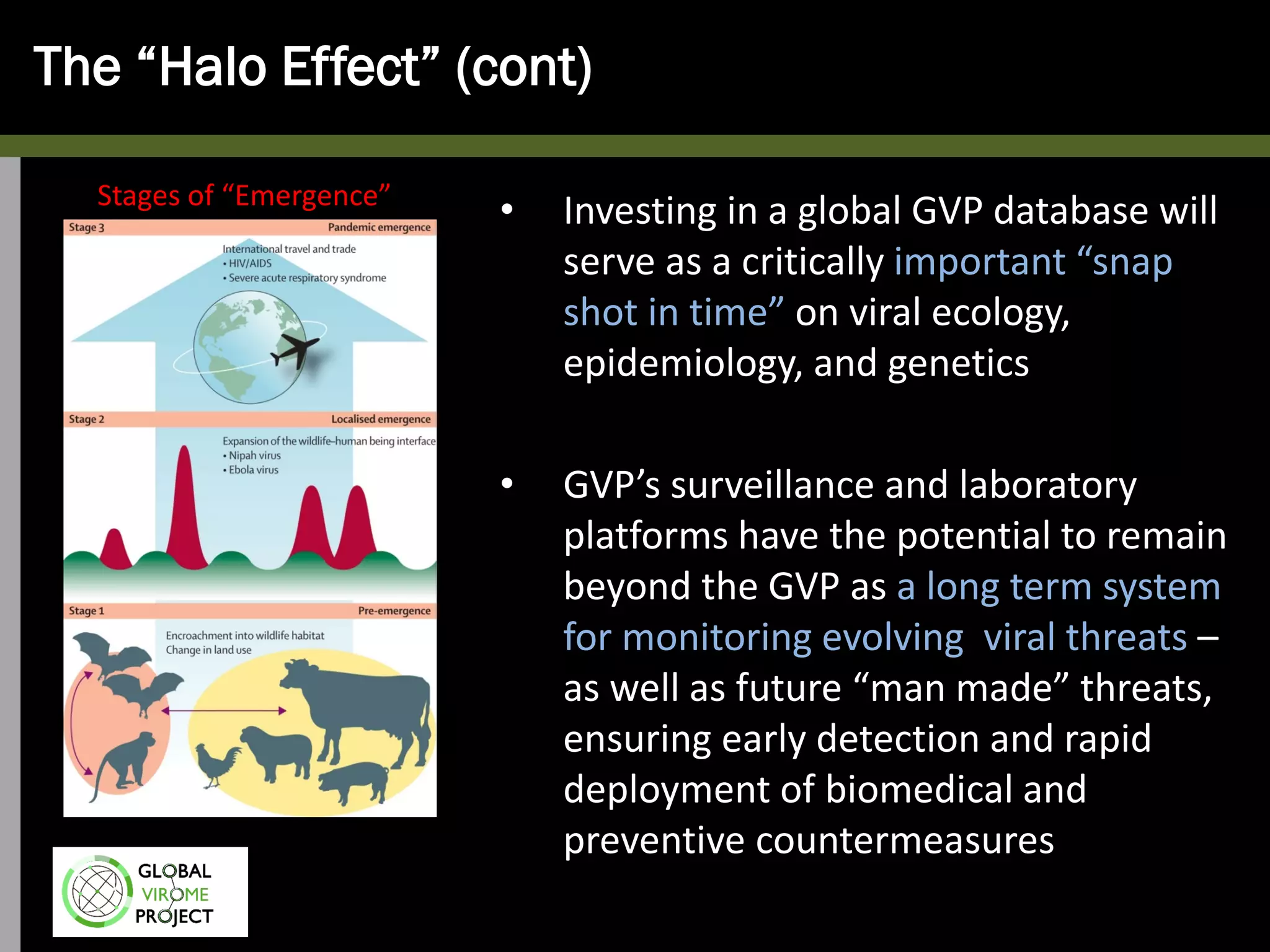
The “Halo Effect” (cont)
• Investing in a global GVP database will
serve as a critically important “snap
shot in time” on viral ecology,
epidemiology, and genetics
• GVP’s surveillance and laboratory
platforms have the potential to remain
beyond the GVP as a long term system
for monitoring evolving viral threats –
as well as future “man made” threats,
ensuring early detection and rapid
deployment of biomedical and
preventive countermeasures
Stages of “Emergence”
• An audacious but doable visionary project
• Clear metrics and goals
• Disruptive and transformative
• Can be done in phases where each phase itself generates
useful information
• The potential to change the way we do science and engage
global health
Parallels to the Human Genome Project
GVP: Feasibility
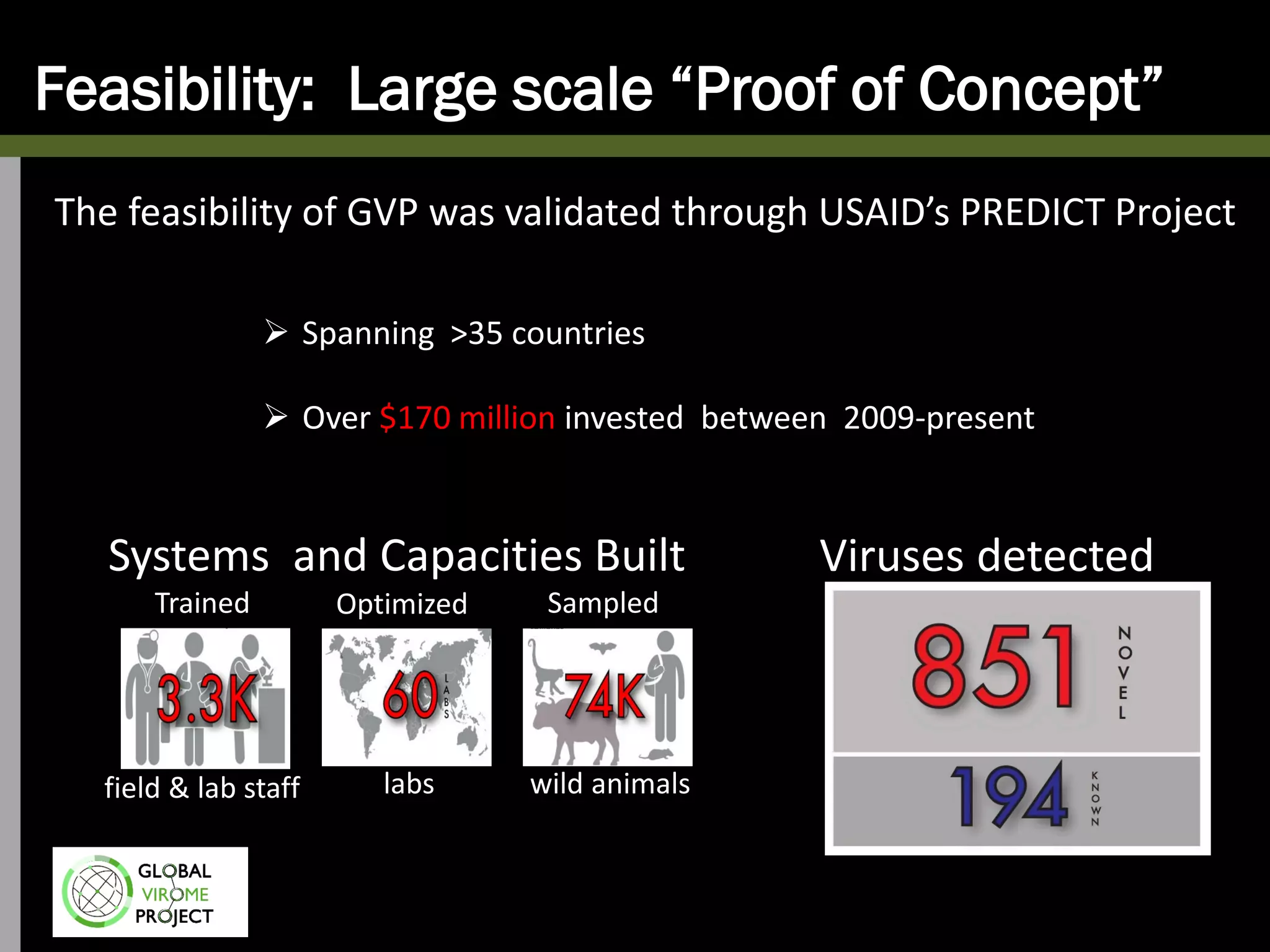
Feasibility: Large scale “Proof of Concept”
 Spanning >35 countries
 Over $170 million invested between 2009-present
The feasibility of GVP was validated through USAID’s PREDICT Project
Zoonotic disease surveillance - from how to safely collect and
handle samples, laboratory diagnostics, and data management and
interpretation.
Trained
field & lab staff
Optimized Sampled
labs wild animals
Viruses detectedSystems and Capacities Built
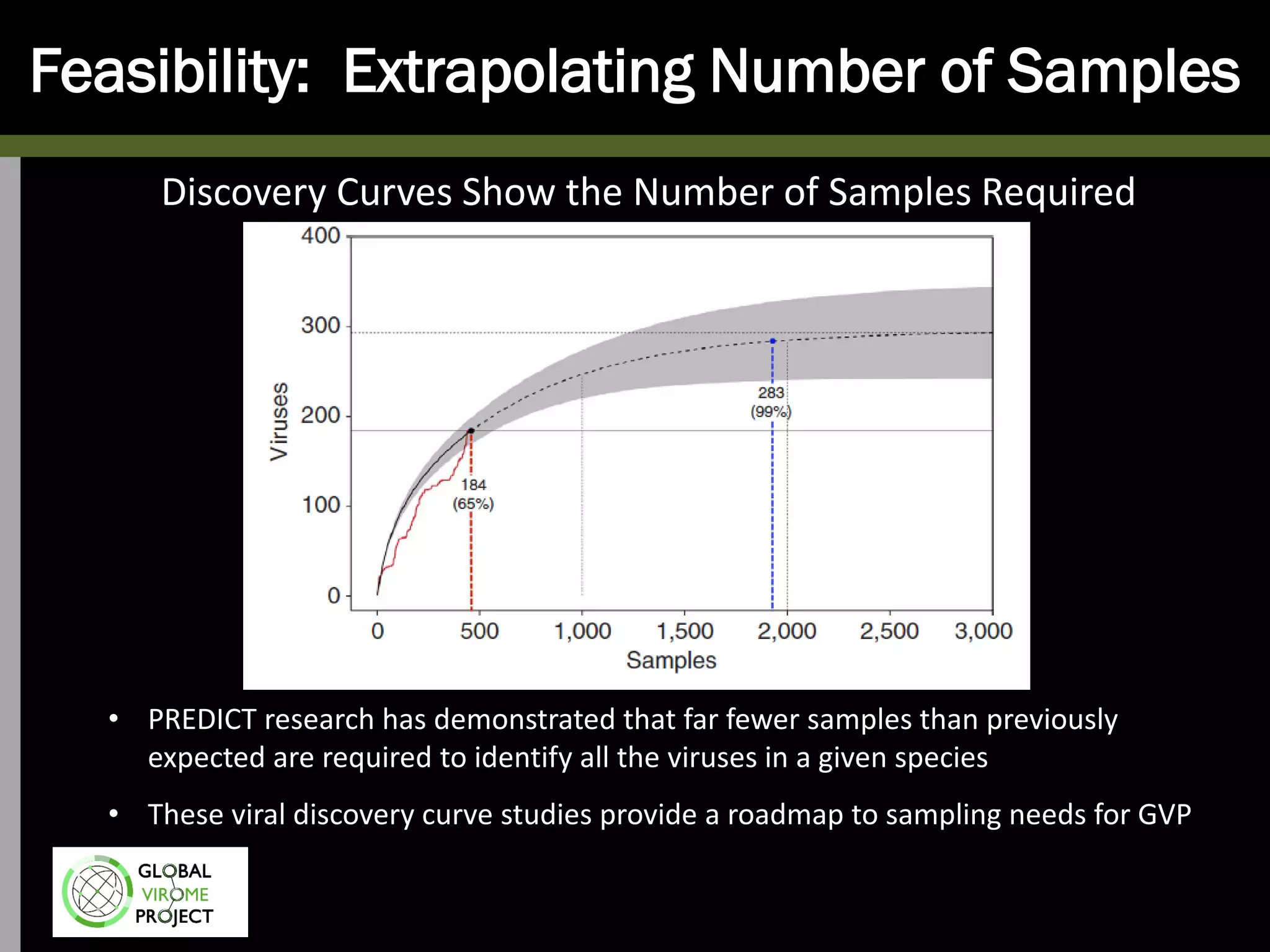
Feasibility: Extrapolating Number of Samples
Discovery Curves Show the Number of Samples Requiredmber of
samples required to discover most of the unknown viruses
• PREDICT research has demonstrated that far fewer samples than previously
expected are required to identify all the viruses in a given species
• These viral discovery curve studies provide a roadmap to sampling needs for GVP
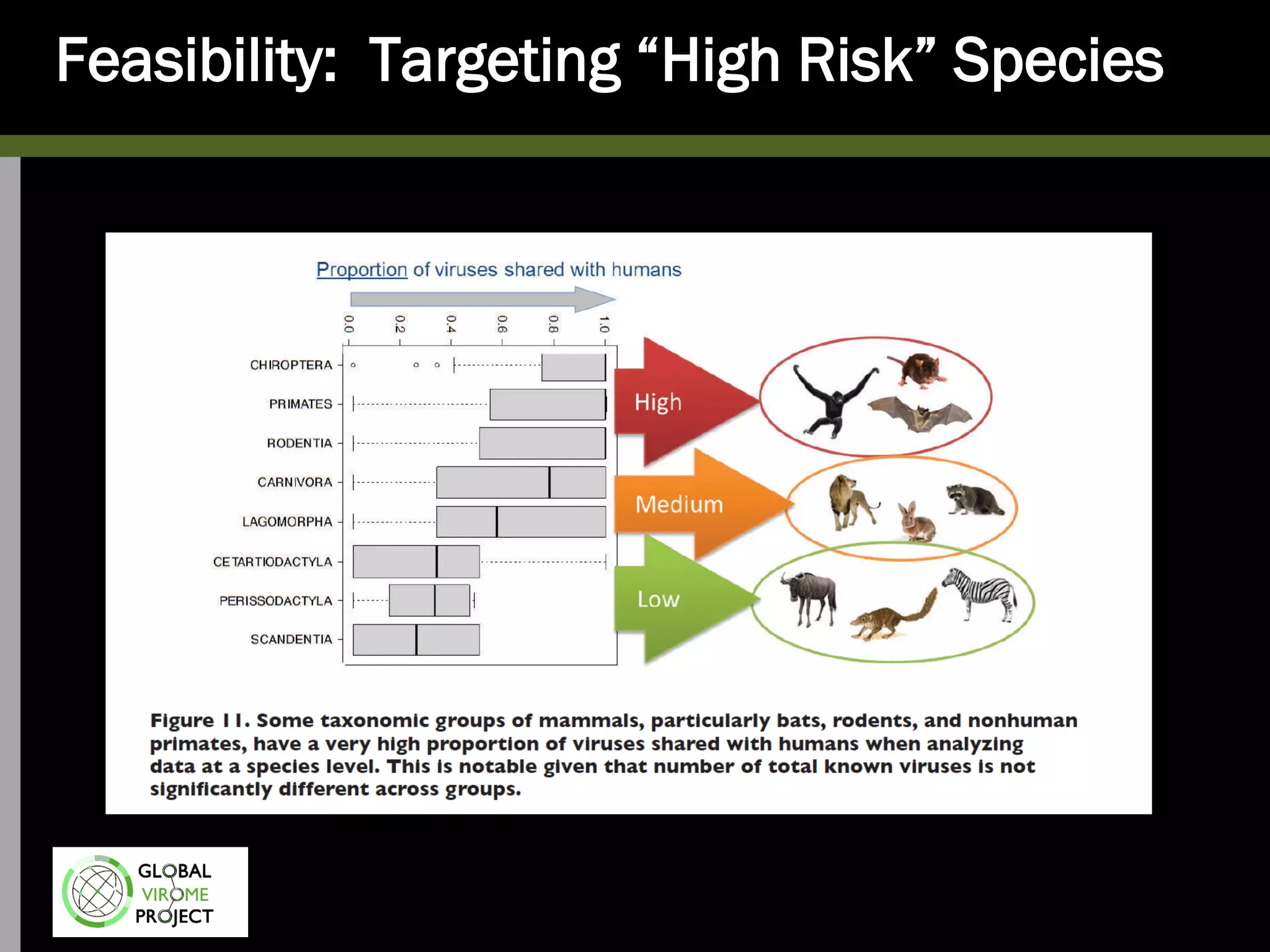
Feasibility: Targeting “High Risk” Species
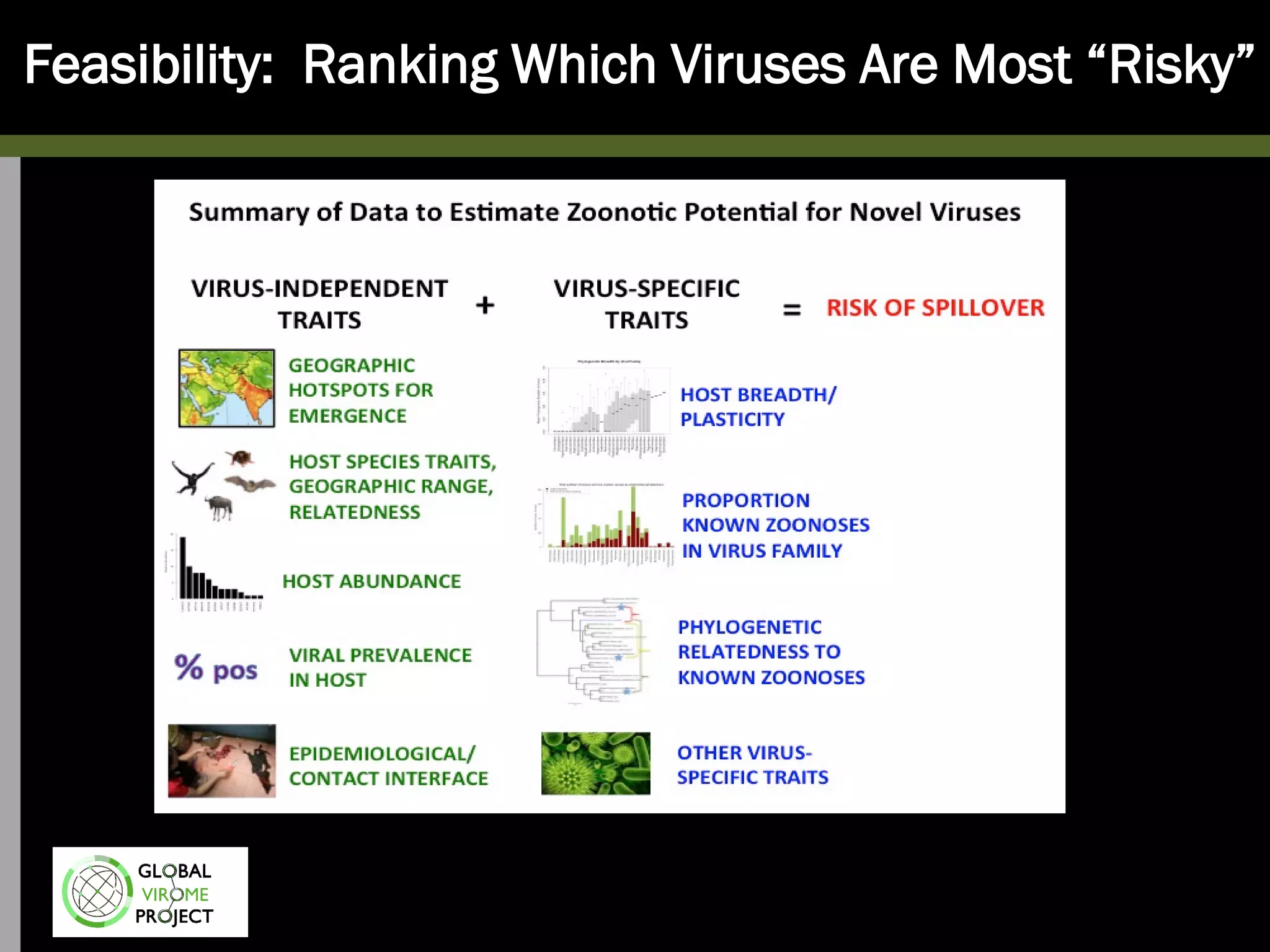
Feasibility: Ranking Which Viruses Are Most “Risky”
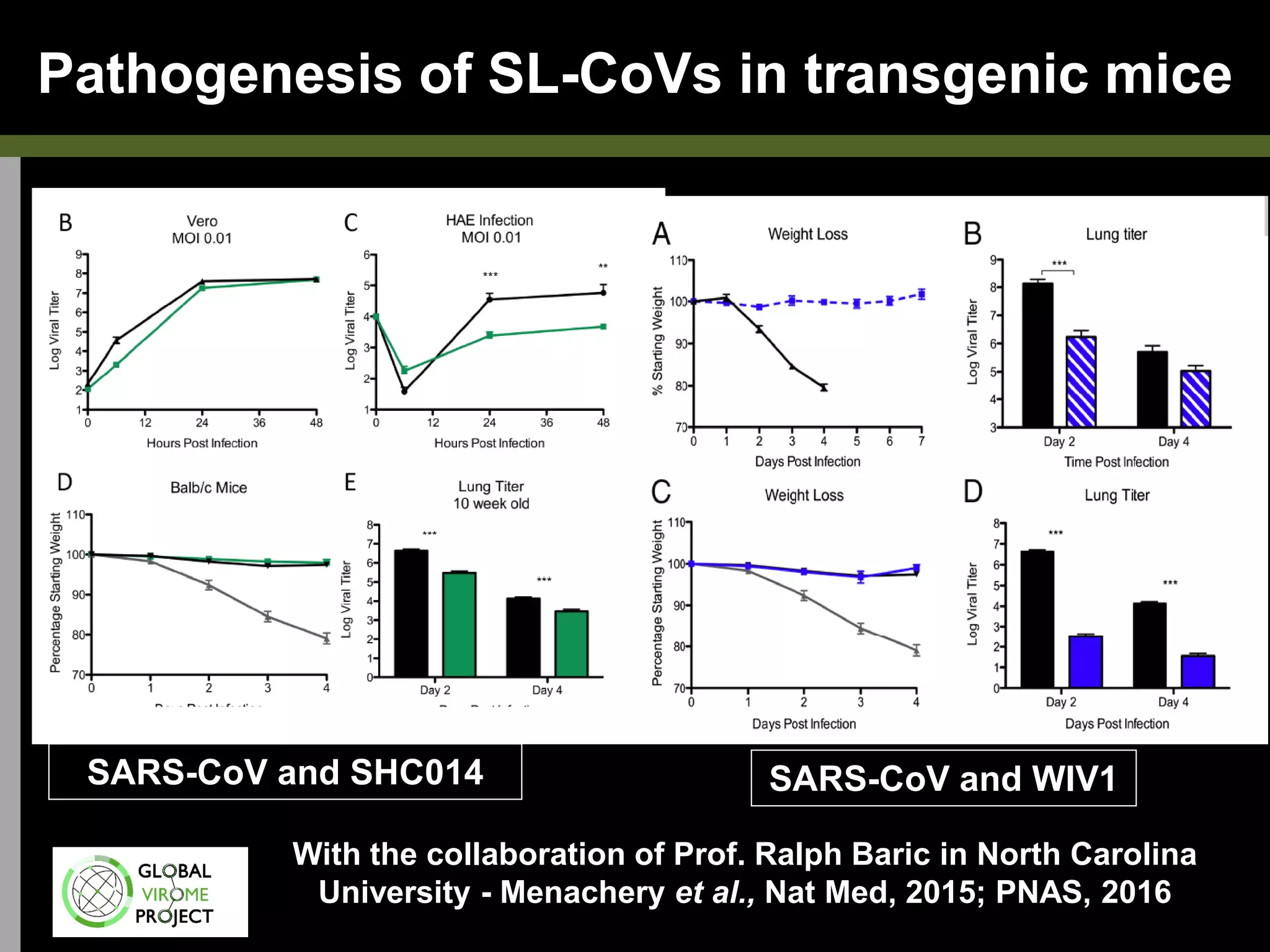
Pathogenesis of SL-CoVs in transgenic mice
With the collaboration of Prof. Ralph Baric in North Carolina
University - Menachery et al., Nat Med, 2015; PNAS, 2016
SARS-CoV and SHC014 SARS-CoV and WIV1
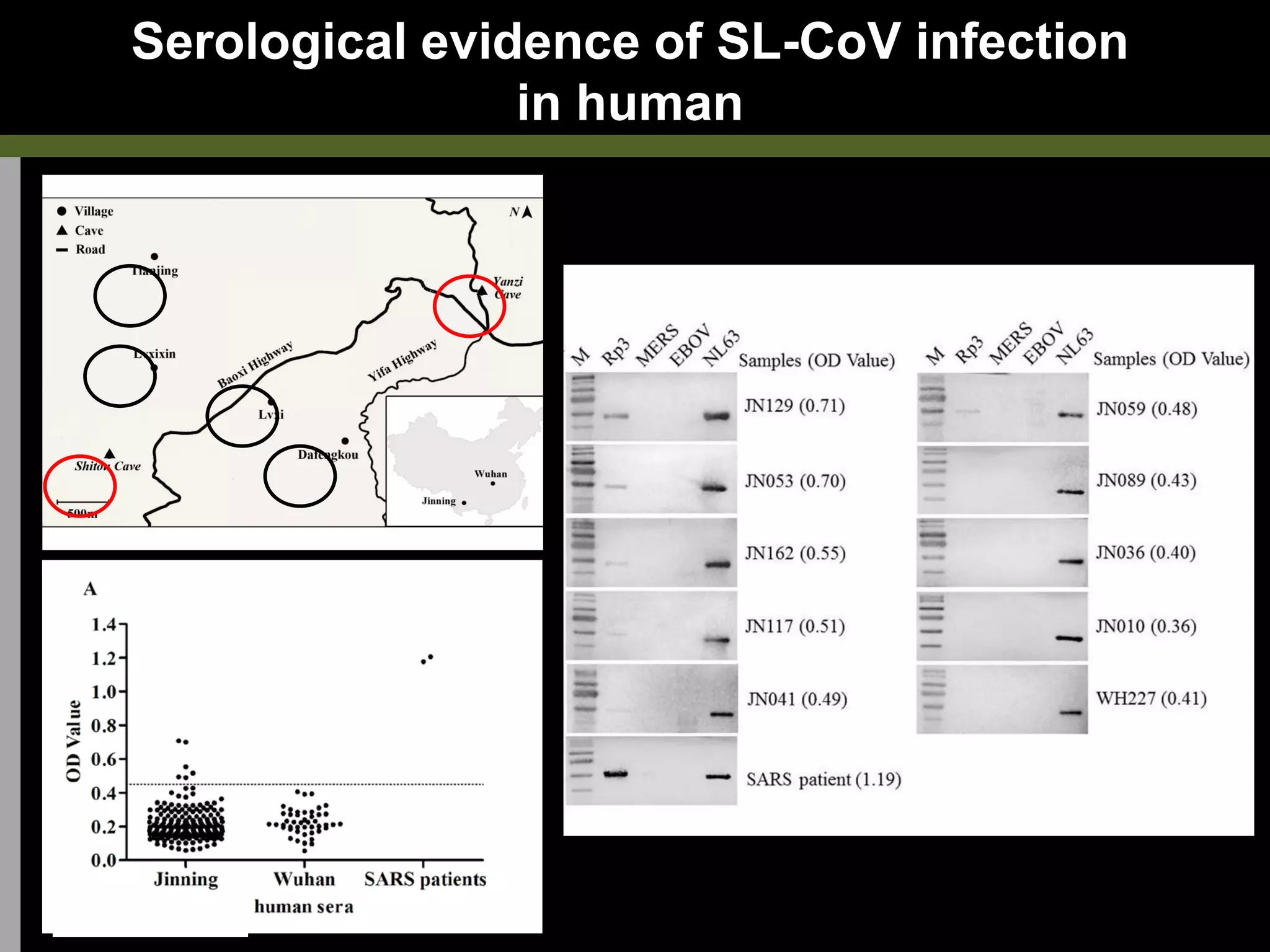
Serological evidence of SL-CoV infection
in human
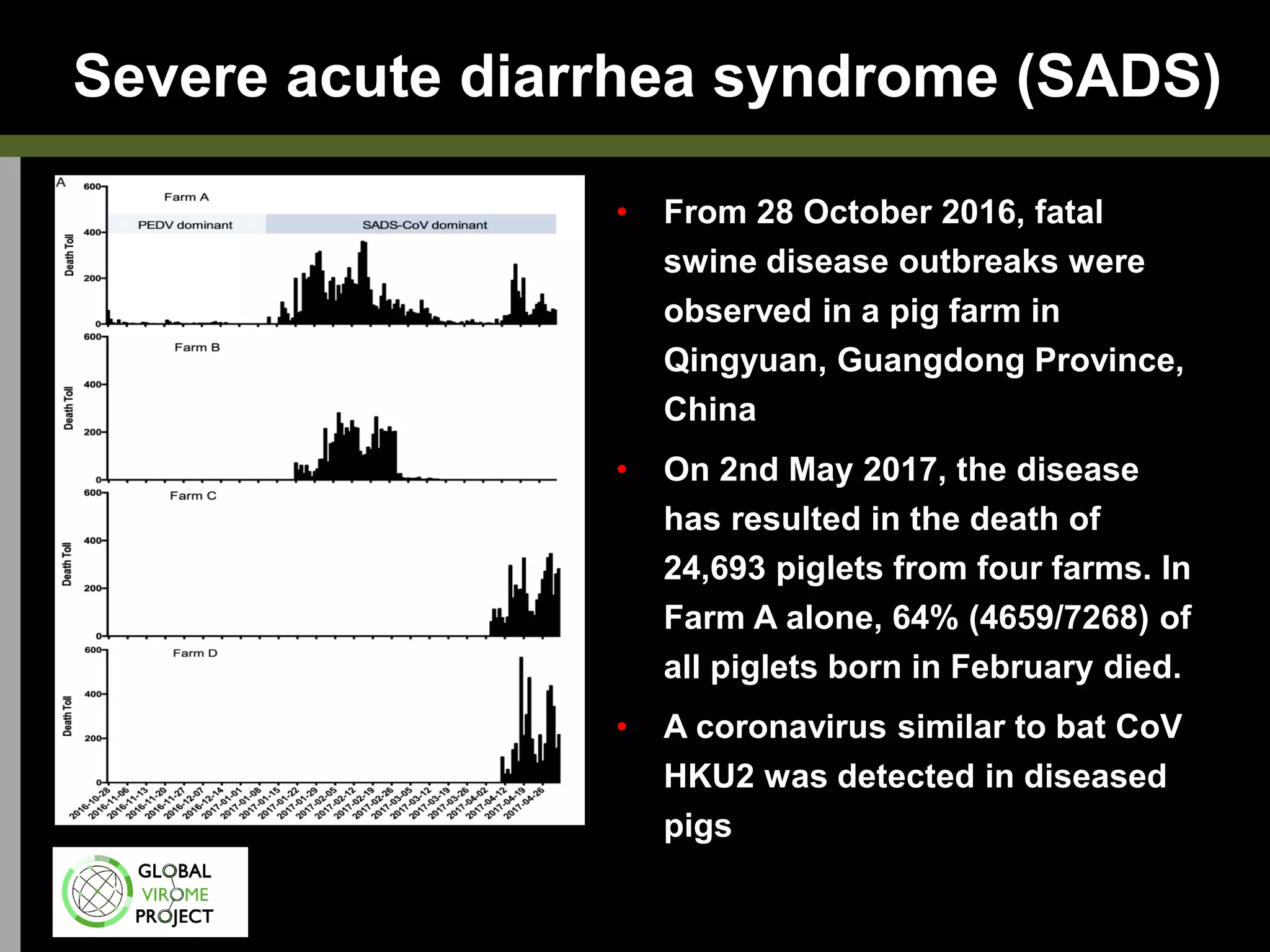
Severe acute diarrhea syndrome (SADS)
• From 28 October 2016, fatal
swine disease outbreaks were
observed in a pig farm in
Qingyuan, Guangdong Province,
China
• On 2nd May 2017, the disease
has resulted in the death of
24,693 piglets from four farms. In
Farm A alone, 64% (4659/7268) of
all piglets born in February died.
• A coronavirus similar to bat CoV
HKU2 was detected in diseased
pigs
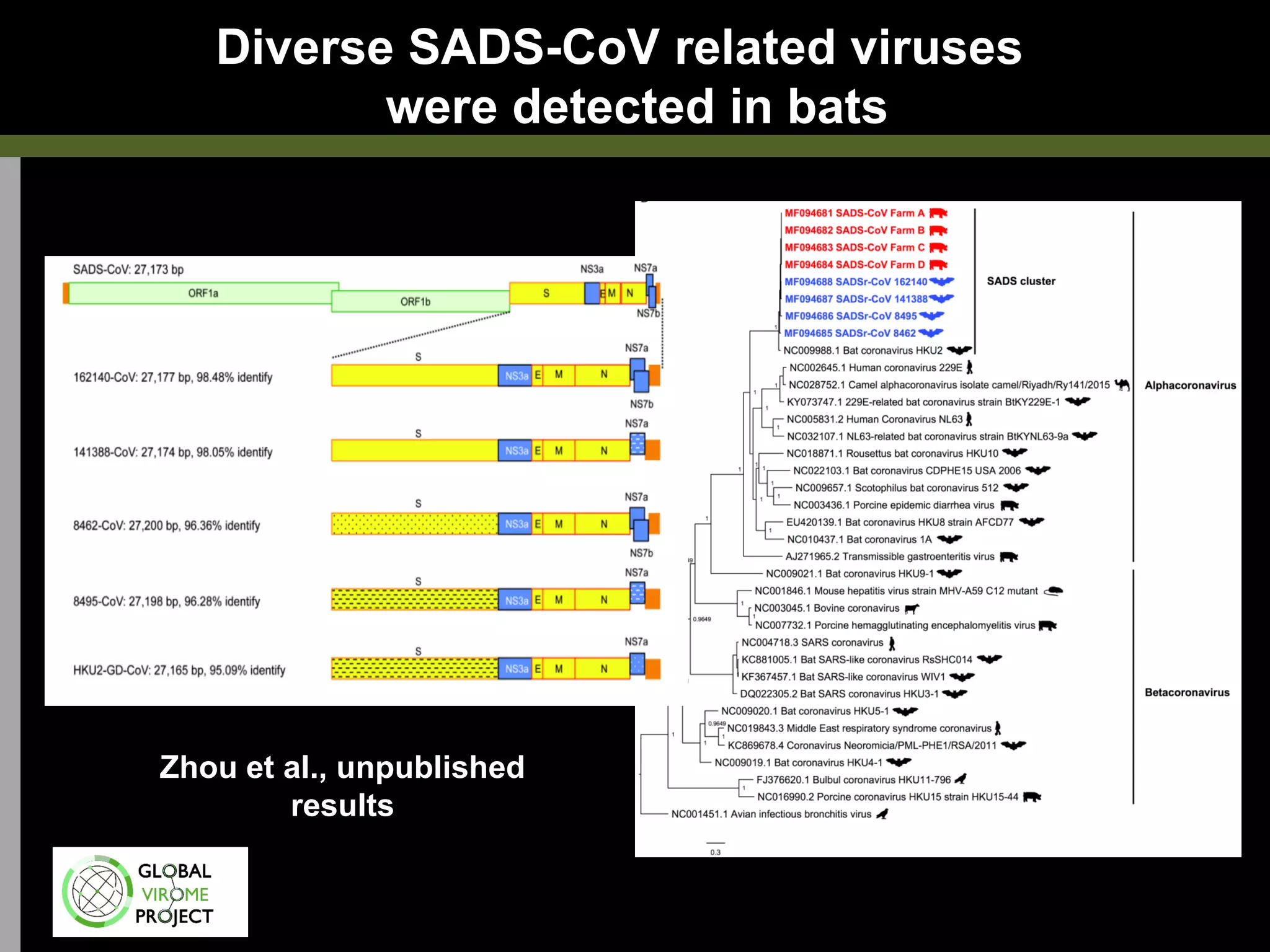
Diverse SADS-CoV related viruses
were detected in bats
Zhou et al., unpublished
results
GVP: The Approach
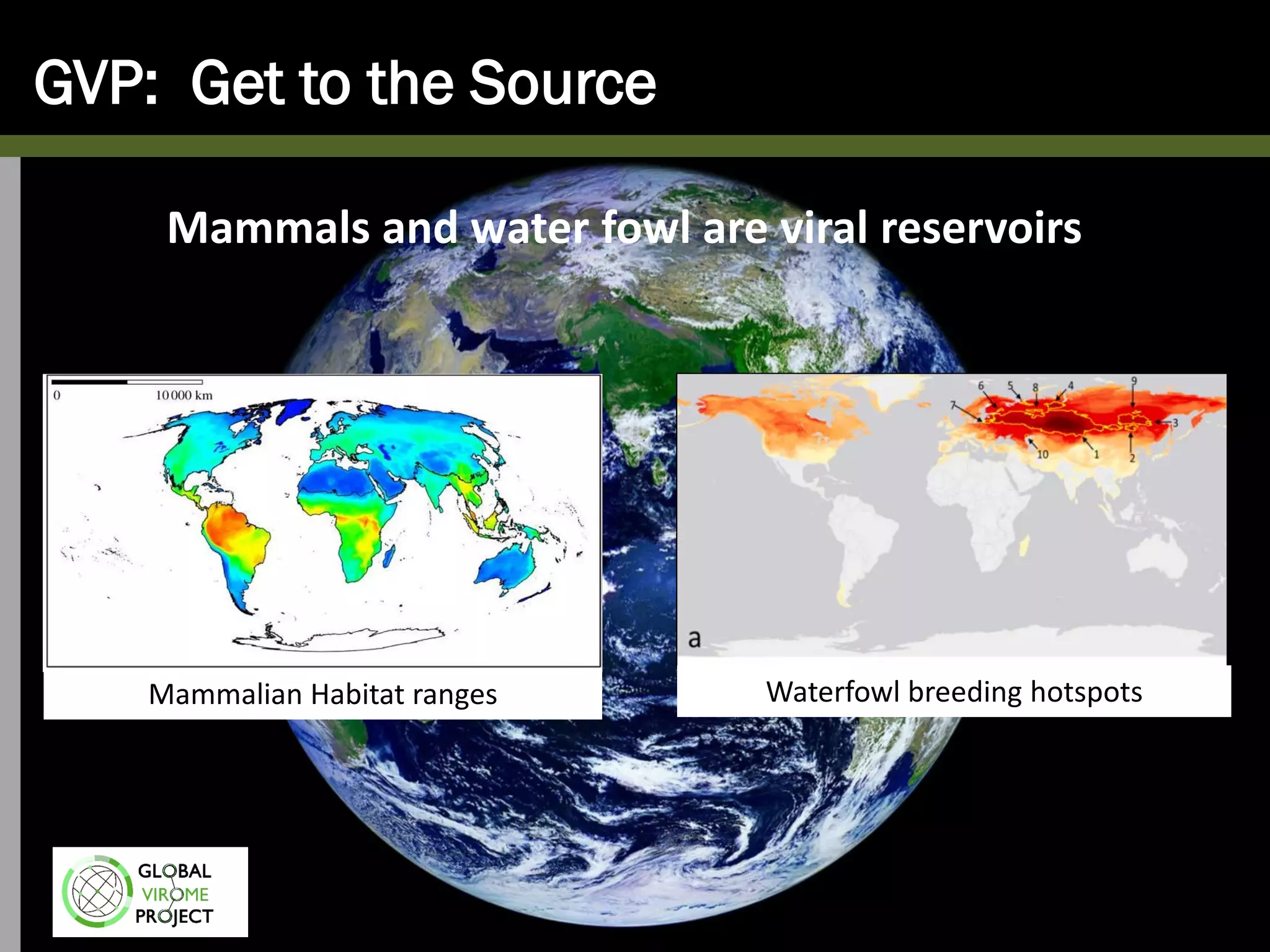
GVP: Get to the Source
Mammals and water fowl are viral reservoirs
Mammalian Habitat ranges Waterfowl breeding hotspots
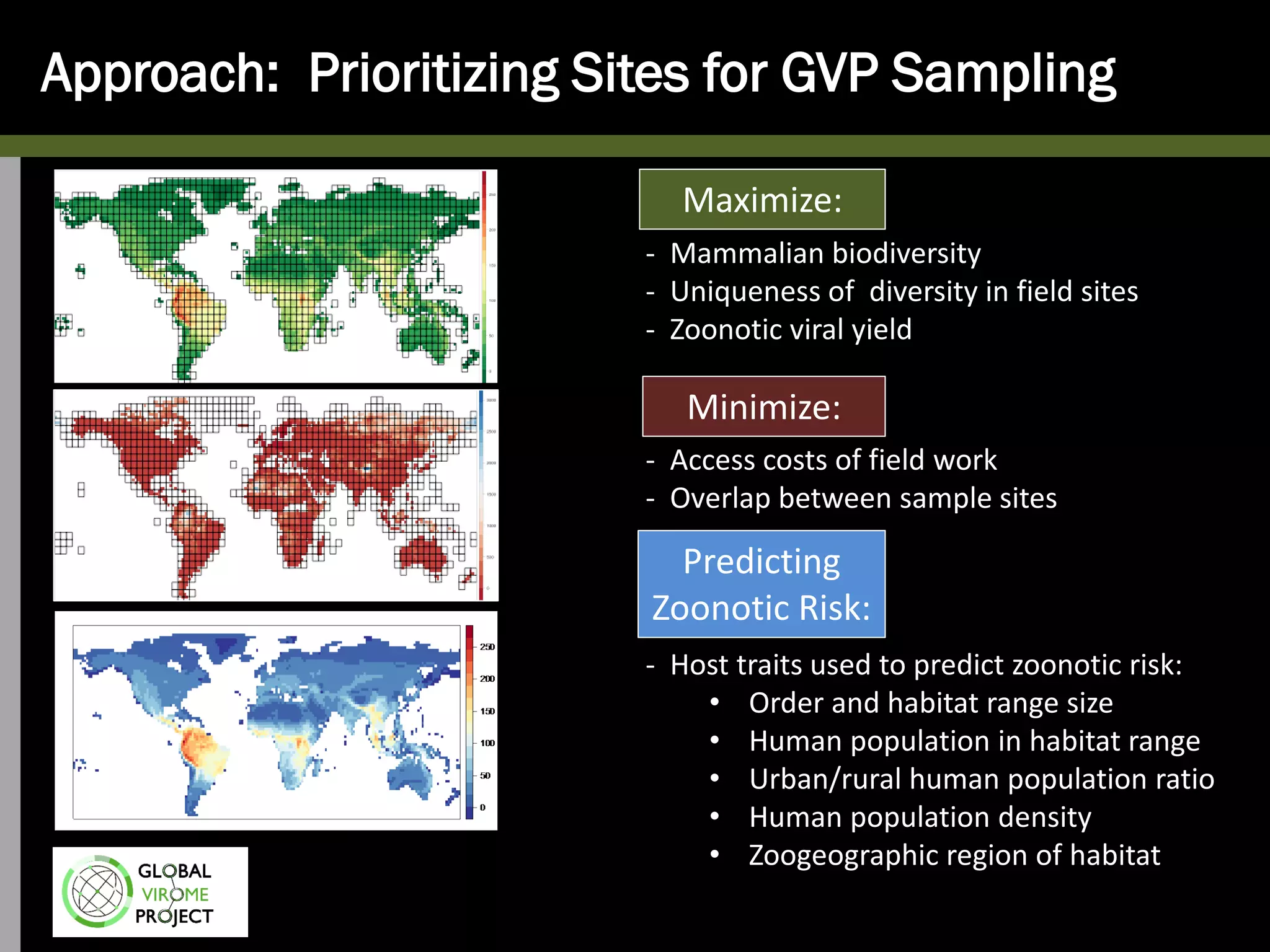
- Mammalian biodiversity
- Uniqueness of diversity in field sites
- Zoonotic viral yield
- Access costs of field work
- Overlap between sample sites
Maximize:
Minimize:
Approach: Prioritizing Sites for GVP Sampling
- Host traits used to predict zoonotic risk:
• Order and habitat range size
• Human population in habitat range
• Urban/rural human population ratio
• Human population density
• Zoogeographic region of habitat
Predicting
Zoonotic Risk:
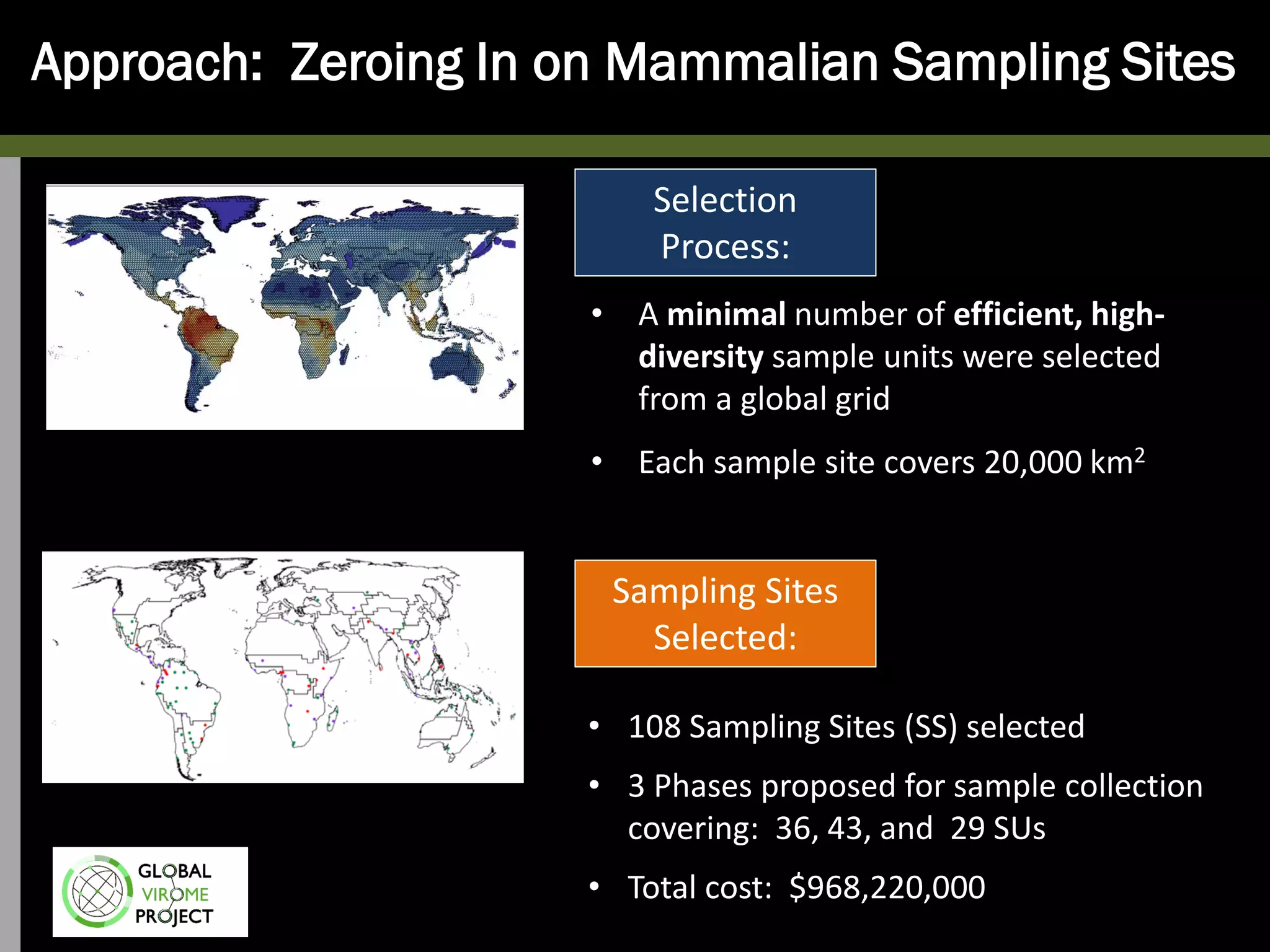
Approach: Zeroing In on Mammalian Sampling Sites
Sampling Sites
Selected:
• 108 Sampling Sites (SS) selected
• 3 Phases proposed for sample collection
covering: 36, 43, and 29 SUs
• Total cost: $968,220,000
• A minimal number of efficient, high-
diversity sample units were selected
from a global grid
• Each sample site covers 20,000 km2
Selection
Process:
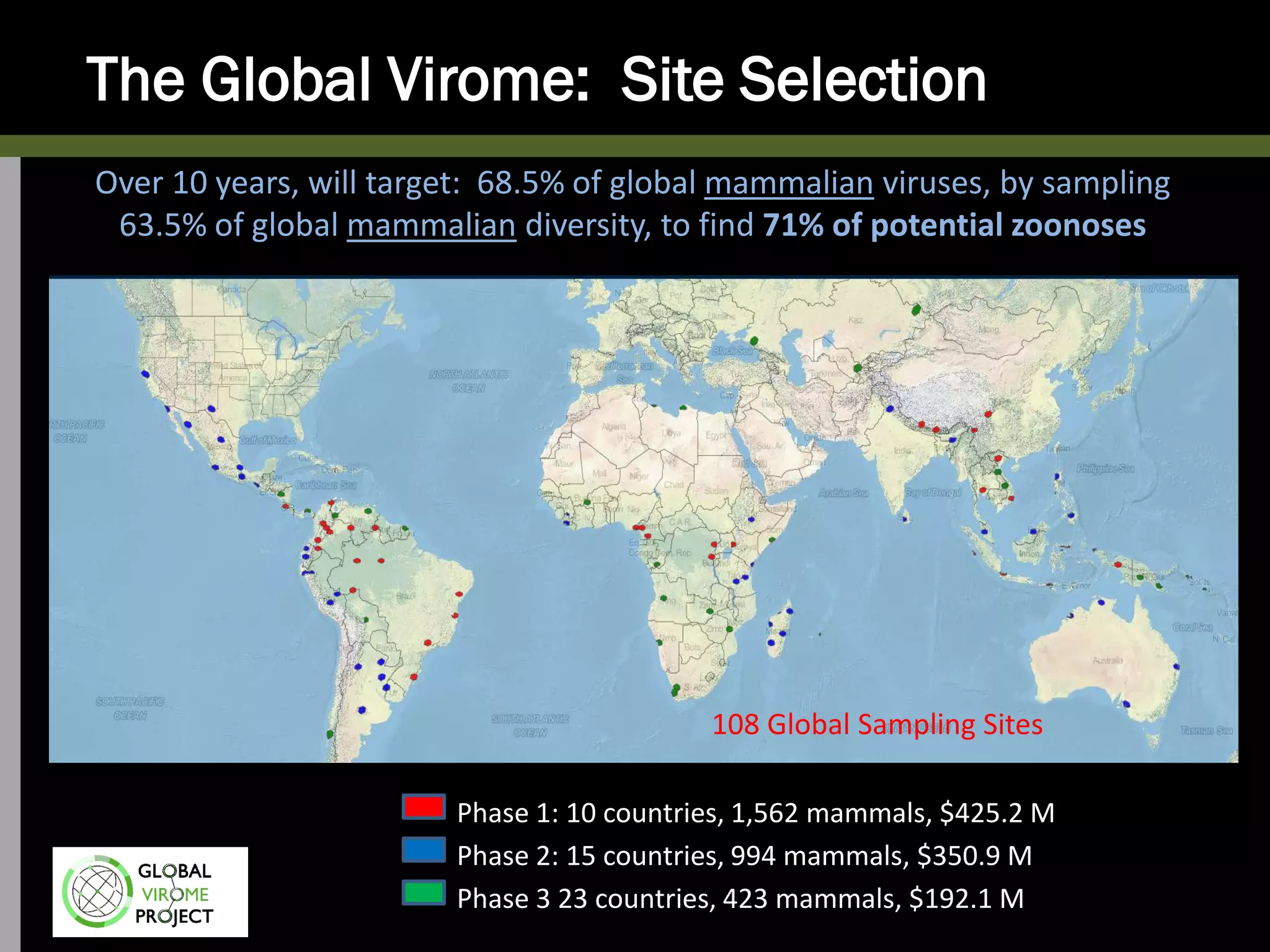
The Global Virome: Site Selection
Phase 1: 10 countries, 1,562 mammals, $425.2 M
Phase 2: 15 countries, 994 mammals, $350.9 M
Phase 3 23 countries, 423 mammals, $192.1 M
Over 10 years, will target: 68.5% of global mammalian viruses, by sampling
63.5% of global mammalian diversity, to find 71% of potential zoonoses
108 Global Sampling Sites
GVP: Making the Unknown KnownGVP
Phase 2:
24%
Phase 1:
38%
Phase 3:
9%
85% of
Global
Virome
Water fowl:
14%
The Global Virome Project: In Practice
• Optimal targeting: 10 years, 85+% of likely zoonoses, ~$1
billion – will enable the fast tracking of a high impact “tool box”
for preventing, detecting, and responding to dual threats.
• The modeling strategy is not wholly prescriptive – many other
sites could potentially contribute to the GVP without
significantly increasing costs.
• Using host factors, we can further optimize within chosen
sampling units to decide which species to target first.
• The models can be used as a monitoring tool to verify
predictions about:
• Saturation rate of viral curves
• Rate of sample acquisition across various sites
• Analytical approaches (modeling and lab-based) to assess zoonotic
potential of discovered viruses and whether site selection is
delivering a higher rate of zoonotic discovery
Phase 1: First Wave Countries
GVP : “First Wave” Country Sites
Costa Rica:
1 site
Cameroon:
3 sites
Uganda:
1 site
China:
4 sites
Thailand:
1 site
• 10 sampling sites in 5 countries
• 816 unique mammal species targeted
• 22% of the global mammalian virome captured
• $217.6M
5 initial GVP launch countries: Costa Rica, Cameroon, Uganda, Thailand, China
Phase 1: Second Wave Countries
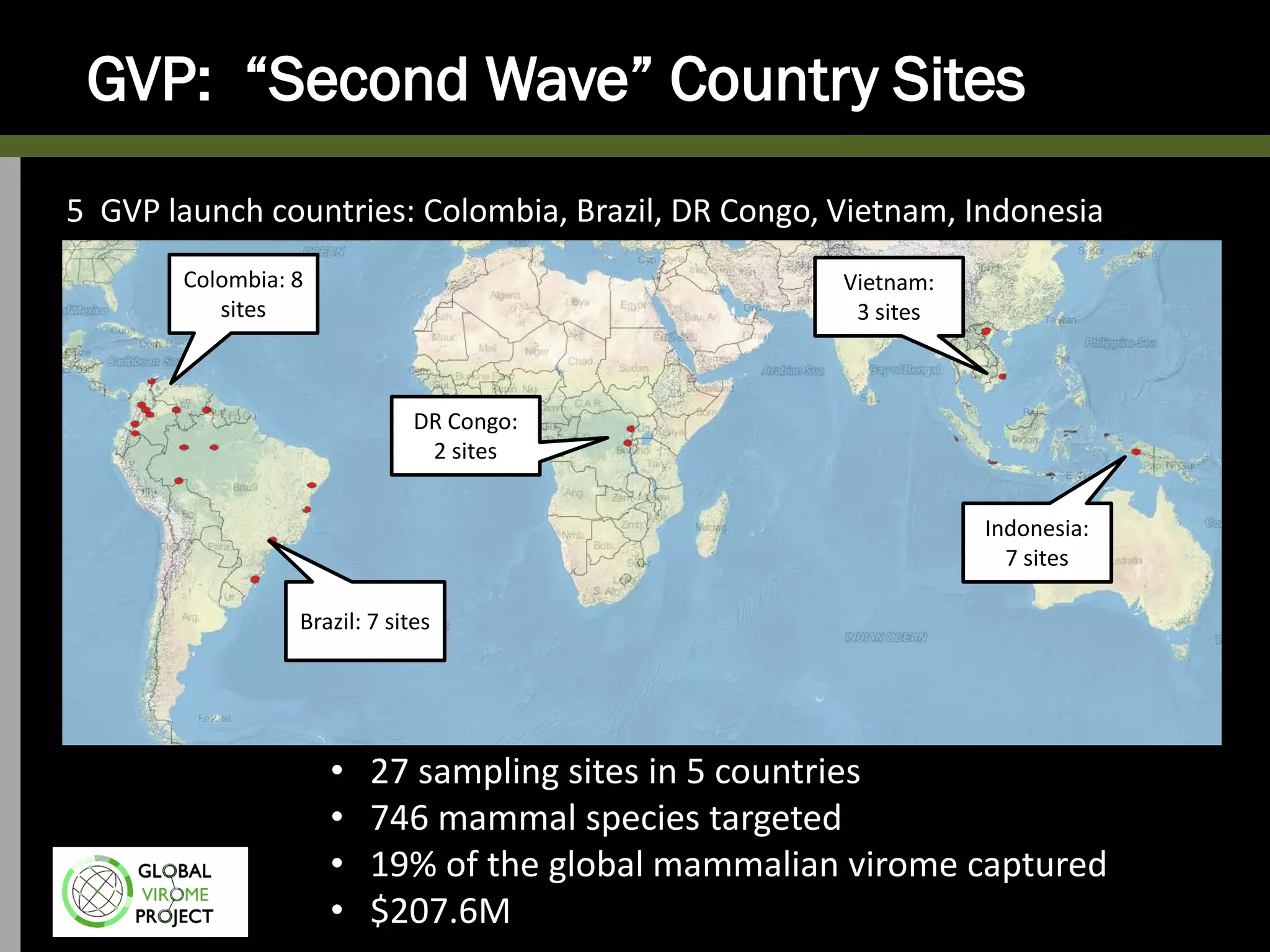
GVP: “Second Wave” Country Sites
Brazil: 7 sites
DR Congo:
2 sites
Indonesia:
7 sites
• 27 sampling sites in 5 countries
• 746 mammal species targeted
• 19% of the global mammalian virome captured
• $207.6M
5 GVP launch countries: Colombia, Brazil, DR Congo, Vietnam, Indonesia
Colombia: 8
sites
Vietnam:
3 sites
GVP: Core Principles
The GVP is committed to achieving its goals through
core principles that:
• Embrace an international scope, while fostering
local ownership
• Promote equitable access to data and benefits
• Foster transparency
• Build national capabilities for “prevention,
detection and response” for emerging viral threats
• Foster global ownership through an international
alliance
GVP Organizational Partners include:
The END
of the
Pandemic Era

2017 09-07 Global Virome Project

  • 1.
    The Global ViromeProject The Beginning of the End of the Pandemic Era
  • 2.
    We are notprepared for the Dual Threats Posed by Emerging Infectious Diseases The world is facing an increasing dual threat from I. the natural emergence of deadly infectious pathogens, and II. the accidental &/or intentional release of their laboratory-enhanced variants The risks posed by these dual threats are outpacing our ability to develop effective and timely countermeasures There is an urgent need to be able to prepare our responses in ADVANCE of any future threats – natural and lab-enhanced
  • 3.
    0 50 100 150 200 250 300 1945 1955 1965 1975 1985 1995 2005 2015 2025 2035 2045 2055 Actual Projected Decades NumberofEVDEvents Each year, approx.3 new Viral Diseases emerge Driven by • Population expansion (1.6 billion in 1900 to 11.5 billion people in 2100) • Increased encroachment into wildlife habitat which accelerates the “spillover” from wildlife to humans Source: Jones et al. (2008) Nature The “natural” threat from viruses is increasing HIV Nipah AvianInfluenza SARS Zika H1N1 Ebola MERS
  • 4.
    The threat from“lab-enhanced” viruses is intensifying https://www.theguardian.com/commentisfree/cifamerica/2011/sep/15/anthrax-iraq • Gain of function and “DIY” research is elevating the risk of the accidental and/or deliberate release of deadly novel biological agents • Historical examples demonstrate both indirect and direct impacts of this threat • Illnesses and deaths • Mass hysteria and panic
  • 5.
    The Global ViromeProject The Global Virome Project (GVP) is a ten year global partnership to better prepare the world for these dual threats, by: • Developing a global database of virtually all of the planet’s naturally- occurring viral threats • Transforming the world of emerging diseases into a data-rich field – driving the advanced development of countermeasures, against all future threats, and • Enabling rapid detection of natural and laboratory-enhanced threats
  • 6.
    GVP: Making theUnknown Known
  • 7.
    GVP: Making futurethreats known ~1.6 million natural viral species spanning 23 “high consequence” viral families are estimated to be circulating in mammals and water fowl
  • 8.
    GVP: Making futurethreats known Of the total, 500,000 - 700,000 viral species have the potential to cause human infection • For every “known” corona virus (e.g. MERS) there are an estimated 3-5,000 distinct “unknown” viruses of the same corona virus family circulating among wild animals* • It is likely the same holds for HIV and retroviruses, Ebola and filoviruses, Zika and flaviviruses, etc. – there are thousands of “unknown” viruses for each viral family. *Anthony et al: Global patterns in coronavirus diversity: Virus Evolution, 2017, 3(1): vex012
  • 9.
    GVP: Making futurethreats known The Global Virome Project presents a path to identifying and characterizing those viruses that have the greatest potential to infect humans, and their laboratory enhanced variants - so we can prepare for them before they jump to us
  • 10.
    GVP Builds aComprehensive Viral Database GVP viral surveillance and collection Virus isolation/ genomic sequence generation Sequence database Viral Atlas Database A comprehensive ecologic and genetic database on all naturally- occurring viruses Metadata on “viral ecology” – host range, geographic distribution, epidemiology Enabling An Enhanced Public Health Tool Box
  • 11.
    Advanced development of“broad spectrum” countermeasures for natural and laboratory-enhanced “high risk” viruses Ability to target high impact interventions to PREVENT “spillover” at high risk animal- human interface Enhanced Public Health “Tool Box” Naturally-Occurring Viruses Laboratory-Enhanced Viruses Targeted surveillance enables early DETECTION and effective RESPONSE to future spillover” events Ability to rapidly recognize a lab-enhanced virus against the Viral Atlas database on viral ecology and genomic sequence
  • 12.
  • 13.
    Impact 1: Developmentof Broad Countermeasures GVP will enable the comparative analysis of thousands of members of each viral family and the advanced development of next generation countermeasures that are broadly effective – rather than against individual viruses (e.g. MERS, SARS) MERS SARS Converting Virology into a data-rich field Thousands of other Corona Viruses Universal Corona Virus Vaccine
  • 14.
    Impact 2: Pandemic/EpidemicPrevention GVP will enable through detailed characterization of every virus's ecologic profile – spanning host range, geographic distribution, and epidemiology – the identification of viruses that pose the greatest potential threat and the targeting of measures to prevent spillover Minimizing the Risk of Spillover Drive Targeted, High-Impact Risk Mitigation
  • 15.
    Virus surveillance and collection Virusisolation/ genomic sequence generation Sequence database Bioinformatics Comprehensive database of all naturally-occurring viruses GVP Molecular-based Surveillance Impact 3: Rapid Identification of lab-enhanced viruses Enables Rapid Confirmation of lab- enhanced/unnatural phenotype
  • 16.
    Impact 4: The“Halo Effect” • As in the Human Genome Project, data generated by the GVP will dramatically accelerate the development of new diagnostic & analytic tools • Data generated will have unanticipated impact – for example, the identification of potential viral threats to livestock or unknown viral causes of chronic diseases like cancer
  • 17.
    The “Halo Effect”(cont) • Investing in a global GVP database will serve as a critically important “snap shot in time” on viral ecology, epidemiology, and genetics • GVP’s surveillance and laboratory platforms have the potential to remain beyond the GVP as a long term system for monitoring evolving viral threats – as well as future “man made” threats, ensuring early detection and rapid deployment of biomedical and preventive countermeasures Stages of “Emergence”
  • 18.
    • An audaciousbut doable visionary project • Clear metrics and goals • Disruptive and transformative • Can be done in phases where each phase itself generates useful information • The potential to change the way we do science and engage global health Parallels to the Human Genome Project
  • 19.
  • 20.
    Feasibility: Large scale“Proof of Concept”  Spanning >35 countries  Over $170 million invested between 2009-present The feasibility of GVP was validated through USAID’s PREDICT Project Zoonotic disease surveillance - from how to safely collect and handle samples, laboratory diagnostics, and data management and interpretation. Trained field & lab staff Optimized Sampled labs wild animals Viruses detectedSystems and Capacities Built
  • 21.
    Feasibility: Extrapolating Numberof Samples Discovery Curves Show the Number of Samples Requiredmber of samples required to discover most of the unknown viruses • PREDICT research has demonstrated that far fewer samples than previously expected are required to identify all the viruses in a given species • These viral discovery curve studies provide a roadmap to sampling needs for GVP
  • 22.
  • 23.
    Feasibility: Ranking WhichViruses Are Most “Risky”
  • 24.
    Pathogenesis of SL-CoVsin transgenic mice With the collaboration of Prof. Ralph Baric in North Carolina University - Menachery et al., Nat Med, 2015; PNAS, 2016 SARS-CoV and SHC014 SARS-CoV and WIV1
  • 25.
    Serological evidence ofSL-CoV infection in human
  • 26.
    Severe acute diarrheasyndrome (SADS) • From 28 October 2016, fatal swine disease outbreaks were observed in a pig farm in Qingyuan, Guangdong Province, China • On 2nd May 2017, the disease has resulted in the death of 24,693 piglets from four farms. In Farm A alone, 64% (4659/7268) of all piglets born in February died. • A coronavirus similar to bat CoV HKU2 was detected in diseased pigs
  • 27.
    Diverse SADS-CoV relatedviruses were detected in bats Zhou et al., unpublished results
  • 28.
  • 29.
    GVP: Get tothe Source Mammals and water fowl are viral reservoirs Mammalian Habitat ranges Waterfowl breeding hotspots
  • 30.
    - Mammalian biodiversity -Uniqueness of diversity in field sites - Zoonotic viral yield - Access costs of field work - Overlap between sample sites Maximize: Minimize: Approach: Prioritizing Sites for GVP Sampling - Host traits used to predict zoonotic risk: • Order and habitat range size • Human population in habitat range • Urban/rural human population ratio • Human population density • Zoogeographic region of habitat Predicting Zoonotic Risk:
  • 31.
    Approach: Zeroing Inon Mammalian Sampling Sites Sampling Sites Selected: • 108 Sampling Sites (SS) selected • 3 Phases proposed for sample collection covering: 36, 43, and 29 SUs • Total cost: $968,220,000 • A minimal number of efficient, high- diversity sample units were selected from a global grid • Each sample site covers 20,000 km2 Selection Process:
  • 32.
    The Global Virome:Site Selection Phase 1: 10 countries, 1,562 mammals, $425.2 M Phase 2: 15 countries, 994 mammals, $350.9 M Phase 3 23 countries, 423 mammals, $192.1 M Over 10 years, will target: 68.5% of global mammalian viruses, by sampling 63.5% of global mammalian diversity, to find 71% of potential zoonoses 108 Global Sampling Sites
  • 33.
    GVP: Making theUnknown KnownGVP Phase 2: 24% Phase 1: 38% Phase 3: 9% 85% of Global Virome Water fowl: 14%
  • 34.
    The Global ViromeProject: In Practice • Optimal targeting: 10 years, 85+% of likely zoonoses, ~$1 billion – will enable the fast tracking of a high impact “tool box” for preventing, detecting, and responding to dual threats. • The modeling strategy is not wholly prescriptive – many other sites could potentially contribute to the GVP without significantly increasing costs. • Using host factors, we can further optimize within chosen sampling units to decide which species to target first. • The models can be used as a monitoring tool to verify predictions about: • Saturation rate of viral curves • Rate of sample acquisition across various sites • Analytical approaches (modeling and lab-based) to assess zoonotic potential of discovered viruses and whether site selection is delivering a higher rate of zoonotic discovery
  • 35.
    Phase 1: FirstWave Countries
  • 36.
    GVP : “FirstWave” Country Sites Costa Rica: 1 site Cameroon: 3 sites Uganda: 1 site China: 4 sites Thailand: 1 site • 10 sampling sites in 5 countries • 816 unique mammal species targeted • 22% of the global mammalian virome captured • $217.6M 5 initial GVP launch countries: Costa Rica, Cameroon, Uganda, Thailand, China
  • 37.
    Phase 1: SecondWave Countries
  • 38.
    GVP: “Second Wave”Country Sites Brazil: 7 sites DR Congo: 2 sites Indonesia: 7 sites • 27 sampling sites in 5 countries • 746 mammal species targeted • 19% of the global mammalian virome captured • $207.6M 5 GVP launch countries: Colombia, Brazil, DR Congo, Vietnam, Indonesia Colombia: 8 sites Vietnam: 3 sites
  • 39.
    GVP: Core Principles TheGVP is committed to achieving its goals through core principles that: • Embrace an international scope, while fostering local ownership • Promote equitable access to data and benefits • Foster transparency • Build national capabilities for “prevention, detection and response” for emerging viral threats • Foster global ownership through an international alliance
  • 40.
  • 41.