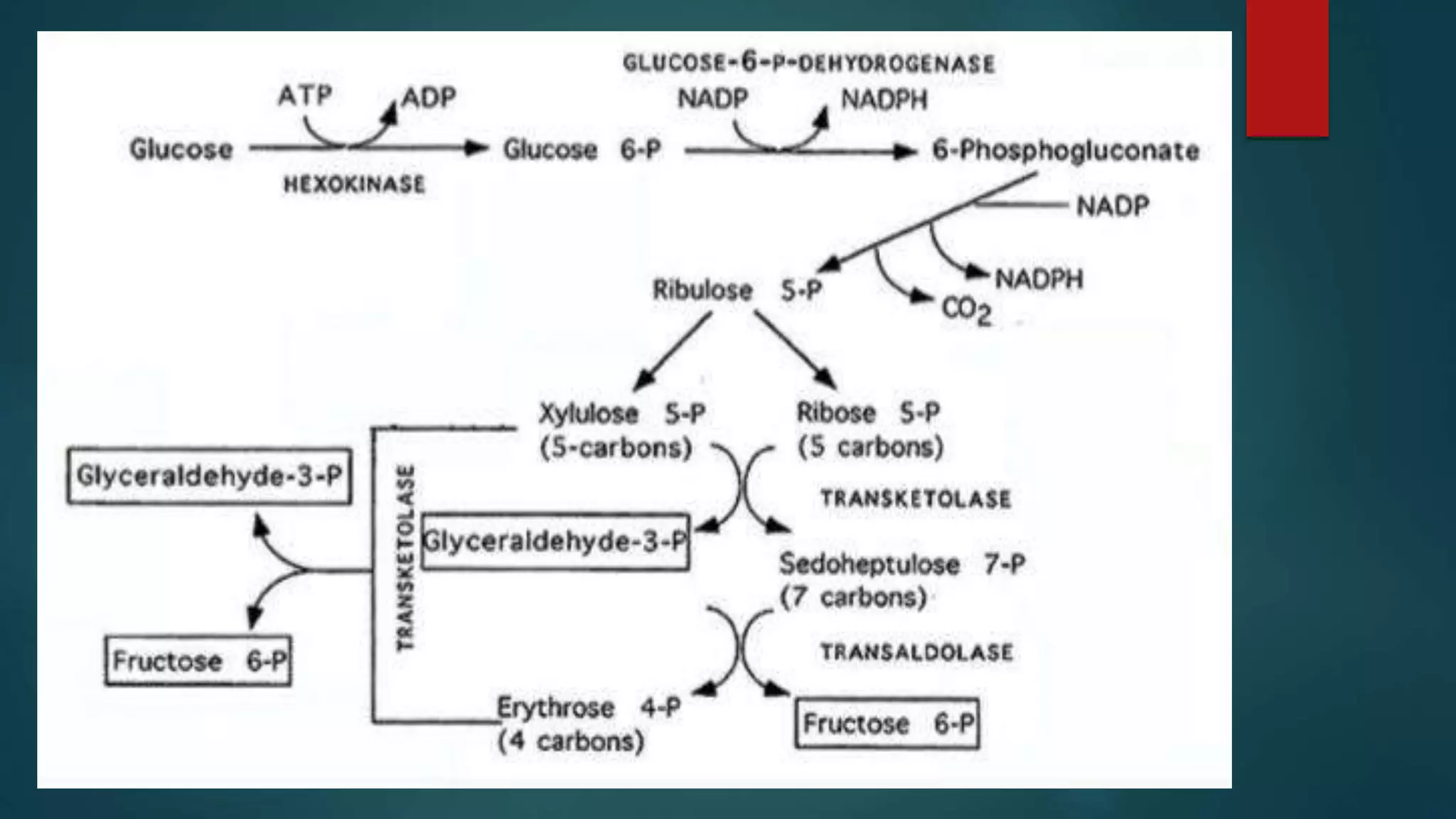
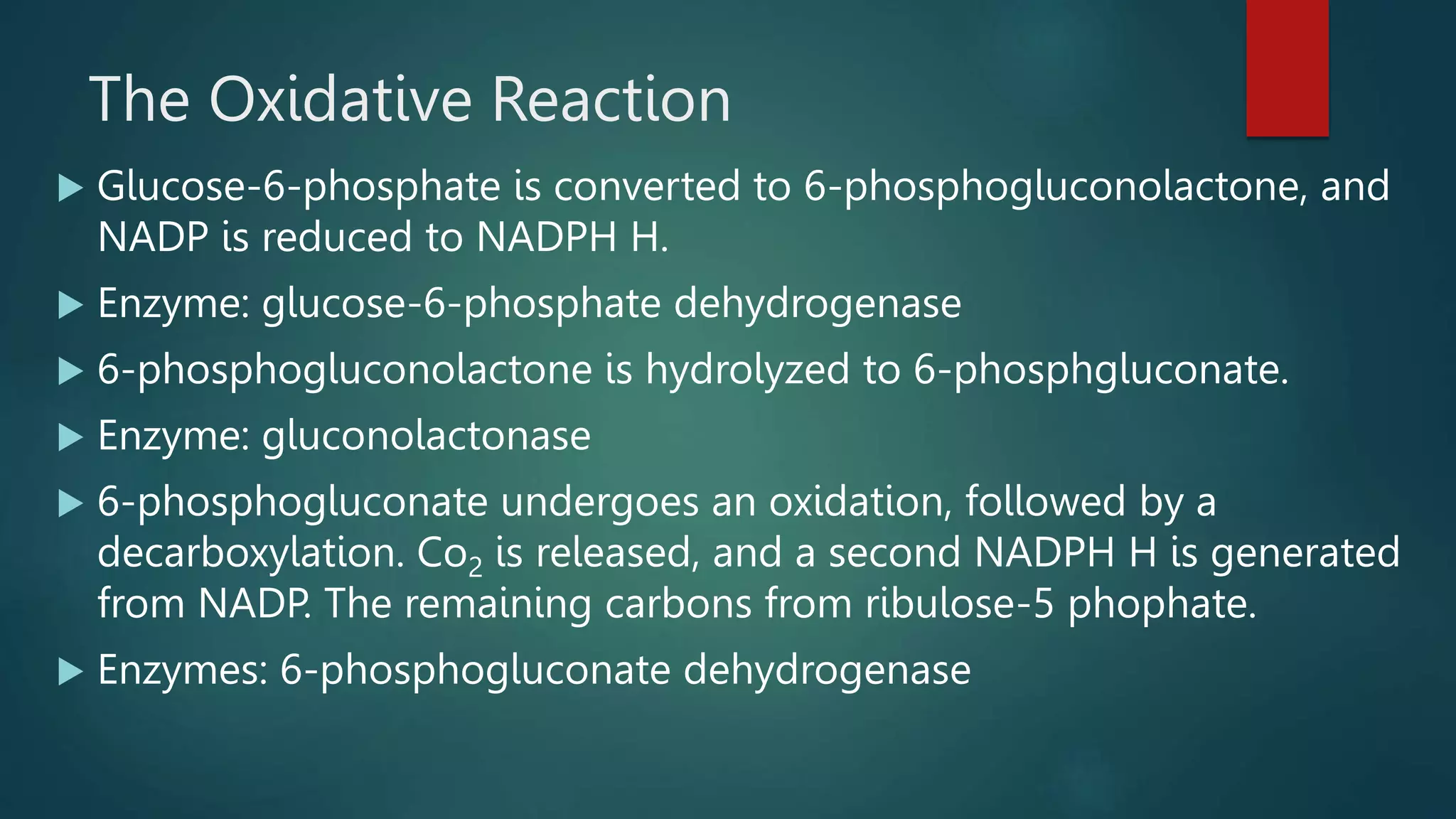
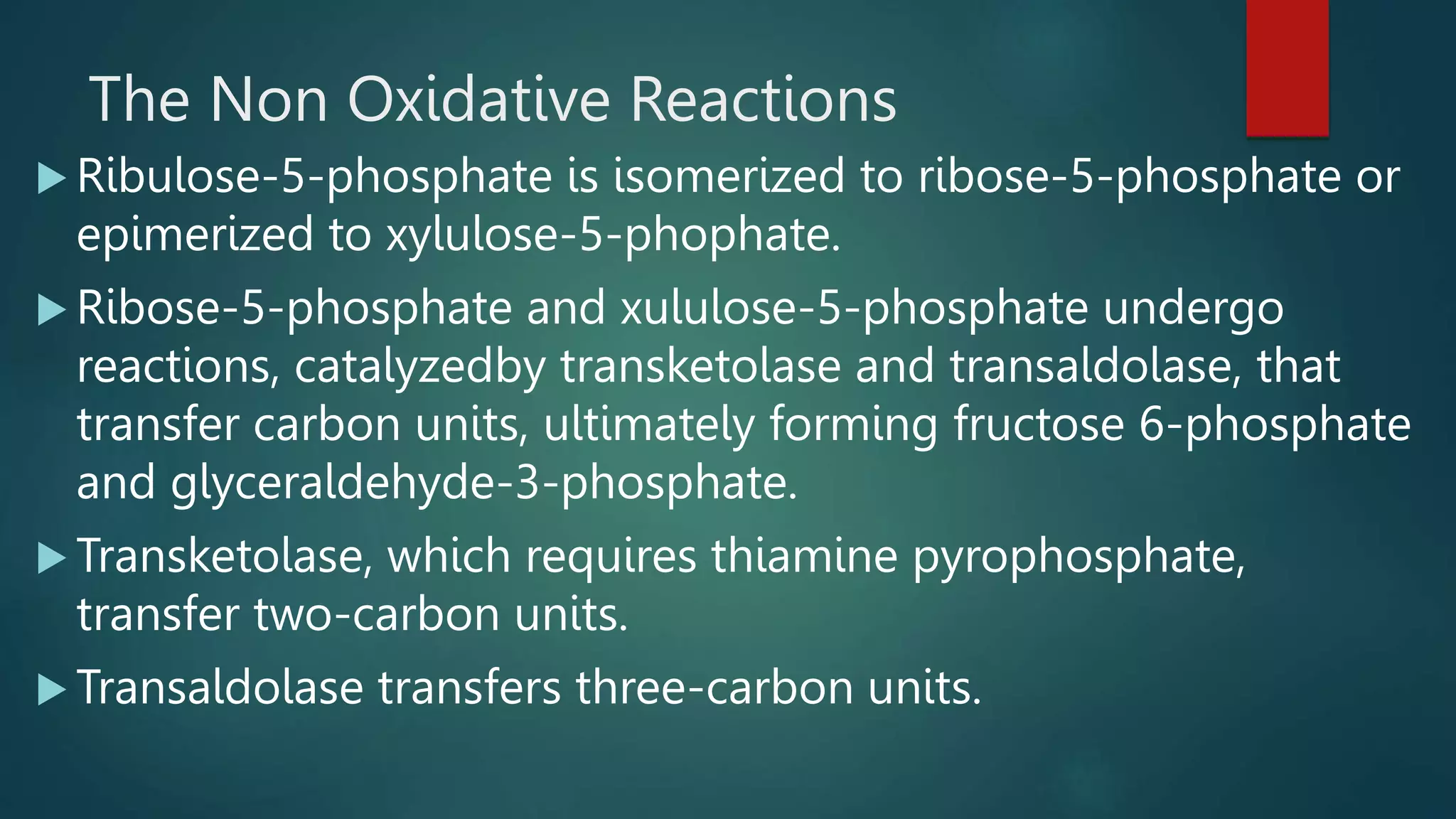
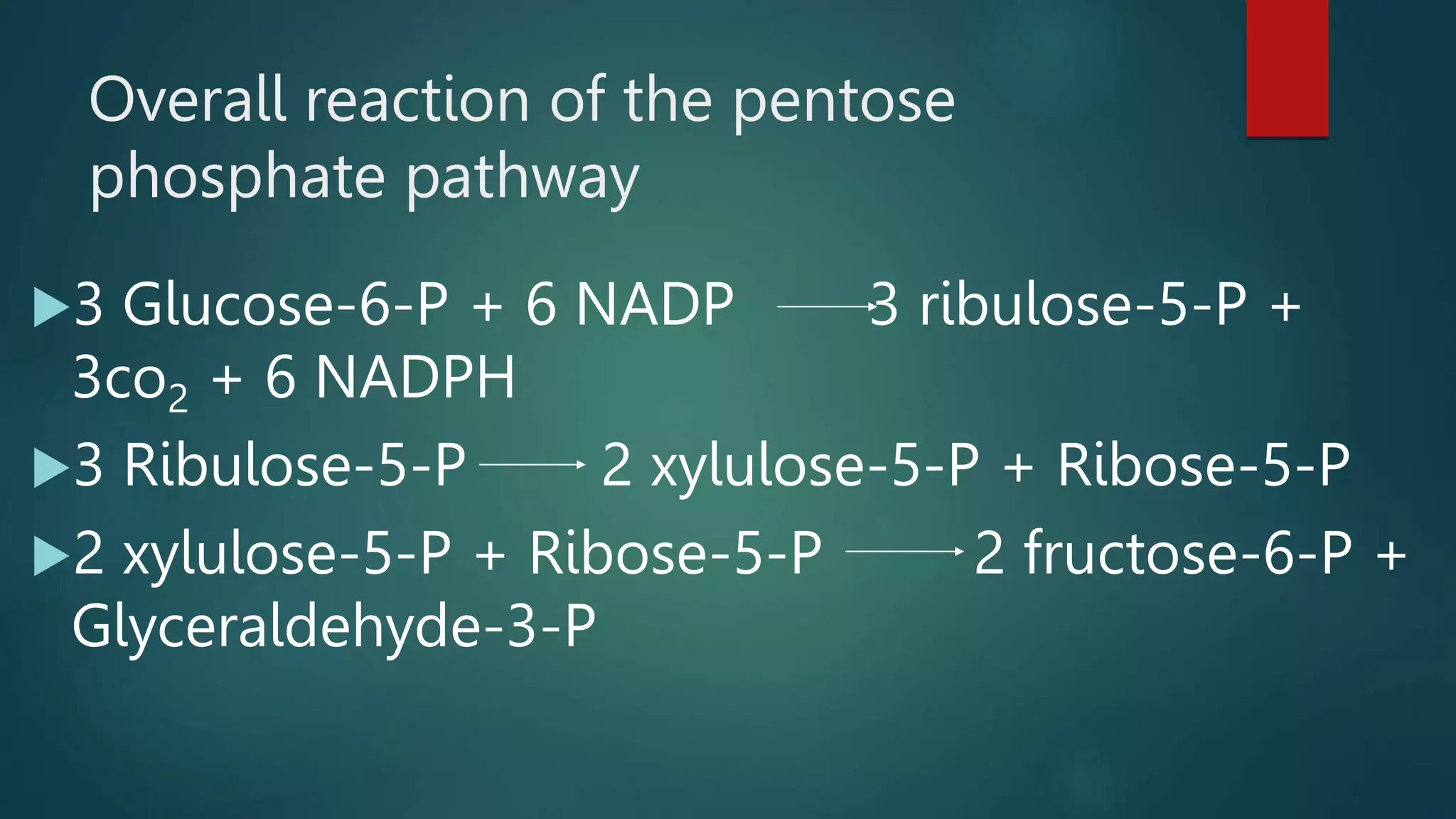
The pentose phosphate pathway has two phases: an oxidative phase that generates NADPH and a non-oxidative phase that synthesizes 5-carbon sugars. In the oxidative phase, glucose-6-phosphate is converted through several enzymatic reactions to produce two molecules of NADPH and one molecule of ribulose-5-phosphate. The non-oxidative phase involves isomerization and transketolase and transaldolase reactions that transfer carbon units to ultimately form fructose-6-phosphate and glyceraldehyde-3-phosphate from ribulose-5-phosphate. Overall, the pathway converts three molecules of glucose-6-phosphate to produce six molecules of NADPH, three molecules of carbon dioxide