The Real Cost of Slow Time vs Downtime 
Tammy Everts 
@tameverts 
CMG Performance and Capacity 2014
Slide 2
Who’s had an outage-related emergency? 
Slide 3
Who’s had a performance- related emergency? 
Slide 4
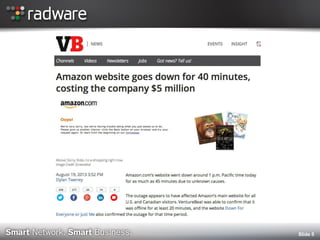
Slide 5
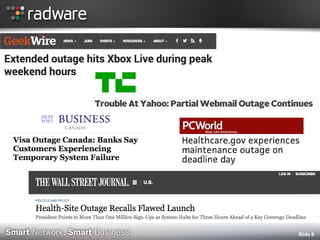
Slide 6
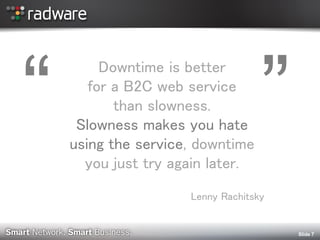
Downtime is better for a B2C web service than slowness. Slowness makes you hate using the service, downtime you just try again later. 
Lenny Rachitsky 
Slide 7 
“ 
”
Let’s look at some real-world examples.
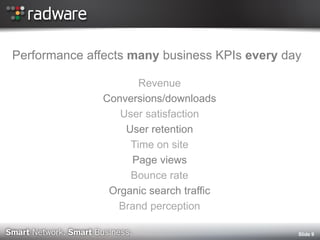
Performance affects many business KPIs every day 
Revenue 
Conversions/downloads 
User satisfaction 
User retention 
Time on site 
Page views 
Bounce rate 
Organic search traffic 
Brand perception 
Slide 9
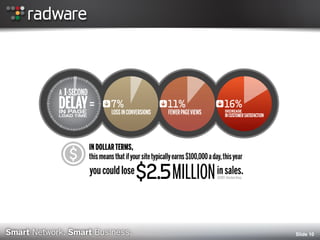
Slide 10
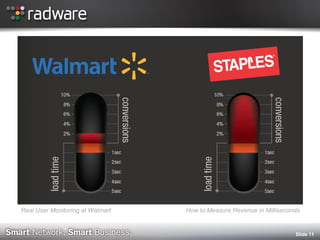
Slide 11 
Real User Monitoring at Walmart 
How to Measure Revenue in Milliseconds
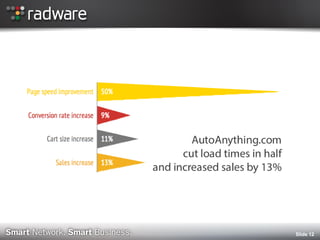
Slide 12
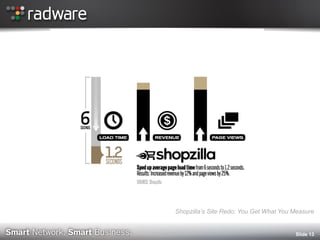
Slide 13 
Shopzilla’s Site Redo: You Get What You Measure
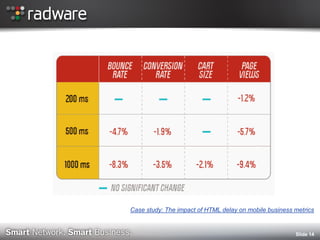
Slide 14 
Case study: The impact of HTML delay on mobile business metrics
Slide 15 
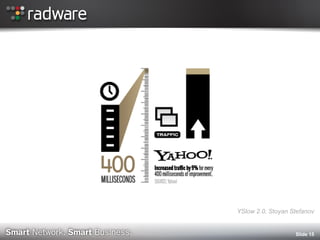
YSlow 2.0, Stoyan Stefanov
Slide 16 
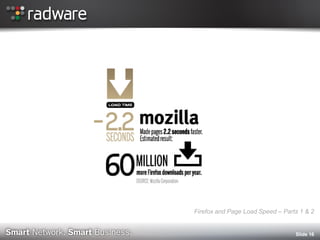
Firefox and Page Load Speed – Parts 1 & 2
Slide 17 
20% more organic traffic 
14% more page views 
Increased sales 
For Smartfurniture.com, faster pages =
Slide 18
Current state of the union for web performance
Slide 20
Slide 21 
Radware: State of the Union for Ecommerce Web Performance [Fall 2014]
Slide 22 
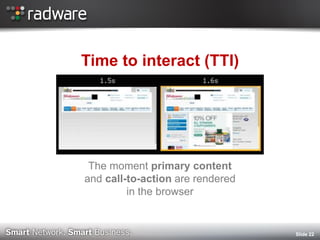
Time to interact (TTI) 
The moment primary content and call-to-action are rendered in the browser
Slide 23 
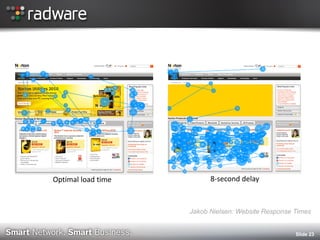
Optimal load time 
8-second delay 
Jakob Nielsen: Website Response Times
Slide 24 
Radware: State of the Union for Ecommerce Web Performance [Fall 2014]
Downtime vs slow time
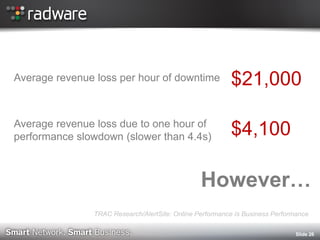
Average revenue loss per hour of downtime 
Average revenue loss due to one hour of performance slowdown (slower than 4.4s) 
Slide 26 
TRAC Research/AlertSite: Online Performance Is Business Performance 
$21,000 
$4,100 
However…
…website slowdowns occur 10 times more frequently than outages. 
Slide 27 
TRAC Research/AlertSite: Online Performance Is Business Performance
2X the impact 
Slide 28
Whether it’s a public website or an internal web-based application, most of us believe that a successful DoS/DDoS attack results in a service outage. 
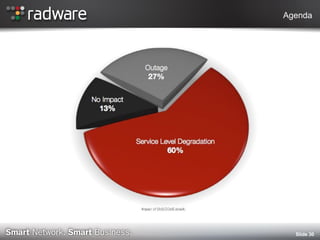
However, our Security Industry Survey (conducted with 198 respondents within a wide variety of global companies, most of which were not Radware customers) uncovered that the biggest impact of DoS/DDoS attacks in 2013 was service level degradation, which in most cases is felt as service slowness. 
Slide 29 
Radware 2013 Global Application and Network Security Report 
“ 
”
Agenda 
Slide 30
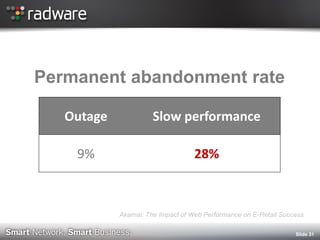
Permanent abandonment rate 
Slide 31 
Akamai: The Impact of Web Performance on E-Retail Success 
Outage 
Slow performance 
9% 
28%
Slide 32
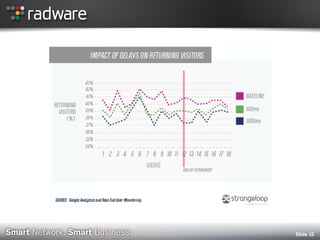
Customer lifetime value (CLV) 
Total dollars flowing from a customer over the entire relationship with that customer 
CLV is one of the biggest predictors of retail success 
Slide 33
Slide 34 
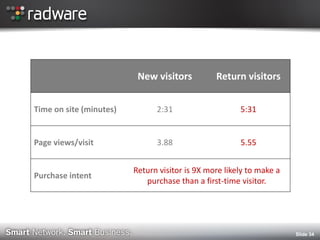
New visitors 
Return visitors 
Time on site (minutes) 
2:31 
5:31 
Page views/visit 
3.88 
5.55 
Purchase intent 
Return visitor is 9X more likely to make a purchase than a first-time visitor.
How to measure the short-term and long-term impact of slow time
Slide 36
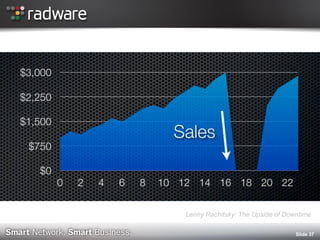
Slide 37 
Lenny Rachitsky: The Upside of Downtime
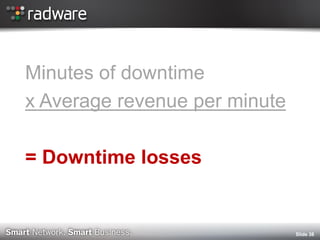
Minutes of downtime 
x Average revenue per minute 
= Downtime losses 
Slide 38
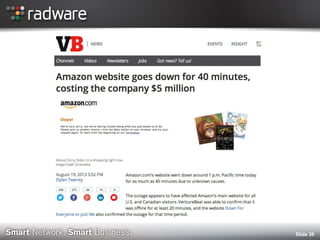
Slide 39
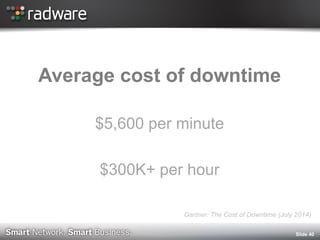
Average cost of downtime 
$5,600 per minute 
$300K+ per hour 
Slide 40 
Gartner: The Cost of Downtime (July 2014)
Slide 41
Challenges of measuring impact of slow performance 
Need actionable performance data 
Need visibility into performance of third-party scripts 
Need visibility into quality of experience (QoE) for users (availability PLUS speed) 
Need to be able to measure the business impact of performance issues 
Slide 42
Slide 43
How to calculate short-term losses due to sub-optimal performance 
Step 1: Identify your cut-off performance threshold 
4.4 seconds = average delay in response time when business performance starts to decline (TRAC) 
Slide 44
Slide 45
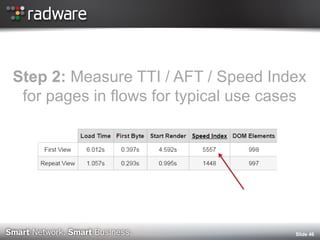
Step 2: Measure TTI / AFT / Speed Index for pages in flows for typical use cases 
Slide 46
Slide 47 
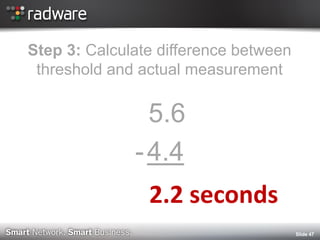
Step 3: Calculate difference between threshold and actual measurement 
5.6 
-4.4 
2.2 seconds
Slide 48 
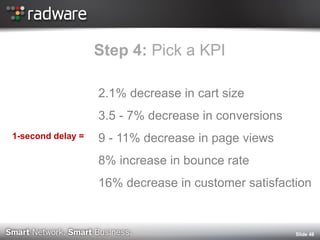
Step 4: Pick a KPI 
1-second delay = 
2.1% decrease in cart size 
3.5 - 7% decrease in conversions 
9 - 11% decrease in page views 
8% increase in bounce rate 
16% decrease in customer satisfaction
Slide 49 
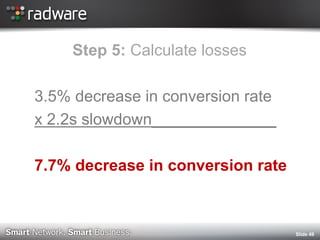
Step 5: Calculate losses 
3.5% decrease in conversion rate 
x 2.2s slowdown______________ 
7.7% decrease in conversion rate
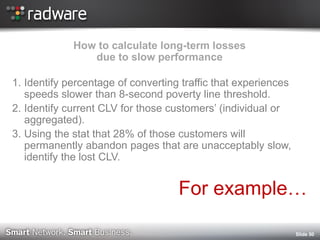
How to calculate long-term losses due to slow performance 
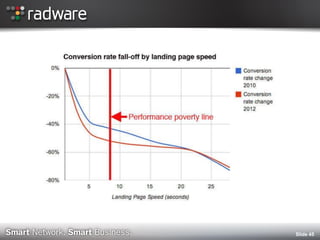
1.Identify percentage of converting traffic that experiences speeds slower than 8-second poverty line threshold. 
2.Identify current CLV for those customers’ (individual or aggregated). 
3.Using the stat that 28% of those customers will permanently abandon pages that are unacceptably slow, identify the lost CLV. 
For example… 
Slide 50
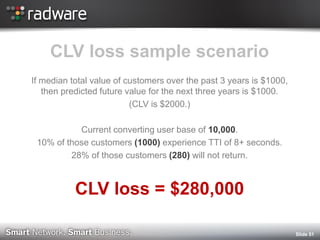
CLV loss sample scenario 
If median total value of customers over the past 3 years is $1000, then predicted future value for the next three years is $1000. 
(CLV is $2000.) 
Current converting user base of 10,000. 
10% of those customers (1000) experience TTI of 8+ seconds. 
28% of those customers (280) will not return. 
CLV loss = $280,000 
Slide 51
Slide 52
Takeaway
Slide 54
Slide 55
Tammy Everts 
@tameverts tammye@radware.com webperformancetoday.com 
Slide 56 
Questions?

The Real Cost of Slow Time vs Downtime

  • 1.
    The Real Costof Slow Time vs Downtime Tammy Everts @tameverts CMG Performance and Capacity 2014
  • 2.
  • 3.
    Who’s had anoutage-related emergency? Slide 3
  • 4.
    Who’s had aperformance- related emergency? Slide 4
  • 5.
  • 6.
  • 7.
    Downtime is betterfor a B2C web service than slowness. Slowness makes you hate using the service, downtime you just try again later. Lenny Rachitsky Slide 7 “ ”
  • 8.
    Let’s look atsome real-world examples.
  • 9.
    Performance affects manybusiness KPIs every day Revenue Conversions/downloads User satisfaction User retention Time on site Page views Bounce rate Organic search traffic Brand perception Slide 9
  • 10.
  • 11.
    Slide 11 RealUser Monitoring at Walmart How to Measure Revenue in Milliseconds
  • 12.
  • 13.
    Slide 13 Shopzilla’sSite Redo: You Get What You Measure
  • 14.
    Slide 14 Casestudy: The impact of HTML delay on mobile business metrics
  • 15.
    Slide 15 YSlow2.0, Stoyan Stefanov
  • 16.
    Slide 16 Firefoxand Page Load Speed – Parts 1 & 2
  • 17.
    Slide 17 20%more organic traffic 14% more page views Increased sales For Smartfurniture.com, faster pages =
  • 18.
  • 19.
    Current state ofthe union for web performance
  • 20.
  • 21.
    Slide 21 Radware:State of the Union for Ecommerce Web Performance [Fall 2014]
  • 22.
    Slide 22 Timeto interact (TTI) The moment primary content and call-to-action are rendered in the browser
  • 23.
    Slide 23 Optimalload time 8-second delay Jakob Nielsen: Website Response Times
  • 24.
    Slide 24 Radware:State of the Union for Ecommerce Web Performance [Fall 2014]
  • 25.
  • 26.
    Average revenue lossper hour of downtime Average revenue loss due to one hour of performance slowdown (slower than 4.4s) Slide 26 TRAC Research/AlertSite: Online Performance Is Business Performance $21,000 $4,100 However…
  • 27.
    …website slowdowns occur10 times more frequently than outages. Slide 27 TRAC Research/AlertSite: Online Performance Is Business Performance
  • 28.
    2X the impact Slide 28
  • 29.
    Whether it’s apublic website or an internal web-based application, most of us believe that a successful DoS/DDoS attack results in a service outage. However, our Security Industry Survey (conducted with 198 respondents within a wide variety of global companies, most of which were not Radware customers) uncovered that the biggest impact of DoS/DDoS attacks in 2013 was service level degradation, which in most cases is felt as service slowness. Slide 29 Radware 2013 Global Application and Network Security Report “ ”
  • 30.
  • 31.
    Permanent abandonment rate Slide 31 Akamai: The Impact of Web Performance on E-Retail Success Outage Slow performance 9% 28%
  • 32.
  • 33.
    Customer lifetime value(CLV) Total dollars flowing from a customer over the entire relationship with that customer CLV is one of the biggest predictors of retail success Slide 33
  • 34.
    Slide 34 Newvisitors Return visitors Time on site (minutes) 2:31 5:31 Page views/visit 3.88 5.55 Purchase intent Return visitor is 9X more likely to make a purchase than a first-time visitor.
  • 35.
    How to measurethe short-term and long-term impact of slow time
  • 36.
  • 37.
    Slide 37 LennyRachitsky: The Upside of Downtime
  • 38.
    Minutes of downtime x Average revenue per minute = Downtime losses Slide 38
  • 39.
  • 40.
    Average cost ofdowntime $5,600 per minute $300K+ per hour Slide 40 Gartner: The Cost of Downtime (July 2014)
  • 41.
  • 42.
    Challenges of measuringimpact of slow performance Need actionable performance data Need visibility into performance of third-party scripts Need visibility into quality of experience (QoE) for users (availability PLUS speed) Need to be able to measure the business impact of performance issues Slide 42
  • 43.
  • 44.
    How to calculateshort-term losses due to sub-optimal performance Step 1: Identify your cut-off performance threshold 4.4 seconds = average delay in response time when business performance starts to decline (TRAC) Slide 44
  • 45.
  • 46.
    Step 2: MeasureTTI / AFT / Speed Index for pages in flows for typical use cases Slide 46
  • 47.
    Slide 47 Step3: Calculate difference between threshold and actual measurement 5.6 -4.4 2.2 seconds
  • 48.
    Slide 48 Step4: Pick a KPI 1-second delay = 2.1% decrease in cart size 3.5 - 7% decrease in conversions 9 - 11% decrease in page views 8% increase in bounce rate 16% decrease in customer satisfaction
  • 49.
    Slide 49 Step5: Calculate losses 3.5% decrease in conversion rate x 2.2s slowdown______________ 7.7% decrease in conversion rate
  • 50.
    How to calculatelong-term losses due to slow performance 1.Identify percentage of converting traffic that experiences speeds slower than 8-second poverty line threshold. 2.Identify current CLV for those customers’ (individual or aggregated). 3.Using the stat that 28% of those customers will permanently abandon pages that are unacceptably slow, identify the lost CLV. For example… Slide 50
  • 51.
    CLV loss samplescenario If median total value of customers over the past 3 years is $1000, then predicted future value for the next three years is $1000. (CLV is $2000.) Current converting user base of 10,000. 10% of those customers (1000) experience TTI of 8+ seconds. 28% of those customers (280) will not return. CLV loss = $280,000 Slide 51
  • 52.
  • 53.
  • 54.
  • 55.
  • 56.
    Tammy Everts @tamevertstammye@radware.com webperformancetoday.com Slide 56 Questions?