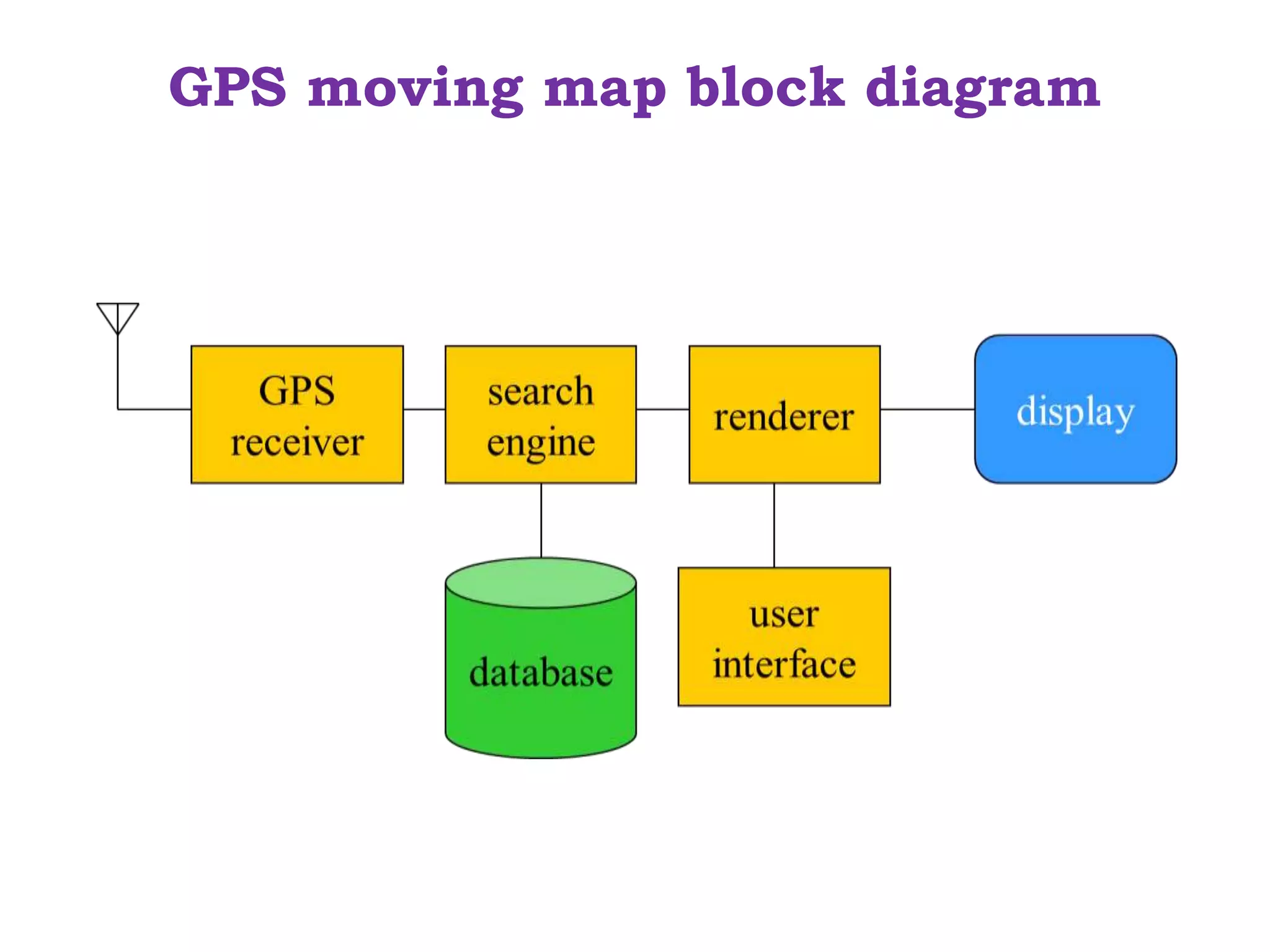
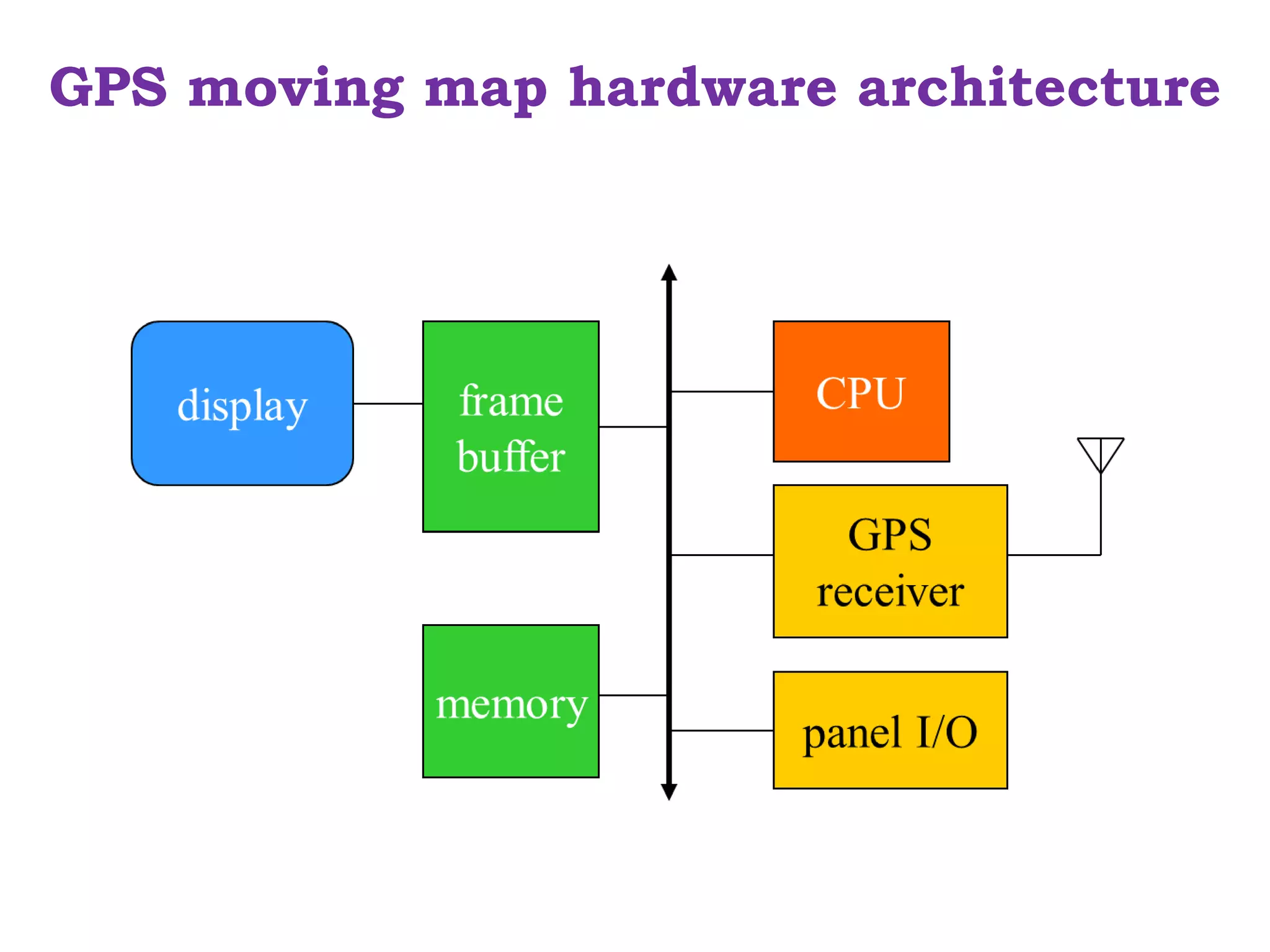
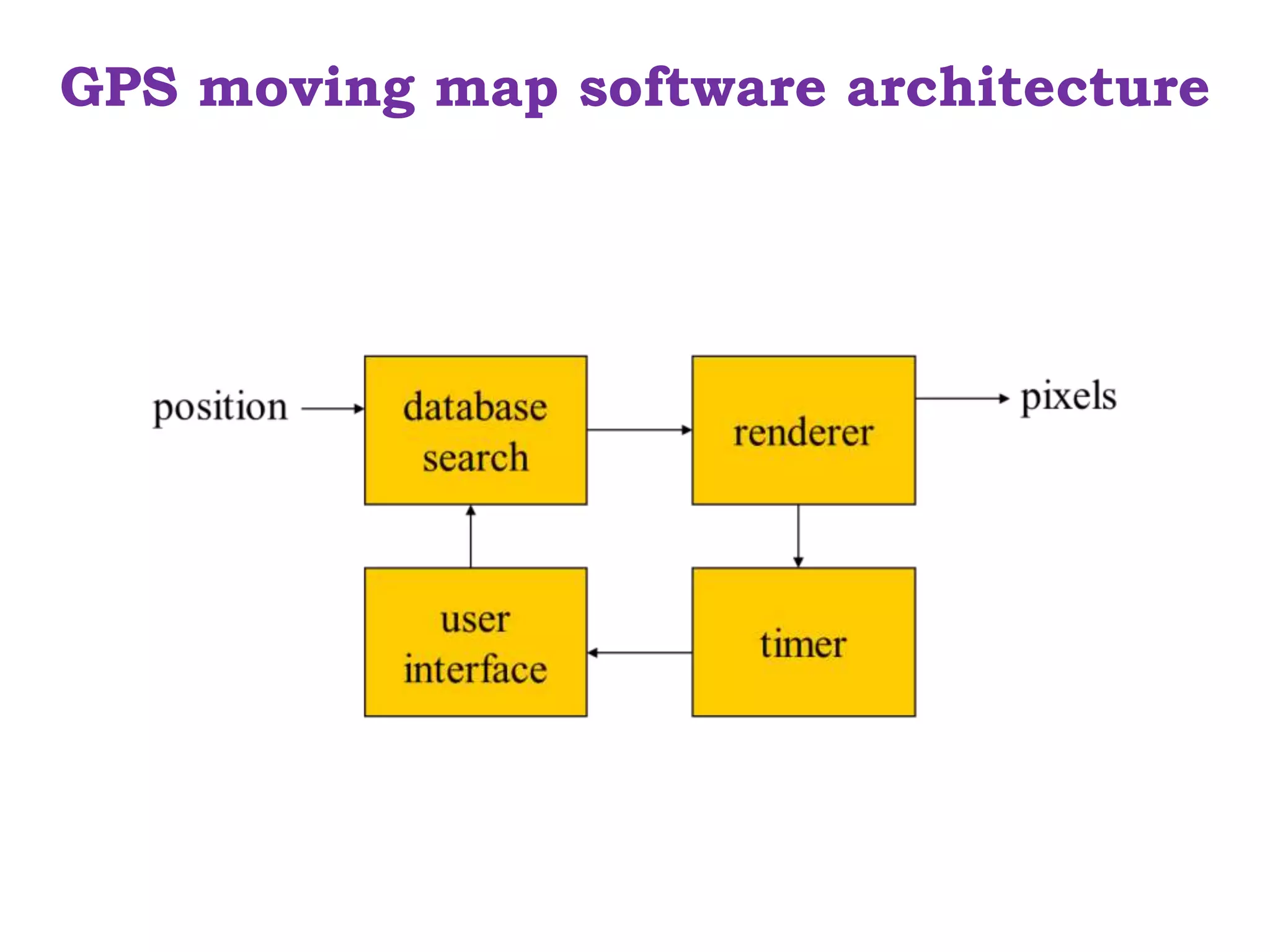
This document discusses the embedded system design process. It describes design methodologies that help structure the design process and allow for effective communication between team members. The major steps in the design process are discussed as top-down or bottom-up approaches, with goals of minimizing cost, maximizing performance and efficiency. Key aspects covered include establishing requirements, creating specifications, designing the system architecture, individual components, and integrating the full system. Examples of requirements, specifications, block diagrams and architectures are provided for a GPS moving map system.
Design methodologies
• Itis a procedure for designing a system.
• It allows us to keep a scorecard on a design to
ensure that we have done everything we need
to do.
• It allows us to develop computer-aided design
tools.
• A design methodology makes it much easier
for members of a design team to communicate.
4.
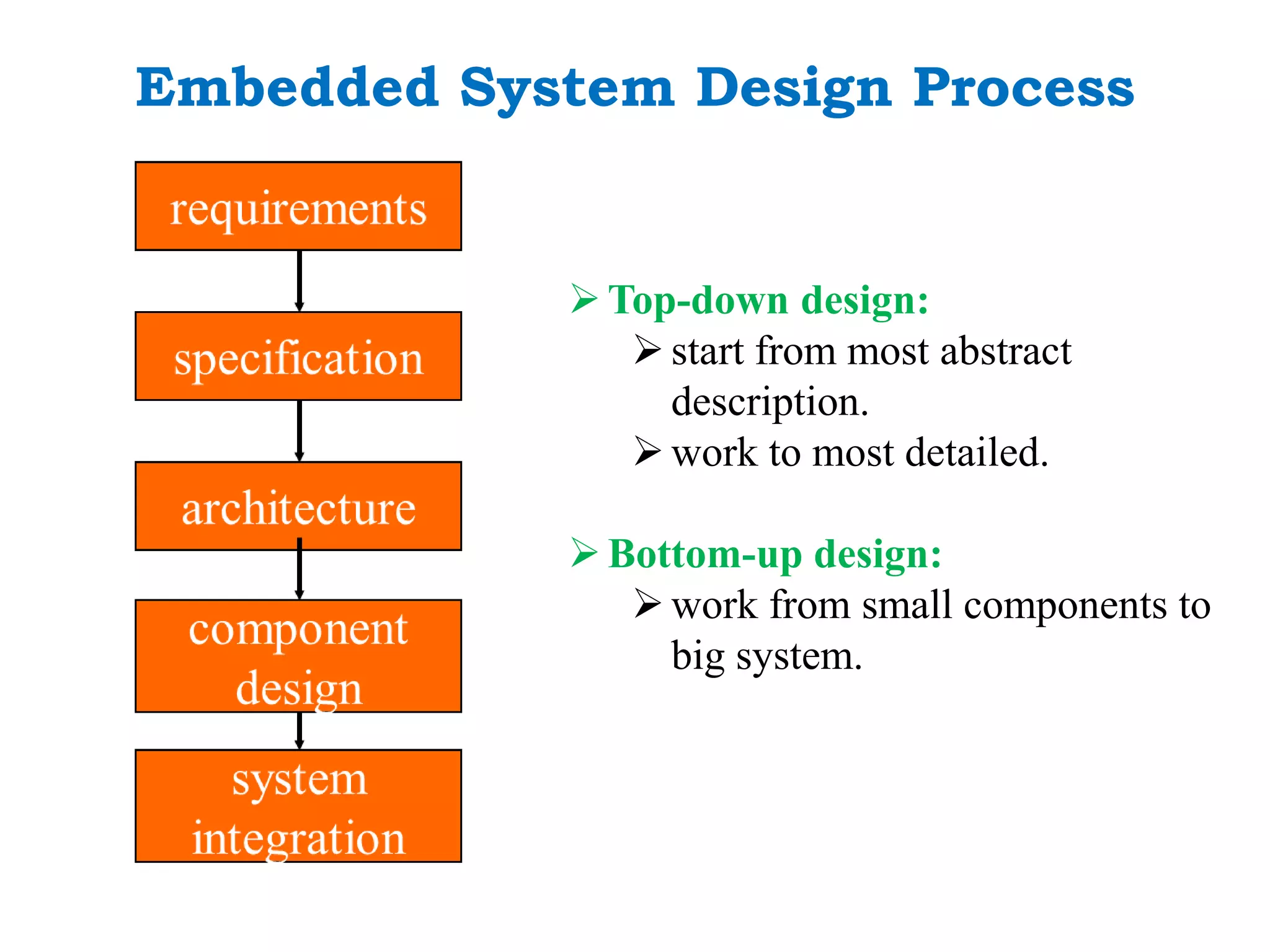
Embedded System DesignProcess
Top-down design:
start from most abstract
description.
work to most detailed.
Bottom-up design:
work from small components to
big system.
5.
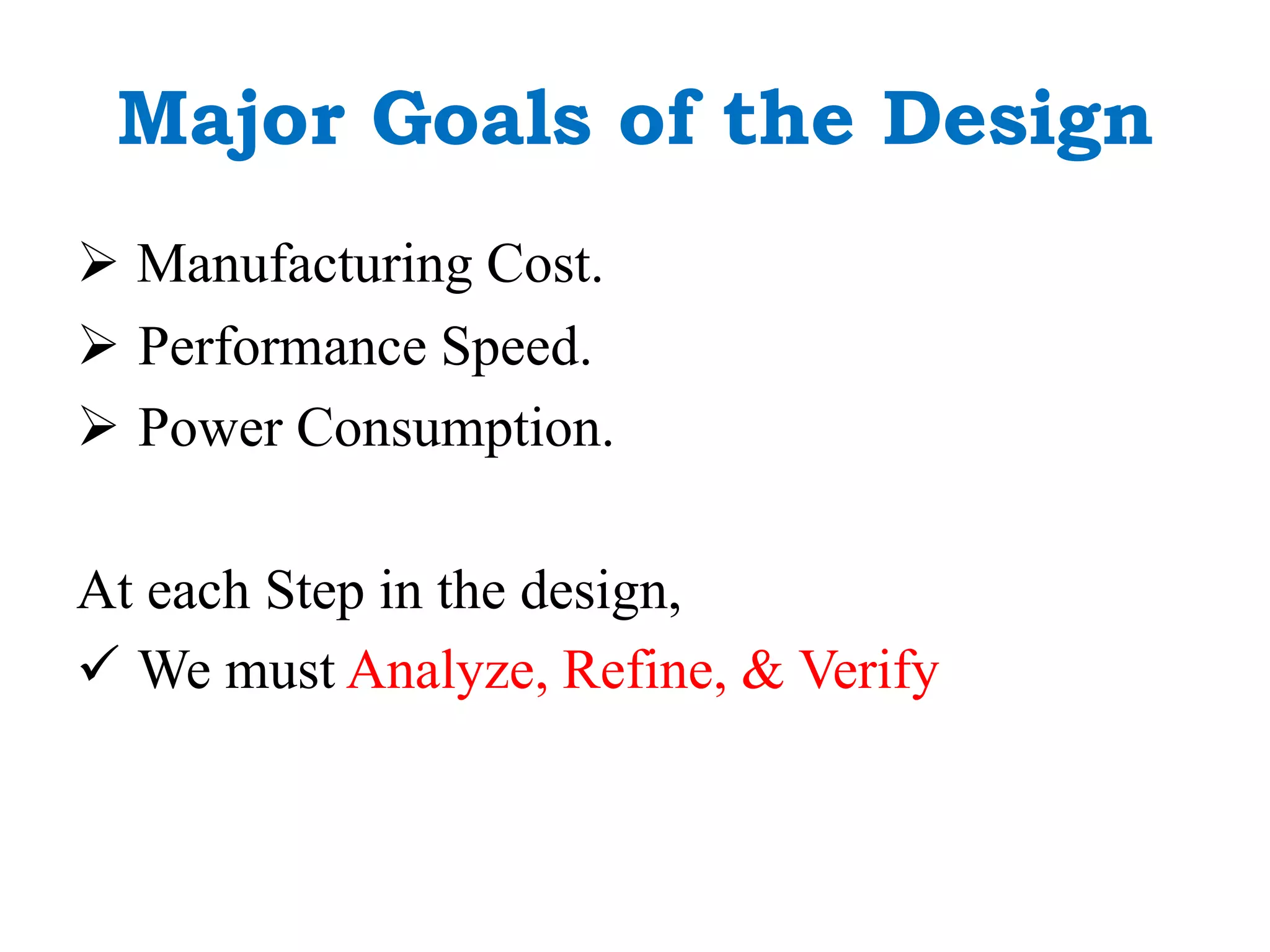
Major Goals ofthe Design
Manufacturing Cost.
Performance Speed.
Power Consumption.
At each Step in the design,
We must Analyze, Refine, & Verify
6.
Requirements
• Before wedesign a system, we must know
what we are designing.
• Plain language description of what the user
wants and expects to get.
• May be developed in several ways:
– talking directly to customers.
– talking to marketing representatives.
– providing prototypes to users for comment.
7.
Requirements
• Functional requirements:
–output as a function of input.
• Non-functional requirements:
– Performance - time required to compute output
– Cost
– size, weight, etc.
– power consumption
– reliability
– etc.
Specification
• It servesas the contract between the customer and the
architects. As such, the specification must be
carefully written so that it accurately reflects the
customer’s requirements and does so in a way that
can be clearly followed during design.
• The specification should be understandable enough
so that someone can verify that it meets system
requirements and overall expectations of the
customer.
10.
Architecture design
• Architectureis the plan for the overall structure
of the system that will be used later to design the
components that make up the architecture.
• Architecture design must give an idea about
– What major components need for satisfying the
specification?
– What hardware components need? like CPUs,
peripherals, etc.
– What Software components need?
– Must take into account functional and non-functional
specifications.
11.
Designing hardware and
softwarecomponents
• The component design effort builds those
components to satisfy architecture and
specification.
• The components will in general include both
hardware - FPGAs, boards and software
modules.
• Some components are ready-made, some can
be modified from existing designs, others must
be designed from scratch (that is new design).
12.
System integration
• Systemintegration is Putting together the components.
– Many bugs appear only at this stage.
• Bugs are typically found during system integration, and good
planning can help us find the bugs quickly.
• System integration is difficult because it usually uncovers
problems. It is often hard to observe in the system, to determine
exactly what is wrong - the debugging facilities for embedded
systems are usually much more limited than what you.
• Inserting appropriate debugging facilities during design can
help ease system integration problems would find on desktop
systems.
13.
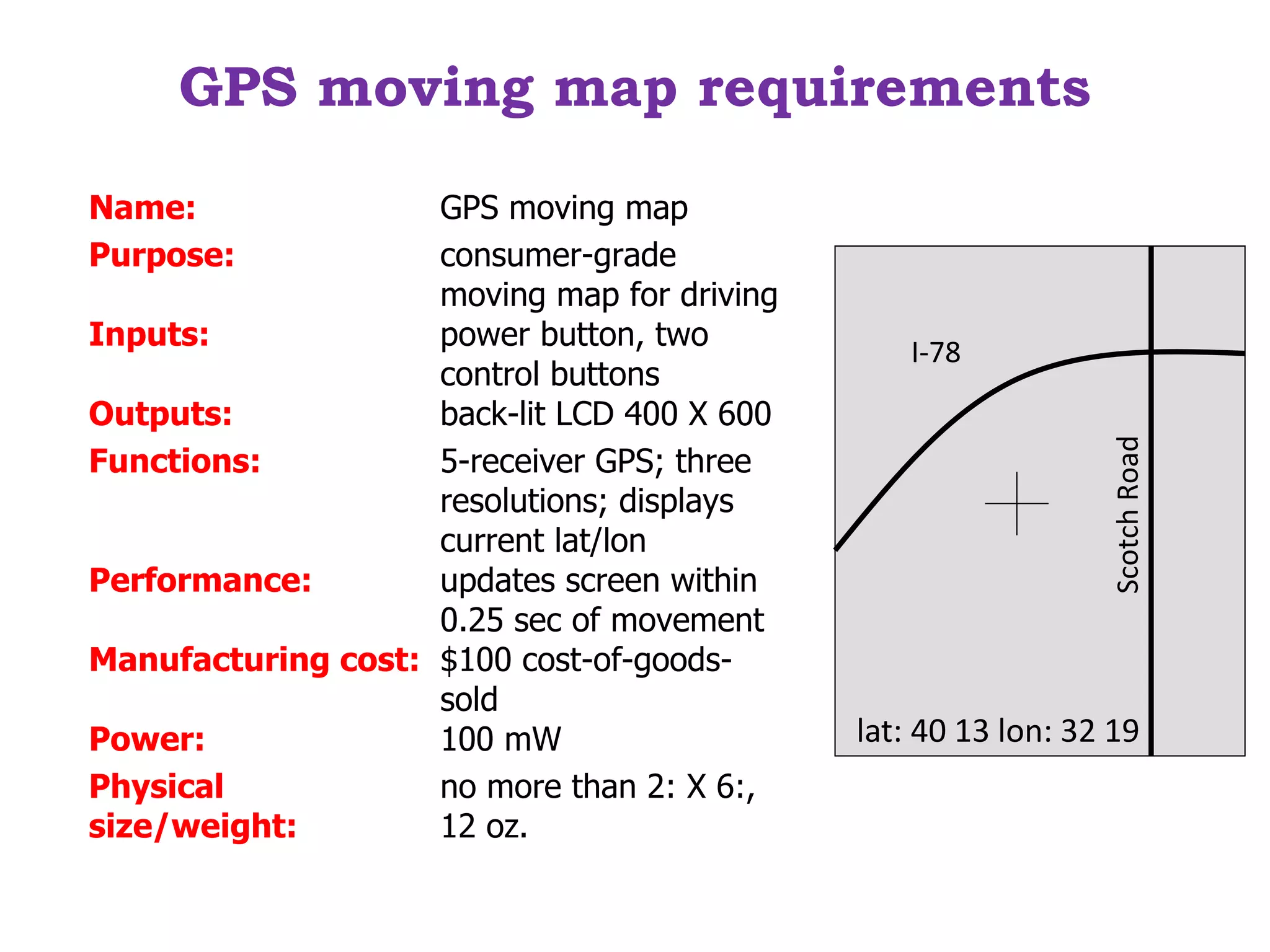
GPS moving maprequirements
Name: GPS moving map
Purpose: consumer-grade
moving map for driving
Inputs: power button, two
control buttons
Outputs: back-lit LCD 400 X 600
Functions: 5-receiver GPS; three
resolutions; displays
current lat/lon
Performance: updates screen within
0.25 sec of movement
Manufacturing cost: $100 cost-of-goods-
sold
Power: 100 mW
Physical
size/weight:
no more than 2: X 6:,
12 oz.
lat: 40 13 lon: 32 19
I-78
Scotch
Road
14.
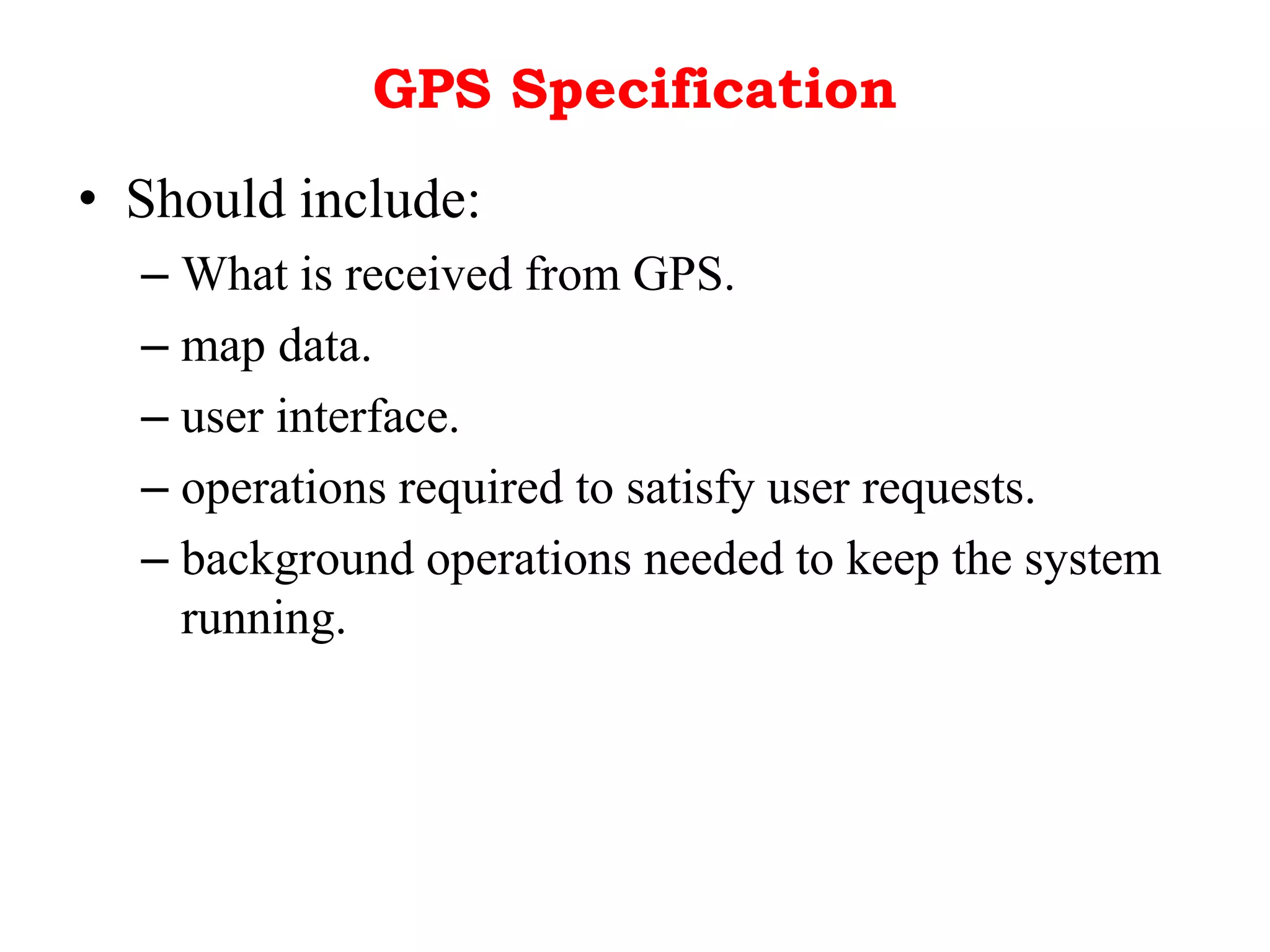
GPS Specification
• Shouldinclude:
– What is received from GPS.
– map data.
– user interface.
– operations required to satisfy user requests.
– background operations needed to keep the system
running.