Explore Your Environment
with an Infrared
Thermometer!
Special thanks to: Spitzer Science Center’s (SSC) Infrared Processing &
Analysis Center (IPAC), California Institute of Technology
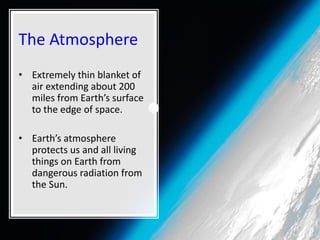
The Atmosphere
• Extremely thin blanket of
air extending about 200
miles from Earth’s surface
to the edge of space.
• Earth’s atmosphere
protects us and all living
things on Earth from
dangerous radiation from
the Sun.
Surface
Temperature
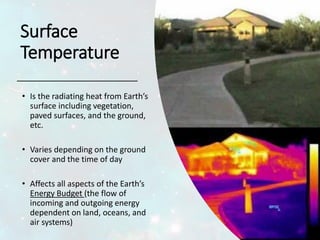
• Is the radiating heat from Earth’s
surface including vegetation,
paved surfaces, and the ground,
etc.
• Varies depending on the ground
cover and the time of day
• Affects all aspects of the Earth’s
Energy Budget (the flow of
incoming and outgoing energy
dependent on land, oceans, and
air systems)
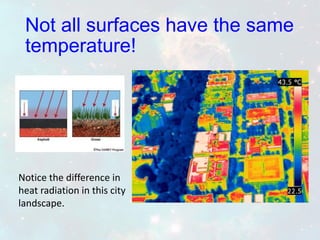
Notice the difference in
heat radiation in this city
landscape.
Not all surfaces have the same
temperature!
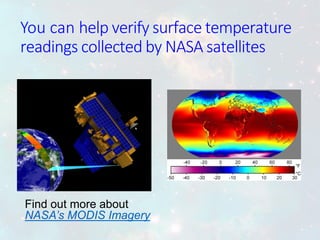
Find out more about
NASA’s MODIS Imagery
You can help verify surface temperature
readings collected by NASA satellites
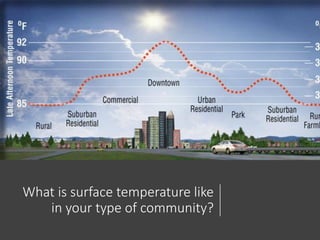
What is surface temperature like
in your type of community?
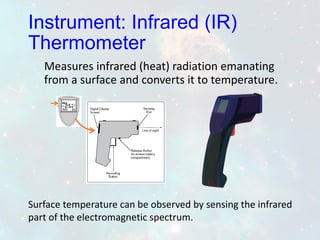
Measures infrared (heat) radiation emanating
from a surface and converts it to temperature.
Surface temperature can be observed by sensing the infrared
part of the electromagnetic spectrum.
Instrument: Infrared (IR)
Thermometer
Collecting Data
Using an Infrared
Thermometer
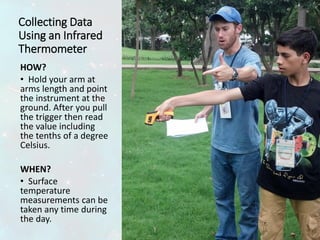
HOW?
• Hold your arm at
arms length and point
the instrument at the
ground. After you pull
the trigger then read
the value including
the tenths of a degree
Celsius.
WHEN?
• Surface
temperature
measurements can be
taken any time during
the day.
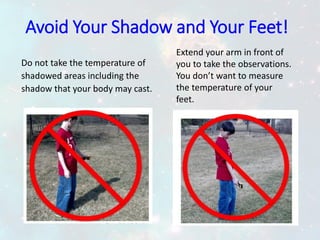
Do not take the temperature of
shadowed areas including the
shadow that your body may cast.
Extend your arm in front of
you to take the observations.
You don’t want to measure
the temperature of your
feet.
.
Avoid Your Shadow and Your Feet!
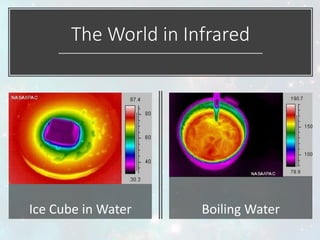
The World in Infrared
Boiling WaterIce Cube in Water
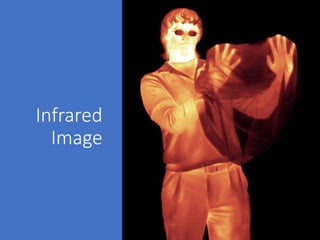
What’s
Under
the
Plastic
Bag?
Infrared
Image
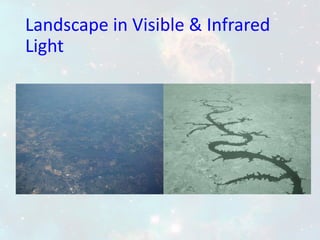
Landscape in Visible & Infrared
Light
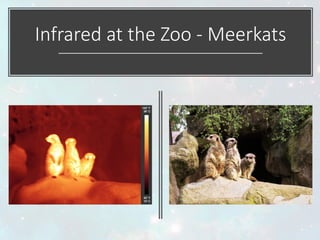
Infrared at the Zoo - Meerkats
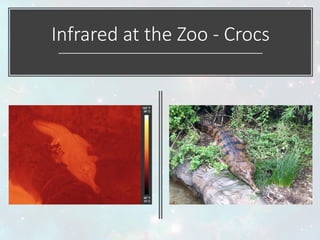
Infrared at the Zoo - Crocs
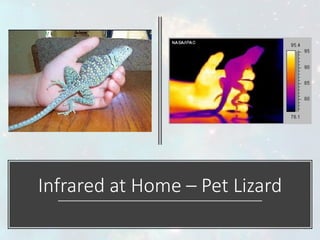
Infrared at Home – Pet Lizard
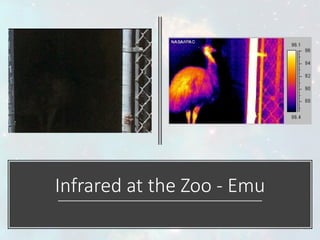
Infrared at the Zoo - Emu
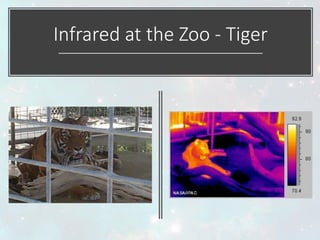
Infrared at the Zoo - Tiger
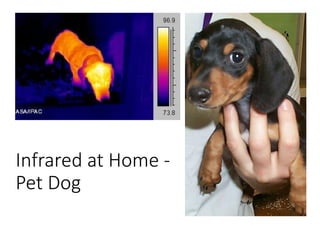
Infrared at Home -
Pet Dog
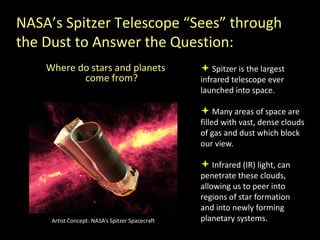
Artist Concept: NASA’s Spitzer Spacecraft
NASA’s Spitzer Telescope “Sees” through
the Dust to Answer the Question:
Where do stars and planets
come from?
 Spitzer is the largest
infrared telescope ever
launched into space.
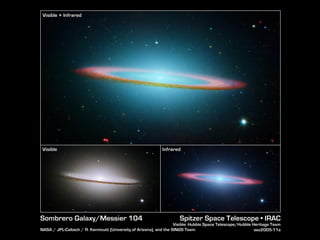
 Many areas of space are
filled with vast, dense clouds
of gas and dust which block
our view.
 Infrared (IR) light, can
penetrate these clouds,
allowing us to peer into
regions of star formation
and into newly forming
planetary systems.
Explore Your Environment with an Infrared Thermometer!

Explore Your Environment with an Infrared Thermometer!

  • 1.
    Explore Your Environment withan Infrared Thermometer! Special thanks to: Spitzer Science Center’s (SSC) Infrared Processing & Analysis Center (IPAC), California Institute of Technology
  • 2.
    The Atmosphere • Extremelythin blanket of air extending about 200 miles from Earth’s surface to the edge of space. • Earth’s atmosphere protects us and all living things on Earth from dangerous radiation from the Sun.
  • 3.
    Surface Temperature • Is theradiating heat from Earth’s surface including vegetation, paved surfaces, and the ground, etc. • Varies depending on the ground cover and the time of day • Affects all aspects of the Earth’s Energy Budget (the flow of incoming and outgoing energy dependent on land, oceans, and air systems)
  • 4.
    Notice the differencein heat radiation in this city landscape. Not all surfaces have the same temperature!
  • 5.
    Find out moreabout NASA’s MODIS Imagery You can help verify surface temperature readings collected by NASA satellites
  • 6.
    What is surfacetemperature like in your type of community?
  • 7.
    Measures infrared (heat)radiation emanating from a surface and converts it to temperature. Surface temperature can be observed by sensing the infrared part of the electromagnetic spectrum. Instrument: Infrared (IR) Thermometer
  • 8.
    Collecting Data Using anInfrared Thermometer HOW? • Hold your arm at arms length and point the instrument at the ground. After you pull the trigger then read the value including the tenths of a degree Celsius. WHEN? • Surface temperature measurements can be taken any time during the day.
  • 9.
    Do not takethe temperature of shadowed areas including the shadow that your body may cast. Extend your arm in front of you to take the observations. You don’t want to measure the temperature of your feet. . Avoid Your Shadow and Your Feet!
  • 10.
    The World inInfrared Boiling WaterIce Cube in Water
  • 11.
  • 12.
  • 13.
    Landscape in Visible& Infrared Light
  • 14.
    Infrared at theZoo - Meerkats
  • 15.
    Infrared at theZoo - Crocs
  • 16.
    Infrared at Home– Pet Lizard
  • 17.
    Infrared at theZoo - Emu
  • 18.
    Infrared at theZoo - Tiger
  • 19.
  • 20.
    Artist Concept: NASA’sSpitzer Spacecraft NASA’s Spitzer Telescope “Sees” through the Dust to Answer the Question: Where do stars and planets come from?  Spitzer is the largest infrared telescope ever launched into space.  Many areas of space are filled with vast, dense clouds of gas and dust which block our view.  Infrared (IR) light, can penetrate these clouds, allowing us to peer into regions of star formation and into newly forming planetary systems.