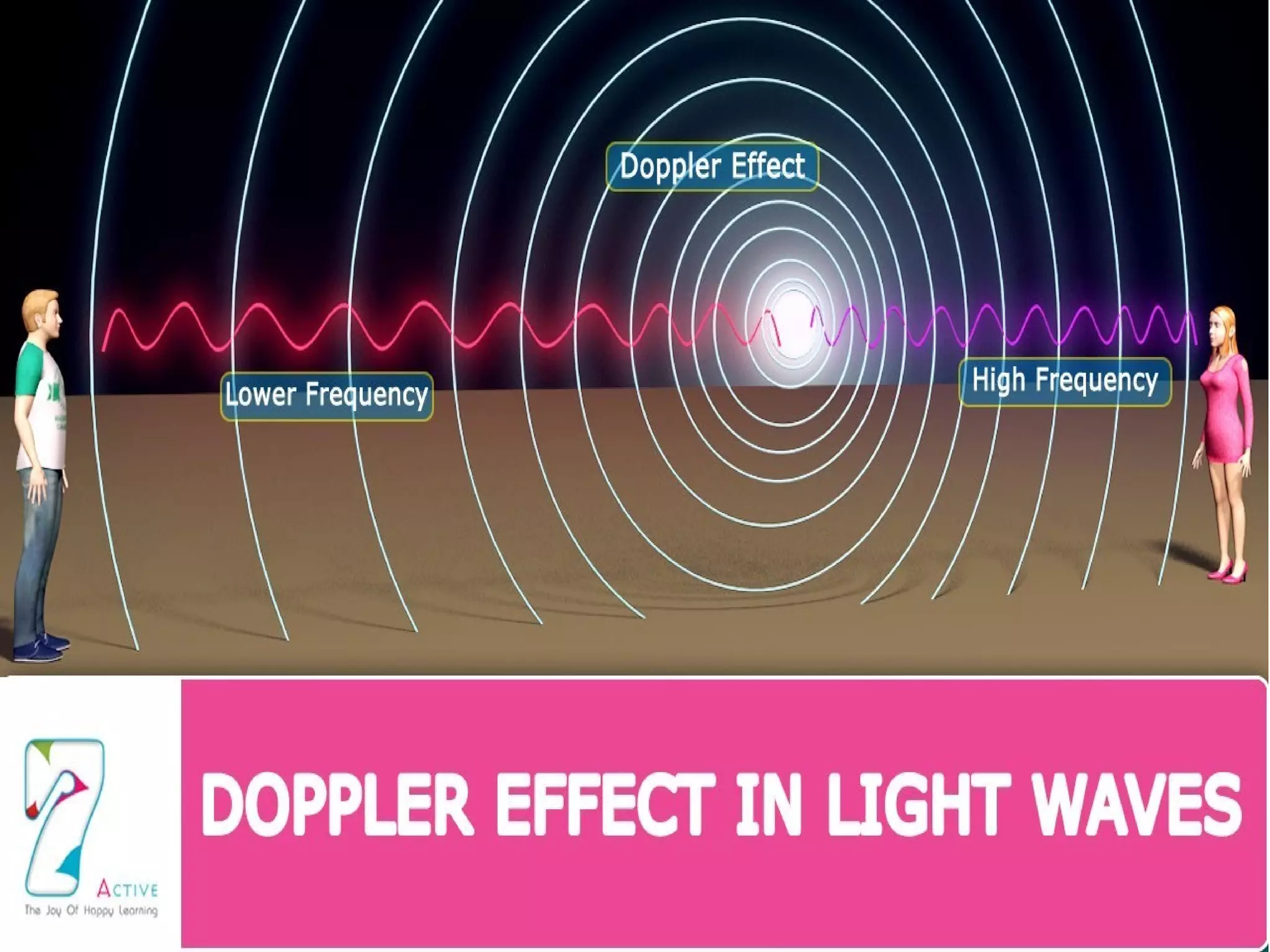
DOPPLER EFFECT/SHIFT
Doppler shift
 Allows astronomers to measure the direction
of movement of stars and galaxies in relation
to Earth.
 
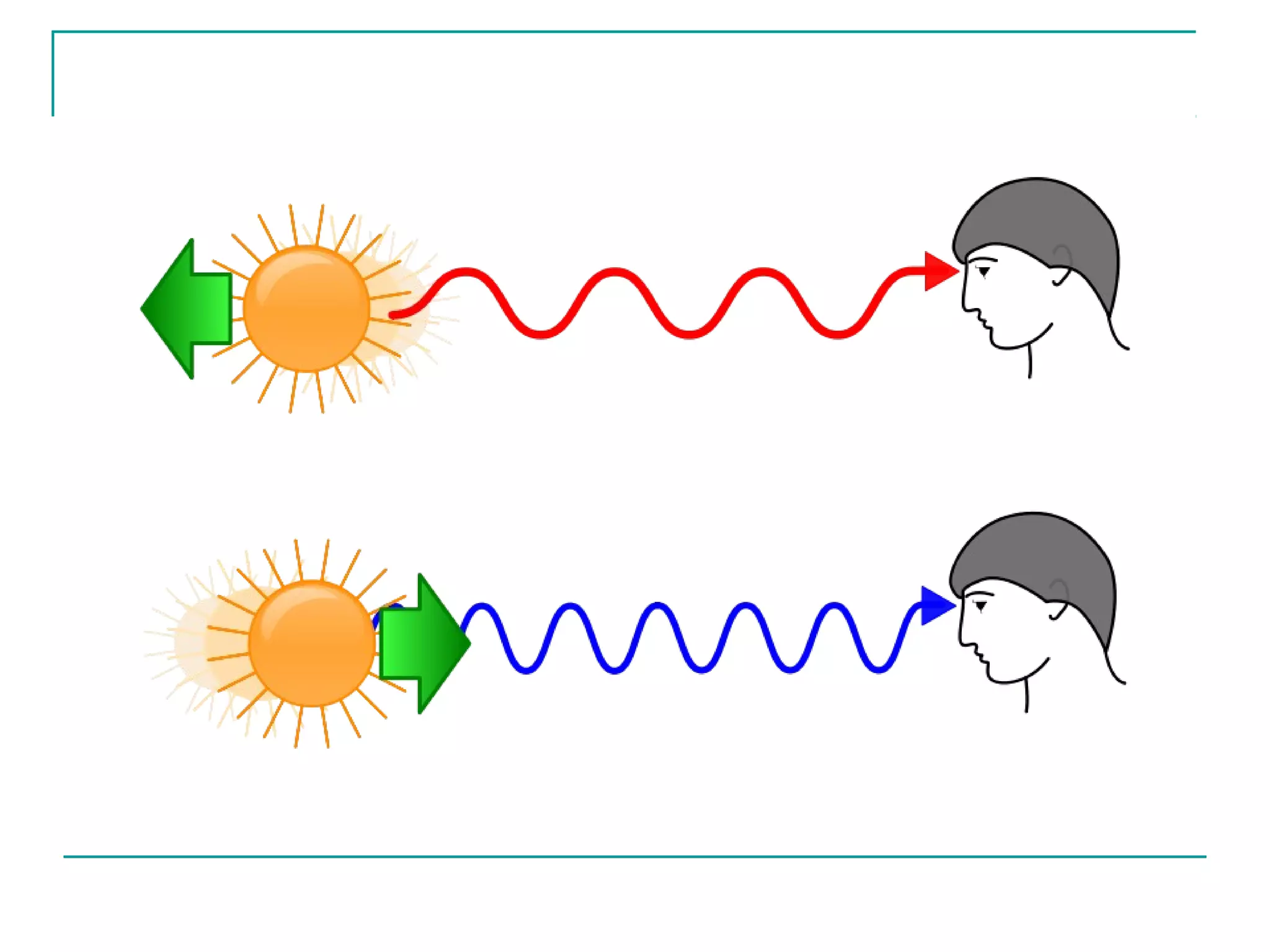
1 No shift in the
spectral lines: The
galaxy is at rest
 
2 A shift toward the
red: The galaxy is
moving away.
 
3 A shift toward the
blue: The galaxy is
approaching Earth.
And…..
the images from the different
types of telescopes look very
different!
The images look very different
Ultraviolet
Infrared
NGC1512
barred spiral
galaxy
HST images
The images look very different
M87 giant elliptical galaxy in Virgo cluster
The images look very different
red=xray
green=optical
blue=UV
30 Doradus
Open cluster
in LMC
Spectrographs
 We don’t always want to make an image
 Sometimes, we want to split the light into its
spectrum
 We use spectrographs for this
Spectrographs
 There are two basic types of spectrographs
 Prisms
 Gratings
 Combining the two, we get Grisms
Prisms
Prisms
 Prisms work because light of different
wavelengths takes a slightly different path
 Comes out at a different place, and is thus
spread out
Gratings
Gratings
 Gratings are made up of hundreds or
thousands of tiny grooves
 They use a phenomenon of light known as
diffraction to split the light

Doppler shift

  • 1.
  • 2.
    Doppler shift  Allowsastronomers to measure the direction of movement of stars and galaxies in relation to Earth.
  • 4.
      1 No shiftin the spectral lines: The galaxy is at rest   2 A shift toward the red: The galaxy is moving away.   3 A shift toward the blue: The galaxy is approaching Earth.
  • 6.
    And….. the images fromthe different types of telescopes look very different!
  • 7.
    The images lookvery different Ultraviolet Infrared NGC1512 barred spiral galaxy HST images
  • 8.
    The images lookvery different M87 giant elliptical galaxy in Virgo cluster
  • 9.
    The images lookvery different red=xray green=optical blue=UV 30 Doradus Open cluster in LMC
  • 10.
    Spectrographs  We don’talways want to make an image  Sometimes, we want to split the light into its spectrum  We use spectrographs for this
  • 11.
    Spectrographs  There aretwo basic types of spectrographs  Prisms  Gratings  Combining the two, we get Grisms
  • 12.
  • 13.
    Prisms  Prisms workbecause light of different wavelengths takes a slightly different path  Comes out at a different place, and is thus spread out
  • 14.
  • 15.
    Gratings  Gratings aremade up of hundreds or thousands of tiny grooves  They use a phenomenon of light known as diffraction to split the light