NAPHTHA PRODUCTION
Menon karthik suresh – B130430CH
Midatana Ramu – B130326ch
Azaan Nazer - B130035CH
Department of Chemical Engineering
NIT Calicut
RAWMATERIALS :
Crude oil
PROPERTIES:
•MOLECULAR WEIGHT -- 100-215 G/MOL
•DENSITY -- 750-785 KG/M3
•BOILING POINT -- 160–220 °C (320–428 °F)
•VAPOUR PRESSURE -- LESS THAN 666 PA
Process Description :
Petroleum naphtha is an
intermediate hydrocarbon liquid stream
derived from the refining of crude oil. It
is most usually desulfurized and
then catalytically reformed, which re-
arranges or re-structures
the hydrocarbon molecules in the
naphtha.
REMOVAL OF SULFUR COMPOUNDS:
Most uses of petroleum refinery naphtha
requires the removal of sulfur compounds
down to very low levels (a few parts per
million or less). That is usually accomplished in
a catalytic chemical process called hydro
desulfurization which converts the sulfur
compounds into gaseous hydrogen sulfide that is
then removed from the naphtha by distillation.
The hydrogen sulfide gas is subsequently
captured in amine gas treating units and
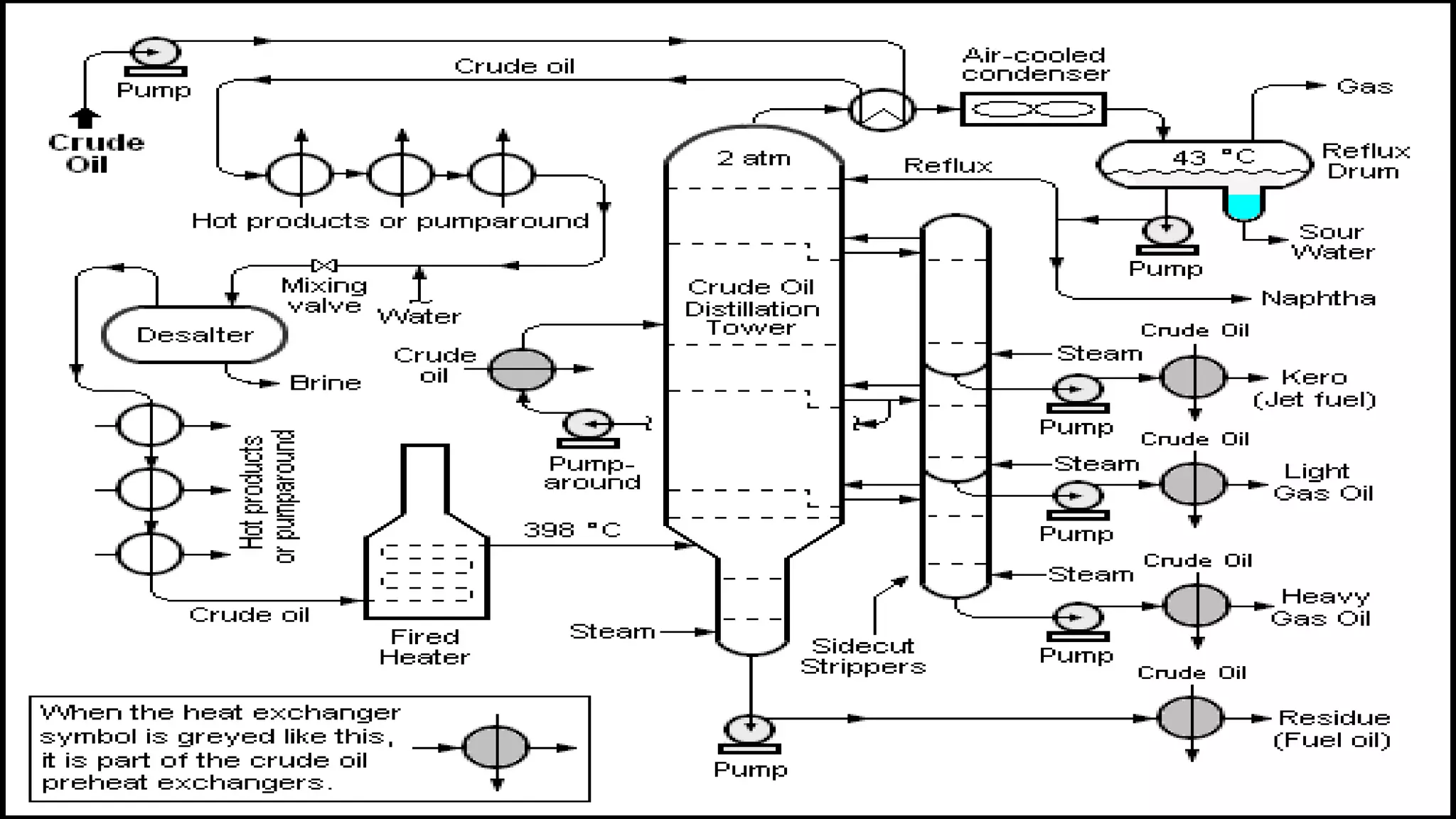
The first unit process in a petroleum refinery
is the crude oil distillation unit. The overhead
liquid distillate from that unit is
called virgin or straight-run naphtha and that
distillate is the largest source of naphtha in
most petroleum refineries. The naphtha is a
mixture of very many different hydrocarbon
compounds. It has an initial boiling point (IBP)
of about 35 °C and a final boiling point (FBP)
of about 200 °C, and it
contains paraffin, naphthene and aromatic hydro
The virgin naphtha is often further distilled into two streams:
A virgin light naphtha with an IBP of about
30 °C and a FBP of about 145 °C containing
most (but not all) of the hydrocarbons with 6
or less carbon atoms
A virgin heavy naphtha containing most (but
not all) of the hydrocarbons with more than 6
carbon atoms. The heavy naphtha has an
IBP of about 140 °C and a FBP of about
205 °C.
APPLICATIONS:
Industrial solvents and cleaning fluids
A commonly available general purpose solvent
designated as "VM&P" naphtha, which stands for
"varnish makers' and painters'“.
An ingredient in shoe polish
A fuel for portable stoves and lanterns, sold in North
America as White gas, camp fuel or Coleman fuel
A fuel for fire spinning, fire juggling, or other fire
performance equipment which creates a brighter and
cleaner yet shorter burn.
To lightly wear the finish (polish) off guitars when

Naphtha

  • 1.
    NAPHTHA PRODUCTION Menon karthiksuresh – B130430CH Midatana Ramu – B130326ch Azaan Nazer - B130035CH Department of Chemical Engineering NIT Calicut
  • 2.
  • 3.
    PROPERTIES: •MOLECULAR WEIGHT --100-215 G/MOL •DENSITY -- 750-785 KG/M3 •BOILING POINT -- 160–220 °C (320–428 °F) •VAPOUR PRESSURE -- LESS THAN 666 PA
  • 5.
    Process Description : Petroleumnaphtha is an intermediate hydrocarbon liquid stream derived from the refining of crude oil. It is most usually desulfurized and then catalytically reformed, which re- arranges or re-structures the hydrocarbon molecules in the naphtha.
  • 6.
    REMOVAL OF SULFURCOMPOUNDS: Most uses of petroleum refinery naphtha requires the removal of sulfur compounds down to very low levels (a few parts per million or less). That is usually accomplished in a catalytic chemical process called hydro desulfurization which converts the sulfur compounds into gaseous hydrogen sulfide that is then removed from the naphtha by distillation. The hydrogen sulfide gas is subsequently captured in amine gas treating units and
  • 7.
    The first unitprocess in a petroleum refinery is the crude oil distillation unit. The overhead liquid distillate from that unit is called virgin or straight-run naphtha and that distillate is the largest source of naphtha in most petroleum refineries. The naphtha is a mixture of very many different hydrocarbon compounds. It has an initial boiling point (IBP) of about 35 °C and a final boiling point (FBP) of about 200 °C, and it contains paraffin, naphthene and aromatic hydro
  • 8.
    The virgin naphthais often further distilled into two streams: A virgin light naphtha with an IBP of about 30 °C and a FBP of about 145 °C containing most (but not all) of the hydrocarbons with 6 or less carbon atoms A virgin heavy naphtha containing most (but not all) of the hydrocarbons with more than 6 carbon atoms. The heavy naphtha has an IBP of about 140 °C and a FBP of about 205 °C.
  • 9.
    APPLICATIONS: Industrial solvents andcleaning fluids A commonly available general purpose solvent designated as "VM&P" naphtha, which stands for "varnish makers' and painters'“. An ingredient in shoe polish A fuel for portable stoves and lanterns, sold in North America as White gas, camp fuel or Coleman fuel A fuel for fire spinning, fire juggling, or other fire performance equipment which creates a brighter and cleaner yet shorter burn. To lightly wear the finish (polish) off guitars when