Dr Mohammad Alhalabi M.D.
Marantic Endocarditis
Department of Cardiology, Faculty of Medicine, Damascus University
Outline
Overview
Definition, Classification, Pathophysiology, Etiology
01
Presentation
Signs & Symptoms, Evaluation & Workup
02
Diagnosis
Diagnostic Strategy, Differential Diagnoses
03
Treatment
Medical, Surgical, Causal, Prognostic
04
Endocardium
• Inner layer of the
cardiac wall and
covers the inner
surface of the
cardiac chambers
• The superficial
surface of the
cardiac valves
Endocardium
Histology
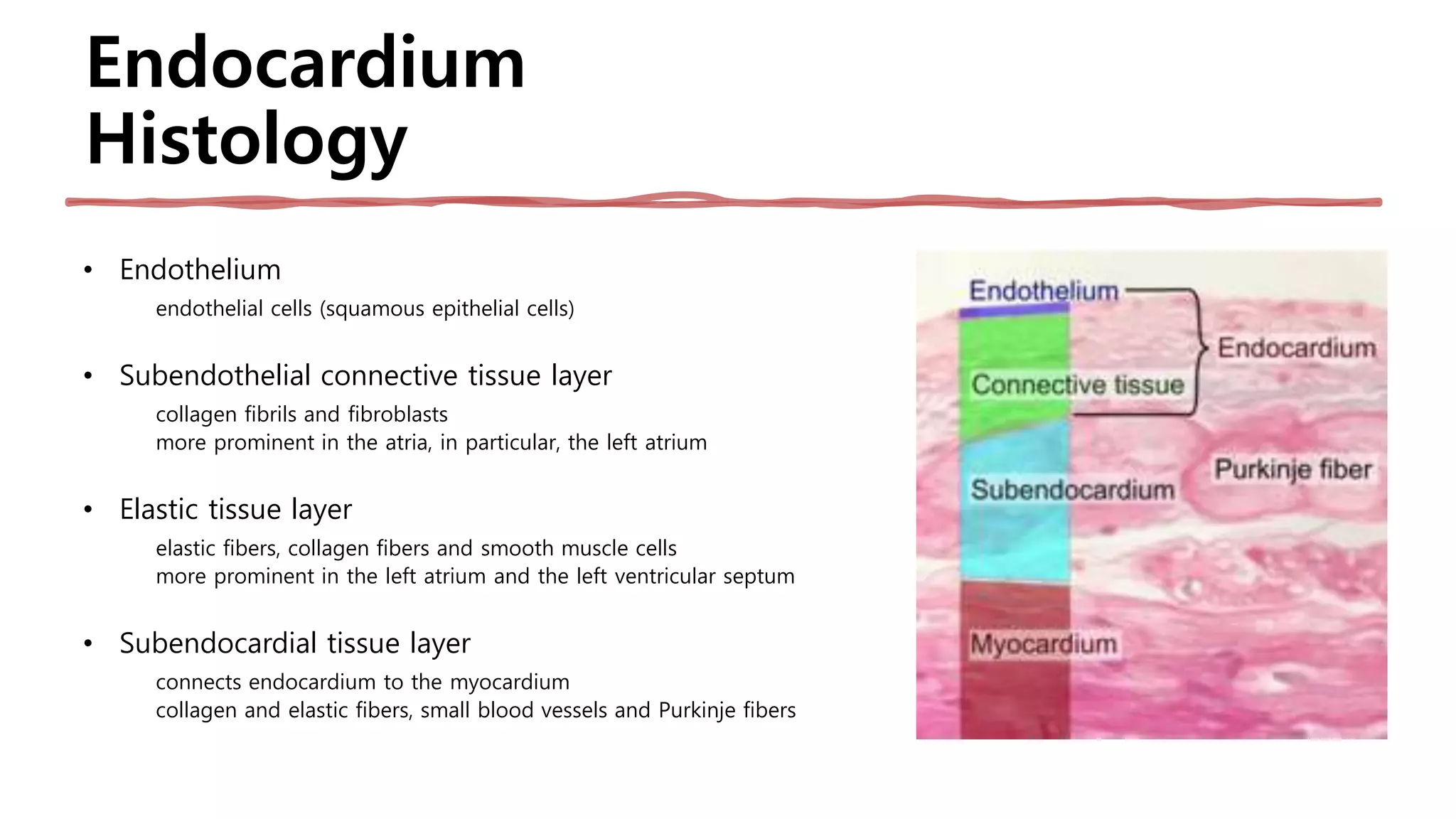
• Endothelium
endothelial cells (squamous epithelial cells)
• Subendothelial connective tissue layer
collagen fibrils and fibroblasts
more prominent in the atria, in particular, the left atrium
• Elastic tissue layer
elastic fibers, collagen fibers and smooth muscle cells
more prominent in the left atrium and the left ventricular septum
• Subendocardial tissue layer
connects endocardium to the myocardium
collagen and elastic fibers, small blood vessels and Purkinje fibers
Endocarditi
s
Inflammation of the
endocardial surfaces of the
heart
Endocarditis
▹ Primarily of 1 or more heart
valves
▹ The mural endocardium
▹ A septal defect
Inflammation of the endocardial
surfaces of the heart
Endocarditis
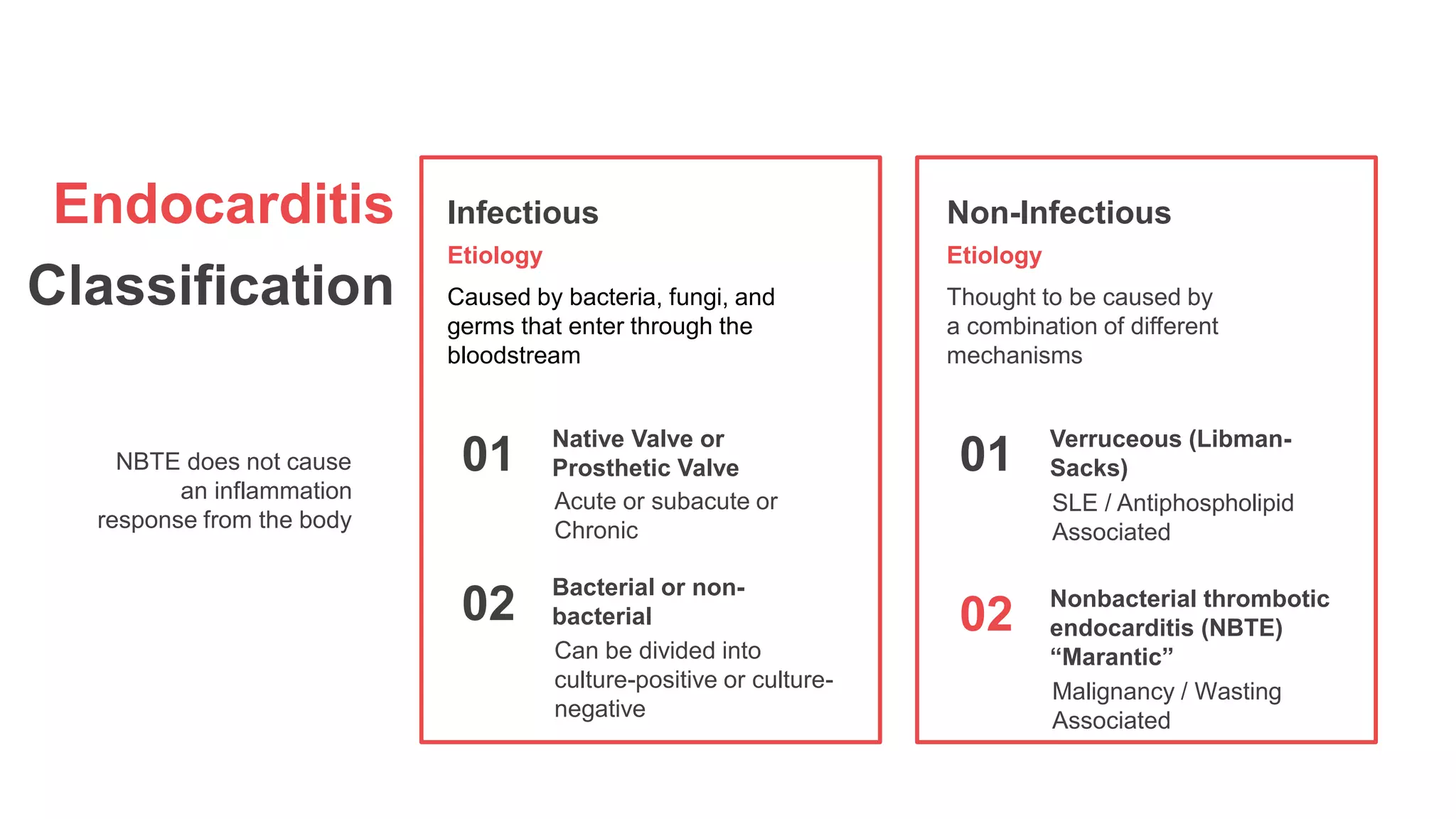
Classification
NBTE does not cause
an inflammation
response from the body
Infectious
Etiology
Caused by bacteria, fungi, and
germs that enter through the
bloodstream
Non-Infectious
Etiology
Thought to be caused by
a combination of different
mechanisms
01
Acute or subacute or
Chronic
Native Valve or
Prosthetic Valve
02
Can be divided into
culture-positive or culture-
negative
Bacterial or non-
bacterial
01
SLE / Antiphospholipid
Associated
Verruceous (Libman-
Sacks)
02
Malignancy / Wasting
Associated
Nonbacterial thrombotic
endocarditis (NBTE)
“Marantic”
• Commonly affects undamaged valves (in contrast with infective
endocarditis)
• A separate entity to culture-negative endocarditis which is due to
infectious etiologies that are not readily identified
• Pathogenesis is unknown, but thought to be endothelial injury in the
setting of a hypercoagulable state
Deposition of sterile platelet thrombi on heart valves
(mostly aortic and mitral)
Marantic
Endocarditis
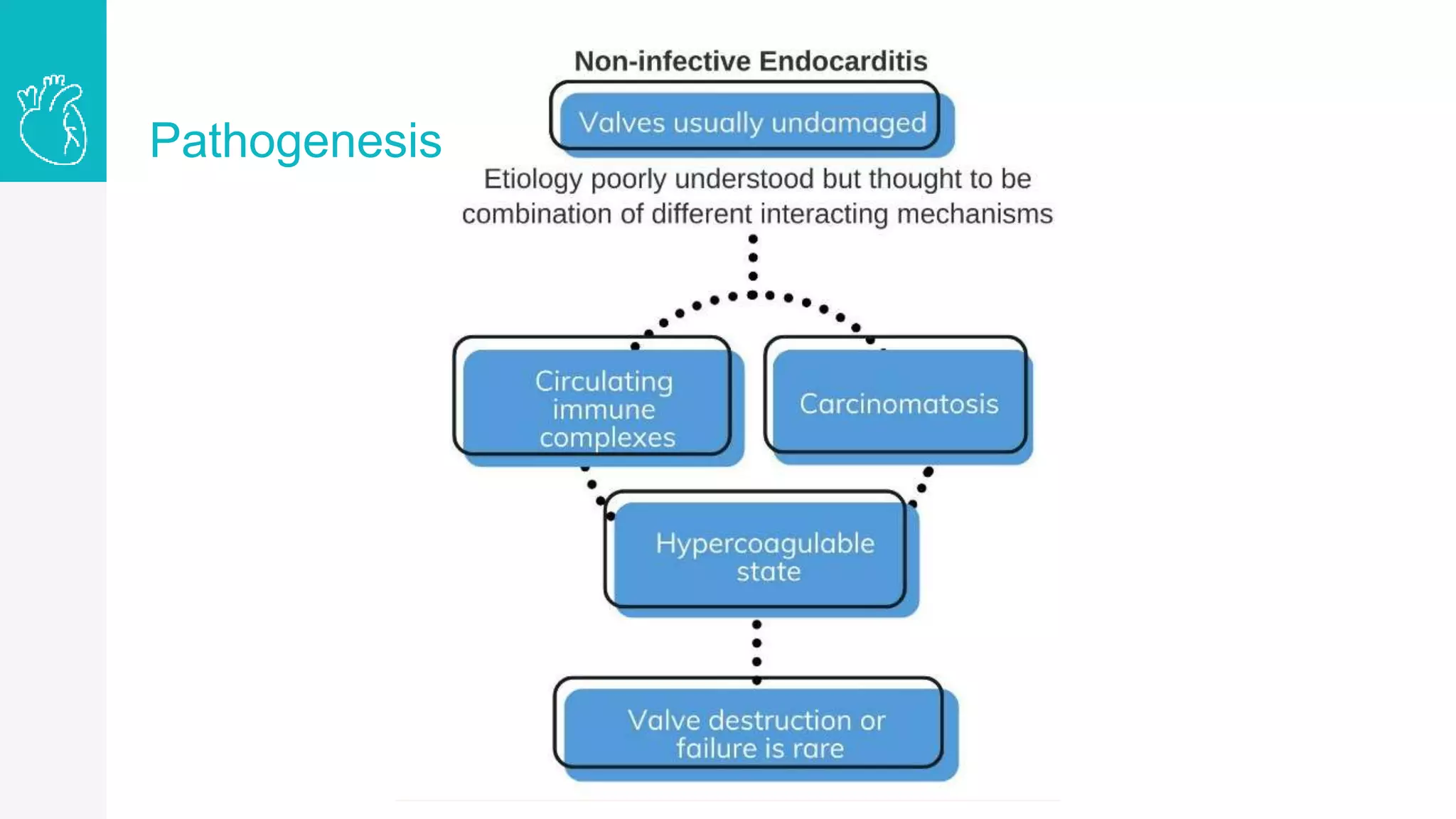
Pathogenesis
A form of noninfectious
endocarditis. a spectrum of
noninfectious lesions of the
heart valves that is most
commonly seen in advanced
malignancy
Nonbacterial thrombotic
endocarditis (NBTE)
Marantic Endocarditis Pathogenesis
Presentation
Cancer is spread
widely throughout
the body
Carcinomatosis
Wasting,
disseminated
intravascular
coagulation,
Hypercoagulable
State
But can occur in
patients with
valvular
pathology
Valve usually
undamaged
Valve Dysfunction
is rare
Systemic
Embolism
Marantic Endocarditis Characteristics
• A rare condition most often found postmortem with rates from 0.9
to 1.6 percent
• Up to 2.7% to 10% in adenocarcinomas and mucin-secreting
carcinomas, most commonly affects patients between the fourth
and eighth decades of life
• No gender predilection
• Libman-Sacks endocarditis could span up to 43% under TEE in
patients with SLE
Marantic Endocarditis Characteristics
Pathogenesis
How can we differentiate NBTE from IE?
• No pathognomonic
signs/symptoms or echo features
that are specific to NBTE
• Diagnosis can only be
differentiated with demonstration of
platelet thrombi on histologic exam
• High clinical suspicion is required
for diagnosis!
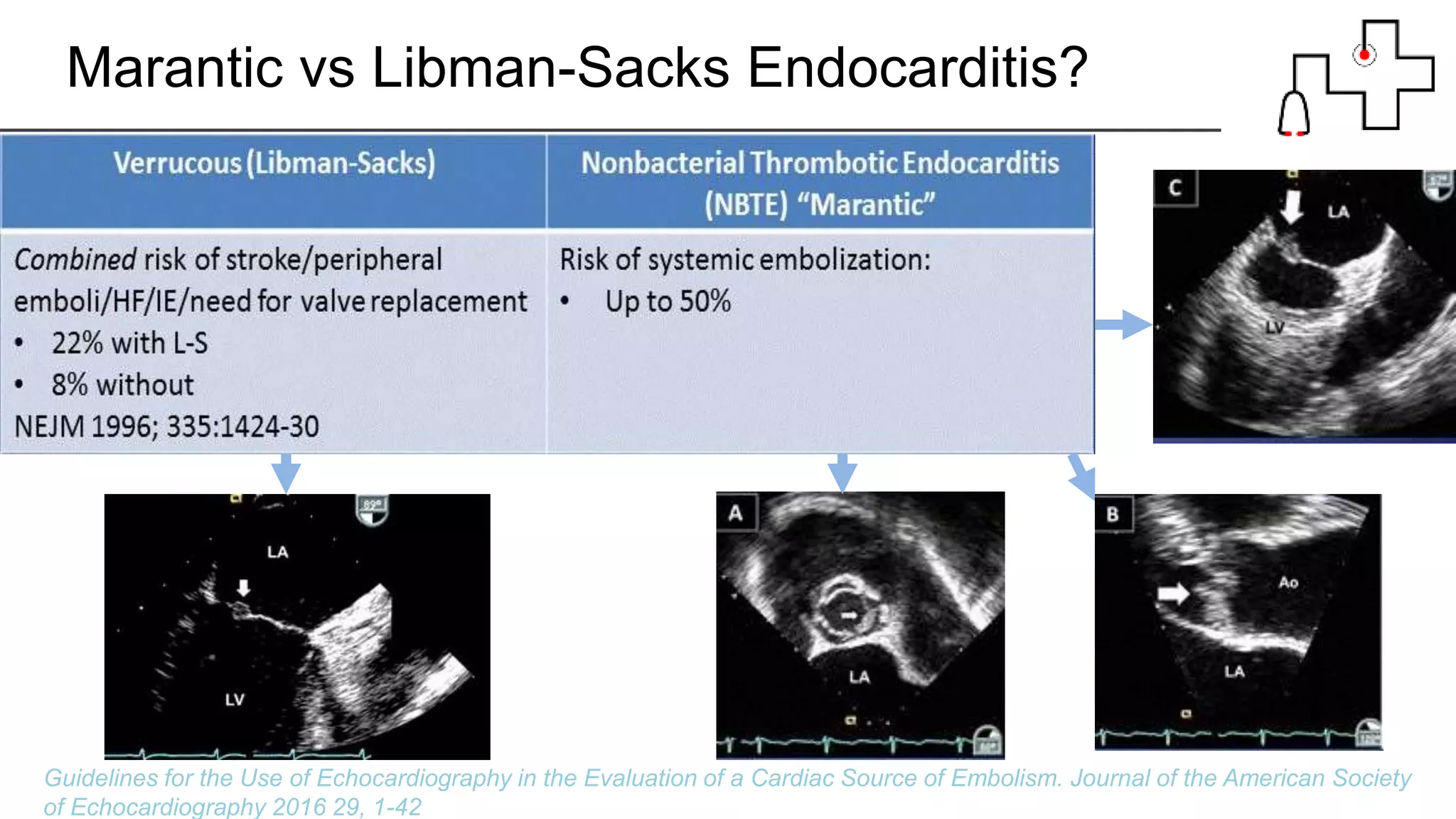
Marantic vs Libman-Sacks Endocarditis?
Guidelines for the Use of Echocardiography in the Evaluation of a Cardiac Source of Embolism. Journal of
the American Society of Echocardiography 2016 29, 1-42
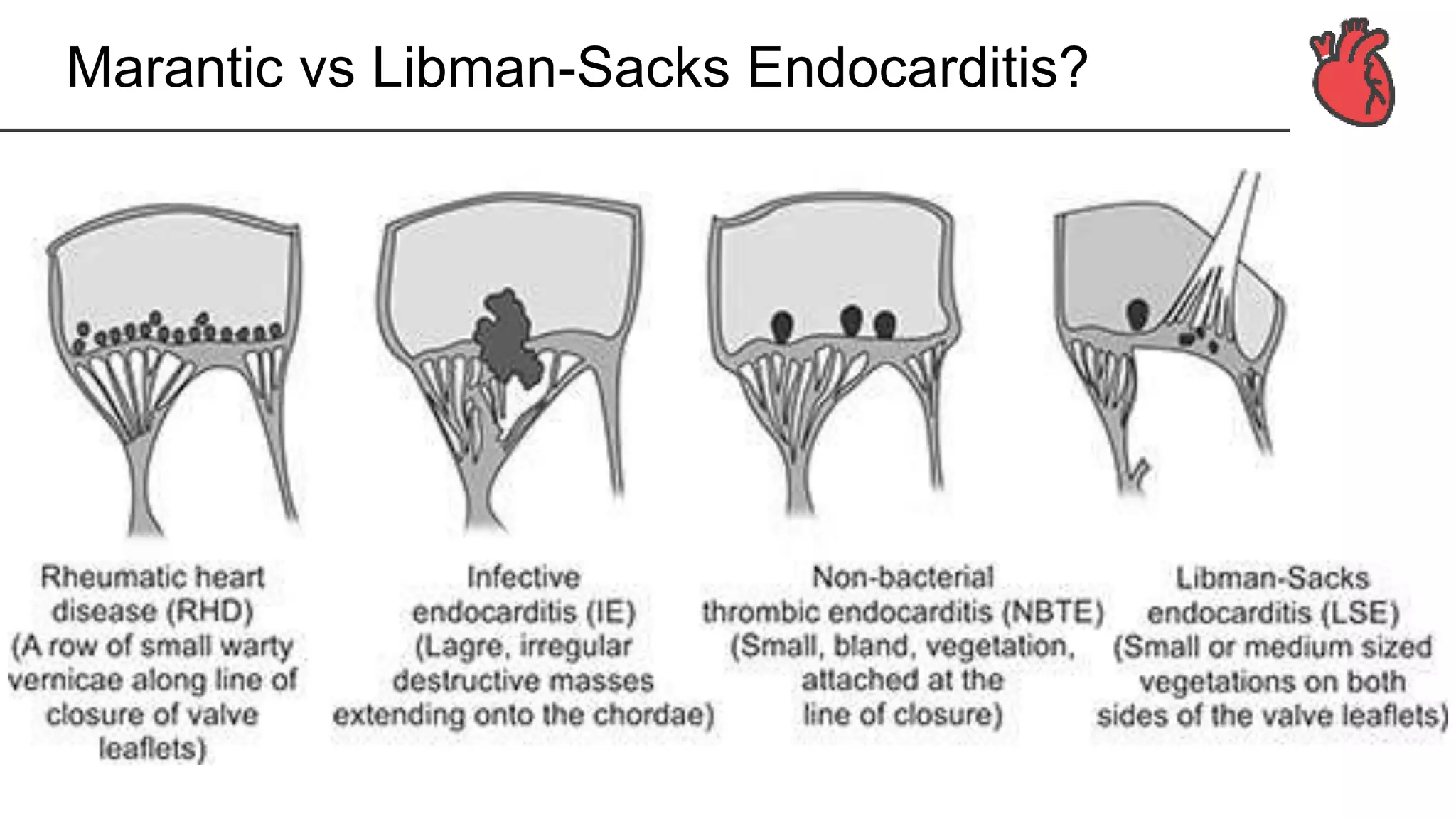
Marantic vs Libman-Sacks Endocarditis?
Guidelines for the Use of Echocardiography in the Evaluation of a Cardiac Source of Embolism. Journal of the American Society
of Echocardiography 2016 29, 1-42
Marantic vs Libman-Sacks Endocarditis?
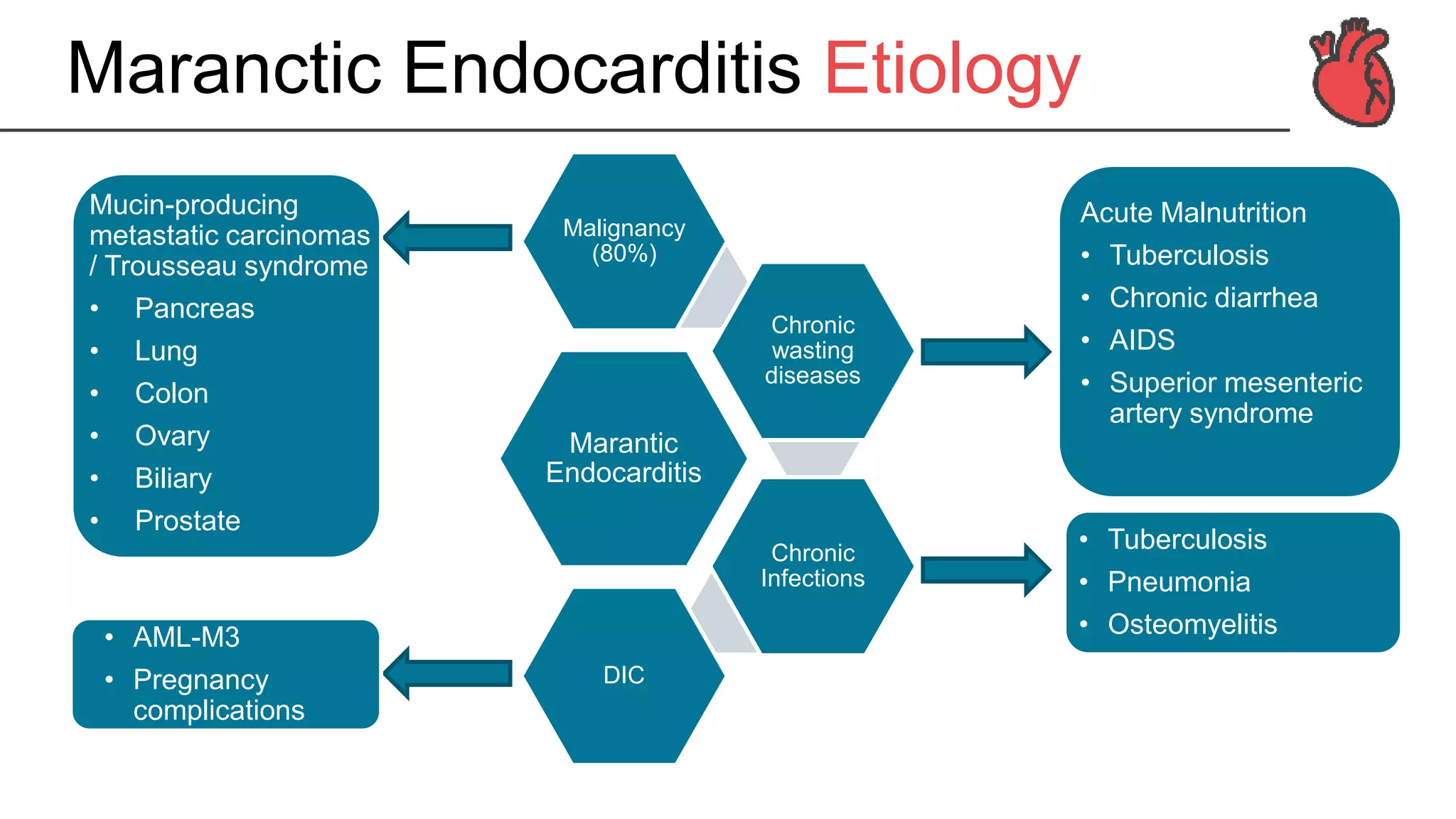
Maranctic Endocarditis Etiology
Marantic
Endocarditis
Malignancy
(80%)
Chronic
wasting
diseases
Chronic
Infections
DIC
• Tuberculosis
• Pneumonia
• Osteomyelitis
Mucin-producing
metastatic carcinomas
/ Trousseau syndrome
• Pancreas
• Lung
• Colon
• Ovary
• Biliary
• Prostate
• AML-M3
• Pregnancy
complications
Acute Malnutrition
• Tuberculosis
• Chronic diarrhea
• AIDS
• Superior mesenteric
artery syndrome
Maranctic Endocarditis Etiology
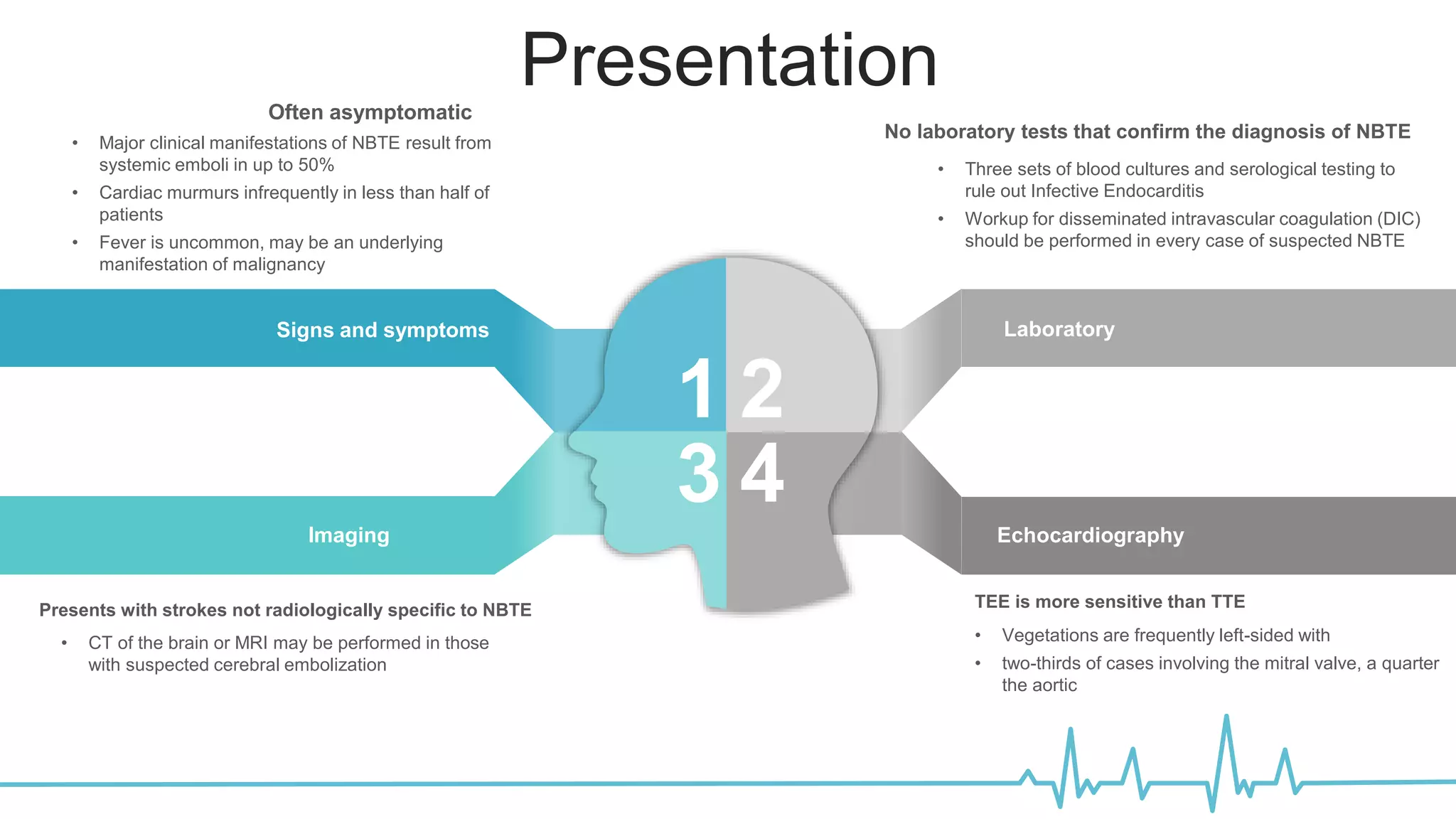
Presentation
Imaging
Signs and symptoms
Echocardiography
1 2
3 4
• Vegetations are frequently left-sided with
• two-thirds of cases involving the mitral valve, a quarter
the aortic
TEE is more sensitive than TTE
• Three sets of blood cultures and serological testing to
rule out Infective Endocarditis
• Workup for disseminated intravascular coagulation (DIC)
should be performed in every case of suspected NBTE
No laboratory tests that confirm the diagnosis of NBTE
• CT of the brain or MRI may be performed in those
with suspected cerebral embolization
Presents with strokes not radiologically specific to NBTE
• Major clinical manifestations of NBTE result from
systemic emboli in up to 50%
• Cardiac murmurs infrequently in less than half of
patients
• Fever is uncommon, may be an underlying
manifestation of malignancy
Often asymptomatic
Laboratory
Diagnosis
Gold Standard
• Made pathologically by
demonstration of thrombi
on autopsy or specimens
• Routine acquisition of
valvular tissue is not
practical
Clinical Diagnosis
• A constellation of clinical,
echocardiographic, and
absence of microbiologic
findings
• Demonstration of valvular
vegetations on
echocardiography in the
absence of systemic
infection in patients who
are at high risk
Diagnostic Challenges
Diagnosis of
NBTE is
difficult to
establish
antemortem
• Paucity of
symptoms
• Late
presentation
Fever due to
the
underlying
malignancy
can lower
the clinical
suspicion for
NBTE
Small
remnants on
affected
valves
(≤3 mm)
following
embolization
not readily
identified by
echocardiogr
aphy
False
negatives
The Mitral valve revealing thickened leaflets
3D TEE PLAX
Transoesophageal echocardiography short axis
showing the thickening in motion
3D TEE PSAX Mitral
Transoesophageal echocardiography showing large
oscillating structures in long axis
3D TEE PLAX
The aortic valve revealing severely thickened cusps
3D TEE PSAX Aortic
Treatment
Outline
Anticoagulation
Mainstay Treatment
Surgery
Indications in Select
Cases
Underlying Cause
Effective Systemic
Therapy
Followup & Prognosis
Monitoring &
Complications
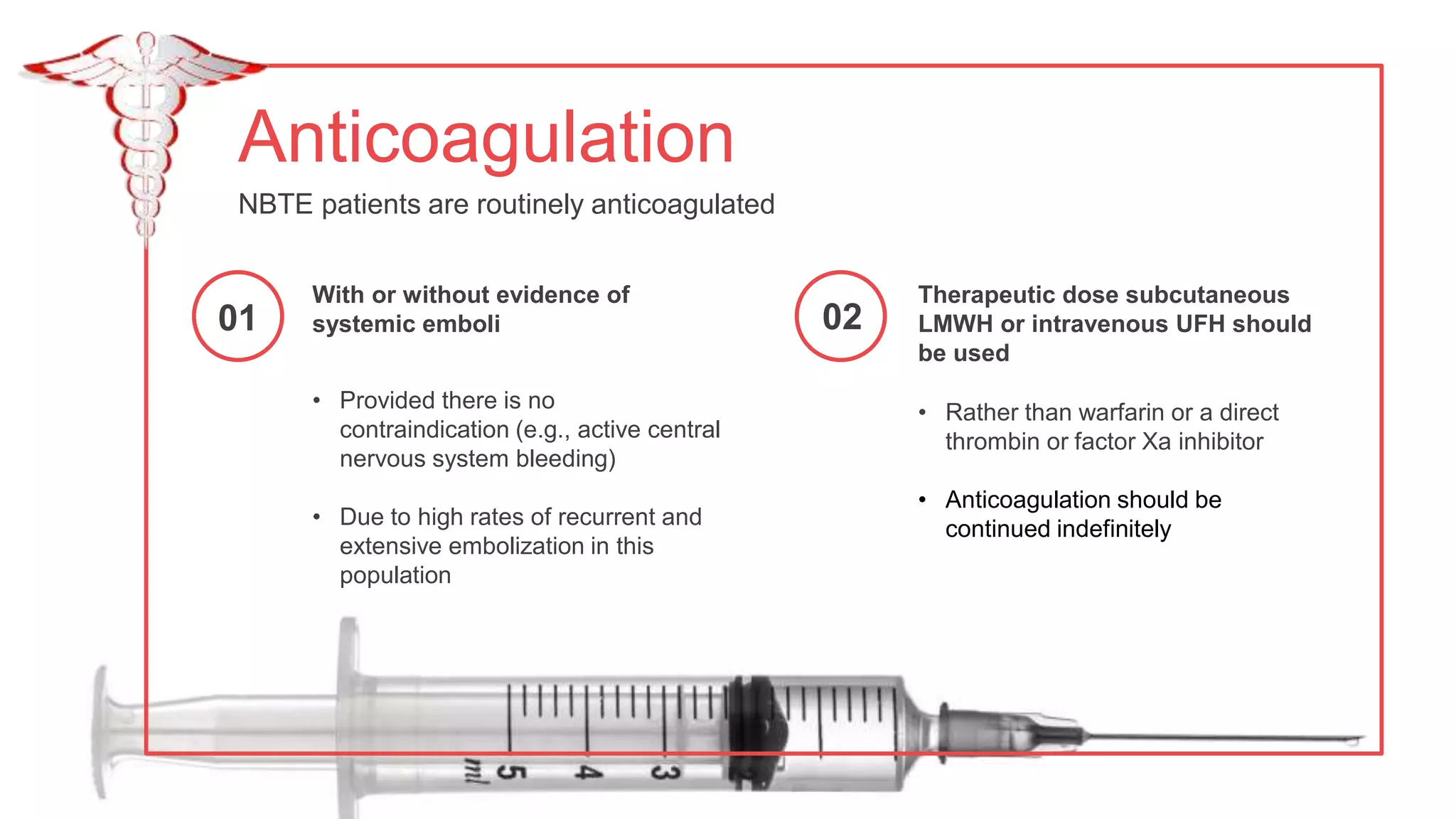
Anticoagulation
NBTE patients are routinely anticoagulated
• Rather than warfarin or a direct
thrombin or factor Xa inhibitor
• Anticoagulation should be
continued indefinitely
Therapeutic dose subcutaneous
LMWH or intravenous UFH should
be used
• Provided there is no
contraindication (e.g., active central
nervous system bleeding)
• Due to high rates of recurrent and
extensive embolization in this
population
With or without evidence of
systemic emboli
01 02
Surgery
May be considered in select cases
• Heart failure
• Acute valve rupture
• Prevention of recurrent
embolization
Indications for surgery same as IE
• Benefits should be weighed against
the risks in the context of the life
expectancy
• Vegetation excision or valve
replacement
Where the risk benefit is favorable
01 02
Treatment for underlying disease
Disease treatment often ineffective in the absence of effective systemic therapy
• Antibiotics do not need to be
continued unless infective
endocarditis is diagnosed
Many patients may be placed on
empiric antibiotics during
investigation
• It is unknown whether NBTE
improves with cancer therapy
• Anticoagulation should continue
regardless of the response
Metastatic nature of most
malignancies at presentation
01 02
Followup & Prognosis
Optimal followup has not been defined and prognosis of NBTE has not been formally
evaluated — should be individualized
Due to the strong association between
NBTE and advanced malignancy
Prognosis is grim despite
anticoagulation
NBTE complications
• Infective endocarditis
• Embolization despite
anticoagulation
Complications of therapy
• Bleeding
• Thrombocytopenia
Patients should be followed
clinically for complications
01 02

Marantic Endocarditis.pptx

  • 1.
    Dr Mohammad AlhalabiM.D. Marantic Endocarditis Department of Cardiology, Faculty of Medicine, Damascus University
  • 2.
    Outline Overview Definition, Classification, Pathophysiology,Etiology 01 Presentation Signs & Symptoms, Evaluation & Workup 02 Diagnosis Diagnostic Strategy, Differential Diagnoses 03 Treatment Medical, Surgical, Causal, Prognostic 04
  • 3.
    Endocardium • Inner layerof the cardiac wall and covers the inner surface of the cardiac chambers • The superficial surface of the cardiac valves
  • 4.
    Endocardium Histology • Endothelium endothelial cells(squamous epithelial cells) • Subendothelial connective tissue layer collagen fibrils and fibroblasts more prominent in the atria, in particular, the left atrium • Elastic tissue layer elastic fibers, collagen fibers and smooth muscle cells more prominent in the left atrium and the left ventricular septum • Subendocardial tissue layer connects endocardium to the myocardium collagen and elastic fibers, small blood vessels and Purkinje fibers
  • 5.
  • 6.
    Endocarditis ▹ Primarily of1 or more heart valves ▹ The mural endocardium ▹ A septal defect Inflammation of the endocardial surfaces of the heart
  • 7.
    Endocarditis Classification NBTE does notcause an inflammation response from the body Infectious Etiology Caused by bacteria, fungi, and germs that enter through the bloodstream Non-Infectious Etiology Thought to be caused by a combination of different mechanisms 01 Acute or subacute or Chronic Native Valve or Prosthetic Valve 02 Can be divided into culture-positive or culture- negative Bacterial or non- bacterial 01 SLE / Antiphospholipid Associated Verruceous (Libman- Sacks) 02 Malignancy / Wasting Associated Nonbacterial thrombotic endocarditis (NBTE) “Marantic”
  • 8.
    • Commonly affectsundamaged valves (in contrast with infective endocarditis) • A separate entity to culture-negative endocarditis which is due to infectious etiologies that are not readily identified • Pathogenesis is unknown, but thought to be endothelial injury in the setting of a hypercoagulable state Deposition of sterile platelet thrombi on heart valves (mostly aortic and mitral) Marantic Endocarditis Pathogenesis A form of noninfectious endocarditis. a spectrum of noninfectious lesions of the heart valves that is most commonly seen in advanced malignancy Nonbacterial thrombotic endocarditis (NBTE)
  • 9.
    Marantic Endocarditis Pathogenesis Presentation Canceris spread widely throughout the body Carcinomatosis Wasting, disseminated intravascular coagulation, Hypercoagulable State But can occur in patients with valvular pathology Valve usually undamaged Valve Dysfunction is rare Systemic Embolism
  • 10.
    Marantic Endocarditis Characteristics •A rare condition most often found postmortem with rates from 0.9 to 1.6 percent • Up to 2.7% to 10% in adenocarcinomas and mucin-secreting carcinomas, most commonly affects patients between the fourth and eighth decades of life • No gender predilection • Libman-Sacks endocarditis could span up to 43% under TEE in patients with SLE
  • 11.
  • 12.
  • 16.
    How can wedifferentiate NBTE from IE? • No pathognomonic signs/symptoms or echo features that are specific to NBTE • Diagnosis can only be differentiated with demonstration of platelet thrombi on histologic exam • High clinical suspicion is required for diagnosis!
  • 17.
    Marantic vs Libman-SacksEndocarditis? Guidelines for the Use of Echocardiography in the Evaluation of a Cardiac Source of Embolism. Journal of the American Society of Echocardiography 2016 29, 1-42
  • 18.
    Marantic vs Libman-SacksEndocarditis? Guidelines for the Use of Echocardiography in the Evaluation of a Cardiac Source of Embolism. Journal of the American Society of Echocardiography 2016 29, 1-42
  • 19.
  • 20.
    Maranctic Endocarditis Etiology Marantic Endocarditis Malignancy (80%) Chronic wasting diseases Chronic Infections DIC •Tuberculosis • Pneumonia • Osteomyelitis Mucin-producing metastatic carcinomas / Trousseau syndrome • Pancreas • Lung • Colon • Ovary • Biliary • Prostate • AML-M3 • Pregnancy complications Acute Malnutrition • Tuberculosis • Chronic diarrhea • AIDS • Superior mesenteric artery syndrome
  • 21.
  • 22.
    Presentation Imaging Signs and symptoms Echocardiography 12 3 4 • Vegetations are frequently left-sided with • two-thirds of cases involving the mitral valve, a quarter the aortic TEE is more sensitive than TTE • Three sets of blood cultures and serological testing to rule out Infective Endocarditis • Workup for disseminated intravascular coagulation (DIC) should be performed in every case of suspected NBTE No laboratory tests that confirm the diagnosis of NBTE • CT of the brain or MRI may be performed in those with suspected cerebral embolization Presents with strokes not radiologically specific to NBTE • Major clinical manifestations of NBTE result from systemic emboli in up to 50% • Cardiac murmurs infrequently in less than half of patients • Fever is uncommon, may be an underlying manifestation of malignancy Often asymptomatic Laboratory
  • 23.
    Diagnosis Gold Standard • Madepathologically by demonstration of thrombi on autopsy or specimens • Routine acquisition of valvular tissue is not practical Clinical Diagnosis • A constellation of clinical, echocardiographic, and absence of microbiologic findings • Demonstration of valvular vegetations on echocardiography in the absence of systemic infection in patients who are at high risk
  • 24.
    Diagnostic Challenges Diagnosis of NBTEis difficult to establish antemortem • Paucity of symptoms • Late presentation Fever due to the underlying malignancy can lower the clinical suspicion for NBTE Small remnants on affected valves (≤3 mm) following embolization not readily identified by echocardiogr aphy False negatives
  • 25.
    The Mitral valverevealing thickened leaflets 3D TEE PLAX Transoesophageal echocardiography short axis showing the thickening in motion 3D TEE PSAX Mitral
  • 26.
    Transoesophageal echocardiography showinglarge oscillating structures in long axis 3D TEE PLAX The aortic valve revealing severely thickened cusps 3D TEE PSAX Aortic
  • 27.
    Treatment Outline Anticoagulation Mainstay Treatment Surgery Indications inSelect Cases Underlying Cause Effective Systemic Therapy Followup & Prognosis Monitoring & Complications
  • 28.
    Anticoagulation NBTE patients areroutinely anticoagulated • Rather than warfarin or a direct thrombin or factor Xa inhibitor • Anticoagulation should be continued indefinitely Therapeutic dose subcutaneous LMWH or intravenous UFH should be used • Provided there is no contraindication (e.g., active central nervous system bleeding) • Due to high rates of recurrent and extensive embolization in this population With or without evidence of systemic emboli 01 02
  • 29.
    Surgery May be consideredin select cases • Heart failure • Acute valve rupture • Prevention of recurrent embolization Indications for surgery same as IE • Benefits should be weighed against the risks in the context of the life expectancy • Vegetation excision or valve replacement Where the risk benefit is favorable 01 02
  • 30.
    Treatment for underlyingdisease Disease treatment often ineffective in the absence of effective systemic therapy • Antibiotics do not need to be continued unless infective endocarditis is diagnosed Many patients may be placed on empiric antibiotics during investigation • It is unknown whether NBTE improves with cancer therapy • Anticoagulation should continue regardless of the response Metastatic nature of most malignancies at presentation 01 02
  • 31.
    Followup & Prognosis Optimalfollowup has not been defined and prognosis of NBTE has not been formally evaluated — should be individualized Due to the strong association between NBTE and advanced malignancy Prognosis is grim despite anticoagulation NBTE complications • Infective endocarditis • Embolization despite anticoagulation Complications of therapy • Bleeding • Thrombocytopenia Patients should be followed clinically for complications 01 02