INITIATING AND
RESPONDING TO PRICE
CHANGESDr. Maimoon sulthan
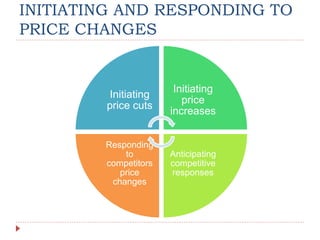
INITIATING AND RESPONDING TO
PRICE CHANGES
Initiating
price cuts
Initiating
price
increases
Anticipating
competitive
responses
Responding
to
competitors
price
changes
INITIATING PRICE CUTS
 Excess plant
capacity
Drive to dominate the
market through lower
costs.
Starts lower than its
competitors or
initiates price cuts to
gain market share
Encourages
customers to
demand price
concessions
TRAPS Low quality trap
Consumers assume quality is low
 Fragile-market-share trap
No market loyalty. Customers shift
to any other low-priced firm
 Shallow-pockets trap
Higher priced competitors have
longer staying powers because
of deep cash reserves
 Price-war trap
Competitors respond by lowering
prices even more- price war
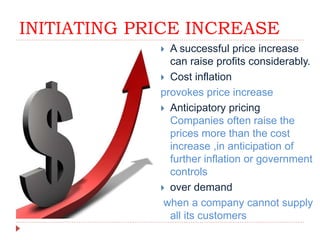
INITIATING PRICE INCREASE
 A successful price increase
can raise profits considerably.
 Cost inflation
provokes price increase
 Anticipatory pricing
Companies often raise the
prices more than the cost
increase ,in anticipation of
further inflation or government
controls
 over demand
when a company cannot supply
all its customers
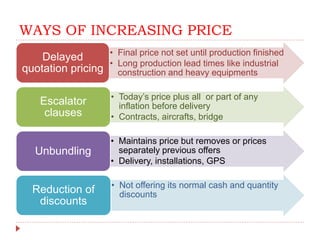
WAYS OF INCREASING PRICE
• Final price not set until production finished
• Long production lead times like industrial
construction and heavy equipments
Delayed
quotation pricing
• Today’s price plus all or part of any
inflation before delivery
• Contracts, aircrafts, bridge
Escalator
clauses
• Maintains price but removes or prices
separately previous offers
• Delivery, installations, GPS
Unbundling
• Not offering its normal cash and quantity
discountsReduction of
discounts
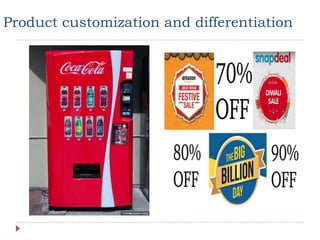
Product customization and differentiation
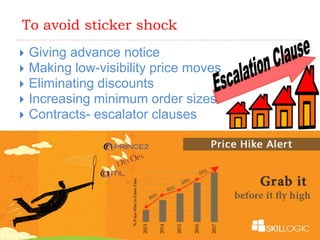
To avoid sticker shock
 Giving advance notice
 Making low-visibility price moves
 Eliminating discounts
 Increasing minimum order sizes
 Contracts- escalator clauses
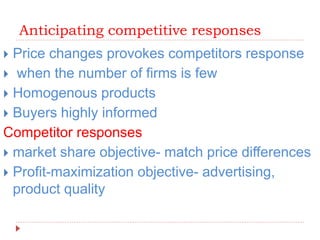
Anticipating competitive responses
 Price changes provokes competitors response
 when the number of firms is few
 Homogenous products
 Buyers highly informed
Competitor responses
 market share objective- match price differences
 Profit-maximization objective- advertising,
product quality
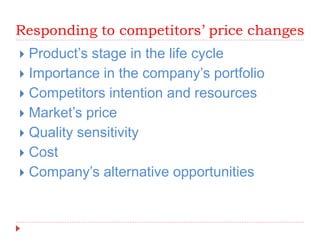
Responding to competitors’ price changes
 Product’s stage in the life cycle
 Importance in the company’s portfolio
 Competitors intention and resources
 Market’s price
 Quality sensitivity
 Cost
 Company’s alternative opportunities
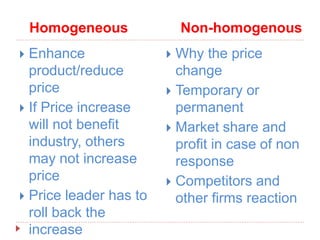
Homogeneous Non-homogenous
 Enhance
product/reduce
price
 If Price increase
will not benefit
industry, others
may not increase
price
 Price leader has to
roll back the
increase
 Why the price
change
 Temporary or
permanent
 Market share and
profit in case of non
response
 Competitors and
other firms reaction
LOW-COST COMPETITORS
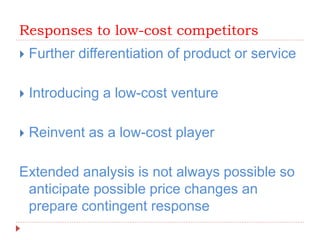
Responses to low-cost competitors
 Further differentiation of product or service
 Introducing a low-cost venture
 Reinvent as a low-cost player
Extended analysis is not always possible so
anticipate possible price changes an
prepare contingent response
Mm

Mm

  • 1.
    INITIATING AND RESPONDING TOPRICE CHANGESDr. Maimoon sulthan
  • 2.
    INITIATING AND RESPONDINGTO PRICE CHANGES Initiating price cuts Initiating price increases Anticipating competitive responses Responding to competitors price changes
  • 3.
    INITIATING PRICE CUTS Excess plant capacity Drive to dominate the market through lower costs. Starts lower than its competitors or initiates price cuts to gain market share Encourages customers to demand price concessions
  • 4.
    TRAPS Low qualitytrap Consumers assume quality is low  Fragile-market-share trap No market loyalty. Customers shift to any other low-priced firm  Shallow-pockets trap Higher priced competitors have longer staying powers because of deep cash reserves  Price-war trap Competitors respond by lowering prices even more- price war
  • 5.
    INITIATING PRICE INCREASE A successful price increase can raise profits considerably.  Cost inflation provokes price increase  Anticipatory pricing Companies often raise the prices more than the cost increase ,in anticipation of further inflation or government controls  over demand when a company cannot supply all its customers
  • 6.
    WAYS OF INCREASINGPRICE • Final price not set until production finished • Long production lead times like industrial construction and heavy equipments Delayed quotation pricing • Today’s price plus all or part of any inflation before delivery • Contracts, aircrafts, bridge Escalator clauses • Maintains price but removes or prices separately previous offers • Delivery, installations, GPS Unbundling • Not offering its normal cash and quantity discountsReduction of discounts
  • 7.
  • 8.
    To avoid stickershock  Giving advance notice  Making low-visibility price moves  Eliminating discounts  Increasing minimum order sizes  Contracts- escalator clauses
  • 9.
    Anticipating competitive responses Price changes provokes competitors response  when the number of firms is few  Homogenous products  Buyers highly informed Competitor responses  market share objective- match price differences  Profit-maximization objective- advertising, product quality
  • 11.
    Responding to competitors’price changes  Product’s stage in the life cycle  Importance in the company’s portfolio  Competitors intention and resources  Market’s price  Quality sensitivity  Cost  Company’s alternative opportunities
  • 12.
    Homogeneous Non-homogenous  Enhance product/reduce price If Price increase will not benefit industry, others may not increase price  Price leader has to roll back the increase  Why the price change  Temporary or permanent  Market share and profit in case of non response  Competitors and other firms reaction
  • 13.
  • 14.
    Responses to low-costcompetitors  Further differentiation of product or service  Introducing a low-cost venture  Reinvent as a low-cost player Extended analysis is not always possible so anticipate possible price changes an prepare contingent response