Change Management Models
1
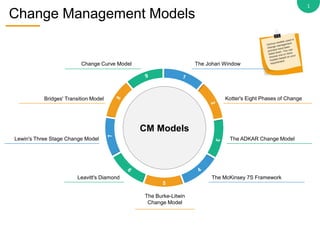
CM Models
The Johari Window
Kotter's Eight Phases of Change
The ADKAR Change Model
The McKinsey 7S Framework
The Burke-Litwin
Change Model
Leavitt's Diamond
Lewin's Three Stage Change Model
Bridges' Transition Model
Change Curve Model
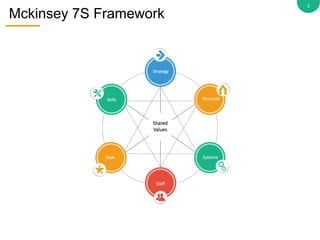
Mckinsey 7S Framework
2
Strategy
Style
Skills
Staff
Structure
Systems
Shared
Values
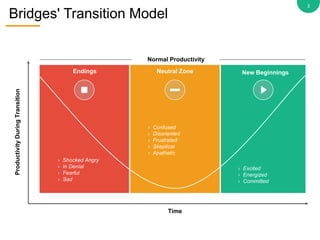
Bridges' Transition Model
3
Endings Neutral Zone New Beginnings
Time
ProductivityDuringTransition
› Shocked Angry
› In Denial
› Fearful
› Sad
› Confused
› Disoriented
› Frustrated
› Skeptical
› Apathetic
› Excited
› Energized
› Committed
Normal Productivity
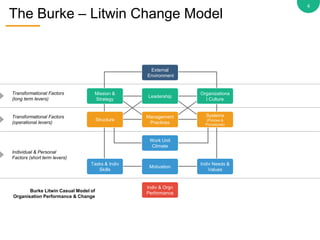
The Burke – Litwin Change Model
4
External
Environment
Mission &
Strategy
Leadership
Organizationa
l Culture
Structure
Management
Practices
Systems
(Policies &
Procedures)
Work Unit
Climate
Motivation
Tasks & Indiv
Skills
Indiv Needs &
Values
Indiv & Orgn
Performance
Transformational Factors
(long term levers)
Transformational Factors
(operational levers)
Individual & Personal
Factors (short term levers)
Burke Litwin Casual Model of
Organisation Performance & Change
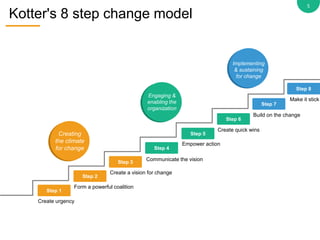
Kotter's 8 step change model
5
0
0
0
0
0
Step 1
Step 2
Step 3
Step 4
Step 5
Step 6
Step 7
Step 8
Create urgency
Form a powerful coalition
Create a vision for change
Communicate the vision
Empower action
Create quick wins
Build on the change
Make it stick
Creating
the climate
for change
Engaging &
enabling the
organization
Implementing
& sustaining
for change
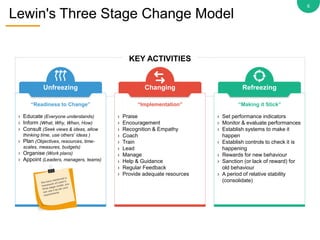
Lewin's Three Stage Change Model
6
Unfreezing Changing Refreezing
“Readiness to Change”
› Educate (Everyone understands)
› Inform (What, Why, When, How)
› Consult (Seek views & ideas, allow
thinking time, use others’ ideas )
› Plan (Objectives, resources, time-
scales, measures, budgets)
› Organise (Work plans)
› Appoint (Leaders, managers, teams)
“Implementation”
› Praise
› Encouragement
› Recognition & Empathy
› Coach
› Train
› Lead
› Manage
› Help & Guidance
› Regular Feedback
› Provide adequate resources
“Making it Stick”
› Set performance indicators
› Monitor & evaluate performances
› Establish systems to make it
happen
› Establish controls to check it is
happening
› Rewards for new behaviour
› Sanction (or lack of reward) for
old behaviour
› A period of relative stability
(consolidate)
KEY ACTIVITIES
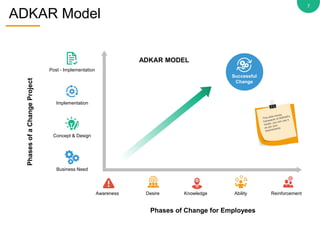
ADKAR Model
7
Business Need
Concept & Design
Implementation
Post - Implementation
Awareness Desire Knowledge Ability
PhasesofaChangeProject
Phases of Change for Employees
Reinforcement
ADKAR MODEL
Successful
Change
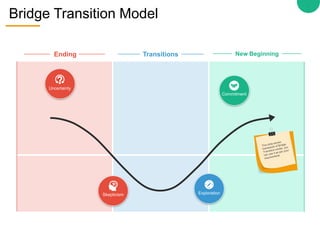
Bridge Transition Model
8
Ending Transitions New Beginning
Uncertainty
ExplorationSkepticism
Commitment
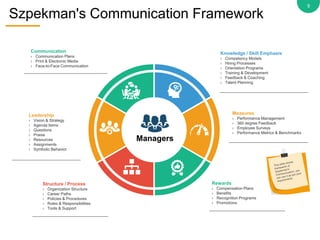
Szpekman's Communication Framework
9
Managers
Knowledge / Skill Emphasis
› Competency Models
› Hiring Processes
› Orientation Programs
› Training & Development
› Feedback & Coaching
› Talent Planning
Measures
› Performance Management
› 360 degree Feedback
› Employee Surveys
› Performance Metrics & Benchmarks
Rewards
› Compensation Plans
› Benefits
› Recognition Programs
› Promotions
Structure / Process
› Organization Structure
› Career Paths
› Policies & Procedures
› Roles & Responsibilities
› Tools & Support
Leadership
› Vision & Strategy
› Agenda Items
› Questions
› Praise
› Resources
› Assignments
› Symbolic Behavior
Communication
› Communication Plans
› Print & Electronic Media
› Face-to-Face Communication
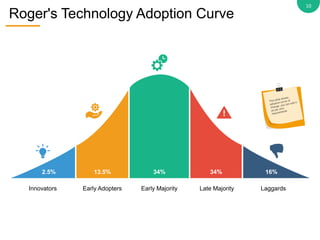
Roger's Technology Adoption Curve
10
Innovators Early Adopters Early Majority Late Majority Laggards

Change management models

  • 1.
    Change Management Models 1 CMModels The Johari Window Kotter's Eight Phases of Change The ADKAR Change Model The McKinsey 7S Framework The Burke-Litwin Change Model Leavitt's Diamond Lewin's Three Stage Change Model Bridges' Transition Model Change Curve Model
  • 2.
  • 3.
    Bridges' Transition Model 3 EndingsNeutral Zone New Beginnings Time ProductivityDuringTransition › Shocked Angry › In Denial › Fearful › Sad › Confused › Disoriented › Frustrated › Skeptical › Apathetic › Excited › Energized › Committed Normal Productivity
  • 4.
    The Burke –Litwin Change Model 4 External Environment Mission & Strategy Leadership Organizationa l Culture Structure Management Practices Systems (Policies & Procedures) Work Unit Climate Motivation Tasks & Indiv Skills Indiv Needs & Values Indiv & Orgn Performance Transformational Factors (long term levers) Transformational Factors (operational levers) Individual & Personal Factors (short term levers) Burke Litwin Casual Model of Organisation Performance & Change
  • 5.
    Kotter's 8 stepchange model 5 0 0 0 0 0 Step 1 Step 2 Step 3 Step 4 Step 5 Step 6 Step 7 Step 8 Create urgency Form a powerful coalition Create a vision for change Communicate the vision Empower action Create quick wins Build on the change Make it stick Creating the climate for change Engaging & enabling the organization Implementing & sustaining for change
  • 6.
    Lewin's Three StageChange Model 6 Unfreezing Changing Refreezing “Readiness to Change” › Educate (Everyone understands) › Inform (What, Why, When, How) › Consult (Seek views & ideas, allow thinking time, use others’ ideas ) › Plan (Objectives, resources, time- scales, measures, budgets) › Organise (Work plans) › Appoint (Leaders, managers, teams) “Implementation” › Praise › Encouragement › Recognition & Empathy › Coach › Train › Lead › Manage › Help & Guidance › Regular Feedback › Provide adequate resources “Making it Stick” › Set performance indicators › Monitor & evaluate performances › Establish systems to make it happen › Establish controls to check it is happening › Rewards for new behaviour › Sanction (or lack of reward) for old behaviour › A period of relative stability (consolidate) KEY ACTIVITIES
  • 7.
    ADKAR Model 7 Business Need Concept& Design Implementation Post - Implementation Awareness Desire Knowledge Ability PhasesofaChangeProject Phases of Change for Employees Reinforcement ADKAR MODEL Successful Change
  • 8.
    Bridge Transition Model 8 EndingTransitions New Beginning Uncertainty ExplorationSkepticism Commitment
  • 9.
    Szpekman's Communication Framework 9 Managers Knowledge/ Skill Emphasis › Competency Models › Hiring Processes › Orientation Programs › Training & Development › Feedback & Coaching › Talent Planning Measures › Performance Management › 360 degree Feedback › Employee Surveys › Performance Metrics & Benchmarks Rewards › Compensation Plans › Benefits › Recognition Programs › Promotions Structure / Process › Organization Structure › Career Paths › Policies & Procedures › Roles & Responsibilities › Tools & Support Leadership › Vision & Strategy › Agenda Items › Questions › Praise › Resources › Assignments › Symbolic Behavior Communication › Communication Plans › Print & Electronic Media › Face-to-Face Communication
  • 10.
    Roger's Technology AdoptionCurve 10 Innovators Early Adopters Early Majority Late Majority Laggards