
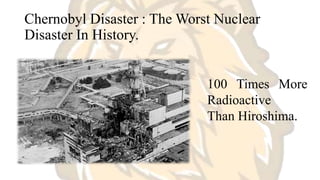

Chernobyl Disaster : The Worst Nuclear
Disaster In History.
100 Times More
Radioactive
Than Hiroshima.
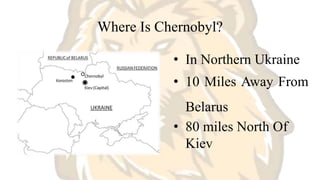
Where Is Chernobyl?
• In Northern Ukraine
• 10 Miles Away From
Belarus
• 80 miles North Of
Kiev
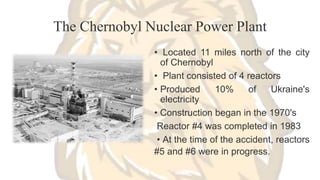
• Located 11 miles north of the city
of Chernobyl
• Plant consisted of 4 reactors
• Produced 10% of Ukraine's
electricity
• Construction began in the 1970's
Reactor #4 was completed in 1983
• At the time of the accident, reactors
#5 and #6 were in progress.
The Chernobyl Nuclear Power Plant
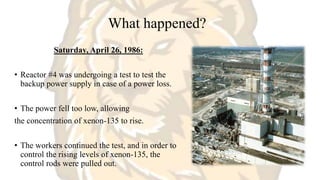
What happened?
Saturday, April 26, 1986:
• Reactor #4 was undergoing a test to test the
backup power supply in case of a power loss.
• The power fell too low, allowing
the concentration of xenon-135 to rise.
• The workers continued the test, and in order to
control the rising levels of xenon-135, the
control rods were pulled out.
What happened? cont'd
• The experiment involved shutting down the coolant pumps, which caused the coolant to
rapidly heat up and boil.
• Pockets of steam formed in the coolant lines. When the coolant expanded in this
particular design, the power level went up.
• All control rods were ordered to be inserted. As the rodswere inserted, they became
deformed and stuck. The reaction could not be stopped.
• The rods melted and the steam pressure caused anexplosion, which blew a hole in the
roof. A graphite fire also resulted from the explosion.
• To save money, the reactor was constructed with only partial containment, which
allowed the radiation to escape. 13%-30% of the material escaped.
The Clean Up
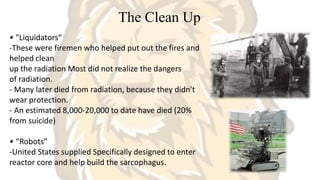
• "Liquidators“
-These were firemen who helped put out the fires and
helped clean
up the radiation Most did not realize the dangers
of radiation.
- Many later died from radiation, because they didn't
wear protection.
- An estimated 8,000-20,000 to date have died (20%
from suicide)
• “Robots”
-United States supplied Specifically designed to enter
reactor core and help build the sarcophagus.
Clean Up
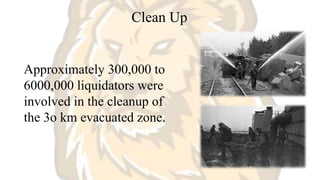
Approximately 300,000 to
6000,000 liquidators were
involved in the cleanup of
the 3o km evacuated zone.
Evacuation
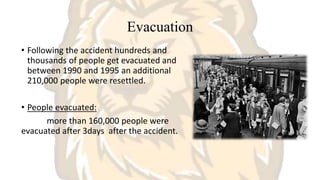
• Following the accident hundreds and
thousands of people get evacuated and
between 1990 and 1995 an additional
210,000 people were resettled.
• People evacuated:
more than 160,000 people were
evacuated after 3days after the accident.
Containment
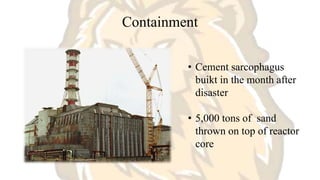
• Cement sarcophagus
buikt in the month after
disaster
• 5,000 tons of sand
thrown on top of reactor
core
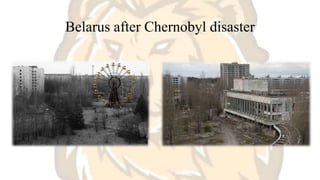
Belarus after Chernobyl disaster
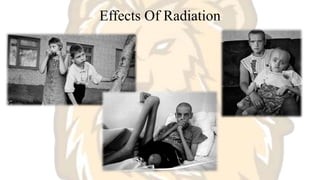
Effects Of Radiation
Effects of Radiation
.
• effects from the Chernobyl disaster on the
• health of their people:
• 100% increase in the incidence of cancer and
lukemia.
• “Chernobyl AIDS”--the term doctors are using to
describe illnesses associated with the damage done
to the immune system
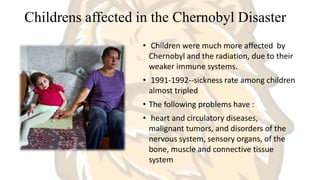
Childrens affected in the Chernobyl Disaster
• Children were much more affected by
Chernobyl and the radiation, due to their
weaker immune systems.
• 1991-1992--sickness rate among children
almost tripled
• The following problems have :
• heart and circulatory diseases,
malignant tumors, and disorders of the
nervous system, sensory organs, of the
bone, muscle and connective tissue
system
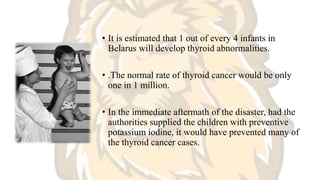
• It is estimated that 1 out of every 4 infants in
Belarus will develop thyroid abnormalities.
• .The normal rate of thyroid cancer would be only
one in 1 million.
• In the immediate aftermath of the disaster, had the
authorities supplied the children with preventive
potassium iodine, it would have prevented many of
the thyroid cancer cases.
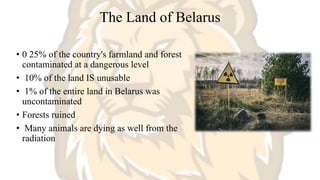
The Land of Belarus
• 0 25% of the country's farmland and forest
contaminated at a dangerous level
• 10% of the land IS unusable
• 1% of the entire land in Belarus was
uncontaminated
• Forests ruined
• Many animals are dying as well from the
radiation
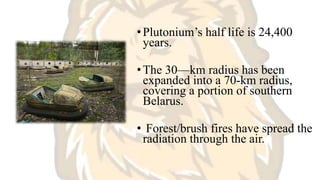
•Plutonium’s half life is 24,400
years.
•The 30—km radius has been
expanded into a 70-km radius,
covering a portion of southern
Belarus.
• Forest/brush fires have spread the
radiation through the air.
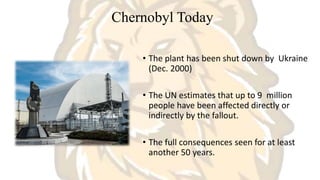
Chernobyl Today
• The plant has been shut down by Ukraine
(Dec. 2000)
• The UN estimates that up to 9 million
people have been affected directly or
indirectly by the fallout.
• The full consequences seen for at least
another 50 years.
Living In the contaminated zone In Belarus today...
• People must change their clothes twice a day, and may not walk in the woods for more
than two hours a month.
• Radiation level charts are printed in the newspapers and dictate decisions such as whether
children can be allowed out to play.
• People are told to wash food at least five times in clean water, but nobody is told where
this clean water is to be found .
• Most people find it impossible to follow these nearly impossible instructions, so they
simply give up trying.
• There are also housing shortages in Belarus and the rest of the ex—Soviet Union. This is
a problem because people have a hard time moving out of the contaminated zone, since
there are no other places to live.
Chernobyl case study

Chernobyl case study

  • 2.
    Chernobyl Disaster :The Worst Nuclear Disaster In History. 100 Times More Radioactive Than Hiroshima.
  • 3.
    Where Is Chernobyl? •In Northern Ukraine • 10 Miles Away From Belarus • 80 miles North Of Kiev
  • 4.
    • Located 11miles north of the city of Chernobyl • Plant consisted of 4 reactors • Produced 10% of Ukraine's electricity • Construction began in the 1970's Reactor #4 was completed in 1983 • At the time of the accident, reactors #5 and #6 were in progress. The Chernobyl Nuclear Power Plant
  • 5.
    What happened? Saturday, April26, 1986: • Reactor #4 was undergoing a test to test the backup power supply in case of a power loss. • The power fell too low, allowing the concentration of xenon-135 to rise. • The workers continued the test, and in order to control the rising levels of xenon-135, the control rods were pulled out.
  • 6.
    What happened? cont'd •The experiment involved shutting down the coolant pumps, which caused the coolant to rapidly heat up and boil. • Pockets of steam formed in the coolant lines. When the coolant expanded in this particular design, the power level went up. • All control rods were ordered to be inserted. As the rodswere inserted, they became deformed and stuck. The reaction could not be stopped. • The rods melted and the steam pressure caused anexplosion, which blew a hole in the roof. A graphite fire also resulted from the explosion. • To save money, the reactor was constructed with only partial containment, which allowed the radiation to escape. 13%-30% of the material escaped.
  • 7.
    The Clean Up •"Liquidators“ -These were firemen who helped put out the fires and helped clean up the radiation Most did not realize the dangers of radiation. - Many later died from radiation, because they didn't wear protection. - An estimated 8,000-20,000 to date have died (20% from suicide) • “Robots” -United States supplied Specifically designed to enter reactor core and help build the sarcophagus.
  • 8.
    Clean Up Approximately 300,000to 6000,000 liquidators were involved in the cleanup of the 3o km evacuated zone.
  • 9.
    Evacuation • Following theaccident hundreds and thousands of people get evacuated and between 1990 and 1995 an additional 210,000 people were resettled. • People evacuated: more than 160,000 people were evacuated after 3days after the accident.
  • 10.
    Containment • Cement sarcophagus buiktin the month after disaster • 5,000 tons of sand thrown on top of reactor core
  • 11.
  • 12.
  • 13.
    Effects of Radiation . •effects from the Chernobyl disaster on the • health of their people: • 100% increase in the incidence of cancer and lukemia. • “Chernobyl AIDS”--the term doctors are using to describe illnesses associated with the damage done to the immune system
  • 14.
    Childrens affected inthe Chernobyl Disaster • Children were much more affected by Chernobyl and the radiation, due to their weaker immune systems. • 1991-1992--sickness rate among children almost tripled • The following problems have : • heart and circulatory diseases, malignant tumors, and disorders of the nervous system, sensory organs, of the bone, muscle and connective tissue system
  • 15.
    • It isestimated that 1 out of every 4 infants in Belarus will develop thyroid abnormalities. • .The normal rate of thyroid cancer would be only one in 1 million. • In the immediate aftermath of the disaster, had the authorities supplied the children with preventive potassium iodine, it would have prevented many of the thyroid cancer cases.
  • 16.
    The Land ofBelarus • 0 25% of the country's farmland and forest contaminated at a dangerous level • 10% of the land IS unusable • 1% of the entire land in Belarus was uncontaminated • Forests ruined • Many animals are dying as well from the radiation
  • 17.
    •Plutonium’s half lifeis 24,400 years. •The 30—km radius has been expanded into a 70-km radius, covering a portion of southern Belarus. • Forest/brush fires have spread the radiation through the air.
  • 18.
    Chernobyl Today • Theplant has been shut down by Ukraine (Dec. 2000) • The UN estimates that up to 9 million people have been affected directly or indirectly by the fallout. • The full consequences seen for at least another 50 years.
  • 19.
    Living In thecontaminated zone In Belarus today... • People must change their clothes twice a day, and may not walk in the woods for more than two hours a month. • Radiation level charts are printed in the newspapers and dictate decisions such as whether children can be allowed out to play. • People are told to wash food at least five times in clean water, but nobody is told where this clean water is to be found . • Most people find it impossible to follow these nearly impossible instructions, so they simply give up trying. • There are also housing shortages in Belarus and the rest of the ex—Soviet Union. This is a problem because people have a hard time moving out of the contaminated zone, since there are no other places to live.