

The Community Joins In:
Library Maker Spaces
Moderator/Presenter:

Justin Hoenke, Chattanooga Public Library
Presenters:

Michelle Cooper, Henderson High School
Amy Koester, St. Charles City-County Library District

Image from Flickr user Repoort,
creative commons licensed
Makers in the
Children’s Room
The Maker Movement Finds its Roots
Amy Koester
Children’s Librarian
St. Charles City-County Library District
akoester@stchlibrary.org
@amyeileenk
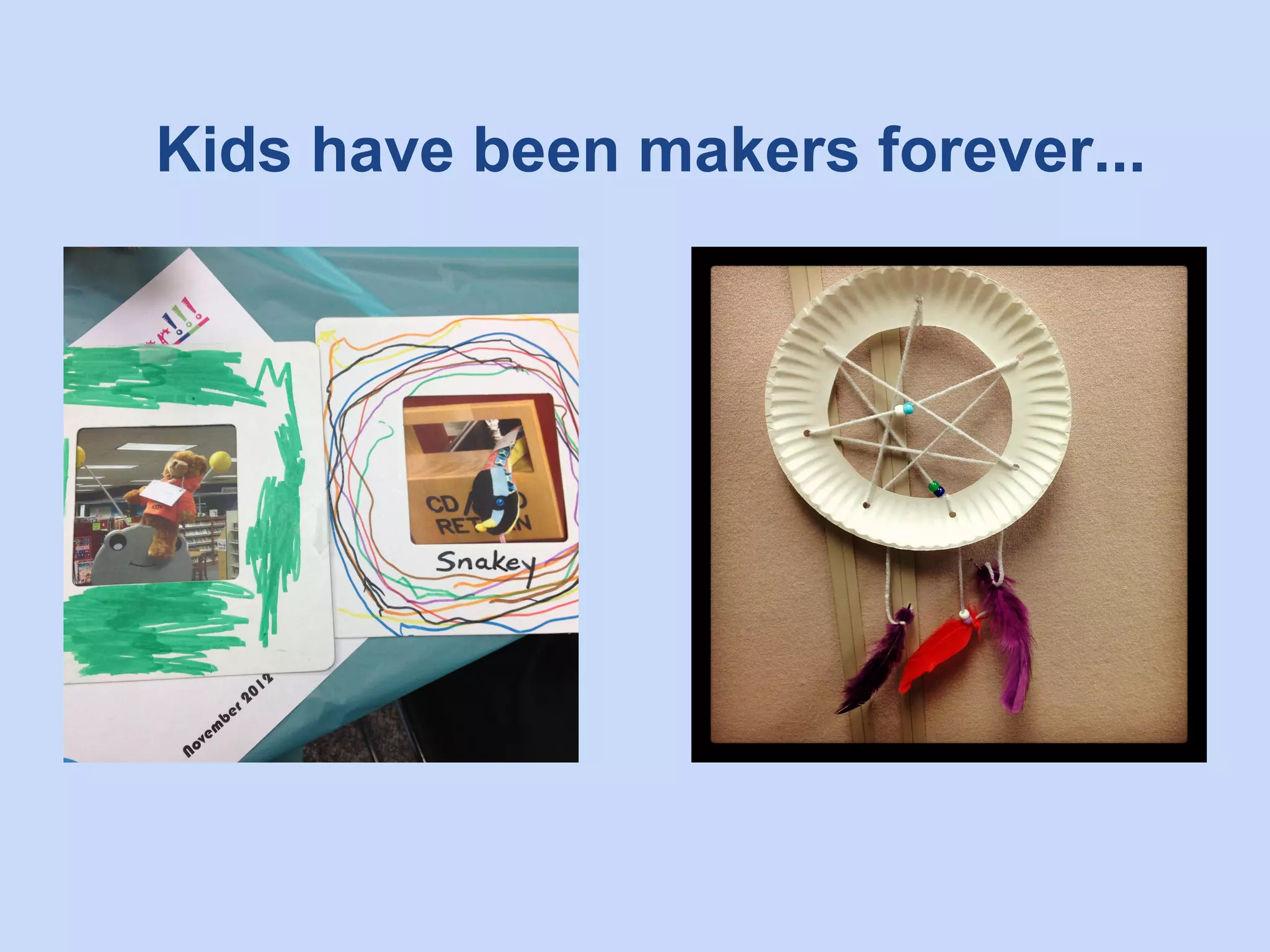
Kids have been makers forever...
The Maker Philosophy in
Children’s Programs

+
The Maker Philosophy in
Children’s Programs
open-ended
activities

+
The Maker Philosophy in
Children’s Programs
open-ended
activities

variety of
supplies

+
The Maker Philosophy in
Children’s Programs
open-ended
activities

variety of
supplies

+
plenty of time
The Maker Philosophy in
Children’s Programs
open-ended
activities

variety of
supplies

+
plenty of time

display space
Children’s Maker Programs
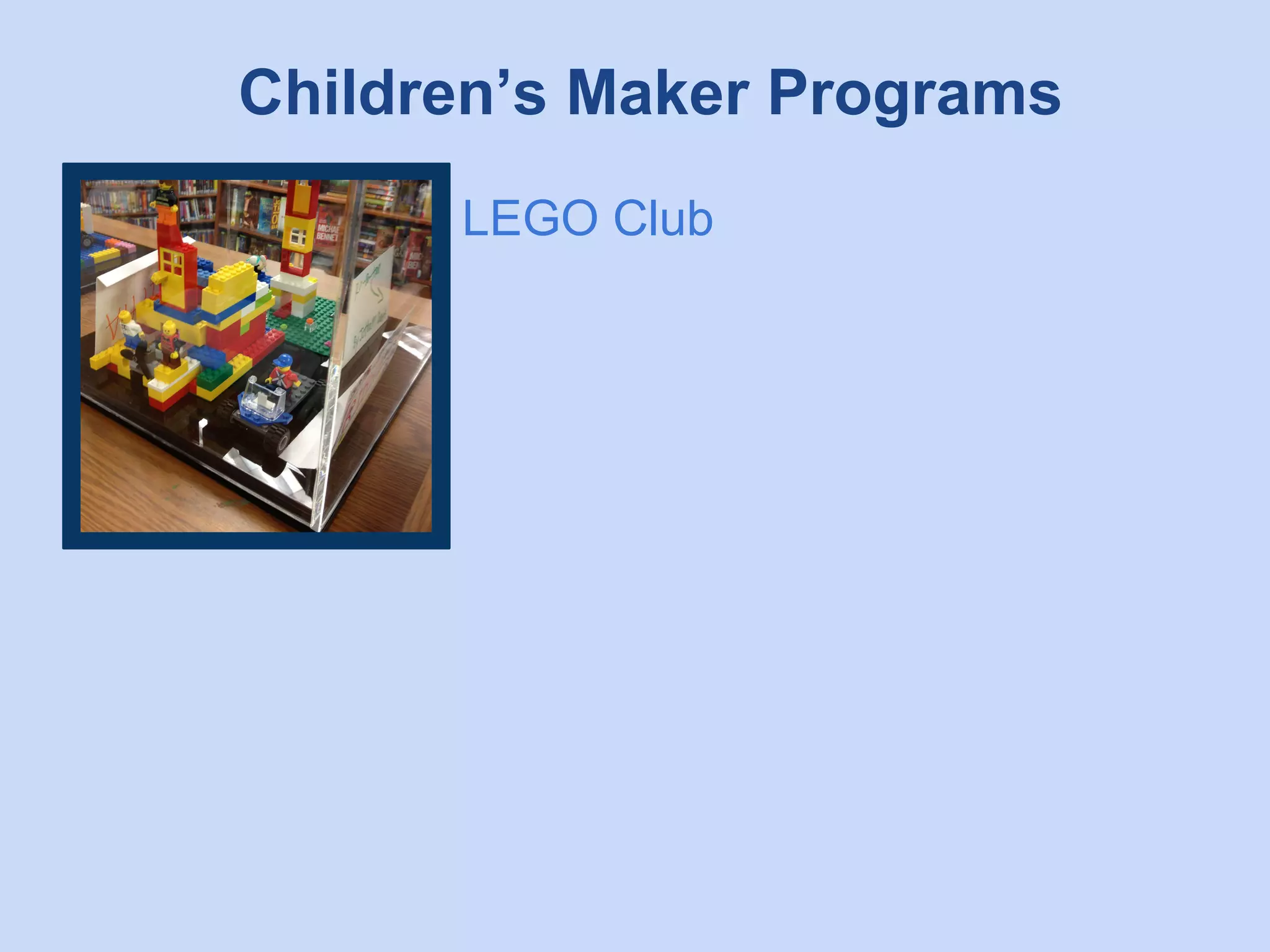
LEGO Club
Children’s Maker Programs

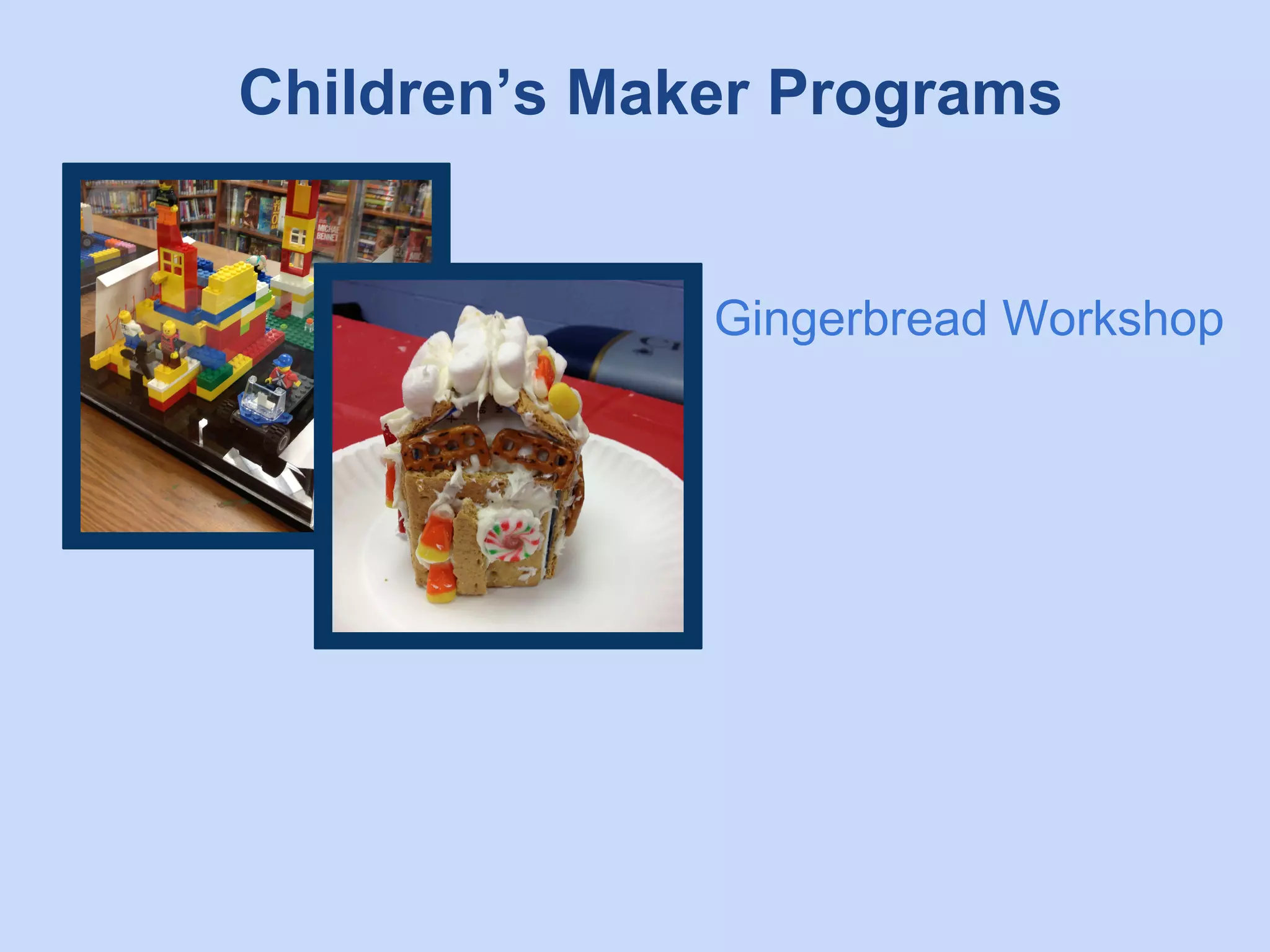
Gingerbread Workshop
Children’s Maker Programs

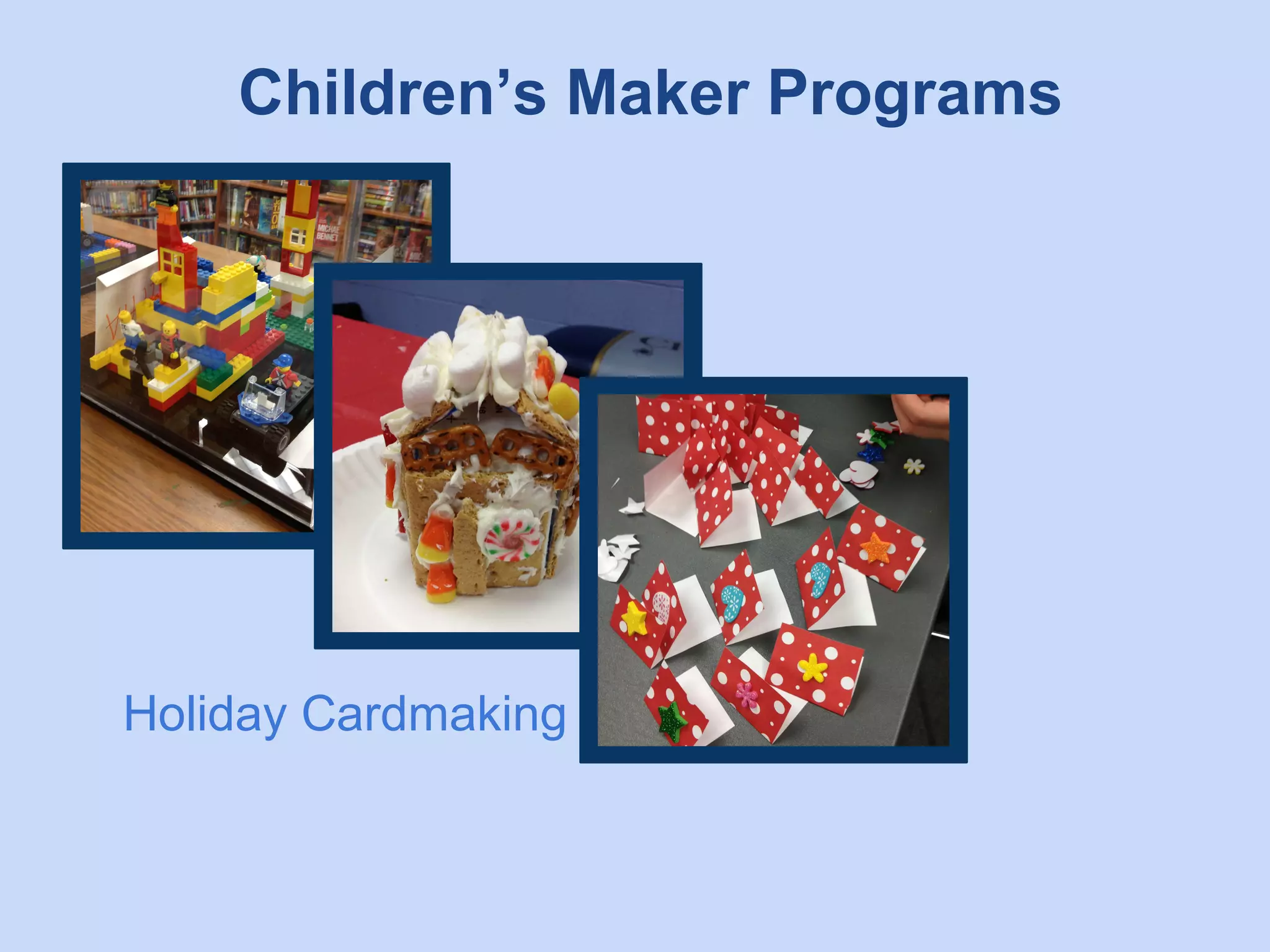
Holiday Cardmaking
Children’s Maker Programs

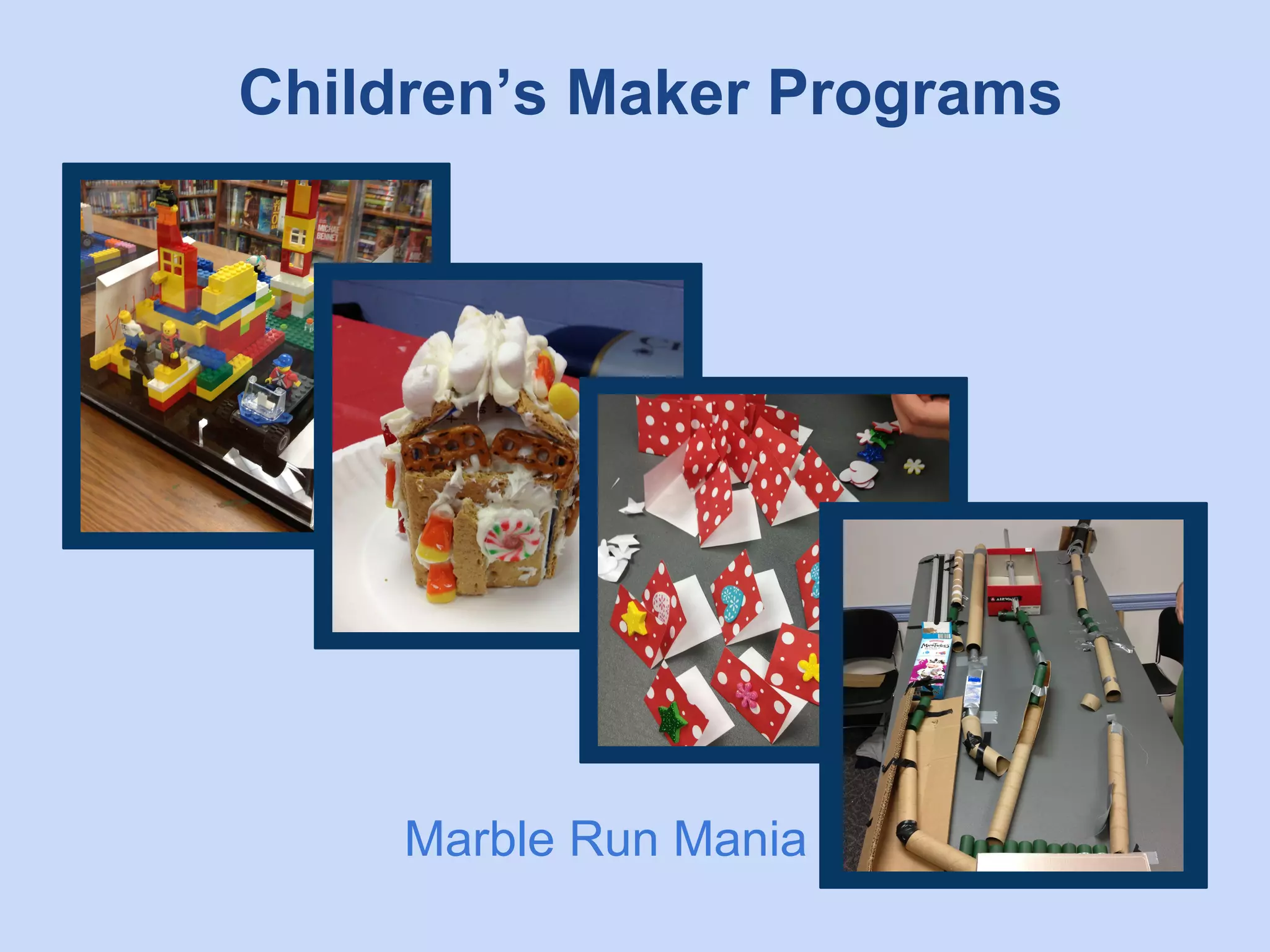
Marble Run Mania
Teen
Makerspaces
Michelle Cooper
Librarian
Henderson High School
Henderson, Texas
mcooper@hendersonisd.org
@_michellecooper
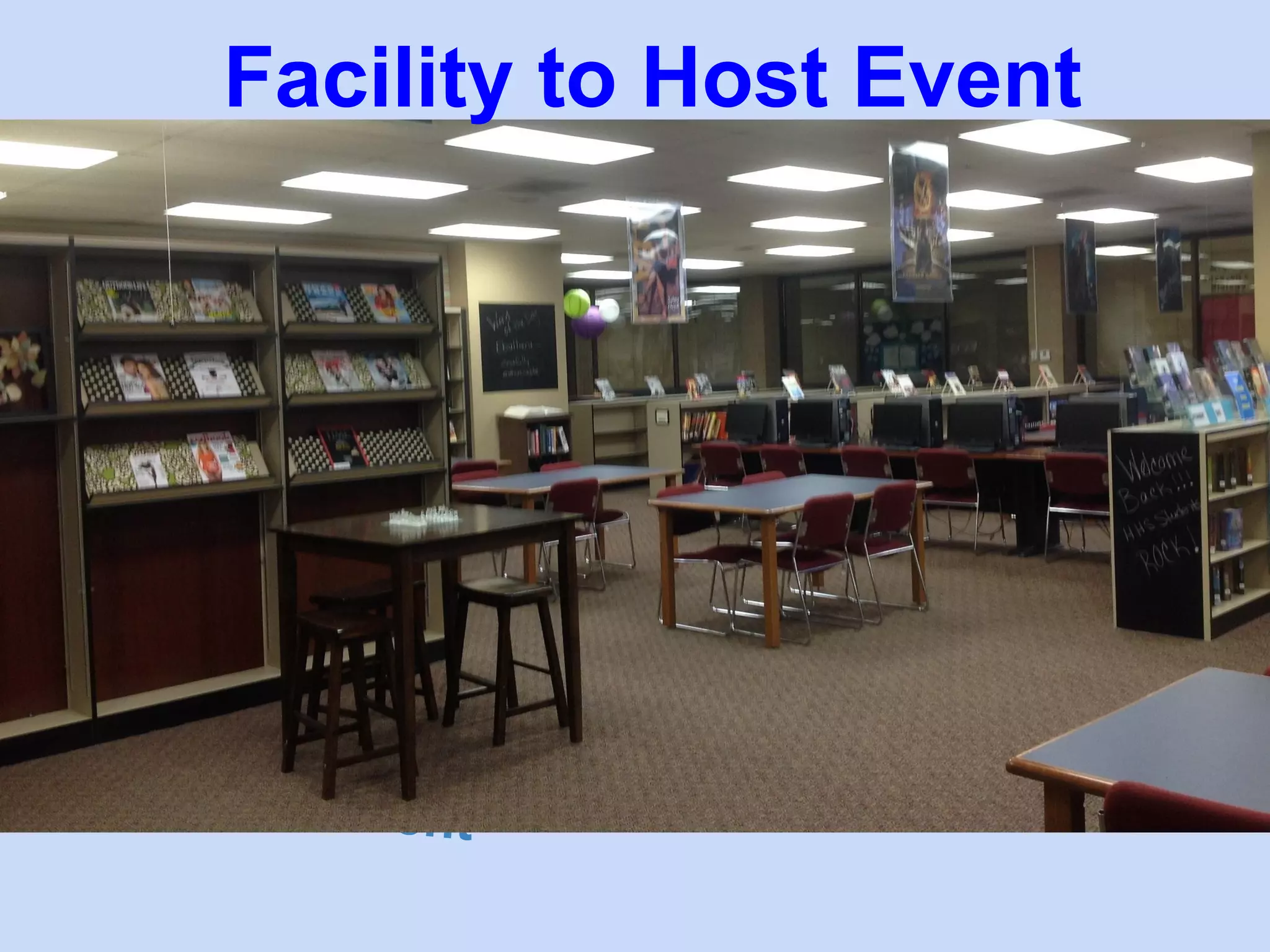
Facility to Host Event

Facility to H
ost Event
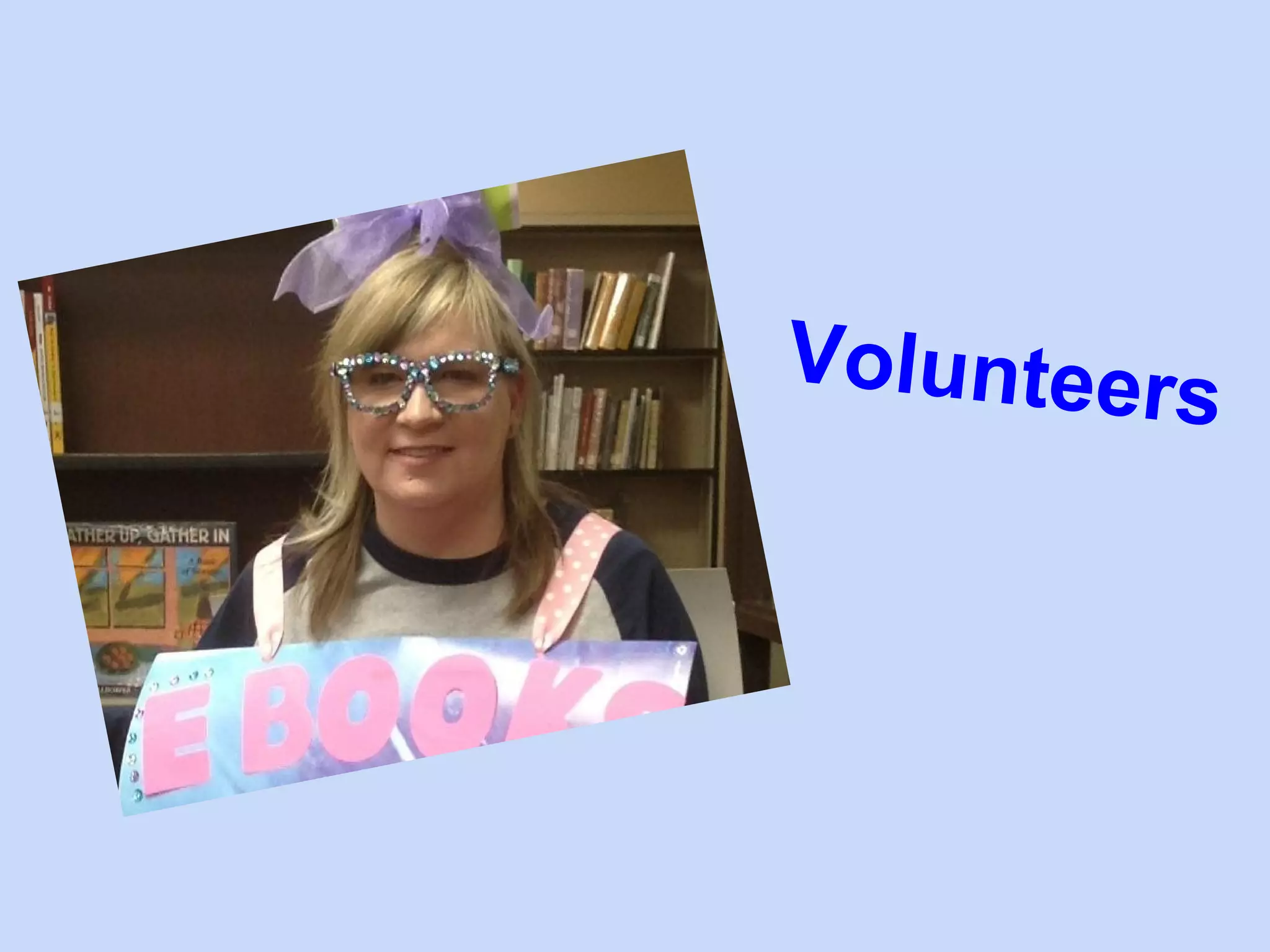
Volunteers
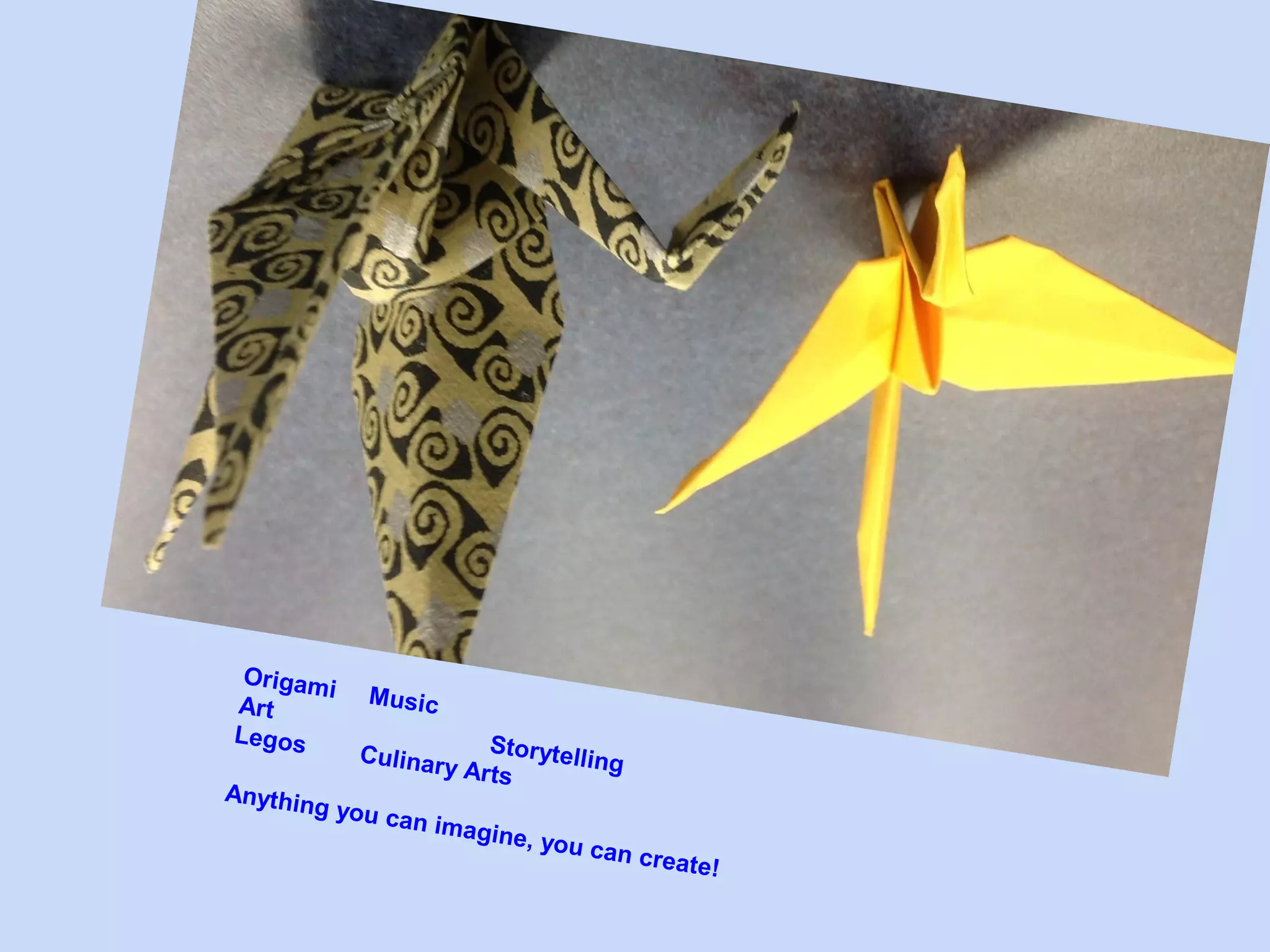
Origam
i Mus
ic
Art
Storyte
Legos
lling
Culinar
y Arts
Anythin
g you c
an imag
ine, yo

u can c

reate!
Get
Sponsorships!
Time
Help
Supplies
Cost
Activities
How much fun
did everyone
have?
THE COMMUNITY JOINS IN:
PARTNERSHIPS
Justin Hoenke
Teen Librarian
Chattanooga Public Library
@justinlibrarian
@2ndfloorchatt
LIBRARIES AND
COMMUNITIES NEED TO
SUPPORT EACH OTHER
LIBRARIES NEED TO
UNDERSTAND WHAT THE
COMMUNITY WANTS
THE COMMUNITY NEEDS TO
SUPPORT THE LIBRARY
THROUGH PARTNERSHIPS
LIBRARIES HAVE AN AUDIENCE
THE WORD LIBRARY CARRIES A LOT OF WEIGHT
LIBRARIES HAVE THE SPACE

THE COMMUNITY HAS THE CONNECTIONS
THE COMMUNITY WANTS TO GROW
THE COMMUNITY HAS THE RESOURCES
PARTNER
Questions?

the conversation online:
Join
nke | @justinlibrarian
Justin Hoe
r
oper | @_michellecoope
Michelle Co
Koester | @amyeileenk
Amy

Image from Flickr user Eleaf,
creative commons licensed
Head over to:
og post
justinthelibrarian.com for our bl

Resources on
Pinterest
p://goo.gl/m1B0Bk
htt

Image from Flickr user Eleaf,
creative commons licensed

The Community Joins In: Library Makerspaces

Editor's Notes

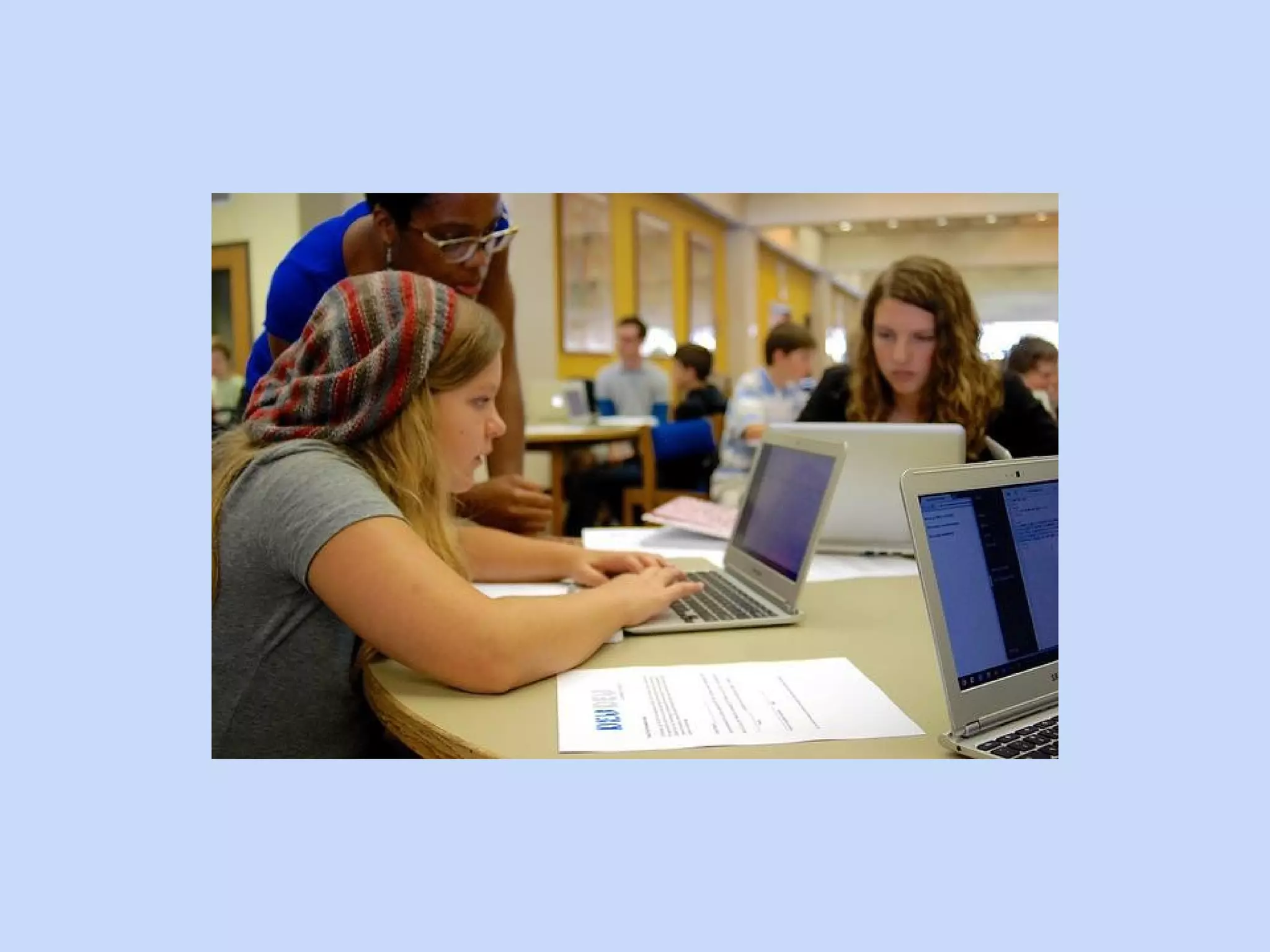
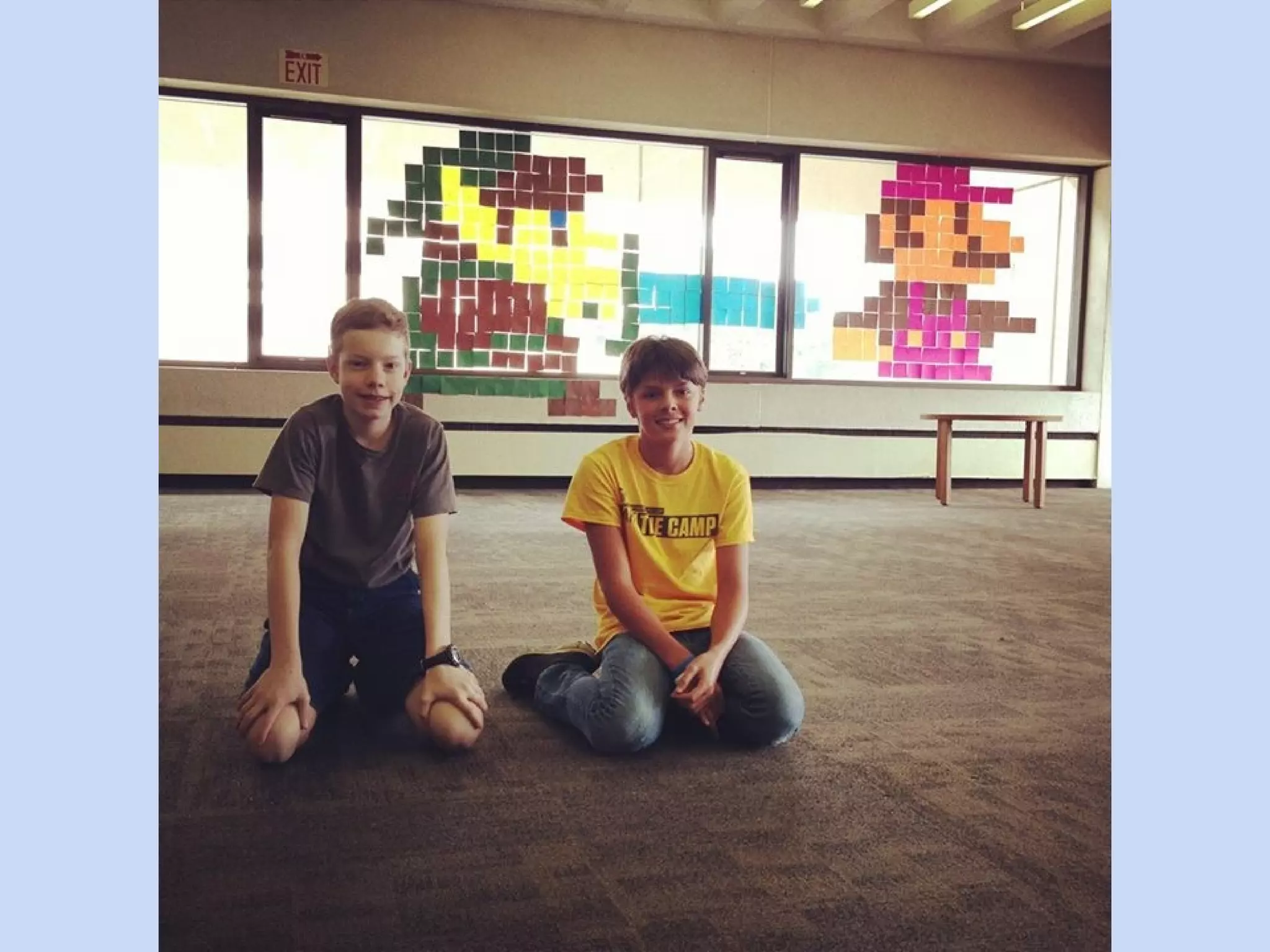
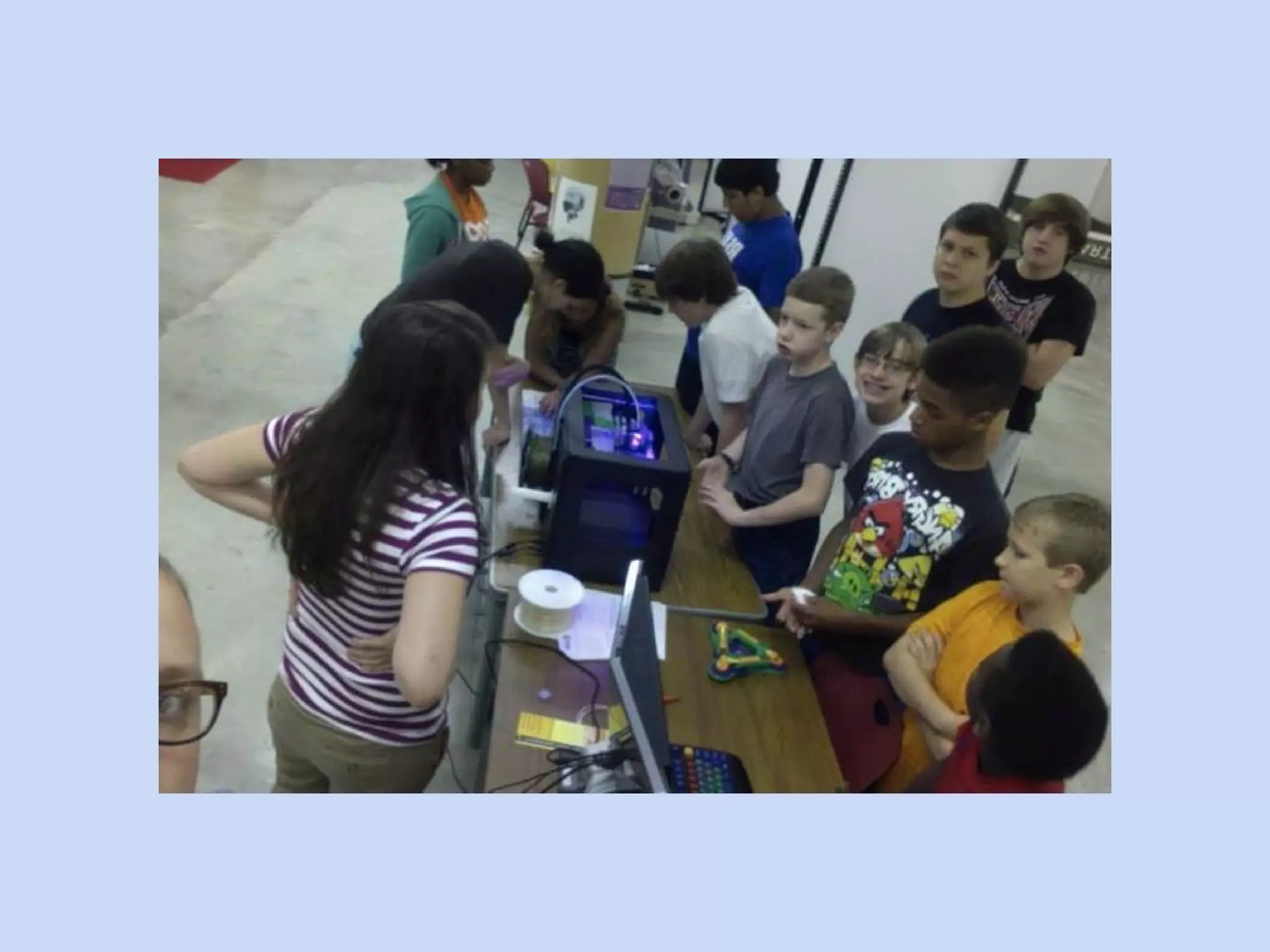
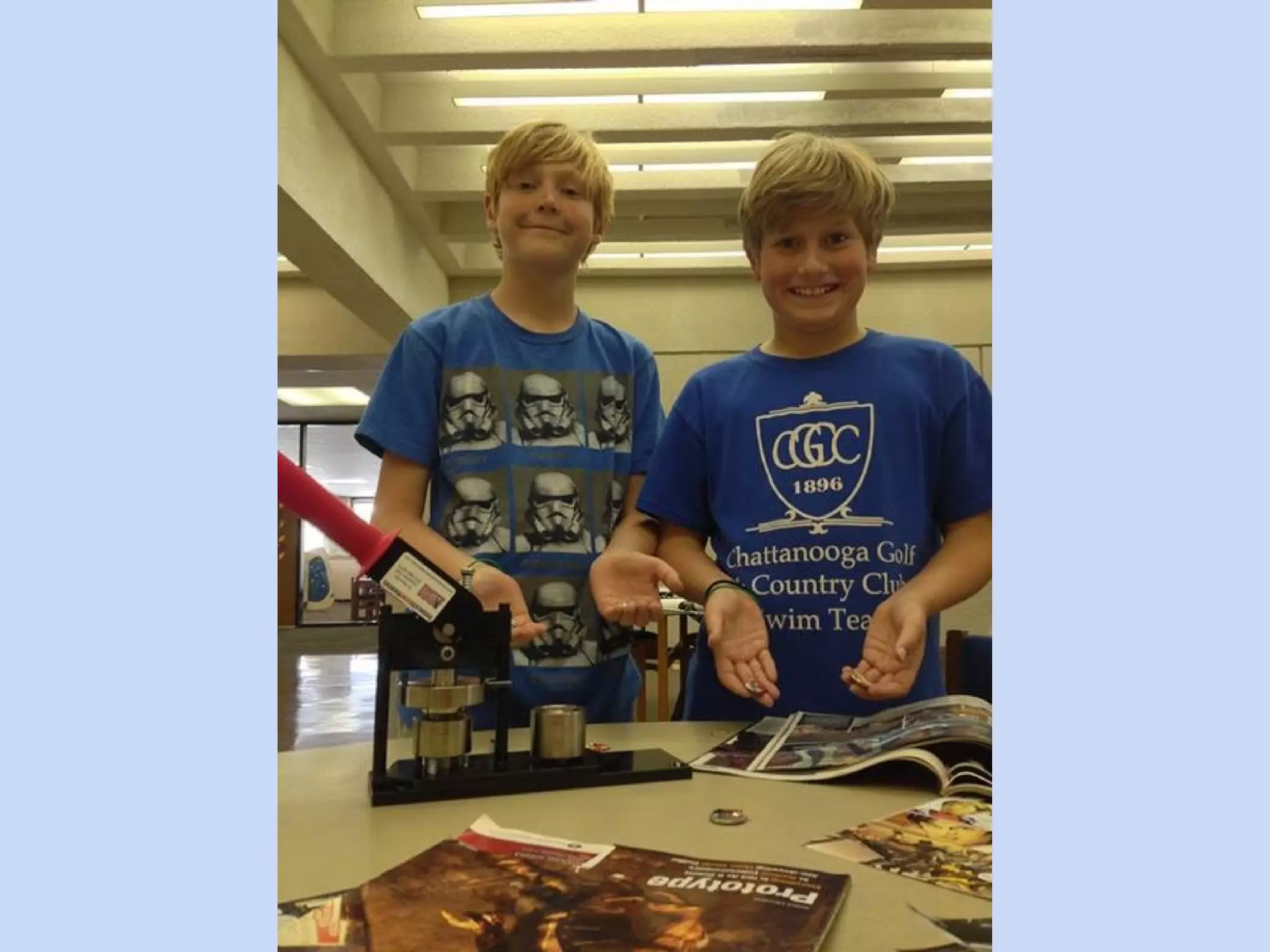
  • #4 Making for kids dates back to the first storytime crafts. Kids got supplies and were given time to create. Voila--making! Making for kids in the library space has become more and more relevant in previous years as a positive addition to a community. Schools are cutting “special” classes like art, sewing, and woodshop. Classroom subjects that may have provided space for making in the past--science with its experiments and inventions, history with its creative dioramas--nwo have little to no space for hands-on exploration and making. The rigid requirements for schools and students across the country have forced out time for kids to be makers. The library is poised to fill that void in a manner that stimulates children’s creativity and problem-solving and promotes a love of the library.
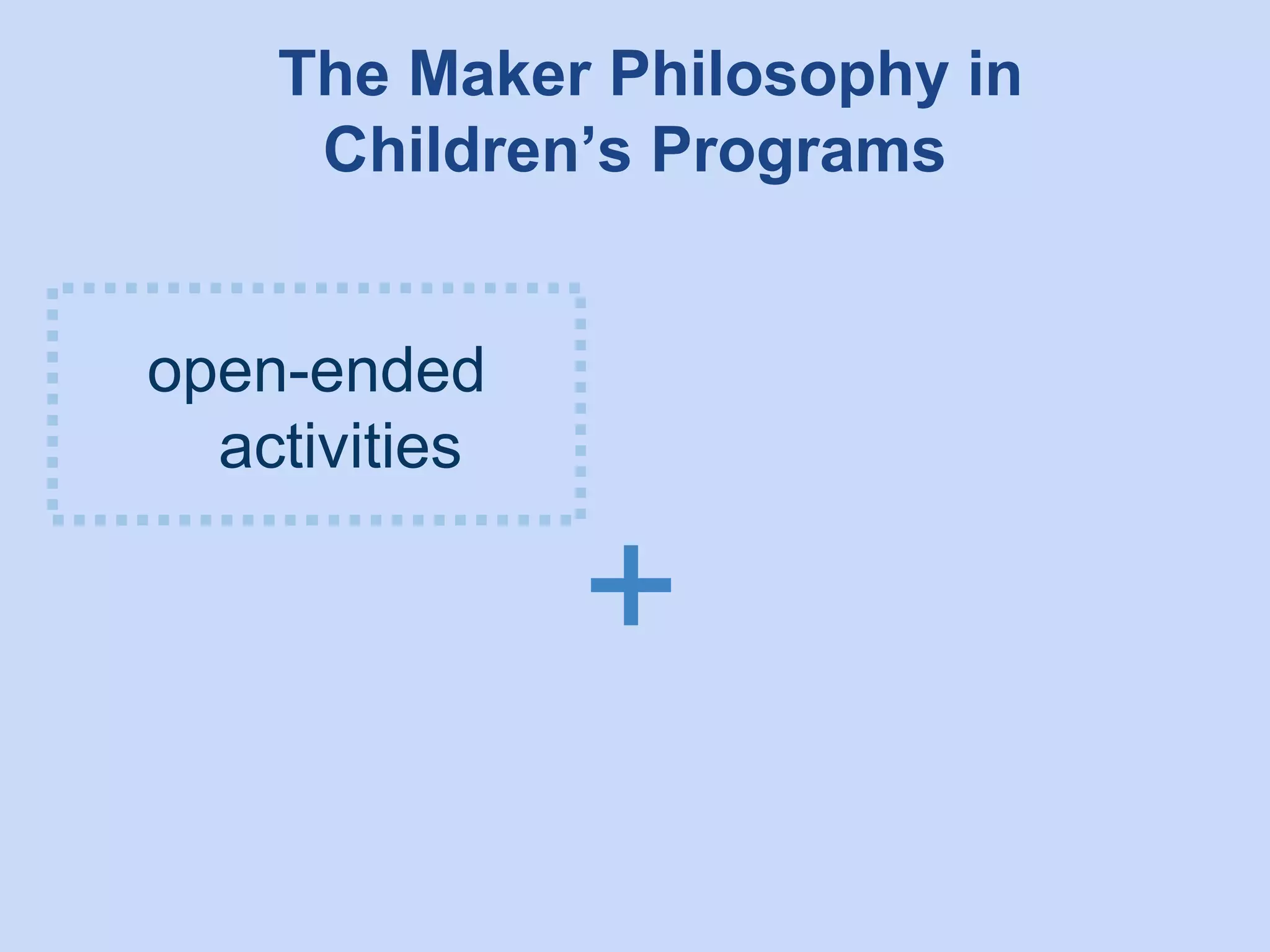
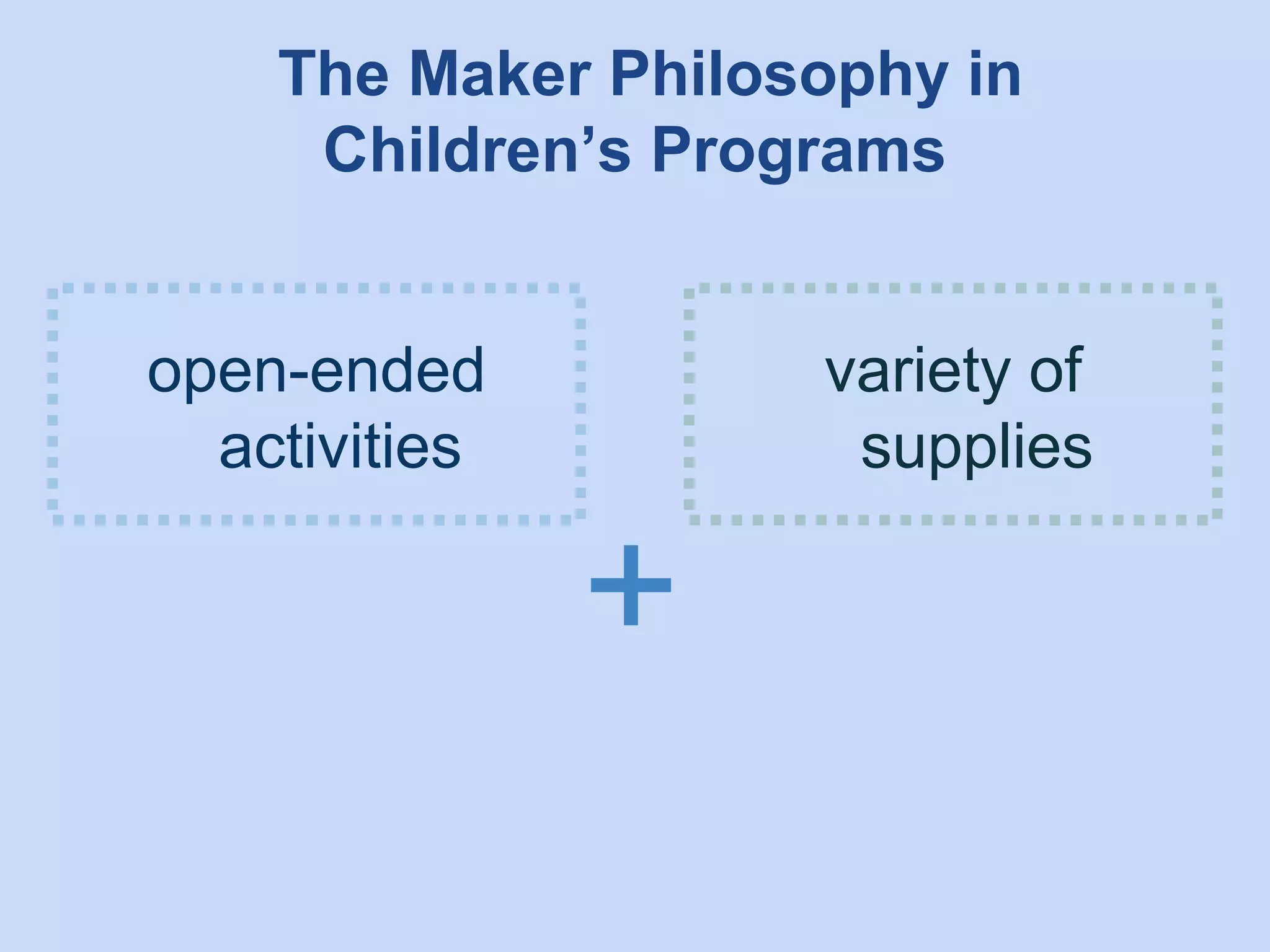
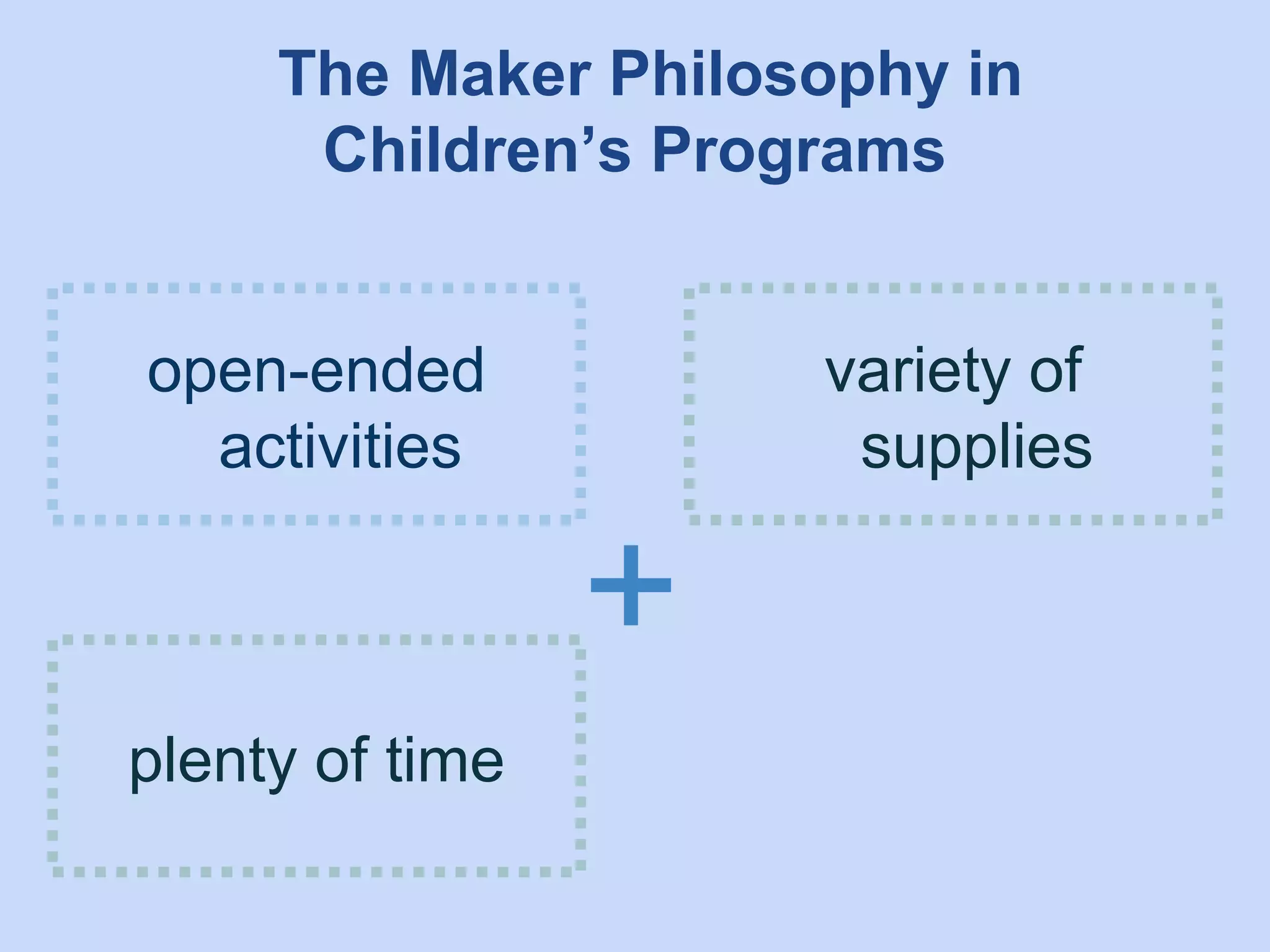
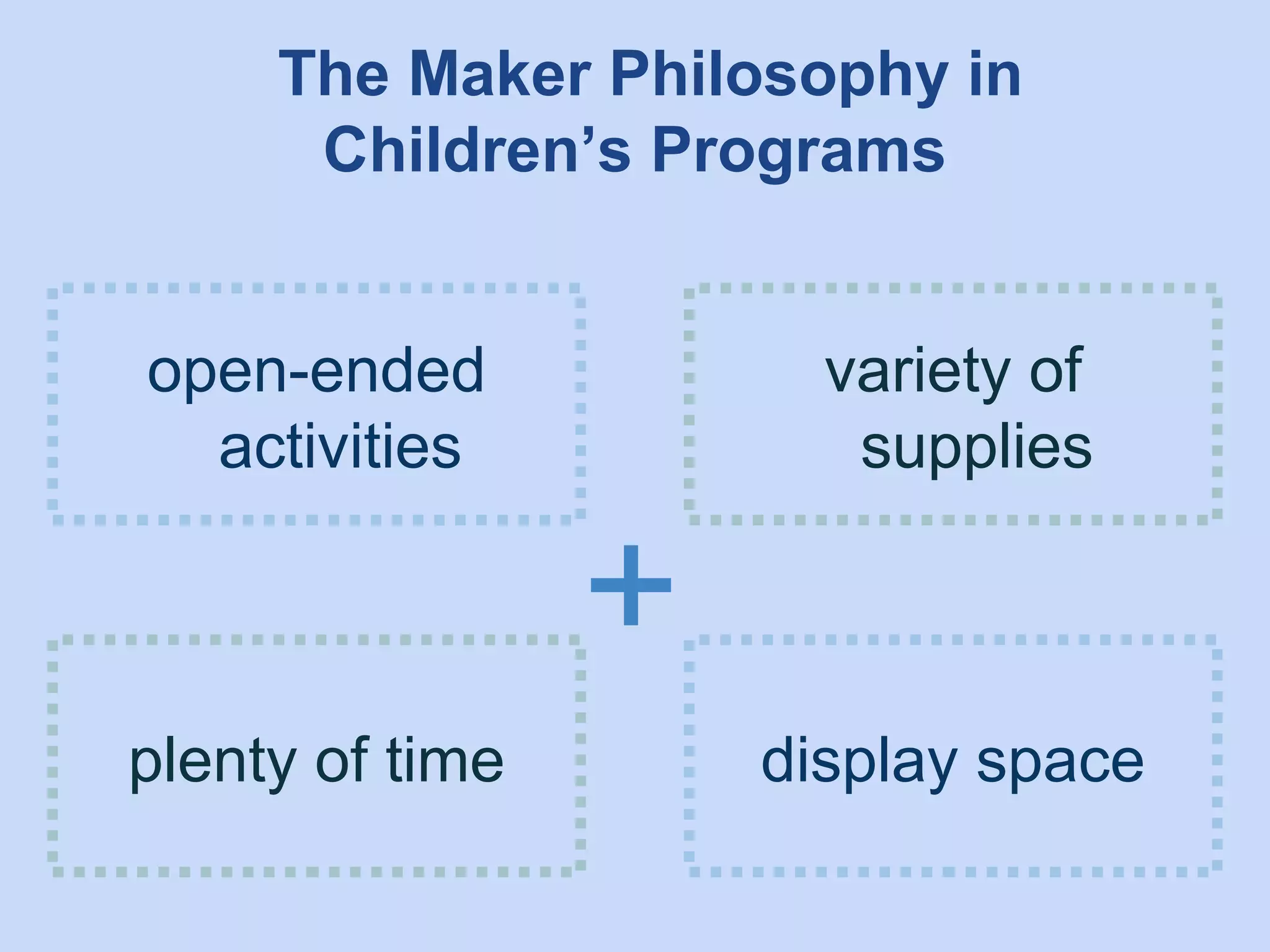
  • #5 Making in children’s programming doesn’t necessitate a high level of staff expertise, and it doesn’t require expensive equipment. These things are great, of course--it would be awesome to help make a wooden boat with a skilled craftsman--but not vital to a positive maker experience for kids. What does matter: Offering open-ended activities--Activities with rigid rules and product outcomes don’t promote creativity in the same way that open-ended activities do. Opt for programs that allow children to interact in multiple ways at their own pace. Variety of supplies--Having a variety of tools and supplies for children to use in a program promotes the maker philosophy in two ways: 1) it encourages exploration of materials, and 2) it promotes inventive, child-directed creation Plenty of time--Most adults couldn’t whip out a scarf in a 45-minute knitting-for-beginners program; why should we diminish kids’ ability to engage in making by imposing too-short time limits? Plan to keep a space open for a good chunk of time. Display space--Not a total necessity, but having a display space where children can elect to temporarily display creations is a great thing to offer. It gives kids a sense of pride in their hard work, they feel invested in the library, and the creations draw others’ attention to your programs.
  • #6 Making in children’s programming doesn’t necessitate a high level of staff expertise, and it doesn’t require expensive equipment. These things are great, of course--it would be awesome to help make a wooden boat with a skilled craftsman--but not vital to a positive maker experience for kids. What does matter: Offering open-ended activities--Activities with rigid rules and product outcomes don’t promote creativity in the same way that open-ended activities do. Opt for programs that allow children to interact in multiple ways at their own pace. Variety of supplies--Having a variety of tools and supplies for children to use in a program promotes the maker philosophy in two ways: 1) it encourages exploration of materials, and 2) it promotes inventive, child-directed creation Plenty of time--Most adults couldn’t whip out a scarf in a 45-minute knitting-for-beginners program; why should we diminish kids’ ability to engage in making by imposing too-short time limits? Plan to keep a space open for a good chunk of time. Display space--Not a total necessity, but having a display space where children can elect to temporarily display creations is a great thing to offer. It gives kids a sense of pride in their hard work, they feel invested in the library, and the creations draw others’ attention to your programs.
  • #7 Making in children’s programming doesn’t necessitate a high level of staff expertise, and it doesn’t require expensive equipment. These things are great, of course--it would be awesome to help make a wooden boat with a skilled craftsman--but not vital to a positive maker experience for kids. What does matter: Offering open-ended activities--Activities with rigid rules and product outcomes don’t promote creativity in the same way that open-ended activities do. Opt for programs that allow children to interact in multiple ways at their own pace. Variety of supplies--Having a variety of tools and supplies for children to use in a program promotes the maker philosophy in two ways: 1) it encourages exploration of materials, and 2) it promotes inventive, child-directed creation Plenty of time--Most adults couldn’t whip out a scarf in a 45-minute knitting-for-beginners program; why should we diminish kids’ ability to engage in making by imposing too-short time limits? Plan to keep a space open for a good chunk of time. Display space--Not a total necessity, but having a display space where children can elect to temporarily display creations is a great thing to offer. It gives kids a sense of pride in their hard work, they feel invested in the library, and the creations draw others’ attention to your programs.
  • #8 Making in children’s programming doesn’t necessitate a high level of staff expertise, and it doesn’t require expensive equipment. These things are great, of course--it would be awesome to help make a wooden boat with a skilled craftsman--but not vital to a positive maker experience for kids. What does matter: Offering open-ended activities--Activities with rigid rules and product outcomes don’t promote creativity in the same way that open-ended activities do. Opt for programs that allow children to interact in multiple ways at their own pace. Variety of supplies--Having a variety of tools and supplies for children to use in a program promotes the maker philosophy in two ways: 1) it encourages exploration of materials, and 2) it promotes inventive, child-directed creation Plenty of time--Most adults couldn’t whip out a scarf in a 45-minute knitting-for-beginners program; why should we diminish kids’ ability to engage in making by imposing too-short time limits? Plan to keep a space open for a good chunk of time. Display space--Not a total necessity, but having a display space where children can elect to temporarily display creations is a great thing to offer. It gives kids a sense of pride in their hard work, they feel invested in the library, and the creations draw others’ attention to your programs.
  • #9 Making in children’s programming doesn’t necessitate a high level of staff expertise, and it doesn’t require expensive equipment. These things are great, of course--it would be awesome to help make a wooden boat with a skilled craftsman--but not vital to a positive maker experience for kids. What does matter: Offering open-ended activities--Activities with rigid rules and product outcomes don’t promote creativity in the same way that open-ended activities do. Opt for programs that allow children to interact in multiple ways at their own pace. Variety of supplies--Having a variety of tools and supplies for children to use in a program promotes the maker philosophy in two ways: 1) it encourages exploration of materials, and 2) it promotes inventive, child-directed creation Plenty of time--Most adults couldn’t whip out a scarf in a 45-minute knitting-for-beginners program; why should we diminish kids’ ability to engage in making by imposing too-short time limits? Plan to keep a space open for a good chunk of time. Display space--Not a total necessity, but having a display space where children can elect to temporarily display creations is a great thing to offer. It gives kids a sense of pride in their hard work, they feel invested in the library, and the creations draw others’ attention to your programs.
  • #10 All of these programs are highly modifiable, and that’s the point. Just as there’s no single correct way to build a gingerbread house--there’s a basic framework with infinite possibilities--there’s no one way to offer maker programs for children.
  • #11 All of these programs are highly modifiable, and that’s the point. Just as there’s no single correct way to build a gingerbread house--there’s a basic framework with infinite possibilities--there’s no one way to offer maker programs for children.
  • #12 All of these programs are highly modifiable, and that’s the point. Just as there’s no single correct way to build a gingerbread house--there’s a basic framework with infinite possibilities--there’s no one way to offer maker programs for children.
  • #13 All of these programs are highly modifiable, and that’s the point. Just as there’s no single correct way to build a gingerbread house--there’s a basic framework with infinite possibilities--there’s no one way to offer maker programs for children.
  • #22 Neither of us have everything we need. How do we get it? We work together
  • #23 The first step for libraries is to understand what our community wants. We need to talk to them We need to provide services that put the community first (responsive collections, programs aimed at community issues)
  • #24 The community also needs to play an active role. Individuals and groups need to provide their talents, ideas, and resources to the library to make bigger things happen.
  • #25 The community has access resources. The community wants to grow The word “library” is heavy. You say it and it elicits a reaction. We have a strong history and an even brighter future. People want to be involved with us.
  • #26 Let’s talk about DEV DEV What does matter: Offering open-ended activities--Activities with rigid rules and product outcomes don’t promote creativity in the same way that open-ended activities do. Opt for programs that allow children to interact in multiple ways at their own pace. Variety of supplies--Having a variety of tools and supplies for children to use in a program promotes the maker philosophy in two ways: 1) it encourages exploration of materials, and 2) it promotes inventive, child-directed creation Plenty of time--Most adults couldn’t whip out a scarf in a 45-minute knitting-for-beginners program; why should we diminish kids’ ability to engage in making by imposing too-short time limits? Plan to keep a space open for a good chunk of time. Display space--Not a total necessity, but having a display space where children can elect to temporarily display creations is a great thing to offer. It gives kids a sense of pride in their hard work, they feel invested in the library, and the creations draw others’ attention to your programs.
  • #27 Ta
  • #28 What does matter: Offering open-ended activities--Activities with rigid rules and product outcomes don’t promote creativity in the same way that open-ended activities do. Opt for programs that allow children to interact in multiple ways at their own pace. Variety of supplies--Having a variety of tools and supplies for children to use in a program promotes the maker philosophy in two ways: 1) it encourages exploration of materials, and 2) it promotes inventive, child-directed creation Plenty of time--Most adults couldn’t whip out a scarf in a 45-minute knitting-for-beginners program; why should we diminish kids’ ability to engage in making by imposing too-short time limits? Plan to keep a space open for a good chunk of time. Display space--Not a total necessity, but having a display space where children can elect to temporarily display creations is a great thing to offer. It gives kids a sense of pride in their hard work, they feel invested in the library, and the creations draw others’ attention to your programs.
  • #29 What does matter: Offering open-ended activities--Activities with rigid rules and product outcomes don’t promote creativity in the same way that open-ended activities do. Opt for programs that allow children to interact in multiple ways at their own pace. Variety of supplies--Having a variety of tools and supplies for children to use in a program promotes the maker philosophy in two ways: 1) it encourages exploration of materials, and 2) it promotes inventive, child-directed creation Plenty of time--Most adults couldn’t whip out a scarf in a 45-minute knitting-for-beginners program; why should we diminish kids’ ability to engage in making by imposing too-short time limits? Plan to keep a space open for a good chunk of time. Display space--Not a total necessity, but having a display space where children can elect to temporarily display creations is a great thing to offer. It gives kids a sense of pride in their hard work, they feel invested in the library, and the creations draw others’ attention to your programs.
  • #30 What does matter: Offering open-ended activities--Activities with rigid rules and product outcomes don’t promote creativity in the same way that open-ended activities do. Opt for programs that allow children to interact in multiple ways at their own pace. Variety of supplies--Having a variety of tools and supplies for children to use in a program promotes the maker philosophy in two ways: 1) it encourages exploration of materials, and 2) it promotes inventive, child-directed creation Plenty of time--Most adults couldn’t whip out a scarf in a 45-minute knitting-for-beginners program; why should we diminish kids’ ability to engage in making by imposing too-short time limits? Plan to keep a space open for a good chunk of time. Display space--Not a total necessity, but having a display space where children can elect to temporarily display creations is a great thing to offer. It gives kids a sense of pride in their hard work, they feel invested in the library, and the creations draw others’ attention to your programs.
  • #31 What does matter: Offering open-ended activities--Activities with rigid rules and product outcomes don’t promote creativity in the same way that open-ended activities do. Opt for programs that allow children to interact in multiple ways at their own pace. Variety of supplies--Having a variety of tools and supplies for children to use in a program promotes the maker philosophy in two ways: 1) it encourages exploration of materials, and 2) it promotes inventive, child-directed creation Plenty of time--Most adults couldn’t whip out a scarf in a 45-minute knitting-for-beginners program; why should we diminish kids’ ability to engage in making by imposing too-short time limits? Plan to keep a space open for a good chunk of time. Display space--Not a total necessity, but having a display space where children can elect to temporarily display creations is a great thing to offer. It gives kids a sense of pride in their hard work, they feel invested in the library, and the creations draw others’ attention to your programs.
  • #32 What does matter: Offering open-ended activities--Activities with rigid rules and product outcomes don’t promote creativity in the same way that open-ended activities do. Opt for programs that allow children to interact in multiple ways at their own pace. Variety of supplies--Having a variety of tools and supplies for children to use in a program promotes the maker philosophy in two ways: 1) it encourages exploration of materials, and 2) it promotes inventive, child-directed creation Plenty of time--Most adults couldn’t whip out a scarf in a 45-minute knitting-for-beginners program; why should we diminish kids’ ability to engage in making by imposing too-short time limits? Plan to keep a space open for a good chunk of time. Display space--Not a total necessity, but having a display space where children can elect to temporarily display creations is a great thing to offer. It gives kids a sense of pride in their hard work, they feel invested in the library, and the creations draw others’ attention to your programs.