Islam and Ethics 2
Ghiath Alahmad
‫اإلسالمي‬ ‫العصر‬ ‫في‬ ‫األخالق‬
•‫الجاهلي‬ ‫العصر‬ ‫في‬ ‫األخالق‬
•‫والنثر‬ ‫الشعر‬
–‫المروءة‬
–‫الشجاعة‬
–‫الكرامة‬
–‫الحلم‬
–‫الملهوف‬ ‫إغاثة‬
6/22/2014 2
Islamic Priniciples of Bioethics
Ghiath Alahmad
The Goal of Bio-Medical Ethics
‫الطبية‬‫األخالقيات‬‫دراسة‬ ‫من‬ ‫الغاية‬
• Generally: to provide a systematic answer
to the question of how we should behave
in the bio-medical dilemmas?
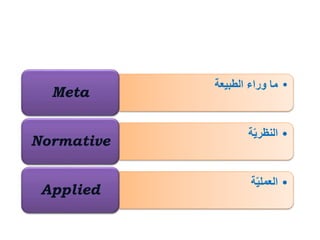
•‫الطبيعة‬ ‫وراء‬ ‫ما‬
Meta
•‫ة‬ّ‫ي‬‫النظر‬
Normative
•‫ة‬ّ‫ي‬‫العمل‬
Applied
Introduction to Ethical Theory
• “our focus will be on normative medical
ethics, i.e., how people should behave in
medical situations”
Theory 1. Moral Objectivism
‫المعيارية‬‫األخالق‬
• What is morally right or wrong doesn’t
depend on what anyone thinks is right or
wrong. 'Moral facts' are like 'physical' facts
in that what the facts are does not depend
on what anyone thinks they are. They
simply have to be discovered.
– E.g., Divine Command Theory – what’s right is
what God commands; what’s wrong is what God
forbids
Theory 2. Moral Relativism
• What is morally right or wrong depends on
the prevailing view in the society or culture
we happen to be dealing with.
• Often presented as a tolerant view: ‘if moral
relativism is true, no one has a right to force his
moral views on others.’
Arguments for Moral Relativism
The 'Cultural Differences' Argument
– Claim: There are huge differences in moral
beliefs from culture to culture and era to era.
• E.g., Some cultures endorse the killing of elderly
members of the tribe, we condemn such actions.
Why is the Cultural Differences Argument
Weak?
• I. Controversy regarding how much
fundamental disagreement about morality
there really is
• II. Differing opinions regarding an issue
don’t prove there is no fact of the matter
about that issue
– Imagine relativism about the shape of the earth
(e.g., in the 1400s)
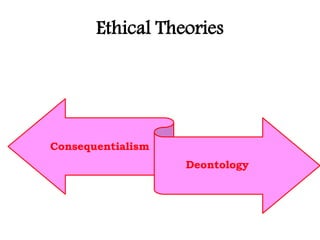
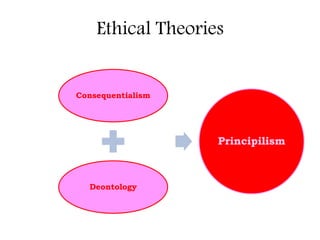
Ethical Theories
Consequentialism
Deontology
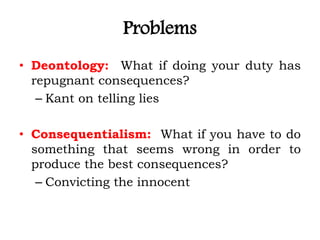
Problems
• Deontology: What if doing your duty has
repugnant consequences?
– Kant on telling lies
• Consequentialism: What if you have to do
something that seems wrong in order to
produce the best consequences?
– Convicting the innocent
Ethical Theories
Consequentialism
Deontology
Principilism
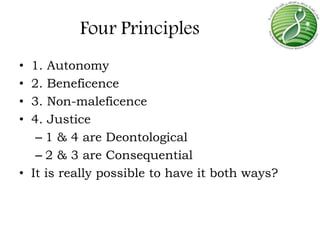
Four Principles
• 1. Autonomy
• 2. Beneficence
• 3. Non-maleficence
• 4. Justice
– 1 & 4 are Deontological
– 2 & 3 are Consequential
• It is really possible to have it both ways?
Alternative Approaches
• Virtue Ethics
• Ethics of Care
Islam & ethics
Can the Ethics be changed and improved?
(َ‫ين‬ِّ‫ن‬ِّ‫م‬ْ‫ؤ‬ُ‫م‬ْ‫ال‬ ُ‫ع‬َ‫ف‬ْ‫ن‬َ‫ت‬ ‫ى‬ َ‫ر‬ْ‫ك‬ِّ‫الذ‬ َّ‫ن‬ِّ‫إ‬َ‫ف‬ ْ‫ر‬ِّ‫ك‬َ‫ذ‬ َ‫و‬[ )‫الذا‬‫ريات‬/55]
(َ‫م‬ ‫وا‬ُ‫ر‬ِّ‫َي‬‫غ‬ُ‫ي‬ ‫ى‬َّ‫ت‬َ‫ح‬ ٍ‫م‬ ْ‫و‬َ‫ق‬ِّ‫ب‬ ‫ا‬َ‫م‬ ُ‫ر‬ِّ‫َي‬‫غ‬ُ‫ي‬ ‫ال‬ َ َّ‫اَّلل‬ َّ‫ن‬ِّ‫إ‬ْ‫م‬ِّ‫ه‬ُِِّ‫ف‬ْ‫ن‬ََِّ‫ب‬ ‫ا‬[ )‫الرعد‬/11]
(‫مكارم‬ ‫ألتمم‬ ‫بعثت‬ ‫إنما‬[‫رواية‬ ‫وفي‬:‫صالح‬]‫األخالق‬[ )‫ِلِلة‬
‫الصحيحية‬ ‫األحاديث‬/45]
Islam & ethics
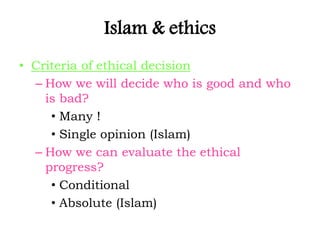
• Criteria of ethical decision
– How we will decide who is good and who
is bad?
• Many !
• Single opinion (Islam)
– How we can evaluate the ethical
progress?
• Conditional
• Absolute (Islam)
Islam & ethics
• Inheritance
(ْ‫م‬ُ‫ه‬ُ‫ت‬َّ‫ي‬ ِّ‫ر‬ُ‫ذ‬ ْ‫م‬ُ‫ه‬ْ‫ت‬َ‫ع‬َ‫ب‬َّ‫ت‬‫ا‬ َ‫و‬ ‫وا‬ُ‫ن‬َ‫م‬‫آ‬ َ‫ين‬ِّ‫ذ‬َّ‫ل‬‫ا‬ َ‫و‬َّ‫ي‬ ِّ‫ر‬ُ‫ذ‬ ْ‫م‬ِّ‫ه‬ِّ‫ب‬ ‫َا‬‫ن‬ْ‫ق‬َ‫ح‬ْ‫ل‬َ‫أ‬ ٍ‫ان‬َ‫م‬‫ي‬ِّ‫إ‬ِّ‫ب‬ْ‫ن‬ِّ‫م‬ ْ‫م‬ُ‫ه‬‫َا‬‫ن‬ْ‫ت‬َ‫ل‬َ‫أ‬ ‫ا‬َ‫م‬ َ‫و‬ ْ‫م‬ُ‫ه‬َ‫ت‬
َ‫ب‬ََِ‫ك‬ ‫ا‬َ‫م‬ِّ‫ب‬ ٍ‫ئ‬ ِّ‫ر‬ْ‫ام‬ ُّ‫ل‬ُ‫ك‬ ٍ‫ء‬ْ‫ي‬َ‫ش‬ ْ‫ن‬ِّ‫م‬ ْ‫م‬ِّ‫ه‬ِّ‫ل‬َ‫م‬َ‫ع‬‫ين‬ِّ‫ه‬ َ‫ر‬[ )‫الطور‬/21]
• Environment
(‫ِوء‬ ‫أرض‬ ‫فإنها‬ ‫أرضك‬ ‫إلى‬ ‫ترجع‬ ‫وال‬[ )‫الصحيحة‬/2640]
Islam & ethics
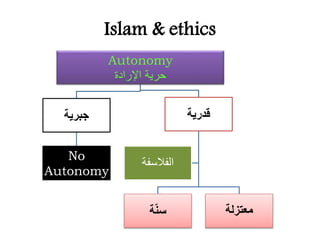
Autonomy
‫اإلرادة‬ ‫حرية‬
‫جبرية‬
No
Autonomy
‫قدرية‬
‫ة‬ّ‫ن‬‫س‬ ‫معتزلة‬
‫الفالِفة‬
Islam & ethics
(‫رهينة‬ ‫كِبت‬ ‫بما‬ ‫نفس‬ ‫كل‬)[‫المدثر‬/38]
(‫رعيته‬ ‫عن‬ ‫مِؤول‬ ‫وكلكم‬ ‫راع‬ ‫كلكم‬)[‫أحمد‬ ‫و‬ ،‫الترمذي‬ ‫و‬ ،‫أبوداود‬ ،‫مِلم‬ ،‫البخاري‬]
(‫ي‬ ‫ال‬ ‫بها‬ ‫عمل‬ ‫من‬ ‫أجر‬ ‫ومثل‬ ‫أجرها‬ ‫له‬ ‫كان‬ ‫بها‬ ‫فعمل‬ ‫حِنة‬ ‫ة‬‫ِن‬ ‫ِن‬ ‫من‬‫نقص‬
‫وو‬ ‫وزرها‬ ‫عليه‬ ‫كان‬ ‫بها‬ ‫فعمل‬ ‫ِيئة‬ ‫ة‬‫ِن‬ ‫ِن‬ ‫ومن‬ ‫شيئا‬ ‫أجورهم‬ ‫من‬‫من‬ ‫زر‬
‫شيئا‬ ‫أوزارهم‬ ‫من‬ ‫ينقص‬ ‫ال‬ ‫بعده‬ ‫من‬ ‫بها‬ ‫عمل‬)[‫مِلم‬]
OTHERs SELF
Responsibility
Islam & ethics
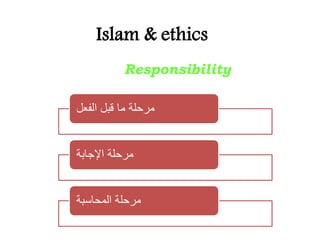
Responsibility
‫الفعل‬ ‫قبل‬ ‫ما‬ ‫مرحلة‬
‫اإلجابة‬ ‫مرحلة‬
‫المحاِبة‬ ‫مرحلة‬
Islam & ethics
‫الرذائل‬ ‫عن‬ ‫نهى‬ ‫و‬ ‫الفضائل‬ ‫إلى‬ ‫اإلسالم‬ ‫دعا‬
(َ‫و‬ َ‫ك‬ِ‫ق‬ُ‫ن‬ُ‫ع‬ ‫ى‬َ‫ل‬ِ‫إ‬ ً‫ة‬َ‫ل‬‫و‬ُ‫ل‬ْ‫غ‬َ‫م‬ َ‫ك‬َ‫د‬َ‫ي‬ ْ‫ل‬َ‫ع‬ْ‫ج‬َ‫ت‬ ‫ال‬َ‫و‬ِ‫ط‬ْ‫س‬َ‫ب‬ْ‫ل‬‫ا‬ َّ‫ل‬ُ‫ك‬ ‫ا‬َ‫ه‬ْ‫ط‬ُ‫س‬ْ‫ب‬َ‫ت‬ ‫ال‬‫ا‬ً‫م‬‫و‬ُ‫ل‬َ‫م‬ َ‫د‬ُ‫ع‬ْ‫ق‬َ‫ت‬َ‫ف‬
‫ا‬ً‫ور‬ُ‫س‬ْ‫ح‬َ‫م‬)[‫اإلسراء‬/29]
(ِ‫ب‬ َ‫ين‬ِ‫ام‬َّ‫و‬َ‫ق‬ ‫وا‬ُ‫ن‬‫ُو‬‫ك‬ ‫وا‬ُ‫ن‬َ‫م‬‫آ‬ َ‫ِين‬‫ذ‬َّ‫ل‬‫ا‬ ‫ا‬َ‫ه‬ُّ‫ي‬َ‫أ‬ ‫ا‬َ‫ي‬ِ‫ط‬ْ‫س‬ِ‫ق‬ْ‫ل‬‫ا‬)[‫النساء‬/153]
(َ‫و‬ ِ‫ان‬َ‫س‬ْ‫ح‬ِ‫اإل‬َ‫و‬ ِ‫ل‬ْ‫د‬َ‫ع‬ْ‫ل‬‫ا‬ِ‫ب‬ ُ‫ر‬ُ‫م‬ْ‫أ‬َ‫ي‬ َ َّ‫اَّلل‬ َّ‫ن‬ِ‫إ‬َ‫ه‬ْ‫ن‬َ‫ي‬َ‫و‬ ‫ى‬َ‫ب‬ْ‫ر‬ُ‫ق‬ْ‫ل‬‫ا‬ ‫ِي‬‫ذ‬ ِ‫اء‬َ‫ت‬‫ي‬ِ‫إ‬ِ‫ن‬َ‫ع‬ ‫ى‬
ُ‫ظ‬ِ‫ع‬َ‫ي‬ ِ‫ي‬ْ‫غ‬َ‫ب‬ْ‫ل‬‫ا‬َ‫و‬ ِ‫َر‬‫ك‬ْ‫ن‬ُ‫م‬ْ‫ل‬‫ا‬َ‫و‬ ِ‫اء‬َ‫ش‬ْ‫ح‬َ‫ف‬ْ‫ل‬‫ا‬َ‫ون‬ُ‫ر‬َّ‫ك‬َ‫ذ‬َ‫ت‬ ْ‫م‬ُ‫ك‬َّ‫ل‬َ‫ع‬َ‫ل‬ ْ‫م‬ُ‫ك‬)[‫الن‬‫حل‬/90]
Islam & ethics
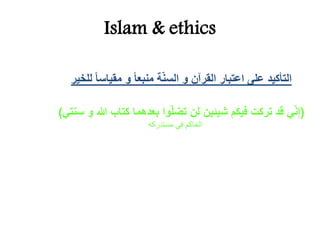
‫للخ‬ ً‫ا‬‫مقياس‬ ‫و‬ ً‫ا‬‫منبع‬ ‫ة‬ّ‫ن‬‫الس‬ ‫و‬ ‫القرآن‬ ‫اعتبار‬ ‫على‬ ‫التأكيد‬‫ير‬
(‫هللا‬ ‫كتاب‬ ‫بعدهما‬ ‫وا‬ّ‫ل‬‫تض‬ ‫لن‬ ‫شيئين‬ ‫فيكم‬ ‫تركت‬ ‫قد‬ ‫ي‬ّ‫ن‬‫إ‬‫سنتي‬ ‫و‬)
‫مِتدركه‬ ‫في‬ ‫الحاكم‬
Islam & ethics
‫األمة‬ ‫حياة‬ ‫إلى‬ ‫الفردية‬ ‫الحياة‬ ‫من‬ ‫انتقل‬
‫مجتمع‬ ‫تنشَة‬ ‫هو‬ ‫الهدف‬
(‫إ‬ ‫الواحد‬ ‫الجسد‬ ‫كمثل‬ ‫وتراحمهم‬ ‫وتعاطفهم‬ ‫توادهم‬ ‫في‬ ‫المؤمنين‬ ‫مثل‬‫ذا‬
‫والسهر‬ ‫بالحمى‬ ‫األعضاء‬ ‫سائر‬ ‫له‬ ‫تداعى‬ ‫عضو‬ ‫منه‬ ‫اشتكى‬)[‫الس‬‫لسة‬
‫الصحيحة‬1083]
Islam & ethics
•‫القصد‬ ‫و‬ ‫ة‬‫الني‬
•‫ة‬‫الني‬ ‫ِالمة‬ ‫مع‬ ‫حتى‬ ‫الضمان‬
‫المعتزلة‬
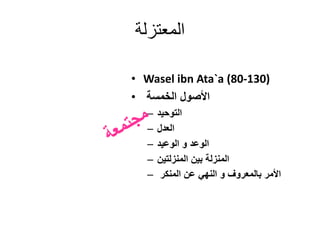
• Wasel ibn Ata`a (80-130)
• ‫الخمسة‬ ‫األصول‬
– ‫التوحيد‬
– ‫العدل‬
– ‫الوعيد‬ ‫و‬ ‫الوعد‬
– ‫المنزلتين‬ ‫بين‬ ‫المنزلة‬
– ‫المنكر‬ ‫عن‬ ‫النهي‬ ‫و‬ ‫بالمعروف‬ ‫األمر‬
‫المعتزلة‬
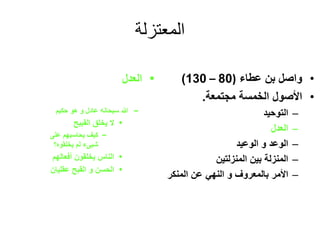
•‫عطاء‬ ‫بن‬ ‫واصل‬(80–130)
•‫مجتمعة‬ ‫الخمسة‬ ‫األصول‬.
–‫التوحيد‬
–‫العدل‬
–‫الوعد‬‫و‬‫الوعيد‬
–‫المنزلتين‬ ‫بين‬ ‫المنزلة‬
–‫بالمعروف‬ ‫األمر‬‫و‬‫المنكر‬ ‫عن‬ ‫النهي‬
•‫العدل‬
–‫حكيم‬ ‫هو‬ ‫و‬ ‫عادل‬ ‫سبحانه‬ ‫هللا‬
•‫القبيح‬ ‫يخلق‬ ‫ال‬
–‫على‬ ‫يحاسبهم‬ ‫كيف‬
‫يخلقوه؟‬ ‫لم‬ ‫شيىء‬
•‫أفعالهم‬ ‫يخلقون‬ ‫الناس‬
•‫عقليان‬ ‫القبح‬ ‫و‬ ‫الحسن‬
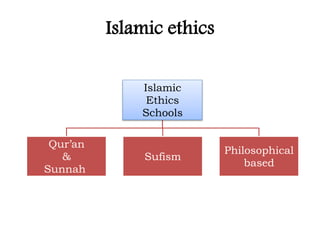
Islamic ethics
Islamic
Ethics
Schools
Qur’an
&
Sunnah
Sufism
Philosophical
based
Ethics in Islam & Philosophy
PHILOSOPHY ISLAM
Purpose To get ethical life Not only to get ethical life but follow God’s
orders
Human Mind origin Divine origin
Different criteria Only one criterion
Conditional Criterion Absolute Criterion
Conflicts opinions Fixed and clear
No disagreement with science No disagreement with science
No motivation to ethical life Good motivation
Islamic ethics
‫إذا‬‫كان‬‫اإلِالم‬‫صالح‬‫ألن‬‫تكون‬‫مقياِا‬،‫خلقيا‬‫فما‬‫هي‬
‫حاجتنا‬‫إلى‬‫البحوث‬‫األخالقية؟‬

Islamic ethics 2

  • 1.
    Islam and Ethics2 Ghiath Alahmad
  • 2.
    ‫اإلسالمي‬ ‫العصر‬ ‫في‬‫األخالق‬ •‫الجاهلي‬ ‫العصر‬ ‫في‬ ‫األخالق‬ •‫والنثر‬ ‫الشعر‬ –‫المروءة‬ –‫الشجاعة‬ –‫الكرامة‬ –‫الحلم‬ –‫الملهوف‬ ‫إغاثة‬ 6/22/2014 2 Islamic Priniciples of Bioethics Ghiath Alahmad
  • 3.
    The Goal ofBio-Medical Ethics ‫الطبية‬‫األخالقيات‬‫دراسة‬ ‫من‬ ‫الغاية‬ • Generally: to provide a systematic answer to the question of how we should behave in the bio-medical dilemmas?
  • 4.
  • 5.
    Introduction to EthicalTheory • “our focus will be on normative medical ethics, i.e., how people should behave in medical situations”
  • 6.
    Theory 1. MoralObjectivism ‫المعيارية‬‫األخالق‬ • What is morally right or wrong doesn’t depend on what anyone thinks is right or wrong. 'Moral facts' are like 'physical' facts in that what the facts are does not depend on what anyone thinks they are. They simply have to be discovered. – E.g., Divine Command Theory – what’s right is what God commands; what’s wrong is what God forbids
  • 7.
    Theory 2. MoralRelativism • What is morally right or wrong depends on the prevailing view in the society or culture we happen to be dealing with. • Often presented as a tolerant view: ‘if moral relativism is true, no one has a right to force his moral views on others.’
  • 8.
    Arguments for MoralRelativism The 'Cultural Differences' Argument – Claim: There are huge differences in moral beliefs from culture to culture and era to era. • E.g., Some cultures endorse the killing of elderly members of the tribe, we condemn such actions.
  • 9.
    Why is theCultural Differences Argument Weak? • I. Controversy regarding how much fundamental disagreement about morality there really is • II. Differing opinions regarding an issue don’t prove there is no fact of the matter about that issue – Imagine relativism about the shape of the earth (e.g., in the 1400s)
  • 10.
  • 11.
    Problems • Deontology: Whatif doing your duty has repugnant consequences? – Kant on telling lies • Consequentialism: What if you have to do something that seems wrong in order to produce the best consequences? – Convicting the innocent
  • 12.
  • 13.
    Four Principles • 1.Autonomy • 2. Beneficence • 3. Non-maleficence • 4. Justice – 1 & 4 are Deontological – 2 & 3 are Consequential • It is really possible to have it both ways?
  • 14.
    Alternative Approaches • VirtueEthics • Ethics of Care
  • 15.
    Islam & ethics Canthe Ethics be changed and improved? (َ‫ين‬ِّ‫ن‬ِّ‫م‬ْ‫ؤ‬ُ‫م‬ْ‫ال‬ ُ‫ع‬َ‫ف‬ْ‫ن‬َ‫ت‬ ‫ى‬ َ‫ر‬ْ‫ك‬ِّ‫الذ‬ َّ‫ن‬ِّ‫إ‬َ‫ف‬ ْ‫ر‬ِّ‫ك‬َ‫ذ‬ َ‫و‬[ )‫الذا‬‫ريات‬/55] (َ‫م‬ ‫وا‬ُ‫ر‬ِّ‫َي‬‫غ‬ُ‫ي‬ ‫ى‬َّ‫ت‬َ‫ح‬ ٍ‫م‬ ْ‫و‬َ‫ق‬ِّ‫ب‬ ‫ا‬َ‫م‬ ُ‫ر‬ِّ‫َي‬‫غ‬ُ‫ي‬ ‫ال‬ َ َّ‫اَّلل‬ َّ‫ن‬ِّ‫إ‬ْ‫م‬ِّ‫ه‬ُِِّ‫ف‬ْ‫ن‬ََِّ‫ب‬ ‫ا‬[ )‫الرعد‬/11] (‫مكارم‬ ‫ألتمم‬ ‫بعثت‬ ‫إنما‬[‫رواية‬ ‫وفي‬:‫صالح‬]‫األخالق‬[ )‫ِلِلة‬ ‫الصحيحية‬ ‫األحاديث‬/45]
  • 16.
    Islam & ethics •Criteria of ethical decision – How we will decide who is good and who is bad? • Many ! • Single opinion (Islam) – How we can evaluate the ethical progress? • Conditional • Absolute (Islam)
  • 17.
    Islam & ethics •Inheritance (ْ‫م‬ُ‫ه‬ُ‫ت‬َّ‫ي‬ ِّ‫ر‬ُ‫ذ‬ ْ‫م‬ُ‫ه‬ْ‫ت‬َ‫ع‬َ‫ب‬َّ‫ت‬‫ا‬ َ‫و‬ ‫وا‬ُ‫ن‬َ‫م‬‫آ‬ َ‫ين‬ِّ‫ذ‬َّ‫ل‬‫ا‬ َ‫و‬َّ‫ي‬ ِّ‫ر‬ُ‫ذ‬ ْ‫م‬ِّ‫ه‬ِّ‫ب‬ ‫َا‬‫ن‬ْ‫ق‬َ‫ح‬ْ‫ل‬َ‫أ‬ ٍ‫ان‬َ‫م‬‫ي‬ِّ‫إ‬ِّ‫ب‬ْ‫ن‬ِّ‫م‬ ْ‫م‬ُ‫ه‬‫َا‬‫ن‬ْ‫ت‬َ‫ل‬َ‫أ‬ ‫ا‬َ‫م‬ َ‫و‬ ْ‫م‬ُ‫ه‬َ‫ت‬ َ‫ب‬ََِ‫ك‬ ‫ا‬َ‫م‬ِّ‫ب‬ ٍ‫ئ‬ ِّ‫ر‬ْ‫ام‬ ُّ‫ل‬ُ‫ك‬ ٍ‫ء‬ْ‫ي‬َ‫ش‬ ْ‫ن‬ِّ‫م‬ ْ‫م‬ِّ‫ه‬ِّ‫ل‬َ‫م‬َ‫ع‬‫ين‬ِّ‫ه‬ َ‫ر‬[ )‫الطور‬/21] • Environment (‫ِوء‬ ‫أرض‬ ‫فإنها‬ ‫أرضك‬ ‫إلى‬ ‫ترجع‬ ‫وال‬[ )‫الصحيحة‬/2640]
  • 18.
    Islam & ethics Autonomy ‫اإلرادة‬‫حرية‬ ‫جبرية‬ No Autonomy ‫قدرية‬ ‫ة‬ّ‫ن‬‫س‬ ‫معتزلة‬ ‫الفالِفة‬
  • 19.
    Islam & ethics (‫رهينة‬‫كِبت‬ ‫بما‬ ‫نفس‬ ‫كل‬)[‫المدثر‬/38] (‫رعيته‬ ‫عن‬ ‫مِؤول‬ ‫وكلكم‬ ‫راع‬ ‫كلكم‬)[‫أحمد‬ ‫و‬ ،‫الترمذي‬ ‫و‬ ،‫أبوداود‬ ،‫مِلم‬ ،‫البخاري‬] (‫ي‬ ‫ال‬ ‫بها‬ ‫عمل‬ ‫من‬ ‫أجر‬ ‫ومثل‬ ‫أجرها‬ ‫له‬ ‫كان‬ ‫بها‬ ‫فعمل‬ ‫حِنة‬ ‫ة‬‫ِن‬ ‫ِن‬ ‫من‬‫نقص‬ ‫وو‬ ‫وزرها‬ ‫عليه‬ ‫كان‬ ‫بها‬ ‫فعمل‬ ‫ِيئة‬ ‫ة‬‫ِن‬ ‫ِن‬ ‫ومن‬ ‫شيئا‬ ‫أجورهم‬ ‫من‬‫من‬ ‫زر‬ ‫شيئا‬ ‫أوزارهم‬ ‫من‬ ‫ينقص‬ ‫ال‬ ‫بعده‬ ‫من‬ ‫بها‬ ‫عمل‬)[‫مِلم‬] OTHERs SELF Responsibility
  • 20.
    Islam & ethics Responsibility ‫الفعل‬‫قبل‬ ‫ما‬ ‫مرحلة‬ ‫اإلجابة‬ ‫مرحلة‬ ‫المحاِبة‬ ‫مرحلة‬
  • 21.
    Islam & ethics ‫الرذائل‬‫عن‬ ‫نهى‬ ‫و‬ ‫الفضائل‬ ‫إلى‬ ‫اإلسالم‬ ‫دعا‬ (َ‫و‬ َ‫ك‬ِ‫ق‬ُ‫ن‬ُ‫ع‬ ‫ى‬َ‫ل‬ِ‫إ‬ ً‫ة‬َ‫ل‬‫و‬ُ‫ل‬ْ‫غ‬َ‫م‬ َ‫ك‬َ‫د‬َ‫ي‬ ْ‫ل‬َ‫ع‬ْ‫ج‬َ‫ت‬ ‫ال‬َ‫و‬ِ‫ط‬ْ‫س‬َ‫ب‬ْ‫ل‬‫ا‬ َّ‫ل‬ُ‫ك‬ ‫ا‬َ‫ه‬ْ‫ط‬ُ‫س‬ْ‫ب‬َ‫ت‬ ‫ال‬‫ا‬ً‫م‬‫و‬ُ‫ل‬َ‫م‬ َ‫د‬ُ‫ع‬ْ‫ق‬َ‫ت‬َ‫ف‬ ‫ا‬ً‫ور‬ُ‫س‬ْ‫ح‬َ‫م‬)[‫اإلسراء‬/29] (ِ‫ب‬ َ‫ين‬ِ‫ام‬َّ‫و‬َ‫ق‬ ‫وا‬ُ‫ن‬‫ُو‬‫ك‬ ‫وا‬ُ‫ن‬َ‫م‬‫آ‬ َ‫ِين‬‫ذ‬َّ‫ل‬‫ا‬ ‫ا‬َ‫ه‬ُّ‫ي‬َ‫أ‬ ‫ا‬َ‫ي‬ِ‫ط‬ْ‫س‬ِ‫ق‬ْ‫ل‬‫ا‬)[‫النساء‬/153] (َ‫و‬ ِ‫ان‬َ‫س‬ْ‫ح‬ِ‫اإل‬َ‫و‬ ِ‫ل‬ْ‫د‬َ‫ع‬ْ‫ل‬‫ا‬ِ‫ب‬ ُ‫ر‬ُ‫م‬ْ‫أ‬َ‫ي‬ َ َّ‫اَّلل‬ َّ‫ن‬ِ‫إ‬َ‫ه‬ْ‫ن‬َ‫ي‬َ‫و‬ ‫ى‬َ‫ب‬ْ‫ر‬ُ‫ق‬ْ‫ل‬‫ا‬ ‫ِي‬‫ذ‬ ِ‫اء‬َ‫ت‬‫ي‬ِ‫إ‬ِ‫ن‬َ‫ع‬ ‫ى‬ ُ‫ظ‬ِ‫ع‬َ‫ي‬ ِ‫ي‬ْ‫غ‬َ‫ب‬ْ‫ل‬‫ا‬َ‫و‬ ِ‫َر‬‫ك‬ْ‫ن‬ُ‫م‬ْ‫ل‬‫ا‬َ‫و‬ ِ‫اء‬َ‫ش‬ْ‫ح‬َ‫ف‬ْ‫ل‬‫ا‬َ‫ون‬ُ‫ر‬َّ‫ك‬َ‫ذ‬َ‫ت‬ ْ‫م‬ُ‫ك‬َّ‫ل‬َ‫ع‬َ‫ل‬ ْ‫م‬ُ‫ك‬)[‫الن‬‫حل‬/90]
  • 22.
    Islam & ethics ‫للخ‬ً‫ا‬‫مقياس‬ ‫و‬ ً‫ا‬‫منبع‬ ‫ة‬ّ‫ن‬‫الس‬ ‫و‬ ‫القرآن‬ ‫اعتبار‬ ‫على‬ ‫التأكيد‬‫ير‬ (‫هللا‬ ‫كتاب‬ ‫بعدهما‬ ‫وا‬ّ‫ل‬‫تض‬ ‫لن‬ ‫شيئين‬ ‫فيكم‬ ‫تركت‬ ‫قد‬ ‫ي‬ّ‫ن‬‫إ‬‫سنتي‬ ‫و‬) ‫مِتدركه‬ ‫في‬ ‫الحاكم‬
  • 23.
    Islam & ethics ‫األمة‬‫حياة‬ ‫إلى‬ ‫الفردية‬ ‫الحياة‬ ‫من‬ ‫انتقل‬ ‫مجتمع‬ ‫تنشَة‬ ‫هو‬ ‫الهدف‬ (‫إ‬ ‫الواحد‬ ‫الجسد‬ ‫كمثل‬ ‫وتراحمهم‬ ‫وتعاطفهم‬ ‫توادهم‬ ‫في‬ ‫المؤمنين‬ ‫مثل‬‫ذا‬ ‫والسهر‬ ‫بالحمى‬ ‫األعضاء‬ ‫سائر‬ ‫له‬ ‫تداعى‬ ‫عضو‬ ‫منه‬ ‫اشتكى‬)[‫الس‬‫لسة‬ ‫الصحيحة‬1083]
  • 24.
    Islam & ethics •‫القصد‬‫و‬ ‫ة‬‫الني‬ •‫ة‬‫الني‬ ‫ِالمة‬ ‫مع‬ ‫حتى‬ ‫الضمان‬
  • 25.
    ‫المعتزلة‬ • Wasel ibnAta`a (80-130) • ‫الخمسة‬ ‫األصول‬ – ‫التوحيد‬ – ‫العدل‬ – ‫الوعيد‬ ‫و‬ ‫الوعد‬ – ‫المنزلتين‬ ‫بين‬ ‫المنزلة‬ – ‫المنكر‬ ‫عن‬ ‫النهي‬ ‫و‬ ‫بالمعروف‬ ‫األمر‬
  • 26.
    ‫المعتزلة‬ •‫عطاء‬ ‫بن‬ ‫واصل‬(80–130) •‫مجتمعة‬‫الخمسة‬ ‫األصول‬. –‫التوحيد‬ –‫العدل‬ –‫الوعد‬‫و‬‫الوعيد‬ –‫المنزلتين‬ ‫بين‬ ‫المنزلة‬ –‫بالمعروف‬ ‫األمر‬‫و‬‫المنكر‬ ‫عن‬ ‫النهي‬ •‫العدل‬ –‫حكيم‬ ‫هو‬ ‫و‬ ‫عادل‬ ‫سبحانه‬ ‫هللا‬ •‫القبيح‬ ‫يخلق‬ ‫ال‬ –‫على‬ ‫يحاسبهم‬ ‫كيف‬ ‫يخلقوه؟‬ ‫لم‬ ‫شيىء‬ •‫أفعالهم‬ ‫يخلقون‬ ‫الناس‬ •‫عقليان‬ ‫القبح‬ ‫و‬ ‫الحسن‬
  • 27.
  • 28.
    Ethics in Islam& Philosophy PHILOSOPHY ISLAM Purpose To get ethical life Not only to get ethical life but follow God’s orders Human Mind origin Divine origin Different criteria Only one criterion Conditional Criterion Absolute Criterion Conflicts opinions Fixed and clear No disagreement with science No disagreement with science No motivation to ethical life Good motivation
  • 29.