Hacking
Education
 Prof. dr. Frederik Questier
  Vrije Universiteit Brussel

Unicef Innovation Lab Kosovo
   7th of September 2012
This presentation can be found at
             http://questier.com
http://www.slideshare.net/Frederik_Questier
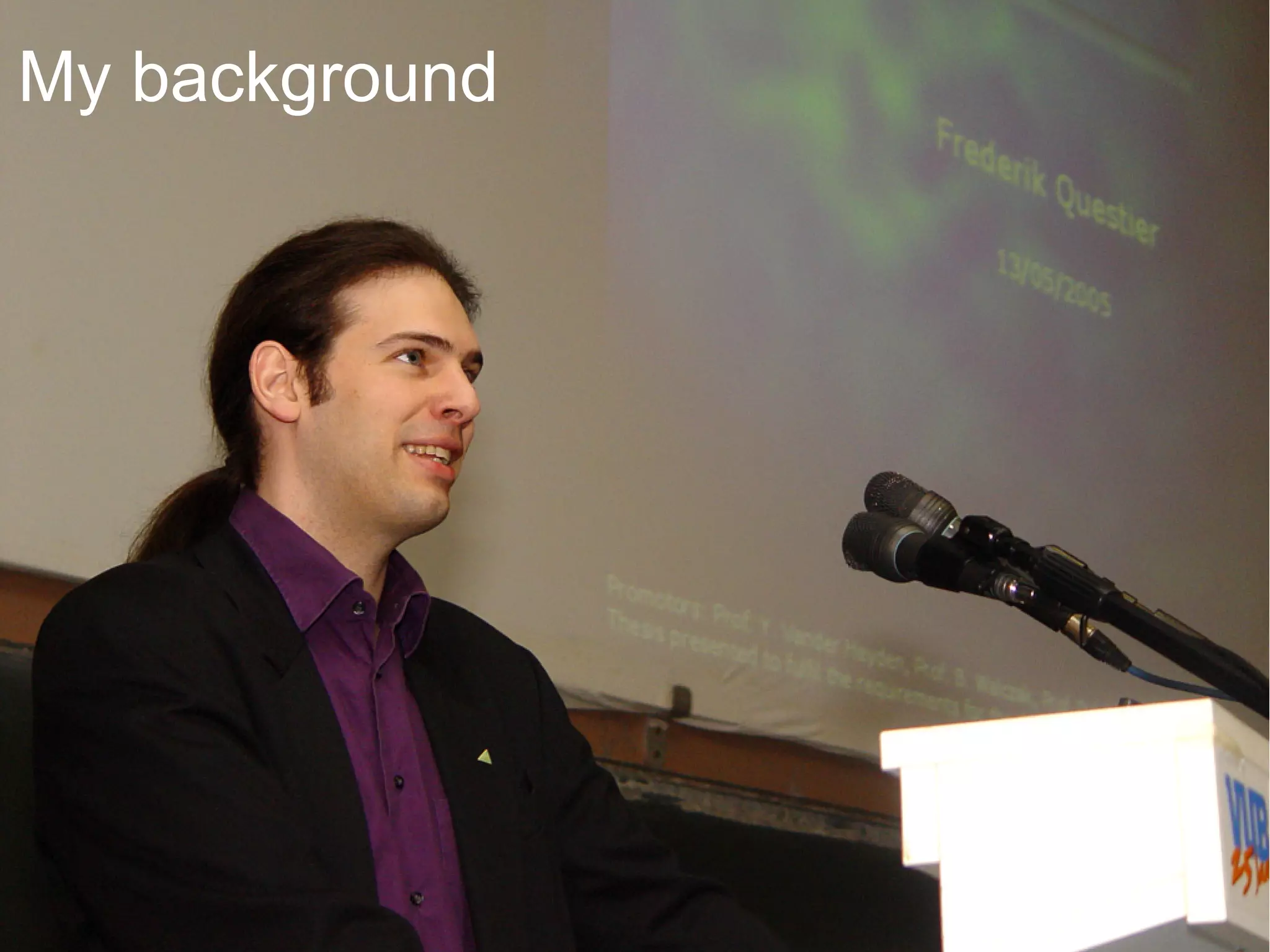
My background
Vrije Universiteit Brussel
5
6
Hacking Education
                 What's in a title?

➢   Hacking
      solving a problem
      in an extraordinary, innovative way


➢   Education
      means through which
      the knowledge and habits of a group of people
      sustain from one generation to the next

                                                      7
why ?
        8
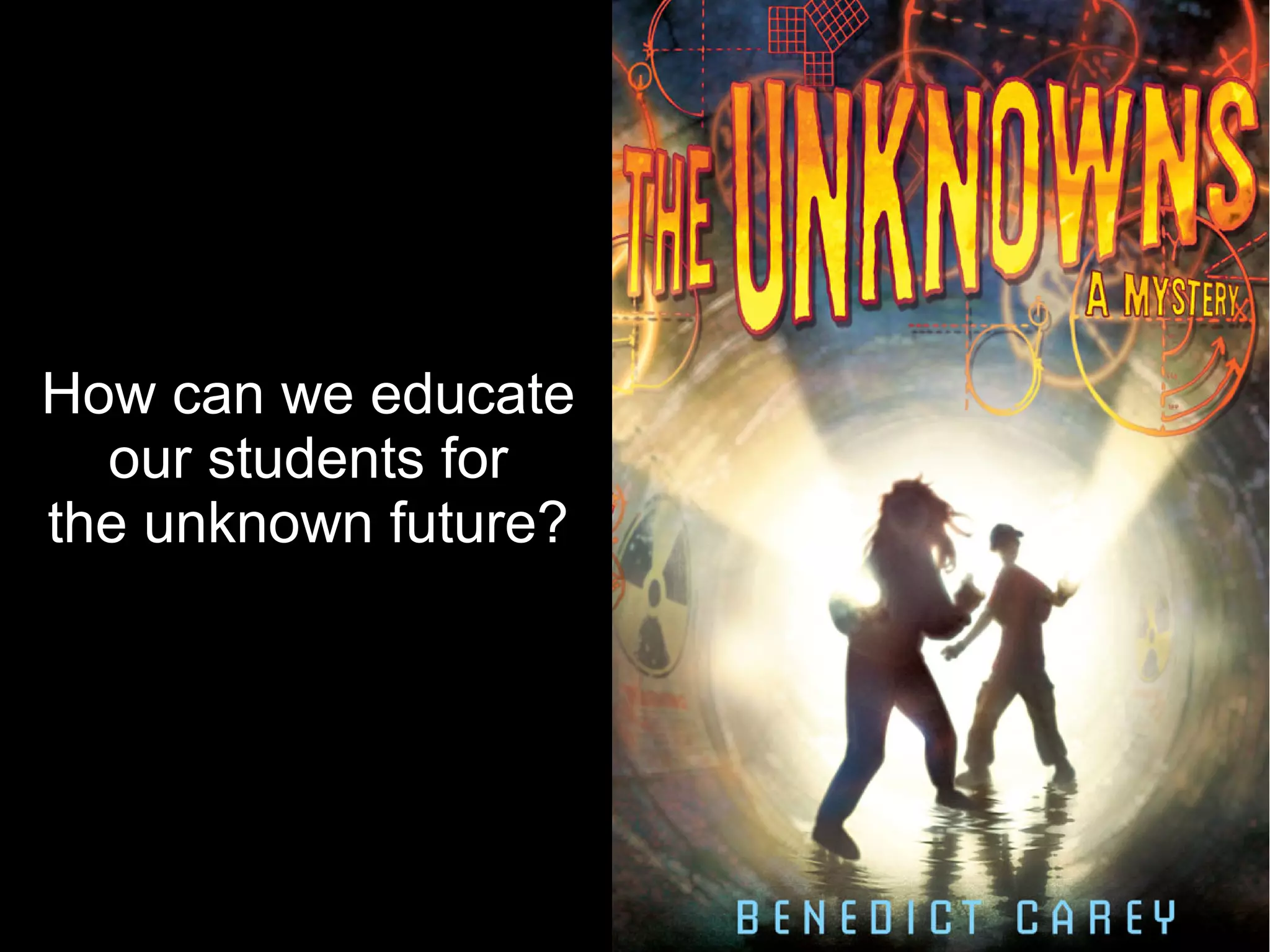
How can we educate
  our students for
the unknown future?


                      9
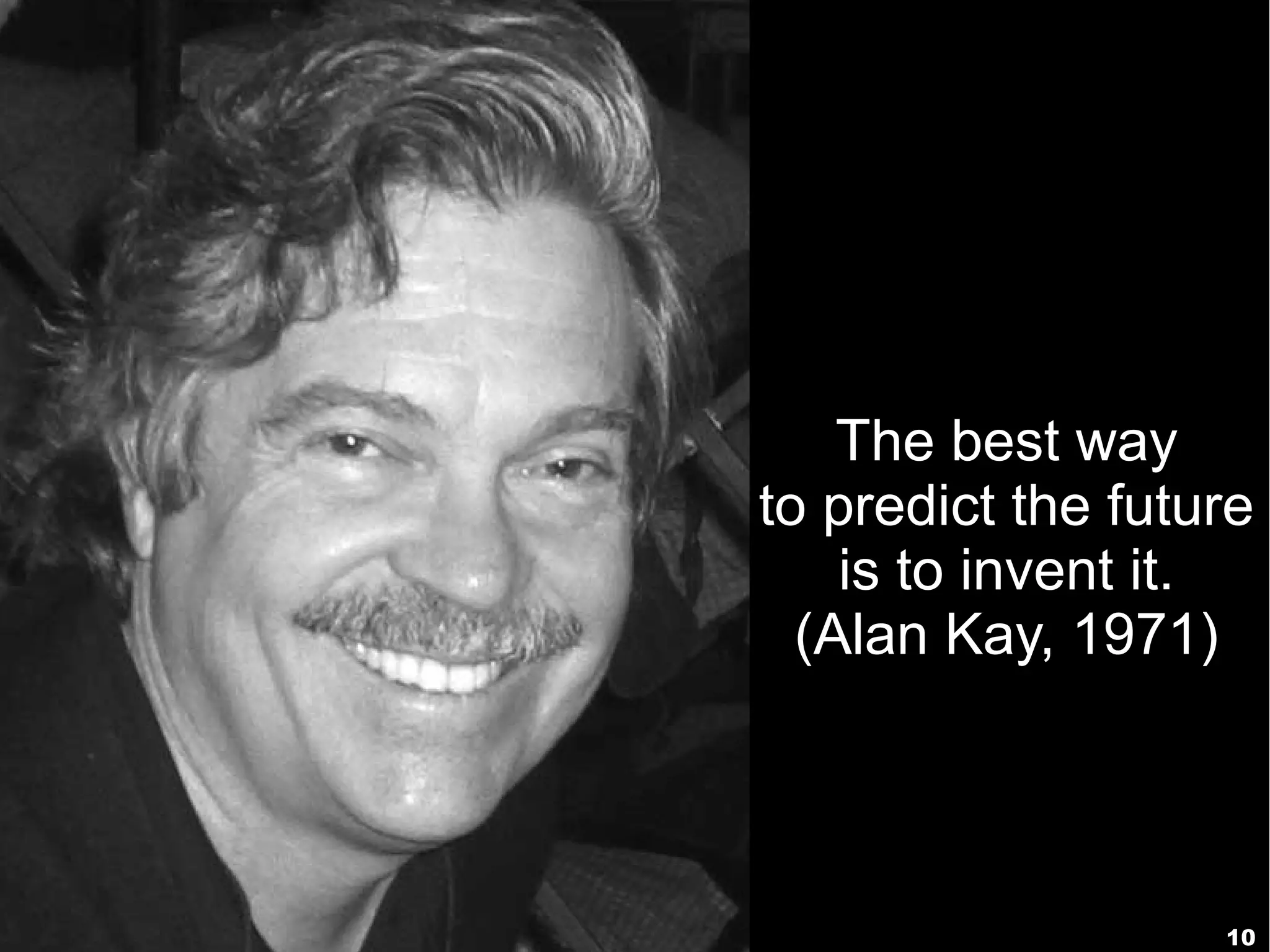
The best way
to predict the future
    is to invent it.
  (Alan Kay, 1971)


                   10
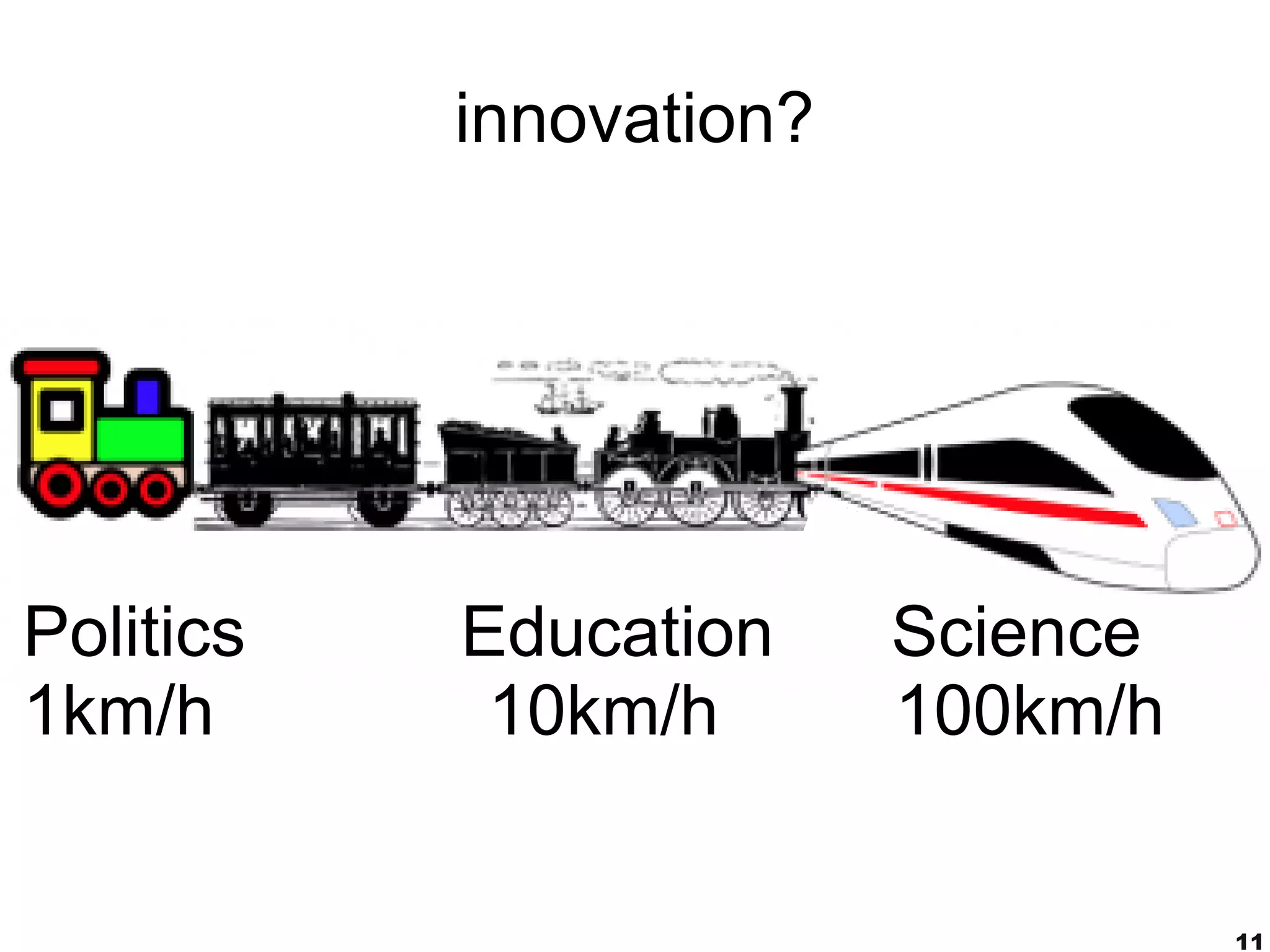
innovation?


Politics   Education     Science
1km/h       10km/h       100km/h


                                   11
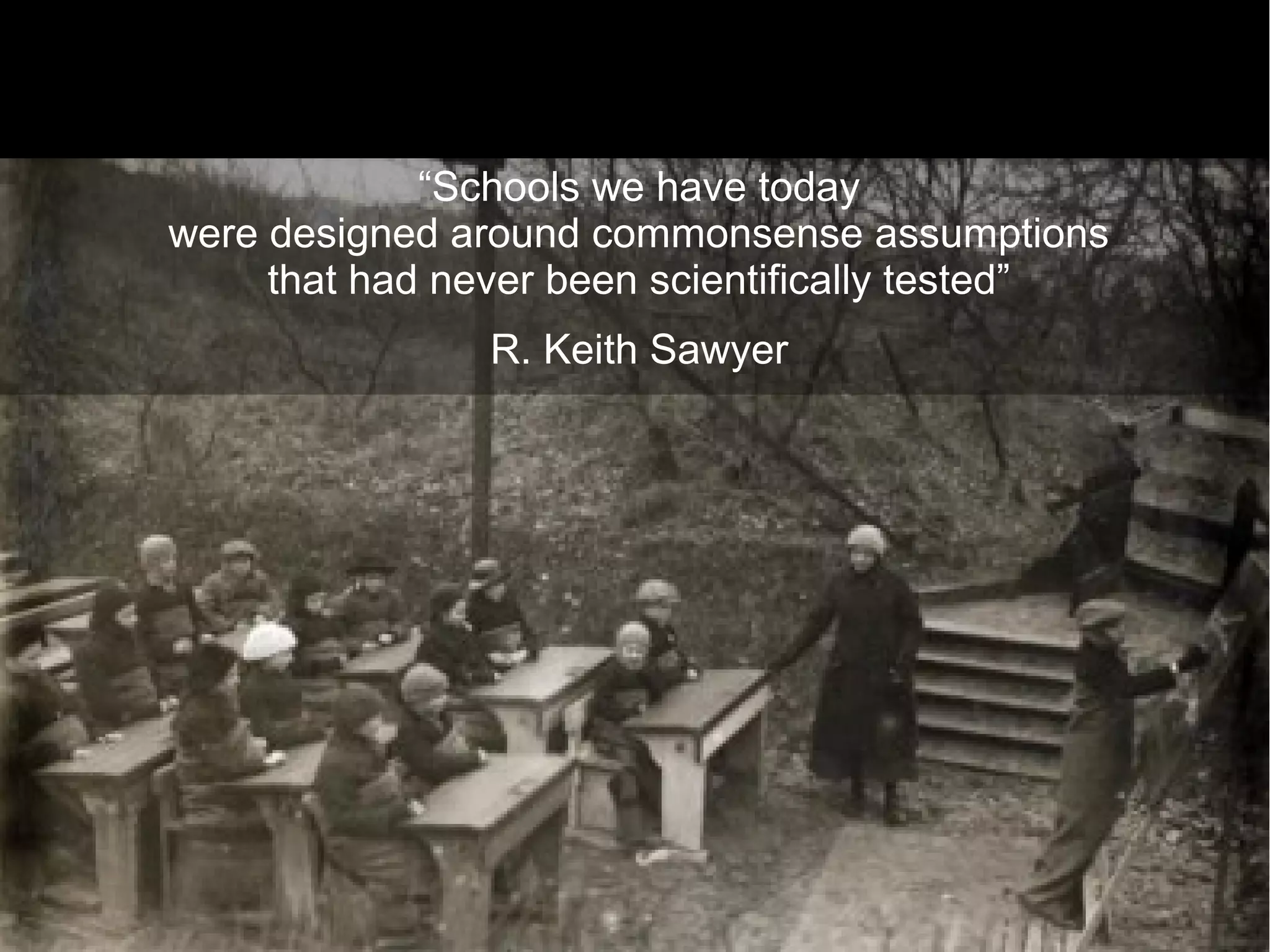
“Schools we have today
were designed around commonsense assumptions
     that had never been scientifically tested”
                R. Keith Sawyer


                                                  12
Information Society ?


                   13
Knowledge Society


                    14
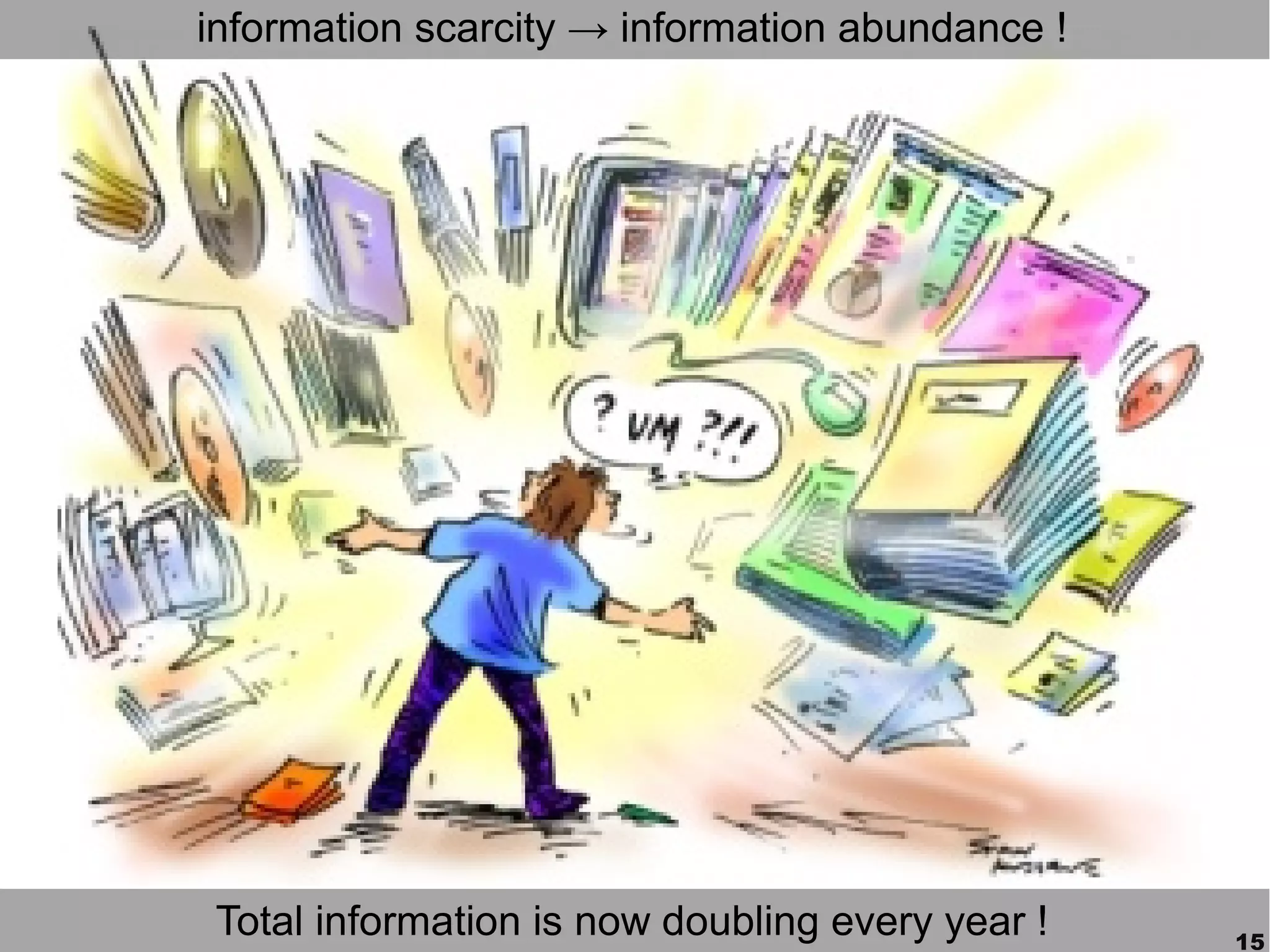
information scarcity → information abundance !


Total information is now doubling every year !   15
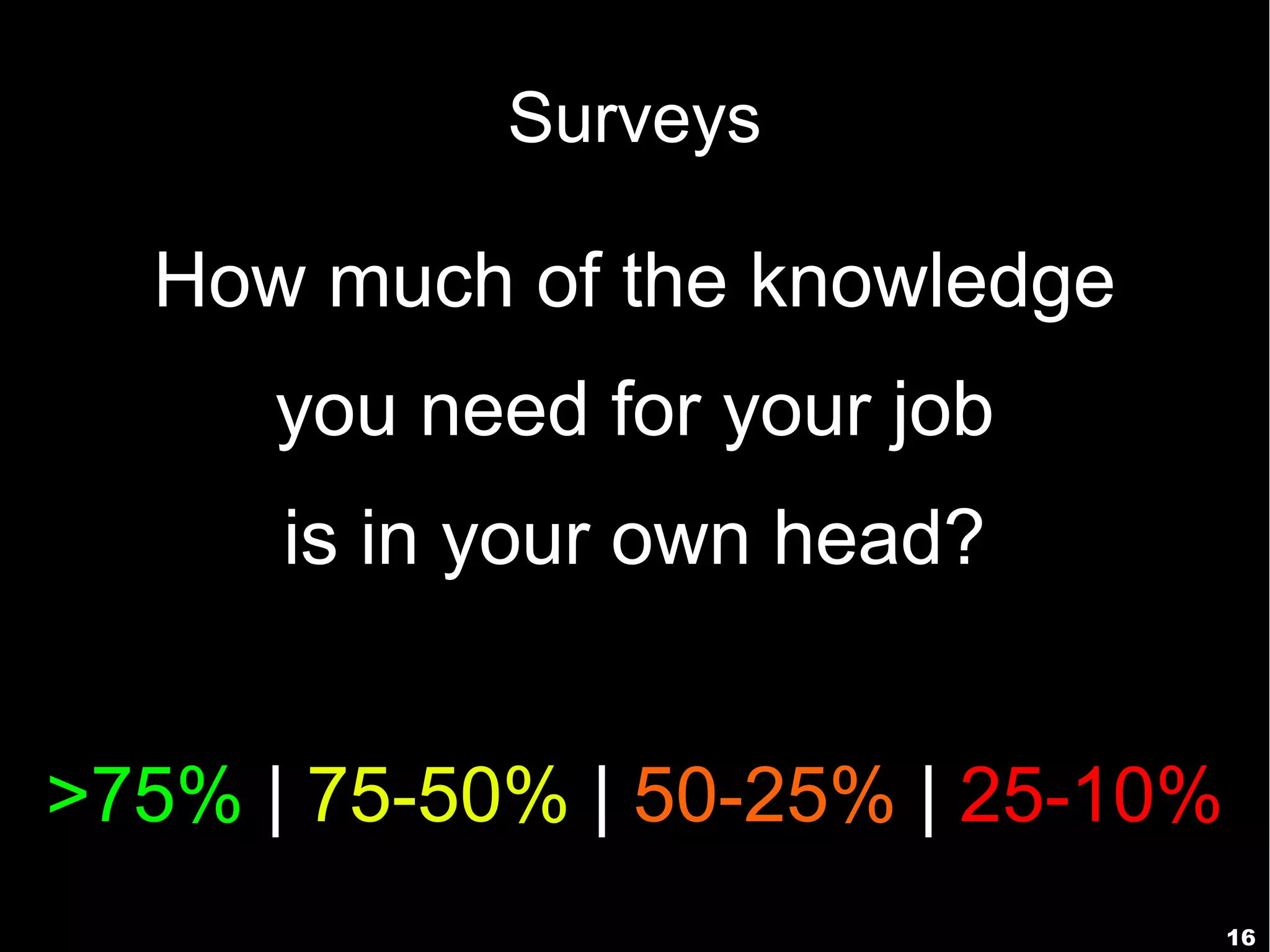
Surveys

  How much of the knowledge
      you need for your job
      is in your own head?


>75% | 75-50% | 50-25% | 25-10%
                                  16
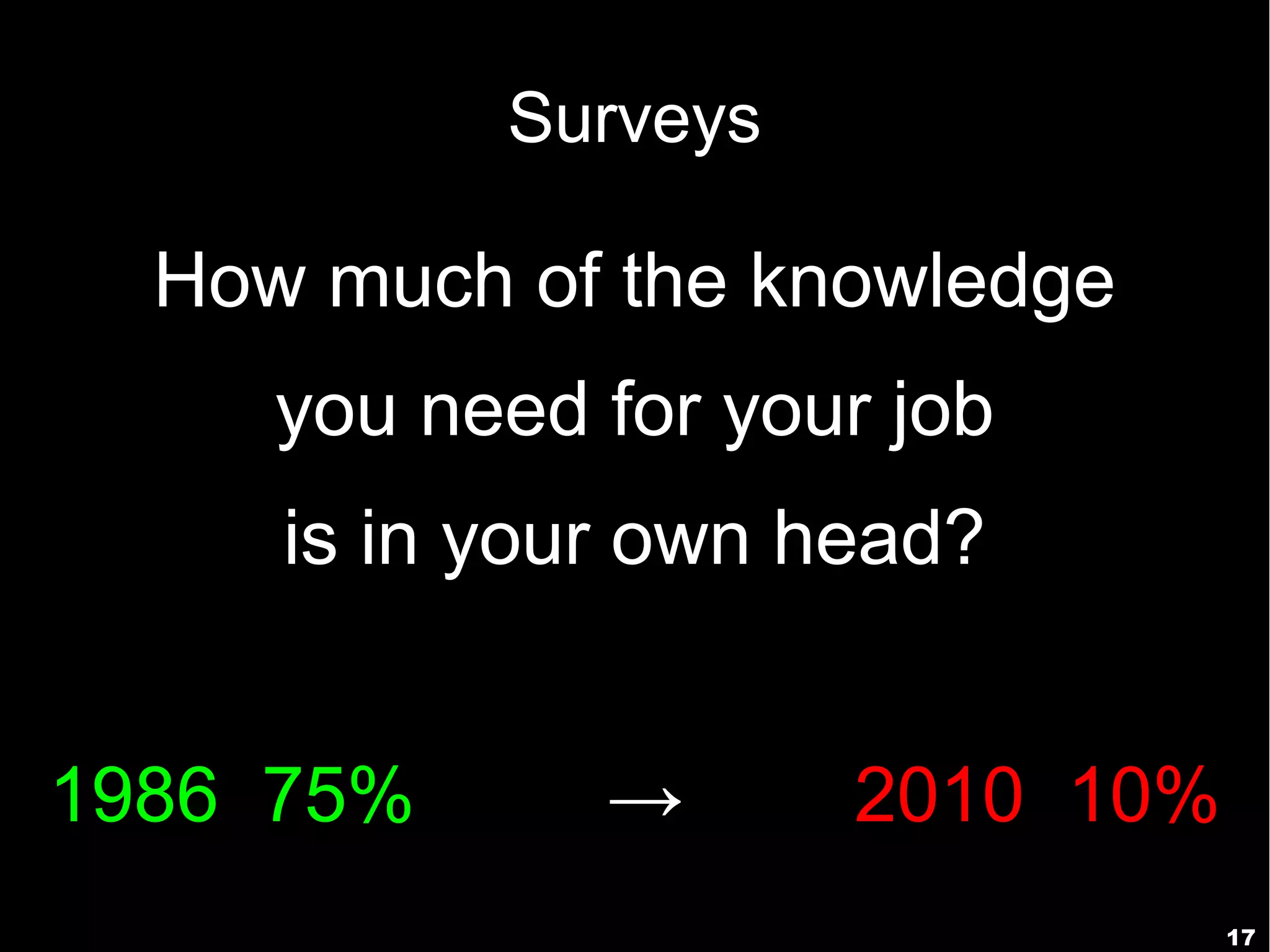
Surveys

  How much of the knowledge
     you need for your job
     is in your own head?


1986 75%      →      2010 10%
                                17
The longer one studies,
the more one comes to realize
how much one does not know      18
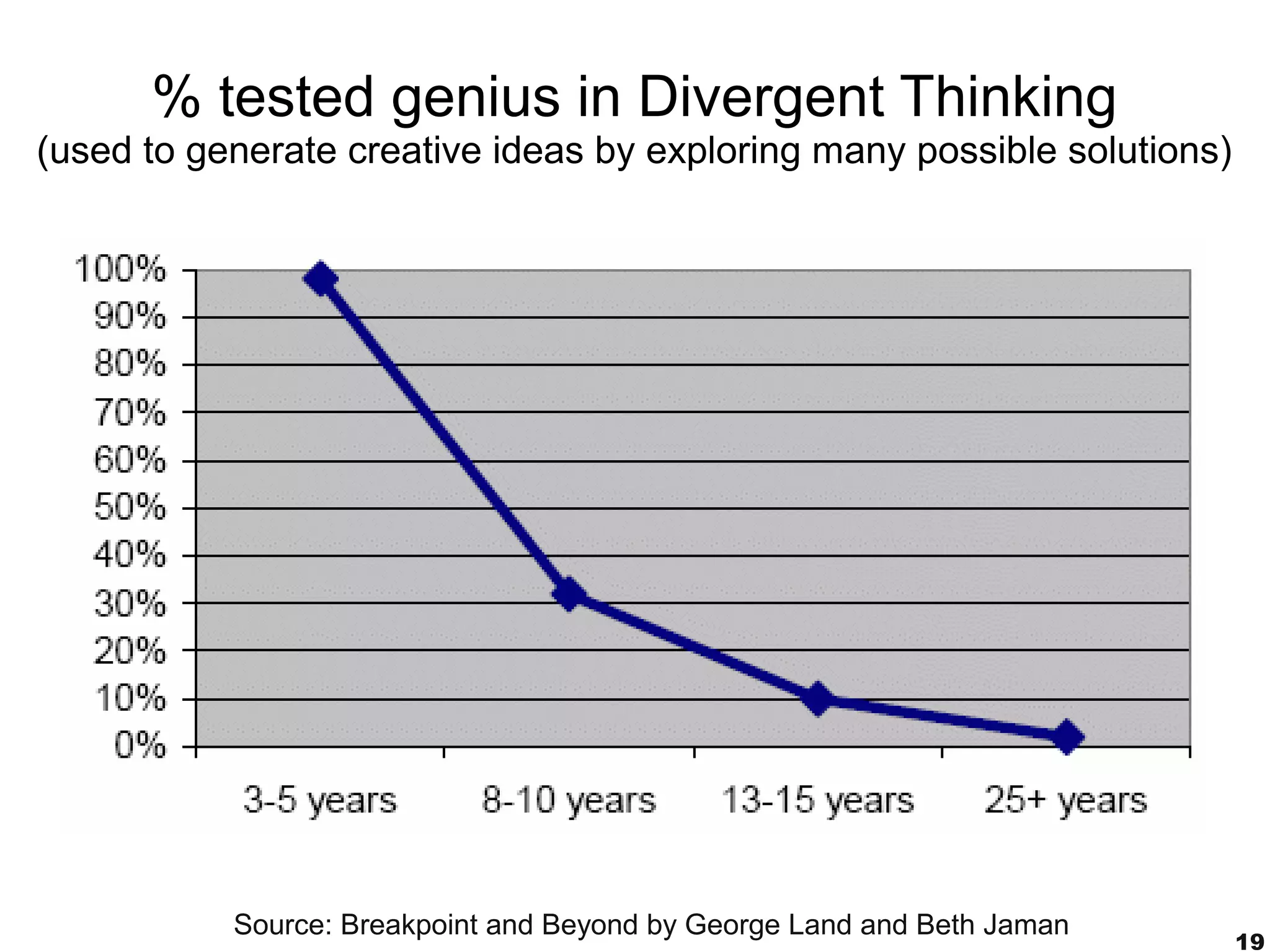
% tested genius in Divergent Thinking
(used to generate creative ideas by exploring many possible solutions)


           Source: Breakpoint and Beyond by George Land and Beth Jaman
                                                                         19
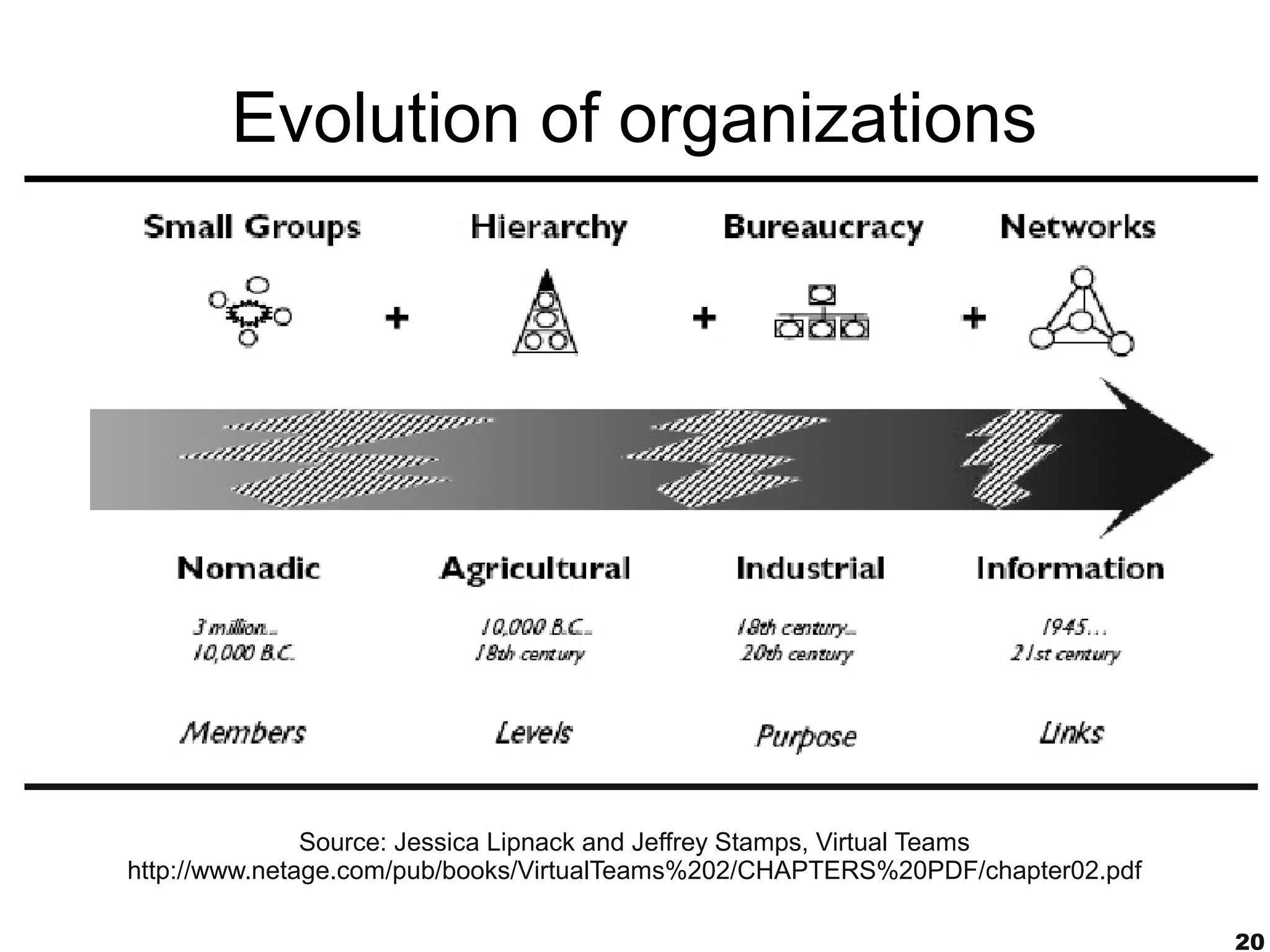
Evolution of organizations


               Source: Jessica Lipnack and Jeffrey Stamps, Virtual Teams
http://www.netage.com/pub/books/VirtualTeams%202/CHAPTERS%20PDF/chapter02.pdf

                                                                                20
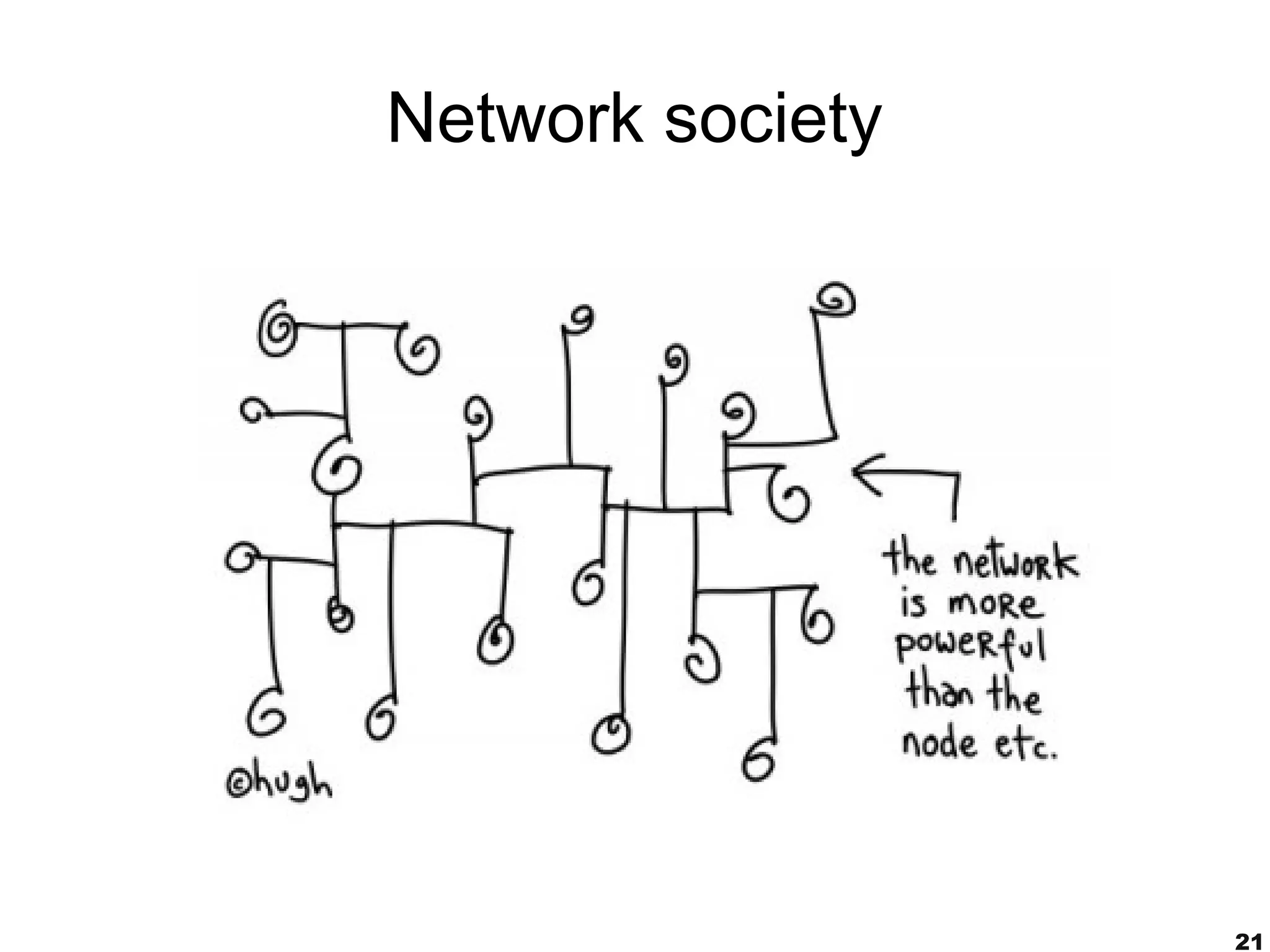
Network society


                  21
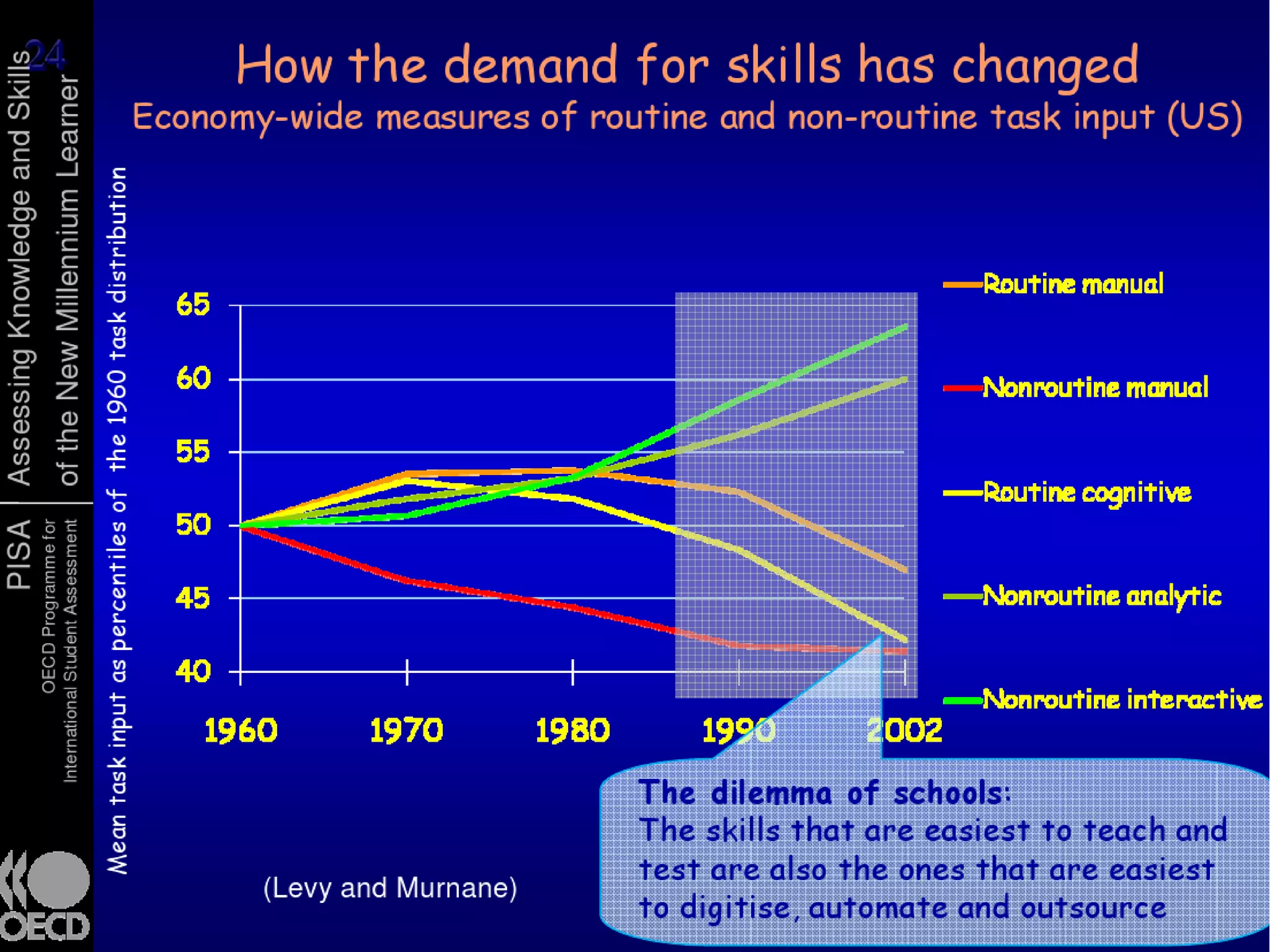
22
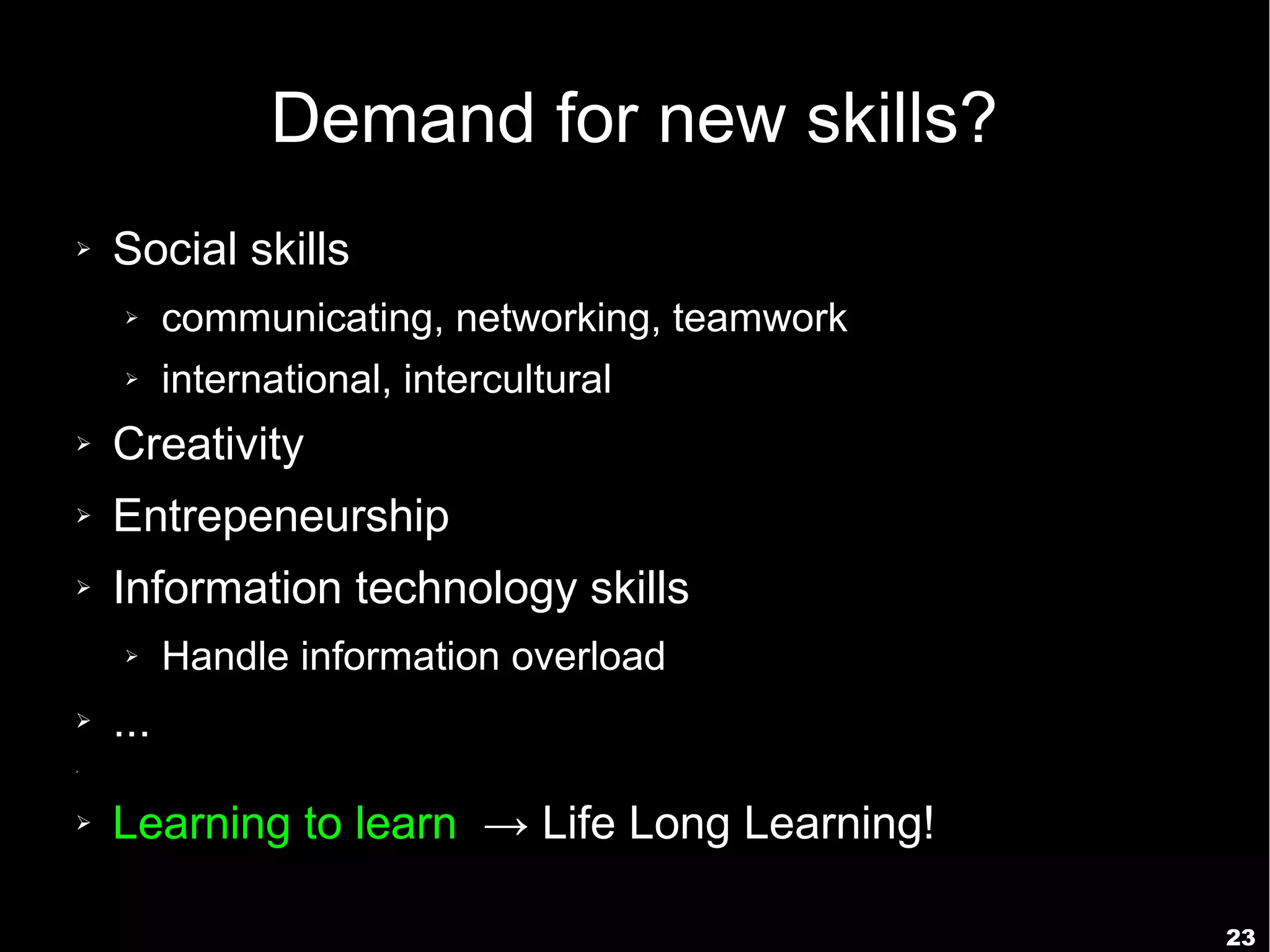
Demand for new skills?
➢   Social skills
    ➢     communicating, networking, teamwork
    ➢     international, intercultural
➢   Creativity
➢   Entrepeneurship
➢   Information technology skills
    ➢     Handle information overload
➢   ...
➢


➢   Learning to learn → Life Long Learning!

                                                23
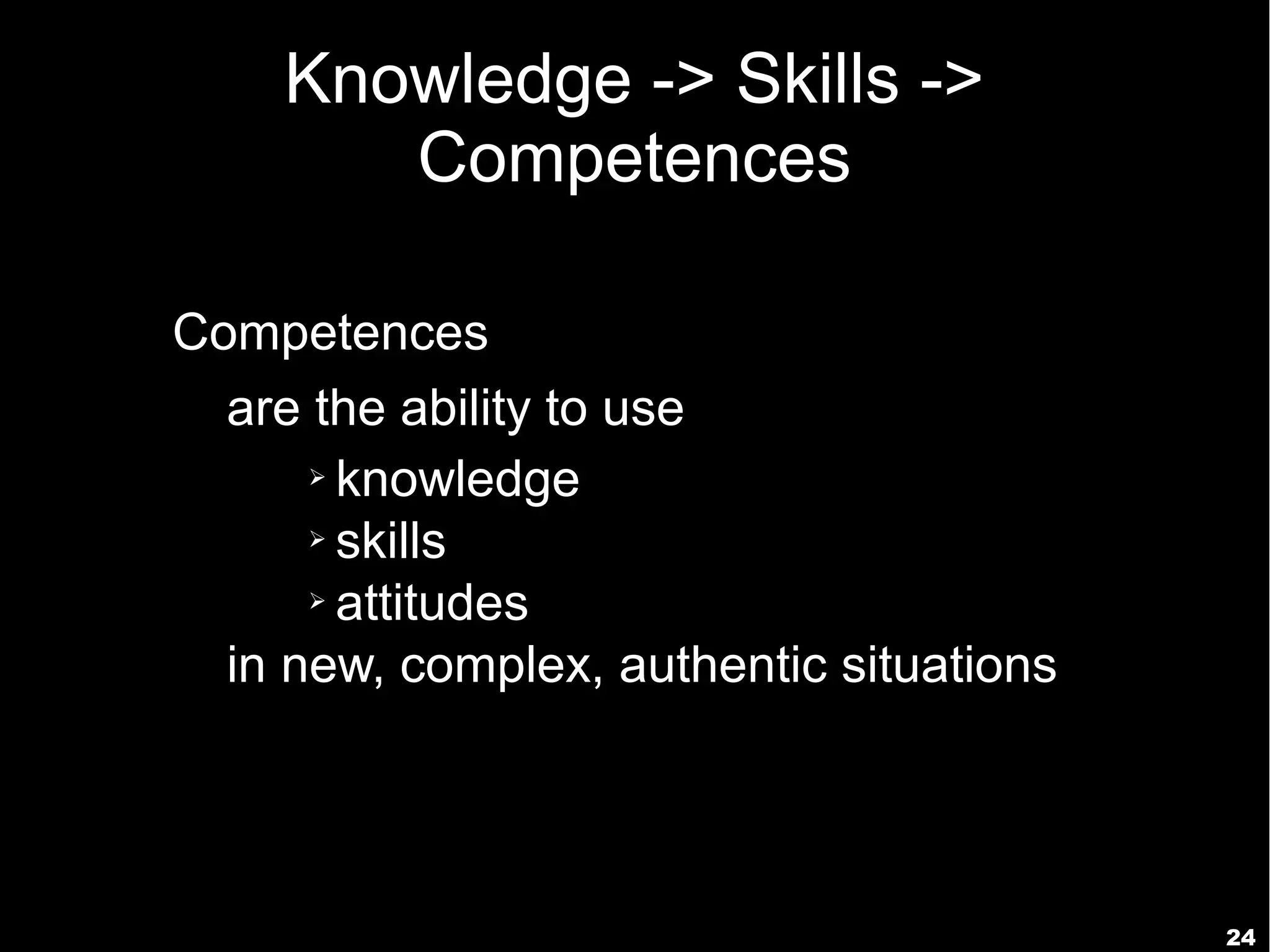
Knowledge -> Skills ->
       Competences

Competences
  are the ability to use
      ➢ knowledge

      ➢ skills

      ➢ attitudes


  in new, complex, authentic situations


                                          24
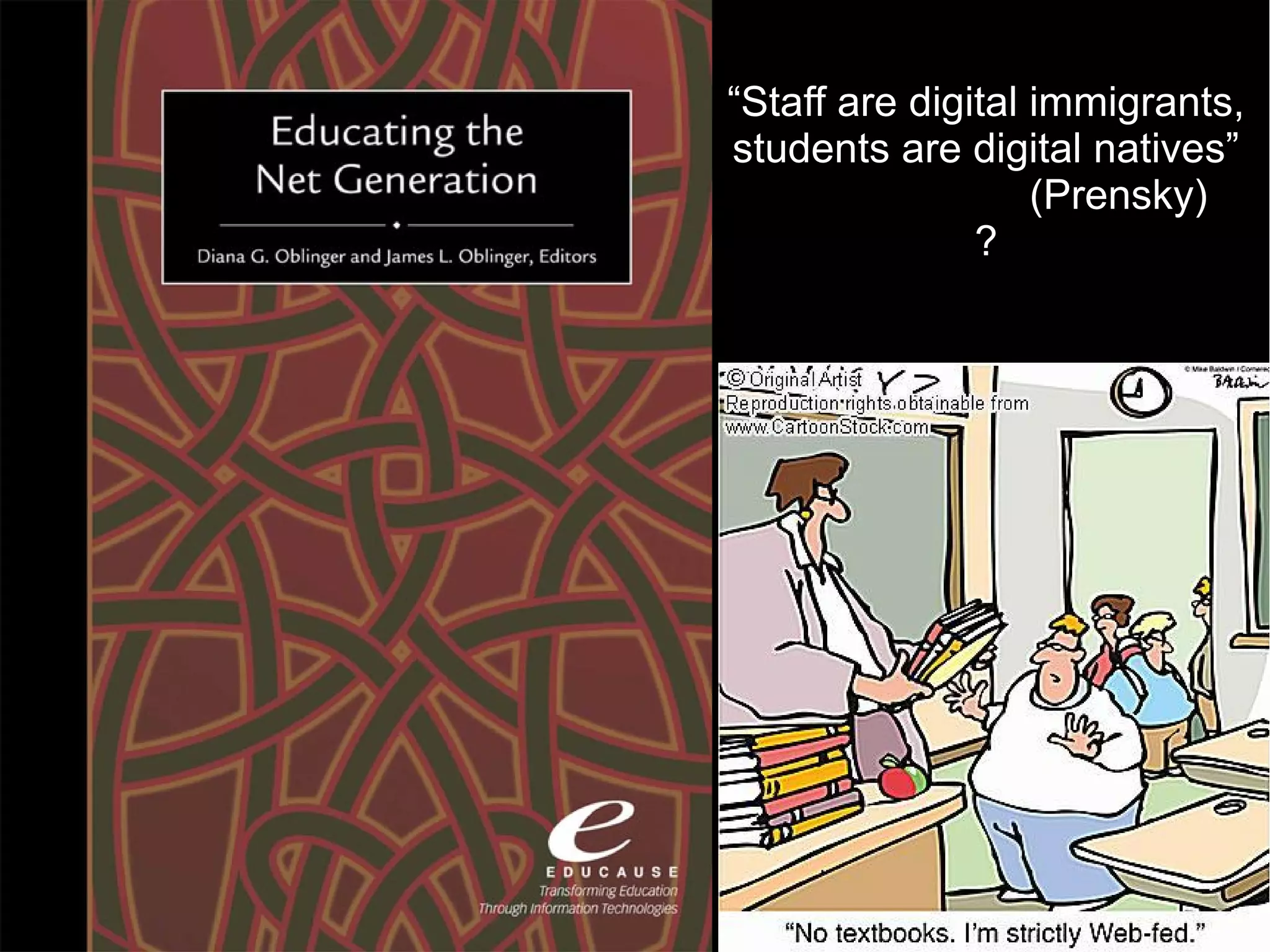
“Staff are digital immigrants,
students are digital natives”
                   (Prensky)
               ?


                            25
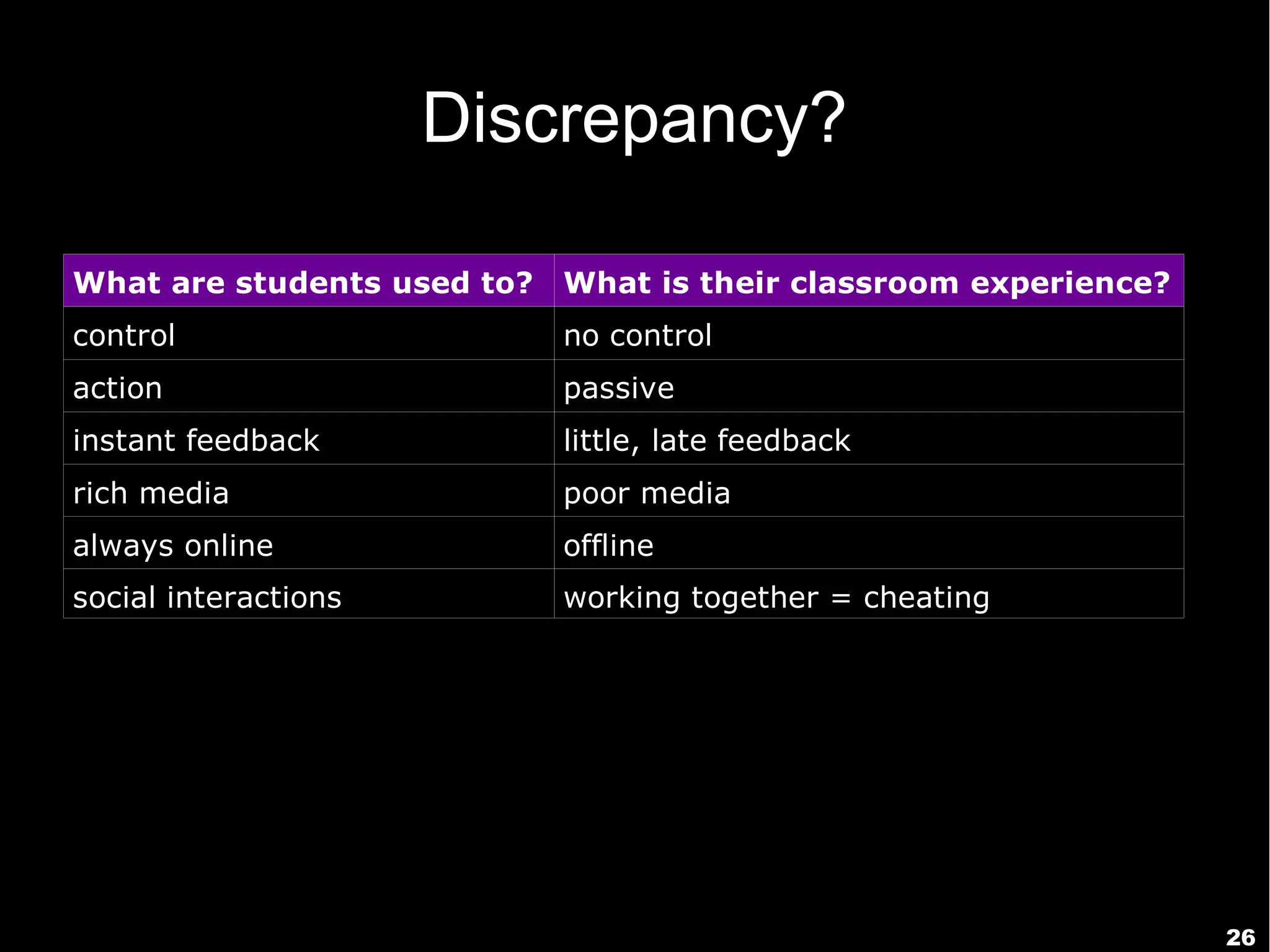
Discrepancy?

What are students used to?   What is their classroom experience?
control                      no control
action                       passive
instant feedback             little, late feedback
rich media                   poor media
always online                offline
social interactions          working together = cheating


                                                                   26
27
28
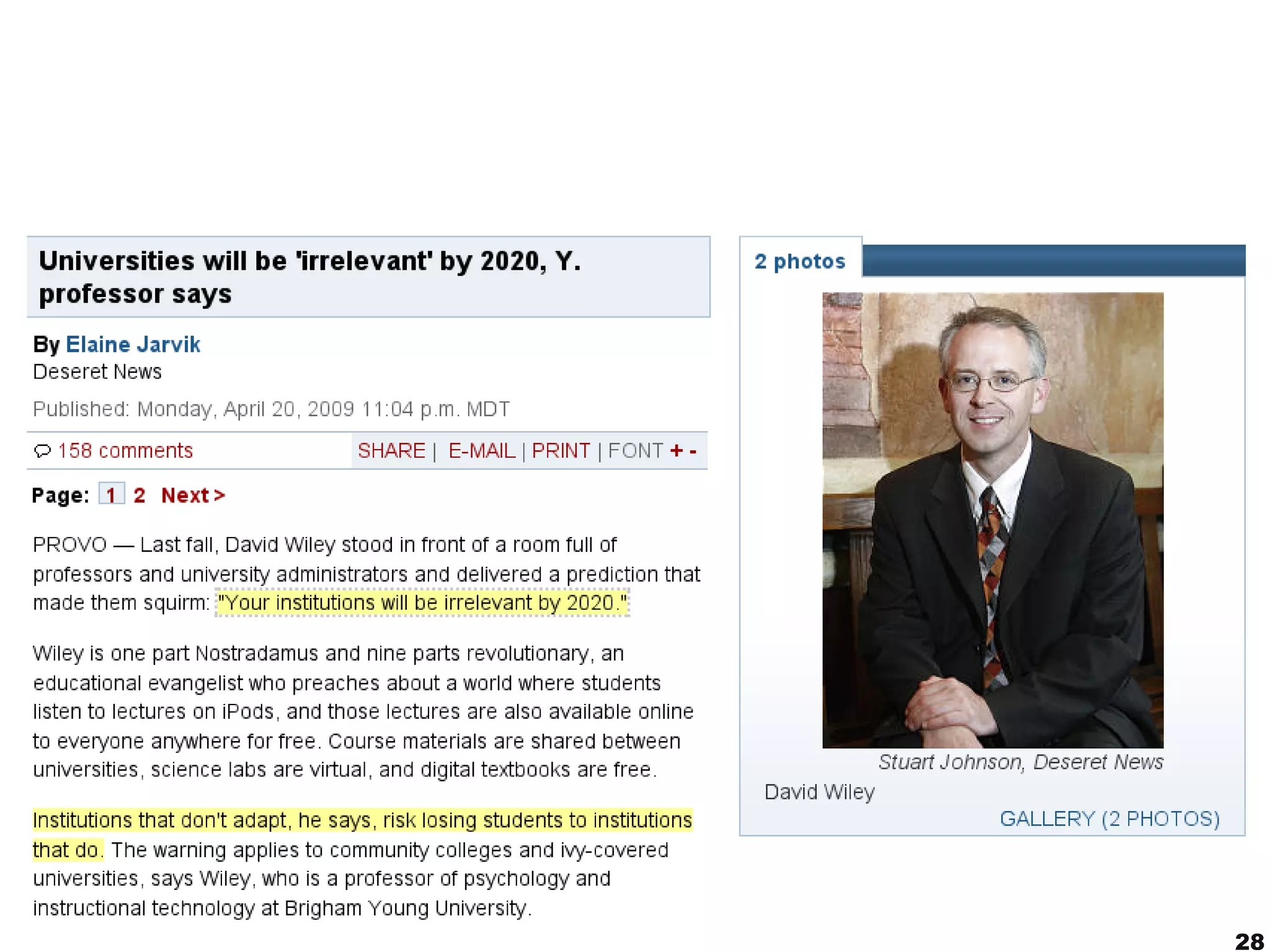
Why change the way
       we teach and learn?


We have new scientific knowledge
   about teaching and learning


                                   29
how ?
        30
Evolution in learning theories
Behaviourism            Learning = change of behaviour
                        Stimulus → response
                        Learner is passive receiver of knowledge
                        Mind = black box
Cognitivism             Focuses on how the brain works
                        Metacognition, learning strategies
                        Motivation
Constructivism          Knowledge is actively constructed by the learner
                        New knowledge is linked to prior knowledge
                        Learners discover themselves facts and relationships
Social Constructivism Social interaction plays a fundamental role
                      Discussions lead to deeper understanding and increased motivation
Constructionism       Constructing an artifact or something that can be shared leads to better
                      learning
Connectivism          Learning is a process of connecting nodes or information sources
                      Knowledge and learning may reside in non-human appliances
                      Try to see connections between fields, ideas, and concepts
                      Know-what & Know-how → Know-where
                                                                                            31
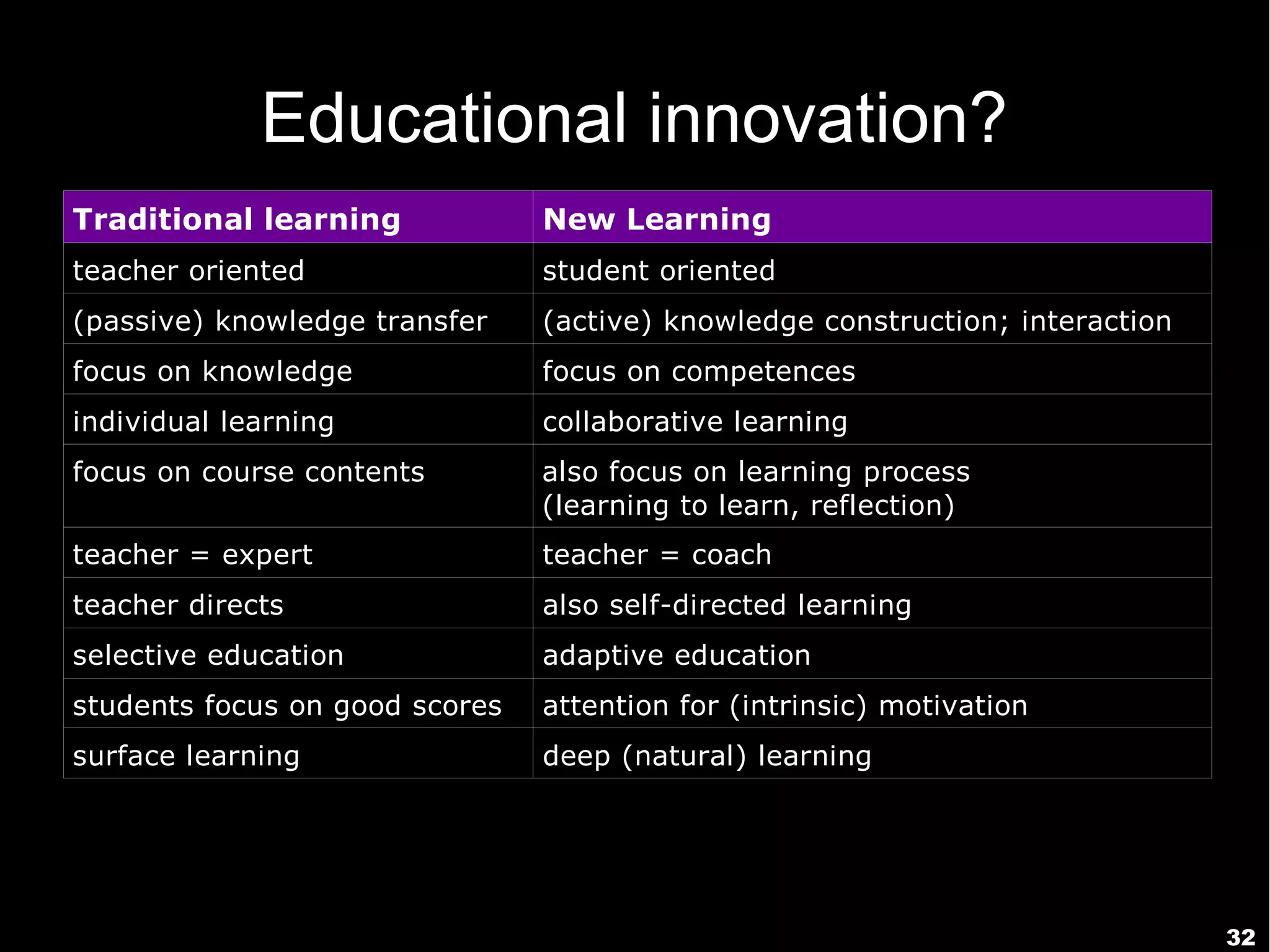
Educational innovation?
Traditional learning            New Learning
teacher oriented                student oriented
(passive) knowledge transfer    (active) knowledge construction; interaction
focus on knowledge              focus on competences
individual learning             collaborative learning
focus on course contents        also focus on learning process
                                (learning to learn, reflection)
teacher = expert                teacher = coach
teacher directs                 also self-directed learning
selective education             adaptive education
students focus on good scores   attention for (intrinsic) motivation
surface learning                deep (natural) learning


                                                                               32
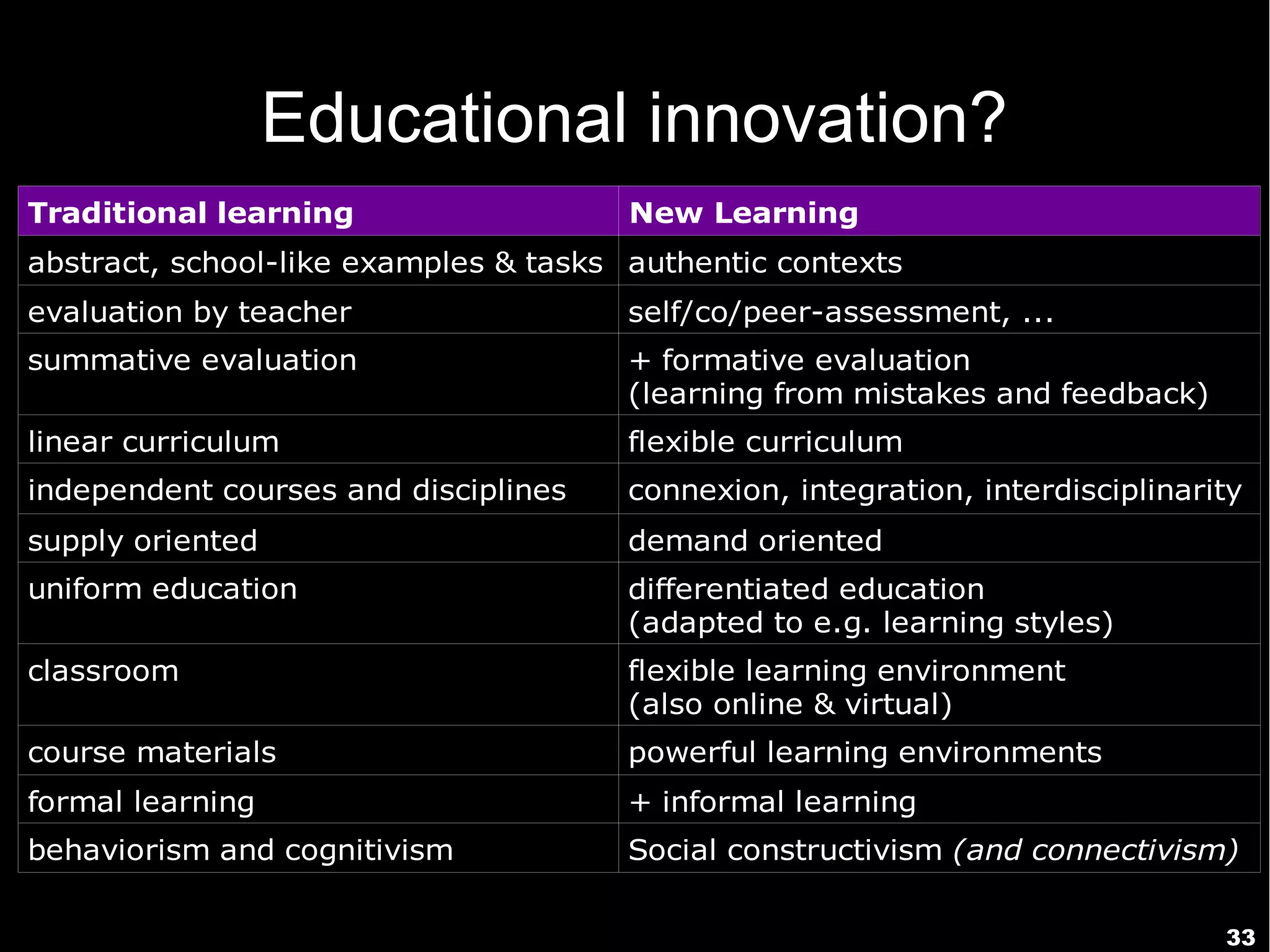
Educational innovation?
Traditional learning                   New Learning
abstract, school-like examples & tasks authentic contexts
evaluation by teacher                  self/co/peer-assessment, ...
summative evaluation                   + formative evaluation
                                       (learning from mistakes and feedback)
linear curriculum                      flexible curriculum
independent courses and disciplines    connexion, integration, interdisciplinarity
supply oriented                        demand oriented
uniform education                      differentiated education
                                       (adapted to e.g. learning styles)
classroom                              flexible learning environment
                                       (also online & virtual)
course materials                       powerful learning environments
formal learning                        + informal learning
behaviorism and cognitivism            Social constructivism (and connectivism)

                                                                                33
How can we improve
teaching and learning with ICT?
  Don't apply traditional teaching methods
           in new technologies!


            Substitution?
        (dropping your coursebook online)


          Transformation!
                                             34
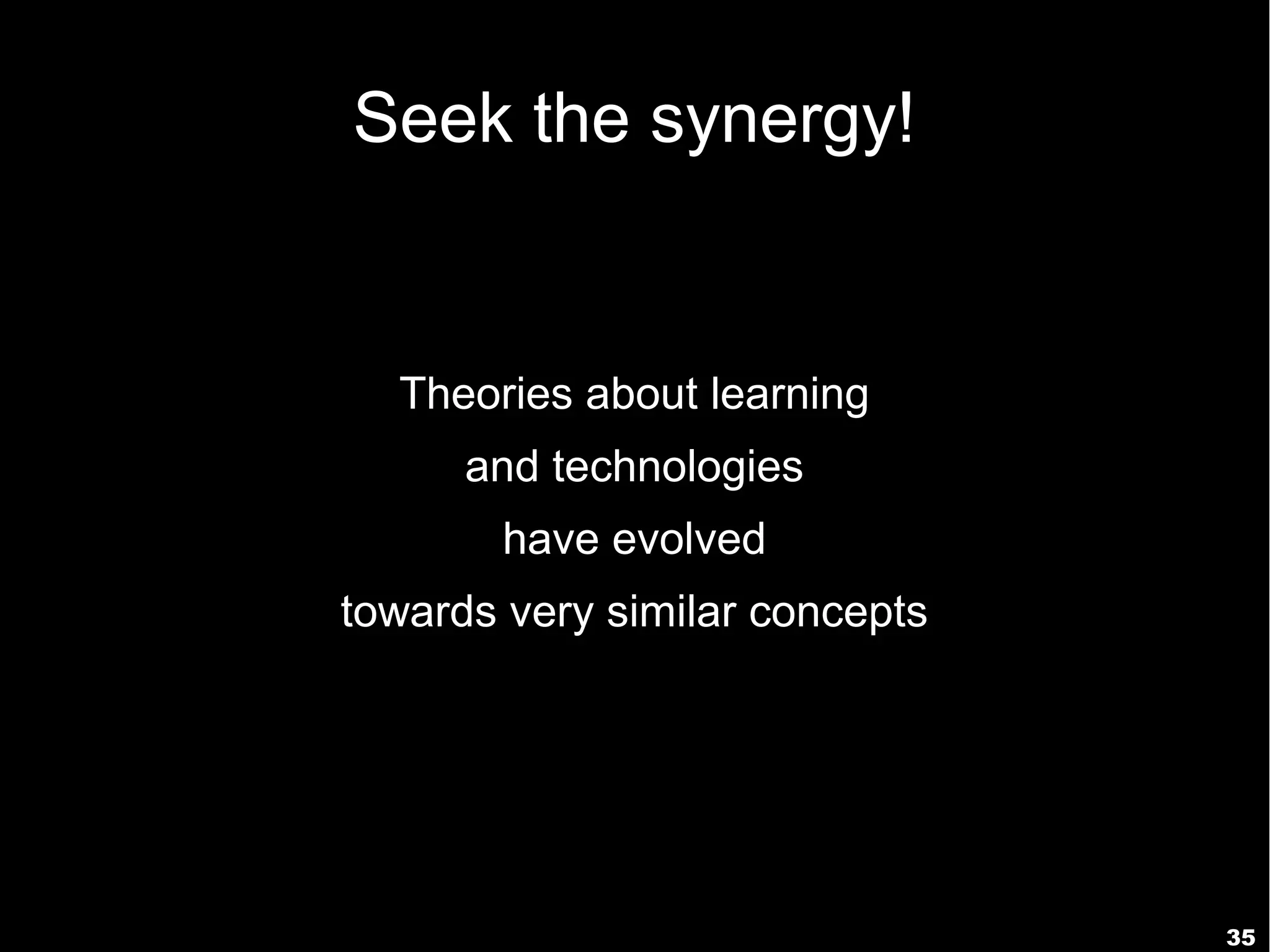
Seek the synergy!


  Theories about learning
      and technologies
       have evolved
towards very similar concepts


                                35
Model Jonassen for
(constructive) learning environments


  → Technologies can support the intentional construction,
 in a collaborative way, of complex contextualized artifacts
         and the conversation and reflection about it
                                                               36
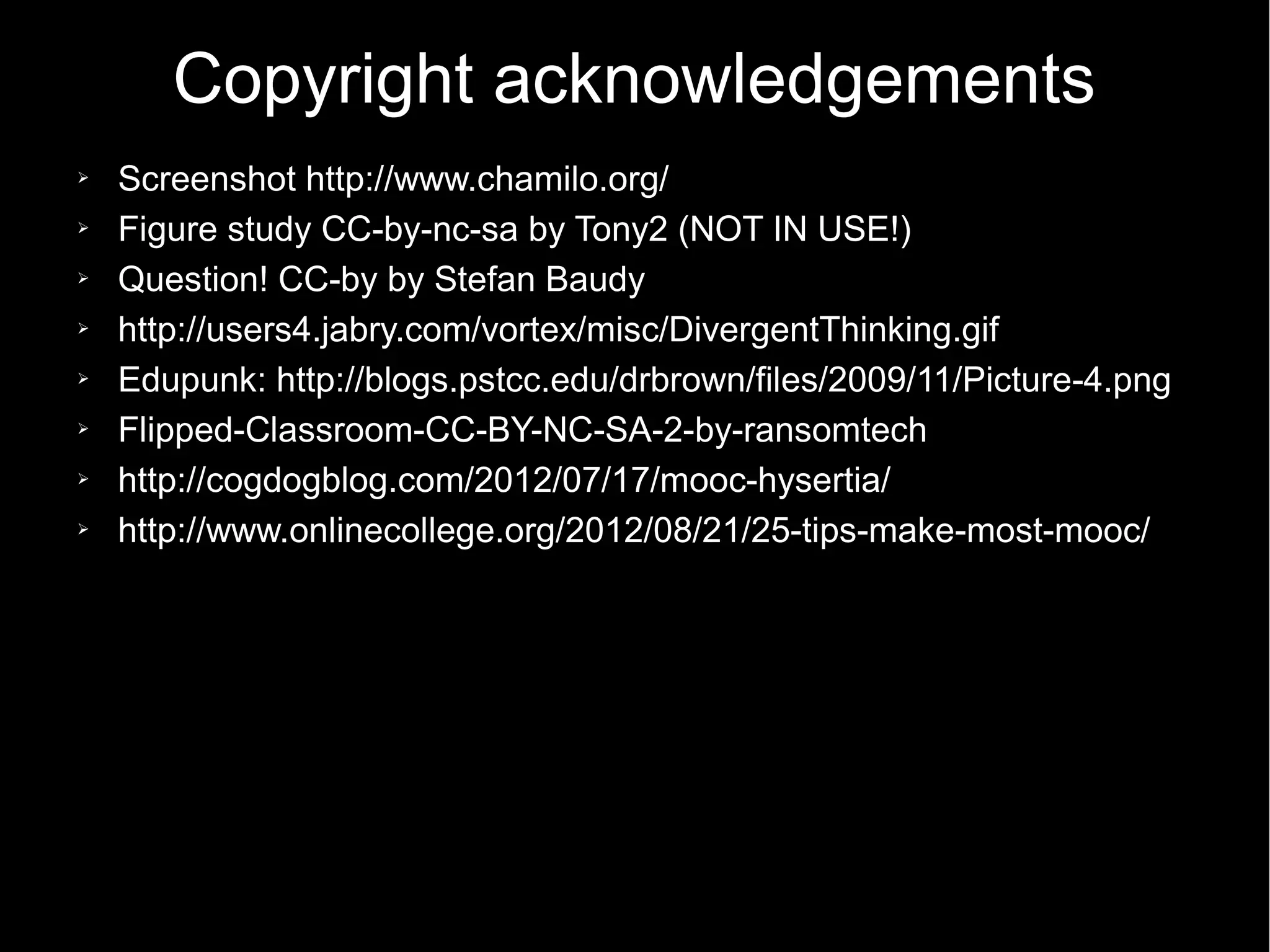
One Laptop Per Child


                       37
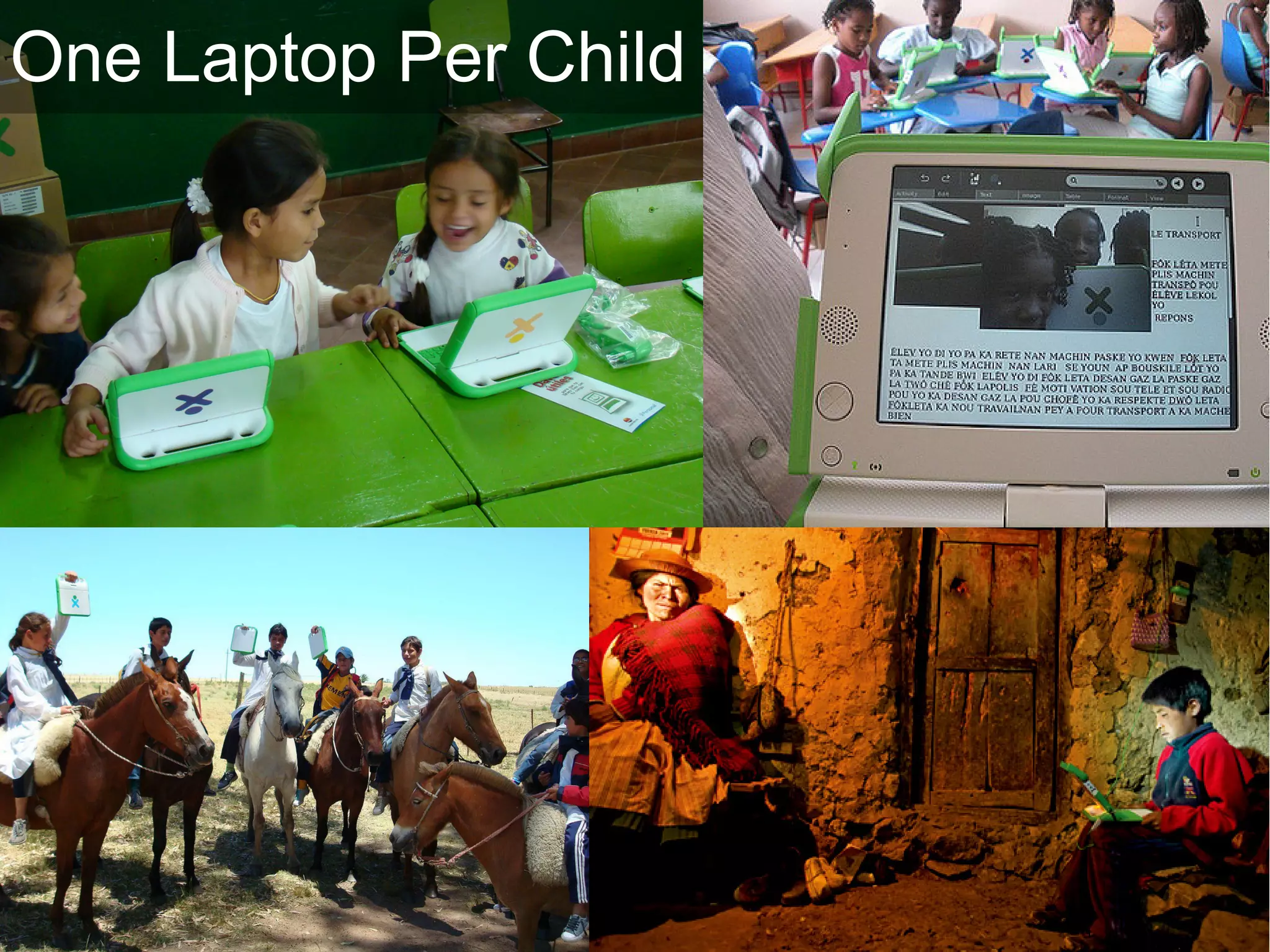
38
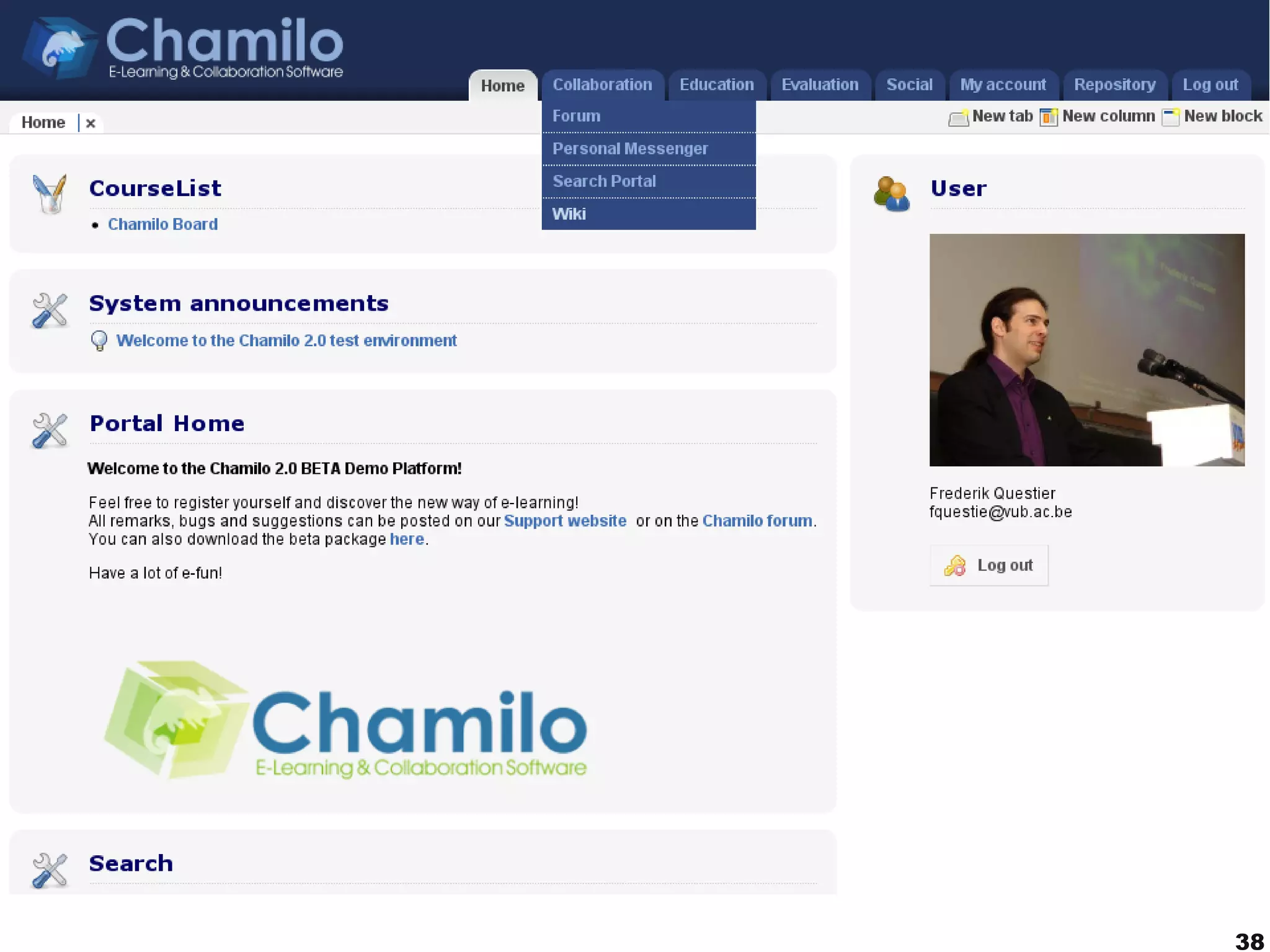
39
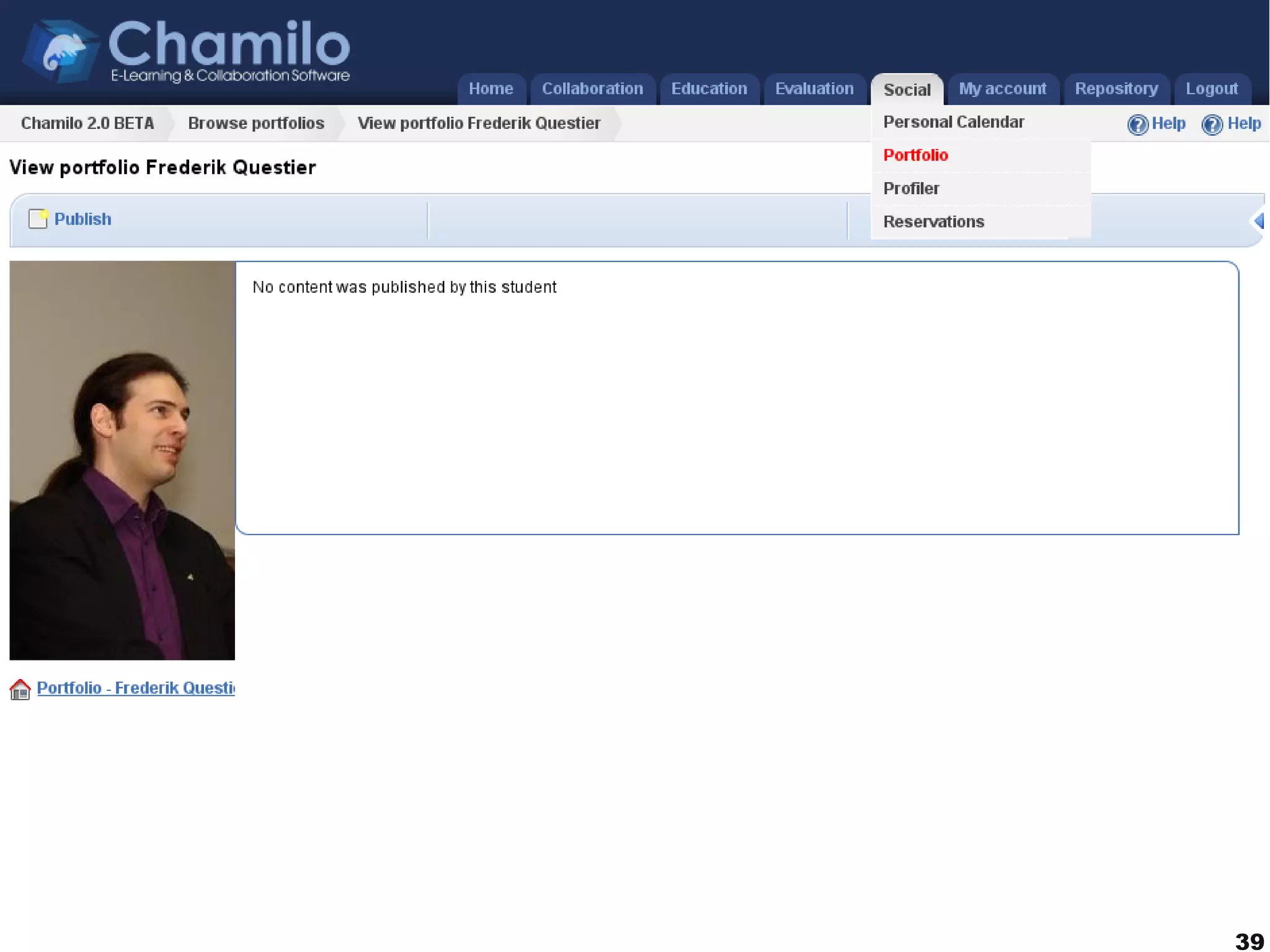
40
41
42
45
46
47
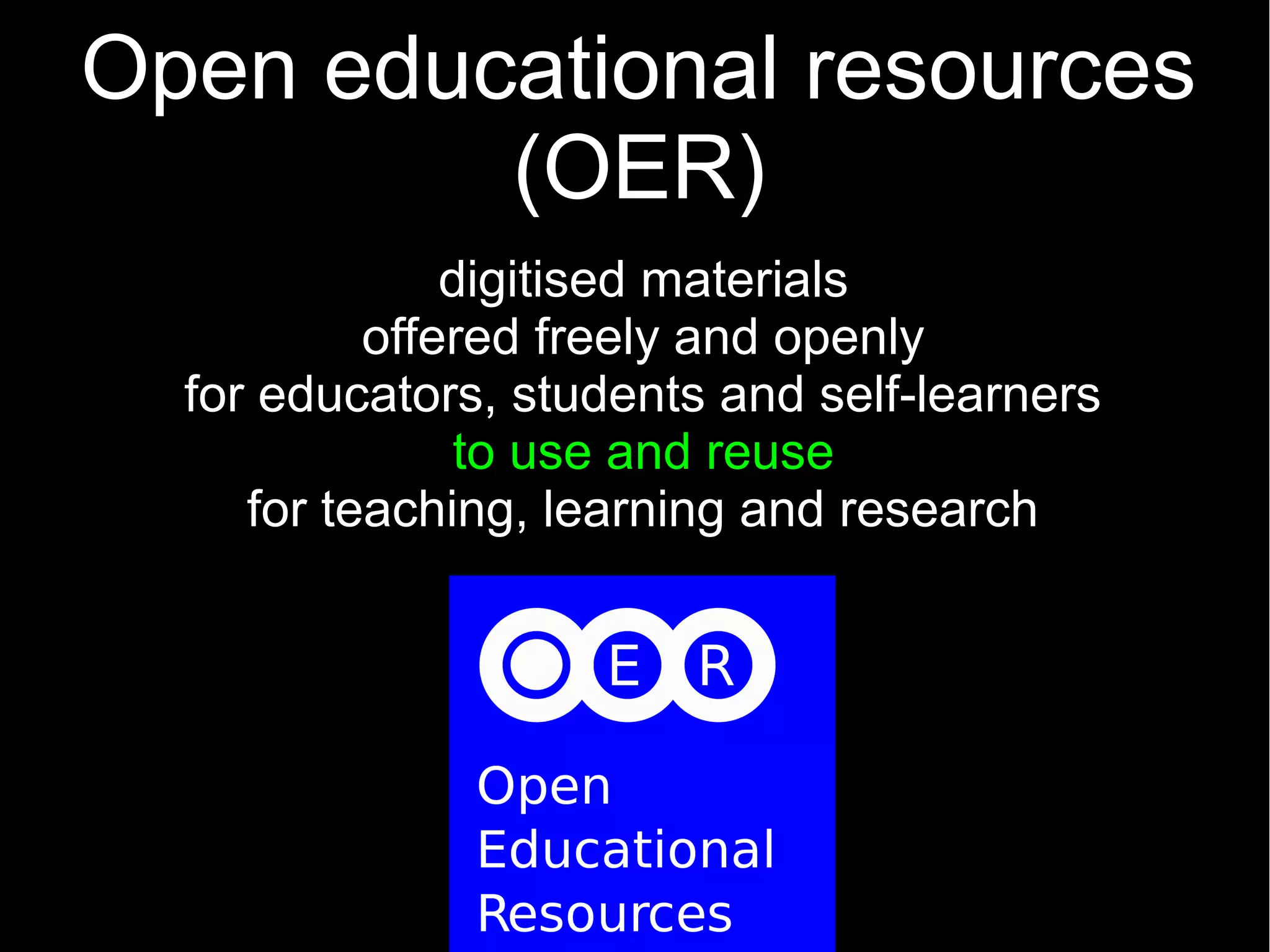
Open educational resources
         (OER)
               digitised materials
           offered freely and openly
  for educators, students and self-learners
               to use and reuse
     for teaching, learning and research
Believing that OER can
           widen access to quality education,
       particularly when shared by many countries
            and higher education institutions,

               UNESCO champions OER
   as a means of promoting access, equity and quality
in the spirit of the Universal Declaration of Human Rights.
52
53
54
55
56
57
58
59
60
61
62
63
64
65
66
67
68
69
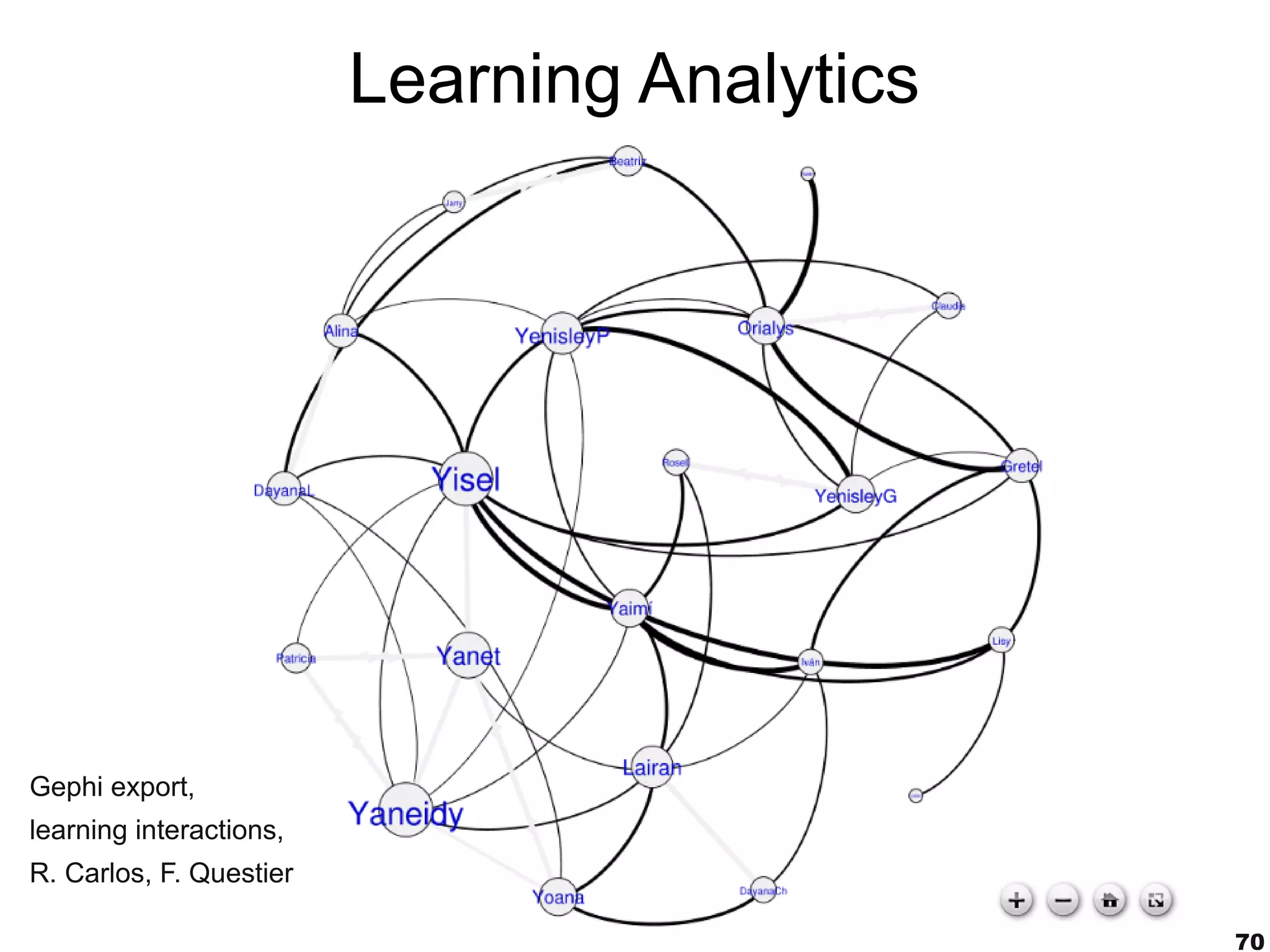
Learning Analytics


Gephi export,
learning interactions,
R. Carlos, F. Questier

                                              70
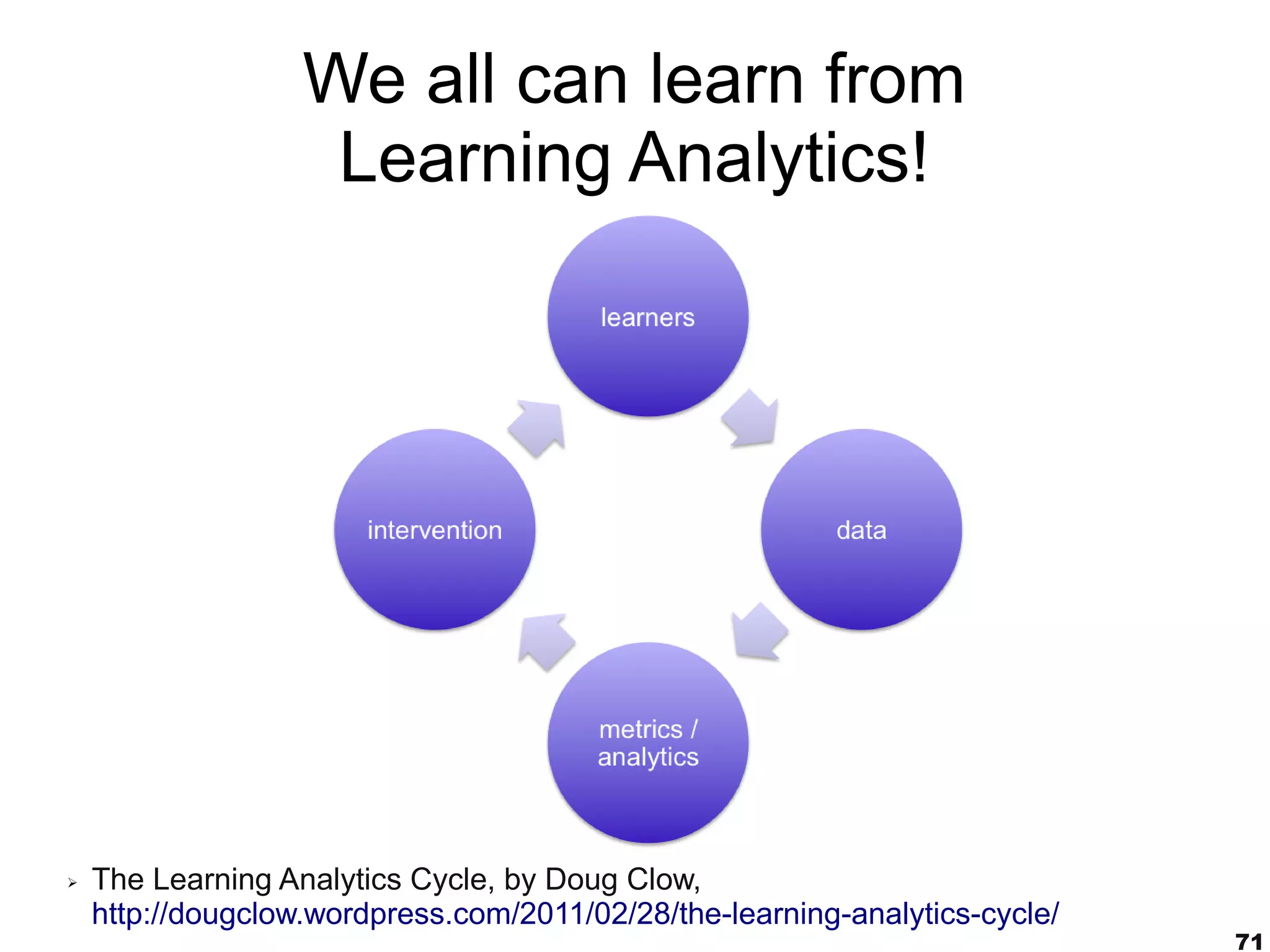
We all can learn from
                    Learning Analytics!


➢   The Learning Analytics Cycle, by Doug Clow,
    http://dougclow.wordpress.com/2011/02/28/the-learning-analytics-cycle/
                                                                             71
72
73
Is this ICT supported
 learning paradigm shift
    possible without
teacher learning/training?
Research studies show that

      how much and how effectively
         teachers integrate ICT
        in their teaching process
depends mainly on their educational vision


          (not age, gender, ...)

                                             75
Copyright acknowledgements
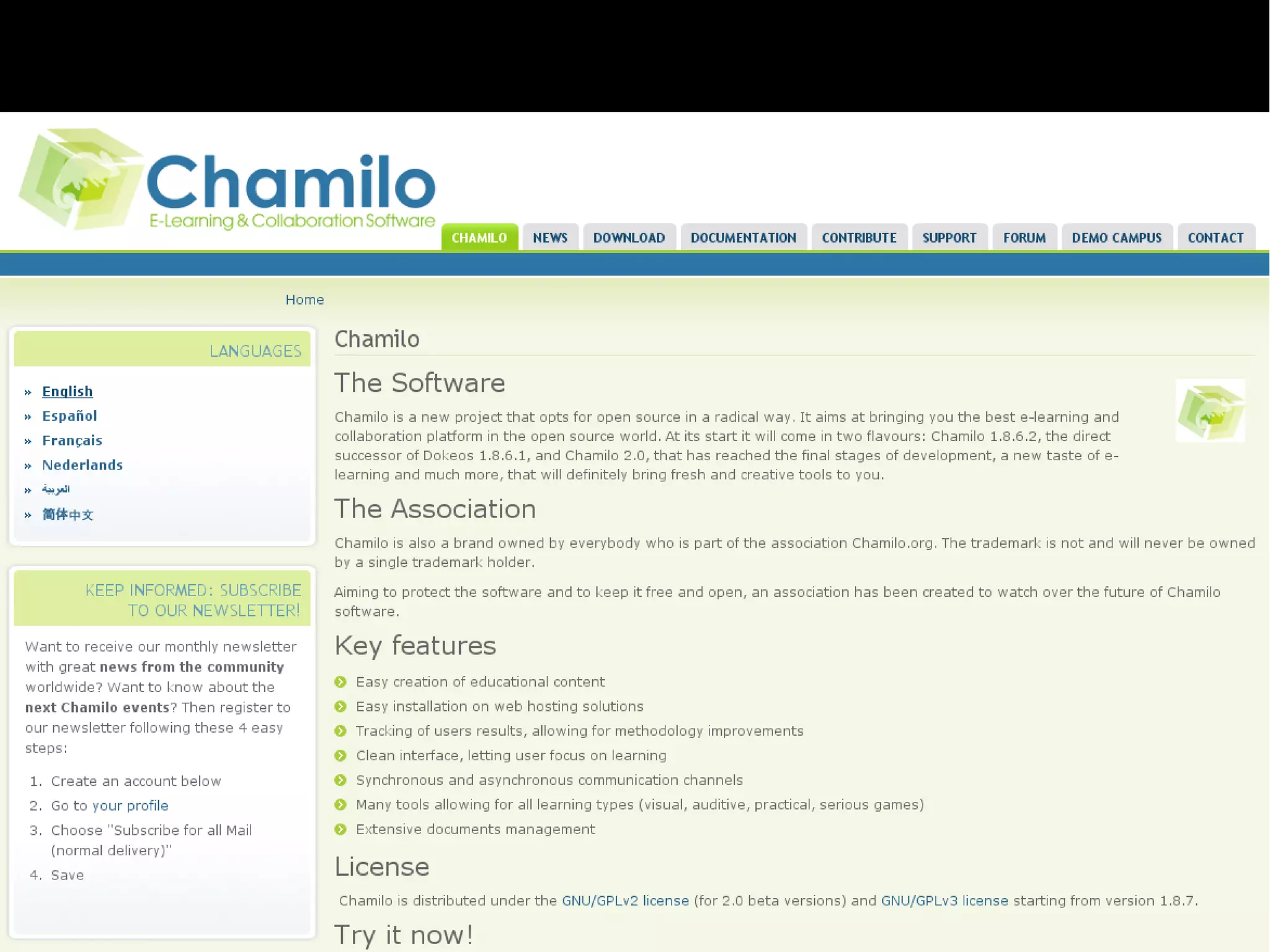
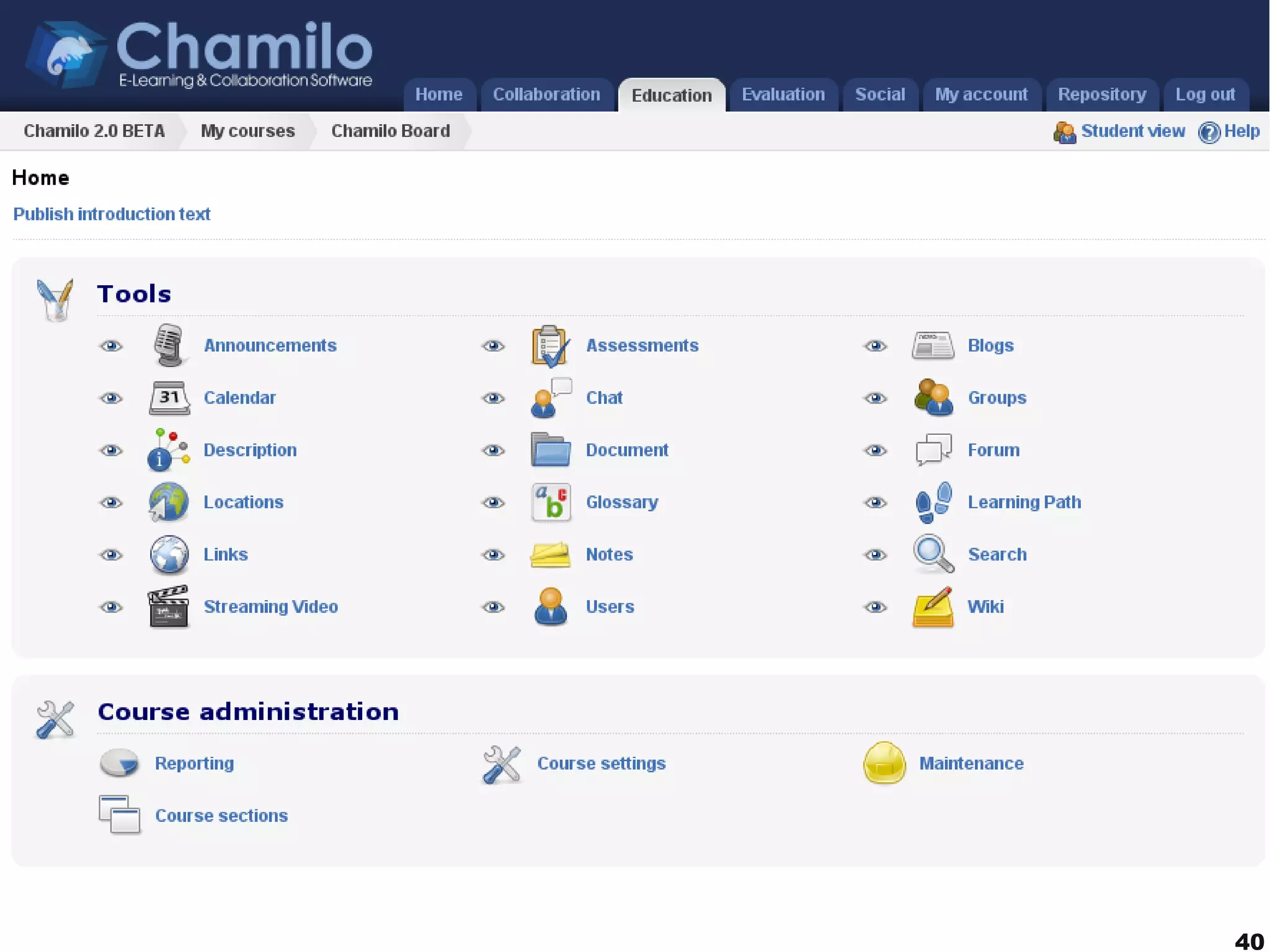
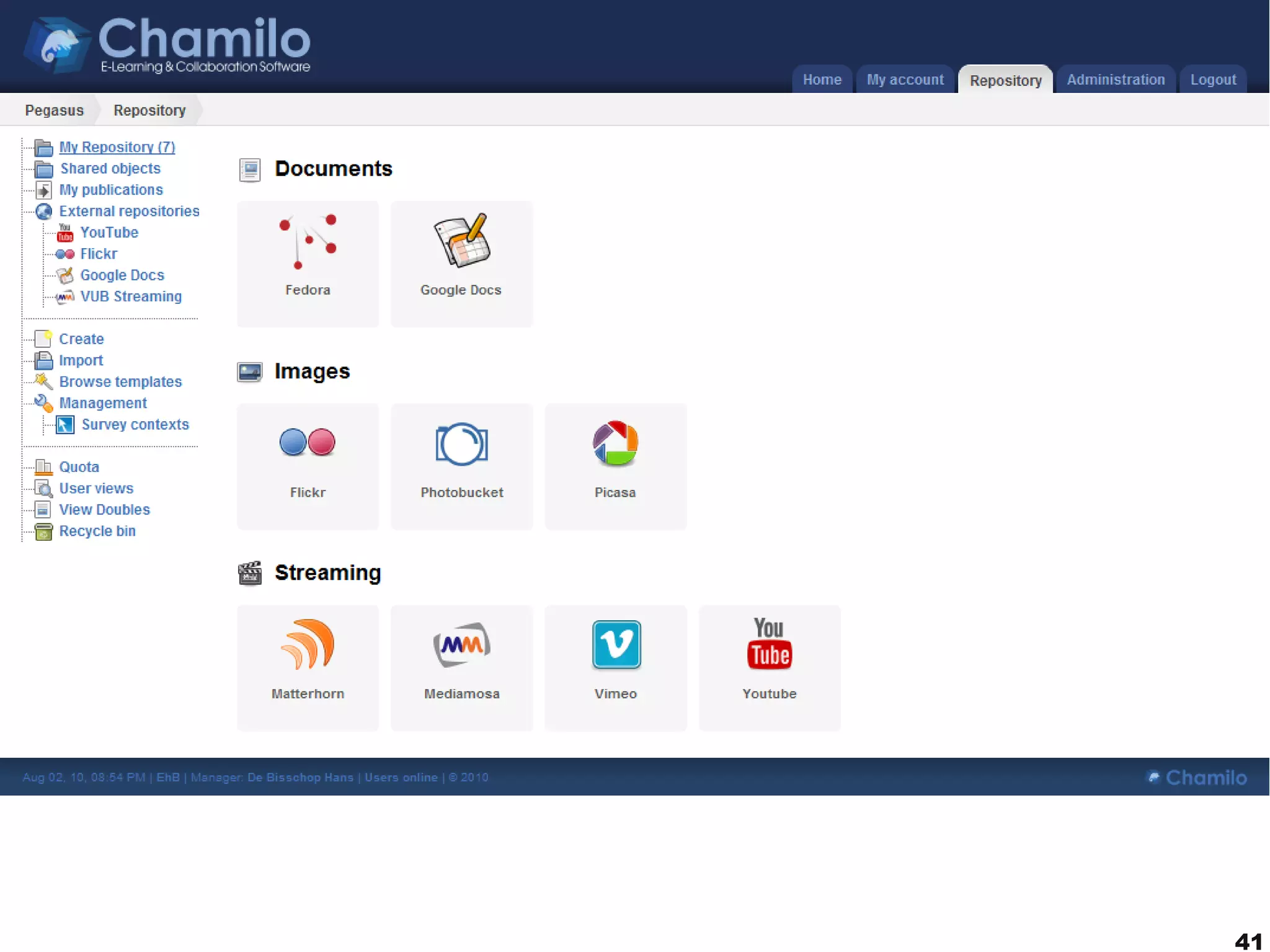
➢   Screenshot http://www.chamilo.org/
➢   Figure study CC-by-nc-sa by Tony2 (NOT IN USE!)
➢   Question! CC-by by Stefan Baudy
➢   http://users4.jabry.com/vortex/misc/DivergentThinking.gif
➢   Edupunk: http://blogs.pstcc.edu/drbrown/files/2009/11/Picture-4.png
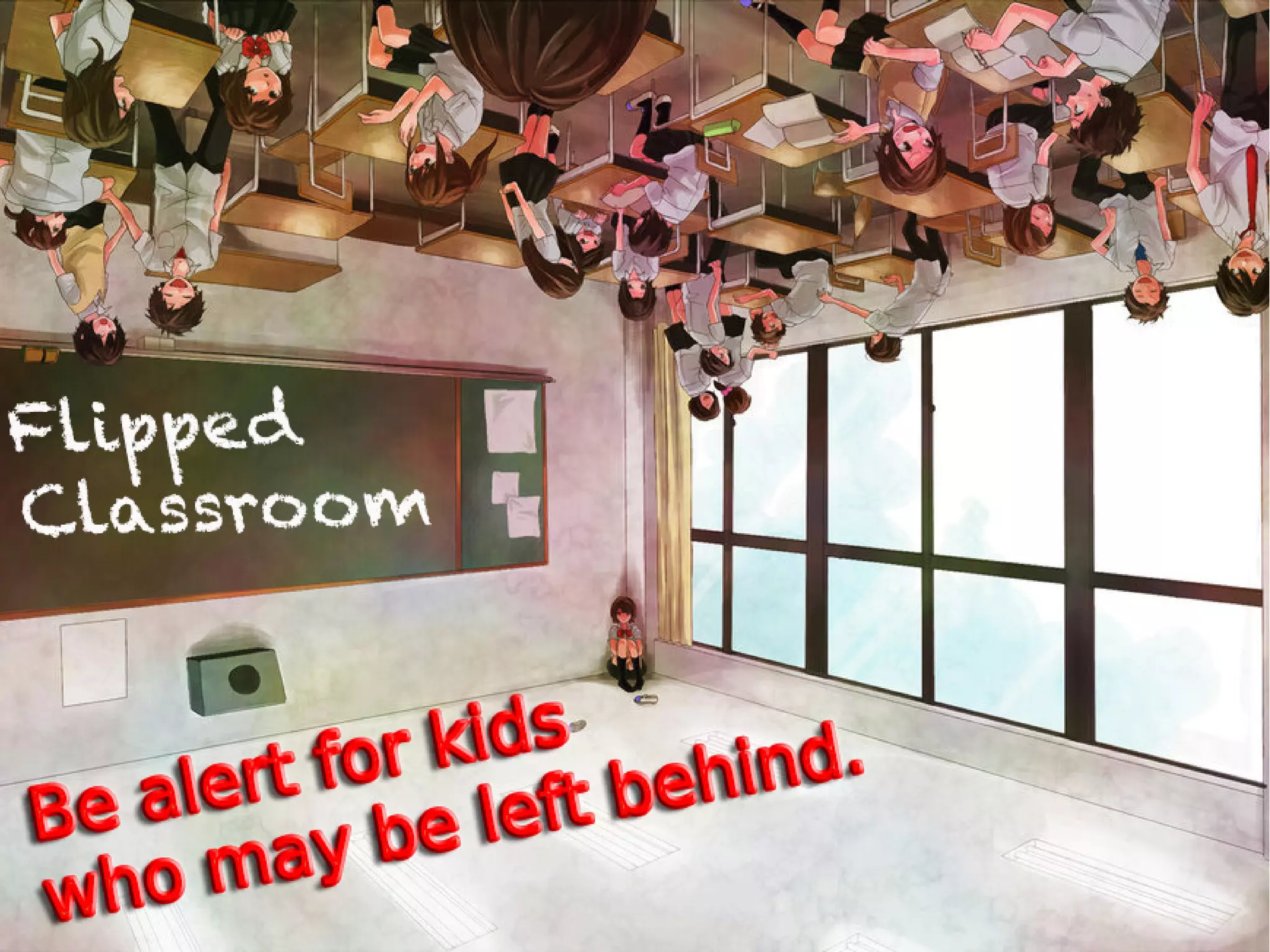
➢   Flipped-Classroom-CC-BY-NC-SA-2-by-ransomtech
➢   http://cogdogblog.com/2012/07/17/mooc-hysertia/
➢   http://www.onlinecollege.org/2012/08/21/25-tips-make-most-mooc/
DARE
TO SHARE


           77
Active/Manipulative - Collaborative - Complex - Constructive - Contextualized - Conversational - Intentional - Reflective

                    Questions? Thank you!
                    Pyetje? Faleminderit!


                                                               See also http://questier.com

                                                                                                               78

Hacking education

  • 1.
    Hacking Education Prof. dr.Frederik Questier Vrije Universiteit Brussel Unicef Innovation Lab Kosovo 7th of September 2012
  • 2.
    This presentation canbe found at http://questier.com http://www.slideshare.net/Frederik_Questier
  • 3.
  • 4.
  • 5.
  • 6.
  • 7.
    Hacking Education What's in a title? ➢ Hacking solving a problem in an extraordinary, innovative way ➢ Education means through which the knowledge and habits of a group of people sustain from one generation to the next 7
  • 8.
  • 9.
    How can weeducate our students for the unknown future? 9
  • 10.
    The best way topredict the future is to invent it. (Alan Kay, 1971) 10
  • 11.
    innovation? Politics Education Science 1km/h 10km/h 100km/h 11
  • 12.
    “Schools we havetoday were designed around commonsense assumptions that had never been scientifically tested” R. Keith Sawyer 12
  • 13.
  • 14.
  • 15.
    information scarcity →information abundance ! Total information is now doubling every year ! 15
  • 16.
    Surveys Howmuch of the knowledge you need for your job is in your own head? >75% | 75-50% | 50-25% | 25-10% 16
  • 17.
    Surveys Howmuch of the knowledge you need for your job is in your own head? 1986 75% → 2010 10% 17
  • 18.
    The longer onestudies, the more one comes to realize how much one does not know 18
  • 19.
    % tested geniusin Divergent Thinking (used to generate creative ideas by exploring many possible solutions) Source: Breakpoint and Beyond by George Land and Beth Jaman 19
  • 20.
    Evolution of organizations Source: Jessica Lipnack and Jeffrey Stamps, Virtual Teams http://www.netage.com/pub/books/VirtualTeams%202/CHAPTERS%20PDF/chapter02.pdf 20
  • 21.
  • 22.
  • 23.
    Demand for newskills? ➢ Social skills ➢ communicating, networking, teamwork ➢ international, intercultural ➢ Creativity ➢ Entrepeneurship ➢ Information technology skills ➢ Handle information overload ➢ ... ➢ ➢ Learning to learn → Life Long Learning! 23
  • 24.
    Knowledge -> Skills-> Competences Competences are the ability to use ➢ knowledge ➢ skills ➢ attitudes in new, complex, authentic situations 24
  • 25.
    “Staff are digitalimmigrants, students are digital natives” (Prensky) ? 25
  • 26.
    Discrepancy? What are studentsused to? What is their classroom experience? control no control action passive instant feedback little, late feedback rich media poor media always online offline social interactions working together = cheating 26
  • 27.
  • 28.
  • 29.
    Why change theway we teach and learn? We have new scientific knowledge about teaching and learning 29
  • 30.
  • 31.
    Evolution in learningtheories Behaviourism Learning = change of behaviour Stimulus → response Learner is passive receiver of knowledge Mind = black box Cognitivism Focuses on how the brain works Metacognition, learning strategies Motivation Constructivism Knowledge is actively constructed by the learner New knowledge is linked to prior knowledge Learners discover themselves facts and relationships Social Constructivism Social interaction plays a fundamental role Discussions lead to deeper understanding and increased motivation Constructionism Constructing an artifact or something that can be shared leads to better learning Connectivism Learning is a process of connecting nodes or information sources Knowledge and learning may reside in non-human appliances Try to see connections between fields, ideas, and concepts Know-what & Know-how → Know-where 31
  • 32.
    Educational innovation? Traditional learning New Learning teacher oriented student oriented (passive) knowledge transfer (active) knowledge construction; interaction focus on knowledge focus on competences individual learning collaborative learning focus on course contents also focus on learning process (learning to learn, reflection) teacher = expert teacher = coach teacher directs also self-directed learning selective education adaptive education students focus on good scores attention for (intrinsic) motivation surface learning deep (natural) learning 32
  • 33.
    Educational innovation? Traditional learning New Learning abstract, school-like examples & tasks authentic contexts evaluation by teacher self/co/peer-assessment, ... summative evaluation + formative evaluation (learning from mistakes and feedback) linear curriculum flexible curriculum independent courses and disciplines connexion, integration, interdisciplinarity supply oriented demand oriented uniform education differentiated education (adapted to e.g. learning styles) classroom flexible learning environment (also online & virtual) course materials powerful learning environments formal learning + informal learning behaviorism and cognitivism Social constructivism (and connectivism) 33
  • 34.
    How can weimprove teaching and learning with ICT? Don't apply traditional teaching methods in new technologies! Substitution? (dropping your coursebook online) Transformation! 34
  • 35.
    Seek the synergy! Theories about learning and technologies have evolved towards very similar concepts 35
  • 36.
    Model Jonassen for (constructive)learning environments → Technologies can support the intentional construction, in a collaborative way, of complex contextualized artifacts and the conversation and reflection about it 36
  • 37.
  • 38.
  • 39.
  • 40.
  • 41.
  • 42.
  • 45.
  • 46.
  • 47.
  • 50.
    Open educational resources (OER) digitised materials offered freely and openly for educators, students and self-learners to use and reuse for teaching, learning and research
  • 51.
    Believing that OERcan widen access to quality education, particularly when shared by many countries and higher education institutions, UNESCO champions OER as a means of promoting access, equity and quality in the spirit of the Universal Declaration of Human Rights.
  • 52.
  • 53.
  • 54.
  • 55.
  • 56.
  • 57.
  • 58.
  • 59.
  • 60.
  • 61.
  • 62.
  • 63.
  • 64.
  • 65.
  • 66.
  • 67.
  • 68.
  • 69.
  • 70.
    Learning Analytics Gephi export, learninginteractions, R. Carlos, F. Questier 70
  • 71.
    We all canlearn from Learning Analytics! ➢ The Learning Analytics Cycle, by Doug Clow, http://dougclow.wordpress.com/2011/02/28/the-learning-analytics-cycle/ 71
  • 72.
  • 73.
  • 74.
    Is this ICTsupported learning paradigm shift possible without teacher learning/training?
  • 75.
    Research studies showthat how much and how effectively teachers integrate ICT in their teaching process depends mainly on their educational vision (not age, gender, ...) 75
  • 76.
    Copyright acknowledgements ➢ Screenshot http://www.chamilo.org/ ➢ Figure study CC-by-nc-sa by Tony2 (NOT IN USE!) ➢ Question! CC-by by Stefan Baudy ➢ http://users4.jabry.com/vortex/misc/DivergentThinking.gif ➢ Edupunk: http://blogs.pstcc.edu/drbrown/files/2009/11/Picture-4.png ➢ Flipped-Classroom-CC-BY-NC-SA-2-by-ransomtech ➢ http://cogdogblog.com/2012/07/17/mooc-hysertia/ ➢ http://www.onlinecollege.org/2012/08/21/25-tips-make-most-mooc/
  • 77.
  • 78.
    Active/Manipulative - Collaborative- Complex - Constructive - Contextualized - Conversational - Intentional - Reflective Questions? Thank you! Pyetje? Faleminderit! See also http://questier.com 78