
Ressources éducatives libres
& droits d’auteurs
Prof. dr. Frederik Questier
Vrije Universiteit Brussel
July 1st
2020
Project No. 573583-EPP-1-2016-1-ES-EPPKA2-CBHE-SP (2016-2558/001-001)
Cette présentation se trouve à
http://questier.com
http://www.slideshare.net/Frederik_Questier
A bit of copyright history…
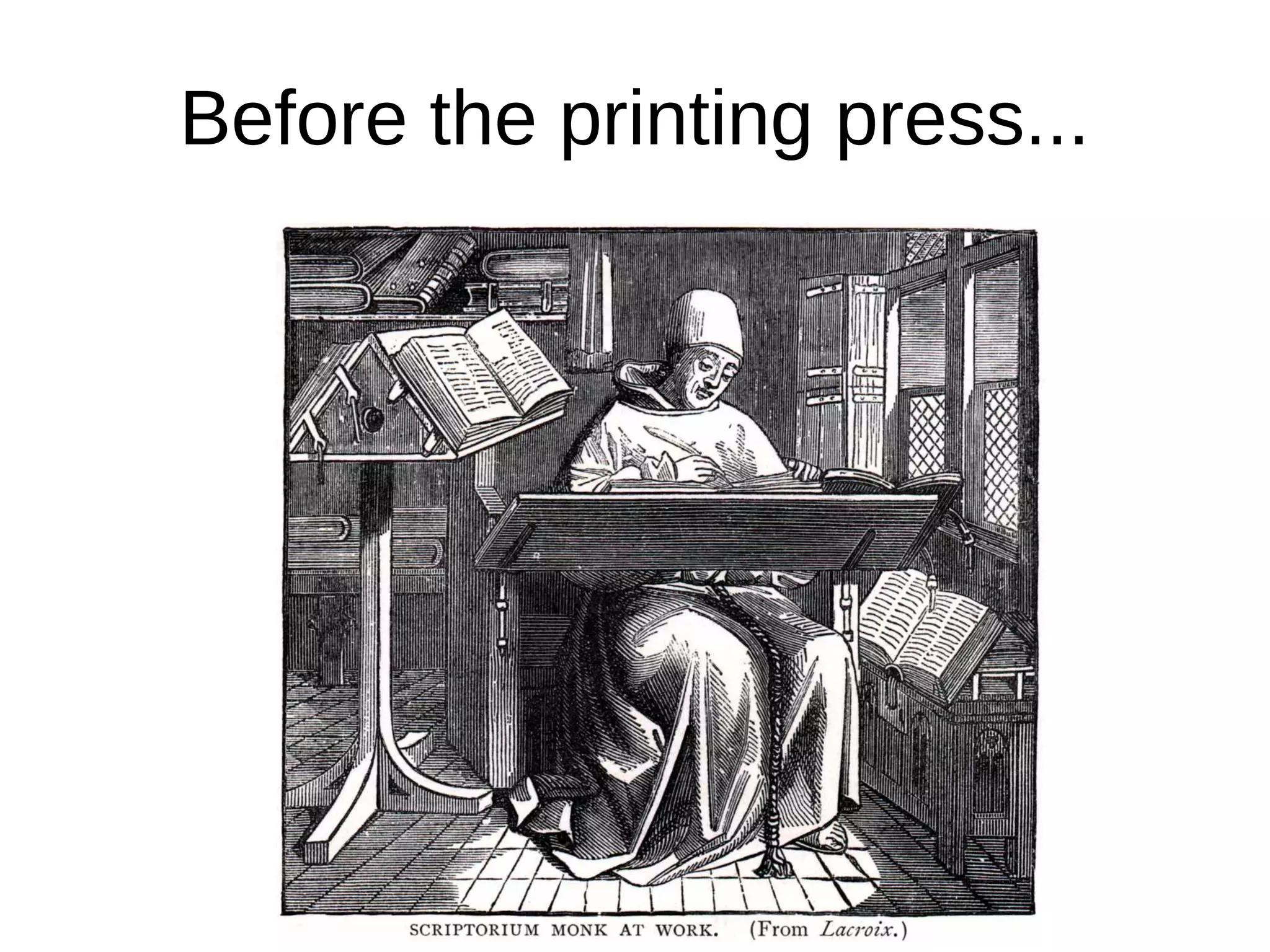
Before the printing press...
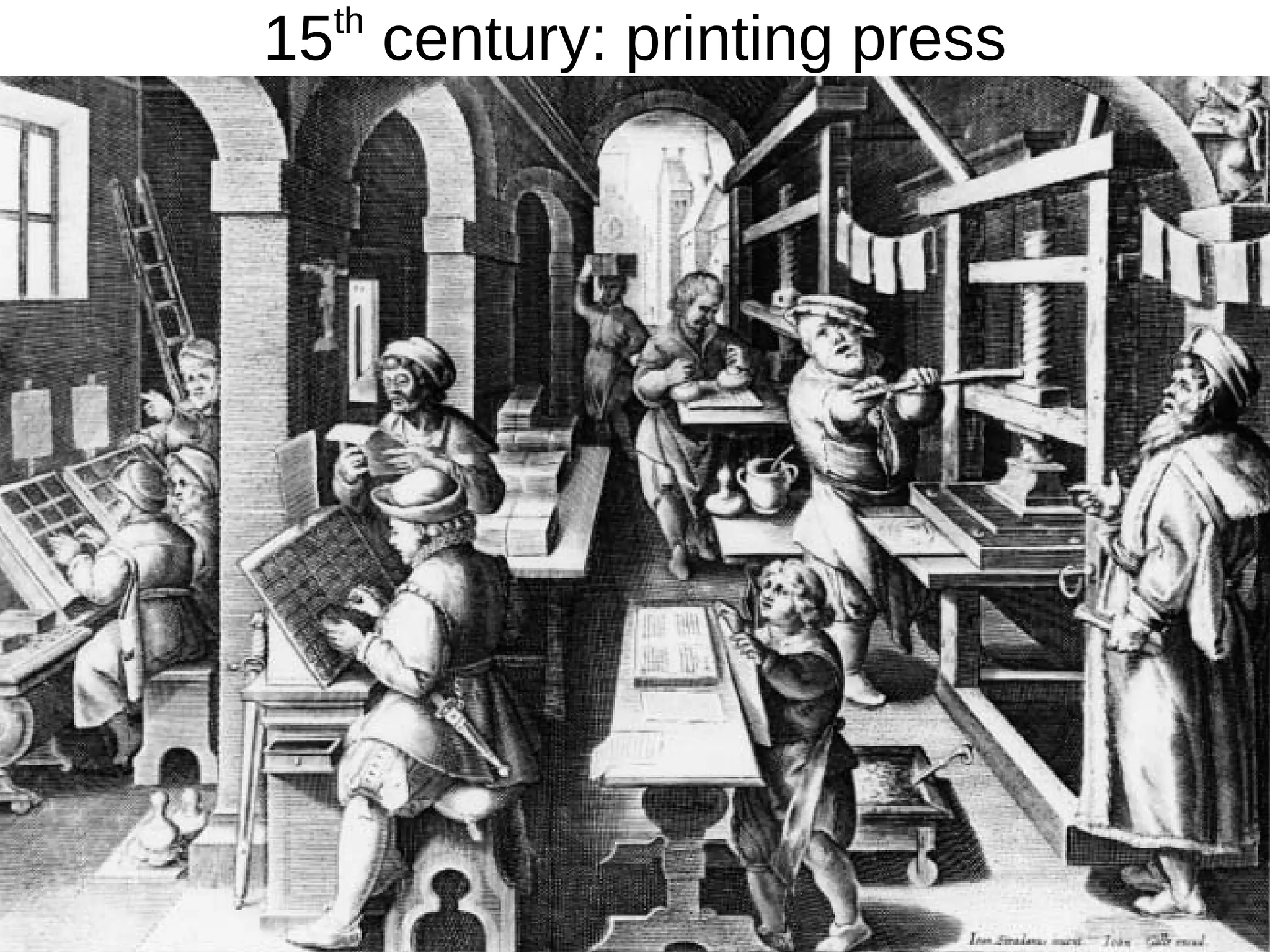
15th
century: printing press
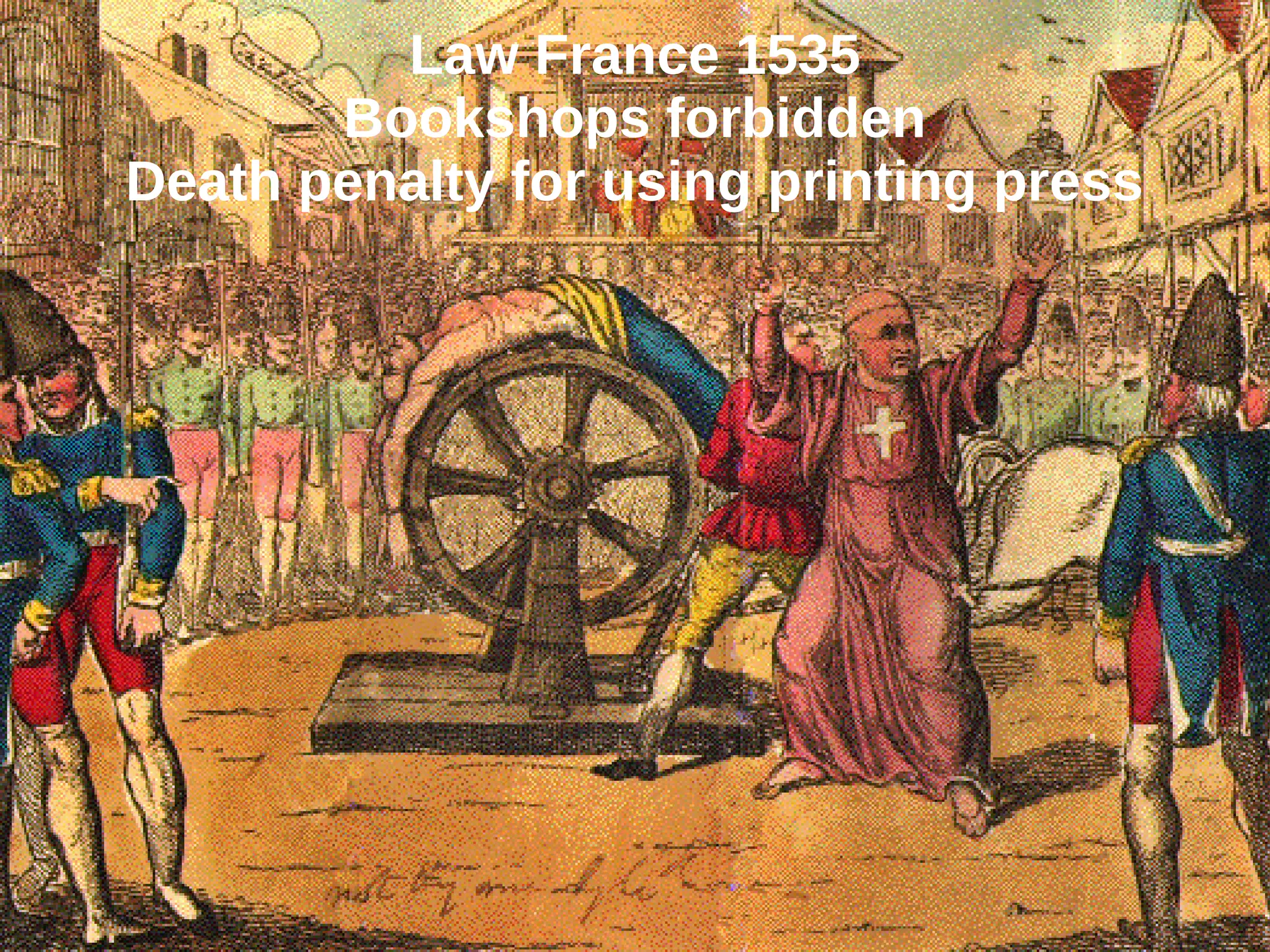
Law France 1535
Bookshops forbidden
Death penalty for using printing press
Index librorum prohibitorum
= list of books forbidden by pope 1559 -1966
Licensing of the Press Act
1662 England
“Right to copy”,
monopoly and
censorship rights
granted to printers:
The Stationers' Company
No author rights
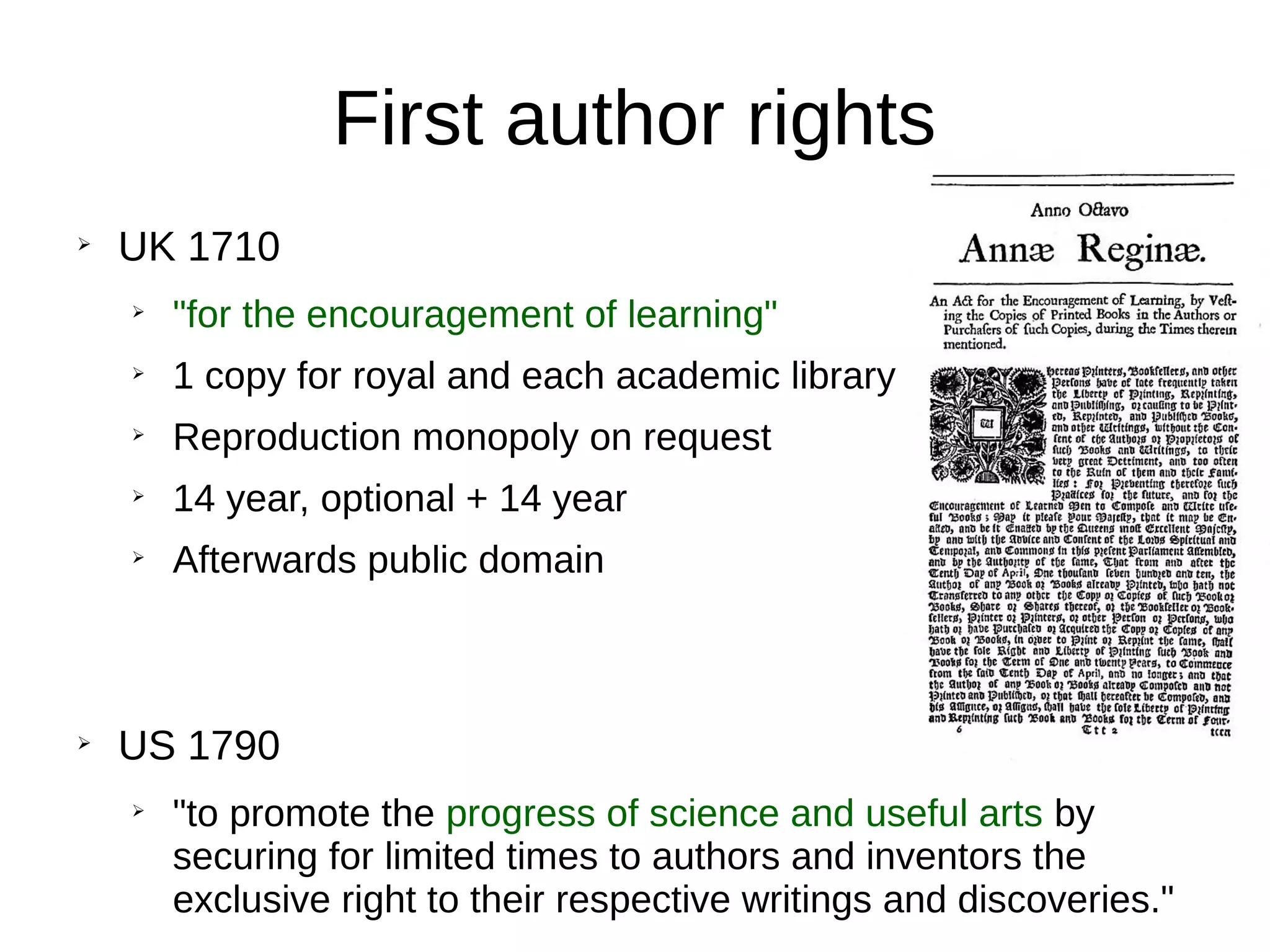
First author rights
➢
UK 1710
➢
"for the encouragement of learning"
➢
1 copy for royal and each academic library
➢
Reproduction monopoly on request
➢
14 year, optional + 14 year
➢
Afterwards public domain
➢
US 1790
➢
"to promote the progress of science and useful arts by
securing for limited times to authors and inventors the
exclusive right to their respective writings and discoveries."
Nowadays the law allows “the pirate publishers”
to ”take” the copyrights from the authors
Student PIRGs
(Public Interest Research Groups)
➢
2013: “(US) students spend an average of
$900 a year on textbooks & course materials”
➢
“Textbook prices have increased four times the
rate of inflation since 1994!”
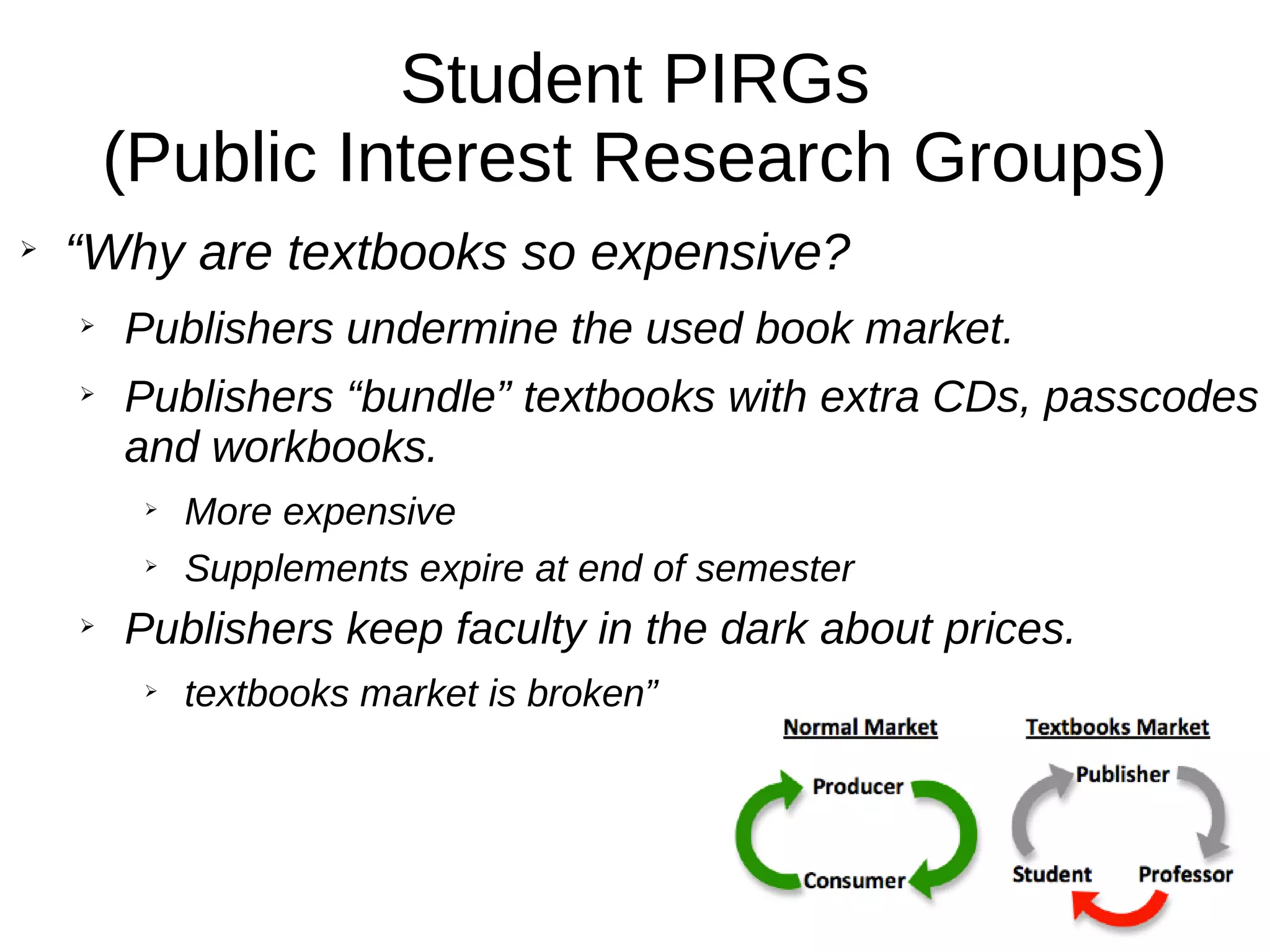
Student PIRGs
(Public Interest Research Groups)
➢
“Why are textbooks so expensive?
➢
Publishers undermine the used book market.
➢
Publishers “bundle” textbooks with extra CDs, passcodes
and workbooks.
➢
More expensive
➢
Supplements expire at end of semester
➢
Publishers keep faculty in the dark about prices.
➢
textbooks market is broken”
Maroc
Droits d'auteur et droits voisins
Version consolidée en date du 9 juin 2014
http://adala.justice.gov.ma/production/legislation/fr/Nouveautes/Droits%20d'auteur%20et%20droits%20voisins.pdf
© All rights reserved
Authors get
without asking for it
a monopoly on their creations
until 70 years after their death
Exceptions for education?
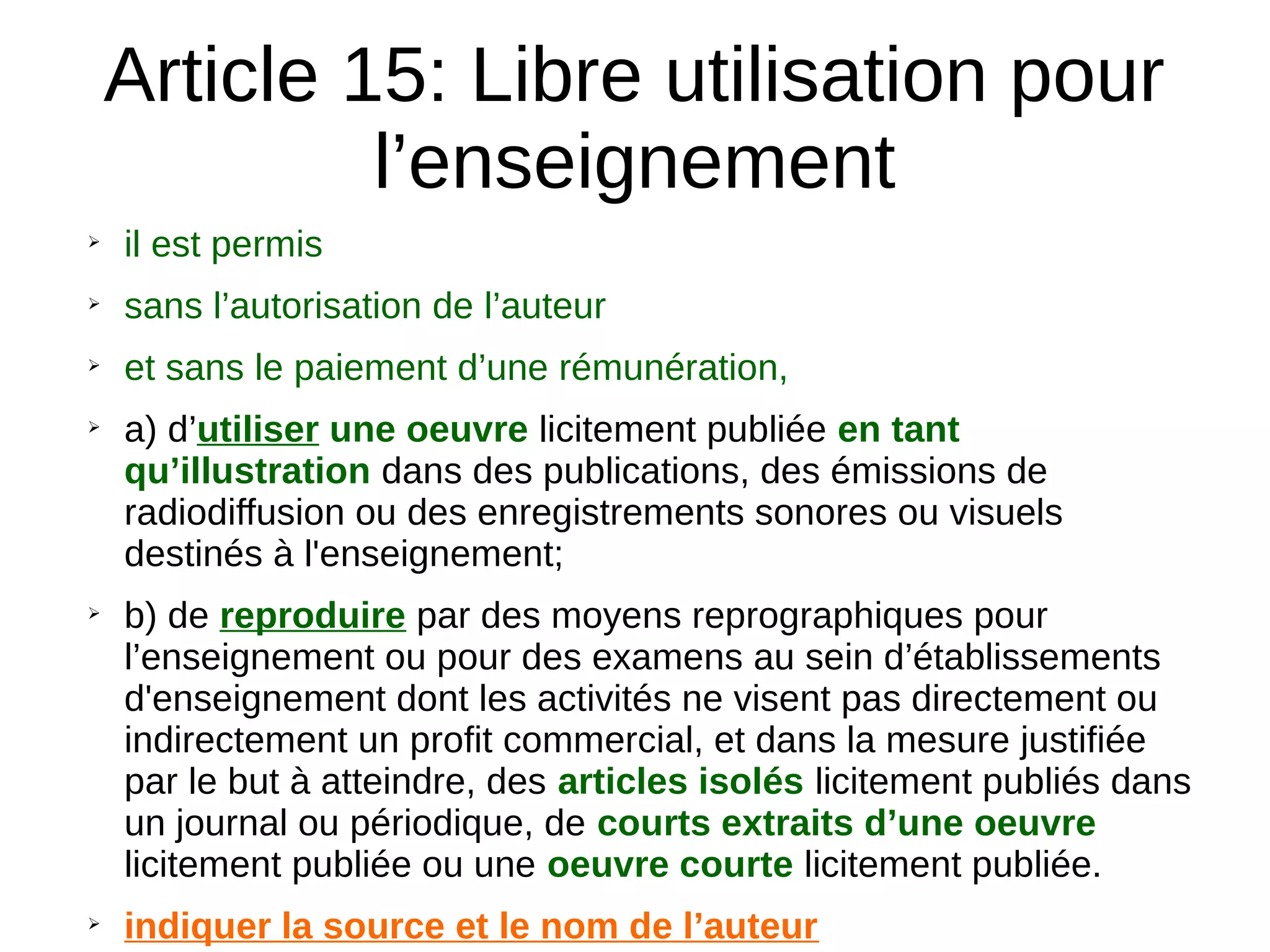
Article 15: Libre utilisation pour
l’enseignement
➢
il est permis
➢
sans l’autorisation de l’auteur
➢
et sans le paiement d’une rémunération,
➢
a) d’utiliser une oeuvre licitement publiée en tant
qu’illustration dans des publications, des émissions de
radiodiffusion ou des enregistrements sonores ou visuels
destinés à l'enseignement;
➢
b) de reproduire par des moyens reprographiques pour
l’enseignement ou pour des examens au sein d’établissements
d'enseignement dont les activités ne visent pas directement ou
indirectement un profit commercial, et dans la mesure justifiée
par le but à atteindre, des articles isolés licitement publiés dans
un journal ou périodique, de courts extraits d’une oeuvre
licitement publiée ou une oeuvre courte licitement publiée.
➢
indiquer la source et le nom de l’auteur
Article 23: Libre représentation
ou exécution publique
➢
il est permis,
➢
sans l'autorisation de l'auteur
➢
et sans paiement d'une rémunération,
➢
de représenter ou d'exécuter une œuvre publiquement.
➢
b. dans le cadre des activités d'un établissement
d'enseignement,
➢
pour le personnel et les étudiants d'un tel établissement
➢
si le public est composé exclusivement du personnel
et des étudiants de l'établissement ou des parents et
des surveillants ou d'autres personnes directement
liées aux activités de l'établissement.
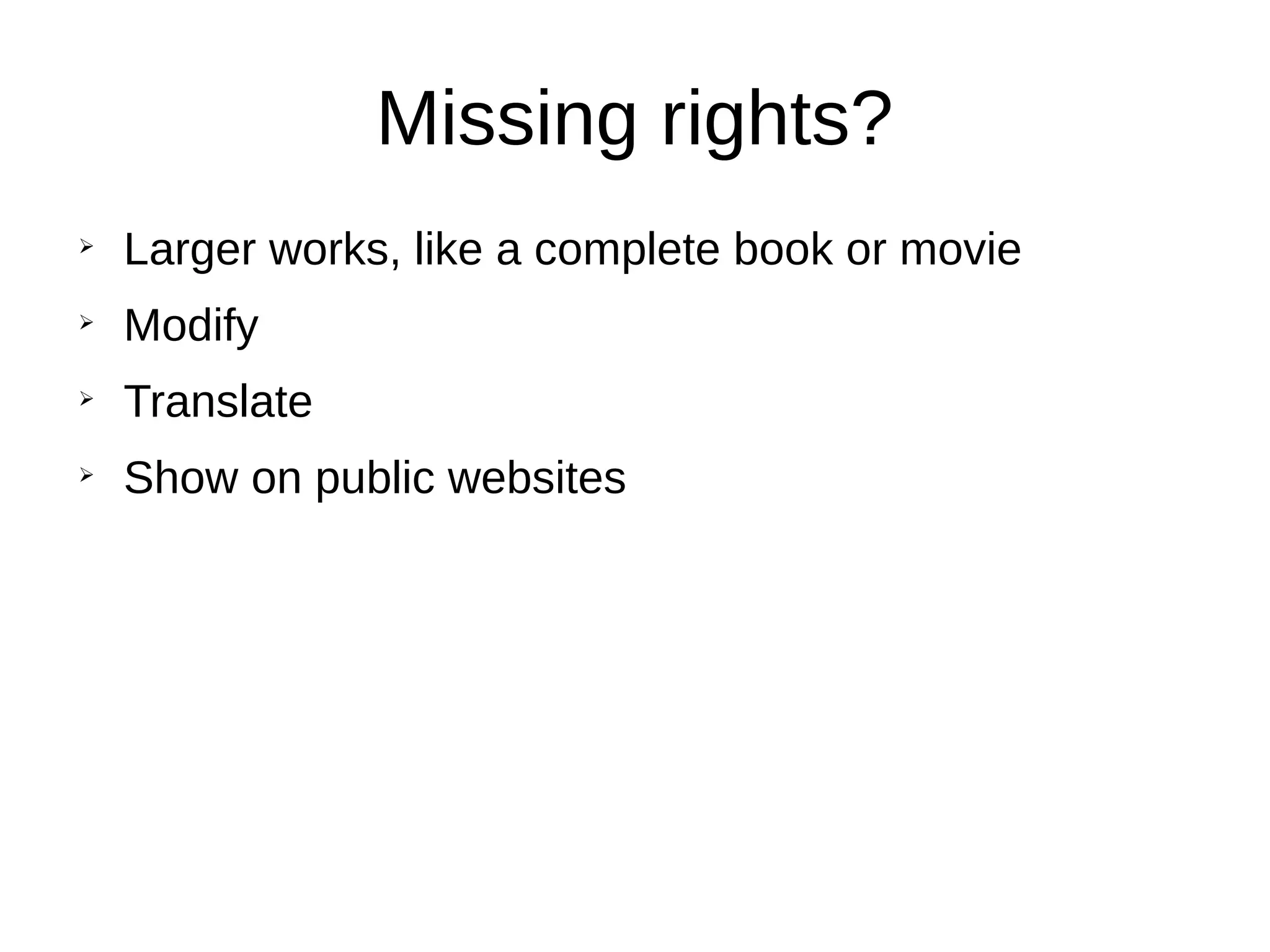
Missing rights?
➢
Larger works, like a complete book or movie
➢
Modify
➢
Translate
➢
Show on public websites
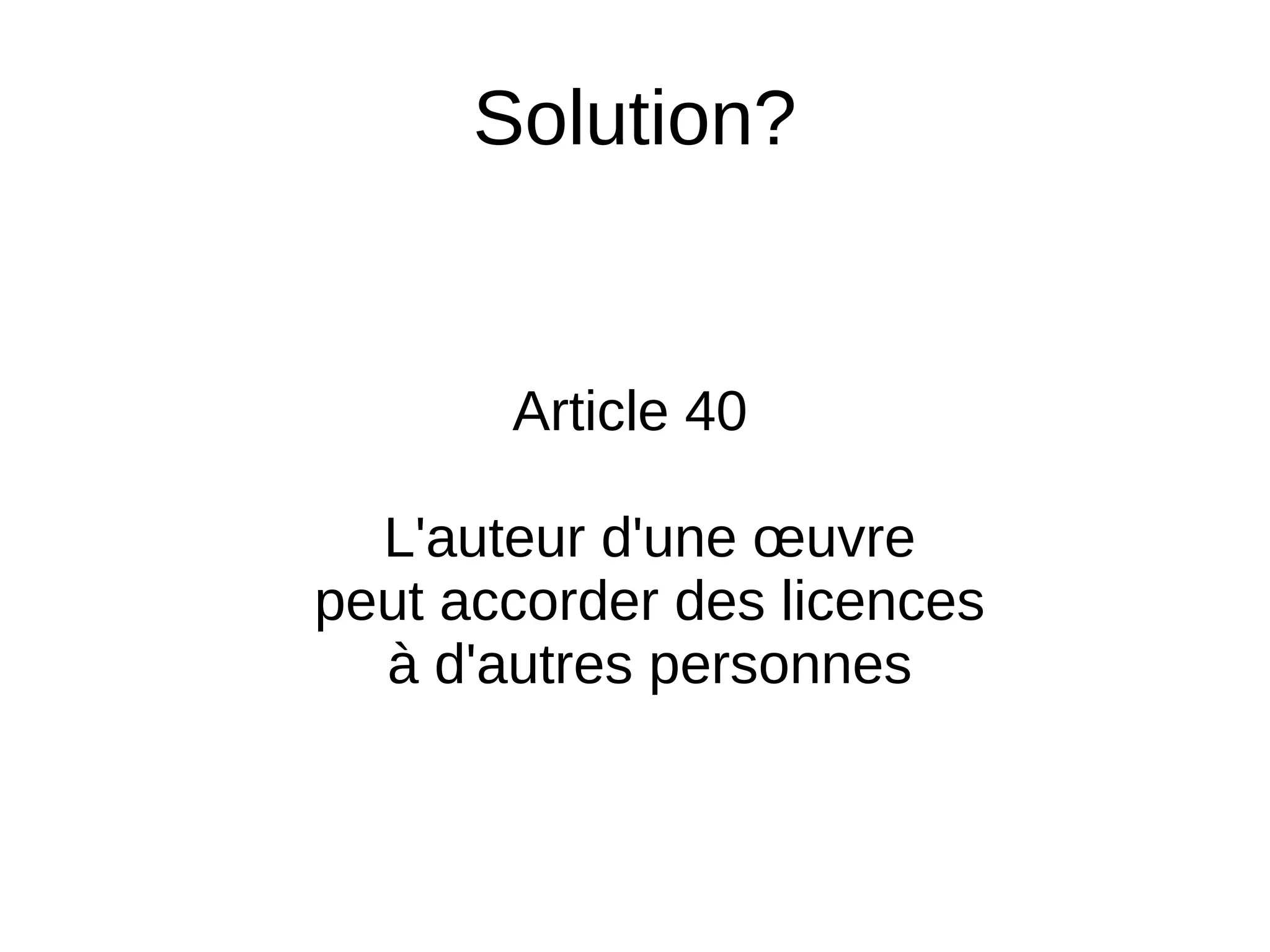
Solution?
Article 40
L'auteur d'une œuvre
peut accorder des licences
à d'autres personnes
Ouvert?
OER = REL
OER Global Logo by Jonathas Mello, licensed under CC BY 3.0
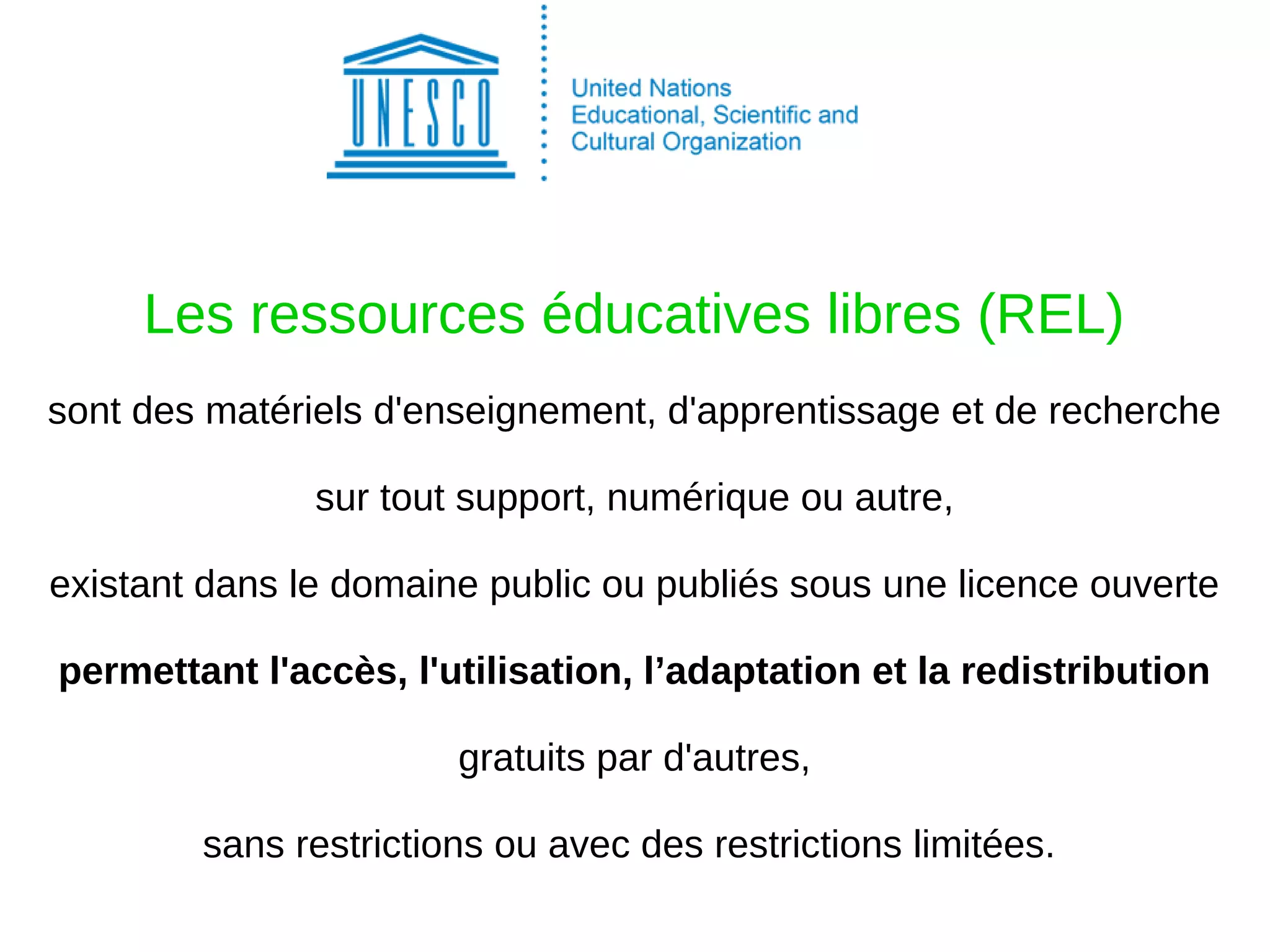
Les ressources éducatives libres (REL)
sont des matériels d'enseignement, d'apprentissage et de recherche
sur tout support, numérique ou autre,
existant dans le domaine public ou publiés sous une licence ouverte
permettant l'accès, l'utilisation, l’adaptation et la redistribution
gratuits par d'autres,
sans restrictions ou avec des restrictions limitées.
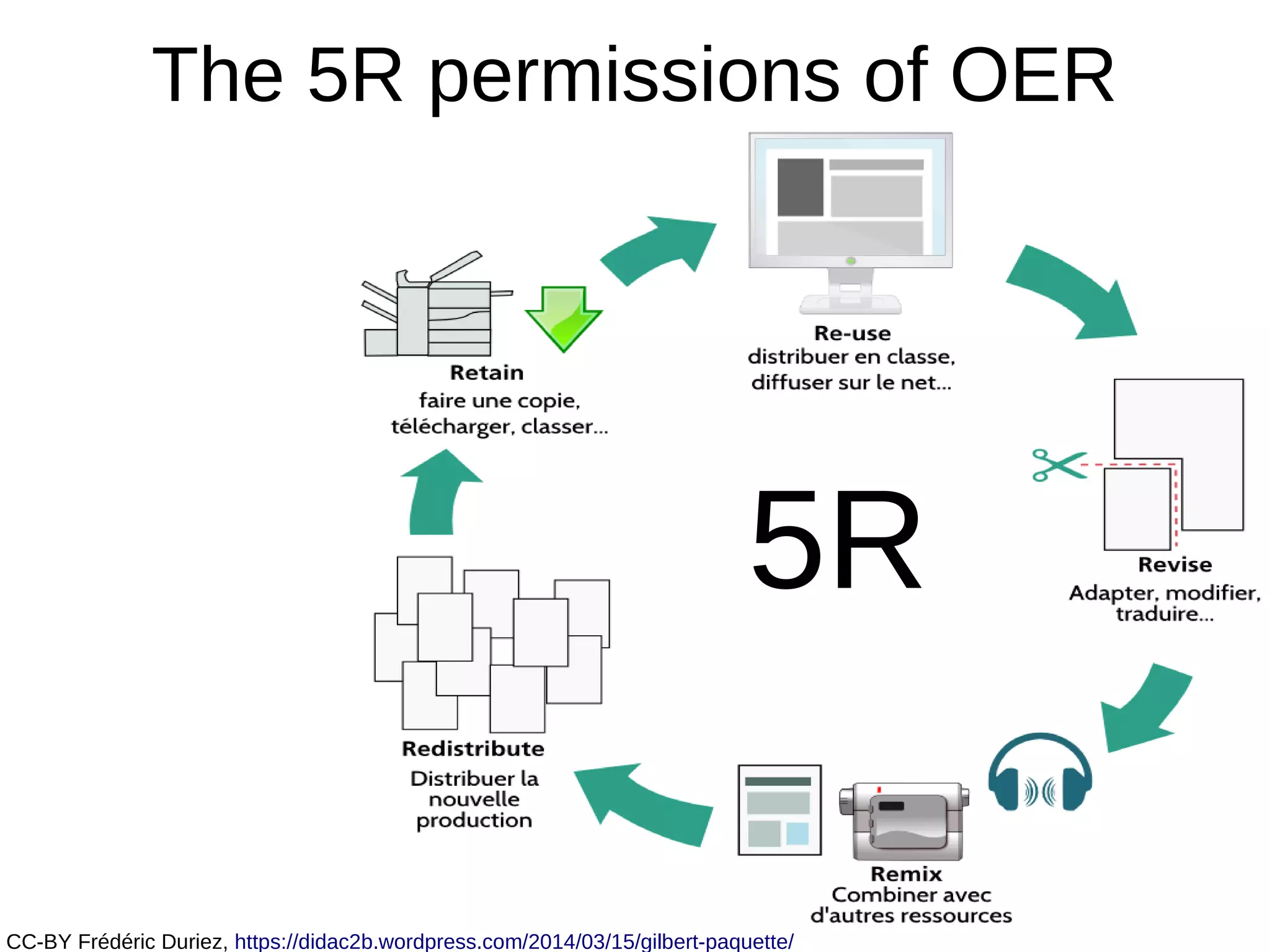
5R
CC-BY Frédéric Duriez, https://didac2b.wordpress.com/2014/03/15/gilbert-paquette/
The 5R permissions of OER
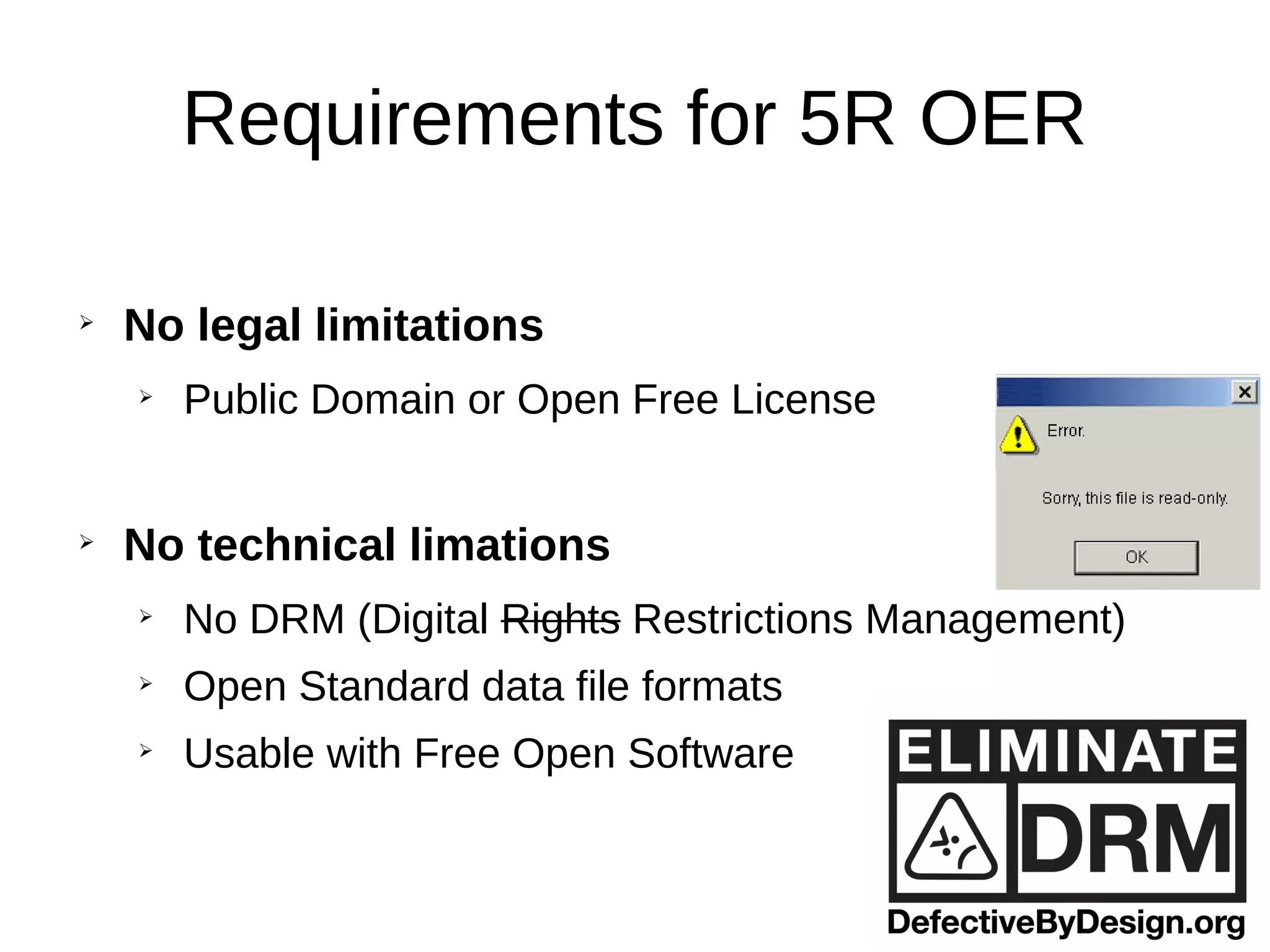
Requirements for 5R OER
➢
No legal limitations
➢
Public Domain or Open Free License
➢
No technical limations
➢
No DRM (Digital Rights Restrictions Management)
➢
Open Standard data file formats
➢
Usable with Free Open Software
The range of “opens”, from e-InfraNet: ‘Open’ as the default modus operandi for research and higher education, CC-BY-SA 3.0
27
"The most fundamental
way of helping other
people,
is to teach people
how to do things better
or how to better their
lives.
For people
who use computers,
this means sharing
the recipes
you use on your
computer,
in other words
the programs you run."
28
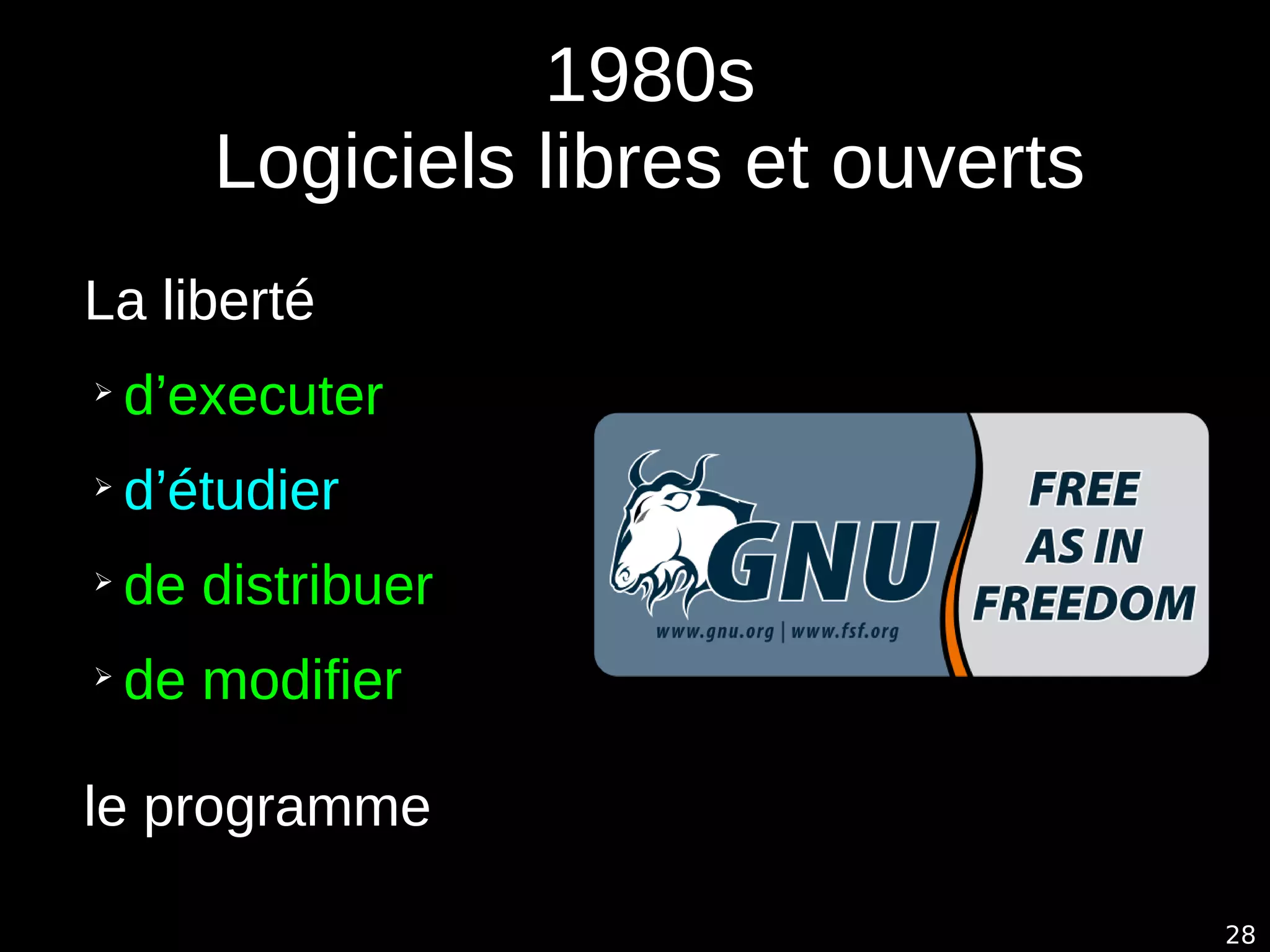
1980s
Logiciels libres et ouverts
La liberté
➢
d’executer
➢
d’étudier
➢
de distribuer
➢
de modifier
le programme
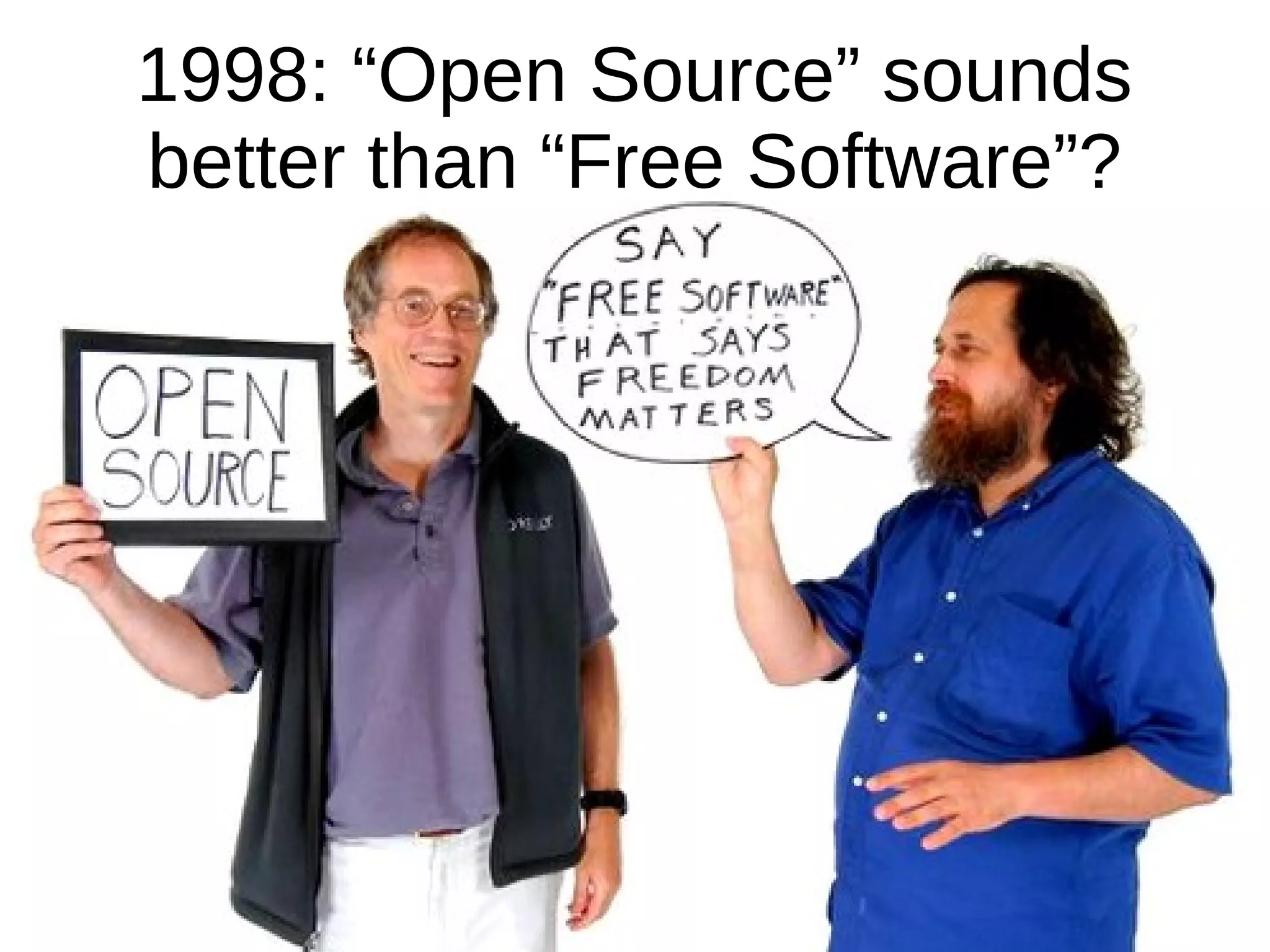
1998: “Open Source” sounds
better than “Free Software”?
30
The software Freedoms
require access to the source code
→
“Open Source Software” (OSS)
Free Open Source Software (FOSS)
Free Libre Open Source Software (FLOSS)
Logiciels Libres et Ouverts
Software Libre
31
Logiciels libres et ouverts
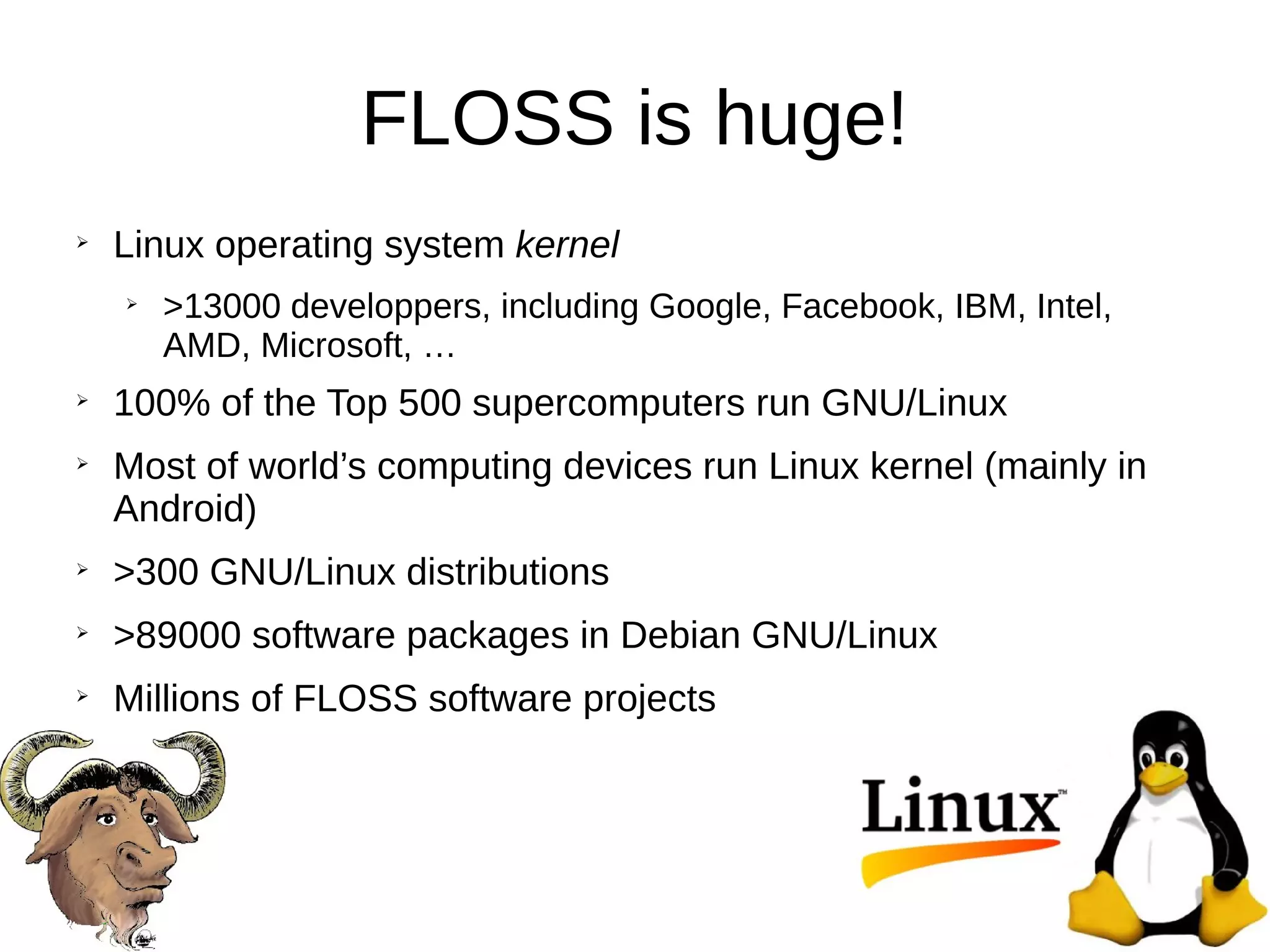
FLOSS is huge!
➢
Linux operating system kernel
➢
>13000 developpers, including Google, Facebook, IBM, Intel,
AMD, Microsoft, …
➢
100% of the Top 500 supercomputers run GNU/Linux
➢
Most of world’s computing devices run Linux kernel (mainly in
Android)
➢
>300 GNU/Linux distributions
➢
>89000 software packages in Debian GNU/Linux
➢
Millions of FLOSS software projects
Good reasons to
use FLOSS
➢
Stay in control
➢
Stay secure
➢
Avoid data lock in
➢
Avoid vendor lock in
➢
Interoperability
➢
Modularity
➢
Easy localization (including translation) and customization
➢
Most often cross platform
➢
Easier troubleshooting
➢
Sometimes better support
➢
Avoid license management and compliance issues
➢
Reduce costs
➢
Demanded when public funds are given
Good reasons to
develop FLOSS
➢
No need to start from scratch
➢
Network effects
➢
Get contributions from others
➢
Steer future developments
➢
Possibility to involve students
➢
Business opportunities
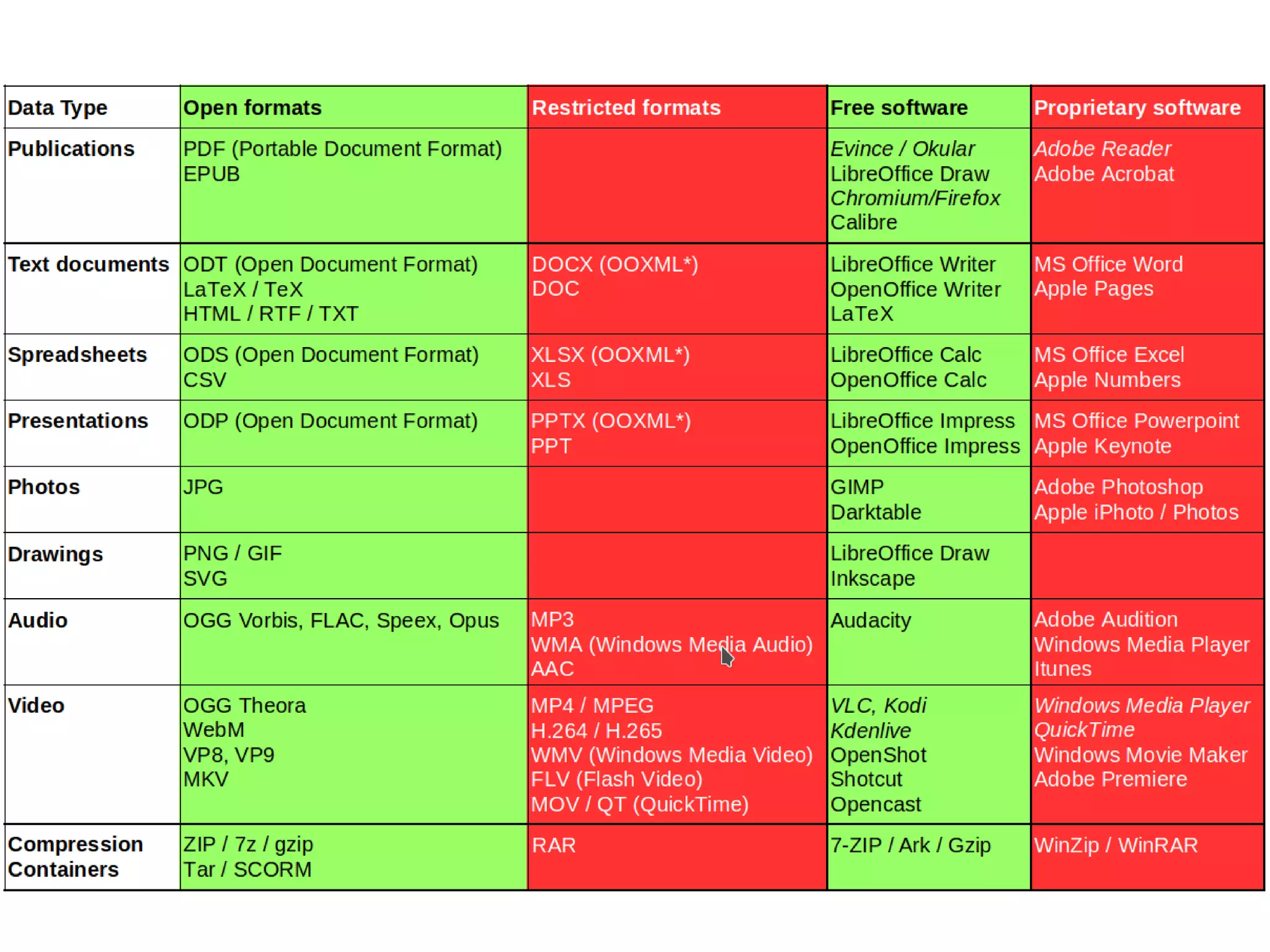
File format recommendations
➢
Avoid restricted formats
➢
Don’t annoy other people with restricted formats
➢
If others don’t need to edit your files, consider PDF
➢
Be aware of macro-viruses in MS Office files
➢
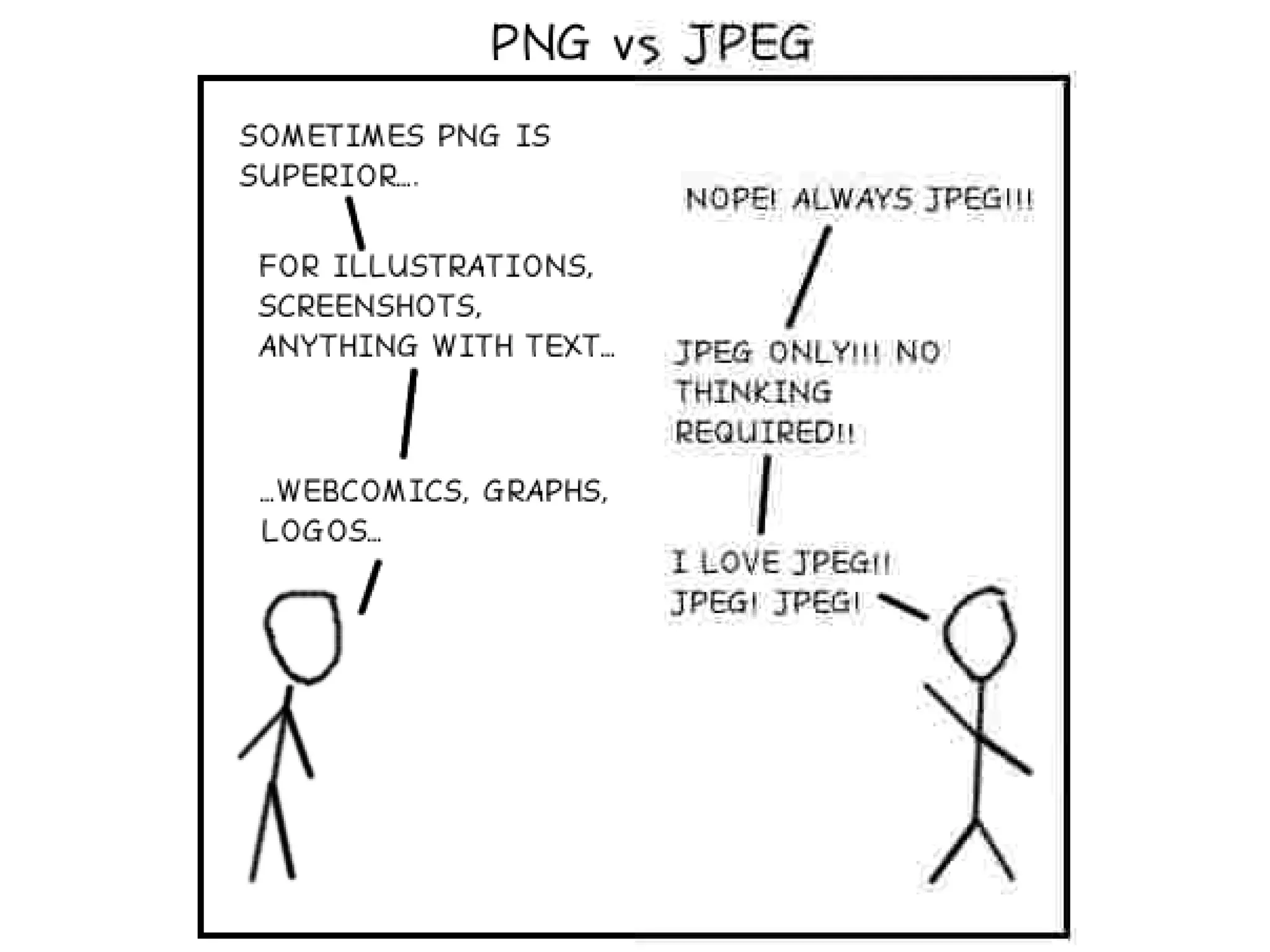
Don’t use raster based graphical editors when you
need vector based graphical editors
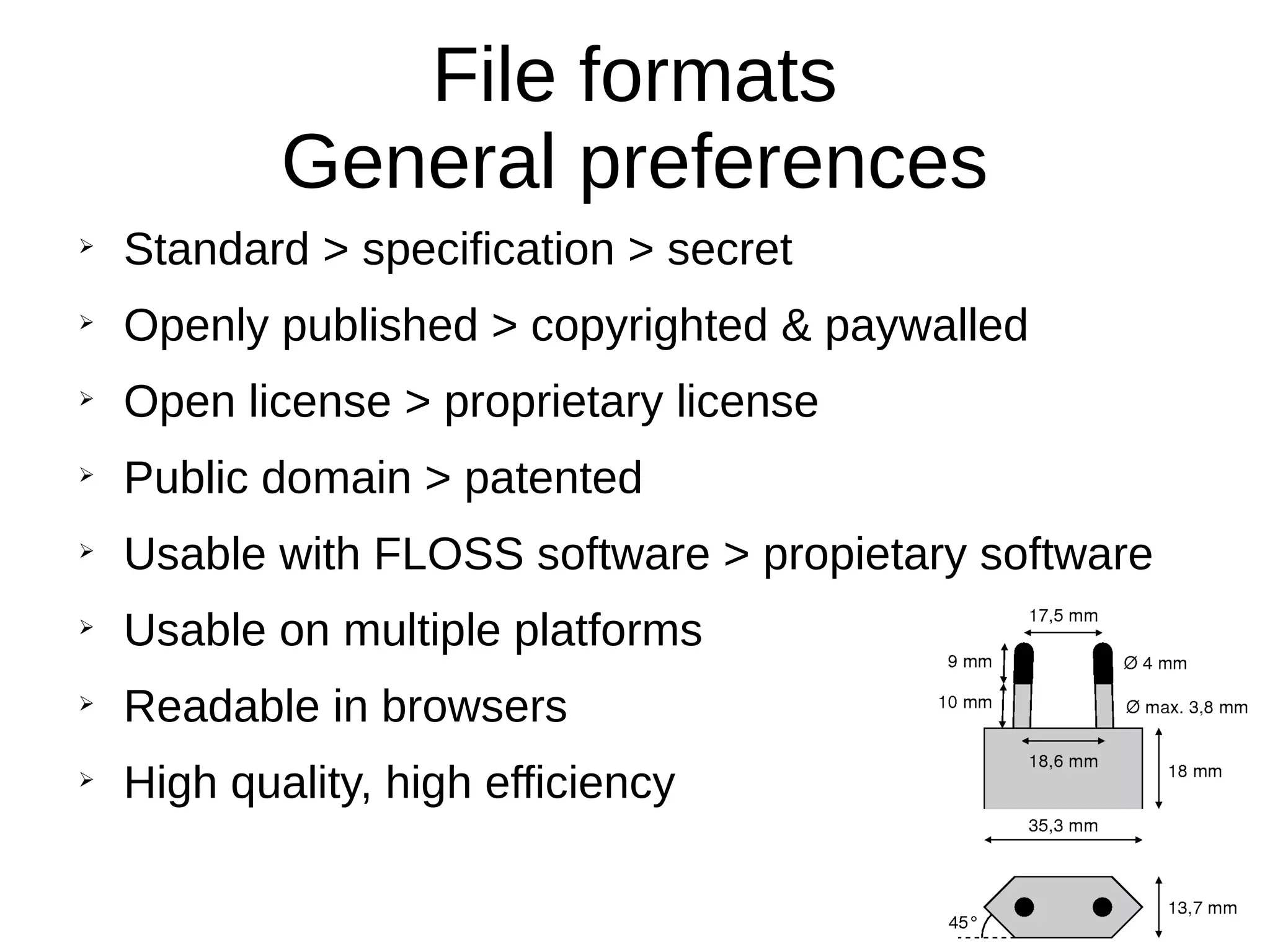
File formats
General preferences
➢
Standard > specification > secret
➢
Openly published > copyrighted & paywalled
➢
Open license > proprietary license
➢
Public domain > patented
➢
Usable with FLOSS software > propietary software
➢
Usable on multiple platforms
➢
Readable in browsers
➢
High quality, high efficiency
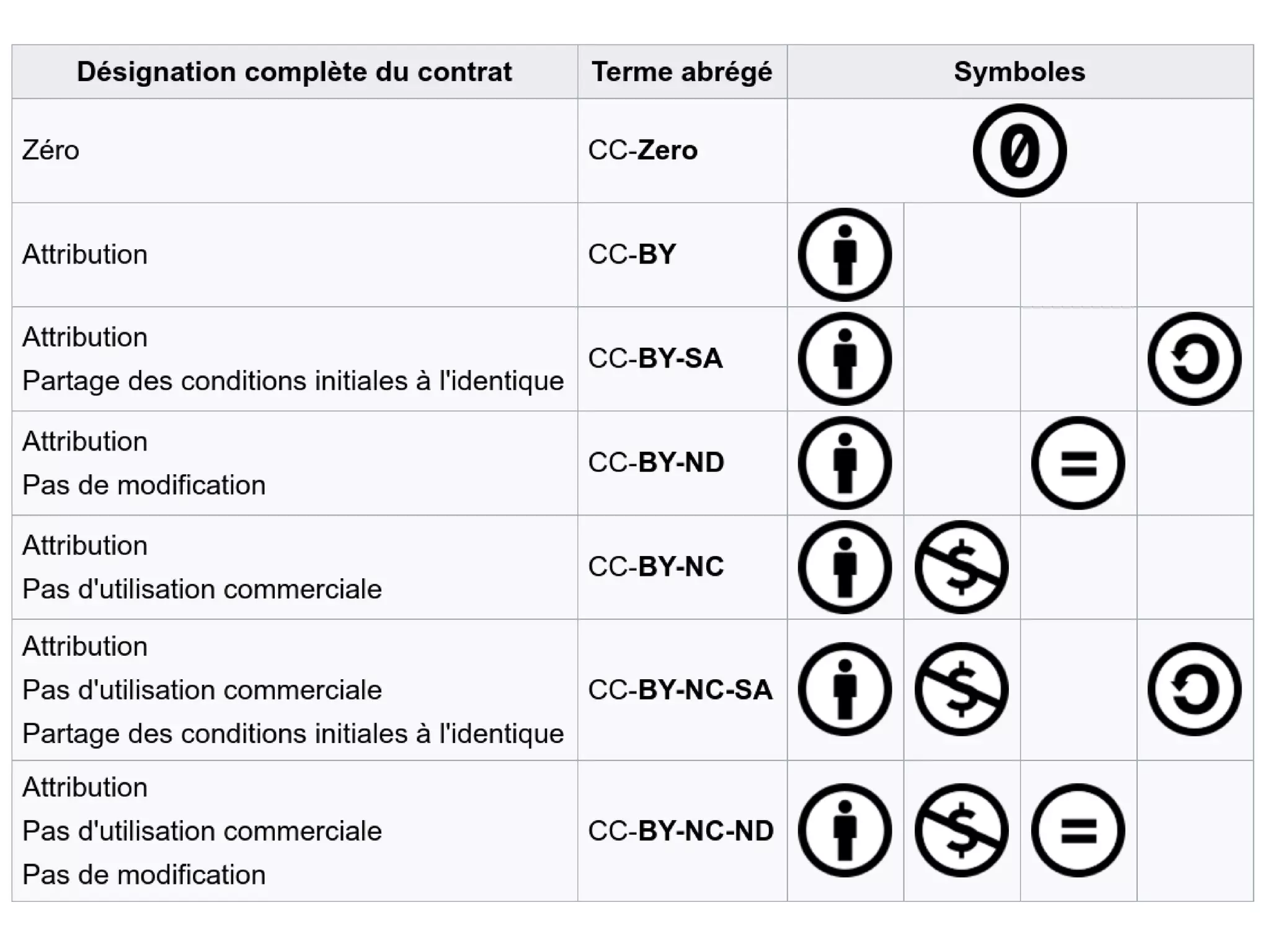
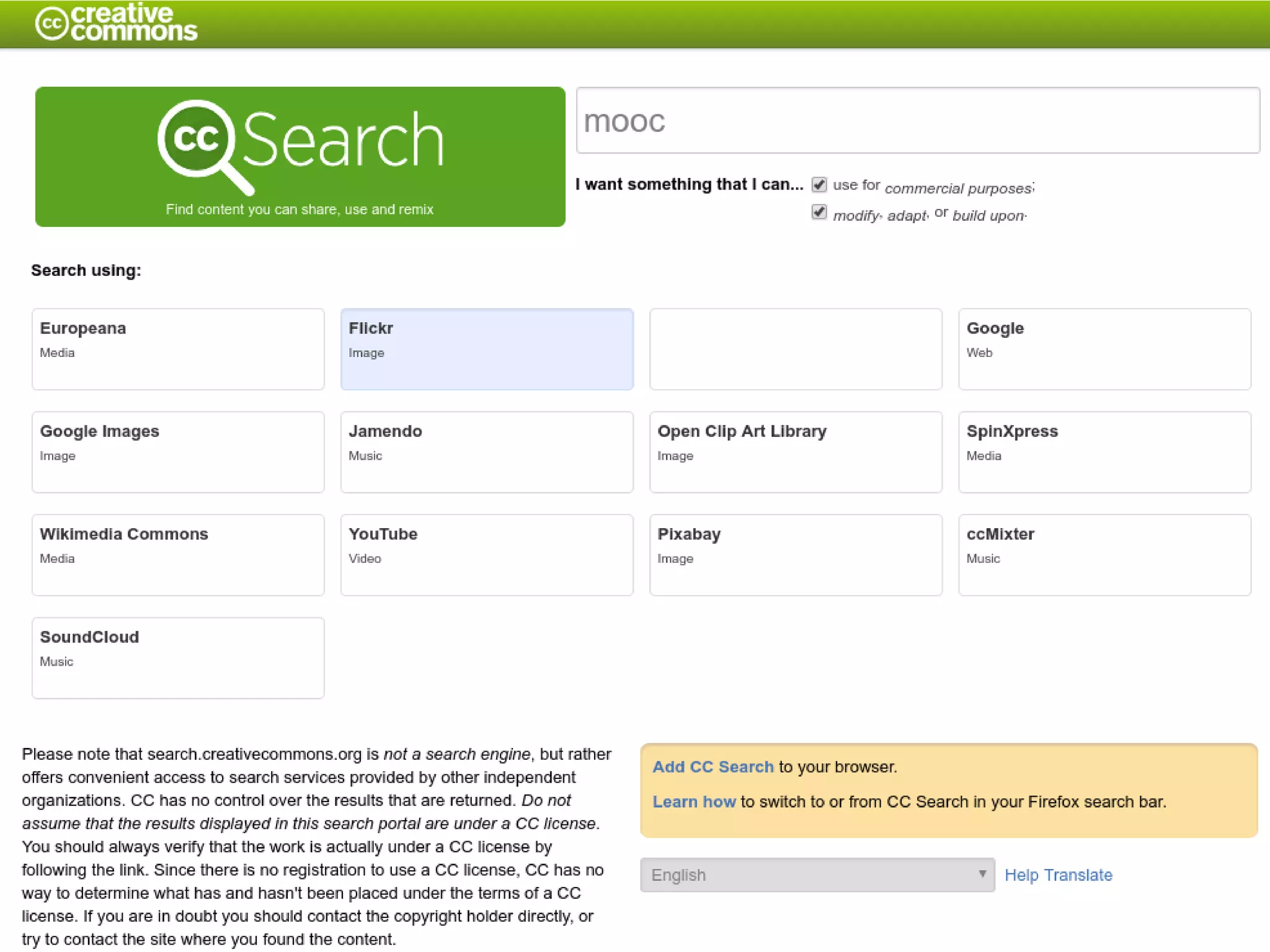
•www.CreativeCommons.org
➢
Attribution – no attribution
➢
Commercial – non commercial
➢
Modifiable – non modifiable
➢
Partager selon la même licence – choix libre
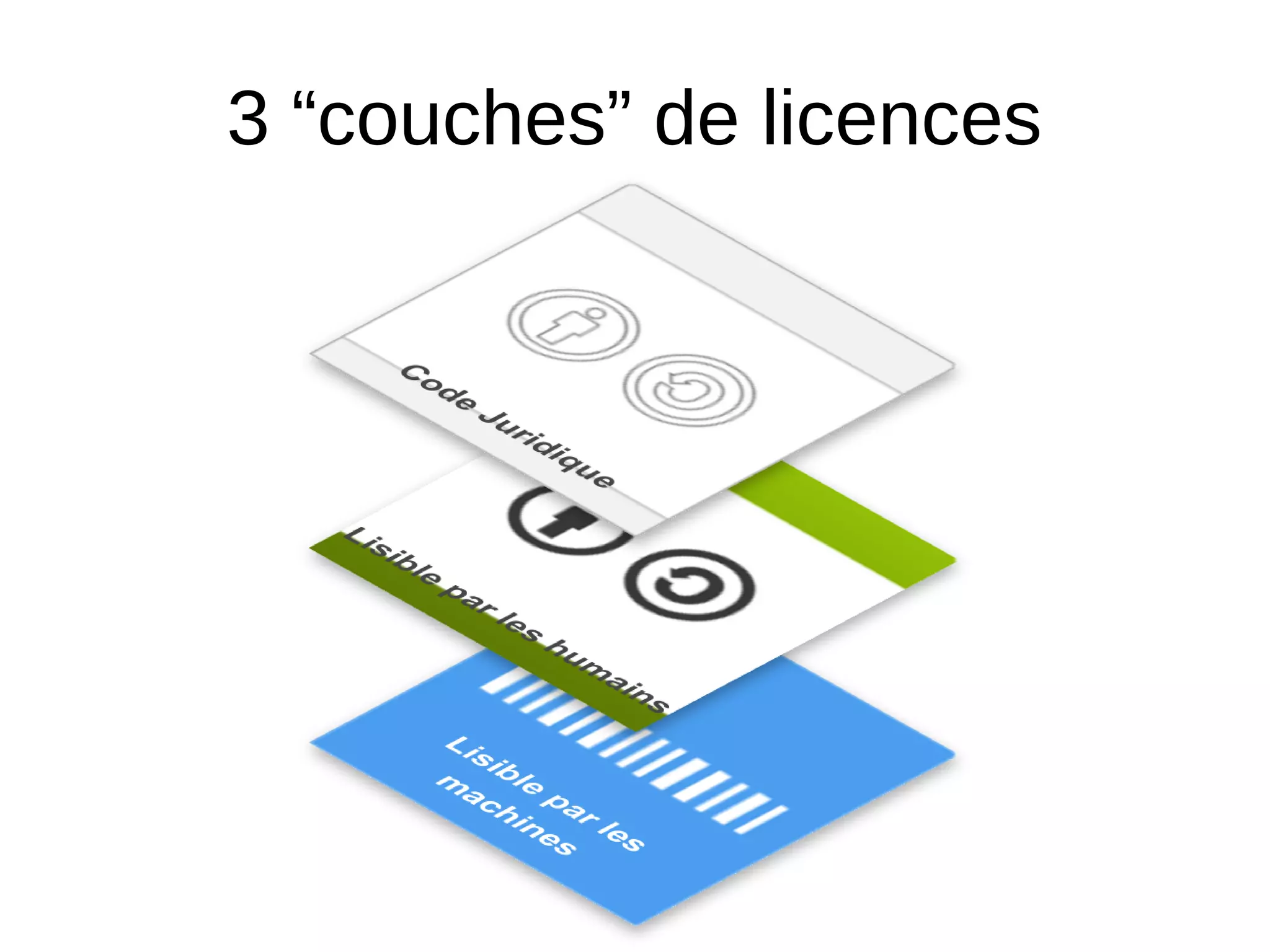
3 “couches” de licences
Since 1971: public domain books
47
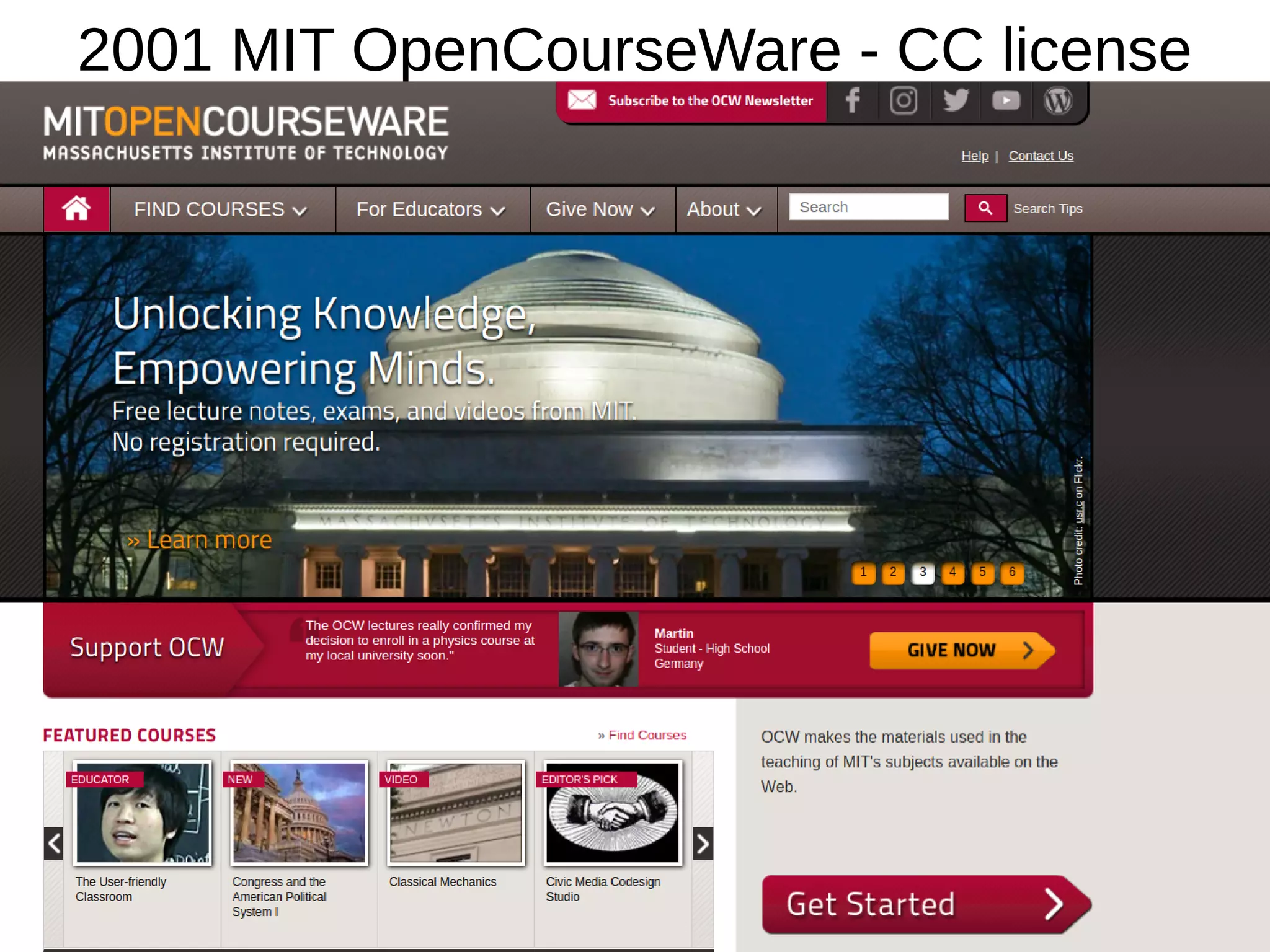
2001 MIT OpenCourseWare - CC license
48
49
50
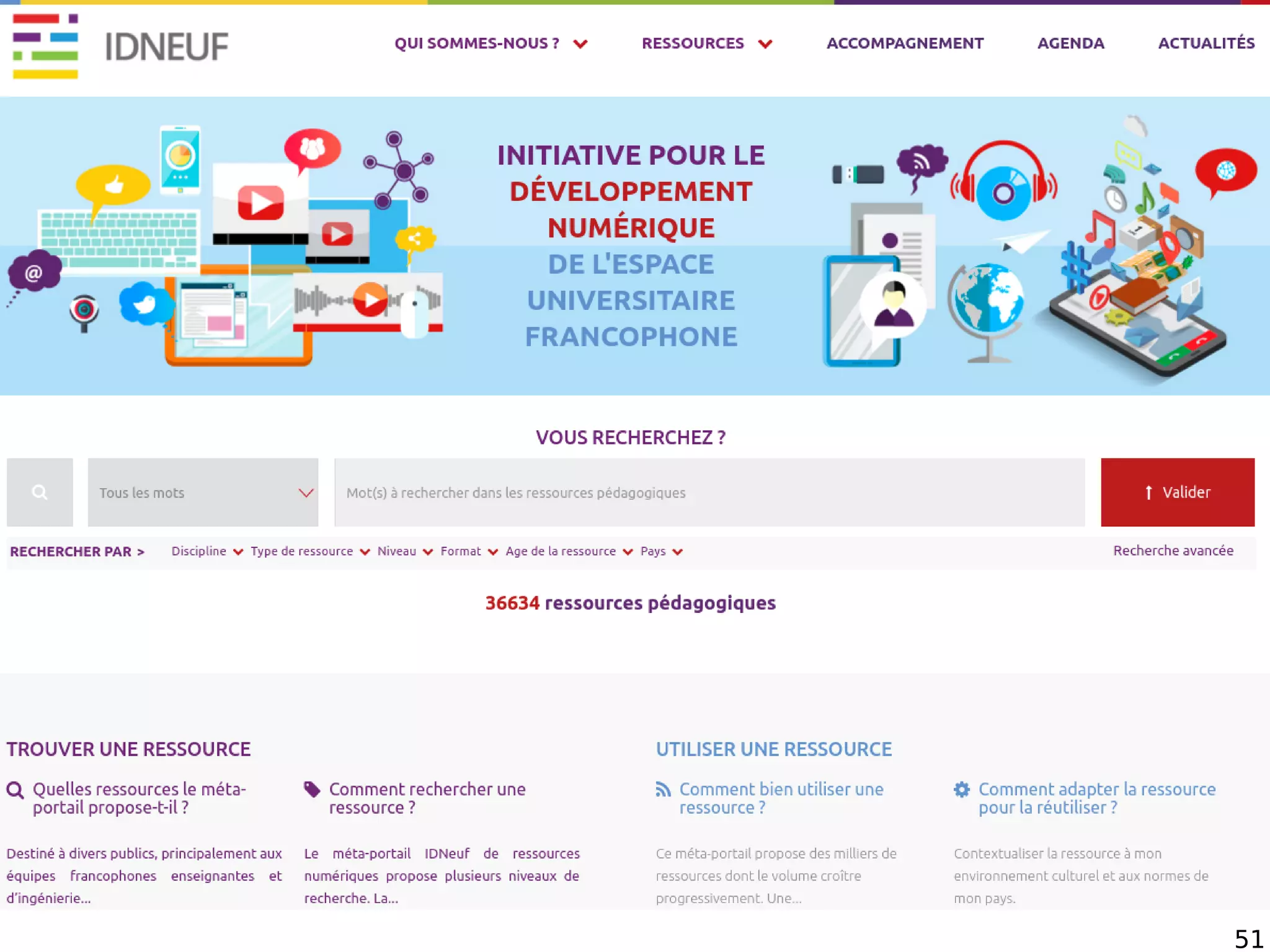
51
52
53MOOC poster April 4, 2013, CC BY by Mathieu Plourde
54
55
56
57
Summary of recommendations
➢
Search OER with google/advanced, CC search
Merlot, …
➢
Share your learning materials under a Free (CC)
licence
➢
Use Open standards for file formats
➢
Use / recommend students Free Open Software
58
DAREDARE
TO SHARETO SHARE
Additional credits
➢
Joseph Ferdinand Keppler - The Pirate Publisher - Puck Magazine -
Restoration by Adam Cuerden, CC0, public domain
➢
“Sorry. We're closed” CC-BY-NC by Tommaso Galli
➢
Ouvert CC-BY Frédéric Bisson
➢
OER Global Logo by Jonathas Mello, licensed under CC BY 3.0
➢
Open arrow, CC-by-nd by ChuckCoker
➢
Share matches CC-by-nc-nd by Josh Harper
➢
Question mark CC-by by Stefan Baudy
➢
Social Icons by Iconshock http://www.iconshock.com/social-icons/
This presentation was made with 100% Free Software
No animals were harmed
Questier.com
Frederik AT Questier.com
www.linkedin.com/in/fquestie
www.slideshare.net/Frederik_QuestierQ
uestions?
Merci!

OER & Copyrights

  • 1.
    Ressources éducatives libres &droits d’auteurs Prof. dr. Frederik Questier Vrije Universiteit Brussel July 1st 2020 Project No. 573583-EPP-1-2016-1-ES-EPPKA2-CBHE-SP (2016-2558/001-001)
  • 2.
    Cette présentation setrouve à http://questier.com http://www.slideshare.net/Frederik_Questier
  • 3.
    A bit ofcopyright history…
  • 4.
  • 5.
  • 6.
    Law France 1535 Bookshopsforbidden Death penalty for using printing press
  • 8.
    Index librorum prohibitorum =list of books forbidden by pope 1559 -1966
  • 9.
    Licensing of thePress Act 1662 England “Right to copy”, monopoly and censorship rights granted to printers: The Stationers' Company No author rights
  • 10.
    First author rights ➢ UK1710 ➢ "for the encouragement of learning" ➢ 1 copy for royal and each academic library ➢ Reproduction monopoly on request ➢ 14 year, optional + 14 year ➢ Afterwards public domain ➢ US 1790 ➢ "to promote the progress of science and useful arts by securing for limited times to authors and inventors the exclusive right to their respective writings and discoveries."
  • 11.
    Nowadays the lawallows “the pirate publishers” to ”take” the copyrights from the authors
  • 12.
    Student PIRGs (Public InterestResearch Groups) ➢ 2013: “(US) students spend an average of $900 a year on textbooks & course materials” ➢ “Textbook prices have increased four times the rate of inflation since 1994!”
  • 13.
    Student PIRGs (Public InterestResearch Groups) ➢ “Why are textbooks so expensive? ➢ Publishers undermine the used book market. ➢ Publishers “bundle” textbooks with extra CDs, passcodes and workbooks. ➢ More expensive ➢ Supplements expire at end of semester ➢ Publishers keep faculty in the dark about prices. ➢ textbooks market is broken”
  • 14.
    Maroc Droits d'auteur etdroits voisins Version consolidée en date du 9 juin 2014 http://adala.justice.gov.ma/production/legislation/fr/Nouveautes/Droits%20d'auteur%20et%20droits%20voisins.pdf
  • 15.
    © All rightsreserved Authors get without asking for it a monopoly on their creations until 70 years after their death
  • 16.
  • 17.
    Article 15: Libreutilisation pour l’enseignement ➢ il est permis ➢ sans l’autorisation de l’auteur ➢ et sans le paiement d’une rémunération, ➢ a) d’utiliser une oeuvre licitement publiée en tant qu’illustration dans des publications, des émissions de radiodiffusion ou des enregistrements sonores ou visuels destinés à l'enseignement; ➢ b) de reproduire par des moyens reprographiques pour l’enseignement ou pour des examens au sein d’établissements d'enseignement dont les activités ne visent pas directement ou indirectement un profit commercial, et dans la mesure justifiée par le but à atteindre, des articles isolés licitement publiés dans un journal ou périodique, de courts extraits d’une oeuvre licitement publiée ou une oeuvre courte licitement publiée. ➢ indiquer la source et le nom de l’auteur
  • 18.
    Article 23: Librereprésentation ou exécution publique ➢ il est permis, ➢ sans l'autorisation de l'auteur ➢ et sans paiement d'une rémunération, ➢ de représenter ou d'exécuter une œuvre publiquement. ➢ b. dans le cadre des activités d'un établissement d'enseignement, ➢ pour le personnel et les étudiants d'un tel établissement ➢ si le public est composé exclusivement du personnel et des étudiants de l'établissement ou des parents et des surveillants ou d'autres personnes directement liées aux activités de l'établissement.
  • 19.
    Missing rights? ➢ Larger works,like a complete book or movie ➢ Modify ➢ Translate ➢ Show on public websites
  • 20.
    Solution? Article 40 L'auteur d'uneœuvre peut accorder des licences à d'autres personnes
  • 21.
  • 22.
    OER = REL OERGlobal Logo by Jonathas Mello, licensed under CC BY 3.0
  • 23.
    Les ressources éducativeslibres (REL) sont des matériels d'enseignement, d'apprentissage et de recherche sur tout support, numérique ou autre, existant dans le domaine public ou publiés sous une licence ouverte permettant l'accès, l'utilisation, l’adaptation et la redistribution gratuits par d'autres, sans restrictions ou avec des restrictions limitées.
  • 24.
    5R CC-BY Frédéric Duriez,https://didac2b.wordpress.com/2014/03/15/gilbert-paquette/ The 5R permissions of OER
  • 25.
    Requirements for 5ROER ➢ No legal limitations ➢ Public Domain or Open Free License ➢ No technical limations ➢ No DRM (Digital Rights Restrictions Management) ➢ Open Standard data file formats ➢ Usable with Free Open Software
  • 26.
    The range of“opens”, from e-InfraNet: ‘Open’ as the default modus operandi for research and higher education, CC-BY-SA 3.0
  • 27.
    27 "The most fundamental wayof helping other people, is to teach people how to do things better or how to better their lives. For people who use computers, this means sharing the recipes you use on your computer, in other words the programs you run."
  • 28.
    28 1980s Logiciels libres etouverts La liberté ➢ d’executer ➢ d’étudier ➢ de distribuer ➢ de modifier le programme
  • 29.
    1998: “Open Source”sounds better than “Free Software”?
  • 30.
    30 The software Freedoms requireaccess to the source code → “Open Source Software” (OSS) Free Open Source Software (FOSS) Free Libre Open Source Software (FLOSS) Logiciels Libres et Ouverts Software Libre
  • 31.
  • 32.
    FLOSS is huge! ➢ Linuxoperating system kernel ➢ >13000 developpers, including Google, Facebook, IBM, Intel, AMD, Microsoft, … ➢ 100% of the Top 500 supercomputers run GNU/Linux ➢ Most of world’s computing devices run Linux kernel (mainly in Android) ➢ >300 GNU/Linux distributions ➢ >89000 software packages in Debian GNU/Linux ➢ Millions of FLOSS software projects
  • 33.
    Good reasons to useFLOSS ➢ Stay in control ➢ Stay secure ➢ Avoid data lock in ➢ Avoid vendor lock in ➢ Interoperability ➢ Modularity ➢ Easy localization (including translation) and customization ➢ Most often cross platform ➢ Easier troubleshooting ➢ Sometimes better support ➢ Avoid license management and compliance issues ➢ Reduce costs ➢ Demanded when public funds are given
  • 34.
    Good reasons to developFLOSS ➢ No need to start from scratch ➢ Network effects ➢ Get contributions from others ➢ Steer future developments ➢ Possibility to involve students ➢ Business opportunities
  • 35.
    File format recommendations ➢ Avoidrestricted formats ➢ Don’t annoy other people with restricted formats ➢ If others don’t need to edit your files, consider PDF ➢ Be aware of macro-viruses in MS Office files ➢ Don’t use raster based graphical editors when you need vector based graphical editors
  • 37.
    File formats General preferences ➢ Standard> specification > secret ➢ Openly published > copyrighted & paywalled ➢ Open license > proprietary license ➢ Public domain > patented ➢ Usable with FLOSS software > propietary software ➢ Usable on multiple platforms ➢ Readable in browsers ➢ High quality, high efficiency
  • 39.
    •www.CreativeCommons.org ➢ Attribution – noattribution ➢ Commercial – non commercial ➢ Modifiable – non modifiable ➢ Partager selon la même licence – choix libre
  • 43.
  • 46.
    Since 1971: publicdomain books
  • 47.
  • 48.
  • 49.
  • 50.
  • 51.
  • 52.
  • 53.
    53MOOC poster April4, 2013, CC BY by Mathieu Plourde
  • 54.
  • 55.
  • 56.
  • 57.
    57 Summary of recommendations ➢ SearchOER with google/advanced, CC search Merlot, … ➢ Share your learning materials under a Free (CC) licence ➢ Use Open standards for file formats ➢ Use / recommend students Free Open Software
  • 58.
  • 59.
    Additional credits ➢ Joseph FerdinandKeppler - The Pirate Publisher - Puck Magazine - Restoration by Adam Cuerden, CC0, public domain ➢ “Sorry. We're closed” CC-BY-NC by Tommaso Galli ➢ Ouvert CC-BY Frédéric Bisson ➢ OER Global Logo by Jonathas Mello, licensed under CC BY 3.0 ➢ Open arrow, CC-by-nd by ChuckCoker ➢ Share matches CC-by-nc-nd by Josh Harper ➢ Question mark CC-by by Stefan Baudy ➢ Social Icons by Iconshock http://www.iconshock.com/social-icons/
  • 60.
    This presentation wasmade with 100% Free Software No animals were harmed Questier.com Frederik AT Questier.com www.linkedin.com/in/fquestie www.slideshare.net/Frederik_QuestierQ uestions? Merci!