Download as PDF, PPTX

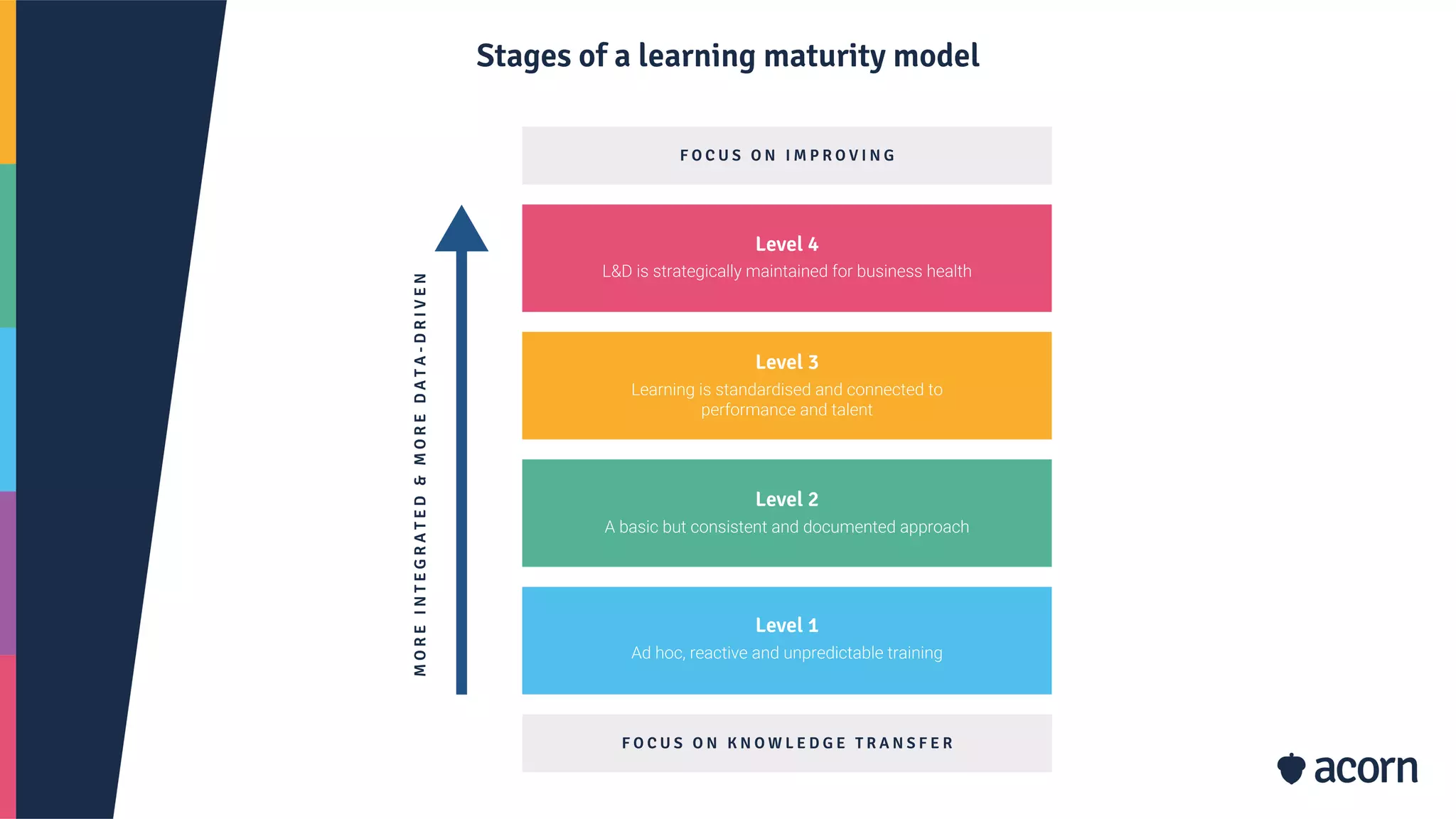
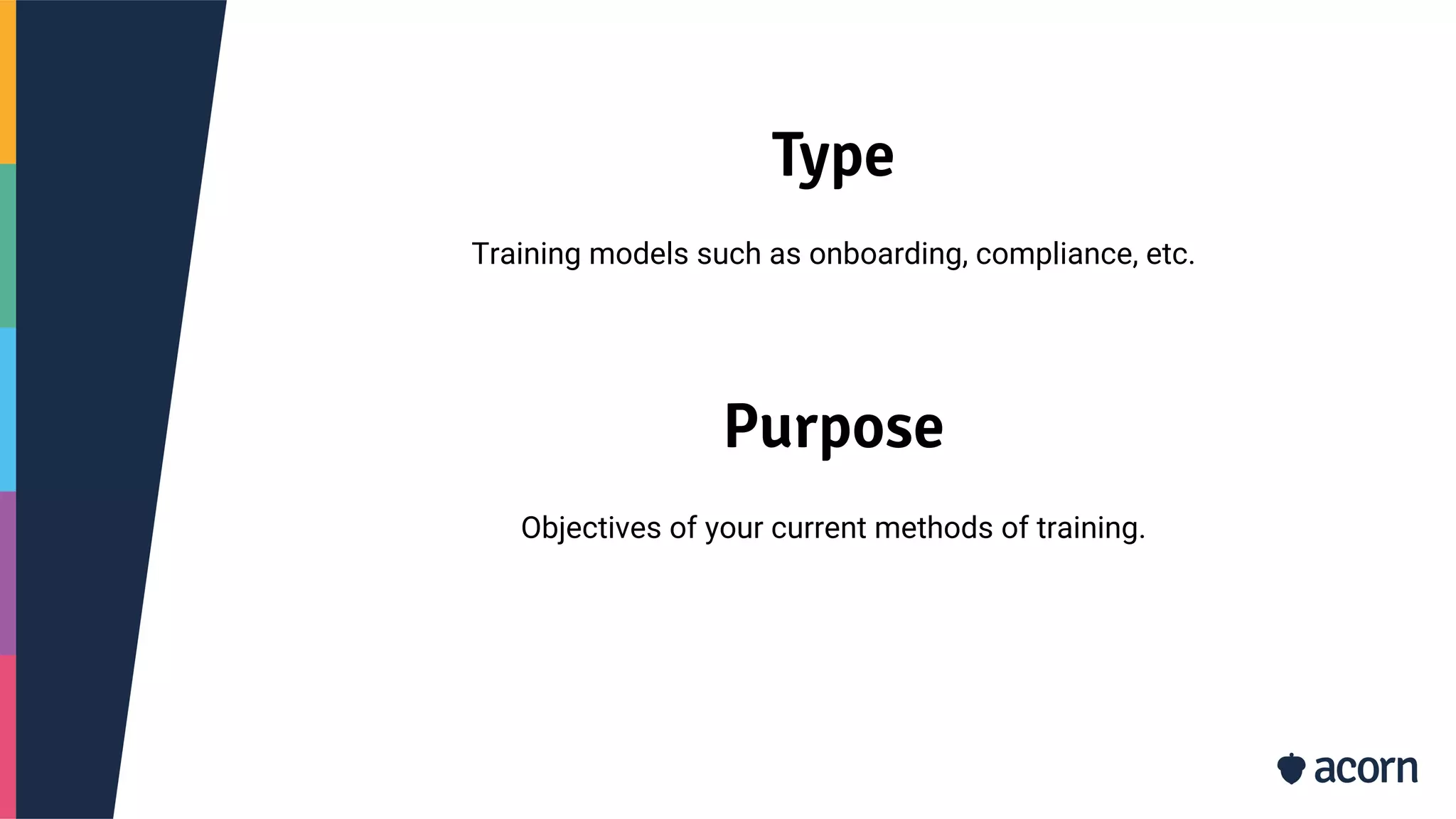
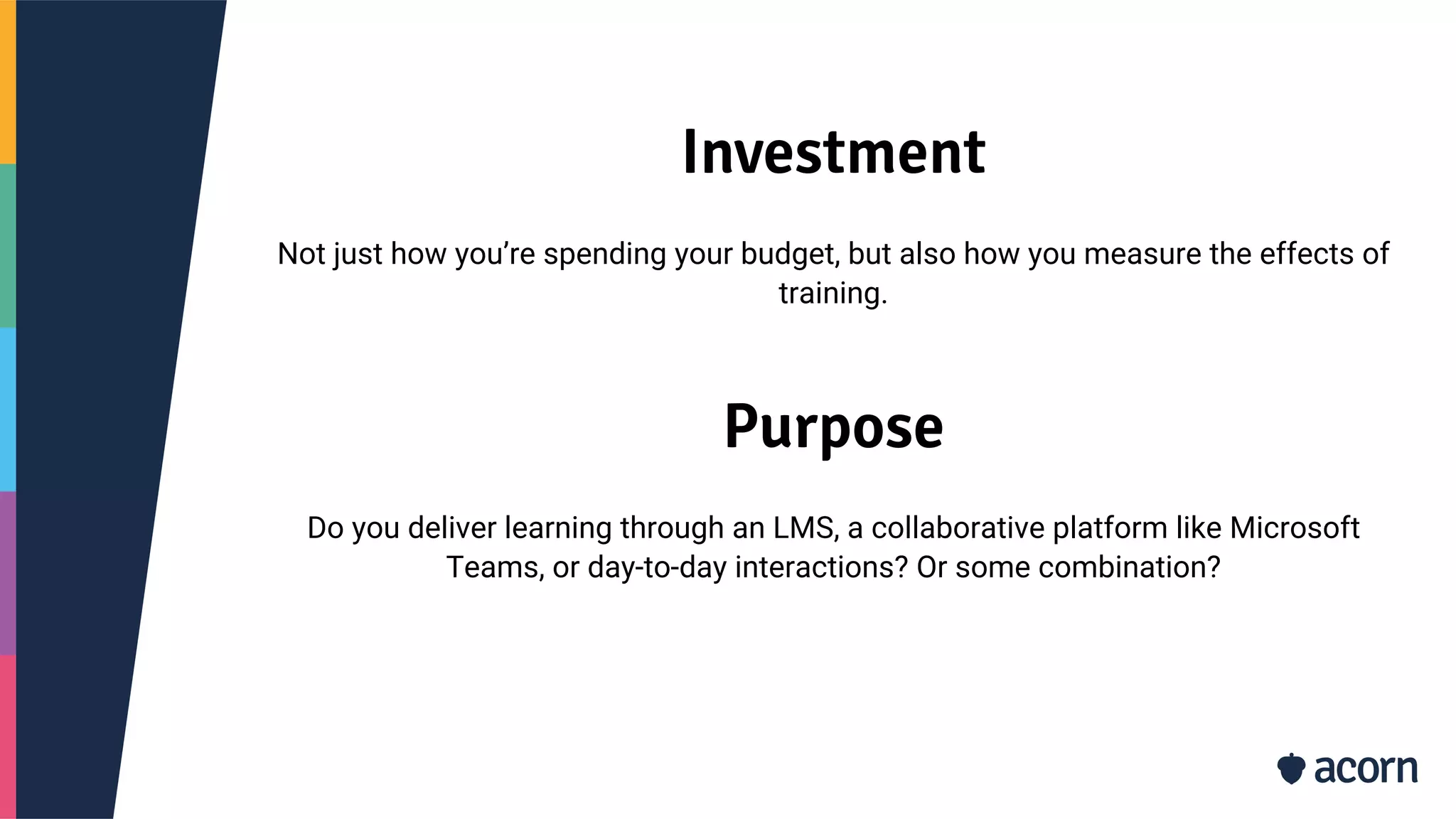
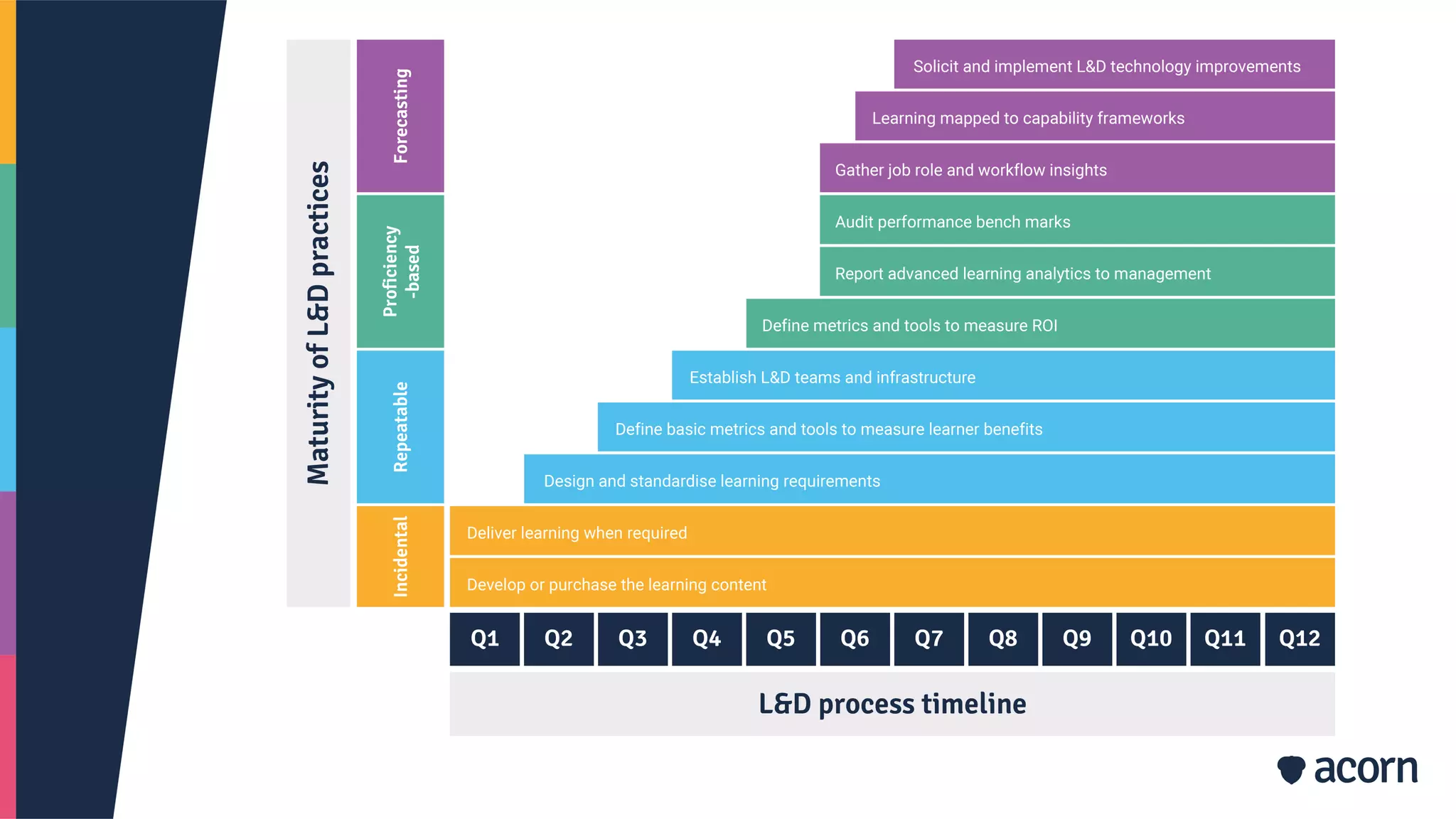


The document discusses learning and development (L&D) maturity models, which assess an organization's L&D practices and culture on a scale from immature to optimized. It describes the typical levels in a maturity model and how knowing an organization's current maturity level can help effectively allocate resources. The key phases of L&D maturity are reacting to needs, standardizing programs, aligning L&D with business goals and strategy, and anticipating needs through iterative refinement based on data. Using a maturity model provides organizations repeatable improvement actions, a basis for benchmarking, and a tool for internal comparison.


