The Capability
Development
Framework
A guide to better
understanding it
What is it?
A capability development framework (CDF) is a tool that
organisations use to outline what skills, knowledge and
behaviours are expected of their employees to fulfil their roles
to meet business priorities.
A successful CDF drives recruitment, development
opportunities and performance in your workforce.
Getting buy-in
When creating a capability development framework (CDF), it's
important to gain input and buy-in from interested parties. This
helps ensure that it is relevant to specific roles, teams, and
projects and aligned with overall business strategy and
objectives.
Buy-in can be achieved by opening a dialogue between
managers and HR leaders.
How a
CDF can
help
Recruitment
Helps to define the necessary skills and expertise to carry
out a role, making it easier to recruit new talent and measure
the skills of potential candidates.
Job Design/Role Desc.
Determine what capabilities are necessary for specific job
roles and establish which systems and processes an
employee should know in that position.
Career Planning
Align employee's personal career goals with the
company's strategic priorities, allowing for greater
career satisfaction.
Succession Planning
If you know certain roles will become vacant soon, you can
plan for certain individuals to learn the capabilities needed to
take up the role in the future.
Performance Dev Practices
Align employee goals with the company's overall
goals and track progress through continuous
feedback.
Learning & Development
Make the L&D process more efficient, arming your
employees with the skills, knowledge and behaviour needed
to fulfill their roles in the company.
Workforce Planning
An under-skilled workforce, or a workforce with outdated skills,
won’t be able to meet your desired organisational outcomes. A
CDF can help prevent attrition before it even begins.
Ability To
Develop
Organisational
Capability
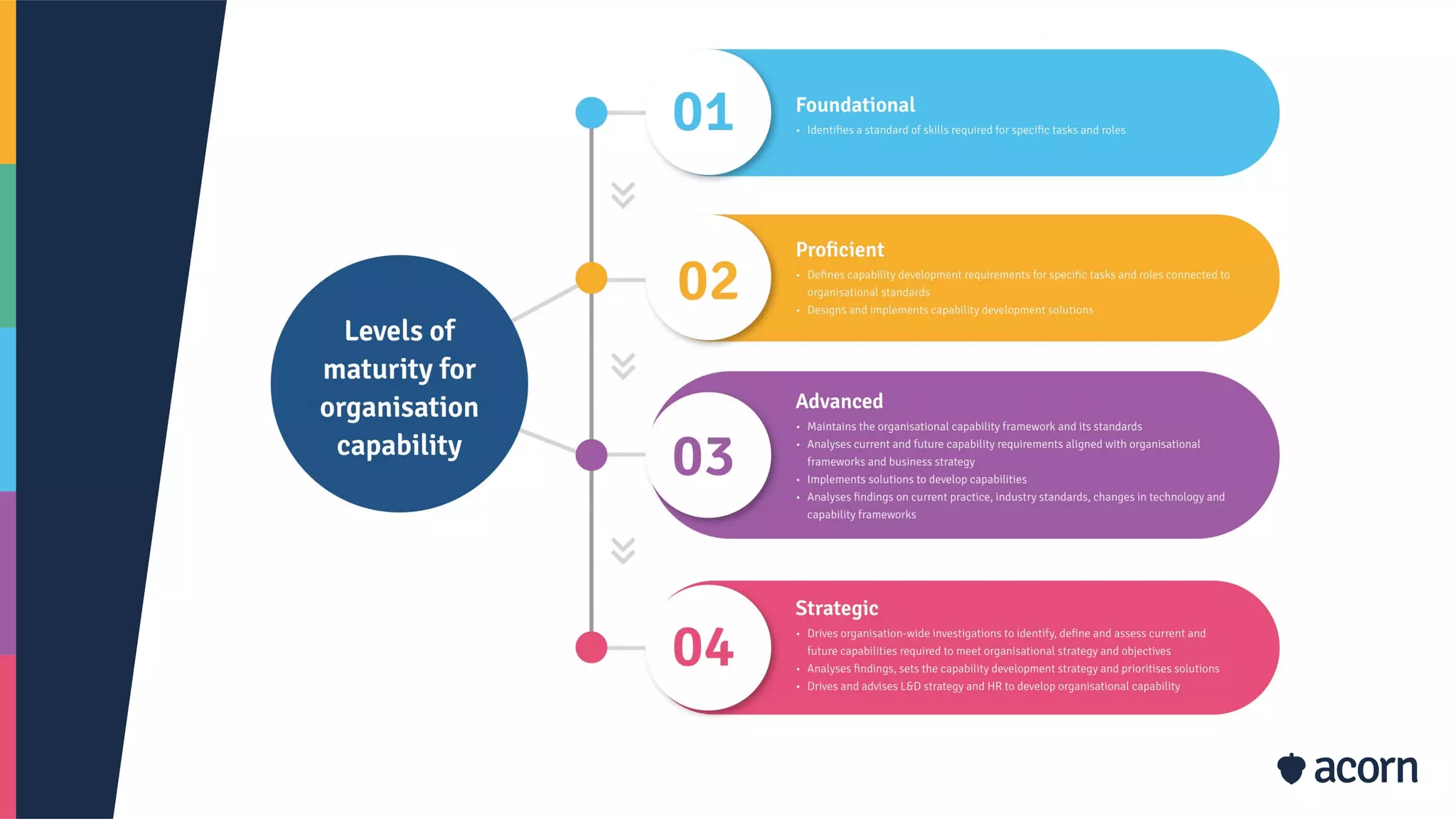
Maturity
There are 4 stages of maturity in developing organisational
capability.
Managers and HR leaders advance up the scale as they improve
their expertise, of which there are 4 levels.
Effective
CDF
Implementation
Make it unique to the specific needs
of the company
Tailoring the CDF to your organisation's specific needs will
ensure that it addresses the specific skills gaps in your
workforce and that it is relevant to the business.
Balance technical skills
and people skills
Both are necessary for delivering on business objectives. Your
technical skills are obviously needed to get the job done and
deliver on targets. But people tend to forget that soft skills (your
people skills) are just as essential for leaders to have.
Use the CDF to assess employees
and show progression
Regularly assessing your employees against your CDF allows you
to measure their progress in developing the necessary
capabilities. It's important that their progress is known not only
to you but to employees themselves, so that they understand
how they’ve been developing.
Use a learning platform to upskill
employees and measure improvement
Using a learning platform means you’ll be able to choose which
organisational capabilities from your CDF you need certain
teams and workers to develop, allowing them to learn in their
own time without requiring your company to organise dedicated
internal training.
You can learn more about this
topic by checking out the full
article:
https://acornlms.com/enterprise-learning-
management

What's a Capability Development Framework?

  • 1.
  • 2.
    What is it? Acapability development framework (CDF) is a tool that organisations use to outline what skills, knowledge and behaviours are expected of their employees to fulfil their roles to meet business priorities. A successful CDF drives recruitment, development opportunities and performance in your workforce.
  • 3.
    Getting buy-in When creatinga capability development framework (CDF), it's important to gain input and buy-in from interested parties. This helps ensure that it is relevant to specific roles, teams, and projects and aligned with overall business strategy and objectives. Buy-in can be achieved by opening a dialogue between managers and HR leaders.
  • 4.
  • 5.
    Recruitment Helps to definethe necessary skills and expertise to carry out a role, making it easier to recruit new talent and measure the skills of potential candidates.
  • 6.
    Job Design/Role Desc. Determinewhat capabilities are necessary for specific job roles and establish which systems and processes an employee should know in that position.
  • 7.
    Career Planning Align employee'spersonal career goals with the company's strategic priorities, allowing for greater career satisfaction.
  • 8.
    Succession Planning If youknow certain roles will become vacant soon, you can plan for certain individuals to learn the capabilities needed to take up the role in the future.
  • 9.
    Performance Dev Practices Alignemployee goals with the company's overall goals and track progress through continuous feedback.
  • 10.
    Learning & Development Makethe L&D process more efficient, arming your employees with the skills, knowledge and behaviour needed to fulfill their roles in the company.
  • 11.
    Workforce Planning An under-skilledworkforce, or a workforce with outdated skills, won’t be able to meet your desired organisational outcomes. A CDF can help prevent attrition before it even begins.
  • 12.
  • 13.
    Maturity There are 4stages of maturity in developing organisational capability. Managers and HR leaders advance up the scale as they improve their expertise, of which there are 4 levels.
  • 15.
  • 16.
    Make it uniqueto the specific needs of the company Tailoring the CDF to your organisation's specific needs will ensure that it addresses the specific skills gaps in your workforce and that it is relevant to the business.
  • 17.
    Balance technical skills andpeople skills Both are necessary for delivering on business objectives. Your technical skills are obviously needed to get the job done and deliver on targets. But people tend to forget that soft skills (your people skills) are just as essential for leaders to have.
  • 18.
    Use the CDFto assess employees and show progression Regularly assessing your employees against your CDF allows you to measure their progress in developing the necessary capabilities. It's important that their progress is known not only to you but to employees themselves, so that they understand how they’ve been developing.
  • 19.
    Use a learningplatform to upskill employees and measure improvement Using a learning platform means you’ll be able to choose which organisational capabilities from your CDF you need certain teams and workers to develop, allowing them to learn in their own time without requiring your company to organise dedicated internal training.
  • 20.
    You can learnmore about this topic by checking out the full article: https://acornlms.com/enterprise-learning- management