Competency
Management
Why it’s important for
strategic performance
management
What’s a competency?
Competency is essentially a key measure of performance. That
is, competency is how someone performs a capability or a set
of knowledge, skills and behaviours.
The capability is the what, and competency is the how.
What’s competency management?
Competency management is the process of identifying what
level of competence employees perform a capability at.
This is done through continuous capability assessments and
development.
Link to performance management
Competency management sits under strategic performance
management, which is itself a capability-led approach that links
employee performance to organisational goals.
This ensures the organisation retains its competitive advantage
through sustainable, efficient and effective realisation of its
capabilities.
Why’s it important?
What makes competency management important is how it links
capabilities, which are dynamic business resources, to
competencies, or fixed goals. It helps align employee
behaviours with performance standards.
If employees aren’t performing to what is defined as necessary
for success, the business cannot sustain its current state.
Workforce benefits
• Autonomy and self-sufficiency for employees managing their
own development
• More personalised learning journeys
• Internal benchmarking of performance
• Universal language around performance standards
• More accurate L&D outcomes and insights.
Workplace
Competency
Management
Process
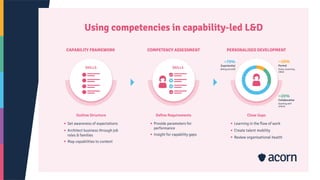
Define your competency framework
Break down capabilities by tasks and behaviours to create a
framework for outlining competency. Competency can be defined
by grades or job role.
In either approach, the description of a competency is simply the
performance indicator for a certain job task or behaviour. The
task or behaviour is a capability.
Conduct a competency assessment
Assess employee performance against the competency framework.
The aim is to seek gaps in performance. This can be done through
self-assessment, system review, or most commonly, performance
reviews with managers.
Identify development needs
Identify areas for employee development based on the gaps
identified by the competency assessment. The key is to work
capability by capability. Each capability will have its core
competencies. Development needs are specific to the individual's
job or professional development.
Do’s
and
Don’ts
DO: Automate the process
Use competency management systems or software to save
time and improve data collection and analysis. Look for
systems that integrate with HR tech and offer robust
assessment functionality to easily collate and analyse
people data.
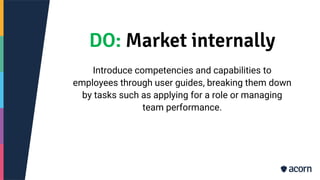
DO: Market internally
Introduce competencies and capabilities to
employees through user guides, breaking them down
by tasks such as applying for a role or managing
team performance.
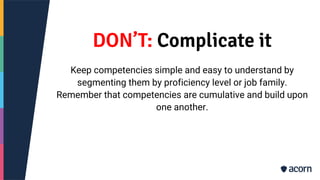
DON’T: Complicate it
Keep competencies simple and easy to understand by
segmenting them by proficiency level or job family.
Remember that competencies are cumulative and build upon
one another.
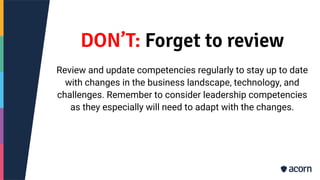
DON’T: Forget to review
Review and update competencies regularly to stay up to date
with changes in the business landscape, technology, and
challenges. Remember to consider leadership competencies
as they especially will need to adapt with the changes.
You can learn more about this
topic by checking out the full
article:
https://acornlms.com/enterprise-learning-
management/competency-management

Why Competency Management Matters

  • 1.
    Competency Management Why it’s importantfor strategic performance management
  • 2.
    What’s a competency? Competencyis essentially a key measure of performance. That is, competency is how someone performs a capability or a set of knowledge, skills and behaviours. The capability is the what, and competency is the how.
  • 3.
    What’s competency management? Competencymanagement is the process of identifying what level of competence employees perform a capability at. This is done through continuous capability assessments and development.
  • 4.
    Link to performancemanagement Competency management sits under strategic performance management, which is itself a capability-led approach that links employee performance to organisational goals. This ensures the organisation retains its competitive advantage through sustainable, efficient and effective realisation of its capabilities.
  • 5.
    Why’s it important? Whatmakes competency management important is how it links capabilities, which are dynamic business resources, to competencies, or fixed goals. It helps align employee behaviours with performance standards. If employees aren’t performing to what is defined as necessary for success, the business cannot sustain its current state.
  • 6.
    Workforce benefits • Autonomyand self-sufficiency for employees managing their own development • More personalised learning journeys • Internal benchmarking of performance • Universal language around performance standards • More accurate L&D outcomes and insights.
  • 7.
  • 8.
    Define your competencyframework Break down capabilities by tasks and behaviours to create a framework for outlining competency. Competency can be defined by grades or job role. In either approach, the description of a competency is simply the performance indicator for a certain job task or behaviour. The task or behaviour is a capability.
  • 9.
    Conduct a competencyassessment Assess employee performance against the competency framework. The aim is to seek gaps in performance. This can be done through self-assessment, system review, or most commonly, performance reviews with managers.
  • 10.
    Identify development needs Identifyareas for employee development based on the gaps identified by the competency assessment. The key is to work capability by capability. Each capability will have its core competencies. Development needs are specific to the individual's job or professional development.
  • 12.
  • 13.
    DO: Automate theprocess Use competency management systems or software to save time and improve data collection and analysis. Look for systems that integrate with HR tech and offer robust assessment functionality to easily collate and analyse people data.
  • 14.
    DO: Market internally Introducecompetencies and capabilities to employees through user guides, breaking them down by tasks such as applying for a role or managing team performance.
  • 15.
    DON’T: Complicate it Keepcompetencies simple and easy to understand by segmenting them by proficiency level or job family. Remember that competencies are cumulative and build upon one another.
  • 16.
    DON’T: Forget toreview Review and update competencies regularly to stay up to date with changes in the business landscape, technology, and challenges. Remember to consider leadership competencies as they especially will need to adapt with the changes.
  • 17.
    You can learnmore about this topic by checking out the full article: https://acornlms.com/enterprise-learning- management/competency-management