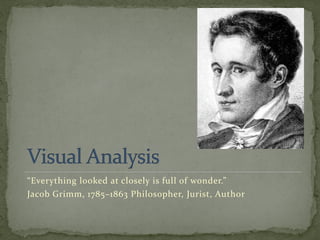
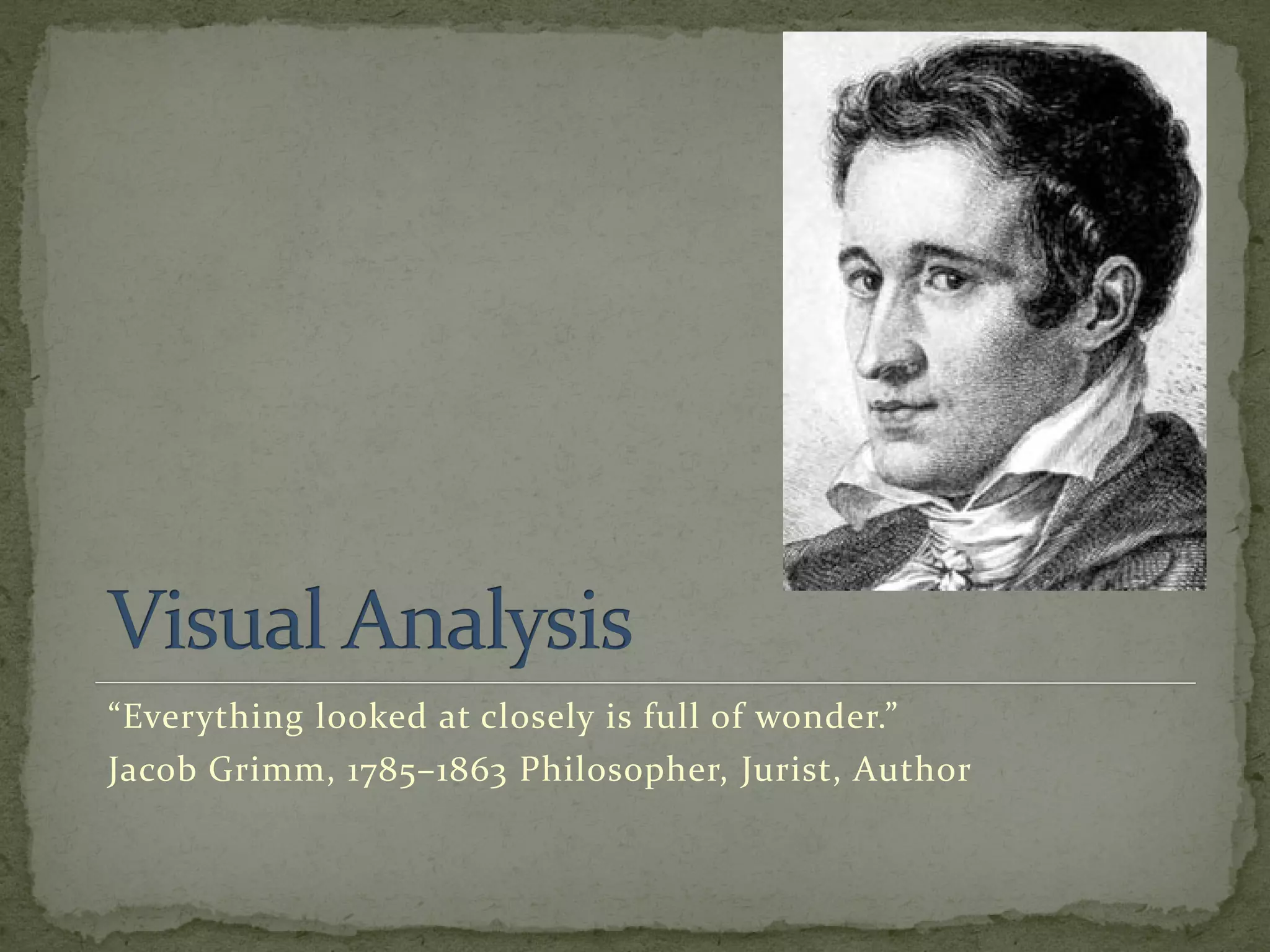
“Everything looked at closely is full of wonder.”
Jacob Grimm, 1785–1863 Philosopher, Jurist, Author
Prepared by Danielle Oser, APR
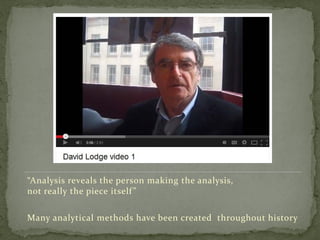
“Analysis reveals the person making the analysis,
not really the piece itself”
Many analytical methods have been created throughout history
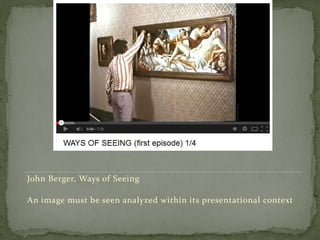
John Berger, Ways of Seeing
An image must be seen analyzed within its presentational context
 8 ways to analyze images
 From the book Small
World: An Academic
Romance
 Production
 Content
 Functional
 Expressional
 Figurative
 Rhetorical
 Societal
 Comparative
 Personal
 Historical
 Technical
 Ethical
 Cultural
 Critical
 The goal in using the six
perspectives for analysis
is to move from
subjective to objective
reactions.
 Make an inventory list of
everything you see
 Notice the compositional
elements and lighting
 Study the use of visual
cues
 Look a the gestalt laws
 Identify the semiotic sign
types
 Note the semiotic codes
 See how the cognitive
elements work
 What is the purpose of
the image
 What are the image
aesthetics
For any visual analysis, the first step should be to make an
inventory list of everything you see
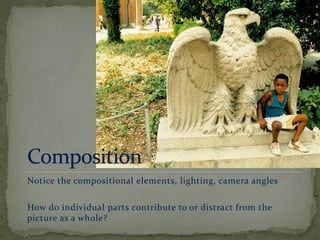
Notice the compositional elements, lighting, camera angles
How do individual parts contribute to or distract from the
picture as a whole?
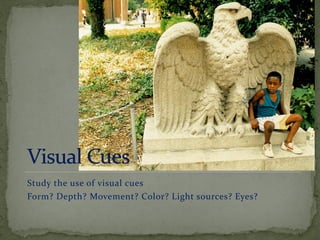
Study the use of visual cues
Form? Depth? Movement? Color? Light sources? Eyes?
Similarity?
Proximity?
Continuation?
Common Fate?
Metonymy?
Analogy?
Displaced?
Condensed?
Iconic?
Indexical?
Symbolic?
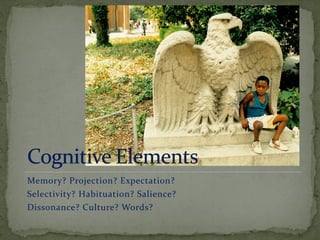
Memory? Projection? Expectation?
Selectivity? Habituation? Salience?
Dissonance? Culture? Words?
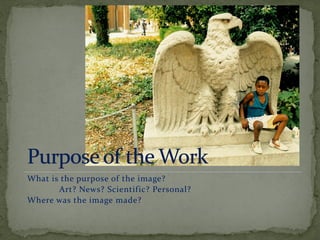
What is the purpose of the image?
Art? News? Scientific? Personal?
Where was the image made?
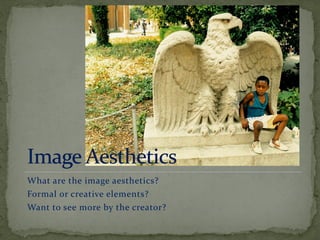
What are the image aesthetics?
Formal or creative elements?
Want to see more by the creator?
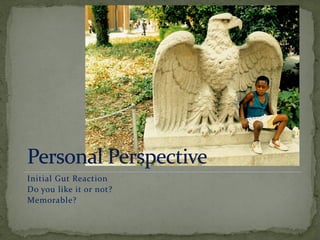
Initial Gut Reaction
Do you like it or not?
Memorable?
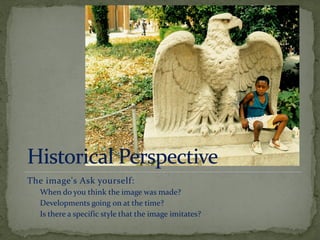
The image's Ask yourself:
When do you think the image was made?
Developments going on at the time?
Is there a specific style that the image imitates?
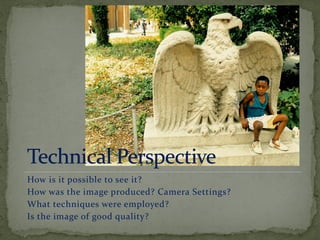
How is it possible to see it?
How was the image produced? Camera Settings?
What techniques were employed?
Is the image of good quality?
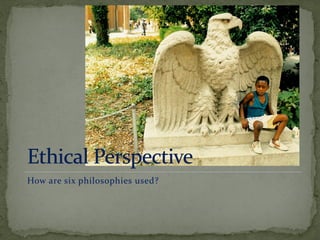
How are six philosophies used?
 Do not add to grief
 Individual should be as
humane as possible and
never harm others
through invasive action
 “Love your neighbor as
yourself”
 Personal Gain
 (Think Paparazzi)
 Live for today
 Ethical philosophy that is
applied when the focus is
on pleasure
 Compromise
 Compromise is chosen
between two extremes
 Philosophy applied when
the choice is made to run
a small school photo of a
victim instead of no
picture or a large color
picture on the front page
 A rule is followed
 Immanuel Kant
developed the
philosophy.
 Philosophy applied when
a photographer chooses
to take a picture whether
or not a news outlet will
use it is
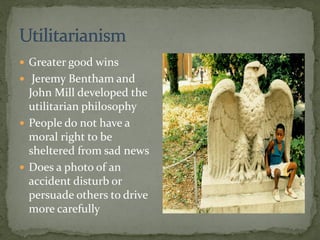
 Greater good wins
 Jeremy Bentham and
John Mill developed the
utilitarian philosophy
 People do not have a
moral right to be
sheltered from sad news
 Does a photo of an
accident disturb or
persuade others to drive
more carefully
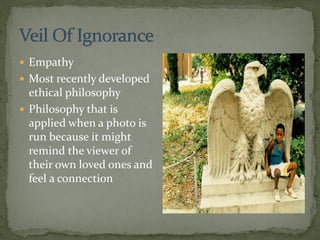
 Empathy
 Most recently developed
ethical philosophy
 Philosophy that is
applied when a photo is
run because it might
remind the viewer of
their own loved ones and
feel a connection
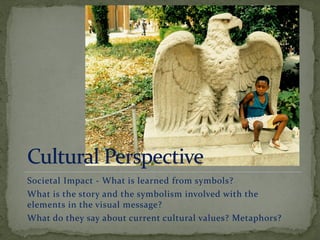
Societal Impact - What is learned from symbols?
What is the story and the symbolism involved with the
elements in the visual message?
What do they say about current cultural values? Metaphors?
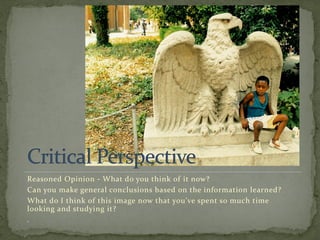
Reasoned Opinion - What do you think of it now?
Can you make general conclusions based on the information learned?
What do I think of this image now that you've spent so much time
looking and studying it?
.
Many large lessons are lost because of a failure to study small,
captured moments
Visual communication and Visual analysis

Visual communication and Visual analysis

  • 1.
    “Everything looked atclosely is full of wonder.” Jacob Grimm, 1785–1863 Philosopher, Jurist, Author
  • 2.
  • 5.
    “Analysis reveals theperson making the analysis, not really the piece itself” Many analytical methods have been created throughout history
  • 7.
    John Berger, Waysof Seeing An image must be seen analyzed within its presentational context
  • 8.
     8 waysto analyze images  From the book Small World: An Academic Romance  Production  Content  Functional  Expressional  Figurative  Rhetorical  Societal  Comparative
  • 9.
     Personal  Historical Technical  Ethical  Cultural  Critical  The goal in using the six perspectives for analysis is to move from subjective to objective reactions.
  • 10.
     Make aninventory list of everything you see  Notice the compositional elements and lighting  Study the use of visual cues  Look a the gestalt laws  Identify the semiotic sign types  Note the semiotic codes  See how the cognitive elements work  What is the purpose of the image  What are the image aesthetics
  • 12.
    For any visualanalysis, the first step should be to make an inventory list of everything you see
  • 13.
    Notice the compositionalelements, lighting, camera angles How do individual parts contribute to or distract from the picture as a whole?
  • 14.
    Study the useof visual cues Form? Depth? Movement? Color? Light sources? Eyes?
  • 15.
  • 16.
  • 17.
  • 18.
    Memory? Projection? Expectation? Selectivity?Habituation? Salience? Dissonance? Culture? Words?
  • 19.
    What is thepurpose of the image? Art? News? Scientific? Personal? Where was the image made?
  • 20.
    What are theimage aesthetics? Formal or creative elements? Want to see more by the creator?
  • 22.
    Initial Gut Reaction Doyou like it or not? Memorable?
  • 23.
    The image's Askyourself: When do you think the image was made? Developments going on at the time? Is there a specific style that the image imitates?
  • 24.
    How is itpossible to see it? How was the image produced? Camera Settings? What techniques were employed? Is the image of good quality?
  • 25.
    How are sixphilosophies used?
  • 26.
     Do notadd to grief  Individual should be as humane as possible and never harm others through invasive action  “Love your neighbor as yourself”
  • 27.
     Personal Gain (Think Paparazzi)  Live for today  Ethical philosophy that is applied when the focus is on pleasure
  • 28.
     Compromise  Compromiseis chosen between two extremes  Philosophy applied when the choice is made to run a small school photo of a victim instead of no picture or a large color picture on the front page
  • 29.
     A ruleis followed  Immanuel Kant developed the philosophy.  Philosophy applied when a photographer chooses to take a picture whether or not a news outlet will use it is
  • 30.
     Greater goodwins  Jeremy Bentham and John Mill developed the utilitarian philosophy  People do not have a moral right to be sheltered from sad news  Does a photo of an accident disturb or persuade others to drive more carefully
  • 31.
     Empathy  Mostrecently developed ethical philosophy  Philosophy that is applied when a photo is run because it might remind the viewer of their own loved ones and feel a connection
  • 32.
    Societal Impact -What is learned from symbols? What is the story and the symbolism involved with the elements in the visual message? What do they say about current cultural values? Metaphors?
  • 33.
    Reasoned Opinion -What do you think of it now? Can you make general conclusions based on the information learned? What do I think of this image now that you've spent so much time looking and studying it? .
  • 34.
    Many large lessonsare lost because of a failure to study small, captured moments