Wound management
Chea Chan Hooi
Surgeon
Department of Surgery
Sibu Hospital
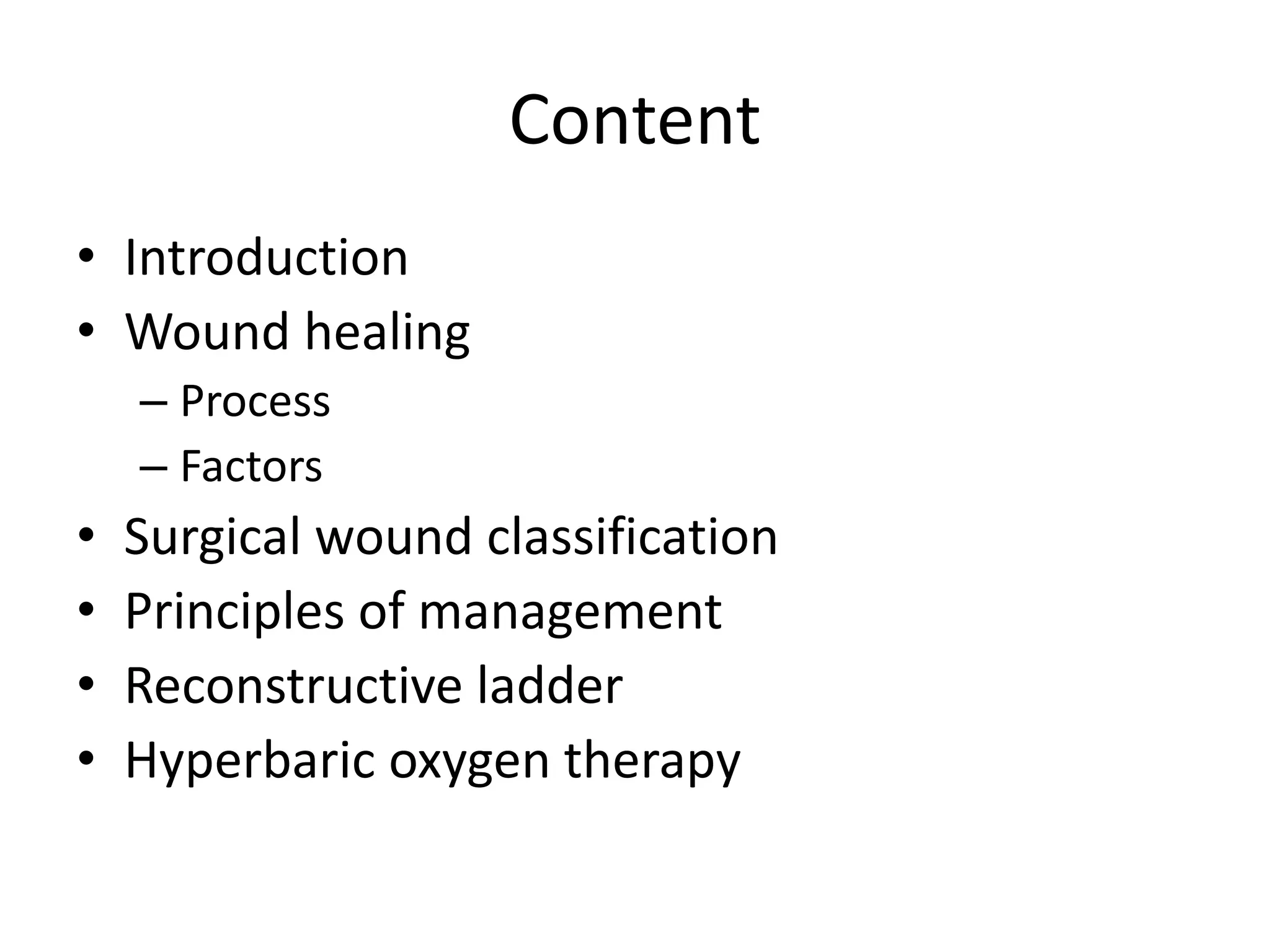
Content
• Introduction
• Wound healing
– Process
– Factors
• Surgical wound classification
• Principles of management
• Reconstructive ladder
• Hyperbaric oxygen therapy
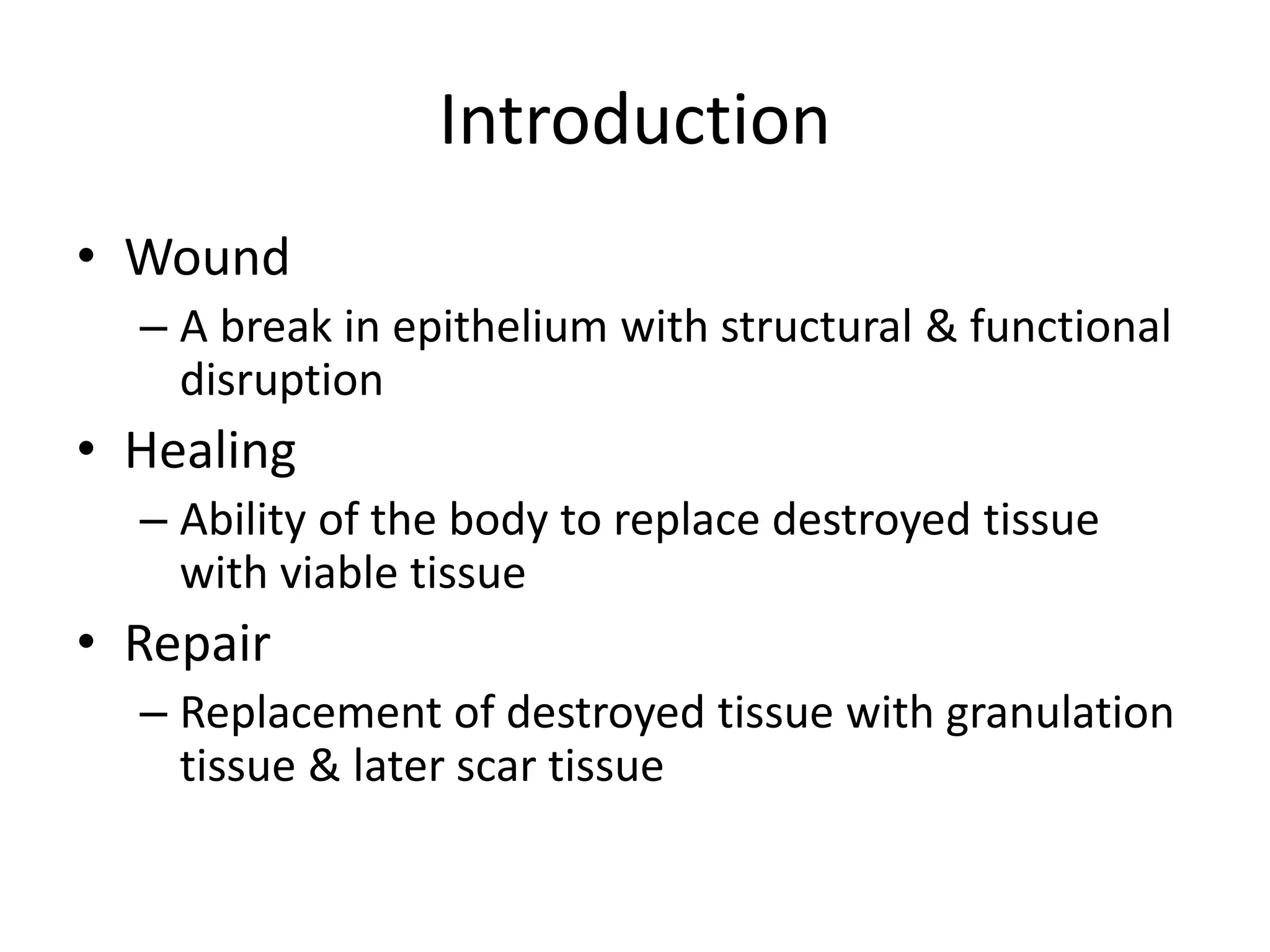
Introduction
• Wound
– A break in epithelium with structural & functional
disruption
• Healing
– Ability of the body to replace destroyed tissue
with viable tissue
• Repair
– Replacement of destroyed tissue with granulation
tissue & later scar tissue
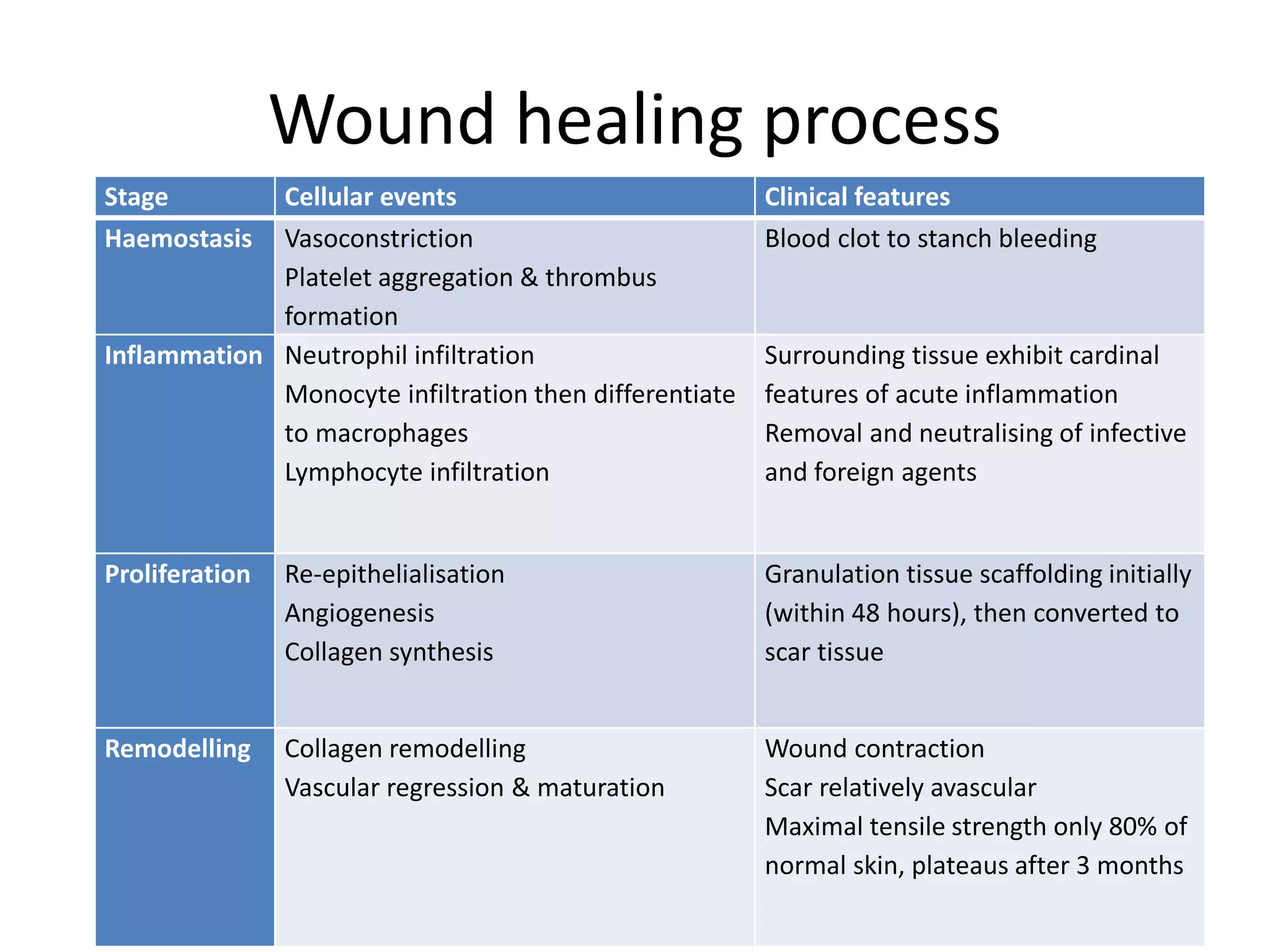
Wound healing process
Stage Cellular events Clinical features
Haemostasis Vasoconstriction
Platelet aggregation & thrombus
formation
Blood clot to stanch bleeding
Inflammation Neutrophil infiltration
Monocyte infiltration then differentiate
to macrophages
Lymphocyte infiltration
Surrounding tissue exhibit cardinal
features of acute inflammation
Removal and neutralising of infective
and foreign agents
Proliferation Re-epithelialisation
Angiogenesis
Collagen synthesis
Granulation tissue scaffolding initially
(within 48 hours), then converted to
scar tissue
Remodelling Collagen remodelling
Vascular regression & maturation
Wound contraction
Scar relatively avascular
Maximal tensile strength only 80% of
normal skin, plateaus after 3 months
Factors affecting wound healing
Patient Surgeon
Systemic Local
Non-modifiable
Age
Gender
Modifiable
Hypoxaemia
Nutrition
Anaemia
Jaundice
Ureamia
Obesity
Alcoholism
Smoking
Immunocompromised
(diabetes, cancer, AIDS)
Medications
(steroids, chemotherapy)
Oxygenation
Infection
Foreign body
Arterial & venous
sufficiency
Radiotherapy
Malignancy
Repeat surgery
Experience
 Suture technique
 Suture material
 Knotting
 Optimal tension
 Anatomical continuity
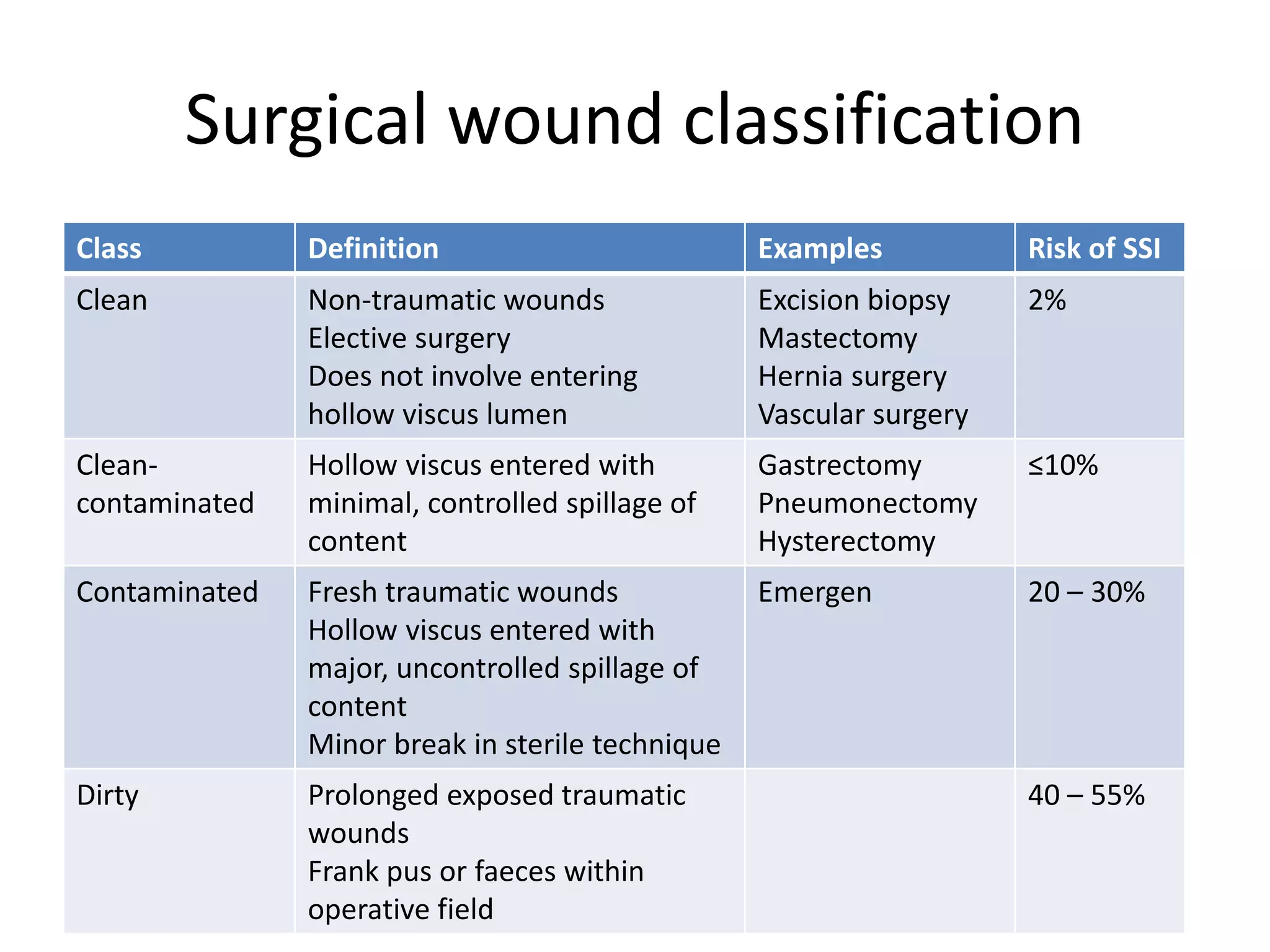
Surgical wound classification
Class Definition Examples Risk of SSI
Clean Non-traumatic wounds
Elective surgery
Does not involve entering
hollow viscus lumen
Excision biopsy
Mastectomy
Hernia surgery
Vascular surgery
2%
Clean-
contaminated
Hollow viscus entered with
minimal, controlled spillage of
content
Gastrectomy
Pneumonectomy
Hysterectomy
≤10%
Contaminated Fresh traumatic wounds
Hollow viscus entered with
major, uncontrolled spillage of
content
Minor break in sterile technique
Emergen 20 – 30%
Dirty Prolonged exposed traumatic
wounds
Frank pus or faeces within
operative field
40 – 55%
Principles of management
• Irrigation
• Medical
– Antibiotics
– Glycaemic control
• Dressings
• Surgical
• Adjunctive therapies
– Hyperbaric oxygen
Reconstructive ladder
• A grading system
• Describes the levels of
increasingly complex
surgical management of
wounds
Flap – tissue transferred from its bed to another site
while retaining its vascular attachment
• Free
– Tissue transferred to a distant recipient site after its vascular
supply has been detached and then restored by microvascular
anastomosis at recipient site
• Pedicled
– Tissue transferred to adjacent recipient site while still
retaining its original, designated vascular supply
• Random patterned
– Tissue transferred to adjacent recipient site but lacks a
significant pattern in its vascular design
Tissue expansion
• By expanding local skin surrounding the defect to cover
the wound/defect
• Similar colour and texture without compromising the
donor area
• Tissue expander required with multiple sessions of
surgery
– Graft – tissue transferred from its bed to another site (or between two individuals)
without its own vascular supply
– Closure
• Delayed
– Wound closure is initially delayed to allow drainage of infective and necrotic
material to minimise risk of surgical site infection
– Wound closed with suture later on once deemed adequately clean
• Primary
– Wound edges are approximated, trimmed if necessary, and closed with suture
– Allows healing by primary intention
– Dressings
• Wound edges are left gaping with resulting defect allowed to granulate
from the floor and edges
• Allows healing by secondary intention for relatively dirty wound but
results in larger and more unsightly scar
Hyperbaric oxygen therapy
• Breathing 100% oxygen while under increased
atmospheric pressure
• Blood hyperoxygenated by dissolving oxygen within the
plasma
• Indications
– Enhancement of wound, flap and radiation injury wounds
– CO poisoning
– Decompression sickness
– CRAO, idiopathic sudden SNHL
• Absolute contraindication
– Untreated pneumothorax
– Drugs – bleomycin, cisplatin, disulfiram, doxorubicin
TQ!
Q&A?

Wound management

  • 1.
    Wound management Chea ChanHooi Surgeon Department of Surgery Sibu Hospital
  • 2.
    Content • Introduction • Woundhealing – Process – Factors • Surgical wound classification • Principles of management • Reconstructive ladder • Hyperbaric oxygen therapy
  • 3.
    Introduction • Wound – Abreak in epithelium with structural & functional disruption • Healing – Ability of the body to replace destroyed tissue with viable tissue • Repair – Replacement of destroyed tissue with granulation tissue & later scar tissue
  • 4.
    Wound healing process StageCellular events Clinical features Haemostasis Vasoconstriction Platelet aggregation & thrombus formation Blood clot to stanch bleeding Inflammation Neutrophil infiltration Monocyte infiltration then differentiate to macrophages Lymphocyte infiltration Surrounding tissue exhibit cardinal features of acute inflammation Removal and neutralising of infective and foreign agents Proliferation Re-epithelialisation Angiogenesis Collagen synthesis Granulation tissue scaffolding initially (within 48 hours), then converted to scar tissue Remodelling Collagen remodelling Vascular regression & maturation Wound contraction Scar relatively avascular Maximal tensile strength only 80% of normal skin, plateaus after 3 months
  • 6.
    Factors affecting woundhealing Patient Surgeon Systemic Local Non-modifiable Age Gender Modifiable Hypoxaemia Nutrition Anaemia Jaundice Ureamia Obesity Alcoholism Smoking Immunocompromised (diabetes, cancer, AIDS) Medications (steroids, chemotherapy) Oxygenation Infection Foreign body Arterial & venous sufficiency Radiotherapy Malignancy Repeat surgery Experience  Suture technique  Suture material  Knotting  Optimal tension  Anatomical continuity
  • 7.
    Surgical wound classification ClassDefinition Examples Risk of SSI Clean Non-traumatic wounds Elective surgery Does not involve entering hollow viscus lumen Excision biopsy Mastectomy Hernia surgery Vascular surgery 2% Clean- contaminated Hollow viscus entered with minimal, controlled spillage of content Gastrectomy Pneumonectomy Hysterectomy ≤10% Contaminated Fresh traumatic wounds Hollow viscus entered with major, uncontrolled spillage of content Minor break in sterile technique Emergen 20 – 30% Dirty Prolonged exposed traumatic wounds Frank pus or faeces within operative field 40 – 55%
  • 8.
    Principles of management •Irrigation • Medical – Antibiotics – Glycaemic control • Dressings • Surgical • Adjunctive therapies – Hyperbaric oxygen
  • 9.
    Reconstructive ladder • Agrading system • Describes the levels of increasingly complex surgical management of wounds
  • 10.
    Flap – tissuetransferred from its bed to another site while retaining its vascular attachment • Free – Tissue transferred to a distant recipient site after its vascular supply has been detached and then restored by microvascular anastomosis at recipient site • Pedicled – Tissue transferred to adjacent recipient site while still retaining its original, designated vascular supply • Random patterned – Tissue transferred to adjacent recipient site but lacks a significant pattern in its vascular design
  • 14.
    Tissue expansion • Byexpanding local skin surrounding the defect to cover the wound/defect • Similar colour and texture without compromising the donor area • Tissue expander required with multiple sessions of surgery
  • 15.
    – Graft –tissue transferred from its bed to another site (or between two individuals) without its own vascular supply
  • 17.
    – Closure • Delayed –Wound closure is initially delayed to allow drainage of infective and necrotic material to minimise risk of surgical site infection – Wound closed with suture later on once deemed adequately clean • Primary – Wound edges are approximated, trimmed if necessary, and closed with suture – Allows healing by primary intention – Dressings • Wound edges are left gaping with resulting defect allowed to granulate from the floor and edges • Allows healing by secondary intention for relatively dirty wound but results in larger and more unsightly scar
  • 18.
    Hyperbaric oxygen therapy •Breathing 100% oxygen while under increased atmospheric pressure • Blood hyperoxygenated by dissolving oxygen within the plasma • Indications – Enhancement of wound, flap and radiation injury wounds – CO poisoning – Decompression sickness – CRAO, idiopathic sudden SNHL • Absolute contraindication – Untreated pneumothorax – Drugs – bleomycin, cisplatin, disulfiram, doxorubicin
  • 19.