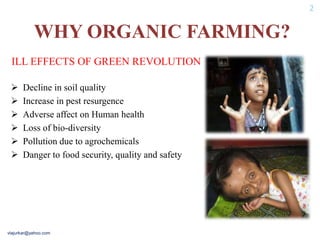
WHY ORGANIC FARMING?
 Decline in soil quality
 Increase in pest resurgence
 Adverse affect on Human health
 Loss of bio-diversity
 Pollution due to agrochemicals
 Danger to food security, quality and safety
ILL EFFECTS OF GREEN REVOLUTION
2
vlajurkar@yahoo.com
Concept of organic farming
System approach
Maintaining soil alive & in good health
Biologically derived nutrients
Non-chemical weed management
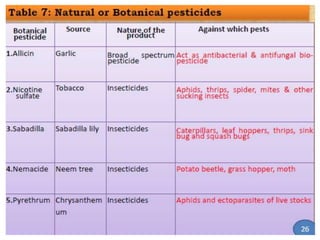
Eco-friendly pest and disease management
3
vlajurkar@yahoo.com
4
Limitation of organic farming
Required in bulk
Slow releasing of nutrient
Lack of natural resources
Comparatively low production
Pest and disease control is preventive
vlajurkar@yahoo.com
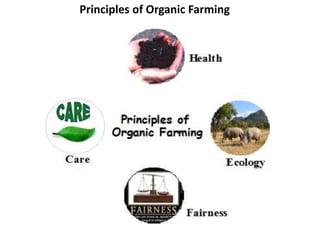
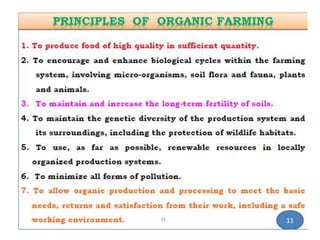
Principles of Organic Farming
7
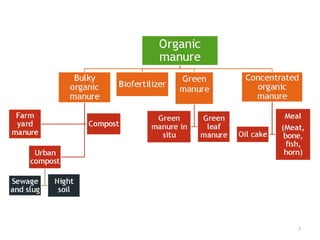
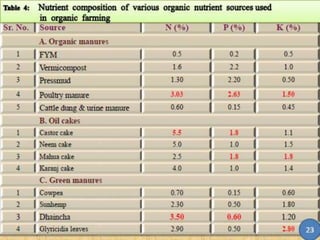
Manures
 Cattle shed wastes-dung, urine and slurry from biogas plants
 Human habitation wastes-night soil, human urine, town refuse, sewage,
sludge and sullage
 Poultry litter, droppings of sheep and goat
 Slaughterhouse wastes-bone meal, meat meal, blood meal, horn and hoof
meal, Fish wastes
 Byproducts of agro industries-oil cakes, bagasse and press mud, fruit and
vegetable processing wastes etc
 Crop wastes-sugarcane trash, stubbles and other related material
 Water hyacinth, weeds and tank silt
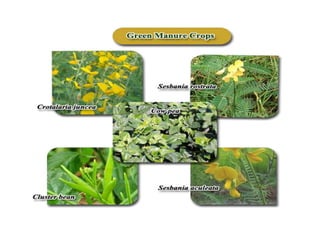
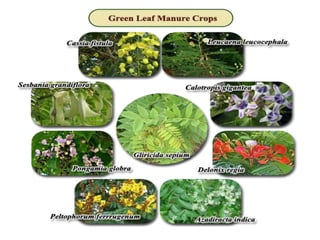
 Green manure crops and green leaf manuring material
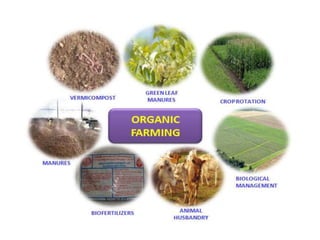
Organic inputs
 Compost
 Vermicompost
 Coir compost
 Sugarcane trash composting
 Composting of poultry waste
 Crop residue composting
Organic inputs
Composting
 Composting is the natural process of 'rotting' or decomposition of
organic matter by microorganisms under controlled conditions.
 A mass of rotted organic matter made from waste is called compost.
 Raw organic materials such as crop residues, animal wastes, food
garbage, some municipal wastes and suitable industrial wastes
Vegetable organic farming.ppt

Vegetable organic farming.ppt

  • 2.
    WHY ORGANIC FARMING? Decline in soil quality  Increase in pest resurgence  Adverse affect on Human health  Loss of bio-diversity  Pollution due to agrochemicals  Danger to food security, quality and safety ILL EFFECTS OF GREEN REVOLUTION 2 vlajurkar@yahoo.com
  • 3.
    Concept of organicfarming System approach Maintaining soil alive & in good health Biologically derived nutrients Non-chemical weed management Eco-friendly pest and disease management 3 vlajurkar@yahoo.com
  • 4.
    4 Limitation of organicfarming Required in bulk Slow releasing of nutrient Lack of natural resources Comparatively low production Pest and disease control is preventive vlajurkar@yahoo.com
  • 5.
  • 7.
  • 13.
    Manures  Cattle shedwastes-dung, urine and slurry from biogas plants  Human habitation wastes-night soil, human urine, town refuse, sewage, sludge and sullage  Poultry litter, droppings of sheep and goat  Slaughterhouse wastes-bone meal, meat meal, blood meal, horn and hoof meal, Fish wastes  Byproducts of agro industries-oil cakes, bagasse and press mud, fruit and vegetable processing wastes etc  Crop wastes-sugarcane trash, stubbles and other related material  Water hyacinth, weeds and tank silt  Green manure crops and green leaf manuring material Organic inputs
  • 14.
     Compost  Vermicompost Coir compost  Sugarcane trash composting  Composting of poultry waste  Crop residue composting Organic inputs
  • 15.
    Composting  Composting isthe natural process of 'rotting' or decomposition of organic matter by microorganisms under controlled conditions.  A mass of rotted organic matter made from waste is called compost.  Raw organic materials such as crop residues, animal wastes, food garbage, some municipal wastes and suitable industrial wastes

Editor's Notes

  • #3 Increase in pest resurgence- Between 1976 and 2000, more than 50,000 villagers of Kasargod district in Kerala, was affected by endosulpfon . It was used to eradicate tea mosquitoes in the cashew plantations. People nearer to field get affected by diseases like mental retardation, cerebral palsy, cancer etc.
  • #4 It is a system of farming based on integral relationship among soil, plant, water animal, man and the environment . Organic farming aims at cultivation of the land in a way so that the soil is kept dynamic with living activities and in good health. In organic systems plant nutrition depends on ‘biologically – derived nutrients’ (organic manures) instead of using readily soluble forms of nutrients from fertilizers. by cultural, mechanical and manual methods avoiding the use of herbicides. cultural practices, mechanical methods, biological control and use of botanicals and pheromones