Emotion
The Physiological Component
The Expressive Component
The Cognitive Component
Emotion
Three Components of Emotion
Emotion
rA feeling state
characterized by
physiological
arousal,
expressive
behaviors, and a
cognitive
interpretation.
The Physiological Component
A Historical Perspective
James-Lange Theory of Emotion
• Emotion arises from
physiological arousal
– Happiness comes from
smiling
– Sadness comes from
crying
The Physiological Component
Brain Centers of Emotion
• Limbic System
– The Amygdala is
highly involved in
fear responses
• Cerebral Cortex
– Left hemisphere
associated with
positive emotions;
right with negative
emotions
The Expressive Component
Nonverbal Communication
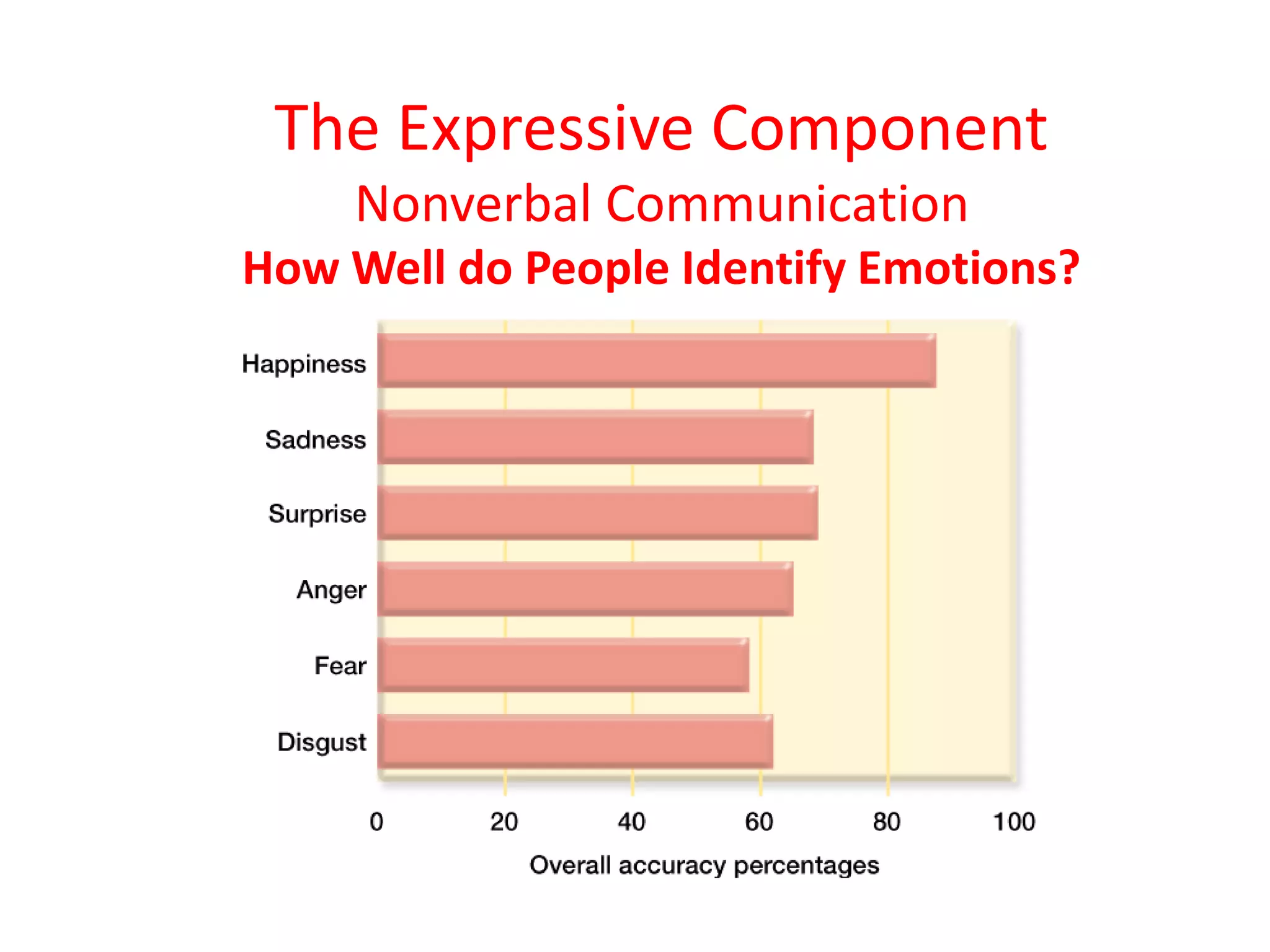
How Well do People Identify Emotions?
The Expressive Component
Nonverbal Communication
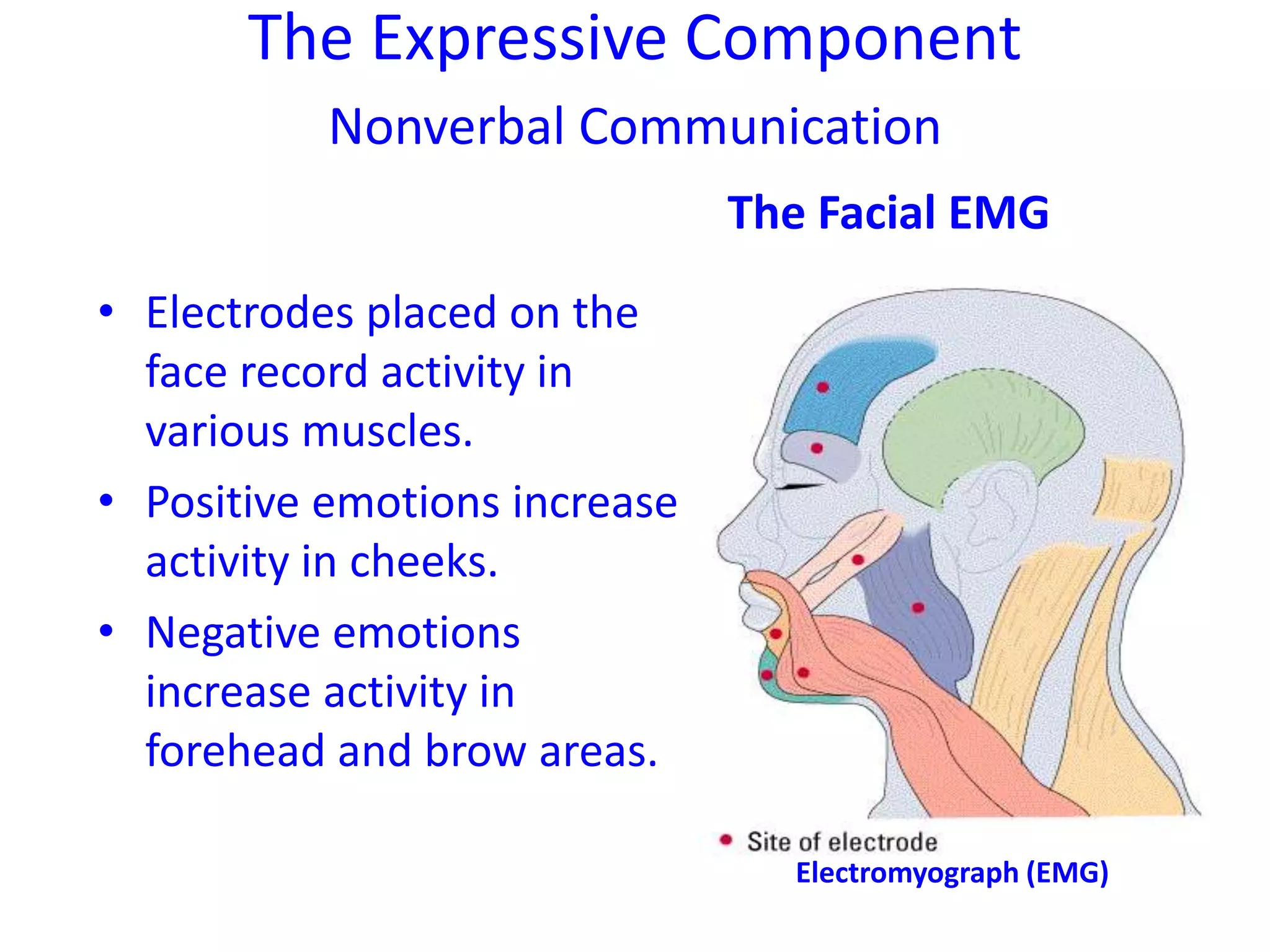
The Facial EMG
• Electrodes placed on the
face record activity in
various muscles.
• Positive emotions increase
activity in cheeks.
• Negative emotions
increase activity in
forehead and brow areas.
Electromyograph (EMG)
The Expressive Component
Sensory Feedback
• Facial-Feedback Hypothesis
– The hypothesis that changes in facial expression
can produce corresponding changes in emotion
– Zajonc, et al. had subjects repeat vowel sounds.
– Making some sounds - “ah” and “e” - caused
smiling and elevated mood.
– Making other sounds - “u” and “ü” - caused
frowning and lowered mood.
The Cognitive Component
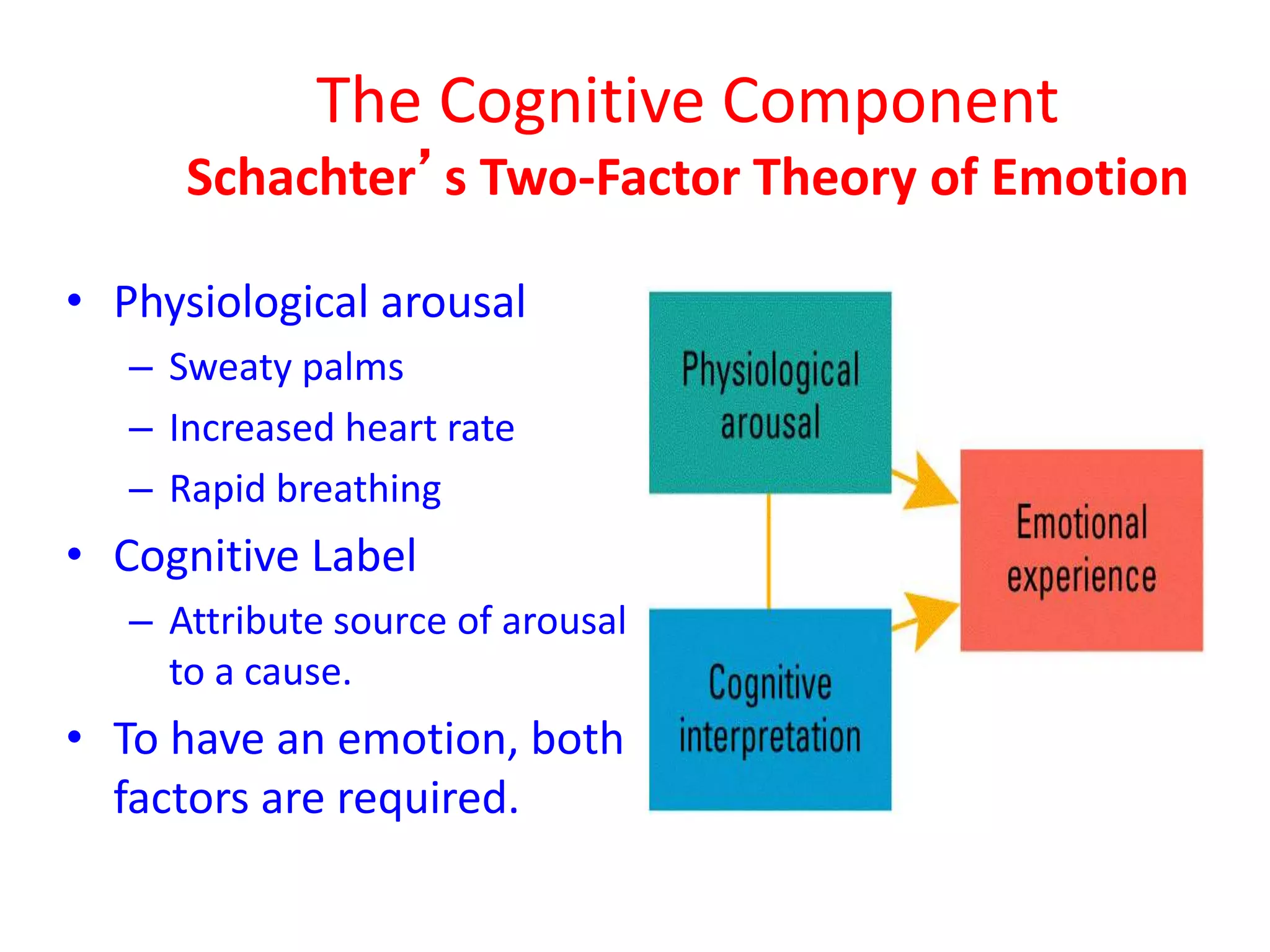
Schachter’s Two-Factor Theory of Emotion
• Physiological arousal
– Sweaty palms
– Increased heart rate
– Rapid breathing
• Cognitive Label
– Attribute source of arousal
to a cause.
• To have an emotion, both
factors are required.
The Cognitive Component
Dimensions of Appraisal
• Cognitive dimensions closely linked to
emotion:
– Pleasantness: Is event enjoyable?
– Attention: Is one focused on event?
– Agency: Does one believe he/she is in control?
– Certainty: How clear is situation and is outcome
predictable?
Human Emotion:
Putting the Pieces Together
Russell's Circumplex Model
• Which emotions are
universal, felt in all cultures?
– Fear, anger, joy, disgust,
surprise, and sadness
• Russell identified two main
dimensions of emotion
• Emotions can be sorted
according to these
dimensions in several
cultures
EMOTIONS.ppt

EMOTIONS.ppt

  • 1.
    Emotion The Physiological Component TheExpressive Component The Cognitive Component
  • 2.
    Emotion Three Components ofEmotion Emotion rA feeling state characterized by physiological arousal, expressive behaviors, and a cognitive interpretation.
  • 3.
    The Physiological Component AHistorical Perspective James-Lange Theory of Emotion • Emotion arises from physiological arousal – Happiness comes from smiling – Sadness comes from crying
  • 4.
    The Physiological Component BrainCenters of Emotion • Limbic System – The Amygdala is highly involved in fear responses • Cerebral Cortex – Left hemisphere associated with positive emotions; right with negative emotions
  • 5.
    The Expressive Component NonverbalCommunication How Well do People Identify Emotions?
  • 6.
    The Expressive Component NonverbalCommunication The Facial EMG • Electrodes placed on the face record activity in various muscles. • Positive emotions increase activity in cheeks. • Negative emotions increase activity in forehead and brow areas. Electromyograph (EMG)
  • 7.
    The Expressive Component SensoryFeedback • Facial-Feedback Hypothesis – The hypothesis that changes in facial expression can produce corresponding changes in emotion – Zajonc, et al. had subjects repeat vowel sounds. – Making some sounds - “ah” and “e” - caused smiling and elevated mood. – Making other sounds - “u” and “ü” - caused frowning and lowered mood.
  • 8.
    The Cognitive Component Schachter’sTwo-Factor Theory of Emotion • Physiological arousal – Sweaty palms – Increased heart rate – Rapid breathing • Cognitive Label – Attribute source of arousal to a cause. • To have an emotion, both factors are required.
  • 9.
    The Cognitive Component Dimensionsof Appraisal • Cognitive dimensions closely linked to emotion: – Pleasantness: Is event enjoyable? – Attention: Is one focused on event? – Agency: Does one believe he/she is in control? – Certainty: How clear is situation and is outcome predictable?
  • 10.
    Human Emotion: Putting thePieces Together Russell's Circumplex Model • Which emotions are universal, felt in all cultures? – Fear, anger, joy, disgust, surprise, and sadness • Russell identified two main dimensions of emotion • Emotions can be sorted according to these dimensions in several cultures

Editor's Notes