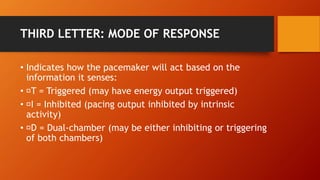
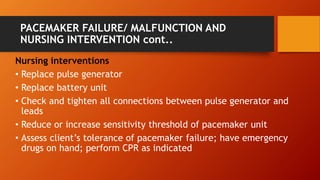
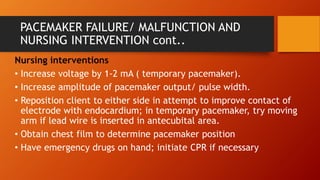
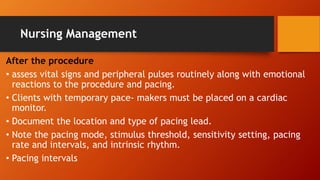
An artificial pacemaker uses an electronic device to stimulate the heart when the normal conduction pathway is damaged. It consists of a battery-powered pulse generator connected to pacing leads that deliver electrical signals to the heart muscle. Temporary pacemakers can be inserted transvenously, epicardially, or transcutaneously in emergency situations. Permanent pacemakers are implanted surgically and have programmable functions to treat various arrhythmias. Common pacemaker complications include infection, failure to sense or capture intrinsic heartbeats, and oversensing of extraneous signals. Nurses monitor for complications and make adjustments to optimize pacemaker function.