Sampling: Stratified vs Cluster
By: Aniruddha Deshmukh – M. Sc. Statistics, MCM
Stratified Sampling
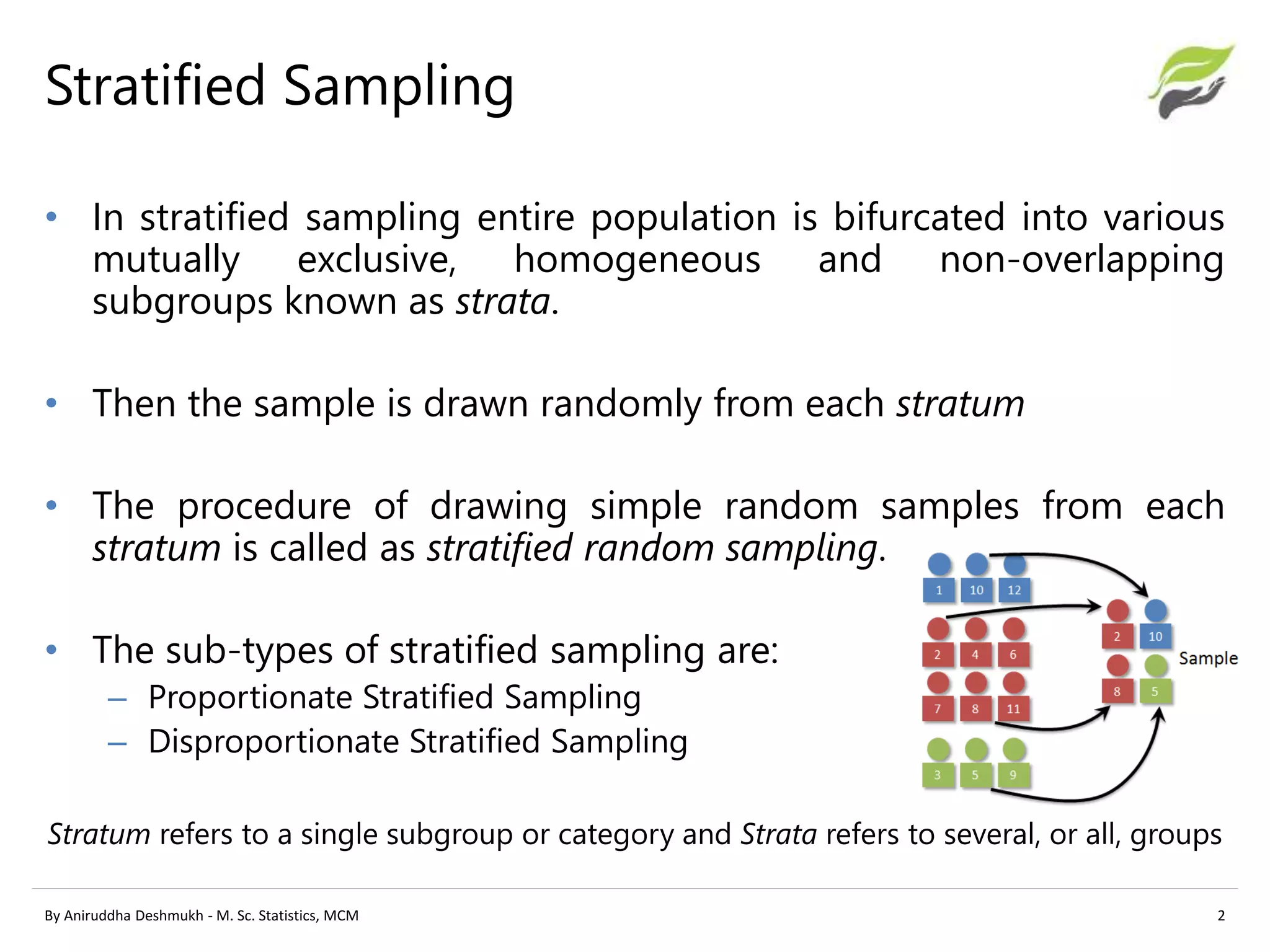
• In stratified sampling entire population is bifurcated into various
mutually exclusive, homogeneous and non-overlapping
subgroups known as strata.
• Then the sample is drawn randomly from each stratum
• The procedure of drawing simple random samples from each
stratum is called as stratified random sampling.
• The sub-types of stratified sampling are:
– Proportionate Stratified Sampling
– Disproportionate Stratified Sampling
Stratum refers to a single subgroup or category and Strata refers to several, or all, groups
By Aniruddha Deshmukh - M. Sc. Statistics, MCM 2
Cluster Sampling
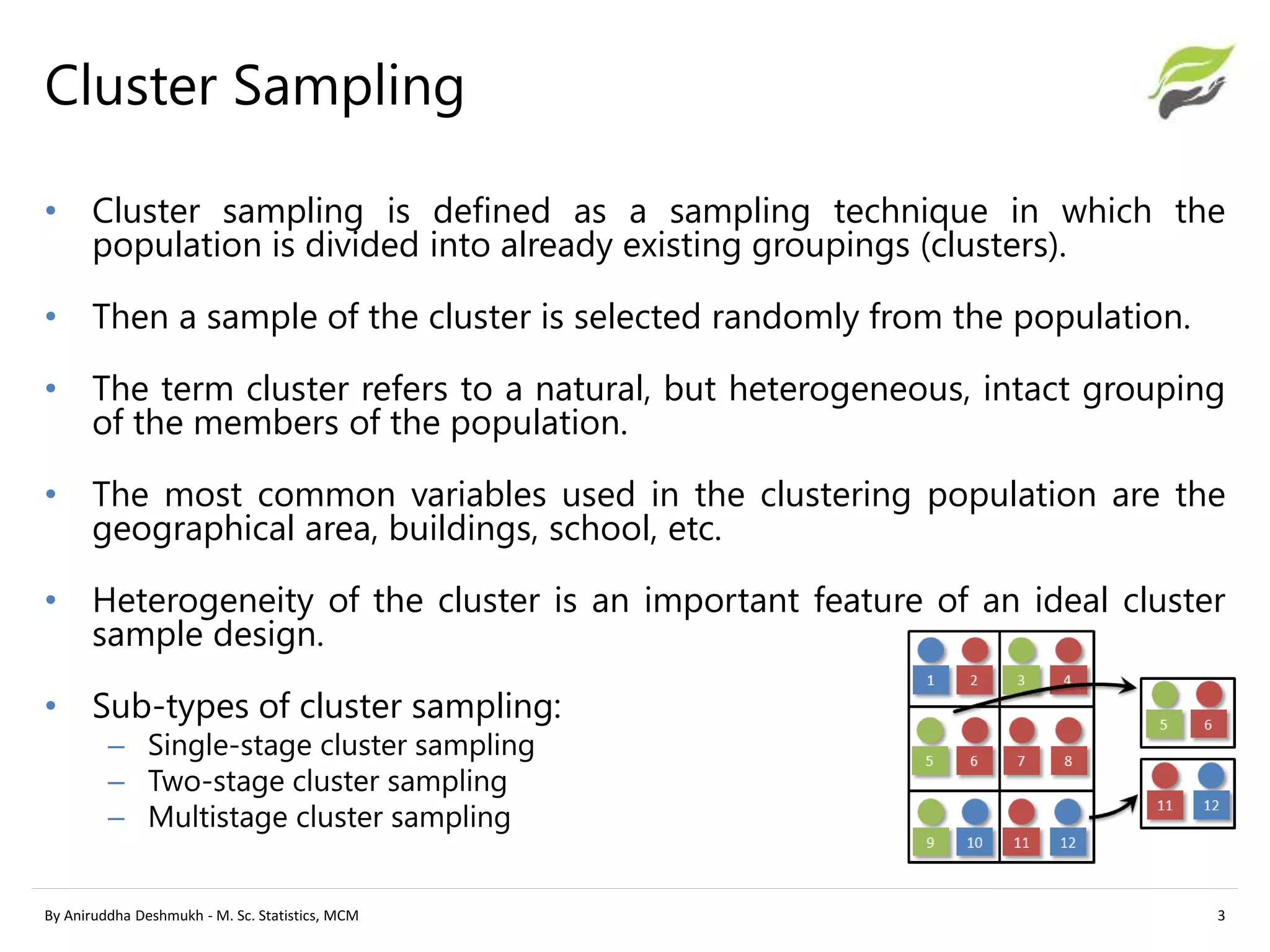
• Cluster sampling is defined as a sampling technique in which the
population is divided into already existing groupings (clusters).
• Then a sample of the cluster is selected randomly from the population.
• The term cluster refers to a natural, but heterogeneous, intact grouping
of the members of the population.
• The most common variables used in the clustering population are the
geographical area, buildings, school, etc.
• Heterogeneity of the cluster is an important feature of an ideal cluster
sample design.
• Sub-types of cluster sampling:
– Single-stage cluster sampling
– Two-stage cluster sampling
– Multistage cluster sampling
By Aniruddha Deshmukh - M. Sc. Statistics, MCM 3
Key Differences
By Aniruddha Deshmukh - M. Sc. Statistics, MCM 4
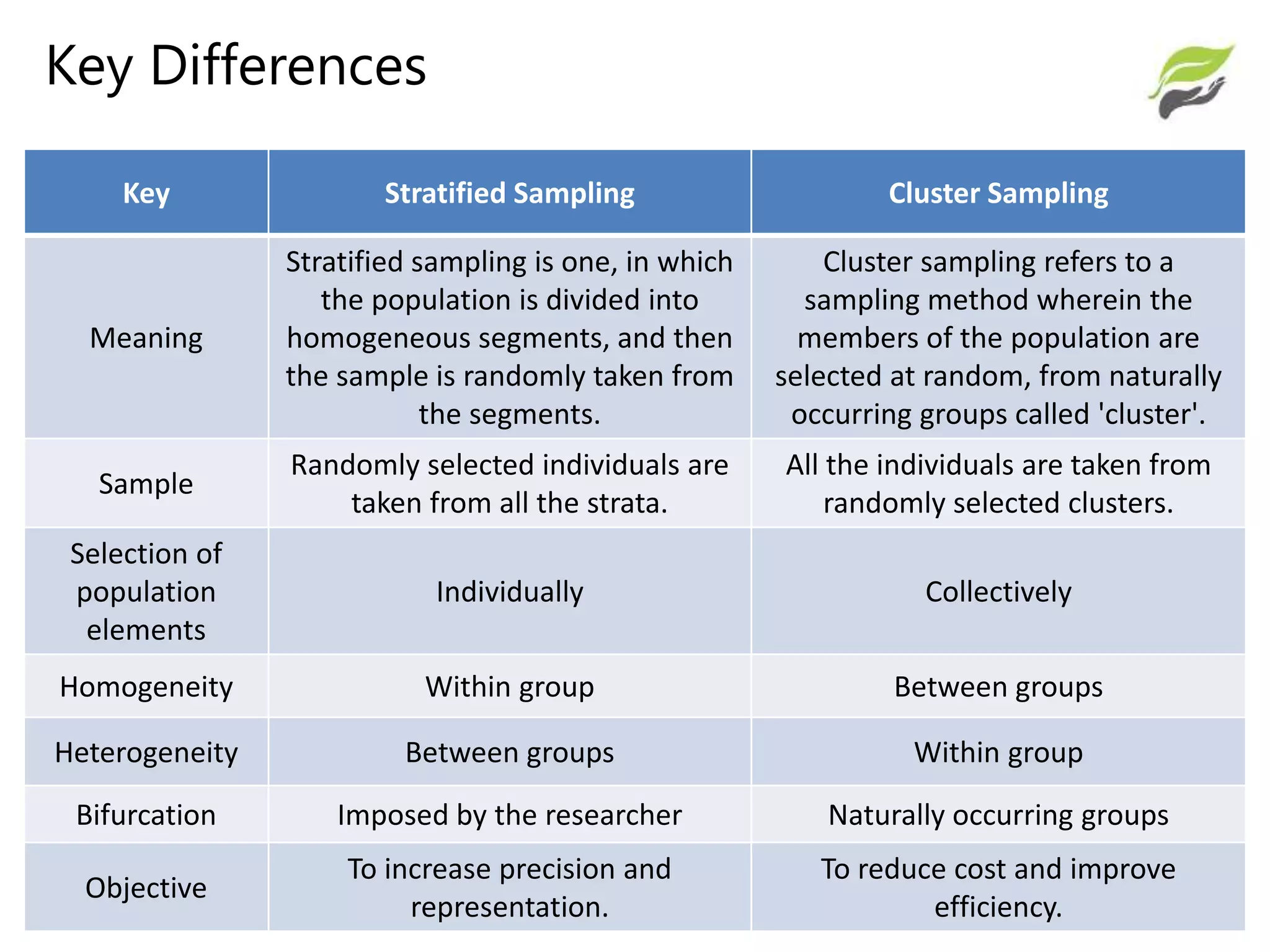
Key Stratified Sampling Cluster Sampling
Meaning
Stratified sampling is one, in which
the population is divided into
homogeneous segments, and then
the sample is randomly taken from
the segments.
Cluster sampling refers to a
sampling method wherein the
members of the population are
selected at random, from naturally
occurring groups called 'cluster'.
Sample
Randomly selected individuals are
taken from all the strata.
All the individuals are taken from
randomly selected clusters.
Selection of
population
elements
Individually Collectively
Homogeneity Within group Between groups
Heterogeneity Between groups Within group
Bifurcation Imposed by the researcher Naturally occurring groups
Objective
To increase precision and
representation.
To reduce cost and improve
efficiency.
• Stratified sample wants low variance within strata, high variance between
strata, whereas cluster sample wants high variance within clusters, low
variance between clusters.
• Stratified sampling is very efficient and aims at providing precise
statistical data while cluster sampling aims at increasing the efficiency of
sampling.
• Stratified sampling takes a longer period of time to accomplish while
cluster sampling is time efficient.
• Stratified sampling requires a larger number of samples since the
population is divided into several strata while cluster sampling does not.
• Cluster sampling is very cost efficient since samples are already specified
while stratified sampling can be expensive.
• Stratified sampling allows researchers to use different approaches for
each stratum and see which approach works best while cluster sampling
does not.
By Aniruddha Deshmukh - M. Sc. Statistics, MCM 5
Summary
Aniruddha Deshmukh – M. Sc. Statistics, MCM
email: annied23@gmail.com
For more information please contact:

Sampling - Stratified vs Cluster

  • 1.
    Sampling: Stratified vsCluster By: Aniruddha Deshmukh – M. Sc. Statistics, MCM
  • 2.
    Stratified Sampling • Instratified sampling entire population is bifurcated into various mutually exclusive, homogeneous and non-overlapping subgroups known as strata. • Then the sample is drawn randomly from each stratum • The procedure of drawing simple random samples from each stratum is called as stratified random sampling. • The sub-types of stratified sampling are: – Proportionate Stratified Sampling – Disproportionate Stratified Sampling Stratum refers to a single subgroup or category and Strata refers to several, or all, groups By Aniruddha Deshmukh - M. Sc. Statistics, MCM 2
  • 3.
    Cluster Sampling • Clustersampling is defined as a sampling technique in which the population is divided into already existing groupings (clusters). • Then a sample of the cluster is selected randomly from the population. • The term cluster refers to a natural, but heterogeneous, intact grouping of the members of the population. • The most common variables used in the clustering population are the geographical area, buildings, school, etc. • Heterogeneity of the cluster is an important feature of an ideal cluster sample design. • Sub-types of cluster sampling: – Single-stage cluster sampling – Two-stage cluster sampling – Multistage cluster sampling By Aniruddha Deshmukh - M. Sc. Statistics, MCM 3
  • 4.
    Key Differences By AniruddhaDeshmukh - M. Sc. Statistics, MCM 4 Key Stratified Sampling Cluster Sampling Meaning Stratified sampling is one, in which the population is divided into homogeneous segments, and then the sample is randomly taken from the segments. Cluster sampling refers to a sampling method wherein the members of the population are selected at random, from naturally occurring groups called 'cluster'. Sample Randomly selected individuals are taken from all the strata. All the individuals are taken from randomly selected clusters. Selection of population elements Individually Collectively Homogeneity Within group Between groups Heterogeneity Between groups Within group Bifurcation Imposed by the researcher Naturally occurring groups Objective To increase precision and representation. To reduce cost and improve efficiency.
  • 5.
    • Stratified samplewants low variance within strata, high variance between strata, whereas cluster sample wants high variance within clusters, low variance between clusters. • Stratified sampling is very efficient and aims at providing precise statistical data while cluster sampling aims at increasing the efficiency of sampling. • Stratified sampling takes a longer period of time to accomplish while cluster sampling is time efficient. • Stratified sampling requires a larger number of samples since the population is divided into several strata while cluster sampling does not. • Cluster sampling is very cost efficient since samples are already specified while stratified sampling can be expensive. • Stratified sampling allows researchers to use different approaches for each stratum and see which approach works best while cluster sampling does not. By Aniruddha Deshmukh - M. Sc. Statistics, MCM 5 Summary
  • 6.
    Aniruddha Deshmukh –M. Sc. Statistics, MCM email: annied23@gmail.com For more information please contact: