Books
Text Book:
 1. PRINCIPLES OF ELECTROMAGNETICS
 By - MATTHEW N.O. SADIKU, 4th 2009 OXFORD UNIVERSITY
 PRESS, INDIA
Reference Book:
 1. ELECTROMAGNETIC WAVES AND RADIATING SYSTEMS
 By - EDWARD C. JORDAN 5th PRENTICE HALL
Displacement Current
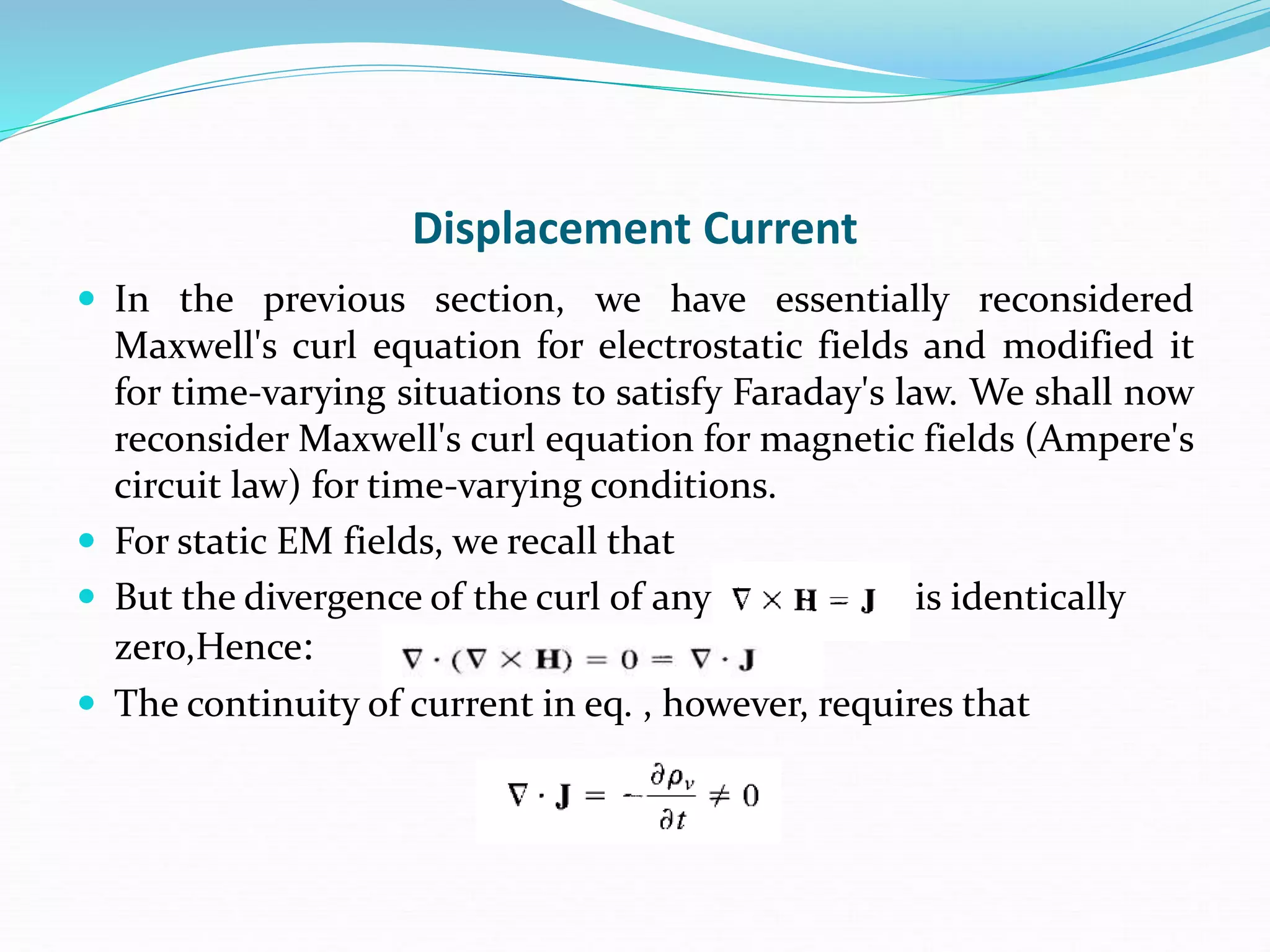
 In the previous section, we have essentially reconsidered
Maxwell's curl equation for electrostatic fields and modified it
for time-varying situations to satisfy Faraday's law. We shall now
reconsider Maxwell's curl equation for magnetic fields (Ampere's
circuit law) for time-varying conditions.
 For static EM fields, we recall that
 But the divergence of the curl of any vector field is identically
zero,Hence:
 The continuity of current in eq. , however, requires that
 Thus both the eqs are obviously incompatible for time-varying
conditions.
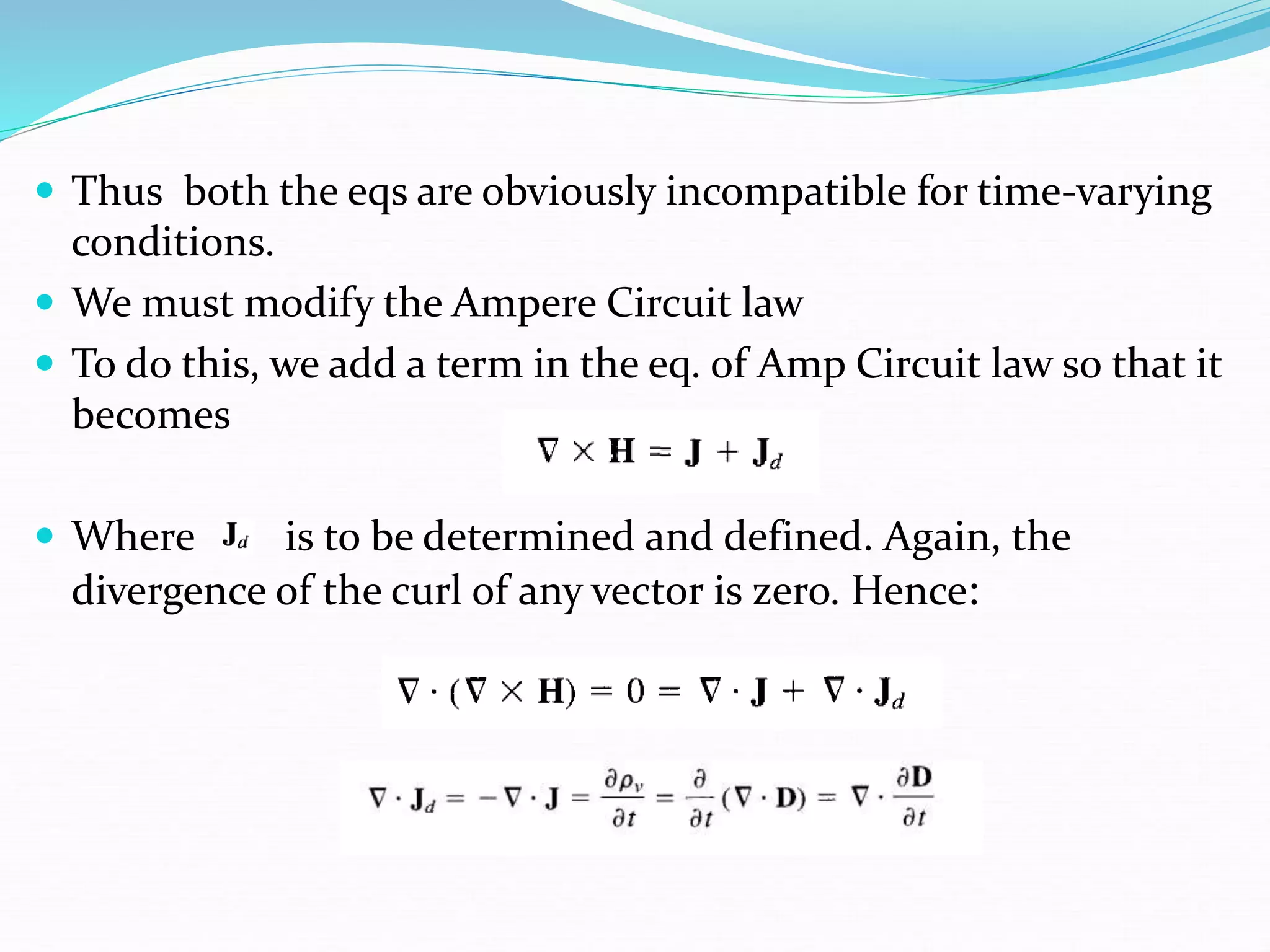
 We must modify the Ampere Circuit law
 To do this, we add a term in the eq. of Amp Circuit law so that it
becomes
 Where is to be determined and defined. Again, the
divergence of the curl of any vector is zero. Hence:
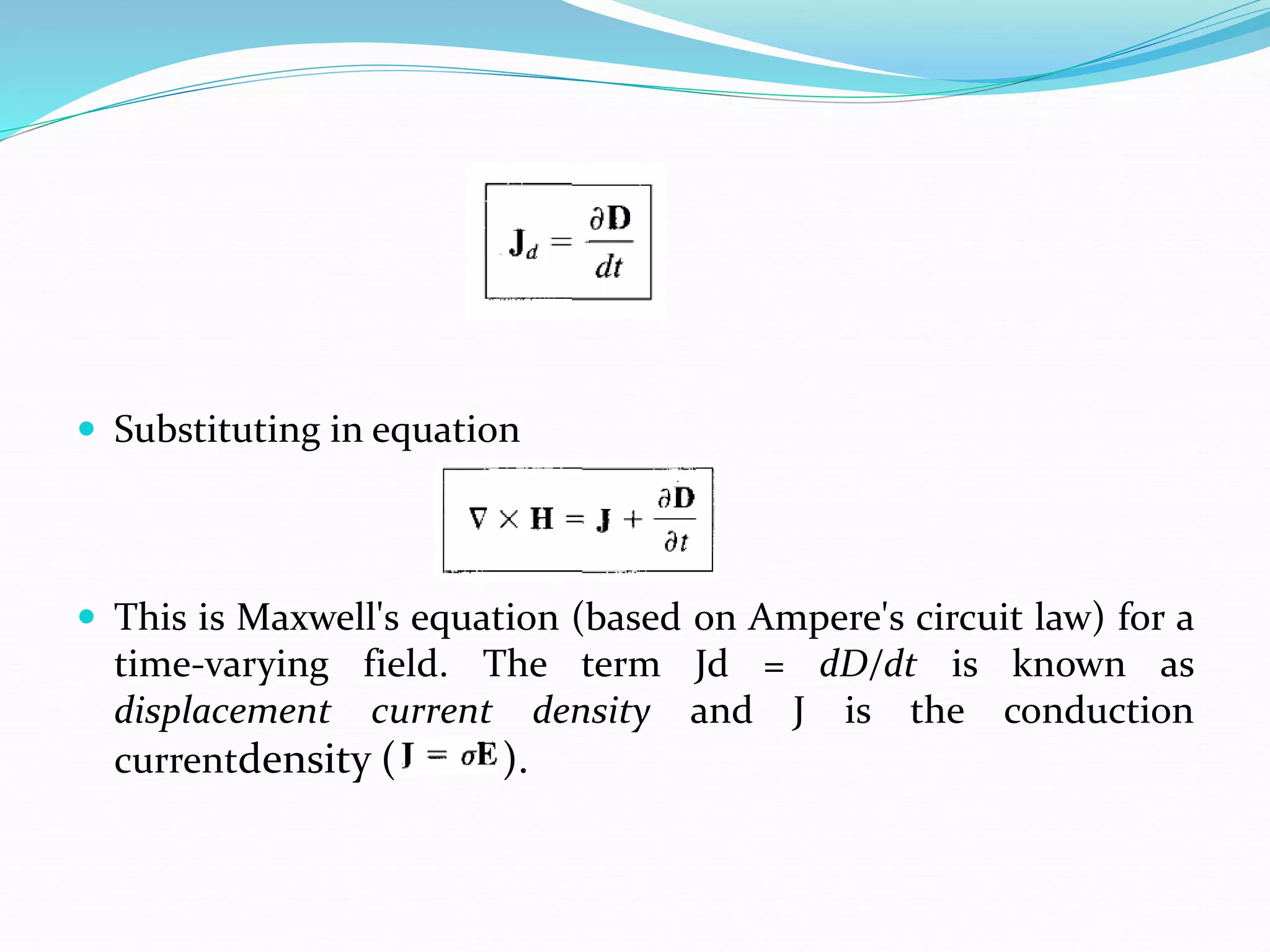
 Substituting in equation
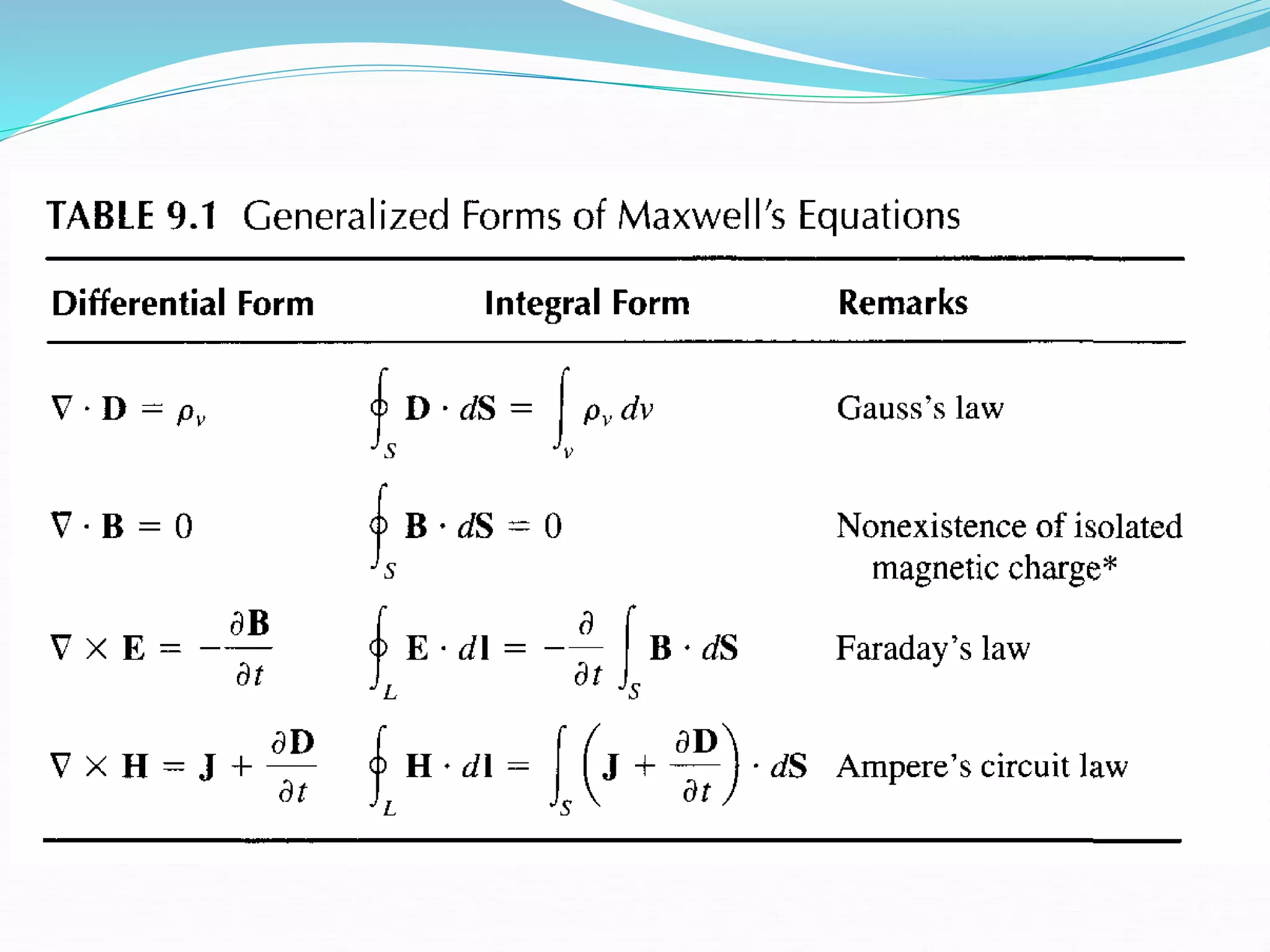
 This is Maxwell's equation (based on Ampere's circuit law) for a
time-varying field. The term Jd = dD/dt is known as
displacement current density and J is the conduction
currentdensity ( ).
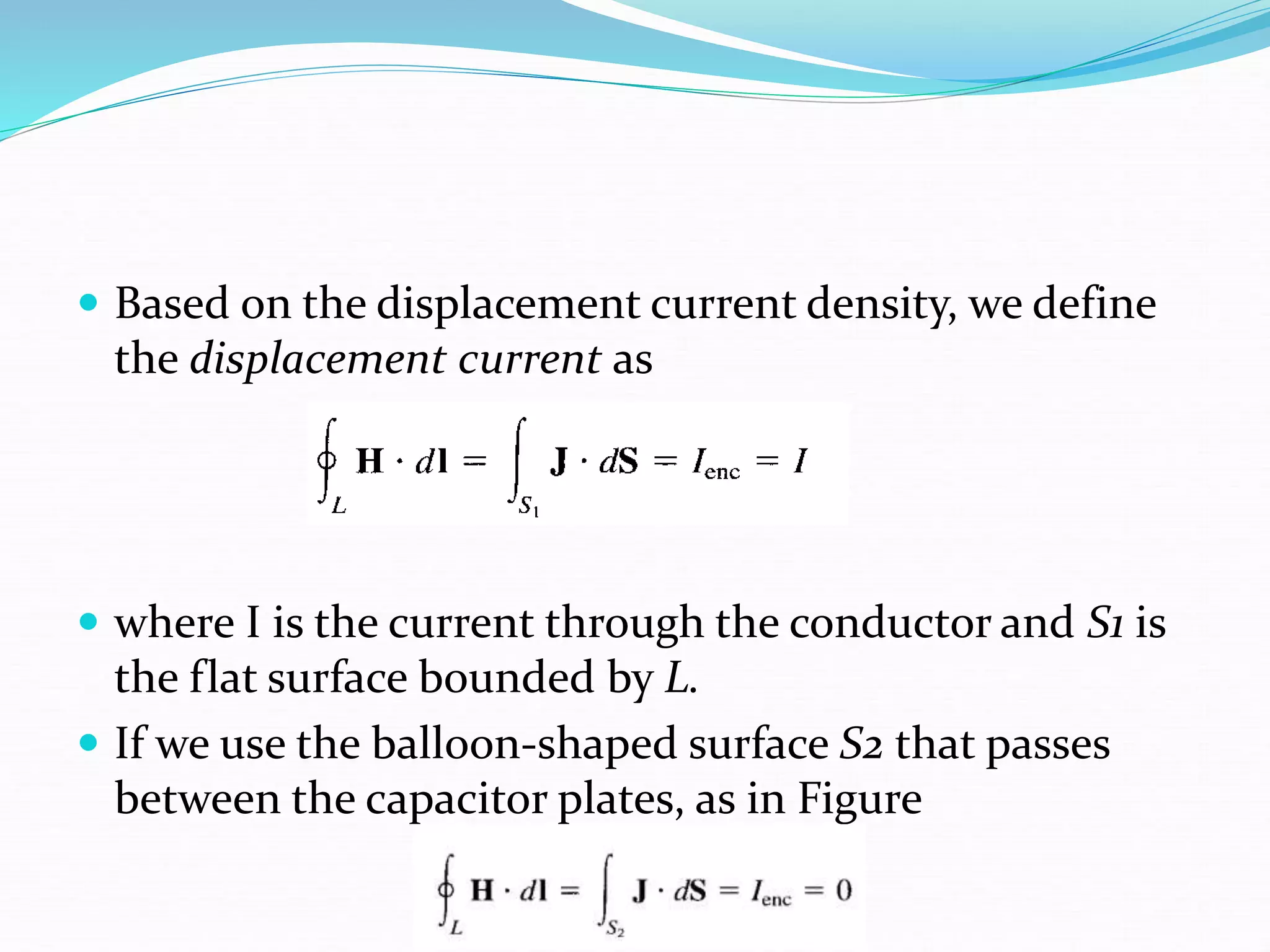
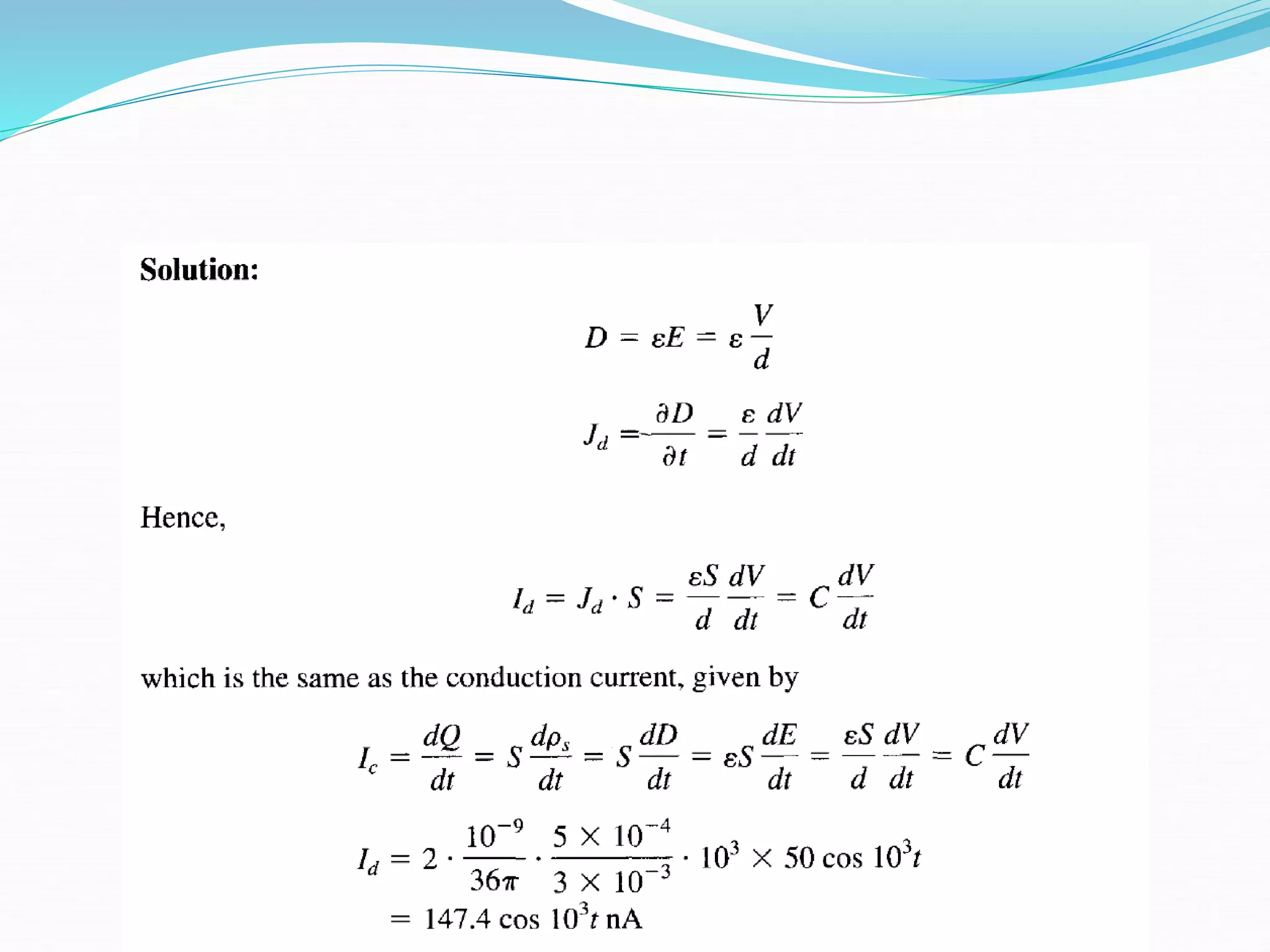
 Based on the displacement current density, we define
the displacement current as
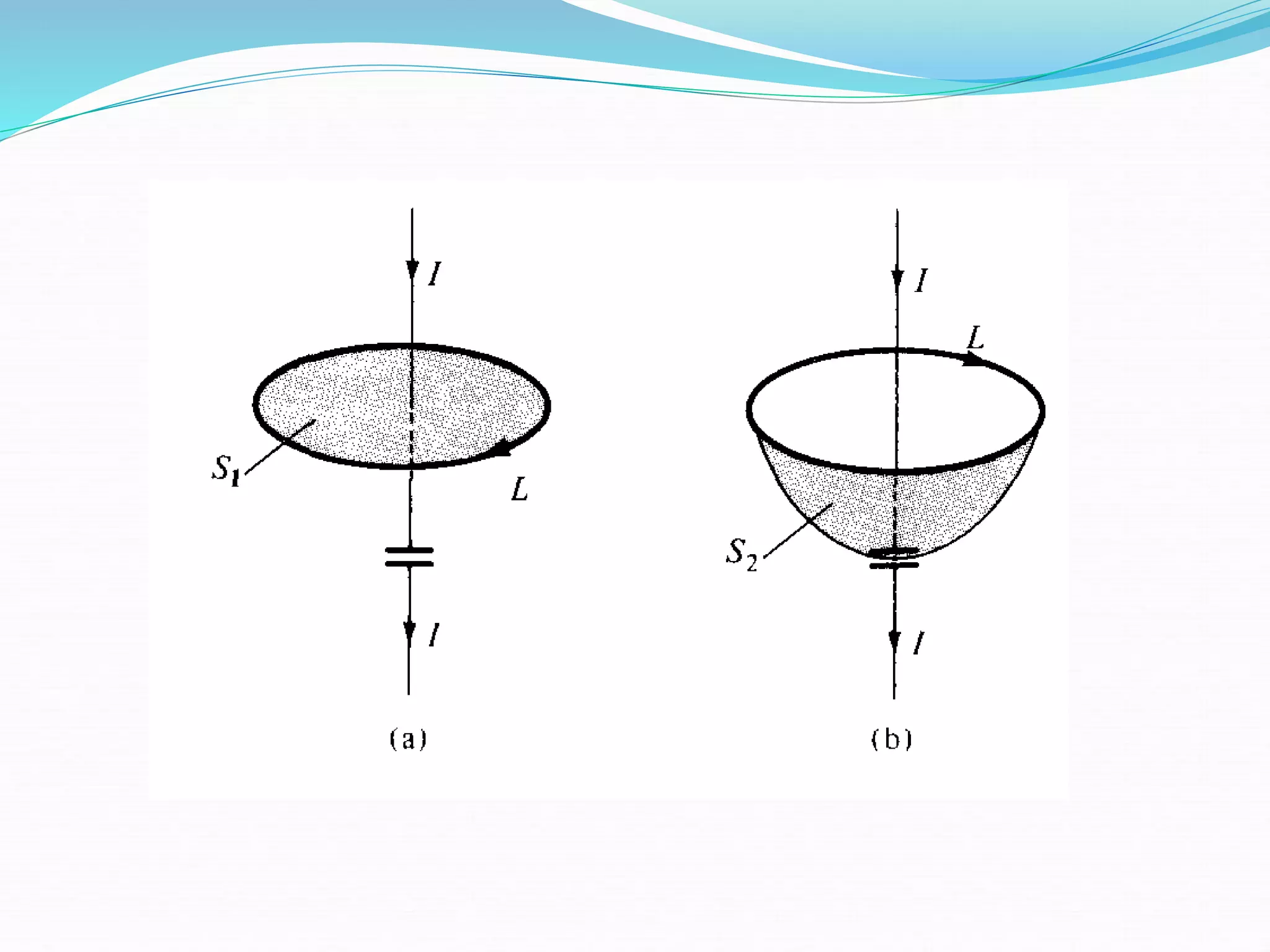
 where I is the current through the conductor and S1 is
the flat surface bounded by L.
 If we use the balloon-shaped surface S2 that passes
between the capacitor plates, as in Figure
 because no conduction current (J = 0) flows through S2
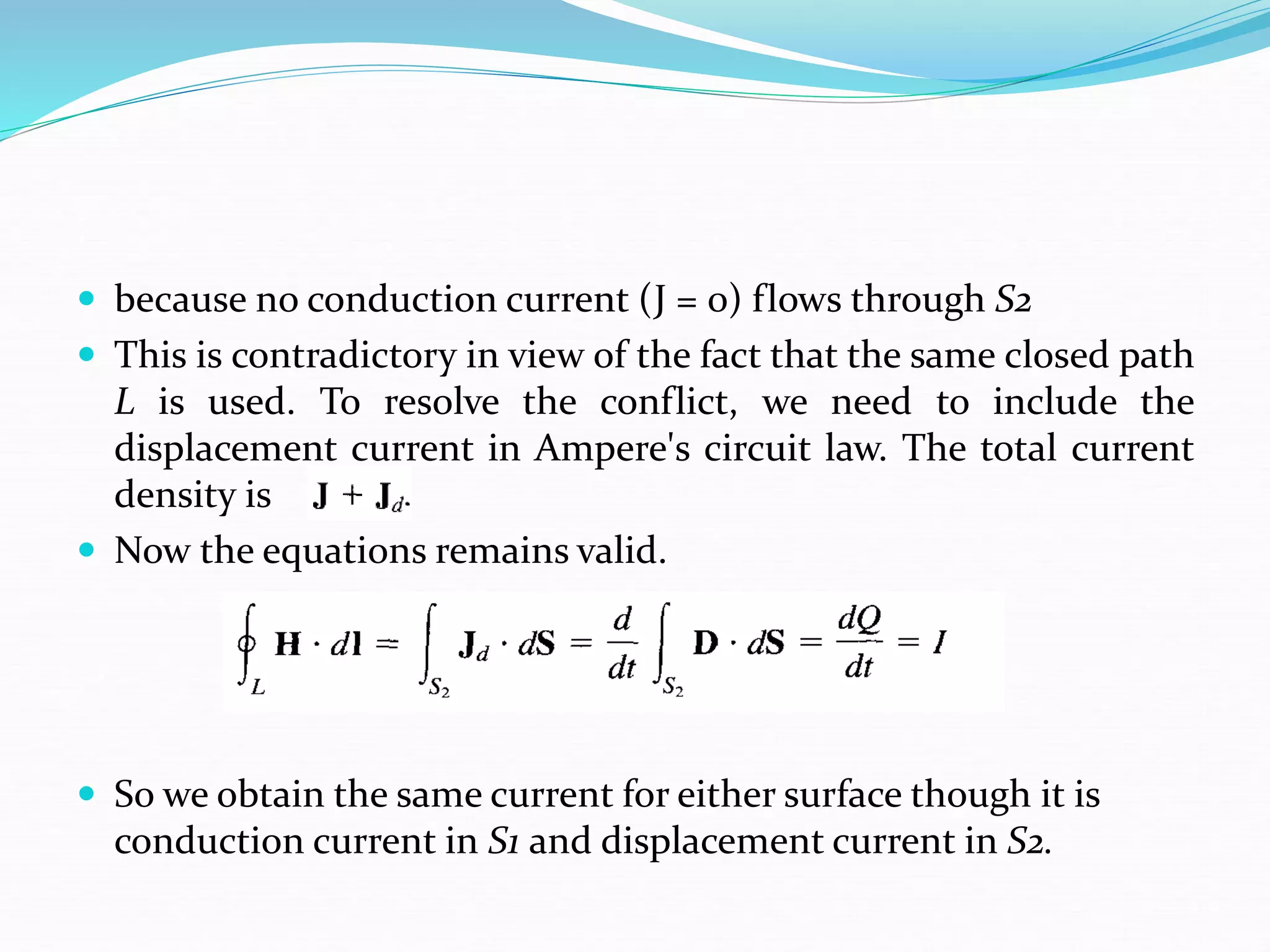
 This is contradictory in view of the fact that the same closed path
L is used. To resolve the conflict, we need to include the
displacement current in Ampere's circuit law. The total current
density is
 Now the equations remains valid.
 So we obtain the same current for either surface though it is
conduction current in S1 and displacement current in S2.
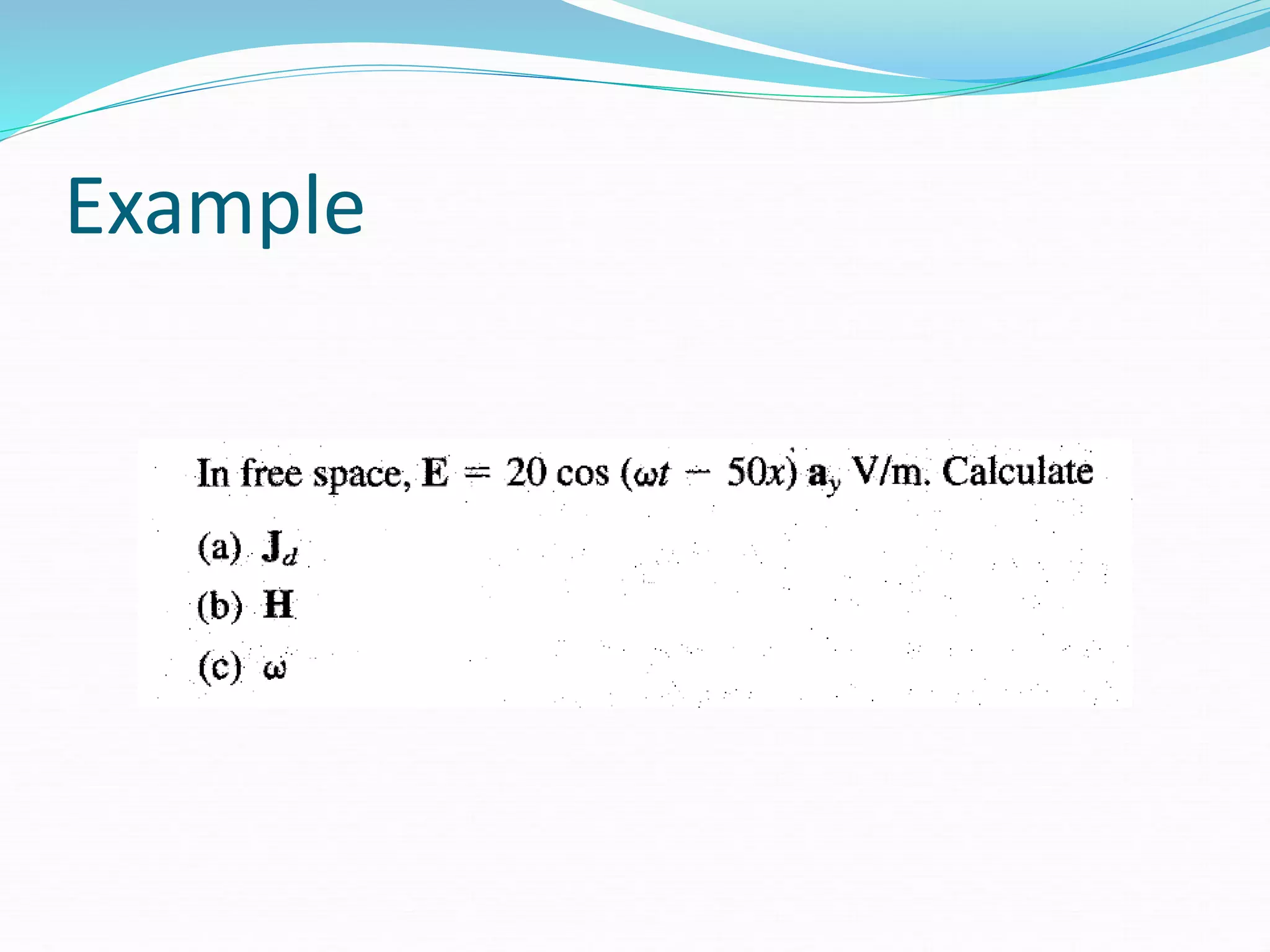
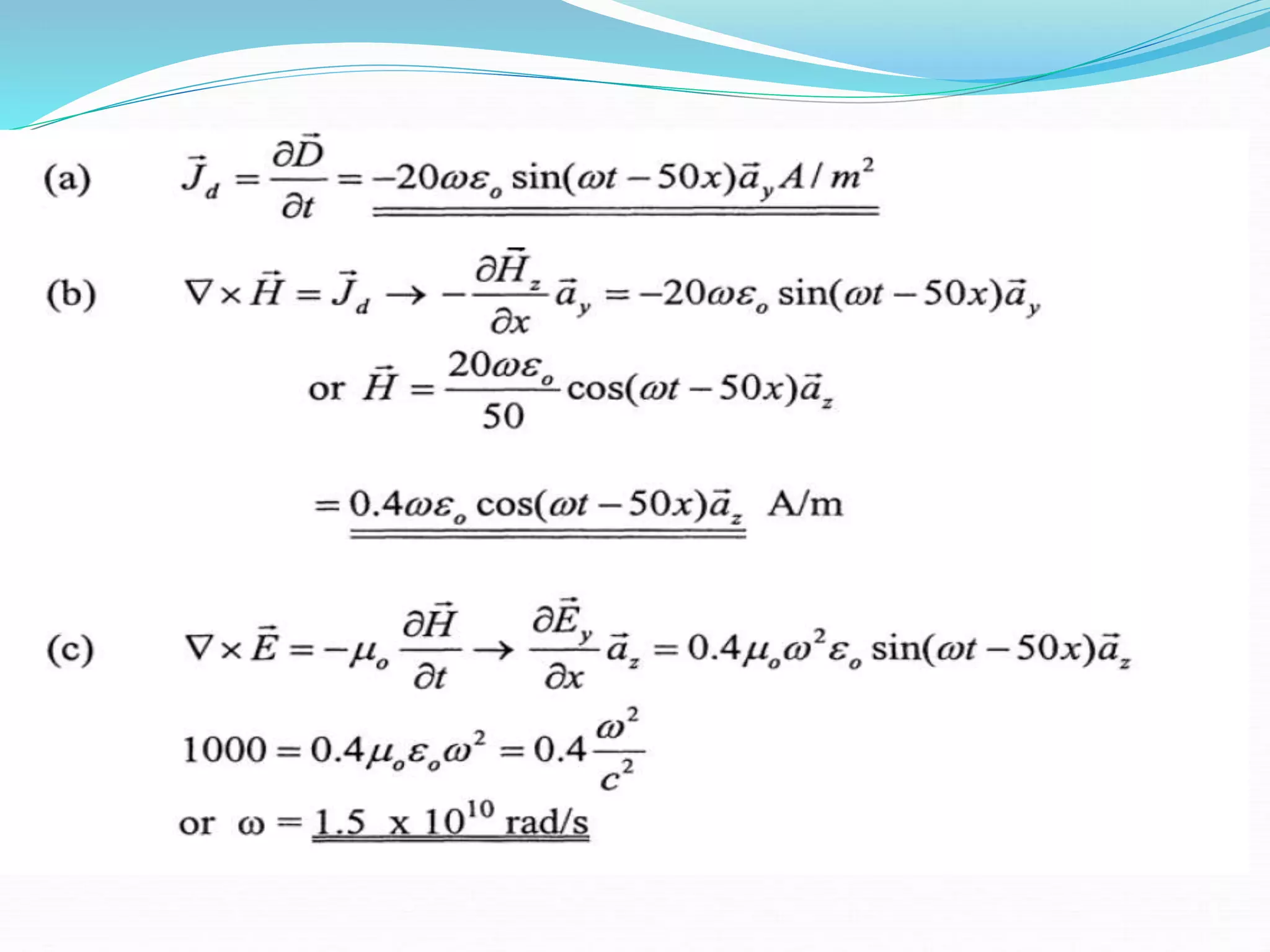
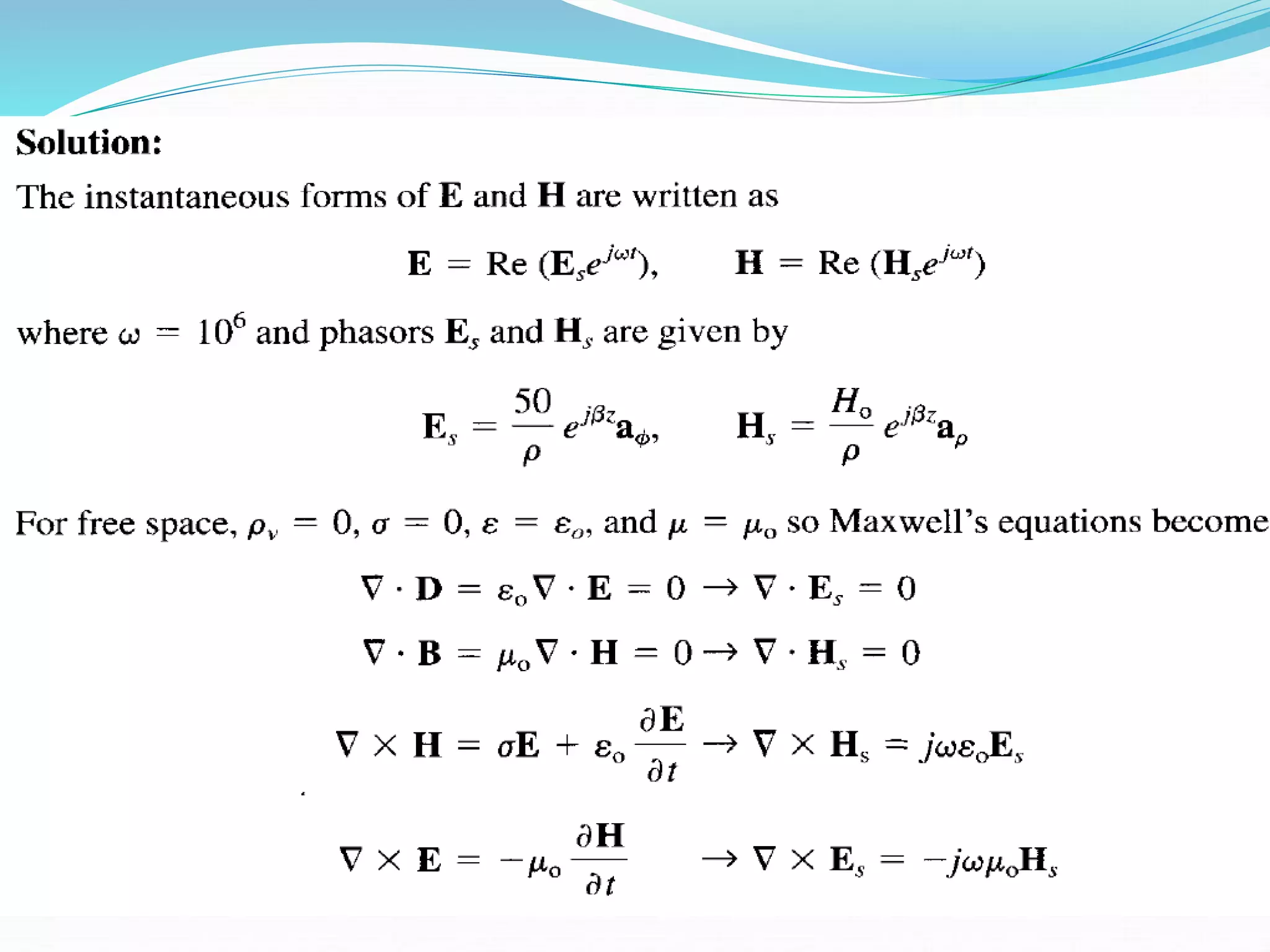
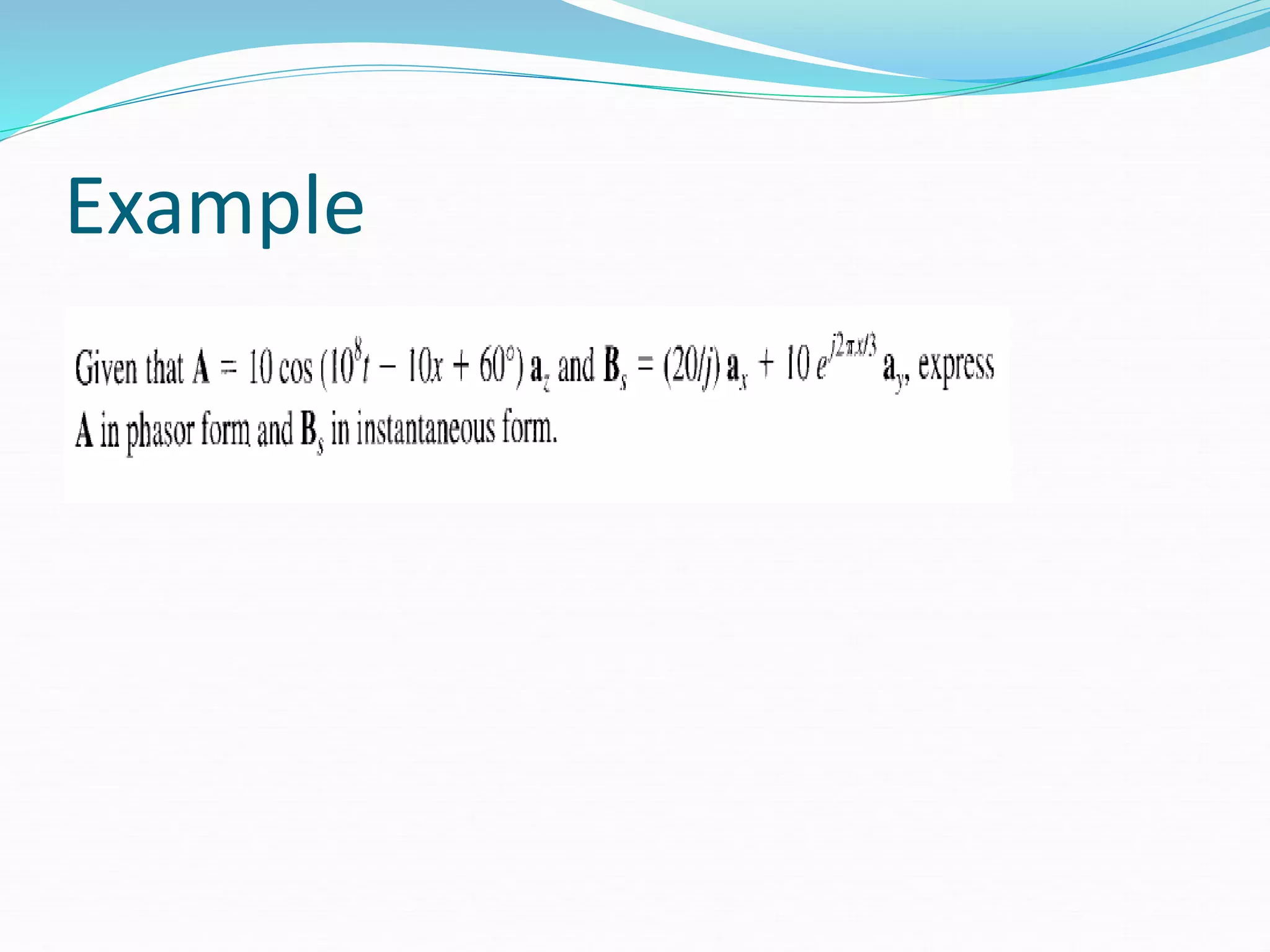
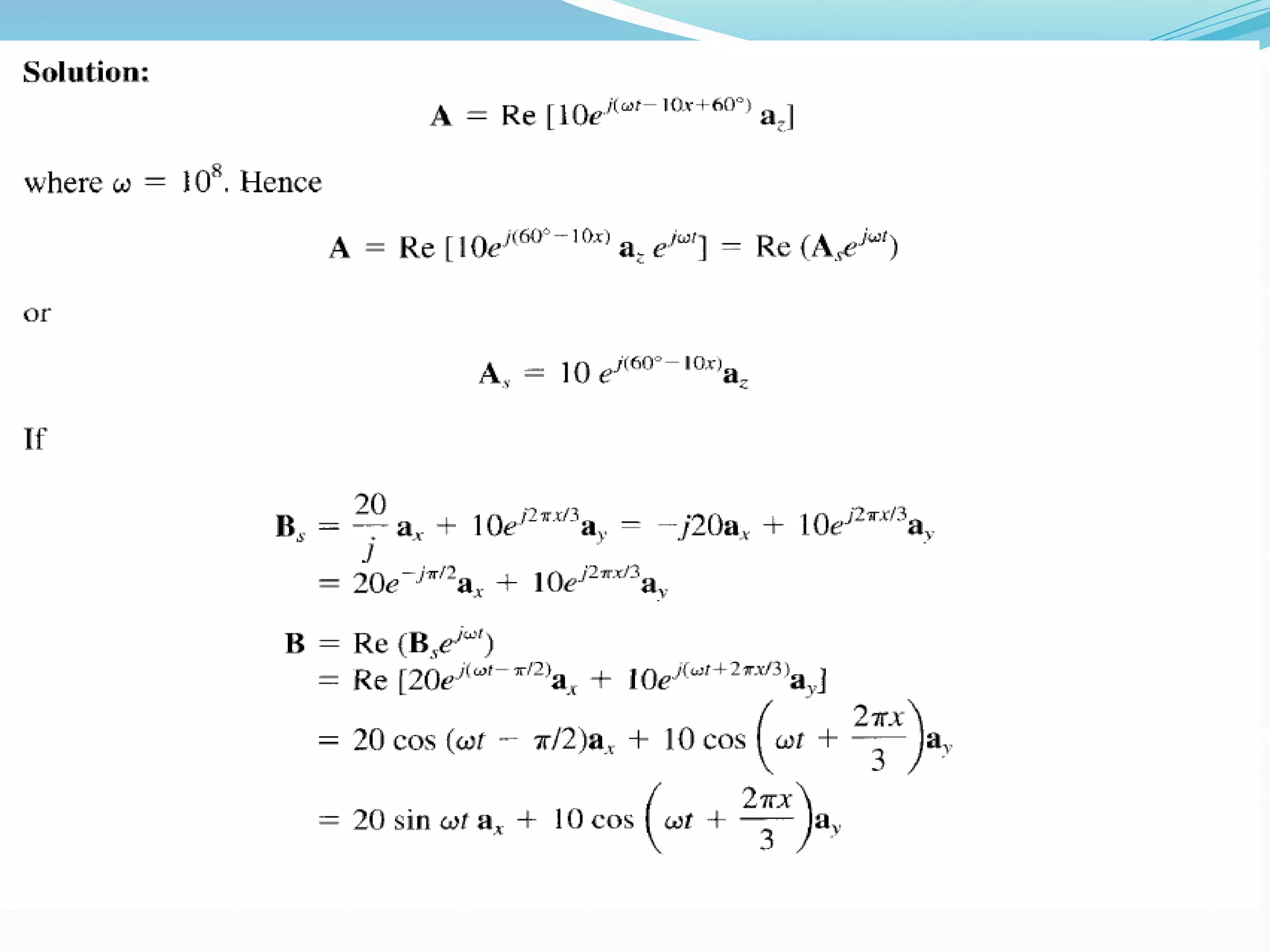
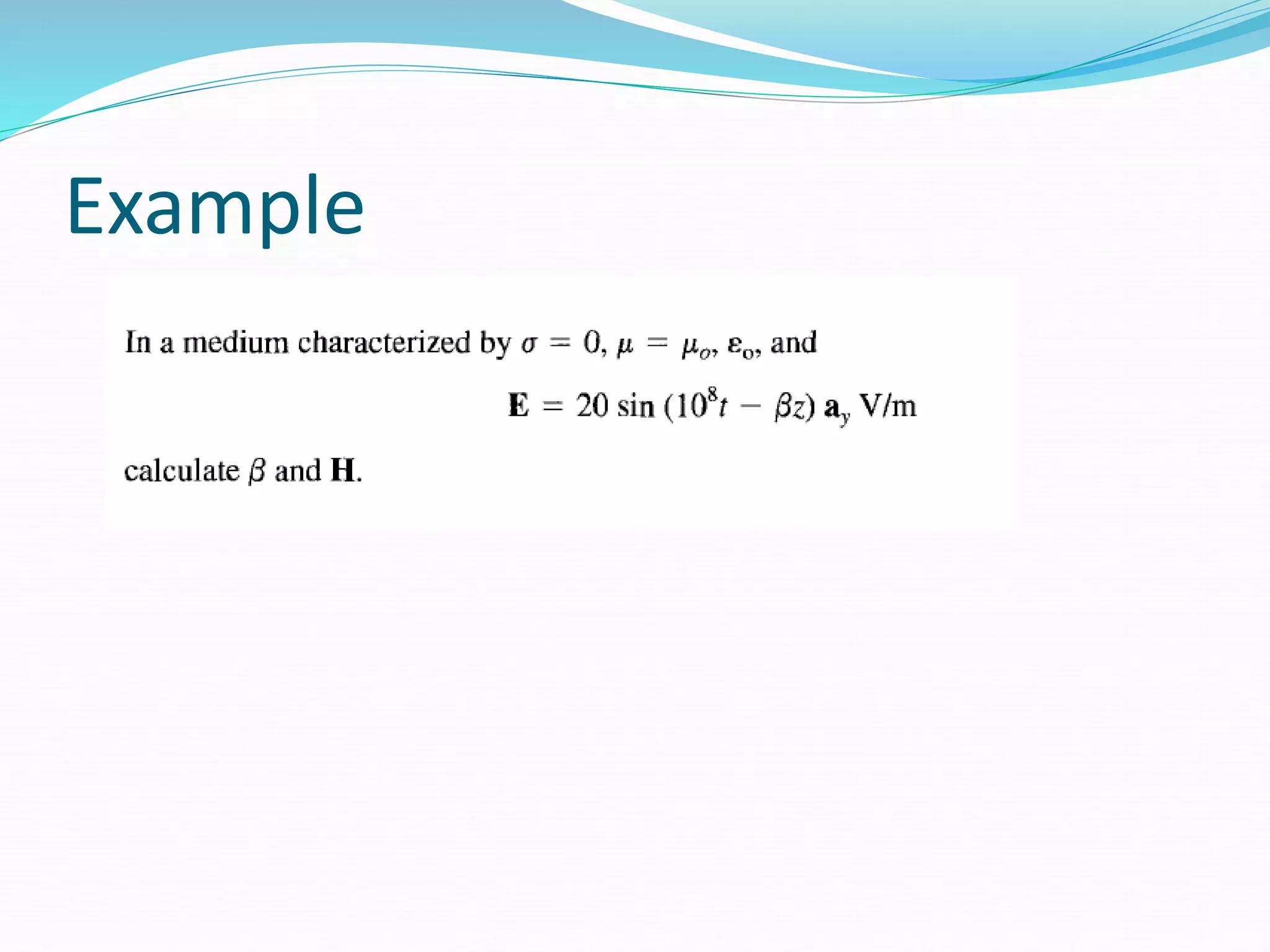
Example
Example
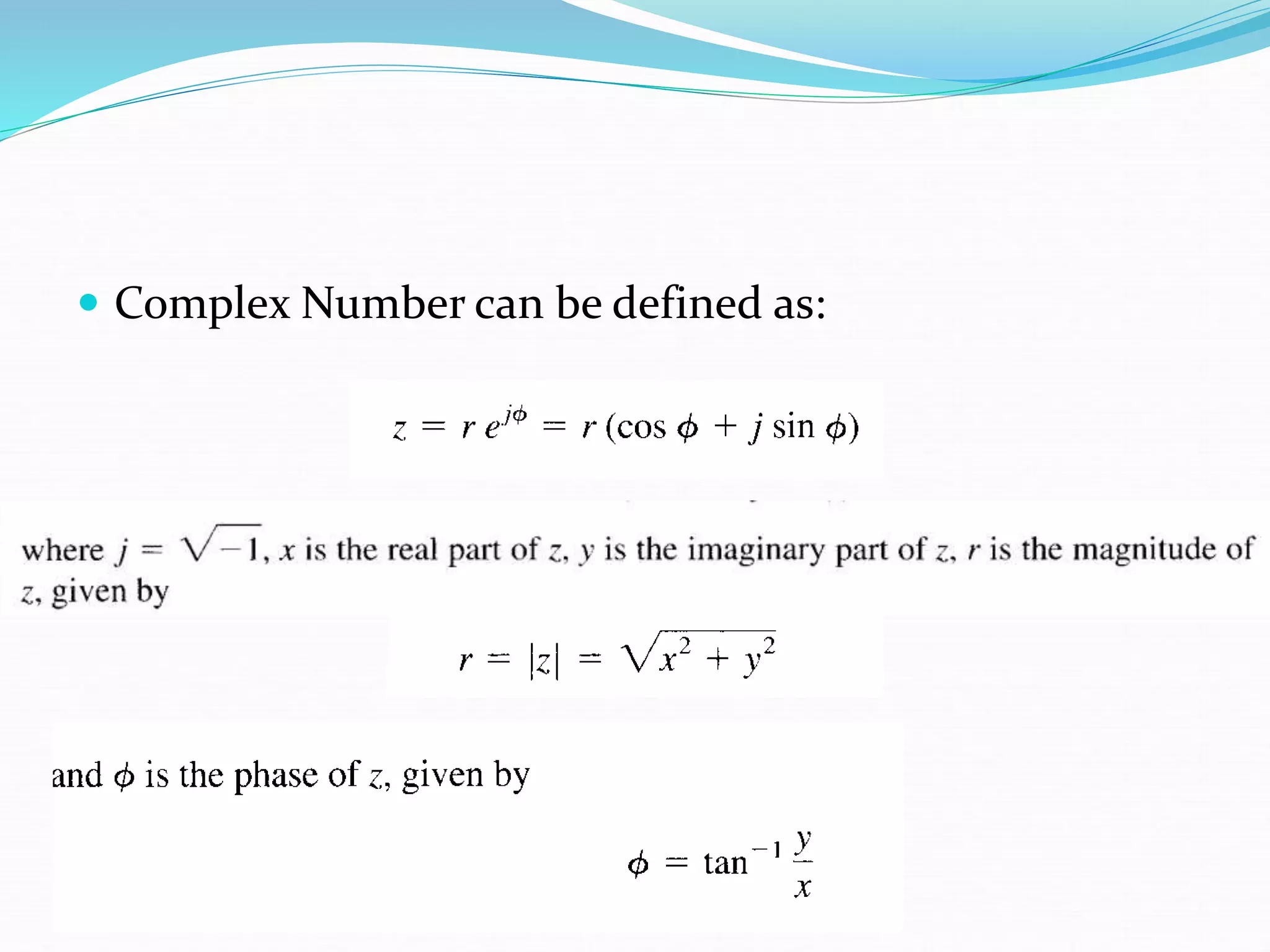
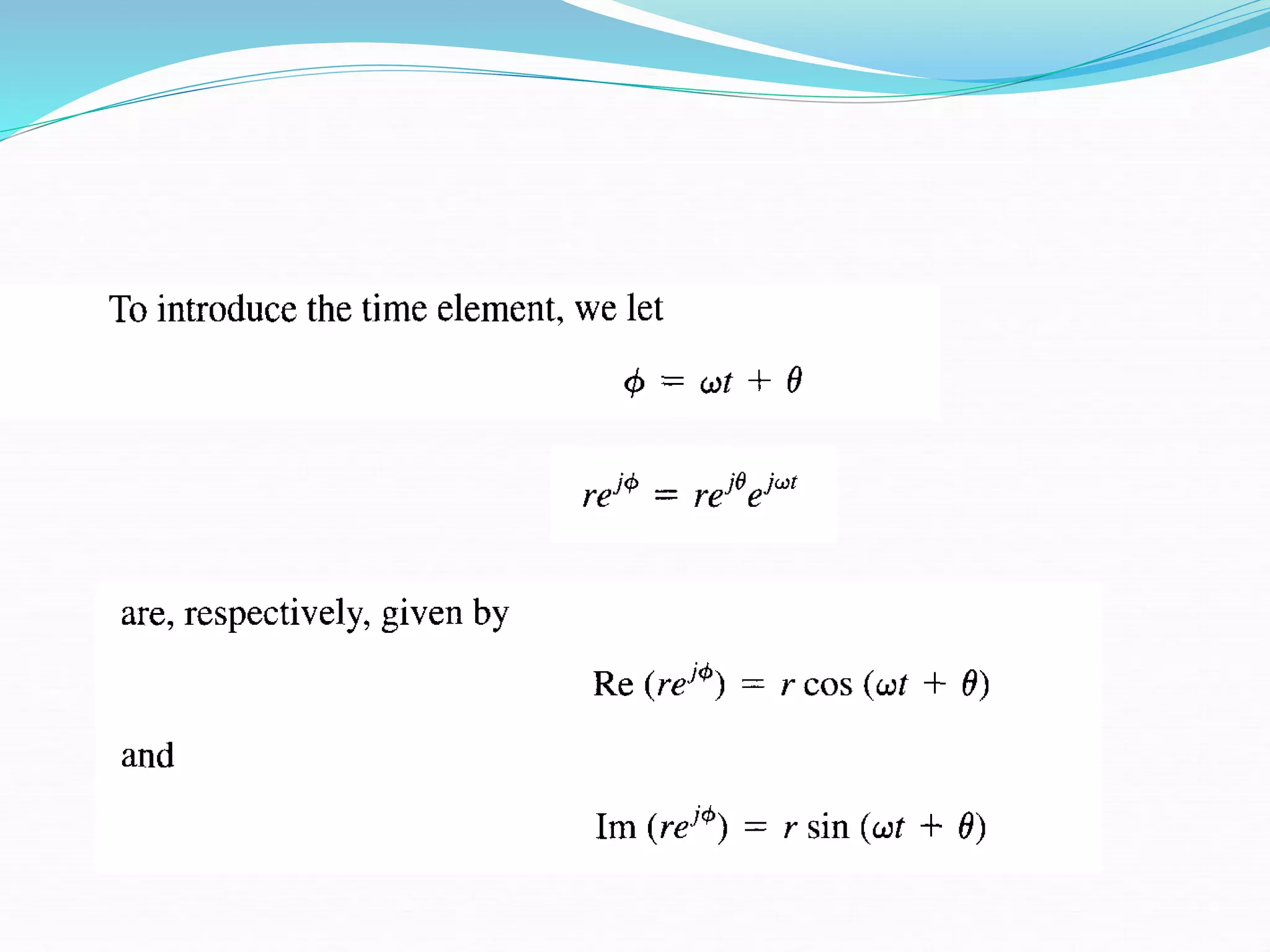
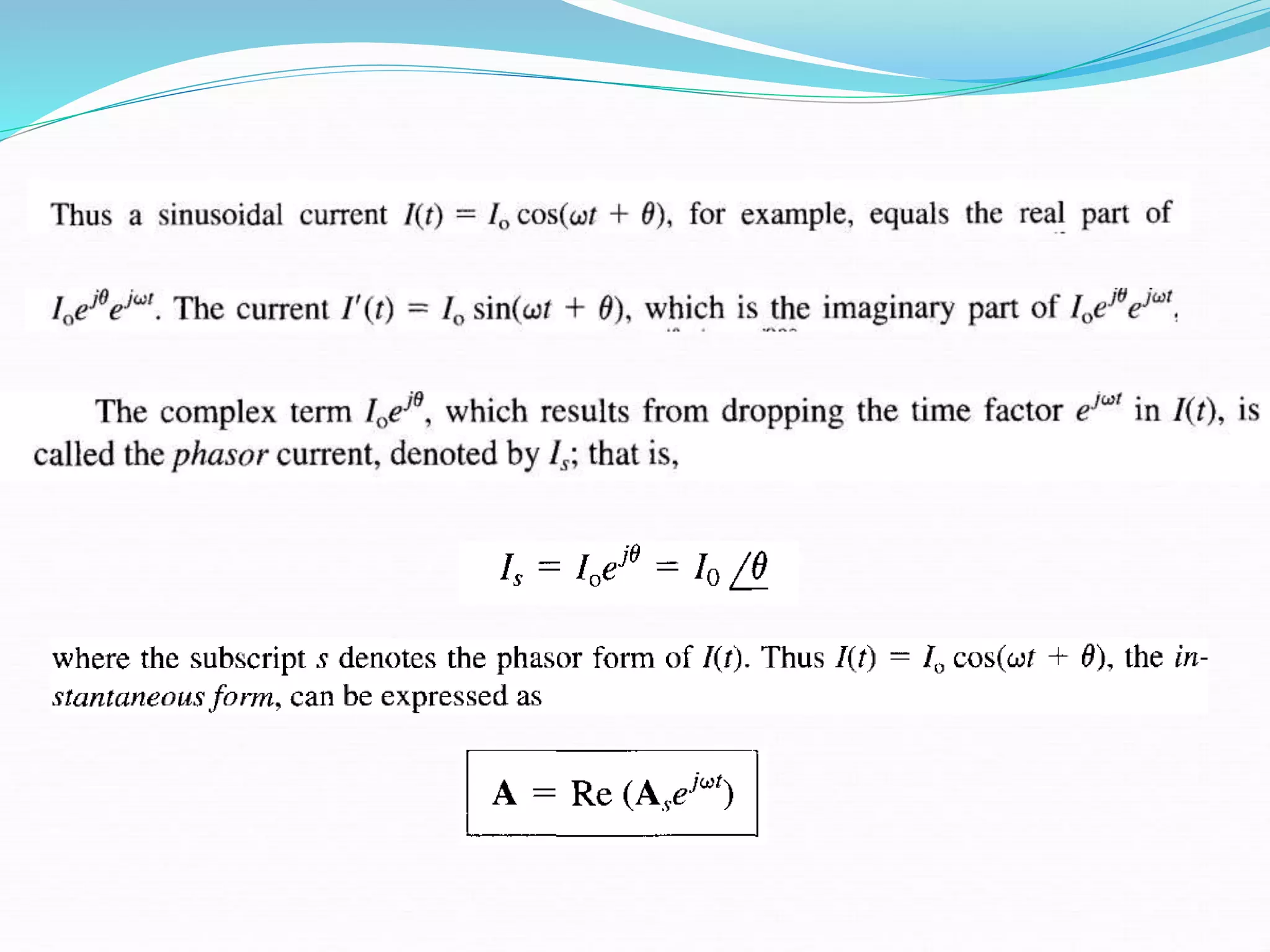
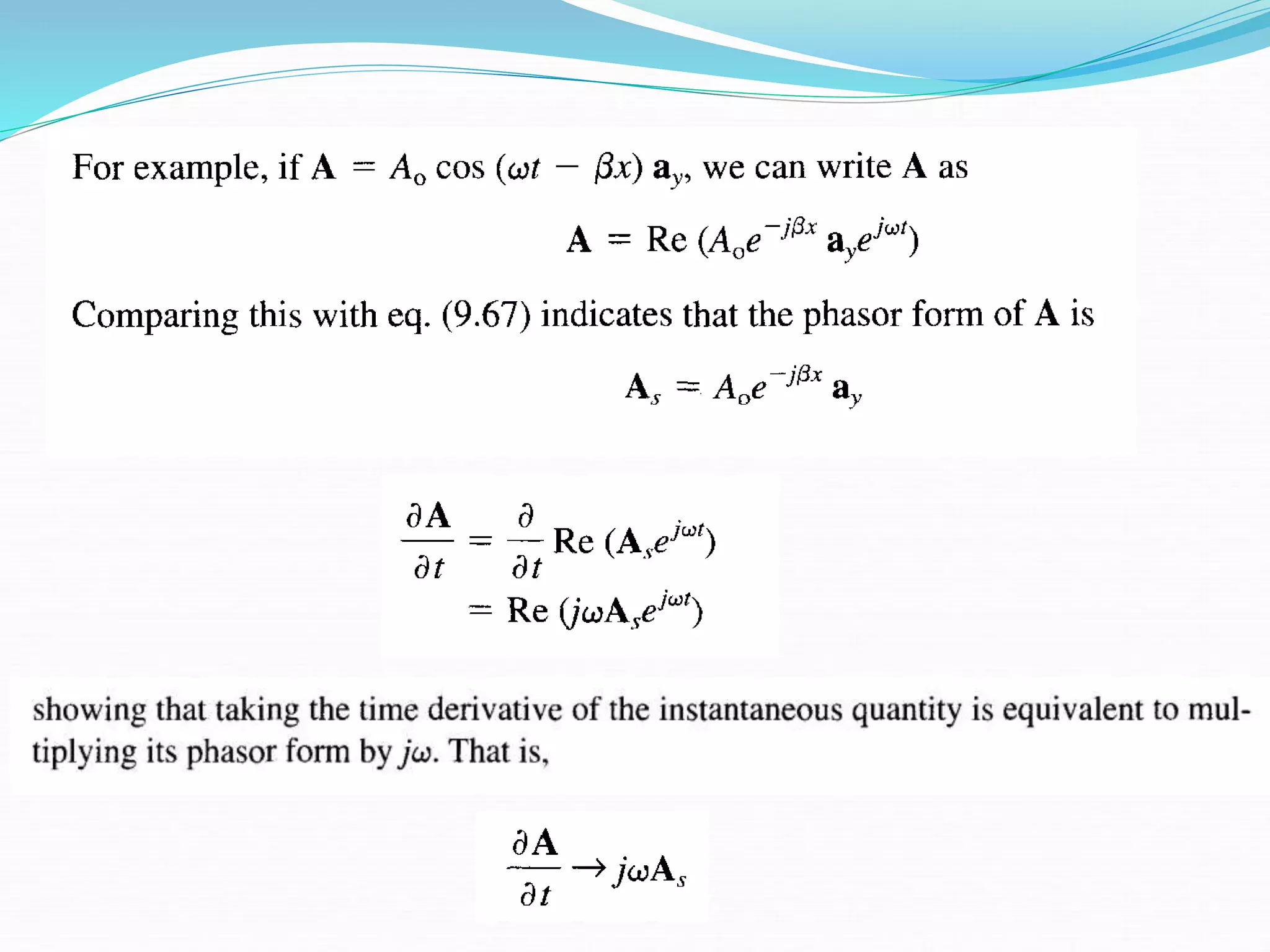
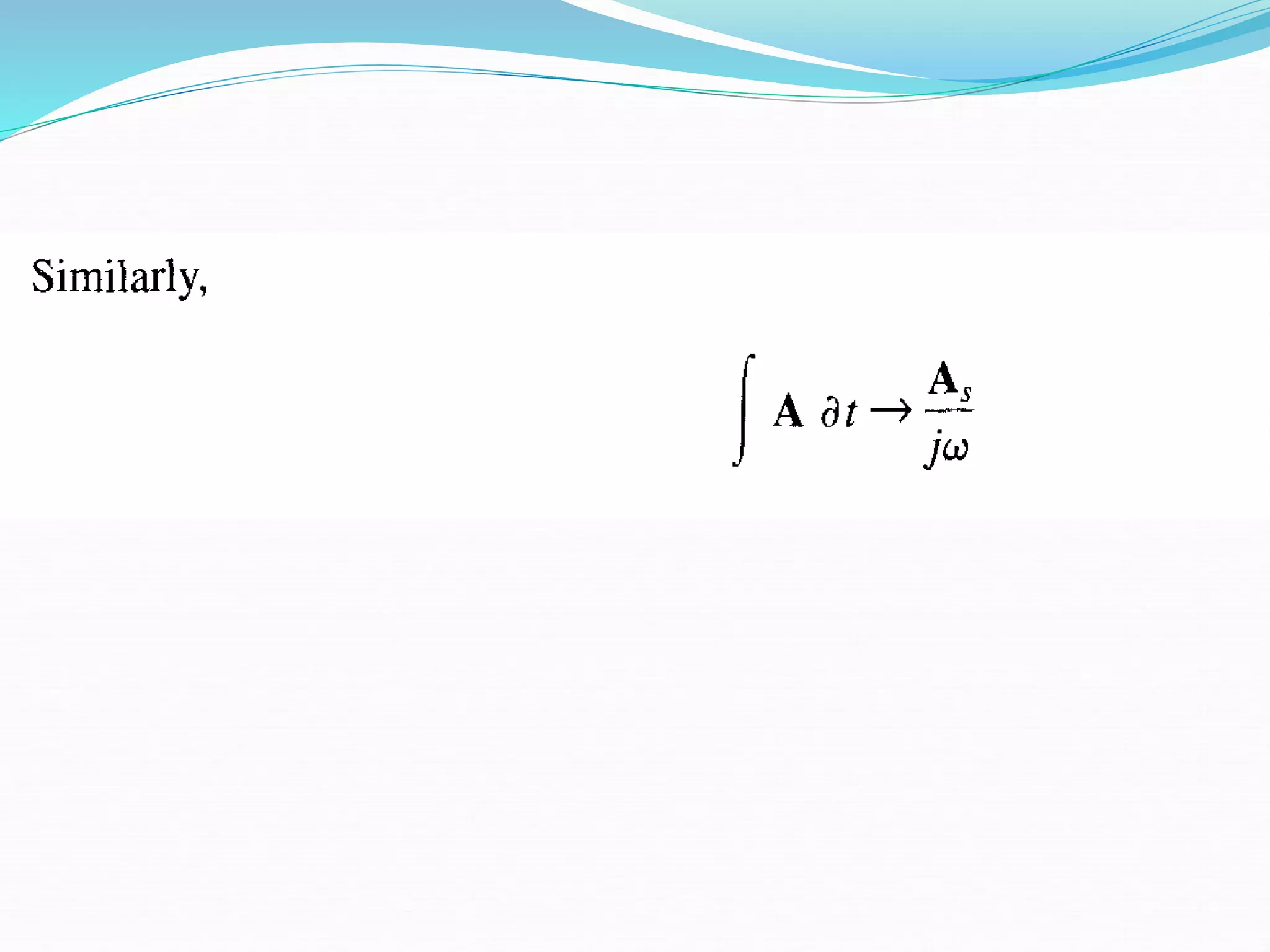
 Complex Number can be defined as:
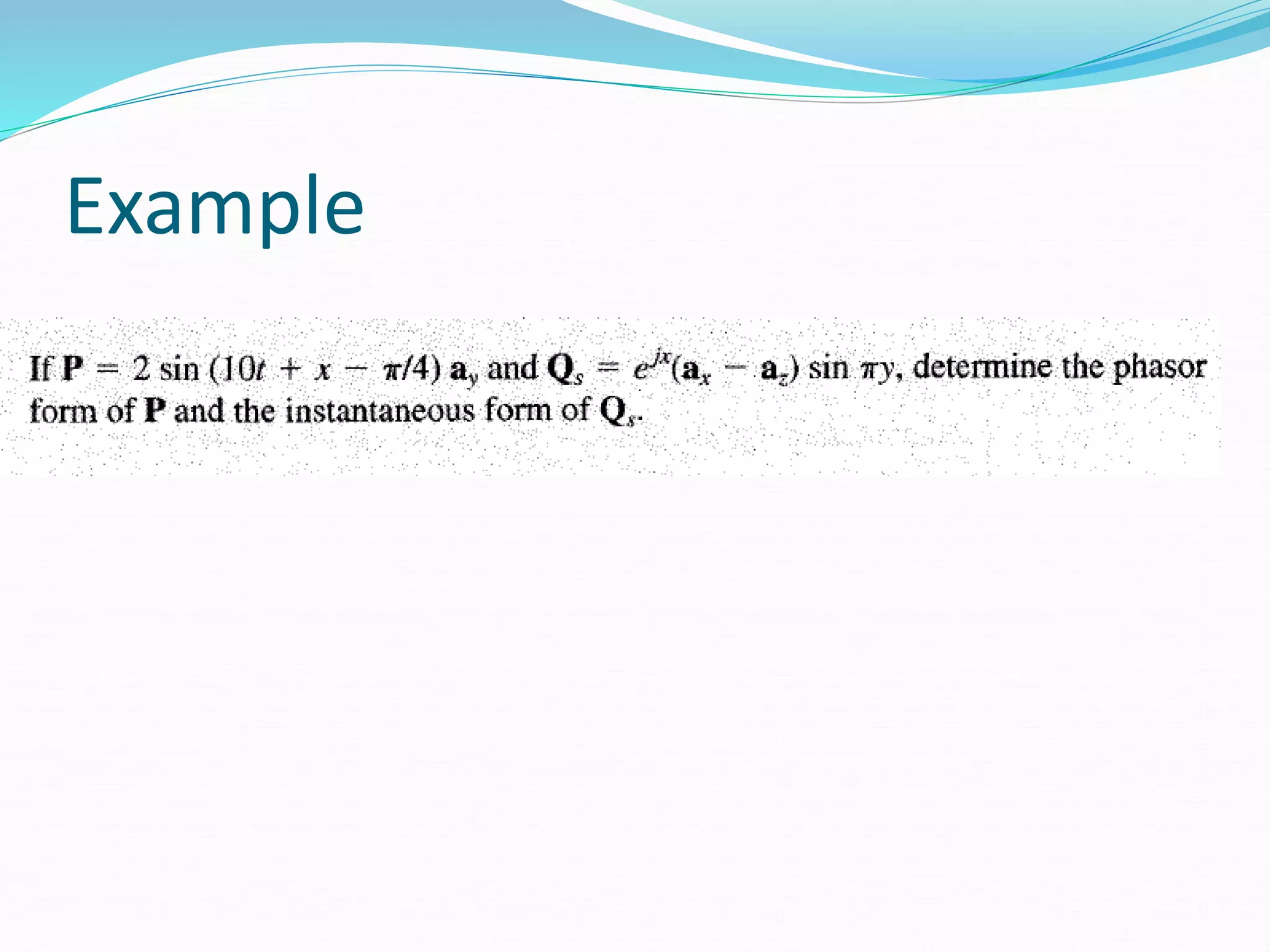
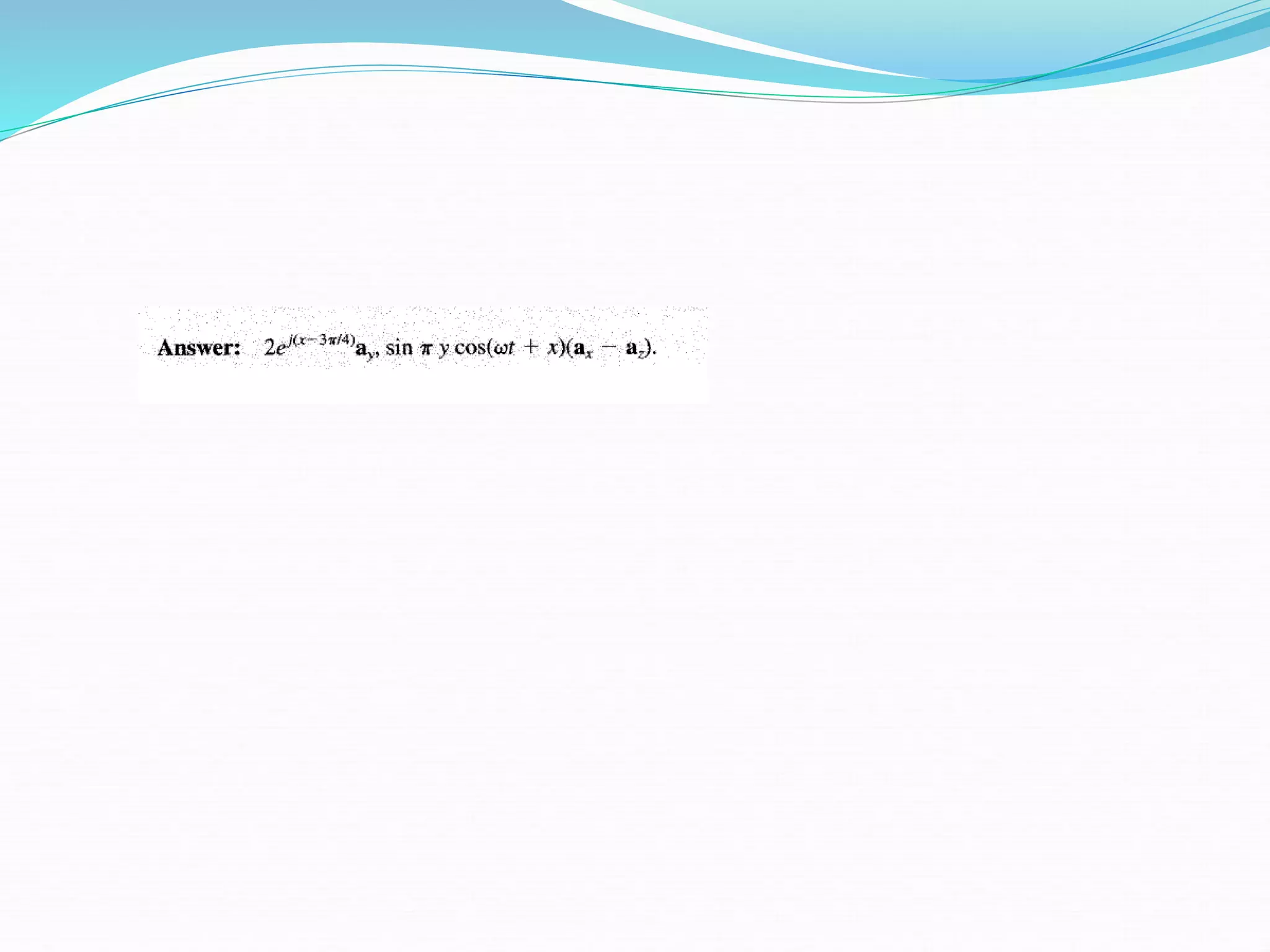
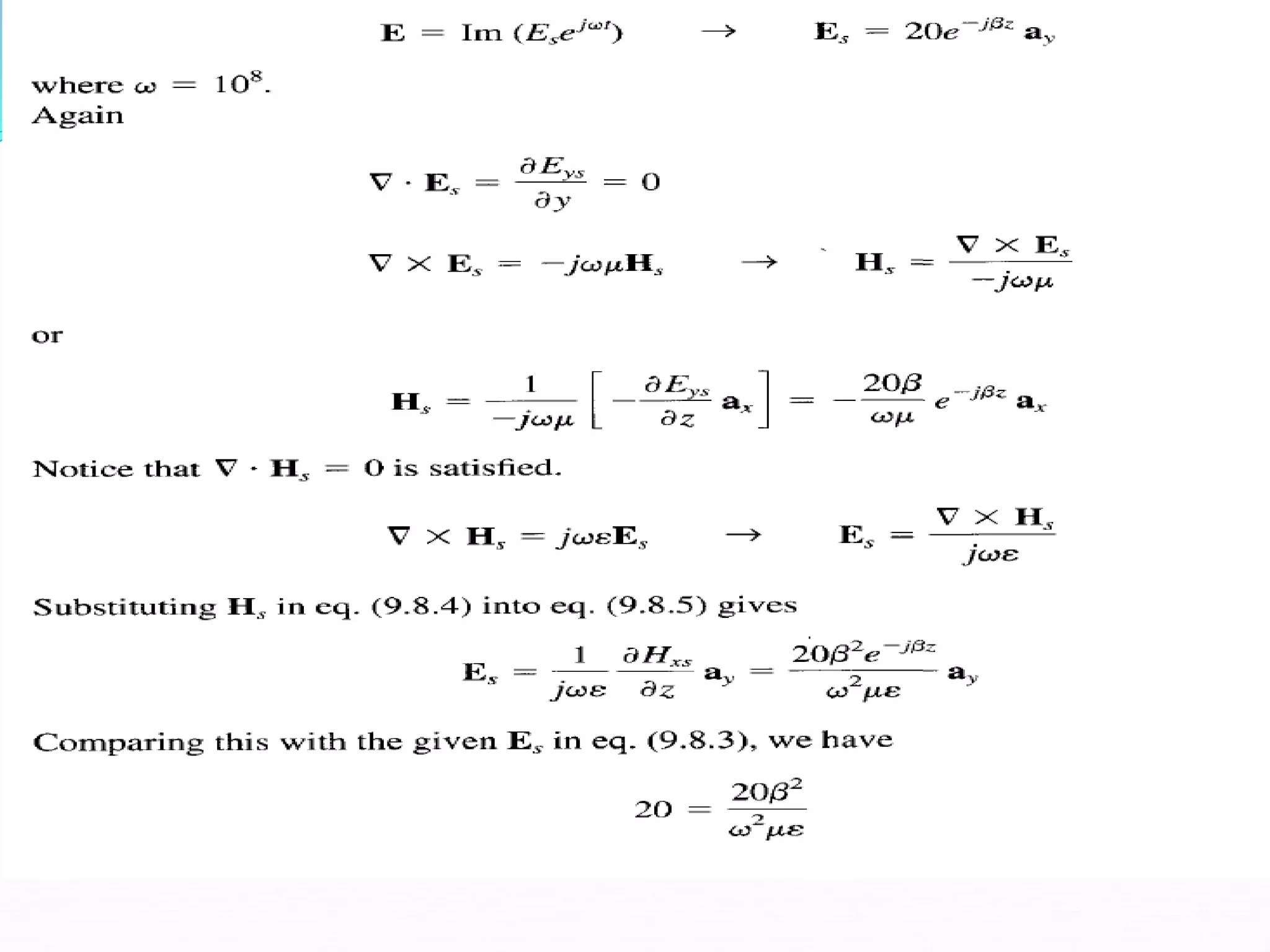
Example
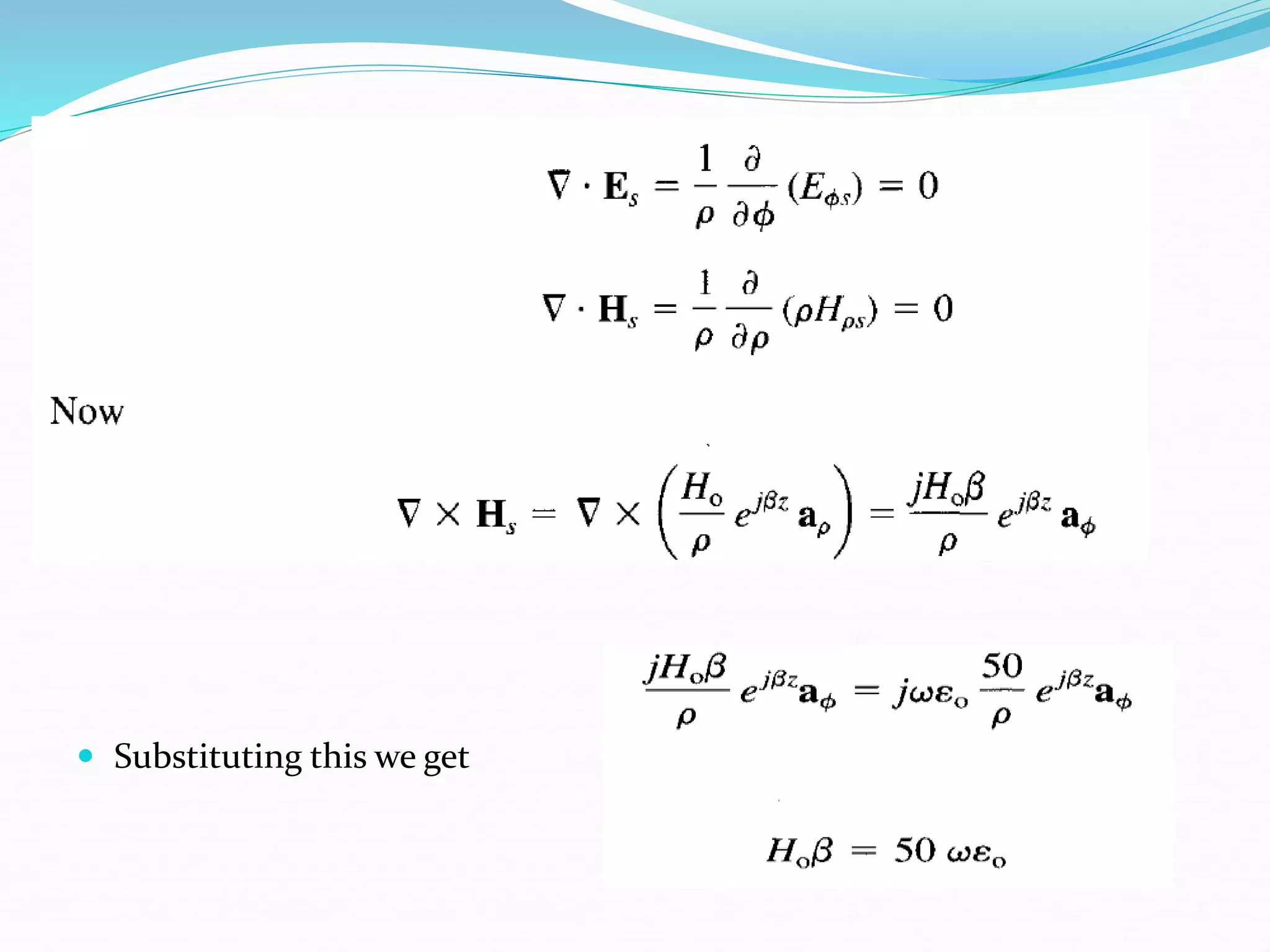
 Substituting this we get
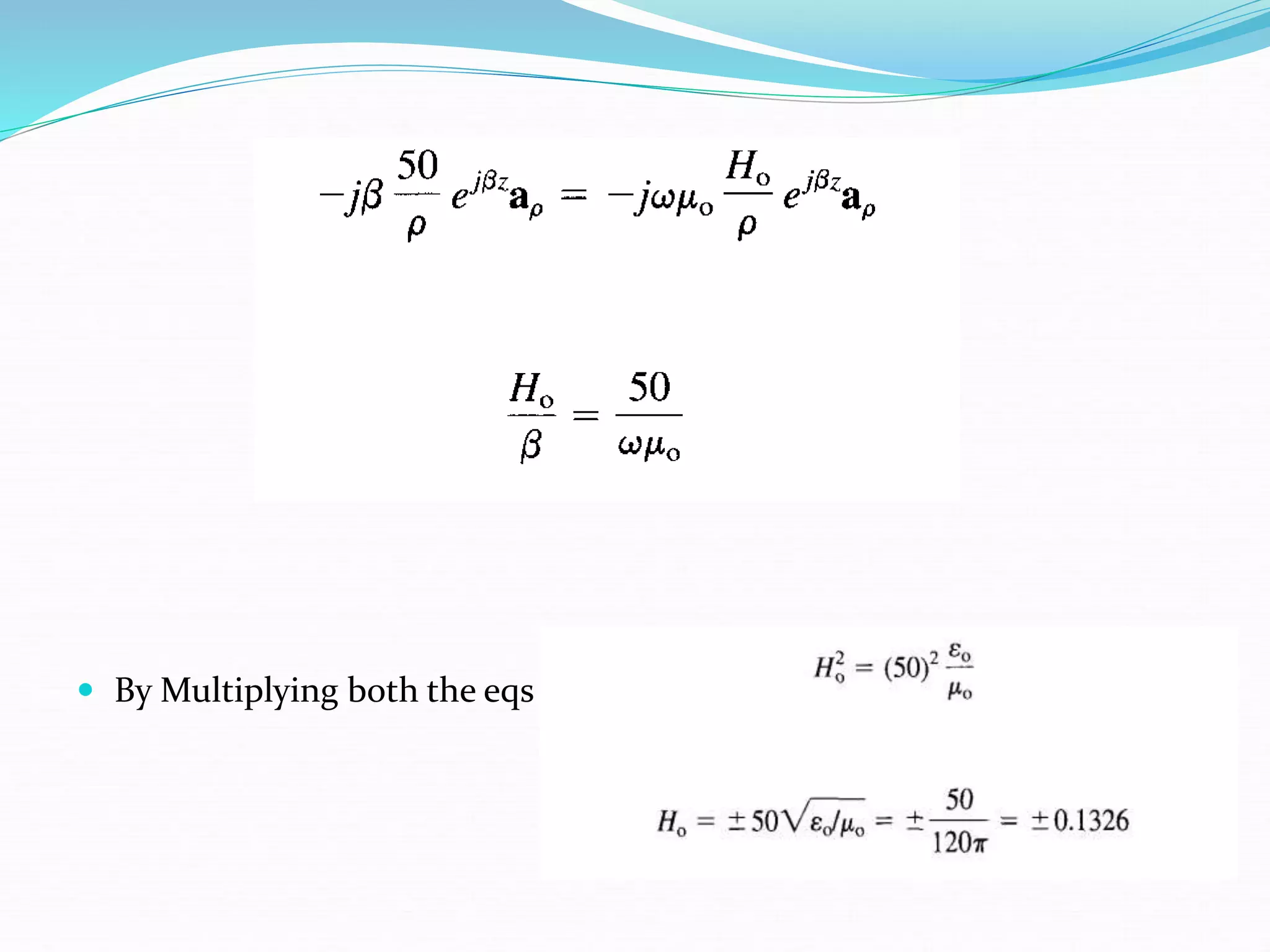
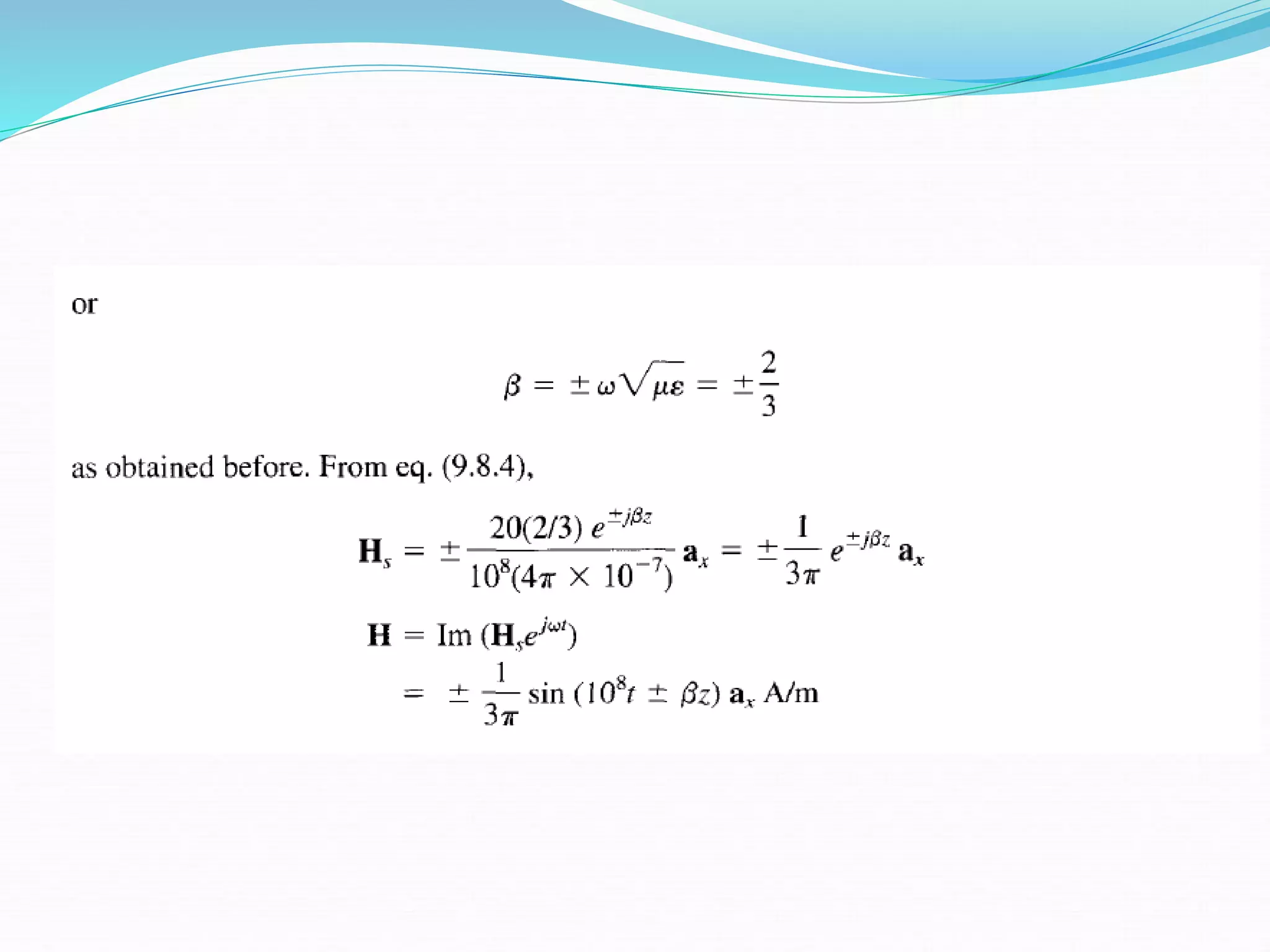
 By Multiplying both the eqs
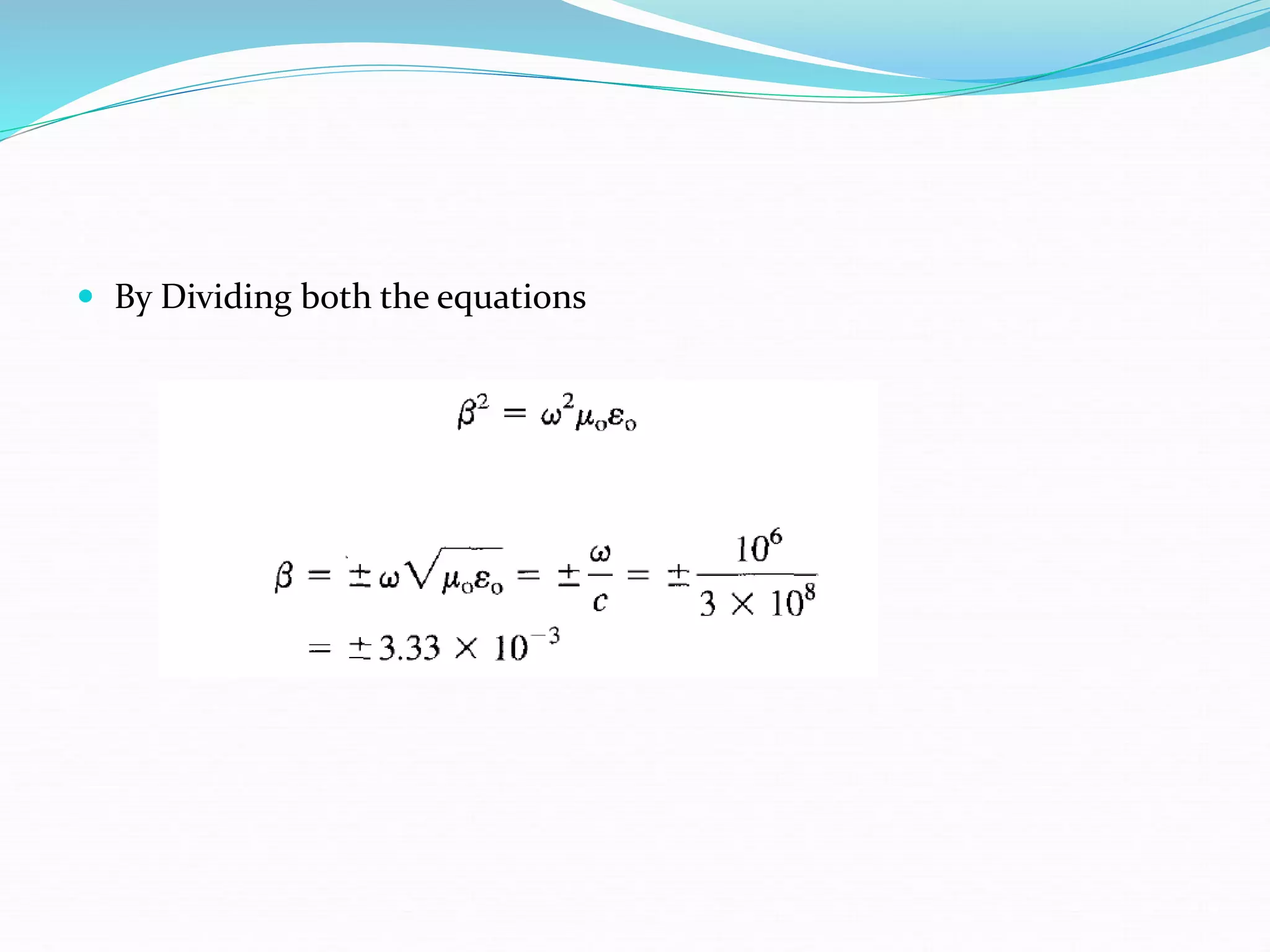
 By Dividing both the equations
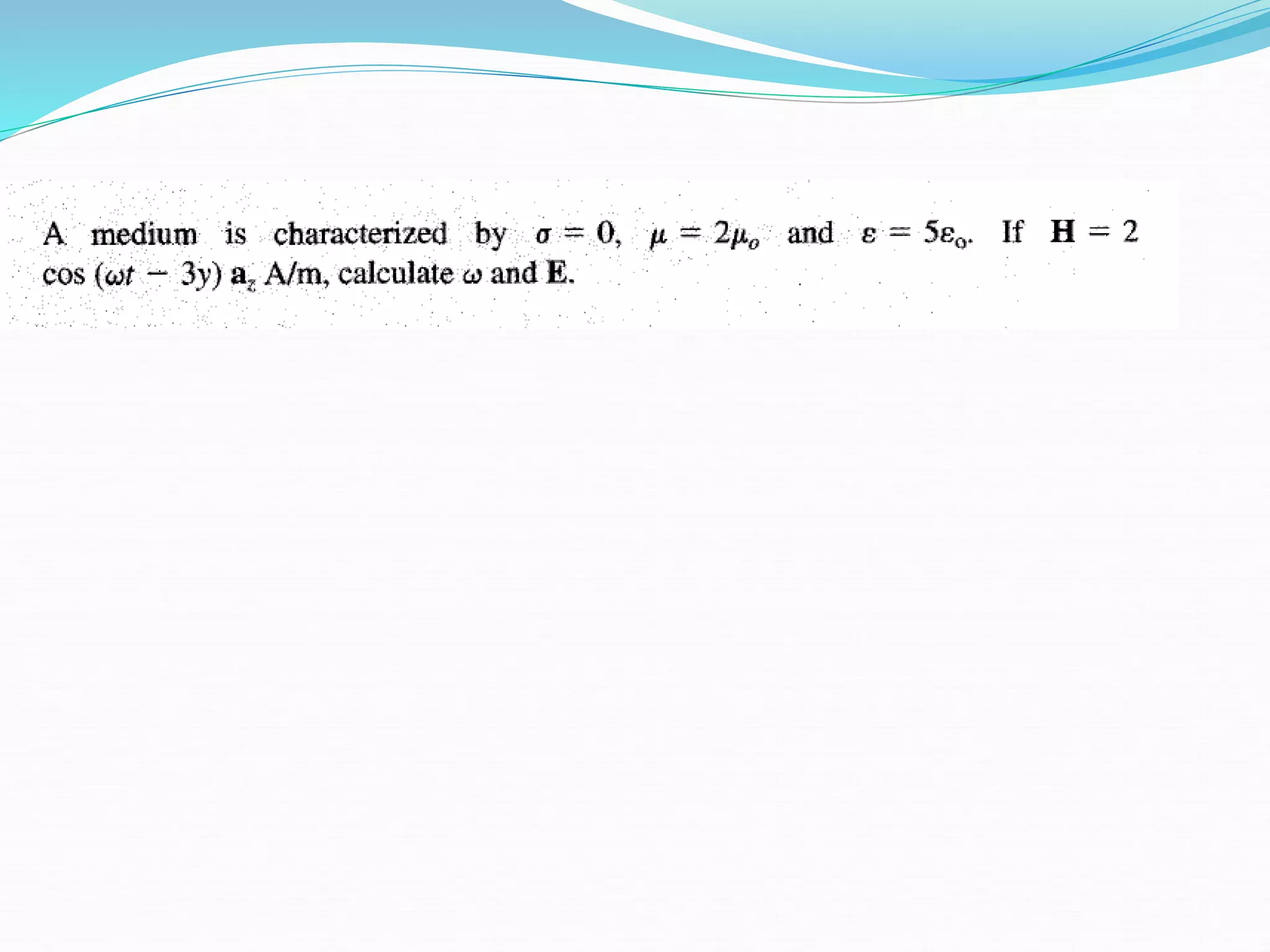
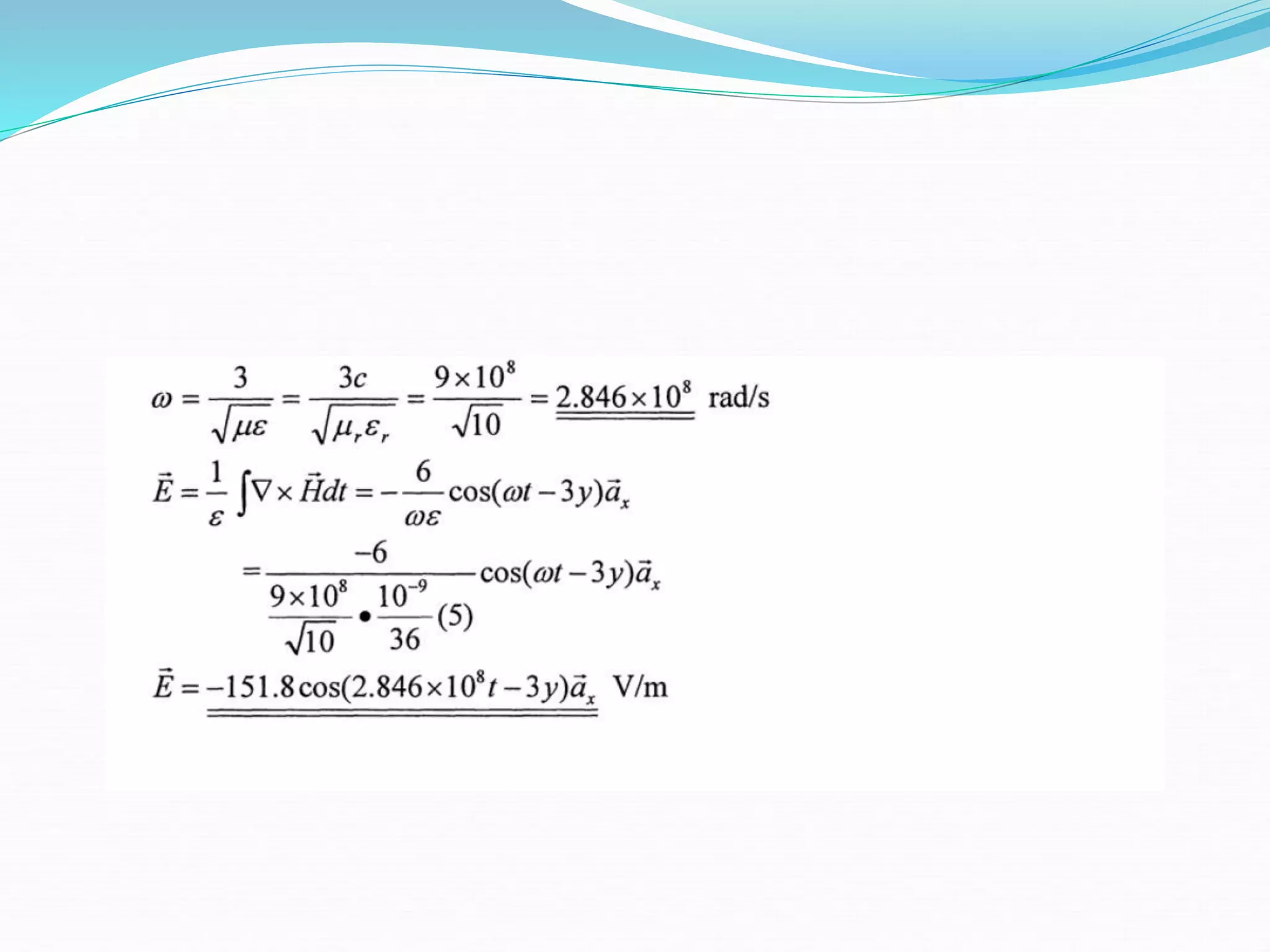
Example
Example
Example
Displacement Current updated  Copy.ppt

Displacement Current updated Copy.ppt

  • 2.
    Books Text Book:  1.PRINCIPLES OF ELECTROMAGNETICS  By - MATTHEW N.O. SADIKU, 4th 2009 OXFORD UNIVERSITY  PRESS, INDIA Reference Book:  1. ELECTROMAGNETIC WAVES AND RADIATING SYSTEMS  By - EDWARD C. JORDAN 5th PRENTICE HALL
  • 3.
    Displacement Current  Inthe previous section, we have essentially reconsidered Maxwell's curl equation for electrostatic fields and modified it for time-varying situations to satisfy Faraday's law. We shall now reconsider Maxwell's curl equation for magnetic fields (Ampere's circuit law) for time-varying conditions.  For static EM fields, we recall that  But the divergence of the curl of any vector field is identically zero,Hence:  The continuity of current in eq. , however, requires that
  • 4.
     Thus boththe eqs are obviously incompatible for time-varying conditions.  We must modify the Ampere Circuit law  To do this, we add a term in the eq. of Amp Circuit law so that it becomes  Where is to be determined and defined. Again, the divergence of the curl of any vector is zero. Hence:
  • 5.
     Substituting inequation  This is Maxwell's equation (based on Ampere's circuit law) for a time-varying field. The term Jd = dD/dt is known as displacement current density and J is the conduction currentdensity ( ).
  • 6.
     Based onthe displacement current density, we define the displacement current as  where I is the current through the conductor and S1 is the flat surface bounded by L.  If we use the balloon-shaped surface S2 that passes between the capacitor plates, as in Figure
  • 8.
     because noconduction current (J = 0) flows through S2  This is contradictory in view of the fact that the same closed path L is used. To resolve the conflict, we need to include the displacement current in Ampere's circuit law. The total current density is  Now the equations remains valid.  So we obtain the same current for either surface though it is conduction current in S1 and displacement current in S2.
  • 9.
  • 12.
  • 14.
     Complex Numbercan be defined as:
  • 21.
  • 23.
  • 24.
     By Multiplyingboth the eqs
  • 25.
     By Dividingboth the equations
  • 26.
  • 28.
  • 30.