Lesson 3
Telling and Asking Times
Lesson Recap

1
Telling Times
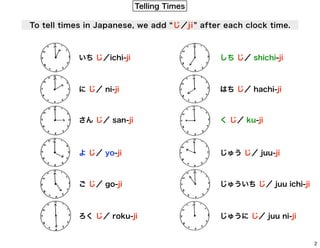
To tell times in Japanese, we add じ/j i after each clock time.

いち じ/ichi-ji

しち じ/ shichi-ji

に じ/ ni-ji

はち じ/ hachi-ji

さん じ/ san-ji

く じ/ ku-ji

よ じ/ yo-ji

じゅう じ/ juu-ji

ご じ/ go-ji

じゅういち じ/ juu ichi-ji

ろく じ/ roku-ji

じゅうに じ/ juu ni-ji

2
How to read minutes
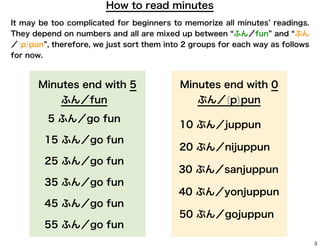
It may be too complicated for beginners to memorize all minutes readings.
They depend on numbers and all are mixed up between ふん/fun and ぷん
/(p)pun , therefore, we just sort them into 2 groups for each way as follows
for now.

Minutes end with 5
ふん/fun
5 ふん/go fun
15 ふん/go fun
25 ふん/go fun
35 ふん/go fun

Minutes end with 0
ぷん/(p)pun
10 ぷん/juppun
20 ぷん/nijuppun
30 ぷん/sanjuppun
40 ぷん/yonjuppun

45 ふん/go fun
50 ぷん/gojuppun
55 ふん/go fun
3
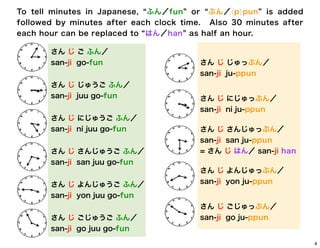
To tell minutes in Japanese, ふん/fun or ぷん/(p)pun is added
followed by minutes after each clock time. Also 30 minutes after
each hour can be replaced to はん/han as half an hour.
さん じ ご ふん/
san-ji go-fun
さん じ じゅうご ふん/
san-ji juu go-fun
さん じ にじゅうご ふん/
san-ji ni juu go-fun
さん じ さんじゅうご ふん/
san-ji san juu go-fun
さん じ よんじゅうご ふん/
san-ji yon juu go-fun
さん じ ごじゅうご ふん/
san-ji go juu go-fun

さん じ じゅっぷん/
san-ji ju-ppun
さん じ にじゅっぷん/
san-ji ni ju-ppun
さん じ さんじゅっぷん/
san-ji san ju-ppun
= さん じ はん/ san-ji han
さん じ よんじゅっぷん/
san-ji yon ju-ppun
さん じ ごじゅっぷん/
san-ji go ju-ppun

4
Telling A.M and P.M. Times
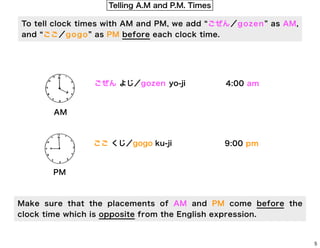
To tell clock times with AM and PM, we add ごぜん/go z en as AM,
and ごご/g og o as PM before each clock time.

ごぜん よじ/gozen yo-ji

4:00 am

ごご くじ/gogo ku-ji

9:00 pm

AM

PM

Make sure that the placements of AM and PM come before the
clock time which is opposite from the English expression.

5
Asking Times
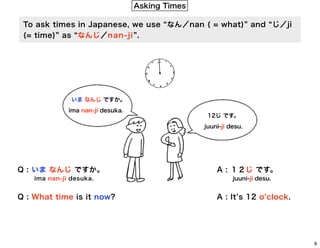
To ask times in Japanese, we use なん/nan ( = what) and じ/ji
(= time) as なんじ/n a n - j i .

いま なんじ ですか。
ima nan-ji desuka.

12じ です。
juuni-ji desu.

Q : いま なんじ ですか。
ima nan-ji desuka.

Q : What time is it now?

A : 12じ です。
juuni-ji desu.

A : It s 12 o clock.

6
Asking and Telling Local Times
To ask local times, add a name of the location with は/wa before the basic
time asking question sentence.
Q:

[ place ]
location は いま なんじ ですか。

What time is it now @location?

wa ima nan-ji desuka.

To answer the local time, add the name of the location with は/wa before
the basic time telling sentence, however, you may omit the location with は/wa
in the answer because it s already mentioned in the question.
A : ([location ]は いま) [ local time ] です。
p lace
local time
wa ima

local
It s [local time ] (@location now).

desu

Q : ロンドンは いま なんじですか。
r on do n w a i m a n a nj i de s uk a

8:30AM

A : (ロンドンは いま) ごぜん 8じ はんです。
ro n do n w a i m a

gozen hachi-ji han desu

Q : What time is it now in London?
A : It s 8:30 AM (in London now).
7
Asking and Telling Event/Service/Business Times
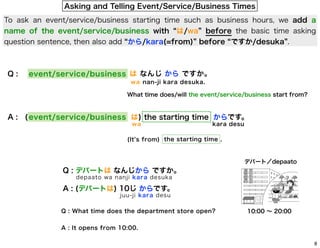
To ask an event/service/business starting time such as business hours, we add a
name of the event/service/business with は/wa before the basic time asking
question sentence, then also add から/kara(=from) before ですか/desuka .

Q:

event/service/business は なんじ から ですか。
w a nan-ji kara desuka.
What time does/will the event/service/business start from?

A : ([ p lace
event/service/business は) the starting time からです。
wa

kara desu

(It s from) the starting time .

デパート/depaato

Q : デパートは なんじから ですか。
depaato wa nanji kara desuka

A : (デパートは) 10じ からです。
juu-ji kara desu
Q : What time does the department store open?

10:00 ∼ 20:00

A : It opens from 10:00.
8
To ask an event/service/business ending/closing time such as business hours, we add
a name of the event/service/business with は/wa before the basic time asking
question sentence, then also add まで/made(=until) before ですか/desuka
instead of . から/kara

Q:

event/service/business は なんじまで ですか。
w a nan-ji made desuka.
Until what time does/will the event/service/business close/end?

A : ([ p lace
event/service/business は) the starting time までです。
wa

made desu

(It s until) the starting time .

デパート/depaato

Q : (デパートは) なんじまで ですか。
(depaato wa) nanji made desuka

A : (デパートは) ごご8じ までです。
gogo hachi-ji made desu
Q : [Until] what time is it open?

10:00 ∼ 20:00

A : It opens till 8:00 p.m.
9
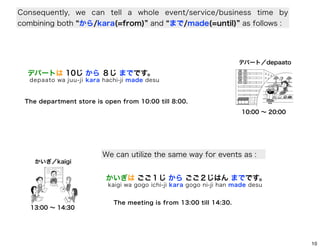
Consequently, we can tell a whole event/service/business time by
combining both から/kara(=from) and まで/made(=until) as follows :

デパート/depaato

デパートは 10じ から 8じ までです。
depaato wa juu-ji kara hachi-ji made desu

The department store is open from 10:00 till 8:00.
10:00 ∼ 20:00

We can utilize the same way for events as :
かいぎ/kaigi

かいぎは ごご1じ から ごご2じはん までです。
kaigi wa gogo ichi-ji kara gogo ni-ji han made desu

13:00 ∼ 14:30

The meeting is from 13:00 till 14:30.

10

Lesson 3 asking & telling time in Japanese grammar_2

  • 1.
    Lesson 3 Telling andAsking Times Lesson Recap 1
  • 2.
    Telling Times To telltimes in Japanese, we add じ/j i after each clock time. いち じ/ichi-ji しち じ/ shichi-ji に じ/ ni-ji はち じ/ hachi-ji さん じ/ san-ji く じ/ ku-ji よ じ/ yo-ji じゅう じ/ juu-ji ご じ/ go-ji じゅういち じ/ juu ichi-ji ろく じ/ roku-ji じゅうに じ/ juu ni-ji 2
  • 3.
    How to readminutes It may be too complicated for beginners to memorize all minutes readings. They depend on numbers and all are mixed up between ふん/fun and ぷん /(p)pun , therefore, we just sort them into 2 groups for each way as follows for now. Minutes end with 5 ふん/fun 5 ふん/go fun 15 ふん/go fun 25 ふん/go fun 35 ふん/go fun Minutes end with 0 ぷん/(p)pun 10 ぷん/juppun 20 ぷん/nijuppun 30 ぷん/sanjuppun 40 ぷん/yonjuppun 45 ふん/go fun 50 ぷん/gojuppun 55 ふん/go fun 3
  • 4.
    To tell minutesin Japanese, ふん/fun or ぷん/(p)pun is added followed by minutes after each clock time. Also 30 minutes after each hour can be replaced to はん/han as half an hour. さん じ ご ふん/ san-ji go-fun さん じ じゅうご ふん/ san-ji juu go-fun さん じ にじゅうご ふん/ san-ji ni juu go-fun さん じ さんじゅうご ふん/ san-ji san juu go-fun さん じ よんじゅうご ふん/ san-ji yon juu go-fun さん じ ごじゅうご ふん/ san-ji go juu go-fun さん じ じゅっぷん/ san-ji ju-ppun さん じ にじゅっぷん/ san-ji ni ju-ppun さん じ さんじゅっぷん/ san-ji san ju-ppun = さん じ はん/ san-ji han さん じ よんじゅっぷん/ san-ji yon ju-ppun さん じ ごじゅっぷん/ san-ji go ju-ppun 4
  • 5.
    Telling A.M andP.M. Times To tell clock times with AM and PM, we add ごぜん/go z en as AM, and ごご/g og o as PM before each clock time. ごぜん よじ/gozen yo-ji 4:00 am ごご くじ/gogo ku-ji 9:00 pm AM PM Make sure that the placements of AM and PM come before the clock time which is opposite from the English expression. 5
  • 6.
    Asking Times To asktimes in Japanese, we use なん/nan ( = what) and じ/ji (= time) as なんじ/n a n - j i . いま なんじ ですか。 ima nan-ji desuka. 12じ です。 juuni-ji desu. Q : いま なんじ ですか。 ima nan-ji desuka. Q : What time is it now? A : 12じ です。 juuni-ji desu. A : It s 12 o clock. 6
  • 7.
    Asking and TellingLocal Times To ask local times, add a name of the location with は/wa before the basic time asking question sentence. Q: [ place ] location は いま なんじ ですか。 What time is it now @location? wa ima nan-ji desuka. To answer the local time, add the name of the location with は/wa before the basic time telling sentence, however, you may omit the location with は/wa in the answer because it s already mentioned in the question. A : ([location ]は いま) [ local time ] です。 p lace local time wa ima local It s [local time ] (@location now). desu Q : ロンドンは いま なんじですか。 r on do n w a i m a n a nj i de s uk a 8:30AM A : (ロンドンは いま) ごぜん 8じ はんです。 ro n do n w a i m a gozen hachi-ji han desu Q : What time is it now in London? A : It s 8:30 AM (in London now). 7
  • 8.
    Asking and TellingEvent/Service/Business Times To ask an event/service/business starting time such as business hours, we add a name of the event/service/business with は/wa before the basic time asking question sentence, then also add から/kara(=from) before ですか/desuka . Q: event/service/business は なんじ から ですか。 w a nan-ji kara desuka. What time does/will the event/service/business start from? A : ([ p lace event/service/business は) the starting time からです。 wa kara desu (It s from) the starting time . デパート/depaato Q : デパートは なんじから ですか。 depaato wa nanji kara desuka A : (デパートは) 10じ からです。 juu-ji kara desu Q : What time does the department store open? 10:00 ∼ 20:00 A : It opens from 10:00. 8
  • 9.
    To ask anevent/service/business ending/closing time such as business hours, we add a name of the event/service/business with は/wa before the basic time asking question sentence, then also add まで/made(=until) before ですか/desuka instead of . から/kara Q: event/service/business は なんじまで ですか。 w a nan-ji made desuka. Until what time does/will the event/service/business close/end? A : ([ p lace event/service/business は) the starting time までです。 wa made desu (It s until) the starting time . デパート/depaato Q : (デパートは) なんじまで ですか。 (depaato wa) nanji made desuka A : (デパートは) ごご8じ までです。 gogo hachi-ji made desu Q : [Until] what time is it open? 10:00 ∼ 20:00 A : It opens till 8:00 p.m. 9
  • 10.
    Consequently, we cantell a whole event/service/business time by combining both から/kara(=from) and まで/made(=until) as follows : デパート/depaato デパートは 10じ から 8じ までです。 depaato wa juu-ji kara hachi-ji made desu The department store is open from 10:00 till 8:00. 10:00 ∼ 20:00 We can utilize the same way for events as : かいぎ/kaigi かいぎは ごご1じ から ごご2じはん までです。 kaigi wa gogo ichi-ji kara gogo ni-ji han made desu 13:00 ∼ 14:30 The meeting is from 13:00 till 14:30. 10