Selective catalytic reduction (SCR)
A SEMINAR REPORT
Submitted by
ANIKET B. YADAV
Guided by
PROF. A. R. YADGIRE
DEPARTMENT OF AUTOMOBILE ENGG , GOVT.
POLY , NAGPUR
INDEX
1. INTRODUCTION
2. LAYOUT OF EXHAUST GAS
3. COMPONISTS USE IN SCR
4. CONSTRUSTION
5. OPERATION
6. REACTION ON SCR
7. ADVANTAGES
8. DIS ADVANTAGES
9. RESULT
INTRODUCTION
• The new clean diesel system involves three pieces: cleaner diesel
fuel, lower-emitting diesel engines and advanced emissions control
devices.
• Selective Catalytic Reduction (SCR) is one of the latest
technologies designed to further reduce emissions of nitrogen oxides
and to meet stringent new air quality regulations.
• SCR technology is one of the most cost-effective and fuel-efficient
technologies available to help reduce emissions.
• SCR can reduce NOx emissions up to 90 percent while
simultaneously reducing HC and CO emissions by 50-90
percent, and PM emissions by 30-50 percent.
• SCR systems can also be combined with a diesel particulate
filter to achieve even greater emission reductions for PM.
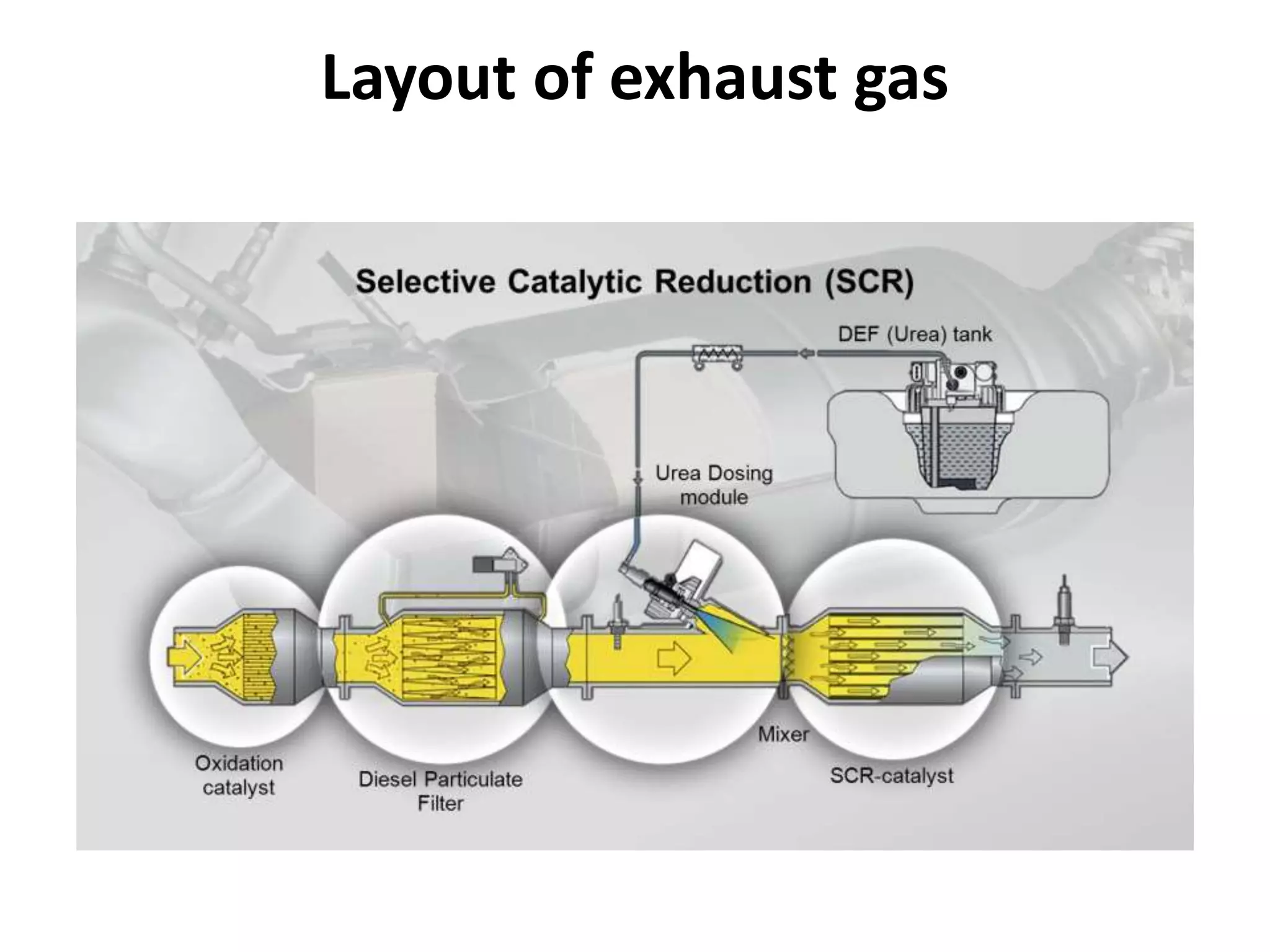
Layout of exhaust gas
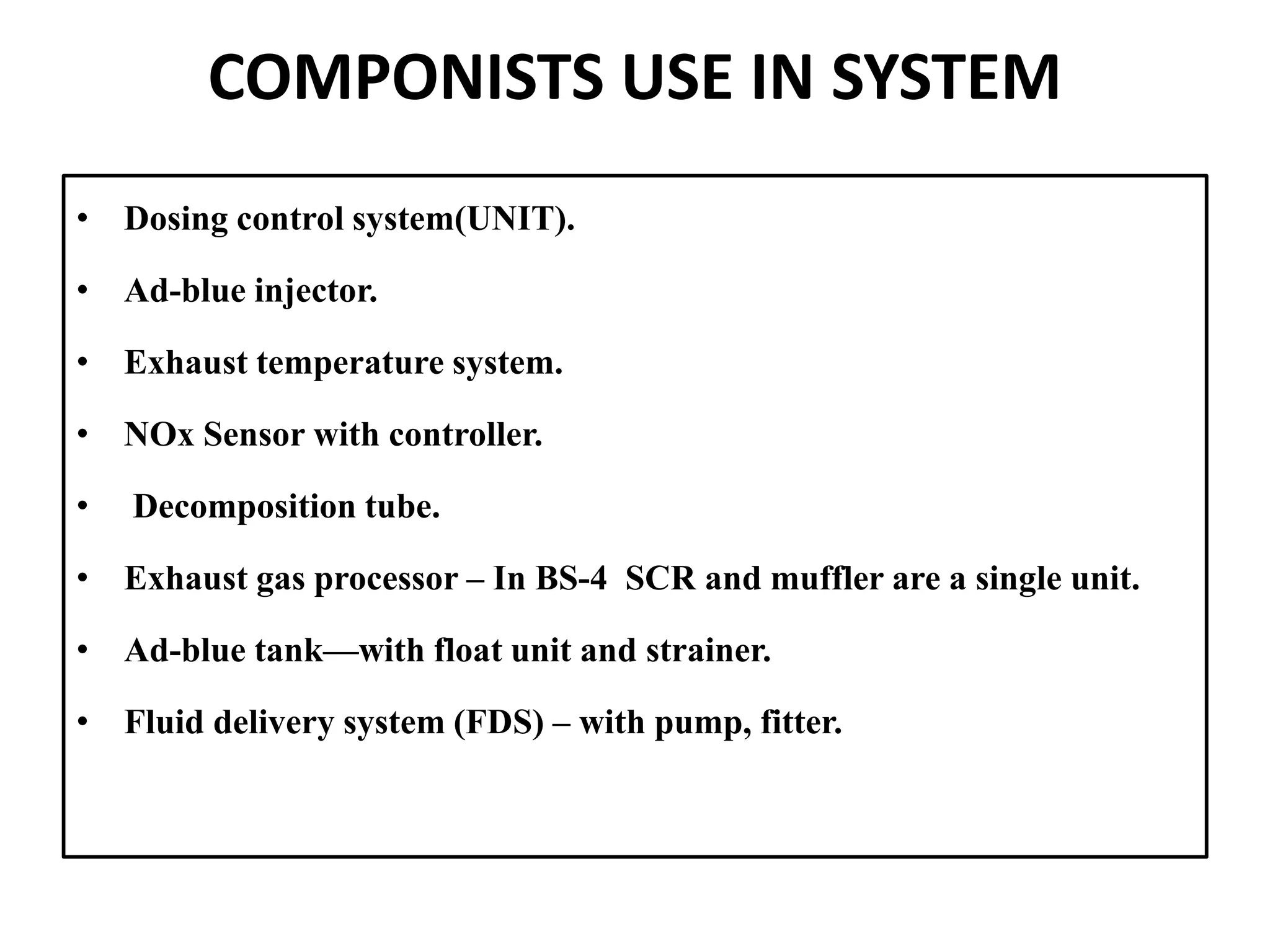
COMPONISTS USE IN SYSTEM
• Dosing control system(UNIT).
• Ad-blue injector.
• Exhaust temperature system.
• NOx Sensor with controller.
• Decomposition tube.
• Exhaust gas processor – In BS-4 SCR and muffler are a single unit.
• Ad-blue tank—with float unit and strainer.
• Fluid delivery system (FDS) – with pump, fitter.
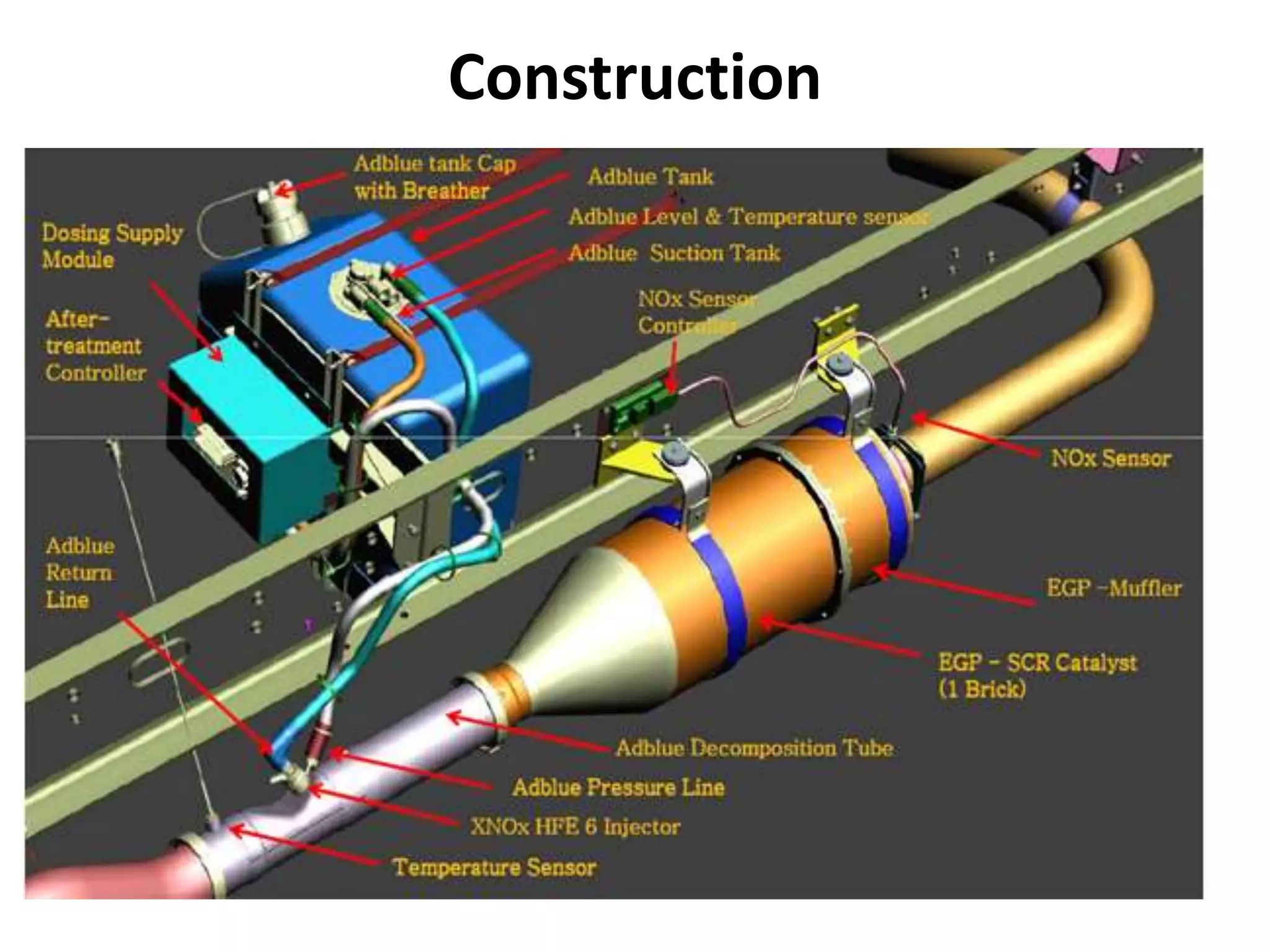
Construction
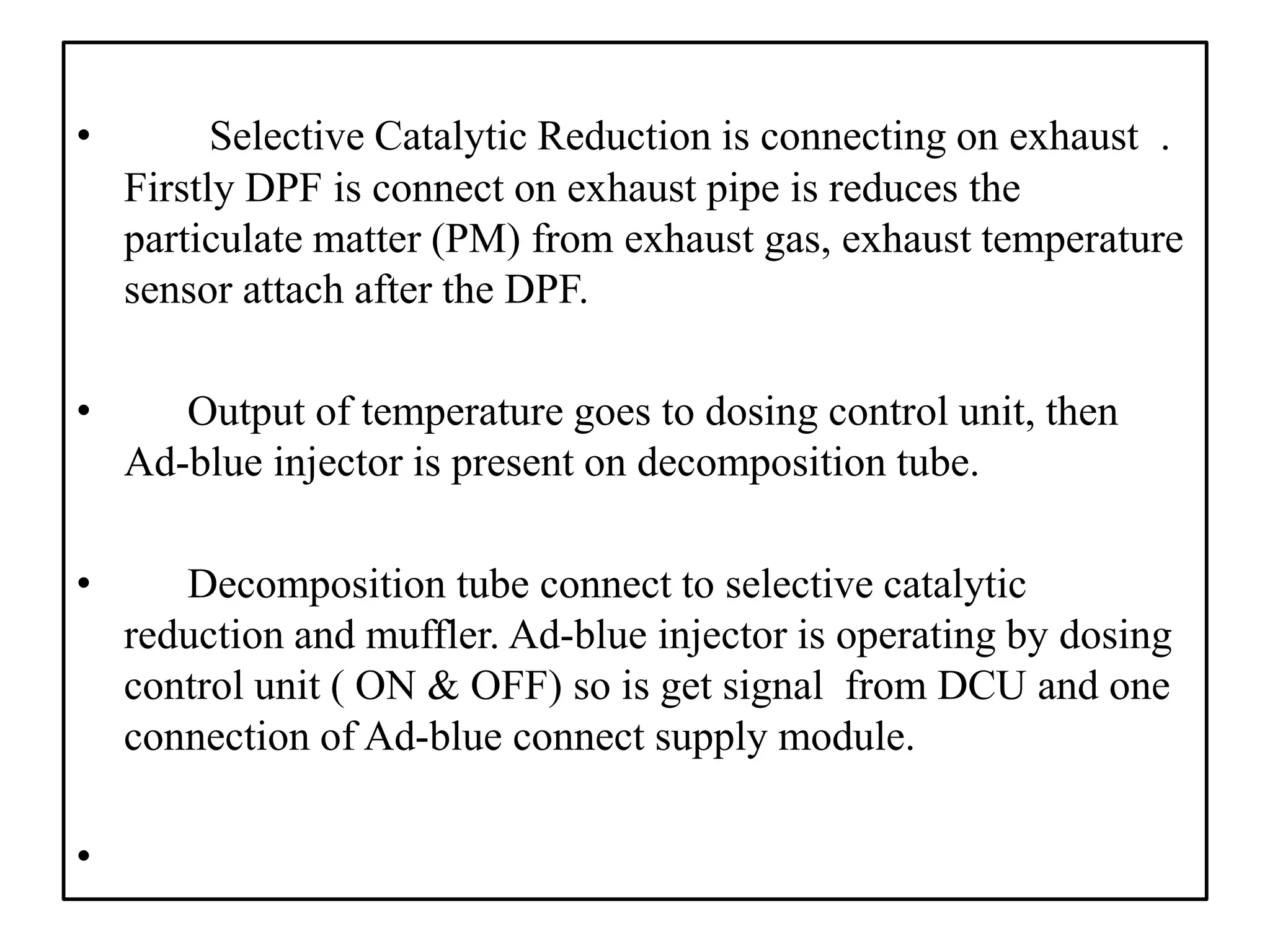
• Selective Catalytic Reduction is connecting on exhaust .
Firstly DPF is connect on exhaust pipe is reduces the
particulate matter (PM) from exhaust gas, exhaust temperature
sensor attach after the DPF.
• Output of temperature goes to dosing control unit, then
Ad-blue injector is present on decomposition tube.
• Decomposition tube connect to selective catalytic
reduction and muffler. Ad-blue injector is operating by dosing
control unit ( ON & OFF) so is get signal from DCU and one
connection of Ad-blue connect supply module.
•
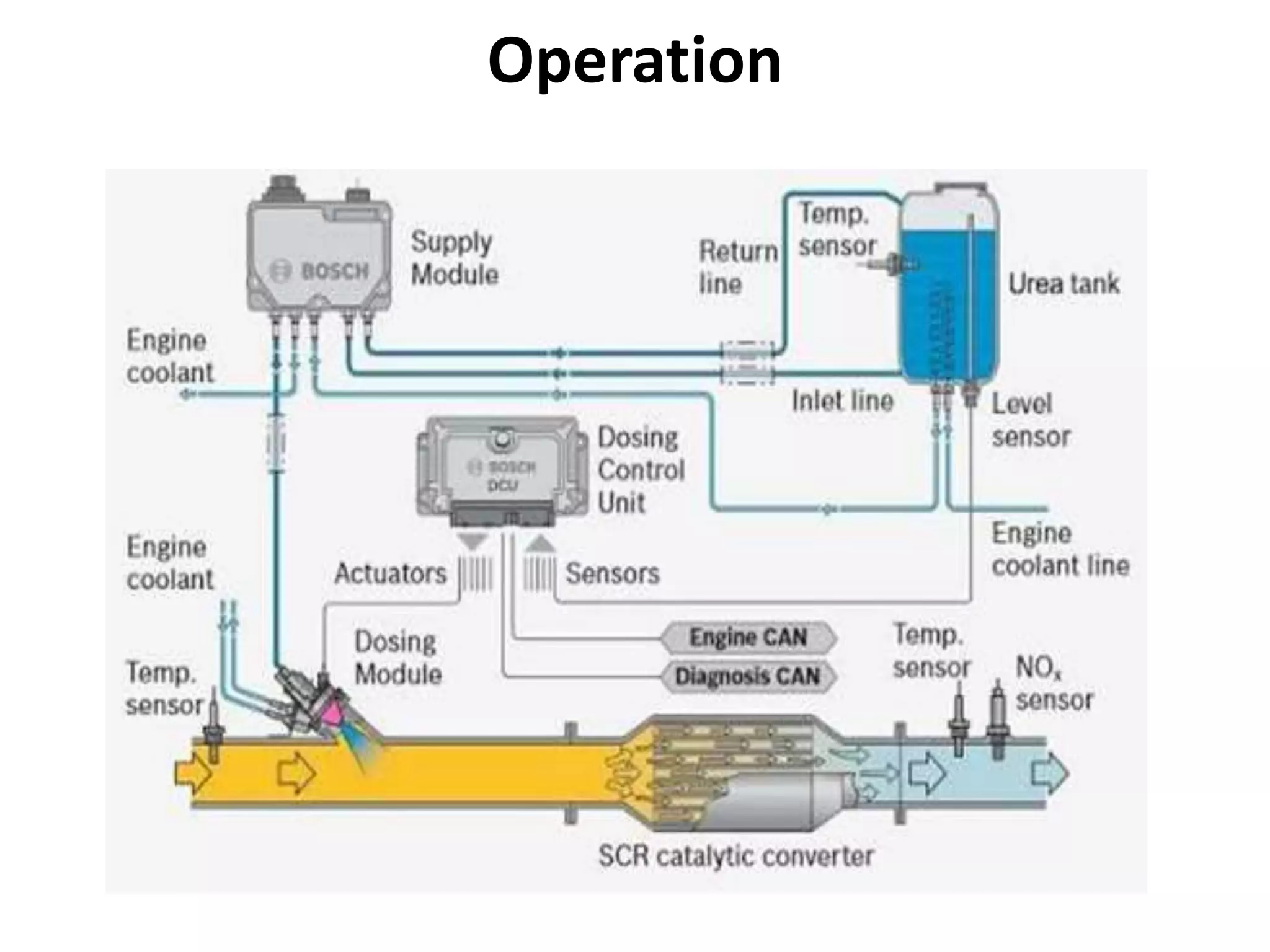
• Internal structure of SCR look like a honeycome like
shape and it made of penta vanadium.
• The catalyst used in the converter is mostly a precious metal
such as platinum, palladium and rhodium.
• Platinum is used as a reduction catalyst and as an
oxidation catalyst. After SCR again temperature sensor is
present then NOx Sensor connecting on exhaust pipe. Then
output of both sensor is goes on dosing control unit and
electronic control unit.
Operation
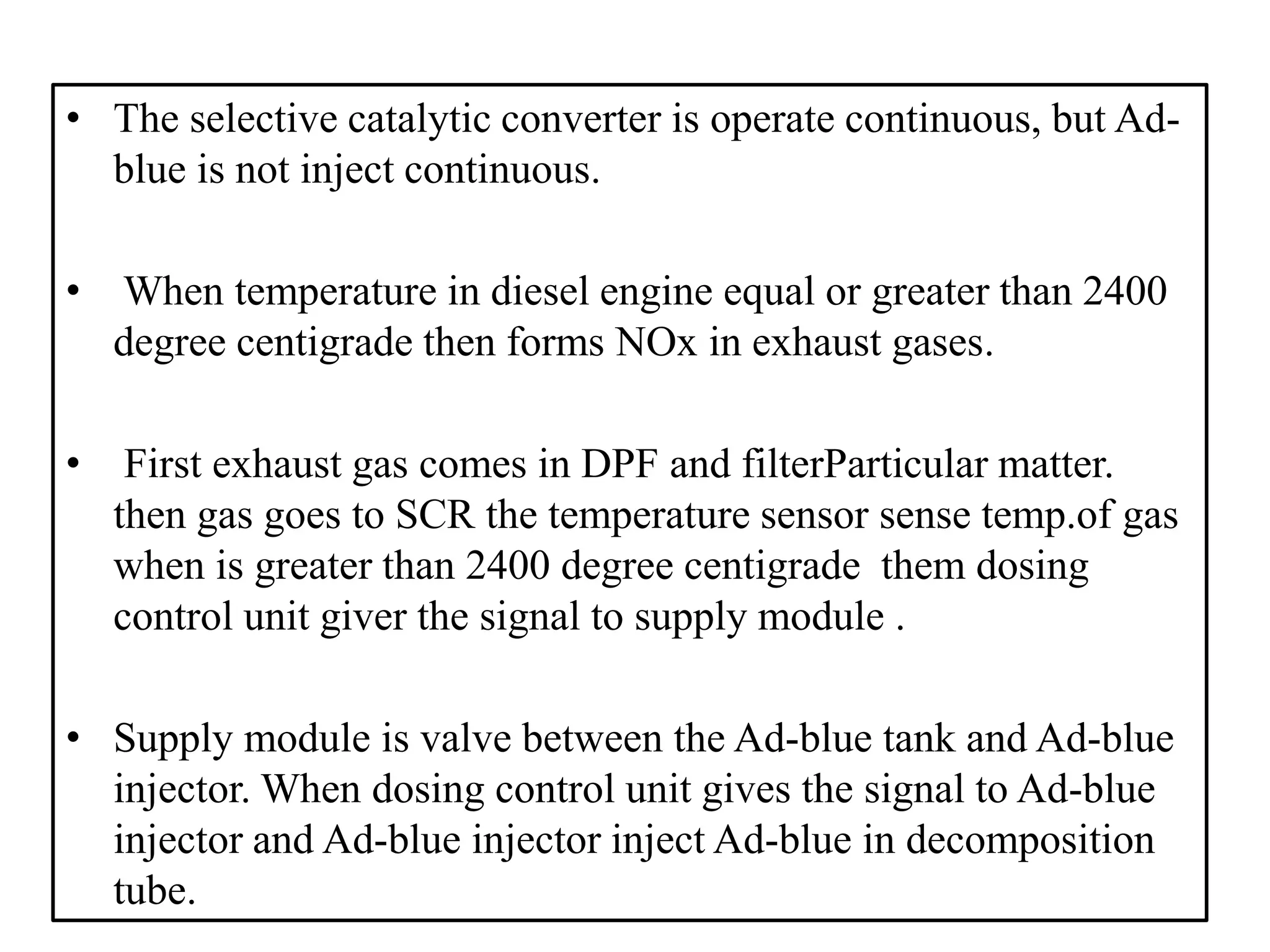
• The selective catalytic converter is operate continuous, but Ad-
blue is not inject continuous.
• When temperature in diesel engine equal or greater than 2400
degree centigrade then forms NOx in exhaust gases.
• First exhaust gas comes in DPF and filterParticular matter.
then gas goes to SCR the temperature sensor sense temp.of gas
when is greater than 2400 degree centigrade them dosing
control unit giver the signal to supply module .
• Supply module is valve between the Ad-blue tank and Ad-blue
injector. When dosing control unit gives the signal to Ad-blue
injector and Ad-blue injector inject Ad-blue in decomposition
tube.
• Then Ad-blue and exhaust gases is combine in decomposition
tube and enter in SCR. In SCR catalyst present by using that
reaction is carries in SCR and in that converts the harmful
gases to harmless gases.
• After completion reaction gases leaves SCR and temperature
and NOx sensor sense the temperature and amount of NOx is
going on atmosphere. And gives information to dosing control
unit.
Reaction on SCR
(1) 6NO + 4NH3 → 5N2 + 6H2O
(2) 4NO + 4NH3 + O2 → 4N2 + 6H2O
(3) 6NO2 + 8NH3 → 7N2 + 12H2O
(4) 2NO2 + 4NH3 + O2 → 3N2 + 6H2O
(5) NO + NO2 + 2NH3 → 2N2 + 3H2O
Advantages:
• Higher NOx reductions than low-NOx burners and
Selective Non-Catalytic Reduction (SNCR).
• Applicable to sources with low NOx concentrations.
• Reactions occur within a lower and broader temperature
range than SNCR.
• Does not require modifications to the combustion unit.
Disadvantages:
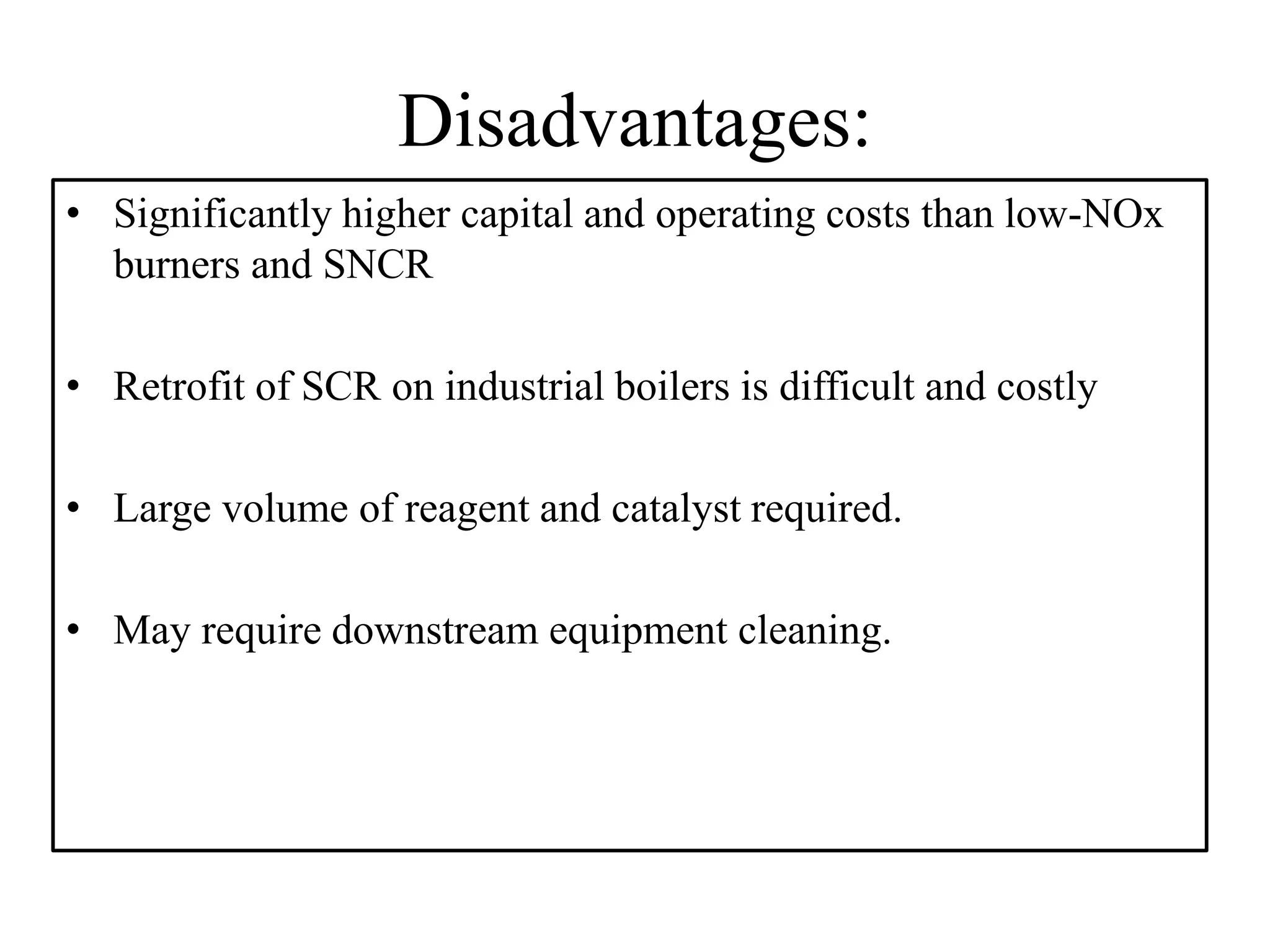
• Significantly higher capital and operating costs than low-NOx
burners and SNCR
• Retrofit of SCR on industrial boilers is difficult and costly
• Large volume of reagent and catalyst required.
• May require downstream equipment cleaning.
RASULT
COMPARISON BETWEEN BS-3 AND BS-4 ON POLLUTANT
0
1
2
3
4
5
BS-3 BS-4
HC
CO
Nox
PM
POLLUTANT BS-3 BS-4
HC (gm/kg-hr) 0.66 0.46
CO (gm/kg-hr) 2.1 1.5
Nox (gm/kg-hr) 5 3.5
PM (gm/kg-hr) 0.1 0.02

Selective catalytic reduction (scr)

  • 1.
    Selective catalytic reduction(SCR) A SEMINAR REPORT Submitted by ANIKET B. YADAV Guided by PROF. A. R. YADGIRE DEPARTMENT OF AUTOMOBILE ENGG , GOVT. POLY , NAGPUR
  • 2.
    INDEX 1. INTRODUCTION 2. LAYOUTOF EXHAUST GAS 3. COMPONISTS USE IN SCR 4. CONSTRUSTION 5. OPERATION 6. REACTION ON SCR 7. ADVANTAGES 8. DIS ADVANTAGES 9. RESULT
  • 3.
    INTRODUCTION • The newclean diesel system involves three pieces: cleaner diesel fuel, lower-emitting diesel engines and advanced emissions control devices. • Selective Catalytic Reduction (SCR) is one of the latest technologies designed to further reduce emissions of nitrogen oxides and to meet stringent new air quality regulations. • SCR technology is one of the most cost-effective and fuel-efficient technologies available to help reduce emissions.
  • 4.
    • SCR canreduce NOx emissions up to 90 percent while simultaneously reducing HC and CO emissions by 50-90 percent, and PM emissions by 30-50 percent. • SCR systems can also be combined with a diesel particulate filter to achieve even greater emission reductions for PM.
  • 5.
  • 6.
    COMPONISTS USE INSYSTEM • Dosing control system(UNIT). • Ad-blue injector. • Exhaust temperature system. • NOx Sensor with controller. • Decomposition tube. • Exhaust gas processor – In BS-4 SCR and muffler are a single unit. • Ad-blue tank—with float unit and strainer. • Fluid delivery system (FDS) – with pump, fitter.
  • 7.
  • 8.
    • Selective CatalyticReduction is connecting on exhaust . Firstly DPF is connect on exhaust pipe is reduces the particulate matter (PM) from exhaust gas, exhaust temperature sensor attach after the DPF. • Output of temperature goes to dosing control unit, then Ad-blue injector is present on decomposition tube. • Decomposition tube connect to selective catalytic reduction and muffler. Ad-blue injector is operating by dosing control unit ( ON & OFF) so is get signal from DCU and one connection of Ad-blue connect supply module. •
  • 9.
    • Internal structureof SCR look like a honeycome like shape and it made of penta vanadium. • The catalyst used in the converter is mostly a precious metal such as platinum, palladium and rhodium. • Platinum is used as a reduction catalyst and as an oxidation catalyst. After SCR again temperature sensor is present then NOx Sensor connecting on exhaust pipe. Then output of both sensor is goes on dosing control unit and electronic control unit.
  • 10.
  • 11.
    • The selectivecatalytic converter is operate continuous, but Ad- blue is not inject continuous. • When temperature in diesel engine equal or greater than 2400 degree centigrade then forms NOx in exhaust gases. • First exhaust gas comes in DPF and filterParticular matter. then gas goes to SCR the temperature sensor sense temp.of gas when is greater than 2400 degree centigrade them dosing control unit giver the signal to supply module . • Supply module is valve between the Ad-blue tank and Ad-blue injector. When dosing control unit gives the signal to Ad-blue injector and Ad-blue injector inject Ad-blue in decomposition tube.
  • 12.
    • Then Ad-blueand exhaust gases is combine in decomposition tube and enter in SCR. In SCR catalyst present by using that reaction is carries in SCR and in that converts the harmful gases to harmless gases. • After completion reaction gases leaves SCR and temperature and NOx sensor sense the temperature and amount of NOx is going on atmosphere. And gives information to dosing control unit.
  • 13.
    Reaction on SCR (1)6NO + 4NH3 → 5N2 + 6H2O (2) 4NO + 4NH3 + O2 → 4N2 + 6H2O (3) 6NO2 + 8NH3 → 7N2 + 12H2O (4) 2NO2 + 4NH3 + O2 → 3N2 + 6H2O (5) NO + NO2 + 2NH3 → 2N2 + 3H2O
  • 14.
    Advantages: • Higher NOxreductions than low-NOx burners and Selective Non-Catalytic Reduction (SNCR). • Applicable to sources with low NOx concentrations. • Reactions occur within a lower and broader temperature range than SNCR. • Does not require modifications to the combustion unit.
  • 15.
    Disadvantages: • Significantly highercapital and operating costs than low-NOx burners and SNCR • Retrofit of SCR on industrial boilers is difficult and costly • Large volume of reagent and catalyst required. • May require downstream equipment cleaning.
  • 16.
    RASULT COMPARISON BETWEEN BS-3AND BS-4 ON POLLUTANT 0 1 2 3 4 5 BS-3 BS-4 HC CO Nox PM POLLUTANT BS-3 BS-4 HC (gm/kg-hr) 0.66 0.46 CO (gm/kg-hr) 2.1 1.5 Nox (gm/kg-hr) 5 3.5 PM (gm/kg-hr) 0.1 0.02