





1-to-1
  Pedagogy:

  Curriculum for the
21st Century Classroom
                  Dr. Leigh Zeitz         Dr. Ping Gao
              University of Northern Iowa University of Northern Iowa
                                          PingGao@ uni.edu
                    zeitz@ uni.edu
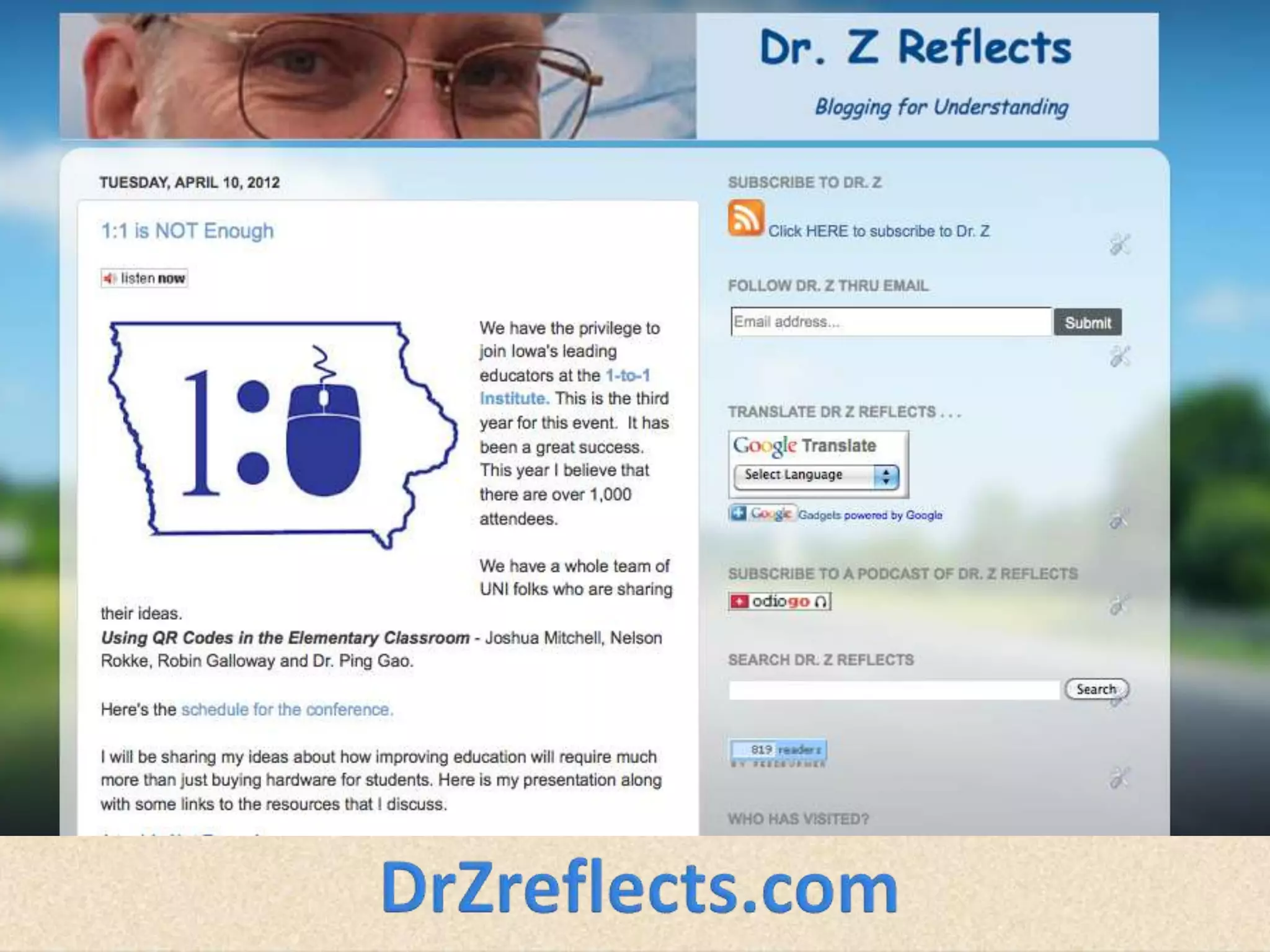
                   Drzreflects.com
Let’s tweet
     our comments.


#UNItopics
Tell Us About Yourself
• Profession?
  – teacher, administrator, st
    udent, parent, ????
• City and State
• 1-1 experience?
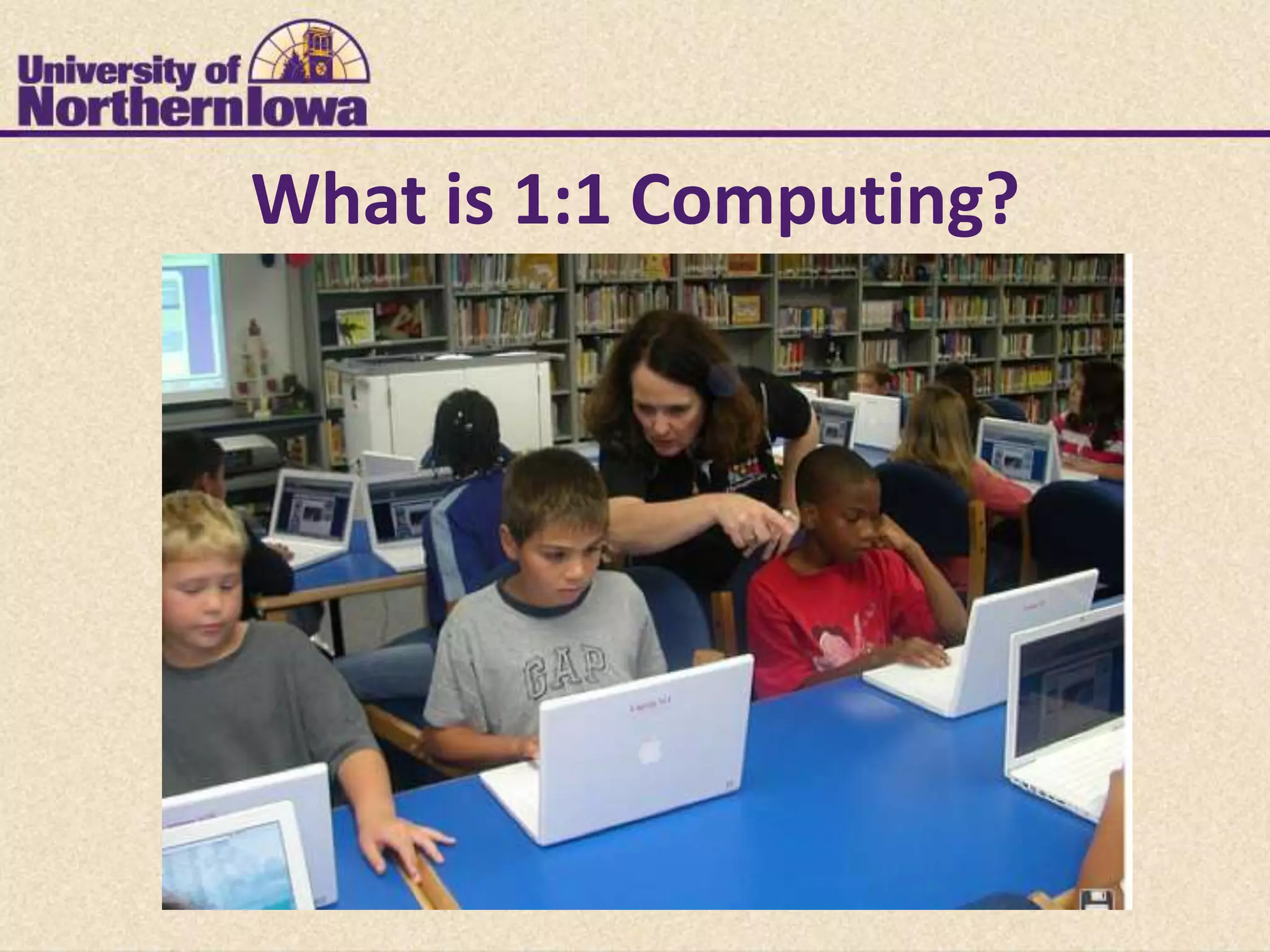
What is 1:1 Computing?
Where is 1:1 Computing?


 Research reviewed over 1,000
 1:1 learning environments
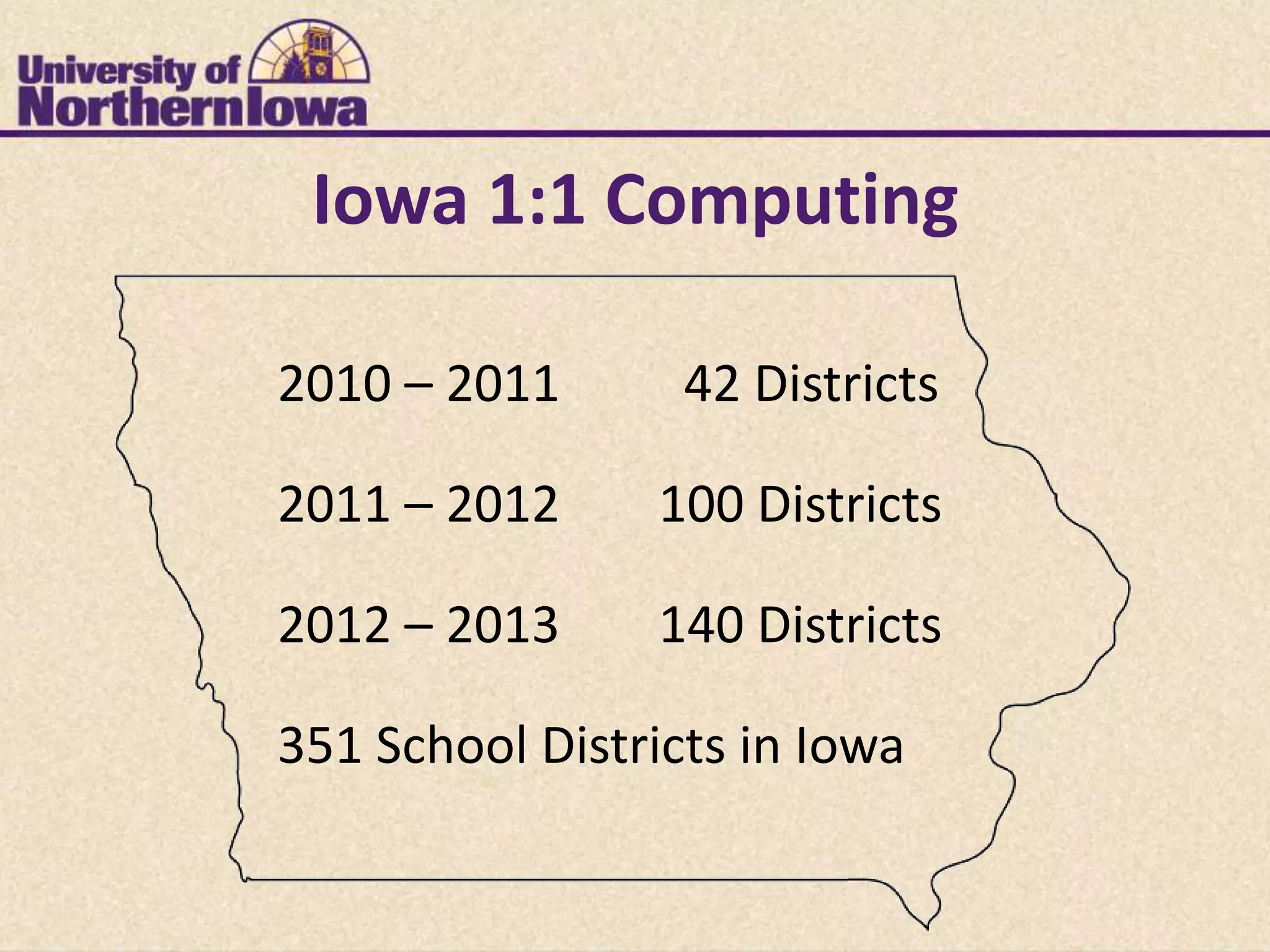
Iowa 1:1 Computing

2010 – 2011       42 Districts

2011 – 2012     100 Districts

2012 – 2013     140 Districts

351 School Districts in Iowa
Why 1:1?
Academic Performance
• Maine
  – After 5 years: Little effect
  – Writing up 3.4 points out of 80 points
• Michigan
  – 4 higher, 3 lower, 1 no difference
• Texas
  – Math slightly higher
  – Reading the same
  – Writing slightly lower.
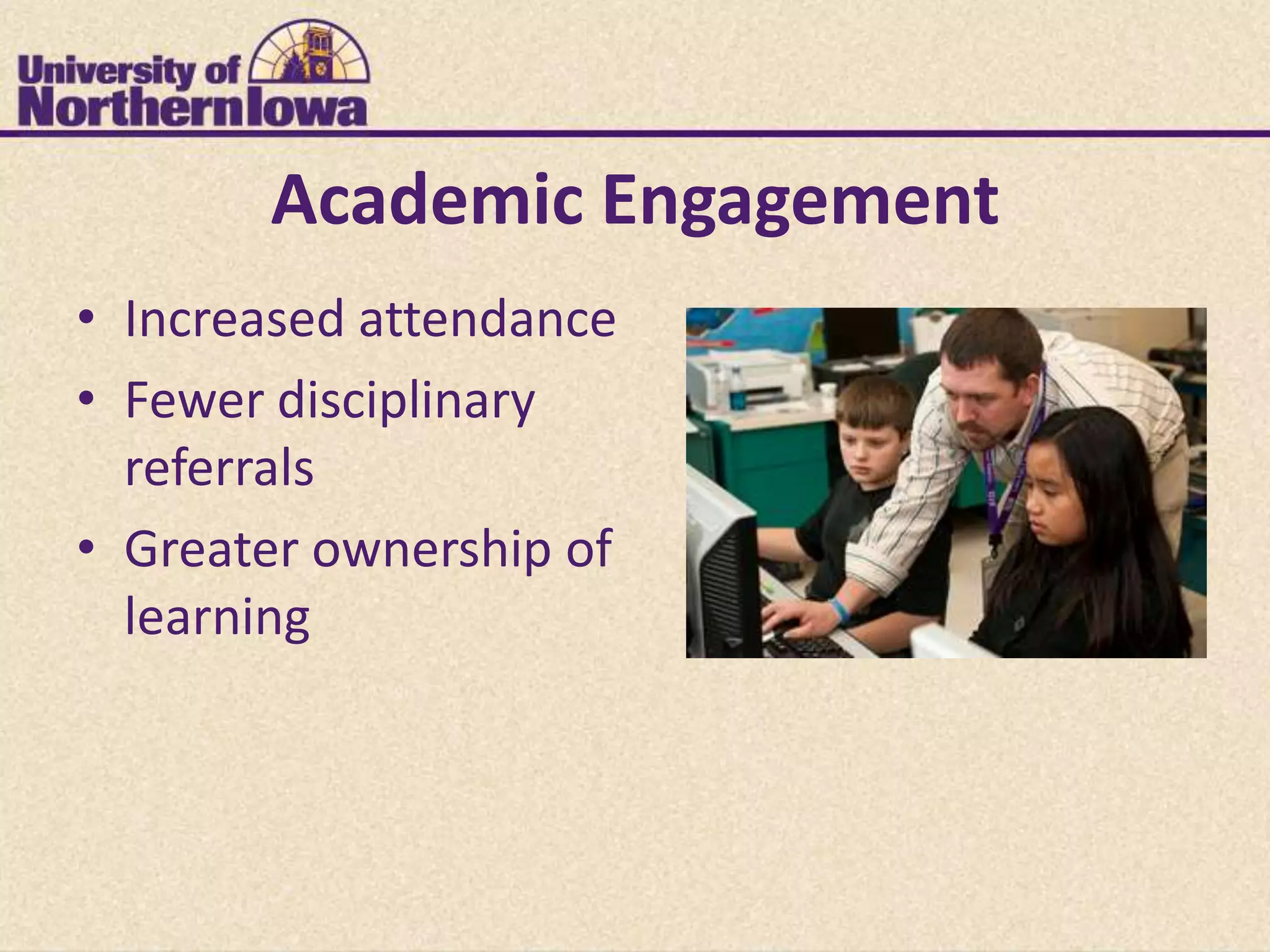
Academic Engagement
• Increased attendance
• Fewer disciplinary
  referrals
• Greater ownership of
  learning
How Does It Work?
• Puts power in hands of the students

• Provides access to digital resources
• Encourages collaboration

• Facilitates problem-based learning

• Allows for differentiated learning
AreLaptops the Answer?


It all Depends . . .
It Depends Upon . . .
• Hardware

• Administrative Leadership
• Teachers’ Attitudes and Beliefs

• Digital Pedagogy

• Professional Development
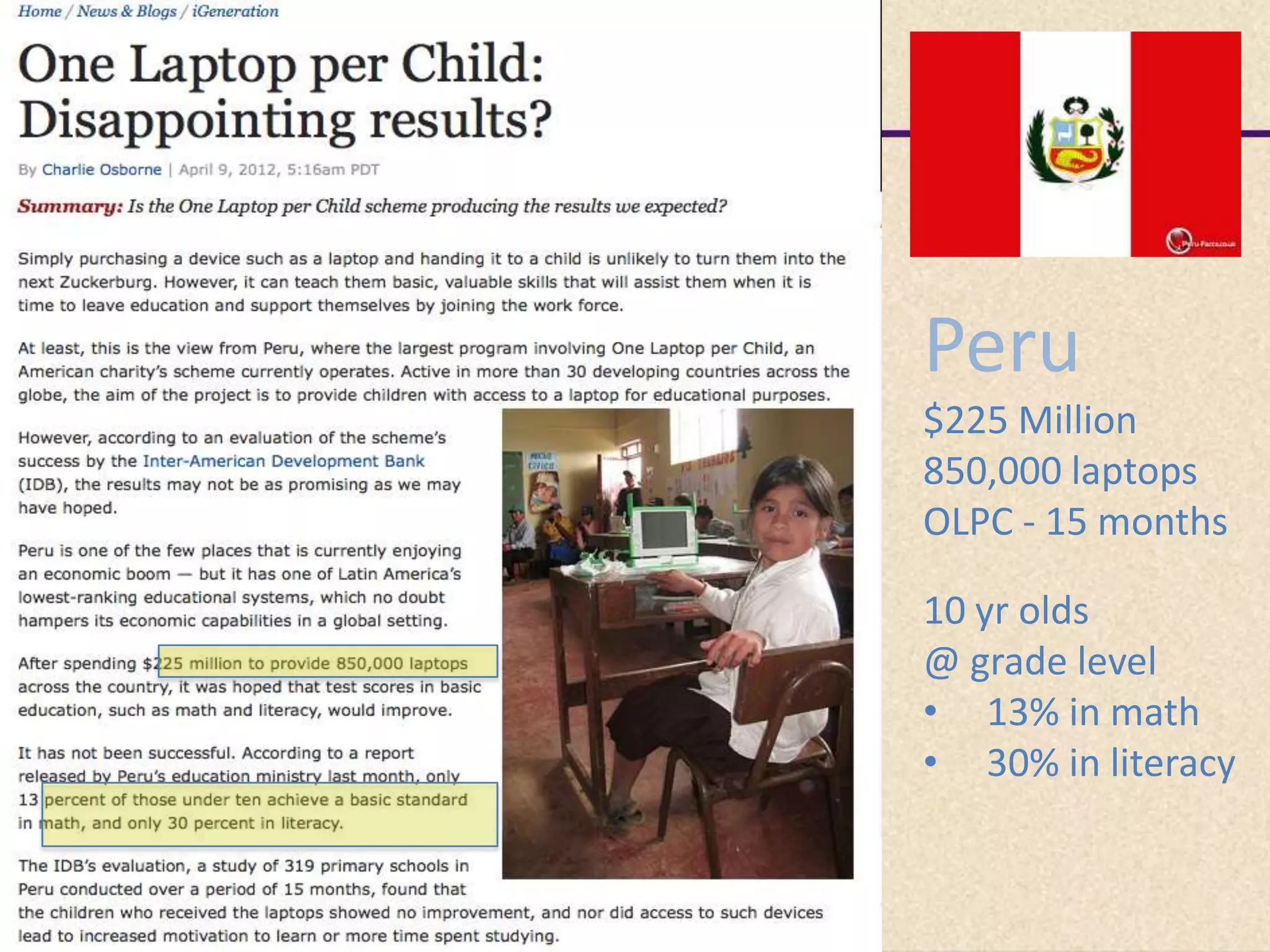
Peru
$225 Million
850,000 laptops
OLPC - 15 months

10 yr olds
@ grade level
• 13% in math
• 30% in literacy
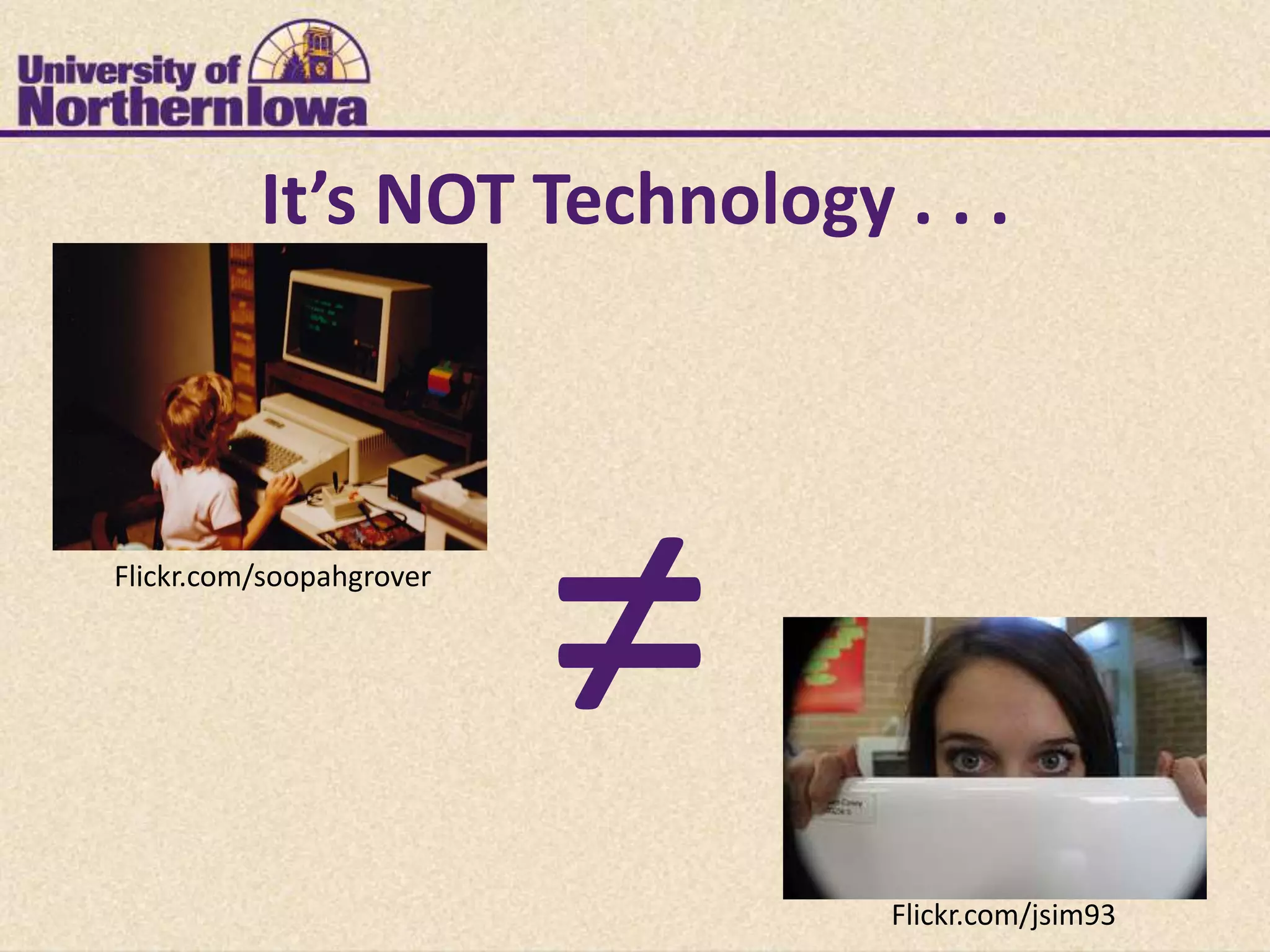
It’s NOT Technology . . .


Flickr.com/soopahgrover


                          ≠
                               Flickr.com/jsim93
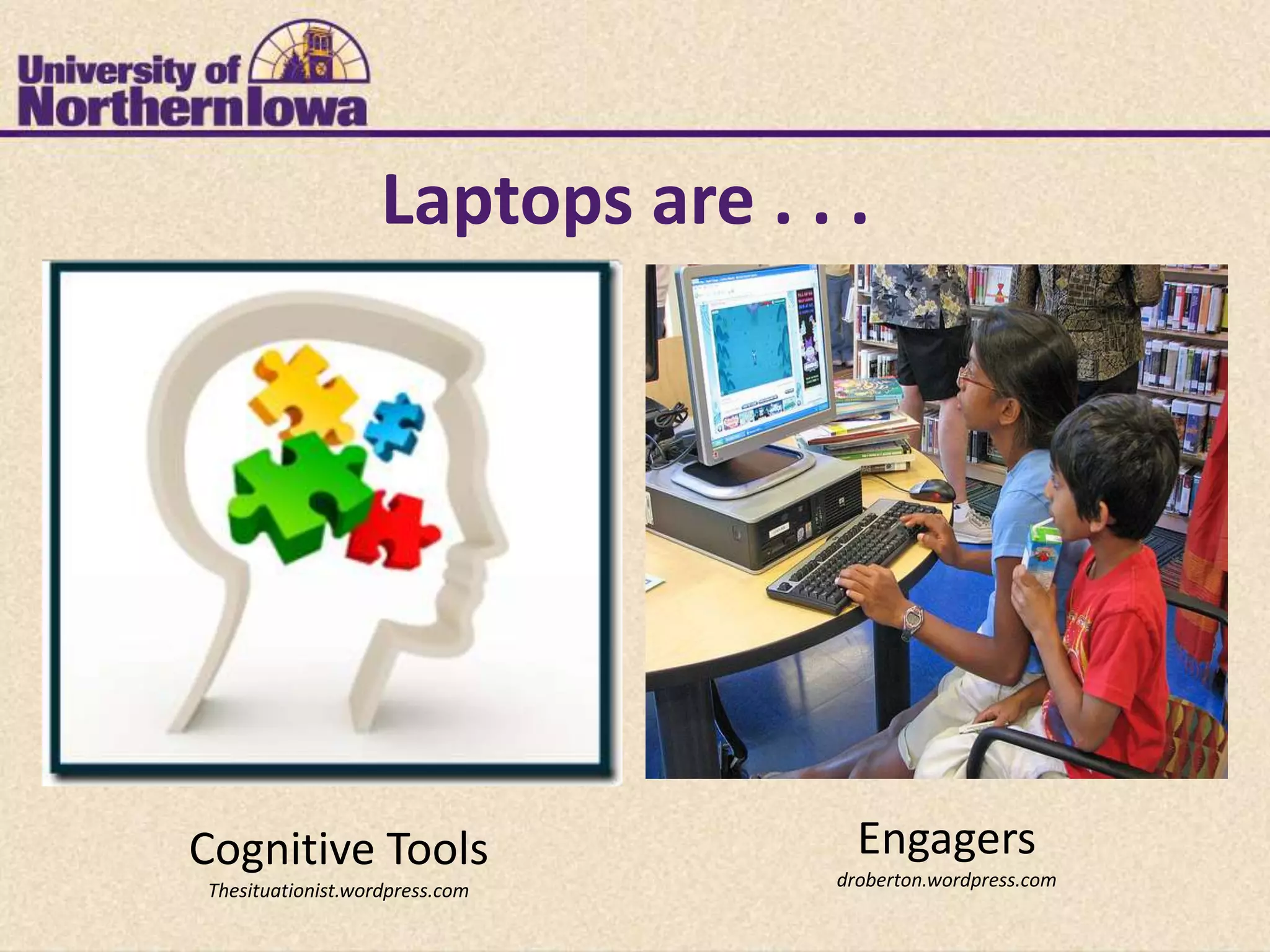
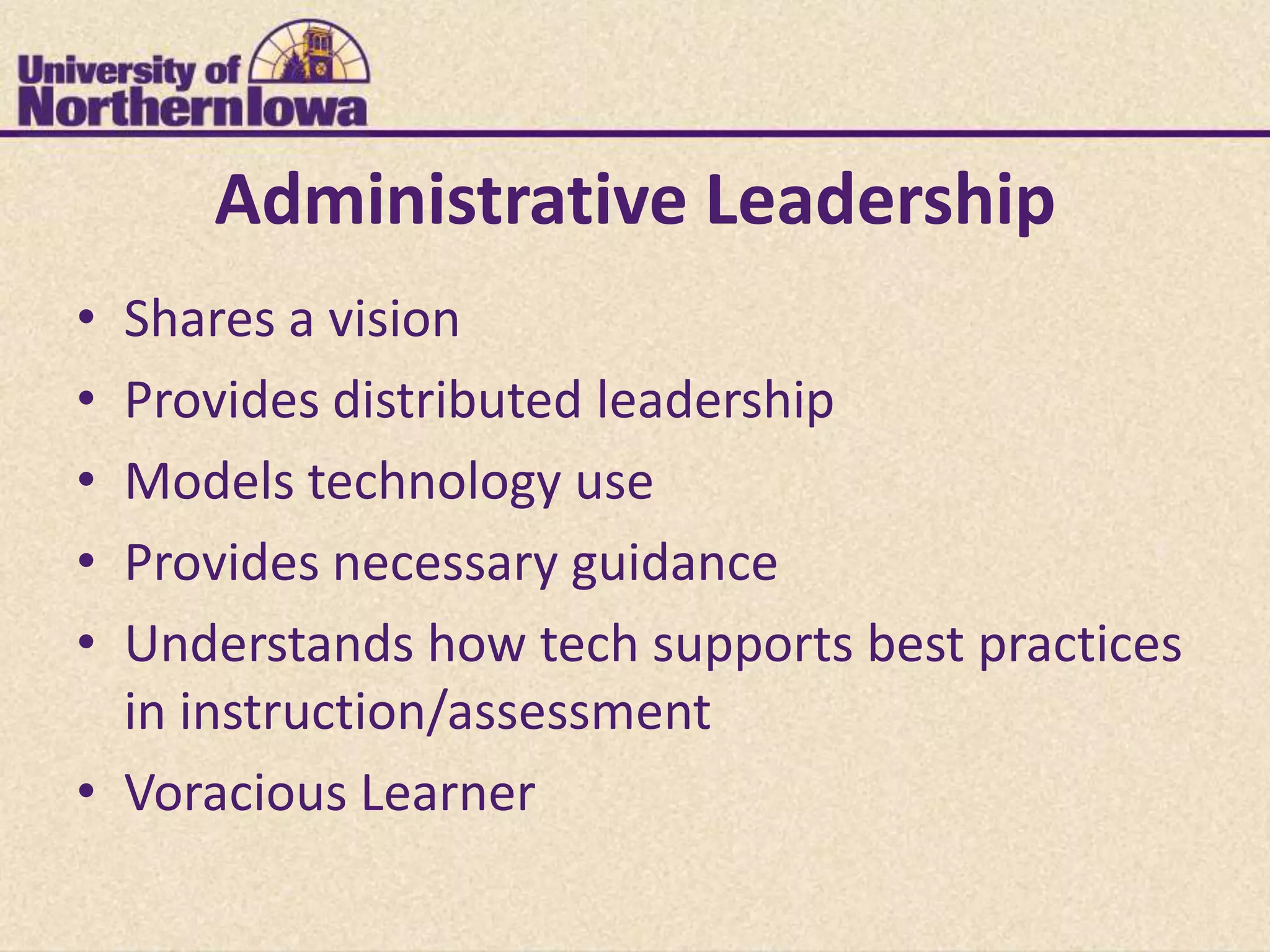
Laptops are . . .


Cognitive Tools                     Engagers
                                  droberton.wordpress.com
Thesituationist.wordpress.com
Administrative Leadership
• Shares a vision
• Provides distributed leadership
• Models technology use
• Provides necessary guidance
• Understands how tech supports best practices
  in instruction/assessment
• Voracious Learner
Teachers’ Attitudes and Beliefs
Do they believe that:
• Students can complete complex tasks
• Tech is a tool with many applications
• There is high quality info on the Web
• Students will use tech appropriately
• It’s OK for students to know more than the
  teacher
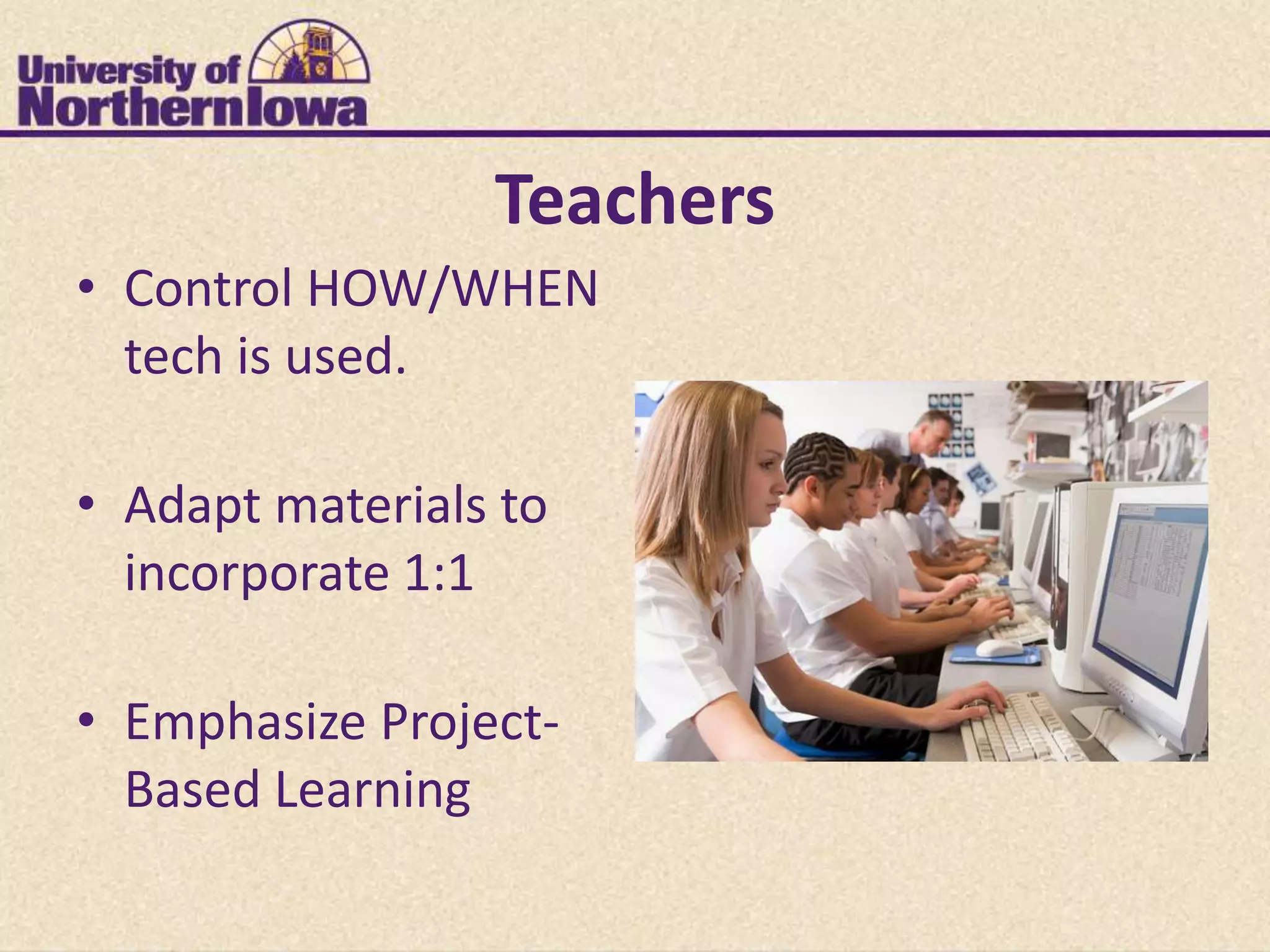
Teachers
• Control HOW/WHEN
  tech is used.

• Adapt materials to
  incorporate 1:1

• Emphasize Project-
  Based Learning
It’s About Changing the DNA


      Greg Whitby, Executive Director of Schools
Digital Pedagogy?
• Teaching-Learning approach in which digital
  technologies promote learning.
• Engages learners in a technology-rich learning
  environment,
• Ensures curriculum relevance
• Uses strategies that encourage a quality
  educational experience.

                    National Digital Learning Resources Network
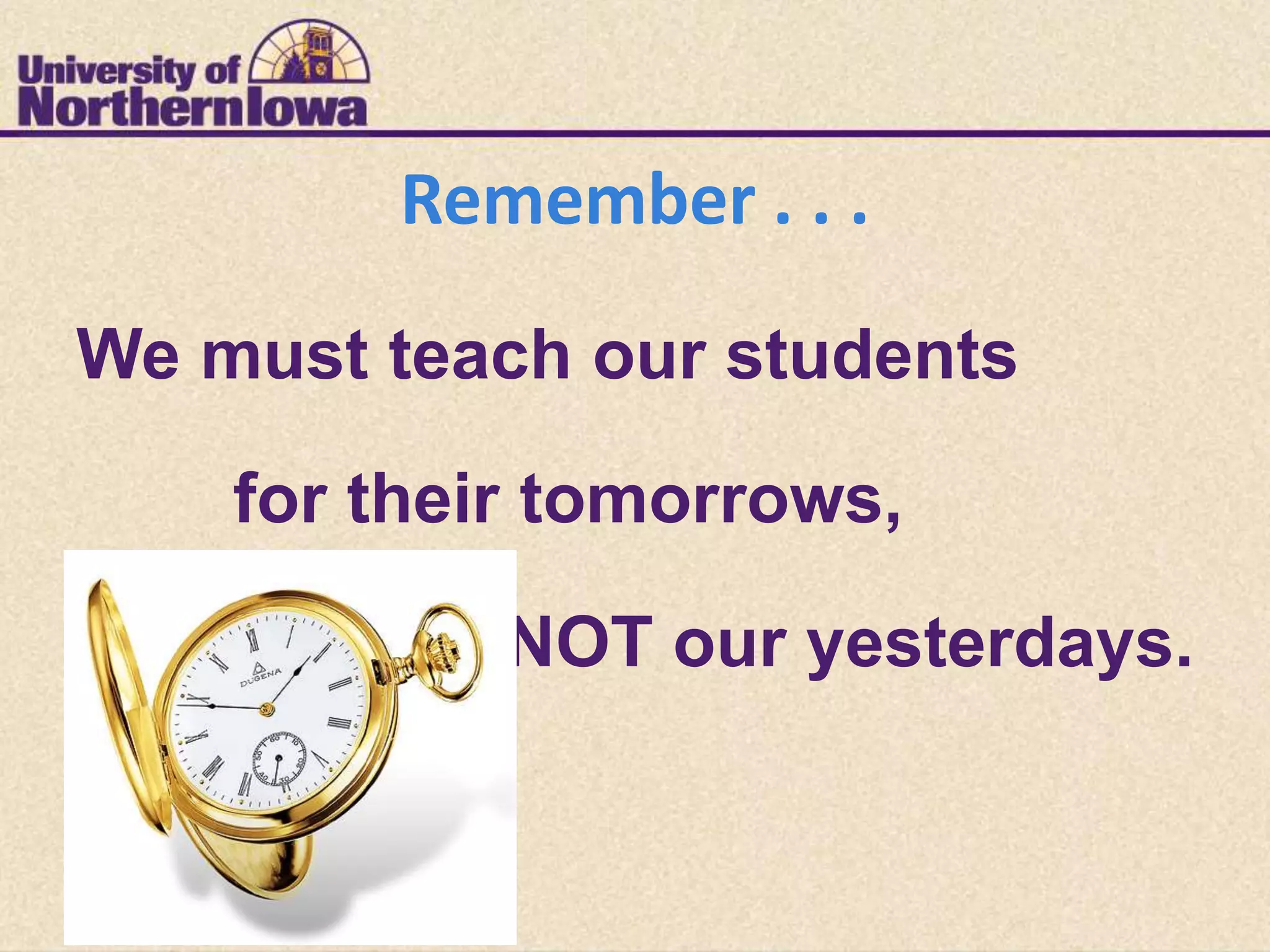
Remember . . .
We must teach our students

    for their tomorrows,

            NOT our yesterdays.
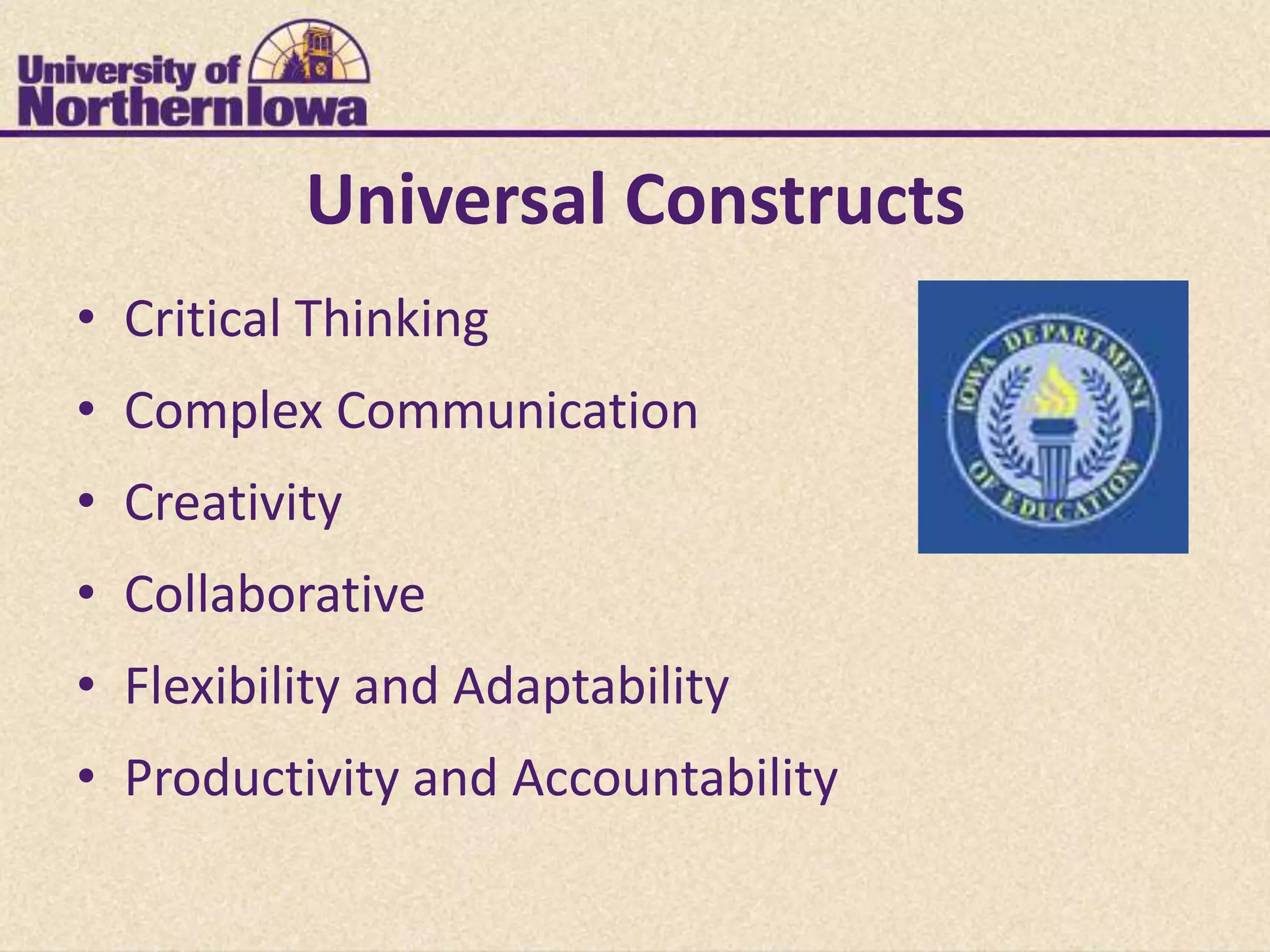
Universal Constructs
• Critical Thinking
• Complex Communication
• Creativity
• Collaborative
• Flexibility and Adaptability
• Productivity and Accountability
Meaningful Learning Environments
• Active
  – Actively engaged in using tech as a tool
• Collaborative
  – Use tech to collaborate with others
• Constructive
  – Use tech to connect new info w/prior knowledge
• Authentic
  – Use tech to link learning to real world
• Goal Directed
  – Use tech to set goals, plan activities, monitor progress
                                   Jonassen, Howland, Moore, &Marra, 2003
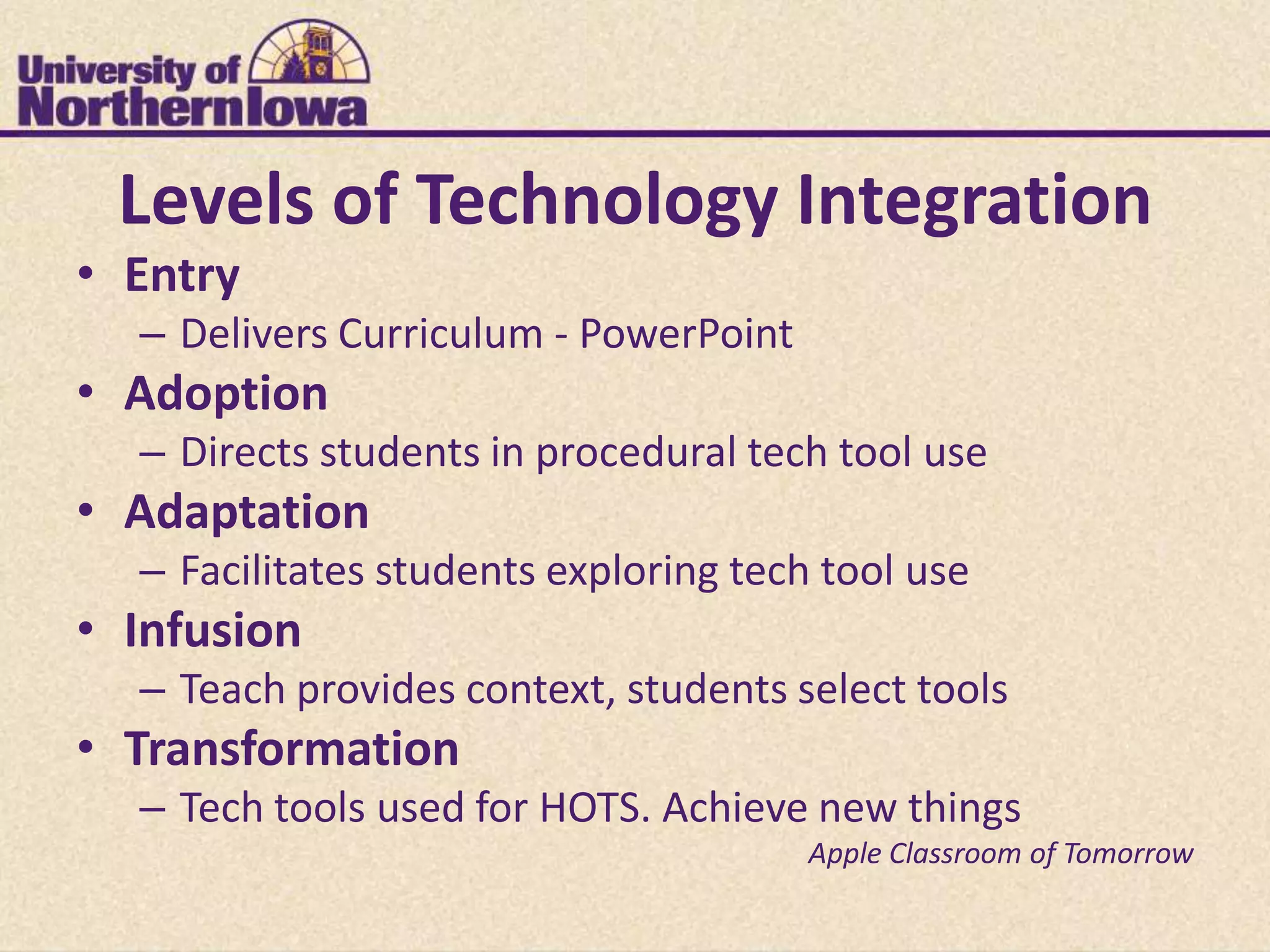
Levels of Technology Integration
• Entry
  – Delivers Curriculum - PowerPoint
• Adoption
  – Directs students in procedural tech tool use
• Adaptation
  – Facilitates students exploring tech tool use
• Infusion
  – Teach provides context, students select tools
• Transformation
  – Tech tools used for HOTS. Achieve new things
                                       Apple Classroom of Tomorrow
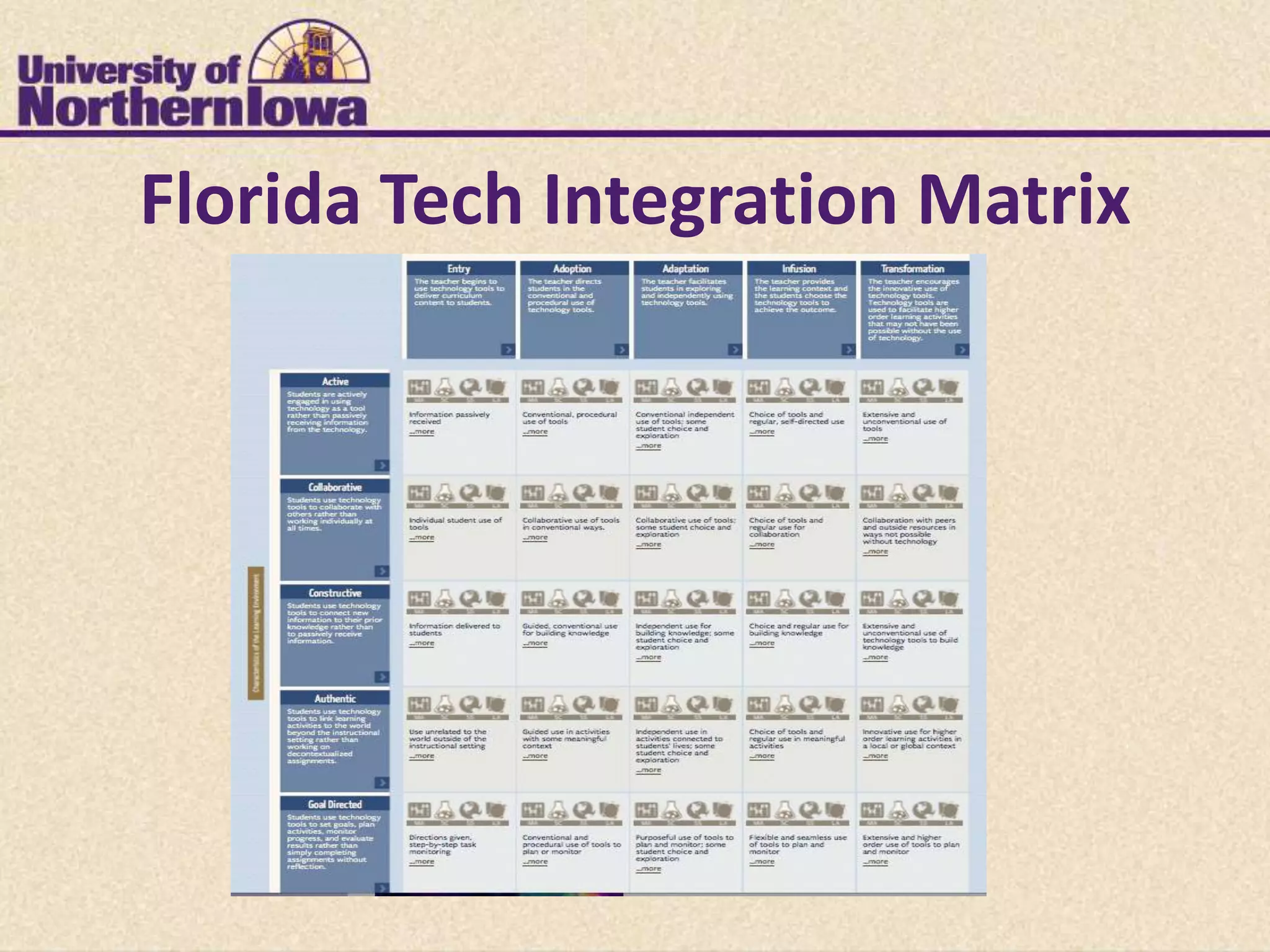
Florida Tech Integration Matrix
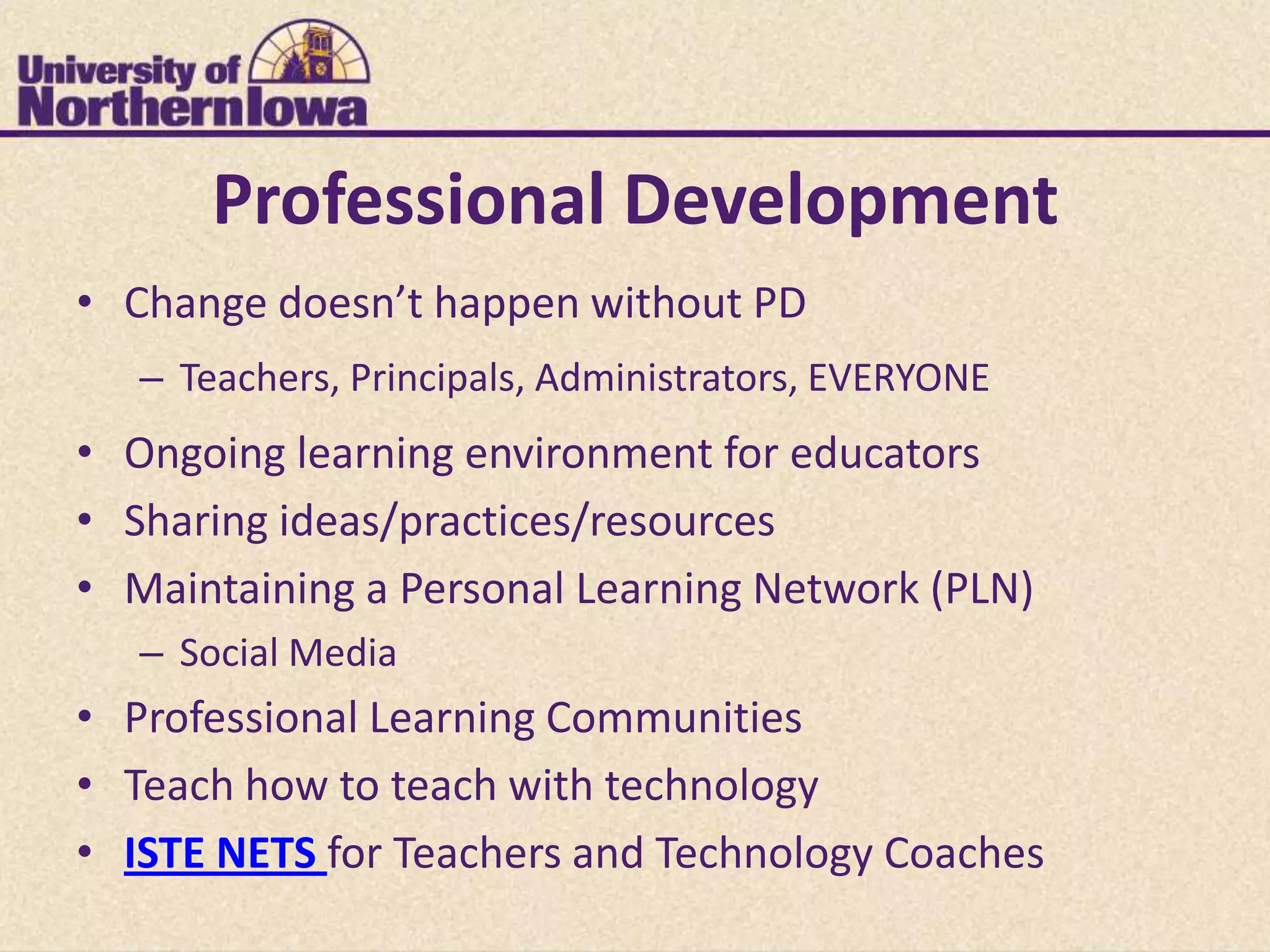
Professional Development
• Change doesn’t happen without PD
   – Teachers, Principals, Administrators, EVERYONE
• Ongoing learning environment for educators
• Sharing ideas/practices/resources
• Maintaining a Personal Learning Network (PLN)
   – Social Media
• Professional Learning Communities
• Teach how to teach with technology
• ISTE NETS for Teachers and Technology Coaches
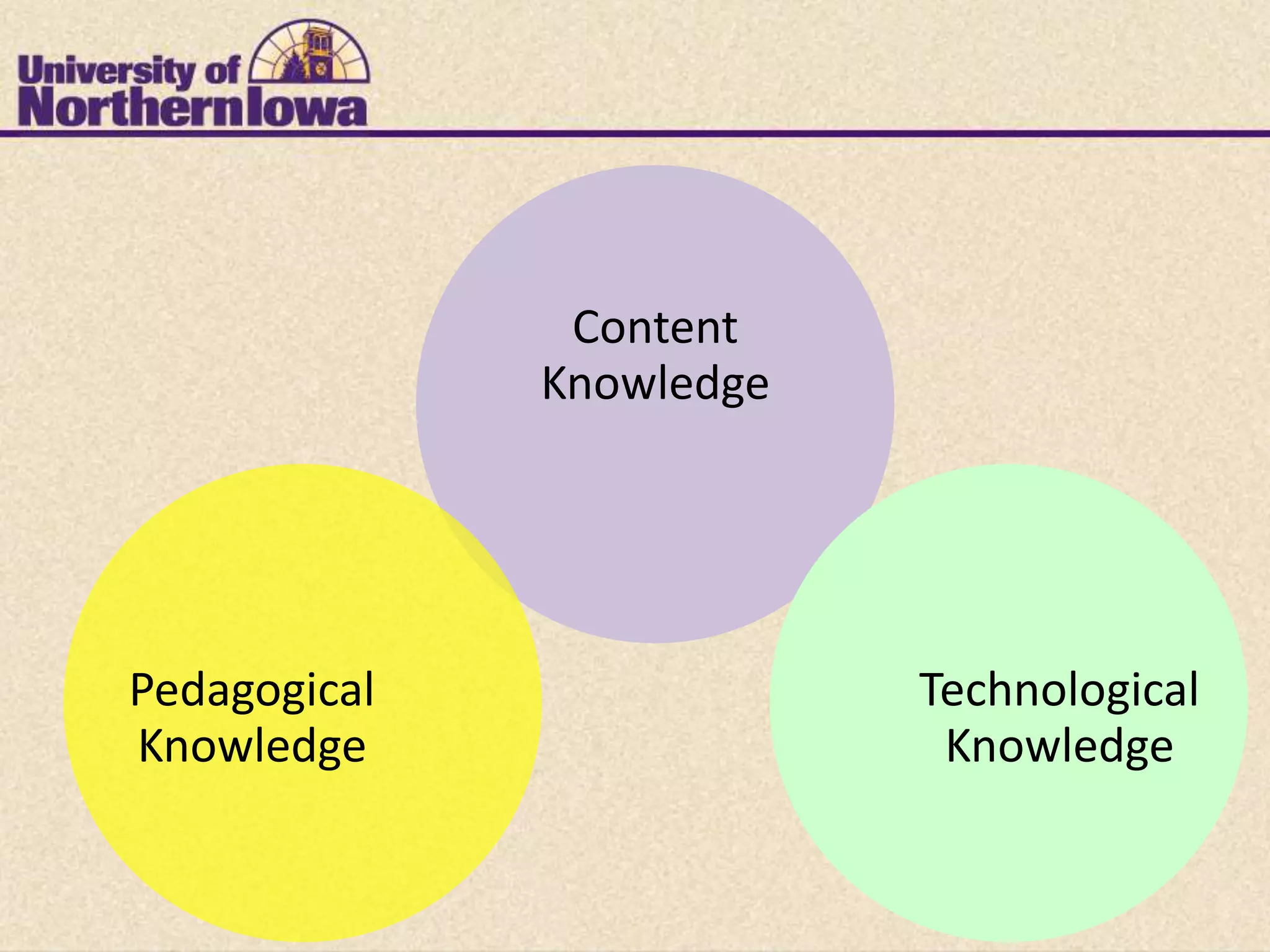
Content
              Knowledge


Pedagogical               Technological
Knowledge                  Knowledge
TPACK
Success in Classes because…
    “Differentiated in genuine ways for all
  students, with teachers who gather and mine
  just-in-time data.
     Further, teachers, students, and parents use
  technology every day to collaborate about
  what to do next in their collective pursuit of
  learning.”
Weston & Bain 2010
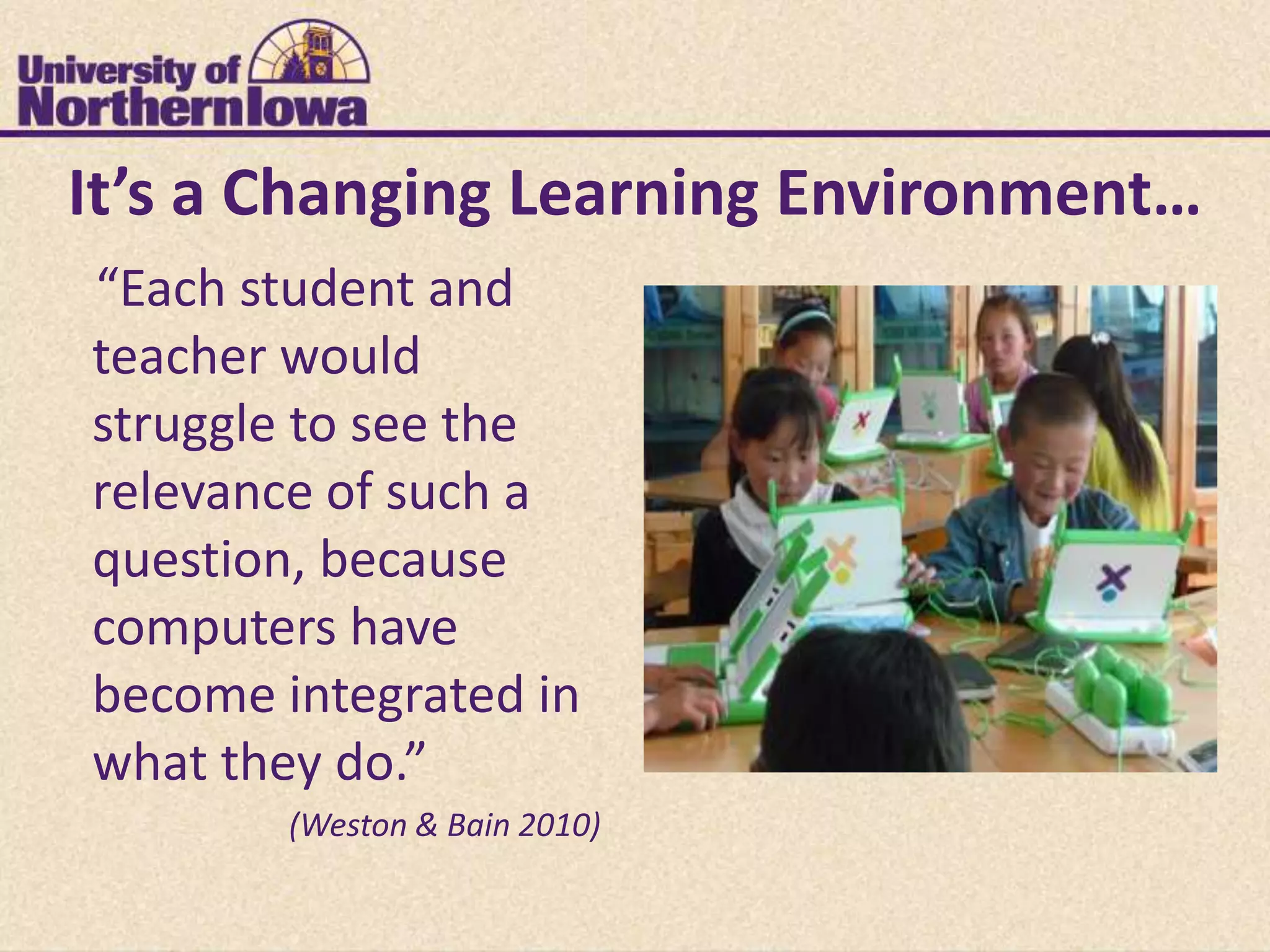
It’s a Changing Learning Environment…
“Each student and
teacher would
struggle to see the
relevance of such a
question, because
computers have
become integrated in
what they do.”
        (Weston & Bain 2010)
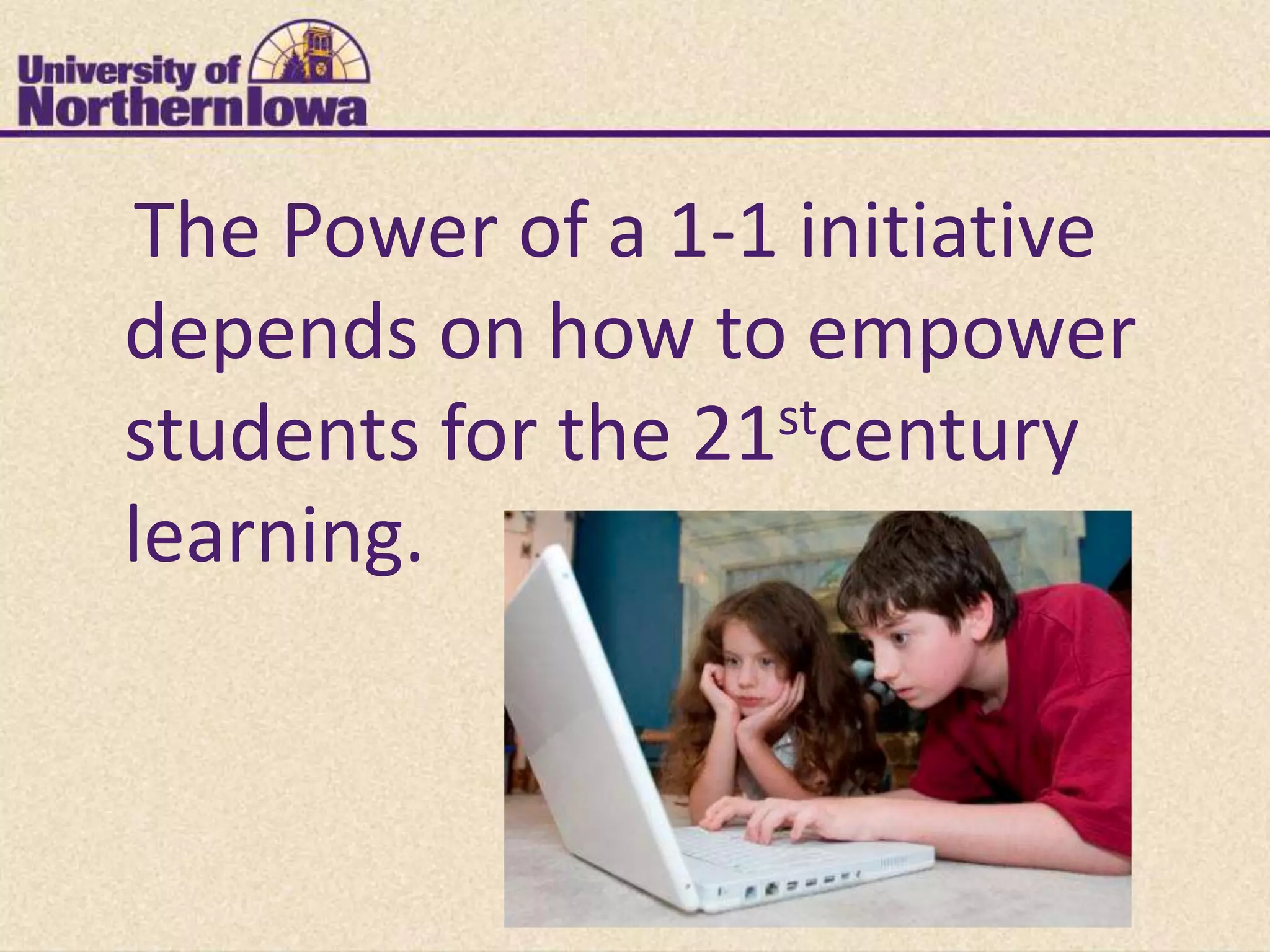
The Power of a 1-1 initiative
depends on how to empower
students for the 21 stcentury

learning.
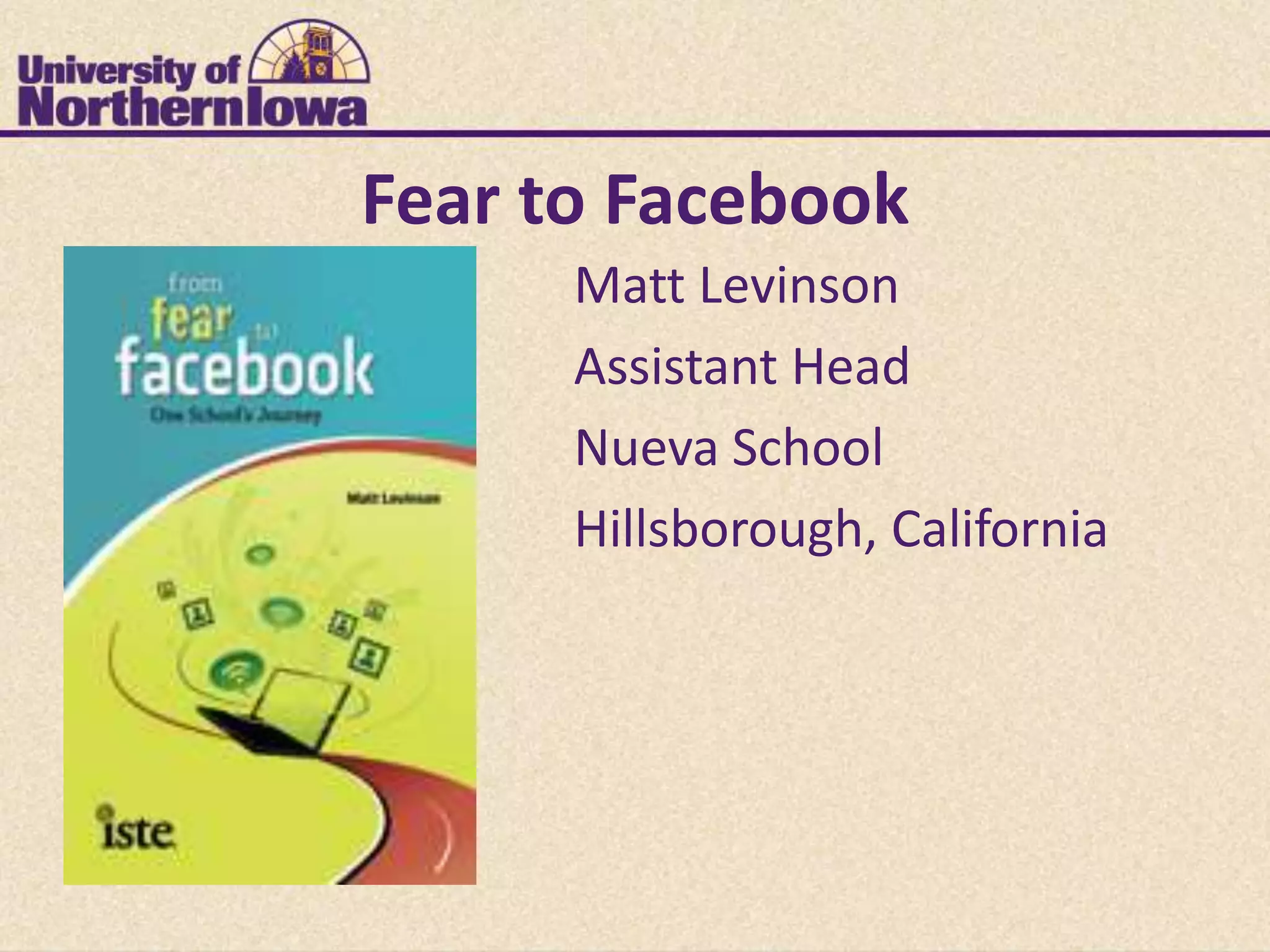
Fear to Facebook
      Matt Levinson
      Assistant Head
      Nueva School
      Hillsborough, California
Thank You

1-to-1 Computing: Curriculum for the 21st Century

  • 1.
    1-to-1 Pedagogy: Curriculum for the 21st Century Classroom Dr. Leigh Zeitz Dr. Ping Gao University of Northern Iowa University of Northern Iowa PingGao@ uni.edu zeitz@ uni.edu Drzreflects.com
  • 2.
    Let’s tweet our comments. #UNItopics
  • 3.
    Tell Us AboutYourself • Profession? – teacher, administrator, st udent, parent, ???? • City and State • 1-1 experience?
  • 5.
    What is 1:1Computing?
  • 6.
    Where is 1:1Computing? Research reviewed over 1,000 1:1 learning environments
  • 7.
    Iowa 1:1 Computing 2010– 2011 42 Districts 2011 – 2012 100 Districts 2012 – 2013 140 Districts 351 School Districts in Iowa
  • 8.
  • 9.
    Academic Performance • Maine – After 5 years: Little effect – Writing up 3.4 points out of 80 points • Michigan – 4 higher, 3 lower, 1 no difference • Texas – Math slightly higher – Reading the same – Writing slightly lower.
  • 10.
    Academic Engagement • Increasedattendance • Fewer disciplinary referrals • Greater ownership of learning
  • 11.
    How Does ItWork? • Puts power in hands of the students • Provides access to digital resources • Encourages collaboration • Facilitates problem-based learning • Allows for differentiated learning
  • 12.
    AreLaptops the Answer? Itall Depends . . .
  • 13.
    It Depends Upon. . . • Hardware • Administrative Leadership • Teachers’ Attitudes and Beliefs • Digital Pedagogy • Professional Development
  • 14.
    Peru $225 Million 850,000 laptops OLPC- 15 months 10 yr olds @ grade level • 13% in math • 30% in literacy
  • 15.
    It’s NOT Technology. . . Flickr.com/soopahgrover ≠ Flickr.com/jsim93
  • 16.
    Laptops are .. . Cognitive Tools Engagers droberton.wordpress.com Thesituationist.wordpress.com
  • 17.
    Administrative Leadership • Sharesa vision • Provides distributed leadership • Models technology use • Provides necessary guidance • Understands how tech supports best practices in instruction/assessment • Voracious Learner
  • 18.
    Teachers’ Attitudes andBeliefs Do they believe that: • Students can complete complex tasks • Tech is a tool with many applications • There is high quality info on the Web • Students will use tech appropriately • It’s OK for students to know more than the teacher
  • 19.
    Teachers • Control HOW/WHEN tech is used. • Adapt materials to incorporate 1:1 • Emphasize Project- Based Learning
  • 20.
    It’s About Changingthe DNA Greg Whitby, Executive Director of Schools
  • 21.
    Digital Pedagogy? • Teaching-Learningapproach in which digital technologies promote learning. • Engages learners in a technology-rich learning environment, • Ensures curriculum relevance • Uses strategies that encourage a quality educational experience. National Digital Learning Resources Network
  • 22.
    Remember . .. We must teach our students for their tomorrows, NOT our yesterdays.
  • 24.
    Universal Constructs • CriticalThinking • Complex Communication • Creativity • Collaborative • Flexibility and Adaptability • Productivity and Accountability
  • 25.
    Meaningful Learning Environments •Active – Actively engaged in using tech as a tool • Collaborative – Use tech to collaborate with others • Constructive – Use tech to connect new info w/prior knowledge • Authentic – Use tech to link learning to real world • Goal Directed – Use tech to set goals, plan activities, monitor progress Jonassen, Howland, Moore, &Marra, 2003
  • 26.
    Levels of TechnologyIntegration • Entry – Delivers Curriculum - PowerPoint • Adoption – Directs students in procedural tech tool use • Adaptation – Facilitates students exploring tech tool use • Infusion – Teach provides context, students select tools • Transformation – Tech tools used for HOTS. Achieve new things Apple Classroom of Tomorrow
  • 27.
  • 28.
    Professional Development • Changedoesn’t happen without PD – Teachers, Principals, Administrators, EVERYONE • Ongoing learning environment for educators • Sharing ideas/practices/resources • Maintaining a Personal Learning Network (PLN) – Social Media • Professional Learning Communities • Teach how to teach with technology • ISTE NETS for Teachers and Technology Coaches
  • 29.
    Content Knowledge Pedagogical Technological Knowledge Knowledge
  • 30.
  • 31.
    Success in Classesbecause… “Differentiated in genuine ways for all students, with teachers who gather and mine just-in-time data. Further, teachers, students, and parents use technology every day to collaborate about what to do next in their collective pursuit of learning.” Weston & Bain 2010
  • 32.
    It’s a ChangingLearning Environment… “Each student and teacher would struggle to see the relevance of such a question, because computers have become integrated in what they do.” (Weston & Bain 2010)
  • 33.
    The Power ofa 1-1 initiative depends on how to empower students for the 21 stcentury learning.
  • 34.
    Fear to Facebook Matt Levinson Assistant Head Nueva School Hillsborough, California
  • 35.