Xen on
 ARM Cortex A15
Stefano Stabellini
Why?

       Why?
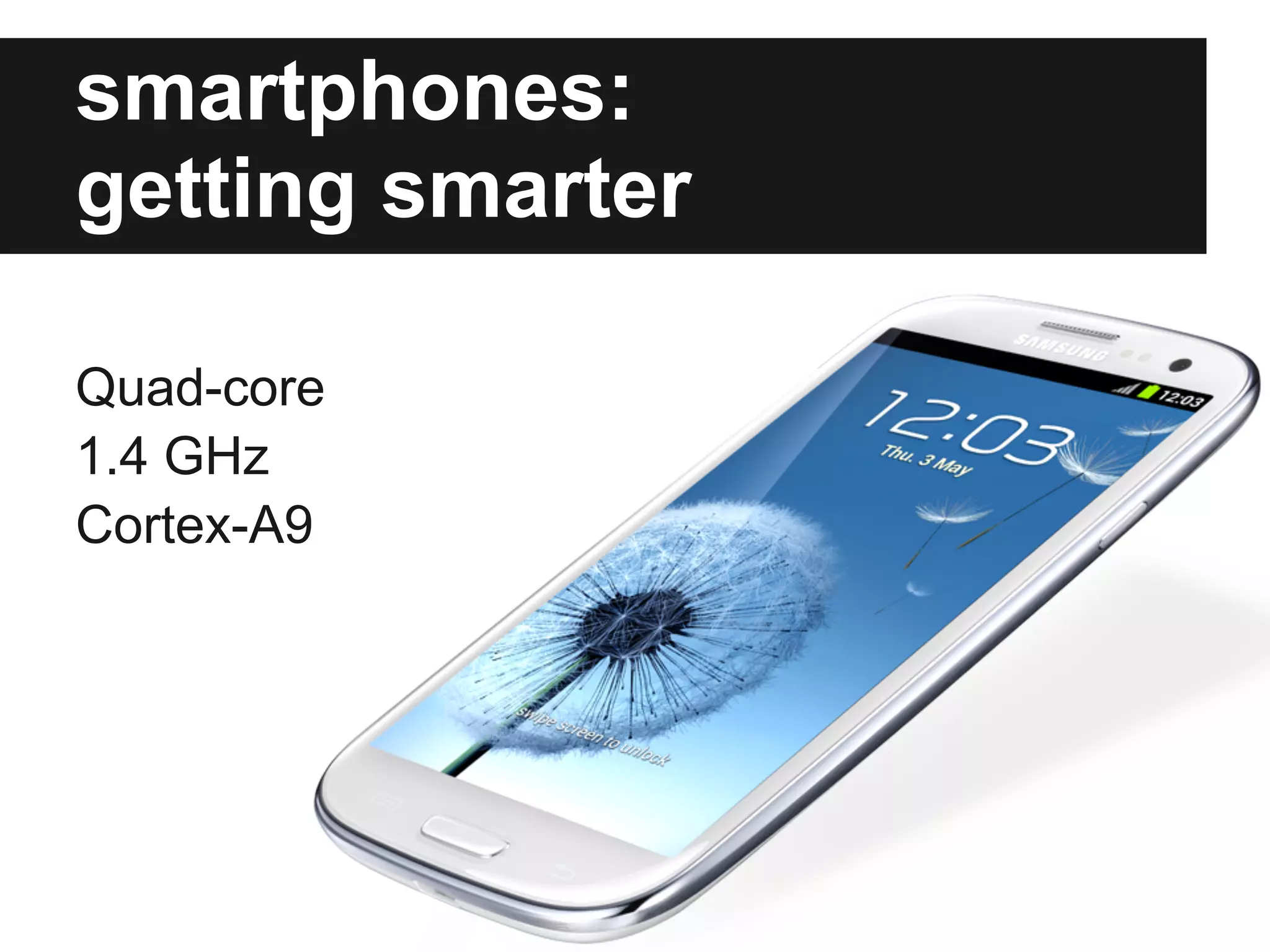
smartphones:
getting smarter

Quad-core
1.4 GHz
Cortex-A9
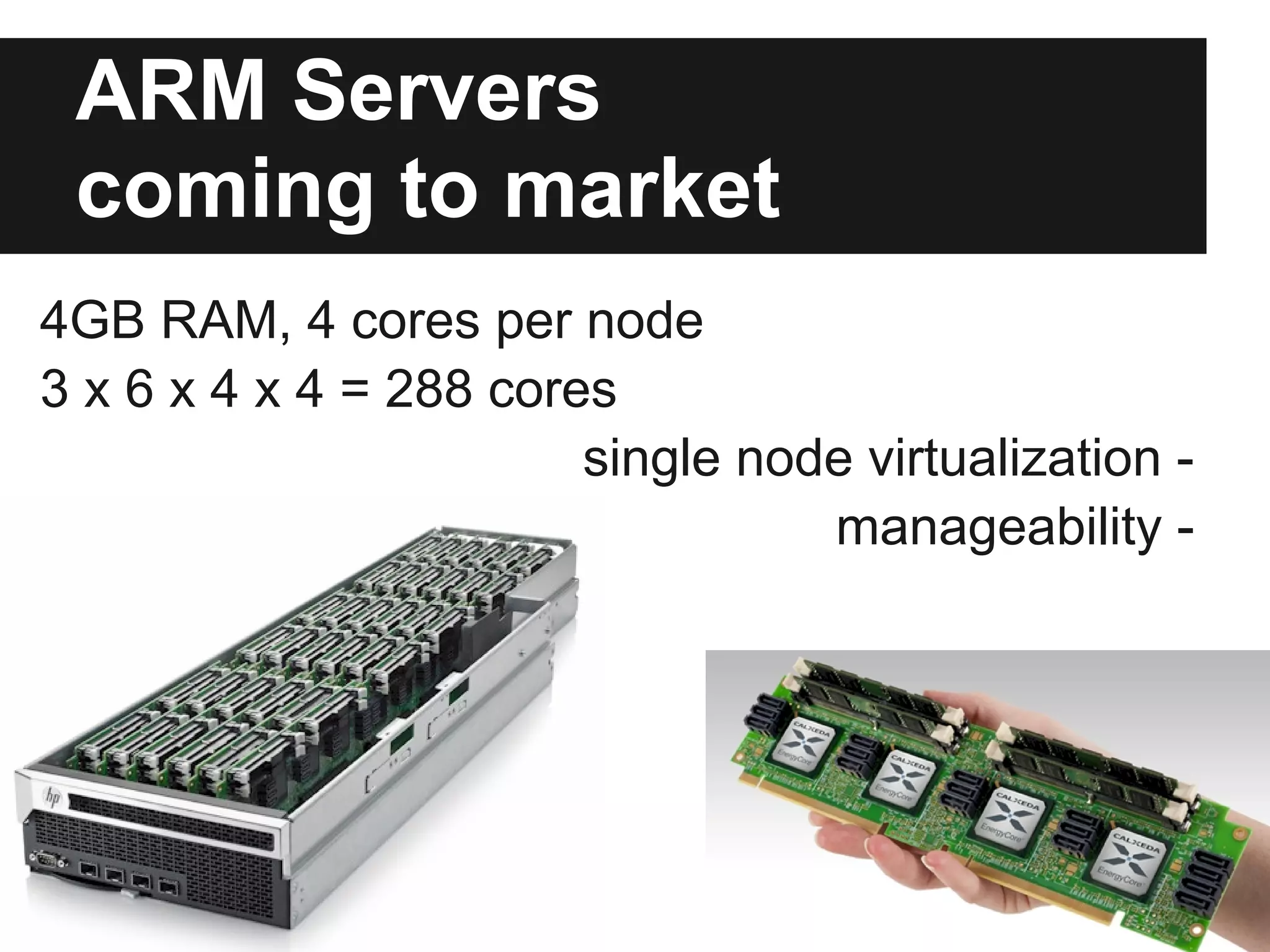
ARM Servers
 coming to market
4GB RAM, 4 cores per node
3 x 6 x 4 x 4 = 288 cores
                        single node virtualization -
                                  manageability -
Challenges


Another PVOPs infrastructure for ARM in
Linux?

How would the Linux Community react?
ARMv7 virtualization
extensions to the rescue!

"The ARM Architecture virtualization extension
and Large Physical Address Extension (LPAE)
enable the efficient implementation of virtual
machine hypervisors for ARM architecture
compliant processors."
Design goals
● exploit the hardware as much as possible

● one type of guest
  ○ no PVOPs
  ○ use PV interfaces for IO


● Rearchitected for the modern age:
  ○ no QEMU
  ○ no compat code
  ○ no shadow pagetables
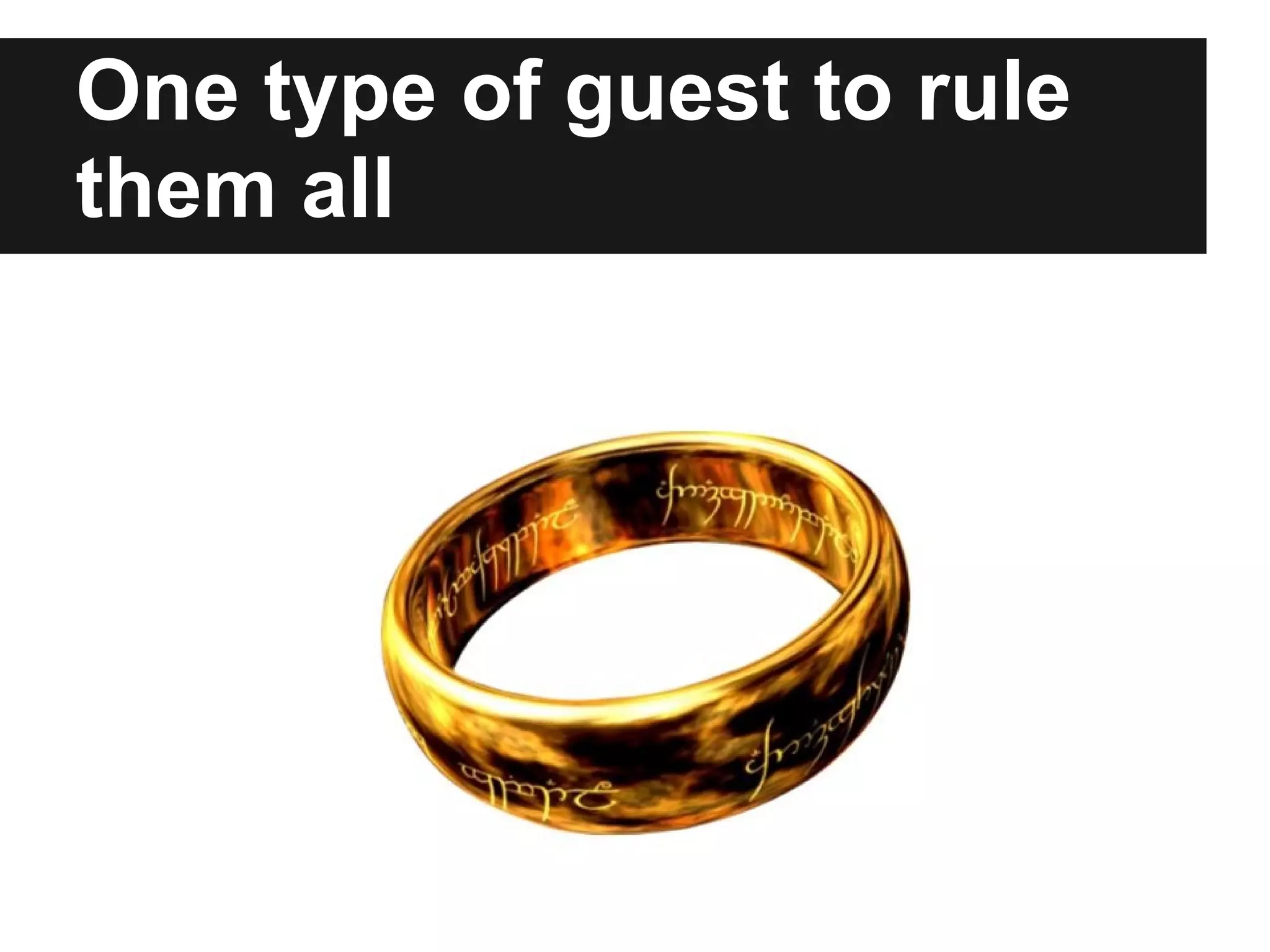
One type of guest to rule
them all
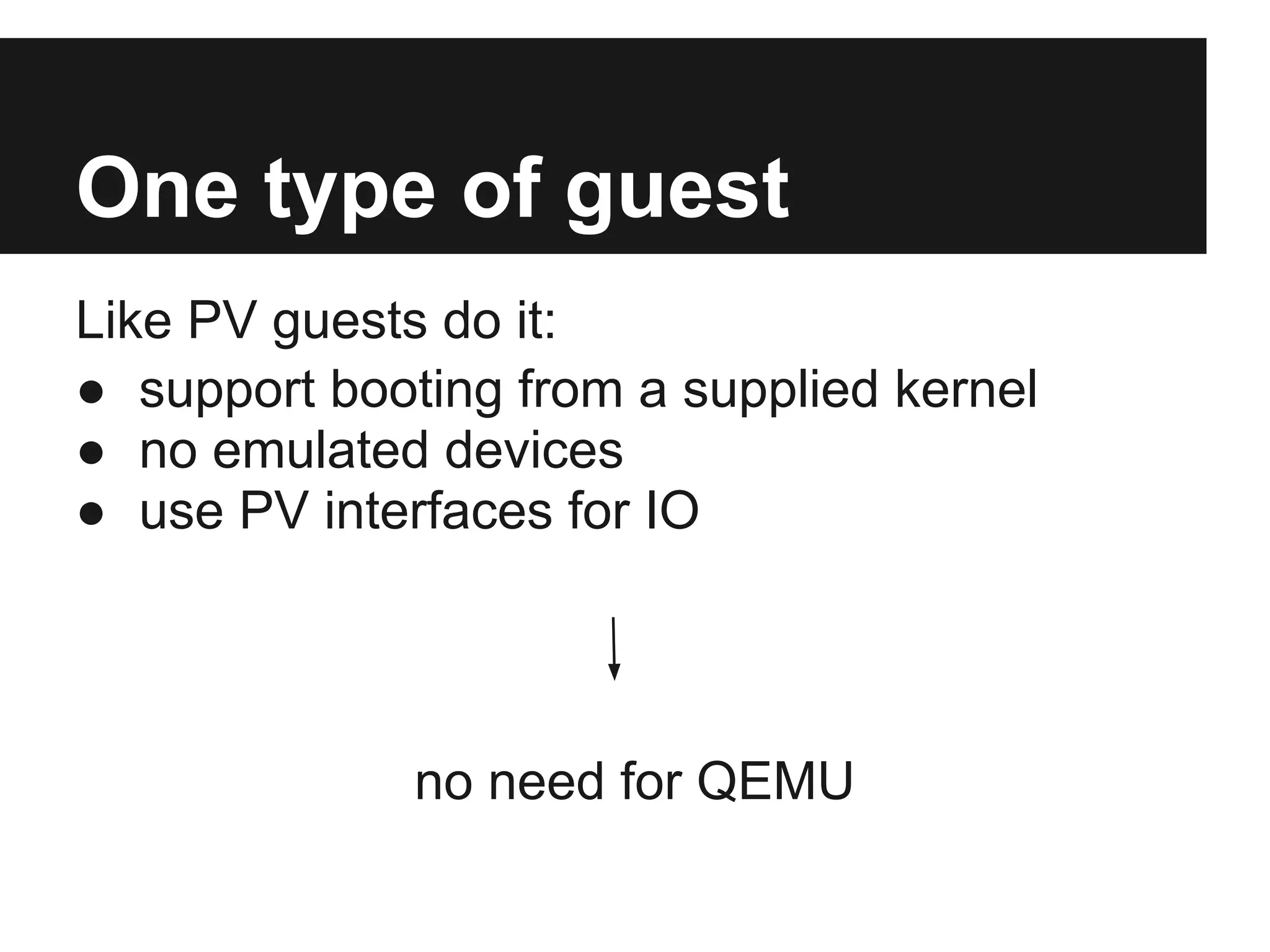
One type of guest
Like PV guests do it:
● support booting from a supplied kernel
● no emulated devices
● use PV interfaces for IO


              no need for QEMU
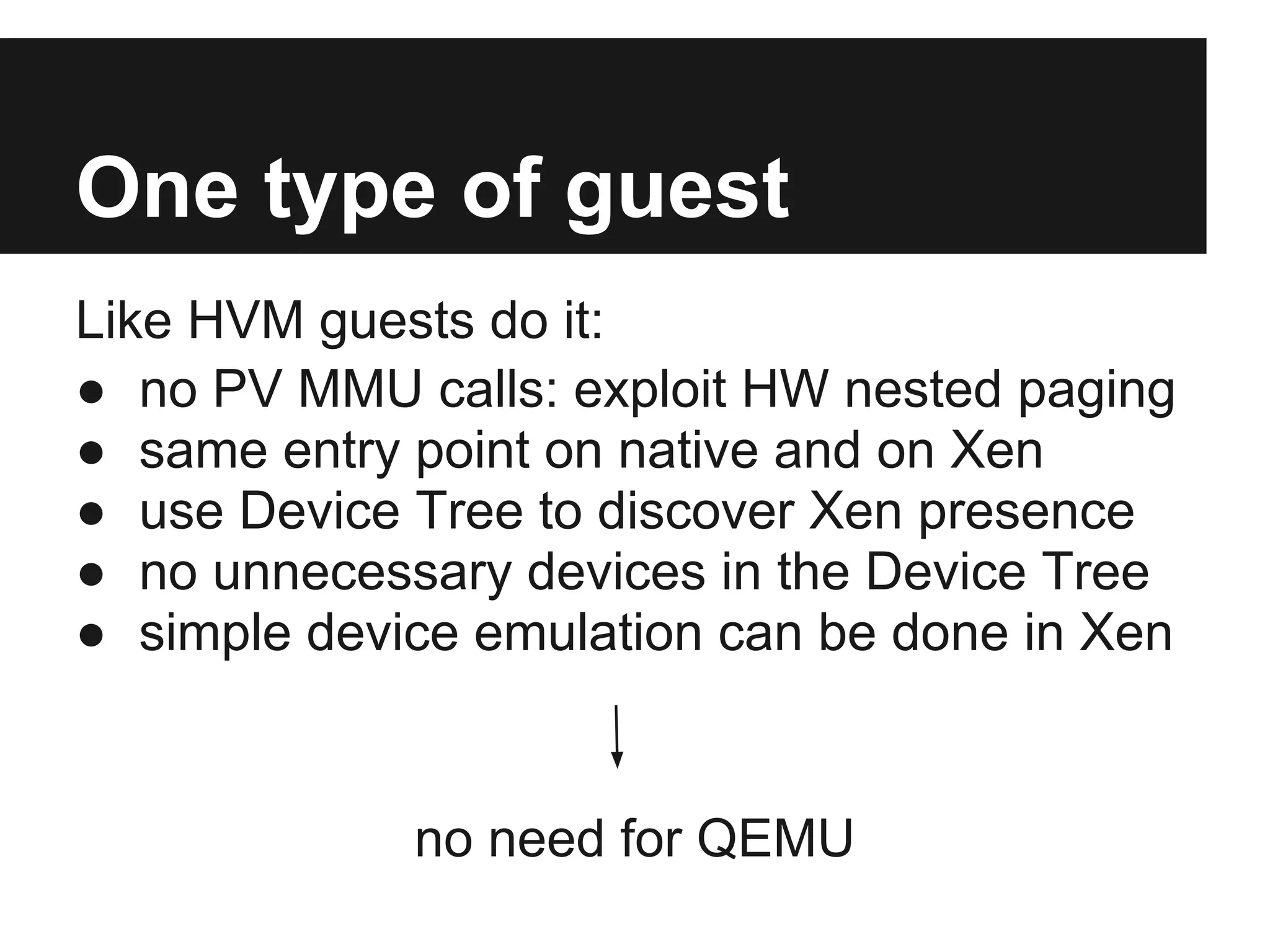
One type of guest
Like HVM guests do it:
● no PV MMU calls: exploit HW nested paging
● same entry point on native and on Xen
● use Device Tree to discover Xen presence
● no unnecessary devices in the Device Tree
● simple device emulation can be done in Xen


             no need for QEMU
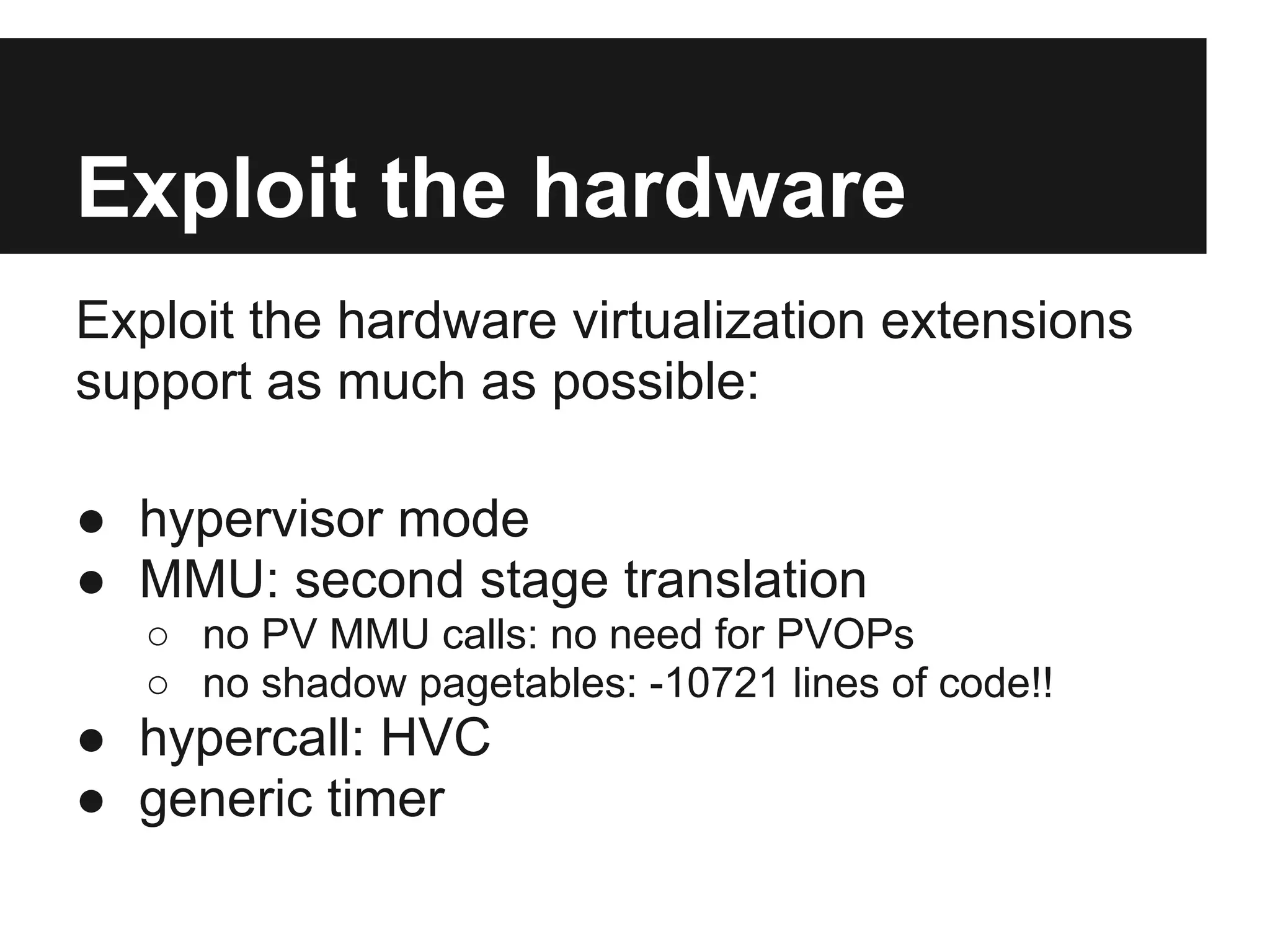
Exploit the hardware
Exploit the hardware virtualization extensions
support as much as possible:

● hypervisor mode
● MMU: second stage translation
   ○ no PV MMU calls: no need for PVOPs
   ○ no shadow pagetables: -10721 lines of code!!
● hypercall: HVC
● generic timer
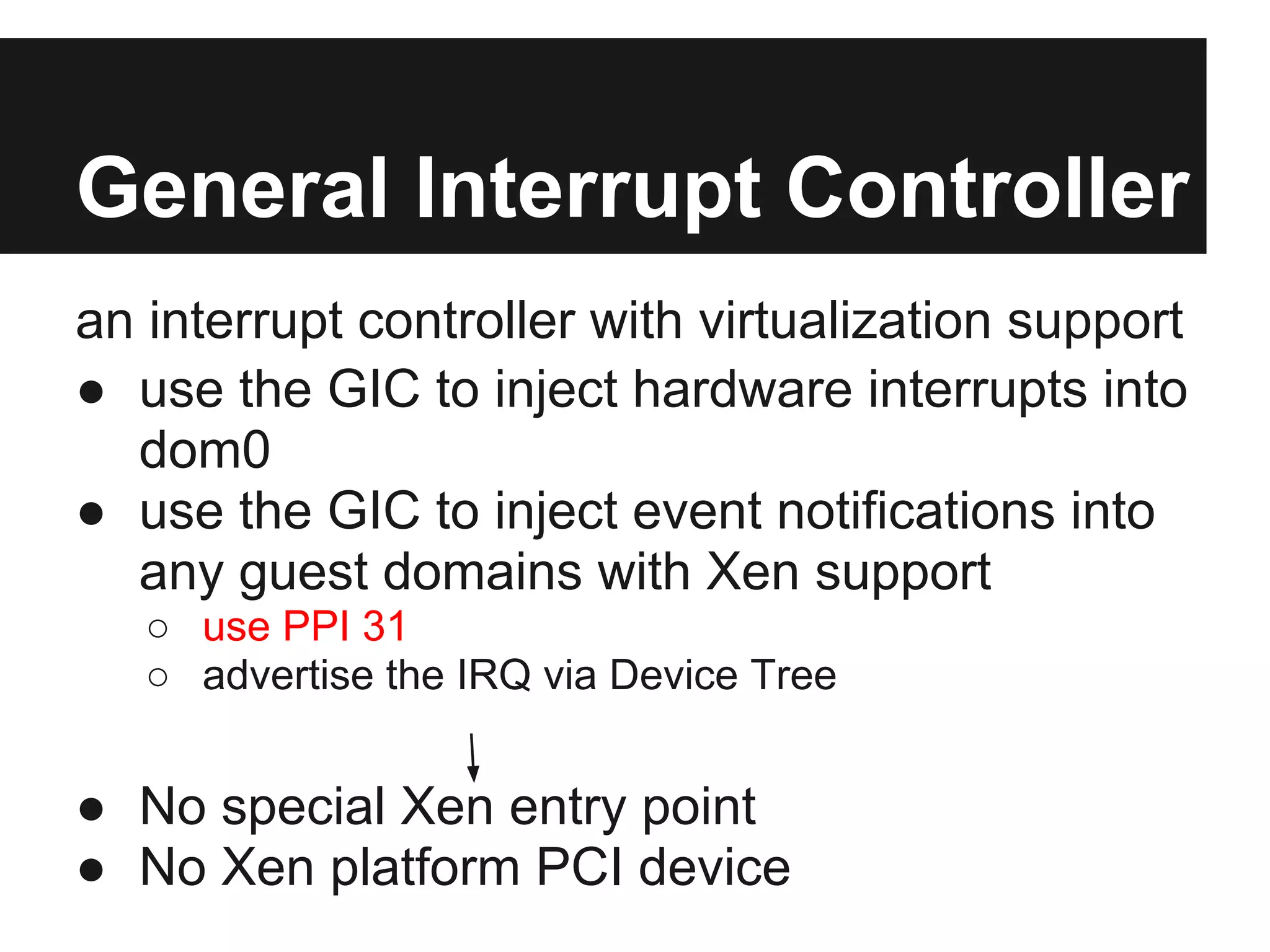
General Interrupt Controller
an interrupt controller with virtualization support
● use the GIC to inject hardware interrupts into
  dom0
● use the GIC to inject event notifications into
  any guest domains with Xen support
   ○ use PPI 31
   ○ advertise the IRQ via Device Tree


● No special Xen entry point
● No Xen platform PCI device
The hypercall calling
convention
the hypercall interface:
● hvc instruction
● hypervisor specific imm 0xEA1
● hypercall arguments passed on registers
a 64 bit "ready" ABI
● a single hypercall ABI for 32 bit guests and
  64 bit guests


  no compat code in Xen
   ○ 2600 lines of code lighter
a 64 bit "ready" ABI
       make unsigned long and pointers 8
    bytes sized and 8 bytes aligned
    everywhere
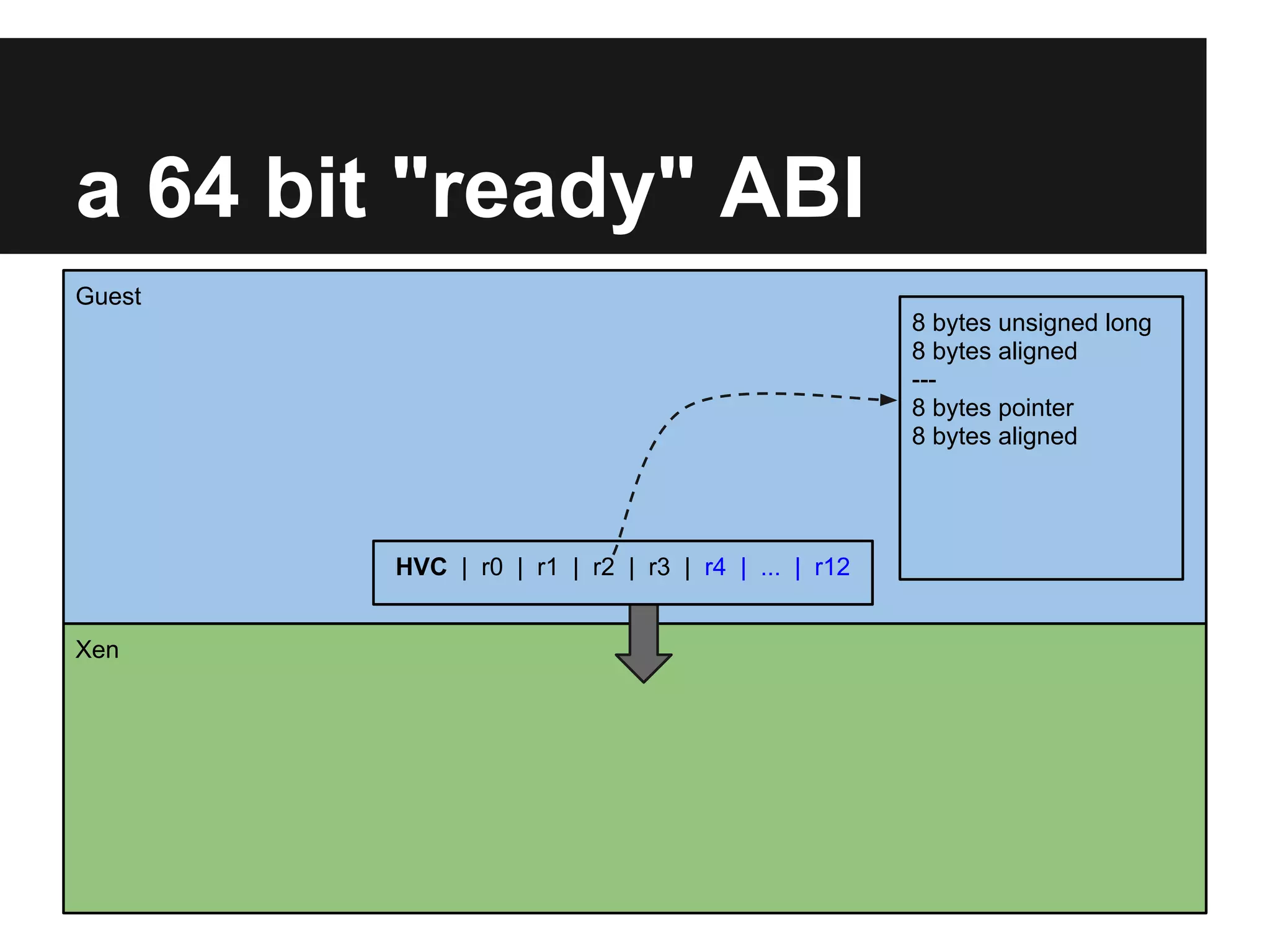
a 64 bit "ready" ABI
Guest
                                                   8 bytes unsigned long
                                                   8 bytes aligned
                                                   ---
                                                   8 bytes pointer
                                                   8 bytes aligned


        HVC | r0 | r1 | r2 | r3 | r4 | ... | r12


Xen
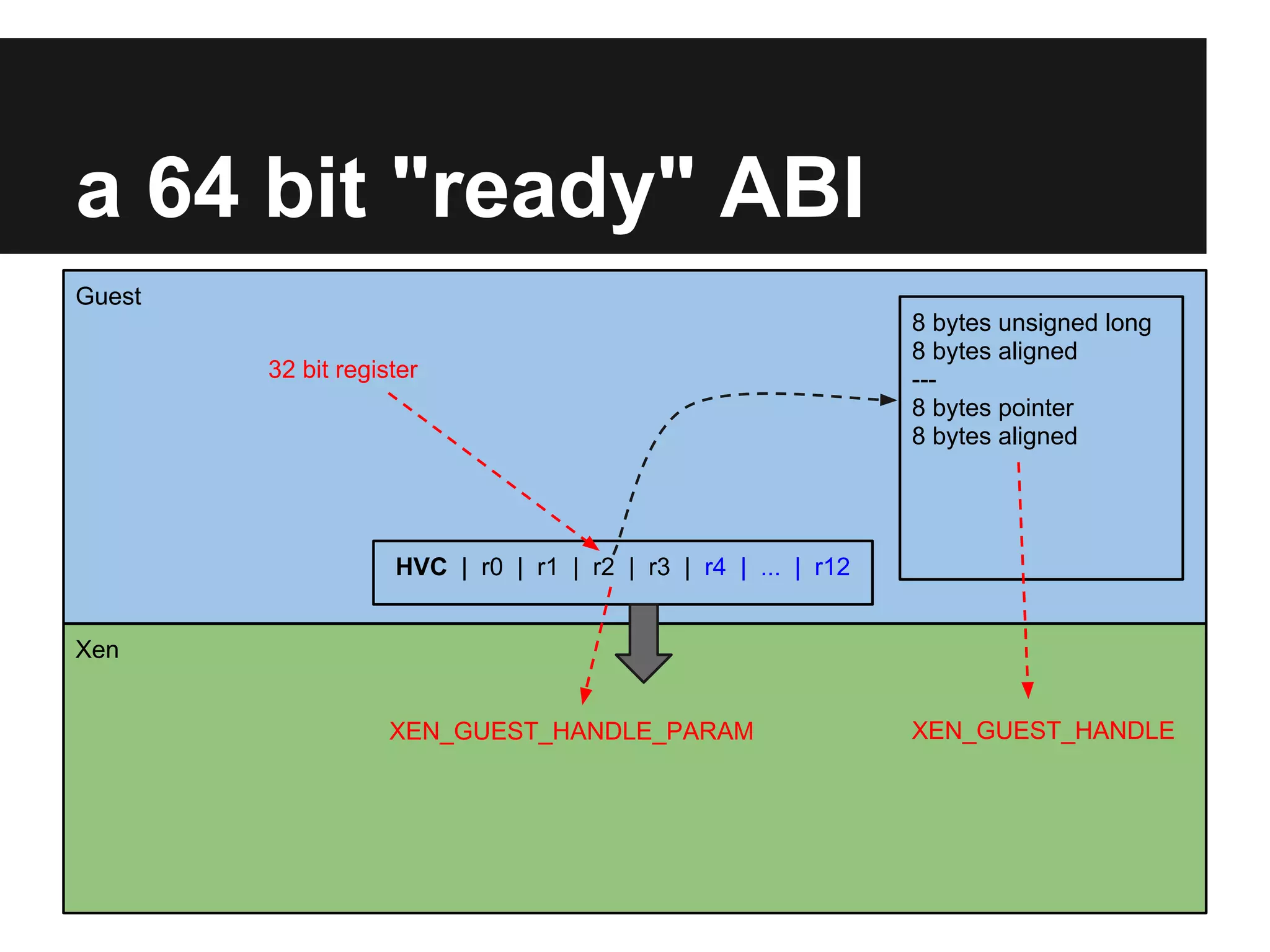
a 64 bit "ready" ABI
Guest
                                                               8 bytes unsigned long
                                                               8 bytes aligned
        32 bit register                                        ---
                                                               8 bytes pointer
                                                               8 bytes aligned


                    HVC | r0 | r1 | r2 | r3 | r4 | ... | r12


Xen


                    XEN_GUEST_HANDLE_PARAM                     XEN_GUEST_HANDLE
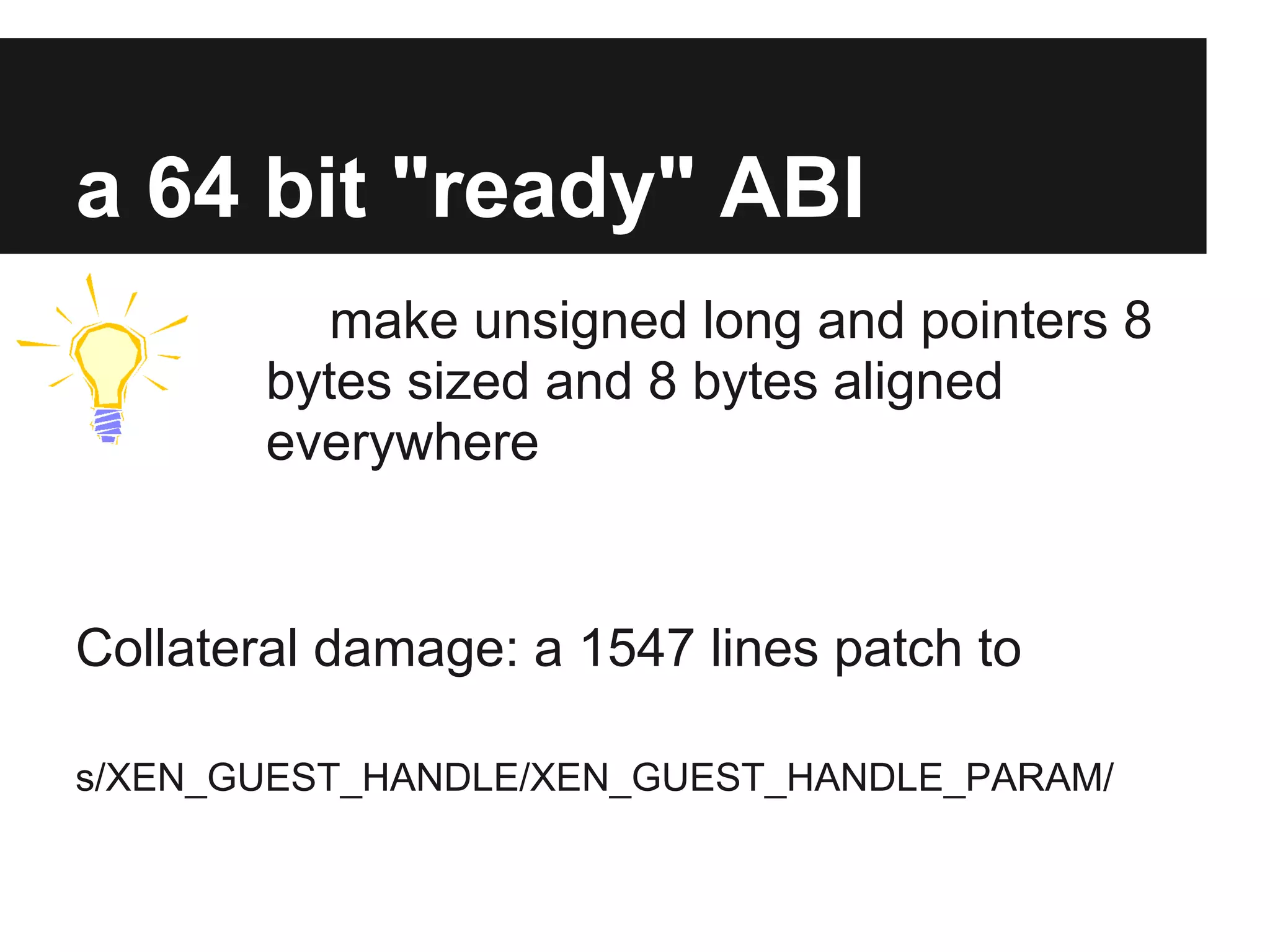
a 64 bit "ready" ABI
           make unsigned long and pointers 8
        bytes sized and 8 bytes aligned
        everywhere


Collateral damage: a 1547 lines patch to

s/XEN_GUEST_HANDLE/XEN_GUEST_HANDLE_PARAM/
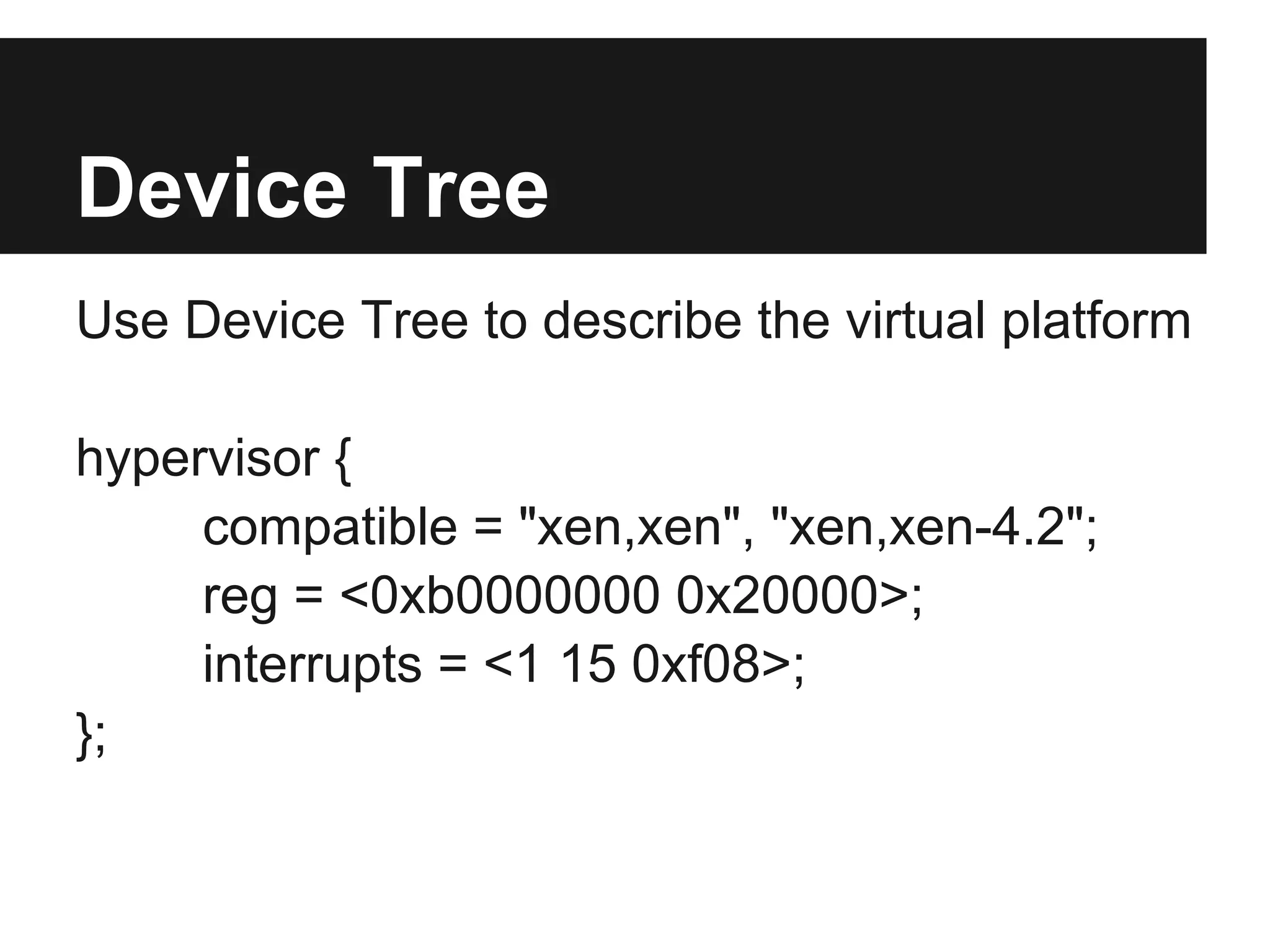
Device Tree
Use Device Tree to describe the virtual platform

hypervisor {
     compatible = "xen,xen", "xen,xen-4.2";
     reg = <0xb0000000 0x20000>;
     interrupts = <1 15 0xf08>;
};
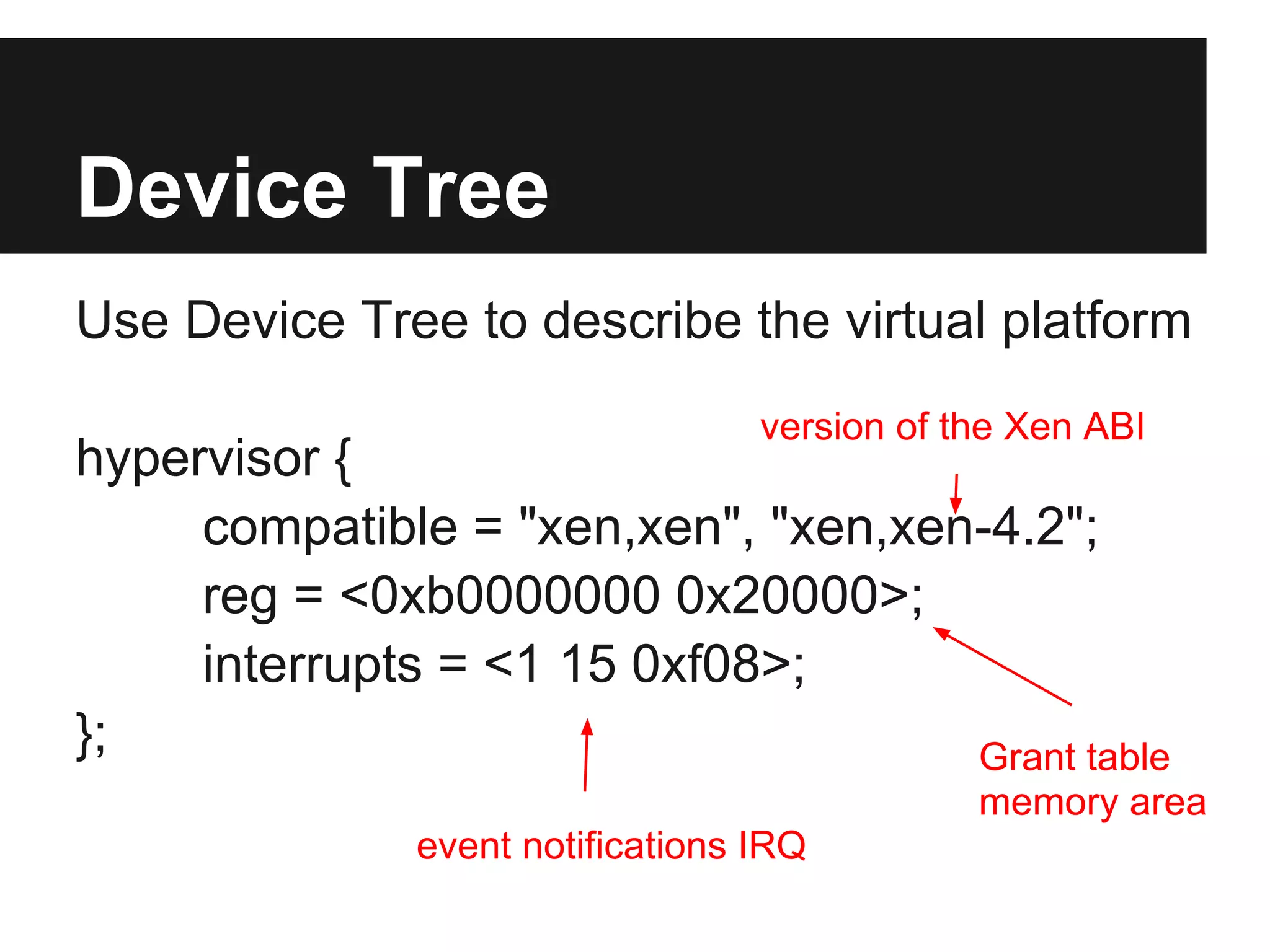
Device Tree
Use Device Tree to describe the virtual platform
                                  version of the Xen ABI
hypervisor {
     compatible = "xen,xen", "xen,xen-4.2";
     reg = <0xb0000000 0x20000>;
     interrupts = <1 15 0xf08>;
};                                   Grant table
                                              memory area
              event notifications IRQ
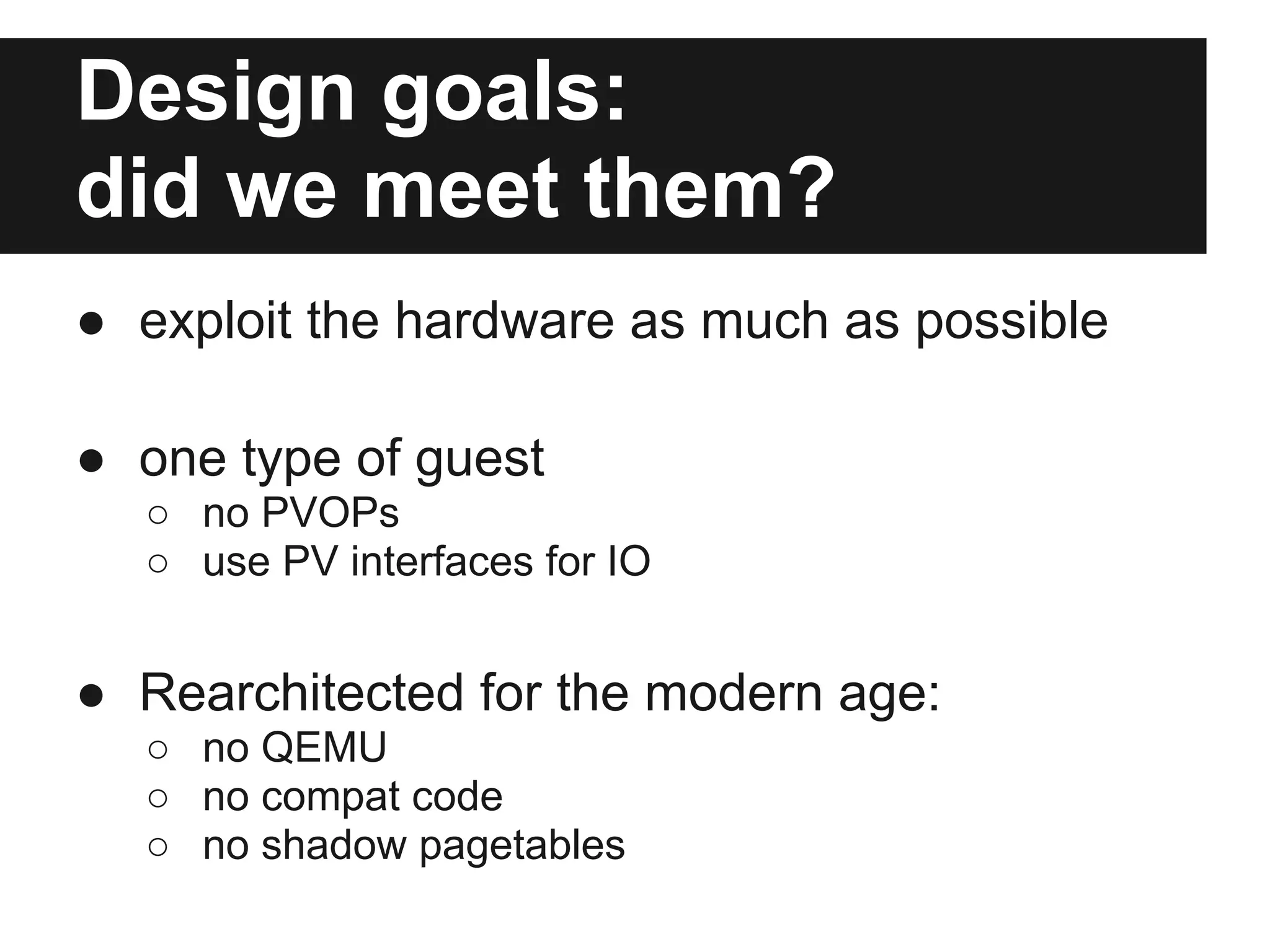
Design goals:
did we meet them?
● exploit the hardware as much as possible

● one type of guest
  ○ no PVOPs
  ○ use PV interfaces for IO


● Rearchitected for the modern age:
  ○ no QEMU
  ○ no compat code
  ○ no shadow pagetables
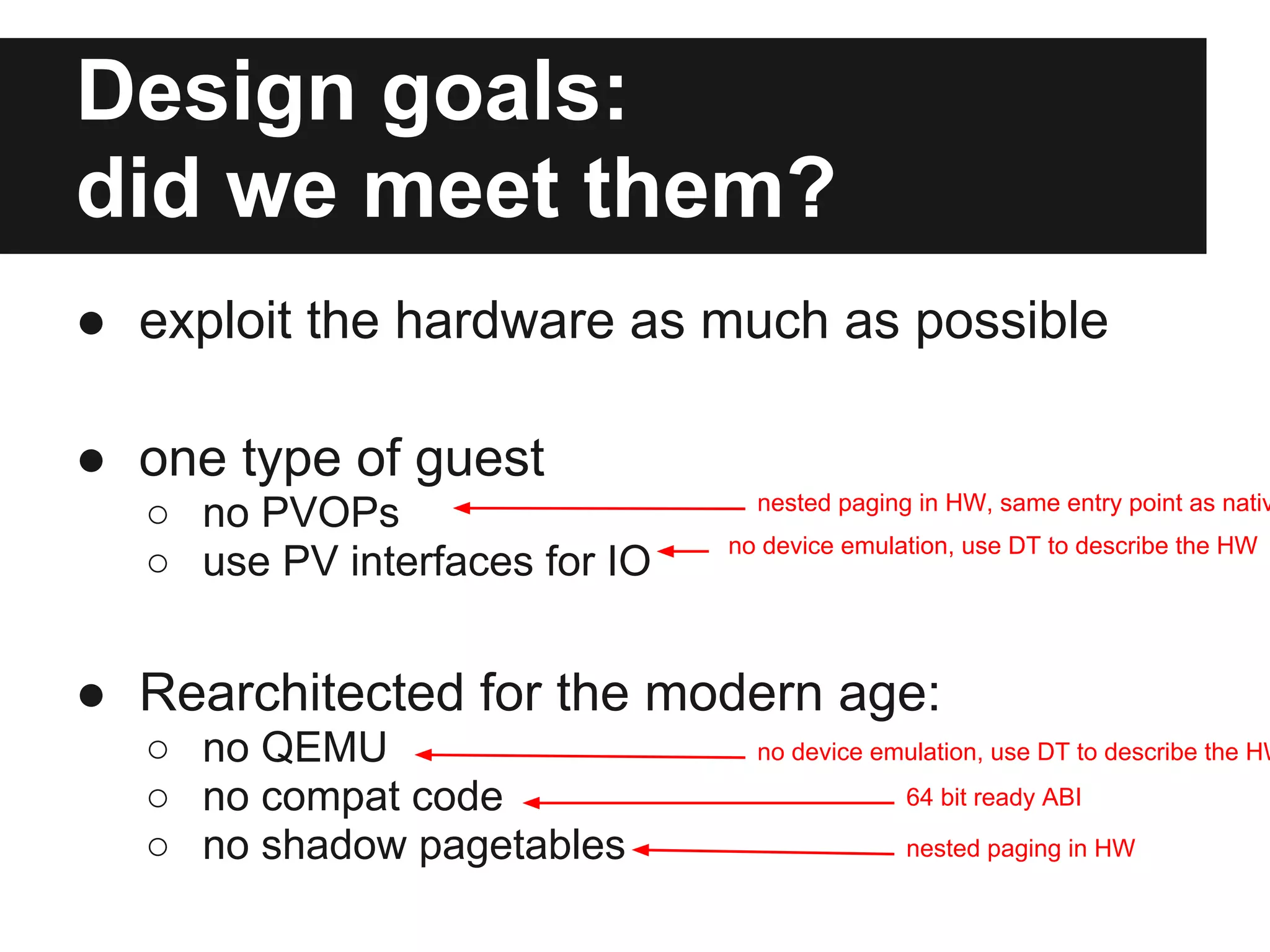
Design goals:
did we meet them?
● exploit the hardware as much as possible

● one type of guest
                                 nested paging in HW, same entry point as nativ
  ○ no PVOPs
                               no device emulation, use DT to describe the HW
  ○ use PV interfaces for IO


● Rearchitected for the modern age:
  ○ no QEMU                      no device emulation, use DT to describe the HW

  ○ no compat code                            64 bit ready ABI

  ○ no shadow pagetables                      nested paging in HW
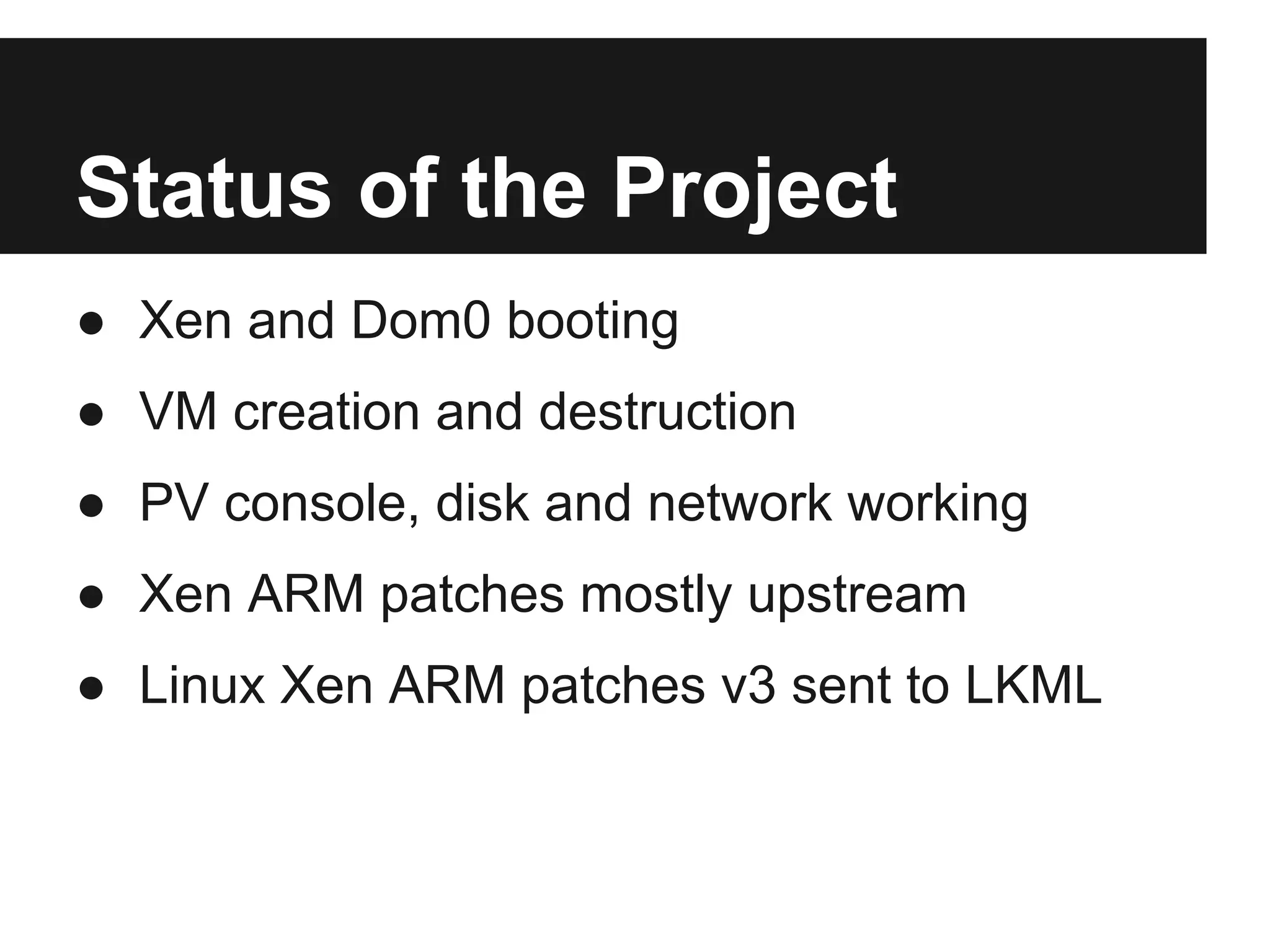
Status of the Project
● Xen and Dom0 booting
● VM creation and destruction
● PV console, disk and network working
● Xen ARM patches mostly upstream
● Linux Xen ARM patches v3 sent to LKML
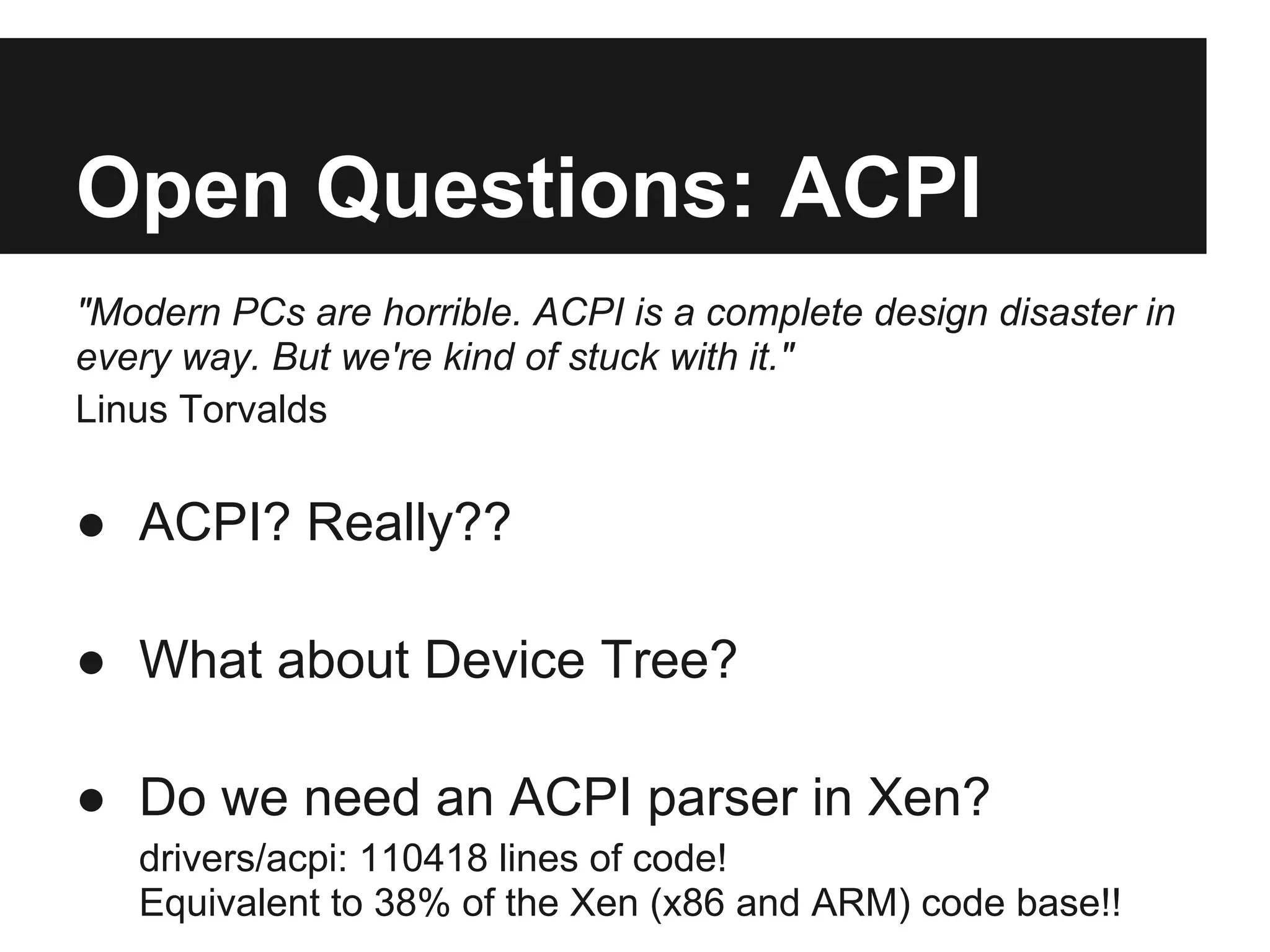
Open Questions: ACPI
"Modern PCs are horrible. ACPI is a complete design disaster in
every way. But we're kind of stuck with it."
Linus Torvalds


● ACPI? Really??

● What about Device Tree?

● Do we need an ACPI parser in Xen?
   drivers/acpi: 110418 lines of code!
   Equivalent to 38% of the Xen (x86 and ARM) code base!!
Open Questions: UEFI
"EFI is this other [...] brain-damage (the first one being ACPI). "
Linus Torvalds


● Xen as Portable Executable

● Grub2 on ARM: multiboot2?

● UEFI runtime services
    ○ PVOPS? Trap and emulate?
Open Questions:
Client Devices
● lack of a reference architecture
● UEFI Secure Boot
● Windows 8
XenSummit NA 2012: Xen on ARM Cortex A15

XenSummit NA 2012: Xen on ARM Cortex A15

  • 1.
    Xen on ARMCortex A15 Stefano Stabellini
  • 2.
    Why? Why?
  • 4.
  • 5.
    ARM Servers comingto market 4GB RAM, 4 cores per node 3 x 6 x 4 x 4 = 288 cores single node virtualization - manageability -
  • 6.
    Challenges Another PVOPs infrastructurefor ARM in Linux? How would the Linux Community react?
  • 8.
    ARMv7 virtualization extensions tothe rescue! "The ARM Architecture virtualization extension and Large Physical Address Extension (LPAE) enable the efficient implementation of virtual machine hypervisors for ARM architecture compliant processors."
  • 9.
    Design goals ● exploitthe hardware as much as possible ● one type of guest ○ no PVOPs ○ use PV interfaces for IO ● Rearchitected for the modern age: ○ no QEMU ○ no compat code ○ no shadow pagetables
  • 10.
    One type ofguest to rule them all
  • 11.
    One type ofguest Like PV guests do it: ● support booting from a supplied kernel ● no emulated devices ● use PV interfaces for IO no need for QEMU
  • 12.
    One type ofguest Like HVM guests do it: ● no PV MMU calls: exploit HW nested paging ● same entry point on native and on Xen ● use Device Tree to discover Xen presence ● no unnecessary devices in the Device Tree ● simple device emulation can be done in Xen no need for QEMU
  • 13.
    Exploit the hardware Exploitthe hardware virtualization extensions support as much as possible: ● hypervisor mode ● MMU: second stage translation ○ no PV MMU calls: no need for PVOPs ○ no shadow pagetables: -10721 lines of code!! ● hypercall: HVC ● generic timer
  • 14.
    General Interrupt Controller aninterrupt controller with virtualization support ● use the GIC to inject hardware interrupts into dom0 ● use the GIC to inject event notifications into any guest domains with Xen support ○ use PPI 31 ○ advertise the IRQ via Device Tree ● No special Xen entry point ● No Xen platform PCI device
  • 15.
    The hypercall calling convention thehypercall interface: ● hvc instruction ● hypervisor specific imm 0xEA1 ● hypercall arguments passed on registers
  • 16.
    a 64 bit"ready" ABI ● a single hypercall ABI for 32 bit guests and 64 bit guests no compat code in Xen ○ 2600 lines of code lighter
  • 17.
    a 64 bit"ready" ABI make unsigned long and pointers 8 bytes sized and 8 bytes aligned everywhere
  • 18.
    a 64 bit"ready" ABI Guest 8 bytes unsigned long 8 bytes aligned --- 8 bytes pointer 8 bytes aligned HVC | r0 | r1 | r2 | r3 | r4 | ... | r12 Xen
  • 19.
    a 64 bit"ready" ABI Guest 8 bytes unsigned long 8 bytes aligned 32 bit register --- 8 bytes pointer 8 bytes aligned HVC | r0 | r1 | r2 | r3 | r4 | ... | r12 Xen XEN_GUEST_HANDLE_PARAM XEN_GUEST_HANDLE
  • 20.
    a 64 bit"ready" ABI make unsigned long and pointers 8 bytes sized and 8 bytes aligned everywhere Collateral damage: a 1547 lines patch to s/XEN_GUEST_HANDLE/XEN_GUEST_HANDLE_PARAM/
  • 21.
    Device Tree Use DeviceTree to describe the virtual platform hypervisor { compatible = "xen,xen", "xen,xen-4.2"; reg = <0xb0000000 0x20000>; interrupts = <1 15 0xf08>; };
  • 22.
    Device Tree Use DeviceTree to describe the virtual platform version of the Xen ABI hypervisor { compatible = "xen,xen", "xen,xen-4.2"; reg = <0xb0000000 0x20000>; interrupts = <1 15 0xf08>; }; Grant table memory area event notifications IRQ
  • 23.
    Design goals: did wemeet them? ● exploit the hardware as much as possible ● one type of guest ○ no PVOPs ○ use PV interfaces for IO ● Rearchitected for the modern age: ○ no QEMU ○ no compat code ○ no shadow pagetables
  • 24.
    Design goals: did wemeet them? ● exploit the hardware as much as possible ● one type of guest nested paging in HW, same entry point as nativ ○ no PVOPs no device emulation, use DT to describe the HW ○ use PV interfaces for IO ● Rearchitected for the modern age: ○ no QEMU no device emulation, use DT to describe the HW ○ no compat code 64 bit ready ABI ○ no shadow pagetables nested paging in HW
  • 25.
    Status of theProject ● Xen and Dom0 booting ● VM creation and destruction ● PV console, disk and network working ● Xen ARM patches mostly upstream ● Linux Xen ARM patches v3 sent to LKML
  • 26.
    Open Questions: ACPI "ModernPCs are horrible. ACPI is a complete design disaster in every way. But we're kind of stuck with it." Linus Torvalds ● ACPI? Really?? ● What about Device Tree? ● Do we need an ACPI parser in Xen? drivers/acpi: 110418 lines of code! Equivalent to 38% of the Xen (x86 and ARM) code base!!
  • 27.
    Open Questions: UEFI "EFIis this other [...] brain-damage (the first one being ACPI). " Linus Torvalds ● Xen as Portable Executable ● Grub2 on ARM: multiboot2? ● UEFI runtime services ○ PVOPS? Trap and emulate?
  • 28.
    Open Questions: Client Devices ●lack of a reference architecture ● UEFI Secure Boot ● Windows 8