Planning for Xen 4.3
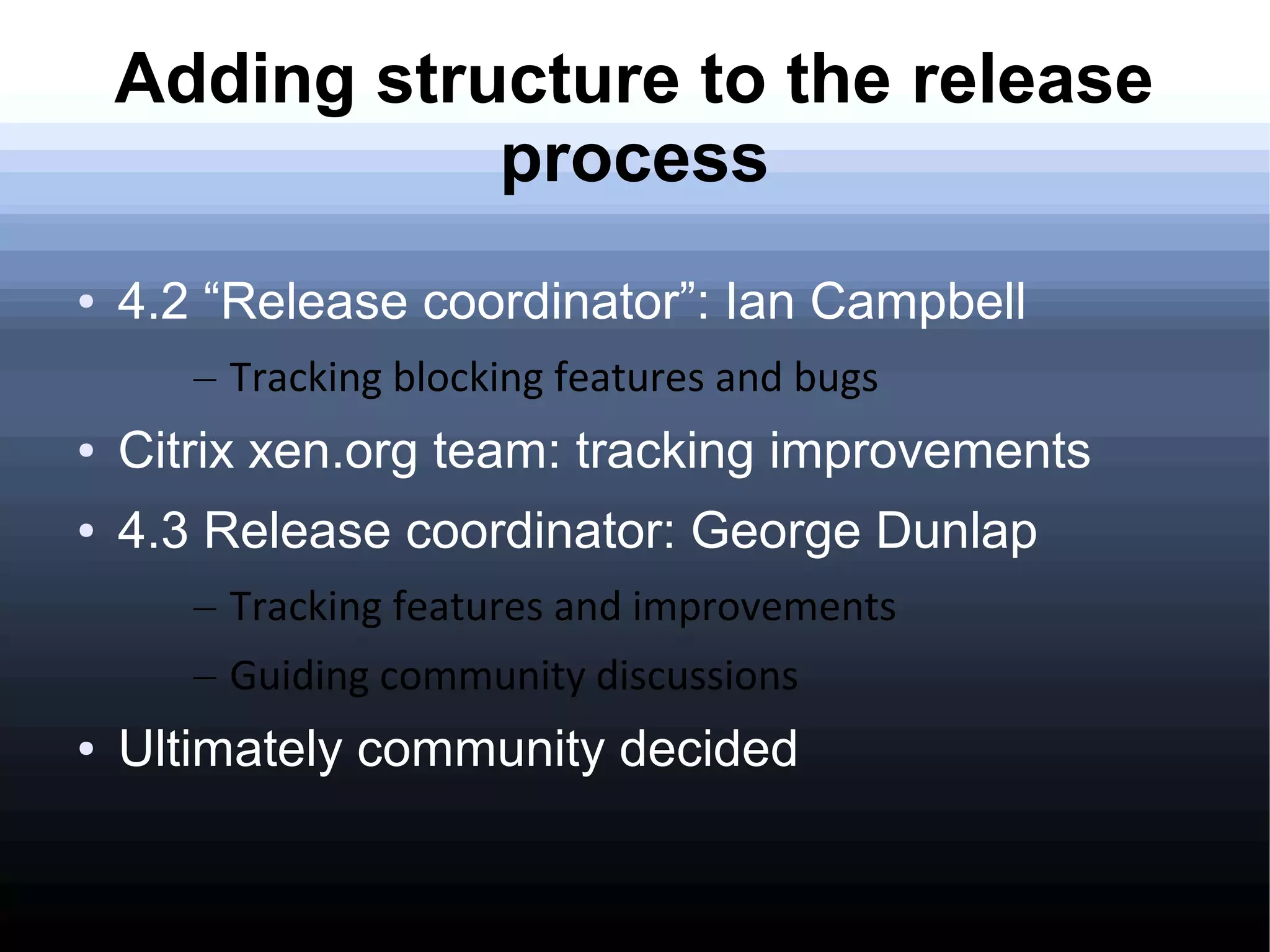
Adding structure to the release
               process
●   4.2 “Release coordinator”: Ian Campbell
       – Tracking blocking features and bugs
●   Citrix xen.org team: tracking improvements
●   4.3 Release coordinator: George Dunlap
       – Tracking features and improvements
       – Guiding community discussions
●   Ultimately community decided
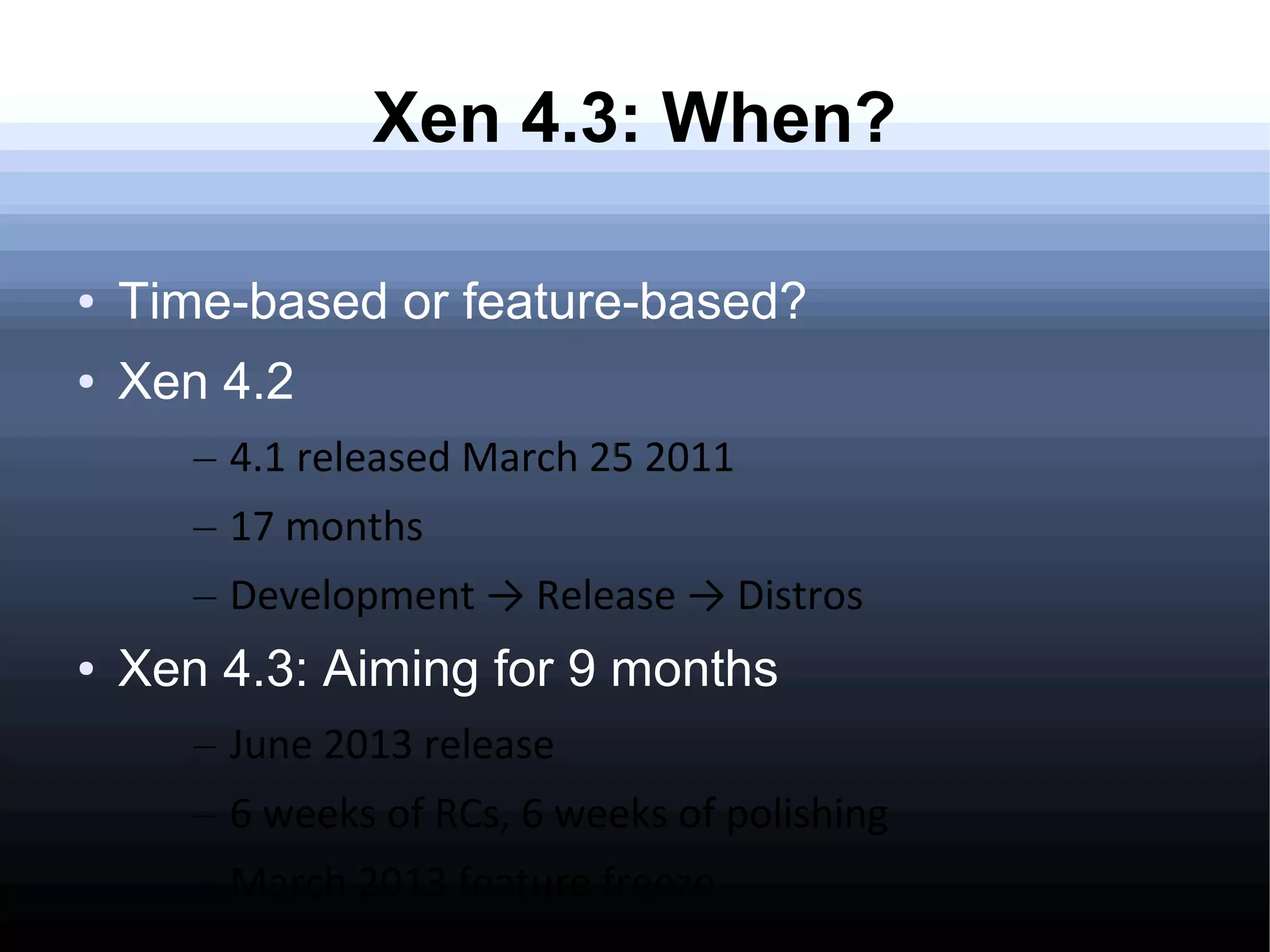
Xen 4.3: When?

●   Time-based or feature-based?
●   Xen 4.2
       – 4.1 released March 25 2011
       – 17 months
       – Development → Release → Distros
●   Xen 4.3: Aiming for 9 months
       – June 2013 release
       – 6 weeks of RCs, 6 weeks of polishing
       – March 2013 feature freeze
Tracking features

●   Big reason for delay: libxl stable interface
       – No one realized how much more work there was!
●   Looking ahead: What can we finish by 4.3?
       – Lots!
Group: Feature Parity

●   Upstream feature parity
       – Blktap3
       – Default to qemu-upstream
●   Qemu stubdomain / dom0 parity
       – PV audio
Blktap3: blktap for pvops

●   Blktap2: Enable user-space interposition on
    block device
       – QCOW
       – VHD
       – Snapshotting
●   Not upstreamable (DKMS packages avail)
●   Blktap3: Fully user-space
Group: Scalability

●   Ram limit (16 TiB)
●   Raising event-channel limits
Event channel scalability

●   Event pending, 2-level bit array
       – 32-bit: 1024
       – 64-bit: 4096
●   Each PV service requires 1 event channel
       – Disk, net, console, xenstore = 4
       – 32-bit: max 256 guests
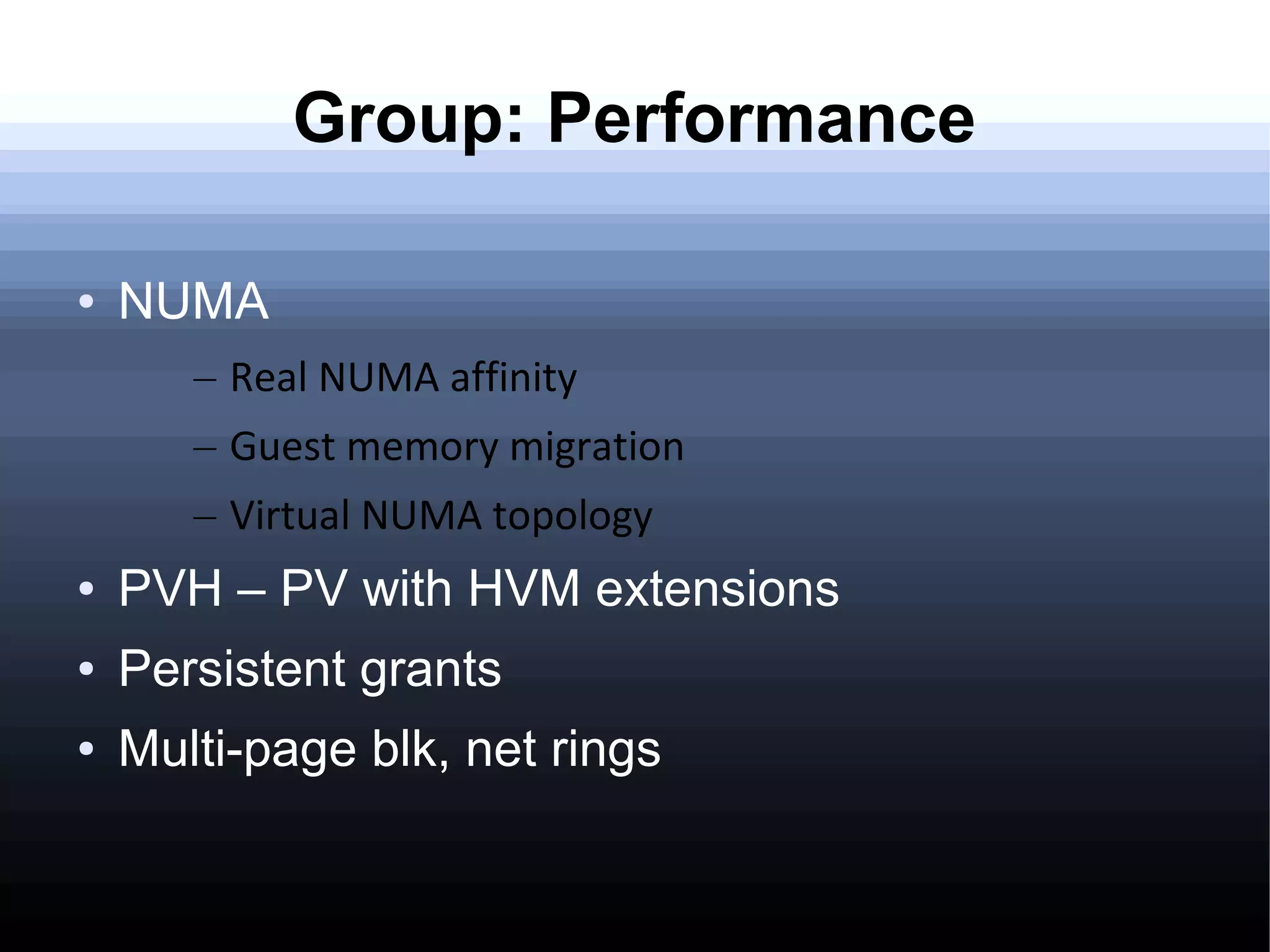
Group: Performance

●   NUMA
       – Real NUMA affinity
       – Guest memory migration
       – Virtual NUMA topology
●   PVH – PV with HVM extensions
●   Persistent grants
●   Multi-page blk, net rings
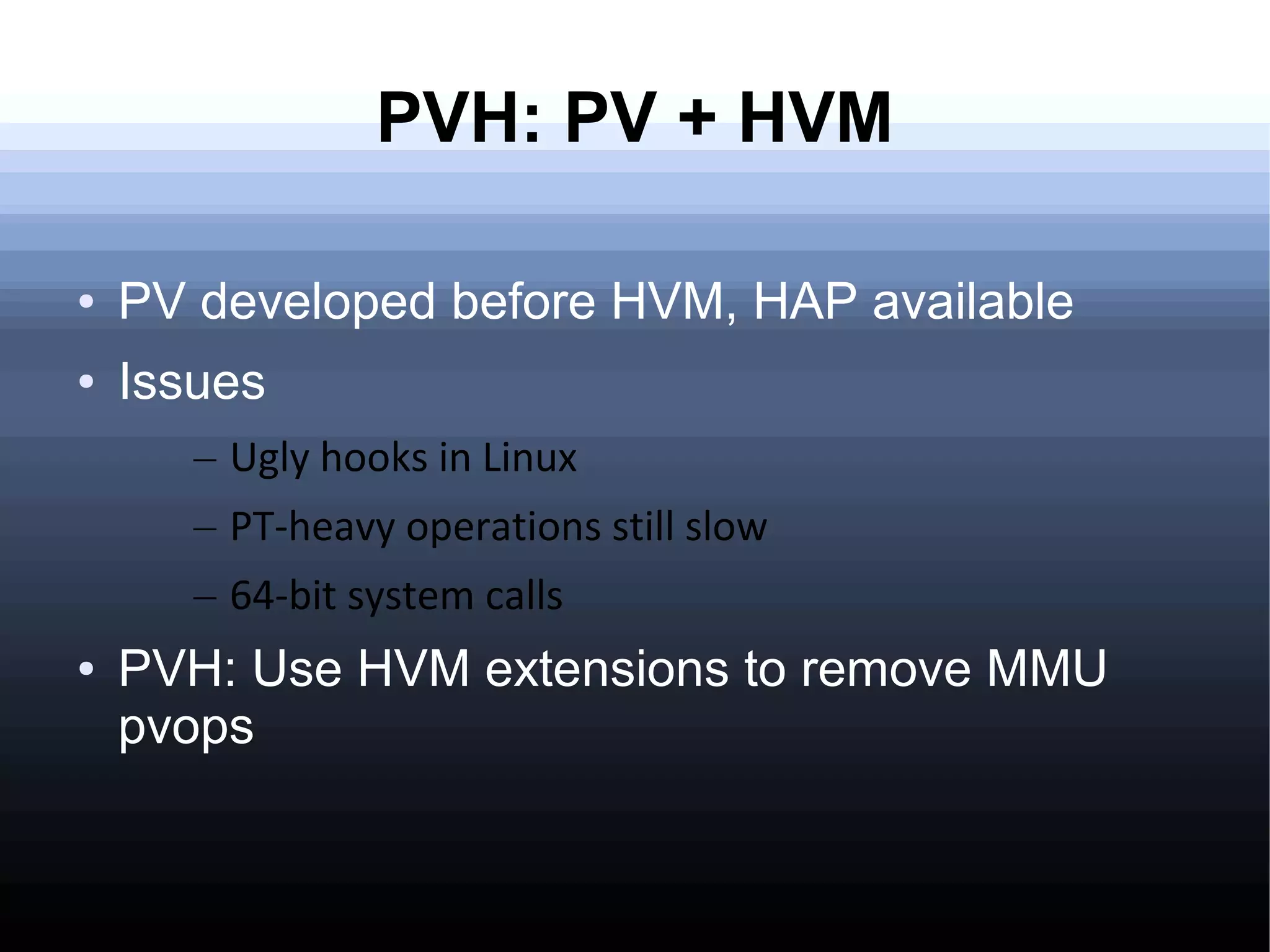
PVH: PV + HVM

●   PV developed before HVM, HAP available
●   Issues
       – Ugly hooks in Linux
       – PT-heavy operations still slow
       – 64-bit system calls
●   PVH: Use HVM extensions to remove MMU
    pvops
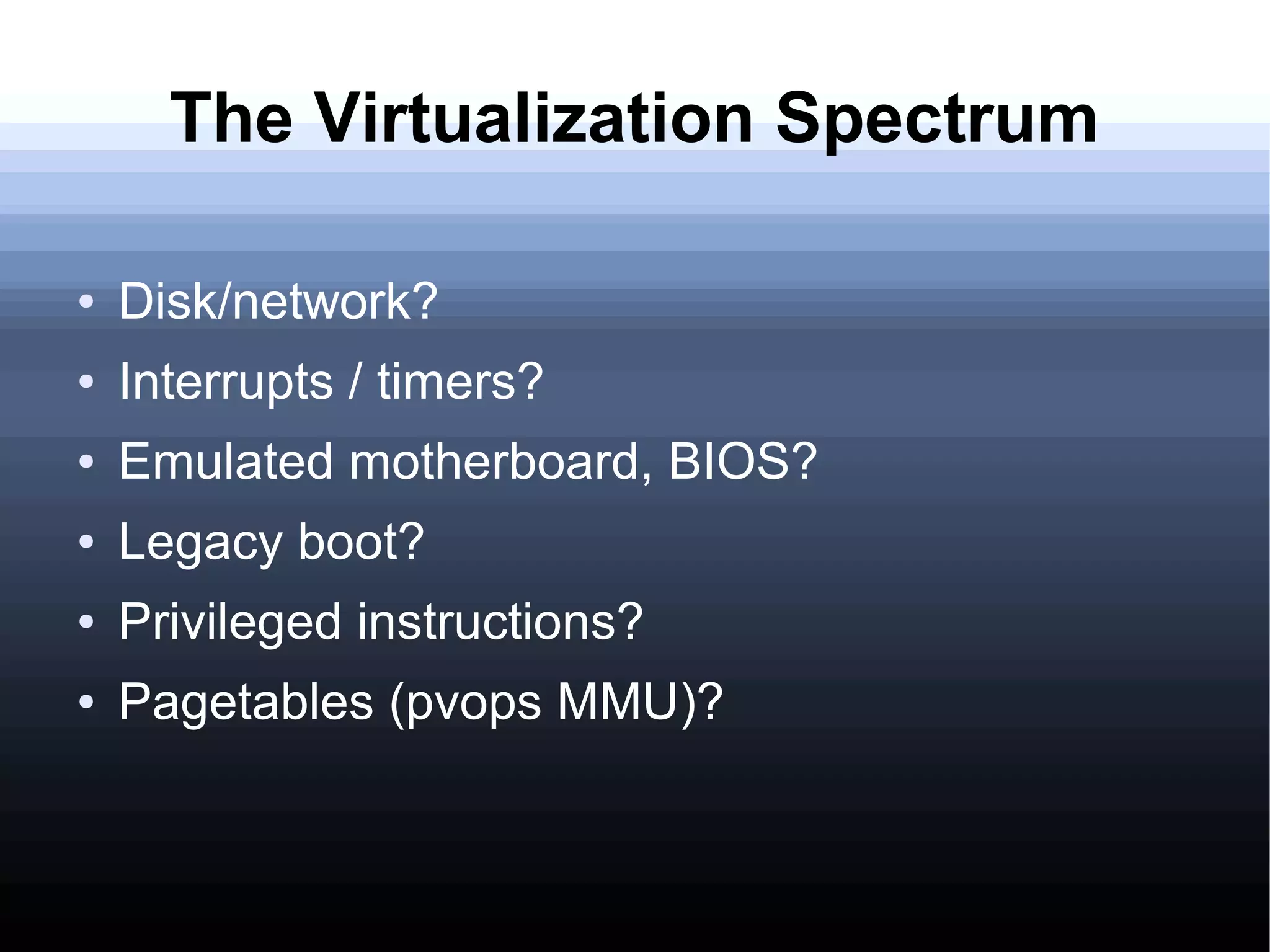
The Virtualization Spectrum

●   Disk/network?
●   Interrupts / timers?
●   Emulated motherboard, BIOS?
●   Legacy boot?
●   Privileged instructions?
●   Pagetables (pvops MMU)?
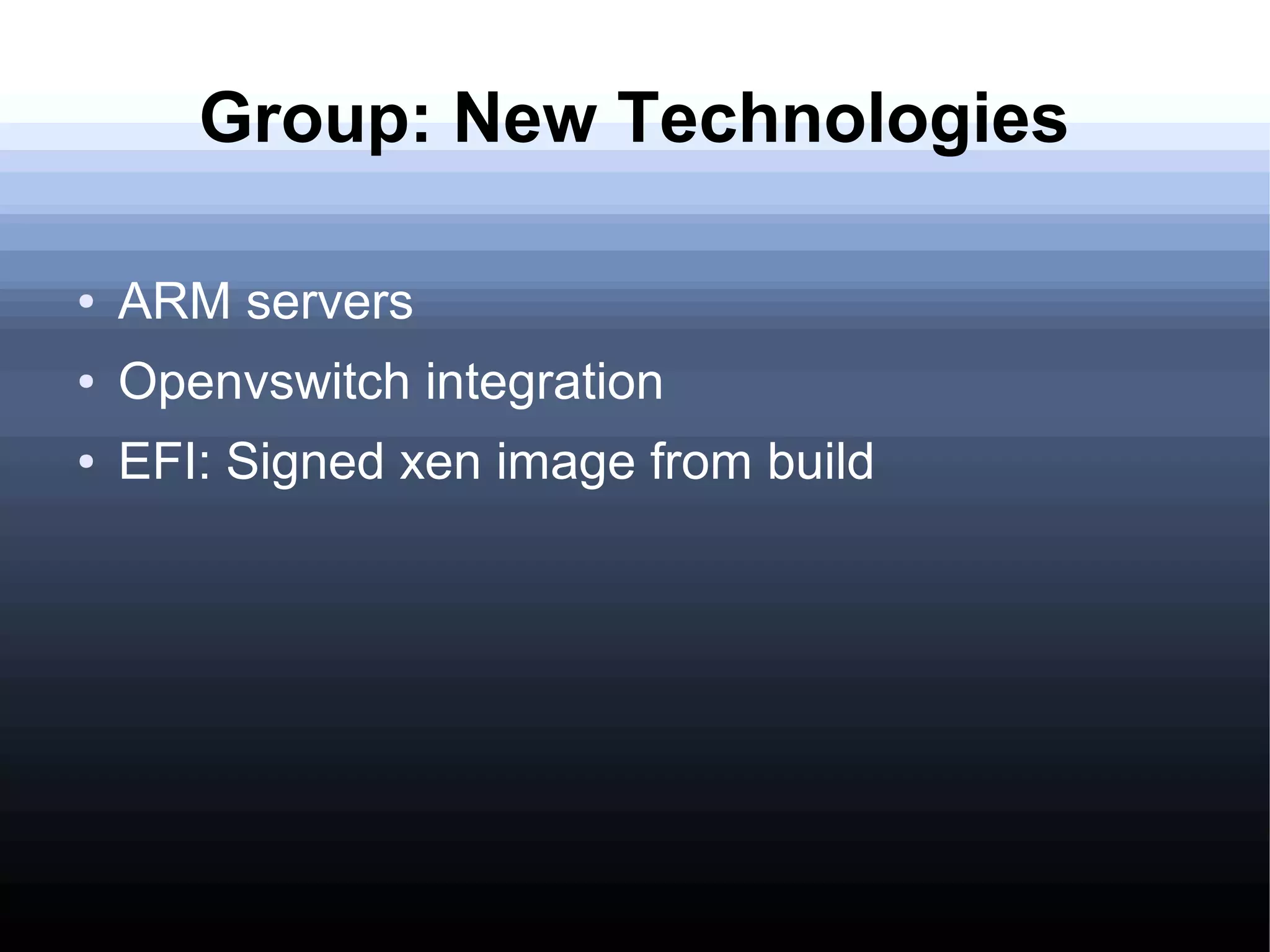
Group: New Technologies

●   ARM servers
●   Openvswitch integration
●   EFI: Signed xen image from build
xl improvements

●   vm import/export
●   USB pass-through
●   Backend driver script rationalization
Group: New features

●   Nested virtualization
       – Win* “WinXP compatibility mode”
●   Full-VM snapshotting / cloning
●   Storage migration
Getting feedback

●   How do developers know what users want?
●   Uservoice.com
       – Suggest improvements
       – Vote on which ones are the most important
●   http://xenorg.uservoice.com
Conclusion and Questions

●   Release cycle
       – March 2013 feature freeze
       – June 2013 release
●   Lots of great features!
●   xenorg.uservoice.com

Xen 4.3 Roadmap

  • 1.
  • 2.
    Adding structure tothe release process ● 4.2 “Release coordinator”: Ian Campbell – Tracking blocking features and bugs ● Citrix xen.org team: tracking improvements ● 4.3 Release coordinator: George Dunlap – Tracking features and improvements – Guiding community discussions ● Ultimately community decided
  • 3.
    Xen 4.3: When? ● Time-based or feature-based? ● Xen 4.2 – 4.1 released March 25 2011 – 17 months – Development → Release → Distros ● Xen 4.3: Aiming for 9 months – June 2013 release – 6 weeks of RCs, 6 weeks of polishing – March 2013 feature freeze
  • 4.
    Tracking features ● Big reason for delay: libxl stable interface – No one realized how much more work there was! ● Looking ahead: What can we finish by 4.3? – Lots!
  • 5.
    Group: Feature Parity ● Upstream feature parity – Blktap3 – Default to qemu-upstream ● Qemu stubdomain / dom0 parity – PV audio
  • 6.
    Blktap3: blktap forpvops ● Blktap2: Enable user-space interposition on block device – QCOW – VHD – Snapshotting ● Not upstreamable (DKMS packages avail) ● Blktap3: Fully user-space
  • 7.
    Group: Scalability ● Ram limit (16 TiB) ● Raising event-channel limits
  • 8.
    Event channel scalability ● Event pending, 2-level bit array – 32-bit: 1024 – 64-bit: 4096 ● Each PV service requires 1 event channel – Disk, net, console, xenstore = 4 – 32-bit: max 256 guests
  • 9.
    Group: Performance ● NUMA – Real NUMA affinity – Guest memory migration – Virtual NUMA topology ● PVH – PV with HVM extensions ● Persistent grants ● Multi-page blk, net rings
  • 10.
    PVH: PV +HVM ● PV developed before HVM, HAP available ● Issues – Ugly hooks in Linux – PT-heavy operations still slow – 64-bit system calls ● PVH: Use HVM extensions to remove MMU pvops
  • 11.
    The Virtualization Spectrum ● Disk/network? ● Interrupts / timers? ● Emulated motherboard, BIOS? ● Legacy boot? ● Privileged instructions? ● Pagetables (pvops MMU)?
  • 12.
    Group: New Technologies ● ARM servers ● Openvswitch integration ● EFI: Signed xen image from build
  • 13.
    xl improvements ● vm import/export ● USB pass-through ● Backend driver script rationalization
  • 14.
    Group: New features ● Nested virtualization – Win* “WinXP compatibility mode” ● Full-VM snapshotting / cloning ● Storage migration
  • 15.
    Getting feedback ● How do developers know what users want? ● Uservoice.com – Suggest improvements – Vote on which ones are the most important ● http://xenorg.uservoice.com
  • 16.
    Conclusion and Questions ● Release cycle – March 2013 feature freeze – June 2013 release ● Lots of great features! ● xenorg.uservoice.com