Snake bites are a major public health issue in India, with estimates of 200,000 bites and 15,000-20,000 deaths annually. The document discusses the epidemiology, types of venomous snakes, clinical effects of envenomation, and management of snake bites. Management involves first aid measures like immobilization of the bite area, administration of antivenom serum, and supportive care. Antivenom serum is most effective when given within 4 hours of the bite to neutralize the venom, and mechanical ventilation may be needed if respiratory failure occurs from neurotoxic or systemic effects of the venom.
Epidemiology India estimates:200,000 Snake bites and 15-20,000 deaths per year Males:Female::2:1. Majority of the bites being on the lower extremities.
3.
4.
Epidemiology India estimates:200,000 Snake bites and 15-20,000 deaths per year Males:Female::2:1. Majority of the bites being on the lower extremities. 50% of bites by venomous snakes are dry bites . that result in negligible envenomation.
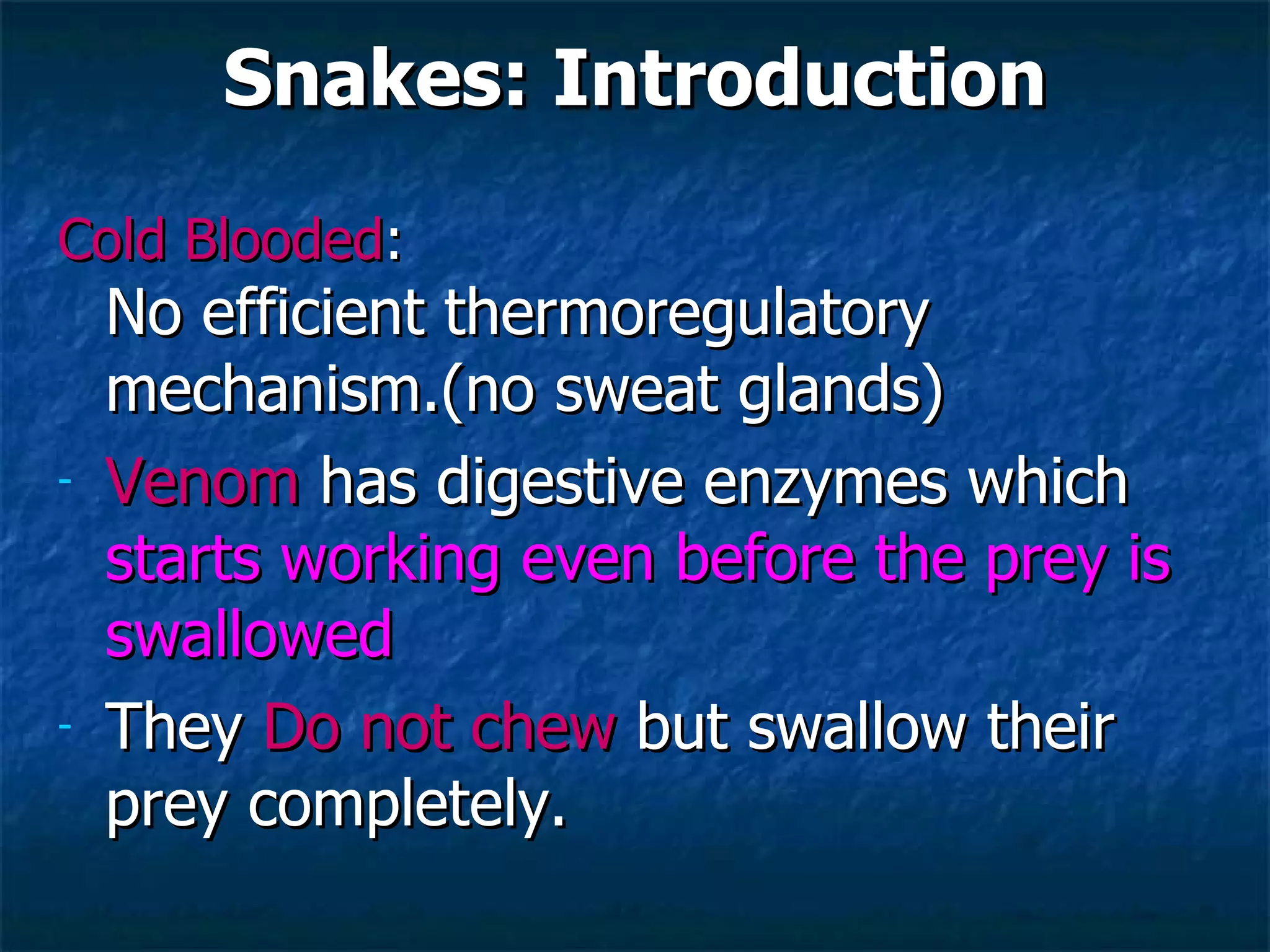
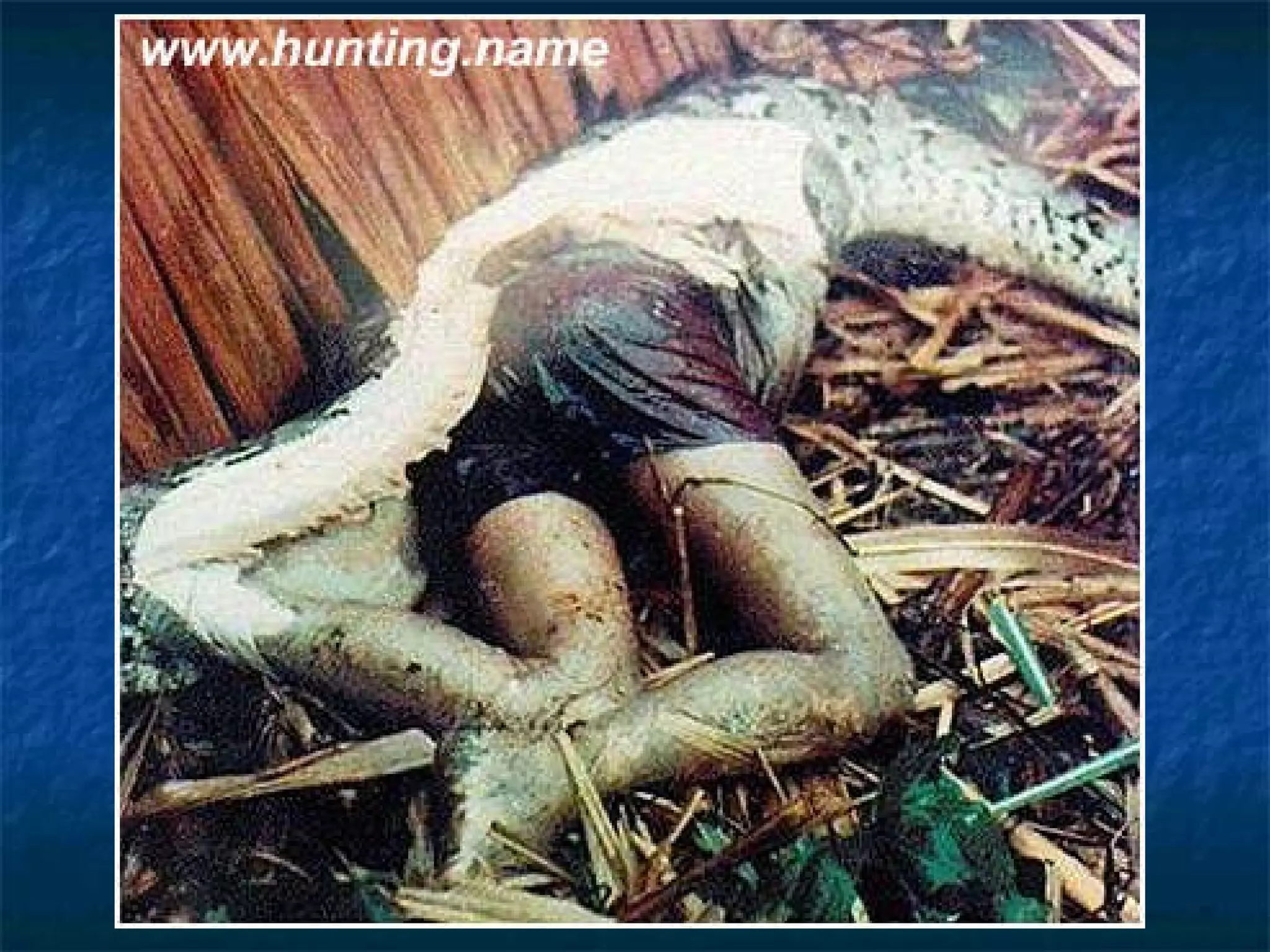
Snakes: Introduction ColdBlooded : No efficient thermoregulatory mechanism.(no sweat glands) Venom has digestive enzymes which starts working even before the prey is swallowed They Do not chew but swallow their prey completely.
8.
9.
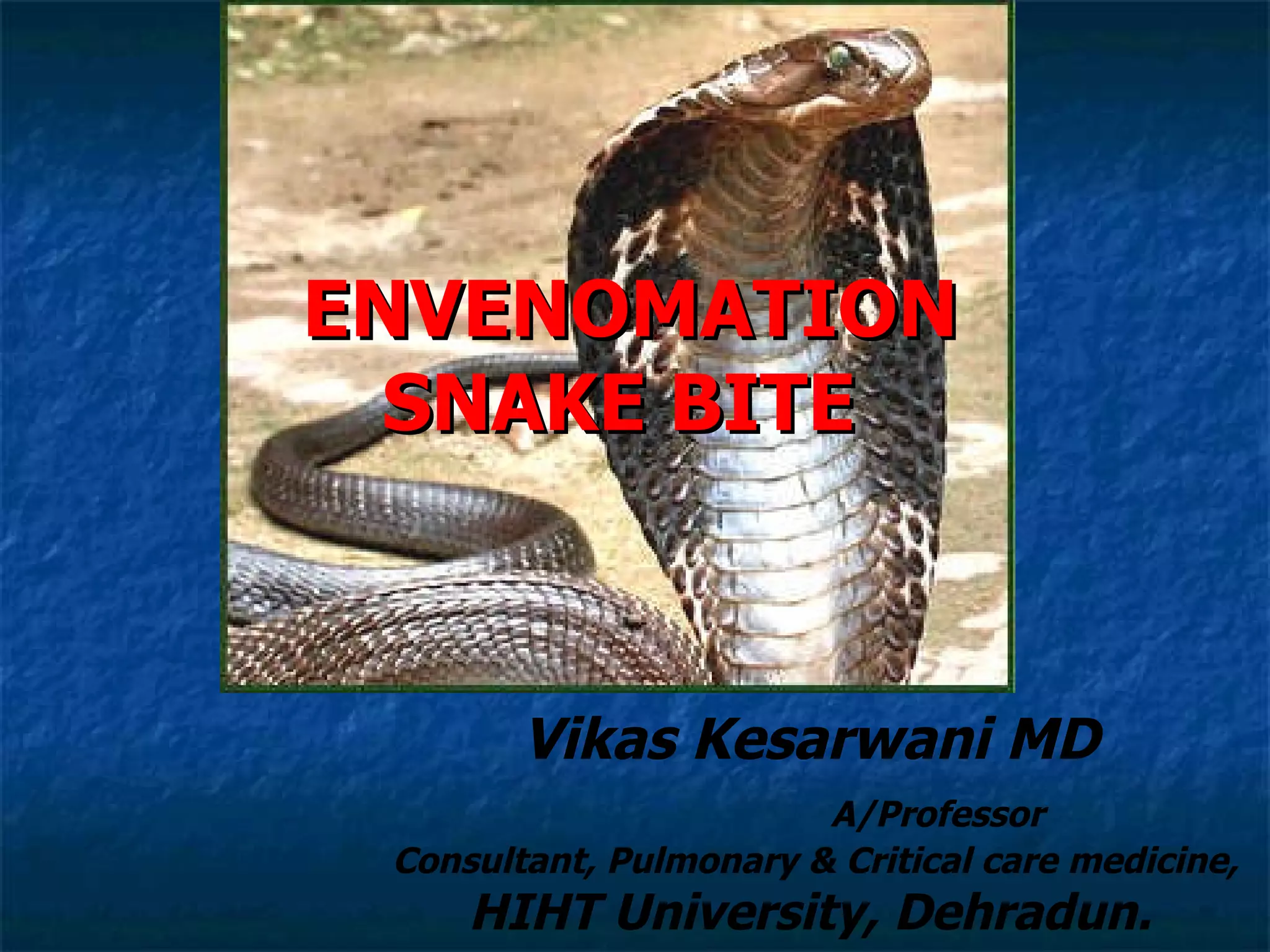
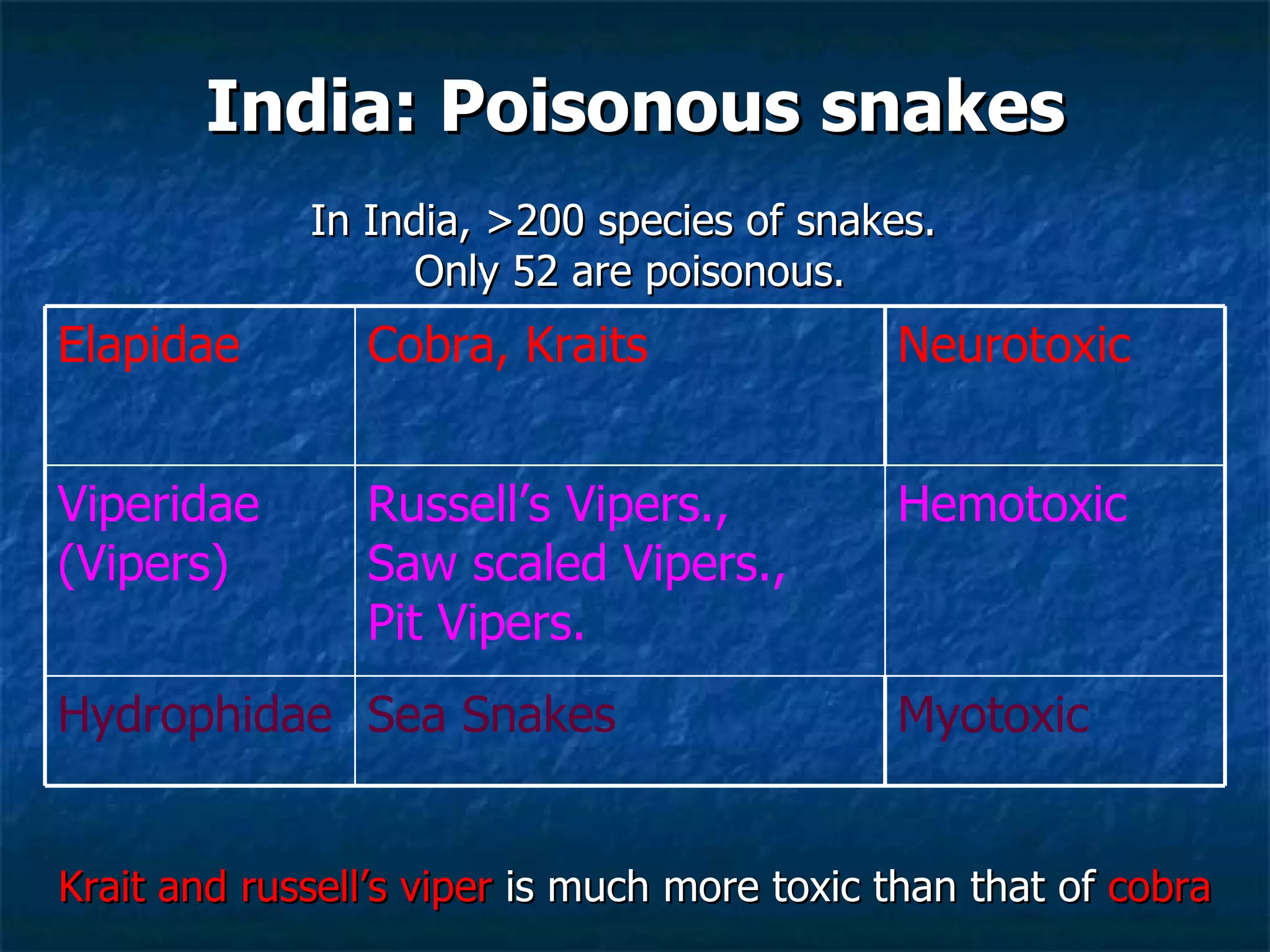
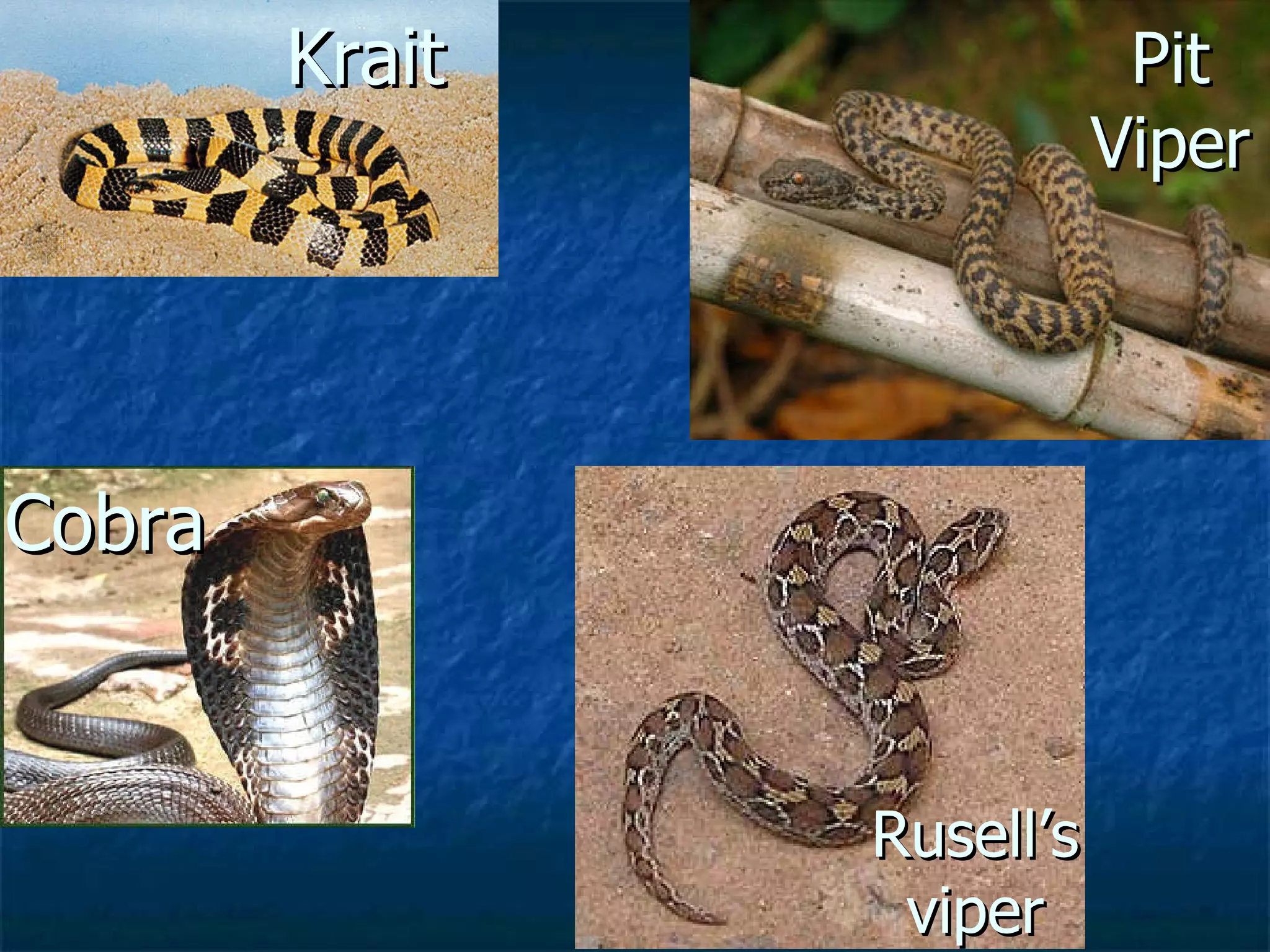
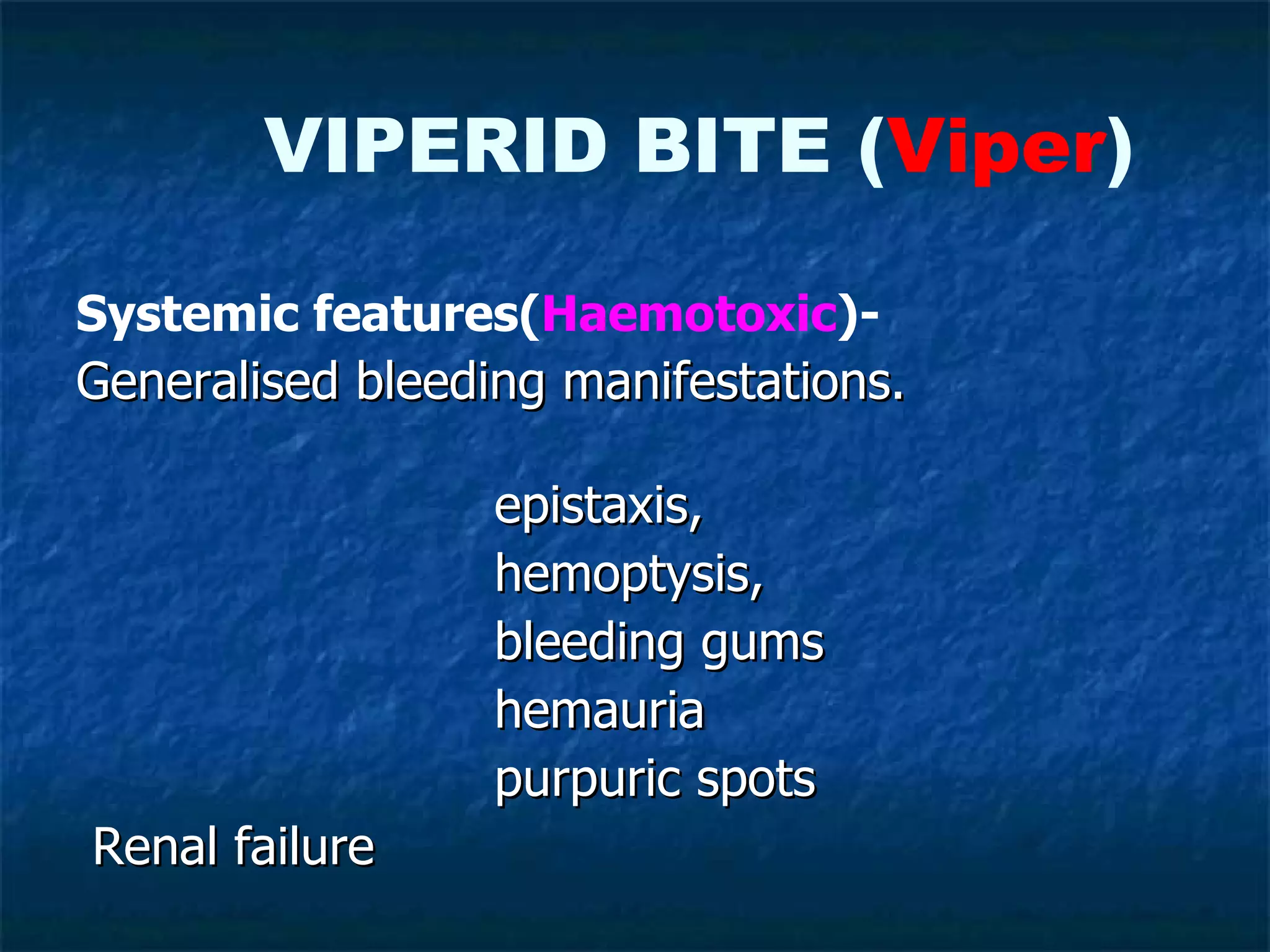
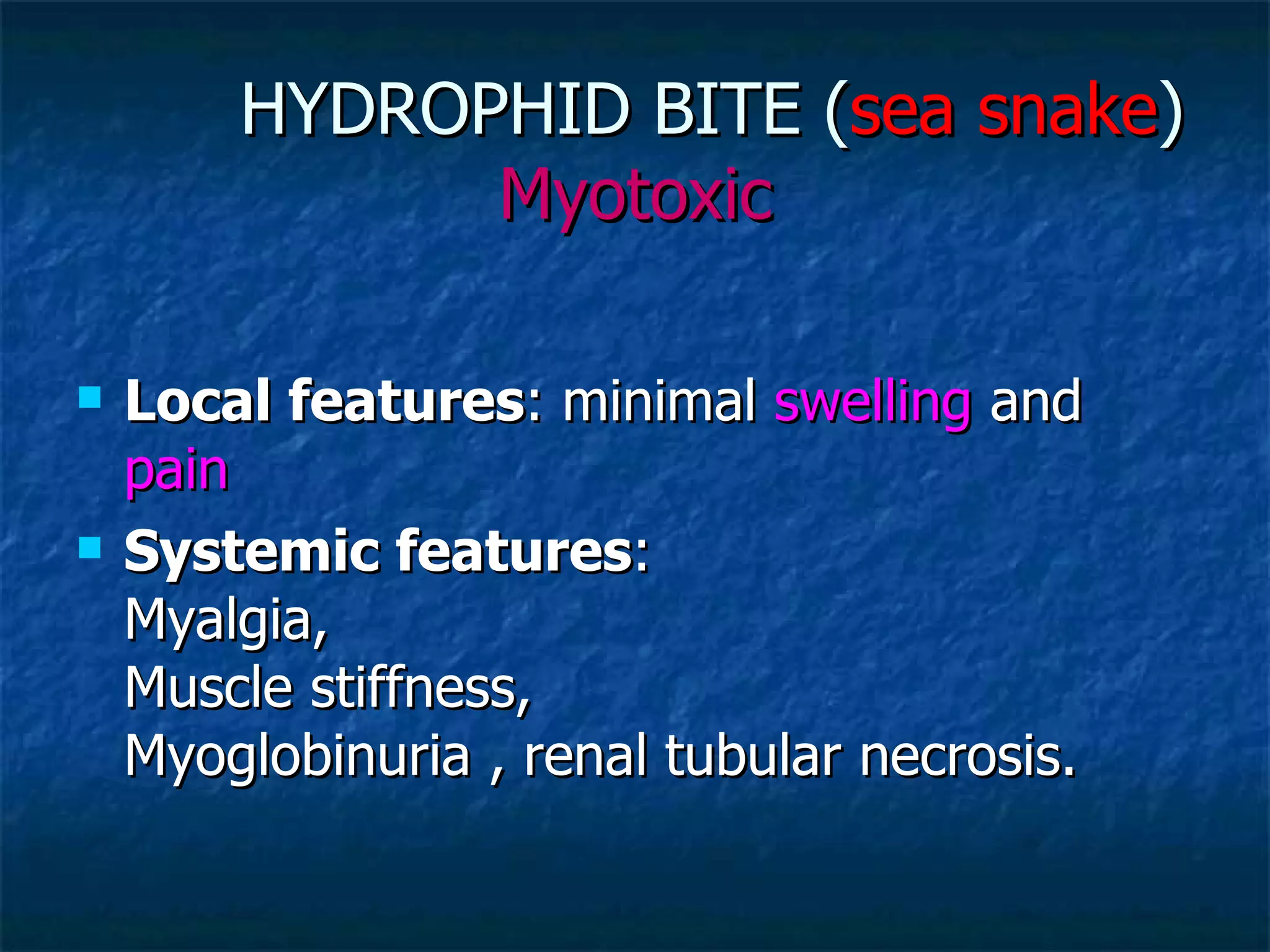
India: Poisonous snakesIn India, >200 species of snakes. Only 52 are poisonous. Krait and russell’s viper is much more toxic than that of cobra Sea Snakes Russell’s Vipers., Saw scaled Vipers., Pit Vipers. Cobra, Kraits Myotoxic Hydrophidae Hemotoxic Viperidae (Vipers) Neurotoxic Elapidae

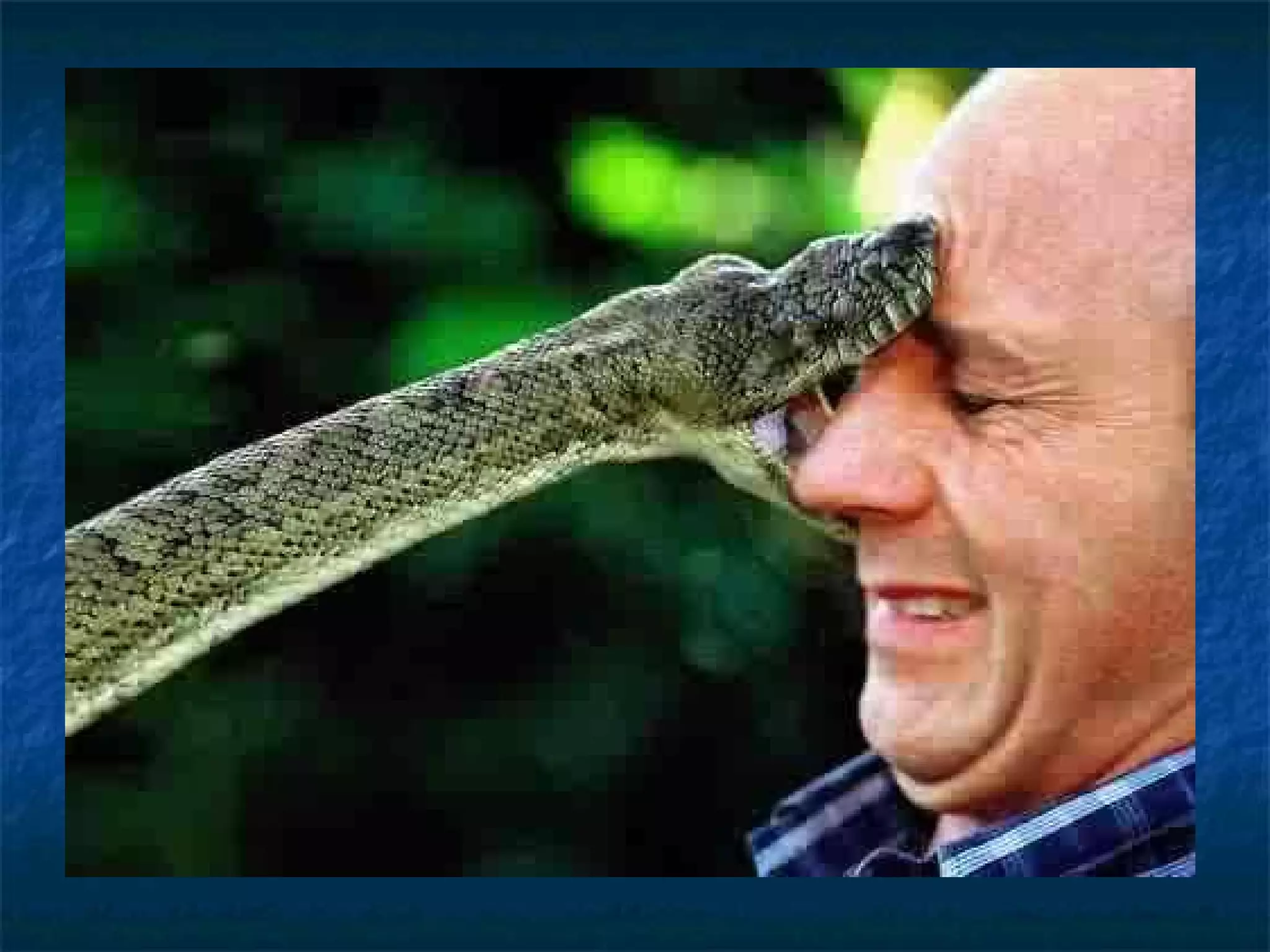
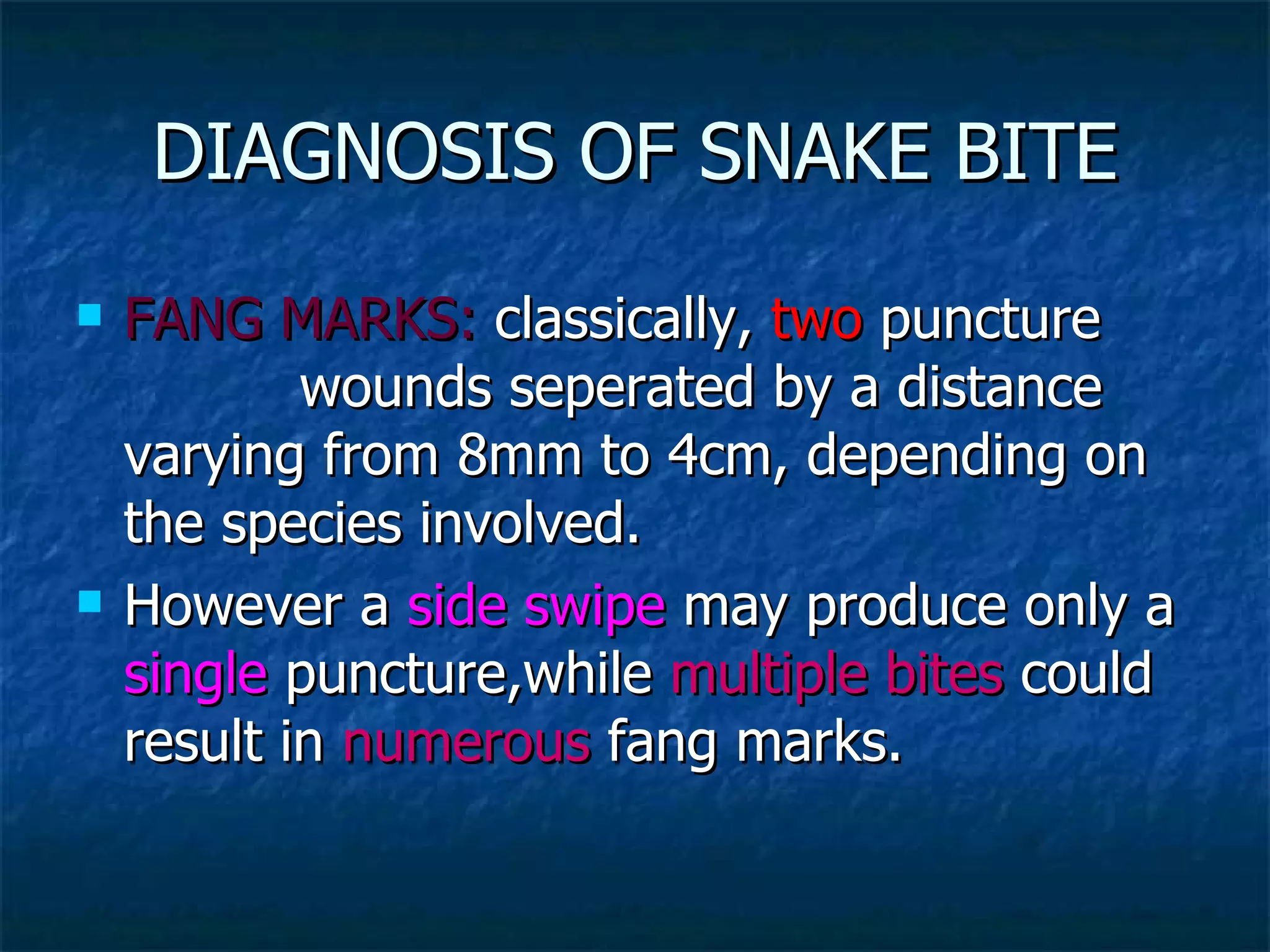
DIAGNOSIS OF SNAKEBITE FANG MARKS: classically, two puncture wounds seperated by a distance varying from 8mm to 4cm, depending on the species involved. However a side swipe may produce only a single puncture,while multiple bites could result in numerous fang marks.
13.
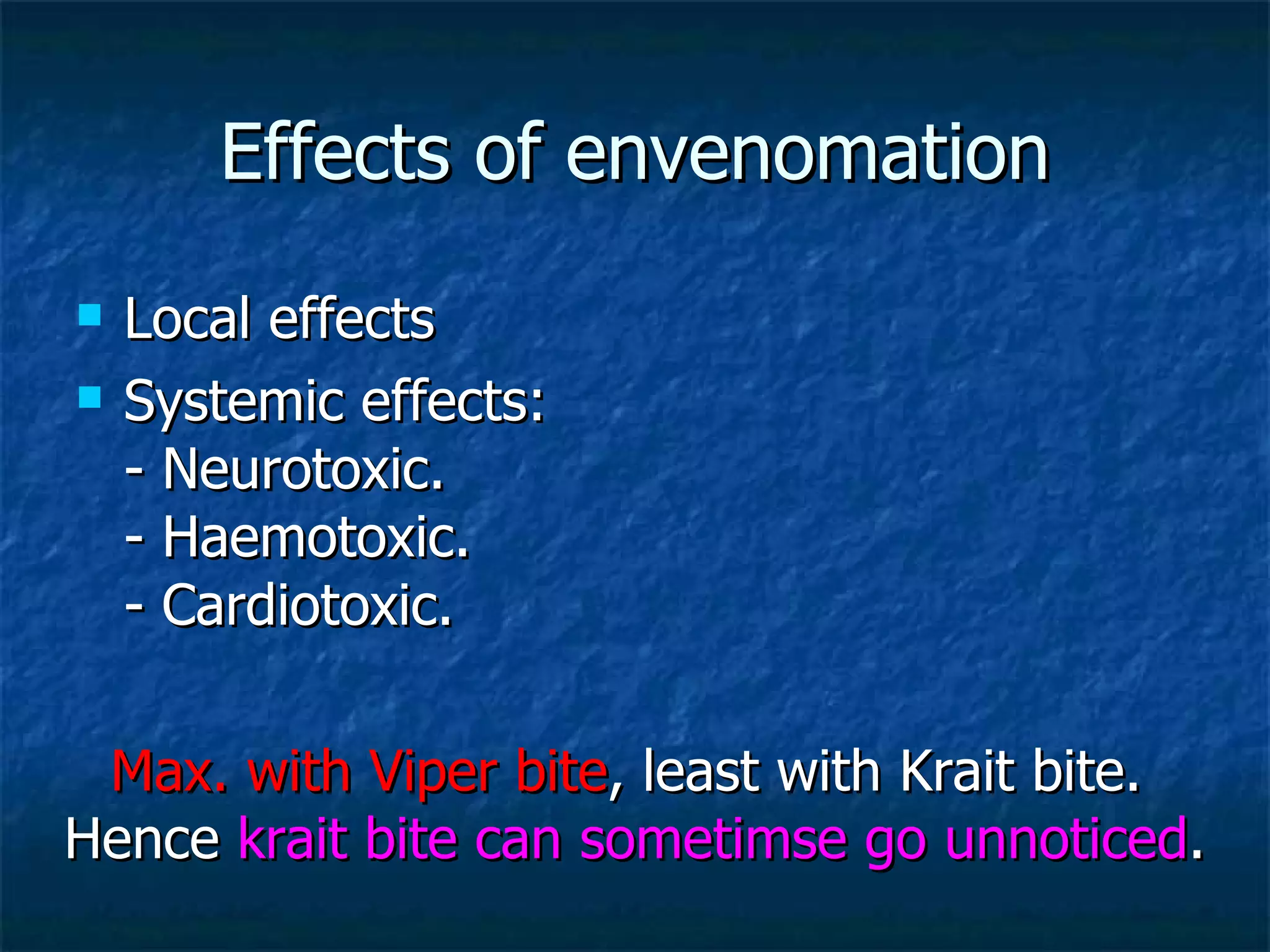
Effects of envenomationLocal effects Systemic effects: - Neurotoxic. - Haemotoxic. - Cardiotoxic. Max. with Viper bite , least with Krait bite. Hence krait bite can sometimse go unnoticed .
14.
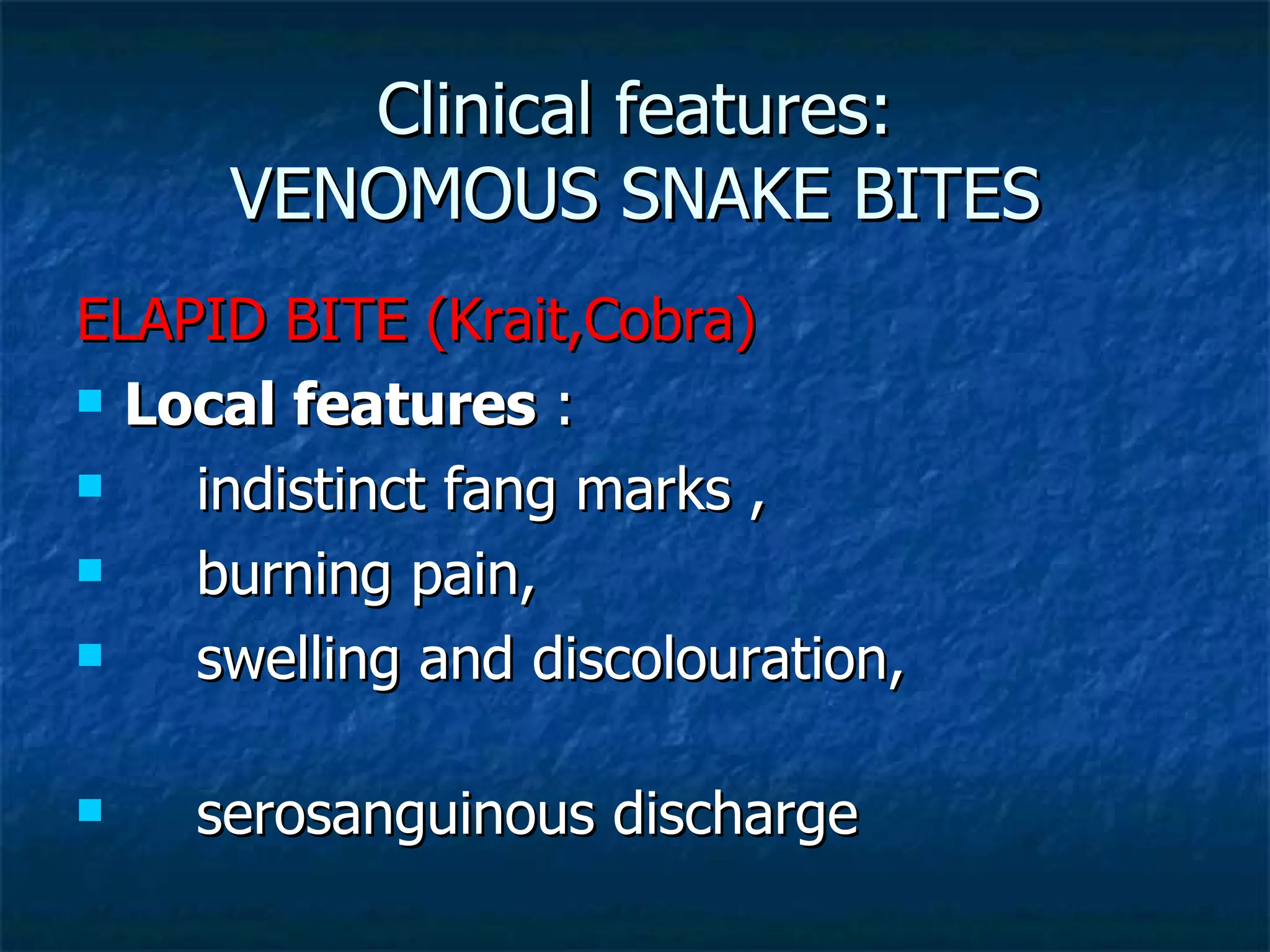
Clinical features: VENOMOUSSNAKE BITES ELAPID BITE (Krait,Cobra) Local features : indistinct fang marks , burning pain, swelling and discolouration, serosanguinous discharge
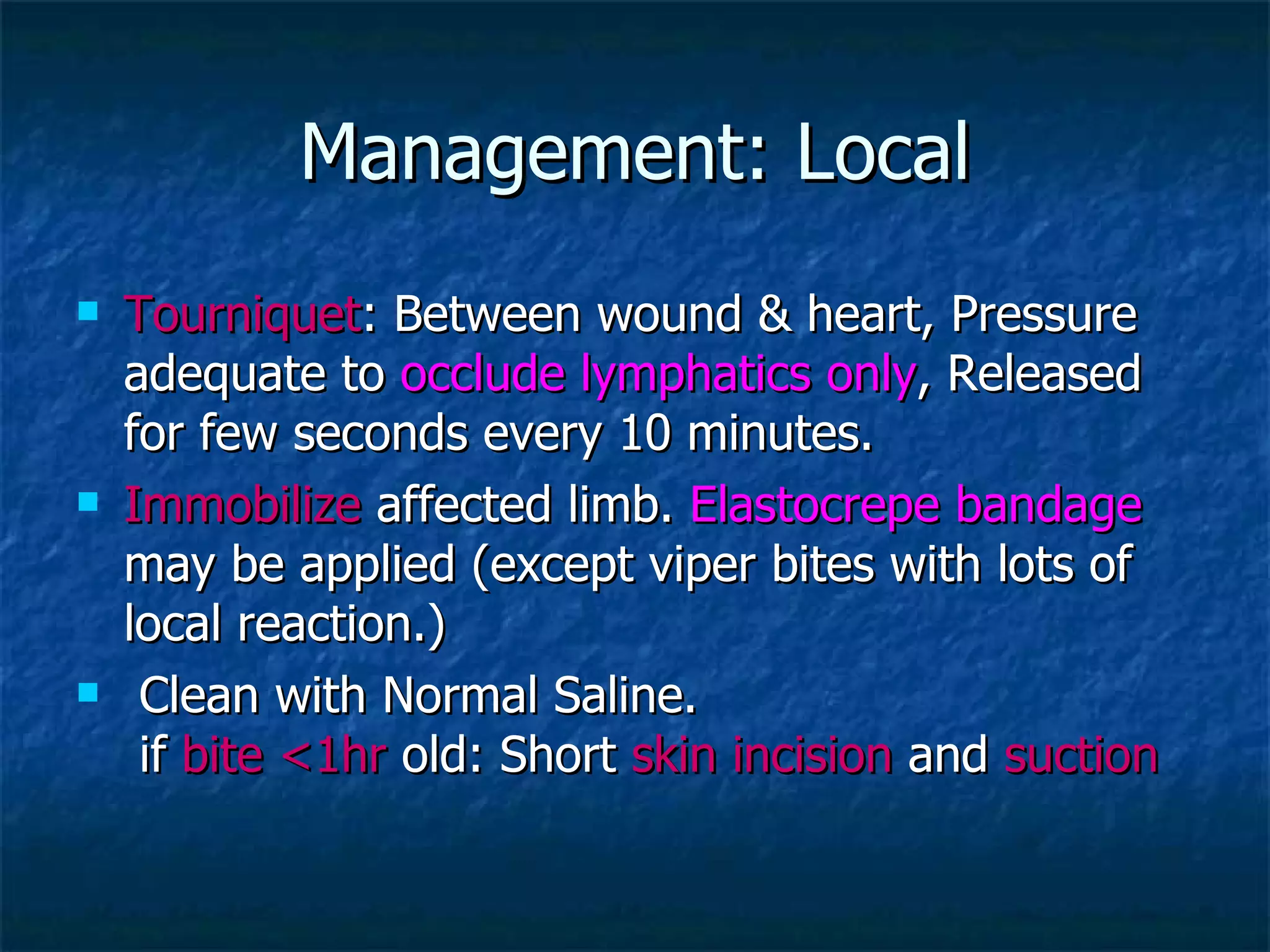
Management: Local Tourniquet: Between wound & heart, Pressure adequate to occlude lymphatics only , Released for few seconds every 10 minutes. Immobilize affected limb. Elastocrepe bandage may be applied (except viper bites with lots of local reaction.) Clean with Normal Saline. if bite <1hr old: Short skin incision and suction
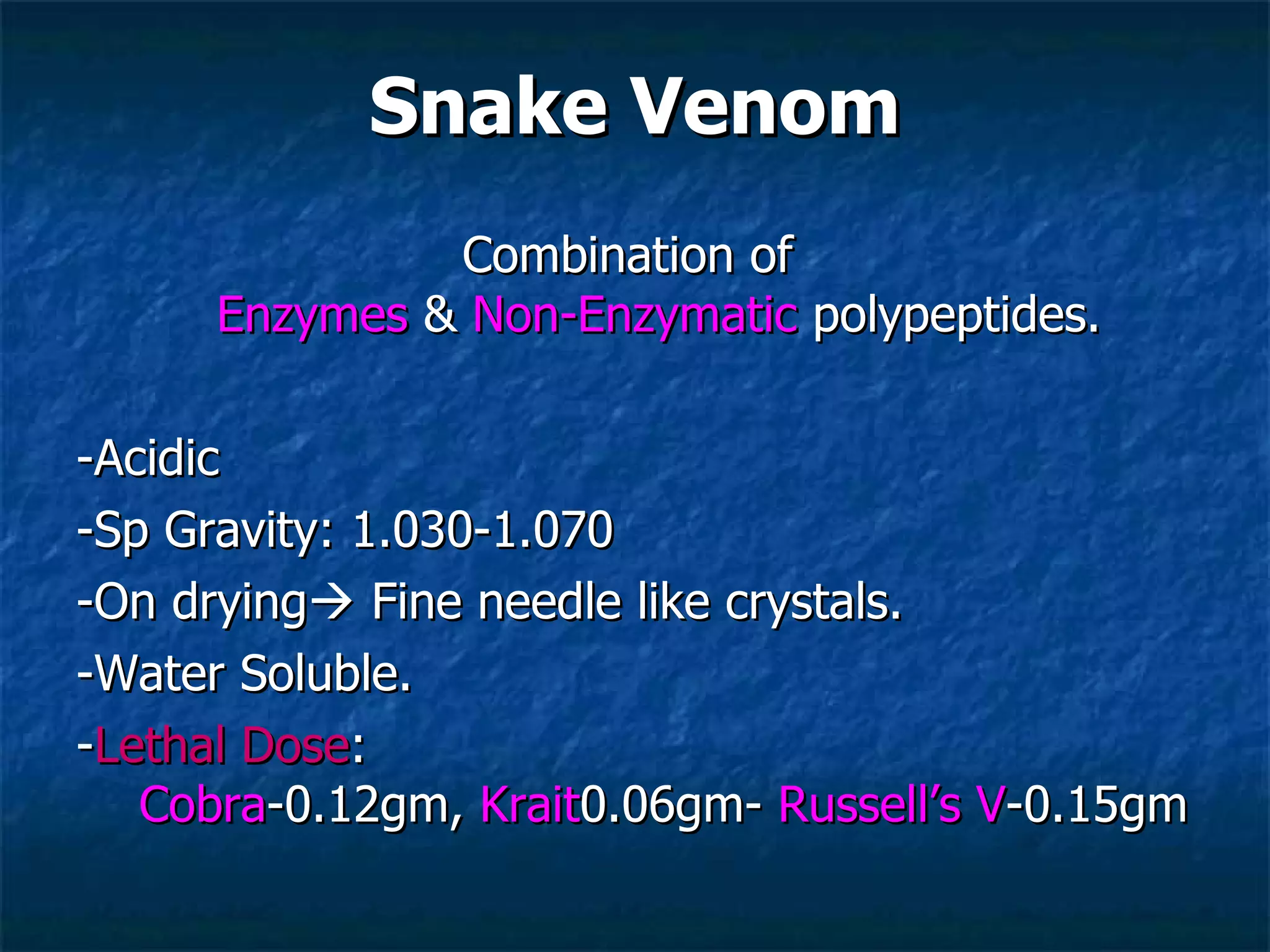
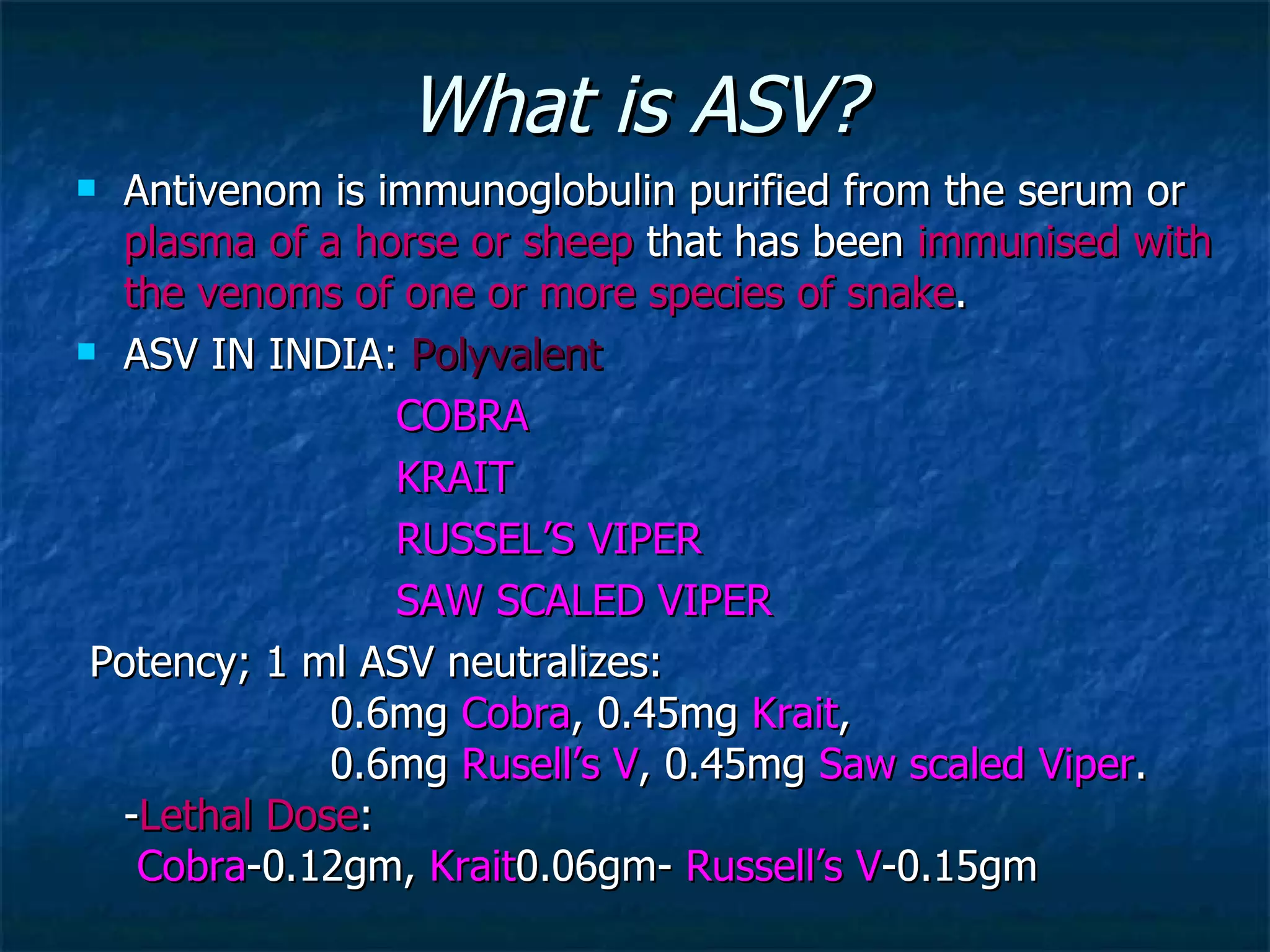
What is ASV?Antivenom is immunoglobulin purified from the serum or plasma of a horse or sheep that has been immunised with the venoms of one or more species of snake . ASV IN INDIA: Polyvalent COBRA KRAIT RUSSEL’S VIPER SAW SCALED VIPER Potency; 1 ml ASV neutralizes: 0.6mg Cobra , 0.45mg Krait , 0.6mg Rusell’s V , 0.45mg Saw scaled Viper . - Lethal Dose : Cobra -0.12gm, Krait 0.06gm- Russell’s V -0.15gm
25.
Trying to capture,kill, or transport a snake for identification purposes seems of little value and possibly dangerous
26.
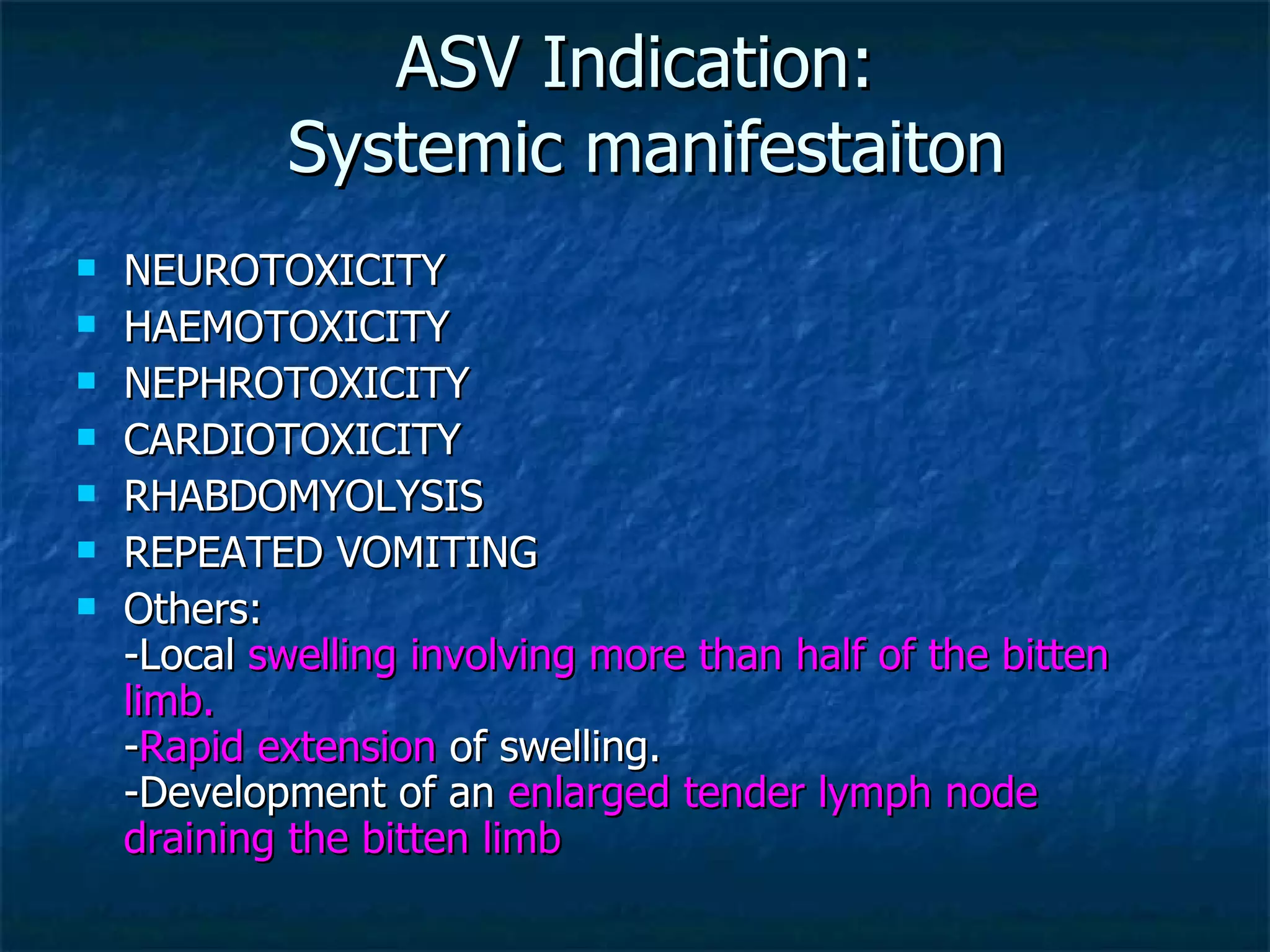
ASV Indication: Systemic manifestaiton NEUROTOXICITY HAEMOTOXICITY NEPHROTOXICITY CARDIOTOXICITY RHABDOMYOLYSIS REPEATED VOMITING Others: -Local swelling involving more than half of the bitten limb. - Rapid extension of swelling. -Development of an enlarged tender lymph node draining the bitten limb
27.
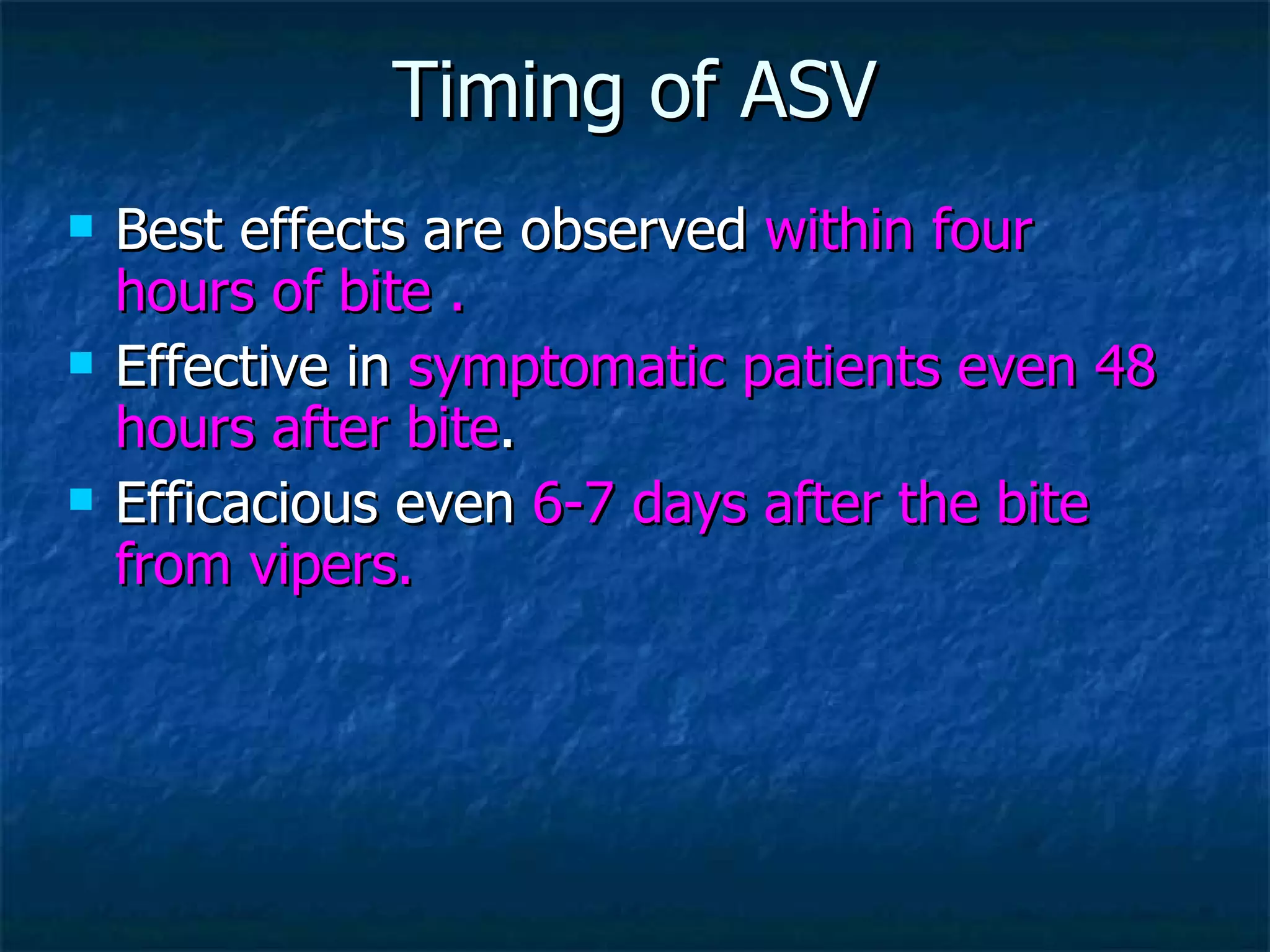
Timing of ASVBest effects are observed within four hours of bite . Effective in symptomatic patients even 48 hours after bite . Efficacious even 6-7 days after the bite from vipers.
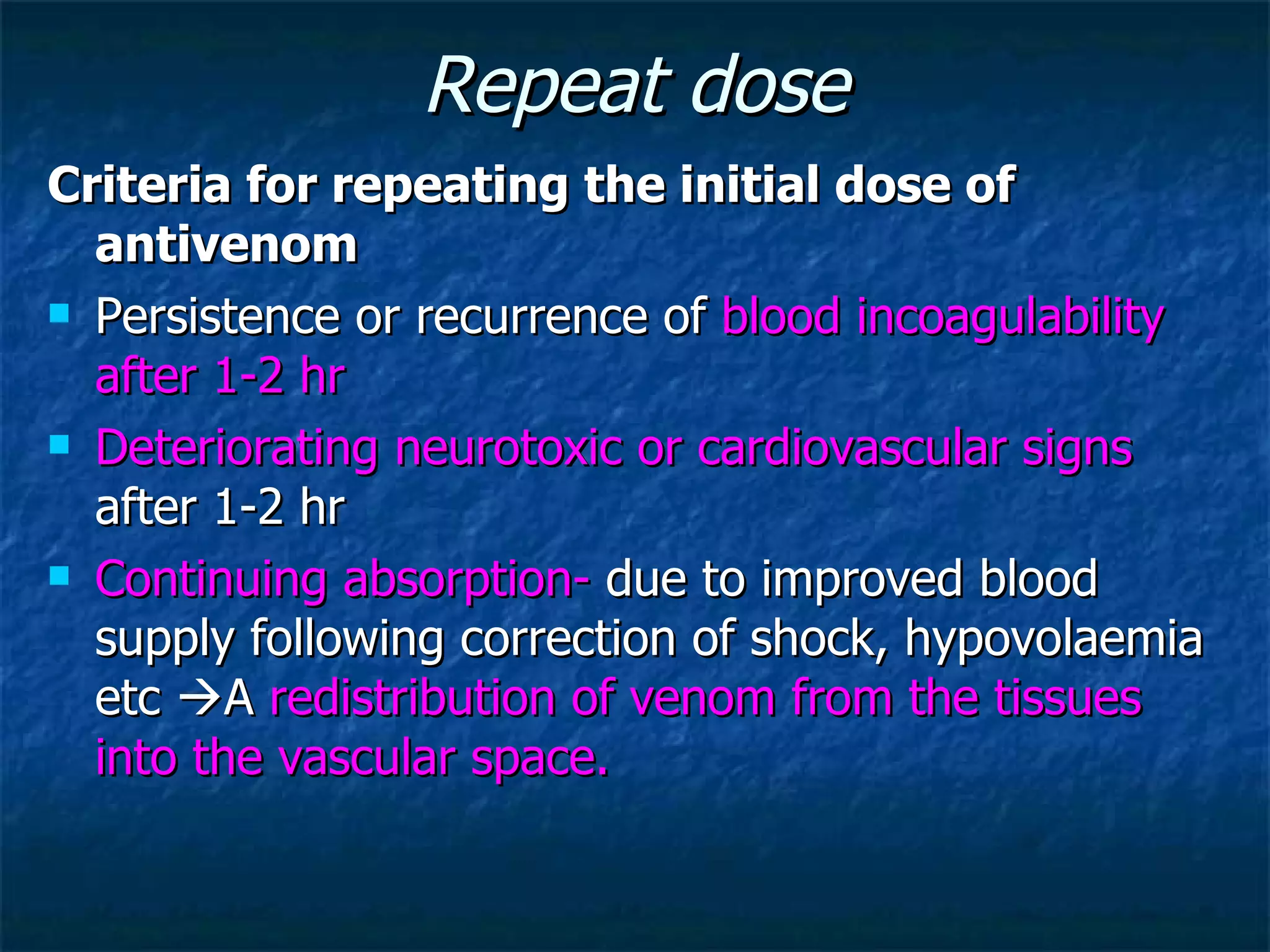
Repeat dose Criteriafor repeating the initial dose of antivenom Persistence or recurrence of blood incoagulability after 1-2 hr Deteriorating neurotoxic or cardiovascular signs after 1-2 hr Continuing absorption- due to improved blood supply following correction of shock, hypovolaemia etc A redistribution of venom from the tissues into the vascular space.
30.
Antivenom reactions 20%of patients, usually develop a reaction Types: Early anaphylactic reactions- within 10-180 min Pyrogenic (endotoxin) reactions- develop 1-2 hours Late ( serum sickness type) reactions- develop 1-12 (mean 7) days. Fatal reactions have probably been under-reported, as death after snake bite is usually attributed to the venom .
31.
Antivenom reactions: Whatto do ? At the earliest sign of a reaction: Antivenom administration must be temporarily suspended Adrenaline-0.1% solution, 1 in 1,000, 1 mg/ml is the effective treatment for early anaphylactic reactions. IV hydrocortisone (adults 100 mg, children 2 mg/kg body weight). The corticosteroid is unlikely to act for several hours, but may prevent recurrent anaphylaxis Anti H2 antihistamines-Ranitidine – adults 50 mg, children 1 mg/kg. In case of circulatory collapse- start fluids, inotropes along with IV adrenaline
32.
Skin testing forASV Skin/conjunctival hypersensitivity testing does not reliably predict early or late antivenom reactions and is not recommended.
33.
ASV and children? Dose of antivenom Snakes inject the same dose of venom into children and adults. Children must therefore be given exactly the same dose of antivenom as adults.
34.
Mechanical ventilation Ifpatient has respiratory distress or bulbar paralysis- intubate and ventilate. If delayed can cause aspiration or hypoxia and cardiac arrest. Even if the facility for MV is not available Ambuing can save the day. This helps even during transport.
Summary Snakebites may be by a non-venomous snake or a dry bite. Not all snake bites require ASV. ASV is the main stay in the treatment of snake bites. ASV must be initiated if indicated at the earliest Respiratory failure can be because of different reasons-Neurotoxicity, shock, sepsis, ARF… MV may be main stay of treatment or just supportive depending on the cause of failure.
37.
38.
39.
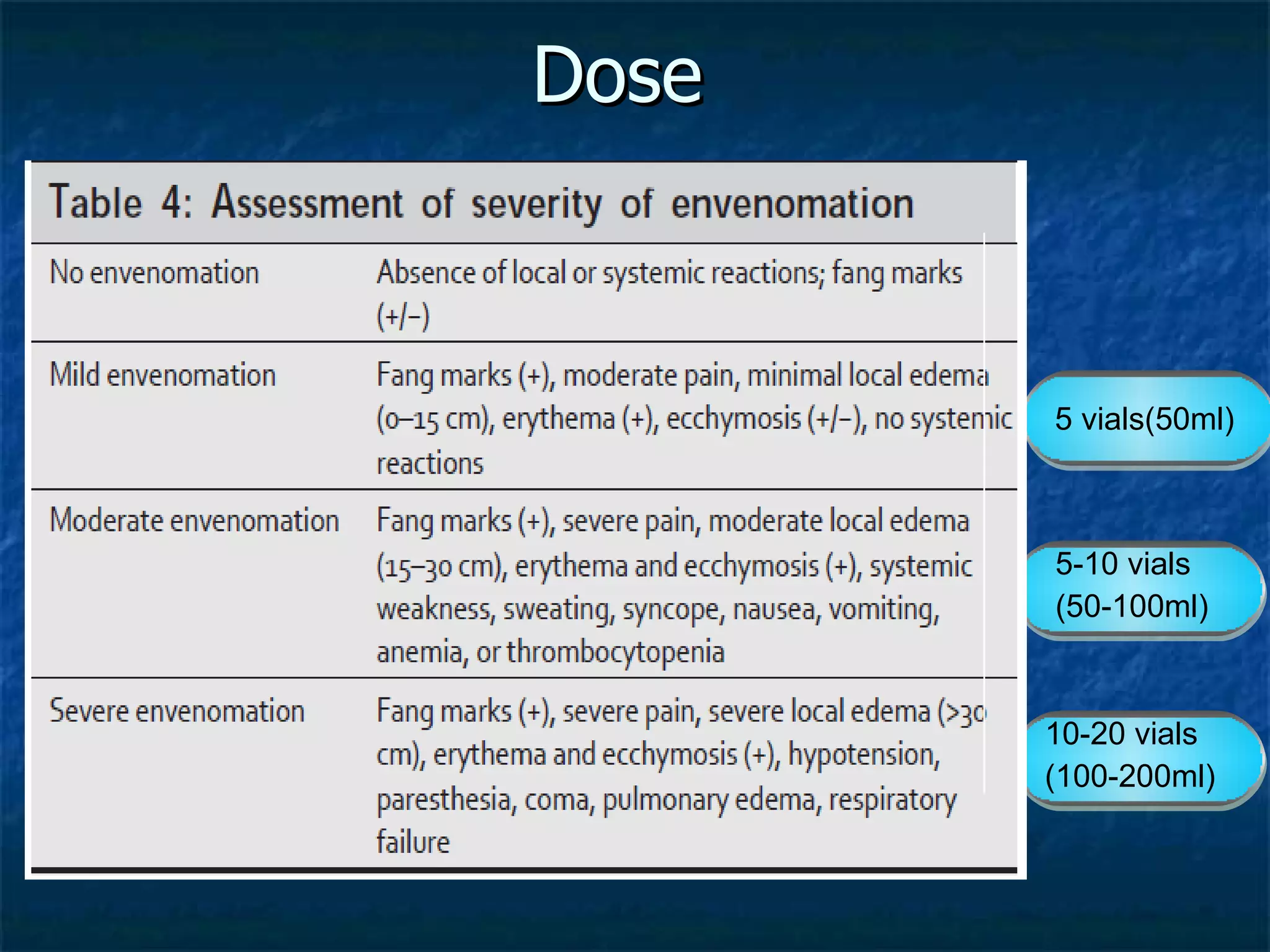
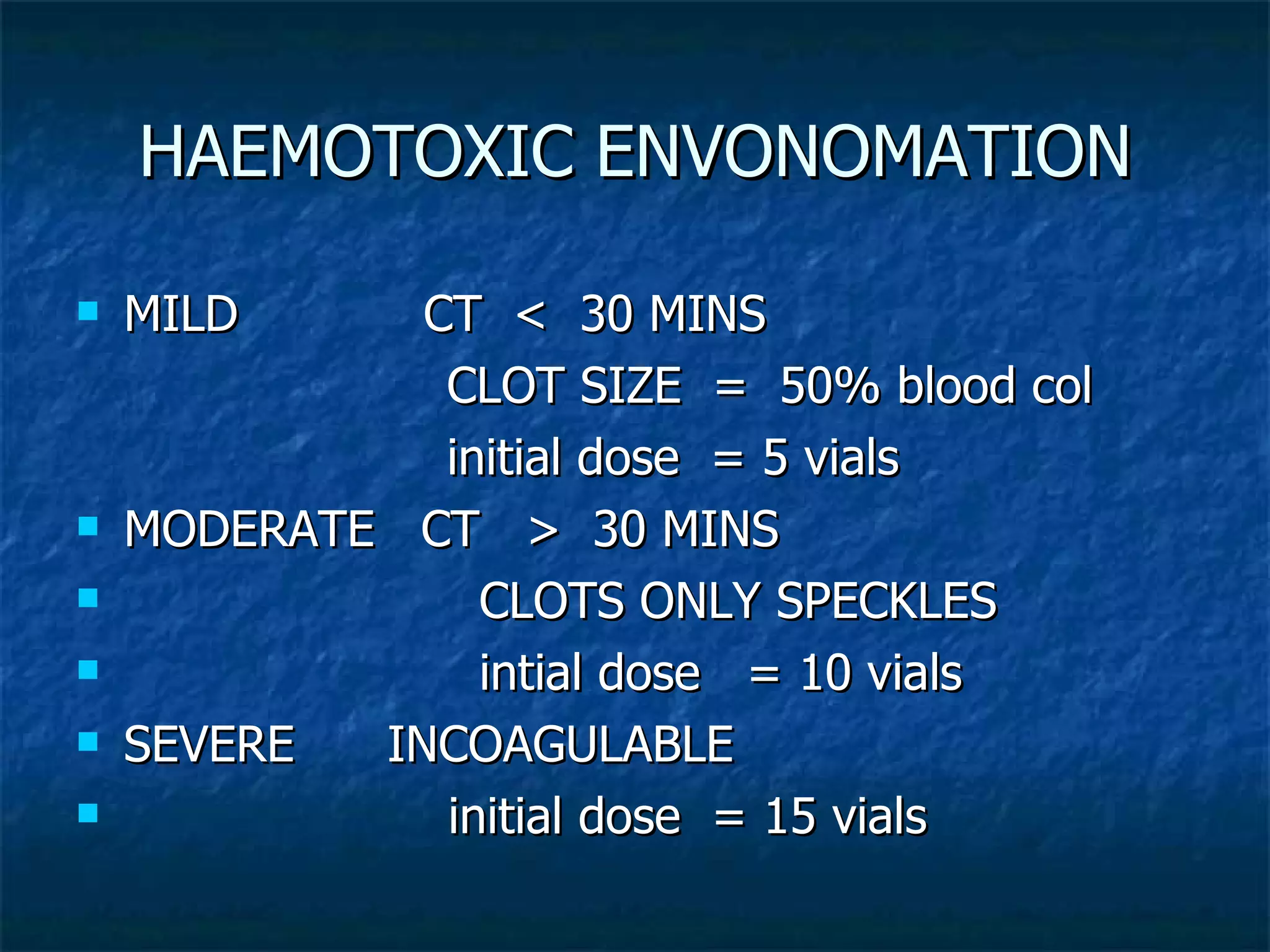
HAEMOTOXIC ENVONOMATION MILD CT < 30 MINS CLOT SIZE = 50% blood col initial dose = 5 vials MODERATE CT > 30 MINS CLOTS ONLY SPECKLES intial dose = 10 vials SEVERE INCOAGULABLE initial dose = 15 vials
Editor's Notes
#2 Deep vein thrombosis (DVT) and acute pulmonary embolism (PE) are two manifestations of the same disorder, venous thromboembolism.
#6 Cold blooded animals take the temp. of there surrounding.
#8 Cold blooded animals take the temp. of there surrounding.