ERP Business Functions
                                     and
                              Business Processes


                               A straight forward lesson designed to
                             simplify thinking related to how a complex
Author Tom Matys                         ERP System works
DPR105: Mgmt Info Systems
Business Functional Areas


•   Marketing & Sales (M/S)
•   Supply Chain Management (SCM)
•   Accounting & Finance (A/F)
•   Human Resources (HR)
Business Functions

• M/S: Fulfilling and identifying the customer’s
  needs, pricing, product research, determine future
  needs, pricing.
• SCM: Purchasing, manufacturing, inventory
  management, Production Planning, materials requirements
  planning (MRP)
• A/F: Financial & Managerial Reporting, Accounts
  Payable, Accounts Receivable, Billing,
• HR: Hiring, training, payroll, salary research, employee
  benefits, promote business ethics
Business Process

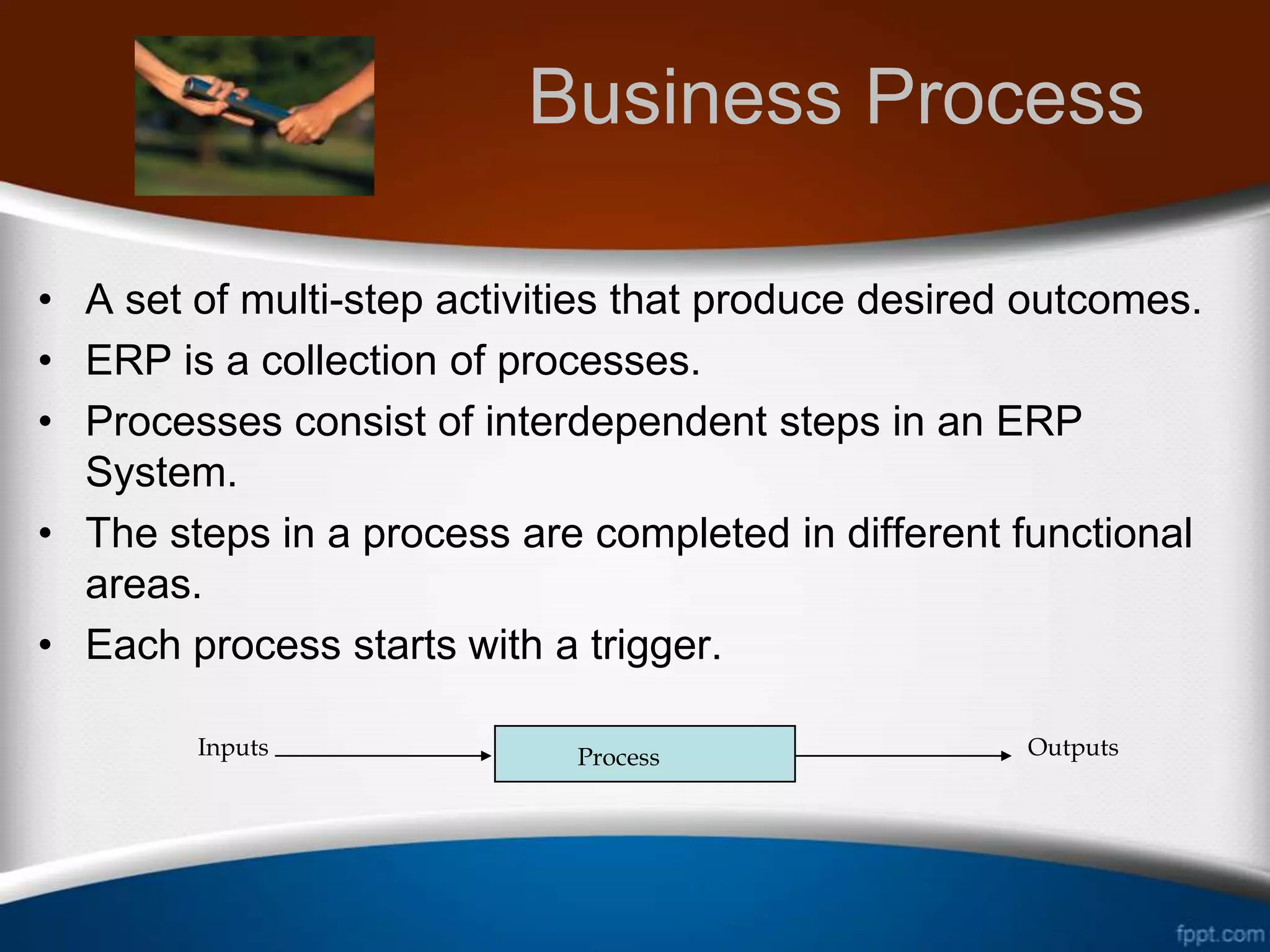
• A set of multi-step activities that produce desired outcomes.
• ERP is a collection of processes.
• Processes consist of interdependent steps in an ERP
  System.
• The steps in a process are completed in different functional
  areas.
• Each process starts with a trigger.

        Inputs               Process                 Outputs
Four Concepts of a Process


1) Triggers
2) Tasks
3) Data
4) Outcome
Question

What is a common trigger in the
 ERP system that initiates a
 process?
Answer

Create document
Creating a document is a trigger that
   can start off a process that needs
   to be completed in several
   different steps, in several different
   areas.
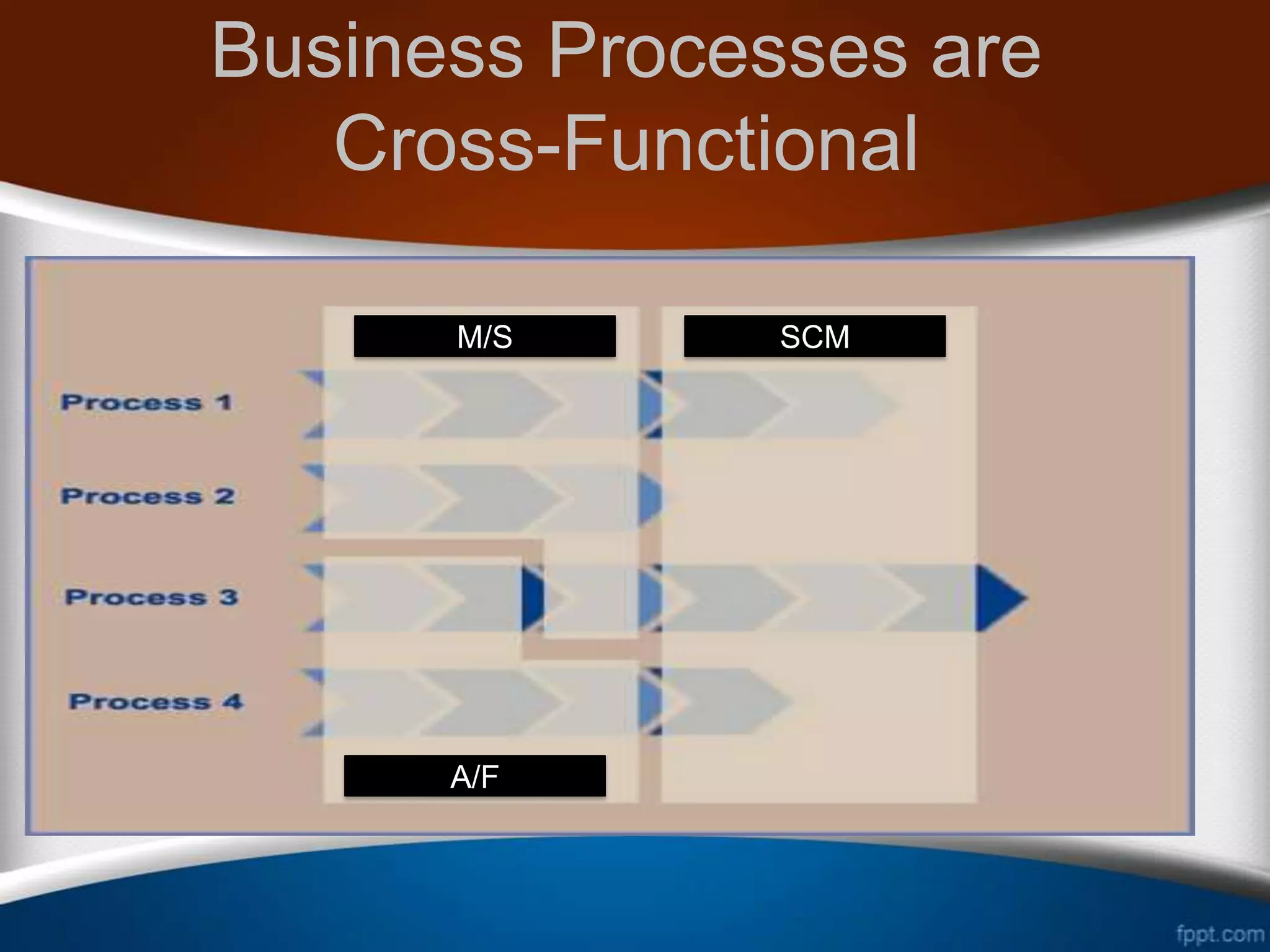
Business Processes are
   Cross-Functional

      M/S      SCM


      A/F
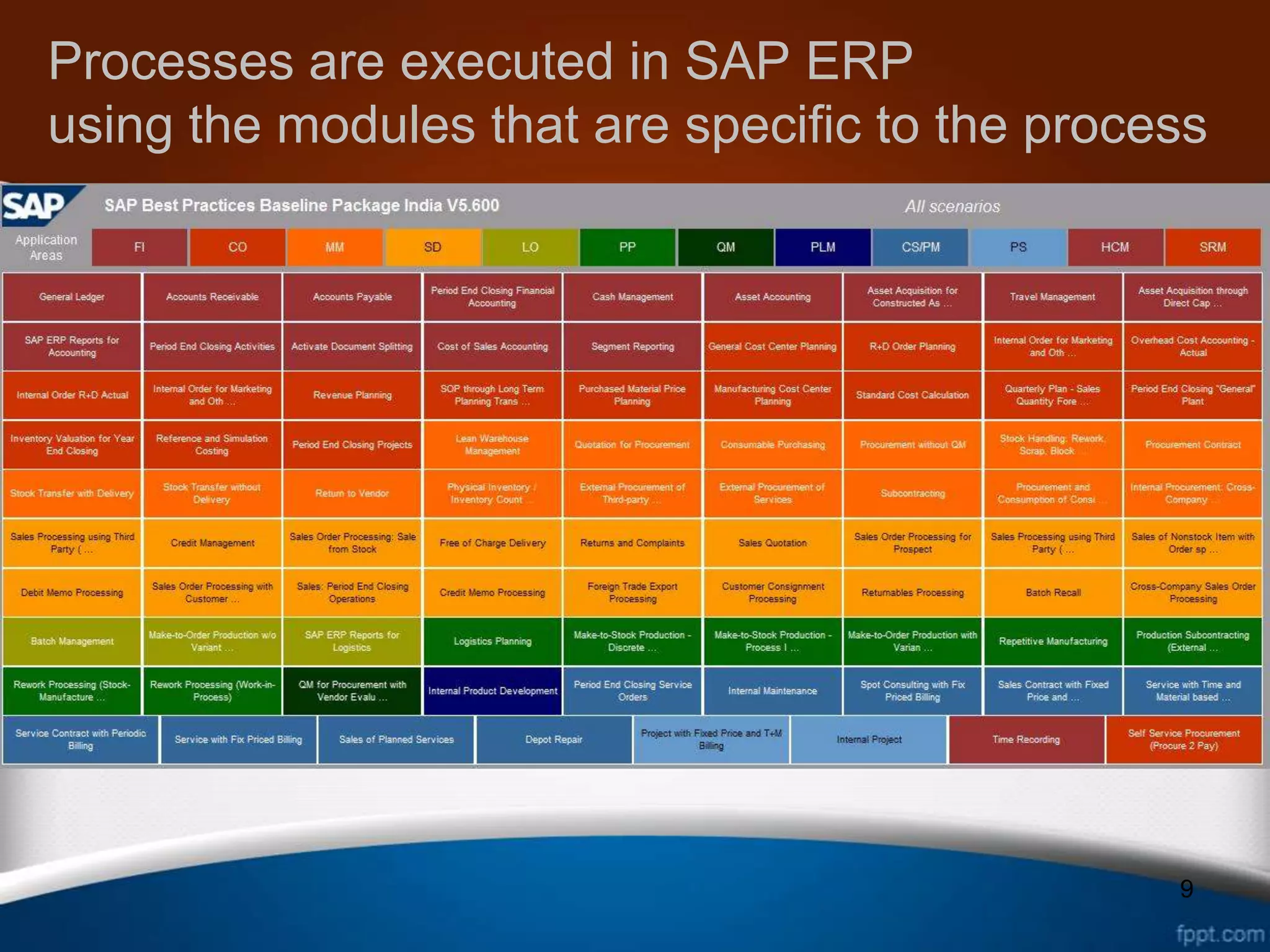
Processes are executed in SAP ERP
using the modules that are specific to the process


                                                9
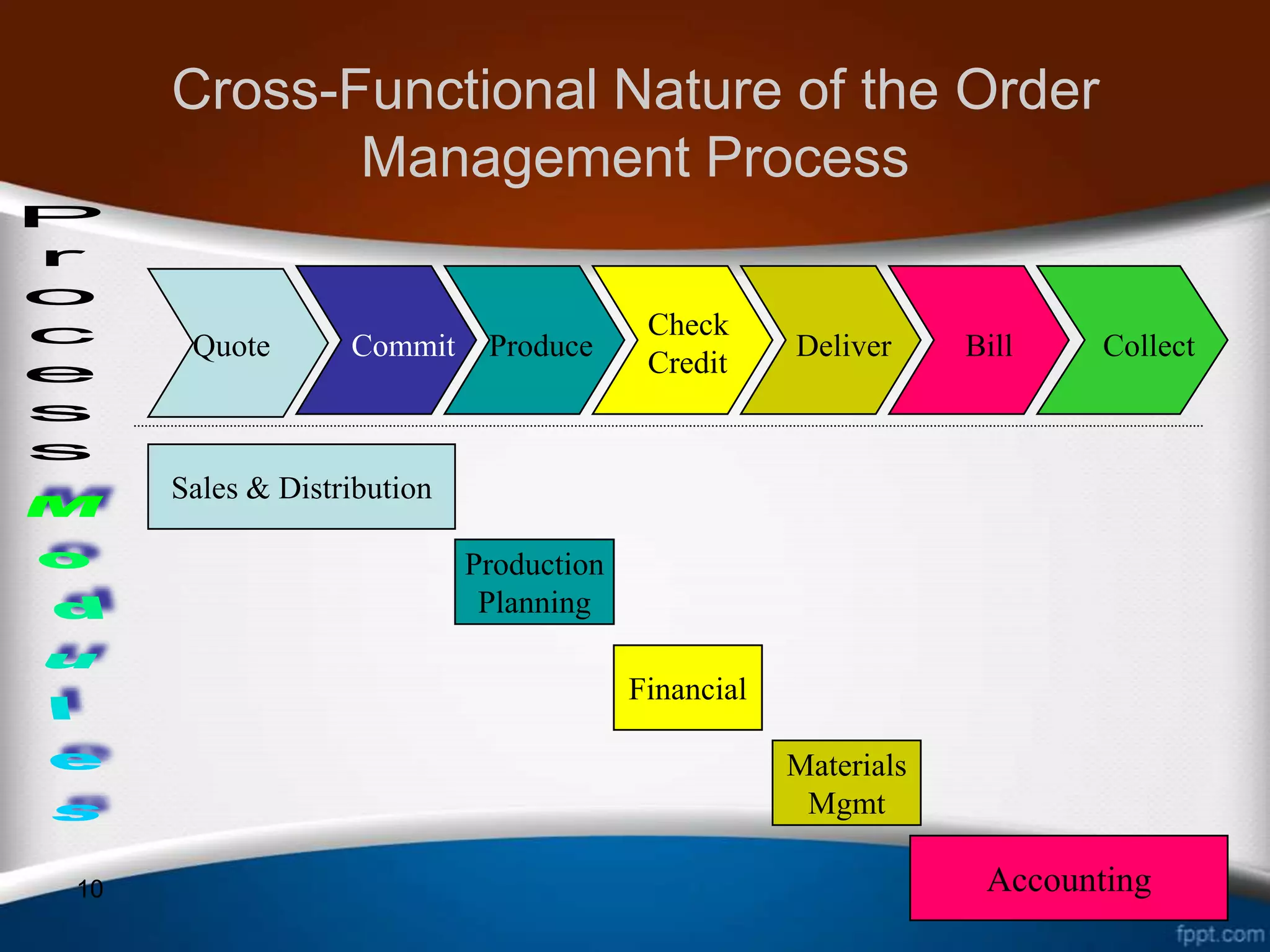
Cross-Functional Nature of the Order
            Management Process

                                          Check
      Quote       Commit     Produce                 Deliver     Bill    Collect
                                          Credit


     Sales & Distribution

                            Production
                             Planning

                                         Financial

                                                     Materials
                                                      Mgmt

10                                                                Accounting
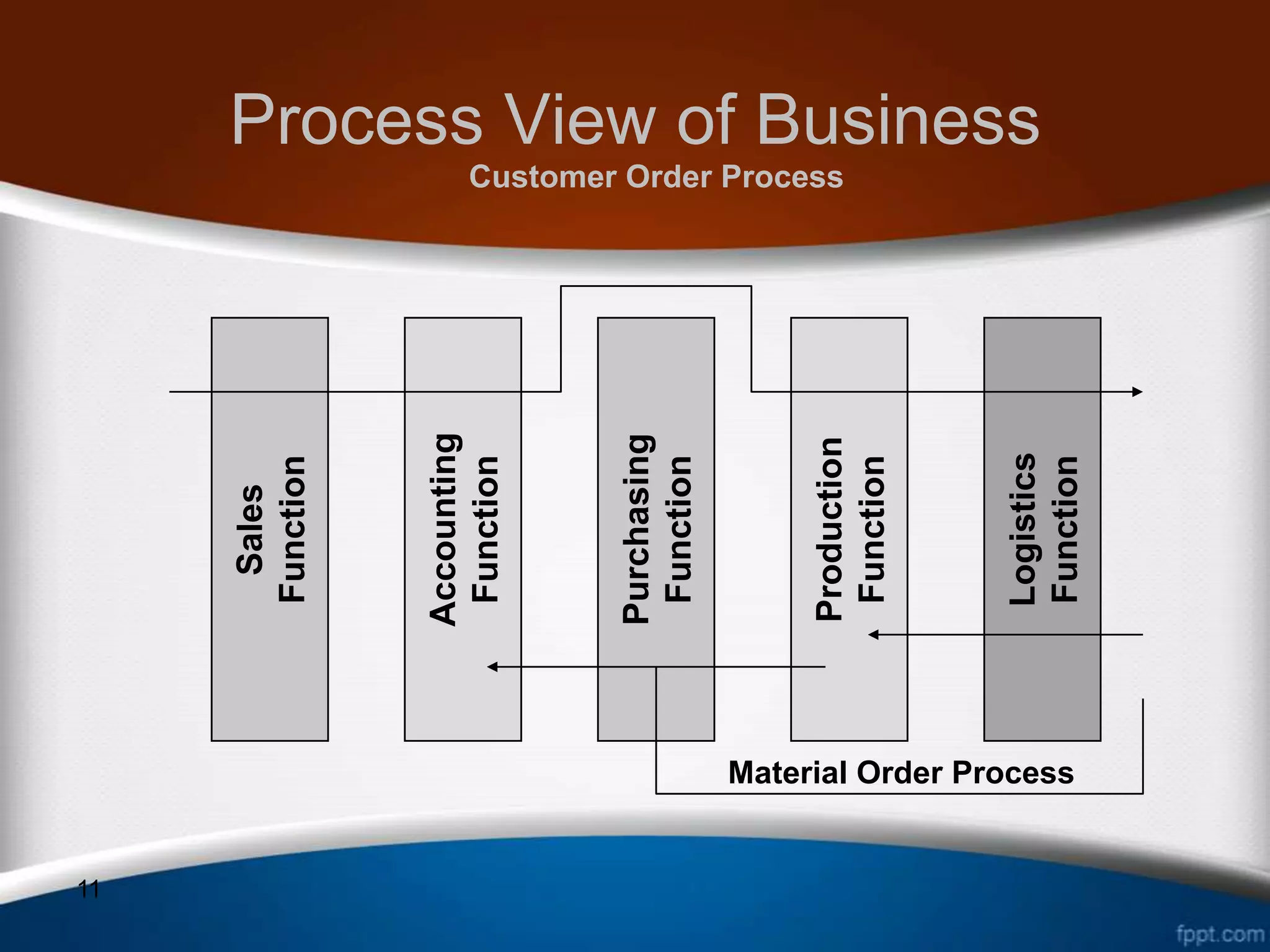
11
                                Sales
                               Function


                              Accounting
                               Function


                              Purchasing
                               Function
                                           Customer Order Process


                              Production
                               Function
                                                                    Process View of Business


                               Logistics
     Material Order Process


                               Function
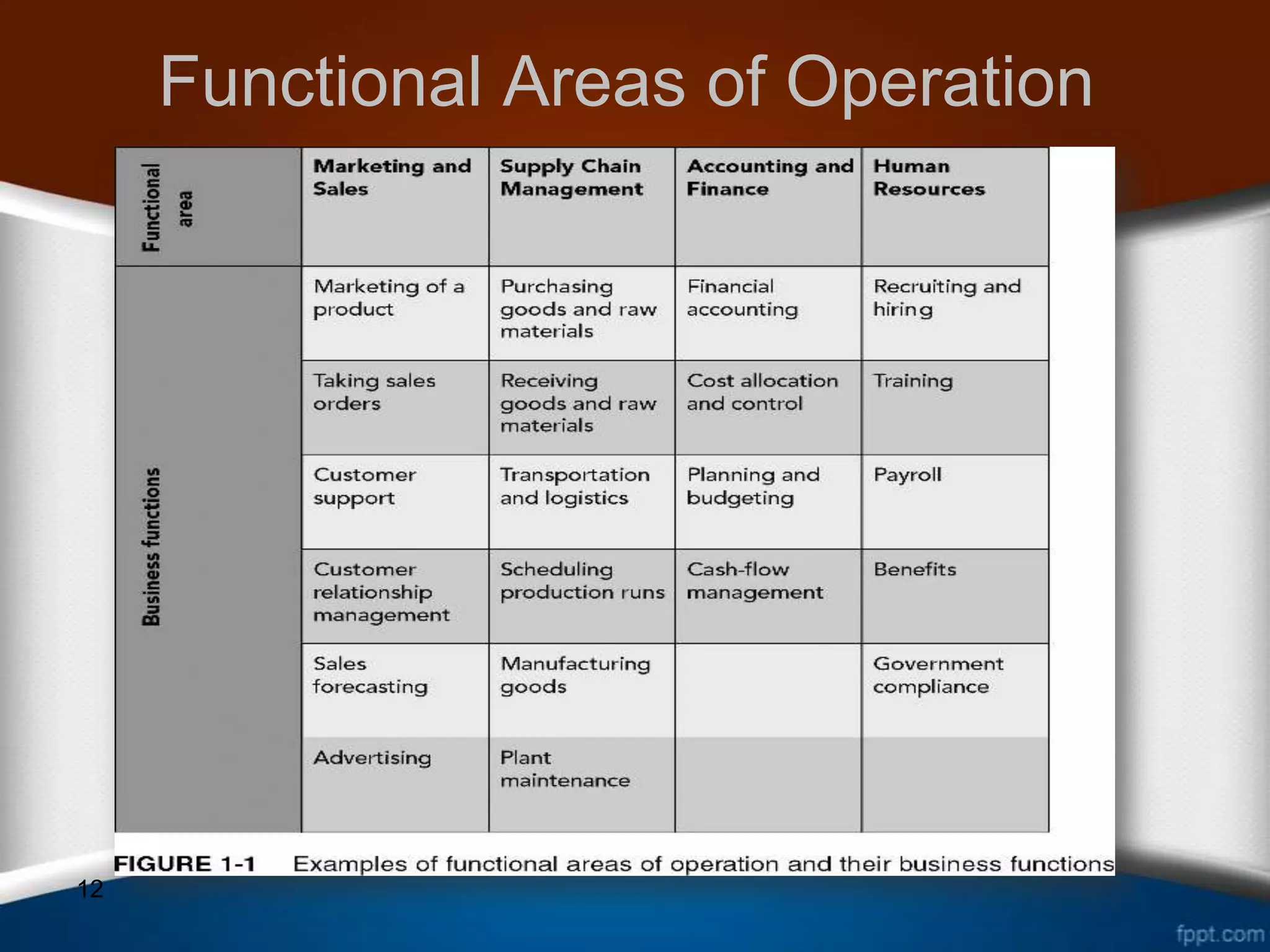
Functional Areas of Operation


12
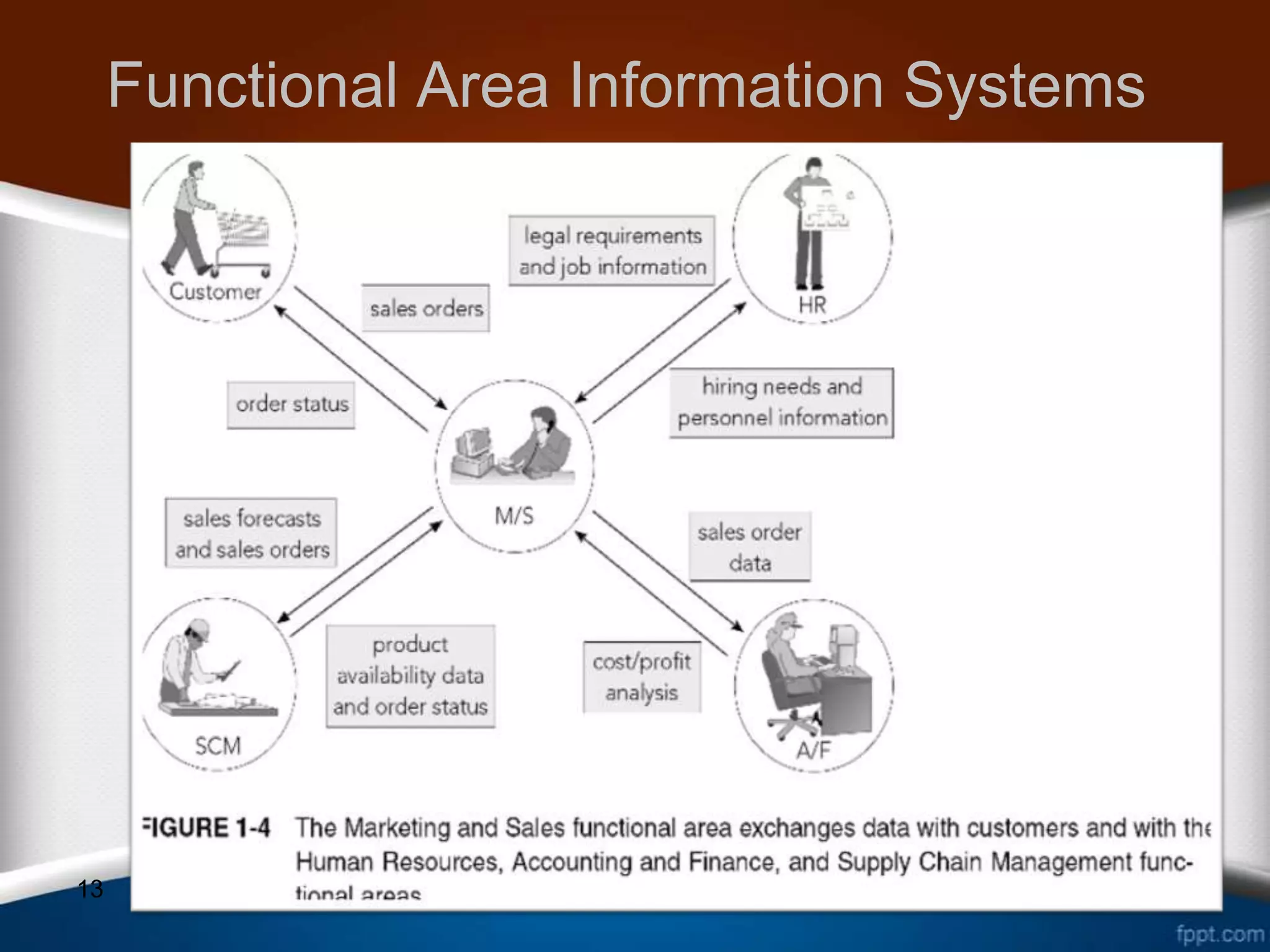
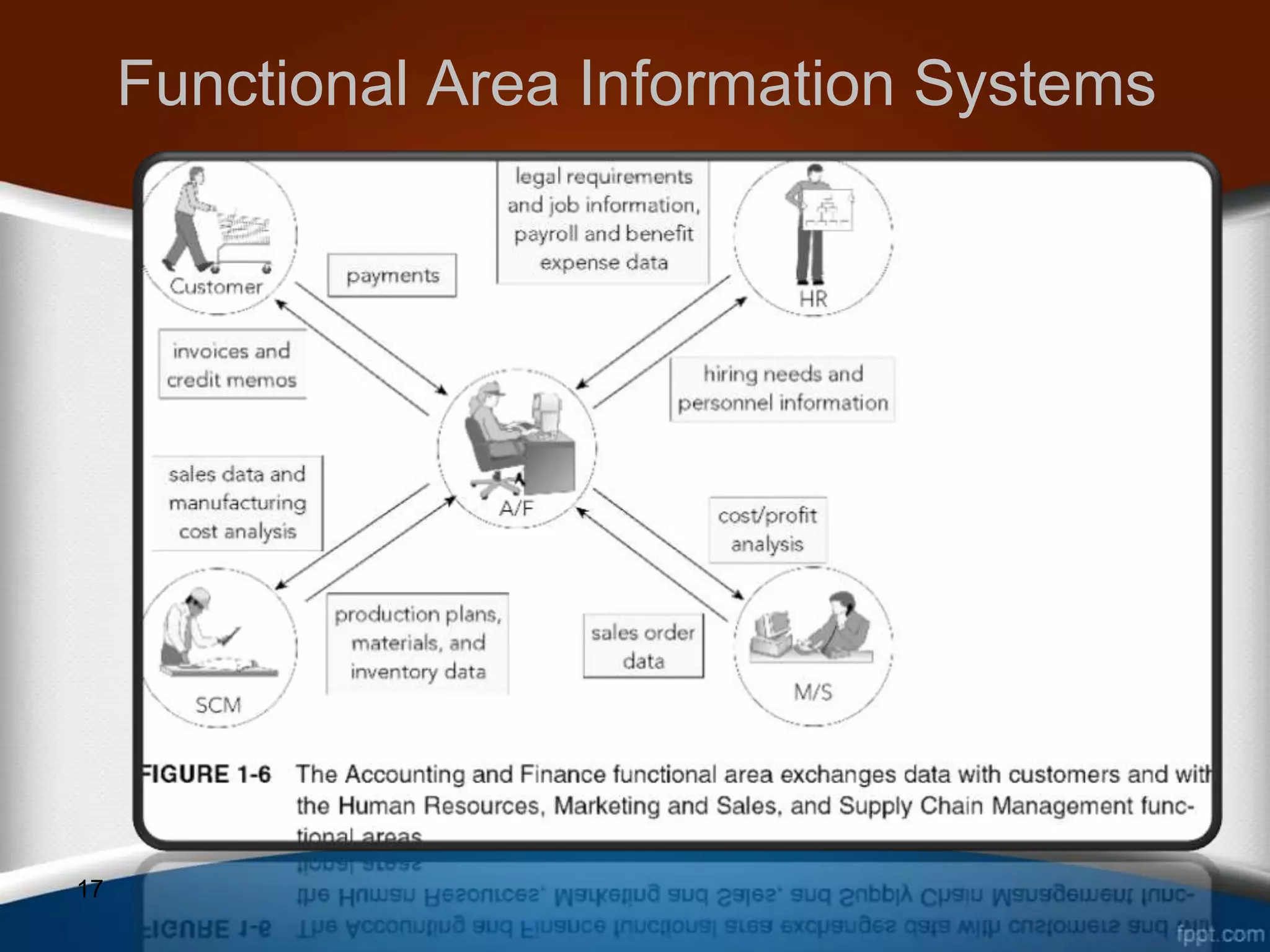
Functional Area Information Systems


13
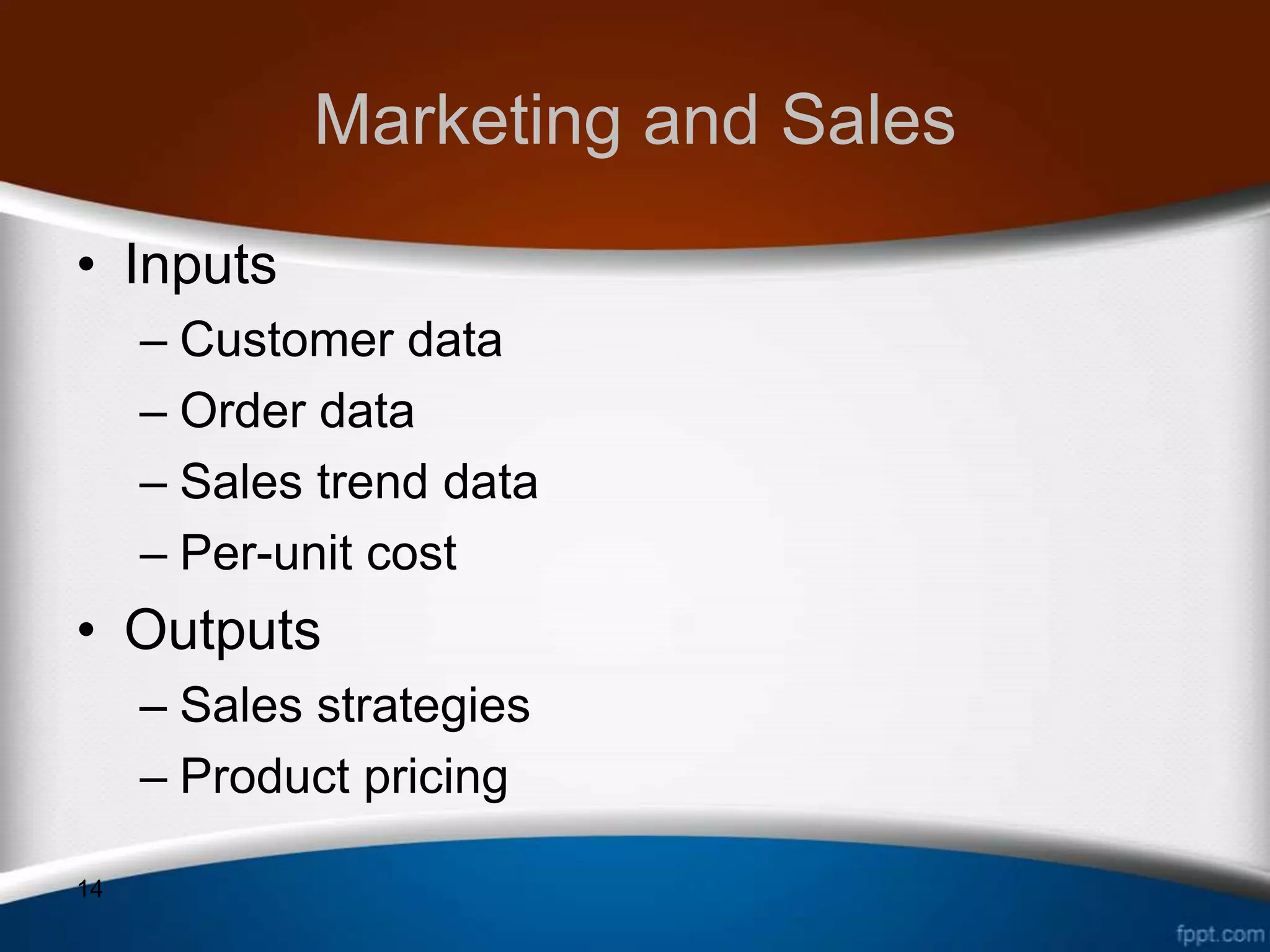
Marketing and Sales
• Inputs
     – Customer data
     – Order data
     – Sales trend data
     – Per-unit cost
• Outputs
     – Sales strategies
     – Product pricing

14
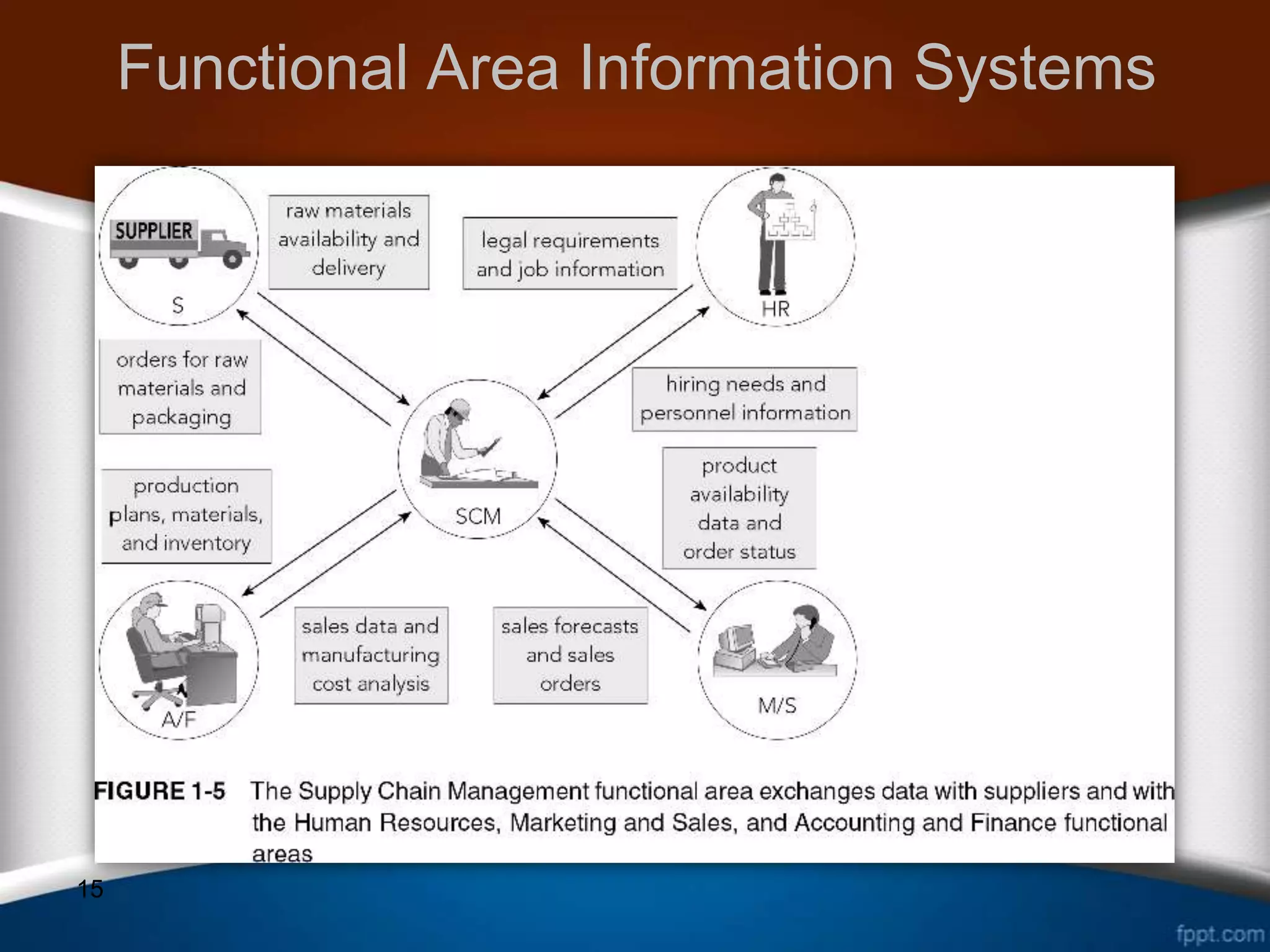
Functional Area Information Systems


15
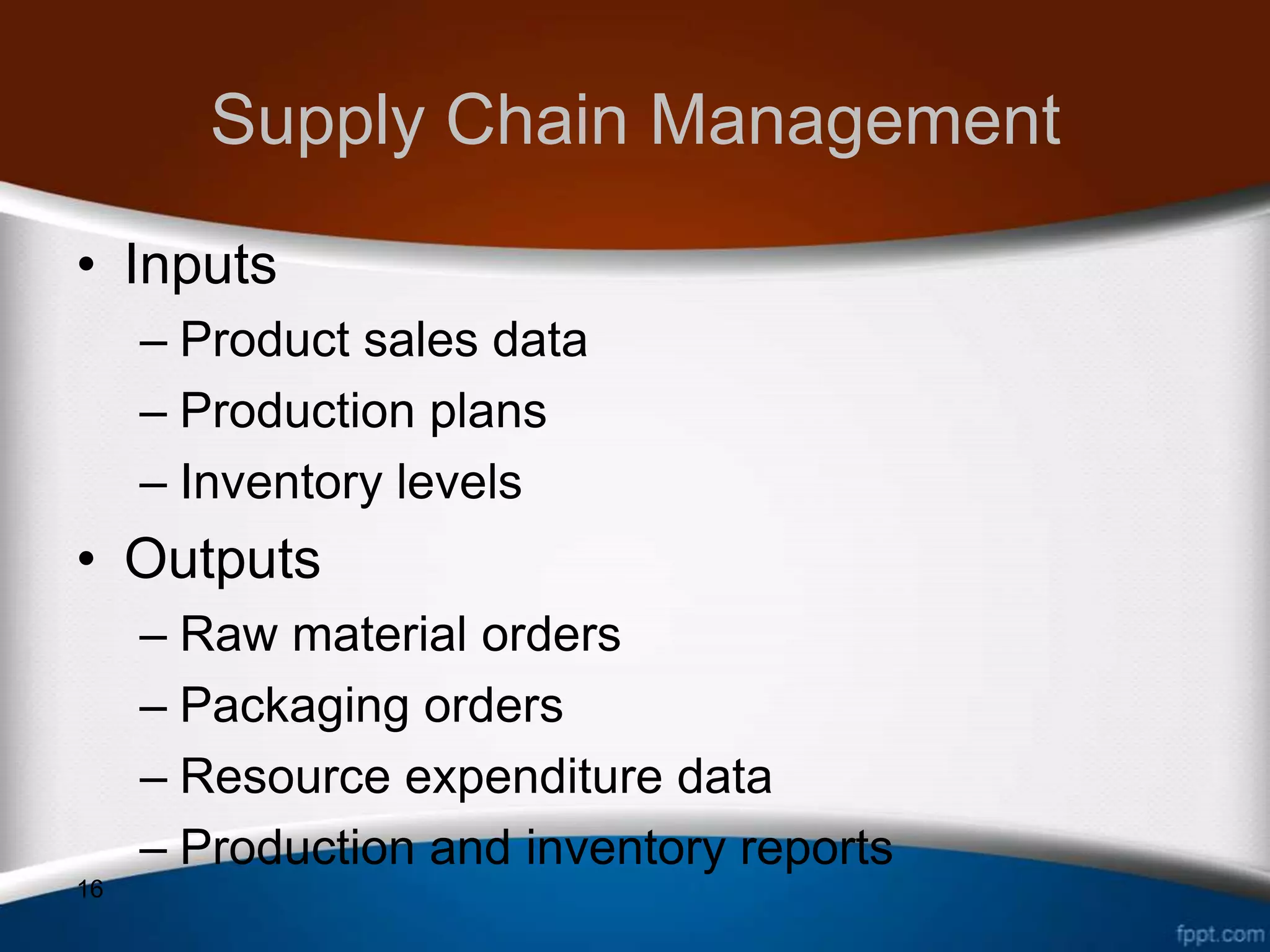
Supply Chain Management
• Inputs
     – Product sales data
     – Production plans
     – Inventory levels
• Outputs
     – Raw material orders
     – Packaging orders
     – Resource expenditure data
     – Production and inventory reports
16
Functional Area Information Systems


17
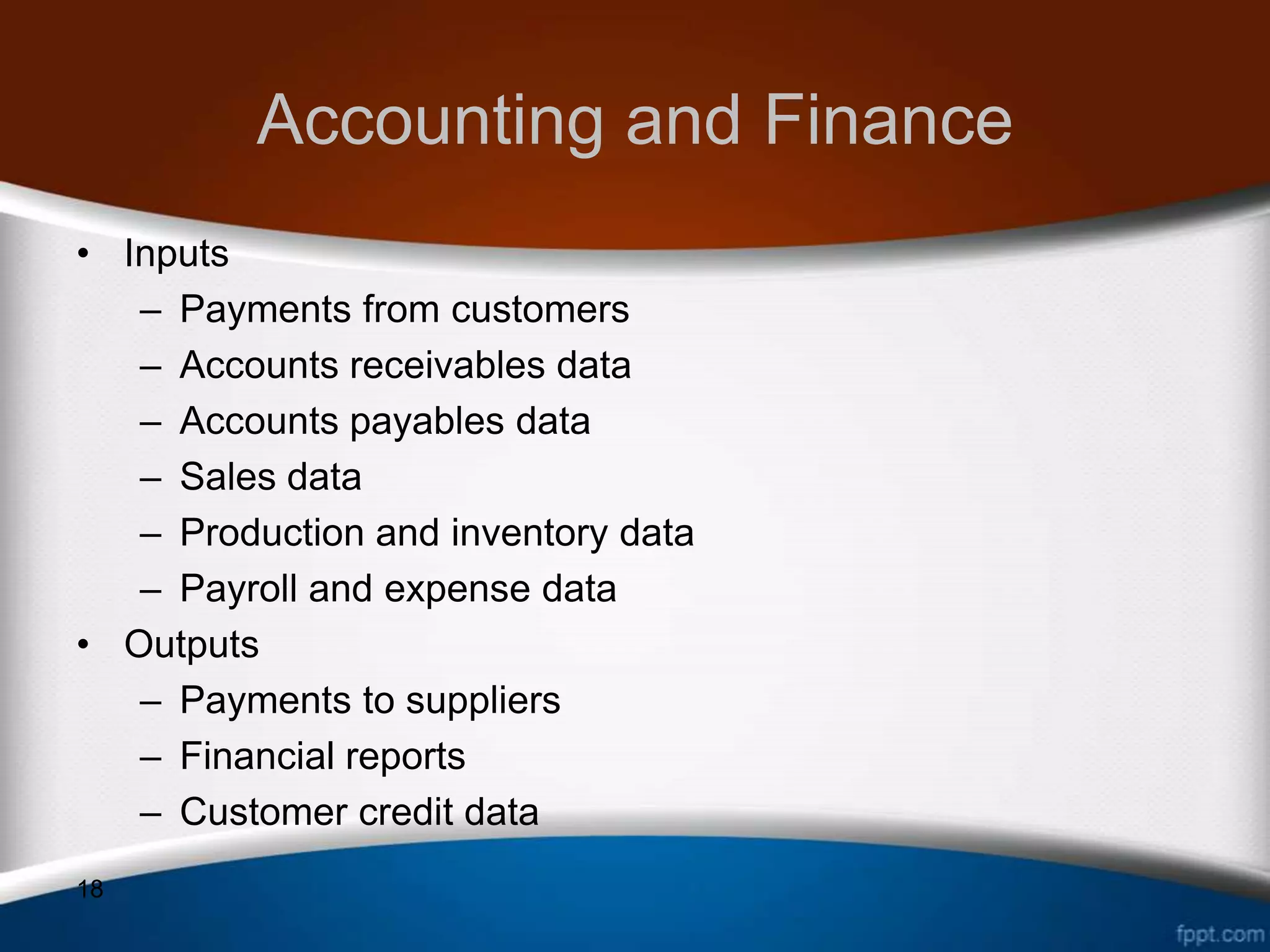
Accounting and Finance
• Inputs
   – Payments from customers
   – Accounts receivables data
   – Accounts payables data
   – Sales data
   – Production and inventory data
   – Payroll and expense data
• Outputs
   – Payments to suppliers
   – Financial reports
   – Customer credit data
18
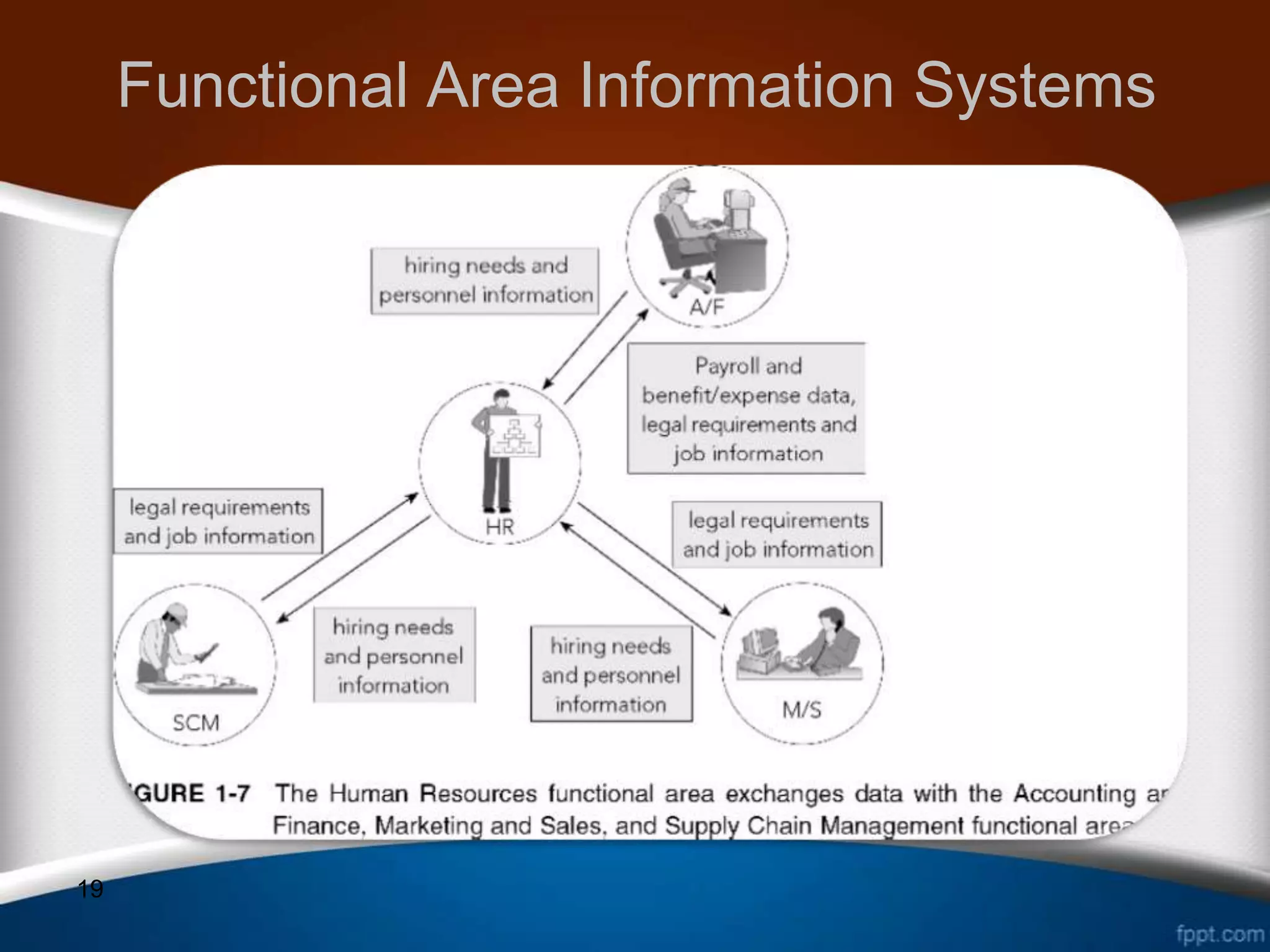
Functional Area Information Systems


19
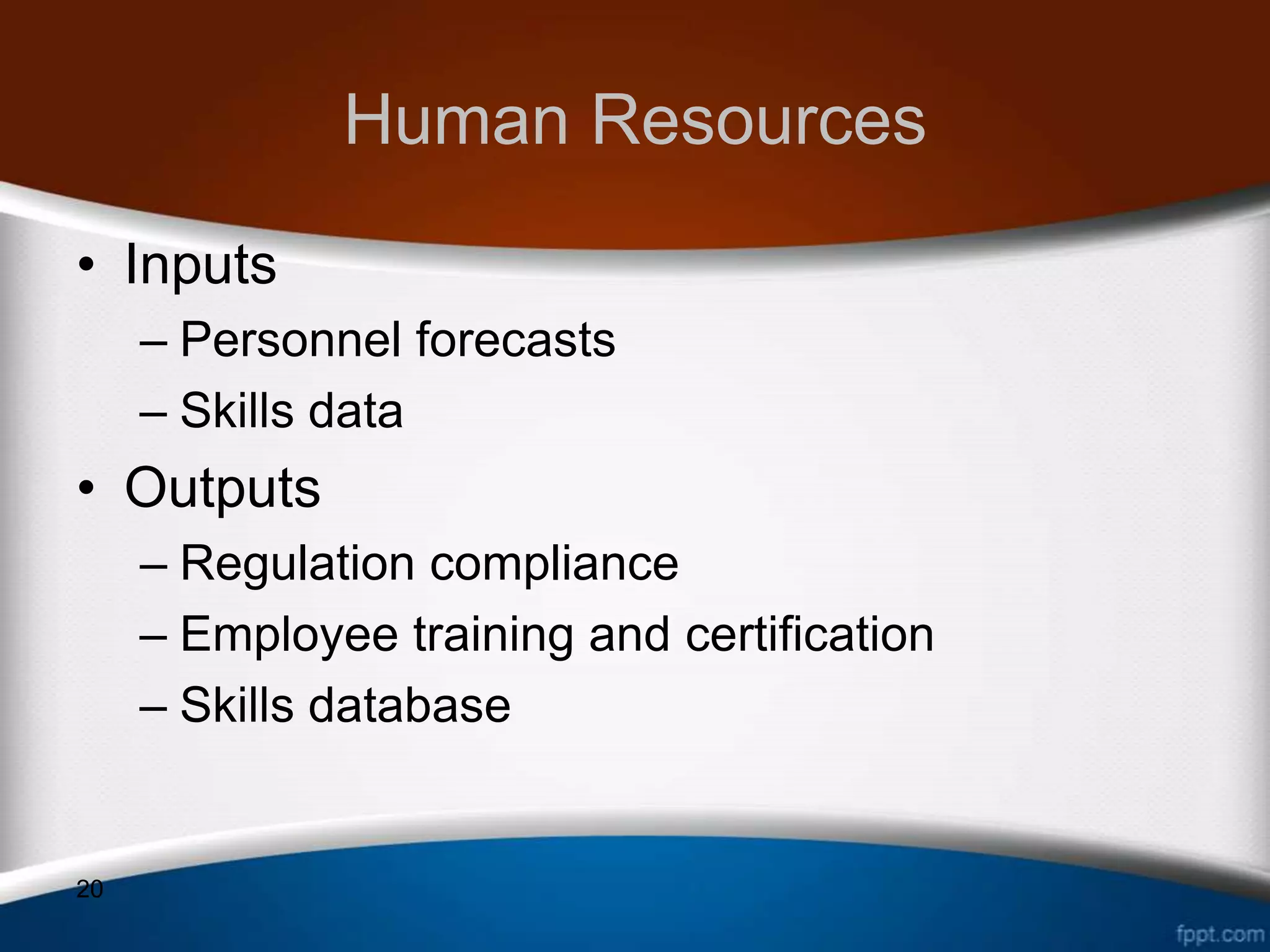
Human Resources
• Inputs
     – Personnel forecasts
     – Skills data
• Outputs
     – Regulation compliance
     – Employee training and certification
     – Skills database


20
Questions?


• Next up: Lab One


21

The Erp Business Process

  • 1.
    ERP Business Functions and Business Processes A straight forward lesson designed to simplify thinking related to how a complex Author Tom Matys ERP System works DPR105: Mgmt Info Systems
  • 2.
    Business Functional Areas • Marketing & Sales (M/S) • Supply Chain Management (SCM) • Accounting & Finance (A/F) • Human Resources (HR)
  • 3.
    Business Functions • M/S:Fulfilling and identifying the customer’s needs, pricing, product research, determine future needs, pricing. • SCM: Purchasing, manufacturing, inventory management, Production Planning, materials requirements planning (MRP) • A/F: Financial & Managerial Reporting, Accounts Payable, Accounts Receivable, Billing, • HR: Hiring, training, payroll, salary research, employee benefits, promote business ethics
  • 4.
    Business Process • Aset of multi-step activities that produce desired outcomes. • ERP is a collection of processes. • Processes consist of interdependent steps in an ERP System. • The steps in a process are completed in different functional areas. • Each process starts with a trigger. Inputs Process Outputs
  • 5.
    Four Concepts ofa Process 1) Triggers 2) Tasks 3) Data 4) Outcome
  • 6.
    Question What is acommon trigger in the ERP system that initiates a process?
  • 7.
    Answer Create document Creating adocument is a trigger that can start off a process that needs to be completed in several different steps, in several different areas.
  • 8.
    Business Processes are Cross-Functional M/S SCM A/F
  • 9.
    Processes are executedin SAP ERP using the modules that are specific to the process 9
  • 10.
    Cross-Functional Nature ofthe Order Management Process Check Quote Commit Produce Deliver Bill Collect Credit Sales & Distribution Production Planning Financial Materials Mgmt 10 Accounting
  • 11.
    11 Sales Function Accounting Function Purchasing Function Customer Order Process Production Function Process View of Business Logistics Material Order Process Function
  • 12.
    Functional Areas ofOperation 12
  • 13.
  • 14.
    Marketing and Sales •Inputs – Customer data – Order data – Sales trend data – Per-unit cost • Outputs – Sales strategies – Product pricing 14
  • 15.
  • 16.
    Supply Chain Management •Inputs – Product sales data – Production plans – Inventory levels • Outputs – Raw material orders – Packaging orders – Resource expenditure data – Production and inventory reports 16
  • 17.
  • 18.
    Accounting and Finance •Inputs – Payments from customers – Accounts receivables data – Accounts payables data – Sales data – Production and inventory data – Payroll and expense data • Outputs – Payments to suppliers – Financial reports – Customer credit data 18
  • 19.
  • 20.
    Human Resources • Inputs – Personnel forecasts – Skills data • Outputs – Regulation compliance – Employee training and certification – Skills database 20
  • 21.