co
la

te

be
a

ns

The sweetest story
ever told… or heard
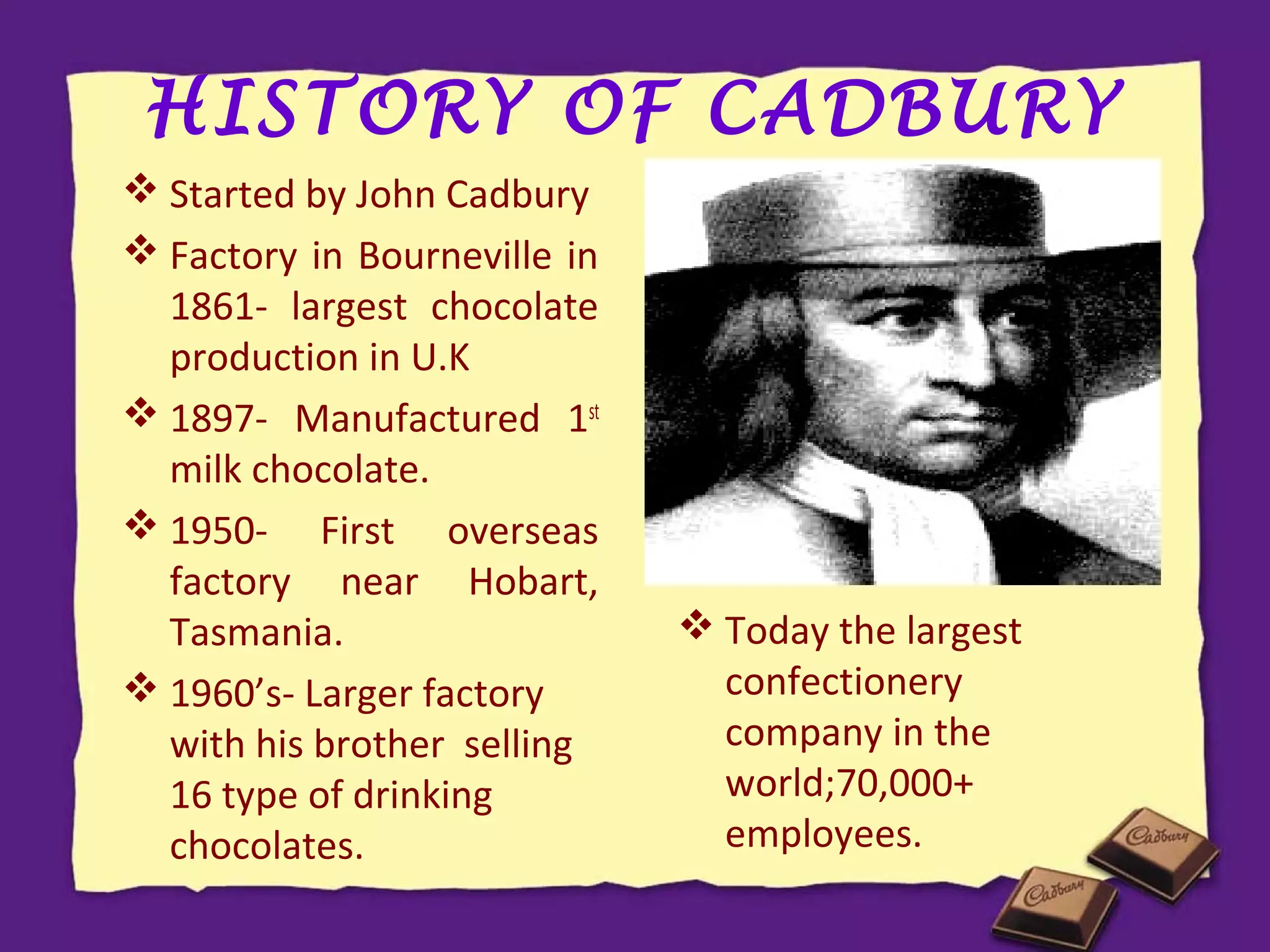
HISTORY OF CADBURY
 Started by John Cadbury
 Factory in Bourneville in
1861- largest chocolate
production in U.K
 1897- Manufactured 1st
milk chocolate.
 1950- First overseas
factory near Hobart,
Tasmania.
 1960’s- Larger factory
with his brother selling
16 type of drinking
chocolates.

 Today the largest
confectionery
company in the
world;70,000+
employees.
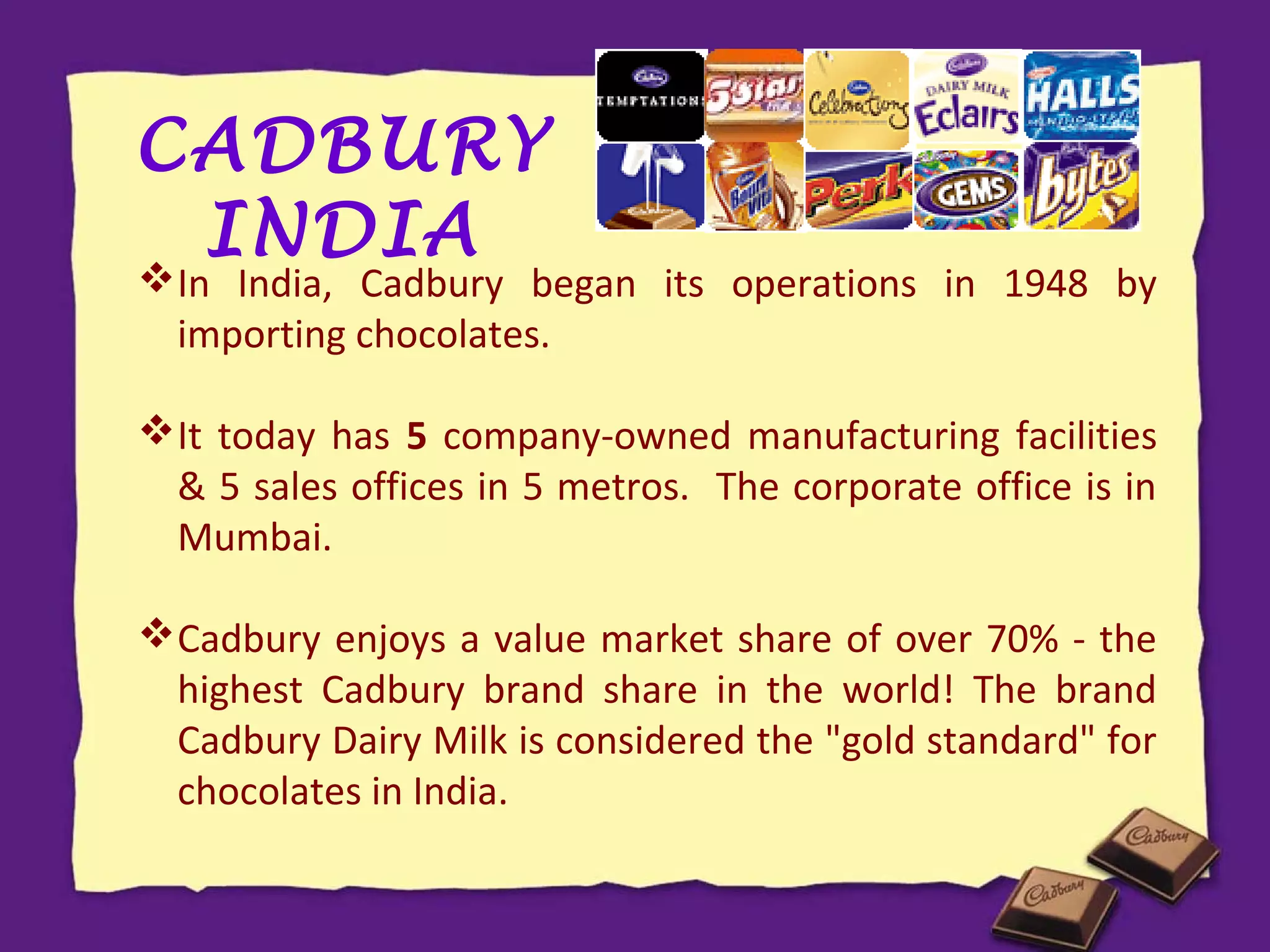
CADBURY
INDIA

In India, Cadbury began its operations in 1948 by
importing chocolates.
It today has 5 company-owned manufacturing facilities
& 5 sales offices in 5 metros. The corporate office is in
Mumbai.
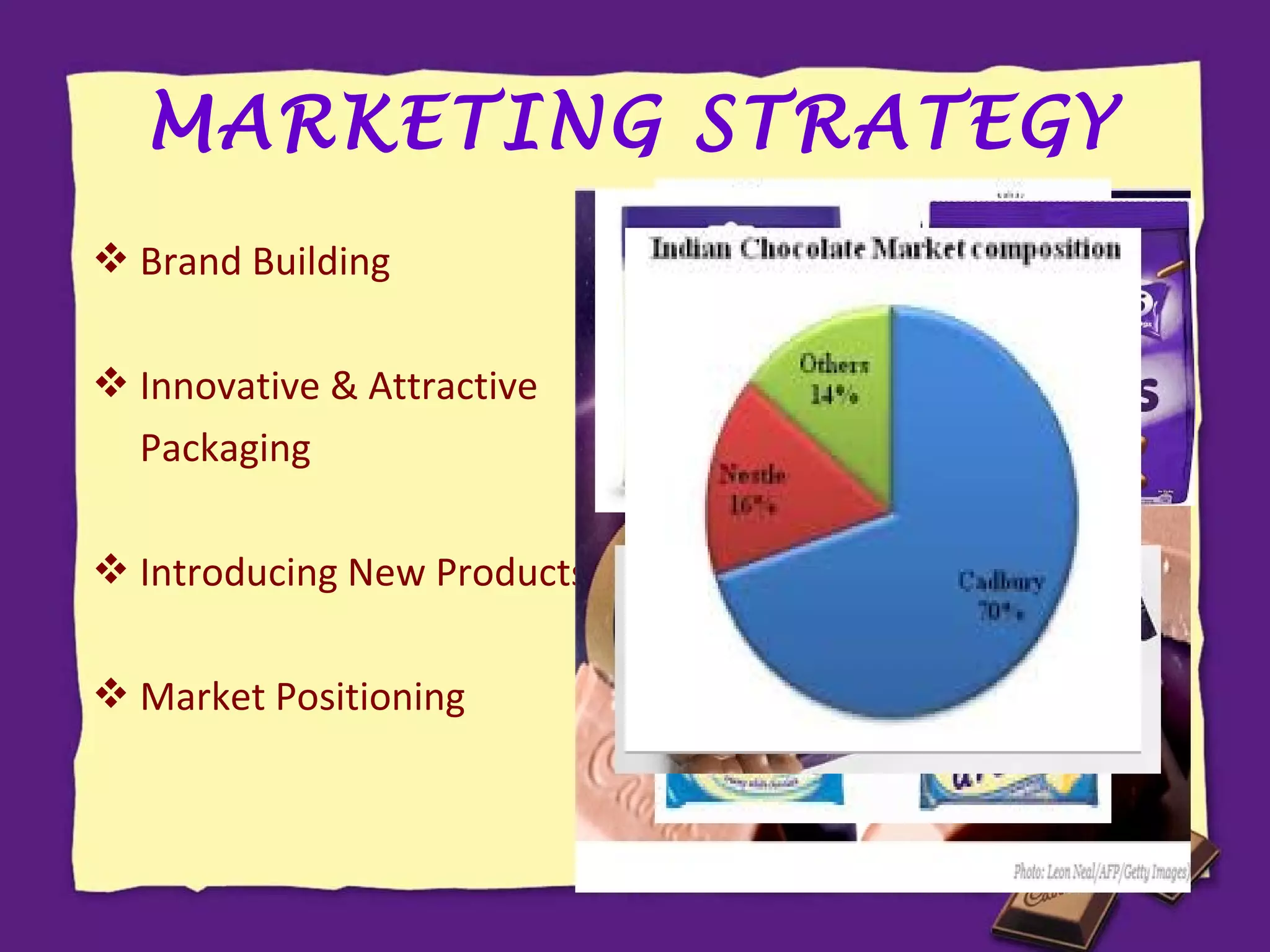
Cadbury enjoys a value market share of over 70% - the
highest Cadbury brand share in the world! The brand
Cadbury Dairy Milk is considered the "gold standard" for
chocolates in India.
VISION
 The Barrow Cadbury’s Trust’s Vision is of a peaceful,
equitable society free from discrimination and based
on the principle of social justice for all.

MISSIO
N
The Barrow Cadbury’s Trust’s Mission is to

promote social justice through grant making,
research, influencing public opinion and policy and
supporting local communities.
OBJECTIVES
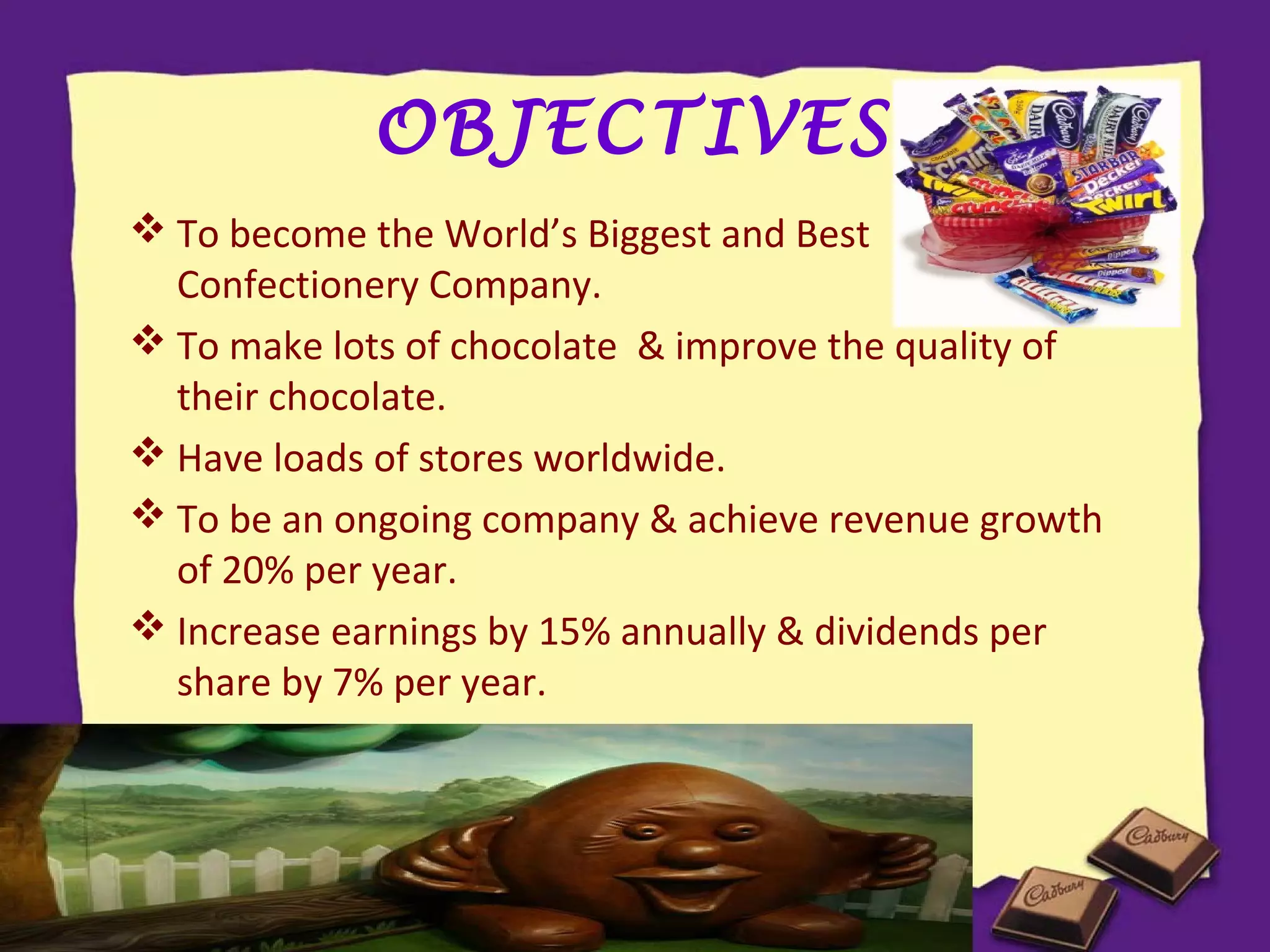
 To become the World’s Biggest and Best
Confectionery Company.
 To make lots of chocolate & improve the quality of
their chocolate.
 Have loads of stores worldwide.
 To be an ongoing company & achieve revenue growth
of 20% per year.
 Increase earnings by 15% annually & dividends per
share by 7% per year.
ACHIEVEMENTS
• 2008- SILVER award for the 'Most Effective Use of
Advertising‘.
• 2008- Cadbury India has been ranked as the 7th Great
Place to Work and the No. 1 FMCG company in India.
• Cadbury Dairy Milk & Bournvita have been declared a
`Consumer Super brand' for 2006-07.
• Cadbury India has been ranked 5th in the FMCG sector,
by Business World magazine in 2007.
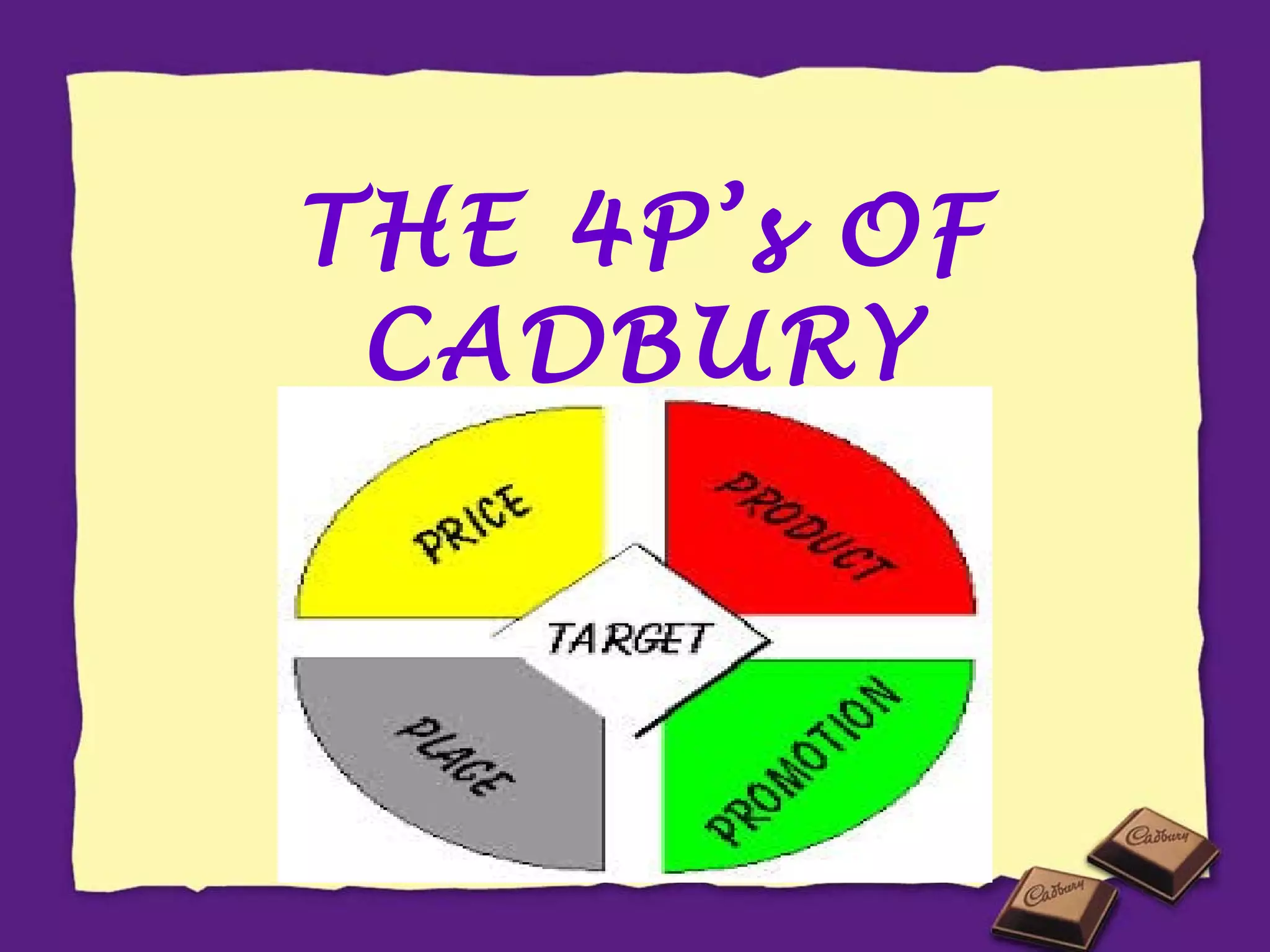
THE 4P’s OF
CADBURY
PLACE
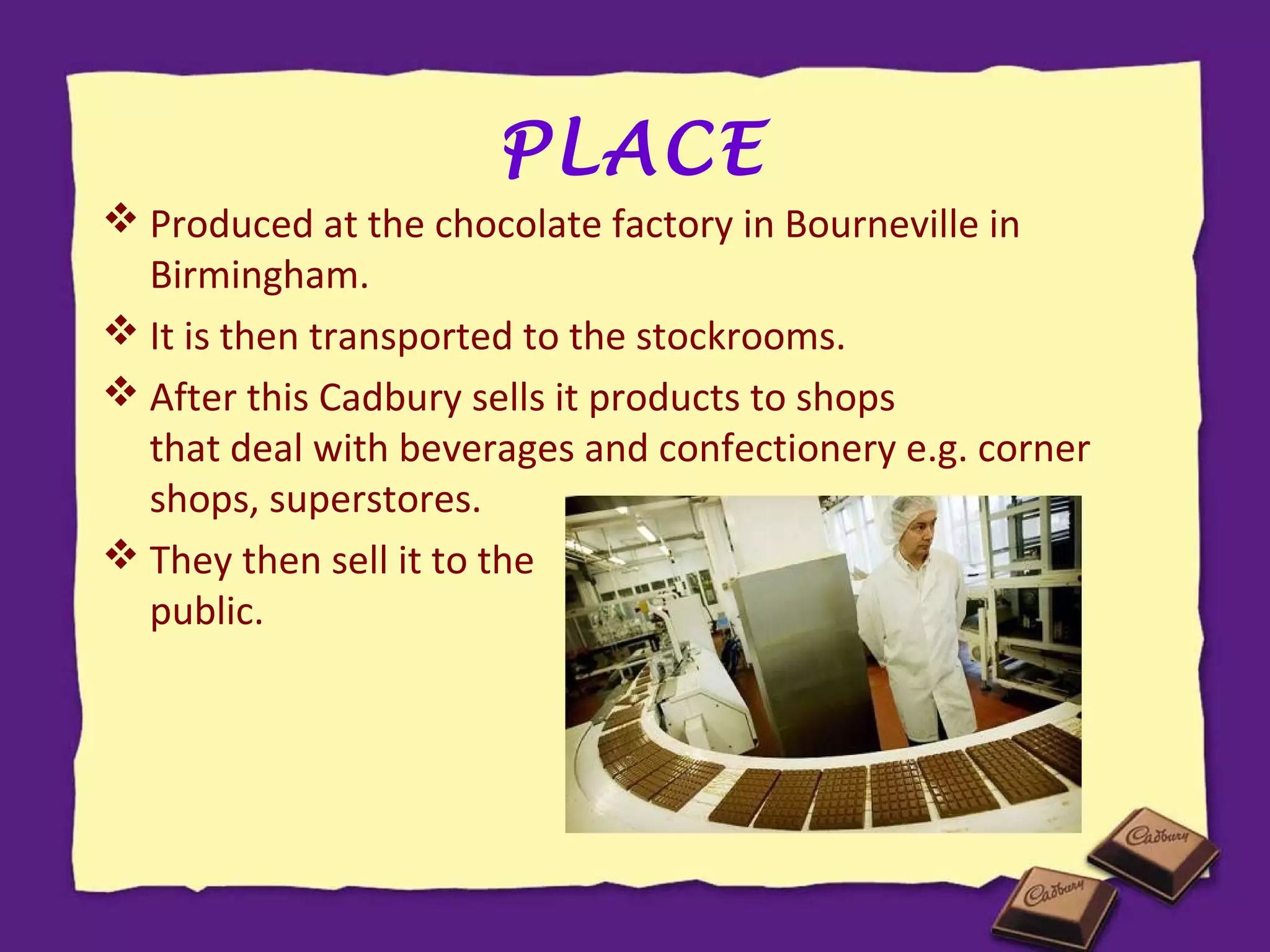
 Produced at the chocolate factory in Bourneville in
Birmingham.
 It is then transported to the stockrooms.
 After this Cadbury sells it products to shops
that deal with beverages and confectionery e.g. corner
shops, superstores.
 They then sell it to the
general
public.
PLACE
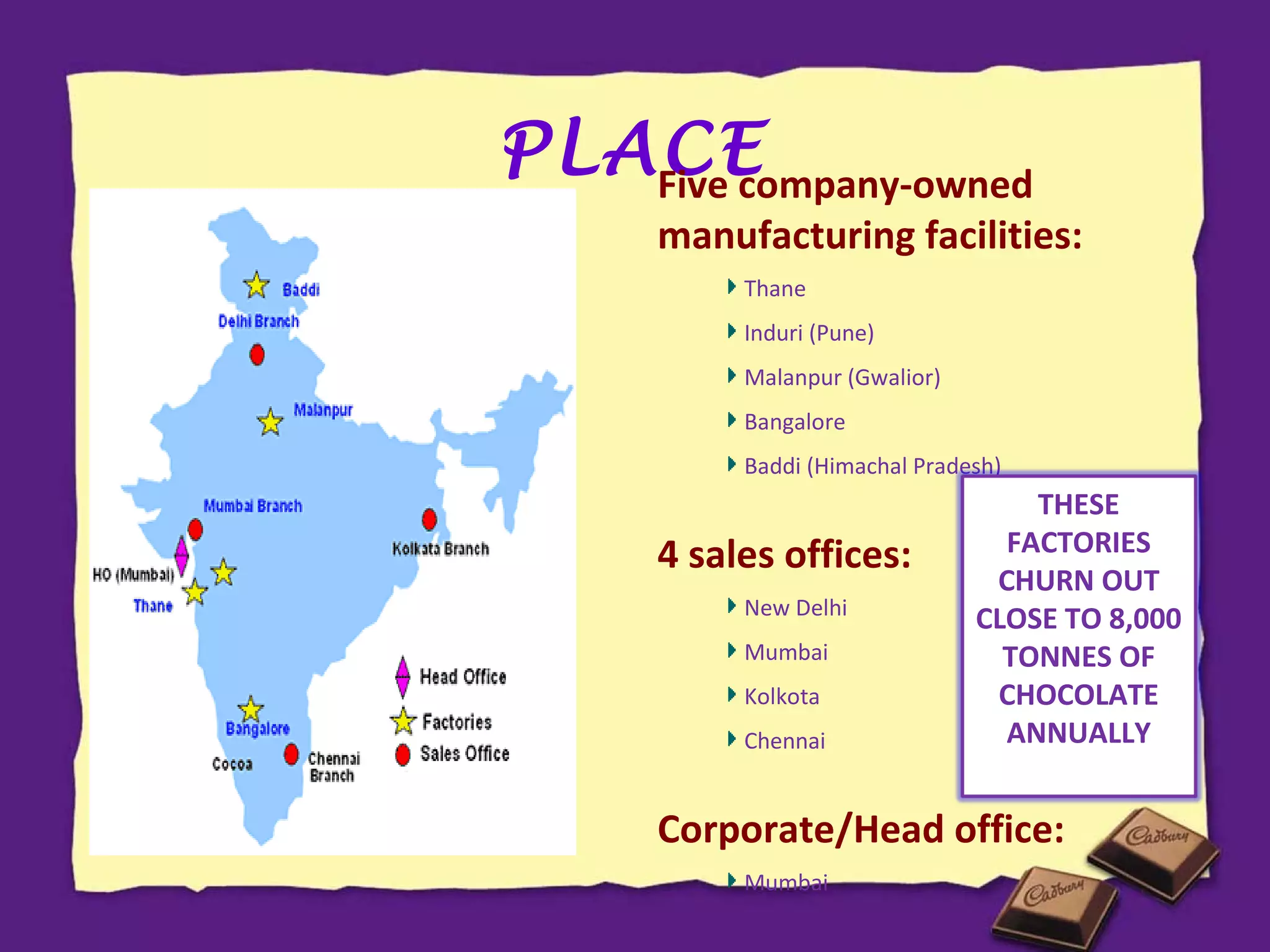
Five company-owned

manufacturing facilities:
Thane
Induri (Pune)
Malanpur (Gwalior)
Bangalore
Baddi (Himachal Pradesh)

4 sales offices:
New Delhi
Mumbai
Kolkota
Chennai

THESE
FACTORIES
CHURN OUT
CLOSE TO 8,000
TONNES OF
CHOCOLATE
ANNUALLY

Corporate/Head office:
Mumbai
PRODUCT
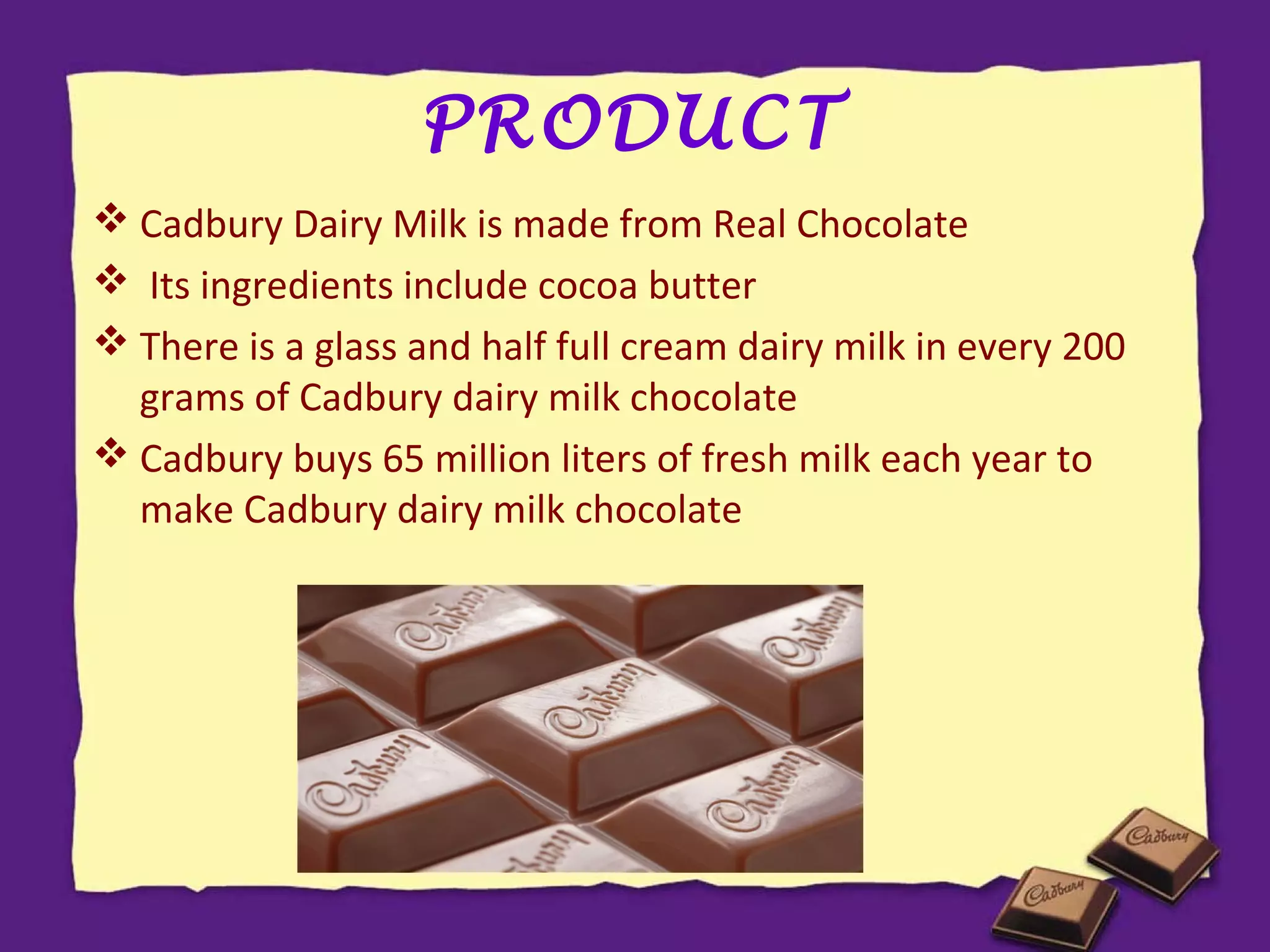
 Cadbury Dairy Milk is made from Real Chocolate
 Its ingredients include cocoa butter
 There is a glass and half full cream dairy milk in every 200
grams of Cadbury dairy milk chocolate
 Cadbury buys 65 million liters of fresh milk each year to
make Cadbury dairy milk chocolate
PRODUCT
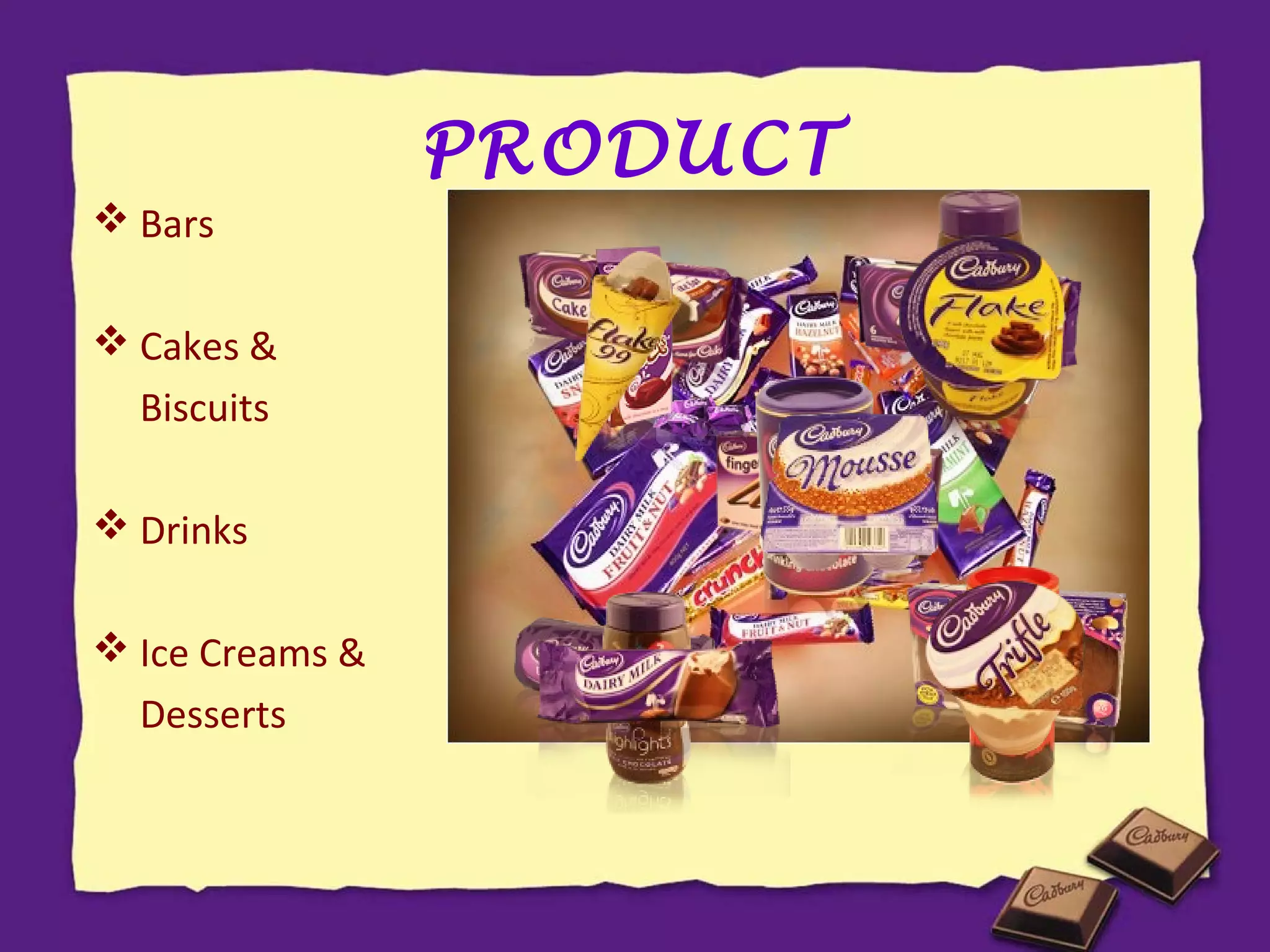
 Bars
 Cakes &
Biscuits
 Drinks
 Ice Creams &
Desserts
PRICE

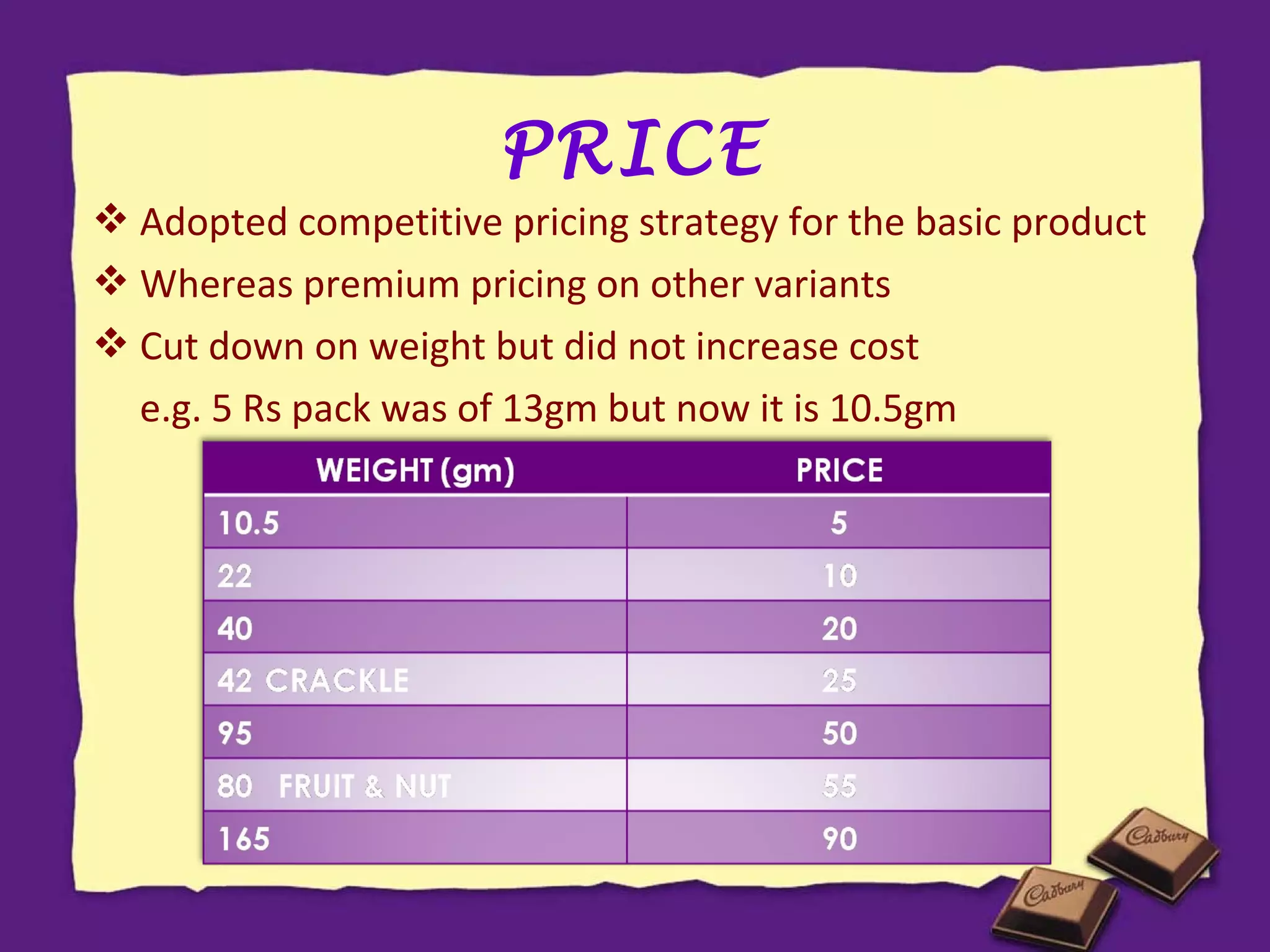
 Adopted competitive pricing strategy for the basic product
 Whereas premium pricing on other variants
 Cut down on weight but did not increase cost
e.g. 5 Rs pack was of 13gm but now it is 10.5gm
PROMOTION

CAMPAIGN

TARGET

Real Taste of Life

Child in adult

Khanewalon ko khane ka
bahana chahiye

Wider masses

Pappu Pass Ho Gaya

Youngsters

Miss Palampur

Rural masses

Kuch Meetha Ho Jaaye

Conversion of sweet consumers to chocolate for
special occasions

Khane ke baad Meethe
mein Kuch Meetha Ho
Jaaye

Targeting the habit of Indians to have desserts
after meals

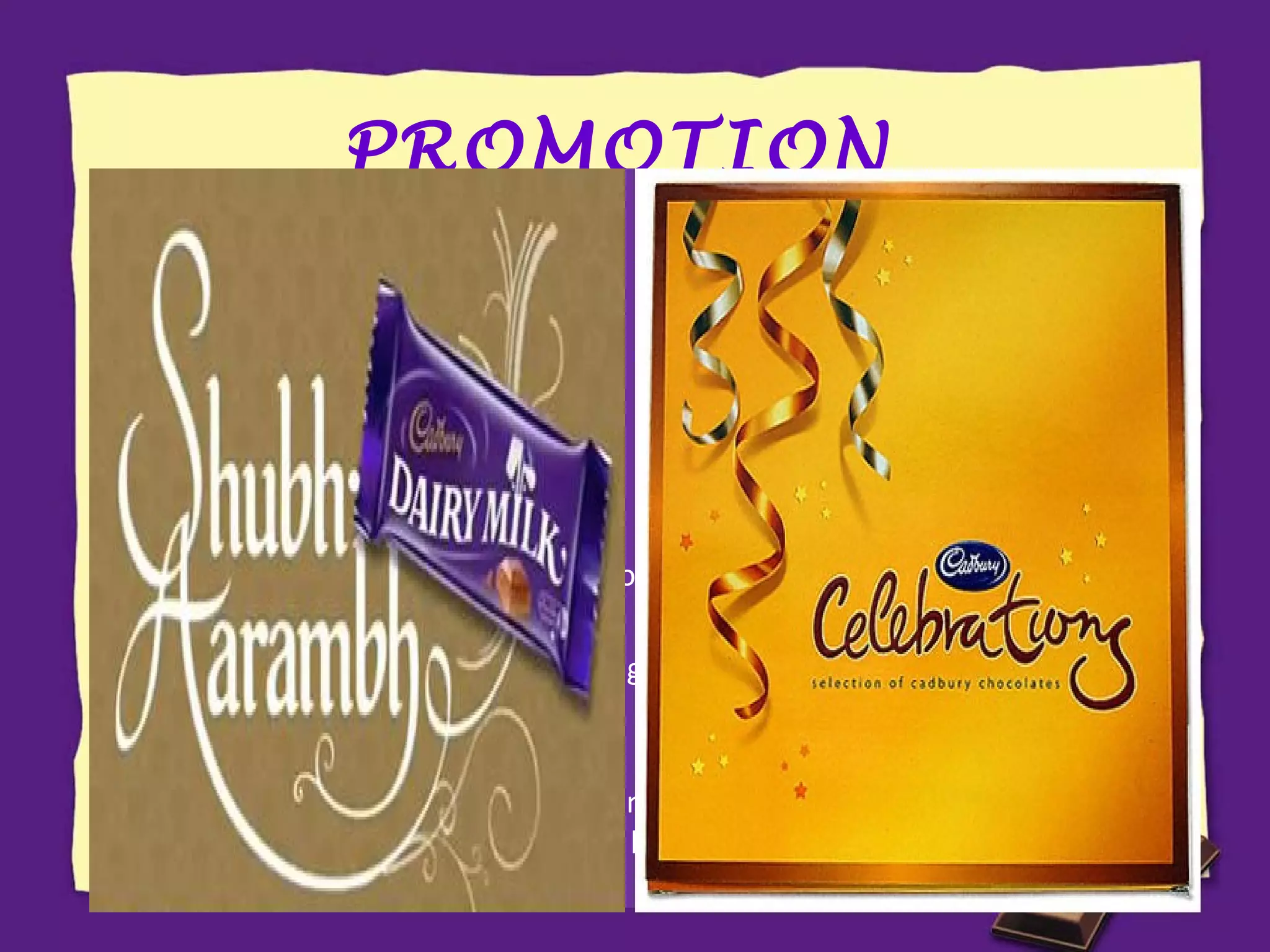
Shubh Aarambh

Targeting the belief of Indians that anything
begun by having something sweet provides good
luck
PROMOTION
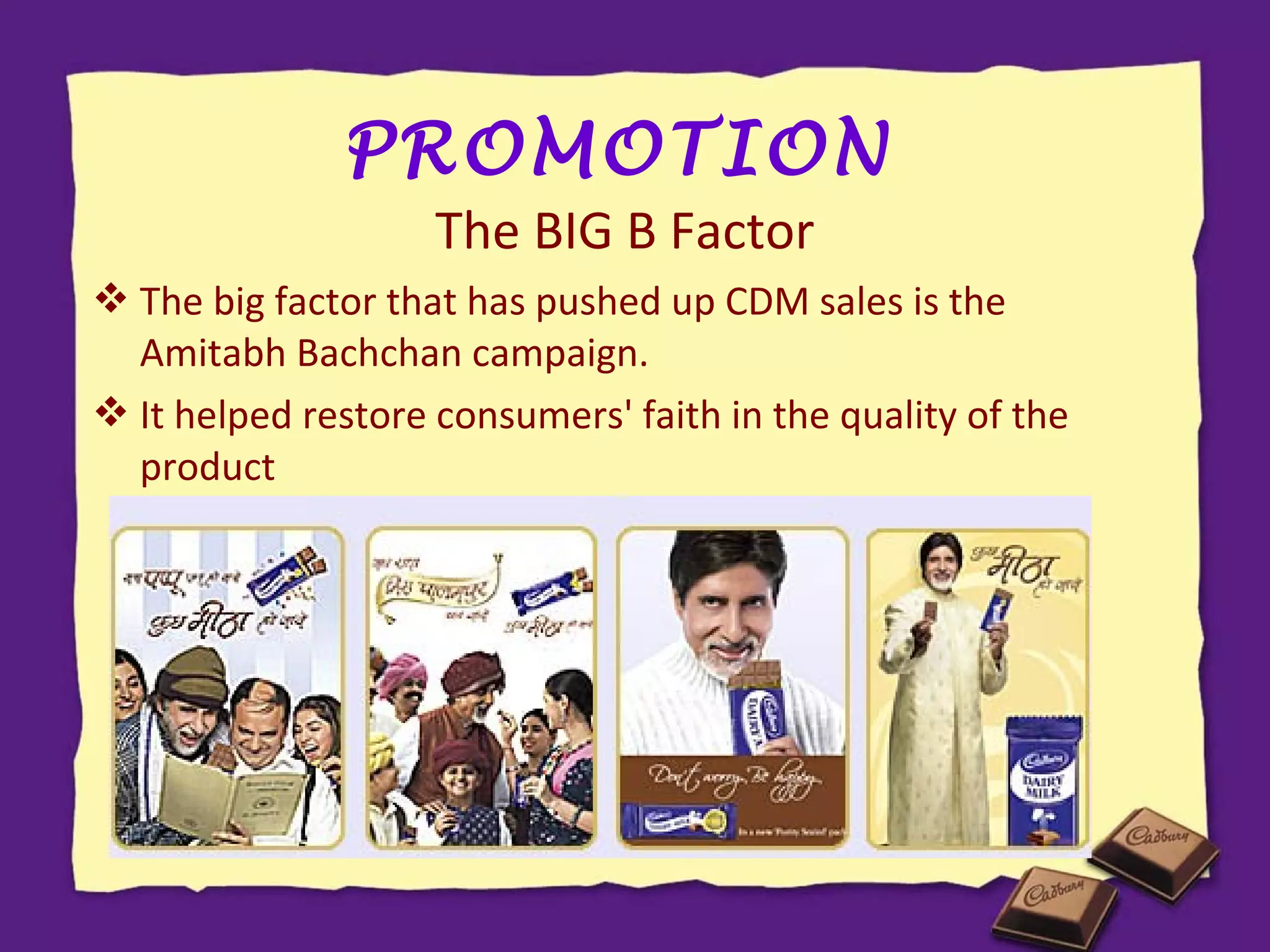
The BIG B Factor

 The big factor that has pushed up CDM sales is the
Amitabh Bachchan campaign.
 It helped restore consumers' faith in the quality of the
product
MARKETING STRATEGY
 Brand Building
 Innovative & Attractive
Packaging
 Introducing New Products
 Market Positioning
5 C’S






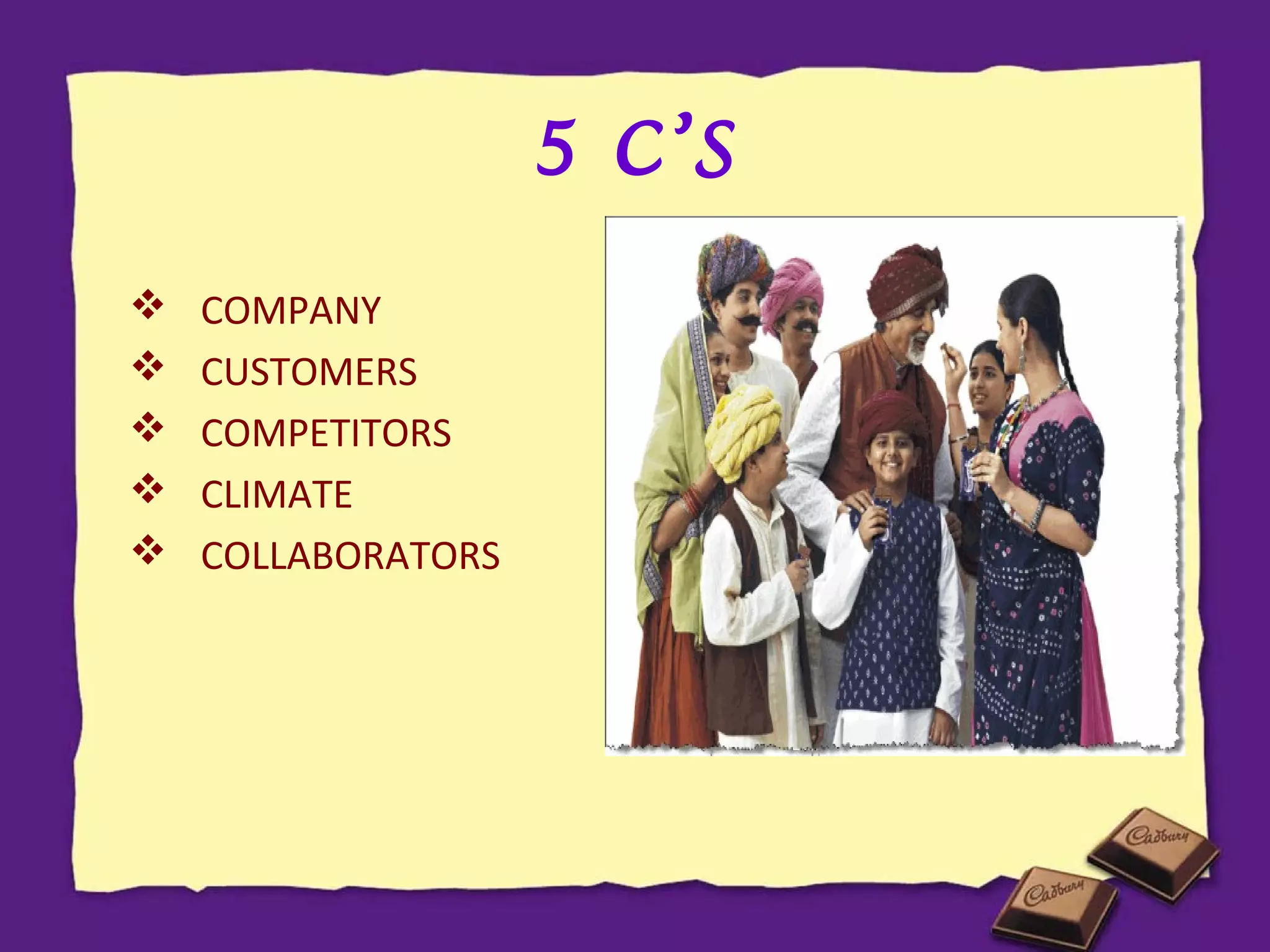
COMPANY
CUSTOMERS
COMPETITORS
CLIMATE
COLLABORATORS
MARKET
SEGMENTATION
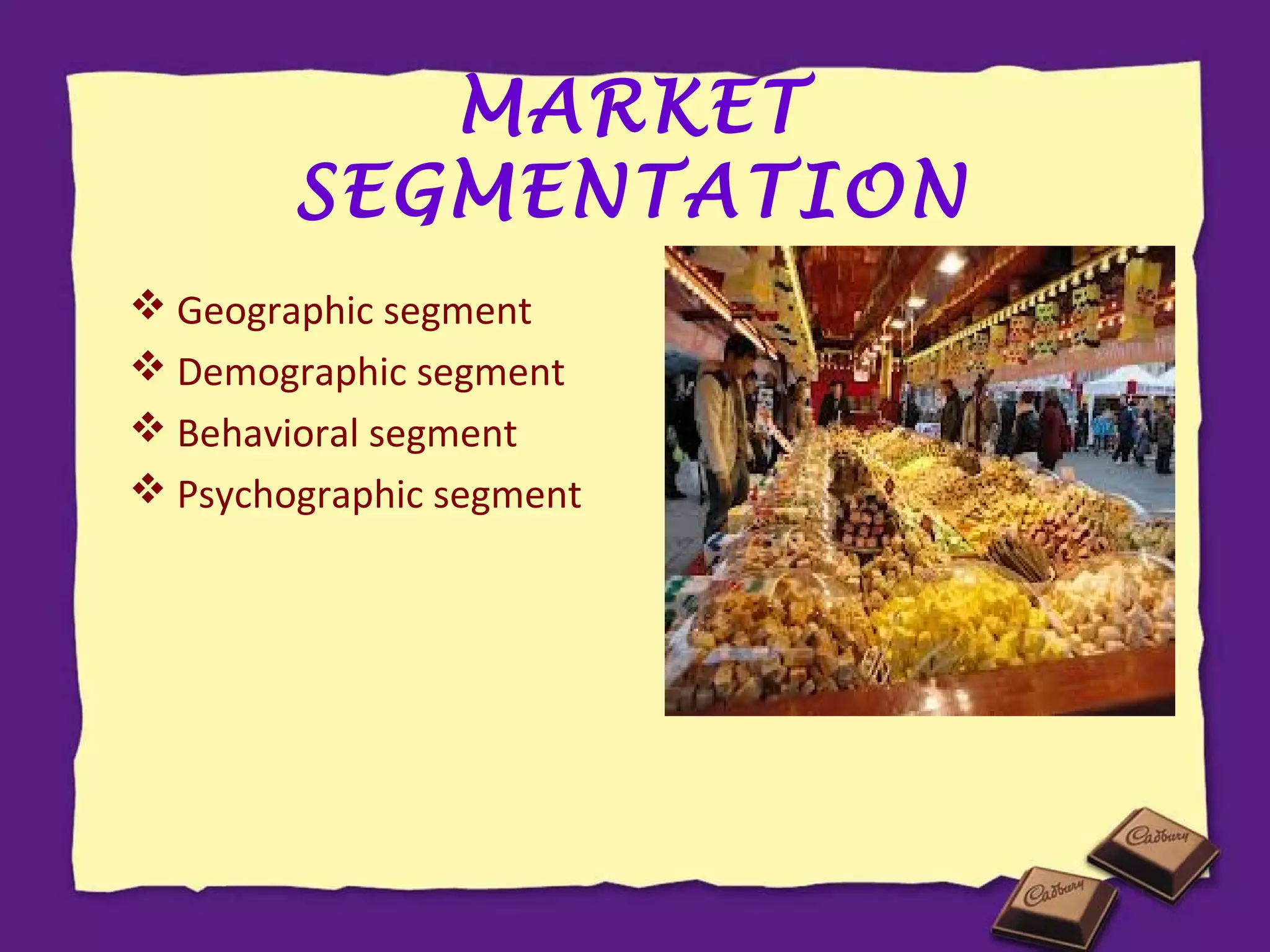
 Geographic segment
 Demographic segment
 Behavioral segment
 Psychographic segment
MARKET SEGMENTATION
GEOGRAPHIC
 Region
 Countries
 Climate

DEMOGRAPHIC
 Age
 Gender
 Family Life cycle
 Income
MARKET SEGMENTATION
PSYCHOLOGICAL
 Attitude Toward The
Product
 Life Style

BEHAVIORAL
 Occasions
 Benefits
 Usage rate
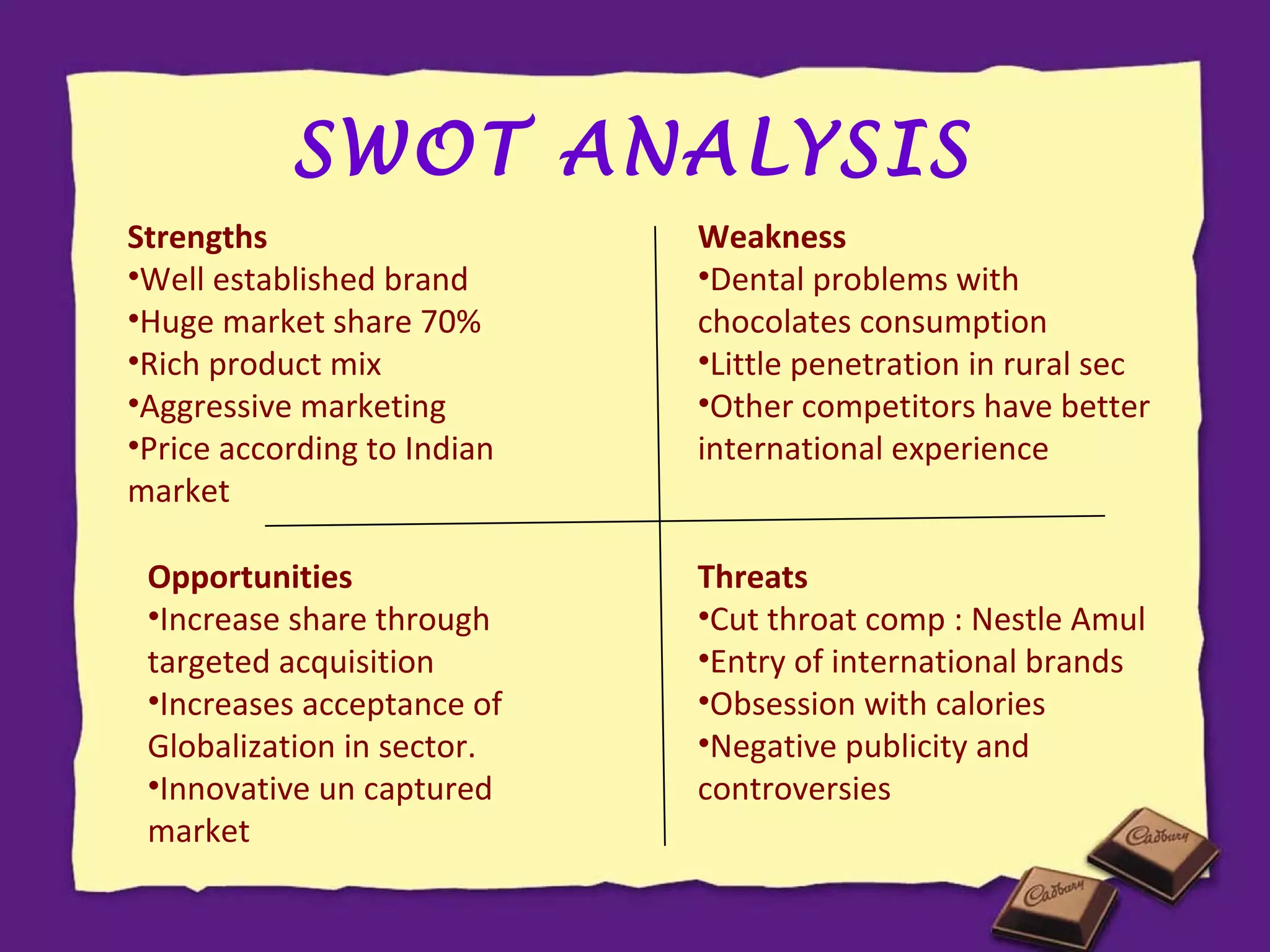
SWOT ANALYSIS
Strengths
•Well established brand
•Huge market share 70%
•Rich product mix
•Aggressive marketing
•Price according to Indian
market

Weakness
•Dental problems with
chocolates consumption
•Little penetration in rural sec
•Other competitors have better
international experience

Opportunities
•Increase share through
targeted acquisition
•Increases acceptance of
Globalization in sector.
•Innovative un captured
market

Threats
•Cut throat comp : Nestle Amul
•Entry of international brands
•Obsession with calories
•Negative publicity and
controversies
MY SUGGESTIONS

 Bring out new products for health conscious
people.
 Continue to promote itself as substitute to mithai.
 Choco-biscuits should be introduced.
 Should use Indian ads and avoid global ads in
India.
 Consider attractive display or its own ‘Chocolate
boutique’ (retail store).
 Special chocolates for Christmas should be
introduced e.g. rum, champagne flavored
 New flavors like strawberry,orange,vanilla etc.
CONCLUSIONS

 There is an immense scope for chocolate industry
in India
 Indian chocolate industry is unique mix with
extreme consumption patterns, attitudes, beliefs,
income level and spending
 Understanding consumer preferences and
demands is the key to growth
 Pricing, quality , flavors and pack size are some of
the important factors
 Economical distribution using proper supply chain
management is necessity
 Brand loyalty should be maintained
T
H
A
N
K
Y
O
U

Cadbury's marketing ppt

  • 1.
  • 2.
    HISTORY OF CADBURY Started by John Cadbury  Factory in Bourneville in 1861- largest chocolate production in U.K  1897- Manufactured 1st milk chocolate.  1950- First overseas factory near Hobart, Tasmania.  1960’s- Larger factory with his brother selling 16 type of drinking chocolates.  Today the largest confectionery company in the world;70,000+ employees.
  • 3.
    CADBURY INDIA In India, Cadburybegan its operations in 1948 by importing chocolates. It today has 5 company-owned manufacturing facilities & 5 sales offices in 5 metros. The corporate office is in Mumbai. Cadbury enjoys a value market share of over 70% - the highest Cadbury brand share in the world! The brand Cadbury Dairy Milk is considered the "gold standard" for chocolates in India.
  • 4.
    VISION  The BarrowCadbury’s Trust’s Vision is of a peaceful, equitable society free from discrimination and based on the principle of social justice for all. MISSIO N The Barrow Cadbury’s Trust’s Mission is to promote social justice through grant making, research, influencing public opinion and policy and supporting local communities.
  • 5.
    OBJECTIVES  To becomethe World’s Biggest and Best Confectionery Company.  To make lots of chocolate & improve the quality of their chocolate.  Have loads of stores worldwide.  To be an ongoing company & achieve revenue growth of 20% per year.  Increase earnings by 15% annually & dividends per share by 7% per year.
  • 6.
    ACHIEVEMENTS • 2008- SILVERaward for the 'Most Effective Use of Advertising‘. • 2008- Cadbury India has been ranked as the 7th Great Place to Work and the No. 1 FMCG company in India. • Cadbury Dairy Milk & Bournvita have been declared a `Consumer Super brand' for 2006-07. • Cadbury India has been ranked 5th in the FMCG sector, by Business World magazine in 2007.
  • 7.
  • 8.
    PLACE  Produced atthe chocolate factory in Bourneville in Birmingham.  It is then transported to the stockrooms.  After this Cadbury sells it products to shops that deal with beverages and confectionery e.g. corner shops, superstores.  They then sell it to the general public.
  • 9.
    PLACE Five company-owned manufacturing facilities: Thane Induri(Pune) Malanpur (Gwalior) Bangalore Baddi (Himachal Pradesh) 4 sales offices: New Delhi Mumbai Kolkota Chennai THESE FACTORIES CHURN OUT CLOSE TO 8,000 TONNES OF CHOCOLATE ANNUALLY Corporate/Head office: Mumbai
  • 10.
    PRODUCT  Cadbury DairyMilk is made from Real Chocolate  Its ingredients include cocoa butter  There is a glass and half full cream dairy milk in every 200 grams of Cadbury dairy milk chocolate  Cadbury buys 65 million liters of fresh milk each year to make Cadbury dairy milk chocolate
  • 11.
    PRODUCT  Bars  Cakes& Biscuits  Drinks  Ice Creams & Desserts
  • 12.
    PRICE  Adopted competitivepricing strategy for the basic product  Whereas premium pricing on other variants  Cut down on weight but did not increase cost e.g. 5 Rs pack was of 13gm but now it is 10.5gm
  • 13.
    PROMOTION CAMPAIGN TARGET Real Taste ofLife Child in adult Khanewalon ko khane ka bahana chahiye Wider masses Pappu Pass Ho Gaya Youngsters Miss Palampur Rural masses Kuch Meetha Ho Jaaye Conversion of sweet consumers to chocolate for special occasions Khane ke baad Meethe mein Kuch Meetha Ho Jaaye Targeting the habit of Indians to have desserts after meals Shubh Aarambh Targeting the belief of Indians that anything begun by having something sweet provides good luck
  • 14.
    PROMOTION The BIG BFactor  The big factor that has pushed up CDM sales is the Amitabh Bachchan campaign.  It helped restore consumers' faith in the quality of the product
  • 15.
    MARKETING STRATEGY  BrandBuilding  Innovative & Attractive Packaging  Introducing New Products  Market Positioning
  • 16.
  • 17.
    MARKET SEGMENTATION  Geographic segment Demographic segment  Behavioral segment  Psychographic segment
  • 18.
    MARKET SEGMENTATION GEOGRAPHIC  Region Countries  Climate DEMOGRAPHIC  Age  Gender  Family Life cycle  Income
  • 19.
    MARKET SEGMENTATION PSYCHOLOGICAL  AttitudeToward The Product  Life Style BEHAVIORAL  Occasions  Benefits  Usage rate
  • 20.
    SWOT ANALYSIS Strengths •Well establishedbrand •Huge market share 70% •Rich product mix •Aggressive marketing •Price according to Indian market Weakness •Dental problems with chocolates consumption •Little penetration in rural sec •Other competitors have better international experience Opportunities •Increase share through targeted acquisition •Increases acceptance of Globalization in sector. •Innovative un captured market Threats •Cut throat comp : Nestle Amul •Entry of international brands •Obsession with calories •Negative publicity and controversies
  • 21.
    MY SUGGESTIONS  Bringout new products for health conscious people.  Continue to promote itself as substitute to mithai.  Choco-biscuits should be introduced.  Should use Indian ads and avoid global ads in India.  Consider attractive display or its own ‘Chocolate boutique’ (retail store).  Special chocolates for Christmas should be introduced e.g. rum, champagne flavored  New flavors like strawberry,orange,vanilla etc.
  • 22.
    CONCLUSIONS  There isan immense scope for chocolate industry in India  Indian chocolate industry is unique mix with extreme consumption patterns, attitudes, beliefs, income level and spending  Understanding consumer preferences and demands is the key to growth  Pricing, quality , flavors and pack size are some of the important factors  Economical distribution using proper supply chain management is necessity  Brand loyalty should be maintained
  • 23.