



Case Studies at National Level: 1:1 
Educational Computing Initiatives in 
South Africa 
Steve Vosloo 
Head of Mobile, Innovation Lab 
Pearson South Africa 
Presented at: 
Global Symposium on ICT in Education 
3-5 November 2014
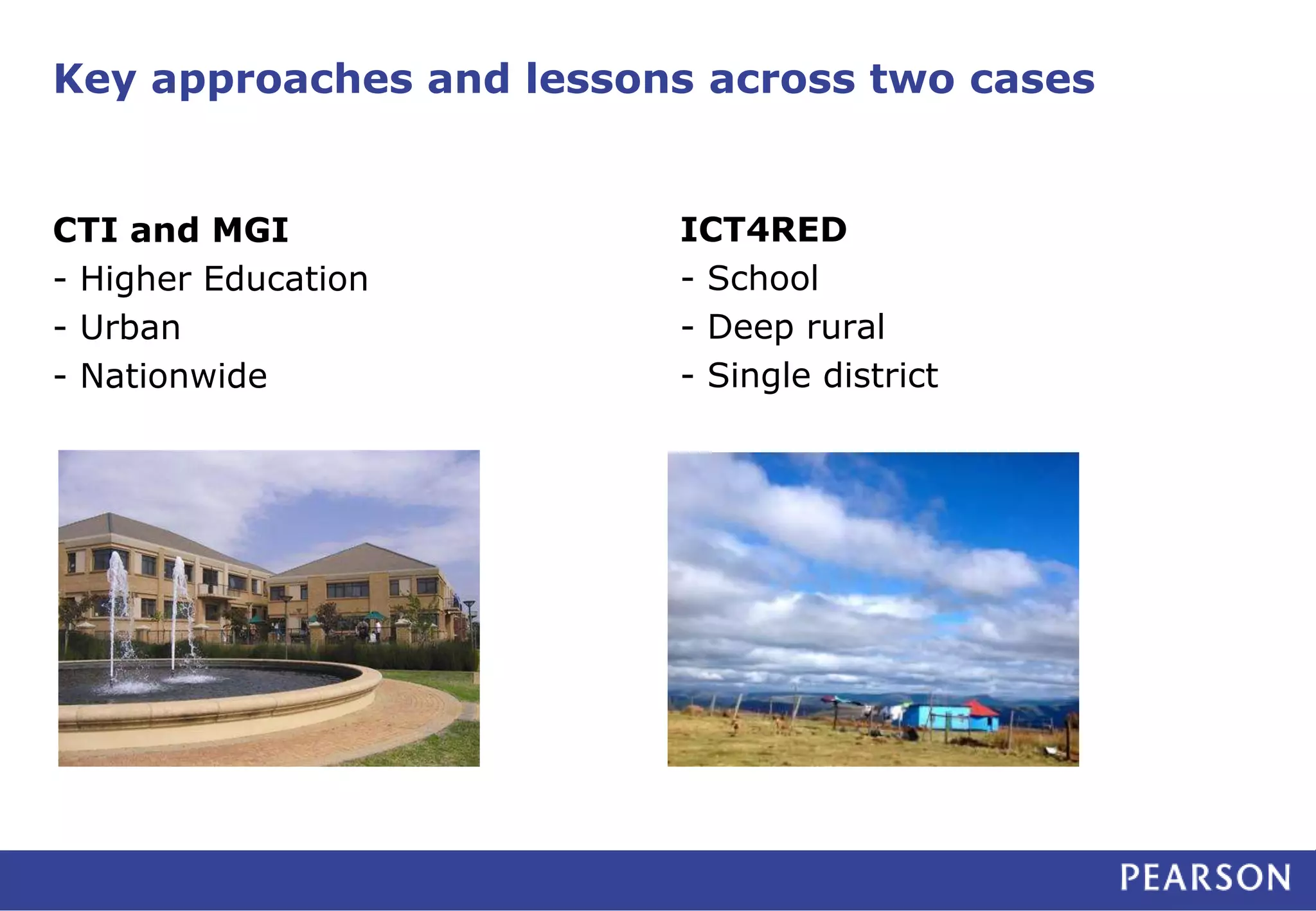
Key approaches and lessons across two cases 
CTI and MGI 
- Higher Education 
- Urban 
- Nationwide 
ICT4RED 
- School 
- Deep rural 
- Single district
Tablet and Digital Content project 
Implemented at CTI Education Group (CTI) and Midrand 
Graduate Institute (MGI) 
Key points: 
Infrastructure constraints 
Content digitisation 
Communication 
Unintended consequences
About the project 
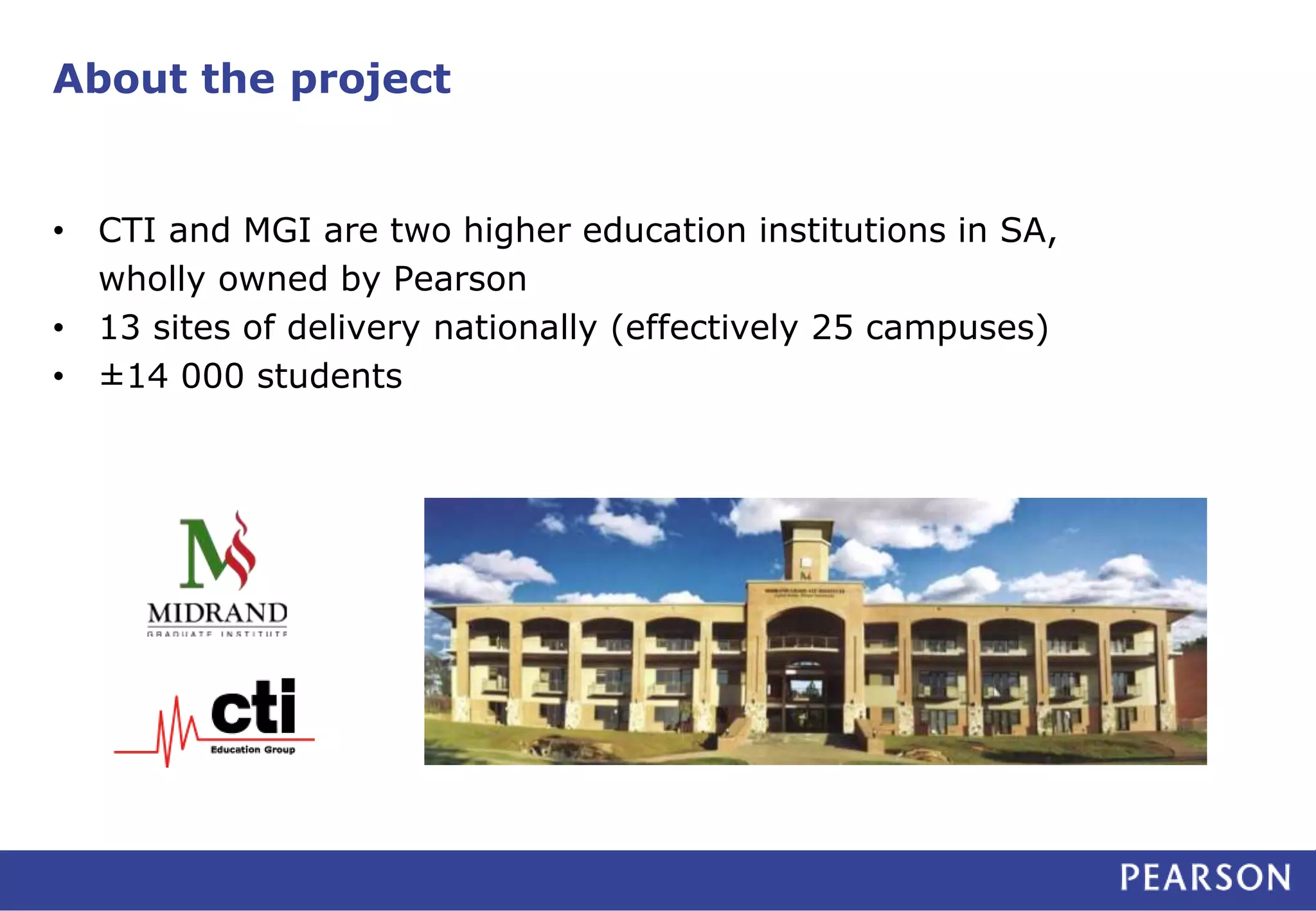
• CTI and MGI are two higher education institutions in SA, 
wholly owned by Pearson 
• 13 sites of delivery nationally (effectively 25 campuses) 
• ±14 000 students
About the project 
Long-term goal: to create a technology enhanced teaching and 
learning experience through cultivating 21st century skills 
and therefore ensuring academic excellence and 
employability to all students 
eVision of Teaching and learning with technology (TEL): 
• progressively move from content-driven to outcomes-driven 
• progressively move from “timetabled” to flexible structuring 
of teaching and learning 
• anytime, anywhere 
• flexible learning spaces 
• collaborative, communities of learning 
• design of education interventions based on research
About the project 
But, need to take “baby steps” 
 build foundations 
 get infrastructure in place 
 don’t over engineer/design from day 1 
 effectively replicate the 'analogue' experience of students 
using text books for studies into a digital experience 
… Then we build from here…
Infrastructure constraints 
SA has limited bandwidth infrastructure, especially for high 
peaks of traffic 
Challenge: How to get ebooks onto tablets? 
• Deliver titles on micro SD cards 
• Over the air updates or from local servers on campuses 
• Online registration but offline access
Infrastructure constraints 
Challenge: How to manage ongoing bandwidth needs? 
• Strong need to managing expectations about what the devices 
can be used for 
• Tablets were provided for accessing textbooks and learning 
materials, but students and lecturers want to use it for so 
much more  accessing YouTube, apps, social network sites, 
etc. 
• Manage access carefully 
• Increase connectivity infrastructure
Content digitisation and lessons learned 
Scope for 2014 deployment: 75 titles (ePub 2 and 3) 
Scope in 2015 deployment: 159 titles (ePub 2, epub 3, PDF and 
print) 
Need to think digital first – most existing content did not start 
from there 
 Challenges in converting and retagging content originally 
designed for fixed format (print/PDF) into a "reflowable" format 
(ePub) 
Need to redesign and reformat in some cases: editing, cutting 
(so choosing vendor is crucial)
Content digitisation and lessons learned 
Security and protection of Digital IP: Especially when acting 
as the distributor of third party material (time taken in drawing 
up contracts, the risk of distributors not releasing content, 
timeline of the project implementation does not always 
correspond to industry production trends) 
Clearing digital rights: The additional time and cost required if 
back list content was never originally cleared for digital 
distribution
Content digitisation and lessons learned 
• Quality control essential - The importance of allowing 
adequate time to check converted content in the end-user's 
application 
• Expensive and time consuming (lots of ereaders)  Non-trivial 
• All this takes time and requires very clear timelines 
• Map the process to when the learner will receive content 
• Deadlines / cut-off dates 
• Preparation of PDF’s as Plan B fallback
Communication challenges 
• Many stakeholders with different working cultures 
• Disconnect between assumptions and reality 
• Complexity of the implementation 
• Easy for an “us” and “them” mentality to develop  one 
implementation 
A clear need to focus on communication across all groups to 
support change management 
Manage expectations, e.g. ePubs don’t have page numbers – 
need to have a new way of referencing in class
Communication strategy 
• Clarification of roles and responsibilities 
• Formulate a strategy to inform all stakeholders regularly 
using different formats 
• Formulate a communication strategy for different phases of 
the project 
• Identify/assign a full time comms person to liaise directly 
with all stakeholders to determine: 
•Comms needs 
•Preferences 
•Existing and future comms channels needed 
•Feedback loops 
• Outcome: multi-channel Communication Plan
Communication “success” 
• Improved stakeholder satisfaction 
• Open and honest/transparent communication 
• Knowledge about where to get answers 
• Repeated/reinforced message through: using Neo/blogs; 
Townhalls, Conference calls, face-to-face; email 
• Enough time for people to engage 
• Correct information
Unintended consequences 
• We can now see campus efficiency, who is using and who is 
not and capacity usage implications 
• How to plan for more effectively managed environments 
• Campuses are designed for 100% students, but actually we 
only need for 70% capacity, so can allow for more 
collaborative spaces, better learning spaces. Smaller and 
more conducive to learning
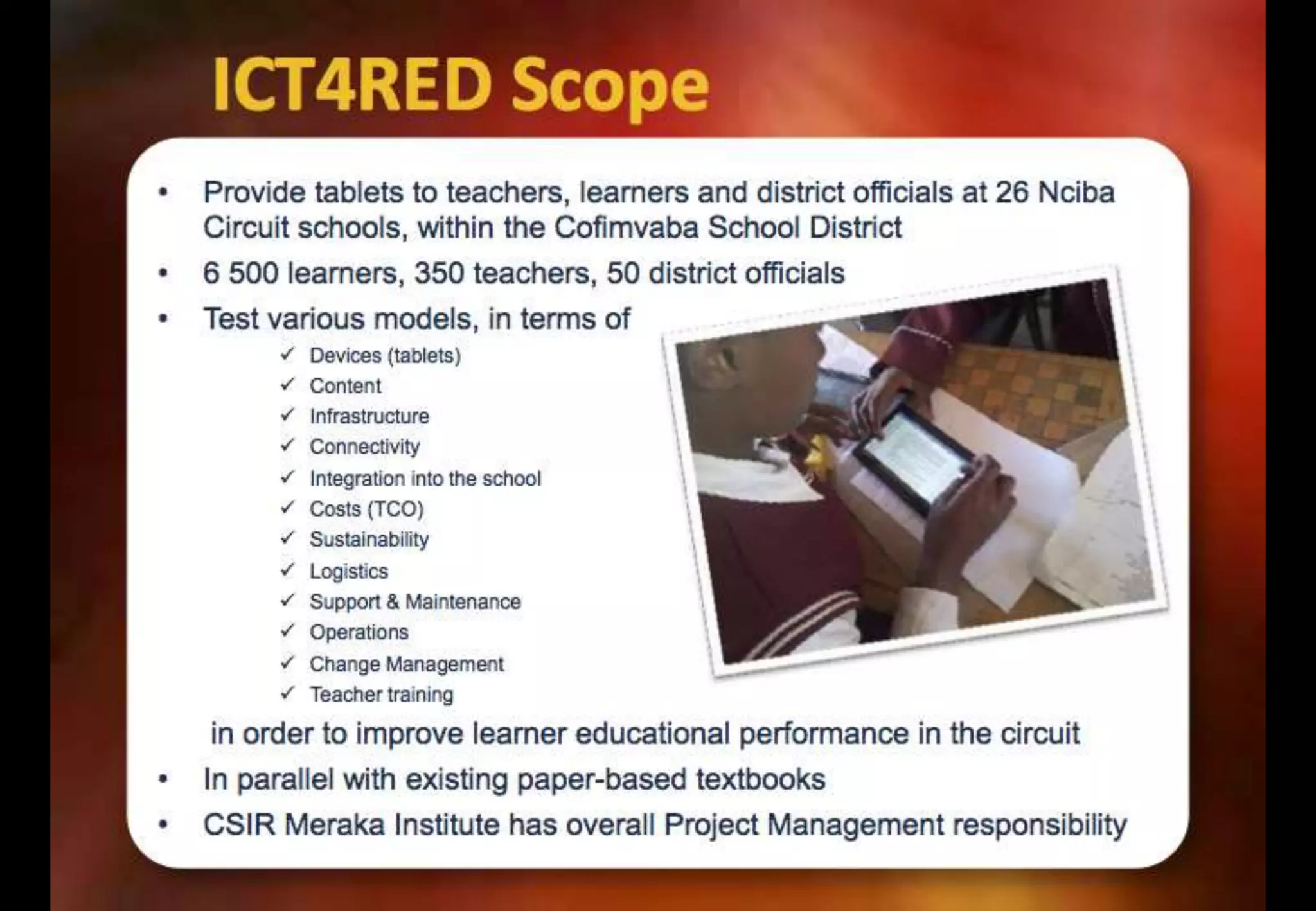
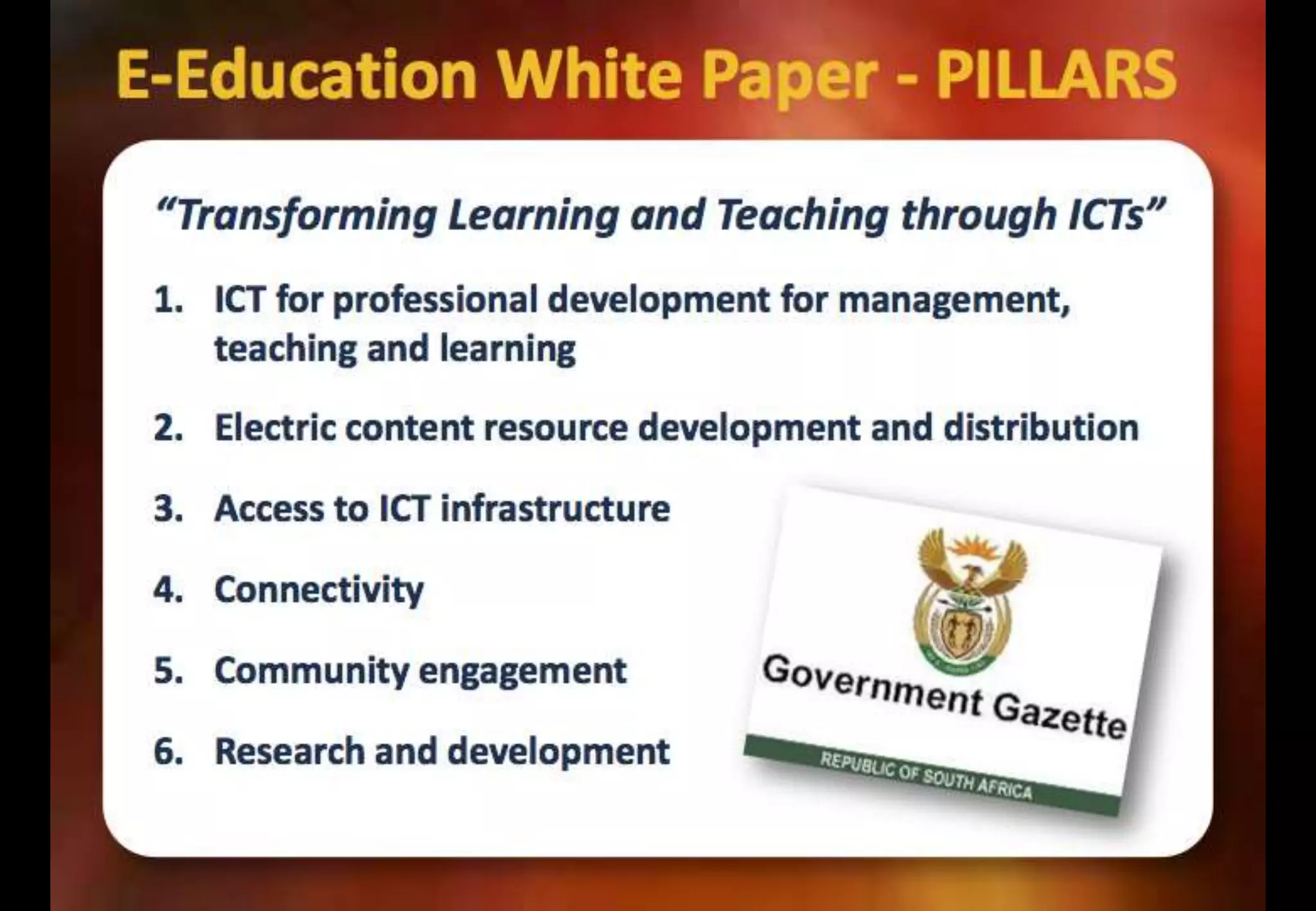
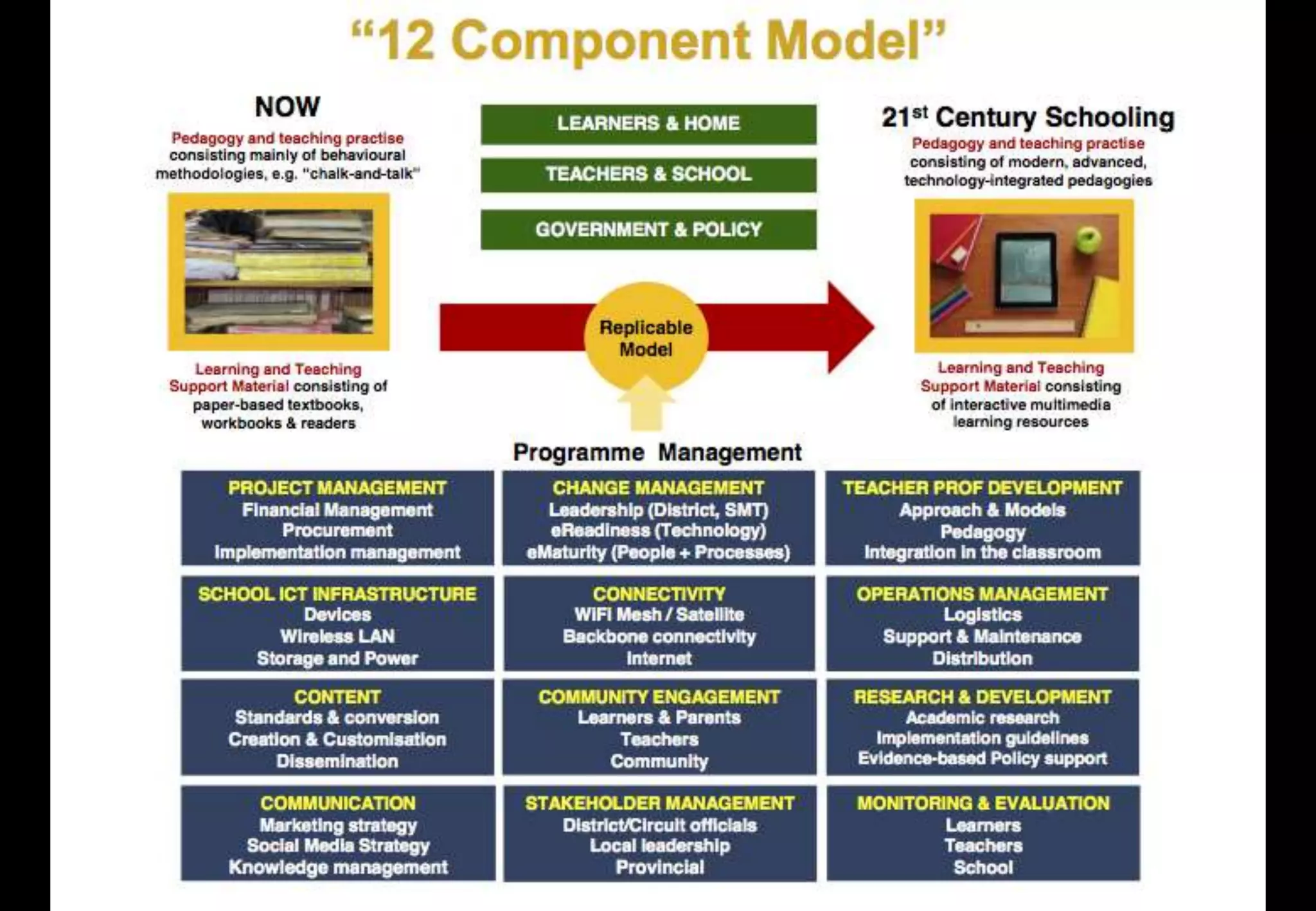
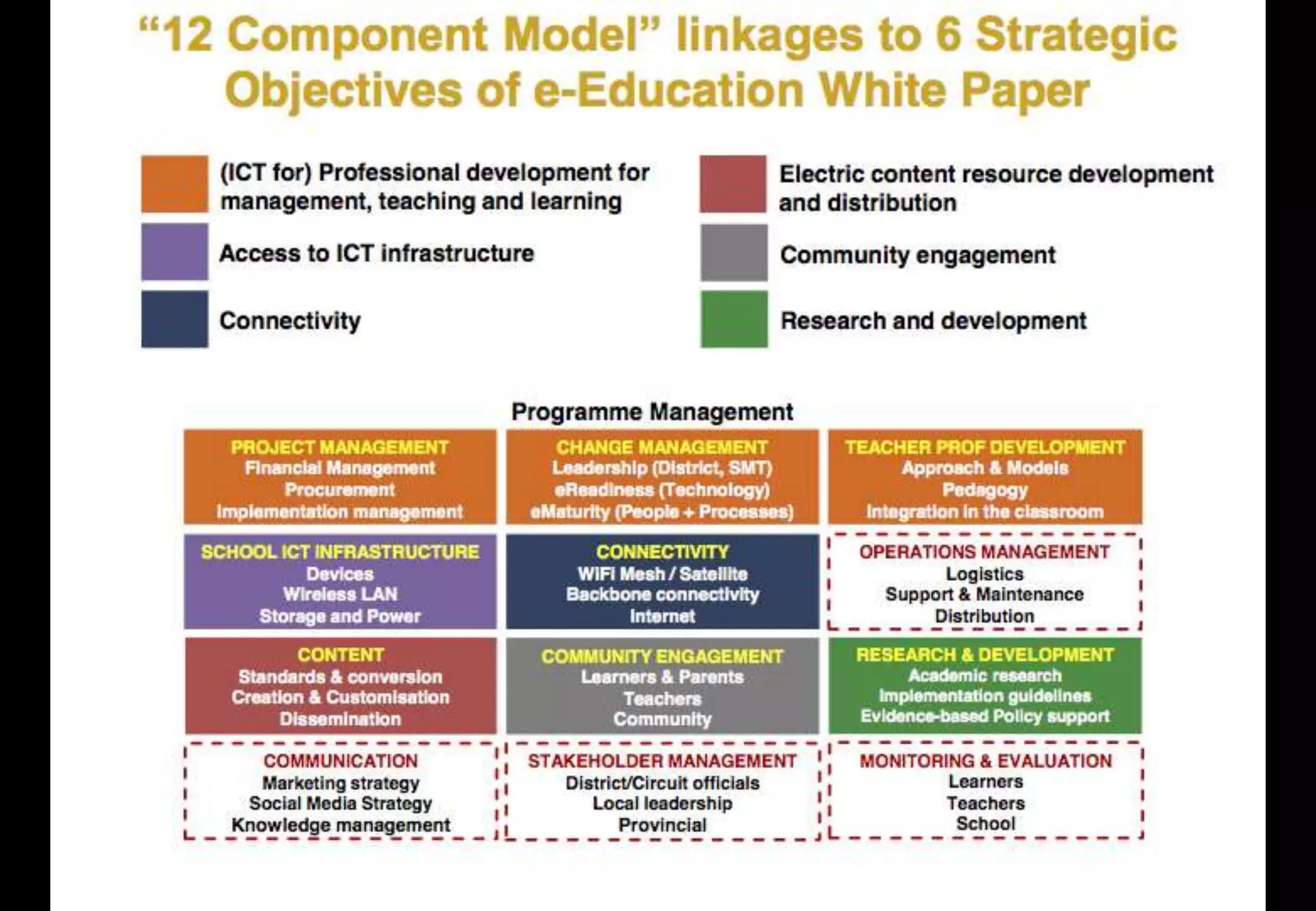
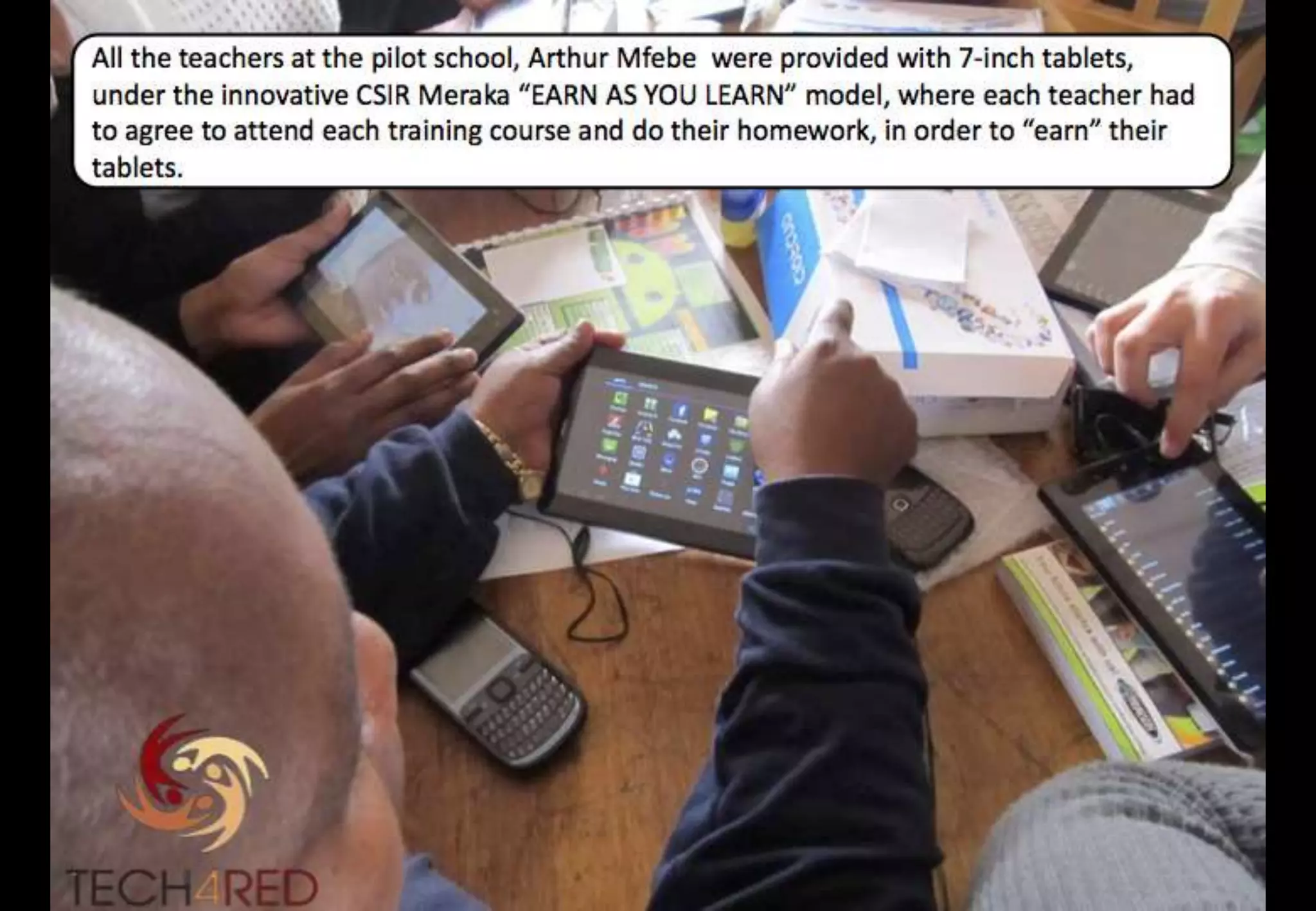
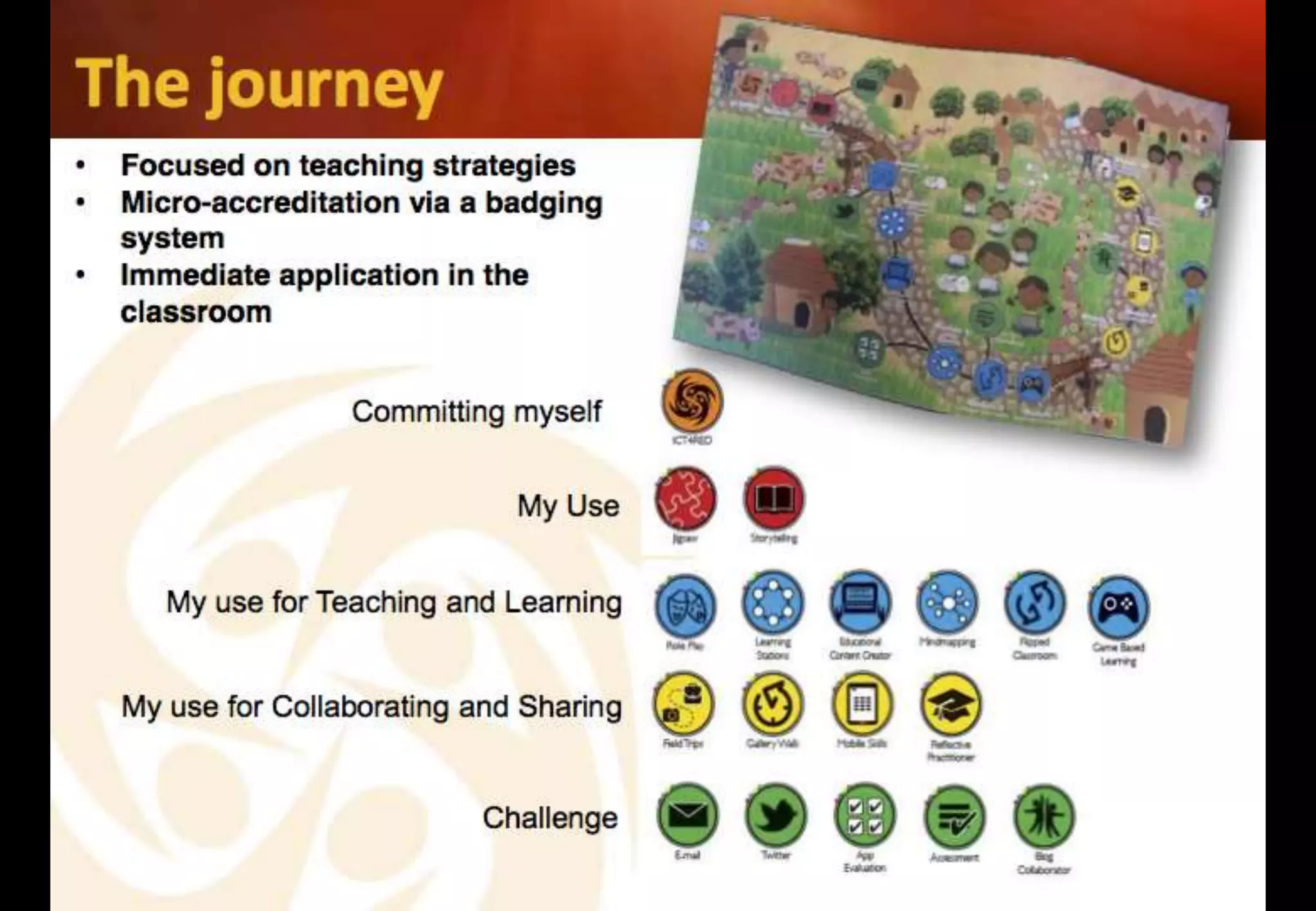
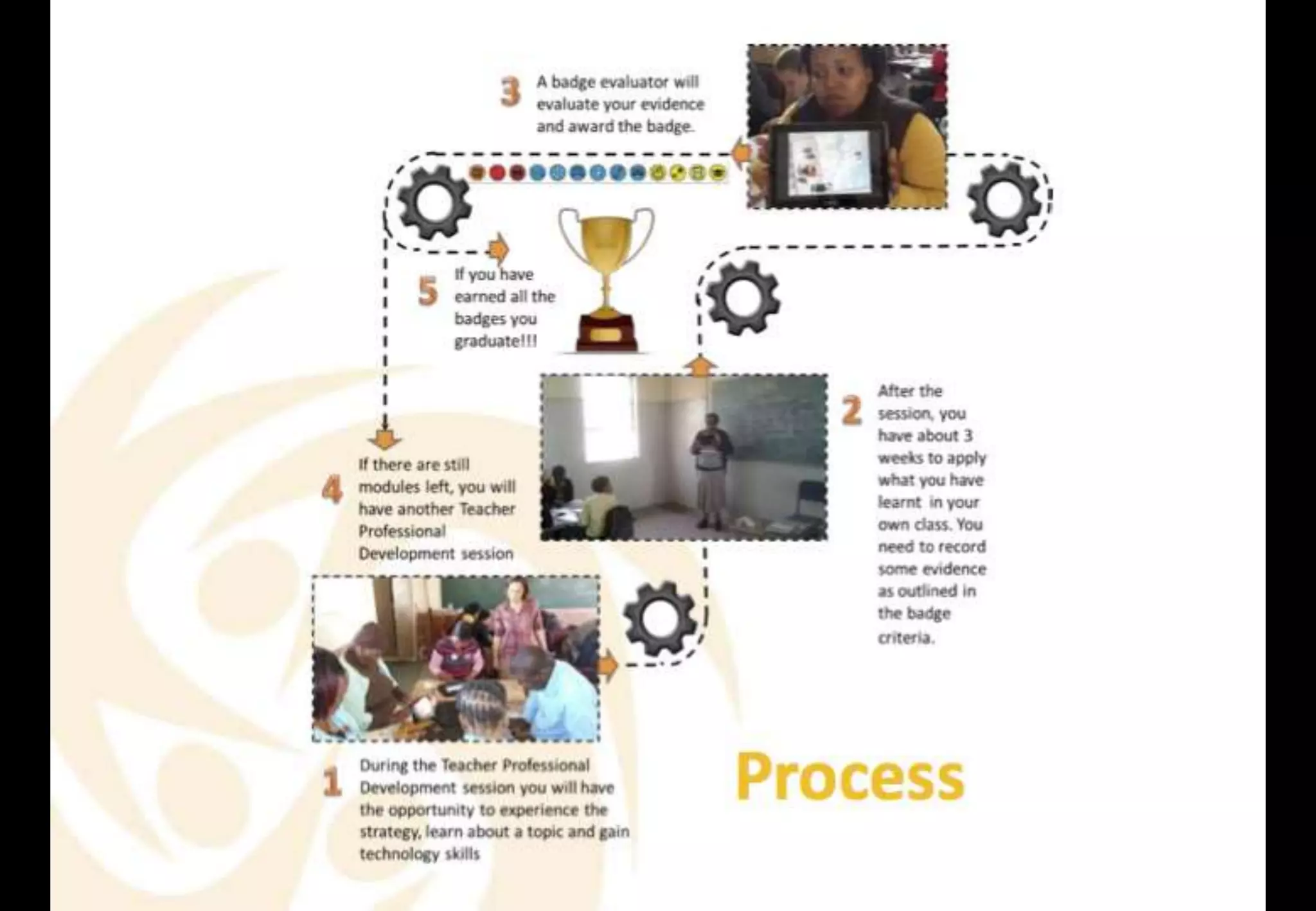
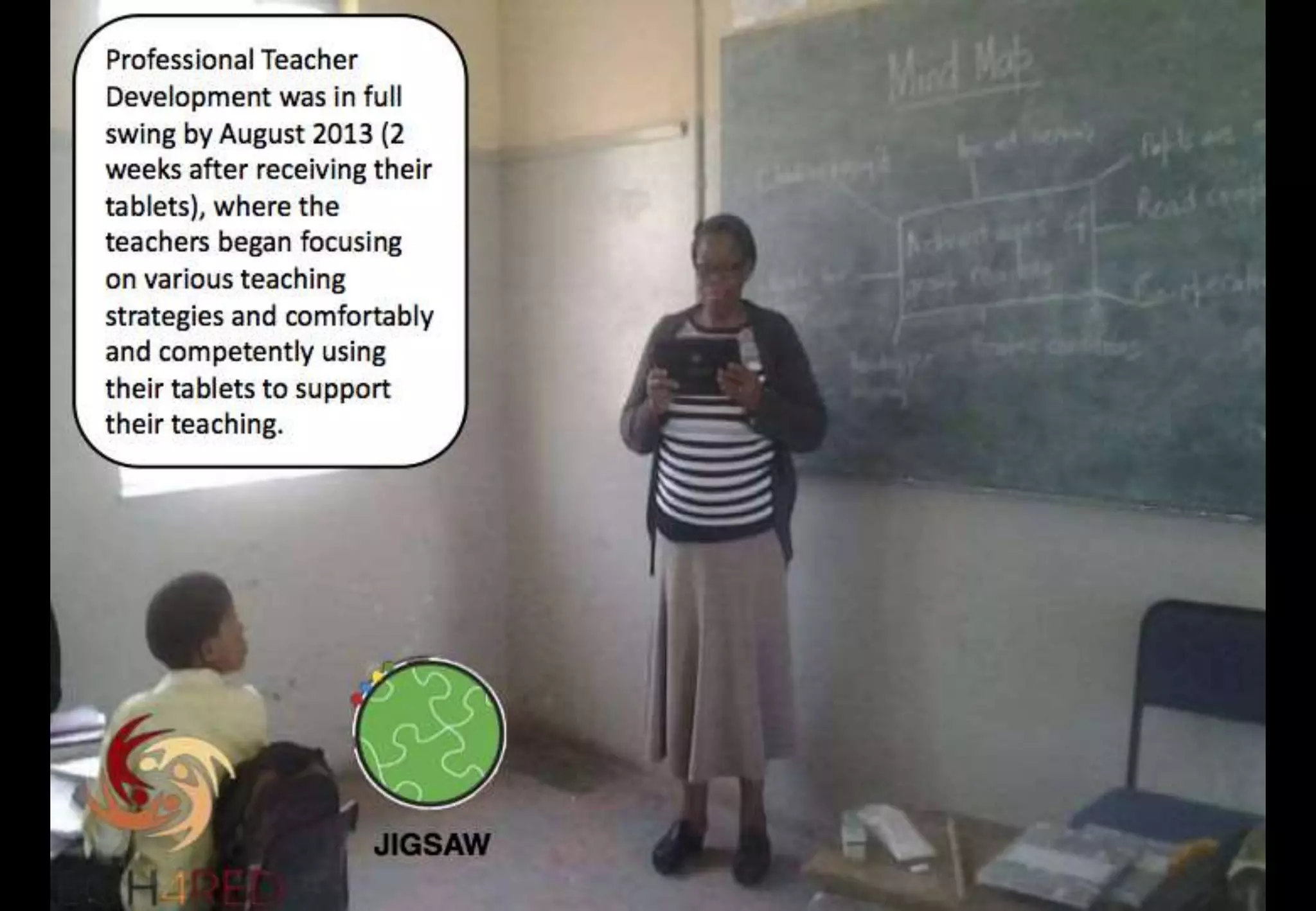
ICT for Rural Education Development (ICT4RED) 
project in the Cofimvaba schools district 
Key points: 
Alignment with policy 
Achieving buy-in through teacher training 
Tablet selection 
Slides courtesy of 
CSIR Meraka Institute
Go to http://ict4red.blogspot.com
Thank you 
Steve Vosloo 
Head of Mobile, Innovation Lab 
Pearson South Africa 
steve.vosloo@pearson.com 
@stevevosloo

2 Case Studies at National Level: 1:1 Educational Computing Initiatives in South Africa

  • 2.
    Case Studies atNational Level: 1:1 Educational Computing Initiatives in South Africa Steve Vosloo Head of Mobile, Innovation Lab Pearson South Africa Presented at: Global Symposium on ICT in Education 3-5 November 2014
  • 3.
    Key approaches andlessons across two cases CTI and MGI - Higher Education - Urban - Nationwide ICT4RED - School - Deep rural - Single district
  • 4.
    Tablet and DigitalContent project Implemented at CTI Education Group (CTI) and Midrand Graduate Institute (MGI) Key points: Infrastructure constraints Content digitisation Communication Unintended consequences
  • 5.
    About the project • CTI and MGI are two higher education institutions in SA, wholly owned by Pearson • 13 sites of delivery nationally (effectively 25 campuses) • ±14 000 students
  • 6.
    About the project Long-term goal: to create a technology enhanced teaching and learning experience through cultivating 21st century skills and therefore ensuring academic excellence and employability to all students eVision of Teaching and learning with technology (TEL): • progressively move from content-driven to outcomes-driven • progressively move from “timetabled” to flexible structuring of teaching and learning • anytime, anywhere • flexible learning spaces • collaborative, communities of learning • design of education interventions based on research
  • 7.
    About the project But, need to take “baby steps”  build foundations  get infrastructure in place  don’t over engineer/design from day 1  effectively replicate the 'analogue' experience of students using text books for studies into a digital experience … Then we build from here…
  • 8.
    Infrastructure constraints SAhas limited bandwidth infrastructure, especially for high peaks of traffic Challenge: How to get ebooks onto tablets? • Deliver titles on micro SD cards • Over the air updates or from local servers on campuses • Online registration but offline access
  • 10.
    Infrastructure constraints Challenge:How to manage ongoing bandwidth needs? • Strong need to managing expectations about what the devices can be used for • Tablets were provided for accessing textbooks and learning materials, but students and lecturers want to use it for so much more  accessing YouTube, apps, social network sites, etc. • Manage access carefully • Increase connectivity infrastructure
  • 11.
    Content digitisation andlessons learned Scope for 2014 deployment: 75 titles (ePub 2 and 3) Scope in 2015 deployment: 159 titles (ePub 2, epub 3, PDF and print) Need to think digital first – most existing content did not start from there  Challenges in converting and retagging content originally designed for fixed format (print/PDF) into a "reflowable" format (ePub) Need to redesign and reformat in some cases: editing, cutting (so choosing vendor is crucial)
  • 12.
    Content digitisation andlessons learned Security and protection of Digital IP: Especially when acting as the distributor of third party material (time taken in drawing up contracts, the risk of distributors not releasing content, timeline of the project implementation does not always correspond to industry production trends) Clearing digital rights: The additional time and cost required if back list content was never originally cleared for digital distribution
  • 13.
    Content digitisation andlessons learned • Quality control essential - The importance of allowing adequate time to check converted content in the end-user's application • Expensive and time consuming (lots of ereaders)  Non-trivial • All this takes time and requires very clear timelines • Map the process to when the learner will receive content • Deadlines / cut-off dates • Preparation of PDF’s as Plan B fallback
  • 15.
    Communication challenges •Many stakeholders with different working cultures • Disconnect between assumptions and reality • Complexity of the implementation • Easy for an “us” and “them” mentality to develop  one implementation A clear need to focus on communication across all groups to support change management Manage expectations, e.g. ePubs don’t have page numbers – need to have a new way of referencing in class
  • 16.
    Communication strategy •Clarification of roles and responsibilities • Formulate a strategy to inform all stakeholders regularly using different formats • Formulate a communication strategy for different phases of the project • Identify/assign a full time comms person to liaise directly with all stakeholders to determine: •Comms needs •Preferences •Existing and future comms channels needed •Feedback loops • Outcome: multi-channel Communication Plan
  • 17.
    Communication “success” •Improved stakeholder satisfaction • Open and honest/transparent communication • Knowledge about where to get answers • Repeated/reinforced message through: using Neo/blogs; Townhalls, Conference calls, face-to-face; email • Enough time for people to engage • Correct information
  • 18.
    Unintended consequences •We can now see campus efficiency, who is using and who is not and capacity usage implications • How to plan for more effectively managed environments • Campuses are designed for 100% students, but actually we only need for 70% capacity, so can allow for more collaborative spaces, better learning spaces. Smaller and more conducive to learning
  • 19.
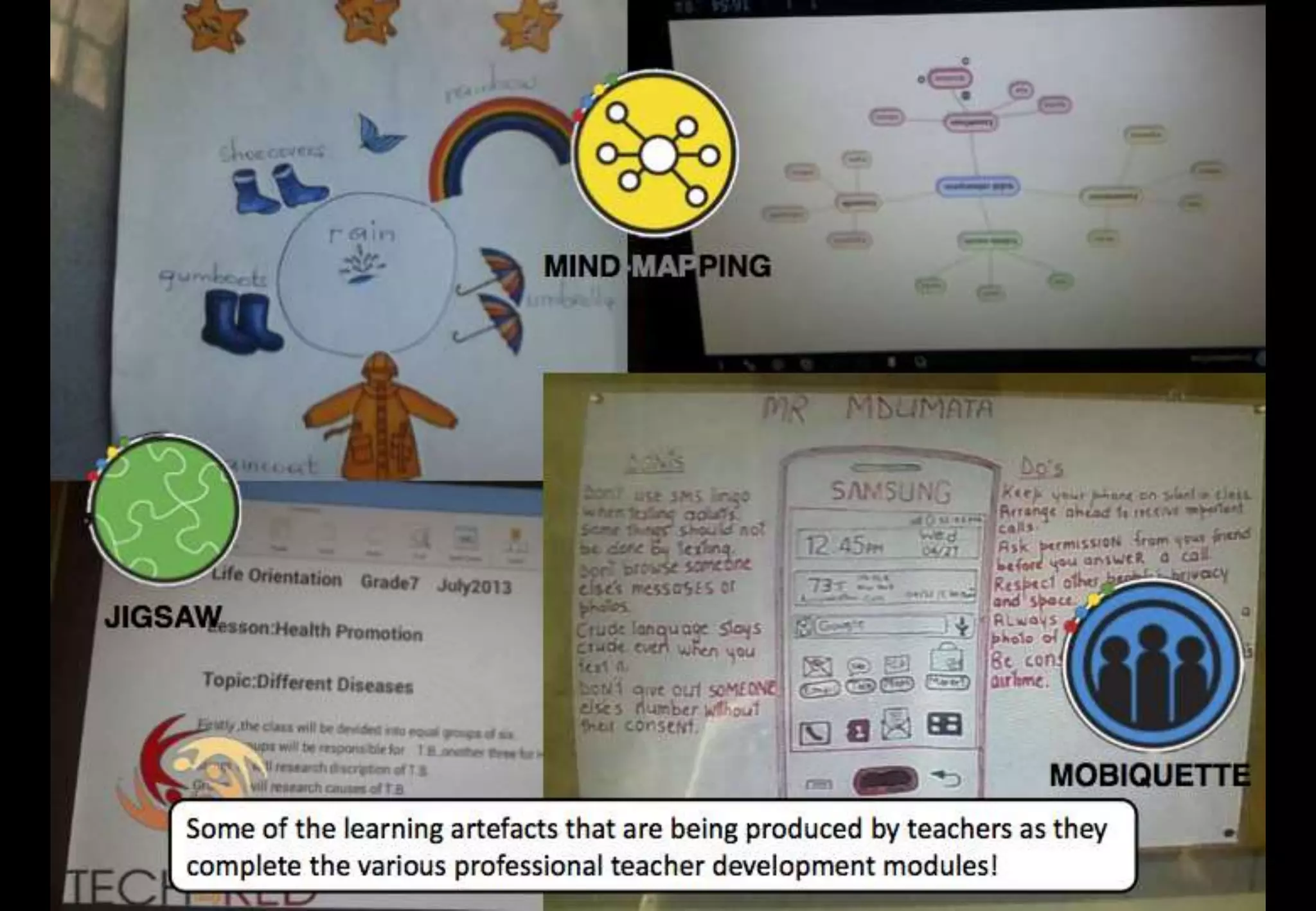
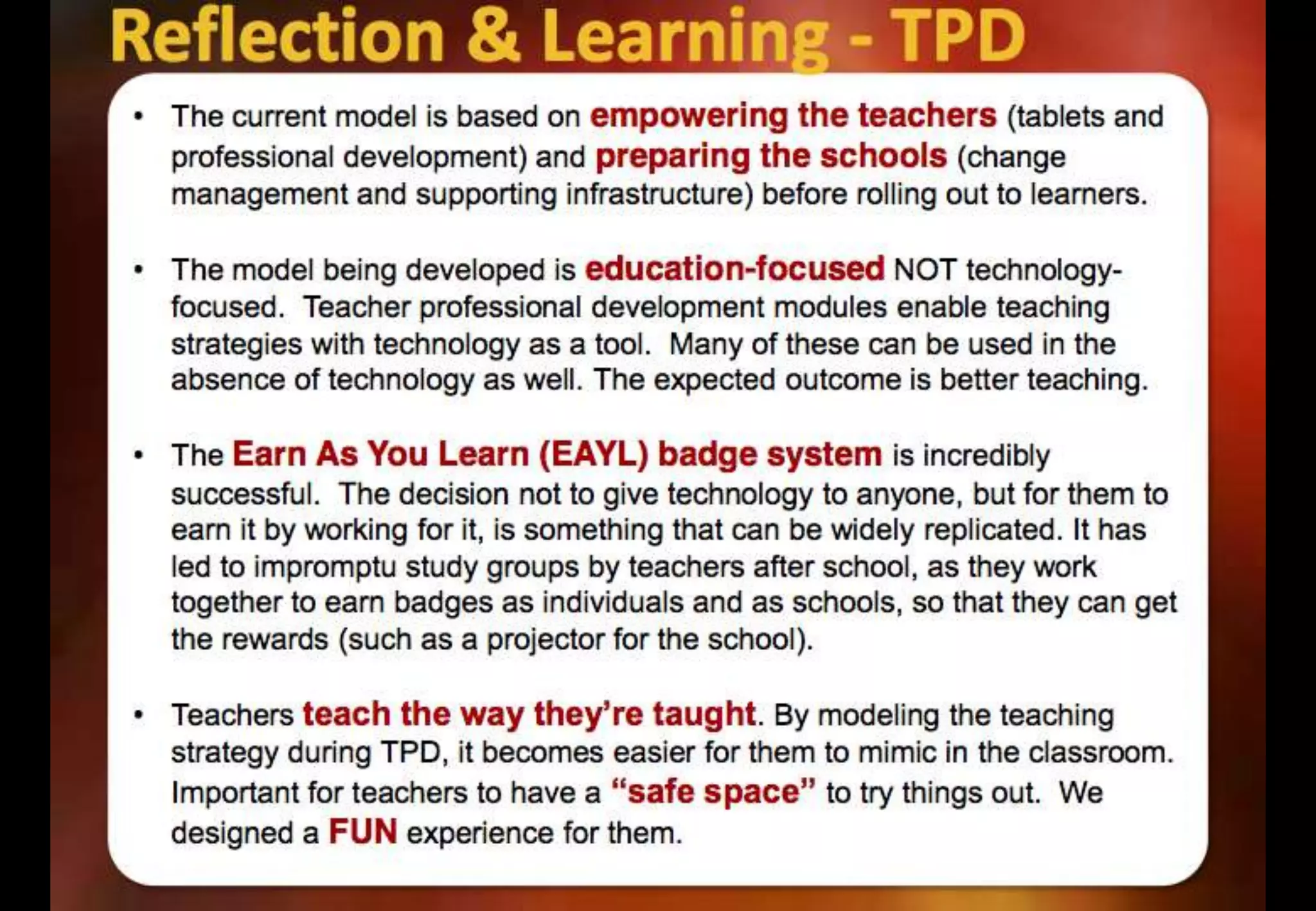
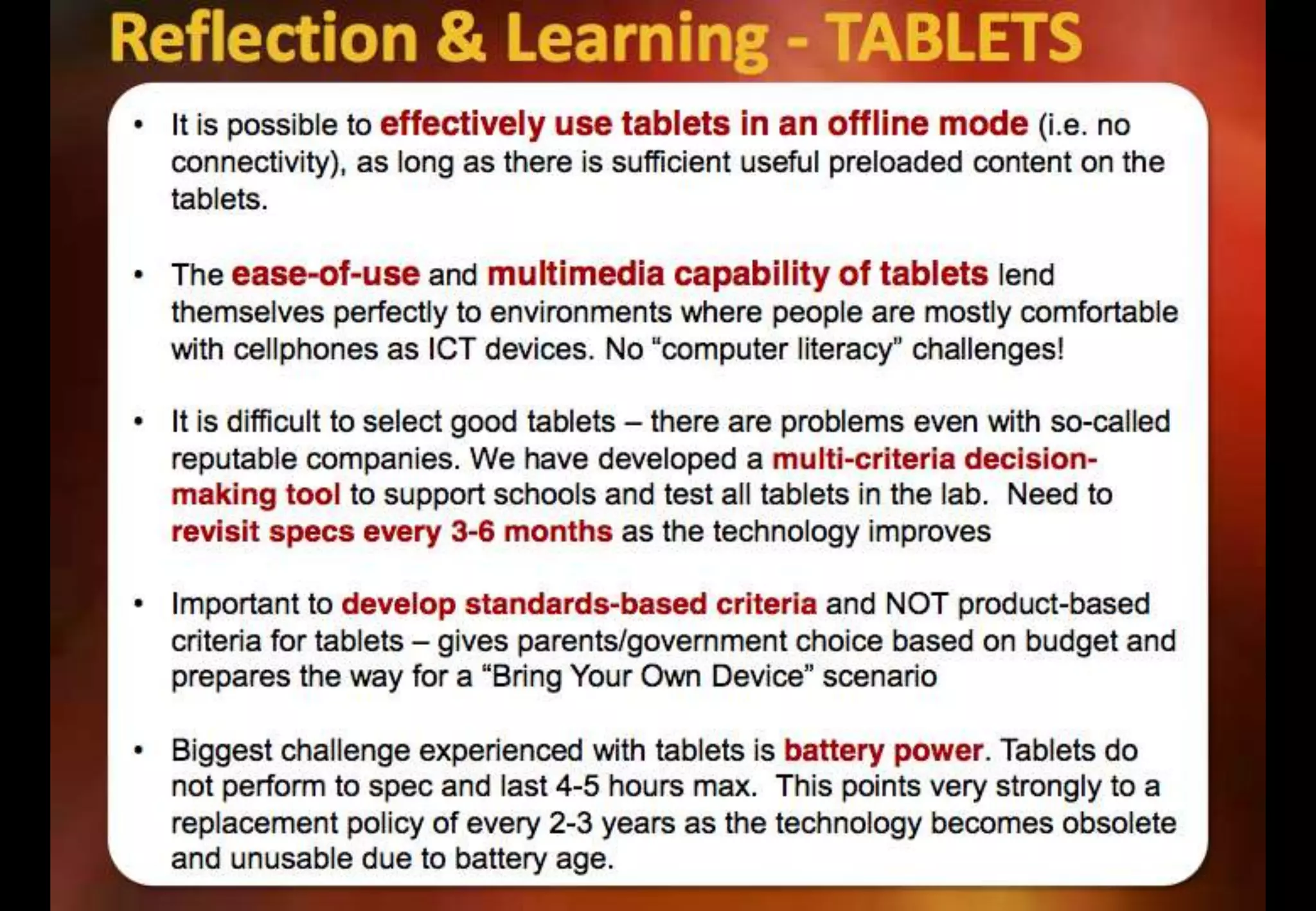
    ICT for RuralEducation Development (ICT4RED) project in the Cofimvaba schools district Key points: Alignment with policy Achieving buy-in through teacher training Tablet selection Slides courtesy of CSIR Meraka Institute
  • 34.
  • 36.
    Thank you SteveVosloo Head of Mobile, Innovation Lab Pearson South Africa steve.vosloo@pearson.com @stevevosloo