



1:1 Educational Computing Initiatives
Lessons learned and
confirmed at …
Steve Vosloo
Head of Mobile, Innovation Lab
Pearson South Africa
Context
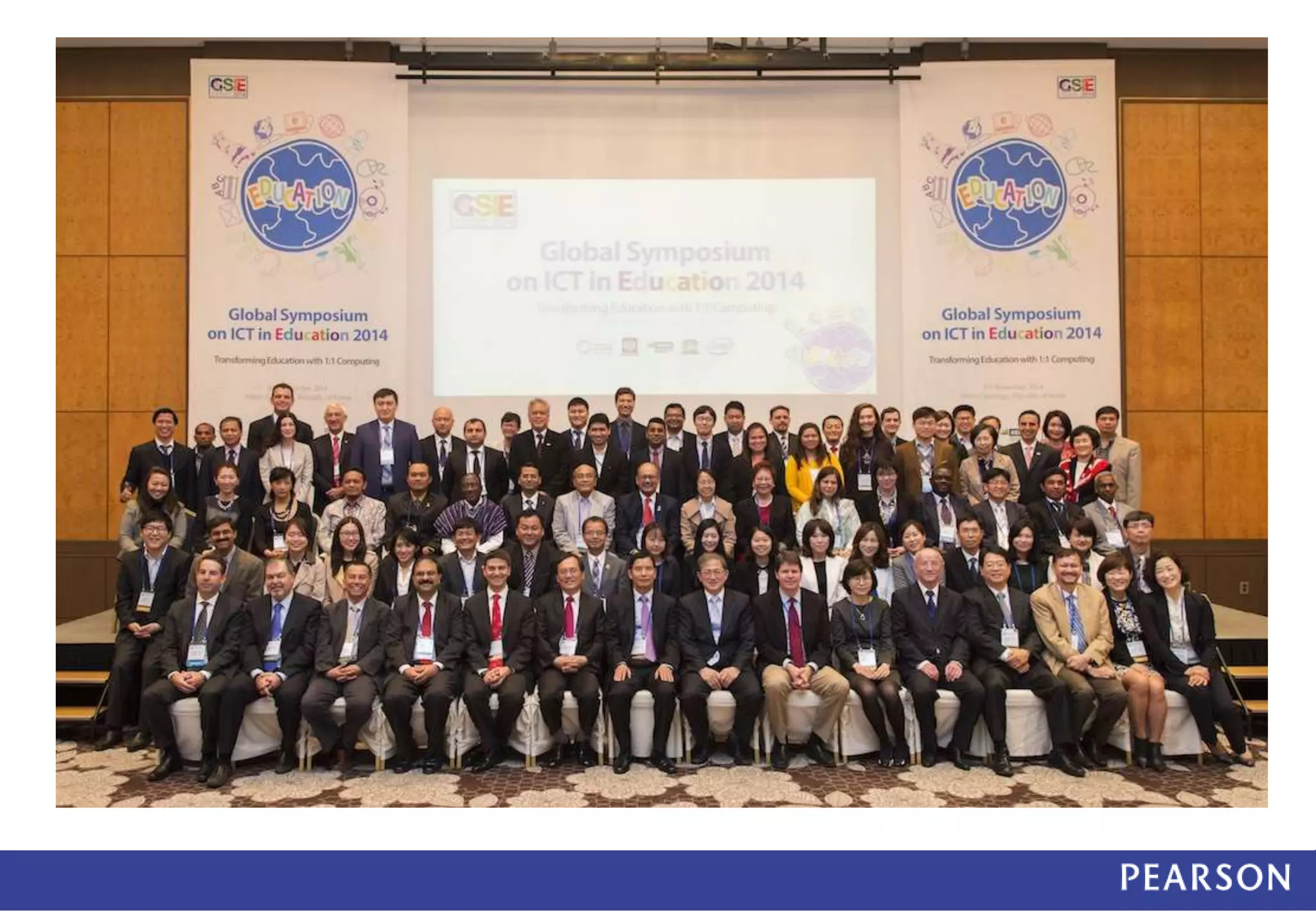
At the 8th Global Symposium on ICT in Education 2014, themed
Transforming Education with 1:1 Computing (3-5 November, 2014,
Hilton Gyeongju, Republic of Korea)
28 countries represented, sharing their experiences of planning and
implementing 1:1 computing initiatives
Hosted by the Korean Ministry of Education and the World Bank,
along with KERIS, UNESCO Bangkok and Intel
South Korea is one of the leaders in digital learning, so it was a
fitting context for the country
A number of lessons were learned and known ones confirmed …
1. 1:1 is a journey, not a destination
We are all learning,
all trying to work it out
Many failures so far!
If you are struggling,
that’s ok
2. Articulate long-term vision, have short-term plan
Set and communicate the
long-term vision
But: Since this is a pioneering
space, be open to surprises.
Be agile, be willing to adapt
Double-but: Still, have a
plan, document, evaluate, re-
document, re-evaluate…
Triple-but: Don’t wait for the
perfect plan, it doesn’t exist
3. 1:1 often starts for the wrong reasons
Because it’s “the future”
Because it’s “progress”
Because it can win a political
campaign
Massive pressure from the
market and media for the
“next big thing”
Did good educational
research or rationale inform
the decision?
4. Very little evidence of academic impact
In South Korea in 2007 the drive
to Digital Textbooks started, but
by 2014 still no concrete
evidence of increased academic
performance (yet)
The government has now began
a long-term research effort to try
to better understand impact of
ebooks
(Note: In South Korea their risks
are gaming addiction, too much
screen time — a culture that is
TOO digital)
5. Measuring the impact of 1:1 remains a challenge
But there are many other
benefits – we need to define
the non-academic impact
What benefits?
• Collaboration
• Project-based learning
• Engagement
• 21st century skills
• Communication
• …
Indicators?
6. It’s not about the tech: It’s about people
1:1 must be about the
education of the learner, not
the implementation of
technology
6. It’s not about the tech: It’s about people
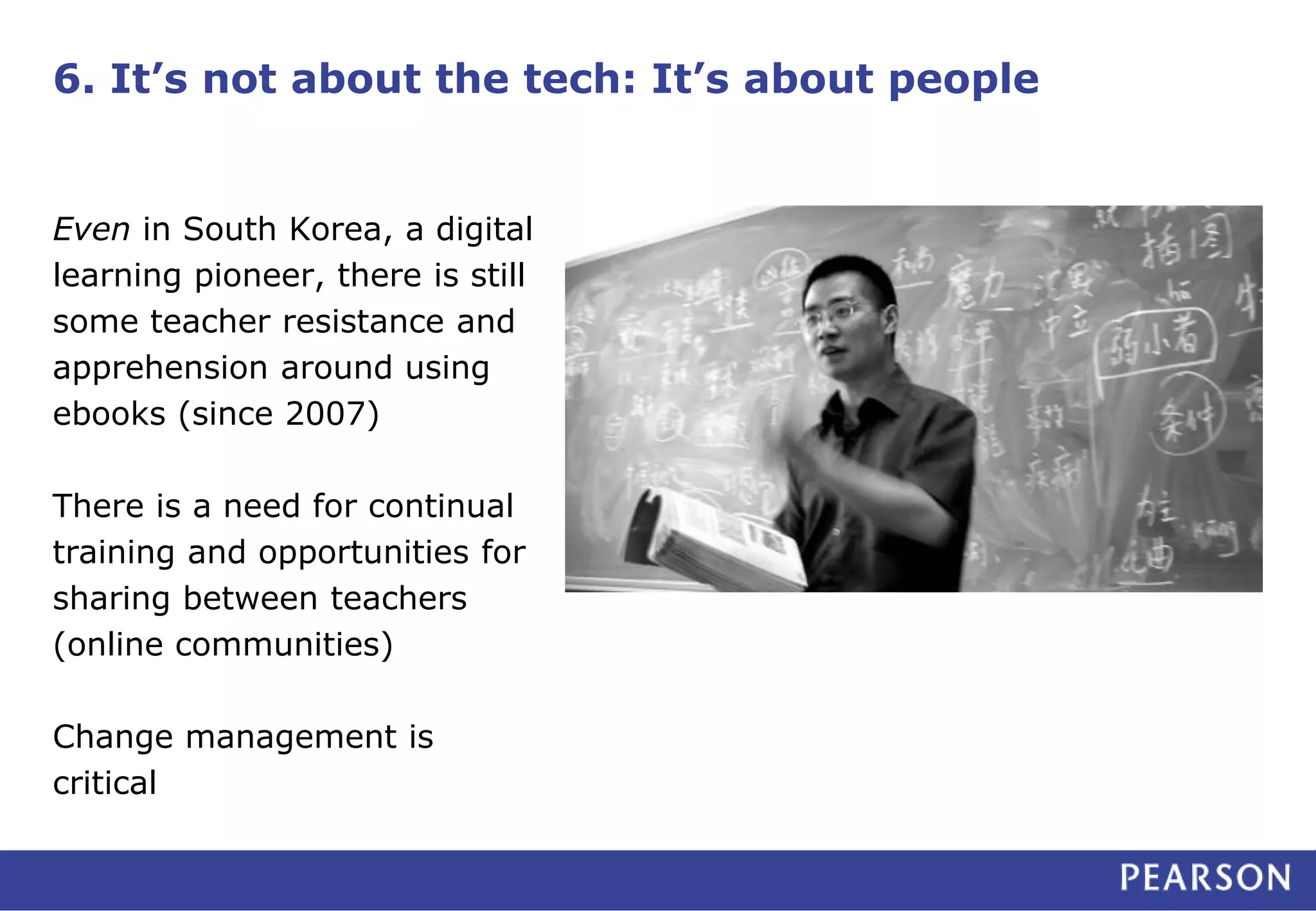
Even in South Korea, a digital
learning pioneer, there is still
some teacher resistance and
apprehension around using
ebooks (since 2007)
There is a need for continual
training and opportunities for
sharing between teachers
(online communities)
Change management is
critical
7. Teacher training!
We can’t do enough of it!
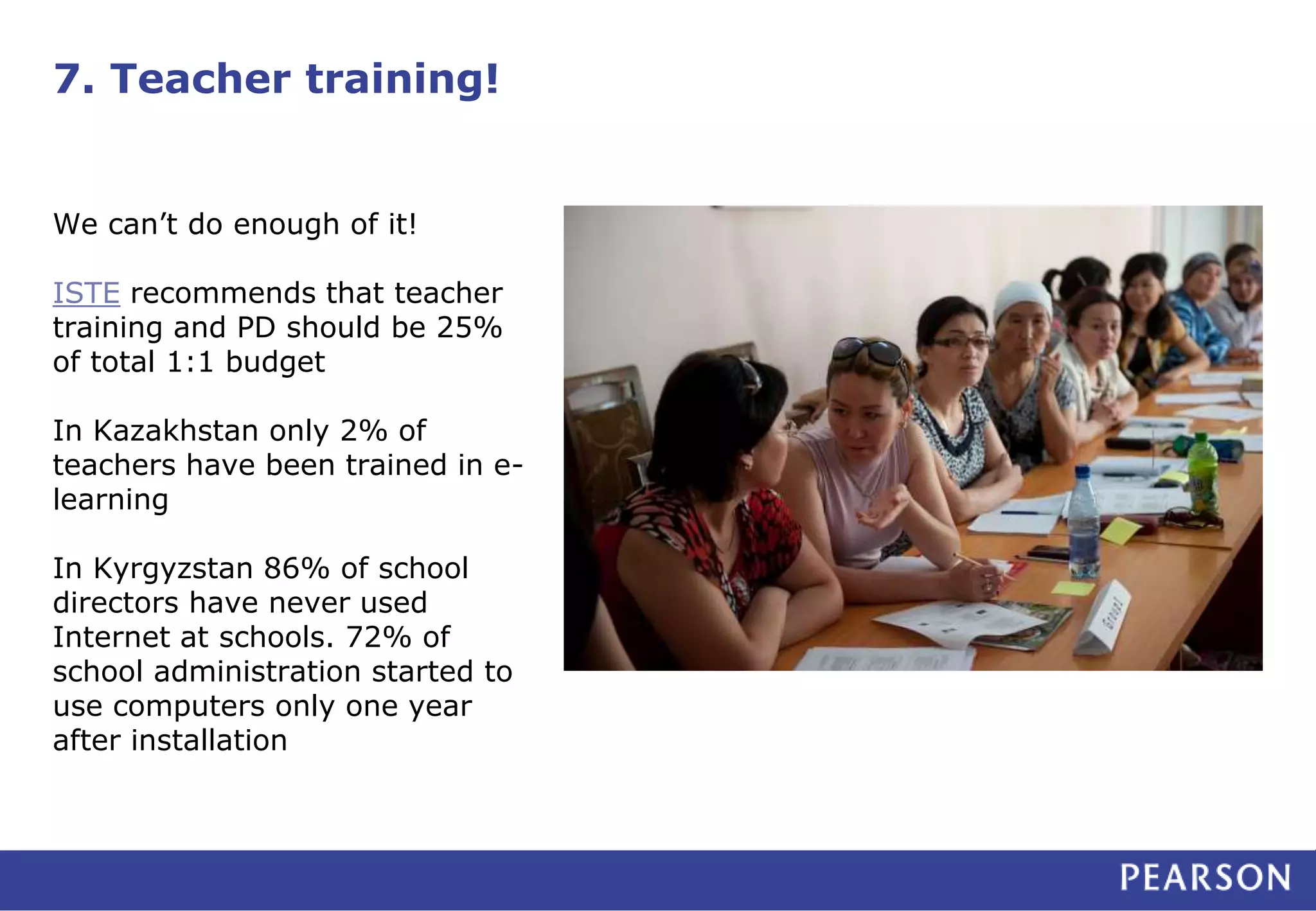
ISTE recommends that teacher
training and PD should be 25%
of total 1:1 budget
In Kazakhstan only 2% of
teachers have been trained in e-
learning
In Kyrgyzstan 86% of school
directors have never used
Internet at schools. 72% of
school administration started to
use computers only one year
after installation
8. “Community” buy-in is critical
Cost, risk, perceptions
carried across
communities
Principals, teachers,
administrators, parents…
Need to educate to get
support – have prioritised
this in Australia
9. Infrastructure, support and maintenance!
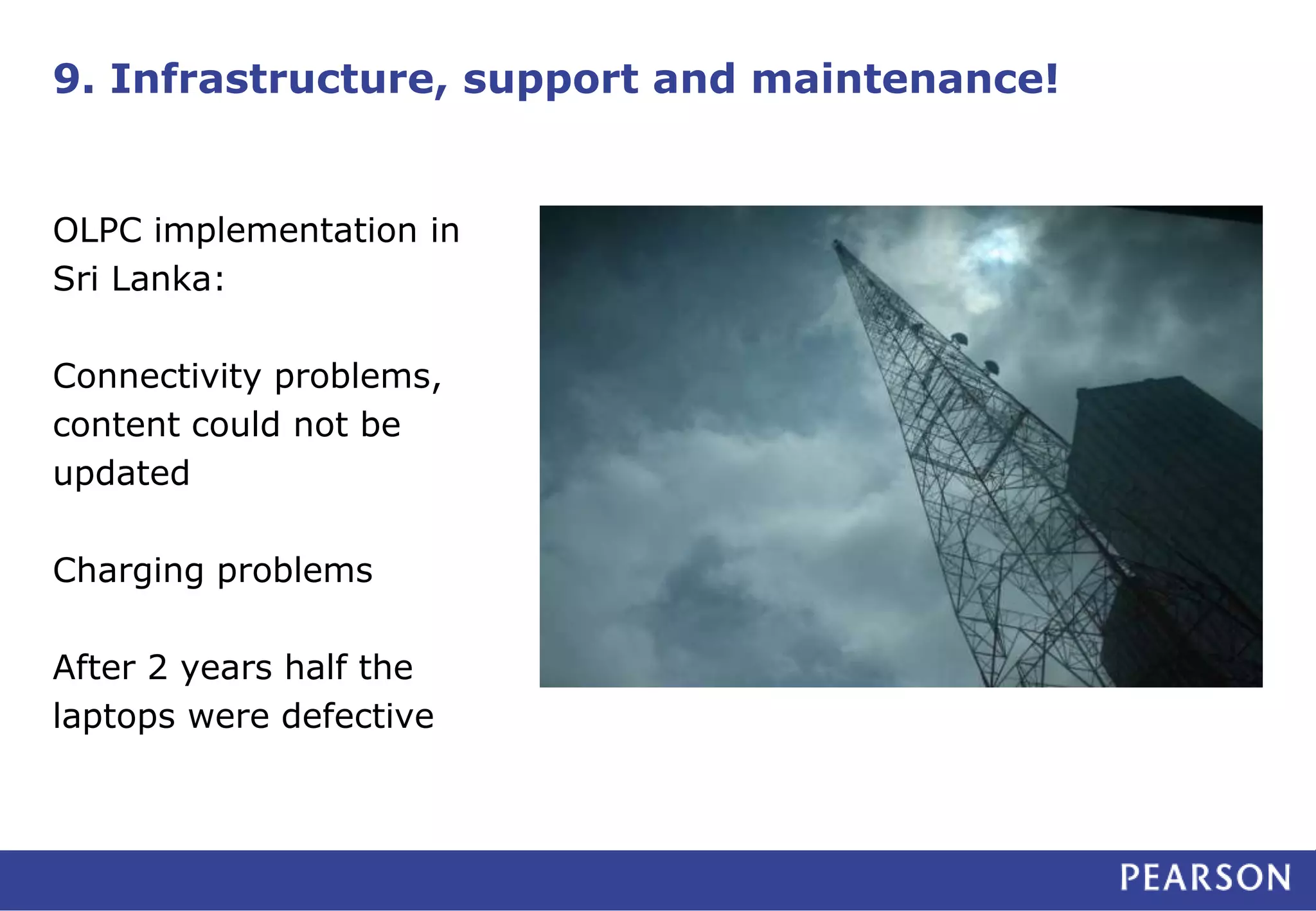
OLPC implementation in
Sri Lanka:
Connectivity problems,
content could not be
updated
Charging problems
After 2 years half the
laptops were defective
10. Learner analytics, big data vs privacy
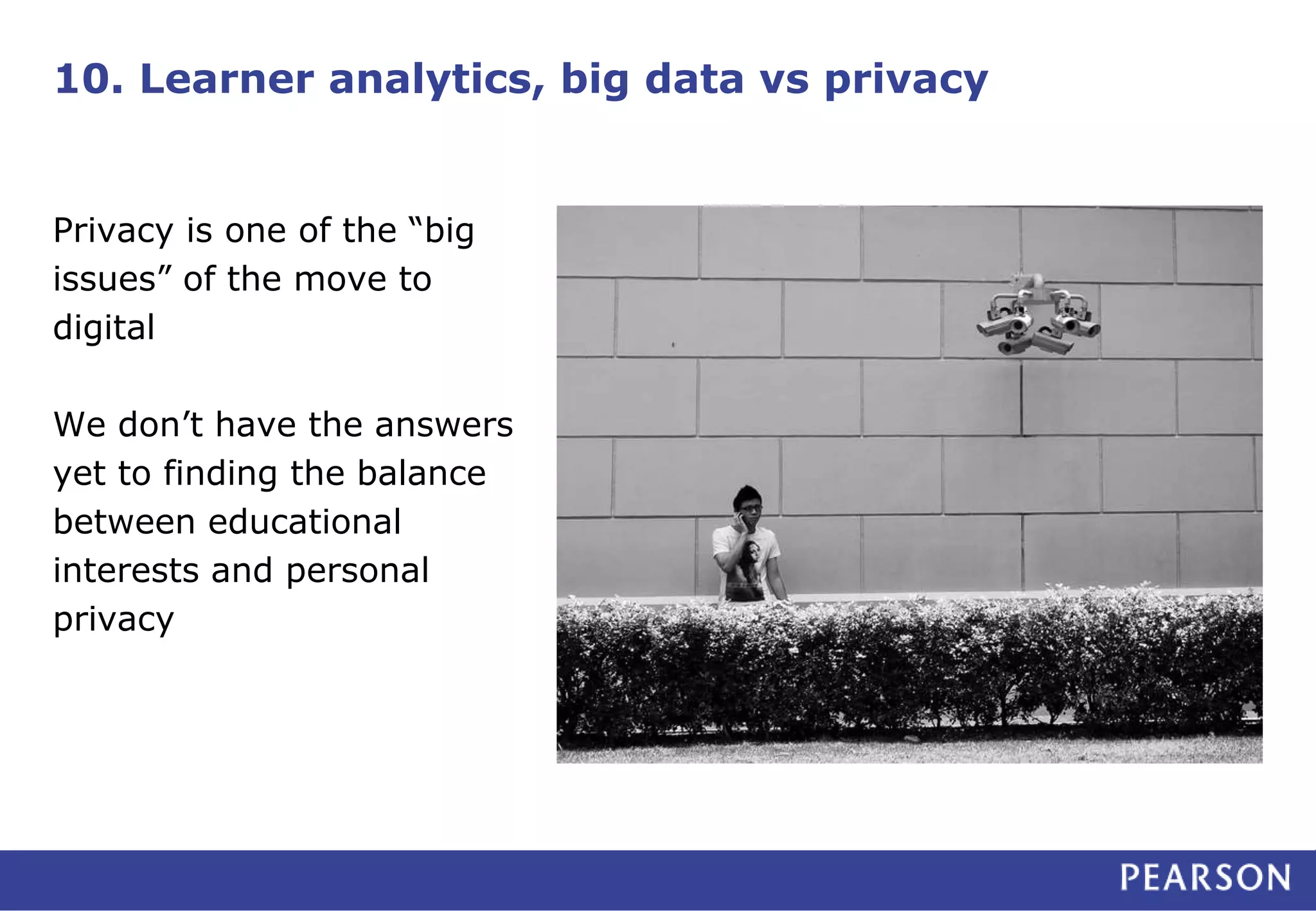
Privacy is one of the “big
issues” of the move to
digital
We don’t have the answers
yet to finding the balance
between educational
interests and personal
privacy
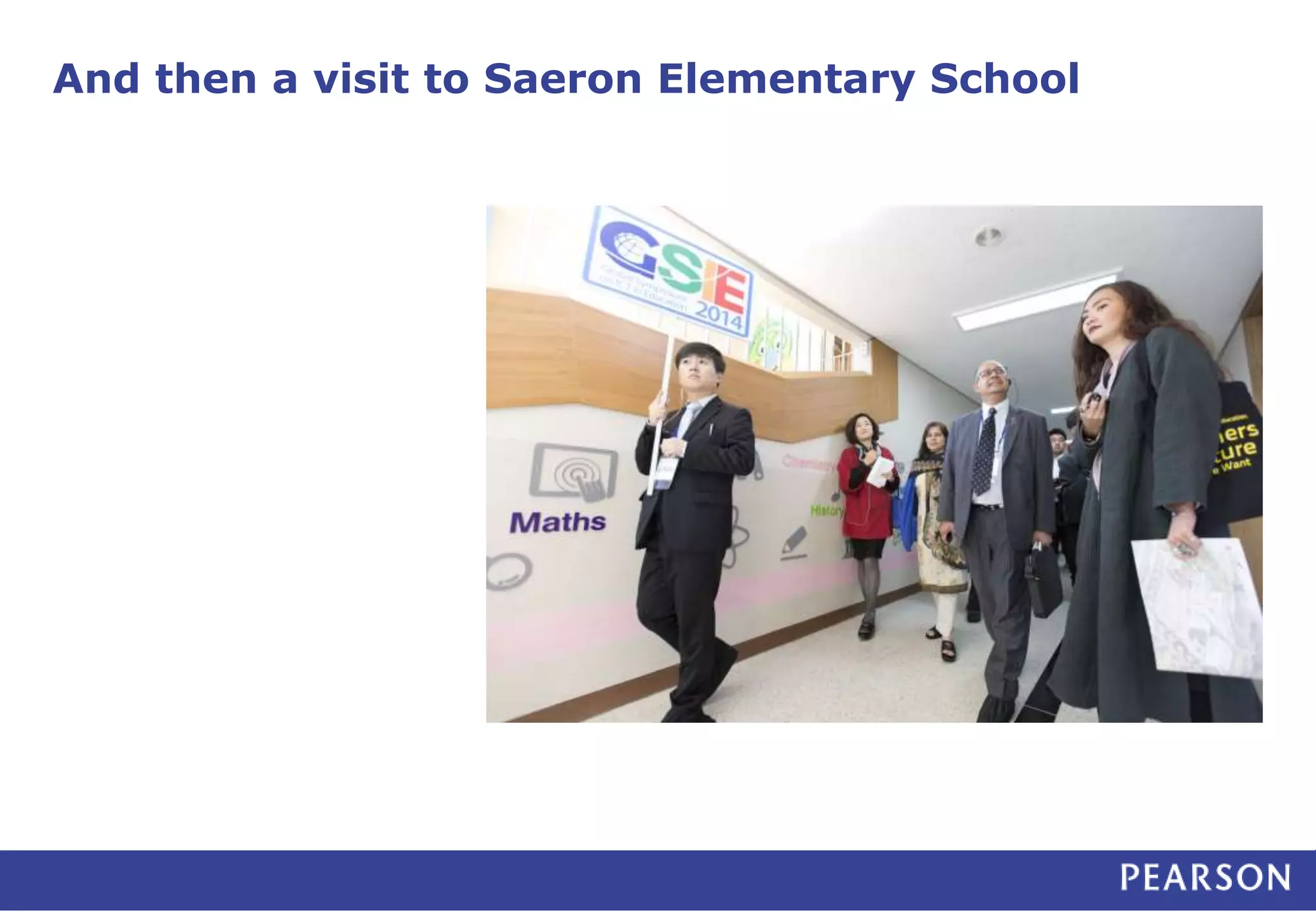
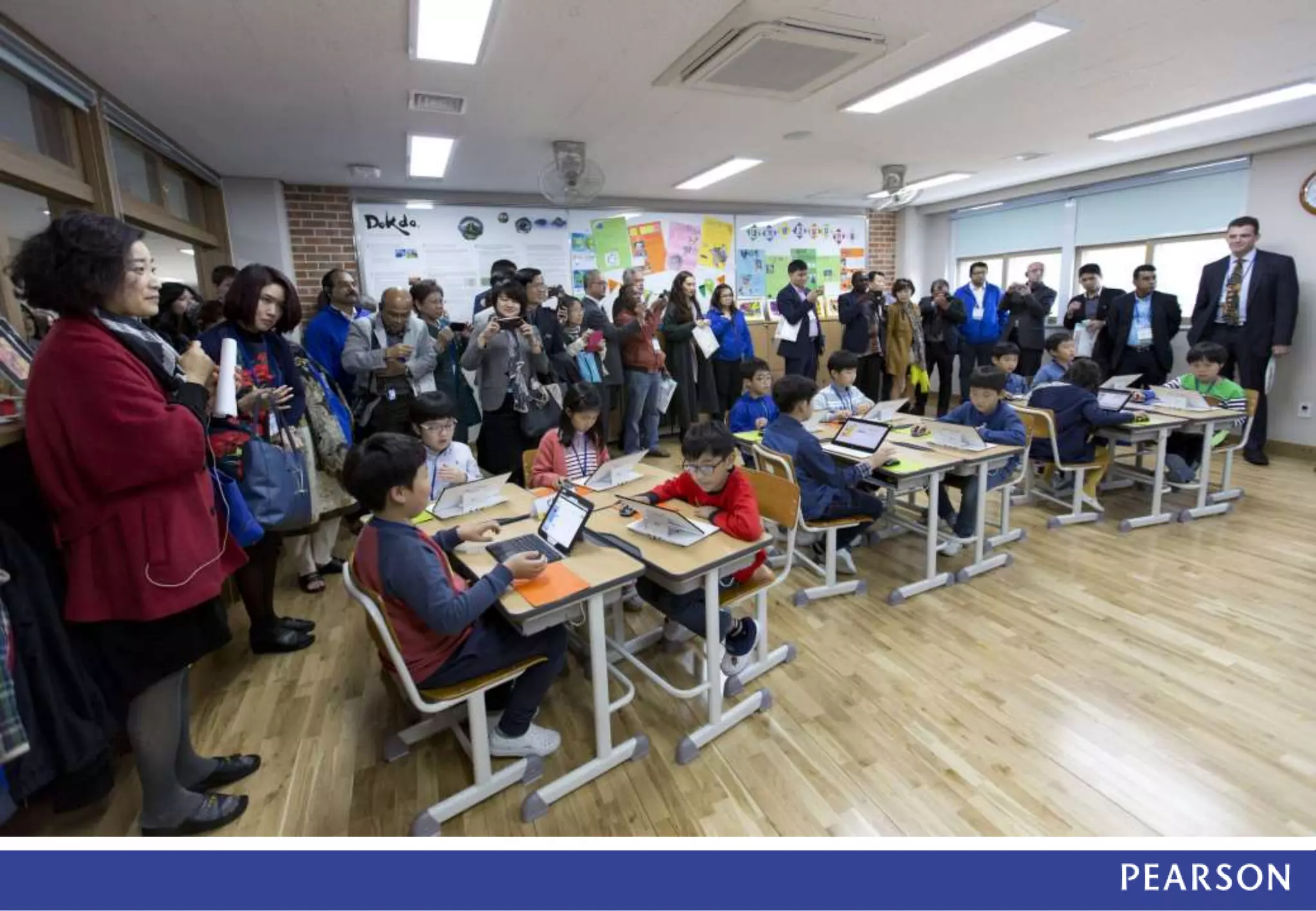
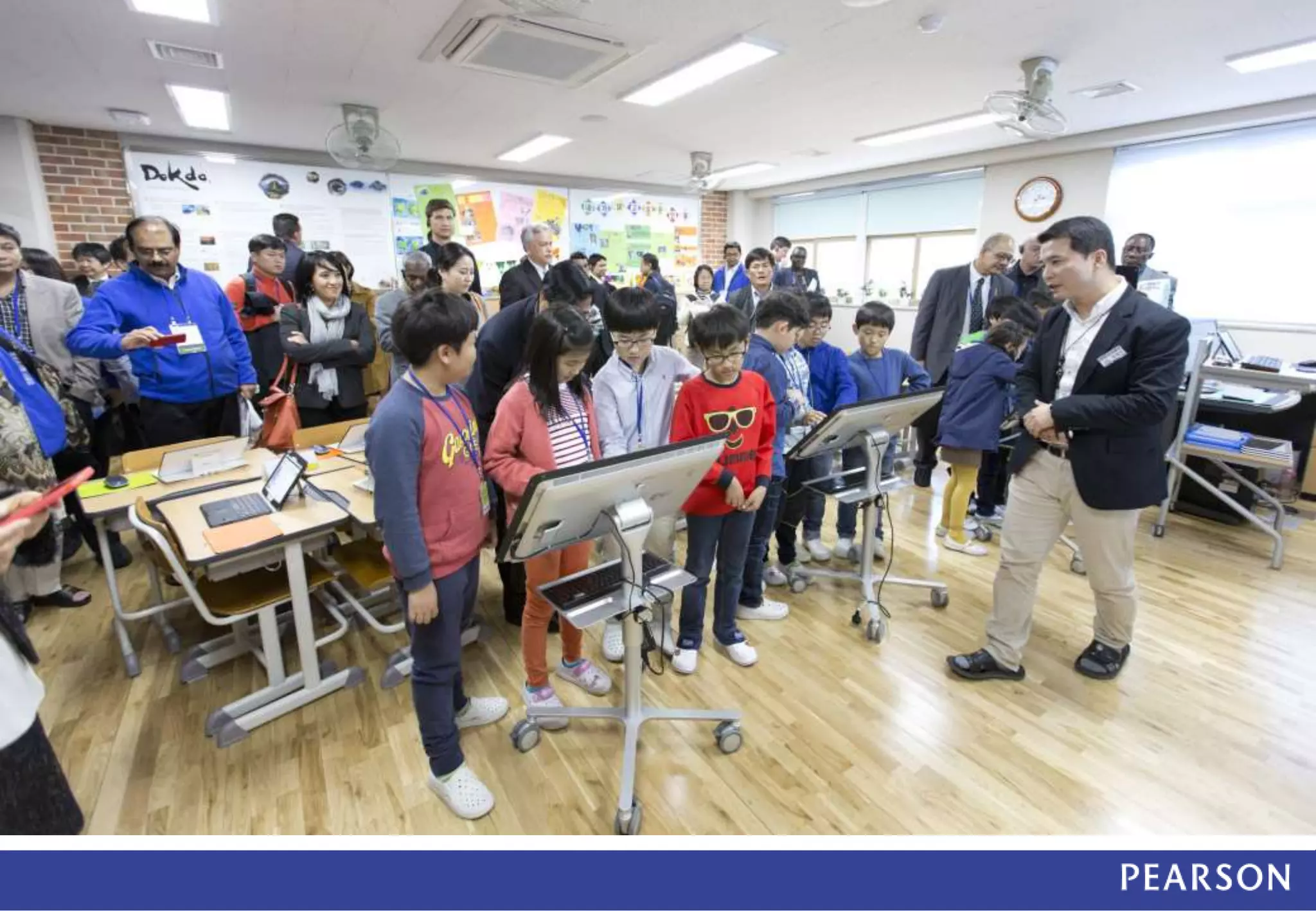
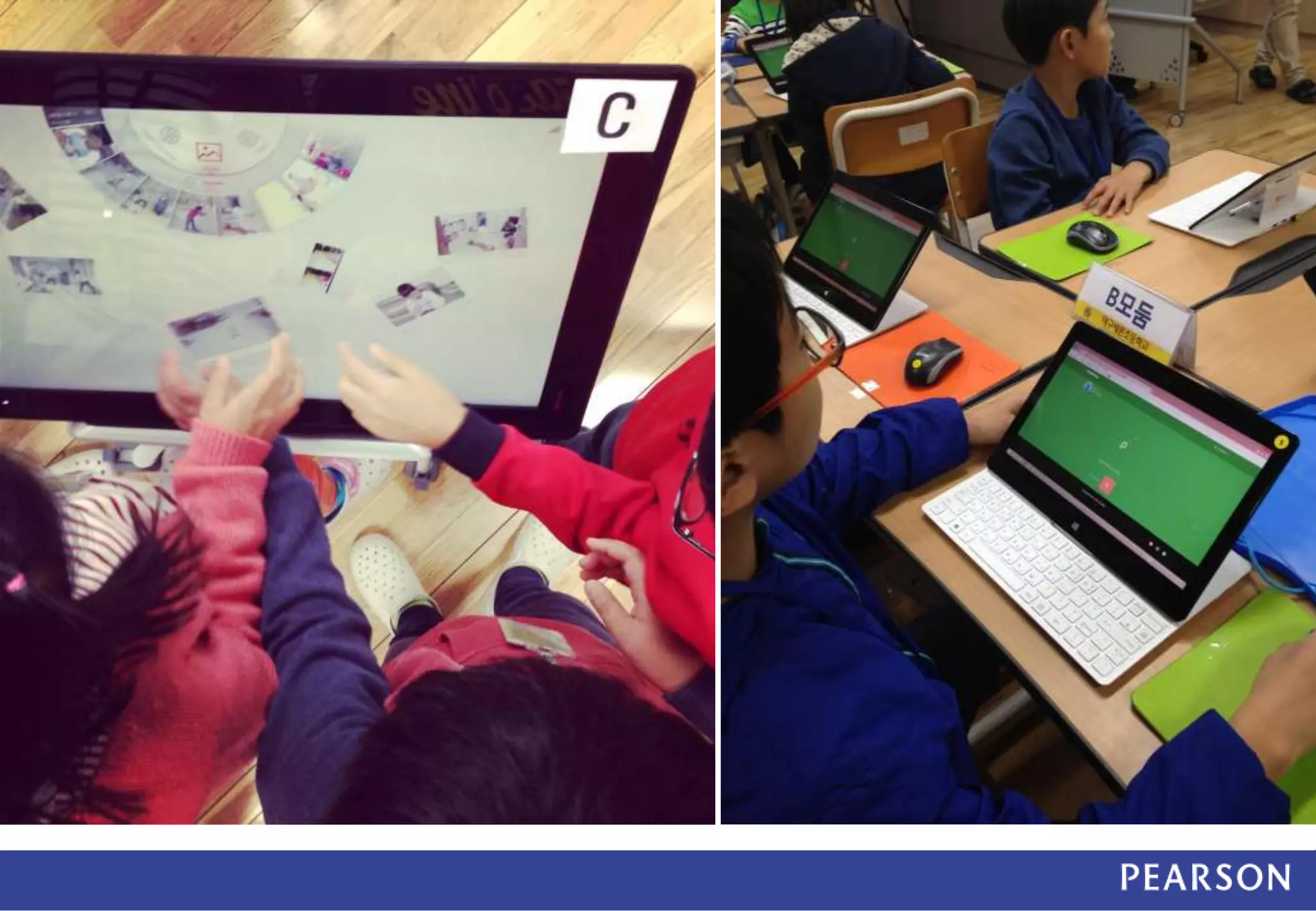
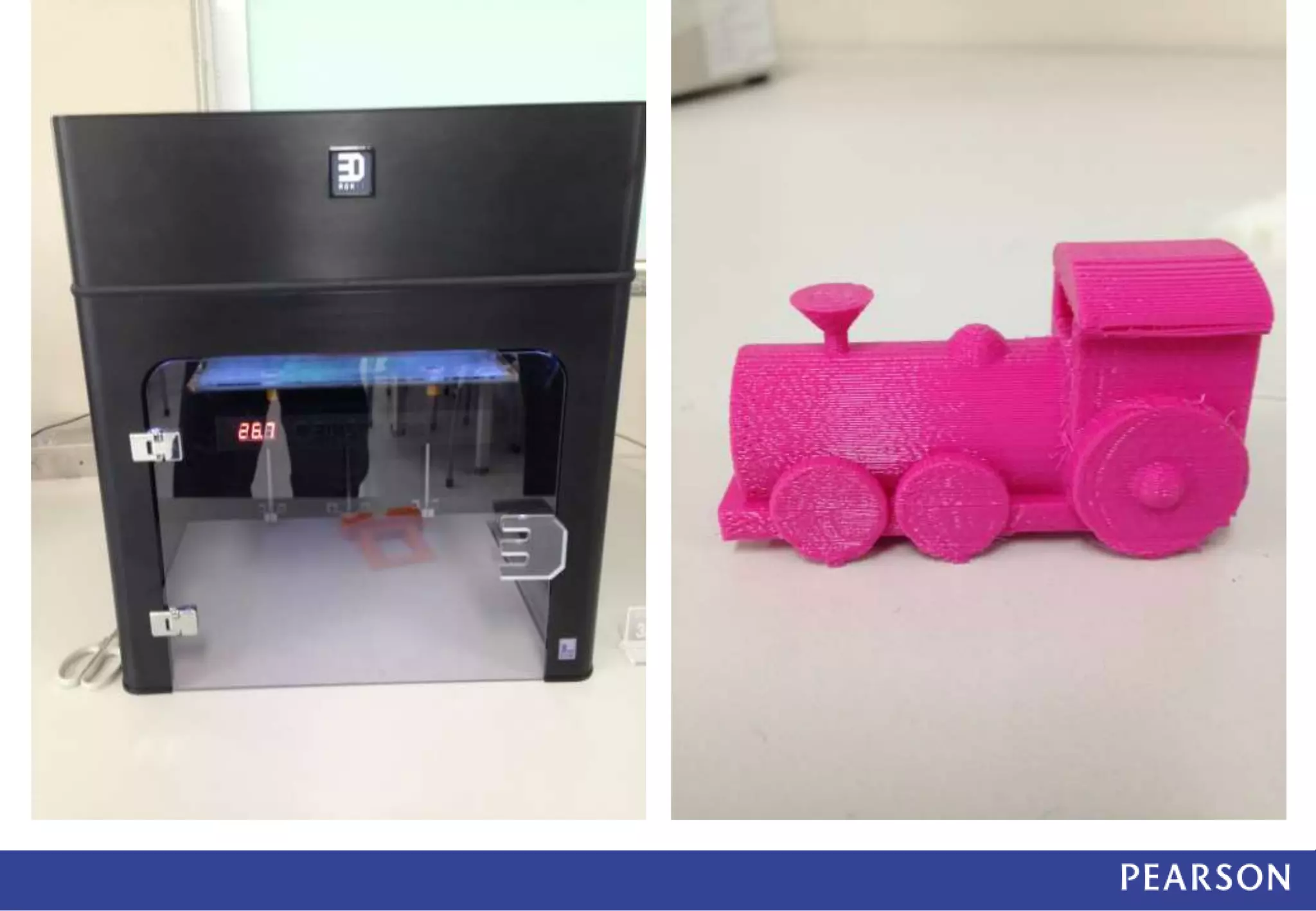
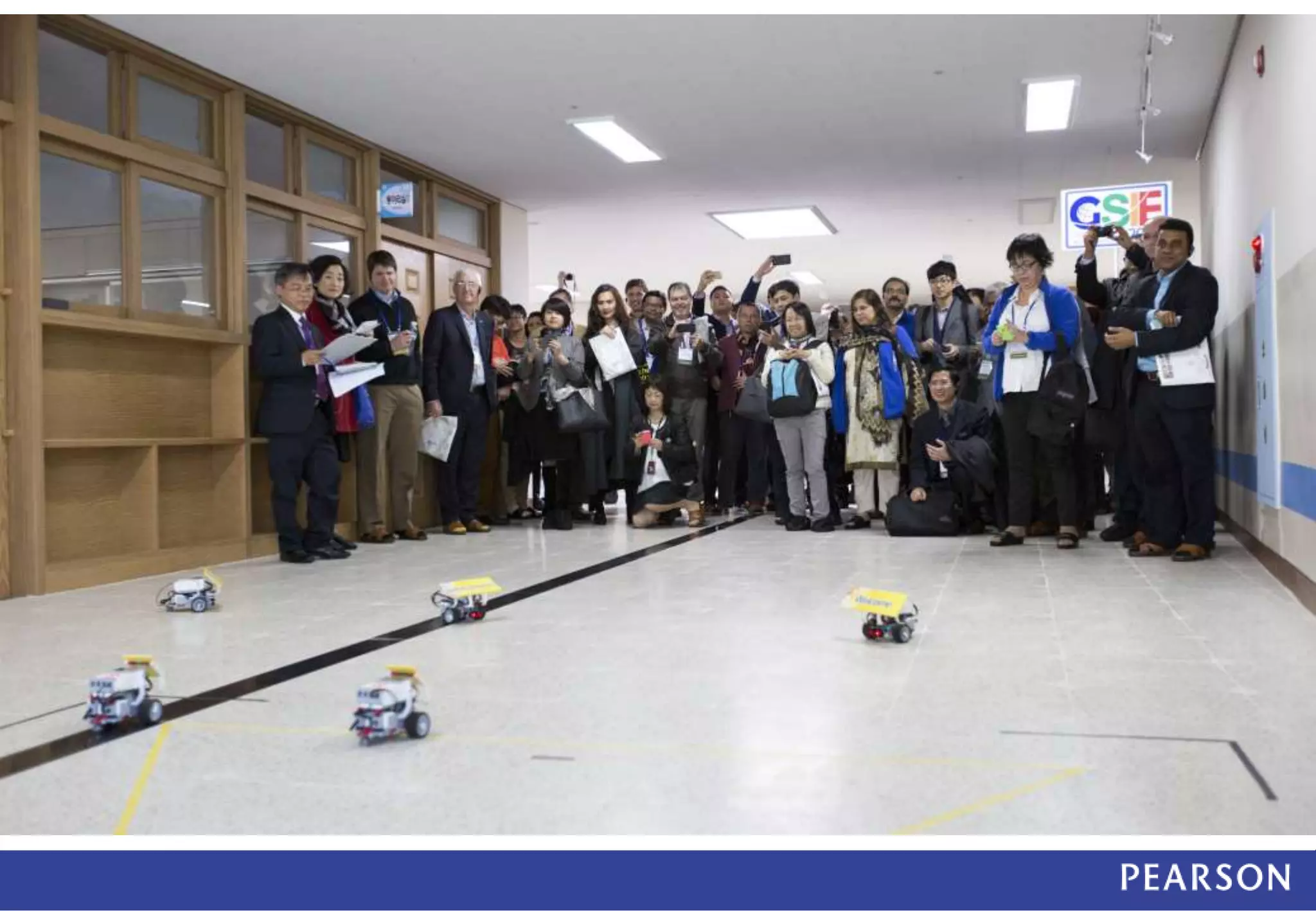
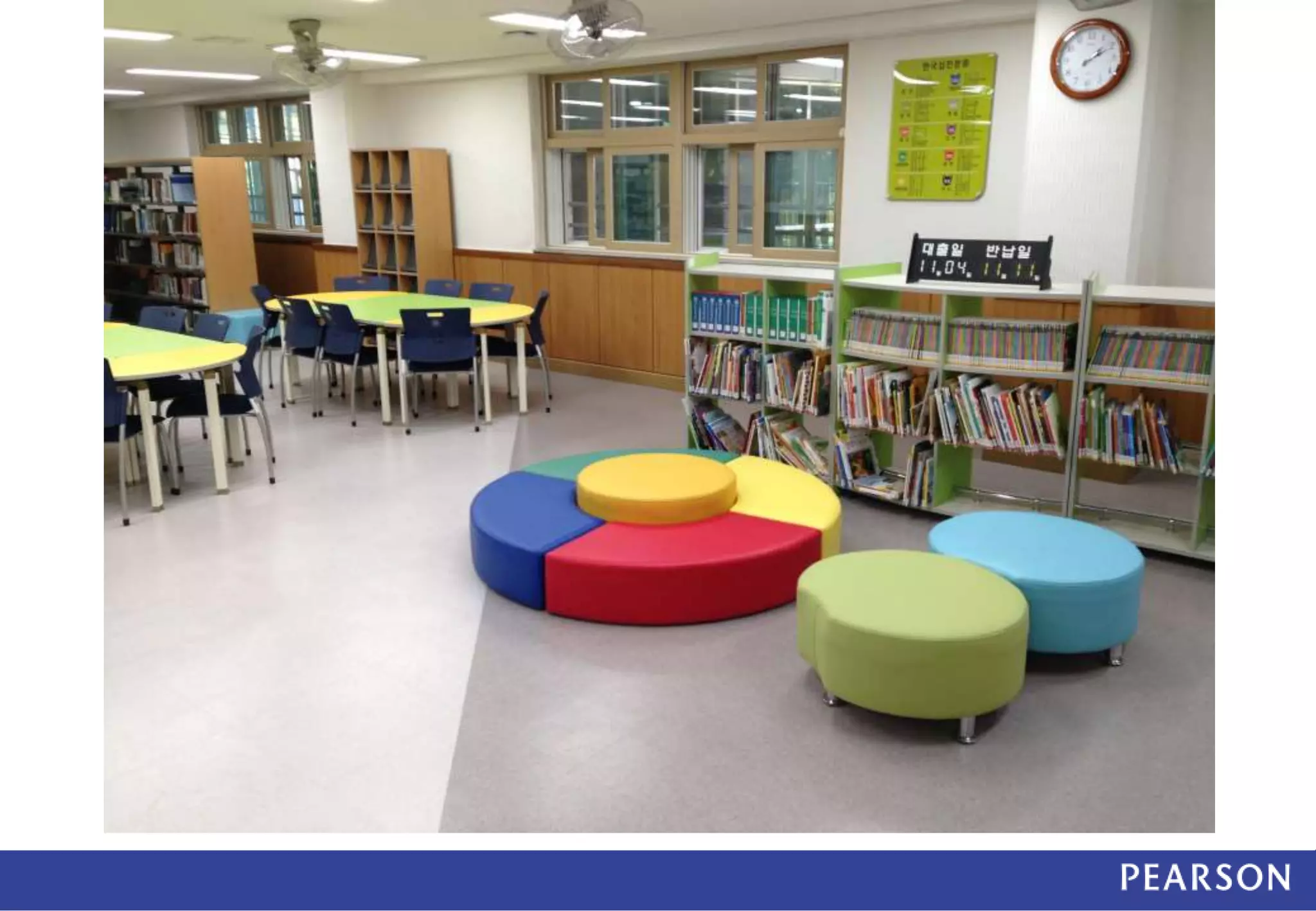
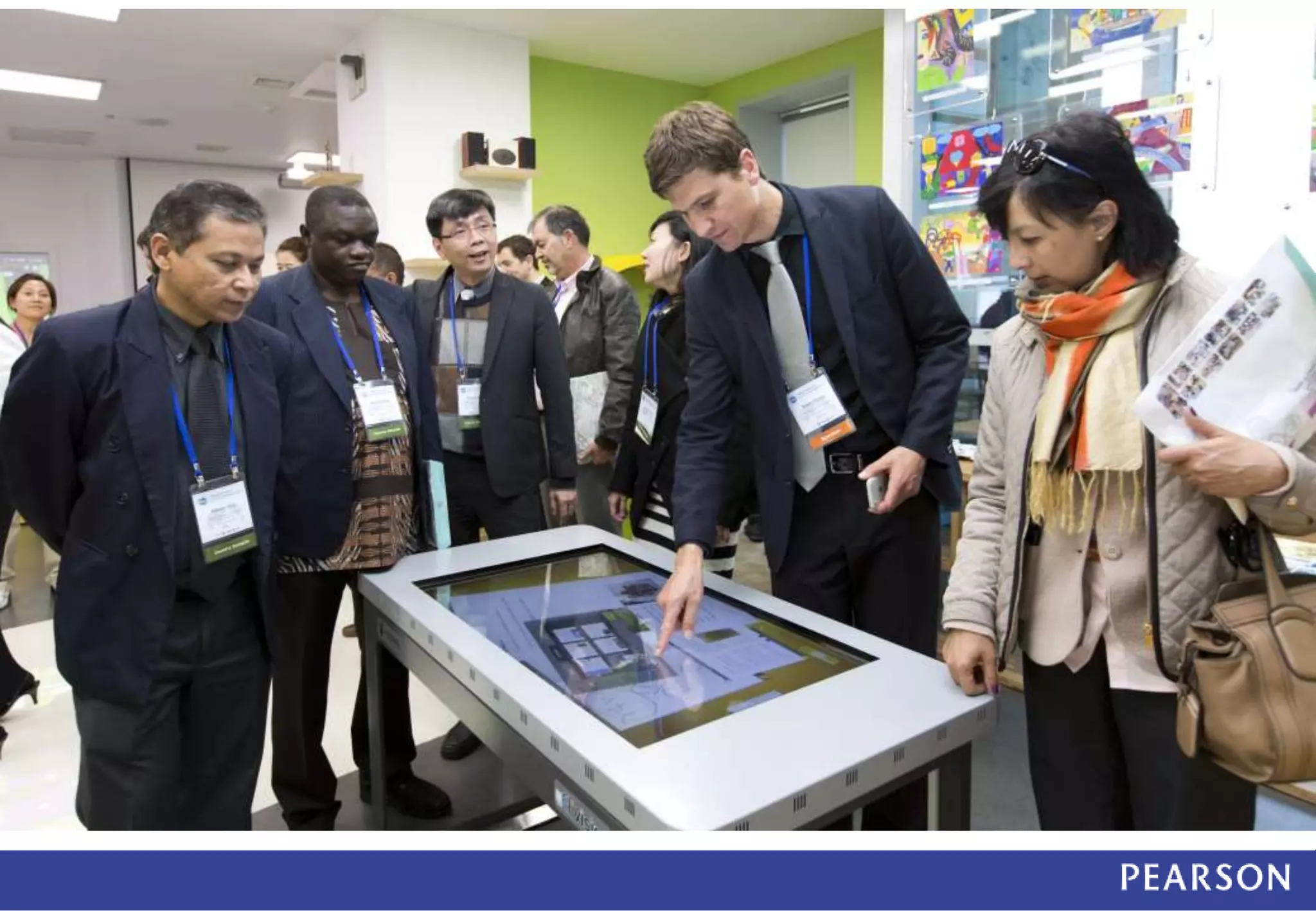
And then a visit to Saeron Elementary School
Thank you
Steve Vosloo
Head of Mobile, Innovation Lab
Pearson South Africa
steve.vosloo@pearson.com
@stevevosloo

1:1 Educational Computing Initiatives — Lessons learned and confirmed at the Global Symposium on ICT in Education 2014

  • 2.
    1:1 Educational ComputingInitiatives Lessons learned and confirmed at … Steve Vosloo Head of Mobile, Innovation Lab Pearson South Africa
  • 4.
    Context At the 8thGlobal Symposium on ICT in Education 2014, themed Transforming Education with 1:1 Computing (3-5 November, 2014, Hilton Gyeongju, Republic of Korea) 28 countries represented, sharing their experiences of planning and implementing 1:1 computing initiatives Hosted by the Korean Ministry of Education and the World Bank, along with KERIS, UNESCO Bangkok and Intel South Korea is one of the leaders in digital learning, so it was a fitting context for the country A number of lessons were learned and known ones confirmed …
  • 5.
    1. 1:1 isa journey, not a destination We are all learning, all trying to work it out Many failures so far! If you are struggling, that’s ok
  • 6.
    2. Articulate long-termvision, have short-term plan Set and communicate the long-term vision But: Since this is a pioneering space, be open to surprises. Be agile, be willing to adapt Double-but: Still, have a plan, document, evaluate, re- document, re-evaluate… Triple-but: Don’t wait for the perfect plan, it doesn’t exist
  • 7.
    3. 1:1 oftenstarts for the wrong reasons Because it’s “the future” Because it’s “progress” Because it can win a political campaign Massive pressure from the market and media for the “next big thing” Did good educational research or rationale inform the decision?
  • 8.
    4. Very littleevidence of academic impact In South Korea in 2007 the drive to Digital Textbooks started, but by 2014 still no concrete evidence of increased academic performance (yet) The government has now began a long-term research effort to try to better understand impact of ebooks (Note: In South Korea their risks are gaming addiction, too much screen time — a culture that is TOO digital)
  • 9.
    5. Measuring theimpact of 1:1 remains a challenge But there are many other benefits – we need to define the non-academic impact What benefits? • Collaboration • Project-based learning • Engagement • 21st century skills • Communication • … Indicators?
  • 10.
    6. It’s notabout the tech: It’s about people 1:1 must be about the education of the learner, not the implementation of technology
  • 11.
    6. It’s notabout the tech: It’s about people Even in South Korea, a digital learning pioneer, there is still some teacher resistance and apprehension around using ebooks (since 2007) There is a need for continual training and opportunities for sharing between teachers (online communities) Change management is critical
  • 12.
    7. Teacher training! Wecan’t do enough of it! ISTE recommends that teacher training and PD should be 25% of total 1:1 budget In Kazakhstan only 2% of teachers have been trained in e- learning In Kyrgyzstan 86% of school directors have never used Internet at schools. 72% of school administration started to use computers only one year after installation
  • 13.
    8. “Community” buy-inis critical Cost, risk, perceptions carried across communities Principals, teachers, administrators, parents… Need to educate to get support – have prioritised this in Australia
  • 14.
    9. Infrastructure, supportand maintenance! OLPC implementation in Sri Lanka: Connectivity problems, content could not be updated Charging problems After 2 years half the laptops were defective
  • 15.
    10. Learner analytics,big data vs privacy Privacy is one of the “big issues” of the move to digital We don’t have the answers yet to finding the balance between educational interests and personal privacy
  • 16.
    And then avisit to Saeron Elementary School
  • 27.
    Thank you Steve Vosloo Headof Mobile, Innovation Lab Pearson South Africa steve.vosloo@pearson.com @stevevosloo