Using
dictionaries
Silvia Bautista Martín
Oral Communication in Early
Language Learning Environments
CONTENT PAGE
1. Different kinds of dictionary
2. What students can find in good learners’
dictionaries
3. Using dictionaries with students
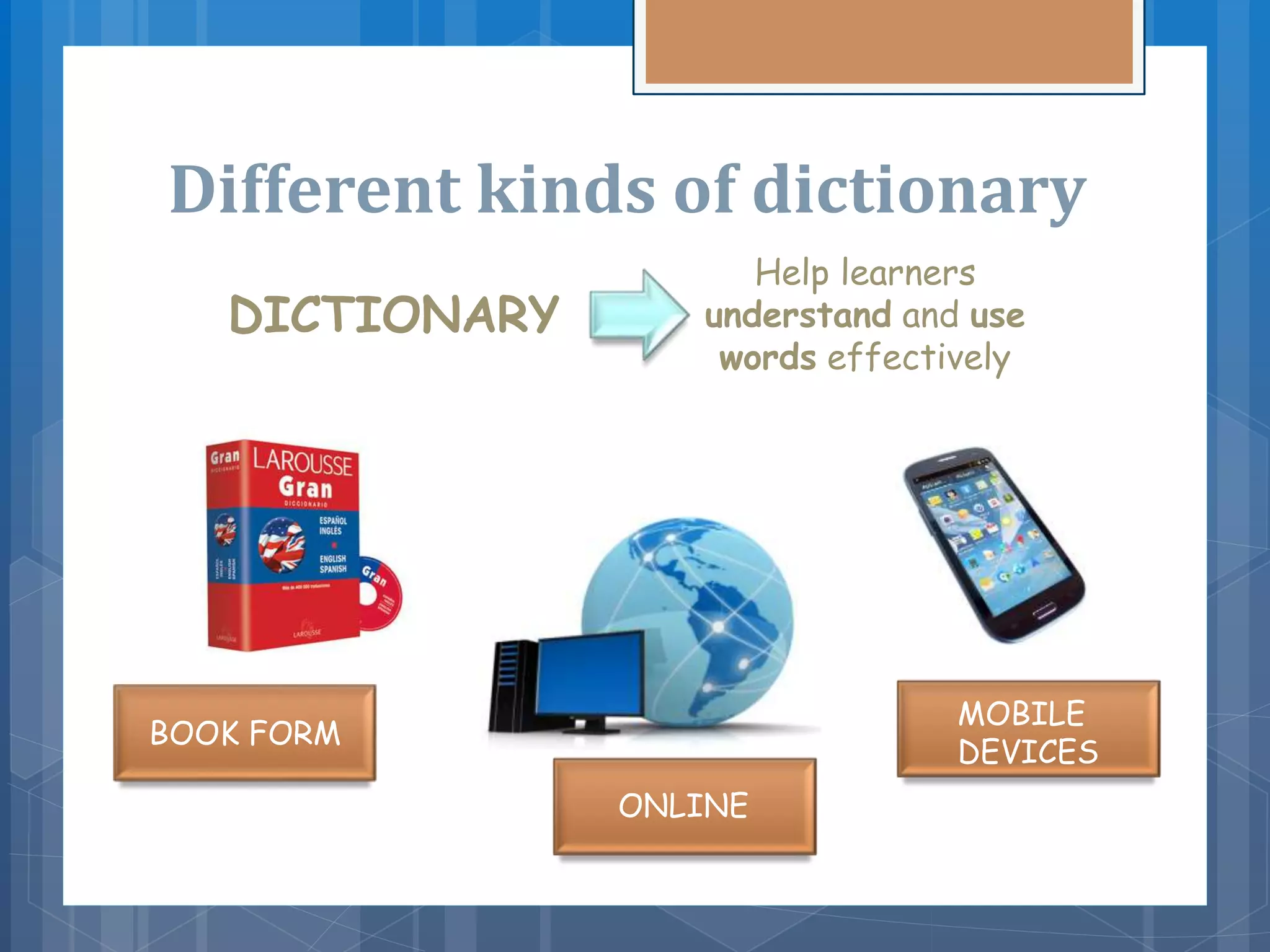
Different kinds of dictionary
BOOK FORM
ONLINE
MOBILE
DEVICES
DICTIONARY
Help learners
understand and use
words effectively
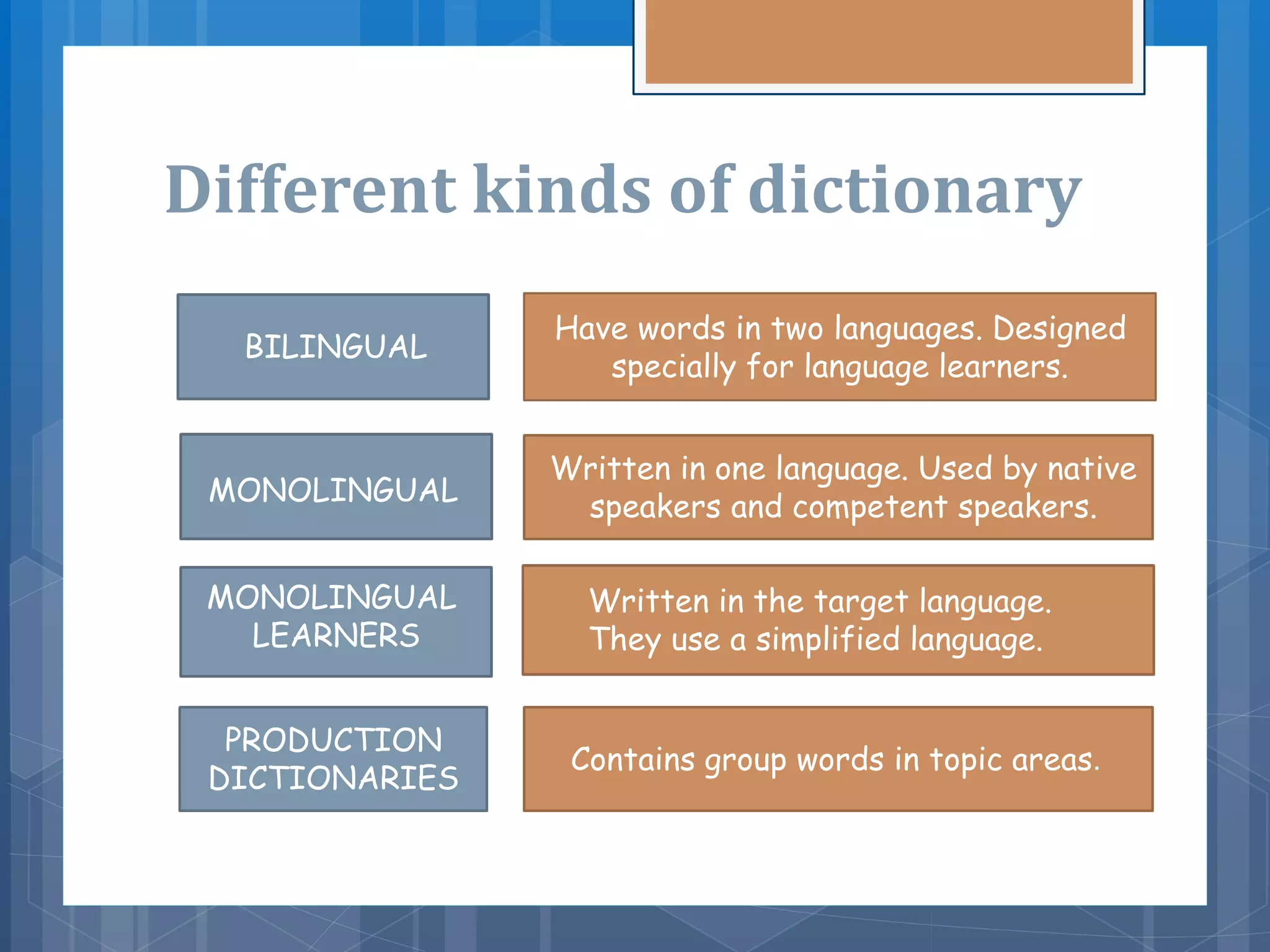
Different kinds of dictionary
BILINGUAL
MONOLINGUAL
MONOLINGUAL
LEARNERS
PRODUCTION
DICTIONARIES
Have words in two languages. Designed
specially for language learners.
Written in one language. Used by native
speakers and competent speakers.
Written in the target language.
They use a simplified language.
Contains group words in topic areas.
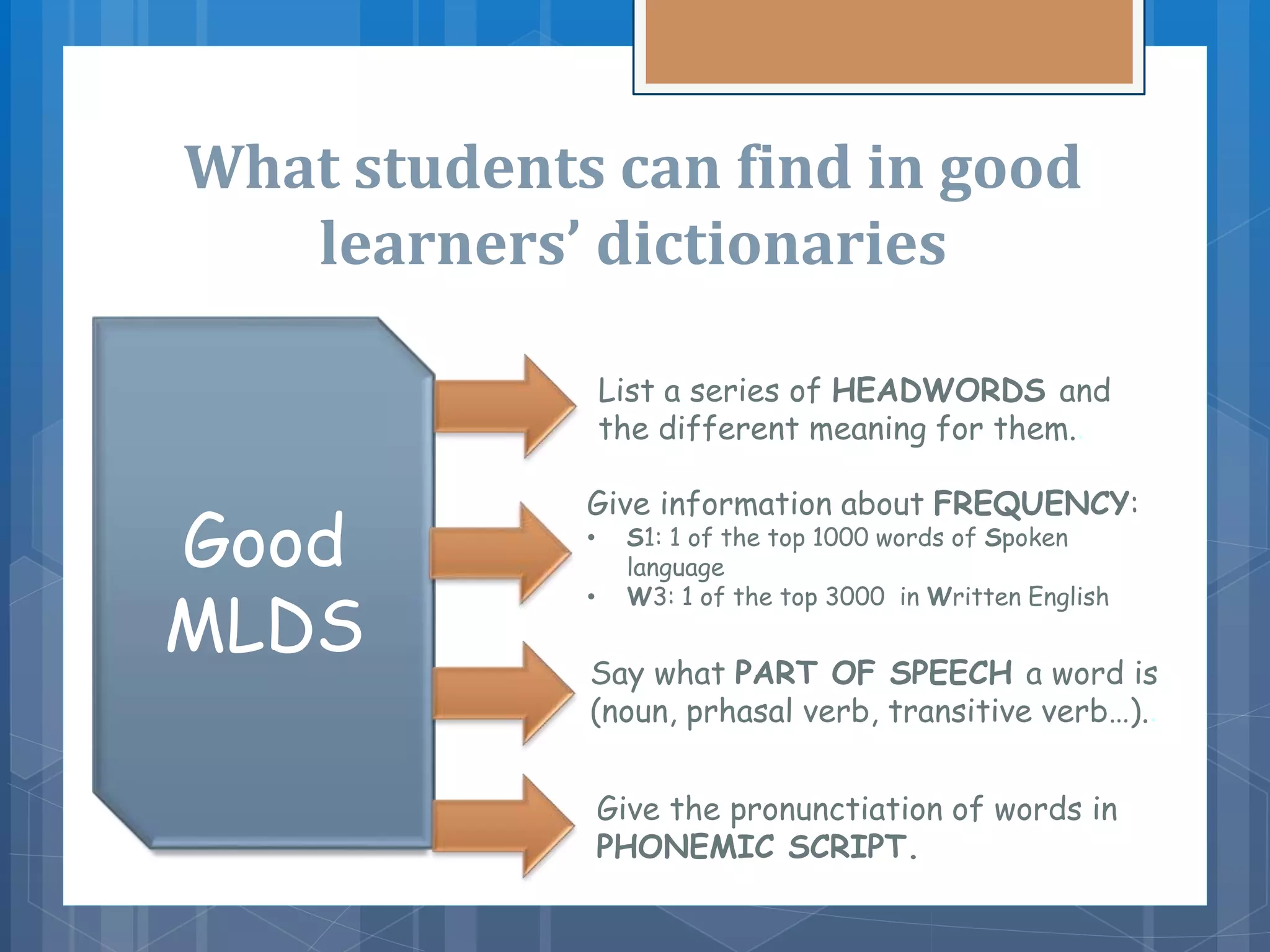
What students can find in good
learners’ dictionaries
Good
MLDS
List a series of HEADWORDS and
the different meaning for them..
Give information about FREQUENCY:
• S1: 1 of the top 1000 words of Spoken
language
• W3: 1 of the top 3000 in Written English
Say what PART OF SPEECH a word is
(noun, prhasal verb, transitive verb…)..
Give the pronunctiation of words in
PHONEMIC SCRIPT.
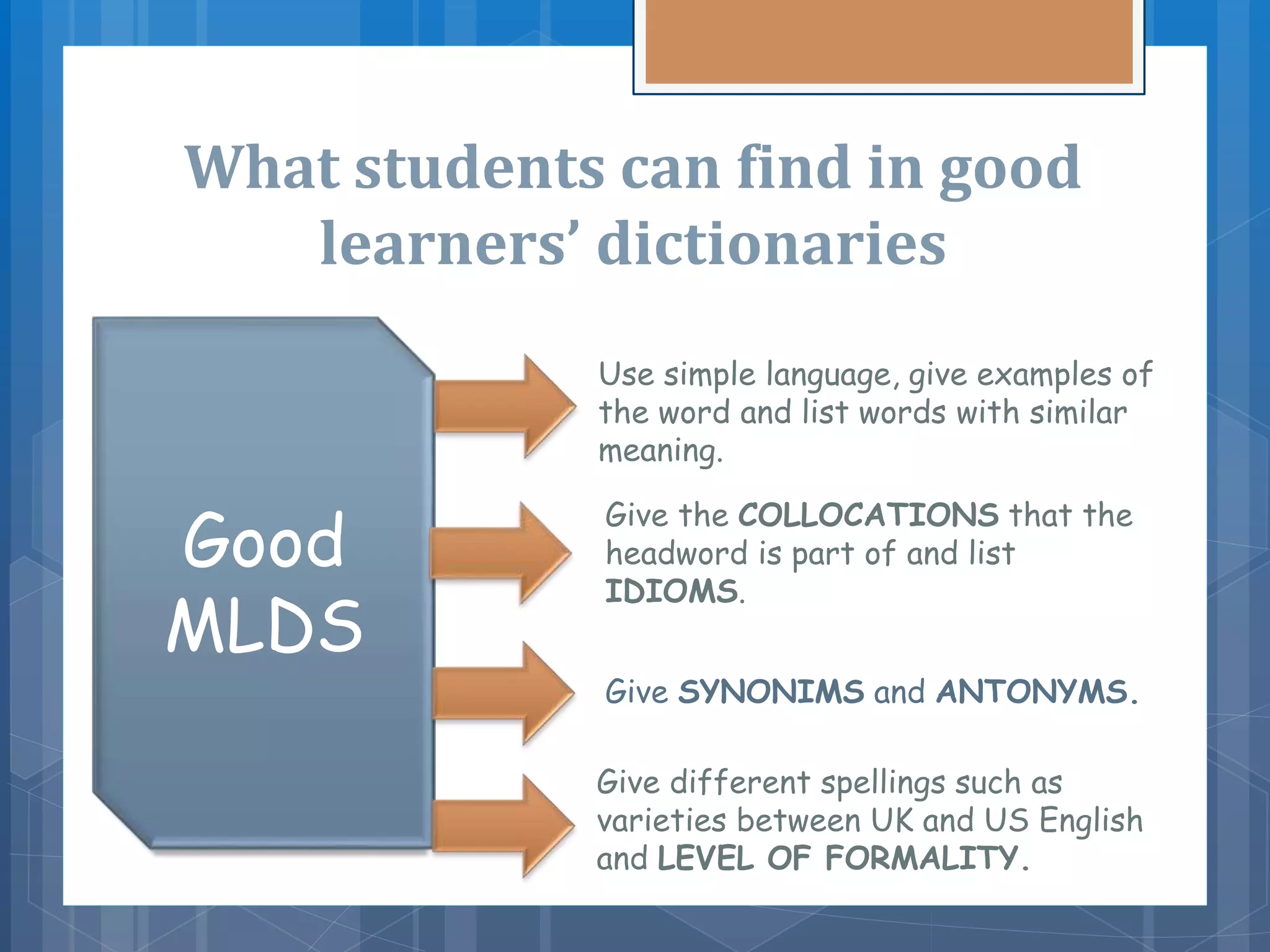
What students can find in good
learners’ dictionaries
Good
MLDS
Use simple language, give examples of
the word and list words with similar
meaning.
Give the COLLOCATIONS that the
headword is part of and list
IDIOMS.
Give different spellings such as
varieties between UK and US English
and LEVEL OF FORMALITY.
Give SYNONIMS and ANTONYMS.
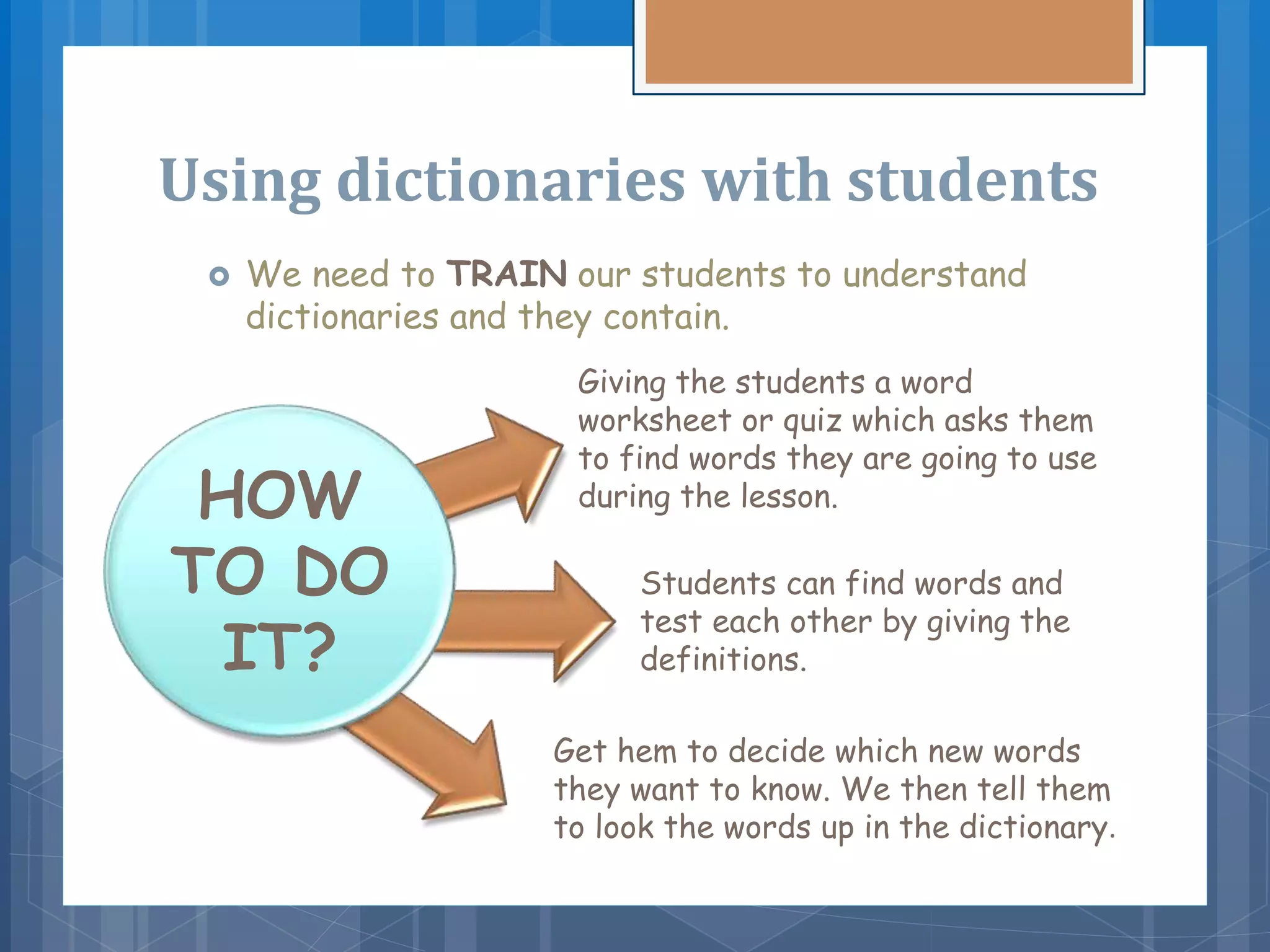
Using dictionaries with students
 We need to TRAIN our students to understand
dictionaries and they contain.
HOW
TO DO
IT?
Giving the students a word
worksheet or quiz which asks them
to find words they are going to use
during the lesson.
Students can find words and
test each other by giving the
definitions.
Get hem to decide which new words
they want to know. We then tell them
to look the words up in the dictionary.

Using dictionaries

  • 1.
    Using dictionaries Silvia Bautista Martín OralCommunication in Early Language Learning Environments
  • 2.
    CONTENT PAGE 1. Differentkinds of dictionary 2. What students can find in good learners’ dictionaries 3. Using dictionaries with students
  • 3.
    Different kinds ofdictionary BOOK FORM ONLINE MOBILE DEVICES DICTIONARY Help learners understand and use words effectively
  • 4.
    Different kinds ofdictionary BILINGUAL MONOLINGUAL MONOLINGUAL LEARNERS PRODUCTION DICTIONARIES Have words in two languages. Designed specially for language learners. Written in one language. Used by native speakers and competent speakers. Written in the target language. They use a simplified language. Contains group words in topic areas.
  • 5.
    What students canfind in good learners’ dictionaries Good MLDS List a series of HEADWORDS and the different meaning for them.. Give information about FREQUENCY: • S1: 1 of the top 1000 words of Spoken language • W3: 1 of the top 3000 in Written English Say what PART OF SPEECH a word is (noun, prhasal verb, transitive verb…).. Give the pronunctiation of words in PHONEMIC SCRIPT.
  • 6.
    What students canfind in good learners’ dictionaries Good MLDS Use simple language, give examples of the word and list words with similar meaning. Give the COLLOCATIONS that the headword is part of and list IDIOMS. Give different spellings such as varieties between UK and US English and LEVEL OF FORMALITY. Give SYNONIMS and ANTONYMS.
  • 7.
    Using dictionaries withstudents  We need to TRAIN our students to understand dictionaries and they contain. HOW TO DO IT? Giving the students a word worksheet or quiz which asks them to find words they are going to use during the lesson. Students can find words and test each other by giving the definitions. Get hem to decide which new words they want to know. We then tell them to look the words up in the dictionary.