Using grain to improve goat
 carcass quality and value


               Susan Schoenian and Jeff Semler
               University of Maryland Extension
I like
           grain!


Thank you for your support of the
   2012 pen vs. pasture study.
Pen-fed (n=15)                                   Pasture-fed (n=15)


• Maintained in dry lot                           • Maintained on pasture
• Free choice grass hay                           • Pasture only diet
                                                    Warm and cool season grasses and forbs
• Fed grain once per day
  (4 parts whole barley: 1 part 36% CP pellet)    • No supplemental feed
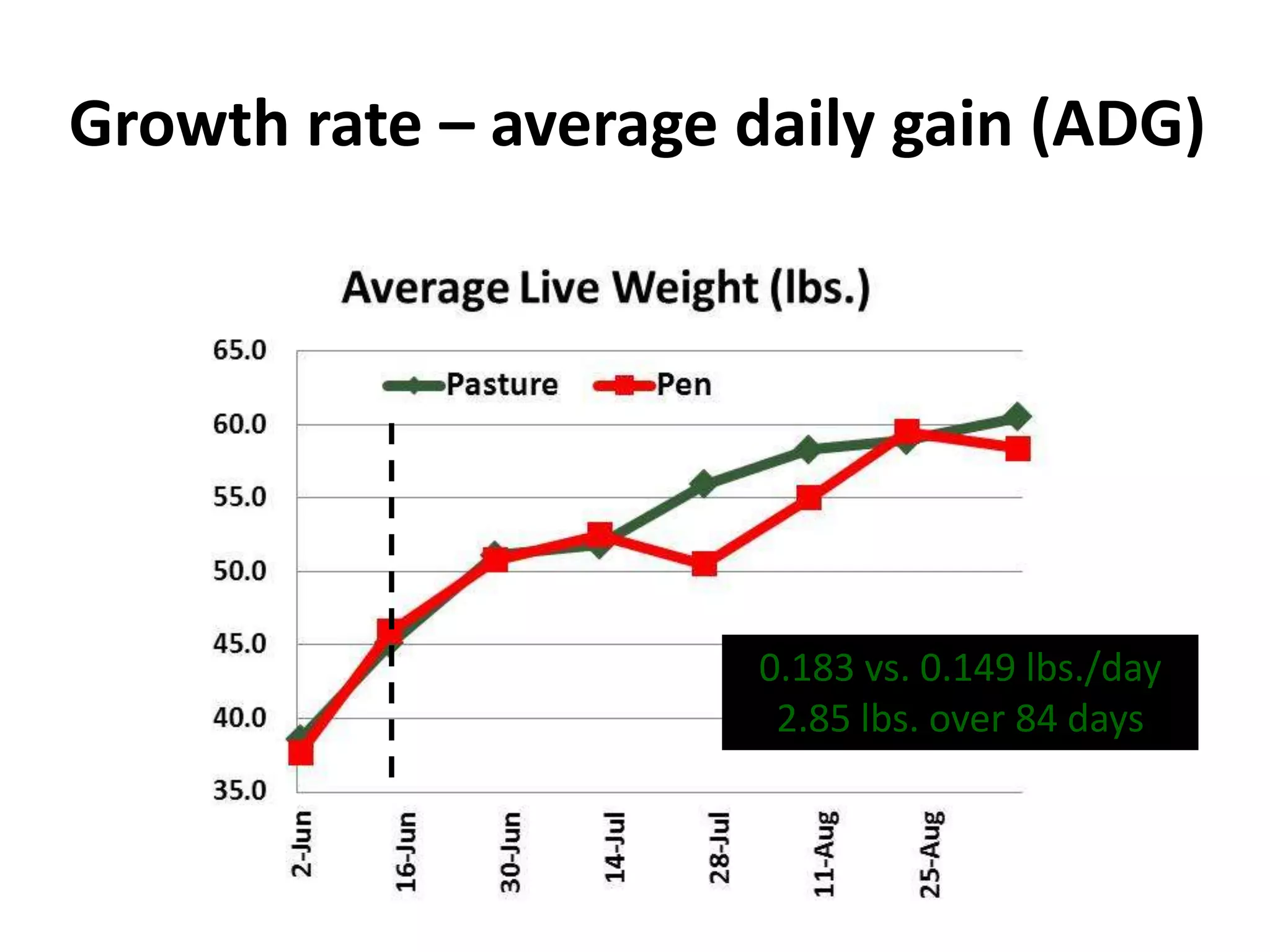
Growth rate – average daily gain (ADG)


                       0.183 vs. 0.149 lbs./day
                        2.85 lbs. over 84 days
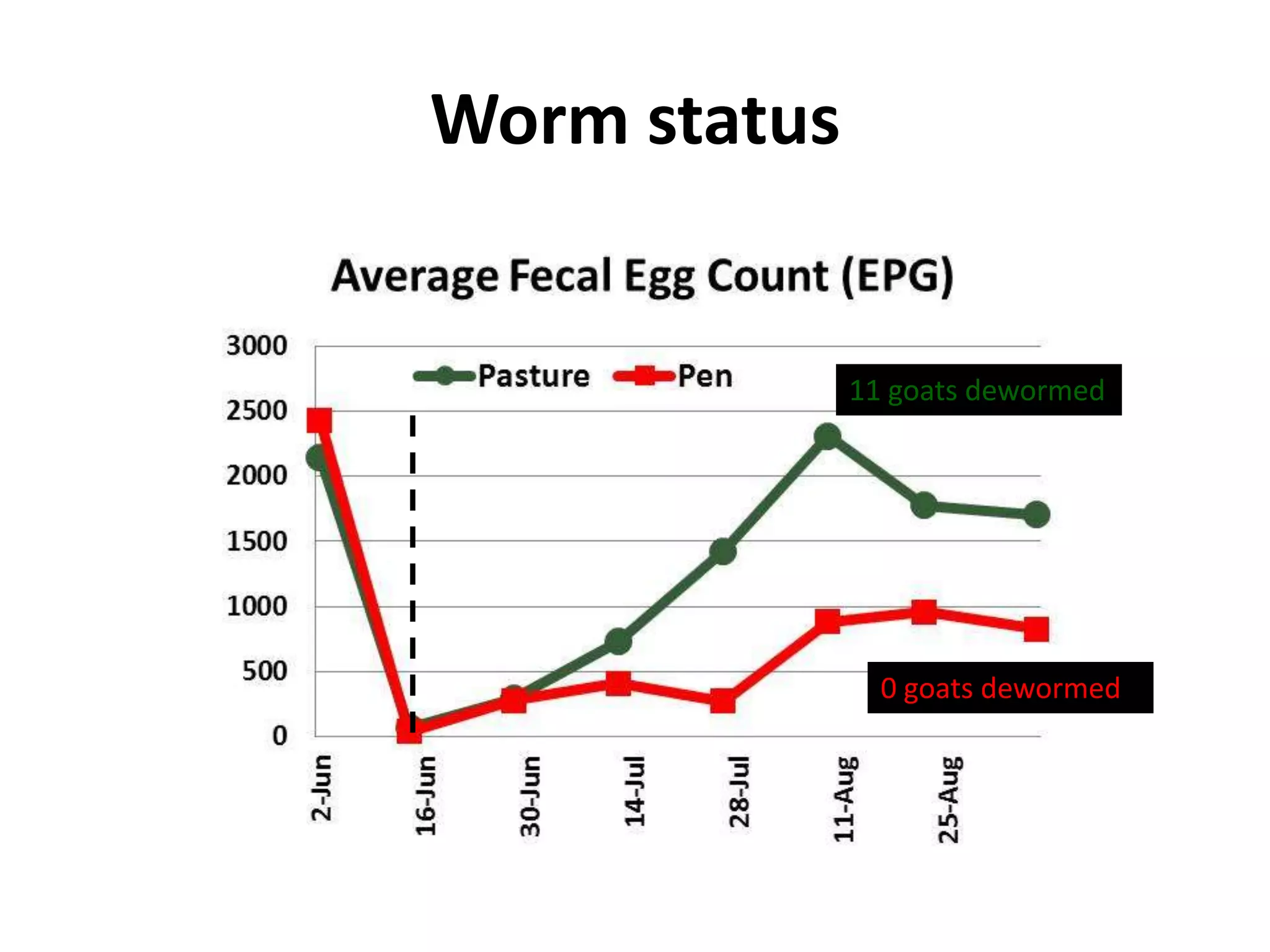
Worm status


              11 goats dewormed


                0 goats dewormed
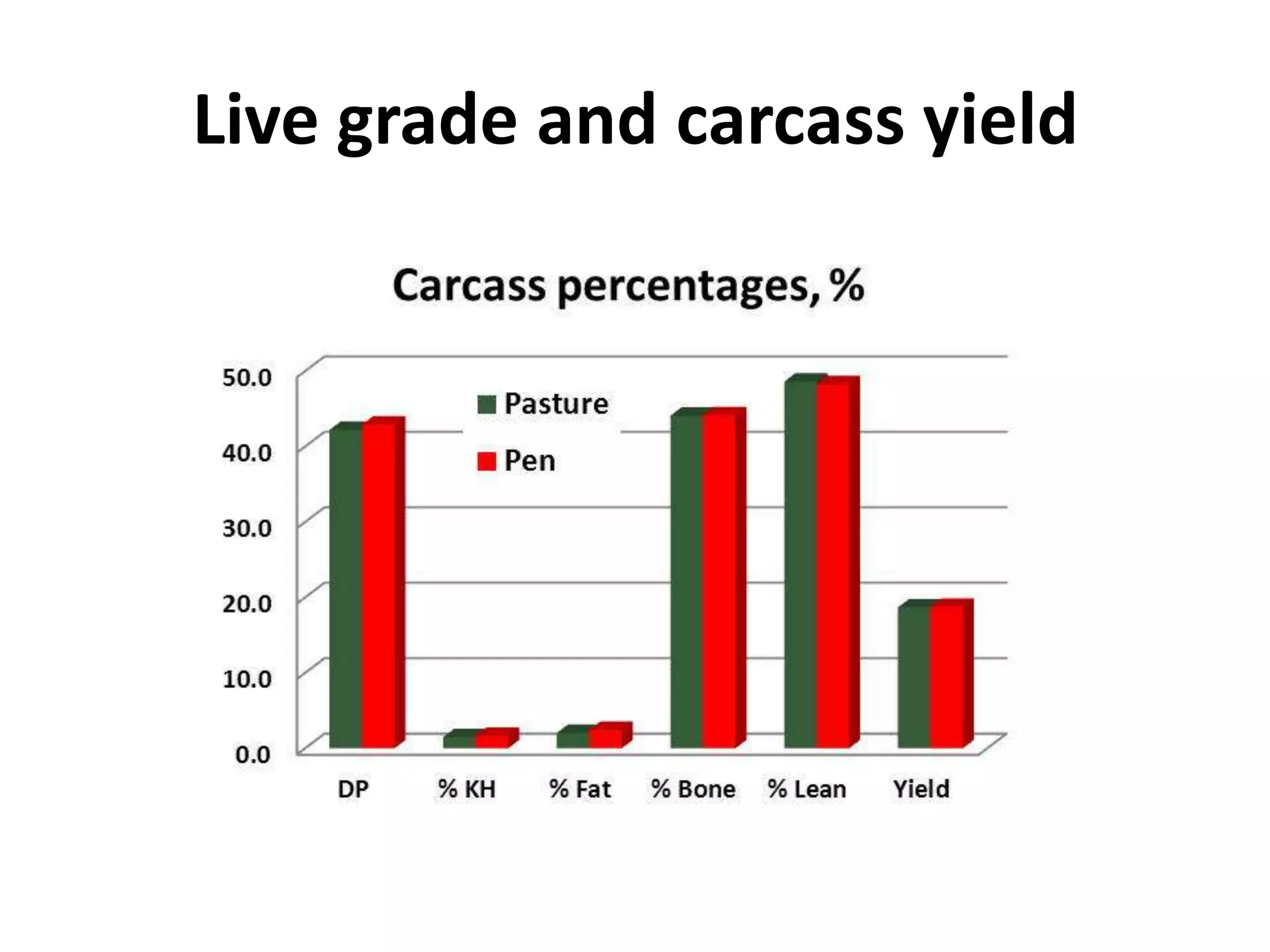
Live grade and carcass yield
Meat Quality (last year’s data)
Longissimus dorsi had 1.3% intramuscular fat and 23.3% protein.

                     Grams per 100 grams of fat

       35.0                   Pasture         Pen
       30.0                                                 b
       25.0
       20.0                                            a
       15.0      a      a               a      a
       10.0
        5.0
        0.0       Bad SFA               Good SFA      Good MUFA

              Palmitic acid       Stearic acid      Oleic acid
                  16-0               18-0           18-1, cis-9


  Even when there are differences in fatty acid content, the
    differences are not likely relevant to the human diet.
Economics
 Advantage to pen-fed goats
   Growth
   + 2.85 lbs. @ $1.60/lb. = + $4.56
   Feed costs
   $14.05 (pen) - $7.81 (pasture) = + $6.24
   Additional profit
   $4.56 + $6.24 = $10.80/goat
   $10.80 x 15 goats = $162 total

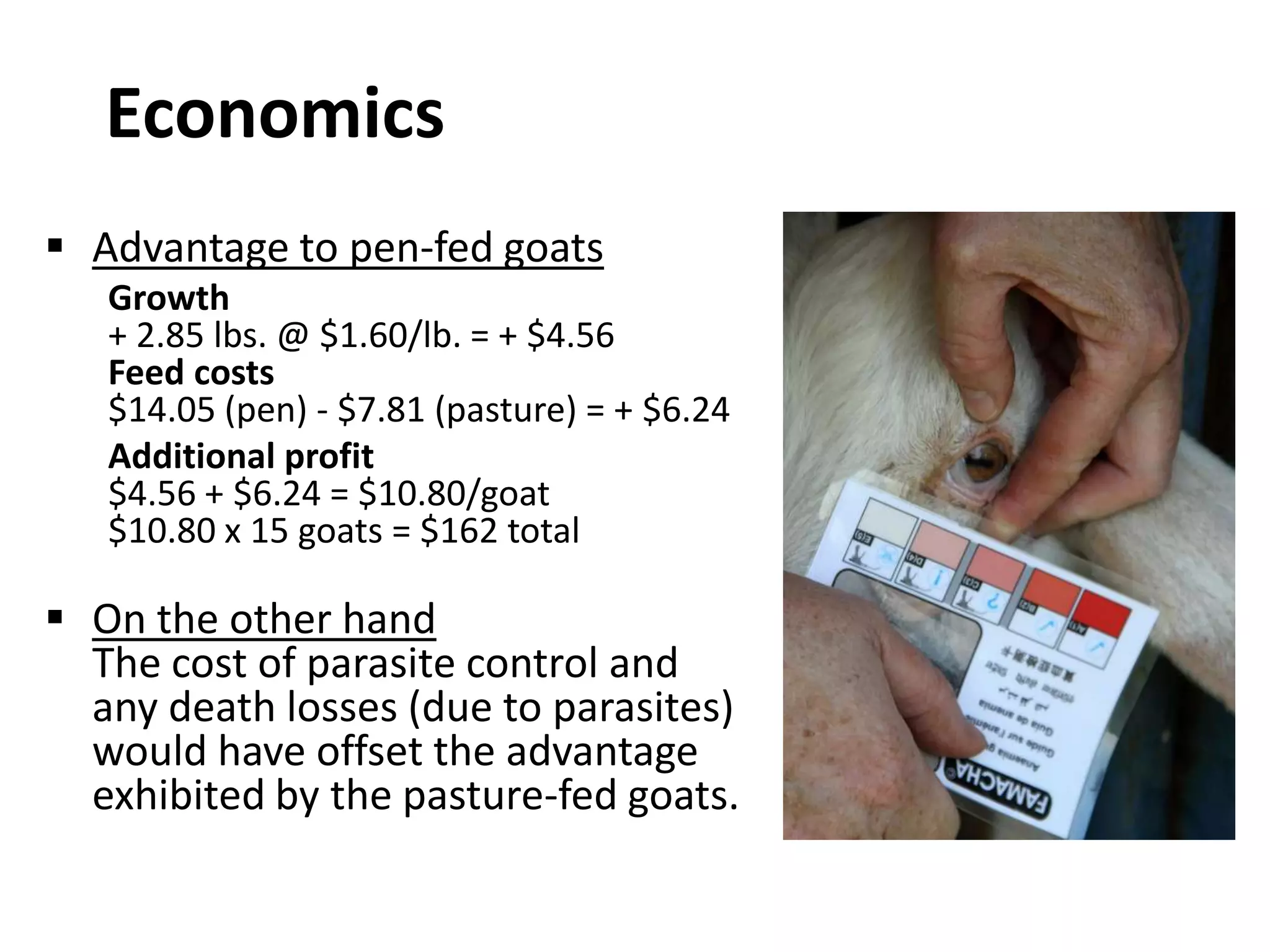
 On the other hand
  The cost of parasite control and
  any death losses (due to parasites)
  would have offset the advantage
  exhibited by the pasture-fed goats.
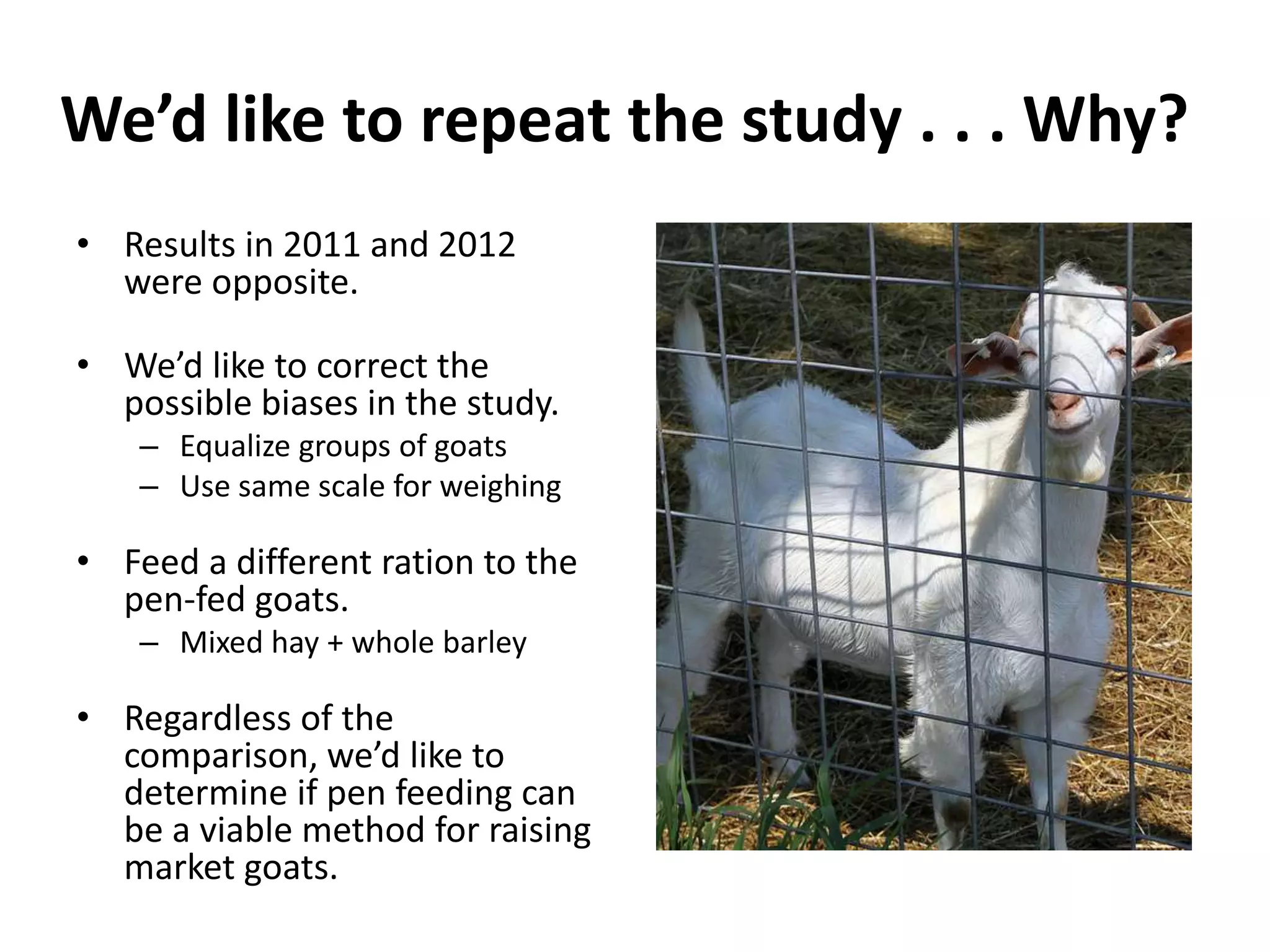
We’d like to repeat the study . . . Why?
• Results in 2011 and 2012
  were opposite.

• We’d like to correct the
  possible biases in the study.
    – Equalize groups of goats
    – Use same scale for weighing

• Feed a different ration to the
  pen-fed goats.
    – Mixed hay + whole barley

• Regardless of the
  comparison, we’d like to
  determine if pen feeding can
  be a viable method for raising
  market goats.
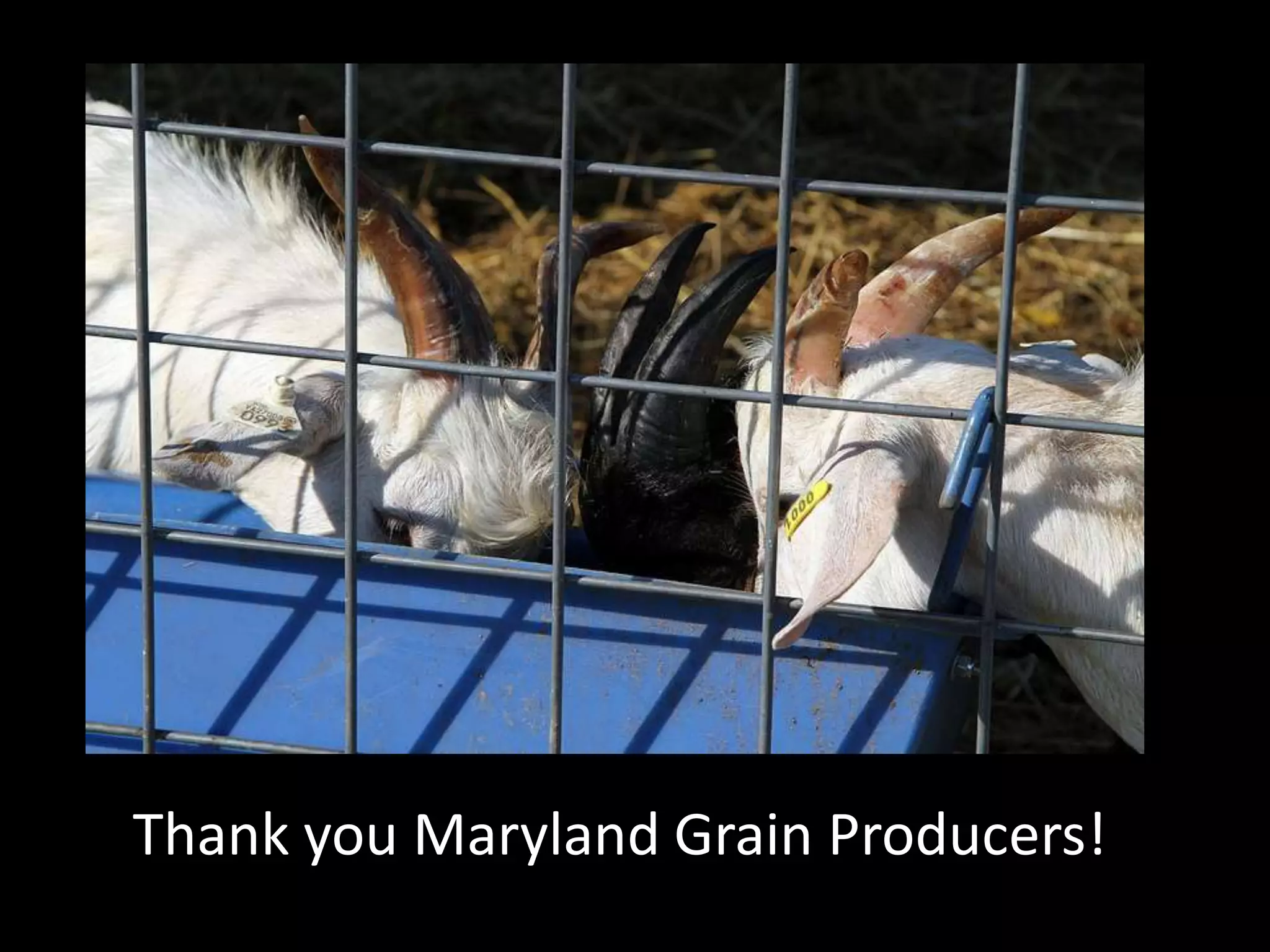
Thank you Maryland Grain Producers!

PenVsPastureStudy

  • 1.
    Using grain toimprove goat carcass quality and value Susan Schoenian and Jeff Semler University of Maryland Extension
  • 2.
    I like grain! Thank you for your support of the 2012 pen vs. pasture study.
  • 3.
    Pen-fed (n=15) Pasture-fed (n=15) • Maintained in dry lot • Maintained on pasture • Free choice grass hay • Pasture only diet Warm and cool season grasses and forbs • Fed grain once per day (4 parts whole barley: 1 part 36% CP pellet) • No supplemental feed
  • 4.
    Growth rate –average daily gain (ADG) 0.183 vs. 0.149 lbs./day 2.85 lbs. over 84 days
  • 5.
    Worm status 11 goats dewormed 0 goats dewormed
  • 6.
    Live grade andcarcass yield
  • 7.
    Meat Quality (lastyear’s data) Longissimus dorsi had 1.3% intramuscular fat and 23.3% protein. Grams per 100 grams of fat 35.0 Pasture Pen 30.0 b 25.0 20.0 a 15.0 a a a a 10.0 5.0 0.0 Bad SFA Good SFA Good MUFA Palmitic acid Stearic acid Oleic acid 16-0 18-0 18-1, cis-9 Even when there are differences in fatty acid content, the differences are not likely relevant to the human diet.
  • 8.
    Economics  Advantage topen-fed goats Growth + 2.85 lbs. @ $1.60/lb. = + $4.56 Feed costs $14.05 (pen) - $7.81 (pasture) = + $6.24 Additional profit $4.56 + $6.24 = $10.80/goat $10.80 x 15 goats = $162 total  On the other hand The cost of parasite control and any death losses (due to parasites) would have offset the advantage exhibited by the pasture-fed goats.
  • 9.
    We’d like torepeat the study . . . Why? • Results in 2011 and 2012 were opposite. • We’d like to correct the possible biases in the study. – Equalize groups of goats – Use same scale for weighing • Feed a different ration to the pen-fed goats. – Mixed hay + whole barley • Regardless of the comparison, we’d like to determine if pen feeding can be a viable method for raising market goats.
  • 10.
    Thank you MarylandGrain Producers!