Using drawn visual imagery
in reflective practice.
Some ideas for practice.
Paula Nottingham
29/10/10
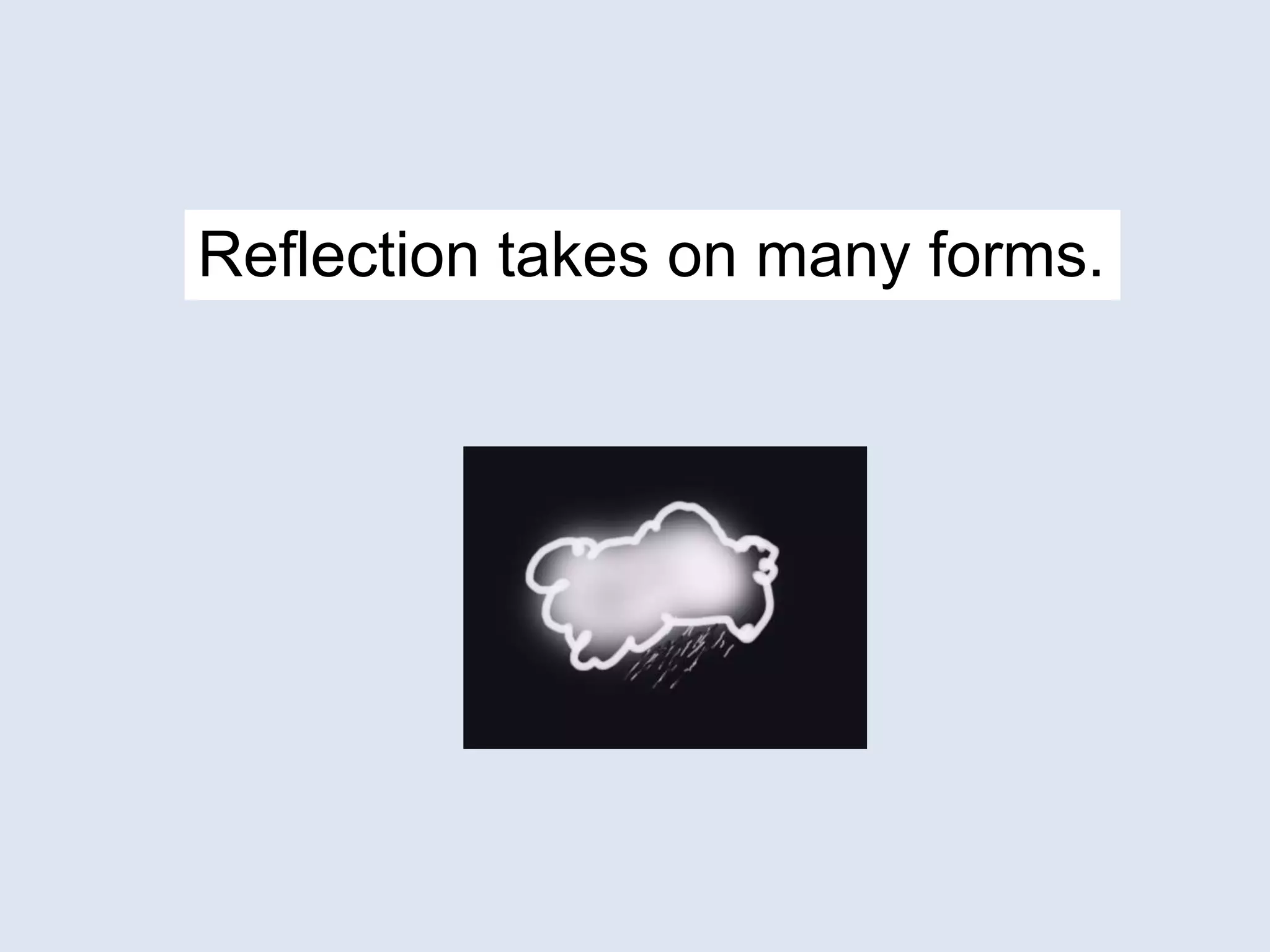
Reflection takes on many forms.
In the visual arts a journal uses visual language
and drawn images that relate to thinking through
‘problems’.
Images can be invented or collected that relate to
what you are thinking about. These visual
inventions can be related to concepts or theories
from other areas you are exploring in BAPP.
Expressing your thinking in visual language is a
useful inquiry tool.
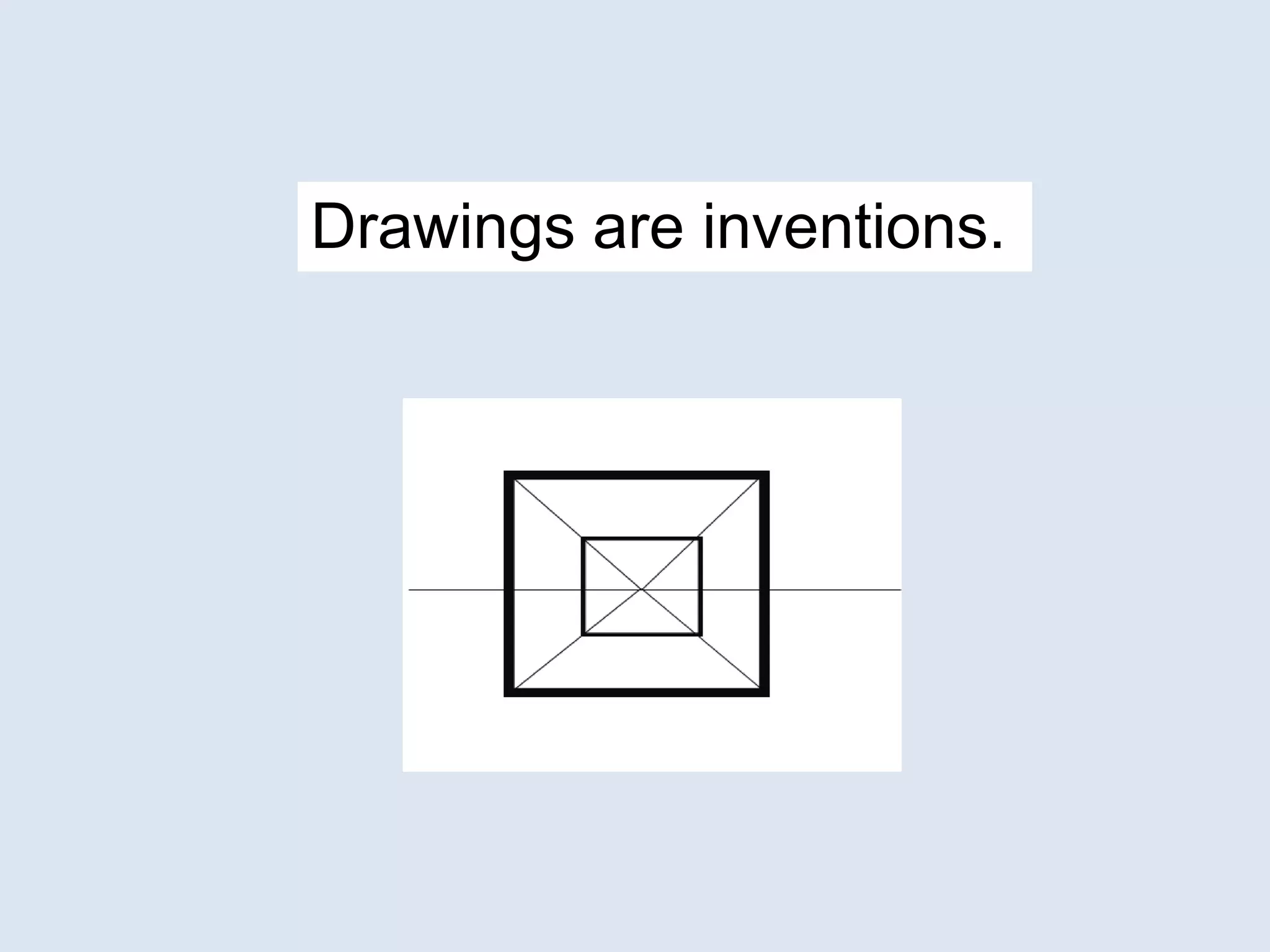
Drawings are inventions.
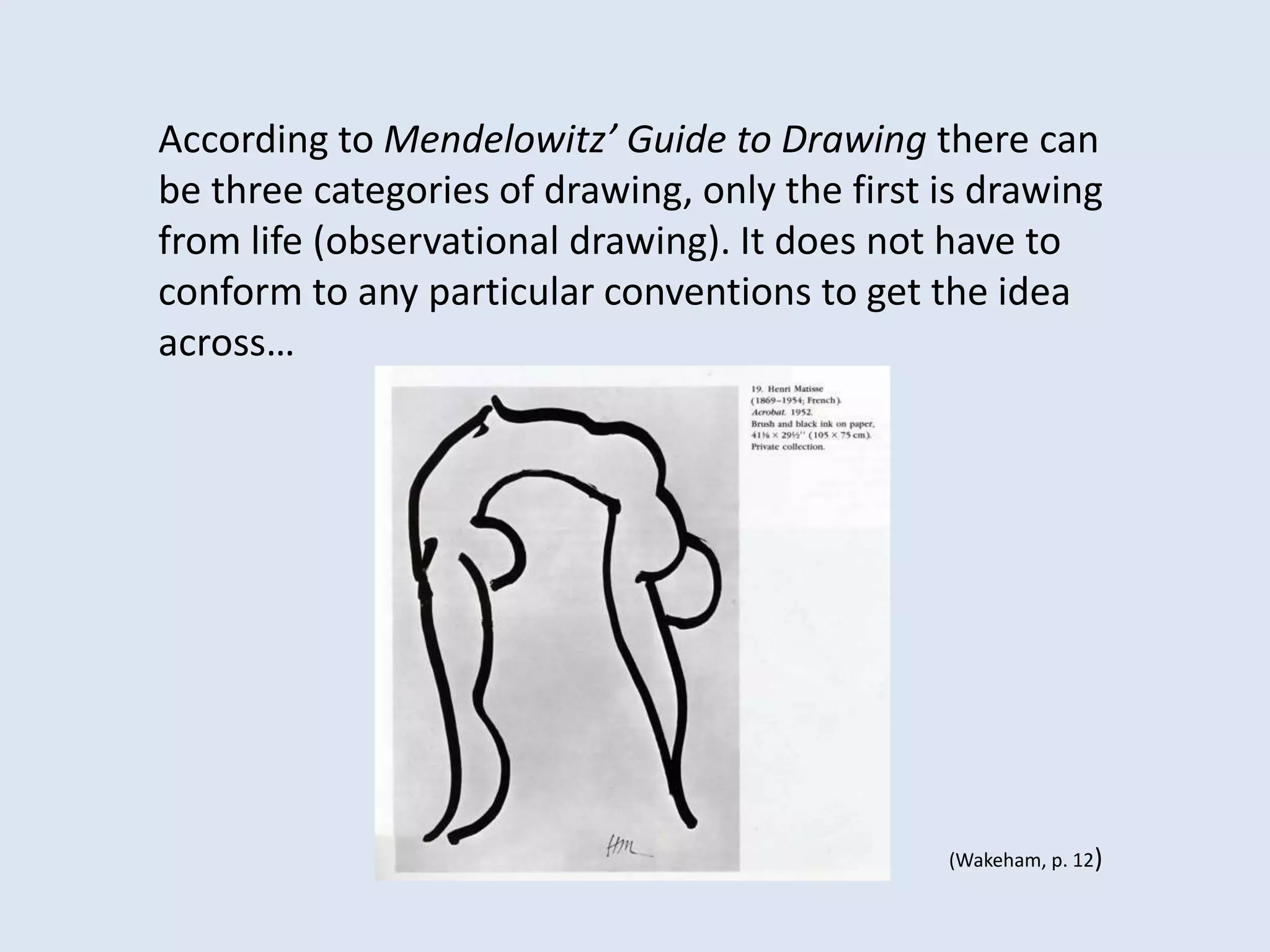
According to Mendelowitz’ Guide to Drawing there can
be three categories of drawing, only the first is drawing
from life (observational drawing). It does not have to
conform to any particular conventions to get the idea
across…
(Wakeham, p. 12)
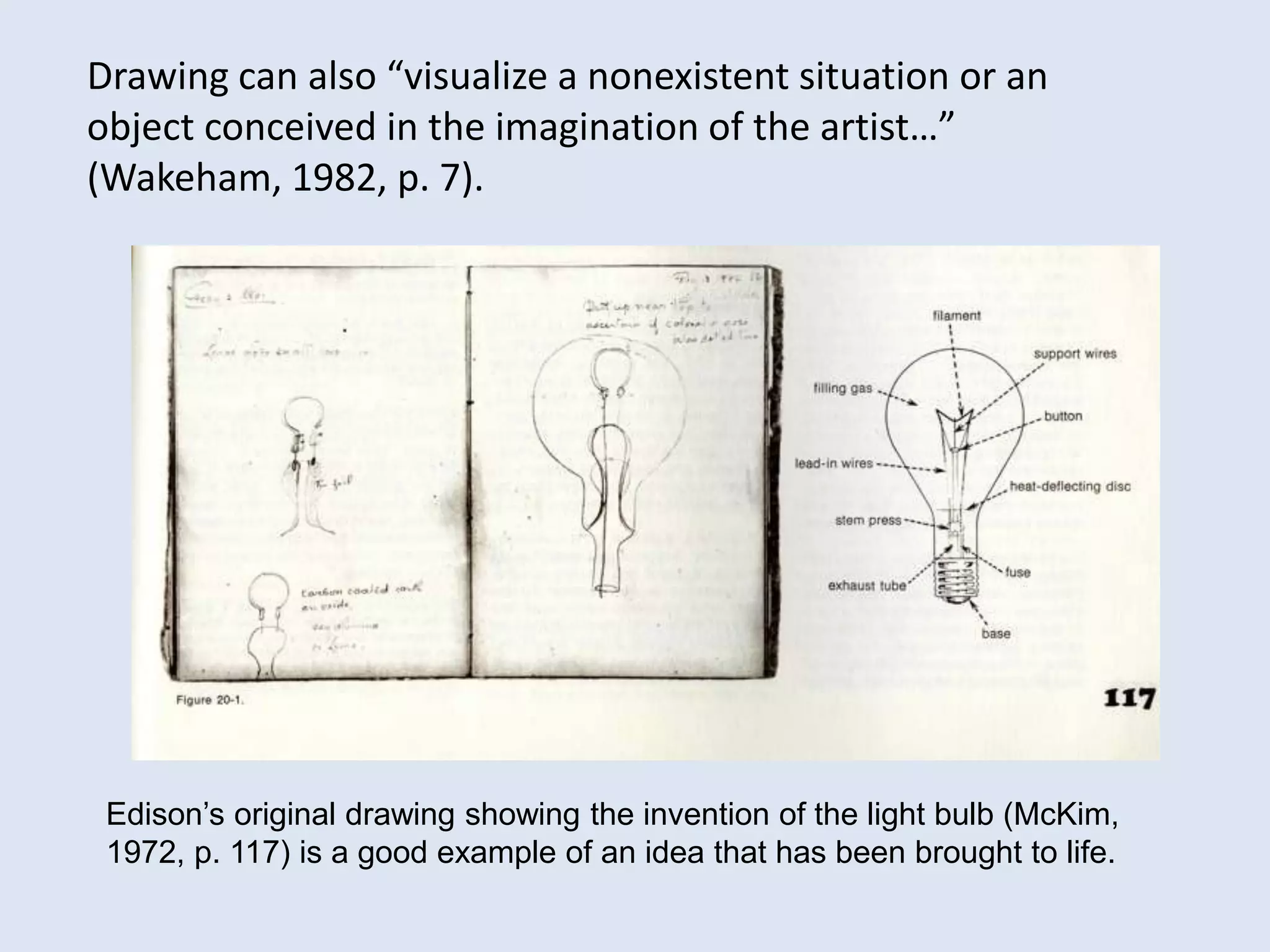
Drawing can also “visualize a nonexistent situation or an
object conceived in the imagination of the artist…”
(Wakeham, 1982, p. 7).
Edison’s original drawing showing the invention of the light bulb (McKim,
1972, p. 117) is a good example of an idea that has been brought to life.
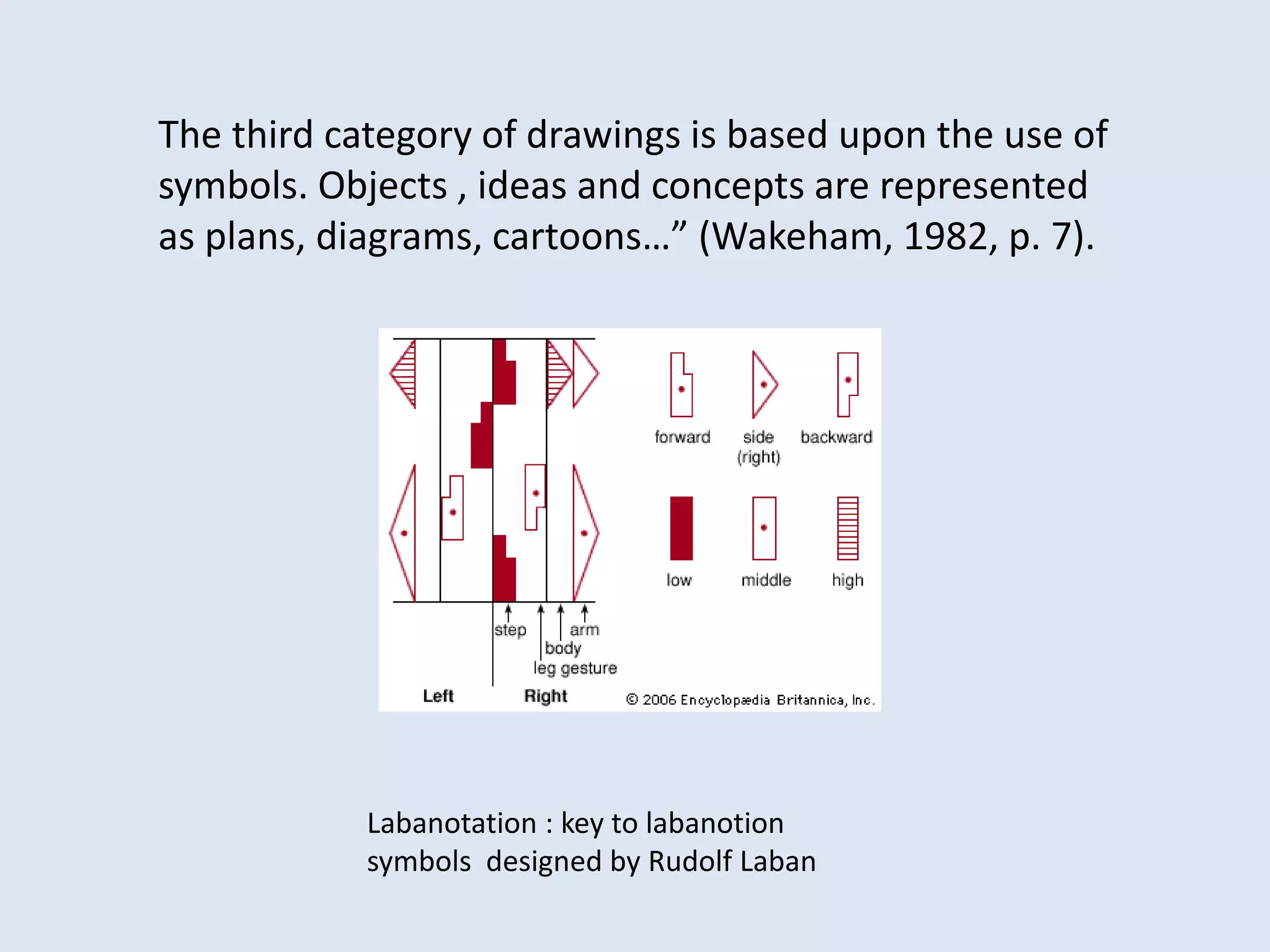
The third category of drawings is based upon the use of
symbols. Objects , ideas and concepts are represented
as plans, diagrams, cartoons…” (Wakeham, 1982, p. 7).
Labanotation : key to labanotion
symbols designed by Rudolf Laban
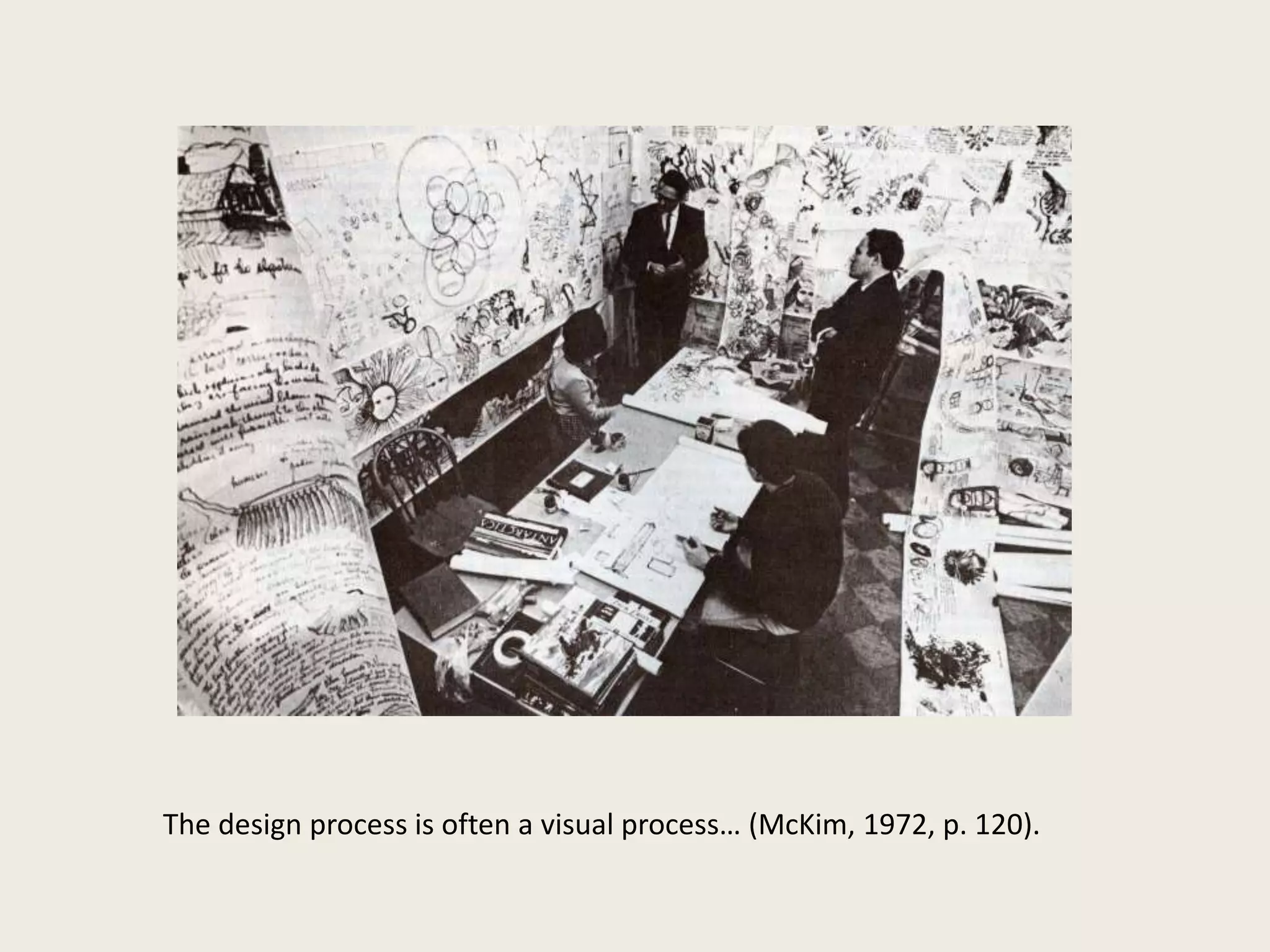
The design process is often a visual process… (McKim, 1972, p. 120).
Visual forms like doodling and graffiti often use
alternative forms of visual communication, as do
abstract paintings that express ideas and
interpretations of ideas without necessarily using
representational imagery.
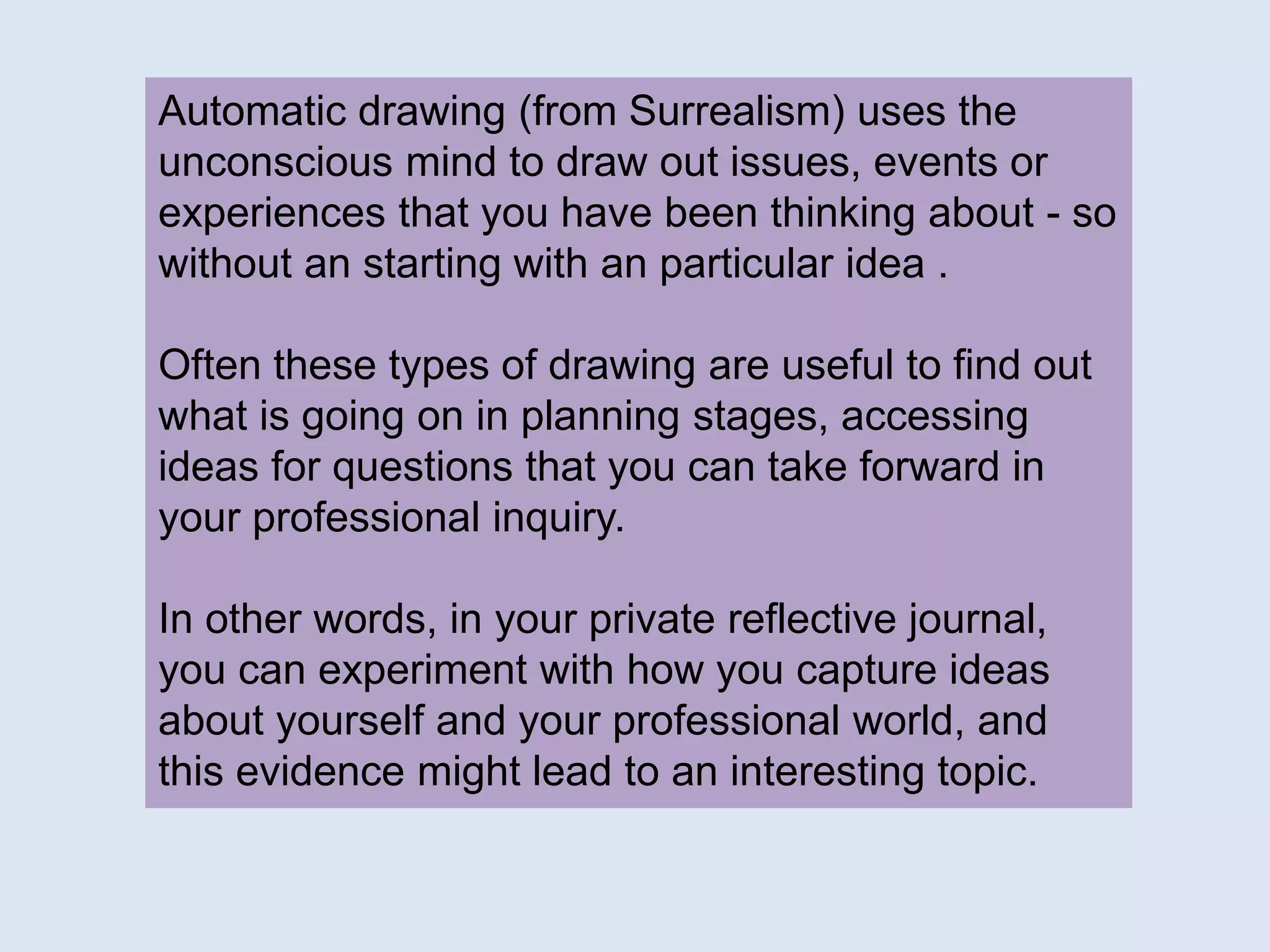
Rudolph Arnheim invented the idea of concept
drawings. They are a way of visualising imagery without
using graphic depictions of pictures, but using lines,
arrows, shapes and forms to communicate ideas.
Arnheim described his process as ‘concepts take shape’ where an idea is
used to focus on during the drawing process, but the resulting image
includes emotional and cognitive themes that indicate personal
interpretations of ‘lifeworld’ experiences and ideas.
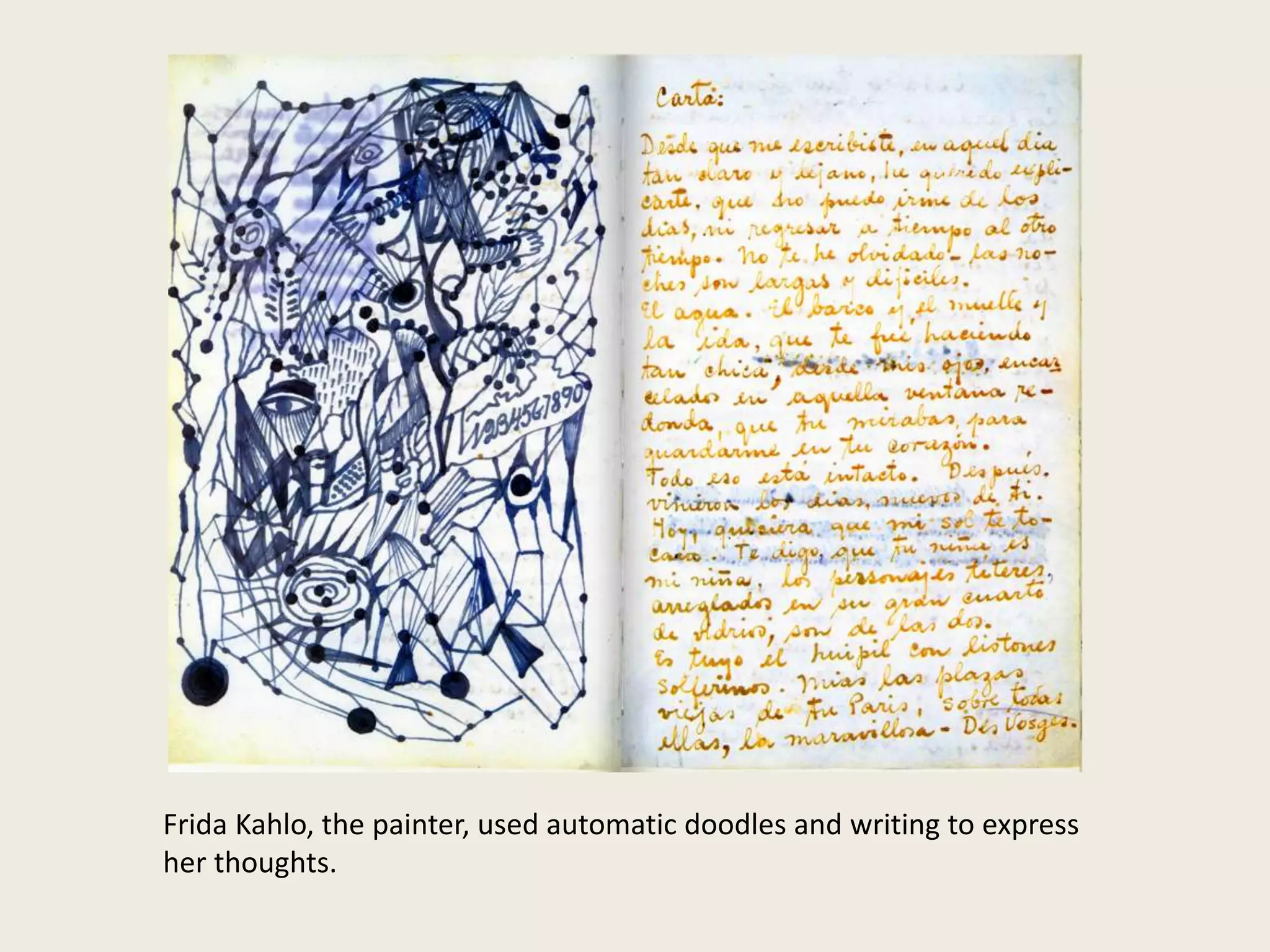
Automatic drawing (from Surrealism) uses the
unconscious mind to draw out issues, events or
experiences that you have been thinking about - so
without an starting with an particular idea .
Often these types of drawing are useful to find out
what is going on in planning stages, accessing
ideas for questions that you can take forward in
your professional inquiry.
In other words, in your private reflective journal,
you can experiment with how you capture ideas
about yourself and your professional world, and
this evidence might lead to an interesting topic.
Frida Kahlo, the painter, used automatic doodles and writing to express
her thoughts.
So try out some ideas using drawing in your
personal journals – if any are successful you may
want to share them with the network.
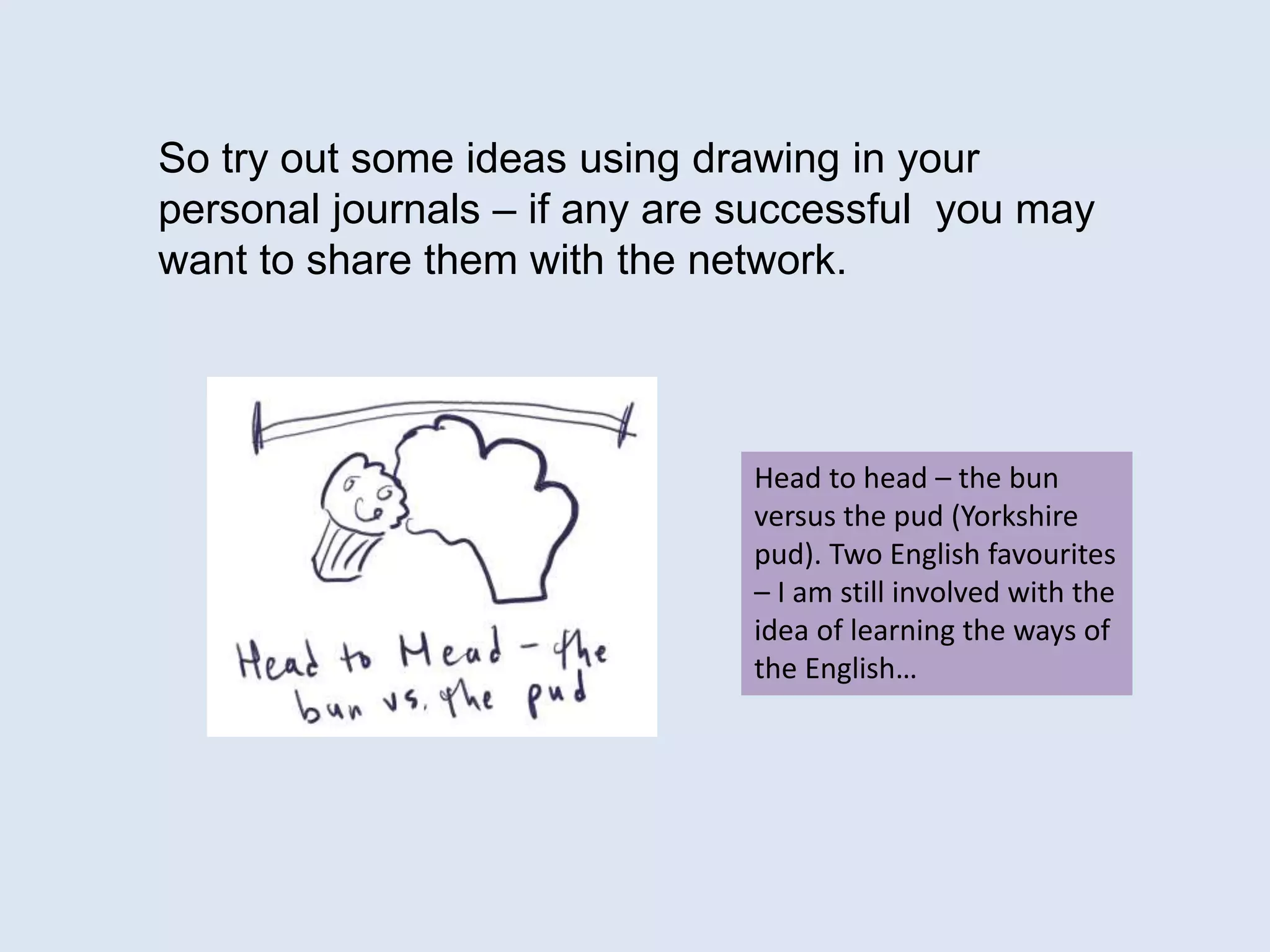
Head to head – the bun
versus the pud (Yorkshire
pud). Two English favourites
– I am still involved with the
idea of learning the ways of
the English…
Jotting down notations for movements or scenes.
Doing some quick line drawings that accompany
brainstorming – as in “this is how it might look”.
Storyboard something you want to video as an
idea.
If it is quicker than explaining in another way use
visuals in the final presentation of ideas.
Ideas for the Journal
Arnheim, Rudolf (1969) Visual Thinking, Berkeley: University of California
Press
Britannica (2010) labanotation: key to labanotation symbols [Accessed
29/10/10] Available from: http://www.britannica.com/EBchecked/topic-
art/326646/71523/Key-to-labanotation-symbols
Fuentes C. and Lowe, Sarah (1995)The Diary of Frida Kahlo An Intimate
Self Portrait, London: Bloomsbury Publishing Plc. London
McKim, Robert H. (1972) Experiences in Visual Thinking, Belmont CA :
Brooks/Cole Publishing Company.
Wakeham, Duane A. (1982) (3rd Edition) Mendelowitz’s Guide to Drawing,
New York: Holt, Rinehart and Winston.
References

Drawing for Reflective Practice

  • 1.
    Using drawn visualimagery in reflective practice. Some ideas for practice. Paula Nottingham 29/10/10
  • 2.
  • 3.
    In the visualarts a journal uses visual language and drawn images that relate to thinking through ‘problems’. Images can be invented or collected that relate to what you are thinking about. These visual inventions can be related to concepts or theories from other areas you are exploring in BAPP. Expressing your thinking in visual language is a useful inquiry tool.
  • 4.
  • 5.
    According to Mendelowitz’Guide to Drawing there can be three categories of drawing, only the first is drawing from life (observational drawing). It does not have to conform to any particular conventions to get the idea across… (Wakeham, p. 12)
  • 6.
    Drawing can also“visualize a nonexistent situation or an object conceived in the imagination of the artist…” (Wakeham, 1982, p. 7). Edison’s original drawing showing the invention of the light bulb (McKim, 1972, p. 117) is a good example of an idea that has been brought to life.
  • 7.
    The third categoryof drawings is based upon the use of symbols. Objects , ideas and concepts are represented as plans, diagrams, cartoons…” (Wakeham, 1982, p. 7). Labanotation : key to labanotion symbols designed by Rudolf Laban
  • 8.
    The design processis often a visual process… (McKim, 1972, p. 120).
  • 9.
    Visual forms likedoodling and graffiti often use alternative forms of visual communication, as do abstract paintings that express ideas and interpretations of ideas without necessarily using representational imagery. Rudolph Arnheim invented the idea of concept drawings. They are a way of visualising imagery without using graphic depictions of pictures, but using lines, arrows, shapes and forms to communicate ideas.
  • 10.
    Arnheim described hisprocess as ‘concepts take shape’ where an idea is used to focus on during the drawing process, but the resulting image includes emotional and cognitive themes that indicate personal interpretations of ‘lifeworld’ experiences and ideas.
  • 11.
    Automatic drawing (fromSurrealism) uses the unconscious mind to draw out issues, events or experiences that you have been thinking about - so without an starting with an particular idea . Often these types of drawing are useful to find out what is going on in planning stages, accessing ideas for questions that you can take forward in your professional inquiry. In other words, in your private reflective journal, you can experiment with how you capture ideas about yourself and your professional world, and this evidence might lead to an interesting topic.
  • 12.
    Frida Kahlo, thepainter, used automatic doodles and writing to express her thoughts.
  • 13.
    So try outsome ideas using drawing in your personal journals – if any are successful you may want to share them with the network. Head to head – the bun versus the pud (Yorkshire pud). Two English favourites – I am still involved with the idea of learning the ways of the English…
  • 14.
    Jotting down notationsfor movements or scenes. Doing some quick line drawings that accompany brainstorming – as in “this is how it might look”. Storyboard something you want to video as an idea. If it is quicker than explaining in another way use visuals in the final presentation of ideas. Ideas for the Journal
  • 15.
    Arnheim, Rudolf (1969)Visual Thinking, Berkeley: University of California Press Britannica (2010) labanotation: key to labanotation symbols [Accessed 29/10/10] Available from: http://www.britannica.com/EBchecked/topic- art/326646/71523/Key-to-labanotation-symbols Fuentes C. and Lowe, Sarah (1995)The Diary of Frida Kahlo An Intimate Self Portrait, London: Bloomsbury Publishing Plc. London McKim, Robert H. (1972) Experiences in Visual Thinking, Belmont CA : Brooks/Cole Publishing Company. Wakeham, Duane A. (1982) (3rd Edition) Mendelowitz’s Guide to Drawing, New York: Holt, Rinehart and Winston. References