Drawing as a Language to explore and
communicate the ideas
Dr. Shweta Malik (Assistant Professor)
Shwtmalik1@gmail.com
Home-Science Department
Swami Vivekanand Subharti University, Meerut
• Drawing is like writing, using pictures instead
of words. It is a form of communication that
can be useful, expressive, descriptive and
observational. It provides form to visual ideas.
Including drawing as part of the process of
making things is fun and provides a good
framework for understanding 2D and 3D
design.
• Drawing is a form of visual art in which a person
uses various drawing instruments to mark paper
or another two-dimensional medium. ... It is one
of the simplest and most efficient means of
communicating visual ideas
• Drawing is a form of visual art in which a person
uses various drawing instruments to mark paper
or another two-dimensional medium. ... It is one
of the simplest and most efficient means of
communicating visual ideas.
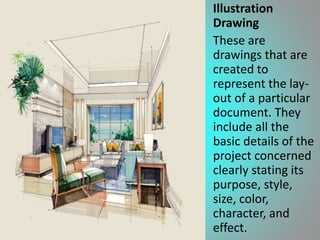
• Illustration
Drawing
• These are
drawings that are
created to
represent the lay-
out of a particular
document. They
include all the
basic details of the
project concerned
clearly stating its
purpose, style,
size, color,
character, and
effect.
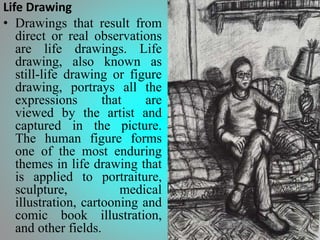
Life Drawing
• Drawings that result from
direct or real observations
are life drawings. Life
drawing, also known as
still-life drawing or figure
drawing, portrays all the
expressions that are
viewed by the artist and
captured in the picture.
The human figure forms
one of the most enduring
themes in life drawing that
is applied to portraiture,
sculpture, medical
illustration, cartooning and
comic book illustration,
and other fields.
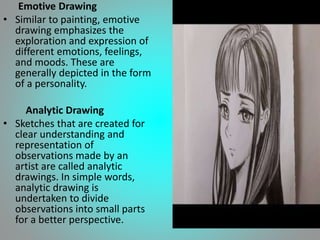
Emotive Drawing
• Similar to painting, emotive
drawing emphasizes the
exploration and expression of
different emotions, feelings,
and moods. These are
generally depicted in the form
of a personality.
Analytic Drawing
• Sketches that are created for
clear understanding and
representation of
observations made by an
artist are called analytic
drawings. In simple words,
analytic drawing is
undertaken to divide
observations into small parts
for a better perspective.
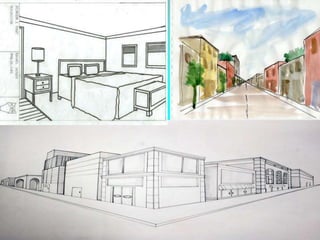
• Perspective Drawing
• Perspective drawing is used by artists to create
three-dimensional images on a two-dimensional
picture plane, such as paper. It represents space,
distance, volume, light, surface planes, and scale,
all viewed from a particular eye-level.
•
• Diagrammatic Drawing
• When concepts and ideas are explored and
investigated, these are documented on paper
through diagrammatic drawing. Diagrams are
created to depict adjacencies and happenstance
that are likely to take place in the immediate
future. Thus, diagrammatic drawings serve as
active design process for the instant ideas so
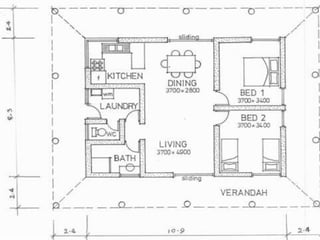
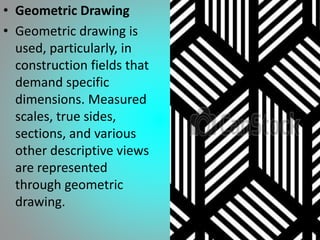
• Geometric Drawing
• Geometric drawing is
used, particularly, in
construction fields that
demand specific
dimensions. Measured
scales, true sides,
sections, and various
other descriptive views
are represented
through geometric
drawing.

Drawing as a language to explor and communicate the idea

  • 1.
    Drawing as aLanguage to explore and communicate the ideas Dr. Shweta Malik (Assistant Professor) Shwtmalik1@gmail.com Home-Science Department Swami Vivekanand Subharti University, Meerut
  • 2.
    • Drawing islike writing, using pictures instead of words. It is a form of communication that can be useful, expressive, descriptive and observational. It provides form to visual ideas. Including drawing as part of the process of making things is fun and provides a good framework for understanding 2D and 3D design.
  • 3.
    • Drawing isa form of visual art in which a person uses various drawing instruments to mark paper or another two-dimensional medium. ... It is one of the simplest and most efficient means of communicating visual ideas • Drawing is a form of visual art in which a person uses various drawing instruments to mark paper or another two-dimensional medium. ... It is one of the simplest and most efficient means of communicating visual ideas.
  • 4.
    • Illustration Drawing • Theseare drawings that are created to represent the lay- out of a particular document. They include all the basic details of the project concerned clearly stating its purpose, style, size, color, character, and effect.
  • 6.
    Life Drawing • Drawingsthat result from direct or real observations are life drawings. Life drawing, also known as still-life drawing or figure drawing, portrays all the expressions that are viewed by the artist and captured in the picture. The human figure forms one of the most enduring themes in life drawing that is applied to portraiture, sculpture, medical illustration, cartooning and comic book illustration, and other fields.
  • 7.
    Emotive Drawing • Similarto painting, emotive drawing emphasizes the exploration and expression of different emotions, feelings, and moods. These are generally depicted in the form of a personality. Analytic Drawing • Sketches that are created for clear understanding and representation of observations made by an artist are called analytic drawings. In simple words, analytic drawing is undertaken to divide observations into small parts for a better perspective.
  • 9.
    • Perspective Drawing •Perspective drawing is used by artists to create three-dimensional images on a two-dimensional picture plane, such as paper. It represents space, distance, volume, light, surface planes, and scale, all viewed from a particular eye-level. • • Diagrammatic Drawing • When concepts and ideas are explored and investigated, these are documented on paper through diagrammatic drawing. Diagrams are created to depict adjacencies and happenstance that are likely to take place in the immediate future. Thus, diagrammatic drawings serve as active design process for the instant ideas so
  • 10.
    • Geometric Drawing •Geometric drawing is used, particularly, in construction fields that demand specific dimensions. Measured scales, true sides, sections, and various other descriptive views are represented through geometric drawing.