An Overview of Visual,
Auditory & Kinesthetic
Learners
By
Melissa Winfield-Corbett
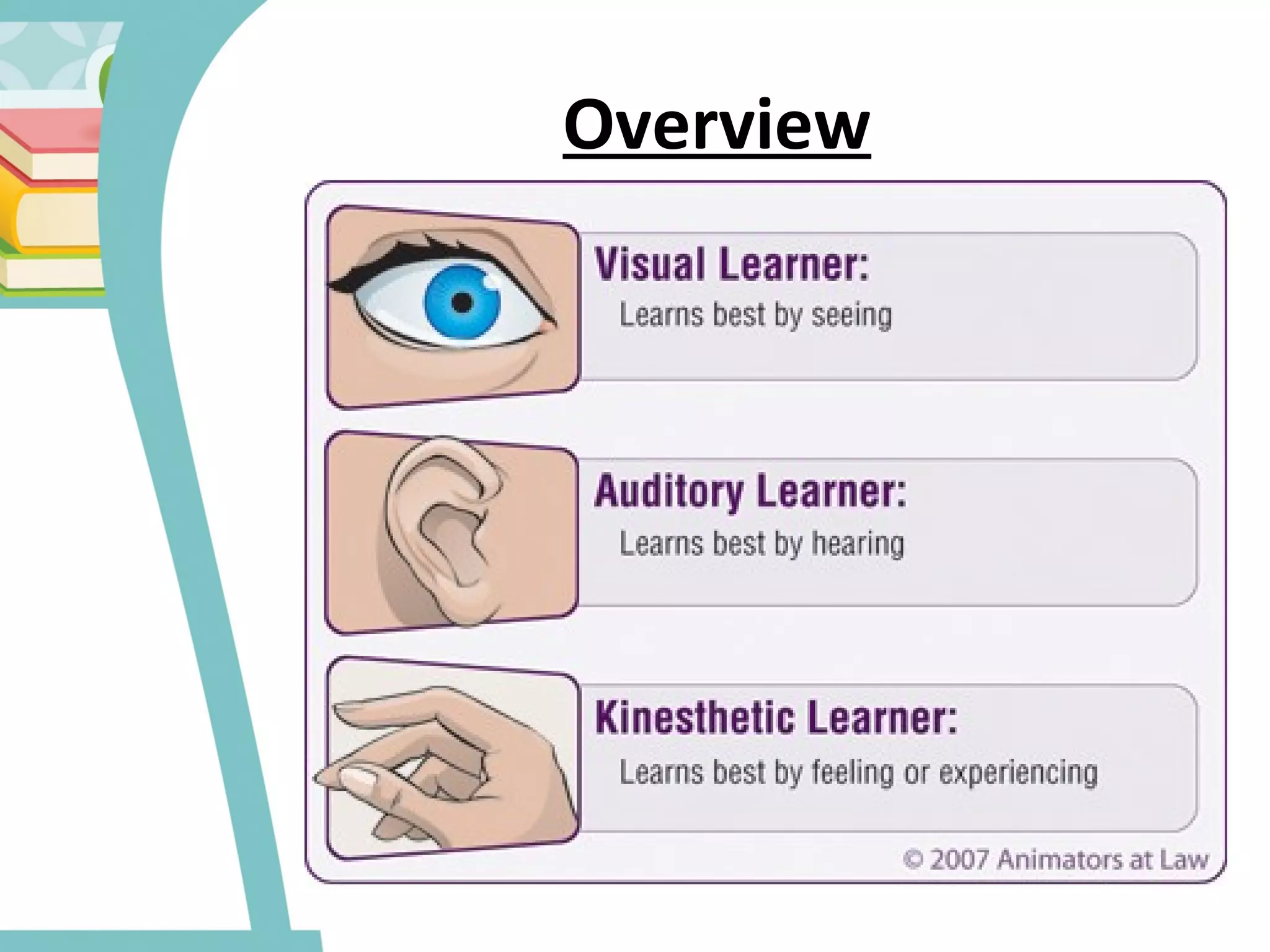
Overview
Visual Learning Definition
Visual learning is a teaching
and learning style in which
ideas, concepts, data and
other information are
associated with images and
techniques. It is one of the
three basic types of learning
styles in the widely used
Fleming VAK/VARK model
that also includes
kinesthetic learning and
auditory learning.
-Wikepedia
Characteristics of Visual Learners
• Like to read.
• Are good spellers.
• Memorize things by seeing them
on paper.
• Are organized.
• Would rather watch, than talk or
do.
• Have good handwriting.
• Notice details.
• Remember faces better than
names.
• Have trouble following verbal
directions.
• Are easily distracted by noise.
• Doodle on their paper.
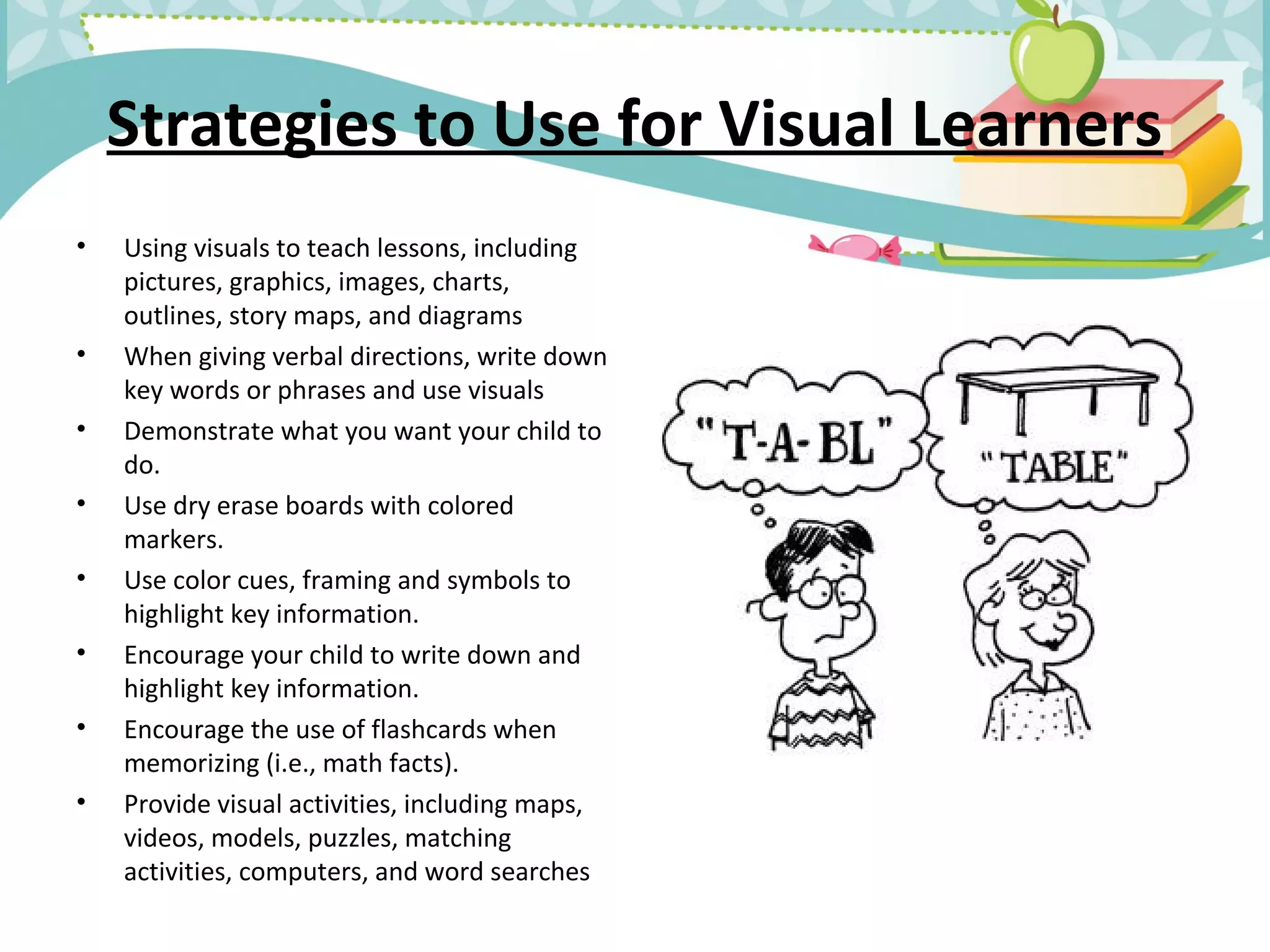
Strategies to Use for Visual Learners
• Using visuals to teach lessons, including
pictures, graphics, images, charts,
outlines, story maps, and diagrams
• When giving verbal directions, write down
key words or phrases and use visuals
• Demonstrate what you want your child to
do.
• Use dry erase boards with colored
markers.
• Use color cues, framing and symbols to
highlight key information.
• Encourage your child to write down and
highlight key information.
• Encourage the use of flashcards when
memorizing (i.e., math facts).
• Provide visual activities, including maps,
videos, models, puzzles, matching
activities, computers, and word searches
Auditory Learning Definition
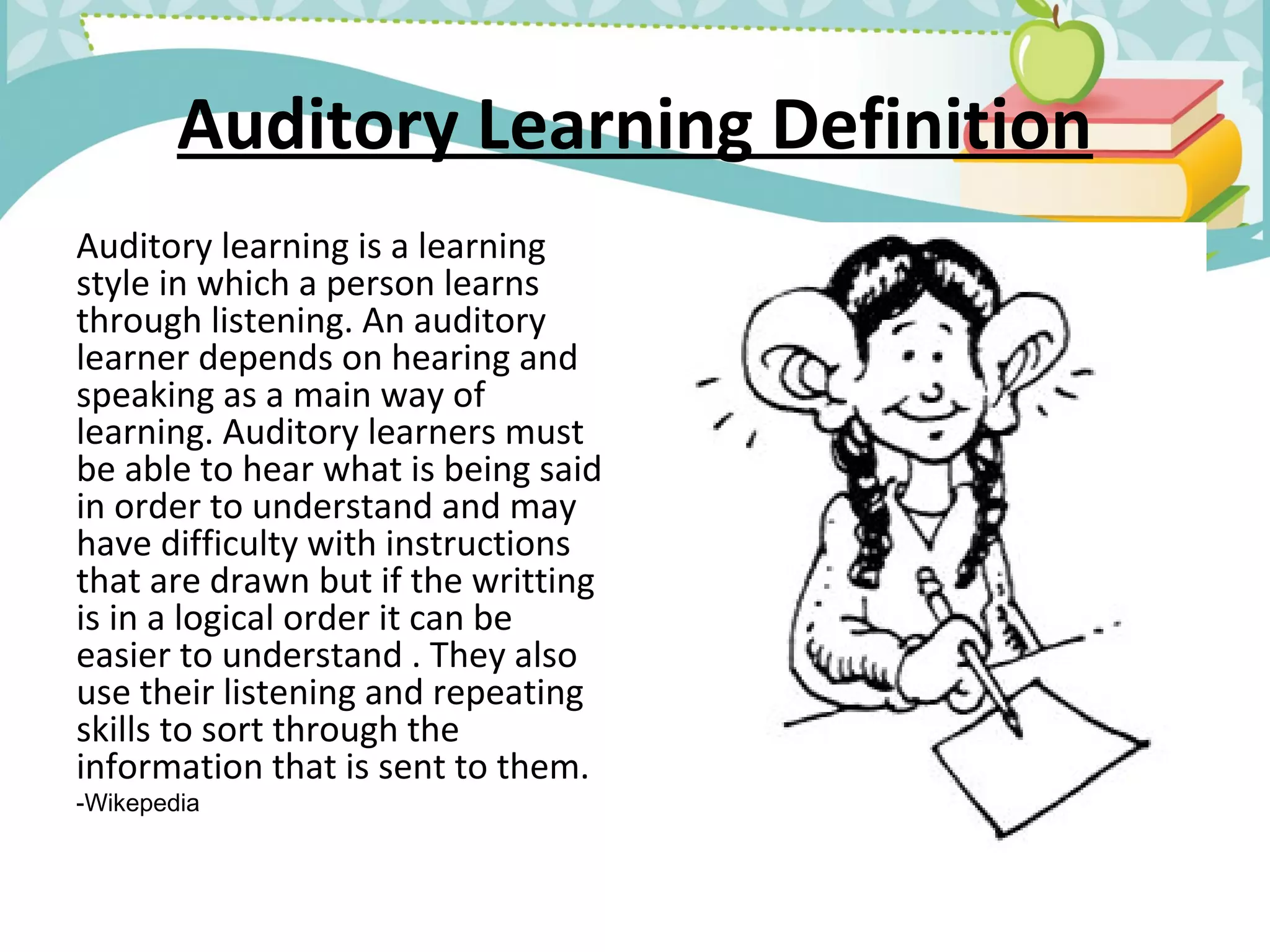
Auditory learning is a learning
style in which a person learns
through listening. An auditory
learner depends on hearing and
speaking as a main way of
learning. Auditory learners must
be able to hear what is being said
in order to understand and may
have difficulty with instructions
that are drawn but if the writting
is in a logical order it can be
easier to understand . They also
use their listening and repeating
skills to sort through the
information that is sent to them.
-Wikepedia
Characteristics of Auditory Learners
• Talk aloud to themselves.
• Like explaining things to others.
• Remember names.
• Recognize variations in a person’s tone of
voice.
• Understand concepts better by talking about
them.
• Are distracted by background noise.
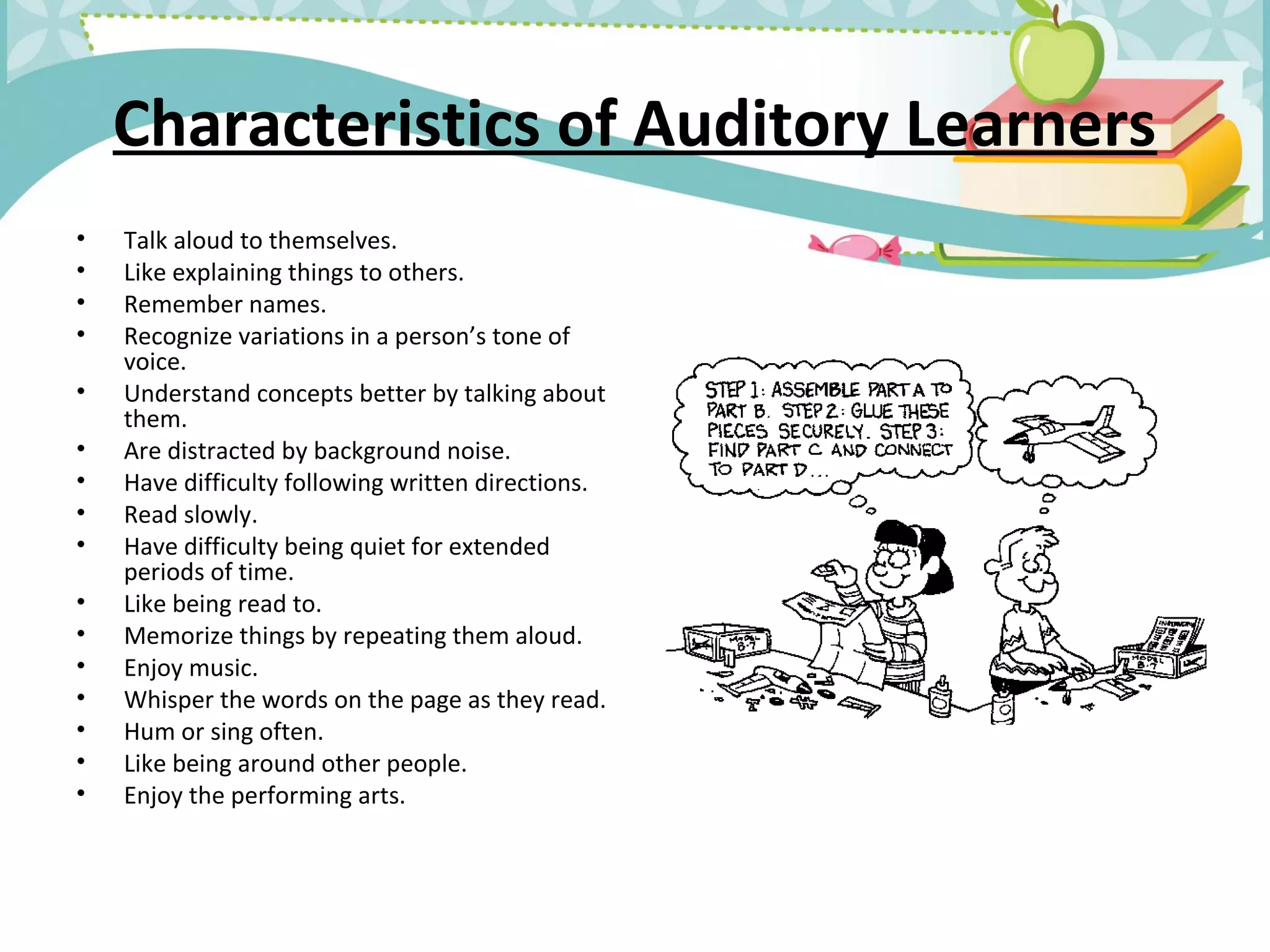
• Have difficulty following written directions.
• Read slowly.
• Have difficulty being quiet for extended
periods of time.
• Like being read to.
• Memorize things by repeating them aloud.
• Enjoy music.
• Whisper the words on the page as they read.
• Hum or sing often.
• Like being around other people.
• Enjoy the performing arts.
Strategies/Materials for Auditory
Learners
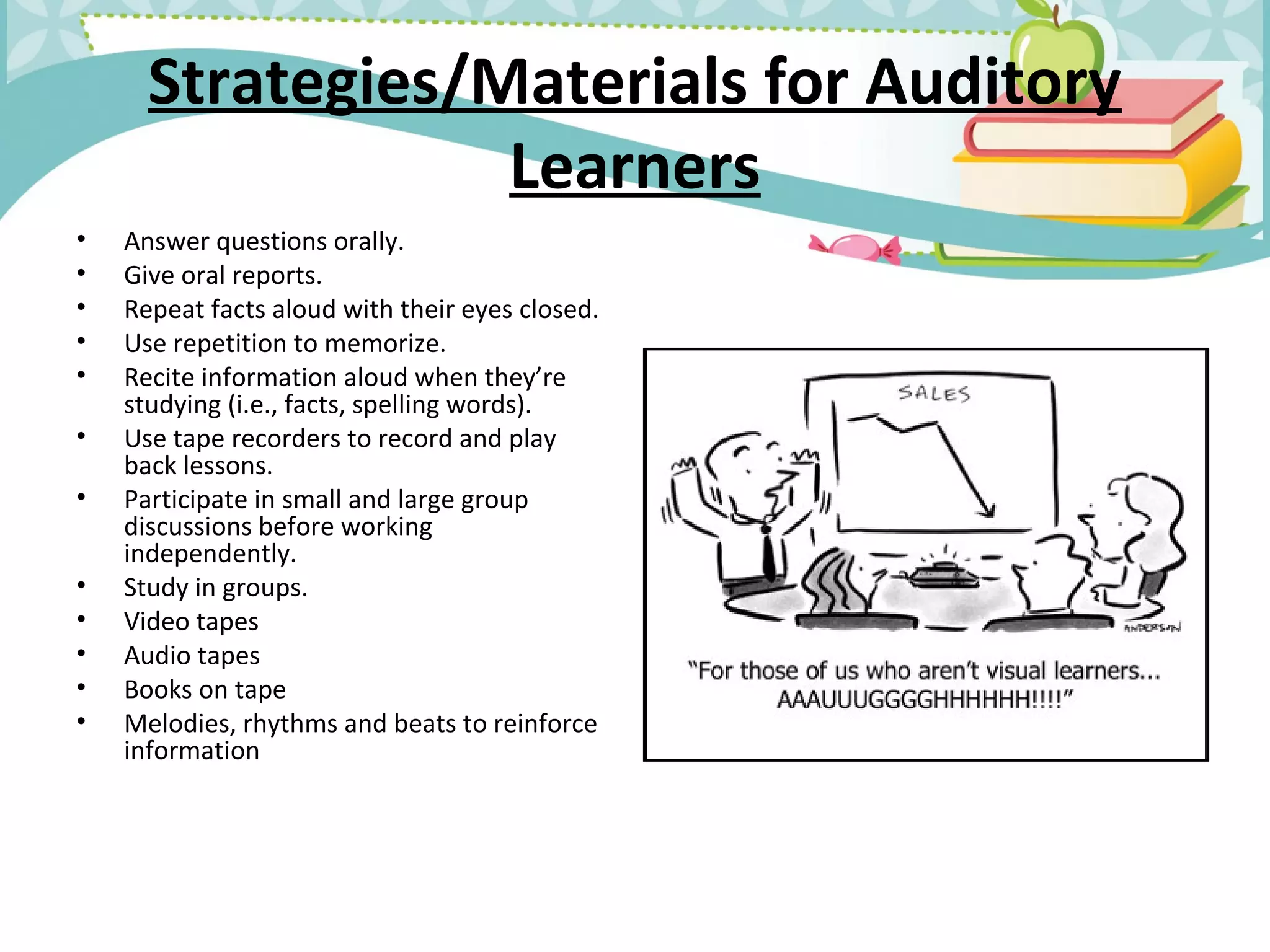
• Answer questions orally.
• Give oral reports.
• Repeat facts aloud with their eyes closed.
• Use repetition to memorize.
• Recite information aloud when they’re
studying (i.e., facts, spelling words).
• Use tape recorders to record and play
back lessons.
• Participate in small and large group
discussions before working
independently.
• Study in groups.
• Video tapes
• Audio tapes
• Books on tape
• Melodies, rhythms and beats to reinforce
information
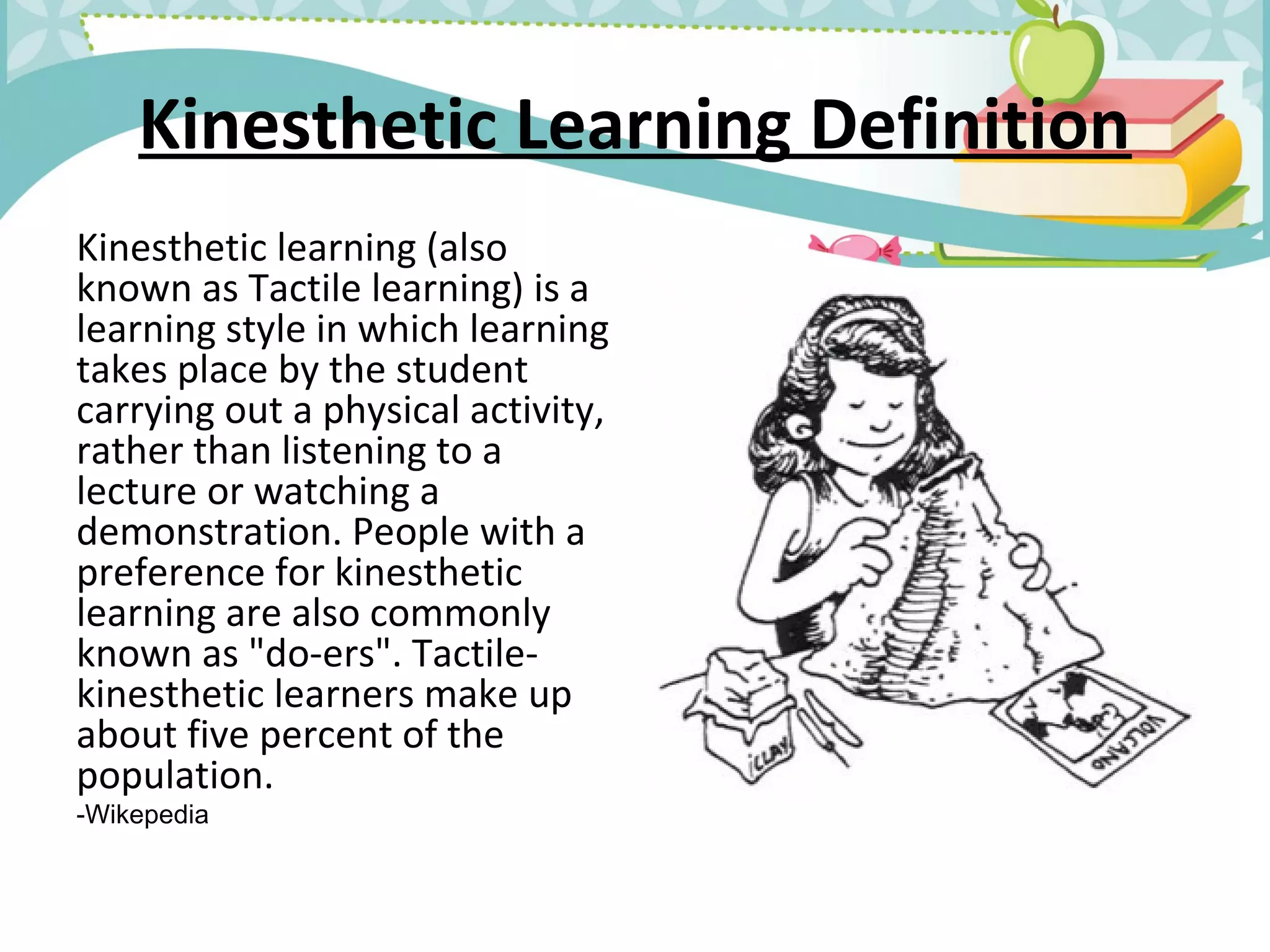
Kinesthetic Learning Definition
Kinesthetic learning (also
known as Tactile learning) is a
learning style in which learning
takes place by the student
carrying out a physical activity,
rather than listening to a
lecture or watching a
demonstration. People with a
preference for kinesthetic
learning are also commonly
known as "do-ers". Tactile-
kinesthetic learners make up
about five percent of the
population.
-Wikepedia
Characteristics of Kinesthetic Learners
• Move around a lot
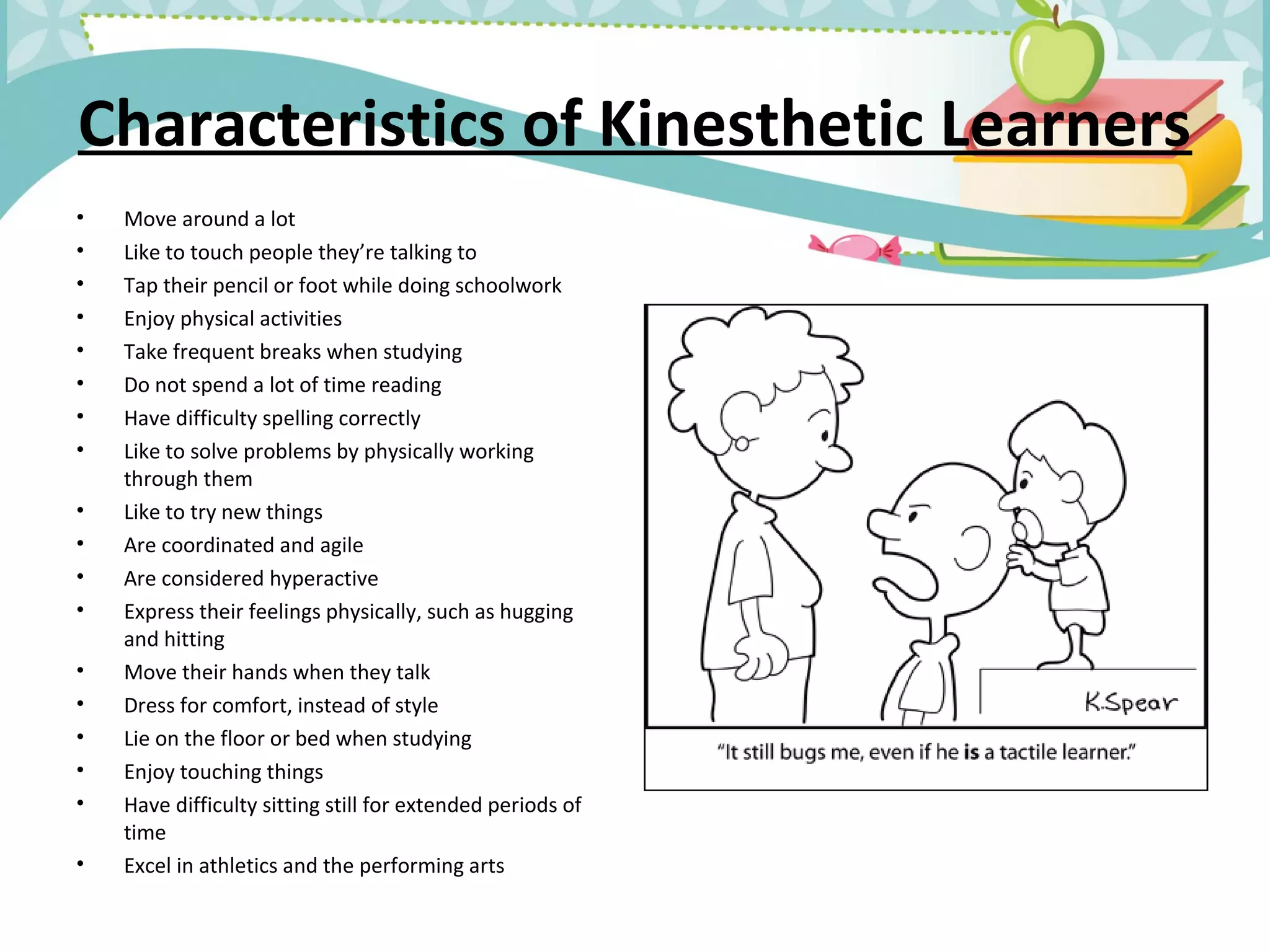
• Like to touch people they’re talking to
• Tap their pencil or foot while doing schoolwork
• Enjoy physical activities
• Take frequent breaks when studying
• Do not spend a lot of time reading
• Have difficulty spelling correctly
• Like to solve problems by physically working
through them
• Like to try new things
• Are coordinated and agile
• Are considered hyperactive
• Express their feelings physically, such as hugging
and hitting
• Move their hands when they talk
• Dress for comfort, instead of style
• Lie on the floor or bed when studying
• Enjoy touching things
• Have difficulty sitting still for extended periods of
time
• Excel in athletics and the performing arts
Strategies/Materials for Kinesthetic
Learners
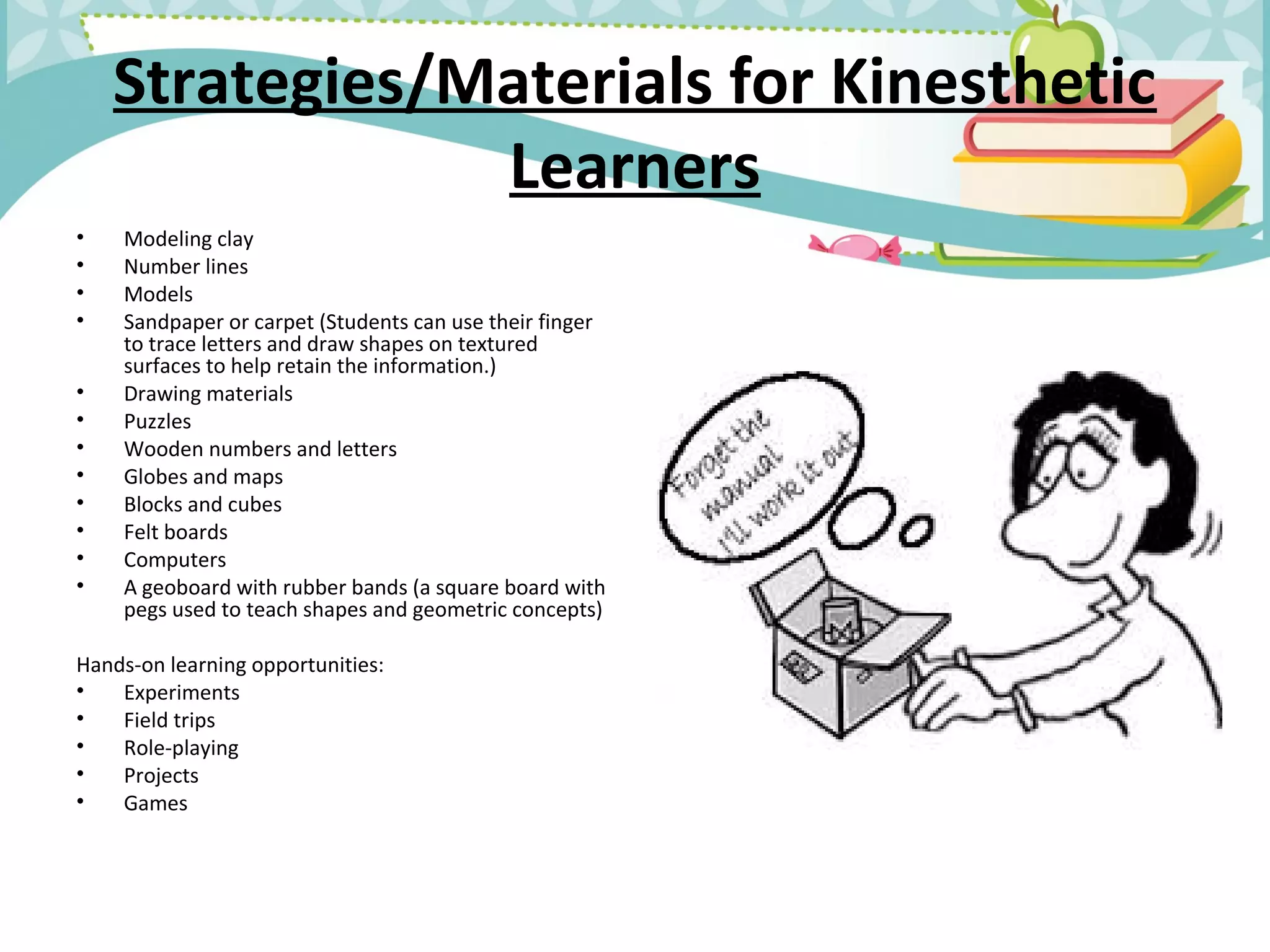
• Modeling clay
• Number lines
• Models
• Sandpaper or carpet (Students can use their finger
to trace letters and draw shapes on textured
surfaces to help retain the information.)
• Drawing materials
• Puzzles
• Wooden numbers and letters
• Globes and maps
• Blocks and cubes
• Felt boards
• Computers
• A geoboard with rubber bands (a square board with
pegs used to teach shapes and geometric concepts)
Hands-on learning opportunities:
• Experiments
• Field trips
• Role-playing
• Projects
• Games
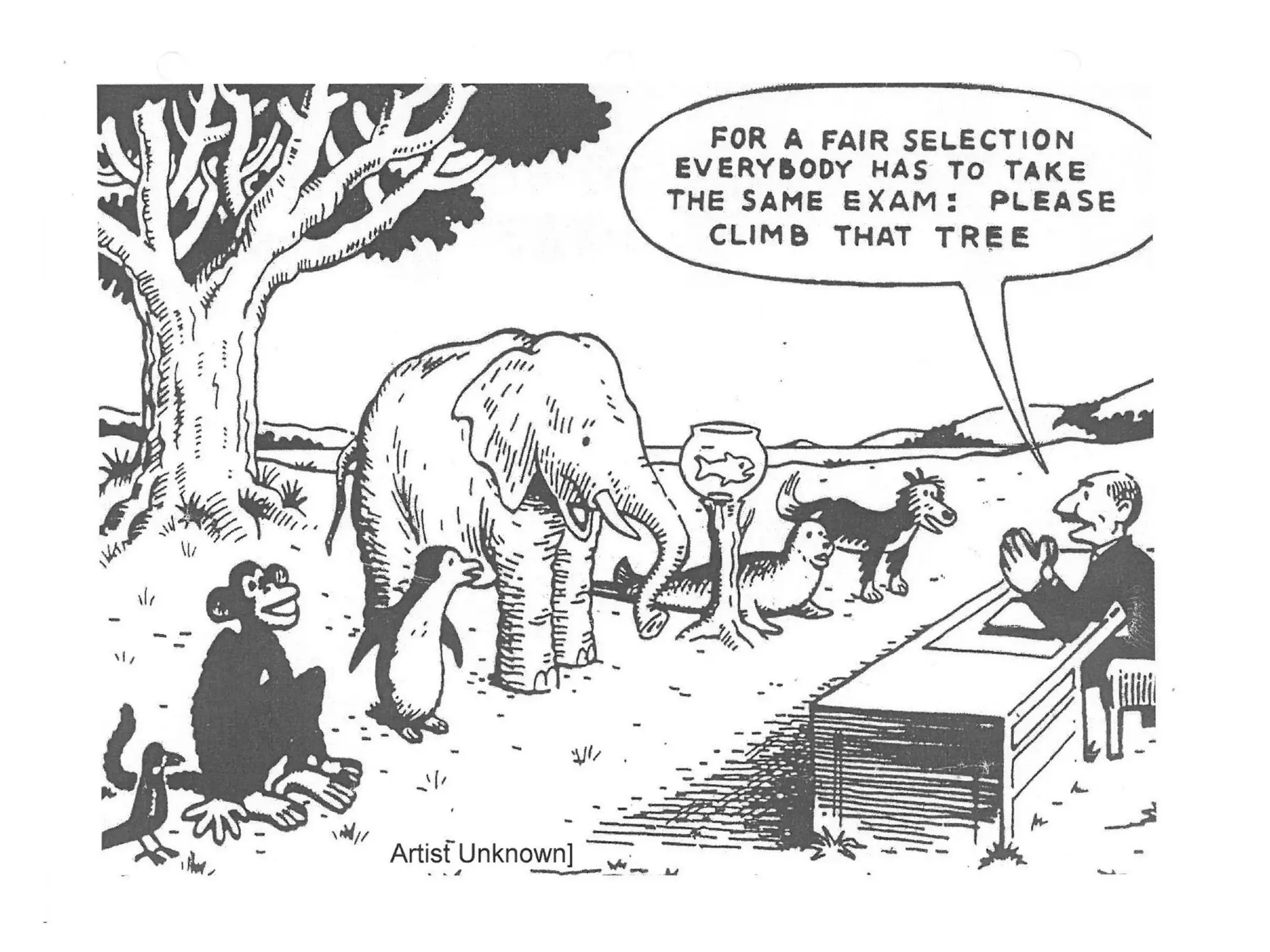
Some Thoughts
to
Consider….
Final Thoughts…
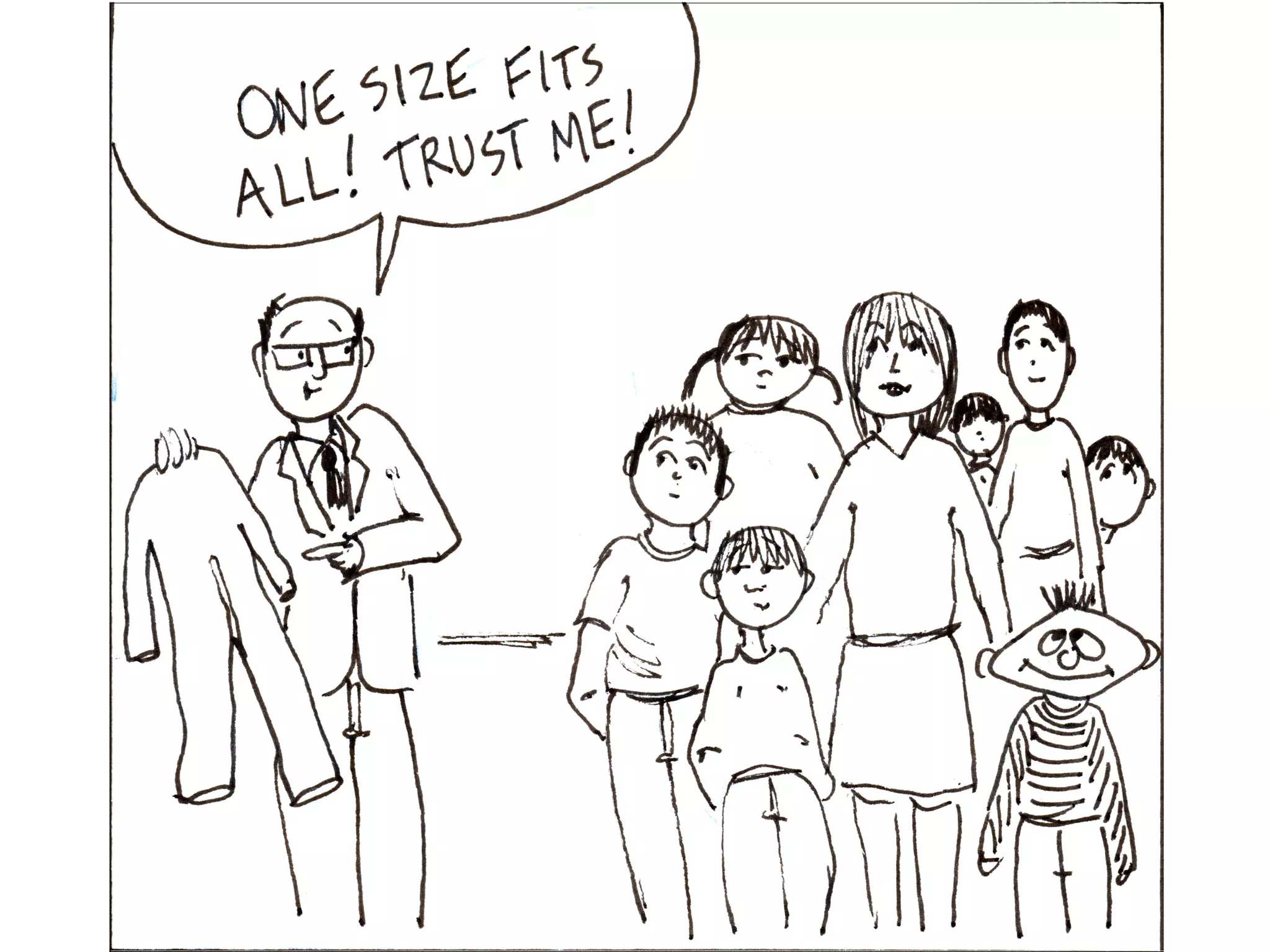
There is no “one size fits all” method
for teaching. As educators, it is
important that we continuously seek
new ways to meet the needs of our
diverse learners. Thus, ‘good teaching’
should be defined as finding new and
creative ways to meet the needs of
your learning population to ensure
they can learn to their optimum
potential.
Internet Resource Credits
• Google
• Wikepedia
• Education.com
• Educaitonworld.com
• Scholastic.com
• Edutopia.com
• Youtube.com

An overview of visual, auditory, and kinesthetic learners

  • 1.
    An Overview ofVisual, Auditory & Kinesthetic Learners By Melissa Winfield-Corbett
  • 2.
  • 3.
    Visual Learning Definition Visuallearning is a teaching and learning style in which ideas, concepts, data and other information are associated with images and techniques. It is one of the three basic types of learning styles in the widely used Fleming VAK/VARK model that also includes kinesthetic learning and auditory learning. -Wikepedia
  • 4.
    Characteristics of VisualLearners • Like to read. • Are good spellers. • Memorize things by seeing them on paper. • Are organized. • Would rather watch, than talk or do. • Have good handwriting. • Notice details. • Remember faces better than names. • Have trouble following verbal directions. • Are easily distracted by noise. • Doodle on their paper.
  • 5.
    Strategies to Usefor Visual Learners • Using visuals to teach lessons, including pictures, graphics, images, charts, outlines, story maps, and diagrams • When giving verbal directions, write down key words or phrases and use visuals • Demonstrate what you want your child to do. • Use dry erase boards with colored markers. • Use color cues, framing and symbols to highlight key information. • Encourage your child to write down and highlight key information. • Encourage the use of flashcards when memorizing (i.e., math facts). • Provide visual activities, including maps, videos, models, puzzles, matching activities, computers, and word searches
  • 6.
    Auditory Learning Definition Auditorylearning is a learning style in which a person learns through listening. An auditory learner depends on hearing and speaking as a main way of learning. Auditory learners must be able to hear what is being said in order to understand and may have difficulty with instructions that are drawn but if the writting is in a logical order it can be easier to understand . They also use their listening and repeating skills to sort through the information that is sent to them. -Wikepedia
  • 7.
    Characteristics of AuditoryLearners • Talk aloud to themselves. • Like explaining things to others. • Remember names. • Recognize variations in a person’s tone of voice. • Understand concepts better by talking about them. • Are distracted by background noise. • Have difficulty following written directions. • Read slowly. • Have difficulty being quiet for extended periods of time. • Like being read to. • Memorize things by repeating them aloud. • Enjoy music. • Whisper the words on the page as they read. • Hum or sing often. • Like being around other people. • Enjoy the performing arts.
  • 8.
    Strategies/Materials for Auditory Learners •Answer questions orally. • Give oral reports. • Repeat facts aloud with their eyes closed. • Use repetition to memorize. • Recite information aloud when they’re studying (i.e., facts, spelling words). • Use tape recorders to record and play back lessons. • Participate in small and large group discussions before working independently. • Study in groups. • Video tapes • Audio tapes • Books on tape • Melodies, rhythms and beats to reinforce information
  • 9.
    Kinesthetic Learning Definition Kinestheticlearning (also known as Tactile learning) is a learning style in which learning takes place by the student carrying out a physical activity, rather than listening to a lecture or watching a demonstration. People with a preference for kinesthetic learning are also commonly known as "do-ers". Tactile- kinesthetic learners make up about five percent of the population. -Wikepedia
  • 10.
    Characteristics of KinestheticLearners • Move around a lot • Like to touch people they’re talking to • Tap their pencil or foot while doing schoolwork • Enjoy physical activities • Take frequent breaks when studying • Do not spend a lot of time reading • Have difficulty spelling correctly • Like to solve problems by physically working through them • Like to try new things • Are coordinated and agile • Are considered hyperactive • Express their feelings physically, such as hugging and hitting • Move their hands when they talk • Dress for comfort, instead of style • Lie on the floor or bed when studying • Enjoy touching things • Have difficulty sitting still for extended periods of time • Excel in athletics and the performing arts
  • 11.
    Strategies/Materials for Kinesthetic Learners •Modeling clay • Number lines • Models • Sandpaper or carpet (Students can use their finger to trace letters and draw shapes on textured surfaces to help retain the information.) • Drawing materials • Puzzles • Wooden numbers and letters • Globes and maps • Blocks and cubes • Felt boards • Computers • A geoboard with rubber bands (a square board with pegs used to teach shapes and geometric concepts) Hands-on learning opportunities: • Experiments • Field trips • Role-playing • Projects • Games
  • 12.
  • 15.
    Final Thoughts… There isno “one size fits all” method for teaching. As educators, it is important that we continuously seek new ways to meet the needs of our diverse learners. Thus, ‘good teaching’ should be defined as finding new and creative ways to meet the needs of your learning population to ensure they can learn to their optimum potential.
  • 16.
    Internet Resource Credits •Google • Wikepedia • Education.com • Educaitonworld.com • Scholastic.com • Edutopia.com • Youtube.com