How to identify different
learning styles and
identifying teaching
strategies for each
By Christina Francis
 We have identified in our discussion that everyone has different learning
styles
 We all took the VAK learning questionnaire to help us see which was our
preferred learning style
 We will now explore the characteristics of each style and look at strategies
and techniques to teach/learn for each individual learning style
V A R K
 Visual
 Auditory
 Kinaesthetic (Tactile)
Visual
 Learning though seeing
Auditory
 Learning through hearing
Kinaesthetic
 Learning through doing/moving
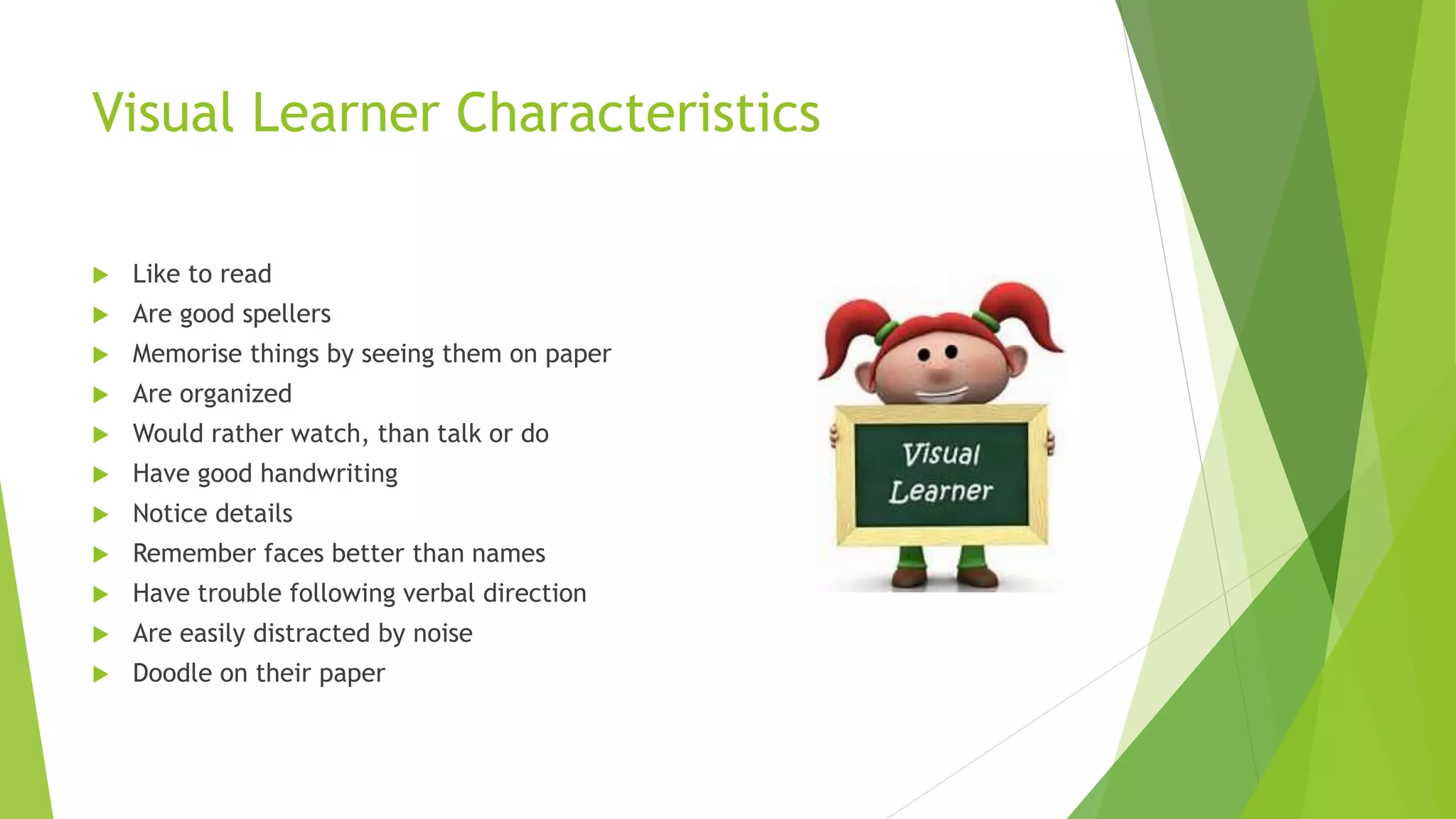
Visual Learner Characteristics
 Like to read
 Are good spellers
 Memorise things by seeing them on paper
 Are organized
 Would rather watch, than talk or do
 Have good handwriting
 Notice details
 Remember faces better than names
 Have trouble following verbal direction
 Are easily distracted by noise
 Doodle on their paper
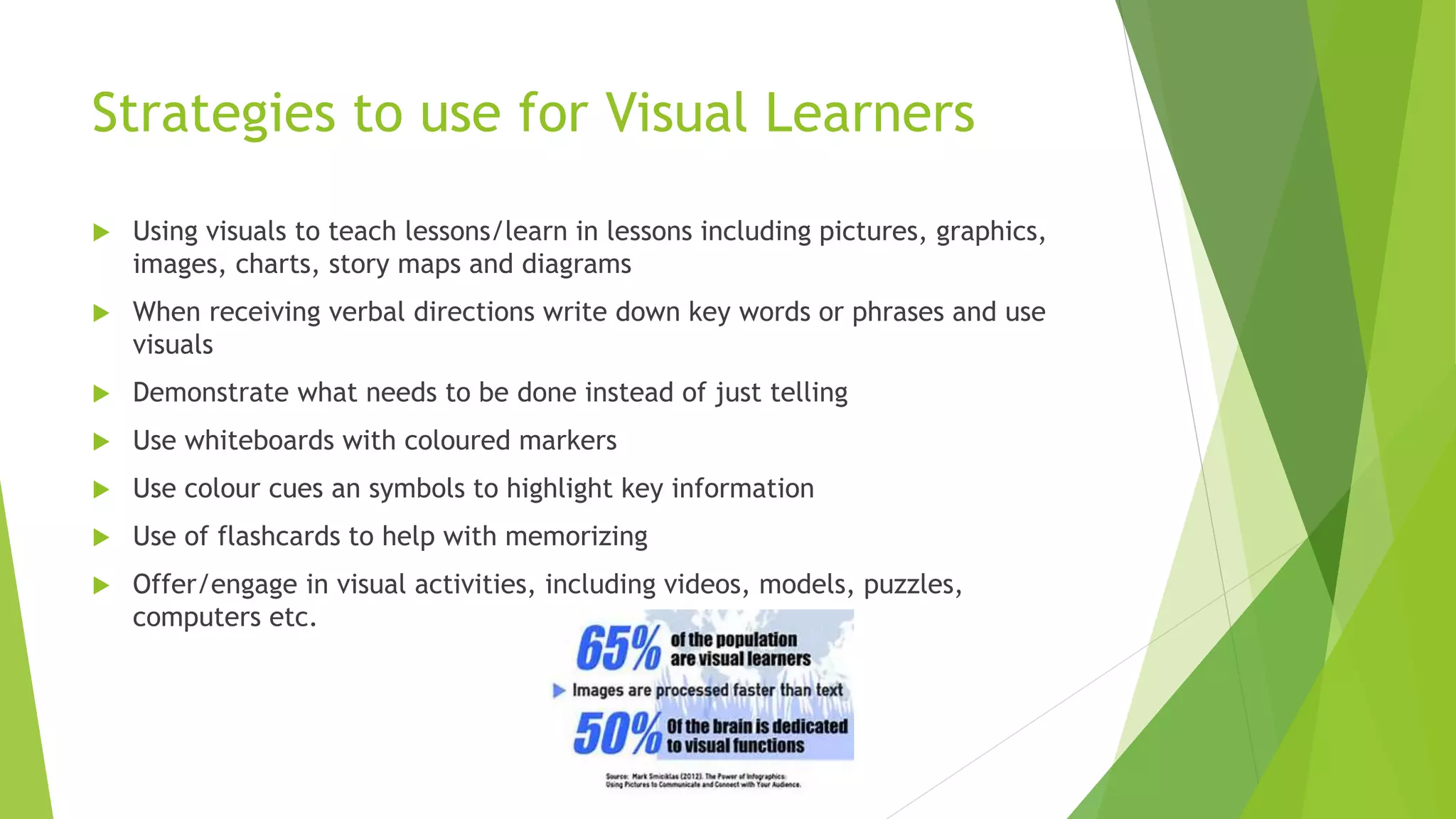
Strategies to use for Visual Learners
 Using visuals to teach lessons/learn in lessons including pictures, graphics,
images, charts, story maps and diagrams
 When receiving verbal directions write down key words or phrases and use
visuals
 Demonstrate what needs to be done instead of just telling
 Use whiteboards with coloured markers
 Use colour cues an symbols to highlight key information
 Use of flashcards to help with memorizing
 Offer/engage in visual activities, including videos, models, puzzles,
computers etc.
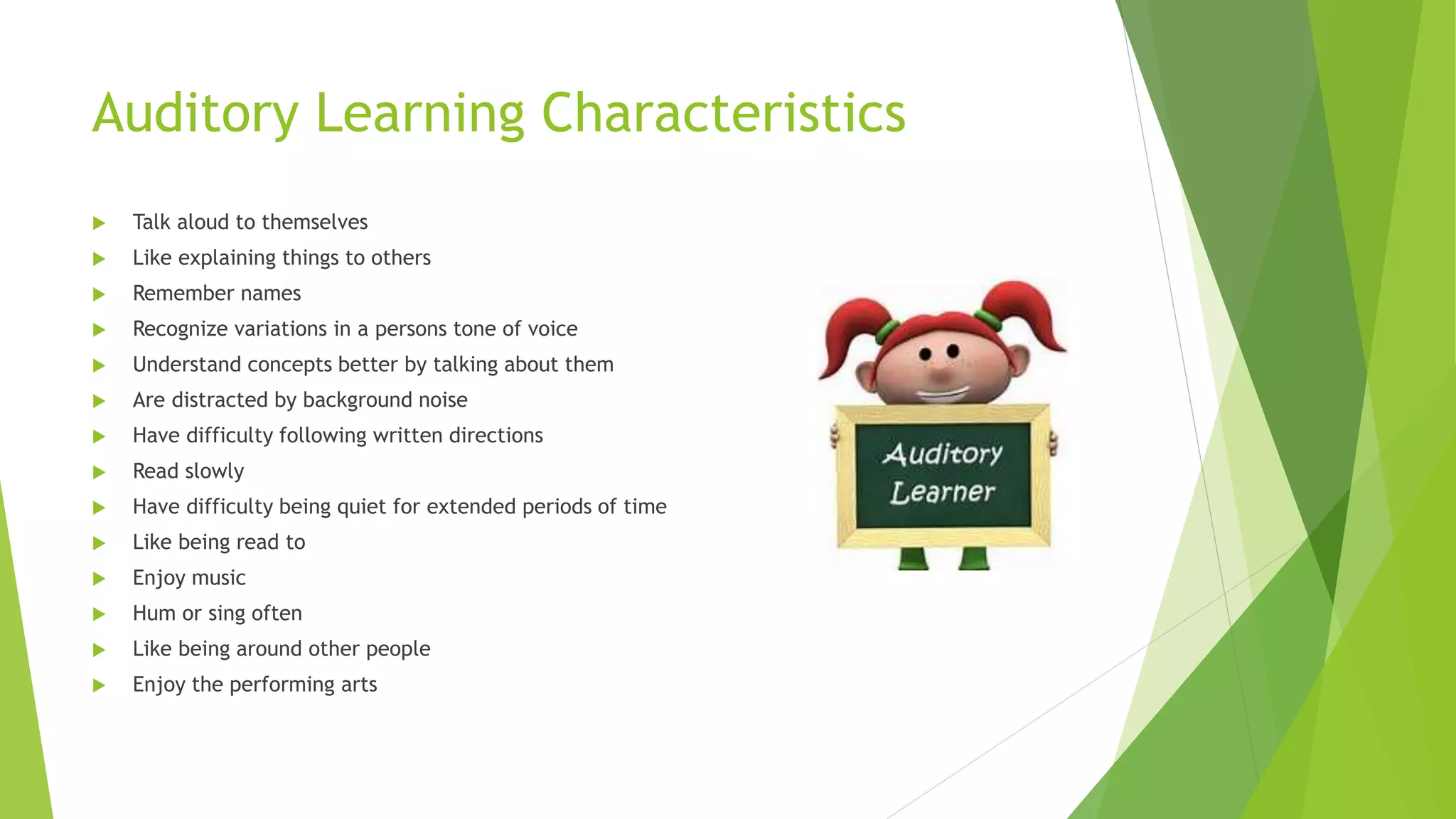
Auditory Learning Characteristics
 Talk aloud to themselves
 Like explaining things to others
 Remember names
 Recognize variations in a persons tone of voice
 Understand concepts better by talking about them
 Are distracted by background noise
 Have difficulty following written directions
 Read slowly
 Have difficulty being quiet for extended periods of time
 Like being read to
 Enjoy music
 Hum or sing often
 Like being around other people
 Enjoy the performing arts
Strategies to use for Auditory Learners
 Answer questions orally
 Giver oral reports
 Use repetition to memorize
 Recite information aloud when they're studying
 Use a tape recorder to record and play back sessions
 Participate in small and large group discussions before working independently
 Study in groups
 Audio tapes
 Video tapes
 Books on tapes
 Melodies, rhythms and beats to reinforce information
Kinaesthetic Learner Characteristics
 Move around a lot
 Like to touch people they're talking to
 Tap their pencil or foot while doing school work
 Enjoy physical activities
 Take frequent breaks when studying
 Do not spend a lot of time reading
 Have difficulty spelling correctly
 Like to solve problems by physically working through them
 Are considered hyperactive
 Move their hand when they talk
 Excel in athletics and the performing arts
Strategies to use for Kinaesthetic
Learners
 Use various methods of instruction – lectures, paired readings, group work,
experiments, projects, plays, etc., so you'll keep the kinaesthetic learners
surprised and able to deal with the days you want to present material in a
straight-forward manner.
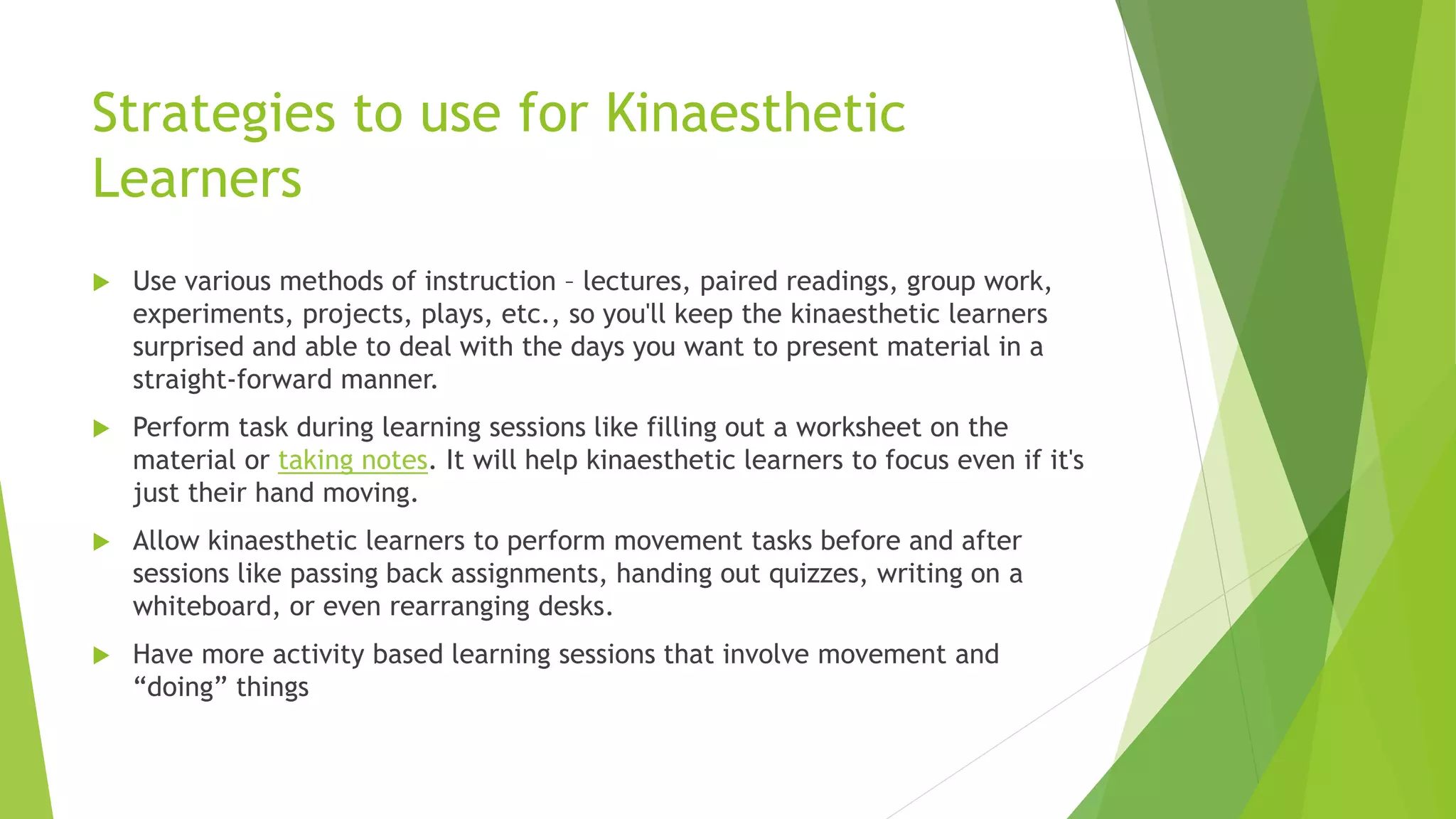
 Perform task during learning sessions like filling out a worksheet on the
material or taking notes. It will help kinaesthetic learners to focus even if it's
just their hand moving.
 Allow kinaesthetic learners to perform movement tasks before and after
sessions like passing back assignments, handing out quizzes, writing on a
whiteboard, or even rearranging desks.
 Have more activity based learning sessions that involve movement and
“doing” things

VAK Learning styles

  • 1.
    How to identifydifferent learning styles and identifying teaching strategies for each By Christina Francis
  • 2.
     We haveidentified in our discussion that everyone has different learning styles  We all took the VAK learning questionnaire to help us see which was our preferred learning style  We will now explore the characteristics of each style and look at strategies and techniques to teach/learn for each individual learning style
  • 3.
    V A RK  Visual  Auditory  Kinaesthetic (Tactile)
  • 4.
  • 5.
  • 6.
  • 7.
    Visual Learner Characteristics Like to read  Are good spellers  Memorise things by seeing them on paper  Are organized  Would rather watch, than talk or do  Have good handwriting  Notice details  Remember faces better than names  Have trouble following verbal direction  Are easily distracted by noise  Doodle on their paper
  • 8.
    Strategies to usefor Visual Learners  Using visuals to teach lessons/learn in lessons including pictures, graphics, images, charts, story maps and diagrams  When receiving verbal directions write down key words or phrases and use visuals  Demonstrate what needs to be done instead of just telling  Use whiteboards with coloured markers  Use colour cues an symbols to highlight key information  Use of flashcards to help with memorizing  Offer/engage in visual activities, including videos, models, puzzles, computers etc.
  • 9.
    Auditory Learning Characteristics Talk aloud to themselves  Like explaining things to others  Remember names  Recognize variations in a persons tone of voice  Understand concepts better by talking about them  Are distracted by background noise  Have difficulty following written directions  Read slowly  Have difficulty being quiet for extended periods of time  Like being read to  Enjoy music  Hum or sing often  Like being around other people  Enjoy the performing arts
  • 10.
    Strategies to usefor Auditory Learners  Answer questions orally  Giver oral reports  Use repetition to memorize  Recite information aloud when they're studying  Use a tape recorder to record and play back sessions  Participate in small and large group discussions before working independently  Study in groups  Audio tapes  Video tapes  Books on tapes  Melodies, rhythms and beats to reinforce information
  • 11.
    Kinaesthetic Learner Characteristics Move around a lot  Like to touch people they're talking to  Tap their pencil or foot while doing school work  Enjoy physical activities  Take frequent breaks when studying  Do not spend a lot of time reading  Have difficulty spelling correctly  Like to solve problems by physically working through them  Are considered hyperactive  Move their hand when they talk  Excel in athletics and the performing arts
  • 12.
    Strategies to usefor Kinaesthetic Learners  Use various methods of instruction – lectures, paired readings, group work, experiments, projects, plays, etc., so you'll keep the kinaesthetic learners surprised and able to deal with the days you want to present material in a straight-forward manner.  Perform task during learning sessions like filling out a worksheet on the material or taking notes. It will help kinaesthetic learners to focus even if it's just their hand moving.  Allow kinaesthetic learners to perform movement tasks before and after sessions like passing back assignments, handing out quizzes, writing on a whiteboard, or even rearranging desks.  Have more activity based learning sessions that involve movement and “doing” things